Category: YA/MG/Children’s Books Page 37 of 42

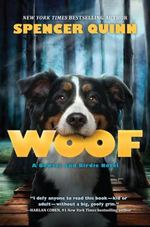
Woof by Spencer Quinn

WoofWoof

by Spencer Quinn
Series:Bowser and Birdie, #1

Hardcover, 293 pg.
Scholastic Press, 2015
Read: May 14 – 15, 2015

One quick sniff and I knew that BLTs were in that basket. BLTs were an odd human invention, sandwiches filled with weird tasteless stuff no one in their right mind would be interested in — except for the bacon. In case you missed that, I’ll mention it again: bacon!

This is just cute. That’s all there is to it. A cute MG novel, featuring a nice little girl with a lot of spunk and her new dog, Bowser. A fun mystery novel with a lot of heart.

Birdie Gaux is an 11-year-old mix of Flavia De Luce, Izzy Spellman, and Inspector Gadget’s niece Penny (from the original cartoon, natch). Fiery, spunky, determined, far too curious and independent, a little too comfortable with shading the truth/outright lying, with a clever dog friend. While her mother works on an offshore oil rig for months at a time, Birdie lives with her grandmother and helps in the family’s struggling bait shop. She doesn’t remember much about her father, a police detective killed in the line of duty when she was very young.

After getting Birdie her late birthday gift, our new friend Bowser, Grammy and Birdie stop at the bait shop to discover they’ve been robbed, while the comic relief employee napped a bit. The only thing taken was Grammy’s stuffed marlin — a family heirloom passed down from her father after his return from World War II. The adults — Grammy, the Sheriff, and the napper are ready to write the marlin off as a lost cause, but Birdie’s not.

Birdie and Bowser are galvanized into action — she’s sure she smells cigar smoke in the shop, and Bowser finds the remains of a cigar nearby for her, convincing Birdie that she’s right. The Sheriff is a nice enough guy, who’s more than willing to listen to Birdie’s thoughts about the case (listen — not really act upon) — but he’s not going to invest too much energy into investigating the theft of a dead fish, no matter the sentimental value. So Birdie, with the help of some friends (including the Sheriff’s son) and a nice — and easily confused — woman from the local retirement home, sets about hunting for the missing marlin (and some secrets that may be hidden within).

There’s a little danger, peril and excitement along the way, but nothing inappropriate for the age group. Bowser gets the worst of it, honestly, while Birdie is mostly safe. There’s some hints of problems looming for Grammy, some dark events in Bowser’s past, and that sort of thing. The sharper young readers will catch that, others won’t — it’ll either add some nuance and flavoring to the experience or it won’t — nothing that will affect the understanding of the story.

Quinn is much beloved around here for his series of novels about Bernie, the P. I., and his partner Chet the Dog — narrated, as this book is, by Chet. For the sake of diversity, I was hoping that Bowser wouldn’t narrate the novel in Chet’s voice. But he does — which is mildly disappointing for me, because I’d rather get the original. But as for attracting new readers — particularly a new demographic? It’s perfect. And while sure, I grumbled occasionally while reading — and here — about Bowser being Chet without the Police Dog Training, it’s still a fun voice. One that you have little trouble imagining would belong to a dog.

Not the most demanding of reads, nor the most complex of mysteries, Woof is a pleasant introduction to a new series that I hope will be around quite awhile, I look forward to getting to know Birdie, her dog, her friends and family a lot better. I imagine that soon enough, I won’t be alone, and that Quinn has found himself a whole new fan-base.

—–

3 Stars

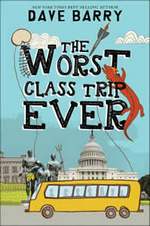
The Worst Class Trip Ever by Dave Barry

The Worst Class Trip Eve

The Worst Class Trip Eve http://www.davebarry.com/book-page.php?isbn13=9781484708491
by Dave Barry

Hardcover, 211 pg.
Disney-Hyperion, 2015

Read: May 19, 2015

There’s not a whole lot to say about this one — this is the story of some of clever (and yet dopey) 8th grade students from Miami on a field trip to Washington, D. C., who fall into a strange predicament involving international intrigue, kidnapping, an attack on the White House/President and very, very petty theft. The only other thing you need to know is that Dave Barry wrote it, so it’s goofy and very funny.

The humor is juvenile — even for Barry. Adults who remember the target audience, and can adjust their standards appropriately, should be able to chuckle at this few times. At the very least, you can appreciate the jokes. It’s perfect for the Middle Grade crowd, probably leaning towards the male perspective (or whatever the demographic is that appreciates flatulence-based humor). This is not to say that all kids won’t enjoy it — it’s just that it’ll score better with kids with a particular sense of humor.

It’s silly, fast-paced, some good action, and some ridiculous characters/plotlines. A lot of fun, definitely what anyone who read Big Trouble should expect from the author writing to MG audience. I’m glad I read it, but I suspect that my 11-year-old will enjoy it more than I did.

—–

3 Stars

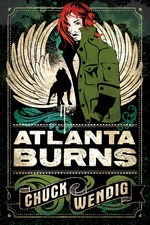
Atlanta Burns by Chuck Wendig

I’ve got a bet with myself involving how many words I can get into this thing without mentioning a certain UPN/CW show about a teenage P. I. I don’t have high hopes of winning.

Atlanta BurnsAtlanta Burns

by Chuck Wendig
Series:Atlanta Burns, #1-2


Kindle Edition, 381 pg.
Skyscape , 2015
Read: March 20 – 23, 2015

Morning— well, late morning— well, let’s just call it “noon”— arrives, and Atlanta awakens in a dreary, bleary-eyed sweat. Her spirits lift a little— not a full, bounding leap, but like a balloon whose helium hasn’t gone all the way out— when she realizes that this is the first day of summer vacation.

Sleep is evasive, ducking and feinting, slippery like a pig slathered in its own grease. The day was hot, but somehow the night seems hotter . The air thick and stuffy like she’s a piece of French toast puffing up and sweating on the griddle . Summer’s not even here yet, but the season has sent an early preview.

No matter what you think of Ms. Burns and her (mis?)adventures, getting lines like that is half the fun. This is my second book by Wendig and the one thing I can say for certain is that this man has a way with prose that really, really like.

Thankfully, this time, I like his protagonist and the stories that she’s finding herself in.

Atlanta’s in a new-ish school in a new-ish town, and is hating it. She’s already got herself a (deserved) reputation for reckless violence, which comes in handy when she comes across some bullies attacking a Hispanic kid. She disrupts things for them, earning herself a couple of new enemies and a friend she doesn’t want. Before she knows it, Atlanta’s got a new reputation — as someone who bullies the bullies, who can get your revenge for you.

Atlanta’s a mess — dealing with PTSD (or something akin to it), her relationship with her mother’s in shambles, isn’t good with people — especially those in authority, mixes up non-prescribed pharmecuticals and caffeine in a way that can’t lead to long-term phscial or mental health. Probably not in the short-term, either, come to think of it. She makes mistakes — big ones, potentially lethal ones. She may be a contemporary Sally Kimball — but she’s nowhere near as perfect as Sally (or her partner). It wouldn’t have shocked me if she was killed in all of her nosing around. (it would’ve fit the tone of the book, too).

Some of the characters here are very well drawn, some aren’t. The English teacher who takes an interest in her is like every English teacher you’ve read/seen on TV who takes an interest in a troubled kid. Her nerdy friends, or her drug/gun dealer, on the other hand, are sharply and fully drawn. Ditto for the bullies, criminals and low-lifes she comes into contact with. I’m torn about Atlanta’s mother, I’m not sure what to think of her as a character, really. She’s largely extraneous to the plot, but when she’s around, it counts.

The violence seems real. It’s messy, sloppy, not a series of precision moves/shots/etc. like you’d get from…well, about everyone else. It hurts. It takes people down and takes time to recover. Nowhere near as entertaining (at least not in the same way) as Reacher talking about how much force is required to break bone X, or Vinnie Morris making the impossible shot, or Elvis Cole delivering a precision kick to the face. Instead, what we get is visceral, bloody, and wrong. Sort of what violence is supposed to be.

This is one of those books where you quickly learn to stop thinking, “it’s not going to get worse than this.” It does, and soon. And then it does it again. Which isn’t to say that there aren’t victories — some are minor, some are Pyrrhic, but they’re there. There’s even a little joy. The ending is satisfying, while leaving the door open for more. Atlanta has more in common with Frank Castle than Flavia de Luce, more Lisbeth Salander than Veronica Mars, more Beatrix Kiddo than Kinsey Milhone, but there’s a little of all of them in her. I look forward to more from her.

—–

3.5 Stars

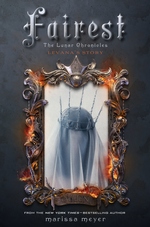
Fairest by Marissa Meyer

How’s this for embarrassing? As I typed this up, I noticed I hadn’t blogged about the previous volume in the series, Cress. Man, I hate that.

—–

FairestFairest

by Marissa Meyer
Series: The Lunar Chronicles,#3.5

Hardcover, 222 pg.
Feiwel & Friends, 2015
Read: April 25, 2015
Most of the time, when I see a .5 in a series, it’s a 30-70 page tale to fill in a narrative gap, or keep the fan base appeased, or something that doesn’t come across as unintentionally offensive. Leave it to Meyer to toss in a 200 page .5 instead.

So ever wonder what turned The Lunar Chronicles Queen into the evilest royal this side of the Brothers Grimm? Yeah, me either. But, Meyer answers the unasked question. From her horrible childhood to her mortifying adolescence to her even worse adulthood (aside from ruling the Moon), this book takes us through the Levana’s development — descent? — while planting all the seeds we need to see how the events of Cinder etc. are set in motion.

At the end of the day, I didn’t need this book. Sure, it humanized Levana a bit, but the Chronicles doesn’t demand that (well, I might be wrong on that front — I might revise this after I read Winter). But, it was a quick read. It was interesting enough to see the wheres, whys, and hows behind the Moon’s approach to Earth. It kept my interest, and more than once, I forgot I was reading a prequel. That’s a plus in my book.

—–

3 Stars

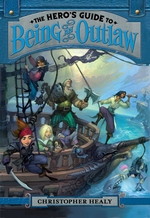
The Hero’s Guide to Being an Outlaw by Christopher Healy

The Hero’s Guide to Being an OutlawThe Hero’s Guide to Being an Outlaw

by Christopher Healy

Hardcover, 516 pg.
Walden Pond Press, 2014
Read: April 2 – 6, 2015
I started talking about the last book in this series by noting that it wasn’t as good as the first. So I should start off here by noting that this is at least as good as the first book.

It’s somewhat criminal that after reading 900 or so pages of this before that I didn’t mention Todd Harris’ art work. The covers are great, but the interior art is what seals the deal. It’s the perfect match for tone and content of writing. Not since Mary GrandPré decorated the Harry Potter books (maybe you’ve heard of them), have I enjoyed illustrations in a book so much. He’s at his best in these pages.

Following the events of Storming the Castle, our friends have scattered, (for the most part) returning home and to their lives as they knew it. They’ve had a rough go of things the last couple of years and have earned a little normalcy.

Until bounty hunters show up hunting them. Which tends to shake things up.

So it seems that that Brair Rose is dead — killed. And who else would anyone suspect but the League of Princes and the Princesses so closely associated with them? So large bounties were put on their heads, and they’ll need all the skills, courage, panache and dumb blind luck they can muster to evade capture and find the people truly responsible.

Meanwhile, the villains that the League, etc. were sure had died at the end of the last book? Yeah, well . . . maybe not. Put the two of these storylines together, add in some pirates, bards and a ghost and you’ve yourself a heckuva read.

Like the best kids’ entertainment, this includes a few reference and jokes fit for adults while sailing right over younger heads (without slipping into innuendo). My favorite example was when the (however temporarily) imprisoned Princesses met the imposing woman Val Jeanval who stole a baguette in order to use it as a weapon.

I started to list off all the goodies this book contains, when I realized my list sounded like someone else’s, so I’ll just borrow Grandpa’s: “Fencing, fighting, torture, revenge, giants, monsters, chases, escapes, true love . . . ” throw in pirates, ghosts, and witches and a lot more royalty than that other book, and you’ve just about described this. It was a fun series, with a fittingly great end. Grab it for your kids, and when they’re not looking (if they won’t share), give it a read yourself.

—–

4 Stars

The Girl Who Circumnavigated Fairyland in a Ship of Her Own Making by Catherynne M. Valente

The Girl Who Circumnavigated Fairyland in a Ship of Her Own Making The Girl Who Circumnavigated Fairyland in a Ship of Her Own Making

by Catherynne M. Valente

Hardcover, 247 pg.
Feiwel & Friends, 2011
Read: February 19 – 20, 2015

But what September chiefly noticed were their hats.
Any child knows what a witch looks like. The warts are important, yes, the hooked nose, the cruel smile. But it’s the hat that cinches it: pointy and black with a wide rim. Plenty of people have warts and hooked noses and cruel smiles but are not witches at all. Hats change everything. September knew this with all her being, deep in the place where she knew her own name . . . For one day, her father had put on a hat with golden things on it and suddenly he hadn’t been her father anymore, he had been a soldier, and he had left. Hats have power. Hats can change you into someone else.

There’s much more to be said about the true nature of seasons, sentient keys, the immorality of novelists, the thoughtfulness of smoking jackets, the desires and drives of shoes….But I’m getting ahead of myself.

So last week, I found myself on the end of a batch of pretty heavy books, and needed something light and breezy — hopefully cheery, too. So I grabbed this off my daughter’s shelf (had been meaning to get around to it since I bought it for her 3 years ago). It didn’t at all fit the bill for what I wanted, but thankfully was an enjoyable read about a girl named September and the improbable trip she takes to (and around) Fairyland.

Those were all big words, to be sure, but as it has been said, September read often, and like it best when words did not pretend to be simple, but put on their full armor and rode out with colors flying

Who couldn’t love a hero like that?

While her father is off fighting in Europe during WWII, and her mother is spending her days with Rosie the Riveter (and doing her best to take care of her daughter, it should be stressed — she hasn’t been abandoned), September is convinced to join someone calling himself The Green Wind to go for a ride on his flying leopard to visit Fairyland.

Once there, she meets all sorts of incredible people, creatures, animals . . . and other things that I can’t really describe. She befriends a Wyvern and sets off on adventures — eventually being drafted by the unpopular, practical and efficient Marquess (who replaced, the wonderful and beloved Queen) into retrieving a magic object for her. This quest sends her (literally) all around Fairyland in an effort to obtain this object and save her friends.

The sensibility here is something like taking The Phantom Tollbooth, The Last of the Really Great Whangdoodles and throwing them into a blender with Neil Gaiman’s children books. Almost. To me, and I get the sense that I’m in a distinct minority here, this comes across more as a technical exercise — “how many strange and quirky things can I work into a narrative?” Despite the setting, target audience and obvious authorial skill it feels joyless, there’s no sense of play. Unlike the other works I’ve compared it to, there’s almost no fun here.

Yes, it’s a children’s book. But it’s not just for kids — in fact, there’s a lot here that very few children will pick up on (I’m willing to bet that I missed a trick or two). Not as amusing as I hoped for/expected, still, a good read for children or adults who aren’t afraid to read a book marketed for children.

—–

3 Stars

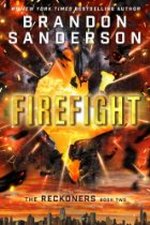
Firefight by Brandon Sanderson

FirefightFirefight

by Brandon Sanderson

Hardcover, 416 pg.
Delacorte Press, 2015
Series: The Reckoners, #2
Read: January 30 – February 2, 2015

…as she’d left, I’d glanced at her gun.
This time, when she’d pointed it at me, she’d flicked the safety on. If that wasn’t true love, I don’t know what was.

We’ve all been there, right?

In the months since David did the impossible by killing the Epic Steelheart, he and the rest of the Reckoners have continued their war against the Epics — successfully enough, that Newcago is beginning to rule itself (sure, with the puppet government that Steelheart allowed, but it’s starting to come into its own). The last few of these have been sent by the Epic that runs Babilar (Babylon Restored = Manhattan), Regalia. So, David, the Prof, and Tia leave the rest of the Newcago crew to keep order, and head to Babilar to see what they can do about Regalia.

Meanwhile, David’s trying to convince the Reckoners that Megan wasn’t a traitor and murderer, and while an Epic, she deserves a second chance. And not just because he’s gaga for her.

It’s possible that the city of Babilar is the happiest city in contemporary YA dystopias. It’s definitely one of the most upbeat depictions of Manhattan that I’ve ever read/seen. Which is saying something, considering that it’s pretty much flooded (and ruled by an Epic who can control water). But thanks to a religion/philosophy/frame of mind (depending who you ask) — possibly Epic-induced, possibly spontaneous — the people of Babilar are a lot more positive, have a certain joie de vivre, and are a lot less interested in the work of the Reckoners than anyone else we’ve heard of in this world (and poor Dave is rather befuddled by this). I don’t want to get too descriptive of it — Sanderson will do better than I ever could, anyway — so let me leave it with this: I’m not crazy about the water, and I might be persuaded to move to Babilar.

One thing I’d forgotten from Steelheart was Dave’s general goofiness and voice. I did remember how bad his metaphors were (particularly, as it was pointed out to him that they aren’t even metaphors at all), but I didn’t remember how fun Dave was as a character when he wasn’t being more driven and vengeful than a teen-aged Bruce Wayne. Maybe Sanderson didn’t stress it as much last time out, or given Steelheart’s death, he’s lightened up. My guess it was a failure of my memory — but I really enjoyed Dave’s voice here (think Peter Parker à la Bendis), and would’ve kept with the book just for it , even if I stopped caring about the rest of the story (little chance of that happening, I should say).

But even with Dave’s snappy narration and Babilar’s vibe, there’s a lot of suspense in Firefight. A lot of deception, treachery, and danger everywhere. In the brightest of moments lurks a real possibility of the world becoming a darker place than it has been since Calamity and the advent of the Epics. Sanderson attempted a real balancing act here, and pretty much pulled it off. Up to, and including a great cliffhanger that makes the wait for the final volume of this series all the worse.

The only other note I can think to say here is that Sanderson has the most creative use of Fortune cookies in fiction here. Inspired. Read it for yourself.

Fun, fast-paced, exciting tale of super-powered dictators and the people resisting them — give Firefight a read if you’ve already enjoyed Steelheart. But go back and grab Steelheart first if you haven’t.

—–

4 Stars

Review Catch Up: Beautiful Redemption; Breach Zone; Chasing the Prophecy; Fiddlehead

I’ve got a backlog of 40-plus reviews I’ve been meaning to write — some of them, I just have to admit aren’t going to get done. But I’m going to try my level best. The four books I’ve decided to tackle in one fell swoop are the concluding novels from series I enjoy, and yet I’ve had trouble reviewing them. On the whole, there’s no reason for it — I should’ve had at least a few paragraphs of material on these, but I can’t seem to muster it (especially given how much time has gone by).

But I do want to clear these off my to-do list, so, without further ado, a few words on these series finales:

Beautiful RedemptionBeautiful Redemption

by Kami Garcia and Margaret Stohl

Paperback, 451 pg.
Penguin Books, 2012
Read: November 19 – 20, 2013

On the one hand, this was not at all like the rest of the series — and yet it was a very fitting conclusion. Garcia and Stohl wrapped up everything that needed wrapped up, answered every lingering question (not always as I expected), and generally, did so in an emotionally satisfying way. I wouldn’t have thought that this book would lead to a spin-off series, but it fits.

If you’re into Paranormal YA, this was a very satisfying conclusion, and probably the best of that genre I’ve read.
4 Stars

Breach ZoneBreach Zone

by Myke Cole

eBook, 384 pg.
Ace, 2014
Read: January 31 – February 04, 2014

I really, really liked all of Myke Cole’s Shadow Ops series — a gritty, believable mix of Contemporary Military and Fantasy, and yet, I’ve never reviewed one of his books. Don’t ask me why.

This, the conclusion to the trilogy, is just outstanding. You know how at the end of (pretty much) every fantasy novel, there’s this big, epic battle that takes up most of the last ¼ – ⅓ of the novel? That’s pretty much this entire book. Okay, not really — there’s plenty of backstory, character development and wrapping up the trilogy. But while reading, it sure felt like it was an epic fantasy battle on the streets and in the waters of New York. Somewhere in there, Cole looks gain at questions of patriotism, duty, ethics and morality — and how people of integrity can try to harmonize them all (and, more often, how those with integrity can’t harmonize them all). Seriously, awesome stuff.
4 Stars

Chasing the ProphecyChasing the Prophecy

by Brandon Mull

Hardcover, 512 pg.
Aladdi, 2013
Read: December 2 – 5, 2013

Wow — Mull concluded his Beyonder’s trilogy in a fantastic fashion. Given the target audience, I couldn’t believe how many deaths there were in this book. But, not in a gory or exploitative way. Just a huge body count. But, the core of this book remained the same: these two Beyonders, Rachel and Jason, risking everything for the sake of Lyrian. There’s sacrifice, honor, loyalty, and courage — all the necessary elements of a tale full of heroes — natives and Beyonders, warriors and children, those with many lives and those with only one to lose. Which is not to say it’s not fun — there’s a lot of fun to be had by the characters and the readers. Great way to go out.
4 Stars

FiddleheadFiddlehead

by Cherie Priest

Paperback, 368 pg.
Tom Doherty Associates, 2013
Read: November 12 – 14, 2013

Nice looking book — love the cover, the layout and the graphics are great. I miss the brown ink — what gives, Tor? Sure, the content is the important thing, it’s just nice when the package it’s wrapped in is nice to look at. Speaking of content — this (like the rest of this group) is a fitting — and thrilling — conclusion to the series. Lincoln (wheelchair-bound following the unsuccessful assassination attempt at Ford’s Theater) and President Grant working together near the end of the Civil War to protect a freeman scientist who built an early computer — the eponymous Fiddlehead. Fiddlehead is the best chance to end the War without making everything worse. The presidents, with the assistance of Pinkerton agent Maria Boyd and intelligence from — well, everywhere else this series has focused — in order to begin to deal with the Rotters. I think it’s possible that Boyd is my favorite character in the series — in the Top 3, anyway.

I just didn’t want this series to end, I understand it needed to, but man…just didn’t want that.
4 1/2 Stars

Endsinger by Jay Kristoff

Endsinger (The Lotus War, #3)Endsinger

by Jay Kristoff

Hardcover, 432 pg.
Thomas Dunne Books, 2014
Read: Dec. 16 – 23, 2014

Let me show you what one little girl can do.

Of course, if you’ve read the first two novels in The Lotus War, you’ll know the list of what this one particular little girl can’t do is probably much shorter. The only question at this point is, can one little girl survive?

Kristoff has quite the wringer to put you through before you get the answer to that. For example, within the first thirty pages — thirty — Kristoff reveals something about a character I’d grown to have a certain affection for, and pitied after what happened to them in the previous book which makes me question everything I thought about them. And then he does something to that character I’m not sure I’ll forgive him for (will still read him, don’t get me wrong, I’ll just bear a grudge).

On the other hand, Endsinger is filled with so many fist-pumping moments, and fun sentences — like

Hiro laughed like a man who’d only read about it in books.

that you can keep pressing on — and actually enjoy the book. Another example of this:

Michi’s foot connected with the Inquisitor’s groin like a redlining goods train. It was the kind of kick that made one’s testicles throw up their hands and move to a monastery in the Hogosha mountains. It was the kind of kick that made orphans of a man’s grandchildren.

I mean, that’s something that Bruce Willis should be saying as he takes on Hans Gruber’s second-cousin or whatever.

I’m not going to describe much plot-wise here. It’d be too difficult to do it justice at this point — if you haven’t read the first two books anyway, there’s not a lot you’ll understand here without a lot of effort on my part. And if you’ve read the first two, you don’t need that to be an inducement to read the this one. It’d be easy in a book like Endsinger to just point every character at the final battle, throw in an obstacle or two along the way and let that be that. Heck, just coming up with an excuse to have Yoshi and Buruu travel around for 70-100 pages as the best buddy comedy pair to come along lately would’ve been a very satisfying way of spending time before the big battle. Instead, we get character development — a lot of it. We get mysteries explained. We get new characters, we learn new things about characters that we’ve known really well since book one (or thought we did, anyway). And they’re all thrown at a couple of really big battles, with some obstacles to overcome along the way.

The themes of the first two books continue to be explored here. The two that stuck out the most for me were: what makes a hero, what do they look like and what’s worth fighting for — honor, family, love, something else. Heroes aren’t what you think they are, don’t look like you think they should like — even (especially) to themselves. But everyone knows one when they see and/or hear one. As for what’s worth fighting for? That’s different for every one.

You don’t think people should know what happened here?”
“Oh, I think they should know, no doubt. I just don’t think they’ll care.”
“How could they not?”
“Because it will be different next time. It always is.”
“Different?” Akithito frowned at the cloudwalker captain.
“Different,” the Blackbird nodded. “Whatever they fight over. It’ll have a different name or a different shape — religion or territory or black or white. People will look back on us and say ‘we could never be that blind.’ People don’t learn from history. Not people who count, anyway.”

There’s a measure of cynicism, realism and idealism in Kristoff’s exploration of these (and other) themes. It’s tough, and probably ill-advised, to try to pin one of these viewpoints on Kristoff. But it seems to me that idealism’s voice is a bit louder than the rest.

Kristoff is great at keeping you on your toes. Things are bleak, but you start to think that hope is on the horizon, that one cavalry or another is coming — and coming soon. And then the hope is dashed. Or you start to think that all hope is gone and things are going to fall to ruin, and this is going to turn into a YA historical dystopian series, but then a new source of hope, a new rabbit gets pulled from a hat. He blindsides you time after time, from every direction.

Kristoff is great at his pacing, there are many moments he lets breathe, lets the readers and the characters observe everything going on, taking in all the sensory information and the thoughts of everyone. But he’s also capable of throwing in a sudden scene to grab the reader. The quick scenes bouncing around between the various characters in the heat of battle really work well to keep the tension high (though that can be a bit confusing unless you force yourself to slow down and read carefully — which is the last thing you want to do at that moment).

After awhile — about three-quarters through the book, after all the death, destruction, and (seemingly) climactic confrontations and battles getting you to that point, you simply can’t believe Kristoff can keep it going. How can the book last so many more pages? Is he going to give us a Peter Jackson’s Return of the King-style multi-epilogue? Probably not, it really seem to be Kristoff’s style. And then Kristoff shows you how he’s going to fill the rest of the book, and you pity all his characters, even those you’ve grown to despise, because that’s just not right.

In the end, Endsinger is a very satisfying conclusion to one of my favorite series in recent years. It’d have been easy for him to go for a “Everybody lives, Rose” kind of thing, where Hiro and the Lotus Guild are destroyed, Yukiko and Buruu are universally hailed as heroes, the Kage take over, and happily ever after. But he doesn’t give us that. Instead, we get the kind of conclusion promised in the first two books: it was emotionally satisfying (and induced a wide range of emotions, and may have involved a Kleenex or two on my part), it gave characters real conclusions to their arcs (not all happy endings), it tied up what needed to be tied up and it pointed towards the future. I’m going to miss this world and most of these characters. But I’m glad Kristoff didn’t try to milk this longer — it’s great as it is.

—–

5 Stars

The Infinite Sea by Rick Yancey

The Infinite Sea (The 5th Wave, #2)The Infinite Sea

by Rick Yancey
Series: The 5th Wave, #2

Hardcover, 300 pg.
Putnam Juvenile, 2014
Read: October 4 – 5, 2014
Man, talk about trepidation. Did I want to pick up this book? Was there any chance it could live up to The 5th Wave? Slim to none. But man, I wanted to find out what happens to the Earth. I wanted to know if we ever figure out what the aliens want with the Earth, why they’re eliminating humanity in the way they are. So, prepared to be disappointed, I cracked the cover.

And Yancey doesn’t try to match — or even try to top — The 5th Wave. He writes a very different book. Not one that grabbed me as thoroughly, but one that works in its own way. Where The 5th Wave was a bullet train that you just tried to hang on to — The Infinite Sea was roller coaster you’re riding while blindfolded — the ride lopping, diving, screaming around a corner with no warning, leaving your stomach behind you.

Yancey can’t even give us a Prologue to reorient ourselves to this world, to get our feet under us so we can say, “Oh yeah, this is what’s going on…” before resuming the action. Sure, it starts to seem like that, but nope. He’s right there to pull the rug out from under us at the first possible moment, in a way that catches the reader just as off-guard as the bits of remaining humanity will be.

I read some criticism lately about The 5th Wave that complained about the lack of motivation given for the aliens to do what they’re doing — it makes no sense, and therefore the reviewer couldn’t buy into the book with a motive-less enemy. But to me, that’s why the book worked. Humanity doesn’t understand what’s going on, so there’s no reason we human readers should either. Try as they might, there’s just no figuring out what’s going on other then their great need to survive.

On the whole, we spend time with the characters we met in the first book, those that survived — and, in flashbacks, some that didn’t, Cassie, Sam, Ben/Zombie, and a few others I won’t name because I can’t be sure I won’t spoil something by doing so. We say good-by to some of them, too. We meet a few other characters, too. Some of which we’ll see again. It’s that kind of series. But we get to know almost all of them better, the last book was all about getting to know a couple of these characters really well. This time, we get backstories on everyone, even if it’s pages/paragraphs before they die. This is important, I feel more grounded in this world the more I get to know characters who aren’t Cassie, Evan or Ringer.

And we get some more mature, experienced — and in some cases, informed — hints at what’s really been going on. Still, not enough to placate that other reviewer, I bet — or, really anyone. At one point, Cassie’s complaining about her interactions since Day 1 with Evan.

Every time I edge too close to something, he deflected by telling me how much he loved me or how I saved him or some other swoony, pseudo-profound observation about the nature of my magnificence.

I chuckled as I read it, because this is pretty much Yancey’s modus operandi — just when you get close to learning something, being told something, a character figuring something out, etc. — something explodes or someone starts shooting. Or both. Not a way to tell a narrative that satisfies everyone or to show off brilliant world-building. But a it’s great way to keep pages turning.

I found this to be a very satisfying read. As I said, I didn’t expect to be as taken with this book as I was its predecessor, and I wasn’t — but in a way, I’m sucked into this series more than before. I really don’t know the last time I said “son of a — “* out loud at a book as much as I did with this one. It’s probably not since Butcher’s Changes that I’ve called a writer so many names as I’ve read. Yancey just keeps throwing me for loops. Not the best book I’ve ever read, not high literature, but edge-of-your-seat thrills, convincing characters, and honestly come by surprises. Really entertaining stuff. That’s all I ask for.

—–

* I seriously don’t finish the sentence, because I’m too busy shaking off whatever trauma is thrown my way and getting back into things to bother.

—–

4 1/2 Stars

Page 37 of 42

Powered by WordPress & Theme by Anders Norén