Category: YA/MG/Children’s Books Page 8 of 42

PUB DAY (and updated) REPOST: The Tenacious Tale of Tanna the Tendersword by Dewey Conway & Bill Adams: A Would-Be Champion, A Would-Be Scribe, and a Fire-Burping Rooster

When I first posted about this book, I said I couldn’t say much about the art because my ARC didn’t include much of it. Well, the authors fixed that for me, so I’ve augmented that section a little bit.

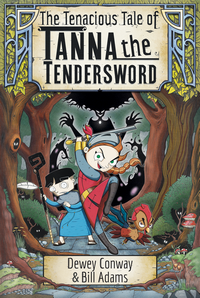
The Tenacious Tale of Tanna the TenderswordThe Tenacious Tale of Tanna the Tendersword

by Dewey Conway & Bill Adams

DETAILS:
Series: The Chronicles of Tanna the Champion by Galdifort Quillpen, #1
Publisher: Willow Wraith Press
Publication Date: April 2, 2024
Format: eARC
Length: 283 pg.
Read Date: March 14-18, 2024

What’s The Tenacious Tale of Tanna the Tendersword About?

Tanna is an aspiring Champion, a hero in training, and a student at Edic Academy of Valient Adventurers who is looking for her first quest. It ought to be small, as she’s young and inexperienced, this is the chance to show that she can accept a challenge and complete it successfully, thereby earning the opportunity to further her education.

Traveling with her is a Chronicler-in-training. His duty is to accompany her as she seeks for and then completes her quest, writing the official (and perhaps mildly dramatized) version of her heroics. When/if Tanna becomes a full-fledged Champion, he (or another Chronicler) will accompany her, so someone can tell the tale of her adventures for the entertainment and edification of non-heroes. Galdifort Quillpen is less than appreciative that Tanna’s search for a quest centers on a village populated largely by pigs and pigherders. The sights, smells, and sounds are not what he had in mind.

But she’s not finding a quest, and they only have a few days before they have to return to the Academy. Returning empty-handed will set them back in their training—perhaps derailing it entirely. Tanna is keeping busy helping people with chores and being friendly—but that’s not a guidebook-approved quest.

She excitedly comes to him, however, with an opportunity. Someone knows someone who can send them on a search to request for a quest. They only have to talk to a few people, travel after curfew (and a great distance) to a place that will put them very near the territory of a witch who is largely only referred to as What’s-Her-Name, to hopefully find the person with a quest. Tanna’s dogged determination and some rather exciting circumstances force Galdifort into agreeing to go along with her (complaining and objecting the entire way).

And that’s just the beginning…

Along the way, they will meet a peg-legged Rooster who is a vicious fighter, talking (and crying) mushrooms, a giant hawk-like bird, and enough other strange creatures to fill a Bingo card. They’ll face dangers and personal challenges. And maybe, just maybe, learn something. You know, if they survive.

Spoon!

Okay, Tanna doesn’t have a battle cry that silly. (Yet?) But throughout the book the relationship between Tanna and Galdifort reminded me so much of The Tick and Arthur (in every incarnation, but primarily the animated version, just because I’ve spent more time with that one). Tanna has The Tick’s optimism, the sheer belief that things will work out, she’ll vanquish her foes, and that the right will prevail—because that’s how it goes. She also has The Tick’s, um, poor grasp on vocabulary, understanding of complicated matters, obliviousness toward their companion’s attitutde, and propensity for overblown dialogue.

Meanwhile, Galdifort has Arthur’s intelligence, reluctance to rush into danger, preoccupation with the kinds of things that their heroic companions miss, pessimism (they’d both argue realism), and both find themselves more loyal to and confident in their companion.

I don’t think that Conway and Adams consciously modeled their duo on Edlund’s—but there are worse ideas. I think it’s just that this combination of traits really works for comedy, drama, and ongoing character development. Something they all discovered and used to well. It’s also a good way to explain to blog readers of a certain age what kind of character dynamics are present when they buy a copy of this book of their MG readers (or themselves, I don’t judge).

The Illustrations

(somewhat edited, as I indicated above, but just somewhat.)

Because, I’m so lousy at describing art, I do want to point you to some samples on the author’s site, and they are great. Cute as all get out, Galdifort’s personality is captured perfectly. Tanna’s wide-eyed optimism and energy is clear. And I’d love a print of that Peggs illustration.

So, that’s the flavor. The art isn’t a major component of the book–there’s a small illustration on the first page of each chapter, just a little bit of eye-candy. There are some medium-large illustrations scattered throughout the text as well. Nothing to distract you from the story (well, much). Mostly their purpose appears to be to grab your eyes and suck you in. They are whimsical (there’s one that depicts a miserable and harrowing experience, but even the illustration is a little whimsical–without taking away from the misery), and add just a little pizazz to the experience. The text doesn’t require them, but I can’t imagine that they’d do anything but entertain and engage the reader.

Consider me a Dewey Conway fan.

So, what did I think about The Tenacious Tale of Tanna the Tendersword?

This was ridiculously fun. I wish I was in Middle Grades so I could appreciate it a bit more—I’m too jaded and old to really get into it the way I wanted to, I could see what the authors were doing, and so on. It took a little bit of the fun out of it for me. But when I could suspend my, um, advanced adulthood and just enjoy the story, boy howdy, did I.

There were some rough patches for me when it came to grammar and language, and they most likely will have been addressed by publication. I couldn’t even tell you what they were now, so they were pretty minor (nor could I find them easily, because I tried). But I can’t imagine that any 5th +/- grader is going to pick up on them (or care).

The humor and heart are both evident throughout—I don’t know that I laughed out loud (see the jaded bit above), but I was frequently amused. There were some subtle messages/life lessons woven into the text that I appreciated and probably won’t come across as messages or life lessons for the target reader. I have to be vague with what I liked because a lot of the fun is in the discovery—or the way that Galdifort grumpily engages with or describes the world around him (he’s not quite Puddleglum or Eeyore, but he could get there one day with enough effort). But I assure you, it’s entertaining from at least page 3 right up to the end.

I think the experience would be enhanced a bit by having the illustrations, but even without them, I was entertained. The Tenacious Tale of Tanna the Tendersword is good, wholesome fun that will surely engage most readers of all ages, with a satisfying conclusion—and a good hook to bring us all back for the second in the trilogy.

Disclaimer: I received a copy of this ARC from the authors in exchange for my honest opinion.


3.5 Stars

Irresponsible Reader Pilcrow Icon

A Few Quick Questions With…J.M. Gulmire

Back in September (about the time I should have been sending him my part of this Q&A), J.M. Gulmire stopped by with a Guest Post, “Shaping Smiles with Kay-9 The Robot Dog,” giving a little BTS about the book I posted about this morning. Last week, I finally got around to sending the questions that have been rattling around in my brain since then–and he was gracious enough to get the answers back right away, so I can talk about this charming book a little bit and bring you this post. I hope you enjoy.


Why don’t you take a moment to introduce yourself to the readers, and tell us about your path to publication?
Sure sure. Well, I’ve been a storyteller for about 300 years now, it feels like. About a dozen years ago I started querying agents. I submitted mountains of work as I kept writing during this period, and got some great responses praising my work but no takers. I usually received comments about how great my stories are but that they’re not what agents are looking for.

I fell in the “too different” category. That tends to happen when you live with elves and have conversations with your dog.

So last year, the elves and my dog demanded to read my books in book format and that drove me to test out self-publishing.

My first title, “A Vacuum for my Birthday” hit #1 in its genre on amazon and since then I’ve released two other books that have all become Amazon bestsellers.

In addition to writing, your other big artistic endeavor is claymation. What kinds of things have you learned from claymation that have helped your writing—and vice versa?
I love swimming in clay. When I decided to self-publish a little birdie told me that marketing is super tough and that I’d have to do something different so I decided to practice making shorts so I could create my own book trailers. I grew up on Will Vinton and always had a strange obsession with claymation and stop motion work.

Claymation is super tough. The elves lent me some play-doh and I started writing scripts. Script writing helps get right to the action. It keeps things moving and filming reminds writers that timing matters. Thankfully I’m now actually working with clay, which doesn’t dry out as fast!

On the opposite end, writing has helped me realize my characters and bring them to life onscreen. The shorts I created for my “Kay-9 the Robot Dog” trailer were so fun to make, even when the clay took on a mind of its own.

So every book I’ve read for the MG audience about a kid who creates a robot/super-computer/etc. focuses on the end result—and the creation (or most of it) happens “off screen” or in the literary equivalent of a montage. But you don’t take that approach—the book is almost all about the creation-stage. Was that a conscious choice on your part to depart from the norm, or was that just the way it came about?
That was a pure choice. I’m so glad you enjoyed it!

One of my elves asked me to get them a robot dog book, but I couldn’t find one. Worst of all, most of the robot books were all about the robot’s experiences instead of its creation.

I was overly aware of this while writing “Kay-9.” Thankfully the subject was so fun and my dog offered a few suggestions because I love finding untold stories. That old saying, “every story has already been told” or something like that was created to be proven wrong. I think Mark Twain or some old timey author started that rumor just so people would work harder to make something new.

There’s a recurring theme (at least I think there was) about what makes a good parent running throughout the book. Frequently it’s Ryan’s mother telling/reminding him something like “I’m your mom, of course I’m going to ____.” Was that something you set out to layer in or did it just come up organically and you decided to run with it?
I’m so glad that came through. Yes. Raising a house full of elves and critters, I know how often little ones need to be reminded that they are supported by their family, especially their parents.

I also hoped that the children who read “Kay-9” would feel more connected to their parents through Ryan’s relationship with his mom, and how important his connection with his dad was even though he was gone.

What was the part what was the biggest surprise about the process of writing Kay-9? Either, “I can’t believe X is so easy!” or “If I had known Y was going to be so hard, I’d have skipped this and watched more TV”?
I found myself spellbound at how desperately the book seemed to want to be written. I would sit down and write and it poured out so well and so fast that I had to slow down and stretch my fingers to keep from losing my head. I didn’t want to rush it but knew that I was on to something.

This is typically where I ask about what’s next for an author, but your next is already here—tell us a little about Monster Camping Trip.
Yay. Thank you! “Monster Camping Trip” is my third best selling Amazon new release.

This one didn’t exactly know what it wanted to be called. The original title was, “Too Many Kids” because it’s about the ups and downs of being part of a big family, but it’s also about how families support each other even if they’re a little crazy at times.

This one sets Ava on a search for a mysterious cryptid that lives in Wisconsin. She learns about the legend of the hodag and ends up going on an adventure with her twin brother in search of it on their family camping trip.

And there’s no end to writing with me. I plan to release my fourth book, “Keku’s Mission,” in September. It’s my Lord of the Rings, but with all animals and a lot less wandering through the forest because the animals are small and can’t go as far. Imagine Frodo as a girl toad who is on a mission to find a plant that will heal her friend who is sick.

All of my books are about overcoming the odds and the importance of supporting others and being supported. They all have jokes and silly situations in them as well, because I don’t like cough medicine but laughter (and pineapple juice) are the best cure for everything.

Thanks for your time and participation! Thanks also for introducing me to Ryan and his friends/neighbors!
THANK YOU so much!! I love writing and am always happy to spend time giving my manuscripts time to cool off. LOL


Readers, go check out all of Gulmire’s books at Amazon!
A Few Quick Questions

Kay-9 The Robot Dog by J.M. Gulmire: The Name Says it All

Be sure to come back later this morning for a Q&A with the Author.


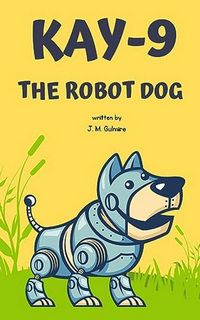
Kay-9 The Robot Dog Kay-9 The Robot Dog

by J.M. Gulmire

DETAILS:
Publication Date: September 2, 2023
Format: eARC
Length: 160 pg.
Read Date: September 16, 2023

What’s Kay-9 The Robot Dog About?

Ryan is having a rough time. His dad is overseas with the military—and Zoom calls just aren’t cutting it (actually, they may be making it worse). His mom’s allergies prevent them from getting a pet—and all Ryan really wants in the world is a dog.

So, he gets the idea of making one. Not in a bio-chem laboratory or editing genes to create a truly hypo-allergenic canine or something. But a robotic dog. His friend/neighbor Marcus helps out when he can—and Marcus’ little sister, Mariah, pushes her way into the project, too (and actually has some good ideas and contributions).

It’s not long before Ryan has moved beyond making a toy—between experimentation, online research, spare computer parts, and a little luck—he’s on his way to creating a real artificial pet.

Gulmire Zags Where Others Zig

It was in the 1980s that I first discovered stories where a kid/young person created computers, robots, androids, or spacecraft far beyond the capabilities of most professional computer engineers/corporate entities.* And while I rarely seek those out, I keep stumbling across them in various media to this day. I typically enjoy them—and have little trouble disengaging my disbelief for them, too.

* True, it was in the 1980s that I discovered pretty much everything, but that’s beside the point.

On the surface, Kay-9 The Robot Dog is one of a long line of those stories. But there’s something different about Gulmire’s approach to the creation of the Robot. Typically, most of the creation-stage happens off-screen (with maybe some comedic moments of trying it out in real life). But not here, the focus of this novel is on the creation. Trial and error. Going back to the drawing board. Thinking of a new feature and figuring out how to add it. Learning about processes necessary to get from Point A to Point B—and then beyond.

Sometimes, Ryan has to ask for help—and typically, that’s just a nudge in the right direction for research, not someone telling him what to do. The book could be titled “How to Build Your Dog” or something like that—it’s that focused on the process. I was perfectly fine with the “oh, I’ve seen this before” feeling—Gulmire was doing a good job with the usual pattern—but then when it became clear that he was taking the road less traveled, I became strongly invested.

Parenting

One of the big questions that every Middle Grade author has to deal with is “What do I do about the parents?” Often, they’re written out of the book somehow—the protagonist is at camp, or boarding school, lost in the woods, or whatever. Maybe they’re so busy at work that the protagonist rarely sees them (but generally in that case there’s some other authority figure to contend with). Sometimes, they’re written as witless or befuddled people who have to be avoided (which isn’t difficult), or they’re overbearing to one degree or another.

Ryan’s mom, however, is just a good mom. She’s involved, she makes sure he eats reasonably well, does his homework, and whatnot. They can enjoy a little back-and-forth in their conversation, but at the end of the day, she’s his mother, and he will act accordingly. She’s supportive and understanding of Ryan’s desire to have a dog, his difficulty without his father around, and then for his Kay-9 project. She’s his biggest cheerleader—but she makes sure to communicate the limits she’ll tolerate.

Marco and Mariah’s mom is also a great example of what a mom should be. The two of them together could be the focus of a TLC reality show.

So, what did I think about Kay-9 The Robot Dog ?

There’s this strong theme of a community supporting Ryan, running throughout this—and it only builds as the novel goes on. It’s understated, for the most part, but it’s there—and it generates more heart-warming energy than it should for the space it takes. I really appreciated that.

I also really appreciated the way that Gulmire addressed Ryan’s dad being overseas with the military and the stress it puts on everyone in the family. Like with so many of the things he succeeds with in this book, the depiction is strong and relatable. He never dips the toe into a “very special episode” kind of feel. But we see Ryan struggle with it, we see his mom struggle, too (we can imagine Dad’s struggle, but it’s not something the reader gets first-hand). Most importantly, this was dealt with honestly and compassionately.

This is a quick, light read (particularly for those not in the intended 7-12 year old audience). It’s full of joy and heart, with some good (and subtly delivered) life lessons. It’s a celebration of imagination, grit, and experimentation—all things we need more of. It’s also a tribute to the power of a kid-sister (your own or your friend’s) in getting things done. Best of all, it’s a fun way to spend an afternoon.

Check it out—or at least help the kid in your life give it a peek.


3 Stars

Irresponsible Reader Pilcrow Icon

The Tenacious Tale of Tanna the Tendersword by Dewey Conway & Bill Adams: A Would-Be Champion, A Would-Be Scribe, and a Fire-Burping Rooster

The Tenacious Tale of Tanna the TenderswordThe Tenacious Tale of Tanna the Tendersword

by Dewey Conway & Bill Adams

DETAILS:
Series: The Chronicles of Tanna the Champion by Galdifort Quillpen, #1
Publisher: Willow Wraith Press
Publication Date: April 2, 2024
Format: eARC
Length: 283 pg.
Read Date: March 14-18, 2024

What’s The Tenacious Tale of Tanna the Tendersword About?

Tanna is an aspiring Champion, a hero in training, and a student at Edic Academy of Valient Adventurers who is looking for her first quest. It ought to be small, as she’s young and inexperienced, this is the chance to show that she can accept a challenge and complete it successfully, thereby earning the opportunity to further her education.

Traveling with her is a Chronicler-in-training. His duty is to accompany her as she seeks for and then completes her quest, writing the official (and perhaps mildly dramatized) version of her heroics. When/if Tanna becomes a full-fledged Champion, he (or another Chronicler) will accompany her, so someone can tell the tale of her adventures for the entertainment and edification of non-heroes. Galdifort Quillpen is less than appreciative that Tanna’s search for a quest centers on a village populated largely by pigs and pigherders. The sights, smells, and sounds are not what he had in mind.

But she’s not finding a quest, and they only have a few days before they have to return to the Academy. Returning empty-handed will set them back in their training—perhaps derailing it entirely. Tanna is keeping busy helping people with chores and being friendly—but that’s not a guidebook-approved quest.

She excitedly comes to him, however, with an opportunity. Someone knows someone who can send them on a search to request for a quest. They only have to talk to a few people, travel after curfew (and a great distance) to a place that will put them very near the territory of a witch who is largely only referred to as What’s-Her-Name, to hopefully find the person with a quest. Tanna’s dogged determination and some rather exciting circumstances force Galdifort into agreeing to go along with her (complaining and objecting the entire way).

And that’s just the beginning…

Along the way, they will meet a peg-legged Rooster who is a vicious fighter, talking (and crying) mushrooms, a giant hawk-like bird, and enough other strange creatures to fill a Bingo card. They’ll face dangers and personal challenges. And maybe, just maybe, learn something. You know, if they survive.

Spoon!

Okay, Tanna doesn’t have a battle cry that silly. (Yet?) But throughout the book the relationship between Tanna and Galdifort reminded me so much of The Tick and Arthur (in every incarnation, but primarily the animated version, just because I’ve spent more time with that one). Tanna has The Tick’s optimism, the sheer belief that things will work out, she’ll vanquish her foes, and that the right will prevail—because that’s how it goes. She also has The Tick’s, um, poor grasp on vocabulary, understanding of complicated matters, obliviousness toward their companion’s attitutde, and propensity for overblown dialogue.

Meanwhile, Galdifort has Arthur’s intelligence, reluctance to rush into danger, preoccupation with the kinds of things that their heroic companions miss, pessimism (they’d both argue realism), and both find themselves more loyal to and confident in their companion.

I don’t think that Conway and Adams consciously modeled their duo on Edlund’s—but there are worse ideas. I think it’s just that this combination of traits really works for comedy, drama, and ongoing character development. Something they all discovered and used to well. It’s also a good way to explain to blog readers of a certain age what kind of character dynamics are present when they buy a copy of this book of their MG readers (or themselves, I don’t judge).

The Illustrations

This is tricky, because my copy of the ARC didn’t include the illustrations, so I can’t say a lot about them.

However, there are some samples on the author’s site, and they are great. Cute as all get out, Galdifort’s personality is captured perfectly. Tanna’s wide-eyed optimism and energy is clear. And I’d love a print of that Peggs illustration.

I’d like to see what those look like in the book itself, but I can’t imagine they’ll do anything but grab your eyes and help to suck you in. I also don’t know how many there will be in the book. I don’t think I care—the text doesn’t require them, but I can’t imagine (especially after seeing them) that they’d do anything but entertain and engage the reader.

So, what did I think about The Tenacious Tale of Tanna the Tendersword?

This was ridiculously fun. I wish I was in Middle Grades so I could appreciate it a bit more—I’m too jaded and old to really get into it the way I wanted to, I could see what the authors were doing, and so on. It took a little bit of the fun out of it for me. But when I could suspend my, um, advanced adulthood and just enjoy the story, boy howdy, did I.

There were some rough patches for me when it came to grammar and language, and they most likely will have been addressed by publication. I couldn’t even tell you what they were now, so they were pretty minor (nor could I find them easily, because I tried). But I can’t imagine that any 5th +/- grader is going to pick up on them (or care).

The humor and heart are both evident throughout—I don’t know that I laughed out loud (see the jaded bit above), but I was frequently amused. There were some subtle messages/life lessons woven into the text that I appreciated and probably won’t come across as messages or life lessons for the target reader. I have to be vague with what I liked because a lot of the fun is in the discovery—or the way that Galdifort grumpily engages with or describes the world around him (he’s not quite Puddleglum or Eeyore, but he could get there one day with enough effort). But I assure you, it’s entertaining from at least page 3 right up to the end.

I think the experience would be enhanced a bit by having the illustrations, but even without them, I was entertained. The Tenacious Tale of Tanna the Tendersword is good, wholesome fun that will surely engage most readers of all ages, with a satisfying conclusion—and a good hook to bring us all back for the second in the trilogy.

Disclaimer: I received a copy of this ARC from the authors in exchange for my honest opinion.


3.5 Stars

Irresponsible Reader Pilcrow Icon

PUB DAY REPOST: Strong Like You by T. L. Simpson: Love And Hate On The Edge Of A Knife

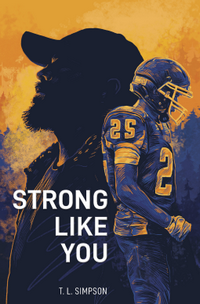
Strong Like YouStrong Like You

by T. L. Simpson

DETAILS:
Publisher: Flux
Publication Date: March 12, 2024
Format: eARC
Length: 224
Read Date: March 1, 2024

Buy from Bookshop.org Support Indie Bookstores

What’s Strong Like You About?

Walker Lauderdale is a high school sophomore and a starter for his small Arkansas high school’s football team. He and his cousin/best friend/might as well be brother Sawyer are fierce players for the defense (and we see that almost instantly). This should be the best time in his young life—but there’s something wrong.

His dad has been missing for a month. He’s not there to watch his first game. He’s not there to burst with pride, to offer advice, or to cheer from the stands. He’s just…gone. Walker’s dad and Sawyer’s dad (also best friends and teammates on the same high school team before marrying sisters) took off one night and haven’t returned. The two boys are certain they’ll be back any time—they’re frequently checking the bleachers to see their fathers up there.

The book is an extended monologue—or a series of them. Technically, an apostrophe, but let’s stick with monologue. Walker is addressing his father—catching him up on the turmoil and victories he’s missing, the hurt Walker feels because of his absence, and how he’s trying to make things work until his dad comes back. The grief, loss, and anger jump off the page.

Walker’s dad isn’t a great one, either, it should be stressed. Rarely employed, his income is largely illegal and irregular. Both missing fathers are abusive to their wives and sons. But in the way that we all can recognize, the boys are just that much more devoted to them because of it—making their dads proud is a chief aim of theirs.

Walker becomes determined to go look for his dad—which involves starting with the man his dad and uncle were last seen with—a truly frightening and violent man. Sawyer tries to dissuade him, but that just makes Walker even more certain that he needs to act.

But does he truly want to find the answers he’s seeking?

Learning About Guns

Walker—like so many people in the U.S.—appreciates guns. He’s quick to grab a pellet gun to (try to) chase away his uncle. But his cousin Sawyer? Sawyer is a nut for guns, he has magazines about them all over his room. At some point, Sawyer comes across a pistol (and somehow gets money for many bullets for it—or at least acquires them). There’s a big difference between a pellet gun and a Colt 1911, and it doesn’t take long for Walker to start learning about them.

Not what you learn in video games/TV, not what Sawyer’s survival mags teach, or anything like that. But about the reality of them—how they can invite violence, how holding one affects you, what destruction they can bring even without trying. There’s no pro-/anti- gun message at work here. No lessons or sermons were delivered. But the reality of what a gun can do to a person, a situation, or an attitude is presented in stark reality. I’d say it’s easily one of the best things about this book, but if I started listing the best things about this book, we’d be here for a long time.

Anger

Walker and Sawyer are angry young men—it’s simmering right below the surface, and comes out at inopportune times. Although, it does sometimes come out when it should*—and we see an example of that in the opening minutes of their first game of the year.

* Arguably, anyway. Their coach and teammates would say it’s appropriate.

There are plenty of reasons for them to be so angry—even before their fathers abandoned them. The more time you spend with them—Walker in particular—you see just how many reasons he has. It’s part of what his parents have passed down to him, part of the example they’ve set and the environment he’s been raised in.

The guy his father and uncle runs with, Lukas Fisher, has another kind of anger inside him—and he doesn’t hesitate to express it—where Walker’s parents shape him by their anger, Lukas “trains” his pit bull with his.* While we can see a little constructive use of anger, we can see some people who are angry due to circumstance and situations—but Lukas? He seems to revel in it, maybe even feeds on anger.

* This is off-point, but Simpson’s description of the dog’s barking was both wonderfully accurate and a bit of a tension breaker.

But back to Walker, it’s his anger that lands him in weekly sessions with the school counselor before the book begins. This counselor is one of the few who seem to look beyond Walker’s attitude, his anger, his disinterest in education, and his abilities on the football field. It’s unclear how Walker will respond to him—or even if he can respond to this man appropriately. But it’s a rare example of how his anger just might put him in the right place.

The Meaning of Manhood/Strength

Walker’s primary concern at the beginning of the book is to be strong—strong, as the title says, like his dad. For him, strength equals control. Control over your life, your circumstances, your choices—it’s also tied into how to fix things. How to make things better.

Yes, it absolutely is about physical strength first and foremost, but it’s about more than that, too. For a character presented as not that intelligent (Walker would say worse than that about himself), he’s really perceptive. He’s spent more time than many—probably even he—realizes thinking about the nature of strength.

Ultimately, this is what being a man is for Walker (and Sawyer, too)—maybe even Hank and Rufus, too. Walker sees Hank as strong—physically, emotionally, and mentally. This is what he aspires to—for himself, for his mother, and possibly even for Hank. If Walker gets to be strong enough—on and off the football field—he can make Hank and his mom proud. He can make their lives better, fixing those things that need fixing (that his father never gets around to fixing, despite Walker’s deep-seated conviction that he could and will).

Over the course of this book, this understanding of what manhood means and what strength means are seen in light of that anger mentioned above. One of the bigger questions of the novel surrounds Walker and Sawyer—as they navigate toward adulthood/maturity, what will win out? Strength or anger? What kind of men will they be?

The Love Story

Okay…after a few attempts, I realize that I cannot say anything about this without a spoiler. All I will say is that it’s perfectly conceived, perfectly executed, and just what this book needed it to be.

So, what did I think about Strong Like You?

I have several more things I wanted to talk about—but this is too long, and almost two days behind schedule (it’s at least 6 hours after I normally post something). What’s worse, every time I start writing “just one more thing,” I think of two more. So I’m bringing this in for a landing, and I may bounce around a little bit here.

I do not even like football—why do I keep reading books featuring it? Okay, I live in the USA and it’s pretty hard to escape, that’s a large part of it, but still… There’s a large part of me that doesn’t care as long as it’s a book like this one. And sure, he’s talking about a different game entirely, but Walker would agree with Dani Rojas—”Football is life!” He thinks in football terms and metaphors, he can’t explain to someone why he loves football—he can’t even understand why that person doesn’t like football, it’s like telling him that they don’t like to breathe. Most of the time, Simpson doesn’t have Walker or Sawyer tell us this, they just live this. The way he does this alone tells me that Simpson is someone to watch (or, I suppose, he thinks the same way as Walker does and it’s coming out organically—but I don’t think so)

I really should spend a lot of time talking about Walker’s guidance counselor and the arc of their relationship, there’s so much about Simpson’s work here that should be commended. There’s also this strange little tangent featuring a recent graduate of Walker’s high school and his little sisters that tells us more about Walker than anything except his attitude toward football—who he really is, not who he thinks he needs to be.

You don’t have to read very far before you know a couple of things—1. despite his conviction—or at least the conviction he voices—things are not going to go the way he anticipates, and that rough times are ahead for Walker; and 2. you are not going to want to put this book down until you reach the last page. I glanced at the first couple of pages to make sure it downloaded correctly and had to walk away from my Kindle, because I had multiple other deadlines and I knew if I didn’t do that, I’d finish the book before I did anything else. I can’t describe it, but there’s something about Walker’s voice, the way he’s talking to that father that isn’t there that just grabs you.

I’m not entirely satisfied with the way the novel ended. I liked the resolution to the various stories, let me be clear. But I feel like I could see Simpson’s not-so-Invisible Hand working to get some of the resolutions to work out the way they did. I like the way the storylines ended up, so I’m not going to complain too much. And since it was only in the closing pages that I thought about maybe criticizing something in the book, Simpson earned a little authorial heavy-handedness.

This is a real winner—Strong Like You shares so much DNA with Eli Cranor’s Don’t Know Tough (but is not a copy in any way) and even hearkens back to Early Autumn by Robert B. Parker. And anytime a book can make me compare it favorably with those two knockouts, I’m going to put it down as pure joy.

If you’re someone who gets hung up on the YA tag, push “Pause” on that for 224 pages. This is a book that deserves a fair shake and many, many readers—Simpson’s debut is as strong as Walker hopes to be.

Disclaimer: I received a copy of this book from North Star Editions via NetGalley—thanks to both for this.


4 1/2 Stars

This post contains an affiliate link. If you purchase from it, I will get a small commission at no additional cost to you. As always, the opinions expressed are my own.
Irresponsible Reader Pilcrow Icon

Strong Like You by T. L. Simpson: Love And Hate On The Edge Of A Knife

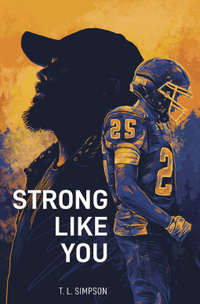
Strong Like YouStrong Like You

by T. L. Simpson

DETAILS:
Publisher: Flux
Publication Date: March 12, 2024
Format: eARC
Length: 224
Read Date: March 1, 2024
Buy from Bookshop.org Support Indie Bookstores

What’s Strong Like You About?

Walker Lauderdale is a high school sophomore and a starter for his small Arkansas high school’s football team. He and his cousin/best friend/might as well be brother Sawyer are fierce players for the defense (and we see that almost instantly). This should be the best time in his young life—but there’s something wrong.

His dad has been missing for a month. He’s not there to watch his first game. He’s not there to burst with pride, to offer advice, or to cheer from the stands. He’s just…gone. Walker’s dad and Sawyer’s dad (also best friends and teammates on the same high school team before marrying sisters) took off one night and haven’t returned. The two boys are certain they’ll be back any time—they’re frequently checking the bleachers to see their fathers up there.

The book is an extended monologue—or a series of them. Technically, an apostrophe, but let’s stick with monologue. Walker is addressing his father—catching him up on the turmoil and victories he’s missing, the hurt Walker feels because of his absence, and how he’s trying to make things work until his dad comes back. The grief, loss, and anger jump off the page.

Walker’s dad isn’t a great one, either, it should be stressed. Rarely employed, his income is largely illegal and irregular. Both missing fathers are abusive to their wives and sons. But in the way that we all can recognize, the boys are just that much more devoted to them because of it—making their dads proud is a chief aim of theirs.

Walker becomes determined to go look for his dad—which involves starting with the man his dad and uncle were last seen with—a truly frightening and violent man. Sawyer tries to dissuade him, but that just makes Walker even more certain that he needs to act.

But does he truly want to find the answers he’s seeking?

Learning About Guns

Walker—like so many people in the U.S.—appreciates guns. He’s quick to grab a pellet gun to (try to) chase away his uncle. But his cousin Sawyer? Sawyer is a nut for guns, he has magazines about them all over his room. At some point, Sawyer comes across a pistol (and somehow gets money for many bullets for it—or at least acquires them). There’s a big difference between a pellet gun and a Colt 1911, and it doesn’t take long for Walker to start learning about them.

Not what you learn in video games/TV, not what Sawyer’s survival mags teach, or anything like that. But about the reality of them—how they can invite violence, how holding one affects you, what destruction they can bring even without trying. There’s no pro-/anti- gun message at work here. No lessons or sermons were delivered. But the reality of what a gun can do to a person, a situation, or an attitude is presented in stark reality. I’d say it’s easily one of the best things about this book, but if I started listing the best things about this book, we’d be here for a long time.

Anger

Walker and Sawyer are angry young men—it’s simmering right below the surface, and comes out at inopportune times. Although, it does sometimes come out when it should*—and we see an example of that in the opening minutes of their first game of the year.

* Arguably, anyway. Their coach and teammates would say it’s appropriate.

There are plenty of reasons for them to be so angry—even before their fathers abandoned them. The more time you spend with them—Walker in particular—you see just how many reasons he has. It’s part of what his parents have passed down to him, part of the example they’ve set and the environment he’s been raised in.

The guy his father and uncle runs with, Lukas Fisher, has another kind of anger inside him—and he doesn’t hesitate to express it—where Walker’s parents shape him by their anger, Lukas “trains” his pit bull with his.* While we can see a little constructive use of anger, we can see some people who are angry due to circumstance and situations—but Lukas? He seems to revel in it, maybe even feeds on anger.

* This is off-point, but Simpson’s description of the dog’s barking was both wonderfully accurate and a bit of a tension breaker.

But back to Walker, it’s his anger that lands him in weekly sessions with the school counselor before the book begins. This counselor is one of the few who seem to look beyond Walker’s attitude, his anger, his disinterest in education, and his abilities on the football field. It’s unclear how Walker will respond to him—or even if he can respond to this man appropriately. But it’s a rare example of how his anger just might put him in the right place.

The Meaning of Manhood/Strength

Walker’s primary concern at the beginning of the book is to be strong—strong, as the title says, like his dad. For him, strength equals control. Control over your life, your circumstances, your choices—it’s also tied into how to fix things. How to make things better.

Yes, it absolutely is about physical strength first and foremost, but it’s about more than that, too. For a character presented as not that intelligent (Walker would say worse than that about himself), he’s really perceptive. He’s spent more time than many—probably even he—realizes thinking about the nature of strength.

Ultimately, this is what being a man is for Walker (and Sawyer, too)—maybe even Hank and Rufus, too. Walker sees Hank as strong—physically, emotionally, and mentally. This is what he aspires to—for himself, for his mother, and possibly even for Hank. If Walker gets to be strong enough—on and off the football field—he can make Hank and his mom proud. He can make their lives better, fixing those things that need fixing (that his father never gets around to fixing, despite Walker’s deep-seated conviction that he could and will).

Over the course of this book, this understanding of what manhood means and what strength means are seen in light of that anger mentioned above. One of the bigger questions of the novel surrounds Walker and Sawyer—as they navigate toward adulthood/maturity, what will win out? Strength or anger? What kind of men will they be?

The Love Story

Okay…after a few attempts, I realize that I cannot say anything about this without a spoiler. All I will say is that it’s perfectly conceived, perfectly executed, and just what this book needed it to be.

So, what did I think about Strong Like You?

I have several more things I wanted to talk about—but this is too long, and almost two days behind schedule (it’s at least 6 hours after I normally post something). What’s worse, every time I start writing “just one more thing,” I think of two more. So I’m bringing this in for a landing, and I may bounce around a little bit here.

I do not even like football—why do I keep reading books featuring it? Okay, I live in the USA and it’s pretty hard to escape, that’s a large part of it, but still… There’s a large part of me that doesn’t care as long as it’s a book like this one. And sure, he’s talking about a different game entirely, but Walker would agree with Dani Rojas—”Football is life!” He thinks in football terms and metaphors, he can’t explain to someone why he loves football—he can’t even understand why that person doesn’t like football, it’s like telling him that they don’t like to breathe. Most of the time, Simpson doesn’t have Walker or Sawyer tell us this, they just live this. The way he does this alone tells me that Simpson is someone to watch (or, I suppose, he thinks the same way as Walker does and it’s coming out organically—but I don’t think so)

I really should spend a lot of time talking about Walker’s guidance counselor and the arc of their relationship, there’s so much about Simpson’s work here that should be commended. There’s also this strange little tangent featuring a recent graduate of Walker’s high school and his little sisters that tells us more about Walker than anything except his attitude toward football—who he really is, not who he thinks he needs to be.

You don’t have to read very far before you know a couple of things—1. despite his conviction—or at least the conviction he voices—things are not going to go the way he anticipates, and that rough times are ahead for Walker; and 2. you are not going to want to put this book down until you reach the last page. I glanced at the first couple of pages to make sure it downloaded correctly and had to walk away from my Kindle, because I had multiple other deadlines and I knew if I didn’t do that, I’d finish the book before I did anything else. I can’t describe it, but there’s something about Walker’s voice, the way he’s talking to that father that isn’t there that just grabs you.

I’m not entirely satisfied with the way the novel ended. I liked the resolution to the various stories, let me be clear. But I feel like I could see Simpson’s not-so-Invisible Hand working to get some of the resolutions to work out the way they did. I like the way the storylines ended up, so I’m not going to complain too much. And since it was only in the closing pages that I thought about maybe criticizing something in the book, Simpson earned a little authorial heavy-handedness.

This is a real winner—Strong Like You shares so much DNA with Eli Cranor’s Don’t Know Tough (but is not a copy in any way) and even hearkens back to Early Autumn by Robert B. Parker. And anytime a book can make me compare it favorably with those two knockouts, I’m going to put it down as pure joy.

If you’re someone who gets hung up on the YA tag, push “Pause” on that for 224 pages. This is a book that deserves a fair shake and many, many readers—Simpson’s debut is as strong as Walker hopes to be.

Disclaimer: I received a copy of this book from North Star Editions via NetGalley—thanks to both for this.


4 1/2 Stars

This post contains an affiliate link. If you purchase from it, I will get a small commission at no additional cost to you. As always, the opinions expressed are my own.

Irresponsible Reader Pilcrow Icon

The Djinn’s Apple by Djamila Morani, translated by Sawad Hussain: The Scent of Death

The Djinn’s Apple Tour Banner

The Djinn's AppleThe Djinn’s Apple

by Djamila Morani , Sawad Hussain (Translator)

DETAILS:
Publisher: Neem Tree Press
Publication Date: May 7, 2024
Format: eARC
Length: 160 pg.
Read Date: February 24, 2023
Buy from Bookshop.org Support Indie Bookstores

What’s The Djinn’s Apple About?

Nardeen is a remarkable twelve-year-old. Her father is a physician known for translating medical texts from a variety of languages into Arabic, and Nardeen soaks up his work. She has an astounding memory and ability to understand what she memorizes.

But due to some political intrigue that she doesn’t wholly understand, Nardeen and her family have to flee their home one night. Sadly, she’s the only one who survives.

Nardeen vows revenge on those responsible for her family’s murder—certain that a friend of her father’s is ultimately to blame.

But before then, she finds herself being taken under the wing of a legendary physician and teacher, Muallim Ishaq. He recognizes her gifts and her heritage from her father—he arranges (mostly by the force of his will) to have her learn at The Bimaristan, a hospital of great renown. There, she’s able to hone her skills and knowledge—and sharpen her tools, resolve, and ability to mete out that vengeance.

Father vs. Father

There are a handful of various conflicts in this book (like with any good book), but at the core, this book seems to be a conflict within Nardeen herself. On the one hand, she has her memories of her father and what he taught her—what he showed her by example—about the way to live. She also has to wrestle with what she’s told about her father—by those who profess to have admired him and those who worked against him.

On the other hand, she has her (for all intents and purposes) adoptive father, what he’s trying to teach her—what he shows her by example—about the way to live. She also has to wrestle with what she’s told about him—by those who profess to admire him and those who work against him.

In many ways, these two fathers line up—but in significant ways, they follow and lead her down divergent paths. So much of how the plotlines of this book resolve depends on Nardeen’s acceptance/rejection of what these men stand for.

The Setting

So, this takes place during the “golden age of Baghdad”—Harun al-Rashid’s rule of the Abbasid Caliphate from 786 to 809. Now, everything that I know about this period of time comes from the appendices to this novel “Harun Al-Rashid: The Golden Age of Baghdad” and “The Bimaristan.” As they are appendices, I read them afterward. So I came into this not knowing anything—which is a bit intimidating. And I figure I’m not alone in this (particularly for the intended YA audience, who probably haven’t had much opportunity to study Eigth-Century history).

But honestly? Anyone who reads Fantasy/SFF knows how to approach something like this—sure, this is a representation of actual history, but the same tools and imagination you need to understand Westeros, Panem, or the world of the Shadowhunters equip you to get into this world.

And, like with those worlds, after getting this taste, you’ll likely want to read more about it.

While reading, and since then, I do have to wonder a little bit about how much Morani was stretching things about the opportunities presented to women in this time and place. Not just for Nardeen, either—but all the women she encounters at the Bimaristan (and I’d be saying this if the city was Paris or Rome, not just because it’s Baghdad). But I’m willing to both suspend disbelief for the sake of a good story and to trust that someone who’s as familiar with Arabic literature as Morani is more than my hunches.

So, what did I think about The Djinn’s Apple?

This book hits the ground running—Morani doesn’t give you the opportunity to settle in and get comfortable in this world or anything like that. She thrusts the reader—and poor Nardeen—straight into life-or-death action. Nardeen has a slightly better understanding of what’s going on than the reader does—but not much. This was a great way to start this read—you don’t get the chance to indulge curiosity or get lulled into thinking it’s a different kind of book than it is—you have to rush to catch up and then keep up with Nardeen and only get the luxury of starting to understand the world until she’s (relatively) safe.

There were a couple of times that I wondered about the timelines and how well they worked. I assume I just missed something (and didn’t want to take the time to go back and check). It wasn’t anything that bugged me enough to look into it, but I would’ve appreciated things being a bit clearer.

The characters of Nardeen and Muallim were so well drawn, so vivid, and so compelling that I really wish we had more time with them. Particularly Muallim—this cantankerous genius is the kind of character I really respond to. Now, given the pacing of this book, that’s impossible. And Morani picked the better option for her story. But the eccentric teacher and the stubborn and gifted student is a combination that could’ve made for a lot of fun.

Somehow in the midst of this propulsive pacing, Morani is able to litter the book with some great observations, some drops of wisdom (primarily from the teacher and student), and memorable prose (some of that credit has to be given to Hussain as well).

This is a fast, immersive read that’ll leave you guessing from the beginning right up to the end. You’d be doing yourself a favor if you pick it up.

Disclaimer: I received a copy of this book from Neem Tree Press and The Write Reads via NetGalley.


4 Stars

This post contains an affiliate link. If you purchase from it, I will get a small commission at no additional cost to you. As always, the opinions expressed are my own.


 

My thanks to The Write Reads for the invitation to participate in this tour and the materials they provided.

BOOK SPOTLIGHT: The Djinn’s Apple by Djamila Morani, translated by Sawad Hussain

This morning, I’m very pleased to welcome The Write Reads Ultimate Blog Tour for Djamila Morani’s The Djinn’s Apple. In addition to this Spotlight, my post about the book will be coming along soon. In the meantime, go check out https://twitter.com/WriteReadsTours—we’re in the middle of this tour and several bloggers have been writing interesting things about this book and and there are more to come you can find them all there. But for now, let’s learn a little bit about the book, shall we?

The Djinn’s Apple  Tour Banner

Book Details:

Title: The Djinn’s Apple by Djamila Morani, translated by Sawad Hussain
Genre: Historical Fiction / Crime & Mystery / Family
Age Category: Young Adule
Publisher: Neem Tree Press
Release date: February 29, 2024 (UK), May 7, 2024 (US)
Format: Paperback/Ebook
Length: 160 pages
The Djinn’s Apple Cover

About the Book:

Winner of an English PEN Translates Award.

Historical fiction meets crime fiction in The Djinn’s Apple, an award-winning YA murder mystery set in the Abbasid period—the golden age of Baghdad.

A ruthless murder. A magical herb. A mysterious manuscript.

When Nardeen’s home is stormed by angry men frantically in search of something—or someone—she is the only one who manages to escape. And after the rest of her family is left behind and murdered, Nardeen sets out on an unyielding mission to bring her family’s killers to justice, regardless of the cost…

Full of mystery and mayhem, The Djinn’s Apple is perfect for fans of Arabian NightsCity of Brass, and The Wrath and the Dawn.

Book Links:

Neem Tree Press ~ Amazon UK ~ Amazon US ~ Goodreads

About the Author:

Djamila Morani Djamila Morani is an Algerian novelist and an Arabic language professor. Her first novel, released in 2015 and titled Taj el-Khatiaa, is set in the Abbasid period (like The Djinn’s Apple), but in Kazakh- stan. All of her works are fast-paced historical fiction pieces. She is yet to have a full-length work translated into English.

Author Links:

Twitter/X ~ Instagram

My thanks to The Write Reads for the invitation to participate in this tour and the materials they provided.

Grandpappy’s Corner: Boop the Snoot by Ashlyn Anstee: Fast, Slow, and Cute Noses to Poke

Grandpappy's Corner Boop the Snoot Logo

Boop the Snoot

by Ashlyn Anstee

DETAILS:
Publisher: Viking Books for Young Readers
Publication Date: July 5, 2022
Format: Board Book
Length: 16 pg.
Read Date: February 18, 2024
Buy from Bookshop.org Support Indie Bookstores

What’s Boop the Snoot About?

How many of these snoots could
a baby boop
if a baby could boop snoots?

This book begins with that age-old question that has had philosophers, dreamers, and that Owl from the Tootsie Pop commercials speculating.

From there we get a series of pictures of toddlers attempting to boop the snoots of various cute animals. And…well, that’s the book, really.

Let’s Talk about the Art for a Minute

It’s so, so cute. Anstee makes this energetic and eye-catching. The pictures are the star of this board book (as is typical) and the snoots are the stars of the art—although the various fingers going in for a boop come in a close second.

And as hard as you’d think it would be to make repeated index fingers engaging, Anstee pulls it off. This is good stuff.

How is it to Read Aloud?

It’s very clearly a book intended to get a child moving, there’s a snoot or two (or more) on every page to be booped. And that’s the focus of the book—the words are there, yeah, and kind of fun. But there’s not a lot to say, it’s just turn the page and look at a snoot, while saying essentially what you’ve said before.

The experience is fun, but the reading itself isn’t as integral as it is with other books (not a criticism, a description).

What did the Little Critter think of It?

I’m not sure how much he was entertained by the book on first blush—but he did like me saying “Boop.” “Snoot,” too, but not as much. Either way, those two words make this the kind of thing that he (or other kids like him) will have fun being read. I’m sure in a couple of months, he’ll get the idea about interacting with the book and he’ll start booping.

So, what did I think about Boop the Snoot?

So, the first time I brought this out for the Grandcritter wasn’t as fun as I’d hoped/expected—but that was because I brought it out too early. That’s on me. He liked looking at it, and hearing me make silly sounds.

I think this has promise—and delivers the silliness you’d expect from something with that name.

Give it a shot.


3 Stars

This post contains an affiliate link. If you purchase from it, I will get a small commission at no additional cost to you. As always, the opinions expressed are my own.

Grandpappy Icon

Grandpappy’s Corner: Taco Tuesday by Brick Puffington, Amy Blair (Illustrator): It’s Not Quite “Eat Mor Chikin,” But…

Grandpappy's Corner Taco Tuesday Logo

Taco Tuesday

by Brick Puffington, Amy Blair (Illustrator)

DETAILS:
Publisher: Cottage Door Press
Publication Date: September 03, 2019
Format: Board Book
Length: 12 pg.
Read Date: February 18, 2024
Buy from Bookshop.org Support Indie Bookstores

What’s Taco Tuesday About?

This book is a taco trying to convince the reader to eat something other than tacos—it talks about the problems with eating a taco, and how great other foods are in comparison.

It’s a fun idea, right?

Let’s Talk about the Art for a Minute

It’s bright, it’s simple in a way that will attract a very young reader. It’s playful and cheery. Just what the doctor ordered, basically.

How is it to Read Aloud?

There’s not a lot to it—it’s a super quick read, if you’re just about the reading and not playing with the puppet. The pages are tiny and have very few words on them. The rhymes are fun enough. I’m pretty sure by the time I finish this post I’ll have used 5x the words in the book (at least).

So, what did I think about Taco Tuesday?

Let’s see…the little finger puppet taco is pretty cute (it’s the Grandcritter’s favorite part, as far as I can tell). That should be mentioned first off.

Secondly, man, am I glad that the audience for this book is not going to remember—or fully understand—this book. Because, really—it’s about a cute little taco trying to get the reader to eat anything, anything, but them. And the book closes with the reminder it’s Tuesday. That’s pretty dark for a board book. But again, the target audience isn’t going to think that hard about it.

Their parents (or whoever is reading this to/with them), on the other hand, will understand that—and it’s a dash of fun to help out with a book that doesn’t offer a lot for us.

This is cute, it’s fun. It’s multifaceted—a kid to play with the pages, the puppet, and look at some pretty colors and bright pictures. That’s more than enough for me to recommend it.


3 Stars

This post contains an affiliate link. If you purchase from it, I will get a small commission at no additional cost to you. As always, the opinions expressed are my own.
Grandpappy Icon

Page 8 of 42

Powered by WordPress & Theme by Anders Norén