Smoke Bitten by Patricia Briggs: Mercy Deals with Unexpected Threats from Every Direction

Smoke Bitten

Smoke Bitten

by Patricia Briggs
Series: Mercy Thompson, #12

Hardcover, 342 pg.
ACE, 2020

Read: March 24-28, 2020
Grab a copy from your local indie bookstore!


There’s just so much going on in this novel, it’s hard to know where to start—this may be the busiest Mercy Thompson novel yet. Well, okay, we’ll start with the titular bit. Something/Someone has escaped from Underhill. This seems fairly impossible, but I guess even nigh-omnipotent sentient spaces make mistakes every now and then. Doubtlessly the Columbia Basin pack would’ve gotten involved at some point, but since Mercy recognized the threat before the Fae—or anyone else—did, they were on the front line for this. Whoever it bites, it controls. It can shape-shift to look like anyone, too. It’s deadly and doesn’t seem to have much of a plan beyond creating as much chaos and gathering as much power as it can.

While dealing with that, another threat to the pack presents itself. There are some new werewolves in the area, and their goal is simple: become the new pack in town. As Adam’s pack is now independent of The Marrok, these wolves have decided they’re ripe for a takeover. None of these are wolves to be taken lightly—some have recently left a pack run by very dominant Alpha, which took some strength. All of them have strong reputations amongst the wolves (generally positive), although one is known as the wolf who’d do things that Charles Cornick wouldn’t do for his father. These are not going to be easy to face off against.

The thing that’s the most distressing (and given what I’ve just talked about, that’s saying something) for Mercy is that there’s a problem between her and Adam. The roots of the issue go back to before we met Adam, but something happened in Storm Cursed to tip Adam over the brink. The latest meddling by Adam’s ex, Chrissy, made it all boil over and threatened the peace and stability of the pack—as well as their marriage. We see Mercy at her most vulnerable since…well, probably since the attack at the garage (or what The Monster tried to do in Bone Crossed), which stresses for the reader how bad the situation is. The two take some positive steps, but things aren’t resolved wholly here—and I hope Briggs doesn’t patch things up quickly between the two between novels. I think we need to see the pair continuing to work through things.

There’s a few more things going on, too, including some fun with Sherwood (who is quickly becoming a favorite character), some interesting developments with Jesse’s life, and some interesting character development in general with pretty much each of the pack members we usually get time with. Oh, and lest I forget, an old friend comes back.

One final thing to mention: last year, while talking about Storm Cursed, I said:

There’s something that happens in the climactic battle scene that I want to talk about more than I want to talk about anything else in this book—because in the long run it’s going to be bigger and more important than anything else that happens or I’ll eat my hat. It’s so small, so quick that it’d be easy to miss—2 sentences on one page, then twelve pages later 2 more sentences. And Briggs has at least one novel’s worth of plot seeded right there. I love when I see an author do something like that and make it look effortless. And I think I’m underselling it. But I’ll have to leave it there—maybe in book 12 (or 15) when it happens, I’ll remember to say, “Remember that thing I didn’t talk about in Storm Cursed? This is it.”

Well, Briggs gave that seed plenty of water and a little fertilizer in these pages. I still don’t feel comfortable talking about it in detail for reasons I can’t explain. But whoo-boy, I can’t wait to see what Briggs has in mind.

So, yeah, like I said—a lot of balls in the air. Or plates spinning. Pick a metaphor you like best. And I think Briggs did alright by them all—yeah, I’d have liked a bit more time with the new wolves, but we didn’t need it—and I’m not sure we’re done with them (maybe in the next Alpha and Omega book if not in an upcoming Mercy novel?). To deal well with all these elements and keep the novel moving quickly and resolving in a satisfactory manner (with a few more strings than usual left for the next installment) speaks highly of Briggs’ skill. Fans of Mercy Thompson shouldn’t wait to grab this, people who are curious about the series should be able to come on board now, too (although, you really ought to read them all). Briggs is at the top of her game now, and it’s just fun to watch.


4 Stars

This post contains an affiliate link. If you purchase from it, I will get a small commission at no additional cost to you. As always, opinions are my own.


Saturday Miscellany—4/4/20

Update: Naturally, I opened up my Kindle and found something that downloaded yesterday (I’d ordered it so many months ago, that I’d forgotten it was coming), so updated the New Release bit.

Yesterday, I talked about being wiped out lately, and I set out to prove it apparently. I’m not sure what time I fell asleep last night, but it was a few hours earlier than I expected. Anyway, I woke up about 3 am and couldn’t get back to sleep, so I figured I’d read for a couple of minutes and drift off. I ended up reading for about 90 minutes, finishing a great read. I don’t remember the last time I did that–no interruptions (welcome or otherwise), no taking a quick peek at some social media, no anything. Just me and a book. It was so nice. Probably did more for my psyche than anything else in the last couple of weeks. Hope you’re able to find something like that yourself.

Also, while compiling this post, I’ve been listening to Joe Pug’s second concert from his Social Distancing Tour. I’m wagering that most of you haven’t heard of Pug before, take this opportunity to address that lacuna (loved the whole thing, but my favorite song from this group is around the hour and 10-minute mark although I almost revised that with the next song).

Enough of that, on with the post:

Odds n ends about books and reading that caught my eye this week. You’ve probably seen some/most/all of them, but just in case:
          bullet Bookstores Can Be Saved—Dave Eggers provides the rare serious McSweeney’s post
          bullet Get Shorty at 30: Dennis Lehane on Elmore Leonard’s Hollywood satire—Doesn’t get much better than Lehane, unless it’s Leonard. The former writing about Leonard, much less about Get Shorty? I could end this post right here and be satisfied.
          bullet The best $193 I ever spent: A mountain of detective fiction when my wife was pregnant—although this is almost just as good
          bullet Crime writer Don Winslow leaves Trump behind, mostly, for the California cool of novella collection Broken
          bullet New Ways to Organize Your Bookshelves
          bullet 100 Fairy Books That You Should Read Before You Die
          bullet Sci-Fi & Fantasy Authors Share Their 2020 TBRs—some good looking stuff here
          bullet Reading comprehension, reviews, and jerks—I stumbled onto this again this week, still fun (but man, so glad I don’t have to read people saying things like this about my work)
          bullet Take this (weirdly precise!) quiz to find out which fictional character’s personality matches yours.—a fun little time-killer
          bullet Bearded by J. Billups Book Report—a very cool video version of Billups’ Bearded (and, yes, I’m envious of the beard).
          bullet How I Became A Book Blogger—who doesn’t enjoy a good origin story?
          bullet What Makes a Book Blog Readable?

A Book-ish Related PodcastEpisode (or two) you might want to give a listen to:
          bullet Blood BrothersEpisode 2 Featuring Noelle Holten—a few crime authors being very silly (and some good book talk, too). The first episode is worth your time, too.

This Week's New Releasesthat I’m Excited About and/or You’ll Probably See Here Soon:
          bullet Curse the Day by Judith O’Reilly—the first, Michael North thriller, Killing State just rocked, can’t wait to find time to read this one. A conspiracy thriller featuring an AI and a great former-assassin protagonist.

LastlyI’d like to say hi and extend a warm welcome tosandomina, LDW, and just_tommye for following the blog this week. Don’t be a stranger, and use that comment box, would you?

The Immortal Conquistador by Carrie Vaughn: Just who is the Vampire Rick, Anyway?

I’ve been trying to get this out for over a week now (it was published last week), but I couldn’t seem to be able to—I’m a little surprised I’ve had the energy to post anything since I started telecommuting (odd that not going anywhere tires me out more than going to work does). Finally, with apologies to the publisher for getting this post up late.

The Immortal Conquistador

The Immortal Conquistador

by Carrie Vaughn
Series: Kitty Norville

eARC, 192 pg.
Tachyon Publications, 2020

Read: March 20-23, 2020


I’ve been a fan of the Kitty Norville series since the debut in 2005, and one of the supporting characters that fans seem most enamored of—and are given the least information about—is Kitty’s vampire ally, Rick (the Master of Denver).

For those (like me) who need a little brushing up on some of what went on toward the end of the series, Rick leaves Denver for a while in order to explore a different way to take on Dux Bellorum (the series’ Big Bad).

This book gives the reader some insight into what Rick was up to during this time. The book stitches together four short stories about Rick’s origin (some previously published, some not) while Rick introduces himself to the Order of Saint Lazarus.

I’d already read the first story, “Conquistador de la Noche,” in the collection Kitty’s Greatest Hits—but it worked really well in this setting, too—this sets the stage for the rest of Rick’s history and tells about him becoming a vampire. The next two stories show what happens when he first encounters the Vampire sub-culture and is first exposed to the rules (most) Vampires live by and how Rick skirts the edges of those rules and starts to make both a name for himself and build his different kind of power base.

The fourth story is my favorite detailing what happens when Rick meets a legendary Old West character. It was just a great story with an element of fun. It’s also something the reader is told that Rick’s never told anyone about before. It’s precisely the kind of thing that Kitty would kill to hear, she’s constantly asking vampires and other supernatural types for stories like this. That Rick would go out of his way to deprive her of this story (but we get to read it) was a little extra dash of fun.

I don’t know that this gave me a much better picture of Rick—the novels had pretty much done that. We know his character, we may not understand his past and what he was—but we know who he is. But this book rounds out our understanding of the man and gives the reader a little hope for his future.

Once I cottoned on to what Vaughn was doing—stitching together short stories—I was a little skeptical of the format. But I came around pretty quickly and decided it worked really well. It’s better than a simple short story collection, essentially giving us a bonus story. The stories (including the framing device) feel different from the Kitty series, but not so much that it doesn’t feel like the same world.

A cool bonus of this—you can read it totally independent of the Kitty Norville series. It’s not dependent at all on the events or people of the series (there are references to certain antagonists, but not in any way that makes familiarity with the series necessary for understanding).

I do have to wonder about the timing of this—the series ended almost five years ago, so I’m not sure I get why we’re getting this material in this format now. But that’s just me being curious, not complaining. Did I (or the series) need The Immortal Conquistador? No. But I’m very glad I got it.

Disclaimer: I received this eARC from Tachyon Publications via NetGalley in exchange for this post —thanks to both for the opportunity.


3.5 Stars

March 2020 in Retrospect: What I Read/Listened to/Wrote About

It’s hard with work right now, but given COVID-19, Sheltering at Home—and a (no kidding!) Earthquake in Idaho (of all places)—man, I need books to escape to and lose myself in. So I’m pretty glad that despite everything going on in the world and my life, I somehow managed to finish one more book than last month—18—with 4903+ pages (one was an Audible Original, so I have no idea what the page count would be) with an average rating of 3.94. I’m guessing that’s 500 pages less than Feb, even with the higher book count. Still, not too shabby.

So, anyway, here’s what happened here in March.Books Read

False Value The In Between Avenge the Dead
5 Stars 4 1/2 Stars 3 Stars
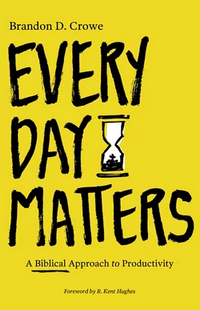
The Starr Sting Scale Everyday Prayer with John Calvin Dead Wrong
3.5 Stars 3 Stars 4 1/2 Stars
The K Team Joker The 7 ½ Deaths of Evelyn Hardcastle
3.5 Stars 4 Stars 4 Stars
The Awful Truth About the Sushing Prize The Immortal Conquistador Back to Reality
3.5 Stars 3.5 Stars 4 Stars
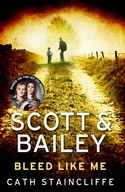
Smoke Bitten The Identity and Attributes of God With All Your Heart
4 Stars 5 Stars 4 Stars
Paradise Valley Mortal Stakes Funny, You Don't Look Autistic
3.5 Stars 5 Stars 3.5 Stars

Still Reading

Tom Jones Original Cover Institutes of Christian Religion vol 1 A Bad Day for Sunshine

Ratings

5 Stars 3 2 1/2 Stars 0
4 1/2 Stars 2 2 Stars 0
4 Stars 5 1 1/2 Stars 0
3.5 Stars 6 1 Star 0
3 Stars 2
Average = 3.94

TBR Pile

Mt TBR Mar 20

Breakdowns

“Traditionally” Published: 12
Self-/Independent Published: 6

Genre This Month Year to Date
Children’s 0 (0%) 1 (2%)
Fantasy 0 (0%) 7 (13%)
General Fiction/ Literature 0 (0%) 3 (6%)
Horror 0 (0%) 0 (0%)
Humor 0 (0%) 1 (2%)
Mystery/ Suspense/ Thriller 9 (50%) 20 (37%)
Non-Fiction 1 (6%) 3 (6%)
Science Fiction 2 (11%) 5 (9%)
Steampunk 0 (0%) 0 (0%)
Theology/ Christian Living 3 (17%) 4 (7%)
Urban Fantasy 3 (17%) 11 (20%)

Review-ish Things Posted

Other Things I Wroteotherwriting

Other than the Saturday Miscellanies (7th, 14th, 21st, and 28th ), I also wrote:

How was your month? I hope you are all safe, healthy and finding solace in something right now.

Dryad Teas Inspired by the Dresden Files

And Now for Something Completely Different

This is not what I typically post about, but it sort of fits.

I’m not a big tea drinker—but I dabble from time to time, and we’re in the middle of another attempt to drink more (health benefits, no sugar, etc., etc.—oh, and it tastes good, too). While I’m playing around with this blend and that, someone posts on one of the Dresden Files Fan Facebook pages a link to Dryad Teas’ Dresden Files inspired teas (and then someone posts about another company’s varieties, too!). I have to be honest, my mind is boggled, how do you come up with tea blends based on fictional characters? Sure, I can see a Picard-branded Earl Gray variety or something that Lady Mary or Count Grantham might drink; but thinking about a character and coming up with a tea blend based on them? I wouldn’t know where to start—and I’m freakishly impressed (and incredibly curious about it).

Anyway, I ordered some samples from Dryad’s Dresden teas, and thought I’d share a thought or two about them.

KarrinKarrin

Inspired by the amazing ‘Dresden Files’ book series by Jim Butcher, this blend is a thought provoking mix of peach and apricot with deep undertones of black tea.

I’m not sure that this says, Karrin Murphy to me. It does make me think of her house—left to her by her grandmother, and I don’t think she re-decorated it much (I’m ready to be corrected on that front). In the end, it was too fruity for me. It smells great, though, and tastes very pleasant.

Bob the SkullBob the Skull

…this blend is a delicious mix of genmaicha and citrus. Notes of raspberry and lime pair with the depth of the genmaicha to create a light blend with promise, fitting for Bob the Skull.

Another one that I’m not sure about—it’s too floral, and too mild for me to drink regularly. I’m also not a big green tea guy. But there’s something about this blend of flavor that is very, very pleasant. I would absolutely drink it again (I’m not sure I’d buy it though). I think they drew too much from Bob’s love of Romance novels when they came up with the blend. (just a wild guess)

DresdenDresden

…this blend is inspired by Dresden. Smoky and spicy, the text of “The building was on fire, and it wasn’t my fault.” explains the character perfectly. This tea is no different.

Now this? This was my cup of tea.* Going from that quoted line, it’s smokey, dark, deliciousness. I tried to explain the flavor to my wife by saying it’s like “a tea made from pipe tobacco, but it tastes good.” She told me I shouldn’t ever tell anyone that. I tried explaining it to a friend, who is also a Dresden fan, by saying “Imagine the ashes of the building that was on fire (but wasn’t his fault), made into a tea, that somehow tastes good.” She didn’t tell me that I shouldn’t repeat that description, but her expression pretty much did.

Basically, I don’t know how to describe how things taste–this was strong, smokey, bold, full of flavor. I’d drink this by the gallon.

* Had to be done.

Anyway, check out Dryad Teas. Even if these don’t appeal, they have a lot of geeky teas/accessories.

Classic Spenser: God Save the Child by Robert B. Parker

Classic Spenser

God Save the Child

God Save the Child

by Robert B. Parker
Series: Spenser, #2

Mass Market Paperback, 202 pg.
Dell Publishing Co., 1974

Read: February 25, 2020
Grab a copy from your local indie bookstore!

He hunched the chair forward and wrote a check on the edge of my desk with a translucent ballpoint pen. Bartlett Construction was imprinted in the upper left corner of the check—I was going to be a business expense. Deductible. One keg of 8d nails, 500 feet of 2×4 utility grade, one gumshoe, 100 gallons of creosote stain. I took the check without looking at it and slipped it folded into my shirt pocket, casual, like I got them all the time and it was just something to pass along to my broker. Or maybe I’d buy some orchids with it.

A nice bit of description, a bit of wit and a Nero Wolfe reference. Not a bad start.

I’m not certain, but I think this was the first Spenser novel that I purchased, and I’d read a handful before then (my then local library started with book 3). It was a new copy (an extravagance for me then), and justing by the state it’s in, I may have to buy myself a replacement copy after one or two more reads. Actually, it may not survive another whole read (that back cover is holding on by strength of will).

Which is just a long-winded way to say that it’s not like I read this with fresh eyes.

Roger (call him “Rog”) and Marge Bartlett have come to Spenser for help finding their fourteen-year-old son, Kevin, who has seemingly run away from home with the clothes on his back and his pet guinea pig. He’s been gone a week, and the local police haven’t been able to do much. Spenser assures them that unlike the police, the only thing he has to focus on his hunting for Kevin—not breaking up fights, ticketing speeders, arresting drunks, etc.—”Also, maybe I’m smarter than they are.”

During their initial consultation, we see that the couple is also a bit more focused on other things than Kevin. Marge is sure to work in references to her acting and cooking classes, she’s a self-described creative person who has to express it. Rog seems a bit more focused on the bottom line (which he might need to be, since Marge seems to spend money like it’s going out of style). By the end of the book, my impression is that Rog is trying to do the right thing for his family, has some real concern over Kevin, but maybe doesn’t know how to show it. Marge is too self-involved for my taste and doesn’t come across very well (and has some other problems I won’t get into). But when the chips are down, both will selflessly and reflexively react to help their son. Their daughter, Kevin’s younger sister, is practically ignored throughout and I always feel bad for her. We’ll see an echo of this couple (with significant variations) in Promised Land in a couple of months.

The Bartletts live in Smithfield, which a fictionalized version of Lynnfield, MA. There are some pretty good reasons that Parker probably had to change the name in this novel, but as Spenser spends time in almost every novel since in Smithfield, I wonder if he ever regretted it.

Police Chief Trask is this close to being a tough-guy cartoon of a cop. He’s far more concerned with making sure that Spenser knows that he’s running the show than he is in anything Spenser has to say on their initial meeting (and he doesn’t improve much after this). He’s done some checking on Spenser and the two banter a bit about Spenser’s record. Well, Spenser banters and Trask tries to push him around, anyway.

Before Spenser can do too much on his own to find Kevin, a very strange looking ransom note shows up. Which brings the Massachusetts State Police, in the person of Lt. Healy, into things.

Healy I knew of. He was chief investigator for the Essex County DA”s office. There were at least two first-run racketeers I knew who stayed out of Essex County because they didn’t want any truck with him.

Healy said, ‘Didn’t you used to work for the Suffolk County DA once?”

I said, “Yes.”

“Didn’t they fire you for hotdogging?”

“I like to call it inner-directed behavior,” I said.

“I’ll bet you do.” Healy said.

Healy is tough, smart and ethical—and has little respect for Trask. He and Spenser work together pretty well, and Healy will appear or be mentioned in another dozen Spenser novels before making regular appearances in the Jesse Stone books.

From this point, things get strange—the ransom note is just the beginning, and a strange kidnapping will evolve into a murder case, a drugs and prostitution ring, and . . . well, more things. As with The Godwulf Manuscript the climactic fight involves two people who have no business engaging in hand-to-hand combat. Unlike last time, Spenser’s not sidelined for this fight and gets involved as well—it’s one of my favorite fight scenes in the series. Parker shows off his knowledge of and affinity for boxing here. Spenser’s motive for engaging in the fight isn’t necessarily pure, and I kind of like how honest Parker and Spenser both are about that.

As nice as that scene is, that’s not the end of the story—and whatever victory Spenser enjoys, it’s empty. Which is a nod to Spenser’s noir lineage and something that will show up again and again in the series.

While we’re introduced to Spenser in the previous novel, it doesn’t feel quite like a Spenser novel. But God Save the Child does. The same flavor, pacing, and approach to the story that are here are in almost every thing that Parker does with the character from this point forward. The character will evolve from novel to novel, but the series really starts here.

Possibly the biggest reason for that is that it’s in these pages we meet Susan Silverman. She’s the guidance counselor at Smithfield High School and after the Assistant Principal demonstrates that he’s useless for giving Spenser any insight into Kevin, she’s who Spenser turns to. Spenser’s described quite a few women prior to this, but from the first paragraph, Susan’s different.

Susan Silverman wasn’t beautiful. but there was an intangibility about her a physical reality, that made the secretary with the lime-green bosom seem insubstantial. She had should-length black hair and a thin dark Jewish face with prominent cheekbones. Tall, maybe five seven, with black eyes. It was hard to tell her age, but there was a sense about her of intelligent maturity which put her on my side of thirty…When she shook hands with me, I felt something click down the back of my solar plexus.

I said hello without stammering and sat down.

Parker’s not quite as blatant about it as Henry Fielding is about Sophie (for those who’ve been reading my Fridays with the Foundling series), but he’s fairly obvious in the way he portrays Susan in this scene (not to mention the several that follow) that she’s different. Exceptional. She ends up being the love of Spenser’s life and shows up in every book hereafter. But for now, they’re just meeting, but there’s a spark between the two of them and Spenser soon asks her to dinner.

I had just finished washing my hands and face when the doorbell rang. Everything was ready. Ah, Spenser, what a touch. Everything was just right except that I couldn’t seem to find a missing child. Well, nobody’s perfect. I pushed the release button and opened my apartment door. I was wrong. Susan Silverman was perfect.

It took nearly forty years of savior faire to keep from saying “Golly.”…

“Come in,” I said. Very smooth. I didn’t scuff my foot; I didn’t mumble. I stood right up straight when I said it. I don’t think I blushed.

During their date, Susan makes the following observation about Spenser,

So, sticking your nose into things and getting it broken allows you to live life on your own terms, perhaps.

Spenser is impressed with this insight—and it’s a recurring theme for the two of them to talk about for the next few decades—with each other or when Susan tries to explain Spenser to others. The choices he’s made in his life—relational, vocational, lifestyle, what have you—are all about living life on his own terms. There’s a lot to be commended in this approach, and some problems (in two books we meet a more extreme version of someone living this way…but that’s for another day). Another frequent thing that comes up in their conversations appeared for the first time when they met.

“Why do you want to know?” [Susan asks]

“Because it’s there. Because it’s better to know than not to know in my line of work.”

If I had a quarter for every time the two of them said this (sometimes he does the set up), I’d be able to buy my replacement copy of this book.

It’s not just because they say the same things in almost every book (wow, it sounds dull when I put it that way—it’s not, at least not for several years), it’s the effect that Susan has on Spenser that changes the series. It made Spenser stand out from the rest of the genre’s tough guys. I could go on and on about Susan or Susan-and-Spenser, but I’ll hold off on it for now.

As chapter two begins, we’re treated to four long paragraphs (about two pages in my edition) describing the route between Boston and Smithfield, with commentary from Spenser on the scenery, traffic, businesses, etc. that he comes across. This is something that Parker excels at—and doesn’t do nearly often enough (but at least once a book). I’ve never been in that part of the world, I defiantly can’t go to the version of that area that existed in 1974—but I walk away from this description feeling like I know the area.

As far as recurring characters go (other than Healy and Susan), Frank Belson makes a quick appearance, and we meet Henry Cimoli—who runs the Harbor Health Club, Spenser’s gym. Henry’s importance will ebb and flow (as will the frequency of appearances) over the rest of the series, but he’s a constant enough presence that it’s good to meet him for the first time here.

There’s a lot more that could be mined from these pages, but this has gotten too long. I may pick up a strand or two in the future, but we’ll see. God Save the Child seems to be a story about a runaway (or a kidnapping?), but really it’s about a young man struggling to understand his place in the world, parents who aren’t sure how to parent, and a detective starting to change his place in the world. There’s a lot of wit, some good social commentary, some decent detecting, and a great fight scene—all expertly and (seemingly) effortlessly written. That’s a reductionistic way to look at it, but that’s a Spenser novel in a nutshell. I loved revisiting it, and can’t wait to get to the next book.

This post contains an affiliate link. If you purchase from it, I will get a small commission at no additional cost to you. As always, opinions are my own.

Everyday Prayer with John Calvin by Donald K. McKim: A helpful, but not overly-interesting devotional

Everyday Prayer with John Calvin

Everyday Prayer with John Calvin

by Donald K. McKim

Hardcover, 117 pg.
P&R Publishing, 2019

Read: March 1-8, 2020
Grab a copy from your local indie bookstore!


Let’s get this out of the way at the beginning: I do not like devotionals. Morning and Evening, Our Daily Bread, Ligonier’s Tabletalk…or any number of other daily helps that millions find helpful. They’re too brief, too…I don’t want to say shallow, but introductory, I guess. The instant they get near depth, they have to wrap up because they’re about to get too long for the format. And I understand why, but I just find them frustrating.

Which is just to say that I should never have bought this book. And so you know that my lack of enthusiasm isn’t necessarily a criticism. This was never going to be a book I really liked.

The term devotional shows up nowhere in the blurb, title, anywhere—”Everyday” was the only clue I overlooked (but I thought the term suggested “ordinary,” “regular,” non-pulpit prayer).

Prayer is central to the Christian life, which is why John Calvin spends more time on prayer than on any other topic in his Institutes of the Christian Religion.

Drawing from the Institutes and Calvin’s Old and New Testament commentaries, Donald K. McKim comments on Calvin’s biblical insights on prayer and intersperses his short readings with Calvin’s own prayers. Reflection questions and prayer points help you to meditate on Scripture, understand Calvin’s teaching, and strengthen your own prayer life.

The ninety readings start with a scripture reference, give a paragraph or so of introduction to the topic, a quotation from one of Calvin’s commentaries or the Institutes—the quotation will be a sentence fragment to a paragraph or so—then some application, a reflection question or a particular thing to pray about. There was nothing wrong in the readings, but they….lacked any real depth or insight. I think it could be helpful for some people, or maybe a useful review of some ideas.

These readings are separated by the occasional longer prayer from a commentary. which are just great—the best part of the book.

It’s based on Calvin—there’s good stuff throughout. But you’re better off reading the source material (the section from the Institutes on Prayer alone is better than this book, never mind the helpful things referred to in the commentaries). If you like devotionals, you may find this of some help. At the least, it’s worth a look.


3 Stars

This post contains an affiliate link. If you purchase from it, I will get a small commission at no additional cost to you. As always, opinions are my own.

Saturday Miscellany—3/28/20


I wanted to start with that, because…man, that’s exactly where I am. (although I know not all of us book nerds can do that, I’m so sorry for them that their typical escape isn’t working–hope that passes than the crisis does).

Odds n ends about books and reading that caught my eye this week. You’ve probably seen some/most/all of them, but just in case:
          bullet 8 Ways To Support Your Local Bookstore While Quarantining—3rd straight week that I’ve started with something like this, but at least this week it’s from a different source (and I’m not planning on stopping this streak…)
          bullet When Libraries Close, It Feels Like the End of the World
          bullet Digital Library Cards—My local library has started this, which is a great idea. Have yours been doing something similar? Or equally helpful?
          bullet How to Catalog Your Book Collection—I know at least one person who’s taken the opportunity of sheltering to tackle this project.
          bullet Quarantine Book Club: It’s been impossible for me to read lately. Then I got in the bathtub
          bullet The Guardian has some handy posts this week: Tackle that to-be-read pile: the books to try if you’re self-isolating: From Nora Ephron to Thomas Mann, here are 12 books to entertain, challenge and inspire if you’re confined at home due to Covid-19; Got 150 hours? Great audiobooks to listen to on lockdown; and Let’s move to Mars: the best books about our future in space (for those ready to get off this crazy planet)
          bullet As does Read it Forward: 9 Books to Escape Into While You’re Stuck at Home: As you’re practicing social distancing, we’ve got your quarantine reading list right here.
          bullet Reading YA Books May Increase Empathy and Integrity—I’ve read (and linked to) this claim for reading in general before, but this is the first time I’ve seen it focused on one type of reading.
          bullet Sorry, but “you read too much YA” isn’t an insult
          bullet How Do You Define Genres : SciFi, YA, Fantasy, etc.—Nunc hoc in marmore non est incisum
          bullet 6 books I had to be talked into reading (that I’m so very glad I read).
          bullet Hyped Books I’ll Never Read – Spring Cleaning My TBR
          bullet Congratulations, You’re Moving In With A Reader!—closing things off with a little bit of levity (like anyone’s moving in with anyone right now…)

This Week's New Releases that I’m Excited About and/or You’ll Probably See Here Soon:
          bullet The K Team by David Rosenfelt—the Andy Carptenter series has spun-off a promising new PI series I blogged about it last week.
          bullet The Last Human by Zack Jordan—a space opera about the last member of a species that the rest of the universe decided was too dangerous to be left alone.

Lastly I’d like to say hi and extend a warm welcome to J.R.Spiker, Caffeinated Reviewer (my first non-p0rnbot follow from Bloglovin’ in months!!), Odah Ebubechukwu Nelson, ontheshelfbookblog, and Rajesh khanna for following the blog (in one format or another) this week. Don’t be a stranger, and use that comment box, would you?


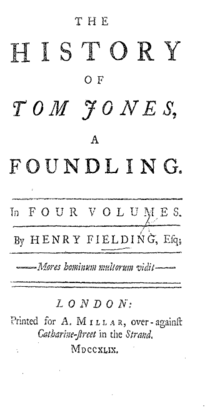
The History of Tom Jones, a Foundling by Henry Fielding: BOOK IV., ix.-xiv.

Fridays with the Foundling
Tom Jones Original CoverA couple of bonus chapters to catch up…

We start off with Molly’s mother and sisters attacking her for being with child—an illegitimate child. Molly points to the hypocrisy of her mother—Molly’s oldest sister is 1 week younger than her parent’s marriage. Mom is having none of it. Her parents are trying to push her into Service at the Western’s, but she refuses and in the end, her mother will take the position. Molly’s refusal is because she’s convinced that her “Gentleman” will provide for her and the child much better.

The next night, Tom dines with Sophie, Squire Western and the local Parson. The Parson goes on about Molly and her condition, going on about the Bastard she’s carrying. Tom leaves the meal in a haste, prompting Squire Western to opine that Tom’s the father. This shows Sophie her true feelings about Tom while the Parson regrets the way this will lower Tom in Allworthy’s view.

Molly is about to be taken to a house of correction over her pregnancy when Tom claims the child as his own and begs for mercy from Mr. Allworthy. Allworthy relents and sends her home to her parents, lectures Tom and then goes off by himself for an evening of “melancholy Contemplation.” He’s a man of high morals and is horribly disappointed in Tom’s actions—but

whatever Detestation Mr. Allworthy had to this or to any other Vice, he was not so blinded by it but that he could discern any Virtue in the guilty Person, as clearly indeed as if there had been no Mixture of Vice in the same Character. While he was angry therefore with the Incontinence of Jones, he was no less pleased with the Honour and Honesty of his Self-accusation. He began now to form in his Mind the same Opinion of this young Fellow, which, we hope, our Reader may have conceived. And in balancing his Faults with his Perfections, the latter seemed rather to preponderate.

Nevertheless, Square takes this opportunity to twist and spin these events to convince Allworthy that Tom has only been Black George’s friend in order to corrupt Molly, and succeded to stamp “in the Mind of Allworthy the first bad Impression concerning Jones.”

Sophie is now battling with herself, resolved not to have anything to do with Tom any more and to stop loving him—she falls for him again and again every time she sees him. So she tries to avoid him, even coming up with a plan to visit her Aunt.

But Fortune, who had other Designs in her Head, put an immediate Stop to any Proceeding, by introducing an Accident, which will be related in the next Chapter.

What brings her to this accident? Well…

Mr. Western grew every Day fonder and fonder of Sophia, insomuch that his beloved Dogs themselves almost gave Place to her in his Affections; but as he could not prevail on himself to abandon these, he contrived very cunningly to enjoy their Company, together with that of his Daughter, by insisting on her riding a hunting with him.

While hunting, her horse got a little whiled and she was almost thrown from it. Tom arrives in the nick of time and catches her before she falls (and is likely trampled). He breaks his arm doing so, but shrugs off the injury.

Sophie stops fighting her feelings for Tom and Tom realizes that he has some for her.

There’s a whole lot of words involved in progressing things just a hair—but the best parts of this book isn’t so much about the story, but about the way that Fielding is telling it. As such, there’s a whole lot to enjoy in this part of the journey. Nothing as enjoyable as in some weeks, nothing as dull as in others—just a lot of pleasantness. Works for me.

Back to Reality: A Novel (Audiobook) by Mark Stay & Mark Oliver, Kim Bretton: A Parallel Universe/Body Swap Story Story Full of Laughs and Heart


Back to Reality

Back to Reality

by Mark Stay & Mark Oliver, Kim Bretton (Narrator)

Unabridged Audiobook, 10 hrs., 6 Min.
The Bestseller Experiment, 2019

Read: March 19-25, 2020


Oh, boy… how do I talk about this? I thought about calling this a bundle of joy, but that means something else. A bundle of audio joy, maybe? This was just so much fun that I want to start with that. If you’re looking to have a good time, this is a book for you.

If you read the Book Spotlight I just posted, you’ve got a good idea about the plot (and if you haven’t read the Spotlight, why not?). But for the sake of completeness here’s the gist: connected by something across the multiple parallel universes, two versions (one 18 and one almost 2 decades older) of one woman swap bodies for a few days. The older version works in PR, is the mother of a teen who can’t stand her, with marriage problems. The younger version is a pop star on the verge of breaking through in the ’90s. If they don’t swap back, there’s every sign that they won’t survive in this new world. But how can they do that?

That sounds sort of intriguing, I hope. But the book never really feels like that kind of Fringe-inspired take on a Back to the Future/Freaky Friday mashup, because of the voice, the style and approach of Stay and Oliver—which is characterized by humor and heart. It’s like early-Rainbow Rowell/Jennifer Weiner/Emily Giffin/Sophie Kinsella. These are strong women in very strange circumstances, surrounded by interesting characters responding to unbelievable situations.

We meet Jo on a night out with people from the office, which turns into an alcohol-fueled karaoke sensation (Jo has a fantastic voice, but a lot of stage fright). I enjoyed this chapter so much that I probably could’ve written 3-4 paragraphs about it alone and would’ve read an entire book about this woman’s life (especially because what happens to her in the next couple of chapters deserved a complete novel to see her respond to). It took me a little longer to get invested in “Yolo” (the 90’s version), but I came around and started rooting for her, too.

I am not the target audience for this (note the authors I mentioned above—some of which I only know through my wife’s description). And there were a few times I asked myself why I was listening to this—each time, I decided I was enjoying myself enough that I didn’t care if this was my typical read or not. There’s just a hint of SF, a dollop of Time Travel (more like jumping between parallel universes), and a healthy amount of “women’s commercial fiction.” This is a recipe for a wonderful literary dessert.

I’ll frequently (maybe too frequently?) talk about an audiobook narrator bringing the text to life. And Kim Bretton does that. But she does more than that—she fills it with life. Dynamic, energetic, vibrant…are just some of the adjectives that spring to mind. I was very happy when I just looked over her other audiobook credits and saw a couple of titles I was already thinking about—if she’s doing them, I’m giving them a try. (although, if I never hear her do another American male accent, I’d be more than okay).

Funny, sweet, amusing, heartfelt, laugh-inducing, touching, comic, imaginative—and did I mention humorous? This is 606 minutes of pure entertainment. I really encourage you to put this in your ear-holes. It’d probably work almost as well in print—Bretton’s great, but she has to have something to work with—but in audio? It’s close to a must-listen.


4 Stars

My thanks to Overview Media for the invitation to participate in this tour and the materials (including a copy of the novel) they provided.

Page 358 of 625

Powered by WordPress & Theme by Anders Norén