Hacked by Duncan MacMaster: A Smart, Fun Sequel that Topped the One that Went Before

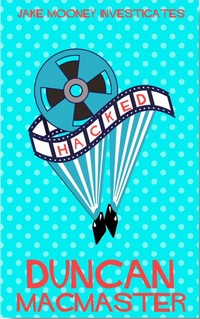
Hacked

Hacked

by Duncan MacMaster
Series: Jake Mooney, #2

Paperback, 258 pg.
Fahrenheit Press, 2019

Read: December 10-11, 2019

Grab a copy from your local indie bookstore!

“You’re a very different kind of man Jake Mooney,” she said. “It’s almost like you belong here, but don’t belong here.”

“How is that?”

“Your life is like a movie,” she said, “and I think the last thing you want is to live your life like that.” …

“This is my second go-round for this sort of thing,” I said, “and the problem with sequels is that they always have to top the one that went before them.”

I remember really enjoying Hack, our introduction to Jake Mooney. But, I didn’t remember exactly why I did (I guess I could’ve read my post about it, but that sounds too much like research). It took almost no time at all to remember once I dipped into this Hacked (and many of the details about Hack came back to me straight away, too). Hack had a strong voice, fun characters, a clever mystery, with a satisfying conclusion to wrap things up. Hacked gives us more of all that.

For those of you who haven’t met Jake Moody, he’s a former journalist turned ghostwriter. Two years before this novel, he rose to fame by solving multiple homicides. He then finished ghostwriting the autobiography of one of the murder victims. He then writes his own account of what transpired (see Hack for details), as well as a fantasy novel. Now he’s been talked into coming to LA to sell the movie rights to any/all of his books.

Before his days of ghostwriting, Jake lived in LA and still has plenty of friends there and touches base with a couple of them. One of the things everyone is talking about there is the hacking of a movie company and the release of private date from them—supposedly, this is a North Korean retaliation for the portrayal of Kim Jong Un in one of that studio’s movies. A legendary agent who Jake knew years ago inadvertently puts Jake in the middle of the investigation. Not long after that, a P.I. friend of his asks him to consult on the same topic.

When Jake arrives at his friend’s home, however, he finds his friend brutally murdered. The assumption has to be that the people behind the hack are the people who killed his friend. So while he really is content to leave the investigation into the hack to the proper authorities, seeing his friend’s body sets Jake inexorably into finding out who committed the murder (and the hack while he’s at it).

Jake’s assisted in this hunt by his agent friend, his new agent, an accountant turned security guard, a former FBI agent, a ride-share driver who’s always wanted to be up to escapades like this, and an attractive studio exec. Help comes from other directions, too, but I’m not going to ruin the surprise for you.

It’s not long before someone tries to kill Jake, he’s kidnapped more than once, assaulted, and . . . you know what? You wouldn’t believe me if I listed all that happens to this poor writer (also, why ruin the surprise?)—I couldn’t help imagining MacMaster asking himself, “What else can I do to Jake? A tiger attack? Nah, not sure how to get him in the cage, but I do know how to ….”

The LAPD is eager to pin all of the death and destruction on Jake, but the more they press him, the more adamant he becomes that he won’t leave. Given the strong cloud of suspicion that North Korea is behind the hack, and presumably the murder of his friend, the FBI is involved, too. They’re less inclined to suspect Jake of having anything to do with the murder, but they’d like him away from the case.

There are more than the requisite number of twists and turns to this case, none of them feels forced or gratuitous. And even when you’re faster at putting the pieces together than Jake is, you should probably take a beat before criticizing him, because you’re probably not as right as you think you are.

The tone is what separates this from similar mysteries. This is not a comedy —there’s a brutal murder, including signs of torture to start things off. There are threats of violence, actual violence, and more deaths to come. But the way that MacMaster tells it makes it become one of the funniest and most enjoyable reads of the year. Think Marshall Karp’s Lomax and Biggs Mysteries for tone. That’s probably not the most helpful comparison, come to think of it, because I’m not sure how many people are familiar with them (too few for sure). Okay, think of this as a Shane Black story—just a novel instead of a script, and there’s no tie to Christmas. MacMaster’s Kirby Baxter books are more overtly comical than his Jake Mooney books, but both are just flat-out entertaining and laugh-filled.

Typically, in books/TV/movies, Hollywood Agents are not depicted sympathetically. Which is probably a bit of an understatement, really. But Jake’s old friend and new agent are both depicted as decent people that he can rely on. That’s not really a plus or a minus when it comes to evaluating, but it’s so strange that I felt compelled to mention it. I can’t remember another fictional Agent who wasn’t some sort of duplicitous, manipulative, weasel.

The story, Jake and the other characters, the fun had a Hollywood’s expense, the twists, etc. would’ve been good enough to make me rave. But there’s a Chinese gentleman that plays a big role in the novel—I don’t want to say much about him, because you just have to meet him yourself. He pops up repeatedly throughout the novel, yet we really don’t spend that much time with him altogether. But he steals every scene he’s in. He’s one of my favorite new characters of 2019. If there’s a Hacked Again or Hack Harder or whatever, I hope MacMaster can come up with an excuse to use him again.

I just had so much fun with this one (a common theme when it comes to MacMaster)—I can’t think of a single reason why someone shouldn’t read this (you don’t have to read Hack first, by the way). Jake was right in what he said before, the problem with sequels is that they have to top the one that went before. Hacked easily does that. It’s smartly-written, cleverly-plotted and just fun to read. Go run and grab it!

4 1/2 Stars

LetsReadIndie Reading Challenge2019 Cloak & Dagger Challenge

This post contains an affiliate link. If you purchase from it, I will get a small commission at no additional cost to you. As always, opinions are my own.

Saturday Miscellany—12/14/19

Shorter list this week, with less of the other stuff than usual. Hope I’m not missing anything, and that it’s just the end-of-the-year-blahs. I can understand not a lot of things being put out there in the world this week—you likely noticed that I was pretty quiet. I had big, semi-ambitious (yet attainable) goals for the week and hit none of them. I did get three posts partially written, however, so . . . yeah. That’s pretty lame, actually. Non-blog life was just weird this week and the results (or lack thereof) were plainly visible in my posting. Onward and upward though.

Anyway, here are the odds ‘n ends over the week about books and reading that caught my eye. You’ve probably seen some/most/all of them, but just in case:

Also, I’d like to say hi and extend a warm welcome to Maya’s Musings, David W, Rain Alchemist, alittlebookproblem, forwarddog and Tim Onayemi for following the blog this week. Don’t be a stranger, and use that comment box, would you?

Friday Favorites: Favorite New to Me Authors in 2019 (UPDATED)

UPDATE: While I was driving home from work today, a little voice in my head asked me, “Did you leave Noelle Holten off the list?” and, “How could you?” Not only did I love Dead Inside, but Holten has been very supportive of my meager social media. It had to be a reckless click of the mouse that got her off the list. And then I was AFK all evening, so it took until the wee small hours to address. Argh.

Anyway, fixed now.

Friday Favorites is a weekly meme hosted by Something of the Book.

I typically resist doing any “____ of The Year” posts until the end of the year, but reading this one on the topic list got me thinking, and I ended up compiling most of the list from memory (but I’m glad I keep a log, because I’d have been mad in a day or two when I remembered the rest of these). Still, this is an incomplete list—I still have a handful of books to get through this year, and there are 3 strong contenders for this list.

There were plenty I cut from this, including authors of books that I really enjoyed. But at the end of the day, these are the 18 New-to-Me authors from the past year that are auto-buys/borrows for me. I should say a thing or two about all of these, but I just don’t have the time. Check the original posts I wrote about these books for a little more about the way these writers worked their way into my subconscious.

bullet James Bailey, author of The First World Problems of Jason Van Otterloo and Dispatches from a Tourist Trap
bullet C.J. Box, author of Back of Beyond, The Highway, Open Season, Savage Run, and The Badlands
bullet Gyles Brandreth, author of Have You Eaten Grandma?: Or, the Life-Saving Importance of Correct Punctuation, Grammar, and Good English
bullet Mike Chen, author of Here and Now and Then
bullet Sarah Chorn, author of Seraphina’s Lament
bullet Helen Fitzgerald, author of Worst Case Scenario
bullet Peter Grainger, author of An Accidental Death
bullet Noelle Holten, author of Dead Inside
bullet Niel Lancaster, author of Going Dark and Going Rogue
bullet Adrian McKinty, author of The Chain
bullet Luna Miller (and I should probably mention Aidan Isherwood, translator), author of Lions Tail
bullet Todd Morr , author of Instant Karma
bullet David Nolan, author of Black Moss
bullet Judith O’Reilly, author of Killing State
bullet Nick Quantrill, author of Broken Dreams
bullet Andy Redsmith, author of Breaking the Lore
bullet Ian Shane, author of Postgraduate
bullet Melissa Simonson, author of Lingering
bullet Abbi Waxman, author of The Bookish Life of Nina Hill Post

Miscellaneous Meanderings while Waiting for the Dryer to Finish.

I knew I should’ve banked one of the posts I wrote this weekend to post today, but I felt energetic enough that I didn’t need to.

Cut to the end of a good, but energy-tapping day, and I have two posts that I tried to push out and got a good paragraph done on each before abandoning both for now and nothing to post. I’m hoping I can get one of those done tomorrow, but I’m not sure I can count on it. Bah.

Nevertheless, it was a good day for being a Reader, if not a Blogger. I was hoping I’d finish Matthew Dick’s Twenty-one Truths About Love this evening. I clearly estimated poorly—I finished it before work.

Barely. I apparently was so into the ending that I turned off the alarm that’s supposed to keep me from being so into a book that I get to work late without noticing I’d done so. I still made it into the office on time, but without any cushion. It was just that good.

Probably wouldn’t have worked out too well, “Sorry I’m late, boss. I was in the parking lot getting misty-eyed over a novel.”

The downside of finishing a book 9 hours earlier than you’d expected is, of course, I had nothing to read the rest of the day (2 breaks and lunch). I downloaded an ARC onto my phone and got through the day without having to actually talk to people during my downtime. But it did mess up my plans (moved up reading that ARC by 2 weeks), So once again, I’ve put off reading Hacked by Duncan MacMaster for the 43rd time (or so) since it came out in August. And then there’s the joy of reading on a tiny screen…but that a whine for another day.

So I tell all that for no real reason, just something to say that doesn’t take a lot of editing. But I got an important lesson/reminder from this—there are books out there that are so good you won’t notice your phone making a loud and obnoxious sound, chosen specifically so that you have to pay attention to it, and those’re what I’m supposed to be focusing on—the rest of the stuff around my reading/blogging isn’t.

Hopefully you’re reading something about as good—just be sure to get to work on time.

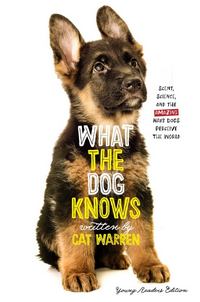
What the Dog Knows Young Readers Edition By Cat Warren, Patricia J. Wynne: A MG Version of Great Book about Man’s Best Friend

What the Dog Knows Young Readers Edition

What the Dog Knows Young Readers Edition: Scent, Science, and the Amazing Ways Dogs Perceive the World

by Cat Warren, Patricia J. Wynne (Illustrator)

Hardcover, 325 pg.
Simon & Schuster Books for Young Readers, 2019

Read: December 4-5, 2019

Grab a copy from your local indie bookstore!


I wasn’t sure what to expect from a Young Reader’s Edition of this book, was it going to be dumbed down? Was it going to be a soup-to-nuts rewrite of the book, telling the story in a cutsie fashion? Or . . . well, I don’t have a third idea, but you get my opinion. But what we got was the same book (as near as I can tell, it’s been 4+ years), just pared down—not dumbed-down or anything. But a lot of the detail has been removed, every chapter boiled down to its essence. Simplified, yes, more accessible for younger readers than the dense “adult” text, but it’s the same book at the end of the day.

After the end of the text, there’s a section directing the readers to some more information and a Young Readers Info section of Warren’s website.

As it’s so similar, I’m just going to use a lot of what I wrote back in 2015 to talk about the book, sorry for the re-run (I’ll focus on this edition in a few paragraphs).

Warren was a journalist, is now a professor, and knows her way around a sentence. She clearly cares about the subject and has invested a lot of time and effort into getting to know it, her style is engaging and charming (I was chuckling within a couple of pages), and she doesn’t mind showing her own failings and weaknesses.

Warren basically covers three topics: there’s the science and history of using working dogs (of all sorts of breeds, not to mention pigs(!), birds, and even cats) to find cadavers, drugs, bombs, etc.; there’s the memoir of her involvement with cadaver dogs via her German Shepherd, Solo; and anecdotes of other cadaver dogs and trainers that she’s encountered/learned from/watched in action.

The history and science of dogs/other animals being used for their sense of smell, is probably the most fascinating part of this book, but it’d be really easy for the material to be too dry to bother with—Warren’s voice keeps that from happening. I think it’s terrific that at the end of the day, no one knows what it is about the smell of the human body that dogs sense—she’ll explain it better than me, but that’s the kernel the story. I just really enjoy it when the best and the brightest have to shrug and say, “I don’t know.” The chapter she spends on the future of dogs and/or digital replacements is good for similar reasons. Actually, I could just keep listing little facts/factoids/ideas here, but I don’t want to steal Warren’s thunder.

The best part of the book—the part that I found most interesting, and most frustratingly small—is the Warren’s story about getting Solo, discovering he had just too much energy and personality, and needing to find an outlet for it all. Which is followed by the trials and tribulations of a newbie cadaver dog handler and her pup-in-training, growing into a capable working dog. Anyone who has a dog lover as a Facebook friend knows just how easy it is for someone’s stories about their dog to get to the point where you can’t stand to hear another*. Somehow, Warren avoids this totally—not an easy feat. It probably helps that dog does far more fascinating things than just hiking through the woods or chasing a ball.

* Of course, your friends don’t have dogs as cool as mine. Let me tell you a little bit about her . . .

The stories about the others—her friends, colleagues, teachers, etc.—round out the book. It’s not just about Warren and Solo, it’s not just about the military/police efforts with training animals—it’s about dedicated volunteers, K-9 officers and dogs all over the country (and the world) making a difference. In places and ways you wouldn’t expect. Really? Sending in one guy and his dogs into Vietnam decades later to search for POW/MIA? Also, seeing how different dogs act differently, yet get the same job done was mind-boggling. Especially for dogs trained together/by the same person, you’d think they’d act similarly.

I imagine it’s to spotlight the work of others, to not brag about Solo too much, to talk about things that she and her dog haven’t done/seen/smelled—or whatever reason there is, I wanted more Solo. A lot more. I have no problem with the rest of the book, it’s just that there’s not enough Solo (or Coda, her younger dog).

This new edition features some illustrations and instructional graphics. There were a couple that I wondered about the placement of, but they were all helpful, eye-catching and attractive. They added to, instead of distracting from, the text. Good stuff.

A fascinating, entertaining, and educational book—can’t ask for much more than that.


4 Stars

2019 Library Love Challenge

This post contains an affiliate link. If you purchase from it, I will get a small commission at no additional cost to you. As always, opinions are my own.

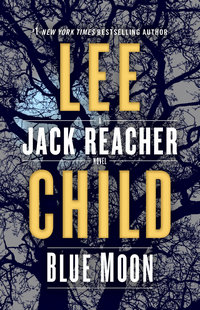
Blue Moon by Lee Child: A Very Timely Novel Puts Reacher in One of the Most Dangerous Positions He’s Been In

Blue Moon

Blue Moon

by Lee Child
Series: Jack Reacher, #24

Hardcover, 356 pg.
Delacorte Press, 2019

Read: December 2-3, 2019

Grab a copy from your local indie bookstore!

“We should be magnanimous in victory. Someone said that.”

“Full disclosure,” Reacher said. “I told you before. I’m a certain kind of person. Is the guy in the trunk still breathing?”

“I don’t know,” Abby said.

“But there’s a possibility.”

“Yes, there’s a possibility.”

“That’s me being magnanimous in victory. Normally I kill them, kill their families, and piss on their ancestors’ graves.”

“I never know when you’re kidding me.”

“I guess that’s true.”

“Are you saying you’re not kidding me now?”

“I’m saying in my case magnanimity is in short supply.”

“You’re taking food to an old couple in the middle of the night.”

“That’s a different word than magnanimous.”

“Still a nice gesture.”

“Because one day I could be them. But I’ll never be the guy in the trunk.”

“So it’s purely tribal,” Abby said. “Your kind of people, or the other kind.”

“My kind of people, or the wrong kind.”

“Who’s in your tribe?”

“Almost nobody,” Reacher said. “I live a lonely life.”

Reacher is on a bus bound for somewhere. He sees an older man being targeted for a mugging (both he and the would-be thief have noticed a fat envelope that seems to be holding cash). When the man and his predator get off at some city, Reacher abandons his planned trip to follow along.

Obviously, he foils the mugging, but the older man is injured, so Reacher appoints himself a guardian and assistant until he can get the man home. He learns that this man and his wife are in debt to a Ukrainian loan shark, and it’s not looking good. They got in this state due to some incredibly believable bad luck, and Reacher decides to take it upon himself to get them out of it. Maybe not permanently, but at least for the foreseeable future. He has essentially one week to extricate them from their current predicament, and Reacher is hopefully going to beat that clock and get back on the road.

We’re not told what city this takes place in, it doesn’t matter—it’s a small-to-medium sized city with two competing crime syndicates. One is a Ukranian mob, the other is an Albanian mob. They each control half the city, with a very clear line of demarcation. They’re currently enjoying an uneasy peace, and are nervous about a new police commissioner coming soon—neither group has been able to find a way to manipulate or bribe him and they’re in his sights. Before I forget, I want to say that I love that both groups speak/write in unbroken English—I get why other authors use broken English for these kinds of characters, but it feels less cartoonish this way.

Once Reacher starts doing his thing, a little comedy happens. Reacher is trying to do X. The Ukrainians see the effects and assume the Albanians are doing Y. The Albanians see the effects and assume the Ukrainians are up to Z. The clear messages Reacher is sure he’s sending aren’t being received by anyone. Before long the two factions are on the brink of war—which is the last thing that anyone wants.

While he’s trying to help out this older couple, Reacher befriends a waitress, Abby. Soon, she leads him to some other allies—a couple of musicians (one a former Marine) and a security consultant who used to be a Company Commander in an Armored Division in Europe during the Cold War. There’s some good-natured chest-thumping between the three veterans which helps lighten to tension.

Abby is tough and smart. She reminded me a lot of Patty from Past Tense—she adapts to the dangerous situation she finds herself in pretty well. She’s not crazy about it, she’s pretty freaked out, honestly. But she pulls herself together enough to help Reacher as well as being his conscience occasionally (she’s less willing than he is to leave a trail of bodies in their wake). Like Patty, once things get rolling, Abby starts analyzing her situation and what’s going on with the Ukrainians/Albanians in a very Reacher-esque way.

What makes this one distinctive from others in the series? It feels very ripped-from-the-headlines. Not in the sense that Law & Order based stories on actual events, but in that it addresses a handful of things that are in the news practically every day lately. Sure, Reacher frequently deals with real issues, but this seems the most timely since Gone Tomorrow a decade ago (I could be wrong about that, but that’s the one that jumps to mind without taking time to review the details of each of the 23 previous novels). I don’t think Child could/should keep that up, but doing something so fresh-feeling every now and then would be a great idea.

Also, Reacher seems a bit different—still Reacher, I’m not saying that Child’s changing him, but he’s not quite his usual self. For starters, he seems more inclined to a “kill ’em all” approach to the various criminals (especially later in the novel). Now, this could be because he wants to ensure the safety of this older couple who really can’t defend themselves, so he’s getting the defense in pre-emptively. The other possibility I can think of is that he assumes there’s only one language both organizations will understand.

The other difference is Reacher seems more mortal, at least more aware of his mortality. He tells Mrs. Shevick that he knows he will be beaten one day—but today isn’t that day. He’s also more obviously lonely (not just because of the semi-joking material quoted above). It’s like being that lone wandering warrior is taking its toll on Reacher. We’ve seen this before from time to time, but it seems to be growing lately. I remember reading in Martin’s Reacher Said Nothing that Child had considered retiring the series around The Midnight Line, I can’t help but wonder if this is a sign of that becoming imminent.

A stronger cast of non-“Bad Guy” characters than we’re used to seeing from this series, a winning female lead, some tragic victims, a bunch of ruthless criminals, a lot of bullets flying and Reacher at his toughest. There’s so little to not like here. One of my favorites lately.


4 1/2 Stars

2019 Library Love Challenge2019 Cloak & Dagger Challenge

This post contains an affiliate link. If you purchase from it, I will get a small commission at no additional cost to you. As always, opinions are my own.

Saturday Miscellany—12/7/19

Here are the odds ‘n ends over the week about books and reading that caught my eye—Lithub and BookRiot are heavily featured this week. Been awhile since I dipped into those so hard, but I really liked what I saw this week. I wish I could figure out a way to get a kickback (or sponsorship—I’m open to negotiation, folks!) from one/all of them for this… You’ve probably seen some/most/all of these, but just in case:

    A Book-ish Related Podcast Episode you might want to give a listen to:

  • Authors on a Podcast Talking Books Ep. 3 – Jonathan Wood—David Walters (FanFiAddict.com) talks to Jonathan Wood. I read Wood’s first two books forever ago, and loved them. Don’t ask me why I haven’t read on. That ends in 2020, thanks to this episode. BTW, isn’t this the best podcast title? Tells you exactly what it is.

    This Week’s New Release that I’m Excited About and/or You’ll Probably See Here Soon (I’m sure there were others that I should’ve spotted, but…):

  • Perfect Murder by Rebecca Bradley—A mystery writer tries to pull of the perfect murder—a plot that I’m sure made none of Bradley’s family/loved ones/friends nervous at all.

Lastly, I’d like to say hi and extend a warm welcome to Freedom is the luxury I seek and APB813 for following the blog this week. Don’t be a stranger, and use that comment box, would you?

A Few Quick Questions With…T Gamache

Earlier this morning, I posted my thoughts about T Gamache’s novel, Not-So-Common People. He was kind enough to take a few minutes to A a few Q’s that I sent his way. I think you’ll appreciate these answers, I did.

Most authors have dozens of ideas bouncing around their craniums at once — what was it about this idea that made you say, “Yup — this is the one for me.”?
                     Well, it’s interesting. This started as a way to write with my 12-year-old son. He had a story idea he was trying to get out but I couldn’t get him to commit to writing. So we both did NaNoWriMo in 2018. I had no idea what I was going to do and then one day Nathan showed up.

He was a fully formed character in my head so I just started putting him on an adventure and the story began unfolding for me. So, I guess there weren’t many other ideas at that time, so this one stuck. Now, I have a couple of plot lines I’m trying to work on, but Nathan is calling back into his world, so I think I need to finish that one first.

In the writing of Not-So-Common People, what was the biggest surprise about the writing itself? Either, “I can’t believe X is so easy!” or “If I had known Y was going to be so hard, I’d have skipped this and watched more TV.”
                     Being that it was my first venture into writing, I wasn’t aware of the pantser vs plotter approach to the art. And I am definitely a pantser. I found it really cool when I would sit down and I had the major plot points in my head, and I knew I needed to get from A to B, but once the story would start to move it would take its own direction. I would get there, but now I had new side stories and things to think about.

Many of the characters were spun on the fly and looking back that seemed really cool to me. As a musician, I am used to improvising when playing and thinking my parts up as I go, but to see this happen in another art form was really a new experience for me.

Nate’s feud with Rick felt very real – is this an autobiographical bit? Did you have a fued/frenemy relationship with a Record Store owner you based it on? Or is it just a bit of genius on your part?
                     Lol-I would love to say genius on my part, but I think it more comes from many 2 AM conversations I have had with other musicians whether it was when I was in college as a music major or on the road playing in my early 20’s. You know there are always those arguments, Beatles vs. Stones or Paul vs John, or any other rock comparison you want to make. And true music lovers are an opinionated bunch. So Rick just embodies those conversations for me. I knew that Nathan needed another neurotic person that he could relate to, but in true Nathan form, would also annoy him.
Why is it, do you think, that male readers respond so strongly to books about music/protagonists who are so focused on music? (your novel, Hornby’s, etc.)
                     I have often wondered that myself. I’ve seen it be a common theme in the lad-lit world, and I have to think that it ties to the passion many males have for music and the feelings it brings out. For me, it was writing about what I know, so it came easy. Also, I think that music lovers tend to make interesting and deep characters that a “thinking man” can relate to. I mean if you look at Hornby, it’s music and sports. Two things that are very tribal to guys and when you combine that with a passionate fandom (I think Fever Pitch and High Fidelity) I think it makes for a really interesting story. Plus, as a guy, when I walk into a bookstore and I want to find a fiction story, sometimes I don’t want a story about war or spies or murder, I just want a happy and funny book. I’m not really all that interested in what I see in the romance isle, so I think that’s where stories like this come in. And music seems to be a place of common ground.
There are a lot of characters to focus on in this book, but let’s go with Anne – how did you go about creating that character? How do you keep someone like her from being idealized/unrealistic?
                     Well, to be honest, when I first started developing the character of Anne I based a lot of her on how I felt when I first met my wife. She (Anne, not my wife) has since taken a different direction in book 2, but being that we are seeing her through Nathan’s lens, she was seen as someone who he had never had in his life in this way before. When you meet your spouse to be, I find that it is not the fireworks they like to portray in the movies, but more of a feeling of “I can’t imagine my life without this person” and it grows from there. At least that’s how it happened for me. So being that we are so close to Nathan’s emotions in all of this, we are seeing her as someone he feels he can’t be without because he has never had something outside of his friends and his music that he has ever been passionate about. He is an “all or nothing” personality so everything in his life is either an obsession or part of the background noise. So, in his mind she is someone that may come across as unrealistic, but again that is her being Nathanized. When I am able to flesh out her story more in the next book, I think she will read as a little more grounded. That’s my hope, we’ll see how I do.
Thanks for your time and willingness to let me badger you with these questions – again, I enjoyed Not-So-Common People and hope it finds success.

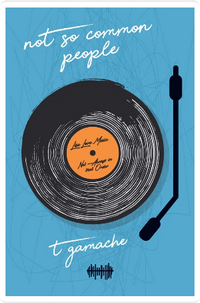
Not-So-Common People by T Gamache: Family disasters bring out the best in this protagonist

Not-So-Common People

Not-So-Common People

by T Gamache

Paperback, 209 pg.
Indie Owl Press, 2019

Read: November 27-28, 2019

Grab a copy from your local indie bookstore!

” . . . I don’t want to surprise you.”

Surprise me, hell I’m Captain Blindside lately! Every time I turn around one of my siblings is tossing a proverbial bombshell in my direction. I’m barely keeping this crap together, Calvin! When did it become a good idea to throw your emotions at Nathan? I’ll tell you when, NEVER! I’m the introverted, quiet, keep to myself guy in the family. Not the “hey, here’s our crazy laundry” guy!

Nate is a self-professed music geek/snob. That’s his primary description. He’s also a hipster barista with control issues (which he keeps hidden most of the time). He’s around thirty now and should really be making an effort to do something with his life/college degree rather than work part-time at a coffee house. This novel isn’t so much a coming-of-age novel about Nate, as it is that external forces impose age/maturity upon Nate. Which is a great and novel way to approach this kind of character.

I was trying to come up with something to say about the other characters in the novel, and realized that I really didn’t get enough of any of them, except maybe Rick and his parents. I do think they’re probably well-developed and three-dimensional, but there’s so many of them (including people who are maybe around for one scene—like various co-workers) that they can come across as flat and two-dimensional just because we don’t get to spend that much time with them.

For starters, we’ve got Claire, the BFF and roommate—always good for emotional support and sage advice; Frank, his other roommate; Gary, Frank’s fiancé; and Rick, the proprietor of Nate’s record shop—a frenemy of sorts. There’s Nate’s parents and then his siblings—Graham, the Type-A businessman; Calvin, the Lutheran minister; and Marcie, a housewife and mother. Last, but not least, we have the object of his affections, Anne, a little quirky, a little geeky, and driven to succeed.

In the weeks following a fateful Thanksgiving, each of his siblings goes through a major life-changing event (or series of events). And for reasons that he cannot understand, they turn to Nate. Not only do they turn to him, he steps up to help (which might surprise him more than the fact that they came to him for support). Sure, he doesn’t always know what to do for them (this is where Claire and Frank come in), but he’s willing.

In the middle of all this induced maturing, Nate meets Anne. Who is charming, attractive, and funny. Nate falls for her—probably in a ridiculous way—in a time when that’s the last thing he has time for.

While his siblings are reeling and he’s twitterpated, Nate realizes that his life needs some less dramatic life-changing, too.

We really need more time with Anne—it’s hard to buy how involved he gets given their time together (but, it’s cute and you do want to root for them to have a Happily Ever After). And it would be good for us to get more time with the siblings and roommates, too—they all need a little more space.

I have issues with Calvin being a Lutheran minister. If he was some sort of Methodist or non-denominational minister, I’d buy it. But he doesn’t seem that Lutheran to me (he’s definitely not a Missouri Synod or Wisconsin Evangelical Lutheran; and he’s not believable as a ELCA minister, either—but that’s closer). I definitely am uncomfortable with the way his religious activities are portrayed, but I can understand why an author would characterize them in the way that Gamache does.

This is a sweet story, a touching story, with a very likable protagonist (even if he wouldn’t believe me saying that), and you can’t help but want to cheer all these characters through their lives being upturned. If my biggest complaint is that we don’t spend enough time with the characters, I think that’s a pretty decent compliment. Recommended.

Disclaimer: I received a copy of this book from the author in exchange for my honest opinion. I appreciate getting the book, but not so much that I altered my opinion.


3 Stars

This post contains an affiliate link. If you purchase from it, I will get a small commission at no additional cost to you. As always, opinions are my own.

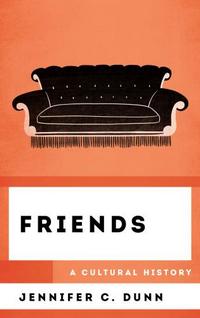
Friends: A Cultural History by Jennifer C. Dunn: The One Where I Liked 2/3 of a Book.

Friends A Cultural History

Friends: A Cultural History

by Jennifer C. Dunn
Series: The Cultural History of Television

eARC, 288 pg.
Rowman & Littlefield Publishers, 2019

Read: November 15-December 3, 2019

Grab a copy from your local indie bookstore!


I’ve only read one other book in this series (Gilmore Girls: A Cultural History), which led to me expecting a few things from this book—most of which I didn’t get (which is both a positive and a negative comment). I’m going to try not to spend too much time comparing the two books because it seems unfair—but it’s inevitable, so . . .

When I requested that Gilmore Girls book on Netgalley, I noticed the publisher had a similar title about Friends available—and who doesn’t like Friends? So, I requested that one, too—really diving into The Cultural History of Television. Granted, Dunn has more episodes to work from, but she does a better job of getting examples from all over the series—using different episodes/lines/characters to make related points rather than grabbing the same episode/line/character over and over and over again. One of the biggest strengths of the book is the depth of examples she musters for almost every point, reading this book is almost like binge-watching the entire series.

She begins with a chapter describing the success of the show, its place in the history of sitcoms—building on what had come before and shaping its successors. Then she moves on to looking at the impact of the show, its characters, and its actors on mainstream American pop culture—I do think she tried to make a little more hay than was warranted with some of the intertextual links she made in this chapter, but it came across as a quirk rather than a flaw. The third chapter discussed the way that the show replaced a biological family for a found family of friends as the core relationships for the characters. I really appreciated this section of the book and it gave me high hopes for the rest.

The third section of the book explores the legacy of Friends on American—and global—pop culture, as seen in fashion, music, memes, the way we talk (e.g., try to tell someone to pivot without invoking Ross trying to get his couch up the stairs), and the actors’ future roles and shows. This part wasn’t as strong as the first part of the book, but it was entertaining and an interesting way to think about the show. Dunn follows that with her list of the best 25 episodes, including an episode synopsis and a few sentences describing why that episode made the list. Fans will quibble over this list (for example, I think she got 15-18 of them right, and I can’t understand why she picked the others)—but I can’t imagine any fan not enjoying reading it.

The thing that makes me reticent to heartily recommend the book is the second section of the book, which includes the chapters: “Friends Happy Not Doing Too Much,” “Friends Happy Not Thinking Too Much,” “Thin, White, Upper-Middle-Class Friends,” and “Stereotypes, Sexuality, and Friend-ly Tensions.” Dunn states that this section “interrogates cultural identities represented on Friends.” There is a lot of interesting material presented in this section—whether you ultimately agree with her analysis or not—and most of it is well-presented. However, it’s a pretty problematic section. First, it assumes the readers will share her Progressive views (or at least hold ones close to hers) and that 2019 Progressive positions ought to provide the basis for evaluating the shows portrayal of characters/issues/themes, rather than the standards of the time the episodes were produced.

I’m not going to get into a point-by-point evaluation of these chapters, that’s not what this post is about, I’m just looking at this broadly. For example, Dunn begins her chapter on the anti-intellectual bent of some of the humor by pointing to the re-election of George W. Bush as president as one bit of evidence to the rise of anti-intellectualism in the era. I’m not sure I see the wisdom in insulting conservatives, Republicans, or moderates who voted for Bush and who enjoy discussions of a beloved sitcom and might be reading the book.

Yes, the writers couldn’t have made many of the jokes they did if the show was being produced now—but I’m not convinced that means they shouldn’t have then. At one point (at least) Dunn does concede that 2019 standards are different from those of that era, but it doesn’t stop her from criticizing aspects of the show for being products of their time. It seemed to me that at any point where she judged the show’s treatment of something in these chapters, she condemned it rather than look for an opportunity to be charitable. Now, there is a certain amount of intellectual stimulation and pleasure to be found in arguing with a book—and my notes indicate that I did a lot of that during these chapters—but at a certain point I started wondering why someone who clearly disapproved of so much of the show would watch it as much as she clearly has. To me, that detracts from the overall experience.

I’m not trying to suggest that Dunn’s criticisms are baseless, or that I disagree with everything she said in this section. I just think she comes across as unexpectedly antagonistic to the show and doesn’t do herself any favors with many of her readers.

It’s annoying that I had to spend that much time attempting to explain my problems with that section—it’s dicey so I tried to do a good job of that, but now that’s taken the majority of my space here. By importance, it should be about 1/3 of what I say about the book (maybe 40%). But to expand my comments on the rest would render this too long to read (and write, honestly).

I had one other stumbling block with the book—but this is more stylistic and is easily forgettable. You’ve probably read or heard the line: “Explaining a joke is like dissecting a frog. You understand it better but the frog dies in the process.” I’ve seen it variously attributed, but E. B. White seems the most likely candidate. It’s a trite observation by now, but mostly because it’s true. Dunn explains too many jokes for little profit—generally, they’re jokes that don’t require an explanation in the first place (especially for fans who know the joke, but I think it’s true regardless) and her explanations frequently border on condescending. White (or Twain or whoever) would probably have been willing to say “Explaining a joke or a meme” had they been aware of the concept. Neither one of these things is a major issue, but it grates on the nerves and makes the experience less positive

Ultimately, while I enjoyed the Gilmore Girls entry more, I think this book makes the series seem more promising and will likely lead me to read more of it. On the whole, this was a very enjoyable read and die-hard fans will easily dive into most of the book and relish the experience. And even on those points, a reader will disagree with her on, they’ll enjoy ransacking their memories for counter-arguments. Really, this is an excuse to think deeply about a favorite show for however long it takes you to read 300 pages, not much wrong with that.


3 Stars
Disclaimer: I received this eARC from Rowman & Littlefield Publishers via NetGalley in exchange for this post — thanks to both for this opportunity.

This post contains an affiliate link. If you purchase from it, I will get a small commission at no additional cost to you. As always, opinions are my own.

Page 379 of 631

Powered by WordPress & Theme by Anders Norén