I See You’ve Called in Dead (Audiobook) by John Kenny, Sean Patrick Hopkins: Friendship and Funerals

Cover of I See You've Called in Dead by John KenneyI See You’ve Called in Dead

by John Kenney, read by Sean Patrick Hopkins

DETAILS:
Publisher: Zibby Publishing    
Publication Date: April 1, 2025
Format: Unabridged Audiobook
Length: 7 hrs., 33 min.
Read Date: June 6-9, 2025
Buy from Bookshop.org Support Indie Bookstores

What’s I See You’ve Called in Dead About?

One night after a disastrous blind date (oh, and the word disastrous seems inadequate), obituary writer Bud Stanley gets drunk and accidentally publishes his own obituary. This earns him a suspension (once you get to the part where it’s revealed why he can’t be fired, you’ll roll).

During this suspension, he’s inspired to attend the funerals of strangers. He drags his close friend with him to these, and the two of them gain some new perspectives, new insights, etc.

I should add—before the drunken mistake, during the date itself, is when I decided I liked Bud and couldn’t wait to spend seven hours and change with him.

It’s, of course, after he published the greatly exaggerated reports of his own death that Bud finally has the opportunity to learn how to live. Will he take advantage of it?

Is He Maybe Too Perfect?

I’m not talking about Bud here. No one is going to spend more than a half a paragraph before they start finding flaws with him (love the guy…but man, is he a work in progress). But his landlord/friend, Tim, just might be too perfect.

He’s kind. He’s generous. He’s wise. He’s…well, really, you’re going to have to look long and hard for a problem with the character. And that, of course, is hard to swallow for a primary character in a work of fiction. As in life, so in fiction, pobody’s nerfect.

But…and here’s the thing that applies to a lot of Mary/Marty Sues (and I don’t think Tim is one, but he might be their first cousin)—he’s so fun that you get over it. He works as Bud’s Jiminy Cricket as well as the guy he can joke around with. It’s likely that Bud just doesn’t give us a lot of Tim’s flaws in his narration, because he doesn’t see them.

Friendship

Which leads us to one thing (there are others, but this dominates the novel) that Bud seems to be pretty good at, friendship. Sure, frequently being a selfish jackwagon, he’s not great at being a friend—but the bonds he’s made are strong enough that they can take it.

There’s Tim, Bud’s office-mate (a strange friendship, but one that’s deeper than one might think), the friendship between Bud and his editor/boss, and then a sweet friendship with a lonely and eccentric little boy* who lives nearby. Bud may not have figured out how to successfully adult, but he’s assembled a great group of friends to help him navigate through it.

I’ve read/listened to a lot of people (in fiction/non-fiction) talk about how close male friendship has really taken a hit in the current culture—it’s not emphasized, it’s not modeled, and almost never discussed after a certain age. Take or leave that argument, it’s rare enough to see a decent portrayal. Bud has four of them—of various strengths and circumstances. But all are wonderful to watch.

* That kid (his name escapes me, and that bothers me) deserves a book of his own. I need someone like Wesley King, Victoria Willimason, or R.J. Palacio to buy the rights.

What did I think about the narration?

Well, there were a couple of location names that I wondered if Hopkins was pronouncing correctly (he probably was). But beyond that, he nailed the work. He got the humor, he got the heart, he got the…strange mental place that Bud spent most of the book in.

I don’t believe I’ve heard him in action before, but I’d like to.

So, what did I think about I See You’ve Called in Dead?

I assumed this would be a fun read from the premise. I wasn’t prepared for something that would make me care so much.

I did think the humor around the millennial HR employee felt overplayed, and that Kenney should’ve dropped it (or skipped it entirely). There might have been one or two other jokes that he could’ve skipped—but on the whole? Some of the best comedy I’ve encountered this year—and some of the dumbest, too. Bud, Tim, and Tuan (his office-mate) don’t seem to think there’s a joke to dumb to make. I don’t disagree, but I figure I should warn you. They also aren’t afraid of being awfully clever in their jokes as well.

There’s an extended bit in a Greek funeral that Tim and Bud attend, for example, that will make you roll your eyes—and then you’ll end up really loving as it continues.

I haven’t talked about the strange friendship/romance at all between Bud and the woman who starts him attending the funerals of strangers. It’s the kind of quirky thing that filmmakers used to give Zach Braff, Michael Cera, Joseph Gordon-Levitt, and the like. But it rarely feels forced, and she’s definitely not manic. I don’t think her storyline is nearly as well-done as the others, but it’s satisfying enough that I’m not going to complain.

And of course—we need to talk about death and life. Bud and his circle spend a lot of time witnessing death and grief—and how it looks for various people. And from that, they all take different lessons about death and what can—and should—come before. Sometimes it feels a little heavy-handed, or rather, it feels like it’s going to be—you can feel the “special episode” atmosphere building. But it typically is delivered subtly and almost seamlessly. Kenney does it the right way.

This is a funny, wise, and heartfelt book—affirming, challenging, and downright entertaining. What’s not to like?

This post contains an affiliate link. If you purchase from it, I will get a small commission at no additional cost to you. As always, the opinions expressed are my own.
Irresponsible Reader Pilcrow Icon

Saturday Miscellany—6/21/25

Odds ‘n ends about books and reading that caught my eye this week. You’ve probably seen some/most/all of them, but just in case:
bullet Could the Semicolon Die Out? Recent Analysis Finds a Decline in Its Usage in British Literature and Confusion Among U.K. Students
bullet Why Read: Seven Books About Our Passion and Need for Reading
bullet Books About Books: Why We Write Them and Why We Read Them: On the charms of the bookish mystery.
bullet While we’re on the topic, Carol at Reading Ladies posted this check-in yesterday: Bookish Books
bullet Bad People, Good Art—James Lloyd Dulin wrote a very good guest post on a (sadly) evergreen topic. I think he’s onto something with his approach, FWIW.
bullet My School Experience Barely Seems Reflected in Books
bullet Maggie Stiefvater’s The Subtle Terror of Rereadability and the joys of turning pages slow, not fast might be the best thing I read online this week (says a life-long fast page turner)
bullet Places with Teeth: Genius Loci and The Living Worlds of Speculative Fiction—Which isn’t to cast aspersions on Tabler’s work here (would love her to revisit this in an expanded version)
bullet Coffee Table Books- Books You Can Dip into and Savour in Small Sips—you can never have too many of these around (sadly, due to my grandkids, dogs, and lack of coffee-table mean that mine are tucked away on shelves)

A Book-ish Related Podcast episode (or two) you might want to give a listen to:
bullet Schmudgeon of Curmudgeon talked to JCM Berne (video link/audio link)—they covered a lot and had a lot of fun. Berne may have convinced me to revise my opinion of the opening of Wistful Ascending, too. (I think that means that I have nothing bad to say about the book at all)

To help talk about backlist titles (and just for fun), What Was I Talking About 10 Years Ago Week?
bullet How to Start a Fire by Lisa Lutz
bullet Crossed Blades by Kelly McCullough—Nunc hoc in marmore non est incisum

This Week’s New Releases that I’m Excited About and/or You’ll Probably See Here Soon:
bullet The Genius Myth: A Curious History of a Dangerous Idea by Helen Lewis—”a timely and provocative interrogation of the myth of genius, exploring the surprising inventions, inspirations and distortions by which some lives are elevated to ‘greatness’ – and others are not”
bullet I Think I’m in Love with an Alien by Ann Aguirre—A “quirky sci-fi rom-com” where “alien meets adorkable” looks like silly fun. Which sounds really appealing right now.

@sweetsubkoo
Sep 23, 2022 The weird thing about reading so much as a child and gaining a huge vocabulary from that is I can’t define a lot of the words I use, I just…know that they would fit correctly in a specific sentence? Does anyone else experience that?

The Amazing Twin Chicken Freedom Fighters by Zephaniah Sole: The Revolution Will Not Be Pasteurized

I’m incredibly dissatisfied with this post. But I don’t think I’m possible of doing better. I want to, the book deserves better than this. But I’m punching above my weight-class with this. Give me a couple of weeks doing nothing else, 15-20 pages, and a few consultations with one of my old university professors, and I might come up with something I liked. Since that’s not going to happen, I’ll just go with this.


Cover of The Amazing Twin Chicken Freedom Fighters by Zephaniah SoleThe Amazing Twin Chicken Freedom Fighters

by Zephaniah Sole

DETAILS:
Series: The Amazing Twin Chicken Freedom Fighters, Book 1
Publisher: Run Amok Crime
Publication Date: May 5, 2025
Format: ARC
Length: 204 pg.
Read Date: June 7-9, 2025
Buy from Bookshop.org Support Indie Bookstores

A Couple of Content Warnings

I don’t normally do these kind of things, but it seemed like a good idea for this book. First, there’s some active suicidal ideation at the beginning of the book. It’s (first chapter, so not a spoiler) not effective. Also, it’s rapidly moved on from, and if the characters bring it up again, it’s briefly (I don’t think they do, but I failed to track it). In some books, the way the characters leave it behind would be a problem, and worthy of some discussion. But here? It works.

Secondly, Sole gets pretty close to sacrilege with a number of religious figures—Christian, Jewish, Muslim, and Buddhist (and likely some others). Particularly with a certain Tibetan Buddhist. I tend to have a hair trigger on this kind of thing, but I think Sole landed pretty firmly on the right side of the line. If for no other reason than his depictions of the persons in question are so far from the way the religions think about them or they’re depicted in their texts, it’s hard to take the identification seriously.

(except for that Tibetan Buddhist, but even there, it’s a stretch)

What’s The Amazing Twin Chicken Freedom Fighters About?

Jake and Joy meet one night under poor circumstances and do not get along at all. But then they find themselves in an unfamiliar and possibly hostile situation dressed in chicken suits (that not everyone sees but also they can’t get out of).

Before they can fully wrap their heads around that, they find themselves running for their lives and involved in a cosmic struggle for the fate of humanity. As they were prophesied to be.

No, really. That’s the plot.

Jake, Joy, and their new mentors/companions vs. Hip Gnosis* and his bickering subordinates. What follows is zany, action-filled, profound entertainment.

* Readers of Justice League comics of the late 80s may be interested to know that Gnosis reminds me of Lord Manga Khan, and his associate, Madelyn has a certain L-Ron quality to her, too.

The Book’s Humor

This book is hilarious—it’s more than that, but let’s start with that. But what kind of humor is it?

There’s word play—some very clever and sophisticated, and some painful puns. There’s some scatological humor (including one of the all-time greatest scatological jokes). There’s philosophical humor. There’s some jokes that are fit for an elementary school playground. There are some that are fit for a New Yorker cartoon.

Basically, the humor is all over the place. I mean that as a compliment and a description—definitely not a criticism. Primarily because every, and I stress every joke* lands. The book was so funny that you could miss everything else going on (and you shouldn’t) and you’d have a wonderful time.

* I should probably note that I may have mistaken a few lines for jokes that weren’t (but I laughed anyway), and I may have missed a few (which annoys me to admit).

That Hideous Strength

Somewhere along the way…either in the last two-thirds of the book, or maybe when I was finished (I can’t tell from my notes, and I can’t remember), it struck me that this book is a strange, non-Christian version of C.S. Lewis’ That Hideous Strength.

That’s not a spoiler—because Sole doesn’t resolve things in a way that resembles Lewis at all (and frankly, I think Sole’s is more narratively satisfying, which is odd for a book that is so messy). This isn’t a hill that I’d fight to possess, but I think the parallels are clear. In essence, you’ve got the same two opposing forces and similar groups to take action on Earth—for very similar ends. I’d be more specific, but you need to read the book to appreciate it. Do that and come back, and we can talk.

Maybe it’s That Hideous Strength mixed with Dirk Gentley’s Holistic Detective Agency. I should take a day or two to develop that idea into a few paragraphs, but I won’t.

So, what did I think about The Amazing Twin Chicken Freedom Fighters?

This book is just absurd—and I mean that in both the technical and the vernacular uses. I’m struggling to find words to describe it beyond that.

By page three, I was smitten with this book. By page 60, I wrote that, “This is either brilliant or the ravings of a madman. Possibly both.” And stuck with both of those reactions until the last sentence.

I talked about the humor above—and that would be enough to get me to recommend this book. But there’s so much more going on in these 204 pages. Things I haven’t begun to fully unpack yet. Things I’d probably need three or four reads to glimpse.

Sole doesn’t just play with narrative rules here. Nor does he simply experiment with them. He ties them up, tosses them in the trunk of his sedan, and goes for a joy ride. Less violently, you could say that Sole treats them as if he were Bugs Bunny after too many espressos and they were Elmer Fudd.

Then you throw in the prophecies, the philosophy, the semi-spirituality discussions, the action, the whale, teleporting via bathrooms/port-a-potties, the…I don’t know how to finish this sentence.

The plot is solid and interesting—but only somewhat important. The primary characters are three-dimensional, but only by the skin of their teeth. It’s not that important that they’re incredibly well-developed (as much as I hate to say something like that, it’s true here). What’s important is why things are happening and how Sole describes it.

Toss your suspension of disbelief in the trunk with Sole’s narrative rules, and dive in. You’ll be glad you did.

People who’ve read this site much know that I’m a huge Jo Perry fan. After I read the book, I noticed she’d provided a quote for the Publisher about it. As I’d fully expect, she put everything so wonderfully. I can’t match it, so I’m just going to close with what she said.

The Amazing Twin Chicken Freedom Fighters is the deep, learned, bookish, illogical, profound, effervescent, scatological, otherworldly, etymological and hilarious history of a shift in Joy’s and Jake’s (not their real names) ways of being and ours after they leap as one from a bridge and become heroic, pizza-eating—not just any pizza, but The Pizza Eternal-soul-yoked chickens. Enchanters, clicking and singing cetacean metaphors, the-down-and-out, lambs, assassins, the sorrowful, the faceless, the brain-on-fire, the ego-mad, the blind and seers inhabit Sole’s audacious and ambitious soul-adventure. This is a wild novel as sweet and hot as a from-the-oven lemon rosemary scone. Onward to Book Two.

Disclaimer: I received this ARC from the Publisher in exchange for my honest opinion and this post. They got short-changed in this deal.

This post contains an affiliate link. If you purchase from it, I will get a small commission at no additional cost to you. As always, the opinions expressed are my own.
Irresponsible Reader Pilcrow Icon

The Great Gatsby: Alphabetised Centennial Edition by F. Scott Fitzgerald, edited by Chris McVeigh: A Classic Reorganized

Cover of The Great Gatsby: Alphabetised Centennial Edition by F. Scott Fitzgerald, edited by Chris McVeighThe Great Gatsby: Alphabetised Centennial Edition

by F. Scott Fitzgerald; edited, with an introduction by Chris McVeigh

DETAILS:
Publisher: Fahrenheit Press
Publication Date: May 14, 2025 
Format: Paperback
Length: 197 pg.

What’s the Deal with The Great Gatsby: Alphabetised Centennial Edition?

I could (should?) save myself a bunch of time and just point you to The Publisher’s Explanation of the book and its background. Seriously, skip most of what I write here and just read it.

But because I feel compelled to say something about this unique offering, I’m going to plow on.

Inspired by Concrete Poetry (which is something I don’t think I’d heard of until I read the above from Fahrenheit Press) and the centennial of The Great Gatsby, Chris McVeigh has taken the classic, and as you should assume from the subtitle, alphabetized it.

As McVeigh writes in the introduction:

…this alphabetised edition of The Great Gatsby is not a puzzle to be solved, or a parody to provoke. It is rather, a re-seeing of language in the raw – a confrontation with the building blocks of a story we think we know.

Removed from their narrative scaffolding, Gatsby’s words fall into new patterns, unexpected rhythms, and visual clusters. “Daisy” “dream” and “death” no longer emerge from plot, but jostle for position in a flattened, democratic field. The result is a text not about the American Dream, but made of it—its’ language laid bare, its’ seductions and emptiness exposed with surgical neutrality.

What would T.G. Eckleberg have to say?

Who knows, but those giant eyes of his would probably enjoy taking this in.

You really don’t even have to read the words, you can just open any page and take in the visual impact, the shapes that emerge from just bare words—limited punctuation (mostly apostrophes), no paragraphs, just a word-space-word-space-word sequence for 197 pages.

It’s striking, mesmerizing, and can even evoke an emotional response somehow.

So, what did I think about The Great Gatsby: Alphabetised Centennial Edition?

I honestly don’t know. But I can say I’ve thought about it a lot since getting it.

McVeigh asks:

Is story found only in sequence? Can meaning survive fragmentation? Might new meanings emerge—accidental, ambient, and poetic—from the ruins of arrangement?

At this moment, my answers are: Yes. Possibly? (pronounced with a heavy question mark) Yes, just don’t ask me what any of them are.

I’ve picked this up and read through a few pages several times in the week or so since I got this, and each time I start to think I’m getting something. Like Dirk Gentley said, I felt like I could “grapple with the ineffable itself, and see if we may not eff it after all.” But I’ve fallen short each time, but I’m going to keep trying.

But this is not a book for everyone, I should stress. For example, I showed this to my wife, who I thought might appreciate the idea. She looked through it and gave me one of those looks and asked, “You spent money on this?”

Yes, I did. Happily so—and am still glad I did. Not just for the novelty (which probably drove the purchase, to be frank), but because it’s giving me the opportunity to ask those questions I started this section with. This might not be much of a review, but I think it’s the heartiest endorsement I could give of the project.

I spent money on this, you should consider doing the same.

Irresponsible Reader Pilcrow Icon

LITERARY LOCALS: Oldspeak Bar

The Irresponsible Readers Literary Locals logo
After weeks of trying, my wife and I finally got our act together enough to check out one of the Treasure Valley’s newest establishments, Oldspeak, a “book beer bar.” Now the first two words of that description are among my favorites in the English language–so I was pretty sure I was going to have a good time.
Oldspeak website logo
And I was right.

Oldspeak sign
It’s a quiet place, a low buzz of conversation, there was a table of people playing a board game, a few tables of people just talking and drinking, a couple of people reading. There’s a very booksih vibe to it all (as you’d expect). There’s a coziness to it, so you could take out the books, and it’s still the kind of place I’d want to hang out. Still, better idea to leave the books.
Shelves at Oldspeak
So this is the bulk of their selection–I didn’t get a picture of the shelves in another room, or a small table display near the door. The other room features books in translation–from Chinese, Japanese, and French. Maybe some others, I didn’t get that much time to look around there.

These–carefully curated–shelves above feature some big-name books, best sellers—and almost as many indie press novels (one of which I’ve featured here, which made me feel pretty good). There are some local authors, and other assorted bits and pieces. The non-fiction section is almost as big. I particularly enjoyed the “History” section right next to “History, but with Women” (or words to that effect, it made me chuckle).

While small, it was a very nice selection. I’d love to know how the books there are selected (the staff I asked wasn’t sure).

NPL Indie Fair Book Haul
Lastly, of course, we need to talk about the beer. They sell a few things from other breweries, but most come from their own Alliteration Ales. This Borealis Baltic Porter was pretty darn tasty. As was the Carters Classic Märzen. I’d have probably appreciated the Märzen more if I drank it first—that was my mistake.

I should mention there are several other kinds of beverages available–there are mocktails, various teas and coffees, and whatnot. Their “Are You There God, It’s Me Margarita” mocktail seemed tasty, and Mrs. Irresponsible Reader enjoyed it.

I liked the names of their drinks–the aforementioned nod to Blume, the C.S. Brewis English Pale Ale, and so on.

All in all, we had a great time, picked up some good looking books, and we’ll be back. Local folks—go check it out.


The Irresponsible Readers Literary Locals logo

2025 WWW Wednesday—June 18, 2025

WWW Wednesdays Logo

This meme was formerly hosted by MizB at A Daily Rhythm and revived on Taking on a World of Words—and shown to me by Aurore-Anne-Chehoke at Diary-of-a-black-city-girl.

The Three Ws are:
What are you currently reading?
What did you recently finish reading?
What do you think you’ll read next?

Seems easy enough, right? Let’s take a peek at this week’s answers:

What are you currently reading?

Cover of King of Ashes by S.A. Cosby Cover of Money, Lies, and God by Katherine Stewart
King of Ashes
by S.A. Cosby
Money, Lies, and God: Inside the Movement to Destroy American Democracy
by Katherine Stewart, read by Patricia Rodriguez

I sort of feel like I should be holding my hands in front of my eyes as I read King of Ashes, the book starts dark and doesn’t lighten up. The three primary characters keep doing things I know are going to end horribly. But I can’t look away.

Actually, the same could be said of Stewart’s book. Even if she’s only 1/3 right, anyone reading this is going to lose some sleep.

What did you recently finish reading?

Cover of How to Dodge a Cannonball by Dennard Dayle Cover of The Undead Fox of Deadwood Forest by Marisa Calin
How to Dodge a Cannonball
by Dennard Dayle
The Undead Fox of Deadwood Forest
by Marisa Calin, read by Aubrey Hartman

Dayle’s Civil War satire was a heckuva read. Not sure how I’ll manage to say something about it. But will be trying soon.

For an MG fantasy, Calin’s book was pretty dark. Also cute and heart-warming. Which is a fun combo, you have to admit.

What do you think you’ll read next?

Cover of The Medusa Protocol by Rob Hart Cover of False Value by Ben Aaronovitch
The Medusa Protocol
by Rob Hart
False Value
by Ben Aaronovitch, read by Kobna Holdbrook-Smith

More from the Assassins Anonymous world? Yes, please

I’m picking up the pace on my Rivers of London revisit, so False Value is next. As I recall, some of my favorite lines of the series here.

What are you reading this week?

Top Ten Tuesday: Books on My Summer 2025 to-Read List (That Aren’t on My 20 Books Challenge)

Top Ten Tuesday Logo
The topic for this week’s Top Ten Tuesdays is the Books on My Summer 2025 To-Read List, given that I’ve already named the books in my 20 of Summer challenge, once again, I figured I’d look at some of the other books I hope to tackle. This is a combination of ARCs and Book Club books–and one soon-to-be-released book that I forgot to place on my 20.

Books on My Summer 2025 to-Read List (That Aren't on my 20 Books Challenge)
In alphabetical order, with descriptions copied and pasted from the publishers’ websites.

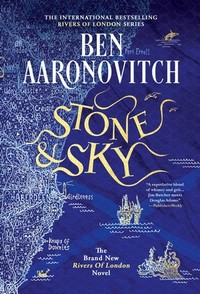
1 Cover to Stone and Sky by Ben Aaronovitch
Stone and Sky by Ben Aaronovitch

"This isn’t London. The rules are different up here…"

All Detective Sergeant Peter Grant wanted was a nice holiday up in Scotland.

He'll need one once this is over...

Sea: check.
Sand: some.
Sun: sort of - but that's not the only thing in the sky...

I’ve really enjoyed this post-Faceless Man era of the Rivers of London series, am more than eager to see what’s next.

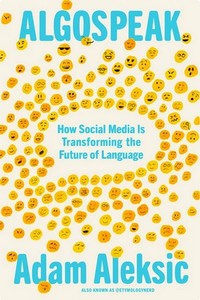
2 Cover to Algospeak by Adam Aleksic
Algospeak: How Social Media Is Transforming the Future of Language by Adam Aleksic

From “brainrot” memes and incel slang to the trend of adding  “-core” to different influencer aesthetics, the internet has ushered in an unprecedented linguistic upheaval. We’re entering an entirely new era of etymology, heralded by the invisible forces driving social media algorithms. Thankfully, Algospeak is here to explain. As a professional linguist, Adam Aleksic understands the gravity of language and the way we use it: he knows the ways it has morphed and changed, how it reflects society, and how, in its everyday usage, we carry centuries of human history on our tongues. As a social media influencer, Aleksic is also intimately familiar with the internet’s reach and how social media impacts the way we engage with one another. New slang emerges and goes viral overnight. Accents are shaped or erased on YouTube. Grammatical rules, loopholes, and patterns surface and transform language as we know it. Our interactions, social norms, and habits—both online and in person—shift into something completely different.

As Aleksic uses original surveys, data, and internet archival research to usher us through this new linguistic landscape, he also illuminates how communication is changing in both familiar and unexpected ways. From our use of emojis to sentence structure to the ways younger generations talk about sex and death (see unalive in English and desvivirse in Spanish), we are in a brand-new world, one shaped by algorithms and technology. Algospeak is an energetic, astonishing journey into language, the internet, and what this intersection means for all of us.

Love this dude’s videos, eager to see what he does in longer than 2 minute segments (although it will be odd to not get things thrown at me in his rapid-fire style).

3 Cover of Light From Uncommon Stars by Ryka Aoki
Light From Uncommon Stars by Ryka Aoki

Shizuka Satomi made a deal with the devil: to escape damnation, she must entice seven other violin prodigies to trade their souls for success. She has already delivered six.

When Katrina Nguyen, a young transgender runaway, catches Shizuka's ear with her wild talent, Shizuka can almost feel the curse lifting. She's found her final candidate.

But in a donut shop off a bustling highway in the San Gabriel Valley, Shizuka meets Lan Tran, retired starship captain, interstellar refugee, and mother of four. Shizuka doesn't have time for crushes or coffee dates, what with her very soul on the line, but Lan's kind smile and eyes like stars might just redefine a soul's worth. And maybe something as small as a warm donut is powerful enough to break a curse as vast as the California coastline.

As the lives of these three women become entangled by chance and fate, a story of magic, identity, curses, and hope begins, and a family worth crossing the universe for is found.

I don’t think I’d heard of this book until last week when I asked what the August SF Book Club read was going to be. Hopefully it lives up to the intriguing concept.

4 Cover of The Blue Horse by Bruce Borgos
The Blue Horse by Bruce Borgos

A helicopter driving a controversial round-up of wild horses suddenly crashes and the pilot is found to have been shot. Then the person coordinating the round-up for the Bureau of Land Management is savagely murdered, buried up to her neck and then trampled to death by the very same wild horses. And there's no lack of suspects—with the wild horse advocacy group having sworn to protect the horse At Any Cost! Now the state and federal agencies are showing up looking for answers or at least a scapegoat.

Sheriff Porter Beck has had better days.

Porter Beck's new girlfriend, Detective Charlie Blue Horse, arrives to help with the investigation, which leads them to Canadian Lithium mining operation near the round-up area that sets off Beck's mental alarm bells. Brinley, Beck's sister, is leading a group of troubled kids in a wilderness program, when one of them, Rafa, bolts one night. When Brinley catches up to him, they're just outside the mine—in the wrong place, at the wrong time.

With his personal life in turmoil, too many suspects and too many secrets, the feds pushing for a quick resolution, and his impetuous (if skilled) sister in the mix, one wrong step could be deadly for Porter Beck.

Borgos and Porter Beck were in this spot last year, too. I’m utterly fine with both of them showing up here for the foreseeable future, too.

5 Cover to Five Broken Blades by Mai Corland
Five Broken Blades by Mai Corland

It’s the season
for treason…

The king of Yusan must die.

The five most dangerous liars in the land have been mysteriously summoned to work together for a single objective: to kill the god king Joon.

He has it coming. Under his merciless immortal hand, the nobles flourish, while the poor and innocent are imprisoned, ruined…or sold.

And now each of the five blades will come for him. Each has tasted bitterness—from the hired hit man seeking atonement, a lovely assassin who seeks freedom, or even the prince banished for his cruel crimes. None can resist the sweet, icy lure of vengeance.

They can agree on murder.

They can agree on treachery.

But for these five killers—each versed in deception, lies, and betrayal—it’s not enough to forge an alliance. To survive, they’ll have to find a way to trust each other…but only one can take the crown.

Let the best liar win.

The manager at Shared Stories sold me on this book last year, but I didn’t have the time to get to it. But, he picked it for July’s Fantasy Book Club read. So I “have” to make time. Yay! Also, the Deluxe Edition Hardcover is one of the prettier books on my shelves. It’s not that important, but man, it looks nice.

6 Cover to This Is How You Lose the Time War by by Amal El-Mohtar, Max Gladstone
This Is How You Lose the Time War by Amal El-Mohtar, Max Gladstone

Among the ashes of a dying world, an agent of the Commandment finds a letter. It reads: Burn before reading.

Thus begins an unlikely correspondence between two rival agents hellbent on securing the best possible future for their warring factions. Now, what began as a taunt, a battlefield boast, becomes something more. Something epic. Something romantic. Something that could change the past and the future.

Except the discovery of their bond would mean the death of each of them. There’s still a war going on, after all. And someone has to win. That’s how war works, right?

Cowritten by two beloved and award-winning sci-fi writers, This Is How You Lose the Time War is an epic love story spanning time and space.

I saw all the hubbub about this when it came out, but didn’t follow-up on it, as good as it seemed. Well, the SF Book Club is addressing my oversight.

7 Cover of The Medusa Protocol by Rob Hart
The Medusa Protocol by Rob Hart

Welcome back to Assassins Anonymous, the only twelve-step group where joining can be deadly.

When Astrid, known in her assassin days as Azrael, stopped showing up to Assassins Anonymous, the group assumed her past had caught up with her. Only her sponsor Mark, formerly the deadliest killer in the world, holds out hope that she’s okay. Then, during a meeting, the group gets a sign, or rather, a pizza delivery. Is there another psychopath out there who actually likes olives on their pizza, or is Astrid trying to send Mark a message?

Meanwhile, Astrid wakes up in the cell of a black site prison, on a remote island. A doctor subjects her to mysterious experiments, plumbing the depths of her memory and looking for a vital clue from her past. She’ll do anything to escape, except…killing anyone. Hmm. Turns out it’s not easy to blow this joint without blowing anything, or anyone up.

Assassins Anonymous was a great spin on the ex-Hit Man story. To say I’m eager to dive in to the sequel would be an understatement.

8 Cover for Station Eleven by Emily St. John Mandel
Station Eleven by Emily St. John Mandel

An audacious, darkly glittering novel set in the eerie days following civilization's collapse, Station Eleven tells the spellbinding story of a nomadic group of actors roaming the scattered outposts of the Great Lakes region, risking everything for art and humanity.

It is fifteen years after a flu pandemic wiped out most of the world's population. Kirsten is an actress with the Traveling Symphony, a small troupe moving over the gutted landscape, performing Shakespeare and music for scattered communities of survivors. But when they arrive in the outpost of St. Deborah by the Water, they encounter a violent prophet who digs graves for anyone who dares to leave. Spanning decades, moving back and forth in time, and vividly depicting life before and after the disaster brought everyone here, this suspenseful, elegiac novel is rife with beauty, telling a story about the relationships that sustain us.

This is a title I’ve heard, but I couldn’t tell you more than at about it until I picked up the copy for the book club this month. It looks pretty cool. And, it gets me one closer for one of my Book Challenges for the year. Win win.

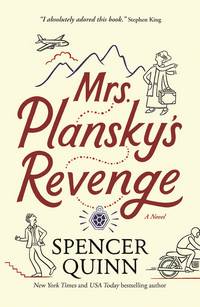
9 Cover for Mrs. Plansky Goes Rogue by Spencer Quinn
Mrs. Plansky Goes Rogue by Spencer Quinn

Mrs. Plansky is fresh off of winning a thrilling senior tennis championship with her doubles partner, Kev Dinardo, and is gearing up to celebrate with him on his yacht. That is, until the yacht is destroyed in a fire. Kev claims the fire was caused by a lightning strike, pure bad luck, but there's one small problem—Mrs. Plansky didn't see any lightning.

Already certain there's more going on than she's being told, Mrs. Plansky's curiosity turns to concern when Kev goes missing. Her suspicion gets the better of her and leads her to break into his house, only to find it ransacked.

But Kev isn't the only person Mrs. Plansky has to worry about. A conversation with her dad reveals that not long ago, he'd introduced Kev to Jack, Mrs. Plansky's wayward tennis pro son. And now, her dad—distracted by arrangements for his upcoming wedding—either can't remember or has no interest in divulging any details.

Worse? Now Jack has gone missing, too.

Does the world need a second book about Mrs. Plansky? Not really. Do I care? Not a little bit. Bring it on.

10 Cover for Dogged Pursuit by David Rosenfelt
Dogged Pursuit by David Rosenfelt

Andy Carpenter has spent the three years since graduating law school working as a prosecutor in Paterson. But having seen how the system never looks out for the little guy, he leaves to start his own practice as a defense attorney. His office might be a little bit of a dump, but he's excited to make a change.

Andy goes to the shelter to adopt a dog, where he meets his beloved golden retriever, Tara, for the first time and feels an immediate connection. The shelter is crowded and Tara's been sharing space with a dog named Sunny; Andy hates to break them up and so asks to take Sunny, too, but since there's a pending criminal case involving the owner, he'll need to get written permission for temporary possession.

Andy discovers that Sunny's owner, Frank Tierney, has been arrested for the murder of his ex-boss. But he takes an immediate liking to Frank and his clear dedication to his dog, and ends up with his first case along with the two dogs.

This prequel to the long-running and perennially popular Andy Carpenter mysteries is a gift for fans and a terrific entry-point for newcomers.

An Andy Carpenter prequel? I did not see that one coming. Color me curious.

So, there you go–these are 10 that I’m almost certainly going to finish while I’m hoping to knock off the the 20 others. (I glanced at last year’s 10, and…I could’ve done better with that one. Time to change that).

This post contains affiliate links. If you purchase from it, I will get a small commission at no additional cost to you. As always, the opinions expressed are my own.
Irresponsible Reader Pilcrow Icon

MUSIC MONDAY: “Jesus Loves You, Brian Wilson” by Lost Dogs

The Irresponsible Reader's Music Monday logo

Music Monday's originated at The Tattooed Book Geek's fantastic blog and has shown up hither, thither, and yon since then.

Irresponsible Reader Pilcrow Icon

A Graveyard for Heroes by Michael Michel: The Canvas is Bigger, but the Intensity Remains.

Cover of A Graveyard for Heroes by Michael MichelA Graveyard for Heroes

by Michael Michel

DETAILS:
Series: Dreams of Dust and Steel, #2
Publisher: Chainbreaker Books
Publication Date: June 11, 2025
Format: eARC
Length: 606 pg.
Read Date: May 24-30, 2025
Buy from Bookshop.org Support Indie Bookstores

Caveat Lector

I’ve yet to write a word of this post, but I’m going to tell you now that I’m going to end up spoiling some things from the first book—there’s just no way to talk about this book without it. I will try to keep them vague if I can’t avoid them, but they will be there.

But also, why are you reading this post if you haven’t read the first book? Read The Price of Power and I predict you’ll move on to the rest reflexively (as many of “the rest” are out when you finish, that is).

Still, be careful what you read from here.

What’s A Graveyard for Heroes About?

The first book was very focused—well, as much as you can be with 4 characters/storylines. You saw the impending (or not so impending) collapse of the nation/confederation in the background (to one degree or another) of three of the storylines, but the reader’s focus was rarely on that—it was these people getting to know them and their immediate circle. Through them you started to understand the world, its cultures, its history.

In the closing chapters of the book, the first visible domino of the collapse falls over.

In Graveyard, we keep our focus on these characters—but we also see the ongoing collapse, the ongoing treason (and the treason within that movement), and how it’s affecting not just the characters we got to know in The Price of Power, but also in others—faces and names new and old.

The story grows grander, our perspective enlarges—and assuming that the pre-Price status quo was as good as it could be, this civilization is in trouble from many sides.

*There are several reasons to believe the system could be better—as every system could be and every character we got to know recognized. But the stability, order, and painfully slow opportunities for reform were there.

The Missing Character?

Of the four characters/groups of characters that were the focus in the first book, one seemed to be almost missing. Not entirely, but so close that it’d be easy to miss.

Unless of course, their name/appearance has changed. I’ve spent a good amount of time thinking about this, and am pretty sure I’ve made up my mind about what I think. (at the same time, I’m ready for Michel to show me how I missed something).

Regardless, it’s fun to chew on.

Thephus

When we saw him last, his fate seemed uncertain. Frankly, I’m even less sure about what’s going on with him now. It’s as frustrating as it is satisfying to see Michel not giving us all the answers.

While I liked the guy—and felt bad for him—from the time we met him. My respect for him as a person has grown—he’s a well-conceived and complex character. Not just complex, he’s pretty confusing, too. Moreso to himself than anyone else. I wonder who will figure him out first—the reader or Thephus himself?

Just because his storyline bothers me and leaves me with more questions at the end of every one of his chapters doesn’t mean I think him any less. On the contrary, I think that sentence applies to every single chapter he’s been featured in since his introduction.

So much is going to make sense to us when we do get answers—and if all we’re doing now is piling up the questions, how much more satisfying will it be? Also, the part of this world that Thephus and those like him inhabit is more than intriguing.

So, what did I think about A Graveyard for Heroes?

This is me speculating here, as my precognition abilities are on the blink right now. But I’m guessing that you can make the case for Books 1 and 2 of Dreams of Dust and Steel serve as a massive prequel for an epic trilogy. To borrow a phrase from the back cover, “The pieces are set. The gameboard is chosen.” And now…things are going to really get going.

I can only imagine that as grim as things look here for our heroes…but also, our villains…by the end of book three, they’ll all wish that they were back in these events. But man…there’s not a lot of positive in this book—at least not plotwise.

There’s a whole lot of positive things to say about the writing, storytelling, and characters. So much so that I know I’ve left off things I’ve told myself “You gotta mention this.” For example, there’s a treat for people who miss Tyrion Lannister’s personality.

And just because I said prequel—I am not suggesting that these books are skippable. They’re not—you’d be robbing yourself of so much. There’s a character we meet in this book, for example, on the worst day of her life. She quickly became one of my favorites of the series. I reached out to Michel and was assured that we’d see her again—but based on what we saw here, there’s nothing inherent in her story that demands it. He could’ve closed the door on her and moved on—and it’d have been worth it just to wsee hat we got here. (I’d go into this deeper in a spoiler-rich conversation if anyone is interested).

My point is, the book is full of things that like that—the overall plot and seeing what happens with the characters we already know are the big ticket items. But this world and how Michel is telling its story is so rich, so full of moments that will stay with you, that even if these first to novels are “merely” setting it up for the bigger stuff to come—you want to read them.

This is a fantasy novel, and like most of them, this features some very important fight scenes, as well as a few battle scenes. Frankly, I find the smaller combat scenes more satisfying—and I usually do, that’s probably more of a personal taste thing. The larger battle scenes were really well done, and were largely haunting. The one-on-one fights/small group vs. small group/one-on-small group fights were much more satisfying (and somewhat haunting, too). They had me in much more suspense than the others. I audibly reacted to the last one focusing on Ishoa—I think you could see that particular point in her arc coming (either in this book or not), but actually seeing it made me cheer and pump my fist.

I may have shouted at my ereader for what the last page held—especially once I realized it was the last page, and not simply the end of a chapter.

What I’m saying is that once Michel stopped setting up his dominoes and started the reactions, you’re going to care. You’re going to be reeling. You’re going to wonder—”just where is he taking this?” while not caring that much because the ride is so fun.

I don’t remember the last time I was this invested in a Fantasy series. I suggest you all hop on board.


4 1/2 Stars

This post contains an affiliate link. If you purchase from it, I will get a small commission at no additional cost to you. As always, the opinions expressed are my own.
Irresponsible Reader Pilcrow Icon

Surprised by Joy: The Shape of My Early Life by C. S. Lewis: A Portrait of a Reader/Thinker as a Young Man

Further Up and Further In A Year with C.S.Lewis


Cover of Surprised by Joy by C. S. LewisSurprised by Joy: The Shape of My Early Life

by C. S. Lewis

DETAILS:
 Publisher: Harcourt Brace & Company
Publication Date: 1984
Format: Paperback
Length: 238 pg.
Read Date: May 10-25, 2025
Buy from Bookshop.org Support Indie Bookstores

The reader who finds these three episodes of no interest need read this book no further, for in a sense the central story of my life is about nothing else. For those who are still disposed to proceed I will only underline the quality common to the three experiences; it is that of an unsatisfied desire which is itself more desirable than any other satisfaction. I call it Joy, which is here a technical term and must be sharply distinguished both from Happiness and from Pleasure. Joy (in my sense) has indeed one characteristic, and one only, in common with them; the fact that anyone who has experienced it will want it again. Apart from that, and considered only in its quality, it might almost equally well be called a particular kind of unhappiness or grief. But then it is a kind we want. I doubt whether anyone who has tasted it would ever, if both were in his power, exchange it for all the pleasures in the world. But then Joy is never in our power and pleasure often is.

What’s Surprised by Joy About?

This is a look at the early part of Lewis’ life—his childhood, education (in boarding schools primarily), his acceptance to Oxford—and taking time off to serve in WWI—then returning and his eventual conversion to Christianity.

As he puts it in the preface,

This book is written partly in answer to requests that I would tell how I passed from Atheism to Christianity and partly to correct one or two false notions that seem to have got about. How far the story matters to anyone but myself depends on the degree to which others have experienced what I call “joy.”…The book aims at telling the story of my conversion and is not a general autobiography.

He’s not striving to be exhaustive, but to tell us enough that we understand what he was going through and how his education/experiences helped shape his mind for converting.

Endless Books

I am a product of long corridors, empty sunlit rooms, upstairs indoor silences, attics explored in solitude, distan; noises of gurgling cisterns and pipes, and the noise of wind under the tiles. Also, of endless books. My father bought all the books he read and never got rid of any of them. There were books in the study, books in the drawing room, books in the cloakroom, books (two deep) in the great bookcase on the landing, books in a bedroom, books piled as high as my shoulder in the cistern attic, books of all kinds reflecting every transient stage of my parents’ interest, books readable and unreadable, books suitable for a child and books most emphatically not. Nothing was forbidden me. In the seemingly endless rainy afternoons I took volume after volume from the shelves. I had always the same certainty of finding a book that was new to me as a man who walks into a field has of finding a new blade of grass.

Just about anyone who takes the time to read this post is going to resonate with that quotation. Possibly be envious of that kind of childhood.

That’s one thing that comes through in clarity through this book—he is the product of so many books. So much of his experiences are shaped by, illustrated by, and reflected in what he reads—particularly what he returns to.

Yes, there’s some creative work. Some dry education. A lot of emotional development (largely phrased in other terms). Even a little socialization outside of his father, brother, and instructors—but really not much outside of that until Oxford.

What’s there throughout it all? Books. Hard not to identify with a guy like that.

So, what did I think about Surprised by Joy?

I was at this time living, like so many Atheists or Antitheists, in a whirl of contradictions. I maintained that God did not exist. I was also very angry with God for not existing. I was equally angry with Him for creating a world.

Sure, it’s about his early years. But I think the emphasis was on the wrong bits. I know, it’s not my life, he knows what got him to the point he was trying to focus on better than I do. But if the book “aims at telling the story of my conversion,” I really don’t see it.

It happens so quickly, with little fanfare leading up to it—it reminded me of one of those books where you stop a sentence or two after something happens, “Wait, did X just die?” That’s an exaggeration in this case, but not by much.

More of his WWI experience, more about the wrestling with ideas in Oxford. More showing the kind of thinking he encourages others to do about their faith/lack thereof, would be a plus.

Is it a good look at Lewis’ early life? Yes. Does it contain some of his best turns of phrase? Yeah, I think so. Does it deliver on what he aimed to? I really don’t think so. I recommend it for someone who wants to know more about the man—just come in with the proper expectations.


3 Stars

This post contains an affiliate link. If you purchase from it, I will get a small commission at no additional cost to you. As always, the opinions expressed are my own.
Irresponsible Reader Pilcrow Icon

Page 40 of 602

Powered by WordPress & Theme by Anders Norén