The Price of Power by Michael Michel: An Addictive and Powerful Multi-Threaded Fantasy Novel

I talked about this book before I finished reading it a week or so ago, but I wanted to make some corrections to bad guesses/assumptions and then just talk about things in general now that I’m finished. But yes, a lot of this material is reused.


Cover of The Price of Power by Michael MichelThe Price of Power

by Michael Michel

DETAILS:
Series: Dreams of Dust and Steel, #1
Publisher: Chainbreaker Books
Publication Date: April 2, 2025
Format: eARC

Length: 498 pg.
Read Date: March 29-April 4, 2025
Buy from Bookshop.org Support Indie Bookstores

What’s The Price of Power About?

This is not the easiest question to answer, I’ll tell you right now. The title really sums it up well, this is a story about what power costs—political, familial, monetary, military, personal, magical.

But that’s not much of a plot, that’s more of a description. There are four plotlines—that somewhat overlap, but most of that overlap is promised for Book Two and beyond. But the further you read, the more you see how they are intertwined even if most of the characters don’t see/understand that yet.

So I’m going to steal a little from the blurb that Michel sent me (and that I posted recently) to give some quick thoughts about each plotline.

“A mad prophet determined to control reality”

This is the hardest one to talk about, primarily because this storyline is full of symbolism, visions, dreams, and magic. The point of view character and most of the people him aren’t sure what is going on—what’s real, what’s a dream, and what’s their imagination. Those who do know what’s going on are either lying, deluded, or a supernatural entity who is trying to trick the humans.

I was engrossed, though. I may not have understood it all, but I was hooked by what I did figure out. By the last chapter of this storyline? I was gobsmacked. While I felt like I should’ve understood what Michel was going for early on, there was no reason for me to have. It was one of those situations where an author did something fairly unexpected, but did it so well that you couldn’t imagine any other way it could’ve gone.

“A dead prince who isn’t dead”

This, on the other hand, is a straightforward story about a prince whose thirst for vengeance—driven by rage and grief—led to a type of destruction that might make Tywin Lannister take a step back.

Now he’s just trying to avoid contact with everyone, denying who he is, dwelling on what he did, and what it cost him (the price he paid, to make it less than subtle). You almost feel sorry for him and wish he’d snap out of his self-pity and self-destruction when he needs to (which is right about the time we meet him). But also…if anyone should hate themselves, it’s hard to argue against him.

The action in these chapters is just great—the prince and his allies face off against some very vile criminals. The fight scenes will get your blood pumping—and maybe a fist or two (but not every time). There are horrors—and the closest you’ll get to grins in this book.

Barodane is set up for a redemption story. But I’m not convinced that’s what Michel has in mind. Of all these four plots, this is the one I’m most invested in because of some of the surrounding characters.

“An orphan with hero’s blood”

This, too, feels like a familiar fantasy story. A princess raised to take the place of her dead parents leading the nation through a tumultuous time, with everyone wondering if she is capable of doing the job. You just can’t help but feel bad for this girl. She’s got the weight of the world on her shoulders (or at least the weight of a nation), and pressures and expectations on her are as high as can be.

On the one hand, what she’s called upon to do (so far) is easier than the rest—but her age and visibility even out the scales a bit. I like her, I like her teachers and her animal companion. But honestly, everyone else in her immediate circle could be wiped out and the only reason I’d care is because of the impact it’d have on those four.

I’m pretty sure that I’ve spent a decent amount of time leaning forward during her chapters like you do during a tense part of a film (am I the only one who does that while reading?). A lot of the turns her story took were expected—but not all of them were. And a couple left me reeling.

“And a powerful seer “

This is a hard storyline to work through. This grandmother/Obi-Wan figure is a tough old lady, having to act tougher than she really is to do what she has to. Her ability to see time and reality have shown her what needs to happen, and the price she and her grandson will have to pay.

Michel keeps the details vague at this point—but you get to see enough to keep you invested and eager to learn alongside her grandson. If, as I/the title/and I think the author say, this book is about the price you pay for power—this seer has paid a hefty price already and is preparing to pay a bigger price. She’s also caused (and plans on causing) others to pay—it’s a little unclear who benefited from them paying great prices, but the seer would claim it’s for the greater good (and probably believes that).

There’s a very cool magic battle in this story—at least one, anyway—and just knowing that this kind of thing is possible around this woman will keep you invested, even if you weren’t inclined to be anyway.

This seer is very much in the Elizabeth Best (from The Thursday Murder Club)/Taishi (from The Art of Prophecy)/Akina Azure (from Partial Function) mold of scarily competent elderly characters. Barodane might be a frighteningly violent warrior, but honestly, this woman would worry me more if I lived in this world. The way she’s tied to every other storyline just makes me want to understand her more than her own did.

Dramatis personae

There’s a lengthy (or maybe my e-reader font is just set large enough that it seems that way) dramatis personae at the beginning of the novel—if you’re like me, keep it open on your phone while you use an e-reader for easy reference. If you got your hands on a paper copy, keep a bookmark there—you’re going to want to check it often for the first third or so (results may vary on your attention span or memory).

Even if you don’t rely on it, it’s a good way to think about the book—4 rosters of characters to get to know now.

I expect that those who survive will get tossed together like a salad in the ensuing novels.

How the Novel Works

This isn’t a “Book One: Barodane”, “Book Two: Princess” kind of thing where each book tells the complete story of each character. Each character/storyline gets a chapter and then it moves on to the next, and keeps rotating that way. There are some variations from the pattern, but it holds more often than not—and any of the variations only serve to push the story forward.

There are two schools of thought when it comes to chapters—a lot of authors will close an idea, or a time period at the end of a chapter. This makes it easy to put your bookmark/quitter strip in the book and set it down to sleep, eat, converse with people, or whatever. Other writers will end a chapter in a way that propels you to move on to the next (Jim Butcher, for example, talks a lot about this practice). This keeps you engaged, moves you to keep reading—and is an excellent way to annoy a reader who really has other things they should be doing.

Michel falls into the latter category. Of course, the trick with this book is that as a Bardodane chapter leaves you hungry for the next thing in his story—but you have to go through three other plotlines before you get back to it (and each one of those will leave you hungry to press on with that storyline). I love this—I also hate it. Some people will choose to skip chapters to stick with one story through the end. This is a mistake—and will inevitably involve you getting something spoiled (I can think of at least once where that spoiler is major. There may be more to come).

So gird up, and prepare for Michel to play with you like a fisherman trying to tire out his catch before reeling it all the way in.

The Secondary Characters

To keep this to a length people would want to read, I’ve limited what I’ve said about secondary characters. This is a problem—some of them just as interesting and compelling as the point-of-view characters (possibly more so). That long dramatis personae is filled with people you will want to spend time with, or at least understand better. And sure, some of them are despicable and you will root for their defeat (but you’ll still want to understand them and maybe spend time with them on the page, just not at a pub).

There are a few secondary character deaths in this book—and you know there are more to come. One of them provoked me to send a message to Michel (the number of times I do that mid-read is incredibly small), threatening him if he did something similar to another character before the fifth book (at which point, I assume almost everyone will die or be defeated). I suspect I will not be alone in feeling that way about some of these characters, even if you pick ones that aren’t as cool as the ones I pick.

Michel is not playing around when it comes to character design or messing with his reader’s emotions.

So, what did I think about The Price of Power?

I don’t know what else to say here—I think I slipped out of my typical post outline above. In case you haven’t picked up on it—this book is one of my favorite Fantasy novels in recent memory.

This is about as far from cozy fantasy as you can get, obviously. But it doesn’t quite reach what I’d define as grimdark—I’m no expert in those definitions, but that’s what my gut says. Michel prefers the term gritty—and that makes sense to me. It’s very noir, a Fantasy version of hard-boiled. I’m not going to say that it’s what Nathanael West would’ve written if he wrote a Fantasy novel—but if that idea intrigues you, this just might, too.

The prologue wowed me. The first chapter raised the stakes—and as every point-of-view character was introduced the intrigue grew. I was already impatient for the next book to be published before I finished with this one.

Go grab this one as soon as you can. Books 2 and 3 are scheduled for release this year—Book 2 should be out in June—and you’re going to want to be ready for them.

Disclaimer: I received this eARC from the author in exchange for this post which contains my honest opinion—but also, I bought the earlier edition of the novel and just hadn’t gotten around to it yet, so I’m not sure how necessary this disclaimer is.


4 1/2 Stars

This post contains an affiliate link. If you purchase from it, I will get a small commission at no additional cost to you. As always, the opinions expressed are my own.
Irresponsible Reader Pilcrow Icon

Miracles by C.S. Lewis: A Pleasant, If Not Particularly Helpful, Read

Further Up and Further In A Year with C.S.Lewis


Cover of Miracles by C.S. LewisMiracles: A Preliminary Study

by C. S. Lewis

DETAILS:
Publisher: Collier Books
Publication Date: 1960
Format: Mass Market Paperback
Length: 168 pg.
Read Date: March 2-9, 2025
Buy from Bookshop.org Support Indie Bookstores

…the shock comes at the precise moment when the thrill of life is communicated to us along the clue we have been following. It is always shocking to meet life where we thought we were alone. “Look out!” we cry, “it’s alive.” And therefore this is the very point at which s many draw back—I would have done so myself if I could—and proceed no further with Christianity. An “impersonal God”—well and good. A subjective God of beauty, truth and goodness, inside our own heads—better still. A formless life-force surging through us, a vast power which we can tap—best of all. But God Himself, alive, pulling at the other end of the cord, perhaps approaching at an infinite speed, the hunter, king, husband—that is quite another matter. There comes a moment when the children who have been playing at burglars hush suddenly: was that a real footstep in the hall? There comes a moment when people who have been dabbling in religion (“Man’s search for God”!) suddenly draw back. Supposing we really found Him? We never meant it to come to that! Worse still, supposing He had found us?

So it is a sort of Rubicon. One goes across; or not. But if one does, there is no manner of security against miracles. One may be in for anything.

What’s Miracles About?

In this book, Lewis sets out to defend the idea of miracles. The possibility of them. He flat out says he won’t defend the historicity of Christian miracles—that’s not his field (of course, neither is theology, but that doesn’t stop him). He wants to lay the groundwork. If he can convince the reader that miracles are possible—even better they expect them and appreciate the relationship between them and Christianity—well then, he hopes the reader will—like Lewis himself did—examine the claims of Christianity on a more reasonable and ready basis.

The Direction of the Argument

First, Lewis starts with Supernaturalism vs. Naturalism (and it’s here that he might be at his best for the book)

Belief in miracles, far from depending on an ignorance of the laws of nature, is only possible in so far as those laws are known. We have already seen that if you begin by ruling out the supernatural you will perceive no miracles, We must now add that you will equally perceive no miracles until you believe that nature works according to regular laws. If you have not yet noticed that the sun always rises in the East you will see nothing miraculous about his rising one morning in the West.

His point is essentially that his readers will fall into two camps: those who will refuse to accept a miracle because they can’t happen or those who are willing to accept there are—or at least might be—supernatural possibilities in the world. If you are a committed reader in the former camp, there’s nothing that Lewis can do or say to make you change your mind. He will, at least, help you to see that—and lay out the possibilities of a supernatural explanation.

If you’re open to a supernatural explanation for things—like a miracle. Then Lewis has some things he’d like to talk to you about.

…it is mere confusion of thought to suppose that advancing science has made it harder for us to accept miracles, We always knew they were contrary to the natural course of events; we know still that if there is something beyond Nature, they are possible. Those are the bare bones of the question; time and progress and science and civilisation have not altered them in the least.

Then he moves into Christian miracles—or at least the miracles that Christians claim as part of their story—their Scriptures, their religion.

…you cannot [remove miracles] with Christianity. It is precisely the story of a great Miracle. A naturalistic Christianity leaves out all that is specifically Christian.

This is, he suggests, part of the path that he took to get to where he is.

If at any point along the line of argument, Lewis loses you, he will not ask you to accept his conclusion—or at least he has no basis to do so. Otherwise…

So, what did I think about Miracles?

You are probably quite right in thinking that you will never see a miracle done: you are probably equally right in thinking that there was a natural explanation of anything in your past life which seemed, at the first glance, to be “rum” or “odd.” God does not shake miracles into Nature at random as if from a pepper-caster. They come on great occasions: they are found at the great ganglions of history—not of political or social history, but of that spiritual history which cannot be fully known by men. If your own life does not happen to be near one of those great ganglions, how should you expect to see one? If we were heroic missionaries, apostles, or martyrs, it would be a different matter. But why you or I? Unless you live near a railway, you will not see trains go past your windows. How likely is it that you or I will be present when a peace-treaty is signed, when a great scientific discovery is made, when a dictator commits suicide? That we should see a miracle is even less likely. Nor, if we understand, shall we be anxious to do so. “Nothing almost sees miracles but misery.” Miracles and martyrdoms tend to bunch about the same areas of history—areas we have naturally no wish to frequent. Do not, I earnestly advise you, demand an ocular proof unless you are already perfectly certain that it is not forthcoming,

I enjoyed it—this was the second or third post-Narnia book I read by Lewis, and it’s one of them I’ve returned to the most. It’s also less and less effective to me the more times I read it. I just don’t like his line of argument. Nor do I appreciate some of what he says about the Scriptures. But, I do enjoy reading this.

There are two major aims for an apologetic work, as I’ve heard from a few apologetic professors/writers. The first is to present a defense for the faith to unbelievers—to convince them, to provide evidence for the faith to them, or at least to show that Christianity has a rational basis (things along those lines). The second aim is to buttress the confidence of the believer that they haven’t taken a blind leap of faith, that their convictions can stand against a hostile culture—or a disinterested one. I don’t see this working to well with the unbeliever (outside of maybe stressing that they’re committed to not accepting the possibility of miracles), rather the strength of his book falls into the latter category.

I appreciate what Lewis attempted to do here. I enjoy seeing him think through these things, and generally have a good time with his language. But it’s not the best thing he penned, and I’m not sure it’s all that useful.

Still, I like it. And anyone who’s going to name a chapter what he called Chapter 9? I want to spend a little time with.


3.5 Stars

This post contains an affiliate link. If you purchase from it, I will get a small commission at no additional cost to you. As always, the opinions expressed are my own.
Irresponsible Reader Pilcrow Icon

Saturday Miscellany—4/12/25

Odds ‘n ends about books and reading that caught my eye this week. You’ve probably seen some/most/all of them, but just in case:
bullet National Library Week wraps up today (something I should’ve said something about earlier), so today is your last chance to take advantage of this. However, if you donate $15+ to a local library, you can get an audiobook credit from libro.fm click the link for details.
bullet Carla Crane Osborne uses her Idaho childhood as a muse—a Literary Local talks to a local news station. Yup, I got her to talk to me before TV did.
bullet The Comic-Book Artist Who Mastered Space and Time—Art Spiegelman on the late Jules Feiffer
bullet Pace Yourself—Molly Templeton makes the case reading slowly
bullet The Magic of Sci-Fi: Exploring the Unknown and Imagining the Future—a nice look at Science Fiction over at Adventures in Lit
bullet INTERVIEW: Voice Artist Jeff Hays—Over at GrimdarkMAGAZINE, Beth Tabler talked to the voice behind Dungeon Crawler Carl and many, many other books.
bullet Thematic music from lauded Game of Thrones composer, Will Musser—Micheal Michel’s The Price of Power gets its first piece of fan art from this guy (pretty good way to start)

To help talk about backlist titles (and just for fun), What Was I Talking About 10 Years Ago Week?
bullet The Hero’s Guide to Being an Outlaw by Christopher Healy
bullet The Stolen Ones by Owen Laukkanen
bullet Vanished by Joseph Finder
bullet I mentioned the releases of The Rebirths of Tao by Wesley Chu; Dark Heir by Faith Hunter; and Scent of Murder by James O. Born

This Week’s New Releases that I’m Excited About and/or You’ll Probably See Here Soon:
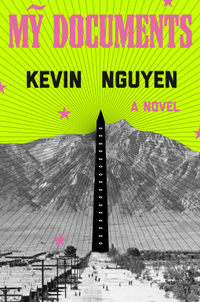
bullet My Documents by Kevin Nguyen—One of the best things I’ve read this year. I’ll probably be saying that in December, too. In the late twenty-teens, the U.S. Government starts detaining Vietnamese-Americans, and this harrowing-yet-frequently-amusing novel follows four siblings. If I say more than that, we’re going to be here for awhile. Hopefully I can get something together in a day or two.
bullet 24-Hour Warlock by Shami Stovall—in the third Chronos Chronicles novel, Finch (and his new team) takes on a demonologist to save his sister-in-law
bullet Big Chief by Jon Hickey—a provocative-looking political thriller set in the days leading up to a reservation’s election

A photo of Harper Lee walking under a tree, superimposed are the words, 'The book to read is not the one that thinks for you but the one which makes you think. - Harper Lee'

LITERARY LOCALS: The 3rd Annual Treasure Valley Book Fair (and tiny book haul)

Literary Locals logo
This past weekend, the Nampa Public Library hosted The 3rd Annual Treasure Valley Book Fair and, as is my habit, I wanted to take a minute or two to talk about it.

Like last year, everyone was given a Passport with the names of every author present. If you got a stamp from every author, you got a free book from…I don’t know where they got this selection—but it was a pretty good one. I got a hardcover of Terry Pratchett’s Dodger, which looks fun. The downside to this is that there were several people that just came by, got a stamp, and moved on. My daughter and I had a conversation of a decent length with all of them—and were interrupted more than once by someone just wanting that. It’s kind of a shame because you could tell that too many people were just out for that (we actually had to be reminded more than once by an author to get a stamp—we’d just get distracted by whatever we were talking about). We had some great conversations—too many. Once again, we spent about 4 hours at an event we’d planned on attending for 90 minutes. We both would’ve gladly talked to many of these authors for longer than we did.

We didn’t see nearly as many returning authors as we’d hoped (Amy Maren Rice‘s absence made us briefly rethink attending). However, there were many that we got to meet for the first time. I’ve already talked to some about showing up here—and will be reaching out to as many of the others as I can in the next few days.

All in all, it was a great event with a large range of genres, target audiences, and authors represented (which was pretty encouraging) and one I hope is repeated again and again.

Now, I can’t be expected to show up to an event like that and walk away empty-handed, can I? I did restrain myself this time (the budget was very restrained this year—I bought less than half of what I wanted too) I do have a shopping list of some of the leftovers.
NPL Indie Fair Book Haul
(behold yet more evidence of why I don’t do bookstagram).

I, again, really enjoyed getting to talk to all of the authors there. Here are the social media (and/or way to order the books for) everyone that I could find. Do yourself a favor and check these authors out!

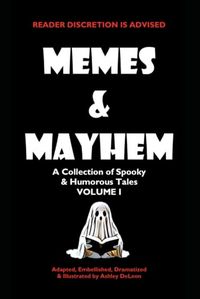
bullet Ashley DeLeon—a writer of spooky and humorous tales, I think my daughter and I could’ve stopped and talked to her for quite a while
bullet Bonnie Schroeder—her “novels feature complex female characters who must navigate challenging and even extraordinary circumstances to discover strength and wisdom they never knew they had.”
bullet Vannotes—writer of graphic novels, who was super-friendly
bullet Charles L. Hay—his novel focuses on survival, nature, and faith (I really wish we could’ve talked more)
bullet Cindi Hartley—her book talks about her struggles, and how she gets through them, with guidance for others (if this book is half as bright and optimistic as she seemed, it’ll be great)
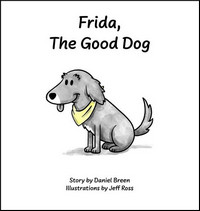
bullet Daniel J. Breen—author of a cute children’s book about a well-loved dog
bullet Danielle Harrington—Fantasy and YA Fantasy novelist
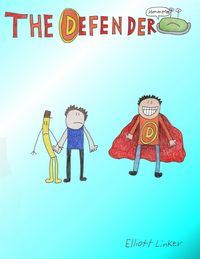
bullet Elliott Linker—a young graphic novelist, back for his third time at this festival
bullet Ellis L. Knox—a local Fantasy novelist with a healthy backlist and a new mystery series in that fantasy world that looks promising
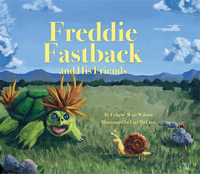
bullet Felicity Watt Wilson—author of a charming children’s book with art you have to see
bullet Gail Cushman/Helene Mitchell—As Gail Cushman she writes rom-coms for the senior set, and as Helene Mitchell she writes mysteries set in a (fictional) small-town Idaho
bullet Glen Gabel—his doorstop of a fantasy novel looks to be fun. Glen took time out of talking about his stuff to tell me about a Western that he’d recently become a fan of. A non-Western reader talking to another about one instead of plugging his own book. It’s exactly the kind of conversation I love falling into
bullet Katherine Ecrivain Joy—writer of faith-filled books for children
bullet James T. Lambert—one of my favorite local writers—SF and Steampunk—with one of the best beards in the valley
bullet Charles Sage—His thrillers look like they could be uncomfortably realistic (just from the setting). Came all the way from the panhandle.
bullet J.S. Anderson—writers of thrillers with a supernatural edge
bullet J.C. Jackson—I’ve probably been reading Jackson longer than any other local writer, always great to see her.
bullet JoEllen Claypool—Claypool writes for children, adults, and writers of all ages. And probably a few other audiences as well
bullet Julie Howard—writer of a series of domestic suspense novels
bullet K.J. Backer—writes books for younger readers who love animals and fantasy novels for adults that feature unicorns who know what to do with that horn. She’s new to the area and I hope I run into her at future events.
bullet Kelsey Elwood—the author of a memoir full of life-coaching lessons
bullet Ken Pollard—a musician-turned-travel writer. He had a violin/fiddle with him to decorate his table. We only realized later that we could’ve asked him to play for us (what we could hear from a distance sounded good)
bullet Laura Jenski—writer of cozy-ish mysteries
bullet Lori Josifek—writer of bird-centric children’s books
bullet Margaret Koger—a very nice poet
bullet Mary Vine—writer of “Romance With Humor, Suspense and Inspiration” and “Language-based Children’s Books that Educate, Inspire and give Hope”
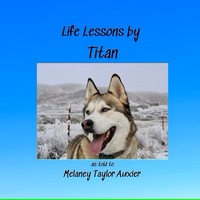
bullet Melaney Taylor Auxier—Writer of Adult Fiction, Middle-Grade and Children’s books. Also a generous fellow dog-lover.
bullet Mel Parrish—A YA Fantasy writer from the Eastern part of the state
bullet Nathan Keys—Epic Fantasy writer. Our conversation led me to realize I didn’t post a Q&A we did last year. Oops.
bullet Nicole Sharp—her website describes her as a “writer of love, coffee, Italy, and fearless women.” I think she’s added “with a touch of spice” to her signage. Conversing with her was just as pleasant this year as last year—she’s the kind of person you’d love to get coffee with.
bullet Rachelle Nelson—writer of YA Fantasy
bullet Rebecca Evans: another brave soul trying to sell poetry
bullet Robin Chadwick Rundle—writer of Historical Romances
bullet Samual Smith, aka Joe Idaho—writer of “action and adventure, political commentary and satire, contemporary or historical fiction, modern or weird westerns.” Anyone who titles a book Teddy Roosevelt’s Goblin: A Bigfoot Story has got to be fun to chat with (and he was!).
bullet Sara Knightly—writer of Fantasy, who had one of the best-decorated tables.
bullet Sarah Hill—writer of Romance, who (with good humor) remembered that I told her last year that I probably would never read her books.
bullet Sherry Briscoe writes : writer of “suspense mysteries with a flavor of the paranormal”
bullet Troy Lambert—a writer of thrillers, and a couple of other things. He’s been distracted from getting to sequels that I’m waiting for by things that pay better (and that sound pretty cool, truth be told)
bullet Wendy Ann Mattox—a writer of Christian children’s books. She seems so full of energy, I expect her to put out 5 more books this year. At least.


Literary Locals logo

WWW Wednesday—April 8, 2025

This is my third post for the week, should be my seventh or eighth. On the plus side, if you are seeing this, it means I stayed awake long enough to put it together yesterday 🙂

WWW Wednesdays Logo

This meme was formerly hosted by MizB at A Daily Rhythm and revived on Taking on a World of Words—and shown to me by Aurore-Anne-Chehoke at Diary-of-a-black-city-girl.

The Three Ws are:
What are you currently reading?
What did you recently finish reading?
What do you think you’ll read next?

Seems easy enough, right? Let’s take a peek at this week’s answers:

What are you currently reading?

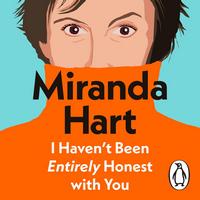
Cover of My Documents by Kevin Nguyen Cover of I Haven’t Been Entirely Honest With You by Miranda Hart
My Documents
by Kevin Nguyen
I Haven’t Been Entirely Honest With You
by Miranda Hart

If anything was going to make Butler’s Parable of the Sower feel less prescient, it’d be Nguyen’s. It pulls off this odd combination of sweet, comfortable, slightly satirical, and utterly horrifying.

I’ve barely scratched the surface of Hart’s book, but I’m looking forward to pressing on.

What did you recently finish reading?

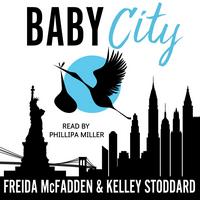
Cover of The Price of Power by Michael Michel Cover of Baby City by Freida McFadden & Kelly Stoddard
The Price of Power
by Michael Michel
Baby City
by Freida McFadden & Kelly Stoddard, read by Phillipa Miller

Michel’s relaunched book is just fantastic. I’d be counting the days for the second book in the series if it had a firm release date (phew! Saved from Math!!)

Baby City was utterly fine–and now I can say I’ve dipped my toe into McFadden’s work (even if it’s a far, far cry from a Domestic Thriller)

What do you think you’ll read next?

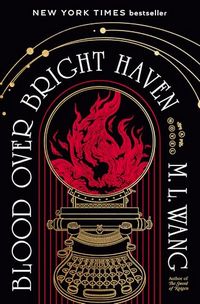
Cover of Blood Over Bright Haven by M. L. Wang Cover of Everything Is Tuberculosis by John Green
Blood Over Bright Haven
by M. L. Wang
Everything Is Tuberculosis: The History and Persistence of Our Deadliest Infection
by John Green

I’ve heard nothing but good things about Wang and this book. Eager to dive in.

What could be more entertaining than a book about TB? It’s about time I try a John Green (past time, really), might as well try this one.

Are you working on anything good?

MUSIC MONDAY: “Smells Like Teen Spirit” (Live At Montreux 1992) by Tori Amos

The Irresponsible Reader's Music Monday logo

Music Monday's originated at The Tattooed Book Geek's fantastic blog and has shown up hither, thither, and yon since then.

A couple of weeks ago, this came up on shuffle in the car. Not only did I forget that I owned a copy of this song, but I’d forgotten that Amos had ever done a cover of this. Naturally, I’ve become a little obsessed with it. Might as well share, eh?

Irresponsible Reader Pilcrow Icon

REPOSTING JUST CUZ: You Are Not Your Own: Belonging to God in an Inhuman World by Alan Noble: Correcting Our Understanding of Humanity

This seemed like a fitting book after the last few weeks–I needed a reminder of the highlights of this book.


You Are Not Your OwnYou Are Not Your Own:
Belonging to God in an Inhuman World

by Alan Noble

DETAILS:
Publisher: IVP
Publication Date: October 11, 2021
Format: Kindle Edition
Length: 232 pg.
Read Date:  May 29-June 12, 2022
Support Independent Bookstores - Visit IndieBound.org


I’ve tried to write this post 4 times since I finished it—and I’ve struck out each time, because I keep trying to interact with and reflect on Noble’s arguments—because there’s a lot to chew on, a lot to commend, and a great deal to unpack. But that’s not what I’m supposed to be doing here—I’m supposed to talk about the book, talk about how Noble wrote it, and what I thought about it—sure that involves some reflection on the content, but it’s not supposed to be my focus (as much as I might like it to be). So, I’m going to take a more surface-level approach, just so I can get something out.

(I said something similar with Winslow’s The Border recently—you’re probably not going to find a lot of people discussing these two books in similar fashions anywhere else)

The Back of the Book Description

(from ivpress.com)

“You are your own, and you belong to yourself.”

This is the fundamental assumption of modern life. And if we are our own, then it’s up to us to forge our own identities and to make our lives significant. But while that may sound empowering, it turns out to be a crushing responsibility—one that never actually delivers on its promise of a free and fulfilled life, but instead leaves us burned out, depressed, anxious, and alone. This phenomenon is mapped out onto the very structures of our society, and helps explain our society’s underlying disorder.

But the Christian gospel offers a strikingly different vision. As the Heidelberg Catechism puts it, “I am not my own, but belong with body and soul, both in life and in death, to my faithful Savior Jesus Christ.” In You Are Not Your Own, Alan Noble explores how this simple truth reframes the way we understand ourselves, our families, our society, and God. Contrasting these two visions of life, he invites us past the sickness of contemporary life into a better understanding of who we are and to whom we belong.

Acting as If We Are Our Own

The part of the argument from the first paragraph takes the first four chapters and the majority of the book. I guess you could consider this the “Here’s What’s Wrong and Why” part—if we are our own (as we’re told) several problems ensue—personally, culturally, and ecclesially. We (and Noble includes most of the American Church here) have a faulty anthropology, and that results in many problems.

Noble explains where he sees the faulty anthropology leading with compassion and sensitivity, while not pulling any of his punches.

Understanding We Belong to Christ

But for the Christian, our faith begins with the realization that we are not our own (as explained in the words of Heidelberg Catechism Q&A 1). Noble points the believer to recalibrate their understanding of human nature—particularly redeemed human nature—to begin to understand what being the possession of Christ means to our life, our future, our identity.

The strength of this section comes from Noble’s honesty:

At this point you might expect me to introduce my “Five Steps for Changing Your Life by Accepting That You Are Not Your Own.” But as this is a work of nonfiction, I won’t be doing that.

Instead, he gives some advice, based on his own experiences and observations—but he offers no guarantees. I found his honesty refreshing and thought there was a lot of wisdom to his advice, but I was mostly impressed by the humble nature of the approach—advice, not a program or techniques.

So, what did I think about You Are Not Your Own?

I really liked this—I thought it was insightful and helpful. Noble’s diagnosis and advice were sound—they seemed to match up with the world around us and the problems we see. More importantly, he points to the One whose grace, mercy, and care offer any true hope and help in this broken and dying world.

Noble’s writing flows—he’s engaging, compassionate, and relatable. It’s easy to understand even the more complex points he’s making, and his illustrations give the reader plenty to hang on to.

I think Noble’s book would serve as a great companion piece to Kapic’s You’re Only Human: How Your Limits Reflect God’s Design and Why That’s Good News*. Both of these authors remind the reader of our place in the world, and why we’re there—so we can respond in dependence and trust accordingly.

* Meador’s What Are Christians For?: Life Together at the End of the World, and even the better parts of Thompson’s Growing Downward fit here, too, I think—just not as neatly.

I’ve already re-read parts of this book, and find myself chewing on it repeatedly—especially as I compare it to Kapic’s. I heartily recommend and encourage you to pick it up.


4 1/2 Stars

This post contains an affiliate link. If you purchase from it, I will get a small commission at no additional cost to you. As always, opinions are my own.

(late, I know) Saturday Miscellany—4/5/25 (or Weekend Miscellany or Sunday Miscellany…)

I spent the day at the Nampa Library’s 3rd Annual Treasure Valley Book Fair and dealing with family stuff, so it’s taken me a bit to get the time for this.

Odds ‘n ends about books and reading that caught my eye this week. You’ve probably seen some/most/all of them, but just in case:
bullet The Book Business Prepares for Tariff Turmoil —this is going to hurt
bullet “Reading builds empathy”: The case for saving America’s libraries: America needs “third places” like our libraries more than we ever have, both functionally and philosophically
bullet A Mini Train Just for Books? NYPL’s New System is a Must-See—ohhhh, I wanna watch this in action
bullet Who Killed the Omniscient Narrator? A Brief History of POV
bullet The White Male Writer is Fine, I Promise—a nation breathes a giant sign of relief, I’m sure—we were all so worried.
bullet Narratess Indie April Sale—is this weekend
bullet My Recommendations for Narratess’ Indie Sale April 2025 from JamReads.
bullet The Curious Case of Literary Confusion: Guest Post by Andrew McAleer
bullet Book Worlds We’d Like To Visit—this list from LibraryThing is bringing back a lot of memories for me, and adding a few ideas to my TBR
bullet World Autism Awareness Day: Why Authentic Autistic Representation Matters – a personal perspective—Nunc hoc in marmore non est incisum
bullet Best Amazon Alternatives for Book Lovers

To help talk about backlist titles (and just for fun), What Was I Talking About 10 Years Ago Week?
bullet Pocket Apocalypse by Seanan McGuire
bullet Kindness Goes Unpunished by Craig Johnson—the book that turned me from the occasional reader of Johnson into a devoted fan
bullet Dead to Me by Cath Staincliffe
bullet And I mentioned the release of The Diamond Conspiracy by Pip Ballantine & Tee Morris

This Week’s New Releases that I’m Excited About and/or You’ll Probably See Here Soon:
bullet A Drop of Corruption by Robert Jackson Bennett—A fantasic sequel, and an even better mystery in this fantasy series, as I tried to say earlier this week
bullet Vera Wong’s Guide to Snooping (on a Dead Man) by Jesse Q. Sutanto—I was supposed to write about this sequel a week ro so ago, but I couldn’t quite get my act together enough. Short version, this is everything that fans of the first Vera Wong will want.
bullet The Price of Power by Michael Michel—This is the first volume in a fantasy saga that is destined to be fanstastic. I talked about it some on Friday (and am going to have to eat my words on more than one prediction)
bullet Rex Stout: Killer Conversations with Edgar Winner John McAleer by by Andrew McAleer—the son of Rex Stout’s biographer has brought us this collection of interviews between the two. I have to spend some time pouring over this.
bullet Pronoun Trouble: The Story of Us in Seven Little Words by John McWhorter—”With his trademark humor and flair, bestselling linguist John McWhorter busts the myths and shares the history of the most controversial language topic of our times: pronouns”
bullet I See You’ve Called in Dead by John Kenney—”Bud Stanley is an obituary writer who is afraid to live. Yes, his wife recently left him for a ‘far more interesting’ man. Yes, he goes on a particularly awful blind date with a woman who brings her ex. And yes, he has too many glasses of Scotch one night and proceeds to pen and publish his own obituary. The newspaper wants to fire him. But now the company’s system has him listed as dead. And the company can’t fire a dead person. The ensuing fallout forces him to realize that life may be actually worth living.”

Tweet from @CaffeinatedLiha: Never trust a bookworm. They'll literally bawl their eyes out till 3am for a book that ripped their soul apart and broke their heart and then they'll recommend it to you and tell you to read it, saying 'it was sooo good, you'll love it omg!!'

In Medias Res: The Price of Power by Michael Michel. A Powerful, Addicting Read

As the title implies, I’m in the middle of this book (well, a little past middle), so this is not a review, just some thoughts along the way.


Cover of The Price of Power by Michael MichelThe Price of Power

by Michael Michel

DETAILS:
Series: Dreams of Dust and Steel, #1
Publisher: Chainbreaker Books
Publication Date: April 2, 2025
Format: eARC
Length: 498 pg.
Buy from Bookshop.org Support Indie Bookstores

What’s The Price of Power About?

This is not the easiest question to answer, I’ll tell you right now. The title really sums it up well, this the story about what power costs–political, familial, monetary, military, personal, magical.

But that’s not much of a plot, that’s more of a description. There are four plotlines–that somewhat overlap, but most of that is promised for book two and beyond. But the further you read, the more you see how they are intertwined even if most of the characters don’t see/understand that yet.

So I’m going to steal a little from the blurb that Michel sent me (and that I posted earlier today) to give some quick thoughts about each plotline.

“A mad prophet determined to control reality”

This is the hardest one to talk about–at this point, I’m not certain who the mad prophet is (I’m pretty sure, but I’m waiting to know for sure). But I’m probably in denial because I don’t want this person to be the prophet. The main reason that this is hard to talk about is that this storyline is full of symbolism, visions, dreams, and magic. The point of view character–and those around him, too–isn’t sure what is going on–what’s real, what’s a dream, and what’s his imagination.

I’m engrossed, though. I may not get it all, but I’m hooked by what I do get.

“A dead prince who isn’t dead”

This, on the other hand, is a straightforward story about a prince whose thirst for vengeance–driven by rage and grief–led to a type of destruction that might make Tywin Lannister take a step back.

Now he’s just trying to avoid contact with everyone, denying who he is, dwelling on what he did and what it cost him. You almost feel sorry for him and wish he’d snap out of his self-pity and self-destruction when he needs to (which is right about the time we meet him). But also…if anyone should hate themselves, it’s hard to argue against him.

Barodane is set-up for a redemption story. But I’m not convinced that’s what Michel has in mind. Of all these four plots, this is the one I’m most invested in because of some of the surrounding characters.

“An orphan with hero’s blood”

This, too, feels like a familiar fantasy story. A princess raised to take the place of her dead parents leading her nation through a tumultuous time, with everyone wondering if she is capable of doing the job. You just can’t help but feel bad for this girl. She’s got the weight of the world on her shoulders (or at least the weight of a nation), pressures and expectations on her are as high as an be.

On the one hand, what she’s called upon to do (so far) is easier than the rest–but her age and visibility even out the scales a bit. I like her, I like her teachers, and her animal companion. But honestly, everyone else in her immediate circle could be wiped out and the only reason I’d care is because of the impact it’d have on those four.

I’m pretty sure that I’ve spent a decent amount of time leaning forward during her chapters like you do during a tense part of a film (am I the only one who does that while reading?).

“And a powerful seer “

This is hard storyline to work through. This grandmother/Obi-Wan figure is a tough old lady, having to act tougher than she really is to do what she has to. Her ability to see time and reality have shown her what needs to happen, and the price she and her grandson will have to pay.

Michel keeps the details vague at this point–but you get to see enough to keep you invested and eager to learn alongside her grandson.

There’s a very cool magic battle in this story–at least one, anyway–and just knowing that this kind of thing is possible around this woman will keep you invested, even if you weren’t inclined to be anyway.

The way she’s tied to all of the above just makes me want to understand her more.

Dramatis personae

There’s a lengthy (or maybe my e-reader font is just set large enough that it seems that way) dramatis personae at the beginning of the novel–if you’re like me, keep it open on your phone while you use an e-reader for easy reference. If you got your hands on a paper copy, keep a bookmark there–you’re going to want to check it often for the first third or so (results may vary on your attention span or memory).

Even if you don’t rely on it, it’s a good way to think about the book–4 rosters of characters to get to know now.

I expect that those who survive will get tossed together like a salad in the ensuing novels.

How the Novel Works

This isn’t a “Book One: Barodane”, “Book Two: Princess” kind of thing where each book tells the complete story of each character. Each character/storyline gets a chapter and then it moves on to the next, and keeps rotating that way (I’m pretty sure it’s a pattern that repeats, but honestly I forgot to track–that largely holds true–and it doesn’t matter).

There are two schools of thought when it comes to chapters–a lot of authors will close an idea, or a time period at the end of a chapter. This makes it easy to put your bookmark/quitter strip in the book and set it down to sleep, eat, converse with people, or whatever. Other writers will end a chapter in a way that propels you to move on to the next (Jim Butcher, for example, talks a lot about this practice). This keeps you engaged, moves you to keep reading–and is an excellent way to annoy a reader who really has other things they should be doing.

Michel falls into the latter category. Of course, the trick with this book is that as a Bardodane chapter leaves you hungry for the next thing in his story–but you have to go through three other plotlines before you get back to it (and each one of those will leave you hungry to press on with that storyline). I love this–I also hate it. Some people will choose to skip chapters to stick with one story through the end. This is a mistake–and will inevitably involve you getting something spoiled (I can think of at least once where that spoiler is major. There may be more to come).

So gird up, and prepare for Michel to play with you like a fisherman trying to tire out his catch before reeling it all the way in.

The Secondary Characters

To keep this to a length people would want to read, I’ve limited what I’ve said about secondary characters. This is a problem–some of them are just as interesting and compelling as the point-of-view characters (possibly more so). That long dramatis personae is filled with people you will want to spend time with, or at least understand better. And sure, some of them are despicable and you will root for their defeat (but you’ll still want to understand them and maybe spend time with them on the page, just not at a pub).

There are a few secondary character deaths in this book–and you know there are more to come. One of them provoked me to send a message to Michel (the number of times I do that mid-read is incredibly small), threatening him if he did something similar to another character before the fifth book (at which point, I assume almost everyone will die or be defeated). I suspect I will not be alone in feeling that way about some of these characters, even if you pick ones that aren’t as cool as the ones I pick.

Michel is not playing around when it comes to character design or messing with his reader’s emotions.

So, what did I think about The Price of Power?

I’m at the 75% mark–so it’s possible that Michel will mess up the ending and lose me.

Possible, but unlikely.

Really, he’d have to do many, many things wrong to turn me off at this point–and he shows no signs of doing so.

The prologue wowed me. The first chapter raised the stakes–and as every point-of-view character was introduced the intrigue grew. I’m already impatient for the next book to be published and I’m not even finished with this one yet.

Go grab this one as soon as you can. Books 2 and 3 are scheduled for release this year (he talks about the timeline in the video I posted earlier today) and you’re going to want to be ready for them.

Disclaimer: I received this eARC from the author in exchange for this post which contains my honest opinion—but also, I bought the earlier edition of the novel and just hadn’t gotten around to it yet, so I’m not sure how necessary this disclaimer is.

This post contains an affiliate link. If you purchase from it, I will get a small commission at no additional cost to you. As always, the opinions expressed are my own.
Irresponsible Reader Pilcrow Icon

HC Chats with Michael Michel about The Price of Power and some other stuff

HC sat down with gritty Fantasy author extraordinaire Michael Michel (https://michaelmichelauthor.com/) to talk about his book The Price of Power (released 4/2/25!) his other books, influences, and things of that nature. HC also works in an error-filled description of Thespis–a mischievous ghost (apologies to Jeremy Goodwin).

Some of the books we mentioned were:
Michael’s books:
The Price of Power
A Graveyard for Heroes
War Song
Way of the Wizard

Other books we mentioned/discussed:
Prince of Thorns by Mark Lawrence
The Trouble with Peace by Joe Abercrombie (Book 2 of The Age of Madness)
The Steel Remains(Author) by Richard K Morgan (Book 1 of A Land Fit for Heroes)
Sons of Darkness by Gourav Mohanty (I’m pretty sure about this one, my handwriting got hard to read, and if I’m wrong, it looks like something we should’ve talked about)

For the two of you who might be curious, what I should’ve said about Thespis:

Jeremy:…in 534 B.C. that Thespis stepped out onto the stage of the Theater Dionysis during a choral song and dance and became the first man to speak words as an actor in a play.

Dana: Thespis?
Jeremy: The first actor. Now a mischievous ghost. He likes to wreak havoc on performances of any kind.


Page 49 of 602

Powered by WordPress & Theme by Anders Norén