United States of Books – To Kill a Mockingbird by Harper Lee

It’s just not fair (and probably fixed) that the organizer of this little project got to read To Kill a Mockingbird, easily one of my favorite 2 novels of all time. I just checked, and over 3% of the posts here reference Harper Lee in some way — given the number of authors I’ve mentioned at least in passing, that’s saying something. So to have someone else write the first full-length post on this book here bothers me (and makes me wonder just what I’ve been doing the last few years that I haven’t posted about it yet). But anyway, enough of the jealous ranting — on to Laura’s post!
Welcome to the halfway point of the United States of Books! We have now reached review number twenty-five and six months of reviews. I can’t thank the team of reviewers enough and our fantastic readers. To say thanks to you all, we are giving away a $25.00 Amazon gift card for 1st place and then a copy of any of the US of Books books (winners choice) Kindle or physical copy (INT) as long as Book Depository delivers, for 2nd place.

Click here to enter

To Kill a MockingbirdTo Kill a Mockingbird

by Harper Lee

Author: Laura at 125Pages.com

4 1/2 Stars

Synopsis

Harper Lee’s Pulitzer prize-winning masterwork of honor and injustice in the deep south—and the heroism of one man in the face of blind and violent hatred.

One of the best-loved stories of all time, To Kill a Mockingbird has been translated into more than forty languages, sold more than thirty million copies worldwide, served as the basis for an enormously popular motion picture, and was voted one of the best novels of the twentieth century by librarians across the country. A gripping, heart-wrenching, and wholly remarkable tale of coming-of-age in a South poisoned by virulent prejudice, it views a world of great beauty and savage inequities through the eyes of a young girl, as her father-a crusading local lawyer-risks everything to defend a black man unjustly accused of a terrible crime.

Review

This week takes us to Alabama with To Kill A Mockingbird by Harper Lee. EW says – “Forget the dubious sequel. Lee’s exceptional work is a perfectly contained miracle about the struggle for justice in a system built to destroy it. From Birmingham to Tuskegee, Alabama was a burning center of racial conflict, and this novel takes place right on the outskirts of that crucible.”

To Kill A Mockingbird by Harper Lee is one of the first “grown-up” books I remember reading. It was the summer before 7th grade and I was a precocious twelve-year-old. I loved that the person telling the story was a smart young girl and that she was so very different from other book narrators that I had been exposed to. I read it at least once a year and loved when it was on the book list in sophomore year, as it made the book report easy to do. As I got older, I stopped reading it as often, and as I picked it up this time realized it had been at least ten years since I had last picked it up. As I cracked the cover on my old worn copy, it was like stepping back in time to a period in my life that had long since passed.

I wanted you to see what real courage is, instead of getting the idea that courage is a man with a gun in his hand. It’s when you know you’re licked before you begin, but you begin anyway and see it through no matter what.

To Kill A Mockingbird is a complex story of a young girl, six-year-old Jean Louise Finch (Scout), who lives with her lawyer and widower father Atticus and her older brother Jem. Scout and Jem, together with the neighbor boy Dill, are fascinated with their reclusive neighbor “Boo” Radley, a recluse that is never seen. They begin to spin tales about him and try to entice him outside. Meanwhile their father is assigned a case defending a black man, Tom Robinson, who has been accused of raping a young white woman. The two stories weave together in a powerful tale of race relations in a small southern town coming out of the Depression. Harper Lee crafted a tale of morality and family that still resonates today.

As you grow older, you’ll see white men cheat black men every day of your life, but let me tell you something and don’t you forget it—whenever a white man does that to a black man, no matter who he is, how rich he is, or how fine a family he comes from, that white man is trash.

Love and murder, racism and redemption, all combine to make To Kill A Mockingbird a classic that will remain read for years to come. The way that Harper Lee combined wide-eyed youthful curiosity with the recollections of a grown woman make this a very interesting read. The style of the story telling is unique and matches the very detailed plot. The world created and described by Scout is vivid and real, and I could picture the scenes unfolding quite clearly.

Now that I have rediscovered Lee and Mockingbird, I regret ever leaving her world. A Pulitzer Prize winner, To Kill A Mockingbird is a book that well deserves its accolades as well as its criticisms. It does feature many difficult topics and language that in today’s world is considered unacceptable. I believe stories such as this still need to be told as we need to remember what used to be commonplace. I will now try to plan an annual re-read to return to this fascinating world. And, as said so well by Scout, “Until I feared I would lose it, I never loved to read. One does not love breathing.”

Unshakable by K. Scott Oliphint and Rod Mays

UnshakableUnshakable: Standing Firm in a Shifting Culture

by K. Scott Oliphint and Rod Mays

eARC, 160 pg.
P & R Publishing, 2016
Read: June 12, 2016

In the preface, after a brief sketch of Newton’s life and his career as a hymn-writer, the authors talk about how they’re going to use one of his hymns as a framework for their discussions. Because older hymns help us remember that we’re not the first believers to have to deal with certain aspects of life — and they help us remember those things that are important and distinguish them from those that are fleeting. Now, why of all the Newton hymns one could choose, they picked “Glorious Things of Thee are Spoken,” I don’t know. I looked, and realize I may have missed their explanation (and will feel pretty embarrassed when it’s pointed out to me). I don’t think it’s a bad choice, I just don’t understand why this one.

Don’t get me wrong, this is not an interpretation of or meditation upon Newton’s words. But each chapter draws on the themes of the verses of the song, and shows some of the ways you could talk about those issues and themes today. I guess you could label this an application of Newton.

Thanks to the framework of the hymn, the book covers a range of issues – the foundation of knowledge/understanding, the nature of authority, technology’s effect on our thinking, cutting, God’s promises, sin — and from time to time, I stopped reading and wondered how they started at X and ended up at Y, but the transitions were all so seamless that the text flowed easily from one to the other — and honestly, it turns out that X was related to Y, after all. Not only do they address a wide range of topics, they do so using the whole of Scripture, so you get a range of Biblical perspectives.

The authors use illustrations that should be familiar to many — you don’t have to be steeped in Evangelicalism to follow their arguments — A Christmas Carol, Neil Postman, Shakespeare, The Man Who Wasn’t There, for example. Chapter 4’s discussion of redemption begins with an extended look at a portion of Lewis’ The Lion, the Witch, and the Wardrobe. I’m not sure I needed the close reading of the White Witch’s plot to kill Aslan in exchange of Edmund, I’m not sure anyone over the age of 6 needs it to see how it applies to Christian redemption. But that’s a minor complaint.

It is really a deceptively easy read. The prose is smooth enough that you can get through the text without noticing the deep thoughts you’re encountering. I remember looking down and wondering how I could be 25% with a Oliphint book so quickly. It has to be Mays’ influence.* But when you read closely (as you really ought), Mays and Oliphint are dealing with important topics that everyone needs to think about, and they don’t do so in a cavalier or surface-level manner. An easy-to-read manner, yes, but not surface-y.

I even liked the discussion questions – I almost never like them and wonder why authors/publishers bother. But, these were helpful and I think would be great fodder for discussion groups.

Unshakable is a very useful, thought-provoking work that’s pretty accessible for a wide-ranging of readers: believer, unbeliever, student, older-than-typical student. I heartily recommend it.

Disclaimer: In exchange for my honest thoughts, I received this book via NetGalley and P&R Publishing. Thanks very much!

*that’s not a criticism of Oliphint, just underlining how easy a read it was. My only criticism of Oliphint’s work is that there are so few of them.

—–

3.5 Stars

Saturday Miscellany – 6/18/16

Only a few odds ‘n ends over the week about books and reading that caught my eye. You’ve probably seen some/most/all of them, but just in case:

    This Week’s New Releases I’m Excited About and/or You’ll Probably See Here Soon:

  • The Ghost Rebellion by Pip Ballantine & Tee Morris — Yay! The 5th Ministry of Peculiar Occurrences novel is here. I enjoyed this one, I think you will, too. (I posted about it last week)
  • The Last Adventure of Constance Verity by A. Lee Martinez — Martinez is writing a series, which is enough to get me interested. Add in the hero who’s been saving the world for about 30 years, and just wants to be normal, and I’m beyond interested.
  • Shadowed by Karen E. Olson — so, Nicole Jones’ attempt to lie low on Block Island failed. What do you want to bet her Canadian location works out better? Yeah, me neither.
  • Stiletto by Daniel O’Malley — This is sitting on my TBR shelf (literally), and it’s driving me crazy that I can’t fit it in for a couple of weeks.
  • Man On A Rock by Grant Sutherland — Fahrenheit Press’ first novella looks like the kind of thriller summers are designed for. (you know, if summers were designed for people who read)
  • Escapology by Ren Warom — looks like a classic cyberpunk novel, just brand spankin’ new.
  • Mechanical Failure by Joe Zieja — SF with action and humor. I’m reading comparisons to Scalzi and Adams. Even without those, this looks fun.

Lastly, I’d like to say hi and welcome to Alois Larc and greatestcatpics for following the blog this week.

NYPD Red by James Patterson, Marshall Karp, Edoardo Ballerini, Jay Snyder

NYPD RedNYPD Red

by James Patterson, Marshall Karp, Edoardo Ballerini (Narrator), Jay Snyder (Narrator)
Series: NYPD Red, #1

Unabridged Audiobook, 7 hrs 7 min.
Hachette Audio, 2012

Read: May 24 -25, 2016


I am a huge, unabashed Marshall Karp fan. His Lomax and Briggs books are long-time favorites of mine (the best part of writing this post is that I learned that a month and a half ago, he self-published a new one! The fact that I haven’t dropped everything — including this post — to go read it is somewhat of a shock to me). They have humor, heart, clever stories, great characters, and a crackling good voice.

I have read several James Patterson novels. They are complex, tightly written, and move at a good pace (until they get to the point where they’re a little long). Yeah, I think he plays the super-smart psycho villain a bit too frequently, and that he enjoys the torture/violent aspects a bit too much. On the other hand, he sells books like almost no one else alive. So what do I know?

So when you put the two of these together, what do you get? Well, you get something that sells pretty well.

The NYPD has special task force to deal with high-profile cases, cases involving the rich, powerful and famous — particularly with the entertainment industry (and the money it brings in). This task force is nicknamed NYPD Red (as in red carpet, get it?). It’s a cushy, elite post for the crème de la crème. The crème-iest is Det. Zach Jordan, who’s getting a new partner (probably temporarily), Det. Kylie MacDonald. Kylie MacDonald is smart, ambitious and gorgeous (a word that describes pretty much every woman in this book) — and she dated Zach for a bit before she got married. Getting over Kylie has been on his To-Do List ever since.

NYC is in the middle of a big week hosting Hollywood’s best and brightest, trying to get more movies and TV made there. But some whack-job has started killing bigwigs in a very public, very noteworthy way. So it’s up to Jordan and MacDonald to stop them.

I have got to admit, most of the murders are pretty clever, if unnecessarily elaborate.

It was okay, well constructed, moved things well — there’s a little personal stuff mixed in, too. The killer’s a very Patterson-esque killer. The cops are a watered down Karp type. I’m not chomping at the bit to get to the next one, but I’m not opposed to it, either. So, yeah, I didn’t dislike it. Let’s go with that.

The narration was capable, it didn’t add anything to the experience — and maybe detracted a bit once or twice. Like the book as a whole, the narrators got the job done.

—–
2 1/2 Stars

In Medias Res: The Asset by Shane Kuhn

as the title implies, I’m in the middle of this book, so this is not a review, just some thoughts mid-way through.

—–
The Asset
The Asset

by Shane Kuhn

This is not the Shane Kuhn you know. Well, sort of. This is a standalone thriller about Airport/Airplane Security, Terrorism, and the USA’s efforts to keep the friendly skies, well, friendly. It’s not as fun and funny as The Intern’s Handbook or Hostile Takeover (or whatever they’re called in your part of the world). BUT it is just as well-written and suspenseful — and a little easier to believe, actually.

There are hints, suggestions, indicators, and other things pointing to an immanent terrorist attack on the U.S., and not enough people are taking the situation seriously. At least, least that’s the point of view of Kennedy, the security expert and protagonist, who is taking it very seriously. Taking place over 64 days (not a spoiler, that’s literally the 2nd line — although, there could be some action that takes place after that). Will Kennedy be in time to stop it? How will he? this is a pulse-pounder, a nail-biter, a “oh, crud — do I really have to go to work tomorrow? Do I actually need to sleep before then?” kind of book.

I think I’d prefer it to be harder to believe than the other two books, come to think of it.

I’m almost at the mid-way point of the ARC (with thanks to Simon & Schuster and Shane Kuhn) and I’m telling you now, you want to pre-order this, get on your library’s wait-list, or whatever (legal) thing you do to get your hands on a book. It comes out on July 12, you want to be ready for it.

Audiobooks and Other Programming Notes

Two days without a post about a book, which is pretty annoying — I’ve been working on a couple, but somehow I haven’t finished any since Tuesday. Sorry!

So my new job involves a lot of — I want to say mindless work, but that’s not true. Le’s just say that there’s a lot of work where you’re isolated and could use something to occupy part of your mind. So I’ve been listening to more audiobooks than normal. Many of which are books I’ve read before, so they’re sort of part of the Reread Project. But I’m working in a few new books, too. I need to get better a simply regurgitating what I’ve said before about these re-reads, I realize.

Let me just say, I’m really disappointed in the tastes of whoever it is in my library that borrows audiobooks. Based on the selection, there’s high demand for lousy books.

Come to think of it, looking at the shelves, that’s true of paper books, too — it’s just more obvious in the small sample size of audiobooks.

Anyway, when it comes to audiobooks, it’s impossible to just keep things to the writing itself, performance comes in to play, too. So I have to talk that some (and I’ve listened to a couple lately that have hurt the books, and a couple that have helped the books, one or two that made no difference). I want to keep the focus on writing, story, character — but part of the audiobook experience is the narrator(s). I may end up lumping a few write-ups into one post instead of several individual. Also, I’m going to try to keep the audiobook talk to Fridays (no reason, just wanted to pick a day).

So, that’s what’s going on with me — a little writer’s block, a whole bunch of good books, a new type of book showing up regularly, and me falling more and more behind on posts.

What are you reading lately?

A Nifty Surprise from Pocket Books!

When I got home from work today, a package containing this letter was waiting for me:

For those who can’t make it out, it reads:
Dear Reader,

You are receiving this package because you have recently been identified as a “superfan” of Kim Harrison! Enclosed here are two paperback copies of The Drafter, one for you and one for a friend. Please read, enjoy and share your thoughts with friends and family.

The next novel in the Peri Reed Chronicles, The Operator, goes on sale this November. Upon publication, we will happily send you a copy of The Operator to read, review, and share with friends.
Thank you for your continued enthusiasm for Kim Harrison’s work! Happy Reading!

With best wishes,

Now, this is coolest surprise I’ve received in quite a while. I’ve already got a copy of The Drafter, so I guess I have two for friends. I’ll figure out how I’m going to give these away soon (feel free to leave suggestions in the Comments below). As far as sharing my thoughts on it? I’ve done a bit of that already (here, here, and a little bit here)– but in essence, it’s the best thing I’ve read by Harrison, ever. And as a newly official Kim Harrison Superfan, when I say it’s the best, that means something 🙂 (or maybe, as a superfan, I’m too biased to pay attention to, but let’s ignore that possibility)

And getting a copy of The Operator? Suh-weet!

Here’s my question, though: How the grawlix did they get my address?!?!

Steel Victory by J. L. Gribble

Steel Victory Steel Victory

by J. L. Gribble
Series: Steel Empires, Book 1

Kindle Edition, 216 pg.
Dog Star Books, 2015

Read: June 10 – 11, 2016


This is a doozy to know how to categorize — it’s Post-Apocalyptic (but not really dystopian), it’s Futuristic (but little tech and everyone uses swords), it’s Urban Fantasy (but, pretty different from what you’ve seen before). Basically, this is the kind of thing that
Mike Underwood has been talking about
, the kind of thing that Angry Robot does so well when they list 3 or 4 sub-genres on the back of a book. So, you’ll have to settle for me saying it’s a good story about vampires, weres of various stripes, mages, mercenaries, humans, elves, Romans, and Brits.

The first thing to talk about is the world building — it’s great. Gribble doesn’t get bogged down in the details of the world, but you get the sense that they’re present. And what you are given demonstrate a fleshed-out reality — the magic system, the political structures (within the city and internationally), the races, the history (personal and global) — really she has it all together here. Better yet, she (mostly) explains it bit by bit in a way that serves the story, not bringing it to a halt to give us a lesson.

I’ve started — and deleted — a few versions of a couple of paragraphs talking about the characters and plotlines — they’ve been too detailed/spoilery/boring or vague/confusing/boring. And it’s not her, it’s me — this is an interesting book full of characters you want more of in situations that push them to be their best. I feel really bad that I can’t come up with anything here that works. So let me borrow the official cover copy:

One hundred years ago, the vampire Victory retired from a centuries-long mercenary career. She settled in Limani, the independent city-state acting as a neutral zone between the British and Roman colonies on the New Continent.

Twenty years ago, Victory adopted a human baby girl, who soon showed signs of magical ability.

Today, Victory is a city councilwoman, balancing the human and supernatural populations within Limani. Her daughter Toria is a warrior-mage, balancing life as an apprentice mercenary with college chemistry courses.

Tomorrow, the Roman Empire invades.

The last portion of the book wasn’t entirely satisfying — I liked the way the main storylines wrapped up, and appreciated that by and large you don’t have to come back for a sequel or two for some real closure. But things felt a bit rushed, and I had a couple of other little hangups. There was one character that seemed to get dropped partway through (I don’t think that’s what happened, but felt that way), which was troublesome. About the same time, a cultural movement seemed to peter out a little too quickly. But that could be explained by a focus (both in the narrative and in the city) on the military action. Still, a bit rushed is better than very rushed, or abruptly paused to set up a second book.

From the action of the beginning, to the political intrigue, to the action-filled end this was a pretty entertaining read. I liked this one, I look forward to getting back to this world and characters, and do think that anyone open to reading this genre-mix would appreciate it.

Disclaimer: The author provided me with a copy of this book in exchange for my honest review.

—–
3.5 Stars

United States of Books – The Betsy-Tacy Treasury by Maud Hart Lovelace
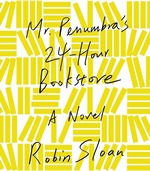
The Betsy-Tacy Treasury The Betsy-Tacy Treasury

by Maud Hart Lovelace

Author: Serena Agusto-Cox at Savvy Verse & Wit

The Betsy-Tacy Treasury by Maud Hart Lovelace, which is the first four books in this 10 book series, was praised by Entertainment Weekly as “a rosy remembrance of a region already known for its niceness.” My daughter and I read these together over many weeks, reading little more than a chapter every couple of evenings.

Betsy-Tacy is the first book in the series, and young readers are introduced to five-year-old Betsy who lives in Deep Valley, Minnesota. She lives in a small mill town at the end of Hill Street, but she’s soon to have a new neighbor, as a new family moves into the house across the street. My daughter was thrilled to hear about a girl her age, and she was even more excited when I told her that there were pencil-like sketches inside for her to visualize what we were reading. Transitioning from only picture books to chapter books can be hard, especially for kids who love visuals. Betsy soon has a new friend, Tacy, and they share big imaginary adventures together before her baby sister arrives and before they even meet Tib, whose family is from Milwaukee and live in the chocolate-colored house they covet. Entertainment Weekly‘s assessment of a “rosy” picture of a “nice” little town is highly accurate, and it’s clear that this story takes place some time ago before many worried about strangers, criminals, or had cars, cellphones, and televisions. Imagination was a commodity that children needed in large supply. This is not to say that Betsy, Tacy, and Tib do not get into trouble.

Rating: Cinquain

Betsy-Tacy and Tib is the second book, and the girls are now eight years old. It becomes clear that even though these books were written during a time when women were supposed to be mothers and wives, these girls have bigger dreams. Betsy is a storyteller and she seems to have dreams of writing books, while Tacy wants to be a mother to a number of kids, just as her mother is. Tib is torn. To be an architect/engineer, mother, dancer, or something else. When kids think about what they want to be when they grow up, their dreams are big and seem to be out of reach. They are fantasies, like many of the stories these girls create in this book for Tib’s Aunt Dolly and themselves. My daughter is riveted by these books and the fun and trouble these girls get into, from visiting the Mirror Palace to cutting chunks of their hair off to put in lockets. These books remind me of the good old days when dreams were interchangeable and wonderful.

Rating: Cinquain

Betsy and Tacy Go Over the Big Hill is the third book and the girls are now age 10. It’s great how accurate Maud Hart Lovelace captures the competition between young kids when it comes to celebrating birthdays and feeling left out when others have birthday parties and they do not. But, ultimately, everything turns out well between Betsy, Tacy, and Tib, only to have a quarrel between Betsy and Tacy and their older sisters over who will become queen. This book has a lot in it about conflict resolution, which younger kids can definitely use as friendships grow and change, as well as in their relationships with siblings. My daughter enjoyed this one, but was a little unsure of the hubbub about kings and queens, even though she is an avid fan of princesses. I liked the historical details about the Syrian immigrants and foreign affairs involving the King of Spain, as well as a tidbit about the current president being Theodore Roosevelt. However, there are some “old-fashioned” ideas about immigrants and other cultures here that might need further explanation.

Rating: Quatrain

Betsy and Tacy Go Downtown is the fourth book, and at age 12, Betsy, Tacy, and Tib are a little too old for my daughter. She lost interest in this book series with this book, as their adventures downtown and their prodding of Winona to take them to see the play Uncle Tom’s Cabin did not resonate with her. She’s more interested in make-believe games and stories, and while these girls act as girls probably do at this age, manipulating a classmate is not a lesson I’d like my daughter to learn. It’s also interesting from an adult perspective to see how times have changed — a prized possession for one of the girls is a beer calendar! But here, we also see Betsy grow up and take an adventure to the new library on her own. While she apprehensive, she’s happy to be on her own and she thrives in the books she finds and reads, but also in the attention she seems to receive from others about her own writing. It’s wonderful to see her parents support her writing/art. It’s a lesson that is often not passed on today, as kids are tested and too focused on subjects that will net them lucrative careers.

Rating: Tercet

Average rating for all 4 books: 4.25

Saturday Miscellany – 6/11/16

Odds ‘n ends over the week about books and reading that caught my eye. You’ve probably seen some/most/all of them, but just in case:

    This Week’s New Releases I’m Excited About and/or You’ll Probably See Here Soon:

  • Infomocracy by Malka Older — post-cyberpunk, political-technological thriller.
  • The Bookman by Lavie Tidhar — Angry Robot republished this Victorian adventure that I always meant to get around to. Good reminder.

Lastly, I’d like to thanks to a href=”https://thereadingdesk.wordpress.com/” target=”_blank”>Vijayalakshmi Harish for all the encouragement this week, check out her pretty nifty blog, too.

(source unknown)

Page 524 of 626

Powered by WordPress & Theme by Anders Norén