Provoke Not The Children by Michael W. Anderson

Provoke Not The ChildrenProvoke Not The Children

by Michael W. Anderson


Kindle Edition, 348 pg.
Amazon Digital Services, Inc., 2014
Read: August 27 – 31, 2014

Some dystopian futures seem plausible — even inevitable — 1984, The Hunger Games; while others seem impossible — Divergent, Red Rising. Anderson’s world is possibly the most plausible I’ve read.

In this future U. S., parents are no longer responsible for the day-to-day raising, nurturing, or educating of their children (they are still responsible for paying for all that). Instead, they entrust their children to the care of Proxies. Proxies are professional child-raisers. The idea is that these people know exactly what an individual child needs for full academic, social, psychological and physical progress and health, and are far better suited to ensuring children receive this care than an y parent could hope to. So after years and years of more and more parents turning to this option, it becomes mandatory for all children in the U. S. to be handed over to the professionals.

What do parents do with all this time they’re not, you know, parenting? Why, they’re making themselves the best possible versions of themselves that they can. Kids just get in the way of paying attention to yourself, your career, your well-being, and so on. (other than having someone to show off at parties and to inherit what you have left, I’m not sure what the point is to having kids in this world — but let’s just assume the biological imperatives win out or something.)

Now, with a government mandate of this size, regulations are going to come into play. And where there are regulations, you need people to enforce them. Enter our hero, Chase Stern. Chase is a Proxy Review Officer — he travels the Northwest working to make sure that children are being cared for by Proxies, and that the Proxies are doing things right.

Naturally, not all are. In fact, there’s a very disturbing number of Proxies getting away with fraud, abuse, and neglect. Chase blows the proverbial whistle on this unpleasant truth and is first publicly pilloried for this, but that soon turns into the opportunity for Chase to be part of the reforms of the Proxy Industry. The cure proposed may turn out to be worse for society as a whole, and the children in particular, than the disease.

Great premise, right? Hard to go wrong with a setup like that.

And yet, Anderson doesn’t quite pull it off. He’s close. I don’t think he was ready to write characters and a story to go with ideas this big quite yet. The pacing was strange at times, and I think the book would’ve been better served if we’d gotten to see more of the process involved — not just opening chapters with a “In the months/years since the end of the last chapter, many things happened”-type summary. Also, there’s a whole lot more telling than showing going on here, his characters gave a lot of speeches. Not quite as bad as Asimov in Foundation*, but along the same lines.

The biggest problem with this book is the characters. They’re flat. They’re not people. The novel is entirely from Chase’s perspective and he comes closest to being a person. But even he’s flat. There’s no growth, nothing other than his crusade to reform. Yes, Chase had been the kind of parent who was in a rush to get his kids Proxied so that he could fulfill himself, and then something happens and he changes into the kind of guy who cares about the welfare of children. Whatever changes he goes through — say, learning how to lobby congresspeople — just appear in between chapters.

That said, Maria, is one of the — I want to say evil, but she’s too shallow for that. Maria’s about the most wretched, vile, hateful character I’ve ever read (her husband, Conrad, is about as bad — but he does less, so maybe he’s just a self-centered twit, not a force for all that is wrong with the world). There are a couple of other characters here that are more actively malicious, too. Still, they’re all little more than amalgamation of characteristics. But Anderson has trouble with the white hat characters. Perhaps he understands human nature too well for that.

There was a very unfortunate typo in the edition I read — and I was taken out of the scene during the climatic confrontation. I’ve emailed the author and he said he’d be fixing it. That’s the big advantage of self-publishing ebooks. Anton Strout, for example, tells the story about someone pointing out a similar problem in one of his fight scenes years after the publication, which will remain in the paperbacks. Anderson’s error is gone. Welcome to the 21st century.

Provoke Not the Children had a killer concept, and a chilling world that you’ll keep thinking about for days. The story’s almost, but not quite where it needs to be. I still recommend it in the end, but don’t expect too much from the narrative. I expect in a book or two, Anderson’s execution will match his world-building.


* I remember that being very speech-filled, I think that’s even talked about in the forward Asimov wrote in the edition I last read 20+ years ago. Hope I’m not wrong about that, it’s just the best example I could come up with at the moment. Besides, being compared to Asimov in Foundation should be seen as a compliment.

—–

3 Stars

Underground by Kat Richardson

UndergroundUnderground

by Kat Richardson
Series Greywalker, #3

Mass Market Paperback, 354 pg.

Roc, 2009

Read: August 17 – 20, 2015


So Harper’s pal/computer tech/security expert, Quinton, comes to her for a favor. Several homeless people in the area have gone missing, and some have shown up that look, well, eaten. By something large. Quinton would like Harper to look into it, see if there’s something that’s more up her particular alley than what the police are looking/equipped for.

Obviously, yes, or it’d be a very short — and incredibly dull — book.

Harper and Quinton end up on a search through the now underground remnants of Seattle’s bygone days, through the city’s homeless culture, and skirting the edge of local Native American myth (not nearly as mythic as most people think).

I’ve liked Quinton, and wanted to get to know him better. We get the opportunity to here — actually, we learn a lot about him. What we learn makes him pretty distinctive in UF, he might be run of the mill in Suspense/Mystery novels, though — but that makes sense. Richardson is basically writing Kinsey Millhone with ghosts and other supernatural whatnot.

Ben and Mara Danziger do make an appearance, but fairly late into the novel. I appreciated seeing them, but I was also glad that Harper doesn’t have to run to them right away. Ben gets more of the action this time than Mara, which was a good switch. Also, he’s a fun character. Many of the other characters from the previous two novels show up for a scene or two — to provide continuity as well as information on just whatever is snacking on Seattle’s poorest.

Pretty much everything worked well in these pages. Harper’s personality is enough to pull you in. Quinton and the world he introduces Harper to are enough to keep you. The bits of Seattle history were very interesting — even if most of it was variation on what I’ve read before about the underground city (and there’s plenty of fodder for return trips for Harper down there). The Native American elements were a nice addition to this world. I do think it was a little too easy to figure out the non-monster mysteries, Richardson might as well have been putting flashing neon around certain sentences, reading “Pay attention, this’ll be important.” Still, over all, everything worked just right.

The previous Greywalker novel, Poltergeist, was one of the last things I read in 2012, and I’ve been meaning to get back to the series since. Don’t ask me why I didn’t — I can’t give you (or myself) a satisfactory answer. It won’t be another 2 and a half years before I come back, I can tell you that. It’s not the most dazzling and dynamic Urban Fantasy series out there, but it’s good. And when you’re this good? You don’t have to be dazzling, you just have to deliver. Underground did.

—–

4 Stars

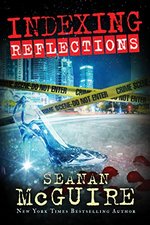
Indexing: Reflections, Episode 2: Broken Glass by Seanan McGuire

Indexing: ReflectionsIndexing: Reflections, Episode Two: Broken Glass

by Seanan McGuire
Series: Indexing, #2.2
Kindle
47North, 2015
Read: August 27, 2015
So, having reassembled the team, reviewed the events of the last book and refocused both readers and characters to their mission, it’s time to get the ball rolling on this season.

Once again, McGuire introduces the AFI team to a problem that seems sort of light-hearted at first (investigating a House that Jack Built, complete with lines like, “Sloane had managed to locate the cat that chased the rat”) — but with some dark undertones. But before we get too far into it, Henry and the crew are interrupted and have to swing off in another direction. And this direction is a doozy — the prison to hold the Fairy Tales who’ve fully manifested in a bad-for-society way — has a jail break. It’s not just any jail break either, because the Narrative has seemingly done something impossible along the way. But I’ll let Henry spell that part out to ya. I’ll just say that I really like where this is going.

On the one hand, I thought what we learned about Demi in the previous episode helped us understand her better, and demonstrated her commitment to the cause/team. So when many of the same notes where struck this episode, I wasn’t thrilled — but, what we heard/saw this time, was different enough to justify it. Seriously, Demi is either going to be a superstar in the AFI, or when she turns and stabs everyone in the back, it’s going to hurt a lot. I’m hoping for the former, am (trying to) ready for the latter.

Elsie, the escapee, is either going to be a great Big Bad for this season, a great underling, solider for a better Big Bad, or a nice warm-up for the next few weeks until we get to the Big Bad. Mid-sentence there, I thought of several other options for Elsie’s role. Whatever that role ends up being, I think I’m going to enjoy her.

Overall, it’s more of a set-up chapter than anything else, but it was very promising and entertaining. Which is good enough.

—–

3 Stars

Reread Project: The Van by Roddy Doyle

The VanThe Van

by Roddy Doyle
Series: The Barrytown Trilogy, #3

Trade Paperback, 311 pg.
Minerva, 1991
Read: August 25 – , 2015
Jimmy Rabbitte, Sr. started off as a supporting character in The Commitments, moved up to co-star in The Snapper, and finally moves to the forefront in The Van, which is more about him than the other two were about any one person. Which isn’t to say that Jimmy, Jr., Sharon, Veronica, Darren and the twins aren’t here, they’re just in the background — as are most of Jimmy, Sr.’s friends (actually, I think Jr.’s in this far more than he was The Snapper).

Not only is the focus more narrow, the final installment in the trilogy is different in other ways — it’s almost 100 pages longer (depending on the printing) than The Snapper which was about 50 pages longer than The Commitments. Which gives Doyle more space to do things he hadn’t really before. It’s still primarily told through heavily stylized In the first 90 pages, I estimated I’d read more (significantly more) narration than I did in the first two volumes of the trilogy.

It’s not been clear before what Jimmy did for a living, but whatever it was, it was pretty clear the bills were barely paid. They stretched what they had pretty far, but they seemed to manage. Somewhere along the line, pretty sure it was post-Snapper, but I’m not sure, Jimmy lost his job. Unemployment isn’t setting well with him — he can’t support his family, he’s bored, he can’t even go down to the pub to have a few pints with his friends.

Jimmy’s trying to grow — he’s reading the classics. Thinking of taking some classes. But it’s not enough. At some point his friend, Bimbo, also gets laid off. The two spend a lot of time together — having a companion in his unemployment makes the whole thing tolerable for Jimmy — almost like summer vacation from school. Bimbo isn’t quite as accepting of this new reality — he almost applies to work at McDonald’s, but is shamed out of it by Jimmy. Bimbo’s wife is even less satisfied with his job status. Which leads to a reckless move on Bimbo’s part — reckless, yet maybe inspired — he uses some of his last dollars on a Chip Van (minus an engine). In the midst of the U.S.’ current Food Truck craze, this might not seem so risky, but in the early 90s? (then again, what do I know of early 90’s Dublin, other than what I’ve picked up from Doyle’s novels and the movies based on them?)

They’ve just a few weeks until the World Cup games start when they hope they can cash in on the post-game crowds. So Jimmy and Bimbo rush to clean the, learn to cook, design a menu, etc. And now you’ve got yourself a plot — can these two make a go of this? Can they remain friends and co-workers? Will they start a grease fire that destroys the whole of Barrytown?

There was, it seemed to me, a maturing of Jimmy that started back in The Snapper. Not that he wasn’t a good father before, but he kicked it into a higher gear with Sharon during her pregnancy. Here, that seems to manifest itself in a paternal pride — Junior’s having some sort of success out there, is getting married; his other son, Darren, is doing very well in school (better than anyone else in the family, that’s sure). Part of Jimmy’s reaction to it is finding pleasure in someone else’s success for what it means to them. I’m not convinced that the Jimmy of The Commitments or the first part of The Snapper could do that.

That’s not to say that he’s Man of the Year material or anything. There are some real (human) flaws to him. He’s petty, he’s jealous, he’s proud — there’s some sort of mid-life crisis that he’s got a half-hearted interest in involving Other Women. As in all good fiction, these just make him someone you can like, someone you can relate to, someone you can get annoyed with — even pity.

There’s some great, great stuff about sports fans here — national pride around The World Cup, the joy in sports, the very real camaraderie that can exist for a few moments around a shared experience. That’s not my typical milieu, but I’ve tasted it a time or two — and I can’t imagine many capture it better than Doyle did here. Even if I didn’t like the rest of the book, I think that part would’ve been worth it.

In the end, this is Doyle’s best work (to date), not the most enjoyable, but the best. It’s impossible after reading this, to ignore Jimmy, Sr.’s brief appearances in The Commitments, to not pull for him earlier than you should in The Snapper, and really to forget him. Just a great character in a world you really don’t want to leave.

—–

4 Stars

The Perils of Bibliophile Parenting

I asked my teenaged daughter to do something. She glared (not maliciously, but very emphatically) at me, repeatedly jabbing finger on the open book on her lap, “I’m reading.”

On the one hand, that’s not the way to react to your father. On the other hand…it’s a good book, and based on how many pages it looks like she has left, I’m not sure I’d want to close it to do a silly daily chore, either.

That’s not true. I know I wouldn’t have wanted to, and probably wouldn’t have. Sure, one of the bonuses of being a parent is getting to hold obnoxious double-standards, but, when it’s one that hits this close to home. That’s pretty hard.

So I just let her read. It was the only call I could live with.

She reads another page or two, “I’m trying to stop these people from being idiots here.” Because if you read intensely enough, you can change the behavior of characters in a 13-year old novel, I guess.*


* Actually, I don’t know…maybe she can. That’d be cool.

August 2015 Report

So, here’s what happened here in August.

Books Read:

Spell or High Water The Loveliness of Christ Enjoy Your Prayer Life
3 Stars 5 Stars 3 Stars
God's Love The Redeemers Veiled
2 Stars 4 1/2 Stars 4 Stars
Go Set a Watchman Texts from Jane Eyre Seconds
? ? ? ? ? 3 Stars 3.5 Stars
Mercy Revealed Underground Hell is Empty
3 Stars 4 Stars 4 Stars
Hostile Takeover The Van Canon Revisited
4 Stars 4 Stars 4 1/2 Stars
Provoke Not The Children
3 Stars

Still Reading:

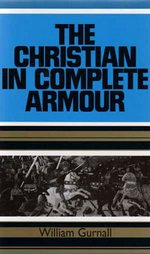
The Christian In Complete Armour Indexing: Reflections A Well-Ordered Church

Reviews Posted:

How was your month?

Saturday Miscellany – 8/29/15

Only two posts this week, and three half-written drafts. That’s primarily due to: The Van by Roddy Doyle being harder to write about than I expected, a higher-than-normal level of short-attention span from me, and my daily schedule’s shifted recently and I’m sleeping more. Which is good for me, bad for writing.

But who cares about that? Here are the odds ‘n ends over the week about books and reading that caught my eye. You’ve probably seen some/most/all of them, but just in case:

    This Week’s New Releases I’m Excited About and/or You’ll Probably See Here Soon:

  • X by Sue Grafton — among other things, this answers the question I’ve been asking for years (even before I started the series), “What ‘X’ word is she going to use?”. I’m sure there’s a decent mystery novel involved, too. #24 is here, folks.
  • Randoms by David Liss — A Cline/Scalzi-ish YA SF adventure. Looks pretty cool.
  • Koko the Mighty by Kieran Shea — this looks like a lot of fun, wish I’d seen the release of the first in this series last year. Time to catch up.

Lastly, I’d like to say hi and welcome to Lagniappe Literature for following the BookLikes version of the blog this week.

Hostile Takeover by Shane Kuhn

Hostile TakeoverHostile Takeover

by Shane Kuhn
Series: John Lago Thriller, #2

Hardcover, 246 pg.

Simon & Schuster, 2015

Read: August 24, 2015


John Lago is back, folks — and he picks up right where he left off, with some of the most adrenaline and testosterone-fueled writing you’ll come across this year. That may not be your cup of tea.

Hostile Takeover is one of those sequels I didn’t think needed to exist. Seriously, who was dissatisfied with where things ended up for Lago? It was narratively sufficient as it was — but as the opening lines of this book could’ve literally been the next page in The Intern’s Handbook, it’s hard to complain.

So, John decides to tie up two loose ends: 1. Alice and 2. HR, Inc. He marries Alice and the two take over HR but it doesn’t take too long (at least not many pages) before both of those go wrong — they break up and she kicks him out of the company (not really spoiler material, folks, it’s in the Jacket Copy). John switches to Plan B, the complete destruction of both. Which is not the most mature of plans, you’ve got to admit.

Which is the bulk of the book — John going undercover again, John trying (and/or being the target of) elaborate assassination schemes, great fight scenes and enough munitions used to make Michael Bay choke. All delivered in that movie-obsessed, rapid-fire (no pun intended) narration that won over so many fans before.

I thoroughly enjoyed, have used already, and will continue to do so, Lago’s comments on the movie Fletch. It was that line that reminded me how much I liked the first book.

Did I enjoy this as much as The Intern’s Handbook? Nope. Only because it didn’t blow me away with it’s freshness. But it’s a worthy sequel, as good as it’s predecessor and leaves me wanting more. An intense, fast read — buckle up and enjoy the ride.

—–

4 Stars

Hell is Empty by Craig Johnson

Hell is EmptyHell is Empty

by Craig Johnson
Series: Walt Longmire, #7

Hardcover, 312 pg.

Viking, 2011

Read: August 21, 2015

Where Junkyard Dogs started off with a chuckle inducing bang, this one starts slower, and makes it clear early on that creepy and foreboding are going to be the order of the day.

We join Walt and Deputy Santiago ‘Sancho’ Saizarbitoria as they’re transporting three felons to meet up with a prison transport and a FBI team. Two of them are pretty hardened guys, guys who scare people like me — but the third? He’s the kind who scares people like them. He goes by the name Shade, and right away, he fixates on Walt in a pretty unhealthy way. And you know that the rest of the novel is going to be about this.

Turns out, Shade is going to help the FBI locate his first victim’s remains, they’re somewhere around where the meet up is to happen. Naturally, the remains are in Absaroka County, so Walt and Sancho get to spend more time with Shade and the FBI. It doesn’t take a genius to figure out what’s going to happen — Shade’s going to escape, he’s going to kill many law enforcement officials, and Walt’s going to have to save the day. Johnson telegraphs this (there’s no way to avoid it), and even though you know it’s inevitable, you still watch it through half-opened eyes.

Oh, naturally, there’s a record-setting winter storm about to hit, too. Can’t forget that.

As standard, boiler-plate as much of this sounds, Johnson makes it work. It’s taught, it’s gripping, with just the right mix of tension, determination, and humor. It will keep you turning the pages, needing to know what’s coming next. Even as most readers are going to have the whole thing pretty-well mapped out in their heads from the beginning — it’s how Johnson executes this so well is a testimony to his skill and the reason that you’ll keep turning those pages as fast as you can.

Vic and Henry are almost absent through this book — and Cady’s appearance is token at best. But Johnson uses their brief appearances to their most. This novel is about Walt’s struggle against Shade and against nature — both seem to be focused on killing him.

Sancho, who is really becoming my favorite non-Walt character in the series is around more than those other three combined; although after the introductory chapters he’s off-screen until the end as well. Before then, he not only makes amusing contributions to a very dark book, he’s an important part of the plot. After his recent near-death experience and career crisis, Sancho’s taken to trying to expand his horizons and catch up on the Liberal Arts education he skipped over. So he had those who did get that education to compile a reading list for him — a copy of which is included as an Appendix. It’s a good list and would be helpful for most people — and gives us a nice look into the personalities of those that compiled the list.

In the acknowledgments, Johnson talked about how difficult this novel was to write — and I can see why. But, as we have come to expect form him, when he set his mind to it, he pulled it off. A gripping tale of man against nature, man against man, man against himself, told with Johnson’s signature style and wit, with one foot in Dante and the other in Indian folklore. Not an easy task, but one well done.

—–

4 Stars

Saturday Miscellany – 8/22/2015

Odds ‘n ends over the week about books and reading that caught my eye. You’ve probably seen some/most/all of them, but just in case:

    This Week’s New Releases I’m Excited About and/or You’ll Probably See Here Soon:

  • Hallow Point by Ari Marmell — who-hoo! Mick Oberon’s back.
  • Zero World by Jason Hough — SF Spy-Thriller? Sign me up. Check out this great graphic review from Kevin Hearne.
  • Last Words by Michael Koryta — the beginning of a new series from Koryta is good news, anyway, but this one looks particularly strong.
  • Zeroes by Chuck Wendig — This Hacker/Cyber Espionage adventure looks good. But it’s by Wendig, so I’ll either dig it or hate it, no matter what it looks like. Still, the writing will be great.
  • Percy Jackson’s Greek Heroes by soandso — A follow-up to last year’s Percy Jackson’s Greek Gods, which I’ve flipped through, but haven’t actually read much of. Nicely written and gorgeous. Bonus — big and heavy enough to kill an intruder if used correctly.

Lastly, I’d like to say hi and welcome to E.S. Wesley, G. E. Gallas (who could probably improve my Seconds post), and Kent Wayne for following the blog this week.

Page 551 of 626

Powered by WordPress & Theme by Anders Norén