I Have Too Many Things to Say About Robert B. Parker’s Buried Secrets by Christopher Farnsworth

Cover of Robert B. Parker's Buried Secrets by Christopher FarnsworthRobert B. Parker’s Buried Secrets

by Christopher Farnsworth

DETAILS:
Series: Series: Jesse Stone, #22
Publisher: G.P. Putnam's Sons
Publication Date: February 4, 2025
Format: eARC
Length: 352 pg.
Read Date: January 4-6, 2025
Buy from Bookshop.org Support Indie Bookstores

What’s Buried Secrets About?

Jesse is called to make a welfare check on an elderly Paradise resident (no one he knows) and finds the worst outcome—they are weeks too late for this check. Also, the man was a hoarder, and it’s near impossible to navigate through his home to his body without disturbing some of his stacks of…whatever it was that he’d accumulated.

When one box of photos is dislodged, Jesse finds several photos of murder victims. Crime Scene techs soon find $2 million in cash stashed in the house. Either one of these finds would send Jesse’s “coply intuition” to sound alarm bills—the two together? He knows that they stumbled onto something bad—and worse is on the way to Paradise if they can’t wrap up this case soon.

The A Story and Jesse

(not that most of the cast of characters aren’t involved in this storyline)
Something about this case sets Jesse off. Something is eating him in ways that he’s unprepared for, and he gets a little on edge and grumpy (at least to those on the outside). The bottle is calling to him in a way it hasn’t for a while. The voice is loud and tempting. There’s at least once that he goes looking for a bottle that thankfully isn’t there anymore.

The way this—and the related issues it brings up—work themselves out through this novel shows just how far Jesse has come since he first came to Paradise—or even since he stopped drinking in earnest. But that battle isn’t over.

The rest of the PPD is involved in this storyline, but this is Jesse’s focus throughout the novel—it’s also where everything that Jesse goes through emotionally/psychologically is rooted. As such, I’ve found that I can’t keep talking about this without telling you too much. So let’s move on to:

The B Story and Everyone Else

The day that this body is found is also the first day for a new officer for the PPD. He’d spent some time on patrol in a major city, and then a smaller city before this relocating. He tells Jesse that he wanted to be in a town like Paradise, where he could do some good.

There’s an incident or two—you could see them as first-day on-the-job eagerness, a training issue, or something worse. Before you know it, people in Paradise (and in the PPD) are divided over this one officer. Jesse is too caught up in this case, the city politics, and other things to really dig into things. Some others in the department aren’t so sure about him. Others are willing to give him a chance or three. Essentially, Jesse is willing to let things shake out on their own—at least until he’s able to close the murder.

He might not get that chance. Making this call is arguably Jesse’s biggest mistake in the novel.

In addition to the story of this officer, Farnsworth is able to bring in some discussion of what it means to be a police officer in the 21st Century USA. What does it look like, what kind of people should wear the badge? What kind of equipment should police departments have? How can people who have a problem with the police in their area safely do? There’s a related scene that touches on public protest and social media/legacy media fanning the flames.

In many—most—ways, this story is not the main focus of the book—but it’s so close that it might as well be. And as much as I enjoyed The A Story, this is the one that hooked me the deepest. Farnsworth did the franchise proud with it, too.

Farnsworth at the Helm

Poor Jesse Stone, this is his fourth author since Parker’s death. Just for that reason alone, I hope Farnsworth sticks around for a while. He and his readers need some continuity. Once you figure in what a bang-up job that Farnsworth did, I can underscore that hope a couple of times.

Unlike just about every other (I think every other, but let’s throw some wiggle room into this), Farnsworth didn’t give us a lot of trivia from Parker’s books to establish his bona fides. There were some references, but they were the same kind that Parker himself made. Farnsworth showed us his credentials in the way he wrote these characters, this community, and the story.

I was a little apprehensive about him—I read at least the first two of his Nathaniel Cade books—maybe all three, but nothing since. There was something about whichever Cade book was my last that didn’t leave me eager to try him again. Don’t ask me what it was—it’s been over a decade. I’m glad my loyalty to the series won out over my vague sense of apprehension (it wasn’t a close competition). He nailed it.

The one item that I’m most happy about is that with one line of dialogue, Farnsworth expanded on—added depth to—Dix. Did we need this for Dix? But I love that we got it. Also…it was a great way to give that gift to us.

BTS Question

I know there have been conversations between some of the Parker-verse authors about moves they were going to make with certain characters and whatnot—I can’t remember the details, but I heard in one or two interviews that  Atkins or Coleman had to make an adjustment to one book because of something the other did (I’m being very vague because I don’t remember too much and I’m too lazy to do the homework). So I’m sure that Farnsworth and Lupica had a conversation about this book and the events of Hot Property.

What I want to know is how did Hot Property impact this novel? Did Farnsworth have Rita’s scenes in this book completed and added a couple of lines to reflect it? Did he have something else in mind for those scenes and revised them to take advantage of Lupica’s latest? Just what kind of collaboration happened?

Does this impact my appreciation for either book? Nah. But I’m certainly curious.

So, what did I think about Buried Secrets?

At each step along the way, I kept thinking of other things I wanted to say about this one—and at book 22 of a series (no matter how many authors have contributed), that’s saying something. I’ve done my best to limit myself to the bigger matters, but I think I could add at least another 5 paragraphs without breaking a sweat (and they’d likely lead to others).

When Coleman got Jesse into AA, I saw one fan complain about him turning Jesse into “another whining Twelve Step wuss” (that’s very close to it). This seemed like an odd take, as most of Parker’s work (since 1974’s God Save the Child) has celebrated people getting help via therapy or some other means to improve—even save—their lives. I’m afraid that some of what this book does is going to elicit similar reactions from that fan and many others. I hope that the publisher, the Parker Estate, and Farnsworth ignore all that. I don’t see anything here that doesn’t fit in Parker’s worldview (or at least the worldview of all of his fiction).

The Paradise Police Department—particularly the officers we’ve spent time with since Night Passage—got to shine as they ought to. Sure, it’s Jesse’s series, but Molly, Suit, Peter, Gabe, and the others are more than just cardboard cutouts in the background (obviously we don’t know as much about Peter and Gabe as we do some others). The more the various personnel get to contribute, the more the books feel like it’s about a Police Chief—not some rogue lawman. I’m glad Farnsworth did that.

Buried Secrets was satisfying on every level that I can think of. It’s the best Jesse Stone novel in years (with all due respect to Mr. Lupica), specifically since The Hangman’s Sonnet or Colorblind (now that I’ve mentioned those two books in particular, I could probably have written a post just about the ways that Buried Secrets parallels major elements of those, something I hadn’t thought of until now). It contains a good mystery, some strong social commentary, some great character moments, a bunch of characters on the other side of the law that you just have to meet, some solid action, and most of all, time with characters that fans have been spending time with for decades.

I strongly recommend this.

Disclaimer: I received this eARC from PENGUIN GROUP Putnam via NetGalley in exchange for this post which contains my honest opinion—thanks to both for this.


4 1/2 Stars

This post contains an affiliate link. If you purchase from it, I will get a small commission at no additional cost to you. As always, the opinions expressed are my own.

Irresponsible Reader Pilcrow Icon

The Problem of Pain by C.S. Lewis: His First Apologetic Work is a Mixed Bag

Further Up and Further In A Year with C.S.Lewis

Cover of The Problem of Pain by C.S. LewisThe Problem of Pain

by C. S. Lewis

DETAILS:
Publisher: HarperOne
Publication Date: April 28, 2015
Format: Paperback
Length: 159 pg.
Read Date: January 5-12, 2025
Buy from Bookshop.org Support Indie Bookstores

His Omnipotence means power to do all that is intrinsically possible, not to do the intrinsically impossible. You may attribute miracles to Him, but not nonsense. This is no limit to His power. If you choose to say ‘God can give a creature free will and at the same time withhold free will from it’, you have not succeeded in saying anything about God: meaningless combinations of words do not suddenly acquire meaning simply because we prefix to them the two other words ‘God can’. It remains true that all things are possible with God: the intrinsic impossibilities are not things but nonentities. It is no more possible for God than for the weakest of His creatures to carry out both of two mutually exclusive alternatives; not because His power meets an obstacle, but because nonsense remains nonsense even when we talk it about God.

What’s The Problem of Pain About?

This book is an attempt to answer the question, “Why do Bad Thing Happen to Good People?” as well as “Why do Bad Things Happen to Not-Good People, or Animals, or Pretty Much at All?” Why is there suffering among those beings and creatures that God created?

Lewis approaches these questions with a mix of Biblical wisdom, careful thought, compassion, and understanding. And the ability to not go too far (frequently) with his own insight, but to stop and say, “I don’t know.”

This is an honest, if imperfect, attempt to wrestle with these questions, put them in the right context, and assure the world and the Church that there are answers.

Some Weaknesses

This is the work of someone who is still relatively new to the Faith as he wrote it, and that shows. There’s a lot of vaguely Christian speculation. But not quite enough dealing with the text of Scripture to base this speculation on.

Chapter 5, “The Fall of Man,” is a great example of this. It contains a lot of nonsense—and by the end of the chapter, he’d lost me completely (not that I didn’t understand him, I just couldn’t stay with him). Still, I liked most of it, and given the presuppositions he started with and stated (as much as I’d want to tweak them), I could ride along with his argument and enjoy it. The last paragraph of the chapter was okay and went a good way to getting me to stick with the book.

A Few Good Points

I don’t know that I have the patience to work through these ideas—and this would post would end up going in a direction I try to avoid if I did. But I rather enjoyed these quotations and like thinking through these ideas, so let me just paste them here as an example of the highs that this book can hit—and the thoughts it can provoke.

From Chapter 3, “Divine Goodness.”

We want, in fact, not so much a Father in Heaven as a grandfather in heaven—a senile benevolence who, as they say, ‘liked to see young people enjoying themselves’, and whose plan for the universe was simply that it might be truly said at the end of each day, ‘a good time was had by all’. Not many people, I admit, would formulate a theology in precisely those terms: but a conception not very different lurks at the back of Many minds. I do not claim to be an exception: I should very much like to live in a universe which was governed on such lines, But since it is abundantly clear that I don’t, and since I have reason to believe, nevertheless, that God is Love, I conclude that my conception of love needs correction.

From Chapter 6, “Human Pain”:

Confessors as well as martyrs are saved, and some old people whose state of grace we can hardly doubt seem to have got through their seventy years surprisingly easily. The sacrifice of Christ is repeated, or re-echoed, among His followers in very varying degrees, from the cruelest martyrdom down to a self-submission of intention whose outward signs have nothing to distinguish them from the ordinary fruits of temperance and “sweet reasonableness’. The causes of this distribution I do not know; but from our present point of view it ought to be clear that the real problem is not why some humble, pious, believing people suffer, but why some do not. Our Lord Himself, it will be remembered, explained the salvation of those who are fortunate in this world only by referring to the unsearchable omnipotence of God.

From Chapter 7, “Human Pain Continued” (which might be my favorite chapter, although the preceding one is close)

But if suffering is good, ought it not to be pursued rather than avoided? I answer that suffering is not good in itself. What is good in any painful experience is, for the sufferer, his submission to the will of God, and, for the spectators, the compassion aroused and the acts of mercy to which it leads.

So, what did I think about The Problem of Pain?

If any real theologian reads these pages he will very easily see that they are the work of a layman and an amateur. Except in the last two chapters, parts of which are admittedly speculative, I have believed myself to be restating ancient and orthodox doctrines. If any parts of the book are ‘original’, in the sense of being novel or unorthodox, they are so against my will and as a result of my ignorance. I write, of course, as a layman of the Church of England: but I have tried to assume nothing that is not professed by all baptised and communicating Christians.

As this is not a work of erudition I have taken little pains to trace ideas or quotations to their sources when they were not easily recoverable. Any theologian will see easily enough what, and how little, I have read.

Despite many good things Lewis wrote in this work, these two paragraphs that close the Preface might be the truest. Lewis makes some serious errors here, misreading Scripture and showing an ignorance of theology (what he says about Total Depravity is the easiest illustration of this). He’s a layman, he’s allowed (many who read this will be quick to point the same is true of me—and I assure you, I’m just as aware as Lewis was). There’s a part of me that wishes he’d continued in his efforts to not write this.

Still, he did. And I do appreciate him wrestling with so many important ideas here—if nothing else, the way he framed the questions and thought through his answers demonstrates that “The Problem of Pain” can be responded to, can be shown to not be an insurmountable problem. Best of all, Lewis demonstrates that a thoughtful believer can have questions, can struggle, can find things difficult, and yet continue to believe.

Lewis has greater works ahead (I know because I’ve read some of these), and while I ultimately find his work here to be wanting—I respect the effort. I find a lot worthy of chewing on—but sadly, there’s a lot of it that must be ignored.

I do recommend it as a tool to make yourself consider some difficult ideas, and to find some good ways to think about them.


3 Stars

This post contains an affiliate link. If you purchase from it, I will get a small commission at no additional cost to you. As always, the opinions expressed are my own.

Irresponsible Reader Pilcrow Icon

Saturday Miscellany—2/1/25

Yeah, this is on the late side. Sorry about that. It’s been one of those days full of fun busy-ness.

BTW, I don’t think I officially mentioned it (I did hint at it inGrandpappy’s Corner: I Am a Big Brother by Caroline Jayne Church: A Sweet Instructional/Motivational Guide ), but as of Tuesday, I have a new Grandcritter crittering around. It’s just as great the second time (for anyone who wondered).

Odds ‘n ends about books and reading that caught my eye this week. You’ve probably seen some/most/all of them, but just in case:
bullet Read Ebooks. Support Local Bookstores.—Bookshop.org is selling ebooks! It’s not quite at the stage most of us want, but it’s a start!
bullet Urgent Messages from Eternity—an exhibit of Kafka’s postcards, letters, and manuscript pages. I won’t be able to drop by myself (thanks, Geography). But I wish I could.
bullet Why children’s books?—I’ve read many similar pieces over the years, this might be the best. Also, I love the Coleridge quotation it starts with.
bullet Reading Writing About Reading and Writing—Molly Templeton’s latest
bullet A Place for All My Books—”A cozy board game about collecting good books & the joy of organizing them.” A Kickstarter campaign you may be interested in
bullet Setting Realistic Reading Goals for 2025—”Realistic Goals”??? I didn’t know that was an option.
bullet Rediscovering the Joy of Reading
bullet How to Cultivate a Reading Habit and Read More Books
bullet Does anyone care about book blogging anymore?—Did many (outside of ourselves and a few friends) ever care?
bullet Raven’s January- Read Like Nobody’s Watching… —Raven’s off to a good start
bullet 5 Tips for Writing a Book Review That Readers Will Enjoy—Now’s as good a time for me to start as any
bullet Captivating Character of January—a new feature/link party from Carol at Reading Ladies.
bullet Audiobooks and Reading Are/Not the Same—Dulin tries to work some nuance into this discussion. Silly man…nuance on the Internet in 2025?
bullet Spotlighting Beatrix Potter! Why I LOVE Peter Rabbit and Co
bullet Books I’ve Read With Protagonists Aged 50+
bullet Book Shopping Alternatives to Amazon—a handy resource

To help talk about backlist titles (and just for fun), What Was I Talking About 10 Years Ago Week?
bullet Agatha H. and the Voice of the Castle by Phil & Kaja Foglio
bullet The Shoulders of Giants by Jim Cliff
bullet Near Enemy by Adam Sternbergh
bullet Gemini Cell by Myke Cole; Fairest by Marissa Meyer; and Jacaranda by Cherie Priest

This Week’s New Releases that I’m Excited About and/or You’ll Probably See Here Soon:
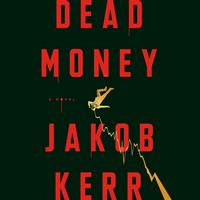
bullet Dead Money by Jakob Kerr—A lawyer/problem solver (not a fixer gets pulled into a murder investigation in Silicon Valley.
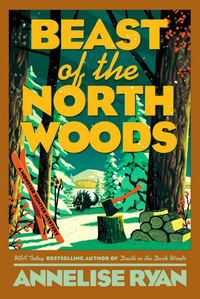
bullet Beast of the North Woods by Annelise Ryan—Everyone’s favorite cryptozoologist/bookstore owner is on the hunt for a hodag (a thing that I’ve absolutely heard of before)
bullet We Are Watching by Alison Gaylin—So I know what Gaylin can do with Parker’s characters, am curious about what she does with her own.

@kierstenwhite Ugh, people in public spaces have gotten SO inconsiderate. IF YOU ARE READING, HOLD YOUR BOOK AT AN ANGLE WHERE I CAN SEE THE COVER WITHOUT ANY WEIRD, CREEPY MANEUVERING. It's just common decency!

I’m Reading Every Day in February for the American Cancer Society—My Official Launch Post

Read Every Day in February for the American Cancer Society
No one is a fan of cancer. I daresay there’s no one ambivalent toward it.* We’ve all had our lives, the lives of family, friends, acquaintances, coworkers, and even pets devastated by it in one form or another. Fighting cancer, researching better ways to fight it, preventing it–all are laudatory ends. So, I participated in this fundraiser last year on a lark—I’m pretty much going to read every day anyway–let’s see if I can earn some money for a good cause, right?

Fundraiser ThermometerBut this year, it’s personal. Last year, four people in my family dealt with cancer in some significant ways. Three of us seem to have dealt with it successfully—we’re not unscathed, but aside from follow-up tests, we’re pretty much done with it. One member of the family is undergoing treatment now, and we all have high hopes. So it’s not a lark this time, and I’m going to talk more about it than I did last year. (I probably should’ve taken it more seriously last year, but it’s too late to do something about that now).

So please, friends and readers, Donate. Every little bit helps. So, please, chip in. And watch this space as I fill in this calendar (and hopefully, the thermometer).

I’ve heard there are some glitches, and it seems like a particular social network is being invasive while trying to pay. If you want to help and don’t want to deal with that, send me a message and we’ll work something out!

Day 1 February Calendar

* As soon as I typed that, I could imagine someone objecting to that characterization. But I’m going to pretend to have faith in humanity and keep the sentence.

GUEST POST: Upon Further Review . . . by Robert Germaux

Last week when I posted about Robert B. Parker’s Hot Property by Mike Lupica, I quipped “Robert Germaux to demur in the comment section (or in a Guest Post if he has a lot to get off of his chest).” The novelist/essayist took me up on that with this post—he made a couple of points I intended to and brought up some things I hadn’t considered. Incidentally, I’m even more eager to read his next novel now (especially if something comes from his rethinking).

I’m more than grateful for this interaction. Bob’s been reading Spenser longer than I have been reading, and you can see Parker’s influence in his work—he’s definitely worth listening to on this front. (and he’s invited to respond like this to any of my Parker-related posts, like Robert B. Parker’s Buried Secrets by Christopher Farnsworth that should’ve been up last week)


Upon Further Review . . .

My immediate reaction after reading Hot Property was that I enjoyed Mike Lupica’s second attempt at a Spenser novel a bit more than I did Broken Trust, his initial entry into the series. That being said, I did have a few nits to pick. I thought the love scenes between Spenser and Susan were somewhat truncated. (I’m a retired English teacher. I’m allowed to use words like truncated.) It felt as though Lupica didn’t quite have the same grasp of that relationship as, for instance, Ace Atkins did in his ten Spensers. I also thought that some of the interactions between Spenser and Hawk bordered on the redundant, the same sort of generic back-and-forth we’ve seen before. And I would have liked a couple more (and a little longer) scenes at Henry Cimoli’s gym. Henry is somewhat of a surrogate father figure for both Spenser and Hawk, and the affection they both feel for him (coupled with good-natured insults) is always fun to observe.

Cover of Robert B. Parker's Hot Property by Mike Lupica

As I said, all of the above falls into the nits category, certainly nothing that would keep me from reading the book or recommending it to others. However, I had a bit more of a problem with two other parts of the book, one from a strictly objective point of view, the other admittedly entirely personal. HC stole my thunder on the former in his review when he mentioned being puzzled by the apparently close (and hitherto unknown?) relationship that Rita had with both Quirk (“. . . reached over with one of his big hands to take hold of Rita’s.”) and Belson (“Rita asked me not to tell you this . . .”). When I read those passages, I immediately wondered, when did this happen? I’ve been reading Spenser novels for fifty years now, and while it’s quite possible there have been times when Rita and Quirk, or Rita and Belson, bonded a bit, if so, it escaped my notice. On a lesser note, I thought the same thing about Vinnie when he asked Spenser, “How is she?” I don’t mean he shouldn’t care about Rita, but I think “How’s Rita?” would work better there, because I don’t recall any scenes in previous Spensers between Rita and Vinnie. Okay, maybe I dived a bit too deep into nits territory there, but I could see Vinnie asking “How is she?” about Susan much more than with Rita. In Crimson Joy (one of my least favorite Spensers), Vinnie is part of the gang that Spenser assembles to provide 24/7 protection for Susan while he tracks down a serial killer, so we know there was at least somewhat of a history there.

The personal thing? Well, I’m a writer. To date, I’ve written five mysteries about a Pittsburgh PI named Jeremy Barnes and two about a Pittsburgh police detective named Daniel Hayes. Since both JB and Daniel work in Pittsburgh (not one of your bigger cities), it figures that these two guys might connect at some point, and in fact, I’ve had each one make a quick reference to the other at least once. But I’ve never even considered the possibility of some sort of “crossover chapter” involving them, mainly because I write each character from the first-person perspective. So imagine my surprise upon seeing that Lupica has at least two occasions when Spenser and Jesse Stone have fairly long conversations. And yet . . . after rereading those chapters with, I hope, a much more objective eye, I had to admit that Lupica pulled it off. It made me rethink the possibility of a JB-Daniel meeting in the Jeremy Barnes novel I’m working on at the moment. We’ll see.

Overall, there is so much to like about Hot Property. I thought the conversations between Spenser and Susan where they discussed his relationship with Rita were very good. I especially enjoyed the scene that touched on Spenser’s thoughts on mortality. Getting some backstory on Rita was also interesting, and I wasn’t expecting Cecile (one of Hawk’s former lovers) to be back in his life. Could Lupica have something in mind there for a future book?

I still think Lupica did a better job with the Sunny Randall books than he has (so far) with Spenser, but that doesn’t mean I’m not going to snatch up that next Spenser as soon as it’s available. I am, and I hope there are more to follow.


You can find more information about Bob and his books at his Amazon Author Page.


Irresponsible Reader Pilcrow Icon

WWW Wednesday—January 29, 2025

It’s entirely possible that by the time this posts, every bit of this will be out of date–but the way this week is going, I can also see me repeating this entire post next week. This grandpappy isn’t complaining at all, but books are being shoved to the side more often than I’m used to. Still, for the sake of argument, let’s go with this…

WWW Wednesdays Logo

This meme was formerly hosted by MizB at A Daily Rhythm and revived on Taking on a World of Words—and shown to me by Aurore-Anne-Chehoke at Diary-of-a-black-city-girl.

The Three Ws are:
What are you currently reading?
What did you recently finish reading?
What do you think you’ll read next?

Seems easy enough, right? Let’s take a peek at this week’s answers:

What are you currently reading?

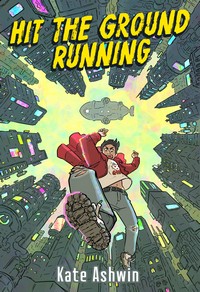
Cover of Hit The Ground Running by Kate Ashwin Cover of The Innocent Sleep by Seanan McGuire
Hit The Ground Running
by Kate Ashwin
The Innocent Sleep
by Seanan McGuire, read by: Raphael Corkhill

Ashwin’s first novel is so fun and self-assured that I’m expecting that I’ll be keeping my eyes peeled for the sequel (with 23% to go, I assume there’ll be at least one sequel) and probably am going to have to hunt down some of her comics, too.

Last week, I said, “It is going to be so weird hearing the voices Toby, Tybalt, et. al. in a voice that doesn’t belong to Mary Robinette Kowal.” I underestimated just how strange it would be. I’m able to put that aside (mostly) and enjoy this.

What did you recently finish reading?


Cover of I Cheerfully Refuse by Leif Enger Cover of Subculture Vulture by Moshe Kasher
I Cheerfully Refuse
by Leif Enger
Subculture Vulture: A Memoir in Six Scenes
by Moshe Kasher

Enger’s novel is one of the most engaging and hopeful dystopian novels I can remember reading. There’s no plucky young woman in a love triangle coming to save the world–but there might something better going on.

There are so many things that could be said about Kasher’s book that I don’t know where to start–but since this isn’t a full post about it, I can let myself off with a “it’s entertaining, educational, and will make you laugh.”

What do you think you’ll read next?

Cover of Don't Tell Me How to Die by Marshall Karp Cover of The Teller of Small Fortunes by Julie Leong
Don’t Tell Me How to Die
by Marshall Karp
The Teller of Small Fortunes
by Julie Leong, read by Phyllis Ho

This Karp ARC looks like a return to his roots–dark comedy and thrillers. This is exactly what I want to see out of him (even if the premise is a bit…odd).

A cozy-looking fantasy about a found family and a search for a lost child. It looks charming, and worth a shot.

How are you closing out January?

REPOST: Lessons From Lucy by Dave Barry: America’s Funniest Human Tries to Learn a Few New Tricks from an Old Dog

I remember reading this in July 2018, thinking that Barry was preparing to say goodby to Lucy. I mention this only because he only said goodbye to her this week. Color me flummoxed. But also, how could I not dust this post off in her memory?


Lessons From LucyLessons From Lucy: The Simple Joys of an Old, Happy Dog

by Dave Barry

eARC, 208 pg.
Simon & Schuster, 2018
Read: July 19, 2018

Before I say anything else, Barry has set up an Instagram page (well, probably not him, actually — he states in the book he doesn’t understand Instagram) for his dog, Lucy. You should absolutely check it out and then come back to read what I have to say about the book. Dog Pictures > my blog. Pretty near always.

With that out of the way . . . Dave Barry has been a dog person for most of his life, one of the many reasons I like him. I distinctly, and fondly, remember columns and/or references to Earnest and Zippy (the emergency backup dog) years ago. Those two make a brief appearance in this book, but they aren’t the focus. The focus (if you can’t tell from the title) is his dog, Lucy. At the time of writing, Barry and Lucy are the same age — 70 (or 7 times 10 in her case), which means that both of them have many fewer days ahead of them than behind — which sounds awfully morbid for Dave Barry to talk about, but he does so frequently and purposefully.

As they’re at similar stages in life, Barry notices a huge difference between the two — Lucy is far happier and seemingly better adjusted than he is. So he sets out to try to learn a few lessons about life from her, which he passes on to his readers. Things like Pay Attention to the People You Love; Don’t Let Your Happiness Depend on Things; and Don’t Stop Having Fun. None of these, Barry knows, are original or ground-breaking — they’re pretty much common sense. Yet, they’re the kind of common sense things that he (like many/most humans) doesn’t actually do a great job at.

The result is a mixture of a Self-Help book and a Humor book — humor about himself, his life, as well as dogs. Sometimes the swing between the two genres can be jarring, but that’s pretty rare. For the most part, he moves easily between the two, taking the readers along with him on this ride. I can’t tell you how many times I went from grinning, chuckling or laughing out loud to getting misty-eyed within a couple of pages. It seems that Barry has learned a little bit about writing over the decades.

I’ve loved Barry’s humor longer than either of us would probably care to admit. One of his strengths is finding a way to take an old joke, or at least a joke everyone’s made before — like, say, I dunno, dogs sniffing each other’s hind-quarters — and make it feel fresh and new. More importantly, funny. He’s also able to make jumps from premise to punchline that no one expects. There is, for example, a Hugh Hefner joke where one doesn’t even come close to belonging — and it works perfectly. Even knowing that, you won’t see it coming until you’re snickering at it.

As for the heart-felt material? It works pretty well, too. I don’t think anyone will walk away from this book thinking “Wow! That was insightful. I never would have thought of it on my own!” Nor do I think Barry was trying for it. But, readers will appreciate the reminders to live like Lucy (or their own dog), and the way Barry phrases things might add some freshness to the concept. Which is all anyone can really ask.

I really don’t know if this is Barry’s best — but it’s up there. The ratio of Attempted Joke to Funny Joke is pretty high, I’m not sure if I can think of a higher one in his ouvre. Lessons From Lucy is, without a doubt, his most mature, thoughtful and touching work (that’s a pretty low bar, I realize — a bar he’s worked hard to keep low, too). Couple that with me being a sucker for a Dog Book — even if it is a semi-Self Help book — and I can’t help but give it 5 Stars. This is a winner, no matter what.

—–

5 Stars

Disclaimer: I received this eARC from Simon & Schuster via NetGalley in exchange for this post — which is my honest opinion and pleasure to give — thanks to both for this.

Grandpappy’s Corner: I Am a Big Brother by Caroline Jayne Church: A Sweet Instructional/Motivational Guide

Grandpappy's Corner Logo with the Cover of I Am a Big Brother by Caroline Jayne Church

I Am a Big Brother

by Caroline Jayne Church

DETAILS:
Publisher: Cartwheel Books
Publication Date: January 27, 2015
Format: Hardover
Length: 24 pg.
Read Date: January 27, 2025
Buy from Bookshop.org Support Indie Bookstores

What’s I Am a Big Brother About?

This book begins with the lines

Our new baby arrived today.
I’m a big brother now, horray!

Our narrator used to be a baby, but he’s bigger now. As a big brother, there are things he can do to help with the new baby like getting a clean diaper, throwing a dirty one away, helping with baths, singing lullabies, and so on (many of these things suggest this book doesn’t all take place on the first day).

He even talks about plans for the future, like playing together. Because he’s

a big brother forever!

Let’s Talk about the Art for a Minute

It is full of cuteness. Both the big brother and his young sibling are cherubic, smiling, and probably too good to be true (we don’t get to see Big Brother deal with teething or won’t-go-to-sleep baby). Church’s illustrations are exactly what you envision when you think of Picture Books, really.

How is it to Read Aloud?

It’s fine. There’s no challenging rhythm or silly rhymes. Just short, declarative sentences that model how the readers (or those being read to) should approach the office of Big Brother, which work really well. It might be a little on the dull side, really, for grown-ups to read aloud. But it moves quickly enough (and you’ll end up talking about the young sibling anyway while you go through the book).

What did the Little Critter think of It?

I’m not really sure, I haven’t been able to read it with him yet, or haven’t seen anyone else read it to him.

Hopefully, he’ll getting some of the lessons this book is trying to teach and model, because he needs to start applying them the day that this posts (whenever that is).

So, what did I think about I Am a Big Brother?

It’s short, it’s sweet, perhaps overly sweet. But if I start complaining about Picture Books being too sweet, I’m never going to finish. (and will come across more like Oscar the Grouch than I want to)

It delivers just what anyone who picks his book up should expect, and will hopefully be useful to parents wanting to distract and/or instruct a new older sibling.


This post contains an affiliate link. If you purchase from it, I will get a small commission at no additional cost to you. As always, the opinions expressed are my own.

Grandpappy Icon

Top 5 Tuesday – Top 5 authors I want to try in 2025

Top 5 Tuesday Logo
This week’s topic is, “Top 5 authors I want to try in 2025 Who are some new authors that you want to read from in 2025?” Which works well as a companion piece to New-to-Me Authors I Discovered in 2024 from earlier. It’s sort of future-casting half of next year’s post. One hopes. There are plenty of authors who will be new to me this year, I trust, but these are the top five I’m planning on getting to know.

1 Karl Forshaw

I first “met” Forshaw when I was trying to put together my Self-Published Authors Appreciation Week posts last year. It was a pleasure working with him, and he was very supportive and helpful. But also…his novel, Renia, looks pretty good and I’ve only heard good things about it (including from other Self-Published authors last year)

2 Adrian Gibson

Not too long ago, I seemingly couldn’t go a day without seeing something about Adrian’s first novel, Mushroom Blues, and his podcast shouldn’t be missed. Then, on a lark, I invited him to my little YouTube channel and not only was he gracious enough to show up, I had a great time with it, too.

Also, a friend read and raved about his book.

He’s a nice guy, he knows what he’s talking about, and his debut novel seems to be a winner. What’s not to look forward to?

3 Jason Pargin

I have no personal connection to this author, I’ve just been hearing great things about him for years, and really want to dive in.

4 DB Rook

I could basically repeat what I said about Forshaw here. I won’t, I’ll just point you to it and then point to his book, Callus & Crow.

5 Sadir S. Samir

I don’t have much of a connection to Samir, either. But the same friend from above raved about it, other friends and bloggers have, too–and The Crew got plenty of in my SPAAW series last year. It’s beyond time for me to try his stuff.

Do you have any particular authors you’re looking forward to trying this year?

Top Ten Tuesday: New-to-Me Authors I Discovered in 2024


The topic for this week’s Top Ten Tuesdays is the Top Ten New-to-Me Authors I Discovered in 2024

I’ve done this (or something similar) the last few years (2019, 2021, 2022, 2023), and have come to look forward to it. It’s one more chance to talk about people I quite enjoy talking about. Hopefully, these names get to continue to pop up on this here site for years to come. One common theme I noticed through most of these–their work just made me happy, it was fun to read. Maybe the subject or their style was on the lighter side–there’s more MG/YA-ish things here than I typically list, too. I dunno, I just enjoyed getting to know these authors via their work. I’d love to interact with them, too–if any of those listed here read this and want to participate in anything with me. Please let me know.

I was going to count the co-authors as one, but I couldn’t decide between 6 or so others for the final slot, so they get counted individually, but I’ll talk about them together.

Here’s this year’s list.

Top Ten New-to-Me Authors I Discovered in 2024

(alphabetically)

10 Robert Jackson Bennett Robert Jackson Bennett

Bennett has been one of those authors that I’ve meant to get around to since his first book was released and authors/bloggers I respect started hyping his work. There was something that kept me from taking the plunge–I’m not sure what, but I did have City of Stairs in my hands several times without plunking down ye olde debit card.

Naturally, I’m annoyed that I didn’t–but I’m more than happy that I took the plunge with this Fantasy/Mystery Hybrid. The worldbuilding is fantastic, the details he’s put into this environment, magic and science systems are amazing, and the storytelling is even better. I was just blown away with everything he put on the page.

And that’s without mentioning that The Tainted Cup is a riff on Nero Wolfe and Archie Goodwin. Anyone who’s going to tackle that is going to get my attention.

In case you’re curious about what I said about the book that put him on this list, click here.

9 A. Y. Chan A.Y. Chan

Chan infused her debut novel with energy, enthusiasm, and a solid understanding (well-earned) of martial arts and what a young girl has to go to gain that understanding. But mostly, she wrote a fun adventure that can appeal to her target audience as well as crusty old guy like me. What’s not to like about an author who can do that?

In case you’re curious about what I said about the book that put her on this list, click here.

8
7
Dewey Conway Dewey Conway
Bill Adams Bill Adams

These two assembled a bit of MG magic as well. It would be pretty easy to tweak the voice, upgrade the danger in a couple of spots, change a chicken into something a bit more (obviously) dangerous, and leave most of the major plot points alone to bring the readers a pretty decent fantasy novel for adults. But no–they went somewhat silly and goofy, kept the chicken (thankfully), and made the whole thing an earnest and satisfying read for young and old alike. I can’t wait to see what else this pair is capable of.

In case you’re curious about what I said about the book that put them on this list, click here.

6 Katie Cook Katie Cook

Cook’s art is eye-grabbing in itself. You add in her characters, charm and this story? I need nothing else.

I”m not sure what else to say. There’s an optimism, a positivity, and a sense of whimsy that poured out of this book and I’m very glad I took a chance on it.

In case you’re curious about what I said about the works that put her on this list, click here.

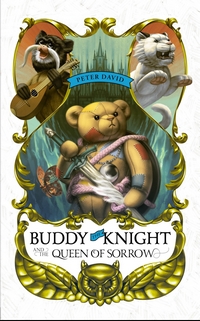
5 Peter David Peter David

Technically, David wasn’t new-to-me this year, because he’d published under another name previously. But I challenge any one to look at the works of his alter ego and tell me that I “knew” this version of him. Also, it’s my blog so I can make up the rules.

But more importantly, David’s work belongs to that great tradition of talking to his audience in terms they might have to reach a little for and never talking down to them, despite his subject matter.  I felt like I was reading a kindred spirit (but one who can actually write).

In case you’re curious about what I said about the book that put him on this list, click here.

4 Rob Hart Rob Hart

Hart is one of those authors that I’ve meant to read for ages now (okay, I checked–I put a book on a wish list back in 2016). But things happen and I just never got around to it–but his 2024 release called to me and then pressed almost all of my buttons while I was reading it. It’s one of those books that felt tailored to me. Then I read this interview with him, and everything I was thinking about him as a result of the book turned out to be right. I can see myself becoming quite familiar with his work in the years to come.

In case you’re curious about what I said about the book that put him on this list, click here.

3 Cameron Johnston Cameron Johnston

The Last Shield had a perfect hook, a perfect elevator pitch, and the execution was close enough to perfect that you’d have to get a magnifying lens out to see where/if it fell short. Like with David and Hart, it’s like he was writing something for me–or for people who like all the same things as I do (and, I assume, he does). And of course, you want to read someone like that.

In case you’re curious about what I said about the book that put him on this list, click here.

2 M.D. Presley M.D. Presley

Presley’s Urban Fantasy series scratched the same itch as Schultz’s Arcane Underworld and Connolly’s Twenty Palace series do–UF featuring somewhat unsavory types with chips on their shoulder and a desire to work against the system while following strong moral compasses of their own. Also, magic that doesn’t quite fit the mold of just about anything else out there. (I qualify that with “just about” so I can’t get corrected by everyone who reads this)

If you do all that? I’m going to be happy to encounter you.

In case you’re curious about what I said about the books that put him on this list, click here and here.

1 Shami Stovall Shami Stovall

Stovall’s Chronos Chronicles remind me of James J. Butcher’s work, and a little of Comby’s Vale Investigation series (I’m not sure anyone else would make the connection). Good, solid UF PI fiction with a magic system that makes sense almost immediately–and is also close to, but very distinct from, many of the standard UF systems. There’s a sense of fun to these that Butcher misses–this might be where I think of Comby–while maintaining the drama. I dunno, I just dig this stuff and I’m glad Stovall crossed my path this past year.

In case you’re curious about what I said about the book that put her on this list, click here (I have another overdue post about the second in the series, too).

Page 57 of 602

Powered by WordPress & Theme by Anders Norén