MUSIC MONDAY: “Zombie” (Acoustic Version) by The Cranberries

The Irresponsible Reader's Music Monday logo

Music Monday's originated at The Tattooed Book Geek's fantastic blog and has shown up hither, thither, and yon since then.

This came up on some sort of shuffle this weekend, I don’t think I’d ever heard this version before. Which is a crying shame, this is excellent.

Irresponsible Reader Pilcrow Icon

A Few Quick Questions With…Ed Duncan

Earlier this morning, I gave my take on Ed Duncan’s Pigeon-Blood Red (and it occurs to me that I didn’t explain that interesting title choice–one more reason for you to listen to/read it). Now I get to share a quick Q&A that Duncan was kind enough to make time for. I hope you enjoy this as I did!


Why don’t you introduce yourself to my audience, and talk about what led to you writing thrillers—has this been a plan for a while, and post-retirement you had time for it? Or is this a later-in-life choice?
I have enjoyed writing since English composition days in high school.  I always planned to write a novel when I got the chance, but I never found time until after a career of practicing law.  Along the way, in 2008 I wrote a legal treatise entitled Ohio Insurance Coverage, which I updated annually through 2012, the year I retired.

I read The Maltese Falcon by Dashiell Hammett as an adult and was so taken by it that I decided that crime fiction would be my genre.  Indeed, I still find inspiration in Hammett’s masterful dialogue, much of which is reproduced almost word for word in the last movie version of the novel written and directed by John Huston.  For example, there is this:

Spade to Wunderle:

I’m going to send you over.  The chances are you’ll get off with life.  That means you’ll be out again in twenty years.  You’re an angel.  I’ll wait for you…. If they hang you I’ll always   remember you.


Later he tells her:

Don’t be silly.  You’re taking the fall.  One of us has got to take it …. They’d hang me sure.  You’re likely to get a better break….


Still later Spade says to her:

I don’t care who loves who.  I’m not going to play the sap for you.  I won’t walk in Thursby’s and Christ knows who else’s footsteps.  You killed Miles and you’re going over for it.


For you –at least when it came to Pigeon-Blood Red – what came first? Rico, or one of the other characters, and you had to come up with a story to put them into; or was it a story that you needed to populate?
You have hit upon something here because the two alternatives you present are closely related.  Because the two main characters in this story come from such different worlds, and yet would be interacting together, before I could begin to write, I had to imagine a plot line in which they could believably exist and interact together.  In other words, I had to come up with a story that brought a lawyer from a big corporate law firm together with a hit man for more than a fleeting instant.  And, because I’ve written a trilogy, I had to do it three times!  I think I mostly succeeded but not with everyone.  For instance, despite giving me an overall positive review, a recent reviewer called the storyline in Pigeon-Blood Red “absurd.”  The foregoing notwithstanding, I already knew who Rico and Paul were, which is to say, what kind of man each was and what each would find that was positive about the other’s character, however reluctantly.  I just needed interesting supporting characters and an intriguing crime to bring them and everyone else together.

There are a lot of balls in the air at once here – how do you approach something like this – did you write a character/group of character’s arc at a time and then layered them together?  And was getting all the ducks to line up in a row just right enough to make you think of writing a sequel to Ohio Insurance Coverage instead?
First, there was never a possibility that I would write a sequel to Ohio Insurance Coverage.  That legal treatise and its annual supplements was a project that I happily bequeathed to another lawyer in my old law firm after I retired in 2012.  You are correct, however, that for such a slender novel, there are a lot of balls in the air.  Writing it chronologically helped me to keep each of those balls in the air.  However, I did write chapter one out of order both so that I could start the novel with a bang, so to speak, and so that I could introduce the reader to two warring sides to Rico’s complex personality: his inability to recognize his cruelty toward his own girlfriend when he believes it is required by “business” and the pleasure he gets out of turning the tables on a husband who is bullying his wife.

There were some great characters in here—and most of them weren’t who I expected to find when I started the book. What was the bigger challenge—getting these people to live and breathe in a way that was satisfying to you (and the reader) or getting the action/plot just right?
Again, both challenges were related and almost equally formidable.  I needed to construct a story that was dramatic and exciting and yet believable.  While in general that is the challenge of almost any writer of fiction, and in particular it is the challenge of any writer of crime novels, the task is made more difficult if the story is implausible.  So, while it was a close call, getting the action/plot right was more of a challenge.

What lessons were you able to take from finishing Pigeon-Blood Red to make The Last Straw  easier—or was it such a different animal that you were back to Square One?
There is a famous writer’s quote that is often attributed to Ernest Hemingway but whose author is probably unknown.  I learned how true the quote was when I wrote Pigeon-Blood Red and it was no less true when I wrote the other novels in my trilogy.  Thus, it is the lesson I was able to take from finishing each novel.  Unfortunately, it did not make writing either the second or the third novel easier.  Here is the quote: “Writing is easy.  All you have to do is sit down in front of a blank sheet of paper and open a vein.”

Who are some of your major influences? (whether or not you think those influences can be seen in your work — you know they’re there)
I think Dashiell Hammett and Lee Child are my major influences.  Others include Walter Mosley and Frederick Forsythe.

Is there a genre that you particularly enjoy reading, but could never write? Or are you primarily a mystery/suspense/thriller reader?
Duke Ellington once said, “There are only two kinds of music:  good music and bad music.”*  I feel the same way about writing.  Therefore, I enjoy reading in every genre, but I particularly enjoy histories of the Civil War and its Generals, histories of World War II, biographies, and literary fiction.  I may take a crack at literary fiction one day, but I could never write in any of the other genres.

* I thought it was Country and Western. Guess you learn something every day.

What’s next for Ed Duncan, author?
I would like to write a fourth installment in the adventures of Rico and Paul and Jean and Evelyn.  Then I would like to write that literary novel.  I hope I get to both.

Thanks for your time and participation–and for this entertaining listen!
Thanks for your interest. You posed some intriguing questions.


A Few Quick Questions

Pigeon-Blood Red (Audiobook) Ed Duncan, read by Dave Keyser: No Muss, No Fuss, Just a Solid Thriller

Be sure to come back in a couple of hours to read a Q&A with the author, Ed Duncan.


Cover of Pigeon-Blood Red by Ed DuncanPigeon-Blood Red

by Ed Duncan, read by Dave Keyser

DETAILS:
Series: Pigeon-Blood Red, Book 1
Publisher: Next Chapter Audio LTD
Publication Date: September 2, 2022
Format: Unabridged Audiobook
Length: 5 hr., 59 min.
Read Date: October 28, 2024

A Quick Word

You should’ve read this in early November. But communication errors, busy schedules, and (I’m assuming) life in general got in the way of both Mr. Duncan and myself. And I feel bad about my part in that. Thought I’d take a moment up front to issue an apology to Mr. Duncan and his publicist.

What’s Pigeon-Blood Red About?

Stop me if you’ve heard this before, but a grizzled enforcer and his partner make a mistake that leads to a panicky guy stealing from their boss. This guy, Robert, is already in some serious debt to their boss, Litvak, and this just makes it worse—especially when Robert leaves town suddenly and tries to use the theft to leverage Litvak into writing off the debt. Litvak doesn’t like this idea, and sends the enforcer, Rico, to track down Robert, deal out some punishment, and come back with at least the stolen item—and maybe more.

Yeah, this feels incredibly familiar—which is not a deal-breaker at all, it just makes it easy for the reader/listener to get into the story. As always, it’s what the author does with a familiar set-up that makes it worth the ride. And Duncan doesn’t disappoint there.

That largely has to do with other people that Rico and Robert encounter along the way—some of whom get swept up in Rober’s foolhardy and desperate moves and find themselves in Rico’s cross-hairs when they’re just trying to live their lives. But you should learn about them for yourselves.

Some of These People are the Worst

Seriously, you can hear Jean-Ralphio singing it as you think of some of these people. I’m not even talking about the hitman here—but some of his targets. Okay, his boss isn’t that great, either. But he’s supposed to be a morally bankrupt scoundrel. The more we get to know—and the more we see from—Robert and some others and you can’t help but wonder if the world will be a better place without them.

I will say that it took me a little longer to warm up to Rico than is usual in this type of book. Our introduction to the character—the first real thing we see from him—really made it hard for me to want anything more than to see Litvak put him in a hole somewhere, but that changed.

How Was the Narration?

My initial reaction to the thought was “absolutely fine,” and I was prepared to move on. However brief that answer was.

But Keyser deserves a little more than that, I think. He really was a great match for this material—I wish I could find other audiobook credits for him to see how he does with other genres (and am a little discouraged to see that he’s not attached to the rest of this trilogy). He could handle the lighter moments–the sweet moments–as well as the not-even-close-to-sweet moments when bullets are flying equally well (and we’ve all heard narrators that can’t quite pull that off in the same book).

I really enjoyed his work and think he made a series of really smart choices and executed them well.

So, what did I think about Pigeon-Blood Red?

After various and sundry delays, it was hard for me to remember some details that I wanted to, so I listened to a few bits again—and I really had a hard time forcing myself not to just listen to the whole book again (if I had one more day on a Libby book, I probably would’ve indulged myself). I think that says plenty about this book.

Duncan assembled this particular book very well, there were a lot of moving pieces—and plenty of backstories to bring in—and he managed to keep the reader engaged with all the characters while maintaining the pace and building the tension. I really admired that–in a longer book that might have been easier, actually, but this is a quick listen and to cram as much in as he does is no mean feat (and it never feels crowded, crammed, or rushed).

There’s a scene that I’ve spent some time thinking about again and again since I listened to this–it’s a pivotal scene toward the end. It could be a scene from a farce—it’s full of mistaken identities, close calls, crazy chains of events, and so on. You add a jaunty, bouncy soundtrack and an exaggerated facial expression or two, and it could be seen as comical. If you ignore the blood, terror, and death, that is. I could see it all very clearly in my mind, and I think Duncan faked me out a little bit (see: mistaken identities). Duncan and Keyser both were spot-on during this scene/sequence and earned a lot of trust from me there.

I found something to like in all the primary characters, (other than Robert and unnamed persons from the above section), and got invested in the outcomes surrounding them. By the end of the book, I wasn’t actually sure what character(s) the trilogy would follow and could see myself signing on to whatever ones Duncan stuck with. I was pretty sure it’d be Rico—and the title of the third book, Rico Stays gives it away. But that I’d have been open to some others, I think tells you a lot.

Was this a book that ever really blew me away? I don’t think so—but I was engaged and entertained through it all. It was entirely satisfying (if you ignore the bump with Rico in the beginning, but I got over it). And now that I’ve finished this post, I can get to listen to the rest of the trilogy in short order. Be prepared to sign on to a trilogy if you start this (a quick-moving trilogy, I should stress).

Disclaimer: I received a copy of this audiobook from the author and Kelsey Butts at Book Publicity Services. Other than giving me something to opine about, this did not influence my opinion which is honestly reflected above.

Irresponsible Reader Pilcrow Icon

Broken Bonds by Amy Mantravadi: 16th Century Figures Come to Life in This Novel

Cover of Broken Bonds by Amy MantravadiBroken Bonds

by Amy Mantravadi

DETAILS:
Publisher: 1517 Publishing
Publication Date: November 26, 2024
Format: Paperback
Length: 300 pg.
Read Date: December 15-22, 2024
Buy from Bookshop.org Support Indie Bookstores

What’s Broken Bonds About?

This is a work of historical fiction focusing on April 1524-January 1525, at what will prove to be a significant period in the German Reformation. The narrative focuses on three men: Desiderius Erasmus, probably the greatest scholar of the era, and a would-be reformer of the Church; Martin Luther, the Reformer (who went further than Erasmus would’ve), and Philipp Melanchthon, a promising young scholar with ties to them both.

The book follows their connections and interactions with each other—as theoretical as some of them might be—as leaders put pressure on all three to sway them one way or the other, to pick up their pen (or lay it down) for an end, to cease their efforts to reform the Church, to increase their efforts to reform the Church (in ways they cannot agree with), and so on.

Martin Luther

Luther is the most well-known of the trio today, for good reason. In this novel we see Luther trying to reason with his former friend Karlstadt as the latter continues to cause trouble for Luther and everyone in their area. Luther is also trying to get more compensation for and more opportunities to teach and write for Melanchthon—for the sake of the young man’s family and the University of Wittenberg, who could use him.

He’s also dealing with some personal issues—how far does he go himself? Does he give up the monastic robe for that of an academic? It’s so much of his identity, he still holds the vows he swore before him, it cost Luther so much personally to follow this path—and despite the upheaval in his life, is he prepared to lay it all aside? This was so excellently done.

We get some glimpses of some of Luther’s multiple medical issues, a little bit of his humor, and a delightful relationship with and interaction with his goddaughter, too. Mantravadi is careful to present us with a human Luther, not some superhero.

Looming over all that Luther does here is an impending intellectual showdown with the one man he’s not sure he wants to debate with, but is steeling himself to lock horns with:

Desiderius Erasmus

Before Luther burst on the stage, it was easy to think of Erasmus as the greatest Christian thinker, writer, and scholar of his time. Erasmus did try to push for some institutional reforms and had many of the same aims as Luther, but he went about things in a less inflammatory way.

He’s been dodging requests and pleas to interact with Luther for quite some time now—but the pressure is mounting and he’s not certain he can do so much longer. Reluctantly, he picks up his pen to compose On Free Will to directly counter some of Luther’s teachings.

We get a very sympathetic view of Erasmus and his interactions with friends and Protestants he interacts with daily. His health struggles are different than Luther’s but painted just as vividly here. One bout of kidney stones, in particular, almost triggered flashbacks to my last one. I found myself really liking Erasmus and pulling for him.

One of Erasmus’ greatest goals—to chill the Lutheran movement, to further promote diverse ideas in the Academy/Church, and to hand off his work to a brilliant scholar—is to get Melanchthon to come to work with him, and essentially assume his mantle when he’s gone.

Philipp Melanchthon

Melanchthon is a struggling academic, just trying to make enough money to provide for his wife and daughter. He loves to be in the classroom (and it shows), but he’s equally open to teaching in other places, too. He sides with Luther, just not as vociferously as some may want—but Luther appears to trust him.

Melanchthon is tempted to take Erasmus’ offer—it’s a dream situation for him, it’s exactly what he wants. But he’s afraid that he’d have to water down or abandon his Protestant convictions and he’s not ready to do that.

His depiction is easily the most relatable, the most appealing—between the way other characters (particularly Erasmus and Luther) talk about him and the way that Mantravadi shows him, you could make the argument that the others are supporting characters in a novel where the young man is the protagonist.

He does frequently seem too much like a 21st-century man rather than one from the 16th. Particularly when it comes to talking about his wife and daughter. But maybe that’s just me. I really liked it, so I don’t care. Hopefully, it’s close to the truth.

The last thing I want to say about Melanchthon is that there’s a scene with a bunch of students for a sort of study club (best way I can summarize it). It is one of my favorite fictional depictions of a teacher and a group of students since John Keating and that ill-fated group at Welton Academy. I don’t want to give you details, but more than I want his family life to be the way that Mantravadi depicts it, I want this to be true.

The S-Word

So, a lot of the subjects of this book—particularly when it comes to health, but even beyond it—are what some would call “earthy.” It wasn’t a pleasant time to live in many ways, particularly digestive. Anyone who’s read much of Luther’s daily life, humor, or personal history well knows that he can be somewhat scatological. The working of his bowels is a frequent topic for him.

Erasmus isn’t much different. Melanchthon, thankfully, is—but not the people he spends time with.

It’s likely not enough to put anyone off—if anything, it might recruit some younger readers 🙂 But Mantravadi has her characters use vocabulary that Christians in the 16th Century would for these processes and products, even if most 20th/21st Christians would hesitate to use it. Just a word of warning for those who might be put off.

So, what did I think about Broken Bonds?

I went into this with some hesitation—the last two fictional works I read about this time period put me off in a serious way. (one was pre-blog, so I can’t point you at anything I wrote, and I don’t feel like picking on the other again). But I know that Mantravadi has a good reputation among some Church Historians—and even heard her interviewed by one a few years ago, so I felt safe.

I’m so glad that I did—these characters came alive to me in a way that two of them haven’t before (even if I think she handled Luther with kid gloves). She used their positions, arguments—sometimes even words—well in the progress of the novel. There are plenty of footnotes for those who want to dive more into their works. Which is always a bonus in this kind of work (also, footnotes—not endnotes).

The historical detail is there, but not so much of it that you get bogged down in it—the pacing keeps moving at a good clip throughout. Are some of these events overly-dramatized? Quite possibly. Are some of these under-dramatized? Equally possible. It is, in the end, a work of fiction and that needs to be remembered.

It’s a fast-paced read for something in this genre, it’s sympathetic to all its protagonists (even when they’re at odds), there’s good tension—even when it comes to talking about academic pursuits (not the easiest thing to dramatize), and there’s a heart and warmth to it all.

I think this would work for middle school-aged readers, and for most adults, too. You might even learn a little about history and theology while you’re at it. It’s definitely worth the investment of time. I’m more than ready for the second in this duology.


3.5 Stars

This post contains an affiliate link. If you purchase from it, I will get a small commission at no additional cost to you. As always, the opinions expressed are my own.

Irresponsible Reader Pilcrow Icon

Saturday Miscellany—1/25/25

Robert Burns was born on this date in 1759 and there are celebrations of this throughout the world tonight–I’v never been to one but have been wanting to since the 90s (social anxiety, the gift that keeps on giving). At the very least, find some time tonight yourself to read “A Red, Red Rose,”, “To a Mouse,” or one of his other poems in the closest approximation of a Scottish Brogue while drinking something appropriate. I’ll be entertaining (scarring for life?) my family with such this evening*—join in!

* And I know at least one of you is thinking of asking—no, I will not be putting this on my YouTube channel, I’d end up getting a lifetime ban from reading Ian Rankin or something equally horrible.

Odds ‘n ends about books and reading that caught my eye this week. You’ve probably seen some/most/all of them, but just in case:
bullet Jules Feiffer, award-winning political cartoonist and writer, dies at 95, Jules Feiffer—Author, Illustrator, Cartoonist, and More—Dies at 95 —there are few illustrations from books that I read as a child that I remember as vividly as I Feiffer’s The Phantom Tollbooth drawings. (wasn’t always crazy about his political cartoons, but I could appreciate them)
bullet Print Book Sales Saw a Small Sales Increase in 2024 Publishers Weekly also breaks down the top sellers of the year, some interesting titles there. (but largely entirely predictable, too)
bullet Mystery Writers of America Announces 2025 Edgar Allan Poe Award Nominations—I recognize so few of these names/titles that I’m a little embarrassed.
bullet The truth about fiction: What distinguishes fiction from nonfiction? The answer to this perennial question relies on how we understand reality itself—if you want to get your metaphysics on today…
bullet How the world fell for ‘romantasy’: Dragon sex is hotter than ever—When I stumbled over this, I was sure that there’d be some snobbery about the sub-genre going on—and you could argue that there is—but it’s a good look at this growing area and an appreciation of it, too.
bullet Men Have Bigger Problems Than Not Reading Novels: For James Folta, What’s Wrong With Men is What’s Wrong With America—you might disagree with a lot of what Folta says here, but his reaction to the whole “Men Don’t Read Novels” idea running around lately is worth chewing on.
bullet Series Release Day for Ninja Heroine Lily Wong—Eldridge’s series gets a new publisher, a fresh look, and hopefully new readers. I was already annoyed with myself for not buying the fourth book yet, and now my covers will be mismatched. And now I have to think about getting the new set, just to appreciate them.
bullet Just Keep Swimming—Peter Hartog/David provides some “writing and author-y updates” and some general sagacity
bullet The Laws—Michael J. Ciaraldi looks at just how unworkable The Three Laws of Robotics really are (sob, sob, sob, I’m sooooo disillusioned)
bullet From The Hard Word, Scott’s Top 10 (Okay, 13) Thrillers and Crime Novels of 2024—some good choices here (and a couple of things I should probably add to my list)
bullet Host Mortem: Cover Reveal and Interview!—I’m going to have to keep my eyes out for this
bullet The Role of AI in Modern Storytelling—this is sure to provoke a thought or two. I’m not entirely convinced that I disagree, as much as I want to.
bullet Great Books With Bad Beginnings
bullet Disappointing Books By Favourite Authors
bullet Gorgeous (Hidden) Book Covers—I know that I have a couple of these on my shelves, but Booktails might have inspired me to go look under all my dustcovers just to be sure. If I don’t post anything for the next few days, you’ll know I succumbed.
bullet Fantasy Bookcase Decor for Your Home Library

A Book-ish Related Podcast episode (or two) you might want to give a listen to:
bullet As Told To Episode 80: Benjamin Dreyer—a nice chat with everyone’s favorite copy editor.

To help talk about backlist titles (and just for fun), What Was I Talking About 10 Years Ago Week?
bullet Angel’s Tip by Alafair Burke
bullet Beautiful Redemption by Kami Garcia and Margaret Stohl
bullet Breach Zone by Myke Cole
bullet Chasing the Prophecy by Brandon Mull
bullet Fiddlehead by Cherie Priest
bullet iZombie, Vol 1: Dead to the World by Chris Roberson, Mike Allred
bullet And I talked about the release of Mr. Kiss and Tell by Rob Thomas and Jennifer Graham—man, I wish these Veronica Mars novels had kept going

This Week’s New Releases that I’m Excited About and/or You’ll Probably See Here Soon:
bullet The Drafter by Kim Harrison—Harrison’s least appreciated (as far as I can see), but my favorite, is out in a new edition.

PCDD: Post Character Death Depression. Symptoms include: sobbing, curing into fetal position, distraction, unfocused vision, constant state of exhaustion, hiding, being unable to communicate, inability to complete simple tasks, refusing to leave dwelling, unreasonable anger or sadness @theunitedheroes / merryhalfbloods

REPOSTING JUST ‘CUZ: Deep Dark Night by Steph Broadribb: High Stakes Danger for Lori Anderson in the Windy City

Deep Dark Night

Deep Dark Night

by Steph Broadribb
Series: Lori Anderson, #4

Kindle Edition, 320 pg.
Orenda Books, 2020

Read: January 16-17, 2020
Grab a Steph Broadribb book from your local indie bookstore!

I’ve always felt an element of fear about the jobs I do. In the right dosage it can help you. It gets your adrenaline firing, makes you think clearer, faster—gets you alert and ready to tackle anything that comes your way. But if the fear builds too much, all that good stuff swings things around; the nerves make you hesitant, jumpy and too cautious. That’s when you start making mistakes. And mistakes, in my world, can be fatal.

After barely getting to take a breath following the events of Deep Dirty Truth, Lori finally gets the chance to work off her debt to FBI Agent Monroe. This puts Lori and JT in Chicago trying to get the mobster Cabressa to take possession of some stolen goods. Once that’s done, a series of dominoes will fall and Monroe will be able to put him away for a very long time.

So he insists, anyway.

Step one involves Lori getting an invite to an incredibly exclusive Poker game, Step two involves giving her a crash course in playing Poker so she seems mostly credible in the game. (this isn’t presented as a comedic segment, but I chuckled at this part of the book—also, I’m jealous, I wish I could learn how to play like this).

Now, every thriller reader knows what will happen next—no plan, no matter how thorough, how well-thought-out no matter who’s involved, will work. If for no other reason than it would produce a dull novel. But also, every thriller reader has heard the line, “no plan survives first contact with the enemy” and knows it to be true. The questions that need to be answered are: how badly will the plan go awry? and How will Lori and JT react to it?

So let me assure you, when this plan is derailed, it’s derailed in a spectacular fashion, providing a lot of danger for our heroes, peril for those around them, and more than enough tension to satisfy a hungry reader. Lori and JT respond appropriately, not perfectly (which would be boring), but they display the stamina, resourcefulness, and tenacity we’ve come to expect from them.

The poker game collected quite the interesting mix of players—sports figures, politicians, as well as shady characters like Cabressa. When things go wrong during the game, it opens things up for a lot of drama and conflicting interests causing trouble for all involved. Suddenly, Lori and JT can’t focus solely on getting Cabressa to fall into Monroe’s trap—they have to worry about survival—their own, and as many others that they can help. Sure, Cabressa is still their target, but there’s a lot they have to go through before they can make him a priority.

I’m not going to get more in-depth than that, I’ll leave it there and say there’s more than enough going on plot-wise to fuel a book at least half again as long as this one. Broadribb has stacked the deck against the pair and it’s great to watch them try to navigate the situation.

The game takes place at the top of a pretty high building in Chicago and the action centers around that location, stories above the ground. In the real world, I’m pretty acrophobic—and occasionally (okay, more than occasionally), a movie can get me to feel the anxiety that heights can bring out in me. I don’t remember ever feeling symptoms while reading a book, but I did here. It’s not like Broadribb focused all that much on the height and risk of falling (it was there, but she didn’t belabor the point), but something about the way that she told the story, flicked that particular switch in my brain. There’s something very disconcerting about sitting in a comfortable seat (on the ground level like a sane person) but feeling like I was standing in a precarious* location several feet off the ground. I’m not promising that anyone else will experience what I did, I assume the rest of humanity is a bit better adjusted than I am, but for me that was an unexpected “bonus” to the book.

* Yeah, fine, my definition of a precarious location applies to perfectly safe—even benign—spots.

I’m a little worried about the long-term health of Lori’s elbows. She uses them so often as weapons, she probably heads back to Florida with at least one of them horribly bruised. I don’t remember this being the case in the previous novels, maybe I just forgot—or maybe she’s just relying on the technique in these circumstances (I remember more than once the narration in a Jack Reacher novel talking about the usefulness of that tactic compared to the use of a fist).

As far as long-term character development goes, Lori and JT start a conversation they’ve needed to have since, well, since we met the two of them about Dakota and why Lori didn’t tell JT about her before she did. This will prove helpful in the future and provide the opportunity for the relationship to grow and change. The two of them have some sort of plan going forward about their careers and daughter, but we’re going to have to come back to find out what they have in mind. Seeing these two deal with each other and their daughter is almost as rewarding to me as the action-hero kind of thing is, and Broadribb’s featuring both sides of Lori like this is a real strength of the series.

For my money, this is the best of the series—she’s got a real handle on these characters by now and knows just how to put them through the wringer in a way that provides real tension and thrills. I got more wrapped up in this than I expected to (and I had pretty high expectations at this point in the series), and it was absolutely worth it. Book five cannot arrive soon enough for me.

If you haven’t met this bounty hunter yet, you need to—either in the pages of this book or the beginning, either would work (but you might as well just buy the set all at once, you won’t be satisfied until you read them all). Deep Dark Night will win Broadribb some new fans and confirm those readers already along for the ride.


4 1/2 Stars

This post contains an affiliate link. If you purchase from it, I will get a small commission at no additional cost to you. As always, opinions are my own.

WWW Wednesday—January 22, 2025

So, this is the Winteriest week we’ve had here this Winter, and all I want to do is huddle down with a book and a gallon of tea. How about you? Hopefully, it’s a bit more comforatble (although a quick glance at the news suggests that it isn’t).

Now let’s get on to the WWWing.

WWW Wednesdays Logo

This meme was formerly hosted by MizB at A Daily Rhythm and revived on Taking on a World of Words—and shown to me by Aurore-Anne-Chehoke at Diary-of-a-black-city-girl.

The Three Ws are:
What are you currently reading?
What did you recently finish reading?
What do you think you’ll read next?

Seems easy enough, right? Let’s take a peek at this week’s answers:

What are you currently reading?


Cover of I Cheerfully Refuse by Leif Enger Cover of Subculture Vulture by Moshe Kasher
I Cheerfully Refuse
by Leif Enger
Subculture Vulture: A Memoir in Six Scenes
by Moshe Kasher

I don’t know that I fully grasp everything that Enger is up to in this book–but I don’t care because the prose is just great (although it would be nice if I could put it together before the end). This dystopian world feels all too real (even if there’s magical realism lurking around).

Kasher’s second memoir is much funnier than his previous one (shocking that a memoir that ends with a teenager finally getting sober wasn’t a hoot). This is provocative, thoughtful, and entertaining. For example, I never cared about “Rave culture” and am okay with that–but the approx. 90 minutes he spent talking about it was really engaging.

What did you recently finish reading?

Cover of Sword & Thistle by S.L. Rowland Cover of The Accidental Joe by Tom Straw
Sword & Thistle
by S.L. Rowland
The Accidental Joe: The Top-Secret Life of a Celebrity Chef
by Tom Straw

Rowland’s cozy fantasy is less cozy than it’s predecessor–but it’s close enough that it shouldn’t bother those who want the coziness, but it should also appeal to those who prefer more “stabby stabby” (to quote someone).

Tom Straw’s first (I think) book under his own name (instead of Richard Castle’s) is a hoot. It’s going to be hard to express how fun this was.

What do you think you’ll read next?


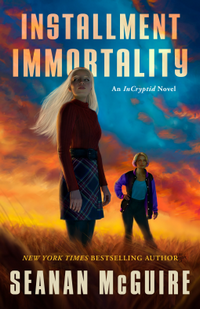
Cover of Hit The Ground Running by Kate Ashwin Cover of The Innocent Sleep by Seanan McGuire
Hit The Ground Running
by Kate Ashwin
The Innocent Sleep
by Seanan McGuire, read by: Raphael Corkhill

An “offbeat” or “humorous” cyperpunk? Is that allowed? Should be fun to find out.

It is going to be so weird hearing the voices Toby, Tybalt, et. al. in a voice that doesn’t belong to Mary Robinette Kowal. Still I’m looking forward to giving it a shot.

What’s keeping you company as you try to get warm?

The Boys of Riverside by Thomas Fuller: A Football Book for Non-Sports Fans

Cover of The Boys of Riverside by Thomas FullerThe Boys of Riverside:
A Deaf Football Team and a Quest for Glory

by Thomas Fuller

DETAILS:
Publisher: Penguin Random House Audio Publishing Group
Publication Date: August 6, 2024
Format: Unabridged Audiobook
Length: 7 hrs., 35 min. 
Read Date: January 9-10, 2024

How Does The Publisher Describe The Boys of Riverside?

In November 2021, an obscure email from the California Department of Education landed in New York Times reporter, Thomas Fuller’s, inbox. The football team at the California School for the Deaf in Riverside, a state-run school with only 168 high school students, was having an undefeated season. After years of covering war, wildfires, pandemic, and mass shootings, Fuller was captivated by the story of this group of high school boys. It was uplifting. During the gloom of the pandemic, it was a happy story. It was a sports story but not an ordinary one, built on the chemistry between a group of underestimated boys and their superhero advocate coach, Keith Adams, a deaf former athlete himself. The team, and Adams, tackled the many stereotypes and seemed to be succeeding. Fuller packed his bags and drove seven hours to the Riverside campus.

The Boys of Riverside looks back at the historic 2021 and 2022 seasons in which the California School for the Deaf chased history. It follows the personal journeys of their dynamic deaf head coach, and a student who spent the majority of the season sleeping in his father’s car in the Target parking lot. It tells the story of a fiercely committed player who literally played through a broken leg in order not to miss a crucial game, as well as myriad other heart-wrenching and uplifting narratives of players who found common purpose. Through their eyes, Fuller reveals a portrait of high school athletics, inspiring camaraderie, and deafness in America.

Yeah, But You Don’t Like Football…

True. And it’s okay to not be really into the sport and to listen to this. You dislike the sport, do not understand it, etc.—and still get a lot out of the book. Sure, it’ll help if you understand 8-man vs. 11-man football, what some of the positions do, and so on—but really, that’s just the dressing.

This book is primarily focused on human drama—if you can understand what it means to work hard for a goal—and to achieve or falter—you can understand this book’s story. With the challenges these young men face, it makes their work different, it makes the triumphs sweeter, and the slips more devastating.

Really, at the end of the day, your feelings about the game they play are pretty much negligible.

How was the Narration?

Frequently—probably most of the time—it sounded like Fuller was trying to narrate some sort of thriller like Jack Reacher, Jack Ryan, or Jason Bourne (basically anything Scott Brick would narrate). But once I got past that, it was fine. I’m not sure this story needed that feel—but it didn’t hurt anything.

So, what did I think about The Boys of Riverside?

So you don’t come away from this book with just a good sports story. Fuller discusses various aspects of Deaf Culture, schools for the deaf (particularly in California), the connections between football and Deaf teams that have spread throughout all levels of the game, and more.

Then there’s the players and coaches—also weaved into the narrative are some good profiles of different individuals associated with the team. Like any good sports story—from fiction to the Olympics—its the individuals that draw in a reader/viewer. And Fuller tells that part of the story well.

Of course, the main focus is the team and their pursuit of a championship. And Fuller paces that story really well—so much so that even if you know how it ends before you start the book, you’ll be hooked and invested.

This is an engaging and entertaining read—one that’s occasionally educational, too. What’s not to like?


3.5 Stars
Irresponsible Reader Pilcrow Icon

I’m Reading Every Day in February for the American Cancer Society

Read Every Day in February for the American Cancer Society
No one is a fan of cancer. I daresay there’s no one ambivalent toward it.* We’ve all had our lives, the lives of family, friends, acquaintances, coworkers, and even pets devastated by it in one form or another. Fighting cancer, researching better ways to fight it, preventing it–all are laudatory ends. So, I participated in this fundraiser last year on a lark—I’m pretty much going to read every day anyway–let’s see if I can earn some money for a good cause, right?

Fundraiser ThermometerBut this year, it’s personal. Last year, four people in my family dealt with cancer in some significant ways. Three of us seem to have dealt with it successfully—we’re not unscathed, but aside from follow-up tests, we’re pretty much done with it. One member of the family is undergoing treatment now, and we all have high hopes. So it’s not a lark this time, and I’m going to talk more about it than I did last year. (I probably should’ve taken it more seriously last year, but it’s too late to do something about that now).

So please, friends and readers, Donate. Every little bit helps. So, please, chip in. And watch this space as I fill in this calendar (and hopefully, the thermometer).

Blank February Calendar

* As soon as I typed that, I could imagine someone objecting to that characterization. But I’m going to pretend to have faith in humanity and keep the sentence.

2025 Plans and Challenges

Finally it’s time to stop looking at 2024 (as fun as I hope that is’s been) and to start focusing on 2025.
2025 Plans and Challenges
Too many of my goals and the challenges I set for myself for 2024 were not accomplished. I’m okay with that, actually, because they served their purpose anyway, and/or weren’t that big of a deal. Still, I told myself I was going to scale back this year and only have 3 stated “goals” (you will soon see that this did not work out). Still…

I do have things I want to accomplish here over the next 12 months for a variety of reasons—and listing them like this helped last year (although, you’ll see a lot of echoes here from that post. But most of those echoes are of a “continue doing this” nature). So, here’s what I’m going to shoot for around here in the next 12 months.
bullet Cut down on my Goodreads Want-to-Read list and the unread books that I own (a perennial project, but 2024 was not good for the size of that stack)—at least two of the Book Challenges this year should be a fun way to help.
bullet I’m going to finish my Classic Spenser series and maybe find another Classic to do a project read-through. We’ll see about that. (This is a repeat from the last couple of years, but it’s nagging at me, we’ll put this one down in light pencil)
bullet I’m going to continue to be picky in the Book Tours I participate in. I still like Tours, they expose me to things I wouldn’t normally read—and I’m going to keep doing them. But if I’m picky, it helps me focus on other things.
bullet I was planning on cutting back on the Reading Challenges I was trying, but… Well, I already mentioned that. I’ll talk about those in a minute.
bullet Try to interview more authors (maybe others, too?), and get better at that, too. The Literary Locals series is helping with that. Hopefully that also means more of the HC Chats, too.
bullet I want to continue the Literary Locals, but I think I need to find a new phase of it, something different.
bullet I plan on pressing forward with Grandpappy’s Corner, and hopefully do posts for it more frequently.

2025 Book Challenges


Goodreads Challenge
Goodreads Challenge
I lowered this from the last couple of years, although I expect my year-end numbers will be the same. This is mostly an attempt to shift my attention away from the numbers–I honestly don’t care about them, I talk about them just as an indicator of how I spend my time (for myself), although it often comes across as something else. I’m also planning on tackling some more thought-provoking and slower reads this year, so this might help me not care about that. We’ll see how that works.


Read Every Day in February for the American Cancer Society
I talked about this earlier. It’s pretty self-explanatory, really. If you’d like to contribute, please click here.
Read Every Day in February for the American Cancer Society


Reading with Wrigs
Reading with WrigsI missed completing this one last year, but have done some pre-planning on it and feel better about this year’s.


The 2025 Booktempter’s TBR Challenge

The 2025 Booktempter's TBR Challenge
I really appreciate the way this one is put together, and it’s pretty easy—just 1 book a month and my TBR should go down by at least 12, more if I can squeeze in some of the stretch goals. This has been pretty helpful the last three years, and I expect the same this year.


Further Up and Further In
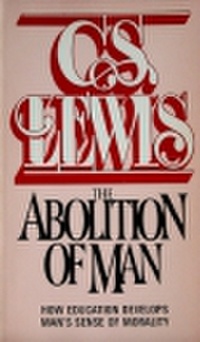
Thanks in part to Ward’s Planet Narnia, but also because I keep finding myself in conversations about Lewis lately, I figured it was time to spend some more time with Jack. For sundry reasons (good and bad), outside of the Chronicles of Narnia, I haven’t really read Lewis this century. It’s time I rectify that by revisiting some old friends and reading things I’ve been meaning to get around to.

Further Up and Further in A Year with CS Lewis


25 in ’25
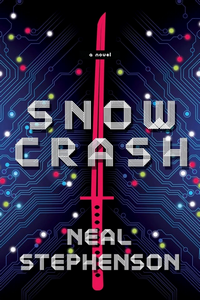
I keep seeing people do this (or earlier versions). I’m tackling it essentially as a way to do more than Booktempter’s TBR Challenge (also to tackle a few I’ve said I’ll read before and haven’t). Gamifying my goals tends to work. It’s like a year-long version of the 20 Books of Summer Challenge (RIP). You will note that the books from Top 5 books I will definitely* read in 2025 show up here, I’m really trying to tackle those.

25 in 25 grid


Auditing Challenges
I’m not sure that I want to committ to these, but I saw them on Bookforager’s page, and wanted to give them a shot–they look fun. So I’m going to track them, and if I happen to do well with them, great. If not…oh, well.

(yeah, that’s true with all of these, but I’m sort of calling my shot with the above)
Alphabet Reading Challenge

Alphabet Reading Challenge
The idea is pretty easy, I don’t imagine I’ll find a book for them all (that said, come November, if I’m choosing between a MG novel called “The Quest for Clean Underwear” and a bestseller called “Murder Most Foul,” you know I’m going for the Q)


Picture Prompt Book Bingo Challenge for 2025

Picture Prompt Book Bingo Challenge for 2025
My brain doesn’t do well with things like this, I end up tying myself in knots interpreting the pictures (too literally, usually). But I’m trying to do things outside of my comfort zone–also, I really did the look. So, we’ll see how I do. (I probably will get my kids to help, their brains do better)


That’s everything I have planned, I can’t wait to see what unplanned things happen around here. Hope you’re around to join in the fun!

Page 58 of 602

Powered by WordPress & Theme by Anders Norén