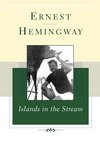
The Old Man and the Sea by Ernest Hemingway

because what else are you going to post on the same day as a review of an installment electronic serialized novel about Fairy Tales invading the Real World?

—–

The Old Man and the Sea
The Old Man and the Sea by Ernest Hemingway
My rating: 4 of 5 stars

With the possible exception of The Torrents of Spring (I’ve pretty much repressed most of my memories of this one), there’s been at least one scene in every Hemingway novel I’ve read this year where someone recounts (or has) a man against nature or man against animal experience. Frequently, this is the best part of the book. So it’s not surprising that the time he threw out all the rest — war, love, dissipated living, etc. — and just focused on that element, man vs. the natural world, that he wins The Pulitzer. Here he’s really at his strongest.

I’ve read a lot of theories/takes on what Hemingway was really trying to say here, what/who the Old Man symbolized, who/what the giant marlin symbolized, who/what the Sea symbolized, and so on. Or that this is a minimalistic Moby Dick (if so, great, it’s needed!). And some of these might be right, a lot of them are full of more hokum than the typical literary criticism. I think it ‘s equally valid to go more surface-y on this one. Looking at how Hemingway lived his life, I tend to want to go for this being a straight-forward story of a regular guy, down on his luck that runs into the challenge of his life and comes out on top — momentarily, at least — and then has to fight for survival and the chance to do it again.

And as such, it succeeds. I really was gripped throughout (something I can’t say I’ve experienced with Papa before), after a slow (but necessary) introductory few pages, this story takes off and you just can’t help but feel for this Old Man and his last-ditch effort to eke out a living. I know it annoys some readers, but I enjoyed his talk of “the great DiMaggio,” his fisherman father, and the rest of MLB. I’m guessing these readers haven’t worked long hours alone — you have to do something to keep your wits about you, and you tend to get a little more eccentric than you otherwise would’ve. That part rang utterly true, and was amusing anyway.

A strong, deceptively-quick, compelling read. If nothing else, you get a feisty, elderly Cuban laying a beat-down on some sharks. That’s enough, right?

Indexing, Episode 8: Empty Nest by Seanan McGuire

—-

IndexingIndexing by Seanan McGuire
Series: Indexing, #1.8

My rating: 3 of 5 stars

Episode 8: Empty Nest
Hey, diddle diddle! That was something! I spent most of this episode leaning forward on the edge of my seat (surely, I’m not the only one who subconsciously believes that helps them read tense/exciting parts of books faster, am I?). Sure, I was way ahead of Henry on picking up that Very Significant Clue, but the important thing is that she grabbed hold of it eventually and ran with it. Killer episode.

From the shell-shocked reaction of the team to the events in the last episode (unlike the rest, this one picks up right from the end of the previous installment), through the bureaucratic kerfuffle that kicks up from it to Henry’s clue pickup straight through to . . . well, the end — this was Indexing firing on all cylinders.

It struck me that at this point McGuire’s developed her world enough that she can say something like this:

Birdie Hubbard lived in exactly the sort of house that you would expect a woman named “Birdie Hubbard” to live in, especially if that woman existed in a world where fairy tales were real and had teeth.

and the reader doesn’t need the 3 sentences that follow to know what kind of place the characters are at (not that McGuire was guilty of over-kill in providing them). We also are at the point where we can understand Sloane’s reaction (“somewhere midway between horrified and impressed”) to the presence of garden gnomes in Hubbard’s lawn.

Such a fun read, don’t know how she’s going to top it next week, but I’m sure she will.

Blood Bond by Jeanne C. Stein

Blood Bond
Blood Bond by Jeanne C. Stein
My rating: 3 of 5 stars

This is not at all what I expected from the last installment in the Anna Strong series. For that matter, it’s not what I expected from any Anna Strong book. Although, in retrospect, it makes sense that this would focus on the human side of Anna’s life — her love life, her family, her friends.

Yes, there’s a supernatural storyline — almost perfunctory, and even when it takes center stage in the novel, it does so under the shadow of the personal storylines. If this wasn’t the last in the series, it would seem that Stein was introducing a large, shadowy group that Anna and her allies would wrangle with for awhile. But, that doesn’t appear to be the case. There’s a new vampire character introduced that Anna becomes awfully chummy with far too quickly for someone in her position (vague, yeah, but trying to stay spoiler-free) Again, if there were more books to come — I’d fully expect this new pal to reveal himself to be just cozying up to her to find her Achilles’ Heel. Regardless, it was a quick and painless story that really only served to keep this book in the Urban Fantasy camp.

Stein’s focus was on the human/emotional stories, giving each major character some sort of resolution as the curtain comes down (although Culebra was given pretty short-shrift) — and in each scene apart from the Vampire story, it feels like Stein is trying to channel the spirit of the mid-80s long distance telephone company commercials and make you reach for the kleenex box every chapter. Big emotional moments and conversations, a lotta lovey-dovey faces, and tears being jerked.

Which sounds like a complaint, but it’s not — somehow Stein pulls it off. It’d be easy for this to be overly-sentimental and sappy — and she gets right up to that line, but she doesn’t cross it. Granted, it’s not the kind of book that I’d want to read all the time, but it worked this time. It let her leave Anna in a good place — or at least a place she could find a measure of peace and happiness for a time. But we all know Anna well-enough at this point to know that can’t last, she’ll find trouble/it will find her soon enough. We just won’t get to see it.

The Good Cop: A Mystery by Brad Parks

The Good Cop: A MysteryThe Good Cop: A Mystery by Brad Parks
Series: Carter Ross, #4

My rating: 4 of 5 stars

From the opening pages of Faces of the Gone, I could tell that Parks could tell a good story, and a compelling mystery while making you laugh. He’s only gotten better each novel since — which hardly seems fair.

Not that I’m complaining.

There were times when I thought the mystery this time was a tad predictable, but there were enough twists to keep my interest — and the way Parks writes, plus the subplots and characters made it more than enough. Parks makes me laugh out loud frequently — without turning these books into a sit-com like Janet Evanovich would. It’s real humor in the midst of suspense — like early Robert B. Parker or Robert Crais (remember when Elvis Cole was funny?)

My biggest gripe is that Parks only puts out one of these a year.

Dusted Off (and updated): Faces of the Gone by Brad Parks

Faces of the Gone (Carter Ross Mystery #1)Faces of the Gone by Brad Parks
Series: Carter Ross, #1

My rating: 3 of 5 stars

This was a solid mystery novel from a first-time novelist who doesn’t write like a first timer (a career as a newspaper reporter helped a lot there, natch). Some of the characters bordered on stock, but Parks used them well enough that you just don’t care. Same with the mystery itself–on the whole, it was pretty obvious, but it was the telling of the story that sold it. Thoroughly entertaining — I even laughed out loud a couple of times.

Looking forward to the next one.

P. S. It’s been a couple of years since I’ve read this one (I have read it twice, however). I think given the world he created, and the way things have played out in the following books. And just my overall appreciation for Parks, I’d probably give this at least 4-4.5 stars now. But I’ll stick to my original grade, just to be honest. Just know that these three stars are very shiny.

Saturday Miscellany 8/31

Odds ‘n ends over the week about books and reading that caught my eye. You’ve probably seen some/most/all of them, but just in case:

      This Week’s New Releases I’m Excited About and/or You’ll Probably See Here Soon:

    • Never Go Back by Lee Child — I’m so close to catching up with this series. Am 3 away from this.
    • The Exodus Towers by Jason M. Hough — the sequel to The Darwin Elevator.
    • Clean Burn by Karen Sandler — sounds promising, and disturbing.
    • Blood Bound by Jeanne C. Stein — we’re nearing the end of Anna’s saga. Not sure how I feel about that.
    • Chosen by Benedict Jacka — been too long since I got to spend time with Verus — one of the best UF series around. And Jacka’s The Big Idea post this week makes me even more eager for this one.

Not the Post I wanted today . . .

Doesn’t look like I’ll be able to get a review up today, I’ve got one allllmost ready, but not quite — and I have to finish my current read as it was due at the library 2 days ago, so I really can’t take the time. Will try to do better.

Let me leave you with this instead, sums up me and, I bet, many of you:

The Cuckoo’s Calling by Robert Galbraith (wink, wink)

A briefer version of this appears on Goodreads.

—–

The Cuckoo's Calling
The Cuckoo’s Calling by Robert Galbraith
Series: Cormoran Strike, #1

My rating: 4.5 of 5 stars

I have to admit, if I didn’t know the name that’s on Robert Galbraith’s birth certificate, I don’t know that I’d have picked this book up. It’s possible– I pick up odd mysteries sometimes(the U.K. cover would’ve been more likely to get me to do it than the U.S. cover). But by the time I was halfway through with this one, I was ready to buy the next 2 or 3 in the series, regardless how this one turned out.

This is not the J. K. Rowling of Harry Potter — that’s obvious, and as it should be. Nor is this the J. K. Rowling of The Causal Vacancy — and that’s just merciful and wise. Let me quote (in it’s entirety) my Goodreads review of that one:

I don’t know, man…I just don’t know.

. It’s ten months later, and I still don’t know. But here, she taps into the same vein that brought her success — a different voice, a different world, different characters — but the same ability to tell a story. Not necessarily all that new, perhaps not written in the most “literary” way, but in a way that grabs the reader, draws them in and keeps them turning pages. At the end of the day, isn’t that what we want? (unless we’re professional critics or professors)

Our entry into this world comes via Robin Ellacott, newly moved to London with her fiancé who comes to the office of a P.I. as a temp secretary. She’s smart (and we eventually get an idea just how smart), spunky, and has long had an interest in detecting, it turns out (which must be nice — I’ve never had a temp job that was in a field I’d been interested for years and years). It’s through her eyes that we get confirmation that yes, the protagonist is a decent guy, despite problems he might be having — and a good detective. While we are introduced to this world through Robin’s eyes, we eventually get to the point where we envy her as she gets to take part in the investigative work.

Her temporary boss, on the other hand isn’t someone we envy — nor is he noticeably spunky, there’s reason to doubt his intelligence from time to time — although he’s clearly an experienced and well-equipped detective. Injured in Afghanistan, he now (almost) ekes out a living doing private investigations. He has an interesting — and novel — past, one that opens doors for him (although he hates having to cash in on it). With the unlikely (but inherently cool) name of Cormoran Strike, he’s a member of a long-line of down-on-their luck, idealistic, hard-boiled, hard-drinking, lone-wolf detectives that goes back to Chandler (if not further). The friendship that Strike develops with Robin gives him the motivation–at least temporarily — to be a better version of himself than he’s apt to be, if only to pay her back for the extraordinary amount of help she’s been to him. It seems inevitable from almost the beginning that thus will develop into at least an unrequited love on his part, as long as Galbraith moves the relationship along in future books as deftly as she does here, I don’t see it becoming the cliche it so really could.

Given the subject of Strike’s investigation — a well-known model from a prominent family, who socializes almost exclusively with A-listers — Galbraith is given plenty of opportunity to comment on celebrity culture –a subject Galbraith has had a certain degree of experience with, and obviously an informed opinion or two about. Hard-boiled detectives tend to comment on society as they go about their detecting, and Cuckoo’s Calling does its fair share, particularly regarding the paparazzi and tabloid journalism, as well as the ridiculous aspects of the lives of celebrities.

The case that Strike is hired to investigate has plenty of twists and turns, more than enough to keep those who don’t care for the rest of the book entertained. I was pretty sure who the Big Bad was early on, and I was right. But I wasn’t in the same time zone as the motive. I was about 50/50 on some of the more minor mysteries, which is nice — for a first time mystery author, I’d have expected to be right about 70% of the time or so. But when I was wrong — I was very wrong. I should add that Galbraith didn’t cheat — everything we needed to know in order to identify the villains of the piece is right out there for us to see, just wish I’d done a better job of it.

A solid set-up for a series, decently interesting characters, and a mystery solid enough to prove that this newbie author (at least in this genre) has some chops. A distinct pleasure. I’ll be waiting for more Cormoran Strike — no matter what author’s name is attached.

Lexicon by Max Barry

Lexicon
Lexicon by Max Barry
My rating: 4.5 of 5 stars

My guess is that no one reading a book review needs to be convinced of the power of words, you probably know the power of words in your own life, not to mention the pen is mightier yada yada. Beyond the power of the written word, comes the power of the spoken word — a good speaker can bring along a group or an individual to a conclusion they’d never agree to were they reading the material — there’s plenty of anecdotal as well as experimental evidence to support the power of the spoken word.

Max Barry takes things a step further, what if the power of the spoken word was actual Power — like magic. With enough of a veneer of science/pseudo-science to make Walter Bishop happy and make the whole thing seem grounded. It’s one of the best “magic” systems I’ve come across lately (and there’s been a lot of them)

After a brief — and pretty unconventional — enhanced interrogation scene that made me wonder what I was getting myself into, I came across one of those sentences (or four, in this case) that are enough to convince me that I’m in for the rest of the book. In this case, it was on page 8:

He [our protagonist, drugged and in the midst of being kidnapped] shook his head to clear it, but the world grew dark and angry and would not stay upright. The world did not like to be shaken. He understood that now. He wouldn’t shake it again.

Can’t tell you exactly why — something about the voice would be my guess, but this is one of those things that I don’t want to dissect/scrutinize — but there’s a je ne sais quoi about that quotation that sold me on the novel. And it didn’t let go.

Within the group of practitioners of this magic-y system, there’s some sort of split, with the factions vying over control of an artifact that wields immense power — something along the lines of the prize in Raiders of the Lost Ark, and the bodies are piling up.

Told in a series of flashbacks accompanying the present day stuggles, we get the stories of Wil — the only survivor of an event that killed the citizens of an entire Australian town — and Emily — a homeless American teen — as they first encounter, and learn to understand the power of words. These are very human stories — love and loss, betrayal, revenge, opportunities seized and missed. In the midst of the battles, subterfuge and death, it’s these things that stand out in the book.

A real pleasure to read from the opening pages through gripping conclusion, and on to the the entertaining acknowledgments (particularly that last paragraph of the acknowledgments). Max Barry’s an author I’m going to have to come back to.

Gun Machine by Warren Ellis

Gun MachineGun Machine by Warren Ellis
My rating: 4 of 5 stars

This is a great read — think of it as the love child of a Michael Connelly novel and a William Gibson novel. If that’s the kind of thing that appeals to you, go grab this now. If not, well, you should grab it anyway, just so you can see how wrong you are.

I can’t think of anything to say about this book without spoiling anything not already on the jacket. Nearly perfect from cover to cover — there was one too-good-to-be-true coincidence that provided the necessary bit of information at just the right time. But that can be forgiven, given the way it worked out.

This is my first novel by Ellis, won’t be my last.

Page 600 of 627

Powered by WordPress & Theme by Anders Norén