Music Monday's originated at The Tattooed Book Geek's fantastic blog and has shown up hither, thither, and yon since then.
![]()

Music Monday's originated at The Tattooed Book Geek's fantastic blog and has shown up hither, thither, and yon since then.
![]()
I typically do a Festivus post on December 23, but I couldn’t come up with anything to do this year. However, I did finally get a copy of this book
The Real Festivus: The True Story Behind America’s Favorite Made-up Holidayby Dan O’Keefe
DETAILS: Publisher: Tarcherperigree Publication Date: January 1, 2005 Format: Paperback Length: 134 pg. Read Date: December 21, 2024

It’s right there in the subtitle, isn’t it? It’s “The True Story Behind America’s Favorite Made-up Holiday.”
In this book you will learn, should you choose, how to celebrate Festivus according to the true and ancient traditions that have guided it since its birth back in the mists of the 1960s. But be warned: the secrets of this book can be dangerous. Do not read it while driving a car; that would be a bad idea. Do not use it to hold down important papers on a desk; it is flimsy and your papers may blow away. If you handle it carelessly, you may sustain paper cuts that are not only painful, but may attract sharks while swimming at the beach. Also, the way things are going in this country, reading books might soon lead to your arrest and a one-way black helicopter ride to some kind of orbital prison, or forced labor on an undersea kelp farm. Depending on the judge you get.
Why is there a need for this book? Well, O’Keefe addresses that right off the bat with his opening words:
So you think the holiday known as Festivus involves a metal pole, do you? Feats of strength? Commercial breaks? WRONG. That’s just the television version. Because a network audience couldn’t possibly have handled the real thing. A family huddled around a table by candle-light one random evening a year, eating and drinking too much, singing in German about a black pig, bitching about people who didn’t like them into a barely functional tape recorder, and displaying obscene, hand-scrawled signs of a political nature.
But if you go beyond simple belief, if you are one of those lost souls who, captivated by the television portrayal of Festivus, actually celebrates the damn thing… what’s up with that? Don’t get out of the house much, do you? Maybe you should get a pet or a hobby or something.* If you don’t already have forty cats in your studio apartment, which will eat your eyes when you die, alone.
*Hard not to take that personally…
He starts with the need for Festivus (a quick critique of some of the major holidays); then moves into the name and what it could mean; its origin; common misconceptions about the holiday (i.e., the Seinfeld episode); and some of the details about the holiday: the floating date, the poems, music, dinner, and gifts; he then details some particular commemorations of the day; and then spends a few paragraphs detailing what the reader needs to pull off an “authentic” Festivus celebration to wrap it up.
This is not at all what I expected. Sure, I knew the TV version didn’t match up with the O’Keefe family version exactly. But just how little overlap there was (basically: the name) astounded me.
Once you get past the kvetching about the TV Show’s version of Festivus (which seems a little heavy-handed, I have to say, but I think he was going for funny), what this book really is becomes clear. It’s a memoir about an eccentric family’s equally eccentric ritual. Every family has them—the O’Keefes were just nice enough to record them and have one son who achieved enough notoriety to get a publisher to pay for these memories (and the skill to deliver them).
It’s an amusing book infused with a particular kind of sweetness. I don’t know that it’s the kind of thing that will change my Festivus celebrations in the future (I really like the pole), but it’s a rewarding read.

![]()
by Dr. Seuss, read by Walter Matthau
DETAILS: Publisher: Penguin Random House Audio Publishing Group Publication Date: June 27, 2006 Format: Unabridged Audiobook Length: 12 minutes Read Date: December 13, 2024

I repeatedly saw an advertisement on some social media site from Penguin Random House for this audiobook, and honestly didn’t see the point—isn’t half the reason to read a Seuss that distinctive artwork? Why lose that? And who could possibly tackle the narration?
Curiosity got the best of me and I clicked. Walter Matthau? And Libro.fm was selling it for less than $2? Well, okay.

Yeah, okay. That was a dumb question.
Really, there’s no question what I think about the story itself. Or Seuss’ rhymes, invented words, and everything else.
The essence is what did I think of Matthau’s narration? First, it’s so strange to hear his distinctive voice and accent rather than Thurl Ravenscroft and Boris Karloff. It’s hard to remember that Seuss never intended his Scrooge to sound like them.
Once you get past that (and it’s easy)…Matthau is so good at this. He’s just naturally crotchety (or at least he seems that way, he was probably a real charming guy), and that makes him an excellent choice for this book and this character. That’s not to say that he can’t pull off the character change, because he’s a pro (and not always a grump).
This is a great way to spend 12 minutes—and it’ll easily become something I regularly return to. And I can’t wait to introduce this to the Grandcritter when he’s got the attention span.
Give up a cup of coffee and get this.
![]()
The Fundamentals of Sacred Theologyby Campegius Vitringa, Sr., Levi Berntson (Translator)
DETAILS: Publisher: Reformation Heritage Books Publication Date: September 2, 2024 Format: Paperback Length: 235 pg. Read Date: December 1-8, 2024

The original (Latin) title of this is Aphorisms which Comprehend the Fundamentals of Sound Theology—and that’s a decent summary of this work. In 1,000 points—mostly a sentence or two, a few are a good-sized paragraph—Vitringa lays out a fairly comprehensive outline of Systematic Theology. For his students, this is basically a course outline for them to fill out by their own research and showing up for class.
In his Prologue, he says:
What use do you say that this little book is for us? For this, listeners, first, that you may have a certain order by which I discuss the matters of theology, and second, that I may explain the collected fundamentals of these things clearly and truthfully. Thus, in this brief space of time, you would be able to repeat this sum of all truths as handed down to me and memorize them.
Interestingly (for his contemporary readers as well as his 21st Century readers):
I did not wish to add Scripture references so that I would compel and persuade you against your will to consult other authors. For I know that no one is frightened by excessive brevity.
* I love this sentence and sentiment. I can’t help but notice a lot of Reformation and post-Reformation writers say something along these lines. Vitringa is the only one I recall seeing living by it, however. I doff my cap to him.
Here’s a summary of the work as a whole from the man himself:
First, I have set forth very brief theses which lack necessary explanation. Second, I have refrained from adding Scripture references which ought to be employed for confirming them. There were friends whose judgment I greatly trust who dissuaded me from both of these points. But I have most serious reasons why I did not comply with them. For if these theses were greatly lengthened, this book would grow into a system. But I determined in my soul that I would never write a full dogmatic work, since certain ones have been published by most learned men in this day and age which are quite to my taste.
Now, I’ve had some pretty thorough and useful syllabi in my academic life, but to be given a document that’s essentially: Here’s everything you need to know, go fill in the details. I love this idea—and I think that this is a dream come true for theology students, grab this and fill it out.
I was a little annoyed when I saw Keith Mathison write:
Imagine if someone summarized the substance of Reformed doctrine in 1000 tweets. Vitringa already did it.
Because I was pretty much going to say that myself. True, it’s hard not to say something like that about this book in this day and age, but, still.
The aphorisms, fundamentals, or tweets that are the very format of this book are also its weakness. There are so many times that I wanted a little more detail, a little more explanation, that I just wasn’t going to get. Generally, it was to make sure I understood what he was getting at—I was pretty sure, but another sentence or two would’ve helped. On a few points I really didn’t understand what he was getting at or where he was coming from (usually, I was intrigued by the notion, but I needed more).
But by and large, these brief points are a great way to do a quick study, refresher, or introduction of a topic in systematic theology. And you can use the points as the basis for your own outline to fill in the details with your own study (just like Vitringa intended).
Is it the greatest thing I’ve read when it comes to systematics? Nope. But it’s possibly the quickest, (deceptively) easiest systematic read I’ve come across. It’s a useful and generally helpful read and something I can see myself returning to often. Give it a shot.

This post contains an affiliate link. If you purchase from it, I will get a small commission at no additional cost to you. As always, the opinions expressed are my own.

![]()
No trip down memory lane this week—I posted nothing 10 years ago. A move I can appreciate (and almost replicated).
The first link I have to share has nothing to do with books or reading, but was so interesting that I’m sharing it anway:
A List of 1,065 Medieval Dog Names: Nosewise, Garlik, Havegoodday & More—I strongly encourage clicking the links within the short post and the Related Content.
And now, back to our regularly scheduled focus.
Odds ‘n ends about books and reading that caught my eye this week. You’ve probably seen some/most/all of them, but just in case:
Hartford high school graduate who claims she can’t read sues board of education
Every AI Copyright Lawsuit in the US, Visualized—For those who have lost track of them all (like me)
Snap! Criticism: De Marcken and Kramnick—literary criticism and the idea of “quality”
Interview with M. W. Craven about the Ben Koenig series
Speaking of Craven, he showed up on CrimeReads this week with An Englishman in New York—as one who frequently complains about British authors flubbing Americanisms, I appreciate this.
Nice Place to Visit, But…: Johnny D. Boggs’ Bloody Newton—I had to take a second look at this review. (the title of the book could also be what some British authors call me when I comlain about their flubbed Americanisms)
The Art of Buying Books for Other People—some very good advice (especially about keeping lists)
Bookstr put together this handy The Best Book Deals as We Say Goodbye to 2024
Let Children Read What They Want—please
Out with the Old, In With the New – End of Year Review—A Little Book Problem takes a look at 2024 and looks toward 2025
A Year Spent Rereading – Some Highlights and Lowlights—The Orangutan Librarian looks back

It’s the Time of Year for Best of Lists like these. Your TBR will grow, I should warn you.
The Ultimate Best Books of 2024 List—I really appreciate Emily Temple’s annual List of Lists
The Empty Bookshelf’s Top 10 Novels of 2024—I’ve only read one of these (his top pick), but the rest look pretty appetizing
Pages Unbound’s Krysta gave her
Favorite Books Read in 2024
Top Twelve Graphic Novels Read in 2024
FanFiAddict posted:
C. J. Daley’s Top Reads of 2024
Anna’s Favorite Reads of 2024—many of these will appeal to people who aren’t me, but I can see why horror readers would dig them.
Ryan’s Favorite Reads of 2024
I’ve Read 26 Bookish Books in 2024—not really a Best Of, but it’s a good list, so it fit here better than above.
A.J.’s Completely Random Book Awards: 2024—Were I more creative, this is the approach I’d to take. But I’m not, so I’ll just enjoy people like A.J. Calvin who are.
Along those lines, I really enjoy the way that Steven Writes breaks down his lists:
Top Five Powerful Books I Read In 2024
Top Five Most Dramatic Twists I Read In 2024
Top Five Character-Driven Books I Read In 2024
Top Five Beautiful Covers I Held In 2024

A Book-ish Related Podcast episode (or two) you might want to give a listen to:
SFF Addicts Ep. 135: Our Favorite Reads of 2024 LIVE (with Greta Kelly, The FTF Podcast & OWWR Pod)—this was fun and TBR embiggening.
Crime Time FM Alison Gaylin In Person With Paul—I really enjoyed this chat with Gaylin and hearing her take on Sunny Randall

This Week’s New Releases that I’m Excited About and/or You’ll Probably See Here Soon:
Suppression of Powers by JCM Berne—Turn Six of the Hybrid Helix looks like it’ll put Rohan through the wringer (shock) as the second arc of the kicks off.

The Ballad of Bonaduke—DETAILS: Series: Mourning Meeting , #64 Format: Kindle Vella Story Read Date: Decemeber 20, 2024

A drunken Michael Bonaduke decides to use a grift (with maybe some sort of magic/magic-like “help”) to win on a scratch-off lottery ticket so he has money to buy more to drink. He pulls off whatever he did, gets his money and some booze and stumbles off into the darkness to drink himself into oblivion so he can start again the next day. He’s hit by dark memories (probably what’s driving him to the drinking) of fire, pleading, and screaming. There’s going to be a price to pay for his grift, and he’s trying to be ready.
He’s abducted by some representatives of a mysterious group who subject him to a test—if he passes, everything will be explained to him (and hopefully the reader, too). He passes—and is brought somewhere for answers, or maybe training, or maybe another test. Time will tell (or things are going to get really annoying). Answers aren’t quick to come—but the mysteries and questions keep piling up.
Things get hairy and Bonaduke leaves and finds himself back in the neighborhood he started from. He takes refuge in a homeless encampment shortly before a police raid. He’s apprehended and finds himself an interrogation room and shortly escapes after using his grift (but with results he didn’t quite intend). He finds himself by a group of squatters who seem to have strapped a woman to a chair for reasons that can’t be good. He attempts to rescue her before he even realizes what he’s doing, and seems to have succeeded—well, the two of them got away from the group anyway—breathing but bruised. They make their way to a fast-food taco joint and Bonaduke really needs to refuel to keep going. He tries, but fails to get food because he keeps passing out. Thankfully, the clerk is the same guy from the liquor store and he both recognizes him and gives him first aid. The woman (Zero) wakes up and shows some abilities of her on as she helps them escape from her captors who’ve tracked her down. One thing leads to another—Zero and Bonaduke’s magics don’t mix well (at least until they understand what each other can do?), and they end up in a video-game race against the squatters in a tricked-out version of Eric (the clerk’s) car. Note, I said video-game race, not a video-game-style race. They’re actually in one. When dumped back into reality, he’s surrounded by bruised and broken bodies (of people and cars). And then he gets into a supernatural fight and survives…just.
Or maybe not. But he gets better. And then his new…friends? Acquaintances? People who keep popping up in his life?…start explaining exactly what’s going on to him while they set up a new HQ and try to teach him about his abilities (and everyone tries to understand them) while they try to fund their further work. This plan doesn’t go so well, they end up stealing a book that contains (for lack of a better word) a malignant presence (something like a demon or nasty djinn), and things have gone really poorly since then. It’s almost like they’ve been cursed.
Bonaduke gets fed up with his little groups plans and aims–deciding his own goals deserve attention and effort–he’s also not so sure about theirs. So, he heads back to the city. Does some fruitless stuff and goes back.
This episode is broken cleanly into two parts–the first part consists of Bonaduke thinking back on his relationship with his wife–particularly the beginning of it. It’s sweet, we get a little more of an idea of who his wife had been other than “wife.” Not too surprisingly, this doesn’t do much for his mood and he wake up pouting.
He doesn’t get to stick with that long–if only because there are too many people around making him talk. They have a plan to take on a group of vampires and cajole Bonaduke into helping out–it takes a little work, but they get there in the end.
Not only do we get a better understanding of Bonaduke (sure, you could argue that we should understand him better by this point–and you’d be right–but I’ll take it), we get some plot advancement, but this is also one of the better written episodes of this series.
Really, I have no complaints and would be very happy if this was the beginning of a trend.

![]()
The Legendary Mo Setoby A. Y. Chan
DETAILS: Series: The Legendary Mo Seto, #1 Publisher: Aladdin Paperbacks Publication Date: June 4, 2024 Format: Hardcover Length: 309 pg. Read Date: August 8-10, 2024

This is one of those books that I could easily tell you everything in my enthusiasm, but that’d take away the need for you to read the book—and Chan’s much more entertaining than I could be. So, I’ll try to keep it to the essentials.
Modesty (please call her Mo) Seto is a devoted student of taekwondo and has been competing—and dominating—in competitions for years. But a fellow student recently hit a growth spurt that passed Mo by and he has started to beat her in competitions. This is getting to her, it’s just not fair. After coming in second to him (again), she sees a call for open auditions for people in her age range for a role in an upcoming martial arts movie starring her favorite movie star/martial artist in the world.
Technically, Mo is too short for their requirements—the height issue again, will she ever just grow? She comes up with a cunning plan* to get into the auditions anyway with the help of her best friend and his grandfather posing as her guardian. Why a faux grandfather? There’s no way that her mother would allow her to do anything like this and her father is away on a sudden business trip and isn’t communicating with Mo or her mother the way he usually would.
* Slightly more elaborate than anything Clark Kent has tried, and just as believable. Just roll with it.
We follow Mo through the audition process—which starts to take on unexpected peril as the set becomes plagued by threats and unexpected problems—possibly caused by sabotage. Oh, yeah, and her classmate/rival is also going up for the part.
Can Mo get the part without the truth being discovered? Will Mo be disillusioned by seeing behind the Movie Magic? Will Mo’s dad start responding to her? And what’s up with this old book with a little-known martial arts form Mo just found in her basement? More importantly, can she use any of it to her advantage?
Let’s get this out of the way: This is an MG Novel, not Cinéma vérité. There’s no way that the auditions can work the way portrayed in the novel—especially when it comes to kids. It is impossible that any of Mo’s antics and hijinks to get her into—much less stay in—the auditions would work. If you’re looking for accuracy and an honest look at making martial arts movies with actors under 18, look elsewhere.
That said, there’s enough of a flavor of Hollywood to all of this to work. The attitudes of the casting people—the shallowness of the initial assessments, the stress of the director, the attitude toward the fight choreographer/stunt professionals, and so on—really feel like what you expect. They’re entertaining enough that you really don’t care how realistic things might be, too—feeling about right is good enough.
For my money, the best part of this is watching Cody Kwok in action and how everyone reacts to him. Kwok is a Jackie Chan-esque figure (only younger). He’s known for doing his own stunts—many of which are just incredible—as well as not being tied down to any one genre (but making them all, eventually, about martial arts). Kwok, his entourage, and the film’s executives know what they’re doing when it comes to preserving his image and promoting it, and the auditioning kids (and media) see exactly what they’re supposed to. Chan does an excellent job portraying both that and showing the reader that the Superstar’s image might not really be the truth.
There’s a really strong cast of supporting characters who are as engaging as you want, I want to touch on just a few of them because it’d be too easy just to talk about Mo, and that’s not giving Chan’s work the credit it needs.
Mo’s rivals in the auditions are largely bullies when it comes to Mo (and some of the others), but they’re not all that bad. They’re just adolescent twerps who are probably covering up insecurities (well, a couple of them are entitled jerks who are on their way to being 80s movie villains)—the way they treat Mo is bad enough so you don’t make the mistake of liking them, can root for Mo against them, but you’re not going to worry about what they’ll do to her.
On the other hand, you get Mo’s friends who just make you like her more—if someone as cool as Nacho (real name, Ignacio) is her best friend, she must be pretty cool herself. And Nacho is cool—he’s supportive, understanding, artistic, and nerdy in all the ways that Mo isn’t. Mo’s a little too hyper-focused on herself at the moment, but Nacho gets it and is willing to wait for her.
His grandfather is a hoot. Gramps is an honorary grandparent to Mo, as well as Nacho’s actual grandfather. He’s recently widowed and lonely, but he hasn’t let it get him down—at least not in front of the kids. He’s a loving and goofy character who really comes through for Nacho and Mo—he’s the kind of grandfather I’d like to be.
One of the auditioners who befriends Mo is named Sanjay. I hope they find a way to bring him back for the rest of the books in the series. He’s apparently pretty good at karate and is as gregarious as the others are antagonistic. He’s one of those kids who cannot stop talking once he starts and is not self-aware enough to realize he’s doing it or how people react to him. He’d probably be pretty annoying in real life but as a comic relief character? He’s great.
Lastly—Mo’s parents. Parents in MG novels are so tricky to get right (I’ve often thought), and Chan gets it right. Not just the characters, but how they treat Mo—and how Mo sees them and how they treat her. Mo’s dad introduced her to taekwondo and Cody Kwok. He’s her biggest fan and source of encouragement—he also pushes her (generally) in the way she needs to keep going. When he’s not there, the impact on Mo’s confidence and emotions cannot be overstated.
Things are complicated with her mother. Mom comes close to being a stereotype, at least the way the narration describes her. But I’m not sure she is, essentially they don’t get each other—from Mo’s perspective, her Mom doesn’t like who Mo is. She doesn’t want a daughter into taekwondo (especially not to the near-obsessive level Mo is), but would rather she pursued something more acceptable, like dancing and Chinese immersion camp, a dainty academic superstar in the waiting. The reader will see that Mo’s not understanding her mother quite right, but there’s nothing malicious in it. It’s just a tricky mother/daughter dynamic (that appears to be starting to work itself out).
In case I gave the wrong impression when I talked about Nacho, Mo is a cool person, but since we see the whole book from her point of view, it might seem biased. Mo is a confident, optimistic, go-getter. The fact that she’s probably not going to keep growing past her 4’9″ stature while everyone around her (especially Dax) is still growing, isn’t doing her esteem any favors. Her recent tournament loss is doing a number on her—she’s upset that Dax’s size puts her at a disadvantage and is ready to give up, but she’s also so determined that she just can’t. Chan portraying both competing impulses is a tricky proposition, but she pulls it off.
The chance to work with Kwok is the opportunity of a lifetime for Mo. She’s re-read his autobiography a few times (can quote portions of it), and has watched countless interviews—she knows him as well as anyone who hasn’t met him can (and as well as many people who have met him could). She’s such a superfan that it’s hard not to want to see a few Kwok movies yourself. When she describes one of his films, she always introduces it as “my favorite Cody Kwok movie”—it doesn’t matter which one she’s talking about. It’s a tiny touch, but I loved it. Her enthusiasm is infectious.
Actually, not just her enthusiasm for Kwok—but for everything. Her despondency is a little catching, too, and comes when it should. But her personality can’t stay down for long. She grows a lot over the course of the novel*—as she needs to, it’s the point of adolescence anyway. But she also has plenty of room to grow, and that’s easy to see, too. It’ll be fun watching that over the rest of the series.
* That’s growth in terms of character. Much to her chagrin, she’s as tall at the end of the summer as she was at the beginning.
I had about as much fun as is permitted by law while reading this.
Sure, it’s an MG book, so I’m a few decades older than the target audience. I guessed almost all of the big reveals (I think attentive MG readers will get most of them, too), I’m pretty sure I know how the next two books are going to go, and I rolled my eyes at some of the sillier aspects of the book. That’s not a problem with Chan’s writing—I think it means she hit her target. The fact that she was able to write for them while keeping an old guy like me entertained is to be commended.
This is a fast, engaging read that will entice readers from the jump and keep them turning pages (likely with a grin) almost as fast as Mo can dash around. Older readers will want to adopt Mo and Nacho as kid siblings (or false grandparents), and younger readers will want to be like Mo—and hang out with her friends. As good as the story and the writing are (and Chan’s subtle prose is deceptively easy)—readers are going to walk away from this book thinking primarily of this determined and brave girl, who will muster up whatever she has to in order to get a shot at her dreams.
I’m leaving things out that I should be saying, I know I am—but I can’t think of what they are at the moment. So be sure to see what other people on the Tour are saying. So let me just wrap up by saying that for the young or young-at-heart reader, this is a sure-fire win.

This post contains an affiliate link. If you purchase from it, I will get a small commission at no additional cost to you. As always, the opinions expressed are my own.

My thanks to The Write Reads for the invitation to participate in this tour and the materials (including the novel) they provided.

I’m very pleased today to again welcome The Write Reads Book Tour for this MG novel by A. Y. Chan, The Legendary Mo Seto! I’m very glad that Mo Seto decided to do another Tour, so I can talk about this book again. My take on the novel will be posted here a little later this morning. The Tour is in full swing now, so be sure you check out https://twitter.com/WriteReadsTours to see what other bloggers are saying about the book. But for now, let’s learn a little bit about the book, shall we?
Title: The Legendary Mo Seto
Publisher: Aladdin
Format: Hardcover/Ebook
Length: 320 pages
Publication Date: June 4, 2024

Mo Seto, martial arts movie star! Has a nice ring to it doesn’t it? If only there wasn’t a height restriction to audition. But 12-year-old Modesty (Mo) Seto has never let her height get in the way before, not when she became a black belt, or when she fought the meanest boy in her class, and she’s not going to let it stop her this time! Now if only she can figure out a way to grow five inches and fool everyone at the auditions… Join Mo on an adventure (and audition) of a lifetime and find out if powerful things really do come in small packages!
I started training in taekwondo when I was six and, growing up, I longed to read books about kick-butt girls doing kick-butt things, but there really weren’t as many as I had hoped for. The idea for this book has been percolating in my head ever since. I wish to inspire kids not only to be brave and never give up, but also to be proud of who they are.
My inspiration for my story came from a real city-wide competition, where, like Mo, my protagonist, I faced off against a bigger, stronger boy during the final match. At that time, pairings were determined by belt-level and age, not by weight class. I ended up losing. I remember feeling so crushed by my second-place finish, and I kept replaying the fight in my head, wondering what I could have done differently.
I was also inspired by martial arts movies—especially the stunt actors and body doubles, and the thugs in the background serving as punching bags for the protagonist. As an introvert, I never wanted to be the main character…but to get beat up by the main character? That seemed awesome. After achieving my black belt in Taekwondo, I explored other types of martial arts and came away with an appreciation for the similarities and differences in the different forms, and how each has a unique philosophy linking the physical to the mental (and spiritual). Martial arts is about discipline and practice, but it’s also about respect (for oneself and for others) and integrity. And, of course, indomitable spirit, the all-encompassing light within us all that shines with determination and hope and an unshakable optimism for a brighter tomorrow.
Best,
A.Y.
Amazon Canada ~ Amazon US ~ Amazon UK ~ Simon & Schuster ~ Goodreads ~ Publishers Weekly review ~ Kirkus Reviews review ~ The Children’s Book Review

A.Y. Chan is the author of The Legendary Mo Seto, a story about a 12-year-old female martial artist who auditions for a movie role opposite her favorite martial arts movie hero—only to find out she’s too small for the role. Growing up in Canada’s Greater Toronto Area, A.Y. read all the middle grade and young adult books she could get her hands on. To this day, those remain her favorite genres. After achieving her black belt in Taekwondo, she explored a range of other types of martial arts, and she draws upon her experiences in learning new techniques and philosophies to inspire her writing. These days, she continues her martial arts training some mornings, writes in the afternoons, takes long walks to muddle out plot points, and falls asleep reading.
Twitter/X ~ Instagram ~ Facebook ~ Website ~ The Children’s Book Review Interview

My thanks to The Write Reads for the invitation to participate in this tour and the materials they provided.

Running late with this again. I’m still trying to shake the COVID symptoms and life’s been busier than I’m used to–I’ve fallen asleep with my leptop open and a post in the works for four nights in a row. I’m trying to focus on just getting something up for the next couple of days without much reference to time.
This meme was formerly hosted by MizB at A Daily Rhythm and revived on Taking on a World of Words—and shown to me by Aurore-Anne-Chehoke at Diary-of-a-black-city-girl.
The Three Ws are:
What are you currently reading?
What did you recently finish reading?
What do you think you’ll read next?
Seems easy enough, right? Let’s take a peek at this week’s answers:
![]() |
![]() |
| The Big Empty by Robert Crais |
Whispers Under Ground by Ben Aaronovitch, read by Kobna Holdbrook-Smith |
On the one hand, I wish Crais wrote faster. On the other hand, whatever he’s doing to bring us stuff like The Big Empty is so good that I don’t want him to mess with his M.O.
I’m really enjoying getting back into the world of Whispers Under Ground and remembering all the things I forgot since my last trip through it.
![]() |
![]() |
| Adrift in Currents Clean and Clear by Seanan McGuire |
Grave Peril by Jim Butcher, read by James Marsters |
Ohhh, McGuire did everything right with her newest Wayward Children novel.
The gut punch at the end of Grave Peril hit just as hard as I remembered, I figure it will no matter how many times I revist this one.
![]() |
![]() |
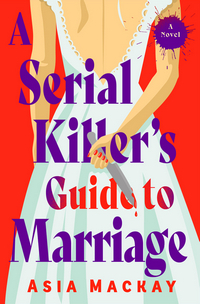
| A Serial Killer’s Guide to Marriage by Asia Mackay |
The Village Library Demon-Hunting Society by C. M. Waggoner, read by Cindy Piller |
Mackay’s US debut will make three NetGalley reads in a row for me, which is more than I like to tackle at once, but I want to clear the decks there.
I’d been curious about the Waggoner book, but it was Mike Finn’s post about it that pushed me to get on the wait list. Looking forward to diving in.
![]()
What Were You Expecting?: First Words for New Parentsby Cameron Spires, Grace Cho (Illustrator)
DETAILS: Publisher: Kids Can Press Publication Date: May 2. 2023 Format: Board Book Length: 44 pg.

This is not really a board book parody, it’s more like a book for grown-ups disguised as a kid’s book. Specifically, it’s a board book for a parent in the first year or so of parenting—something they can use to commiserate with, something to help them know they’re not alone. At the same time, it’s something they can read to their child in order to feel like a good parent—because, hey, reading!
The art supports this—and really, for kids in the first two years (at least), the pictures are what they care about. The words are totally unimportant.
So, Spires can write lines like,
This is an owl. Like you, it thinks day is night and night is day. Its brain is very small.
Or (my personal favorite),
This is a house. It’s a lot like the one we had to remortgage to pay for your daycare.
Just Kidding. We can’t find a daycare.
While Cho’s art will keep the little one’s attention.
Really, the cover image tells you all that you really need to know—both in terms of art, content, and tone.
Unlike the children’s books for adults by Adam Mansbach and Ricardo Cortés (like Go the F**k to Sleep and You Have to F***ing Eat), these are completely Safe for Work, or Safe for a Baby. The text is clean enough to eat off of, but barbed enough that you might not want to.
it’s also not all snark. There’s a very sweet ending that every parent will be able to identify with.
I just liked the concept and had to buy a copy for my son and daughter-in-law when the Grandcritter showed up. Reading it before I gave it to them solidified that feeling. I think they appreciated it.
They liked it enough that the Grandcritter asks for it repeatedly at bedtime—so he must’ve been exposed to it plenty and now is returning the favor.
Cho’s art is exactly what you want in a board book. It’s eye-catching, vibrant, and energetic—while simple enough that it doesn’t overwhelm anyone.
Pick yourself up a copy—or go check out the sample on the publisher’s site—fill up your sippy cup with “Momma’s and Daddy’s Special Grape Juice” and have a couple minutes of fun.

This post contains an affiliate link. If you purchase from it, I will get a small commission at no additional cost to you. As always, the opinions expressed are my own.

![]()
Powered by WordPress & Theme by Anders Norén