Opening Lines: Empowered Witness by Alan D. Strange

We all know we’re not supposed to judge a book by its cover (yet, publishing companies spend big bucks on cover design/art and we all do judge them that way). But, the opening sentence(s)/paragraph(s) are fair game. So, when I stumble on a good opening (or remember one and pull it off the shelves), I like to throw it up here. There are so few writers that can grab you like Winslow can from the get-go.
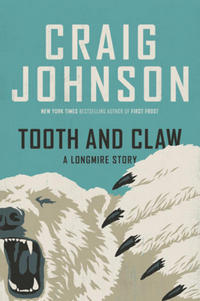
from Empowered Witness: Politics, Culture, and the Spiritual Mission of the Church by Alan D. Strange:

The calling, or mission, of the church as the church is to proclaim the gospel to the ends of the earth, not to be another merely (or even chiefly) political, social, or economic institution. The church, in its full-orbed existence, may have political, economic, or social concerns that develop out of its mission, but those aspects are not what primarily mark and define it. Our Lord Jesus Christ, who is head and King of the church, made it clear in his marching orders to the church—what we’ve come to call the Great Commission—that he intended the church to go to every people group (often translated “nations”) and to evangelize and disciple them (Matt. 28:18-20), enfolding them into his kingdom, which is “not of this world” (John 18:36), a kingdom that does not have the transitory but the eternal at its heart (2 Cor. 4:18). It is Christ himself, our heavenly King—since he is with us even now by his Holy Spirit (1 Cor. 15:45)—who gathers and perfects his church (Westminster Confession of Faith 25.3) through the appointed means.

The gospel is not about worldly success in any proper sense, then, but is rather about deliverance from the penalty, power, and ultimately the presence of sin, a message that comes to permeate the whole of the lives of those transformed by it. We can rightly say that the message of the church is a spiritual one, coming to people of every sort in every land to bring them here and hereafter into the spiritual reality of the kingdom of Christ. Therefore, Paul encourages the Christians in Corinth, “In whatever condition each was called, there let him remain with God” (1 Cor. 7:24). Paul makes clear that the bondservant may and should avail himself of the opportunity of freedom (1 Cor. 7:21). He also makes clear, however, that whatever condition one finds himself in, even whether one is married or not, is not paramount: what is most important is not one’s vocation or life circumstance but being called by and coming to Christ, being a new man or woman in Christ. Paul’s concern is that his readers are Christians, whatever else may be true of their lives. His concern for them, to put it another way, is chiefly spiritual.

This is the spiritual message that the church is privileged to herald to the world (salvation by grace alone), the good news—the meaning of gospel—without which there is no good news. The story of the world after Adam’s fall is nothing but bad news since all is sin, darkness, and hopelessness without the good news of the gospel. The gospel of salvation in Christ, however, is the good news that transforms the worst into the best, seen particularly at the cross, where humanity at its worst not only fails to defeat God but where God uses humanity’s attempt to do so as the centerpiece of our salvation. Christ has overcome the world. This is the message that the church joyfully preaches to the world. It does not preach itself, nor does it promote some sort of political, social, economic, or cultural utopia to be achieved in this age.

The church preaches that we are to live in this age not for this age but for the coming age that has broken in on this age and beckons us to a new heavens and a new earth that await all who trust in Christ alone.

Opening Lines Logo

Saturday Miscellany—11/16/24

A small list this week–between be so tired after work this week that I didn’t have the energy to do much online, I seemed to have spent most of my social media time following new people on Bluesky rather than actually, you know, seeing what anyone was saying. The X-odus is real (and “Hi!!!” to anyone who’s here for the first time because of it.)

But I do know that miscellanies are going to get long soon, one post from Pages Unbound has pointed out to me that we’re about to enter the Season of Lists–which is both fun and overwhelming. (and budget straining). I’m pretty much looking forward to it, while also feeling daunted about having to come up with my own soon.

Odds ‘n ends about books and reading that caught my eye this week. You’ve probably seen some/most/all of them, but just in case:
bullet Rushdie’s ‘Satanic Verses’ can be imported in India after court is told 1988 ban order can’t be found—Dogs still eat homework, eh?
bullet Maximizing Time for Reading: Why reading—and reading widely—is more important than ever, and how to go about creating habits and practices to allow yourself the space and time
bullet Florida’s Education Dept. releases a list of over 700 books removed in K-12 schools —I can understand (if not agree with) why some of these were removed from schools…but you gotta shake your head at a lot of these
bullet Gifts for Babies and Toddlers (Board Book Edition) 2024—it’s that time of year again, isn’t it?
bullet 5 years of Spells & Spaceships: the journey so far and my 10 favourite books.—only 5? I thought I’d been reading this longer. And picking a top 10 from that period? No small feat.
bullet I’m Okay with Books Being Perceived and Sold as Products (Rather Than Art)—I get this. I may have a knee-jerk reaction against the premise, but I see Krysta’s point.

A Book-ish Related Podcast episode (or two) you might want to give a listen to:
bullet Under the Radar SFF Podcast Blogger Interview with Jodie from W&S Blog—to discuss authors, favorite stories, and Jodie’s love for Dragonlance. Haven’t listened to it yet, but am looking forward to it.

To help talk about backlist titles (and just for fun), What Was I Talking About 10 Years Ago Week?
bullet Poison Fruit by Jacqueline Carey
bullet Personal by Lee Child
bullet The Slow Regard of Silent Things by Patrick Rothfuss
bullet Pickles and Ponies: A Fairy-Tale by Laura May

This Week’s New Releases that I’m Excited About and/or You’ll Probably See Here Soon:
bullet From Great Heights by Bryan McBee—SF and Magic. Very curious to see what McBee does with this.

Image of a man laying on a lawn with a book open over his face, with the words 'Literature is the most agreeable way of ignoring life.' over him

Game Night Book Tag 2

Game Night Book Tag 2
Last week just as I was scheduling the publication of my responses to Game Night Book Tag, I thought, “ooh, I wish she’d included Game X and Game Y.” Next thing you know, I had a whole roster of games for this sequel (maybe I should say expansion pack?). If you use this version yourself, I’d ask that you include this post as well as the original from Witty and Sarcastic Book Club.

Pictionary: A Book with a Dynamite Cover

The cover of Pictionary boardgame and the cover of The Name of the Wind: 10th Anniversary Deluxe Edition by Patrick Rothfuss

The Name of the Wind: 10th Anniversary Deluxe Edition by Patrick Rothfuss

I had a realy hard time narrowing this down to one, and had started to think of a different category/game (which was extra-annoying because this was the first one I thought of). But then I remembered this cover by artist Sam Weber and designer Paul Buckley and settled down. The original cover was more than good enough–but this one went the extra mile.


Stratego: A Book with an Epic Battle Scene (or Some Complicated Scheme)

The cover of Stratego boardgame and the cover of The Kings of the Wyld by Nicholas Eames

The Kings of the Wyld by Nicholas Eames

I could’ve named any number of thrillers, SF adventures, or Fantasy epics (and even as I type this, I fight off the impulse to make a half-dozen replacements). But there’s something just right about the way that Eames handles fight scenes–no matter the scale. But that last one? Chef’s kiss.


Candyland: A Book from Your Childhood that Brings Back Fond Memories

The cover of Candyland boardgame and the cover of The Last of the Really Great Whangdoodles by Julie Edwards

The Last of the Really Great Whangdoodles by Julie Edwards

You thought I’d say The Westing Game here, didn’t you? It seems to be the first book from my childhood I tend to mention. But from Edwards’ descriptions of the characters–particularly the Whangdoodle himself, the solution to the big problem, and a large part of the setting–there’s little about this book that isn’t as sweet as Candyland. As for memories…from the time Mrs. Jennings first read this to our class through me repeatedly checking this out from the Library (and eventually it being the first hardcover book I remember getting), few books evoke fondness like this for me.


Sorry: A Book about Revenge

The cover of Sorry! boardgame and the cover of Light Bringer by Pierce Brown

Light Bringer by Pierce Brown

Okay, sure, any of Brown’s Red Rising qualifies as being “about revenge.” But Light Bringer seemed to be vengeancier than the rest.

(my post about it)


Life: A Book that Tells the Story of a Life

The cover of Life boardgame and the cover of A Man Called Ove by Fredrik Backman

A Man Called Ove by Fredrik Backman, Henning Koch (translator)

From the flashbacks to his childhood or over the course of his marriage and up to the events that changed his life/attitude in his later years (and the last chapter that probably helps the bottom line for whatever facial tissue companies the readers use), this book is a sure-fire winner. Funny, touching, inspiring…Backman knows how to deliver the goods.

(my post about it)


Operation: A Book with a Lot of Technical Details (that may or may not be true)

The cover of Operation boardgame and the cover of Chain-Gang All-Stars by Nana Kwame Adjei-Brenyah

Chain-Gang All-Stars by Nana Kwame Adjei-Brenyah

(I really should’ve thought about the two yellows there when I combined them into that image…gak)

First, Adjei-Brenyah gets the fight scenes (the ugly and the beauty) just right and delivers them in such a way that you feel like you can see them–and he gives enough detail in the SF-ish elements and all the rest to bring this to life. But the part that brought this book to mind for this category for me (and why I cancelled my first pick in its favor) are the footnotes–those that are actual documented history and those that are fictional (from a future to us, but history to the characters), these details, studies, and quoted documents add a weight and depth to the narrative to make this feel like a non-fiction work that had slipped through a wormhole to arrive in our time. (the narrative didn’t need that weight and depth, I stress…)

(my post about it)


Trivial Pursuit: A Fun Non-Fiction Book

The cover of Trivial Pursuit boardgame and the cover of The Right Stuff by Tom Wolfe

The Right Stuff by Tom Wolfe

I probably use this too often for Non-Fiction prompts in Book Tags–but every alternative that I came up with didn’t feel as right. So…here we are. Wolfe’s book is probably my all-time favorite Non-Fiction, it captures the spirit of the Space Race, the way it depicts the individuals involved is so vivid and lifelike, the way the narrative moves, and Wolfe’s style make this both informative and enjoyabler.

(my post about it)


I don’t typically tag anyone in these, but I’m making an exception here. I’d love to see what Jodie has to say about my amendments.

Image by OTH Amberg-Weiden from Pixabay

Grandpappy’s Corner: The Box by Jo Linsdell: Imagination + Cardboard

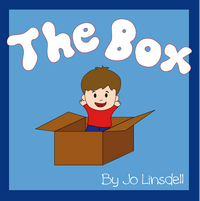
Grandpappy's Corner Logo with the Cover of The Box by Jo Linsdell

The Box

by Jo Linsdell

DETAILS:
Publication Date: March 14, 2024
Format: PDF
Length: 44 pg.
Read Date: November 13, 2024

What’s The Box About?

This is a glimpse into some of the many ways a boy uses a box to play. His imagination fuels his useage and we get a little glimpse into what he sees—like pirate ships or caves—that box becoming.

Let’s Talk about the Art for a Minute

This is just cute. That’s all there is to say.

I really liked the way that Linsdell superimposed a drawing of whatever it is the boy is imagining (e.g., a robot or treasure chest) on top of the box.

How is it to Read Aloud?

It’s pretty straightforward, the text is really about getting the child you’re reading to to pay attention to the pictures and get their imagination going.

There’s a refrain repeated throughout. Initially, I thought Linsdell overused it. But then I realized it would function as a line that a child would pick up on and chant along with whoever’s reading it. It’s also the kind of phrase that you and/or the kid could use during play as well. So, whatever reflex I had about the frequency was off.

So, what did I think about The Box?

Anyone who’s had—or known—a small child (or a cat), knows that for certain ages a cardboard box is far more entertaining than the toy inside. This little book is a good reminder of that time (for us older readers), and either an encouragement for younger readers to do similar things—or to be reassured that they’re not alone in using boxes for many, many ends.

It’s a cute read, it’s a quick one—one of those books that the pictures and the ideas within are far more important than the story or text.

It’s worth your time, and I bet it’ll make a fan of younger readers.

Disclaimer: I received a copy of this book from the author for this Tour.


3 Stars

Grandpappy Icon

BOOK SPOTLIGHT: The Box by Jo Linsdell

Welcome to today’s Tour Stop for Jo Linsdell’s children’s book, The Box. We’ll visit it in Grandpappy’s Corner here in a little bit, but for now, let’s learn a little about it.

Book Details:

Title: The Box by Jo Linsdell
Format: Kindle/Trade Paperback
Length: 44 pg.
US Publication Date: March 15, 2014
Cover of The Box by Jo Linsdell

About the Book:

A Fight for Lost Innocence
“Because a box is just a box, except when it’s not.”

Join in the creative fun as a little boy explains why his box is his favourite toy.

Book Links:

Print:

Amazon US ~ Amazon UK ~ CreateSpace

Kindle:

Amazon US ~ Amazon UK ~ Amazon CA

Goodreads

About the Author:

Jo LinsdellJo Linsdell is a best selling author and illustrator and internationally recognized marketing expert. To find out more about Jo and her projects visit her website www.JoLinsdell.com.

Author Links:

Facebook ~ Twitter ~ LinkedIn ~ YouTube ~ Goodreads ~ Amazon ~ Website

WWW Wednesday—November 13, 2024

Every title in this post is one that I own. That doesn’t happen too often–it’s rather nice to have a bunch of things to decrease Mt. TBR all together like this.

This meme was formerly hosted by MizB at A Daily Rhythm and revived on Taking on a World of Words—and shown to me by Aurore-Anne-Chehoke at Diary-of-a-black-city-girl.

The Three Ws are:
What are you currently reading?
What did you recently finish reading?
What do you think you’ll read next?

Seems easy enough, right? Let’s take a peek at this week’s answers:

What are you currently reading?

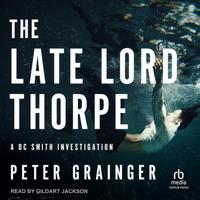
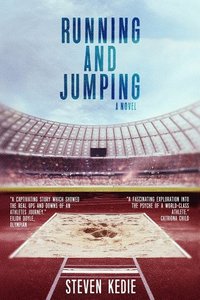
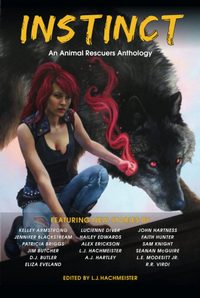
Cover of Instinct by L. J. Hachmeister Cover of Running and Jumping by Steven Kedie Cover of The Late Lord Thorpe by Peter Grainger
Instinct: An Animal Rescuers Anthology
edited by L. J. Hachmeister
Running and Jumping
by Steven Kedie
The Late Lord Thorpe
by Peter Grainger, read by Gildart Jackson

I need some shorter reads that I can dip into here and there, so what better time to finally get around to this collection? Urban Fantasy stories starring some of my favorite fictional animals–how have I not read this yet?

And yeah, I decided to squeeze in another title before Kedie’s work, but I am getting this read now.

I’m still working through The Late Lord Thorpe–my job has been actively working against me listening to it a lot over the last few days (and will continue to do so through the end of the week), so I have no idea how long it will be before David Smith and his creator show me how wrong I was last week.

What did you recently finish reading?

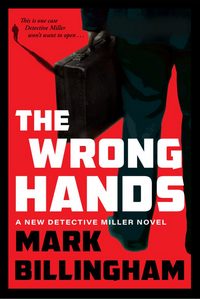
Cover of The Wrong Hands by Mark Billingham
The Wrong Hands
by Mark Billingham

I think DS Miller’s first adventure was a bit more on the amusing side–but this second book is so good that I didn’t care. This was a really compelling and twisty read.

What do you think you’ll read next?

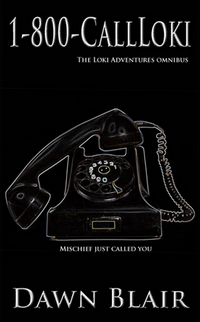
Cover of 1-800-CallLoki by Dawn Bird
1-800-CallLoki (The Loki Adventures Omnibus)
by Dawn Blair

This omnibus has been sitting near the top of my TBR for too long, it’s time to knock it out.

Given how long the new Grainger is taking me, and library due dates coming up, I honestly have no idea what my next audiobook will be (yes, the audiobook of What You Are Looking for Is in the Library had to be returned unlistened…the amount of work I’m putting into listening to this is outweighing my expectations, but at this point, it’s the principle of the thing)

What authors and titles have caught your attention lately?

The Ballad of Bonaduke—Episode 59: Guilt by R. T. Slaywood: Meal, Interrupted

Cover Image for The Ballad of Bonaduke by RT SlaywoodThe Ballad of Bonaduke—
Episode 59: Guilt

by R.T. Slaywood

DETAILS:
Series: The Ballad of Bonaduke, #59
Format: Kindle Vella Story
Read Date: November 12, 2024

The Story So Far…

A drunken Michael Bonaduke decides to use a grift (with maybe some sort of magic/magic-like “help”) to win on a scratch-off lottery ticket so he has money to buy more to drink. He pulls off whatever he did, gets his money and some booze and stumbles off into the darkness to drink himself into oblivion so he can start again the next day. He’s hit by dark memories (probably what’s driving him to the drinking) of fire, pleading, and screaming. There’s going to be a price to pay for his grift, and he’s trying to be ready.

He’s abducted by some representatives of a mysterious group who subject him to a test—if he passes, everything will be explained to him (and hopefully the reader, too). He passes—and is brought somewhere for answers, or maybe training, or maybe another test. Time will tell (or things are going to get really annoying). Answers aren’t quick to come—but the mysteries and questions keep piling up.

Things get hairy and Bonaduke leaves and finds himself back in the neighborhood he started from. He takes refuge in a homeless encampment shortly before a police raid. He’s apprehended and finds himself an interrogation room and shortly escapes after using his grift (but with results he didn’t quite intend). He finds himself by a group of squatters who seem to have strapped a woman to a chair for reasons that can’t be good. He attempts to rescue her before he even realizes what he’s doing, and seems to have succeeded—well, the two of them got away from the group anyway—breathing but bruised. They make their way to a fast-food taco joint and Bonaduke really needs to refuel to keep going. He tries, but fails to get food because he keeps passing out. Thankfully, the clerk is the same guy from the liquor store and he both recognizes him and gives him first aid. The woman (Zero) wakes up and shows some abilities of her on as she helps them escape from her captors who’ve tracked her down. One thing leads to another—Zero and Bonaduke’s magics don’t mix well (at least until they understand what each other can do?), and they end up in a video-game race against the squatters in a tricked-out version of Eric (the clerk’s) car. Note, I said video-game race, not a video-game-style race. They’re actually in one. When dumped back into reality, he’s surrounded by bruised and broken bodies (of people and cars). And then he gets into a supernatural fight and survives…just.

Or maybe not. But he gets better. And then his new…friends? Acquaintances? People who keep popping up in his life?…start explaining exactly what’s going on to him while they set up a new HQ and try to teach him about his abilities (and everyone tries to understand them) while they try to fund their further work. This plan doesn’t go so well, they end up stealing a book that contains (for lack of a better word) a malignant presence (something like a demon or nasty djinn), and things have gone really poorly since then. It’s almost like they’ve been cursed.

Bonaduke gets fed up with his little groups plans and aims–deciding his own goals deserve attention and effort–he’s also not so sure about theirs. So, he heads back to the city.

What’s Guilt About?

He doesn’t get too far after his dramatic departure before he stops to fuel up at a fast food joint (and to get warmed up, it’s chilly outside). Inside, the clerk starts to think she recognizes him–and he can tell that Om has influenced her perceptions. Bonaduke is torn–does he help her get through this, to help her step through into reality, or does he leave her as she is?

Just as he’s about to decide, he’s interrupted.

So, what did I think about Guilt?

Eh…it’s okay. I should’ve expected that after the ending of the previous episode that this was going to be primarily about a transition. Not much happened–which is fine, and Bonaduke’s dilemma was a nice note.

This is one of those things I wouldn’t give thought to if this were a novel, I’d just keep going and appreciate (if I really paid it any attention), but in a full installment I want a bit more bang for my time.


3 Stars

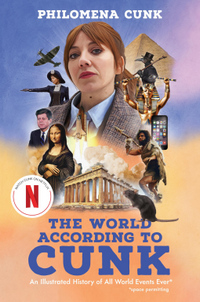
The World According to Cunk by Philomena Cunk: The Story of the World (abbreviated and only accidentally accurate)

Cover of The World According to Cunk by Philomena CunkThe World According to Cunk:
An Illustrated History of All World Events Ever*
*Space Permitting

by Philomena Cunk

DETAILS:
Publisher: Grand Central Publishing
Publication Date: November 19, 2024
Format: eARC
Length: 256 pg.
Read Date: November 2-5, 2024
Buy from Bookshop.org Support Indie Bookstores

This Was Harder to Write than I Expected

There was a part of me that wanted to just do a light edit of my post about Cunk on Everything: The Encyclopedia Philomena and call it good. But that seemed like cheating. But there are giant parts of it that would work.

Still, I’m borrowing a little here and there from it, just so I don’t have to re-invent the wheel. I apologize in advance if you don’t appreciate that. Also, let this section serve as an all-purpose footnote so no one accuses me of plagiarism.

What’s The World According to Cunk About?

It’s a history of the world, as much of one as Cunk can fit into 50,000 words with minimal research, anyway. The point is to get it out in time for the holiday season—targeted toward the UK and the US, so it’ll predominantly be about the history of that/those cultures, while remaining the sort of history book that recognizes that things happen in parts of the world that aren’t dominated by Western Culture.

Also, we’re told, that she’s taking the innovative approach to history and will be writing chronologically, not alphabetically or by some other standard. Whodathunk it? History in order. I tell you, what this Philomena Cunk is a gutsy maverick.

If you’ve watched YouTube videos, Instagram reels, or any of the other quick ways we share videos online (with or without copyright infringement), or if you’ve seen any of the various series/specials on Netflix or British TV networks that I can’t remember the names of, you know what you’re getting into with Philomena Cunk. If you haven’t, well, that’s trickier. It means you’re a reader or something rare like that—Cunk is a fictional documentarian (or at least the presenter of them). her approach to the documentary specials or the history in this book are a combination of naïveté, misunderstandings (especially in mispronunciation/misspellings), and cynicism.

Miscellaneous Observations

Doing a deep dive on this would be difficult for two reasons—I read an ARC, so I don’t want to quote anything (also, it would be very hard to know when to stop. Ask my wife, after you read the end). The second, and primary reason, is that if I talk too much about things, it’ll ruin the jokes for you when you read this (and you really should)

In lieu of that, here are some miscellaneous observations:
bullet Every time Cunk looks at non-English speaking cultures was a win.
bullet You’d think that there are only so many jokes you can make about “the Dark Ages” involving the absence of luminescence—and that few of them would be funny. And you’d be wrong on both counts.
bullet Best WWI humor since Black Adder Goes Forth. I don’t know that there’s a lot of competition there, but Cunk nailed that material.
bullet The technology jokes landed every time.
bullet I’m still chuckling at the phrasing for Caesar’s cause of death
bullet You are going to hear Diane Morgan’s deadpan delivery in your head whether you read this or get the audiobook. Just know that going in. (you likely assumed it that already, so know that you’re right).

It Did Falter a Bit

The last chapter, “The Global Globe” started off strong, but as the history got more and more current, the humor changed. Maybe it’s that Cunk’s particular brand of absurdity requires some distance to really work. However you explain it, this just didn’t work for me.

Now, was it funny political humor? Satisfying satire? Yes—I truly appreciated almost all of it. It just didn’t feel very Cunk-like. I couldn’t “hear” Diane Morgan’s voice. If it’d been in another book, I’d have really liked the end of this last chapter. But here? It just felt out of place.

So, what did I think about The World According to Cunk?

I didn’t see (but maybe overlooked) the writers behind this book listed anywhere—but whoever they were, they deserve a round of applause. Or two.

I chuckled and laughed out loud a lot while reading this. There’s really not much more to say—that’s what they were going for.

My wife doesn’t get the appeal of Philomena, I don’t know why, I think it’s undeniable and obvious. So I really annoyed her by reading lines or paragraphs to my daughter while the three of us were in the same room. Sometimes, I had a stockpile of parts my daughter would like from reading when we weren’t in the same room. My kid and I had a lot of fun laughing together at this while my wife just looked at us strangely. I don’t share this to give you more insight into our fun little family dynamic—but to say that at least once (maybe three times, but Mrs. Reader denies this) even she laughed.

Seriously, up to the end of the last chapter, this was about as fun as you could want. Since I discovered Dave Barry Slept Here decades ago, I’ve been a sucker for history comedy—and The World According to Cunk by Philomena Cunk is a great entry in that category. (you might want to skip most of what happens after 1980).


4 Stars

Disclaimer: I received this eARC from Grand Central Publishing via NetGalley in exchange for this post—thanks to both for this.

This post contains an affiliate link. If you purchase from it, I will get a small commission at no additional cost to you. As always, the opinions expressed are my own.
Irresponsible Reader Pilcrow Icon

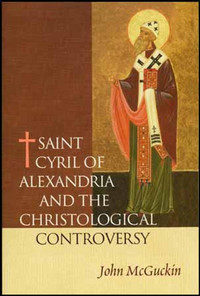
Saint Cyril of Alexandria and the Christological Controversy by John McGuckin: More Than You Thought You Wanted to Know about the Nestorian Controversy

Cover of Saint Cyril of Alexandria and the Christological Controversy by John McGuckinSaint Cyril of Alexandria and the Christological Controversy

by John McGuckin

DETAILS:
Publisher: St Vladimirs Seminary Press
Publication Date: January 1, 2004 
Format: Paperback
Length: 399 pg.
Read Date: September 1-November 3, 2024

What’s Saint Cyril of Alexandria and the Christological Controversy About?

I think if I tried to summarize this book, I’d either go on for paragraphs upon paragraphs or I’d miss something important, so I’m just going to borrow the summary on the Publisher’s site:

This important and compelling work describes the turmoil of fifth-century Christianity seeking to articulate its beliefs in the person of Christ. The policies of the Theodosian dynasty and the conflicting interests of the patriarchal sees are the context of the controversy between Nestorius of Constantinople and Cyril of Alexandria, a bitter dispute that racked the entire civilized world. The historical analysis expounds on the arguments of both sides, particularly the Christology of Cyril, which was adopted as a standard.

There are five chapters and I want to say a little about each.

Chapter One: The Context of the Ephesus Crisis

You’ve probably heard the popularized version—or the John Godfrey Saxe line about not wanting to know how the sausage is made when it comes to laws. Well, there’s a bit of truth there in theology, too. There’s a part of me that was better not knowing all the politicking, maneuvering, and PR work that went into the Nestorian Controversy. McGuckin gives us a lot of the run-up to the Ephesus Council, the convoluted way the Council got the job done—and how the various players got the Emporer to take the position he did following it.

It was interesting—and probably for someone who if better grounded in Orthodox history it was easy to follow (I didn’t find that)—but for me, it went on too long. Not only was it out of my comfort zone, I just didn’t find most of it that engaging or interesting. There were more than enough points that did pique my interest to keep me going—but I really had a hard time in this chapter.

Chapter Two: The Christology of Nestorius

McGuckin goes out of his way in this chapter to prove that he’s being (or at least attempting to be) fair to Nestorius. So much so that I was a little afraid that he was going to end up saying the differences between the two camps were overstated, and that they were closer than anyone (particularly those in the middle of the controversy) realized.

He didn’t go that far—and the next chapter demonstrates that very clearly—but he does show the root of the differences (which weren’t that great) and then how the differences were compounded and grew until Nestorious went too far.

Chapter Three: The Christology of Cyril

This chapter is the heart of the book and truly could’ve been published as a decent-sized volume by itself (maybe with Chapter Five to really make it worthwhile). McGuckin goes full Cyril fan-boy here—and it was great to see.

More importantly, he explained both the main and some of the minor points of Cyril’s Christology in depth. This was not easy reading, and I really had to think about some points—and read the occasional paragraph a few times to really get it (and I’d have to read them a few more before they’d get really ingrained).

I cannot say enough good things about this chapter, and I know I’ll be returning to it (and the last chapter) again—I’m not sure I’ll work through the rest again (just because it’s not something I really need to worth through). although I wouldn’t mind it. But these two chapters? Just gold.

Chapter Four: The Oecumenical Reception of Cyril’s Theology

This is a rather brief chapter recounting how Cyril’s teaching, largely through this conflict, affected the church immediately following him up through Chalcedon and the impact it had there. As much as I thought the first historical chapter could’ve used some trimming, I think this could’ve used a few more pages.

Chapter Five: Translated Texts

This is easily the most valuable part of the book—no disrespect to McGuckin’s analysis or recounting, but we get fifteen texts—homilies, letters, and theological writings from Cyril and Nestorius that show what both were saying—and there are a couple of appendices of other writings that play a role in the controversy.

It’s one thing to read a modern scholar’s take on these texts, it’s another to be able to read them for yourselves.

So, what did I think about Saint Cyril of Alexandria and the Christological Controversy?

Cyril’s language and preferred formulas were, as we have seen, sometimes responsible for causing more confusion than illumination in the camps of his opponents. Unlike Nestorius, however, his essential meaning always tended to emerge clearly enough from the discursive flow of his text, and so, while he cannot justly be called a confused thinker, at times he can be rightly accused of being a diffuse and discursive theologian… It would, nonetheless, be truer to conclude that it was only Cyril who possessed the moral and intellectual authority to bring matters to a head, at precisely the necessary time, by stating the issues so forcefully and so brilliantly.

When all is said and done, for the mystical and moral power his icon of Christ bears, for the profundity of his christian sense, the power of his intellect, and the unfailing purity of his literary purpose, then surely all his faults are diminished in significance.

His greatness cannot be denied.

All in all, this was a great book. It could’ve been a bit more engaging (especially in the first chapter), it could’ve been a little easier for Western laity to get into (not that we’re the audience). But those issues pale in comparison to the really good analysis, summarizing, and showing how it all plays out and is still relevant to the Church (Eastern and Western) today.

A lot of what McGuckin says about the patristic approach to exegesis here, and the characterization of Western and Eastern approaches to theology were interesting and thought-provoking—and on the whole very valuable. In fact, I wrote almost a few more notes about things like that—asides to the main controversy, than I did about the controversy. It was very helpful.

I really don’t have that much to say—it’s not an easy read, there are portions that we didn’t need (well, I didn’t need), but it’s worth the effort. I’m so glad that I read this and got this level of insight and understanding into this vital period of Church History. If you give it a shot, I imagine that you will almost certainly agree.


4 Stars

Irresponsible Reader Pilcrow Icon

Saturday Miscellany—11/9/24

Odds ‘n ends about books and reading that caught my eye this week. You’ve probably seen some/most/all of them, but just in case:
bullet Who’s Really Writing Celebrity Novels? The writers and agents working behind the scenes tell us how it actually works.
bullet Ranking 40 Popular Books That Are Actually Badly Written—this click-baity list is something largely to read to scoff at or argue with.
bullet The Book News is Generally… Good?—after those two stories and all the ick of the last couple of weeks, who couldn’t use a little bit of good news (no matter what you may think of Tuesday’s results, it’s hard to deny that things have been rather nasty lately).
bullet Dorothy Parker and the Art of the Literary Takedown: Her reviews are not contemptuous, a common pitfall for her imitators. They are simply unbridled in their dislike.—Okay, fine, if you’re going to be negative, do it like the Master. (I read so many people today that need to do this)
bullet The Novel and the Dictator: On the Man Who Criticized Stalin Yet Lived—I’m really glad that I discovered Nadya Williams this year.
bullet IYKYK: When Novels Speak a Language Only Part of the Internet Gets
bullet Out of This World: Books to Read When You Need an Escape—Just in case anyone is interested in that sort of thing…
bullet Comfort Reads: Feel-good Fiction for Rough Days—continuining the theme, Jodie has some great choices
bullet Let’s Talk About Book Boyfriends—a.k.a. Fictophilia (my weakness is for Book Dogs/Pets, but I get it…)
bullet September & October 2024 Community Posts!—Dini has collected some great posts can be found here.

To help talk about backlist titles (and just for fun), What Was I Talking About 10 Years Ago Week?
bullet The Blood of Olympus by Rick Riordan
bullet The Infinite Sea by Rick Yancey
bullet Sleepy Hollow: Children of the Revolution by Keith R.A. DeCandido
bullet The Burning Room by Michael Connelly, So, Anyway… by John Cleese, Harry Harrison! Harry Harrison! by Harry Harrison, and Texts from Jane Eyre by Mallory Ortberg. (it’s been that long for the Ortberg?)

This Week’s New Releases that I’m Excited About and/or You’ll Probably See Here Soon:
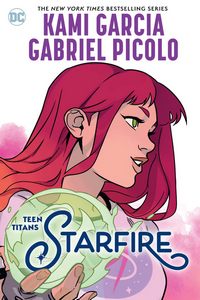
bullet Teen Titans: Starfire by Kami Garcia, Gabriel Picolo (Illustrator)—My only real gripe with this series is the release timetable, so I’m really eager to dive in to see their take on Kory Anders.

There is a time and place for books. In my hands and now.

Page 68 of 602

Powered by WordPress & Theme by Anders Norén