Saturday Miscellany—12/7/24

This week’s offering seems a bit more hodge-podgey than the last few, which I appreciate. It also feels a little LitHub heavy, but, eh. I’m not sure I care.

Also, I’m not going to bother talking about the Goodreads Reader’s Choice results…I can’t bother finding the energy (if I stumble on something interesting by someone next week, I’ll post it, but I’m not going looking). If anyone has a hot (or room-temperature) take on them, sound off in the comments.

Odds ‘n ends about books and reading that caught my eye this week. You’ve probably seen some/most/all of them, but just in case:
bullet A Refuge for the Soul: How to Build a Library, According to Montaigne—maybe not achievable/practical, but some great ideas
bullet How Gen Z Came to See Books as a Waste of Time
bullet Does Teaching Literature and Writing Have a Future?—”The prospects are a little grim, but they aren’t nonexistent.”
bullet Olympus Agonistes: When, if ever, did people stop believing in the Greek gods?
bullet I Don’t Want to Read Anymore: Am I the Literary A**hole? —I rarely post links to these, but I enjoy every one of these columns I read. I thought the 2nd and 3rd letters were worth sharing.
bullet “The very worst of human nature is often hidden in plain sight”—Rob Parker talks about his upcoming release (that I’m hoping to find a US release date for)
bullet Speaking of upcoming releases…So I wrote another book… —Noelle Holten has some good news (even for us Yankees)
bullet Wayward Children Vol. 1 – Illustrated Deluxe Omnibus—Kickstarter launched this week. It’s too rich for my blood, but it looks gorgeous for those who have the means.
bullet Quiz: Can You Identify These Detectives’ Thoughts on Christmas?—I was 1 for 5 on this (and didn’t get the 1 I should’ve)
bullet W Series I – Jordan Loyal Short – Dragon Reich—1. This looks like a cool book. 2. I wished I’d come up with this series idea.
bullet Are You an Author Completionist?—I’m almost one. But I do get a little picky when it comes to some genres.
bullet Books Inspired by Narnia! Portal Fantasies, Allegories and Coming of Age Stories!—who doesn’t like a Narnia-ish read?

It’s the Time of Year for Gift Guides/Best of Lists like these:
bullet The Atlantic 10—The books that made us think the most this year
bullet AudioFile’s Best Audiobooks of 2024
bullet Lit Hub’s 38 Favorite Books of 2024—I have one of these on my shelves waiting.

A Book-ish Related Podcast episode (or two) you might want to give a listen to:
bullet Dripping Bucket In The Business of Grimdark – with guest Beth Tabler—I haven’t watched this yet, but it looks like a good ‘un.

To help talk about backlist titles (and just for fun), What Was I Talking About 10 Years Ago Week?
bullet The Job by Janet Evanovich and Lee Goldberg
bullet And I mentioned the release of Bryant and May and the Bleeding Heart by Christopher Fowler, a series I really intended on sticking with, but lost my way on.

This Week’s New Releases that I’m Excited About and/or You’ll Probably See Here Soon:
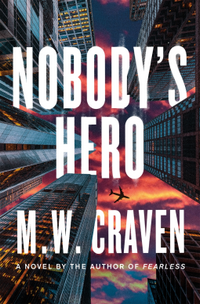
bullet Nobody’s Hero by M. W. Craven—Ben Koenig’s back and is dealing with a team of assassins, a worst-case scenario that might be playing out, and one of the cleverest schemes he’s come across. I tried to express my excitement about this recently.
bullet Little Love Songs by Sandra Boynton—sounds cute as all get out, I’m a little worried about the psycholoical torture that the “push button to hear music” feature can bring on adults living with a child (or older siblings). Still, probably worth the risk.

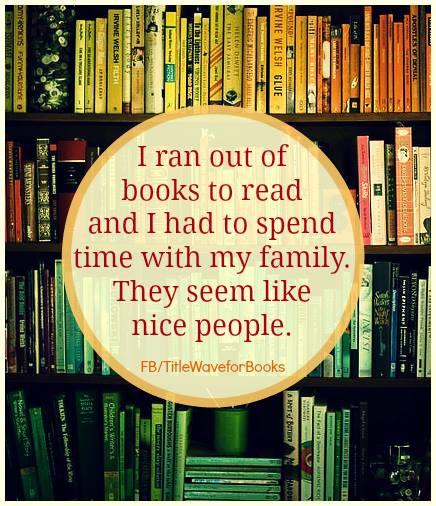
The text 'I ran out of books to read and I had to spend time with my family. They seem like nice people.' superimposed on a picture of packed bookshelves.

The Ballad of Bonaduke—Episode 61: Chains by R. T. Slaywood: A Negotiation

Cover Image for The Ballad of Bonaduke by RT SlaywoodThe Ballad of Bonaduke—
Episode 61: Chains

by R.T. Slaywood

DETAILS:
Series: The Ballad of Bonaduke, #61
Format: Kindle Vella Story
Read Date: Decemeber 6 2024

The Story So Far…

A drunken Michael Bonaduke decides to use a grift (with maybe some sort of magic/magic-like “help”) to win on a scratch-off lottery ticket so he has money to buy more to drink. He pulls off whatever he did, gets his money and some booze and stumbles off into the darkness to drink himself into oblivion so he can start again the next day. He’s hit by dark memories (probably what’s driving him to the drinking) of fire, pleading, and screaming. There’s going to be a price to pay for his grift, and he’s trying to be ready.

He’s abducted by some representatives of a mysterious group who subject him to a test—if he passes, everything will be explained to him (and hopefully the reader, too). He passes—and is brought somewhere for answers, or maybe training, or maybe another test. Time will tell (or things are going to get really annoying). Answers aren’t quick to come—but the mysteries and questions keep piling up.

Things get hairy and Bonaduke leaves and finds himself back in the neighborhood he started from. He takes refuge in a homeless encampment shortly before a police raid. He’s apprehended and finds himself an interrogation room and shortly escapes after using his grift (but with results he didn’t quite intend). He finds himself by a group of squatters who seem to have strapped a woman to a chair for reasons that can’t be good. He attempts to rescue her before he even realizes what he’s doing, and seems to have succeeded—well, the two of them got away from the group anyway—breathing but bruised. They make their way to a fast-food taco joint and Bonaduke really needs to refuel to keep going. He tries, but fails to get food because he keeps passing out. Thankfully, the clerk is the same guy from the liquor store and he both recognizes him and gives him first aid. The woman (Zero) wakes up and shows some abilities of her on as she helps them escape from her captors who’ve tracked her down. One thing leads to another—Zero and Bonaduke’s magics don’t mix well (at least until they understand what each other can do?), and they end up in a video-game race against the squatters in a tricked-out version of Eric (the clerk’s) car. Note, I said video-game race, not a video-game-style race. They’re actually in one. When dumped back into reality, he’s surrounded by bruised and broken bodies (of people and cars). And then he gets into a supernatural fight and survives…just.

Or maybe not. But he gets better. And then his new…friends? Acquaintances? People who keep popping up in his life?…start explaining exactly what’s going on to him while they set up a new HQ and try to teach him about his abilities (and everyone tries to understand them) while they try to fund their further work. This plan doesn’t go so well, they end up stealing a book that contains (for lack of a better word) a malignant presence (something like a demon or nasty djinn), and things have gone really poorly since then. It’s almost like they’ve been cursed.

Bonaduke gets fed up with his little groups plans and aims–deciding his own goals deserve attention and effort–he’s also not so sure about theirs. So, he heads back to the city.

What’s Chains About?

Using Keys’, well, key. Bonaduke gets some of his memories back and demands his sister-in-law gives him some answers. This is cut short by the gentleman who was with her in the last episode–he traps Bonaduke and we learn a little bit about what started the whole series. Along the way, an unlikely advocate for Bonaduke shows up and, while I won’t say a bad situation is made worse, it’s sure not made much better.

So, what did I think about Chains?

I don’t know, honestly. What we learned–or started to learn–was interesting, but the rest of it…I dunno. It felt…I dunno. It’s either too simple for Bonaduke to get out of this, or it’s going to get stretched out to a pointless extent. I’m really going to have to wait until the next episode or two to decide.


3 Stars

PUB DAY SPOTLIGHT: Sizar by Susan Grossey

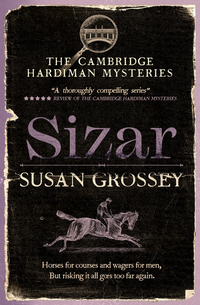
So I didn’t have time to get a full post up about this book (it will be positive!), but I didn’t want to let Publication Day go by without saying something. So here’s a little spotlight about this second in the cambridge Hardiman Mysteries.

Book Details:

Title: Sizar by Susan Grossey
Format: Kindle/Paperback
Length: 291 pg.
US Publication Date: December 5, 2024
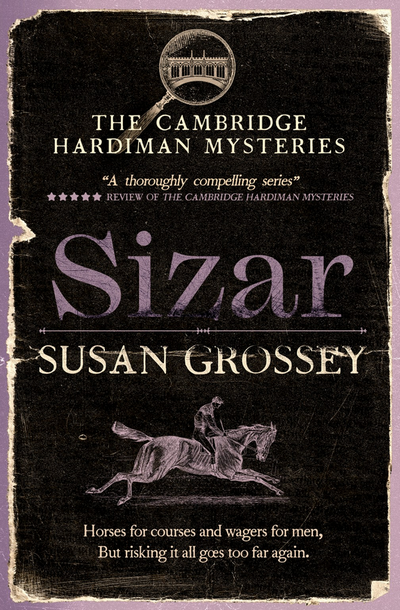
Cover of Sizar by Suan Grossey

About the Book:

In Cambridge in the late Regency, Gregory Hardiman is learning the ropes as a university constable. But his quiet life is about to be disrupted by the gentlemanly sport of horse-racing and the lengths people will go to to win…

In the spring of 1826, ex-soldier Gregory Hardiman is settling in to civilian life as an ostler and university constable in Cambridge. When an undergraduate is found hanged in his rooms at St Clement’s College, the Master asks Gregory to find out what could have driven the seemingly happy young man to take such a drastic step. A second death at the same college suggests something altogether more sinister, and Gregory sets out to discover whether a love of illegal gambling on horse races could lie at the heart of the tragedies.

In the second of the Cambridge Hardiman Mysteries, Gregory finds himself on shifting sands – torn between family ties in Spain and the possibility of new affections in Cambridge.

Book Links:

Apple Books ~ Amazon ~ Barnes & Noble ~ Bookshop.org

About the Author:

Susan GrosseyFor twenty-five years I ran my own anti-money laundering consultancy, which gave me almost limitless opportunity to write about my very favourite subject: money laundering. And the obsession with understanding the mechanics and motivations of financial crime has only grown. I have spent years haunting the streets of Regency London, in the company of magistrates’ constable Sam Plank. He is the narrator of my series of seven historical financial crime novels set in consecutive years in the 1820s – just before Victoria came to the throne, and in the policing period after the Bow Street Runners and before the Metropolitan Police. The fourth Sam Plank novel – “Portraits of Pretence” – was given the “Book of the Year 2017” award by influential book review website Discovering Diamonds. And the fifth – “Faith, Hope and Trickery” – was shortlisted for the Selfies Award 2019. My new series is the Cambridge Hardiman Mysteries, set in Cambridge in the 1820s and narrated by a university constable called Gregory Hardiman.

Author Links:

Facebook ~ Pinterest ~ Instagram ~ Website

PUB DAY SPOTLIGHT: Sizar by Susan Grossey

So I didn’t have time to get a full post up about this book (it will be positive!), but I didn’t want to let Publication Day go by without saying something. So here’s a little spotlight about this second in the cambridge Hardiman Mysteries.

Book Details:

Title: Sizar by Susan Grossey
Format: Kindle/Paperback
Length: 291 pg.
US Publication Date: December 5, 2024
Cover of Sizar by Suan Grossey

About the Book:

In Cambridge in the late Regency, Gregory Hardiman is learning the ropes as a university constable. But his quiet life is about to be disrupted by the gentlemanly sport of horse-racing and the lengths people will go to to win…

In the spring of 1826, ex-soldier Gregory Hardiman is settling in to civilian life as an ostler and university constable in Cambridge. When an undergraduate is found hanged in his rooms at St Clement’s College, the Master asks Gregory to find out what could have driven the seemingly happy young man to take such a drastic step. A second death at the same college suggests something altogether more sinister, and Gregory sets out to discover whether a love of illegal gambling on horse races could lie at the heart of the tragedies.

In the second of the Cambridge Hardiman Mysteries, Gregory finds himself on shifting sands – torn between family ties in Spain and the possibility of new affections in Cambridge.

Book Links:

Apple Books ~ Amazon ~ Barnes & Noble ~ Bookshop.org

About the Author:

Susan GrosseyFor twenty-five years I ran my own anti-money laundering consultancy, which gave me almost limitless opportunity to write about my very favourite subject: money laundering. And the obsession with understanding the mechanics and motivations of financial crime has only grown. I have spent years haunting the streets of Regency London, in the company of magistrates’ constable Sam Plank. He is the narrator of my series of seven historical financial crime novels set in consecutive years in the 1820s – just before Victoria came to the throne, and in the policing period after the Bow Street Runners and before the Metropolitan Police. The fourth Sam Plank novel – “Portraits of Pretence” – was given the “Book of the Year 2017” award by influential book review website Discovering Diamonds. And the fifth – “Faith, Hope and Trickery” – was shortlisted for the Selfies Award 2019. My new series is the Cambridge Hardiman Mysteries, set in Cambridge in the 1820s and narrated by a university constable called Gregory Hardiman.

Author Links:

Facebook ~ Pinterest ~ Instagram ~ Website

WWW Wednesday—December 3, 2024

It’s time for…

WWW Wednesdays Logo

This meme was formerly hosted by MizB at A Daily Rhythm and revived on Taking on a World of Words—and shown to me by Aurore-Anne-Chehoke at Diary-of-a-black-city-girl.

The Three Ws are:
What are you currently reading?
What did you recently finish reading?
What do you think you’ll read next?

Seems easy enough, right? Let’s take a peek at this week’s answers:

What are you currently reading?

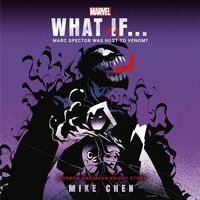
Cover of Robert B. Parker's Hot Property by Mike Lupica Cover of Marvel: What If . . . Marc Spector Was Host to Venom? by Mike Chen
Robert B. Parker’s Hot Property
by Mike Lupica
Marvel: What If . . . Marc Spector Was Host to Venom?
by Mike Chen, read by Keith Szarabajka, Xavier Casals

Lupica’s new Spenser novel is fantastically smooth–so hard to put down (my two-legged family members keep demanding it however, as does my employer. The four-legged family members are much more understanding).

There might be too many characters in this What If… book. Or too many voices in people’s heads. So you’ve Moon Knights from two different realities, so you’ve got a Khonshu, 2 Marc Spectors, 2 Steven Grants, 2 Jake Lockleys, one Venom–and someone else, too. Sure, 1 Spector, 1 Grant and 1 Lockely are off-screen for most of the book (not all of them from the same physical entity). But it’s really hard to keep track of things at the beginning. I’m far enough in that I’ve got a handle on it, but I tell you, it took longer than it should’ve. Still, it’s not bad.

What did you recently finish reading?

Cover of Sizar by Susan Grossey Cover of Enough Rope by Dorothy Parker Cover of The Faculty Lounge by Jennifer Mathieu
Sizar
by Susan Grossey
Enough Rope
by Dorothy Parker
The Faculty Lounge
by Jennifer Mathieu, read by Lisa Flanagan

Sizar was a satisfying second adventure for this new series–I’m hoping to have more to say soon.

Enough Rope has some of my favorite Parker poems–and a few that could turn into some when I re-read them. A nice little diversion.

I wasn’t wowed by The Faculty Lounge, but I am glad a listened to it. I will hopefully have something more to say, soon (but not as soon as Sizar).

What do you think you’ll read next?

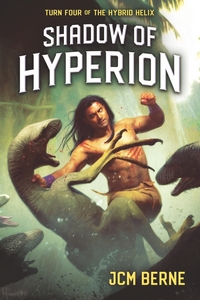
Cover of Shadow of Hyperion by JCM Berne What You Are Looking for Is in the Library by Michiko Aoyama
Shadow of Hyperion
by JCM Berne
What You Are Looking for Is in the Library
by Michiko Aoyama, read by Hanako Footman, Susan Momoko Hingley, Kenichiro Thomson, Winson Ting, and Shiro Kawai

I’ve heard plenty of good things about Shadow of Hyperion, and if nothing else, am eager to see how Rohan ends up in the physical state he was in for the Christmas story last year. Well, probably not eager. Very curious.

I’m almost certain to be underwhelmed by What You Are Looking for Is in the Library. But I’ve put too much effort into getting this book to not listen. I should get to start tomorrow afternoon.

Are you spending December scrambling to meet any goals, using books to think about some place that’s warmer? Or just reading something that looks good?

PUB DAY REPOST: Nobody’s Hero by MW Craven: More Shockingly Violent Events in Koenig’s Increasingly Violent Life

Cover of Nobody's Hero by MW CravenNobody’s Hero

by M.W. Craven

DETAILS:
Series: Ben Koenig, #2
Publisher: Flatiron Books
Publication Date: December 3, 2024
Format: eARC
Length: 416 pg.
Read Date: November 1-4, 2024
Buy from Bookshop.org Support Indie Bookstores

What’s Nobody’s Hero About?

A decade ago, Ben Koenig helped a woman disappear—and to do so in a way that even he (who knew more than anyone else in the world about it) wouldn’t be able to track her. But now, she’s surfaced—as someone responsible for a couple of brazen murders on the streets of London. He and his watcher/minder/handler Jen Draper are tasked with finding her and finding out what made her come into the open.

It takes all of their creative approaches to investigating—and Draper’s security firm’s extensive resources—plus a little luck to get on the path. But will they survive it?

Standing in their was is a team of assassins, criminal police officers, smugglers of various stripes, petty criminals—and bigger ones—and schemes that are truly chilling. Their strengths? The aforementioned creativity and extensive resources, some assistance from a certain Agency, their shared drive, Koenig’s lack of fear, his strange humor and odd trivia.

Obviously, the bad guys are in for trouble.

A Daring Move

Far too often when someone/some group in a novel has a completely innovative, genius, unbelievably original idea, it really isn’t. At best they’re usually clever, but nowhere near as mind-blowing as characters act. Too often, I think authors would be better off alluding to a plan without giving us all the details, and readers have to suspend disbelief to keep going.

For a while, I was worried that Craven had bitten off more than he could chew in revealing all that he did—when it was all shadows, I was really invested. But as the book progressed and we got more and more details about the scheme afoot, the more I realized that this was one of those exceptions that proved the rule. There’s some really ingenious stuff going on here.

I should’ve trusted the mind that brought us The Botanist (as only one example).

Can I promise that every reader is going to have their mind boggled by this? No. But even the cynics or the people who suss it out before the reveal are going to admit that this is atypically clever, and you can absolutely understand why Koenig and Draper have such difficulty with this—and are willing to risk so much to stop it.

The Title

I’m not going to get into it now, but I can imagine that more than one book club is going to spend some fun time speculating about/arguing over who the title is referring to.

I mean, I’ve spent some time speculating about it and arguing with myself over the identity. I figure Craven has multiple characters in mind, actually, rather than just one. But I’m prepared to be wrong about that.

Caveat Lector, or, the Fight Scenes

If you’re like me, and decided at one point or another to not have a meal while watching Bones, at least until the (first) body is taken back to the Lab (the CSIs may have driven viewers to a similar choice), you’re going to want to take a similar approach to the fight scenes in this book. That’s actually an excess of caution, you’re really only going to need it for some. But better be safe than sorry—really.

Now, once you put the meatball sub aside, these fight scenes are really well-written. I think they’re better than those in Fearless. Craven brings the goods in the technical sense/ability to depict things clearly, the impact on the plot, and the overall entertainment value.

So, what did I think about Nobody’s Hero?

This is really one of those books best discussed among people who’ve read it—most of the glowing things I want to say would reveal too much—and you don’t have to read too much of Craven’s work to know it’d be a bad idea to cross him. So what can I say?

Let’s start with this—between Fearless and Nobody’s Hero I read a couple of thrillers with a one-man Army in the Reacher/Koenig/Ash/Ryan/Orphan X etc. mold that soured me on the whole thing, so I started this with a little trepidation. Also, I didn’t know how he’d follow up Fearless and feared a little sophomore slump. It took me very little time to cast all that aside and just have a blast with this—I’m back to my appreciation of the genre, and I don’t know if Craven has the word “slump” in his vocabulary.

Ben Koenig is one of those characters that I hope to spend a lot of time with, there’s just something about him that I really like. It was good to see Jen Draper in action and to see the shift in the relationship between these two from where it was in Fearless and the beginning of this book to the end. They’re a good team.

I don’t know where to put this, but I need to say that between what we see in Nobody’s Hero and some of the Poe series, I really have to wonder what kind of drinking establishments Craven frequents (or I hope, for his sake, used to frequent).

One of the assassins has a…let’s put it generously and vaguely…a quirk. It feels like the kind of thing that Craven stumbled upon at some point in the last 15 years and said, “I need to put this in a book some day.” I’m very glad it did—I’m not convinced that a hitman could become a success with that quirk, really. But Craven uses it so well, that I’m not going to complain. I really enjoyed the way it paid off.

We didn’t get a monologue at the end by an evil mastermind, which still happens even after being made a cliché decades ago—it wasn’t necessary, and what we got instead was so entertaining. It was truly a great change from what was expected.

I don’t know that we need that last reveal—nor does the series—but, I look forward to Craven coming back to it in the future (however far away that future may or may not be).

Action, snark, and some really great twists. There’s a momentum to this that builds and builds and builds as the tension ratchets up in a way that shows you’re in the hands of a Thriller Master. Sure, every decent thriller has that characteristic. But anyone who’s read a couple of thrillers knows the difference between standard-issue momentum and tension and something special. This is the latter, and it ain’t even close.

Do you need to read Fearless before this? No. Will it help a little? Not much, but yes. The important thing is that you read both of them. You won’t want to put it down once you pick it up.

Long live Ben Koenig.

Disclaimer: I received this eARC from Flatiron Books via NetGalley in exchange for this post—thanks to both for this.


4 1/2 Stars

This post contains an affiliate link. If you purchase from it, I will get a small commission at no additional cost to you. As always, the opinions expressed are my own.
Irresponsible Reader Pilcrow Icon

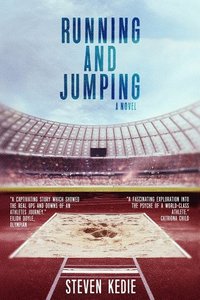
Running and Jumping by Steven Kedie: The Problem with Flying

Cover of Running and Jumping by Steven KedieRunning and Jumping

by Steven Kedie

DETAILS:
Publisher: Wire Books
Publication Date: July 17, 2024
Format: eBook
Length: 352 pg.
Read Date: November 14-20, 2024 
Buy from Bookshop.org Support Indie Bookstores

What’s Running and Jumping About?

For a brief time, Adam Lowe was going to get the bronze in the Long Jump at his first Olympic Games—the 2008 Games in Beijing. But an American, Chris Madison, ends up beating him by 1 centimeter. Leaving Adam with the worst place to be—the guy just off the podium.

This sets Adam and his coach off on a mission—a detailed training schedule to get to the next two Olympic games—starting with the London games. For Adam, representing his country in the capitol is more than a dream come true. It’s his destiny. Or at least that’s what he’s going to make his destiny.

Sacrifice

We frequently think of the sacrifices an elite athlete has to make to get to that level—and sometimes we’ll even think of what their parents give up.

But what about their siblings? Can you imagine what it must be like having a brother who overshadows everything you do in life (as proud as you may be of them)? Well, we get a little idea here.

And the friends—girlfriends, wives, etc.—forget it. How would you feel to have a best man who won’t drink, who goes to sleep early, and who needs to go out of the country to compete the weekend of your stag night? And that’s when he’s even paying attention to you instead of training.

Then there’s Adam’s sacrifices—being that kind of brother, having to prioritize his career over friends, family, love—because if he takes just a little bit too long off, takes that one drink, loses focus for a moment—it can put an entire year’s work at risk, and the domino effect of that could jeopardize your next Olympics.

Obsession

And that gives you an idea of the way that Adam has to obsess over things—over everything it seems.

Now, I read a lot of Crime Fiction—which is filled with detectives (police, or private), or people who act like them, who are driven to find a certain killer—or all killers they come across. And on the other side of the law, you get those who are driven to fulfill some strange goal/mission, checklist of people who’ve wronged them, or something. Basically, Crime Fiction is filled with driven, ambitious, obsessed (or nearly so) characters. Very few of these can hold a candle to Adam Lowe (and some other athletes we meet, and we seemingly are supposed to generalize to every Olympian).

The focus he demands of himself—and the lengths he goes to in order to maintain it—might be more impressive than the physical accomplishments.

So, what did I think about Running and Jumping?

I’ve said it before, I’ll undoubtedly say it again—I’m not a sports guy. But a good sports novel? (or movie/TV show—Go, East Dillon Lions!). I’m totally game for that.

Still, I wouldn’t have figured that long jumping would be a great focus. Sure, you’re competing against others, but it’s not head-to-head. There’s none of the inherent drama of looking someone in the eyes at the beginning of a play, or seeing someone off to the side in your peripheral vision, etc.

But Kedie made the right choice—he is able to get the tension just right, to get you on the edge of your seat. Yes, it’s largely a competition with only yourself on the field (as much as your scores are compared to someone else)—but really, who’s a better opponent than yourself?

I was a little shaky at the beginning, but Kedie got his hook in me. I was there for the personal ups and downs, the athletic highs (and there were several) and the lows (too many to be good for my psyche), the rivalry between Adam and Chris was just intense.

This was really a surprisingly effective, moving, gripping, and entertaining novel. The psychology alone makes this more than worth the time. I don’t know how accurate it is, or how safe it is to generalize from Adam to Olympians in general—but when you read this, you can’t help but believe it is.

Take a chance on this one.


4 Stars

This post contains an affiliate link. If you purchase from it, I will get a small commission at no additional cost to you. As always, the opinions expressed are my own.
Irresponsible Reader Pilcrow Icon

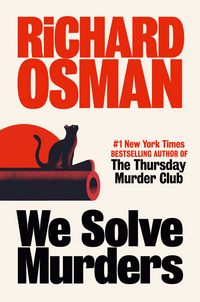
We Solve Murders by Richard Osman: Money Does the Funniest Things to People

Cover of We Solve Murders by Richard OsmanWe Solve Murders

by Richard Osman

DETAILS:
Series: We Solve Murders, #1
Publisher: Pamela Dorman Books
Publication Date: September 17, 2024
Format: Hardcover
Length: 381
Read Date: November 29-30, 2024

Buy from Bookshop.org Support Indie Bookstores

“If someone does try to shoot me this week, do you have to dive in front of the bullet?”

“That’s the idea,” says Amy, without conviction. “Though that’s mainly in films.”

It’s hard to dive in front of a bullet, in Amy’s experience. They go very fast indeed.

Some Preliminary Thoughts

While I’m always (or almost always) happy for authors to branch out in new directions, to see if they can do something they haven’t before, I’m frequently trepidatious about actually following them. Particularly if all I know is series X and they’re trying something new.

There are authors I’ve come to later in their careers, where they’ve already tried a few things, or authors whose first handful of projects are so different from one another that you know that’s what you’re going to get—something new.

But when you (as a writer, anyway) are known for a series of cozy-adjacent mysteries featuring octogenarians set in one community, step away to try something featuring someone far younger, and with more action and a lot of globe-trotting, you can understand why some readers wouldn’t be sure about stepping out with you. I think it’s fair.

The prologue (which wasn’t called that, probably just so people wouldn’t skip it) was pretty good, and caught my attention. The first chapter was strong, and I enjoyed it. 1.5 pages into chapter two, and I was more than ready to sign on for the rest of the book and was officially okay with Osman taking a break from the Thursday Murder Club (I imagine he’s greatly relieved to hear that).

Steve Wheeler

Probably longer ago than I want to admit, Ken Levine had a great bit on his blog about Sorkin always having a Danny in his shows (I’m sure he wasn’t alone in this observation, but I only remember his). I wonder if Osman needs a Steve in the same way. It doesn’t matter at all. That’s just a thought that struck me partway through, and I can’t shake it off.

So, what’s the deal with this Steve? He’s a retired detective, and it seems like he was a pretty good one before he settled down in a small community with his wife to enjoy that retirement. His wife pushed him into starting a PI agency, “Steve Investigates.” He does small jobs—the occasional marital observance, finding lost pets, seeing who’s messing with trash bins—that sort of thing.

He kept up the agency after his wife’s death, and does a quick patrol of the town twice a day on his way to sit on her favorite bench to enjoy the view and talk to her. Then it’s off to the pub to talk to some friends before going home to watch TV and pet his cat.

He speaks to his son rarely since his wife’s death, but speaks to his daughter-in-law frequently, almost daily.

Amy Wheeler

Amy is that daughter-in-law. She works in close protection and security. She globe-trots to do so, but tries to call Steve daily (unless she’s prevented by work or immanent danger). She’s very much Charlie Fox, with a sense of humor—and a different kind of trauma growing up.

She’s good at what she does, she takes it very seriously. She’s traveling the world and enjoying it—and lives for the adrenaline.

Rosie D’Antonio

Rosie is…a lot. That’s her in a nutshell, really. She’s Amy’s current client, as the book opens. She’s a world-famous author, from a time when that would make someone very rich—and she’s enjoying a career resurgence. She’s the best-selling author in the world, actually—if you don’t count Lee Child.

She’s wealthy, she’s of an uncertain age (and likes it like that), with a lust for life (and men).

She recently erred when she based a character off a certain Russian oligarch and did a very poor job of disguising it—so he’s put a price on her head. Which is where she and Amy got together.

What’s We Solve Murders About Then?

Three clients of Amy’s agency have recently been murdered in similar, ghastly ways. These influencers have little in common (at least on the surface) other than that. One of those murders happens close enough to where Amy and Rosie are staying that Amy goes to investigate (and brings Rosie along to keep her safe until she can arrange for something else).

Things start getting dangerous then—shots are fired, more dead bodies appear, and it’s clear that Amy is the next target on the list. Rosie’s having a blast with this—as long as no one’s firing at her, anyway. But Amy is going to need help from someone she trusts who also has experience in solving murders. So she essentially forces Steve to come and help.

More shots are fired and other attempts are being made at killing Amy. Flights to all over the world are taken in quick succession. Secrets are uncovered. Rosie flirts with many men. And an appreciation of Van Halen comes in far handier than anyone would expect.*

* Words would fail me if I tried to express how much the Van Halen material made me smile.

The Tone/Approach

I hate to dwell on the comparisons between this and his other books, but it seems like something I should talk about. First, this is told in a series of close-third person narratives from multiple perspectives. There’s no first person anywhere, and everything is told in the same typeface. That’s notable (if you ask me, anyway.)

Second, this is more overtly comedic. Clearly, TMC is full of humor, but it’s more of the gentle character-based humor. This is full of funny moments, situations, and lines that are clearly meant to get a laugh or a grin. In my notes I called it jokey, but I’m not sure it goes that far (too often, anyway). I’d compare it to Evanovich/Goldberg’s Fox and O’Hare books, Goldberg’s Ian Ludlow books (but more restrained), or Duncan MacMaster’s mysteries. (all of which are compliments, I want to stress)

But Osman is still Osman and there are plenty of earnest, heart-string-tugging moments, too. Particularly with Steven—talking about his dead wife or even considering his lifestyle and what has led him to his very self-contained life. Amy isn’t that reflective of a character (if anything, she avoids it with action), so we don’t get much of that with her—although the way she avoids thinking gets us to a similar point with her.

So, what did I think about We Solve Murders?

Did my appreciation of the book vary much from the verdict I made in Chapter Two? Well, I ended up liking the novel more than I did back there. Does that count?

This was just so much fun—while I had my reservations and questions before starting, I also had high hopes. The end result was better than those.

Osman can do an action scene pretty well—and keep the comedy going. We don’t have anything particularly drawn out here, but there are bursts. And his ability to create a story with strong momentum and great twists is well-documented.

More importantly—Osman’s gift for characters really shines here. The supporting characters—criminals, witnesses, people the protagonists happen to encounter (whether for a handful of paragraphs or for several chapters), are just golden. To describe the best of them would be to deprive you of your chance to meet them. Once it was clear that Rosie wasn’t just going to be someone we met to establish Amy as a bodyguard, I wondered a little bit about her tagging along. But it didn’t take me too long to fully embrace the character, and now I’m looking forward to seeing her in the future.

I’m not sure that I should’ve made the comparison to Charlie Fox above—you really can think of this as a Charlie Fox book with laughs and be pretty dead on. Others might disagree, but I’ve had the comparison stuck in my head for a couple of hours now and can’t shake it.

I’m not 100% sure the final solution was honest, it felt a little like he cheated to get [redacted] to figure out that the Big Bad was [redacted]. The Big Bad’s accomplice, however, was obvious for longer than it should’ve been to get the characters to suss them out. So, on average, he did okay there. The red herrings were great, and made up for whatever issues I might have had with the solution (but really, give us one more chapter where [redacted] goes over the clues again in their mind or something—actually, just a paragraph before they say “I know who Big Bad is.”)

This was just so good, really. At this point, it’s not quite as good as Osman’s other work—primarily because nothing had the emotional weight that the gang at Cooper’s Chase (which is close enough to Steve’s home to provide hope of the characters brushing up against each other) seems to find in their adventures. But the potential is there for this series to equal it. And, really, considering the tone of this one, that kind of punch might have felt out of place or contrived.

Either way, I strongly recommend this to Osman’s readers or people who’ve never heard of the man/his books. You will have fun, and you will want more. I guarantee that for 99% of you.


4 1/2 Stars

This post contains an affiliate link. If you purchase from it, I will get a small commission at no additional cost to you. As always, the opinions expressed are my own.

Irresponsible Reader Pilcrow Icon

MUSIC MONDAY: “Nobody’s Hero” by Stiff Little Fingers

Music Monday logo

Music Monday's originated at The Tattooed Book Geek's fantastic blog and has shown up hither, thither, and yon since then.

I speculated a little in last week’s post about MW craven’s Nobody’s Hero (out tomorrow, in the US–out weeks ago on other places) about the title, and Craven corrected me. The title came from this song. So, obviously, I had to use it today.

Irresponsible Reader Pilcrow Icon

Word and Spirit: Selected Writings in Biblical and Systematic Theology by Richard B. Gaffin, Jr.: Righteous Gems

I can’t put this one off any longer—if I could, I promise you I would (I’ve delayed it a few weeks already). I’m out of my league here, but I’ve got nothing else to write about. And I really need to write something about this.


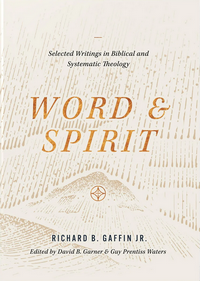
Cover of Word and Spirit by Richard B. Gaffin, Jr.Word and Spirit:
Selected Writings in Biblical and Systematic Theology

by Richard B. Gaffin, Jr.; edited by David B. Garner & Guy Prentiss Waters

DETAILS:
Publisher: Westminster Seminary Press 
Publication Date: December 1, 2023
Format: Hardcover
Length: 723 pg.
Read Date: January 7, 2024-September 22, 2024

The word atonement does not occur in Paul’s writings.’ But no concern is more central for him than the meaning of the death of Christ, the church’s perennial concern in its doctrine of the atonement. What does Christ’s death achieve? How is it effective for the salvation of sinners? This chapter considers Paul’s answers to such questions with an eye to the issue of continuity between Paul’s teaching and later church doctrine. How faithful to the apostle is subsequent Christian understanding of the atonement?

Contemporary Pauline scholarship is marked by a fairly widespread consensus that in its dominant and most influential expressions, traditional atonement theology departs from Paul in at least two substantial ways. First, it fails to recognize, or at least do justice to, the Christus Victor theme in Paul, that Christ’s death destroys actual slavery to sin and its consequences in the sinner. Second, its notion of the cross as penal substitution, particularly as it has been developed beginning with the Reformation, is foreign to Paul.? In my view, the first of these critiques contains some measure of truth; however, the second is wrong. As a fair generalization, historic Christianity, including Protestant orthodoxy, is weak in not recognizing adequately Paul’s teaching that the cross destroys sin in the sinner as a corrupting and enslaving power, but modern historical-critical scholarship is defective for not dealing adequately with his teaching that the cross removes the guilt and just punishment of sin.

What’s Word and Spirit About?

According to the Publisher,

Few Reformed theologians have exerted the influence in both the church and the academy that Richard B. Gaffin, Jr. has, shaping the theology and spiritual formation of generations of pastors and teachers. Until now, his most significant published works have been inaccessible to most theological readers, published in academic journals, denominational newsletters, and out of print festschrifts and essay collections. A decade in the making, Word & Spirit gathers Gaffin’s finest works of biblical and systematic theology and arranges them in a singular, organic whole that presents Gaffin’s thought and work as comprehensively and clearly as it ever has been. More than 40 essays, articles, and tracts have been compiled, including “The Usefulness of the Cross”, No Adam, No Gospel, “A Cessationist View,” and “The Work of Christ Applied”. This collection is a must-have for any student of theology.

There’s really not much else to say. It’s broken down into five sections, and I’d be tempted to say that each section was the most valuable/useful (well, at least 2-5, but maybe if I spent some time re-reading part 1, I’d reconsider that). Let’s take a quick look at each:

Hermeneutics, Biblical Theology, and Systematic Theology

This is ten articles spread out over 170+ pages, covering the basics of Biblical Theology, how it can and should interact with Systematic Theology (and vice versa).

There’s some repetition of ideas (this will be a common thread throughout each section), which makes sense as these were written as individual pieces, not as part of a book, and Gaffin’s position and ideas about these things have remained static/build on each other.

It’s vital to understand him and his work—and just good to have a handle on these ideas regardless.

Theology of Hebrews and Paul

Most of these seven articles encapsulate (and expand on) the ideas from In the Fullness of Time: An Introduction to the Biblical Theology of Acts and Paul, a book I raved about a couple of years ago. But there are teachings and texts he didn’t address there, that he does here.

This section was so rich, so helpful—the chapters “‘The Obedience of Faith’: Some Reflections on the Rationale for Romans,” “Atonement in the Pauline Corpus: ‘The Scandal of the Cross,'” “and “The Priesthood of Christ: A Servant in the Sanctuary”—were good enough that I almost re-read them immediately (and I probably should’ve).

The first article in this section, The Usefulness of the Cross is available as a PDF Free Chapter Download from the publisher, take advantage of this.

Scripture, Epistemology, and Anthropology

The first three of these six chapters might have been the most mind-stretching for me (they won’t be for everyone), and were very rewarding.

The final three were the easiest for me—and the most repetitive in the book. They focus on Biblical anthropology (as in teaching on the nature of man), focusing on the historicity and nature of Adam. I’ve read at least “No Adam, No Gospel” before—it was published as a booklet a few years ago, and I think I read the previous chapter, the Translator’s Foreword to Adam in the New Testament as well. And I didn’t mind one bit re-reading it/them. Still helpful.

Pneumatology

These seven chapters could be (should be, if you ask me) be reworked into one book. Gaffin shines in these studies—and going back to his By Faith, Not By Sight and Resurrection and Redemption, these teachings are where he’s historically helped me the most. And that streak continues here.

Reformed theologians often (and wrongly) get the reputation for not talking about the Spirit as much as other traditions, and—even worse—are considered to ignore Him. Gaffin makes it clear that everything about Reformed Theology is based on the work of the Spirit in believers’ lives and helps us understand just what that means—both theologically and practically.

The Law of God, Soteriology, and Eschatology

This section pretty much covers “everything that couldn’t fit above.” Again, I’ve read a few of these before in other publications/stand-alone works. But I don’t care.

The chapters on eschatology are gold.

The chapters on Justification and Calvin are even better—the way he talks about Calvin’s view of the relationship of Sanctification and Justification (and the way he presents the two in The Instittues even in the organization of them) is so important for us all to heed. Particularly as he roots them both in Union in Christ—as is every benefit that the believer enjoys in this life and in the resurrection.

So, what did I think about Word and Spirit?

The justification of God’s elect is unshakably secure because, in a sentence, Jesus Christ is “the same yesterday, today and forever” (Heb. 13:8). Despite the way it is often read, this is not, at least in the first place, a proof text for Christ’s divine immutability, that as God he is unchanging, though that attribute is surely in the background (see, for instance, 1:10—12).” Rather, it is most likely an affirmation of his unwavering fidelity, his abiding reliability as high priest—in his once-for-all sacrifice in the past on earth and in his ongoing present and future (cf. 7:25) intercession in heaven. That is as good a note as any to bring these reflections to a close. “Jesus Christ—the same yesterday, today and forever.” This, first and finally, is what Christians need to know about their justification when they consider Christ as their priest, not only in his state of humiliation but also in his state of exaltation.

Outside of the Foreword, Introduction, and Brief Biography (Appendix A), none of this is particularly easy reading. Nor quick. But all of it is accessible—for the depth he gets into at points, this is much more approachable than On Classical Trinitarianism (to mention a recent example).

This is probably the most personally beneficial read I’ve had in the last couple of years—sitting down with Gaffin for 30-50 minutes every week has been a great discipline and a great boon.

I should probably have more to say than that, but I can’t think of what else to say that’s not just a restatement of this: this is a fantastic book—with insights, teachings, and reminders of the things that are vital for every believer.

Highly recommended.


5 Stars
Irresponsible Reader Pilcrow Icon

Page 69 of 606

Powered by WordPress & Theme by Anders Norén