Cover Reveal: A Dress to Kill For by Tessa Hastjarjanto

I’m very pleased today to welcome the Cover Reveal for Tessa Hastjarjanto’s short story A Dress to Kill For to this patch o’ cyberspace this morning! Before the main event, let’s learn a little bit about the story and author, shall we? It’ll just take a moment, and then we can all take a peak at the cover.

Book Details:

Book Title: A Dress to Kill For by Tessa Hastjarjanto
Genre: Horror, historical
Length: 4k words, (21+/- pages)
Release Date: September 30, 2024
Content warnings: Occultism/demons, murder, physical violence (stabbing), ableism, physical permanent injury, chronic pain

About the Story:

How much are you willing to sacrifice to gain everything you ever wanted?

Lady Claire Rosewood lives on the fringes of society, pitied by the people she used to call her friends, and her husband is no longer the suave businessman he once was. Frustrated with both her status and her marriage, she longs for more.

When an opportunity presents itself that allows her not only to be part of higher society, but to mingle with the elite, she needs to make a choice. Every rise to the top comes at a cost, but is she ready to pay with blood?

A Dress to Kill For is a horror short story, perfect for those who love The Picture of Dorian Gray and Crimson Peak.

Links:

Universal Book Link ~ Goodreads
Newsletter subscribers receive their free copy on September 28th. Signup is on her author site www.tessahastjarjanto.com

About the Author:

Tessa Hastjarjanto is a Dutch/Indonesian writer from the Netherlands. She writes speculative fiction, and blogs at narratess.com about books, fountain pens, and writing.

From a young age, she imitated popular stories and games in creating her own worlds. This love eventually led to a master’s degree in media and game studies at the University of Utrecht. However a mundane desk job was enough to inspire her to follow her creative passion. The first fanfics were written in lunch breaks and soon original fiction followed.

With the support of her husband, she now focuses on her writing career while battling chronic pain. Swiss white shepherd, Shiro, acts as a therapy dog to keep her healthy and reduce stress through extensive cuddle sessions.

Author Links:

Website ~ Twitter ~ Instagram ~ Book Bub ~ Amazon ~ Goodreads>

and now…

The Cover

If you’re in the mood for this dramatic reveal in a video, click here (I can’t get it to display here for some reason). Otherwise, scroll down a little further…

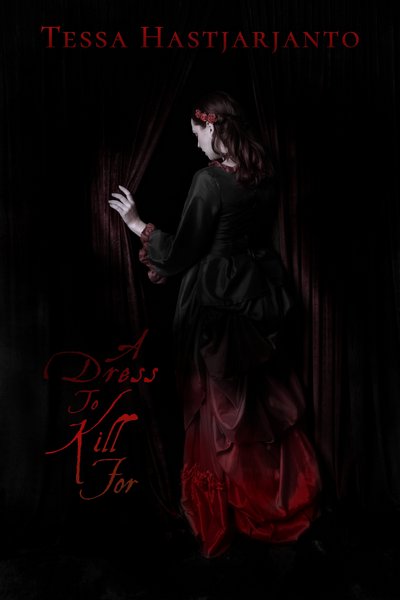
cover for A Dress to Kill for by Tessa Hastjarjanto Woman with dark red hair wears a Victorian evening gown made form black satin. The bottom of the skirt is blood red, forming a gradient towards the black. She stands with her back towards the camera and holds open the red velvet curtains, walking through them. Shadows surround the whole image. There's red text at the top, Tessa Hastjarjanto (author), and next to the woman, on the shadowed curtain, A Dress to Kill For.

That’s a good level of creepy for this time of year and this type of story, right? Cover designer: Tessa Hastjarjanto; Cover art: Feastock/Depositphoto
Irresponsible Reader Pilcrow Icon

Redemptive History & Biblical Interpretation: The Shorter Writings of Geerhardus Vos Edited by Richard B. Gaffiin, Jr.: A Treasure of Briefer Theological Writings

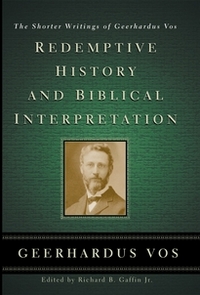
Cover of Redemptive History & Biblical Interpretation by Geerhardus VosRedemptive History & Biblical Interpretation: The Shorter Writings of Geerhardus Vos

by Geerhardus Vos, edited by Richard B. Gaffin, Jr.

DETAILS:
Publisher: P & R Publishing 
Publication Date: June 1, 2021
Format: Hardcover
Length: 543 pg. 
Read Date: January 7-September 1, 2024

“Jehovah appeared of old unto me saying, Yea, I have loved thee with ap everlasting love, therefore have I drawn out long lovingkindness unto thee” (31:3), in order to do justice to their sweetness and beauty. This is like coming out of the waste of the wilderness into a land of paradise. Even quite objectively regarded, the piece has its ineffable charm. It is like a landscape bathed in the glow of the harvest-season. In the farther distance winds the caravan of returning captives, coming homeward with weeping and supplication along rivers of water. The people are seen flowing unto the goodness of Jehovah, to the grain, the new wine, and the oil. In the foreground rises Judah with her cities, a mountain resplendent in holiness. And the whole is made musical by the sound of tabrets in the dances of them that make merry. Still, while a delight in itself, the scene, in order to be fully enjoyed, should be seen through the eyes of the prophet. It sounds like the notes of a bird finding its cage unexpectedly open, and with delirious joy exploring the new-gained freedom. For once the vision and the seer’s deepest desire are perfectly blended. The lyre thrills in unison with something that sings itself within and needs no composing. The words move in absolute harmony with the graceful movements of the dancing virgins in the feast. Surely this prophet bore within himself a great poet. One cannot help feeling this even in his litanies with their forecast of doom on the sin of Israel. But most effectively, it shows itself in the larger and freer rhythms of the ascriptions of glory to Jehovah. It is in part a poet’s satisfaction, that at the receding of the tide of vision, finds voice in the spontaneous words, “Upon this I awaked and beheld, and my sleep was sweet unto me” (31:26). For the prophets are the only true interpreters of the sleeping or waking moments in which God communicated His word unto them.

What’s Redemptive History & Biblical Interpretation About?

Paraphrasing the Preface, the plan for this work was to include almost all of Vos’s work that wasn’t included in his “major works.” But there was just too much of it—so Gaffin limited this to his shorter works that weren’t sermons or that weren’t dated. We get seven “Major Biblical and Theological Studies,” sixteen “Shorter Biblical Studies,” two addresses, and nine book reviews.

Those reviews “either deal with books of continuing influence or provide a valuable statement of Vos’s own views.”

Major Studies

The book starts out with the heavy-weights of the collection20+ page articles on things like “The Eschatology of the New Testament,” “The Range of the Logos Title in the Prologue to the Fourth Gospel,” two (dynamite) pieces on the book of Hebrews, the Doctrine of the Covenant, and so on.

Most of these were worth the purchase price of the book as a whole—I’ve read entire volumes on some of these topics that didn’t give me as much to chew on as these did. Most of what he said in his article on Biblical Theology has been echoed by Vos’s students and readers for decades, so I didn’t get as much from that one as I’d hoped—but it was nice hearing it from his own pen.

Basically, just an outstanding way to start this book, and a great way to spend 270 or so pages.

The Shorter Studies and Addresses

These were a mixed bag of focused and impactful articles and some that had to settle for being interesting and thoughtful. There was one article here that went largely over my head—and probably relied too much on linguistic scholarship that has probably shifted a great deal in the century +/- since it was written. Sometimes—especially in these shorter pieces—you can see that Vos also dabbled in poetry, because some of the phrasing is so lyrical.

The addresses make me wish we had video—or at least audio—recordings of him. I bet those were fascinating to hear—they’re fascinating to read, but probably would give an extra punch when delivered. The first of the addresses, “The Scriptural Doctrine of the Love of God” is something I should read annually—at least.

Book Reviews

Dr. Denney’s latest book puts us under the strange necessity of heartily praising its contents and at the same time deploring most deeply the main purpose for which it was written. We confess to having seldom read a book productive of such a sudden and painful revulsion of feeling, from a sympathetic and enthusiastically admiring state of mind to one of sharp protest and radical dissent, as the work before us. Dr. Denney’s style and manner of presentation are so brilliant and yet so warm and genial, he carries us along so easily, so absolutely compels our belief in the irrefutableness of his argument, that, when he proceeds to make the disagreeable application, we find it more than ordinarily difficult to arrest the momentum of conviction acquired and turn our minds all at once in the opposite direction. The sense of disillusionment at the close is so poignant that it inevitably gives rise to the question, whether perhaps the profound agreement in which we imagined ourselves to be with the writer was not after all a delusion, arising from a misinterpretation on our part of the real drift of the discussion, so that, if we had only read more carefully and between the lines, we would have disagreed from the beginning. Whether the case lies actually as just stated or whether it is a simple instance of non sequitur between approved premises and a false conclusion, we find it extremely difficult to decide.

I really figured that the home stretch of this book contained in these reviews would be easy reading, and really something I could skim because who’d ever heard of most of these books? Wow, I could not have been more wrong (and, it had been months since I read the Preface, so I’d forgotten that “valuable statement of Vos’s own views” part).

To start with, we get reviews of the first two volumes of Bavinck’s Gereformeerde Dogmatiek (known in English as Reformed Dogmatics)—I wish we’d gotten reviews of all four volumes. What I found interesting here was how much what Vos said about these volumes matched what my friends, others in my Church, and I have said about Bavinck’s writing.

Then we move to the books he wasn’t quite so positive about—there are two books by Albert Schweitzer here, and I at least know a little about him, but the other names were new to me. I’m not positive, but I think that all but Bavinck fall under the “statement of Vos’s own views.” These all share a similar outline: a pretty glowing introductory paragraph, a quick synopsis of the work or its premise, and a very nice one-paragraph conclusion. He’s largely complimentary in these parts, recognizing the labor, the experience, and the intelligence of the author. It’s all the stuff in-between where Vos will talk about the many, many flaws of these works and will challenge the thinking, conclusions, and some of the basic assumptions involved. He is capable of appreciating the work and its strengths—and has no problem talking about them—but still talking about the faults, in a serious but not in an offensive or mean-spirited way. He really gives an example for his readers in that way.

He also does a bang-up job of working in those principles and types of argument that can be profitable, even if the works he’s talking about have faded from almost everyone’s memory.

So, what did I think about Redemptive History & Biblical Interpretation?

Let us not forget, however, that as of all theology, so of Biblical Theology, the highest aim cannot lie in man, or in anything that serves the crea. ture. Its most excellent practical use is surely this, that it grants us a new vision of the glory of Him who has made all things to the praise of His own wonderful name. As the Uncreated, the Unchangeable, Eternal God, He lives above the sphere of history. He is the Being and never the Becoming One. And, no doubt, when once this veil of time shall be drawn aside, when we shall see face to face, then also the necessity for viewing His knowledge in the glass of history will cease. But since on our behalf and for our salvation He has condescended to work and speak in the form of time, and thus to make His works and His speech partake of that peculiar glory that attaches to all organic growth, let us also seek to know Him as the One that is, that was, and that is to come, in order that no note may be lacking in that psalm of praise to be sung by the Church into which all our Theology must issue.

This is not going to come as a shock to anyone who’s read any of the things I’ve said about Vos in the previous four posts about his work, but this collection just knocked my socks off. I read an article a week and it was one of the highlights of the week for me to do so.

I learned a lot. Not just about Vos and his brand of theology, but about the Scriptures and the Lord who gave them to His Church so she would see Him and His glory in them.

The writing is fantastic. The thinking is even better. I had to think about a lot of this, to ponder and wrestle with it, and got to revel in it, too.

I can’t think of a reason to not read this book—it’ll reward careful reading (and casual reading, too—just not as richly). It’s just great stuff.



5 Stars

Irresponsible Reader Pilcrow Icon

Saturday Miscellany—9/14/24

My friend Tony has been really good about finding errors in these posts the last few weeks—as much as I appreciate someone editing me, I think I’ve checked this well enough that he won’t have to send me any notes. But I look forward to the texts showing me that I’m rwong.

(I made that typo and decided to keep it in so that he’d have an excuse to text)

Odds ‘n ends about books and reading that caught my eye this week. You’ve probably seen some/most/all of them, but just in case:
bullet How Historical Fiction Redefined the Literary Canon
bullet Doom scrolling: We may be close to rediscovering thousands of texts that had been lost for millennia. Their contents may reshape how we understand the Ancient World.—this brings out a geeky side in me. It also makes me very glad that I didn’t pursue this field, I cannot imagine the patience it takes.
bullet Language and Leonard Michaels: On the current state of literature and literary culture—a provocative bit of writing
bullet The Not-So-Nice Origins of ‘Bookworm’
bullet Empathy and Crime Fiction: How Do You Make Readers Root for the “Unrootable”?
bullet A Literary Map of South Asian America—because my TBR wasn’t long enough…
bullet “…I Grew As A Writer To Make It Work.”: Blind to Midnight’s Reed Farrel Coleman—a good interview with Coleman (not that I’ve come across a bad one with him…)
bullet Writing Action with Nick Kolakowski—were I a writer looking to hone my action scenes, I know I’d want advice from Kolakowski. (I’m tempted to sign up as a non-writer)
bullet A Goodbye to 20 Books of Summer (in more ways than one!)—awww, man…..I’ve come to depend on this challenge as a way to get me back on track on some reading goals (sure, I could just, you know, exercise discipline without an outside force…). But more 10 years sounds like a good time to take a break and relax.
bullet Tips for Requesting Book Reviews From Book Bloggers
bullet A Fantasy Fan’s Guide: Understanding the Subgenres
bullet Your Literary Analysis Can Be Wrong (With a Defence of Paddington Bear)

A Book-ish Related Podcast episode (or two) you might want to give a listen to:
bullet Tea, Tonic & Toxin Longmire Novels: First Frost by Craig Johnson

To help talk about backlist titles (and just for fun), What Was I Talking About 10 Years Ago Week?
bullet Voodoo River by Robert Crais
bullet The Scriptlings by Sorin Suciu
bullet The Forsaken by Ace Atkins (nice to see that even a decade a go I could get ridiculously behind)
bullet And I mentioned the release of five books that I really wanted to read, but only have made time for two of them: Robert B. Parker’s Blind Spot by Reed Farrel Coleman (speaking of Coleman); The Witch with No Name by Kim Harrison; City of Stairs by Robert Jackson Bennett; Gangsterland by Tod Goldberg; and Yesterday’s Hero by Jonathan Wood (the three I didn’t get to are still calling my name!)

This Week’s New Releases that I’m Excited About and/or You’ll Probably See Here Soon:
bullet Robert B. Parker’s Buzz Kill by Alison Gaylin—I enjoyed Gaylin’s first Randall novel (as you can tell from all the nothing I’ve said about it), and am looking forward to see her stretch her legs with it
bullet Nightmare of a Trip by Maureen Kilmer—a horror-comedy about a family’s road trip. Kilmer doesn’t even need to bring in anything supernatural to make the horror bit stick.
bullet Thinking Through Writing: A Guide to Becoming a Better Writer and Thinker by John Kaag & Jonathan Van Belle—I can’t see myself reading/working through a textbook at this stage of my life. But I should. Regardless, this looks like a good one.

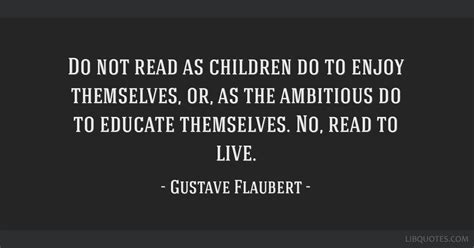
'Do not read, as children do, to amuse yourself, or like the ambitious, for the purpose of instruction. No, read in order to live.' — Gustave Flaubert

BOOK SPOTLIGHT: Saint the Terrifying by Joshua Mohr and Release Day for “Size Queens” by Slummy

I’m very pleased today to share this spotlight for Joshua Mohr’s upcoming release, Saint the Terrifying, and also, it’s the release day of the single “Size Queens” by Slummy. Why, you ask, do I mention both of these? Great question. The materials I received put it this way:

Author Joshua Mohr spent his formative years in the East Bay punk scene playing in various bands. Now with eight books under his belt, Mohr was offered a combined book and record deal through Los Angeles presses Unnamed Press and Rare Bird. The book is the first in a trilogy, entitled Saint the Terrifying (Unnamed Press, 2024), and is based on a character named Saint, an East Bay punk musician with Viking roots. Saint’s band is called Slummy, so that is the name that Mohr recorded under for the EP entitled The Wrong Side (Rare Bird, 2024), which will be pressed to vinyl and out on the same release day as the book, October 22nd, 2024. Mohr recorded at Grandma’s Warehouse in LA with local band Movie Club backing him up for the songs he wrote as his own fictional character.

So let’s talk about them both.

Book Details:

Title: Saint the Terrifying
Genre: General Fiction
Format: e-Book/Paperback
Length: 290 pages
Publisher: Unnamed Press
Publication Date: October 22, 2024
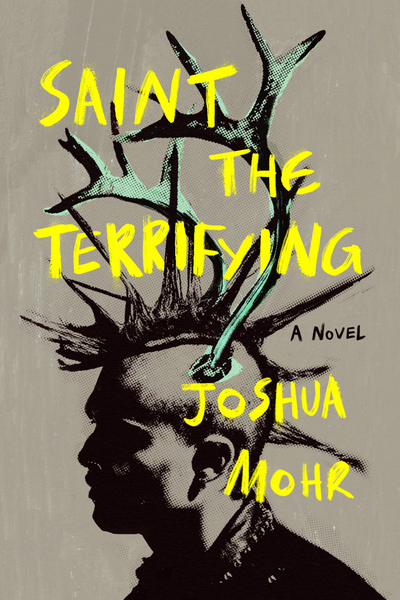
Cover to Saint the Terrifying by Joshua Mohr

About the Book:

In the first installment of Joshua Mohr’s Viking Punk saga, a West Oakland musician acquires a new name and new calling. Chasing down a gang of thieves, Saint the Terrifying turns a gritty urban detective story into the stuff of legend.

Saint’s an ex-con still coming to terms with his origin story.

Raised in the wilds of Norway by an artisan father famed for his glass-blown birds, Saint trained daily in ancient Norse martial arts with a bear as his sparring partner. One day, his father makes a critical mistake, forcing Saint to leave his home forever, and move to San Francisco.

Years later and fresh out of prison, Saint finds himself immersed in the Oakland punk music scene. On stage, he’s struggling to find his identity as a guitar player in a mediocre band. Off stage, his uniquely Norse skillset suddenly turns Saint into a one-eyed punk gumshoe after sinister thieves start targeting local bands’ gear. But it is only when Saint meets Trick Wilma, the powerhouse lead singer of another (better) band, that he begins to see the glimmer of salvation in her eyes.

Propelled by a broken Baroque of punk language, Saint the Terrifying examines tensions between community and individual identity, social activism and vigilantism, while taking the reader on a roller coaster ride of hard-boiled twists and hardcore music. Saint is the badass protagonist that answers the question: What if Johnny Rotten had a baby with The Rock?

Book Links:

Unnamed Press ~ Bookshop.org ~Author’s Website

Music Details:

Album: The Wrong Side
Single: Size Queens
Publication Date: October 22, 2024
Cover for The Wrong Side by Slummy

About the Music:

“I didn’t really write these songs,” says Mohr. “The main character in my book did. I captured his sound, his riffs, and his lyrics to really feel the demented whimsy in his soul. So did the book lead me to his music, or was it the music that allowed me to write his trilogy of novels? That’s the magic of Saint. He’s a galaxy.”

“Size Queens” is out Sept. 13th and will be the only single off The Wrong Side. The music video is a mini action short film starring a punk squatter couple who are being stalked by an insane clown cop. The video is directed by writer/musician Jessamyn Violet and features an all-musician cast including Eva Gardner of P!NK and Mars Volta, and Fox Deluxx of local LA punk band Pez Heads.

Links:

Promo the EP ~ Signed First Edition Book + Limited Edition Blue Vinyl

“Size Queens” Video

About the Author:

Joshua MohrJoshua Mohr is the author of several books, including Damascus, which The New York Times called “Beat-poet cool.” He’s also written Some Things that Meant the World to Me, one of O Magazine’s 10 Terrific reads of 2009, and he’s won the Northern California Book Award twice. Termite Parade was an editors’ choice on the New York Times Best Seller List. His latest project is a trilogy of novels all to be published in one calendar year, starting with SAINT THE TERRIFYING in fall ‘24. In his Hollywood life, he’s sold projects to AMC, ITV, and Amblin Entertainment.

Author Links:

Website ~ Instagram


My thanks to Katz Domino of Junkfood Media for the invitation to post this and for the materials they provided.
Junkfood Media logo

Rambling about the Hazards of Checking Out Library Books from the Library

(or, I give You a Glimpse Into My Overthinking About Books)

Do I have a point to this? No. But I also don’t have a post ready for today, and didn’t have time to finish one. So, I’m going to ramble a bit.

I took a couple of days off work this week, which I knew was going to mess with my audiobook listening–but whatever. So of the two audiobooks I had checked out from the Library on Friday, I picked the one that was shorter and due a bit sooner. I didn’t have a lot of time for either one, honestly–but I figured I could finish one of them off. That was my first mistake.

I typically don’t check out multiple audiobooks at once so I don’t run into a problem like this, but when multiple books come off the hold list at the same time, you don’t have much choice.

I got a good amount of listening in on Monday, and a few minutes on Tuesday. But I still had 3 hours and 20 minutes or so to go. But the app said it’d be due Thursday, so I figured I’d be okay–especially since I spent the last hour of listening time at 2.3 speed (I never do that) to help me make it. But when I was getting into my car today, it read “Due in 1 hour.” Technically Thursday, but…not what I wanted it to say.

Now, I hate to admit this, but especially since most of the libraries in the area eliminated late fines, if this was a hardcopy book, I’d just return it a day late and not even think about it (and even if there were fines, I’d pay the few cents just to wrap it up). That makes me a bad patron, I know, but I’d do it. But you don’t get that option when it comes to digital books.

Where I last listened was a decent stopping place, and I couldn’t be sure I’d get to another one in the next hour, so I returned the book and got myself back on the list. I have approximately 9 weeks to wait for the copy to be made available again. I should still remember enough to pick it back up…but do I want to? The book is just good enough to keep listening–and not one iota more. There’s still enough time for the author to land the ending and make me re-evaluate things, but at the moment, it’s a 2 1/2-3 Star read. And yes, I’m curious about how the plot wraps up…but am I curious enough to return to it? Should I just chalk this one up to a DNF by Circumstance?

And even as I ask these questions, I know I will finish it up. But I’m not sure I want to–it’s basically compulsion vs. desire at this point.

Irresponsible Reader Pilcrow Icon

WWW Wednesday, September 11, 2024

Library Due Dates, a faulty memory, and one of “those” weeks have conspired to make me change my reading schedule for 5 times since I posted my last WWW. So, expect to see the entries from my “Up Next” section from last week in the next couple of months (I’m so glad the question is “What do you think you’ll read next?”). I’m the only one who cares, but it irks me.

This meme was formerly hosted by MizB at A Daily Rhythm and revived on Taking on a World of Words—and shown to me by Aurore-Anne-Chehoke at Diary-of-a-black-city-girl.

The Three Ws are:
What are you currently reading?
What did you recently finish reading?
What do you think you’ll read next?

Seems easy enough, right? Let’s take a peek at this week’s answers:

What are you currently reading?

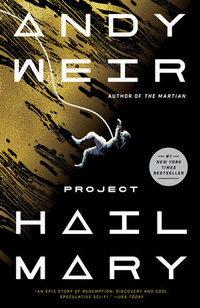
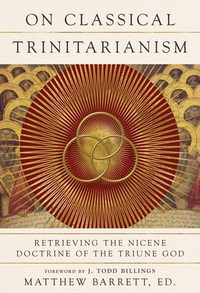
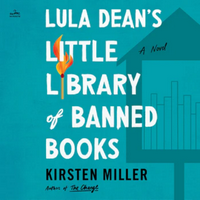
I’m reading Project Hail Mary by Andy Weir (a book I received in the mail on release day in 2021 and somehow haven’t read yet), On Classical Trinitarianism: Retrieving the Nicene Doctrine of the Triune God edited by Matthew Barrett (a book I really should’ve considered the page count of before requesting from NetGalley), and am listening to Lula Dean’s Little Library of Banned Books by Kirsten Miller, read by January LaVoy on audiobook (a perfectly fine book incapable of nuance or subtlety).

Cover of Project Hail Mary by Andy WeirBlank SpaceCover of On Classical Trinitarianism by Matthew BarrettBlank SpaceCover of Lula Dean's Little Library of Banned Books by Kirsten Miller

What did you recently finish reading?

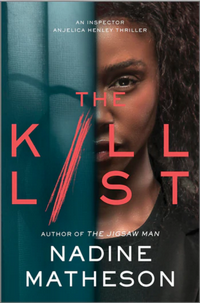
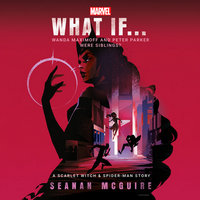
I just finished Nadine Matheson’s The Kill List and Marvel: What If . . . Wanda Maximoff and Peter Parker Were Siblings? by Seanan McGuire, read by Allyson Voller on audio.

Cover of The Kill List by Nadine MathesonBlank SpaceCover of >Marvel: What If . . . Wanda Maximoff and Peter Parker Were Siblings by Seanan McGuire

What do you think you’ll read next?

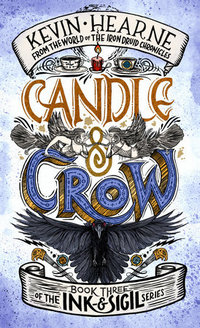
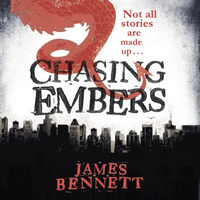
My next book should be Candle & Crow by Kevin Hearne set in a world I’m not ready to say goodbye to, but apparently I will be. My next audiobook should be Chasing Embers by James Bennett, read by Colin Mace.

Cover of Candle & Crow by Kevin HearneBlank SpaceCover of Chasing Embers by James Bennett

Are you reading anything good?

Book Blogger Hop: Our Library Journeys

Book Blogger Hop


This prompt was submitted by Billy @ Coffee Addicted Writer:

September is Library Card Sign-Up Month. What role have libraries played in your reading journey? Do you have any recommendations for books or fond recollections involving libraries?

First off—Library Card Sign-Up month? I didn’t know that was a thing—glad I got to do something to commemorate it.

What role have libraries played in my reading journey? That’s sort of like…man, I don’t know, I should be able to come up with a snappy metaphor. Maybe by the time I’m done with this.

As far as I recall, I didn’t really use a Public Library until I was at least semi-literate—maybe it was after I was reading things at the Fun with Dick and Jane level. I have one or two very vague memories of that first library (mostly chaotic) before my family moved across the state.

I’ve repeatedly told the story about when my family and I realized how important reading was to my young brain—once we settled into our new town, it wasn’t long before I got a card—and boy howdy, did I use that thing. We didn’t buy a lot of books then (that got underway when I discovered used bookstores and thrift shops in junior high…but that’s a story for another time), so the public library—with a little supplementing from various school libraries—was how I got my reading material. I visited at least monthly, I think bi-weekly was the norm, although there were summers I walked there daily.

The librarians got to know me pretty well—as well as my shy/timid near-pathologically introverted self would allow, at least they got to know my reading habits. Looking back on it, I know it was small—I may have known it then. It certainly didn’t get a lot of new books—particularly in the “Juvenile” sections (except for the very Juvenile books). That selection probably led to my love of re-reading. I knew where my friends were found on the Fiction and Non-Fiction shelves, and visited them often. But I enjoyed the variety it did have—especially when I could start reading the things in the non-Juvenile section. I honestly don’t know if my being unable to go there was a parental rule, a library rule that I aged out of, or just an impression that I had that no one corrected. But Ian Fleming, Erle Stanley Gardner, Eric Van Lustbader—and soon Robert B. Parker, Rex Stout, and Mickey Spillane—were waiting for me to discover.

In high school, we moved to a larger town—the library was bigger, and the collections were, too—I was able to read a new-to-me book or two from authors I loved that I hadn’t been able to find in my old library and I was able to find some new friends, too. The catch was that we lived outside of city limits, so my parents had to pay for my library card to make up for the taxes we didn’t pay. What a relief it was (for my conscience) the next year when I got a job there, so I got that fee waived.

Obviously, I was in hog heaven working there—and it exposed me to so many new authors, new topics, new…everything. Reshelving returned books helped me see what people were consistently reading, and eventually, I’d get curious, too. Or putting one boring-looking book back next to something else would get me to pick up the something else. Dave Barry Slept Here is one that I distinctly remember coming from that. That’s also how I learned that C.S. Lewis wrote things other than the Chronicles of Narnia, I’m inexplicably embarrassed to note.

Other than the University library, I pretty much stopped using them for a decade or so after High School. I wasn’t going to pay for a card just to use over the summer months as I scrambled to save up money for the next year—also, I was buying enough by then that I could keep myself in books when I found/made time to read things that weren’t for class.

Fast-forward to the time when my older kids could write their own name—which was the library’s standard for getting their own card. I’d let them browse for something that’d catch their eye, and while they were doing that…I’d go browse myself. This got me experimenting more about what I was reading—oh, also, this library was bigger yet than the last one—and kept growing. That experimenting—plus my reading priorities shifting and freeing up—led to me reading more and more, and…well, here we are.

I read my first Jim Butcher, Kevin Hearne, Benedict Jacka, Faith Hunter, Patricia Briggs, Seanan McGuire, Lee Child, Rainbow Rowell, David Rosenfelt, Rick Riordan, Mick Herron, and Ian Rankin because of that most recent one. I could go on and on, but I just thought I’d pick a few names that show up time and time again here. I don’t browse the stacks too much anymore, I have lists of books I want to get—and usually place requests via the website. But I’m still using that library regularly, and my not having at least two books checked out from there at a time is strange (I have two on my desk now and two waiting for me to pick up as I write this).

Really, I wouldn’t read what I do now if I hadn’t read something in the library that sparked me to look for more like it—or encouraged me to move far away. Which would lead to/from something else, and something else, and something else for 4+ decades now. And I hope that continues for decades more.

I’m not going to spend a lot of time on the “do you have any recommendations for books…involving libraries” part of the prompt—I covered that in my Books about Books and the People Who Love Them post last month (along with a few other things).

Are your stories about libraries sound similar? Or have you had a different experience with them?

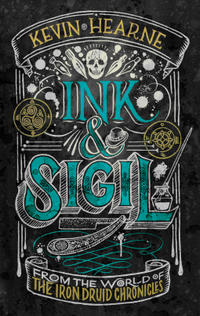
REPOSTING JUST CUZ: Ink & Sigil by Kevin Hearne: This Atypical UF is full of Action and Laughs (and Deadly Raisins)

Ink & Sigil

Ink & Sigil

by Kevin Hearne
Series: Ink & Sigil, #1

eARC, 336 pg.
Del Rey, 2020

Read: August 12-14, 2020
Grab a copy from your local indie bookstore!


The biggest challenge to writing about this book is choosing what not to talk about, I really feel like I could go on and on and on about it. Then the pendulum swings to the point I don’t say much at all…

What’s Ink & Sigil About?

Aloysius MacBharrais is a Sigil Agent—one of five on the Earth. They’re tasked with preserving the various treaties that supernatural creatures had set up throughout the world to keep the peace and govern the activities of the various pantheons on the mortal plane. They’ve been equipped with the barest magical tools necessary to get the job done—largely by Brighid of the Tuatha Dé Dannan to make up for the work that her Druid wasn’t doing when he was hiding for centuries on end.* There’s more to it, but that’ll work for starters.

* See everything that Atticus O’Sullivan was doing before the first of the Iron Druid Chronicles.

Al has horrible luck when it comes to apprentices, they keep falling prey to accidental death. The most recent is Gordie, who died after choking on a raisin scone. Before I get into things, can I say how wonderful it is to have a magic-user—even an apprentice—die by such mundane means (and you have never, I mean ever, come across this many jokes about raisins or scones in your life)? As Al goes to Gordie’s house to clean up all traces of his magic tools, he discovers that Gordie’s been up to some pretty dark and criminal stuff right under his nose.

This book takes Al and his associates around Scotland and even to the U.S. finding out just what Gordie was into and trying to set it right.

A New Kind of UF

There are outliers, but largely, Urban Fantasy series deal in variations on a theme—I’m not complaining, I’m into most of them. But basically, you’ve got a wizard (or something like that), a vampire, and/or a werewolf doing a P.I./Private Security/Hunter thing. There are different kinds of magic users, or vampire types, or were-species, but really, that’s about it. Lately, some variations have come from using different kinds of protagonists, like whatever Nell Ingram is or…(I had another example when I started this paragraph), but you get the point.

Here our variation comes in the type of mage—he uses sigils, particular designs in particular (and strange) inks which give a temporary effect to the bearer or beholder. Also, Al’s an elderly Scot who wears a derby and has an immaculately-styled mustache. He’s about as far from the grizzled hero in a leather jacket/trenchcoat as you can get. Outside of supporting characters or Marley Jacobs from A Key, an Egg, an Unfortunate Remark, you don’t see that (outside of characters who are supernaturally old, but appear young) .

Al’s associates aren’t standard either, but I’m going to resist using 3-4 paragraphs talking about them. I’m just going to say I enjoyed them all and can’t wait to spend more time with them.

Iron Druid Tie-in

As indicated above, this takes place in the same universe as The Iron Druid Chronicles, sometime after Scourged and contains references to some of the series’ events and characters. Al himself shows up in a short story in Besieged as a minor character.

There’s a brief appearance by Atticus and Oberon, and a longer one with Brighid. Both were a lot of fun, and the Atticus one was pretty sweet. I enjoyed seeing Brighid from someone else’s point of view. The door is open for more IDC characters to show up, but it’s not necessary, which I appreciate.

You do not have to have read the IDC to get into this, and not catching all the allusions/references/cross-overs will not diminish anything for you. It’s a spin-off, but isn’t dependent on the original.

Did Hearne Regret this Choice?

Al’s a Glaswegian and most of the book takes place in and around Glasgow. Hearne made the choice to write all the dialogue (and even Al’s first-person narration) in the dialect. Most authors wouldn’t have gone this far, and I have to wonder how often Hearne questioned this choice as he wrote—talk about making things hard on yourself. I enjoyed it—and it really helped me “hear” Al and everyone.

So, what did I think about Ink & Sigil?

While the IDC contained more than it’s share of laughs (and even The Seven Kennings had amusing moments), this seemed like a better merging of jokes and story. It feels like a natural outgrowth of The Tales of Pell (but not as humor-focused as those). For sheer enjoyment value, this was fantastic.

The story was pretty strong, too. But a lot of space was devoted to introducing us to this particular corner of the world and the cast of characters. I’d like to see what Hearne does with a novel where he doesn’t have to do that.

The world is familiar, yet Hearne’s doing something new in it. The characters are just not what you’re used to seeing in the genre. The plot was great—and speaks clearly to our current situation. And I laughed a lot. There’s little to complain about here and a lot to commend. I had a blast and I think most readers will, too. I can’t wait for the sequel.

Disclaimer: I received this eARC from Random House Publishing Group – Ballantine via NetGalley in exchange for this post—thanks to both for this.


4 1/2 Stars

20 Books of Summer

MUSIC MONDAY: Doing The Best I Can by Coy Roy

The Irresponsible Reader Music Monday Logo

Music Monday's originated at The Tattooed Book Geek's fantastic blog and has shown up hither, thither, and yon since then.

Irresponsible Reader Pilcrow Icon

Big Trouble in Little Italy by Nicole Sharp: Filled with Great Food, a Lot of Laughs, and Love

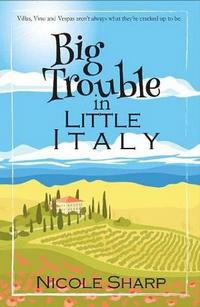
Cover of Big Trouble in Little Italy by Nicole SharpBig Trouble in Little Italy

by Nicole Sharp

DETAILS:
Series: Simply Trouble Series, #1
Publisher: Writing Moose
Publication Date: October 3, 2023
Format: Paperback
Length: 343 pg.
Read Date: August 27-28, 2024
Buy from Bookshop.org Support Indie Bookstores

The Back of the Book

There’s no way I could put all this as concisely as (I’m guessing) Sharp did for the back of the book. Also, I think I’d trip over myself not saying some of this, but I clearly think some things are more spoiler-ish than others do. So I’m just going to steal this:

Life is looking pretty good for thirty-two-year-old Jessica Dodd. She just bought her wedding dress and closed on a house with her trial lawyer fiancé, Thomas. But first, she needs to take care of one tiny issue: her husband – a youthful indiscretion from a drunken weekend in Vegas years ago. She never saw the guy again, so it didn’t really count. Still, she needs to get divorced.

CIA agent Parker Salvatore has thought of his “Vegas wife” over the years, though it was never time to start dating her. However, when he returns from a two-year assignment to find that she is literally in bed with the enemy, he realizes it’s time to make his move. First, he needs to catch the bad guy, then he can woo the girl.

Things begin to unravel when Jessica finds out Thomas has been lying to her. Determined to confront him she follows him to Italy. Fueled by a surplus of caffeine and a colossal lack of sleep her plan becomes a hell of a lot more complicated when she walks straight into the middle of the CIA’s criminal investigation of her fiancé.

Set against the backdrop of the Tuscan countryside, Parker and Jessica find themselves treading the perilous waters of infiltrating a well-known crime family, filing for divorce and attempting to keep their rekindled attraction at bay.

Slightly Ajar Door Romance

I’m not an expert on this kind of thing, but I can read definitions online, so I feel safe saying that this isn’t a closed-door romance. But it’s really not that far off–I’ve read books (Romance and otherwise) that put more on the page. Sharp does fade to black pretty quickly, thankfully*, but she could fade a bit quicker–and take a little more time before fading back into light.

* That’s a reflection of my prudish-inclinations.

I just figure that I should mention it since I’ve talked about things like this in the past–and I know some of my readers care. Basically, I’ve learned from the Sunshine Vicram books–these are not ones I will give my mother. Although I have to say, I kind of think I’d be more comfortable knowing that my mother read this over Sunshine (and much more comfortable with my mother knowing I read these, too). That might be a silly basis for rating, but that’s where I am.

So, what did I think about Big Trouble in Little Italy?

I only took one note while reading this book–after the first chapter, I wrote simply “Zany.” And I really never came up with anything to say beyond that. There is a lot more to the book than that–but that word is pretty much always applicable.

Sharp’s voice is infectious–I thoroughly enjoyed the writing here, more than the rest of it (which is saying something). The characters lept off the page and right into your heart (except for the small handful you just wanted to spit out as quickly as possible, and then spit on). There’s an Italian agent working with Parker who is one of those characters that comes close to stealing the show–I’d love to read more about him. That’s true for most of the more significant supporting characters, too. Yes, the focus of the book is (rightly) on Jessica, Parker, and Thomas–but Sharp has this book bursting with characters you want more of.

This is very much a Romance novel–yes, a Romantic Comedy, yes, a Romantic Comedy with a Thriller flavor. But the key word there is Romance/Romantic. As such, I’m not really the intended audience for this, but after talking with Sharp at an event this Spring, I really wanted to read something she wrote–and thankfully, the Comedy and Thriller parts of the book were strong enough that I could handle the Romance.

I’m not sure what people who read more Romance fiction than I do would think of this. I think die-hard Thriller readers would think it stretches things a bit (but not as much as a couple of Lee Child books have, for just one example). The Comedy never misses, though. Not once.

I can see myself coming back for more in this series, actually. I can also see me dropping it pretty quickly if the laughs die down. I say that without rancor–but because I recognize that I’m just dabbling in this world.

I’d definitely like to hear what people better versed in Romantic fiction have to say about Sharp’s work. But for my money, this is worth your time and money. The plot zips along well, the CIA-Crime story zigs and zags the way it should, and the comedy is pretty consistently goofy and yet heartfelt–actually, all of it is heartfelt. Zany and Heartfelt. A heckuva combination.

Oh, be sure to have your local Italian restaurant’s online delivery menu pulled up, you’re going to want to use it. Or have it, and your payment methods, locked away if you don’t need to treat yourself in that way.


4 Stars

This post contains an affiliate link. If you purchase from it, I will get a small commission at no additional cost to you. As always, the opinions expressed are my own.

20 Books of Summer

Page 77 of 602

Powered by WordPress & Theme by Anders Norén