The Glass Frog by J. Brandon Lowry: A Fairy-Tale-esque Fantasy for All Ages

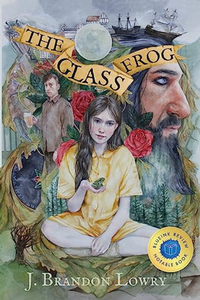
Cover for The Glass Frog by J Brandon LowryThe Glass Frog

by J. Brandon Lowry

DETAILS:
Publisher: Trailerback Books
Publication Date: June 20, 2023
Format: Paperback
Length: 376 pg.
Read Date: July 27-30, 2024

Buy from Bookshop.org Support Indie Bookstores

Every Who is shaped by a Where.

In this case, the Where is a tiny coastal village named Seaside. from the beach there is a constant, breathy shhh-ahhh sound as the waves flow first in, then out, each exhalation coating the simple, whitewashed buildings with a fine, salty mist. Through the village center runs the Queen’s Road, a winding ribbon that traces the curving shoreline of the island nation to which Seaside belongs. Grassy, rolling hills surround the village to the north, so that when viewed from above, it appears as a single pearl on a string nestled on a bed of seagrass.

Seaside was given its unimaginative name by its unimaginative people. In fact, hostility toward creativity and change is a central feature of the Seasider mentality, a proud tradition handed down from generation to generation. They value simplicity, practicality, and—above all—uniformity. For this reason, it has been decreed that every building in the village must adhere to the same basic plan: squarish shape, white walls, dark roof. This arrangement makes it obvious which villagers are lax in their home maintenance, and are therefore not to be trusted. The same principle applies to matters of appearance, behavior, and topics of conversation. Unsurprisingly, the most popular topic of conversation is the failure of others to conform….

With the matter of Where set aside, it is time to meet our Who—Sophie Farrier, a kind-hearted and imaginative young girl who fits into Seaside about as well as a whale fits into a rowboat, and has been just as uncomfortably shaped.

What’s The Glass Frog About?

Thankfully for her, Sophie will not spend the entire novel in Seaside. But she has indeed been shaped by that village, and try as she might, she will act in the way she was shaped (both in ways she recognizes and ways she doesn’t). She’s also been shaped by books she’s read—a scandalous notion to many people in Seaside—and a devoted older brother, Damon, who has stepped up in so many ways that her deceased parents cannot and that her guardian aunt will not. Without her books and her brother, Seaside would’ve turned Sophie into a successfully conformed young woman.

Things change in Seaside one day when some kelp harvesters find an unconscious stranger who had the absolute temerity to wash up on shore. It’s rude, unheard of, and not at all fitting with the unimaginative ethos they prefer. There’s some debate amongst the villagers—with a majority wanting to send this stranger back to the sea he came from—but a couple of stalwarts (including Damon) refuse and arrange for him to be cared for by the local doctor. Sophie helps the doctor in her own way—and the doctor beings to think she might have a future in medicine.

When the stranger finally awakes, he wastes little time before he sets out to leave Seaside and resume his interrupted quest. Something about him, about what he says to her—and some drama at home—drives Sophie to follow him. Or try to, anyway. He has a pretty solid headstart and can move much more quickly than she can. Also…Sophie’s never left Seaside, so she really doesn’t know what to expect or how to interact with people who aren’t from there.

Meanwhile, a powerful group arrives at Seaside, demanding that the stranger be returned to them or the city will be destroyed. Everyone in the Village who was ready to throw him back into the sea are more than ready to give him up. If they only knew where he was.

So, what did I think about The Glass Frog?

I’m not certain who Lowry’s audience is, like the BlueInk Review cited on the back cover says, it can work for “discerning reader[s], from middle grade to adult.” I can think of readers I know/have known up and down that range who would appreciate the book, and I can’t think of any reasons to try to wave off a middle grader (which is refreshing).

It’s hard not to like Sophie—and I don’t understand why anyone would resist it—her brother is a little tougher to like, but that’s not necessarily his fault. Most people that she encounters after she leaves Seaside are pretty likable, too (with some notable, and easy-to-identify exceptions). The people of Seaside are an interesting mix—most (maybe all of them, I didn’t take a census) are good fictional characters and the reader will appreciate them as such. As people? Eh, it’s a mixed bag. But it’s a more complicated question than you’d expect from the early descriptions of the village.

I don’t believe Lowry’s prose was particularly purple at the beginning of the book, but it was headed to that end of the visible light spectrum. My notes said something like, “you’d better not use every adjective in your account too early or you won’t have any leftover for the last chapters.” I do think he got it under control pretty quickly—or I became inured to it, I’d believe either, but I think it’s the former.

There was some pretty solid comedy in this book (particularly involving the citizenry of Seaside), but it’s not a humorous fantasy in the mode of Terry Pratchett or Sean Gibson. I’d categorize it as a light, whimsical fantasy with some really funny moments. But there are some serious moments, too. A lot of heartbreak and loneliness—some self-destructive behaviors on display, too. Maybe a dash or two of romance. Plus some villainy, cowardice, avarice, xenophobia, and manipulation to balance out the acts of heroism (intentional or inadvertent). A little bit of everything, really.

I don’t know that I want a sequel to this—but I would like other books set in this work (with Sophie and those close to her showing up in the background). There’s just so much to explore, and Lowry has created a bunch of fun places and ideas to play with. Some of the minor characters from this book would be great to see again as protagonists—or at least, playing a larger role than they got to here.

But most of all, I’m curious about what the next novel (in this world or another) from Lowry will look like, I bet it’ll be worth the time—just like The Glass Frog was. You should check it out.


3.5 Stars

This post contains an affiliate link. If you purchase from it, I will get a small commission at no additional cost to you. As always, the opinions expressed are my own.

20 Books of SummerLiterary Locals logo

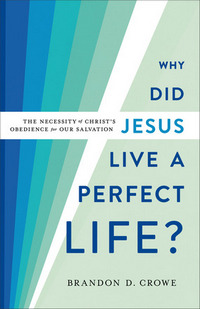
REPOSTING JUST ‘CUZ: Why Did Jesus Have to Live a Perfect Life? by Brandon D. Crowe: Obedience that Actually Saves

I’m about 3 weeks behind schedule (self-imposed) with Brandon Crowe’s latest. Absolutely worth it, but not really doing wonders for my posting. Anyway, while I’m (hopefully) getting to that book’s ending, let’s take a quick look back at one of his that I actually finished reading.


Why Did Jesus Have to Live a Perfect Life?Why Did Jesus Live a Perfect Life?:
The Necessity of Christ’s Obedience for Our Salvation

by Brandon D. Crowe

DETAILS:
Publisher: Baker Academic
Publication Date: October 26, 2021
Format: Paperback
Length: 189 pg.
Read Date: December 19-26, 2021
Support Independent Bookstores - Visit IndieBound.org

What’s Why Did Jesus Have to Live a Perfect Life? About?

Crowe seeks to focus on this question:

Is perfect obediencce necessary for enternal life?

The question could be rephrased a number of ways; Is perfect obedience necessary for justification? Is perfect obedience necessary for salvation? Did Jesus have to be perfectly obedient in order to save us? And if so, why?

Obviously, he says it is necessary—noting that we’ll underplay and miss all of what Christ did on our behalf and that we’d end up putting too much importance on our own works.

After Crowe establishes the question and ensures that the reader understands the definitions he’s using for the key terms, he turns to the Biblical text for some exegetical looks at key texts. This is, as it should be, the bulk of the book. In the third part of the book, he moves on to practical application—given what’s been said about the necessity of Christ’s perfect obedience, what’s the place of/need of the obedience and good works of the believer?

So, what did I think about Why Did Jesus Have to Live a Perfect Life??

I appreciated Crowe’s approach to the topic of Christ’s obedience—and, as usual, found his study of the texts to be helpful and challenging. The place of works in the Christian life too often is pitted against the obedience of Christ, or tied to it in an unbiblical fashion–Crowe’s discussion was more than helpful and I wish I saw more works like it.

A couple of highlights from the book for me were that third part about obedience and the last chapter in the exegetical part. In that chapter, Crowe examines the connection between Jesus’s obedience and the resurrection. That discussion tied in nicely to his 2020 book, The Hope of Israel: The Resurrection of Christ in the Acts of the Apostles (one of those books I still think about).

This is a careful overview of the topic, and will reward a similarly careful read. By design, he doesn’t posit anything revolutionary or new—it’s a restatement and reminder of what Reformation churches have been teaching for centuries. Even so, it’s something we need to be reminded of.


4 Stars

This post contains an affiliate link. If you purchase from it, I will get a small commission at no additional cost to you. As always, opinions are my own.

Saturday Miscellany—8/17/24

Odds ‘n ends about books and reading that caught my eye this week. You’ve probably seen some/most/all of them, but just in case:
bullet We’re Doing ‘Men Don’t Read Books’ Discourse Again. Here’s What We’re Missing—if the subtitle “The self-improvement-obsessed grindset bros who can’t spare the bandwidth to pick up a novel are the people who need literature the most.” doesn’t sell you on this piece, Jason Diamond’s first paragraph will.
bullet PRH Pairs with Ford to Publish Brand’s First Children’s Books —uhhhhhhhh. Okay?
bullet How Sharing Recipes Brings Fans Together: Making fictional food can be both a creative and communal activity.
bullet The Governess, in Her Own Written Words—An interesting piece on the impace of Governesses on Victorian lit. The first sentence rocked me, “In the early Victorian era, few families in Britain hired governesses to care for their children, and few young women were employed in that job.” Few? Few?? I feel lied to.
bullet The Tiffany Problem—I keep coming across references to this idea this week, and figured I’d share one of the pieces I read about it. Incidentally, this thankfully has nothing to do with the 80s crimson-haired singer. I don’t know if I could’ve taken it if it were.
bullet Thirst Traps: The Return of Vampire Novel—Return? They went away??
bullet The Road Goes Ever On: When Fantasy Sends You on Your Own Journeys
bullet Little Free Library—Kriti K from Armed with a Book talks about starting her own.
bullet 5 Unputdownable Scottish Thrillers—if you haven’t experienced the particular vibe of a Scottish thriller, here are 5 promising ways to start
bullet How to Overcome Reading Slump—Another good piece on this evergreen topic
bullet TCL’s #RandomBookishThoughts #2 – Author Pairings!—I don’t know if I’ve ever thought in this category before, but now I kind of have to.

To help talk about backlist titles (and just for fun), What Was I Talking About 10 Years Ago Week?
bullet Dear Luke, We Need to Talk, Darth by John Moe
bullet Treasure Coast by Tom Kakonis
bullet Broken Homes by Ben Aaronovitch
bullet Black Arts by Faith Hunter
bullet The Player by Brad Parks
bullet Speaking from Among the Bones by Alan Bradley
bullet The Monkey’s Raincoat by Robert Crais

This Week’s New Releases that I’m Excited About and/or You’ll Probably See Here Soon:
bullet The Last Shield by Cameron Johnston—the Action-Adventure Fantasy you need this summer. I gushed about it recently (and could easily do so again)
bullet The White Door by Pierce Taylor Hibbs—One of my favorite non-fiction authors launched his first novel this week. I had so much to say about it that it took me two posts—my initial take and a follow-up (and I could still do a couple more)
bullet What’s Next: A Backstage Pass to the West Wing, Its Cast and Crew, and Its Enduring Legacy of Service by Melissa Fitzgerald and Mary McCormack—some behind-the-scenes stories, some comments on the series it self, and discussion of some of the ways the show has inspired the stars into service beyond acting.

the text 'Step aside reality this is a job for a BOOK' superimposed on an image of stacks of books

The Nameless Restaurant by Tao Wong: The Real Magic Here Isn’t Supernatural

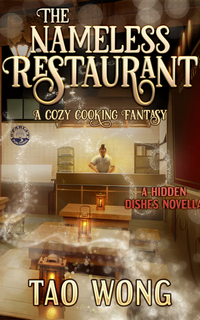
Cover of The Nameless Restaurant by Tao WongThe Nameless Restaurant

by Tao Wong

DETAILS:
Series: Hidden Dishes, #1
Publisher: Starlit Publishing
Publication Date: June 1, 2023
Format: eBook
Length: 128 pg.
Read Date: August 3-5, 2024
Buy from Bookshop.org Support Indie Bookstores

If you do manage to find the restaurant, the décor is dated and worn. Homey, if one were to be generous. The service is atrocious, the proprietor a grouch. The regulars are worse, silent, brooding, and unfriendly to newcomers. There is no set menu, alternating with the whim and whimsy of the owner. The selection of wine and beer is sparse or non- existent at times, and the prices for everything outrageous.

There is a restaurant in Toronto that is magically hidden, whose service is horrible, and whose food is divine.

What’s The Nameless Restaurant About?

If that description in the first paragraph wasn’t enough to make you disinclined to visit this restaurant—that “magically hidden” part should take care of it. Between its location and the wards inside, only a select few come in. Which is just the way the proprietor, Mo Meng, wants it.

The majority of his clientele are magical beings—or magic users—and his staff know just enough about that to understand the nature of their customers, and little else (sure, how else does their boss get some of those fresh and rare ingredients if not for teleportation).

On this one particular night in addition to some regulars—and a couple of mundane/muggle/non-magical people who stumble in—there are some new diners. A jinn, her companion/student, and three mages from the Council who are hunting for the jinn.

The novella isn’t about the diners, per se, it’s about Mo Meng and his establishment. They’re just who happened to be there that night.

Step Aside Cousin Carmy

For there were more important matters before her. Much more than the fate of the world. After all, dinner was here.

There are all types of magic that could be thrown around the restaurant—and a little of that comes into play. But the real wonder-working is what Mo Meng gets up to in the kitchen, and the results that his waitress brings to the table.

Wong gets into detail when talking about the preparation of the food, the recipes, and so on. You know how you can watch a show or two on the Food Network and think you can prepare something like Alex Guarnaschelli? Well, when I finished this book, I could imagine that all I needed was to re-read a couple of paragraphs in this book (after buying a wok).

At the same time, when you read about the customers eating, smelling, or looking at his food? You’re going to want to grab a snack—if not a few entrées. I easily could’ve put on 5-10 pounds just from reading this if there’d been food within reach (I’m so glad this is a novella and not a full-novel, especially of the doorstop variety—I don’t think I could handle that kind of temptation).

So, what did I think about The Nameless Restaurant?

Sure, she had a healthy appetite—which, when you considered the fact that she was a purely magical being was both fascinating and annoying—but she had never been gluttonous.

Not till now, at least.

This is a spin-off of Wong’s Hidden Wishes trilogy—but you don’t need to be familiar with it at all to appreciate this (I haven’t read it yet and I did). Might it help? Sure, but not enough to prioritize it.

We don’t get a lot of time with any of the characters who aren’t Mo Meng (there’s just not enough space in the novella)—but we get enough enjoy them all individually, and be at least a little curious about them all (and hope they show up in future novellas if only to see their reaction to future dishes).

The magic circumstances surrounding and repercussions of real-world events that are explained over conversations between the diners are a fun choice by Wong.

There’s not much to say beyond this because of the length of the book—I really enjoyed it, I got hungry, and want to read more of this series and more of this world. Thankfully, I can fulfill the latter easily—I encourage you to do the same.


3.5 Stars

This post contains an affiliate link. If you purchase from it, I will get a small commission at no additional cost to you. As always, the opinions expressed are my own.
Irresponsible Reader Pilcrow Icon

(belated) PUB DAY REPOST: Some Further Thoughts about The White Door by Pierce Taylor Hibbs

I had a few more things to say about the book after my original post…


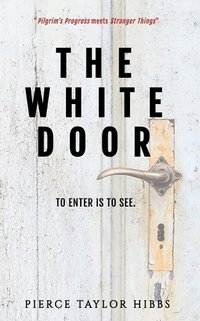
Cover for The White Door by Pierce Taylor HibbsThe White Door

by Pierce Taylor Hibbs

DETAILS:
Publisher: Truth Ablaze
Publication Date: August 15, 2024
Format: eARC
Length: 484 pg.
Read Date: July 7-20, 2024
Buy from Bookshop.org Support Indie Bookstores


Obviously, this will make more sense if you’ve read my original post about The White Door. And I should add that these are just thoughts that’ve come to mind as I’ve continued to chew on this book. I’m not making a full argument here, or anything like that. Some ruminations is all. (the conclusion is particularly weak, if you ask me, because I am just ruminating. )

One thing readers really like to do is to try to determine what they can about a novelist’s beliefs, points of view, and whatnot from the way things in their novel(s) are depicted. Frequently, some of the theories are pretty out there—and even those that are closer to reality are limited and have some noteworthy flaws.

That’s not the case with this book—Hibbs has already written a good number of non-fiction books showing his views on a number of ideas and topics. So readers of this novel have a different task before them (if they’re of a mind to wonder about these things)—how are Hibbs’ ideas depicted and brought to “life” in this novel? Are they at all? I haven’t read all of Hibbs’ previous work (yet), but I’ve read a number of his books and thought about them while reading the novel.

An obvious point here is that the protagonist, Seth, has an anxiety disorder, not unlike the one that Hibbs talked about in Struck Down but Not Destroyed: Living Faithfully with Anxiety. But there are plenty of other places you can see Hibbes’ previous writing.

In my original post, I said a couple of things that I want to return to. The first is:

…there are two doors (in places that have no business having doors, see McGuire’s Wayward Children series for examples). A white one and a black one—those who walk through them are changed. What, and how, they see is altered in ways that say a lot more about the doors than anything else.

The second thing is:

First of all, anyone who’s read much of Hibbs is going to recognize his thinking here. Narnia, Seth, and Cleft sound like they’ve studied Hibbs’ work (ignoring the anachronism there)—which is good. If only so you know that you’re supposed to think they’re on the right path. Other characters largely sound ilke they’re on their way to sounding that way, too.

Two of Hibbs’ books that came to mind were Finding God in the Ordinary and In Divine Company: Growing Closer to the God Who Speaks.

The part of In Divine Company* that came to mind in The White Door was:

We live in what I have called a worded world, a world that everywhere reveals something about the God who made it, a world that, in a sense, “speaks” about God.

* He also has a book called The Speaking Trinity and His Worded World that probably does a better job of explaining this point and expanding on it, but I haven’t read that one yet.

In Finding God in the Ordinary, Hibbs quotes John Calvin:

Whichever way we turn our eyes, there is no part of the world, however small, in which at least some spark of God’s glory does not shine. In particular, we cannot gaze upon this beautiful masterpiece of the world, in all its length and breadth, without being completely dazzled, as it were, by an endless flood of light. Accordingly, in Hebrews, the apostle aptly calls the world the mirror of things invisible, because the structure of the world serves as a mirror in which we behold God, who otherwise can not be seen (Heb 11:3).

Calvin influenced Hibbs on this point, and you can see it in the rest of that book. Let me bring up a few other short quotations from the book along those lines:

if we do not search for God in the ordinary, we do not perceive the world as it truly is. God has revealed that his entire creation manifests his character.

The whole earth, every crevice of creation, has been endowed by God himself with a revelatory component. We can choose to ignore this component if we wish, but then we will not be seeing the world as it truly is. We will be seeing a world of our own making.

if we do not search for God in the ordinary, we will miss very precious parts of life.

The tagline on the cover of The White Door is: “To enter is to see.” This is part of what I meant by “What, and how, they see is altered.” Both Roland (Cleft’s steward dog) and Cleft call those who’ve gone through the White Door “gazers”*

* I called them “seekers” in my original post. Oops. Why do I take notes, if I’m not going to look at them while writing?

These people gaze upon the world in a clearer fashion than they have before as if a film had been cleared off what they see. They see things in a new way—able to seek God in the ordinary, perceiving the world as it truly is. Not completely—and not necessarily all in the same way. Yet, their vision is better. They see things that others do not/cannot.

Now, walking through this door is in some way analogous of or is an allegory of regeneration. I have questions about it (as I talked about before), and I’m not sure if that’s because I misunderstood something or if Hibbs was unclear (I fully expect the former, but I think it’s the latter).* Regardless, that’s the case. Given “eyes to see and ears to hear,” these gazers see things that others don’t. In our world, it’s because darkened eyes don’t think of it, and renewed eyes need to be taught it (so we get books like Finding God in the Ordinary and teaching along those lines)—but when we know we can see the world, the skies, and nature in general declaring the glory of God—we, like those gazers, do see things others don’t.

* To paraphrase Mr. Simon, when I get something wrong, I’m the first to admit it, the last one to know-ow-ow-ow.

On the other hand, those who walk through the Black Door also have their sight altered. As you might imagine, it’s not as beneficial—but that’s all I’m going to say about that.

I really appreciate the way that Hibbs put “flesh” on his arguments from other books in this novel—not just for a good way to solidify it in the minds of his non-fiction readers, but to provoke his novel’s readers to consider how that piece of fiction might apply to their lives.

This post contains an affiliate link. If you purchase from it, I will get a small commission at no additional cost to you. As always, the opinions expressed are my own.

Irresponsible Reader Pilcrow Icon

(belated) PUB DAY REPOST: The White Door by Pierce Taylor Hibbs: Good vs. Evil and a Tolkien-Quoting Cat

So, I put 8/16 in my calendar for this publication date, or I’d have had this up yesterday. Still, I wanted to get something up to celebrate the Publication of this book (also, it gives me an excuse to correct some of the mistakes I made in my original post)


Cover for The White Door by Pierce Taylor HibbsThe White Door

by Pierce Taylor Hibbs

DETAILS:
Publisher: Truth Ablaze
Publication Date: August 15, 2024
Format: eARC
Length: 484 pg.
Read Date: July 7-20, 2024
Buy from Bookshop.org Support Indie Bookstores

What’s The White Door About?

A pull-quote on the cover calls this “Pilgrims Progress meets Stranger Things.” I’m not sure that Bunyan belongs in the conversation—maybe Lewis meets Stranger Things? This Present Darkness with better theology is closer yet.

There’s a great ensemble of characters featured in this novel, but let’s focus (as the novel does) on two—the first is Pastor Cleft Warrington. It’s evident soon after we meet him that he’s the kind of pastor you’d want—educated, compassionate, smart, and faithful. But there’s more than that to him—the small town in Pennsylvania that he pastors in has more going on than is visible to the naked eye. There are forces on the move—and he is one of the few aware of it.

The other character we focus on is Seth Logan—he’s a father of a couple of little kids and a writing professor. His wife is a steadying and supportive influence in his life, which he really needs. When we meet him, he’s unaware (like most people in this town) of the unseen workings around him. But all that changes when he comes across a stray cat one day while hiking.

I’m not sure how much else to say, but the cover blurb says little more—there are two doors (in places that have no business having doors, see McGuire’s Wayward Children series for examples). A white one and a black one—those who walk through them are changed. What, and how, they see is altered in ways that say a lot more about the doors than anything else.

The custodian (for lack of a better term) of the black door is named Skotos—he has been popping up in Dingmans Ferry now and then for quite some time. Cleft is trying to monitor his actions as much as he can. Cleft can’t say for certain what Skotos is up to—or what his aims are—but they are not for anyone’s benefit but his.

Those who walk through the white door get nicknamed “gazers,” because of their altered vision. They see things, realities, that others don’t–and cannot. Because of this power, they have a responsibility to their town (if not to more than the town) and its citizens. The gazers have allied with each other for this purpose and when they add members, they take them under their wings and help them understand their abilities and far more.

The Choice of the 80s

This is set in the 1980s, which is an interesting choice. And I’m not sure that it was necessary for the story. Sure, it eliminates the Internet in early or current form, so that’s an advantage—this would’ve been a difficult story to tell if characters could just check certain events online.

While there may be little about the events or the narrative that demands that time period, the smaller town feels more authentic in the 80s, I guess. There are plenty of little details that Hibbs provides to help it feel like that time.

The biggest thing that made me wonder about the choice of chronological setting (probably the only thing) was the way that Seth’s anxiety was depicted (and the way people reacted to him). I haven’t done any research on this—but I’m not sure that too many people in the 80s were talking about people with anxiety disorders or panic attacks quite the way these characters do. Particularly regarding adult men. Maybe I’m wrong, but I’d wager that was a stumble (as an example, see how strange it was in the late 90s for characters like Tony Soprano to deal with those things, and the ways they covered it up).

The Mix of Theology and Fantasy

Mixing Christian thinking, Christian belief, and fiction—particularly Fantasy—is a tricky thing. It can be done, and there is a tradition of it. But I can’t help wondering about the way that Hibbs does it. I enjoyed it thoroughly, but I had some questions and qualms.

The titular white door and the way it changes those who walk through it…both are great, full of symbolism and meaning. I really appreciated the effects produced in those who’ve entered it. But I have so many questions about it, too—why aren’t all the believers in town taken to it? Is it some sort of second blessing?* Why is it available for any random person walking by (although it is out of the way) to just walk through? Along those lines—Skotos’ victims…the way that Seth and his companions figure out what happened to them and the way they appeal to Paul’s writings to get there really misses the apostle’s point and even contradicts it. And that really troubles me.

* I know Hibbs wouldn’t go for that, but it kind of seems like one.

There are some other things depicted—some visions, another reality that’s visited (to put it as vaguely as I can), and things of that nature—that were just great. The pure fantasy stuff—or at least the things that he can talk about in purely fantastic terms—was great.

You take the blending of fantasy and theology out of this—leave us only with Skotos’ “magic” or whatever, the Deeper Magic of the Doors, and whatnot—I wouldn’t have a complaint at all. No church, no sermons, no Bible—just warring Good and Evil? The whole thing works. But Hibbs frequently stumbles when he combines them.

Now let’s set aside the Fantasy for a minute and just focus on the Theology. First of all, anyone who’s read much of Hibbs is going to recognize his thinking here. Narnia, Seth, and Cleft sound like they’ve studied Hibbes’ work (ignoring the anachronism there)—which is good. If only so you know that you’re supposed to think they’re on the right path. Other characters largely sound like they’re on their way to sounding that way, too.

Even the demonic (or at least really evil) character’s theology is rock solid. He rejects it—but he knows it. Watching him explain something, and then reacting to it, was really well done.

I have to add, that some of the gazers get animal companions—stewards—who can talk to the gazers. We see two of them in this book, Seth’s cat, Narnia, and Cleft’s dog, Roland. They are just fantastic. A Tolkein-quoting cat with a penchant for talking theology? That’s a critter I’d put up with my allergies attacking me to spend time with. Every bit with those animals are great. There are some other animals that show up later, too—I really dug them, too. But my spoiler policy prevents me from talking about them.

Some Word Choices

I’m going to throw this out there just to be thorough—and because I know a couple of my readers will think about it—maybe even be turned off by it.

The characters in this novel are not all Christians. And some of them are very recent converts who haven’t quite gotten around to cleaning up their language thoroughly. Hibbs has them use realistic words for people in those situations—a depiction of how the world is, not how he might want it to be.

That said, nothing too terrible is said in the book—nothing you couldn’t get away with in a PG movie (which isn’t the best barometer for some people, but it’s the easiest to convey) or a sitcom from the mid-80s.

Hibbs’ Writing

As a surprise to no one who’s read what I’ve said about Hibbs’ style and way with words before, I loved it. There are some sentences, some passages, and even some phrases that I just adored. If I had a final version and not an ARC, you’d be reading plenty of quotations in this post.

These characters and their emotional lives are richly drawn. The descriptions of little things as well as major events or scenes are the kind of thing that keep people reading regardless of plot and character.

There are two character deaths described that just blew me away. One happens just as the book begins and we see a grieving husband in the minutes after his wife’s death. It’s handled with sensitivity and care—and right from the get-go, you get attached to this character, his reactions feel just right. The other death that we spend an extended time on is handled differently, but perhaps even better. There are other deaths that don’t get this—or similar—kind of treatment. They’re handled the way that most fictional deaths are, and that’s fine. But the two we linger on? Hibbs gets everything right about those and I loved reading them (and will again).

I should add that this book isn’t full of character deaths—but there are some.

I’ve gotten off-topic a bit, but this is just some great writing. There’s a hint of poetry to so much of this energized by an eye for detail. Little things—like the description of Seth’s daughter’s laugh—are just beautiful, and some of the bigger things are done just as well.

So, what did I think about The White Door?

It’s been a long time since I read Christian Fiction regularly—sure, I read a few things by Christians (mostly local authors), but not a lot that calls itself Christian Fiction. In fact, I think this is the fourth book of that type I’ve posted about here. But when I heard that Hibbs was going to be bringing his first novel into the world, you know I had to give it a read. I’ve often said that his books are the best written theological/Christian Living/etc. books that I’ve read (published in the last 50 years, anyway), so of course I want to see what he does with fiction.*

* I should probably try his poetry, too. But it’s poetry, so don’t expect that anytime soon.

I’m so glad I did.

I have mentioned a few quibbles above—the downside of doing that is that it overshadows all the good that can be said. I can’t think of a way to do that without giving too much away. So my own limitation makes the book come across as worse than it should. Note the above paragraph, if nothing else.

It started slow, and I wondered for a while just what the book was going to be about (I didn’t bother reading anything about it before requesting a copy—I just knew it was the first novel for Hibbs, and that was enough)—but it kept me going—and it wasn’t long before I was fully invested (and that kept growing). By the time it was over, I wasn’t quite ready to walk away from these characters and this world.

The conversations that Cleft and Seth have together—or with other characters—about books, The Bible, language, and so on? They’re just great—and I could’ve read many more of them. There’s no justification in terms of character development or plot for us to spend more time with Seth (and Narnia) in Seth’s classes—but Hibbes could’ve given us more of them and I wouldn’t have complained. (I may have noted that he was padding the book with them, but I’d have enjoyed the padding enough to give him a pass)

Similar things could be said for Seth spending time with his family (with or without Narnia)—and so many other aspects of the book.

Every element of this novel works really well when considered on its own. Many of them work in conjunction with the others—it’s when all of them are brought together in these 484 pages that I think Hibbs trips over himself. It’s really a total is less than the sum of its parts kind of thing. But those parts are so worth your time and energy—and I wouldn’t be shocked to learn that I’m alone in some/all of my judgments.

I do encourage you to pick this up. It’s a good read, a refreshing, hopeful read—and I hope it’s the first of several novels from Pierce Taylor Hibbs.

Disclaimer: I received a copy of this eARC from the author, but the opinions expressed are mine and honest. And are what I would’ve said about the copy I bought—I’m just saying them a few weeks earlier.


4 Stars

This post contains an affiliate link. If you purchase from it, I will get a small commission at no additional cost to you. As always, the opinions expressed are my own.

Self-Published Authors Appreciation Week Footer

The 2024 Self-Published Authors Appreciation Week Logo was made by Witty and Sarcastic Book Club

The Legendary Mo Seto by A. Y. Chan: And Though She Be But Little, She Is Fierce

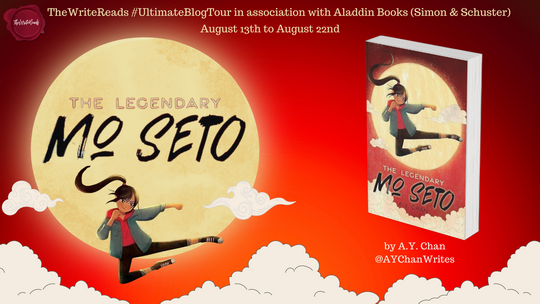
The Legendary Mo Seto Tour Banner

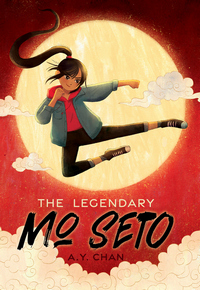
Cover for The Legendary Mo Seto by A. Y. ChanThe Legendary Mo Seto

by A. Y. Chan

DETAILS:
Series: The Legendary Mo Seto, #1
Publisher: Aladdin Paperbacks
Publication Date: June 4, 2024
Format: Hardcover
Length: 309 pg.
Read Date: August 8-10, 2024
Buy from Bookshop.org Support Indie Bookstores

What’s The Legendary Mo Seto About?

This is one of those books that I could easily tell you everything in my enthusiasm, but that’d take away the need for you to read the book—and Chan’s much more entertaining than I could be. So, I’ll try to keep it to the essentials.

Modesty (please call her Mo) Seto is a devoted student of taekwondo and has been competing—and dominating—in competitions for years. But a fellow student recently hit a growth spurt that passed Mo by and he has started to beat her in competitions. This is getting to her, it’s just not fair. After coming in second to him (again), she sees a call for open auditions for people in her age range for a role in an upcoming martial arts movie starring her favorite movie star/martial artist in the world.

Technically, Mo is too short for their requirements—the height issue again, will she ever just grow? She comes up with a cunning plan* to get into the auditions anyway with the help of her best friend and his grandfather posing as her guardian. Why a faux grandfather? There’s no way that her mother would allow her to do anything like this and her father is away on a sudden business trip and isn’t communicating with Mo or her mother the way he usually would.

* Slightly more elaborate than anything Clark Kent has tried, and just as believable. Just roll with it.

We follow Mo through the audition process—which starts to take on unexpected peril as the set becomes plagued by threats and unexpected problems—possibly caused by sabotage. Oh, yeah, and her classmate/rival is also going up for the part.

Can Mo get the part without the truth being discovered? Will Mo be disillusioned by seeing behind the Movie Magic? Will Mo’s dad start responding to her? And what’s up with this old book with a little-known martial arts form Mo just found in her basement? More importantly, can she use any of it to her advantage?

The BTS Stuff

Let’s get this out of the way: This is an MG Novel, not Cinéma vérité. There’s no way that the auditions can work the way portrayed in the novel—especially when it comes to kids. It is impossible that any of Mo’s antics and hijinks to get her into—much less stay in—the auditions would work. If you’re looking for accuracy and an honest look at making martial arts movies with actors under 18, look elsewhere.

That said, there’s enough of a flavor of Hollywood to all of this to work. The attitudes of the casting people—the shallowness of the initial assessments, the stress of the director, the attitude toward the fight choreographer/stunt professionals, and so on—really feel like what you expect. They’re entertaining enough that you really don’t care how realistic things might be, too—feeling about right is good enough.

For my money, the best part of this is watching Cody Kwok in action and how everyone reacts to him. Kwok is a Jackie Chan-esque figure (only younger). He’s known for doing his own stunts—many of which are just incredible—as well as not being tied down to any one genre (but making them all, eventually, about martial arts). Kwok, his entourage, and the film’s executives know what they’re doing when it comes to preserving his image and promoting it, and the auditioning kids (and media) see exactly what they’re supposed to. Chan does an excellent job portraying both that and showing the reader that the Superstar’s image might not really be the truth.

Characters Who Aren’t Mo

There’s a really strong cast of supporting characters who are as engaging as you want, I want to touch on just a few of them because it’d be too easy just to talk about Mo, and that’s not giving Chan’s work the credit it needs.

Mo’s rivals in the auditions are largely bullies when it comes to Mo (and some of the others), but they’re not all that bad. They’re just adolescent twerps who are probably covering up insecurities (well, a couple of them are entitled jerks who are on their way to being 80s movie villains)—the way they treat Mo is bad enough so you don’t make the mistake of liking them, can root for Mo against them, but you’re not going to worry about what they’ll do to her.

On the other hand, you get Mo’s friends who just make you like her more—if someone as cool as Nacho (real name, Ignacio) is her best friend, she must be pretty cool herself. And Nacho is cool—he’s supportive, understanding, artistic, and nerdy in all the ways that Mo isn’t. Mo’s a little too hyper-focused on herself at the moment, but Nacho gets it and is willing to wait for her.

His grandfather is a hoot. Gramps is an honorary grandparent to Mo, as well as Nacho’s actual grandfather. He’s recently widowed and lonely, but he hasn’t let it get him down—at least not in front of the kids. He’s a loving and goofy character who really comes through for Nacho and Mo—he’s the kind of grandfather I’d like to be.

One of the auditioners who befriends Mo is named Sanjay. I hope they find a way to bring him back for the rest of the books in the series. He’s apparently pretty good at karate and is as gregarious as the others are antagonistic. He’s one of those kids who cannot stop talking once he starts and is not self-aware enough to realize he’s doing it or how people react to him. He’d probably be pretty annoying in real life but as a comic relief character? He’s great.

Lastly—Mo’s parents. Parents in MG novels are so tricky to get right (I’ve often thought), and Chan gets it right. Not just the characters, but how they treat Mo—and how Mo sees them and how they treat her. Mo’s dad introduced her to taekwondo and Cody Kwok. He’s her biggest fan and source of encouragement—he also pushes her (generally) in the way she needs to keep going. When he’s not there, the impact on Mo’s confidence and emotions cannot be overstated.

Things are complicated with her mother. Mom comes close to being a stereotype, at least the way the narration describes her. But I’m not sure she is, essentially they don’t get each other—from Mo’s perspective, her Mom doesn’t like who Mo is. She doesn’t want a daughter into taekwondo (especially not to the near-obsessive level Mo is), but would rather she pursued something more acceptable, like dancing and Chinese immersion camp, a dainty academic superstar in the waiting. The reader will see that Mo’s not understanding her mother quite right, but there’s nothing malicious in it. It’s just a tricky mother/daughter dynamic (that appears to be starting to work itself out).

Mo Herself

In case I gave the wrong impression when I talked about Nacho, Mo is a cool person, but since we see the whole book from her point of view, it might seem biased. Mo is a confident, optimistic, go-getter. The fact that she’s probably not going to keep growing past her 4’9″ stature while everyone around her (especially Dax) is still growing, isn’t doing her esteem any favors. Her recent tournament loss is doing a number on her—she’s upset that Dax’s size puts her at a disadvantage and is ready to give up, but she’s also so determined that she just can’t. Chan portraying both competing impulses is a tricky proposition, but she pulls it off.

The chance to work with Kwok is the opportunity of a lifetime for Mo. She’s re-read his autobiography a few times (can quote portions of it), and has watched countless interviews—she knows him as well as anyone who hasn’t met him can (and as well as many people who have met him could). She’s such a superfan that it’s hard not to want to see a few Kwok movies yourself. When she describes one of his films, she always introduces it as “my favorite Cody Kwok movie”—it doesn’t matter which one she’s talking about. It’s a tiny touch, but I loved it. Her enthusiasm is infectious.

Actually, not just her enthusiasm for Kwok—but for everything. Her despondency is a little catching, too, and comes when it should. But her personality can’t stay down for long. She grows a lot over the course of the novel*—as she needs to, it’s the point of adolescence anyway. But she also has plenty of room to grow, and that’s easy to see, too. It’ll be fun watching that over the rest of the series.

* That’s growth in terms of character. Much to her chagrin, she’s as tall at the end of the summer as she was at the beginning.

So, what did I think about The Legendary Mo Seto?

I had about as much fun as is permitted by law while reading this.

Sure, it’s an MG book, so I’m a few decades older than the target audience. I guessed almost all of the big reveals (I think attentive MG readers will get most of them, too), I’m pretty sure I know how the next two books are going to go, and I rolled my eyes at some of the sillier aspects of the book. That’s not a problem with Chan’s writing—I think it means she hit her target. The fact that she was able to write for them while keeping an old guy like me entertained is to be commended.

This is a fast, engaging read that will entice readers from the jump and keep them turning pages (likely with a grin) almost as fast as Mo can dash around. Older readers will want to adopt Mo and Nacho as kid siblings (or false grandparents), and younger readers will want to be like Mo—and hang out with her friends. As good as the story and the writing are (and Chan’s subtle prose is deceptively easy)—readers are going to walk away from this book thinking primarily of this determined and brave girl, who will muster up whatever she has to in order to get a shot at her dreams.

I’m leaving things out that I should be saying, I know I am—but I can’t think of what they are at the moment. So be sure to see what other people on the Tour are saying. So let me just wrap up by saying that for the young or young-at-heart reader, this is a sure-fire win.


4 Stars

This post contains an affiliate link. If you purchase from it, I will get a small commission at no additional cost to you. As always, the opinions expressed are my own.

My thanks to The Write Reads for the invitation to participate in this tour and the materials (including the novel) they provided.

BOOK SPOTLIGHT: The Legendary Mo Seto by A. Y. Chan

I’m very pleased today to welcome The Write Reads Book Tour for this MG novel by A. Y. Chan, The Legendary Mo Seto! My take on the novel will be posted here a little later this morning, I just want to put a few finishing touches on it. The Tour is in full swing now, so be sure you check out https://twitter.com/WriteReadsTours to see what other bloggers are saying about the book, now that I’ve had a chance to write up my thoughts without inadvertently stealing an idea or two from someone, I’m looking forward to diving in myself. But for now, let’s learn a little bit about the book, shall we?

The Legendary Mo Seto Tour Banner

Book Details:

Title: The Legendary Mo Seto
Publisher: Aladdin
Format: Hardcover/Ebook
Length: 320 pages
Publication Date: June 4, 2024
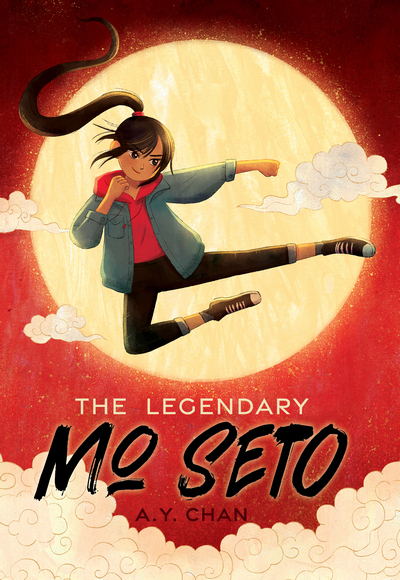
The Legendary Mo Seto Cover

About the Book:

Mo Seto, martial arts movie star! Has a nice ring to it doesn’t it? If only there wasn’t a height restriction to audition. But 12-year-old Modesty (Mo) Seto has never let her height get in the way before, not when she became a black belt, or when she fought the meanest boy in her class, and she’s not going to let it stop her this time! Now if only she can figure out a way to grow five inches and fool everyone at the auditions… Join Mo on an adventure (and audition) of a lifetime and find out if powerful things really do come in small packages!

Why I wrote this book – A. Y. Chan

I started training in taekwondo when I was six and, growing up, I longed to read books about kick-butt girls doing kick-butt things, but there really weren’t as many as I had hoped for. The idea for this book has been percolating in my head ever since. I wish to inspire kids not only to be brave and never give up, but also to be proud of who they are.

My inspiration for my story came from a real city-wide competition, where, like Mo, my protagonist, I faced off against a bigger, stronger boy during the final match. At that time, pairings were determined by belt-level and age, not by weight class. I ended up losing. I remember feeling so crushed by my second-place finish, and I kept replaying the fight in my head, wondering what I could have done differently.

I was also inspired by martial arts movies—especially the stunt actors and body doubles, and the thugs in the background serving as punching bags for the protagonist. As an introvert, I never wanted to be the main character…but to get beat up by the main character? That seemed awesome. After achieving my black belt in Taekwondo, I explored other types of martial arts and came away with an appreciation for the similarities and differences in the different forms, and how each has a unique philosophy linking the physical to the mental (and spiritual). Martial arts is about discipline and practice, but it’s also about respect (for oneself and for others) and integrity. And, of course, indomitable spirit, the all-encompassing light within us all that shines with determination and hope and an unshakable optimism for a brighter tomorrow.

Best,
A.Y.

Book Links:

Amazon Canada ~ Amazon US ~ Amazon UK ~ Simon & Schuster ~ Goodreads ~ Publishers Weekly review ~ Kirkus Reviews review ~ The Children’s Book Review

Mo Seto Action Pose

About the Author:

A. Y. ChanA.Y. Chan is the author of The Legendary Mo Seto, a story about a 12-year-old female martial artist who auditions for a movie role opposite her favorite martial arts movie hero—only to find out she’s too small for the role. Growing up in Canada’s Greater Toronto Area, A.Y. read all the middle grade and young adult books she could get her hands on. To this day, those remain her favorite genres. After achieving her black belt in Taekwondo, she explored a range of other types of martial arts, and she draws upon her experiences in learning new techniques and philosophies to inspire her writing. These days, she continues her martial arts training some mornings, writes in the afternoons, takes long walks to muddle out plot points, and falls asleep reading.

Author Links:

Twitter/X ~ Instagram ~ Facebook ~ Website ~ The Children’s Book Review Interview

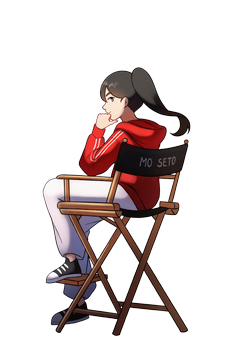
Mo Seto Director Chair
My thanks to The Write Reads for the invitation to participate in this tour and the materials they provided.

WWW Wednesday—August 14, 2024

Noted traveler and tea aficionado, Arthur Dent, once commented that he “could never get the hang of Thursdays.” And I frequently get where he was coming from. Thankfully, today’s a Wednesday—and I can get a handle on them. If nothing else, it’s the day I ramble about the books I’ve been/am/will be reading this week and get intimidated/inspired by what those who comment here (notably, Allyson Johnson) say in response.

This meme was formerly hosted by MizB at A Daily Rhythm and revived on Taking on a World of Words—and shown to me by Aurore-Anne-Chehoke at Diary-of-a-black-city-girl.

The Three Ws are:
What are you currently reading?
What did you recently finish reading?
What do you think you’ll read next?

Seems easy enough, right? Let’s take a peek at this week’s answers:

What are you currently reading?

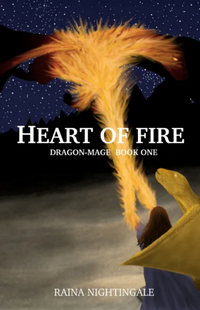
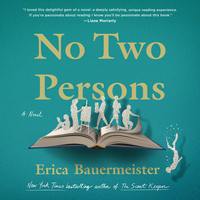
I’m reading Heart of Fire by Raina Nightingale, and am just starting No Two Persons by Erica Bauermeister, read by a full cast on audiobook (thanks to Carol for the recommendation).

Cover of Heart of Fire by Raina NightingaleBlank SpaceCover of No Two Persons by Erica Bauermeister

What did you recently finish reading?

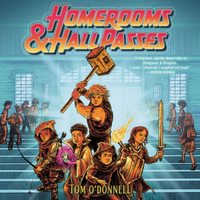
The last books that I finished were A. Y. Chan’s The Legendary Mo Seto and Homerooms and Hall Passes by Tom O’Donnell, read by James Fouhey on audio.

Cover of The Legendary Mo Seto by AY ChanBlank SpaceCover of Homerooms and Hall Passes by Tom O'Donnell

What do you think you’ll read next?

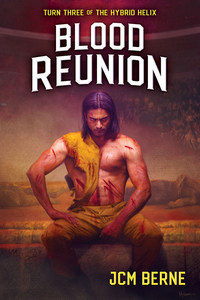
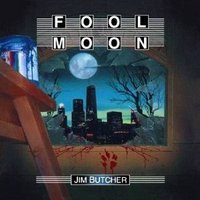
I’ve got some good banter on my horizon, my next book should be Blood Reunion by JCM Berne and my next audiobook should be Fool Moon by Jim Butcher, read by James Marsters.

Cover of Blood Reunion by JCM BerneBlank SpaceCover of Fool Moon by Jim Butcher

Are you reading anything worth talking about?

Steam Opera by James T. Lambert: Choosing It Not Because It Was Easy…

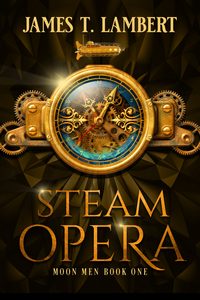
Cover to Steam Opera by James T LambertSteam Opera

by James T. Lambert

DETAILS:
Series: Moon Men, Book One
Publisher: Bert Books
Publication Date: November 18, 2022
Format: Paperback
Length: 416 pg.
Read Date: July 8-12, 2024

What’s Steam Opera About?

I’m both tired and apt to meander too much when trying to answer this question, so I’m just going to lift the answer from Lambert’s website:

London, England, 1894

Patrick Smythe lives a comfortable life in London coming up with new inventions. His close friend Thomas Melton finances many of these ventures and together they advance technology. Geoffrey Trenton takes the occasional investigative work after retiring from Scotland Yard.

Airships fill the sky

The world is on the move with dirigibles and Zeppelins hauling freight and passengers. On land and sea people travel at will in an era of plenty.

Unbridled invention fills the laboratories

New discoveries fill the news as scientists probe past the boundaries of human knowledge. Every field advances as knowledge of the natural world drives new innovation.

Telescopes scan the heavens

The Royal Observatory at Greenwich has a new telescope and the astronomers are using it to view the universe. Even when they’ve been told to take the night off. A strange discovery and a brutal murder draws Trenton out of retirement to investigate.

And we want to go to the moon!

Patrick develops his most ambitious project: a trip to the moon and back! With Thomas’s help securing financing and Trenton running security, what could possibly go wrong? But a mysterious organization wants to prevent this and will go to any length to stop them!

My Big Complaint

The next section will touch on a maybe larger concern. Or maybe it’s a quirk. I’m not sure. But I had an easier time getting over it than this part. There’s a quick arc that introduces us to the future security chief for this endeavor—it starts out pretty interesting, maybe more interesting than the “go to the moon” story at that point. And just as that story gets your hooks into you…it’s dropped. I do think that I can see where and how Lambert is going to pick it up again in the future. But the way he abandoned the story in this novel was abrupt and off-putting.

Lambert is capable of better.

Um…Where’s all the Steam?

You call something Steam Opera, you set it in the latter 1800s in London, you make it about inventors and engineers (among others), you give it that color scheme and cover design—you sorta indicate to your reader that this is going to be a Steampunk novel.

But we really don’t get one—we get a lot of Zepplins and dirigibles, science that’s more advanced than it should be, and the rest of it is pretty era-appropriate. No gadgets, no science that’s hard to pull off on this side of the Industrial or Digital Revolutions. Sure, there are plenty of people wearing goggles—but that’s about it. This is the least Steam-punky Steampunk I think I’ve read.

And I know Lambert can pull off Steampunk gadgets—Aether Powered demonstrated that clearly. So why not here?

Really, why not?

So, what did I think about Steam Opera?

Okay—all I’ve really said after the description sounds negative, and I don’t want to sound that way. Because once you get past the above quibbles (which is really pretty easy), this is a perfectly entertaining read.

This is easily the most ambitious of Lambert’s first three novels, and his writing has improved over what his first books delivered (and I liked those I want to stress). His characters, prose, eye for detail, and imagination are better represented here (as is a capability to carry a story for another 100 pages or so than he has in the past). If he keeps improving like this, he should get the fanbase he deserves.

Lambert does a good job with the pacing—sometimes it seems he speeds up more than is advisable, and occasionally he swings the other way—but overall, he keeps things moving well enough to keep you engaged while dipping into some pretty technical areas (even if the technology is made up). It’d have been very easy for him to get so into the technical descriptions that he’d kill any momentum and turn this thing into a slog. All things considered, he made the right choices on that front.

And the technical bits themselves? I think Lambert really succeded there—both the way he adapted Zepplin-esque technology to mimic the work that the Atlas and other rockets did in our timeline and in the way he described their flight while still in Earth’s atmosphere—I bought it all. It seemed plausible enough for this world (moreso than, say, the music devices that The Ministry of Peculiar Occurrences enjoyed, for example)—particularly the in-flight moments.

I wouldn’t have minded some more named characters—and some female characters would’ve been good to see*. This is very much a book about Moon Men. However, the characters we did get were engaging and interesting (even the antagonists). The more time we spent with all of them, the more I wanted to spend time with them—which is always a good sign.

* The lack of female characters probably deserves its own section, I now realize—but what more is there to say? Yes, the Victorian-era was dominated by men in engineering and business, so it helps things ocme across as more realistic to not have women around. But if we’re going for that level of realism…maybe keep everyone on Earth?

What we learn in the closing pages and what leads up to them is came out of nowhere—or so it seems, but really didn’t. What’s better is it sets up the next book and satisfies your curiosity about “Why is this a Book One?” Sure, it creates a whole bunch of new curiosity about Book Two (and maybe beyond, I’m not sure how long Lambert is thinking), but that’s the point. As long as you give me some answers, you can add all the questions you want.

In short, I had plenty of fun with this book and this world, and am eager to return to it. As good as Lambert’s next release, Relics of War, looks—I can’t help but be irked that it’s not Moon Men Book Two. I really want to know where he’s going with this. But that’s a problem for future-H.C. Present-H.C. is happy to recommend this to you and strongly suggests you become familiar with the very pleasant experience that is reading a James T. Lambert novel.


3 Stars

20 Books of SummerLiterary Locals logo

Page 81 of 603

Powered by WordPress & Theme by Anders Norén