WWW Wednesday, August 7, 2024

Did you know that we are two days away from National Book Lover’s Day here in the States? (yes, there is a Day for everything under the sun—it’s also Veep Day, Shop Online for Groceries Day, National Rice Pudding Day, National Hand Holding Day, and Co-Working Day). Which makes it at least the 5th consecutive year that I don’t have anything prepped for it. You’d think that’d be a gimme of a post, right? But I’ve yet to come up with a decent idea.*

Also, around these parts, Every day is Book Lover’s Day. Anyway, I felt like I needed a couple of nonsense sentences before we got to the meat of this post. Let’s get on with things.

* Okay, I might have just thought of a post I could put together

This meme was formerly hosted by MizB at A Daily Rhythm and revived on Taking on a World of Words—and shown to me by Aurore-Anne-Chehoke at Diary-of-a-black-city-girl.

The Three Ws are:
What are you currently reading?
What did you recently finish reading?
What do you think you’ll read next?

Seems easy enough, right? Let’s take a peek at this week’s answers:

What are you currently reading?

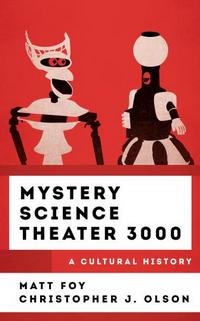
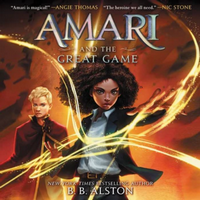
I’m reading Mystery Science Theater 3000: A Cultural History by Matt Foy and Christopher J. Olson, which might be trying too hard to explain humor. I’m listening to Amari and the Great Game by B. B. Alston, read by Imani Parks on audiobook to remind me exactly where the story has us before I open the third volume.

Cover to Mystery Science Theater 3000: A Cultural History by Matt Foy and Christopher J OlsonBlank SpaceCover for Amari and the Great Game by BB Alston

What did you recently finish reading?

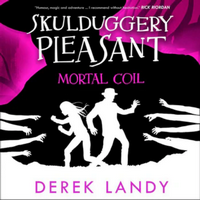
I just finished Brock Poulsen’s Bizarre Frontier Omnibus #1, and that will not be the last time I read Poulsen* . I also just finished and enjoyed Mortal Coil by Derek Landy, read by Brian Bowles on audio, which was fun even if I had trouble adjusting to a new narrator, and was troubled that I let my son read this in grade school.

* In case he reads this, I hope he notices that I spelled his name correctly this time.

Bizarre Frontier Omnibus 1 by Brock PoulsenBlank SpaceCover of Mortal Coil by Derek Landy

What do you think you’ll read next?

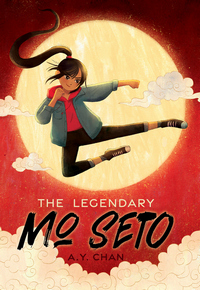
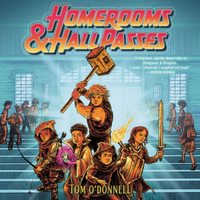
My next books will be some fun MG-lit, I’ll be reading The Legendary Mo Seto by A. Y. Chan and my next audiobook should be Homerooms and Hall Passes by Tom O’Donnell, read by James Fouhey (the premise alone gets it 3 Stars).

Cover of The Legendary Mo Seto by AY ChanBlank SpaceCover of Homerooms and Hall Passes by Tom O'Donnell

What kinds of things have caught your eye lately?

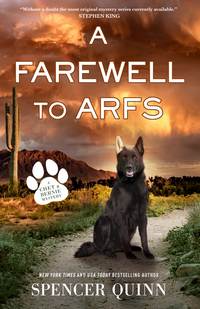
PUB DAY REPOST: A Farewell to Arfs by Spencer Quinn: The World Breaks Every One, Except Maybe Chet

Cover to A Farewell to Arfs by Spencer QuinnA Farewell to Arfs

by Spencer Quinn

DETAILS:
Series: Chet and Bernie, #15
Publisher: Forge
Publication Date: August 6, 2024
Format: eARC
Length: 288 pg.
Read Date: July 24-27, 2024
Buy from Bookshop.org Support Indie Bookstores

What’s A Farewell to Arfs About?

We start off this book with Bernie and Chet finishing a case for the Sonoran Museum of Art (an institution we learned about a couple of books ago), and with things looking up—and money in Bernie’s pocket—this is a pretty happy way to start things.

But soon after that, Chet overhears a phone call that their neighbor, Mr. Parsons, is having—and the reader knows things are going bad for him. Bernie learns the next day that Mr. Parsons has been the victim of a phone scam and is wiped out. Bernie starts looking into it—and into the Parsons’ ex-con of a son. It looks like he may have turned his life around, and is helping other former inmates adjust to the outside world and to stay on the right path. But is that what’s really going on?

If Billy Parsons isn’t involved—who is? And is there any chance that Bernie can get back any of the Parsons’ money?

Charlie and Esmé

Bernie’s son, Charlie, has been a consistent pleasure in the series—particularly because of Chet’s devotion to him. But adding his best friend, Esmé, in the last couple of books has made the character much more enjoyable for me.

I really enjoy their dynamic, for those familiar with Syfy’s Resident Alien show, it’s similar to the dynamic of Sahar and Max, only Esmé has a little more patience with Charlie than Sahar does with Max.

Even better, we get to meet Esmé’s father in this book—who seems like a good guy for Bernie to talk to in general—he has no knowledge of Bernie’s past, he’s not involved with policing, investigations, or anything like that. Just a friendly guy—who happens to be smart and (coincidentally) involved in an area that Bernie needs help understanding for the case. I enjoyed their conversation and hope we get more in the future.

(still, I do like the way that Charlier got to shine a little brighter this time than he usually does)

Bernie’s Past

Whoa. I did not expect any of what we learned about Bernie’s father in this book. Frankly, I didn’t think we’d ever learn anything about him—we barely know anything about his mother (and I’m okay with that based on Chet’s descriptions). But all of a sudden, there’s a lot about Harry Little being talked about.

It works—don’t get me wrong—and now I want to know more about Harry, his relationship with Bernie, and what was going on with him in general. We don’t get that (now?), but we get a glimpse of the man that was a presence in Bernie’s life until his early death. And that’s not nothing.

Feelings, Nothing More than Feelings

So, all the stuff about Harry Little added some emotional weight to the novel. But we didn’t need any of it—I’m not objecting, don’t get me wrong—but the last thing this book needed was more going on emotionally.

There’s some drama between Bernie and Weatherly. Bernie’s found a new way to botch things up with a woman—no real surprise there. The only plus is that it is a new way—he’s not repeating mistakes he made with Leda or Suzie. Maybe there’s some growth there—but it’s not Bernie at his best.

Related to that are some real dark moments for Bernie—we’ve seen hints of things like this from him before. But I don’t think it was ever this pronounced. Bernie is not always a good guy, he’s not only a white knight—there’s a noir character in him, battling to come out. And Bernie’s control slips early on in the novel and he has to reckon with the fallout.

But that’s not all. The Parsons have been aging and declining in health for a few books now, and for them to get wiped out like this—and then whatever that may or may not say about their son? There’s just no way to read this without your heartstrings being tugged. Scratch that—they’re yanked.

I don’t want to be unclear here (he says after probably giving the wrong impression). This is still a Chet and Bernie book like fourteen that have come before. Chet’s still irrepressible, he’s still an unreliable narrator obsessed with Bernie, food, smells, putting his teeth on perps, and snacks. He will make you laugh, and you will enjoy Bernie tracking down clues and the rest. But, like the better installments of this series, there’s a lot more going on than Chet’s antics—and Quinn makes sure that the depth is there.

So, what did I think about A Farewell to Arfs?

I admit that I was hoping for a criminal named Mike Craven to show up—to get back at Craven’s accidental use of Quinn’s name in last year’s Fearless. But it’s probably too soon for that—maybe in the next couple of years?

Once I saw what Mr. Parsons was doing on the phone, I muttered to myself (and texted a friend) that “Quinn’s getting all the mileage he can out of the research he did for Mrs. Plansky’s Revenge.” More power to him, obviously, but it did feel a little like a re-run. Thankfully, the story went in a very different direction—as I assumed it would, but still. In fact, while this might have been the result of the same research, the nature of the phone scam was different enough to shut me up.

I’m not sure that Weatherly handled things as well as she could’ve, but I’m not bothered by an imperfect character—she can be as flawed as Bernie. But that was the only hitch I found in this book or the events in it.

I really appreciated the depth we see of Bernie’s character, an angle or two that we haven’t spent that much time looking at before—we get to focus on. There’s more to him than being a decent PI with a lousy approach to finances. And if how he treats the Parsons doesn’t make your heart melt a little, you weren’t paying attention.

We get the usual chuckles (including Chet giving the reader a good idea about what he thinks about legalized marijuana), a good story, all the feels I described above (and more), and some good action scenes. What more is there to ask for?

Nothing that I can think of.

Disclaimer: I received a copy of this book from Tor Publishing Group via NetGalley—thanks to both for this.


4 1/2 Stars

This post contains an affiliate link. If you purchase from it, I will get a small commission at no additional cost to you. As always, the opinions expressed are my own.
Irresponsible Reader Pilcrow Icon

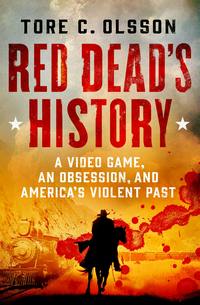
PUB DAY REPOST: Red Dead’s History by Tore C. Olsson: A Historian Looks at the U.S. Shown in the Game

Cover of Red Dead's History by Tore C OlssonRed Dead’s History:
A Video Game, an Obsession, and America’s Violent Past

by Tore C. Olsson

DETAILS:
Publisher: St. Martin's Press
Publication Date: August 06, 2024
Format: e-ARC
Length: 288 pg.
Read Date: July 13-18, 2024

Buy from Bookshop.org Support Indie Bookstores

What’s Red Dead’s History About?

Like so many people around the world, the author got back into video games in 2020 as a way to fill the hours he wasn’t interacting with people in real life. Like so many others, one of the games that captured his attention was Red Dead Redemption II. Unlike so many people Tore C. Olsson is an American History professor, so while he was fun doing whatever it is exactly that you do in the game*, part of his brain was looking at the history and time being depicted in the game. Because if there’s one thing the game is known for, is being the most popular and influential game set in American History since The Oregon Trail from the 80s.

* It should be obvious that I don’t play video games at all, not even the one in question.

Olsson went on to make headlines—and pack lecture halls—by teaching a history course based on the games, and he’s now turned it into a book.

This is not a book about the game (although he talks about it a lot), it is not a point-by-point examination of the historical details (but it comes up a little), it’s primarily using the game, and the things shown/talked about/alluded to in it as a launching pad to discuss themes, movements, and particulars from post-Civil War America.

The focus for the book is Red Dead Redemption II, but Red Dead Redemption comes up from time to time—but not any of the other games in the franchise. Olsson’s discussion follows the geographic order and proportions of the game—starting with adventures in the West, moving to the Deep South (for the majority of the book), and then wrapping things up in Southern Appalachia.

Historical Accuracy of the Game

From the start, Olsson is clear, he’s not going to get into slicing and dicing the historical accuracy of Red Dead Redemption 2, but…he can’t help talking about it every now and then. He has a lot of good things to say about the history of the game (really, he wouldn’t have taught a class or written a book inspired by it without that), but the biggest note seems to be—if the game had been set 20-30 years earlier than it was, it would’ve been better.

There are particular points here and there where he will offer specific critiques and commendations—but that’s essentially the point he keeps coming back to.

Now, I don’t know enough about the storylines of Red Dead Redemption or Red Dead Redemption II to know why the developers insisted that the game takes place when it does—and it certainly seems like they did have an eye for historical detail—they just missed it. It might be a game continuity thing, there might be all sorts of explanations for it. I don’t know.

Now, Olsson isn’t sitting there like Neil de Grasse Tyson tweeting about the scientific inaccuracies in movies, the point of the book isn’t to critique the depictions of the era. But while he’s talking about the various topics, he will mention them briefly. It doesn’t take anything away from the game for him.

The West

The first section focused on is the one that the game is best known for (and, I’ll be honest, the only thing I thought the game had)—a strong take on the West. I’d like to say that I’d read a book about the subject of each chapter were Olsson to expand them, and that’s true in a perfect world, but I’m not sure I really would. But I’d be willing to.

I should note that it’s probably very easy to read several books on the topics of each chapter right now. And you never know, I just might.

This section covers things as nebulous as the concept of “The American West”—and when did it start dying/disappearing (if ever). Controversial topics like The Indian Wars, the amount of violence in the West (and some of the notable persons behind it), how Justice/Laws were enforced, and so on. Olsson also covers things you’d expect (especially if you actually know the game)—the construction of and use of the railways; cowboys; The Pinkertons; Butch Cassidy and The Sundance Kid.

I learned so much about all of these things—and I’m very tempted to go out in search of some of the books footnoted here.

The Deep South

As anyone who teaches American History—particularly in a place like Tennessee—is aware, talking about the Deep South in a post-Civil War era is a daunting task. But as that’s where the bulk of the gameplay takes place, the bulk of the book gets that treatment as well.

As with the rest of the book, Olsson talks about the game’s portrayal of this area and the topics, how media culture(s) depict of this area and the topics, and finally looking at the history of the area itself.

In this Part of the book, Olsson talked about such non-controversial topics as: The Paradox of Race; From Old South to New South; The White-Hooded Menace; The Tragedy of Lynching; In the Fields (largely post-War); Working on the Chain Gang; Mr. Jim Crow; The Lause Cause; New Orleans, 1899; and Votes for Women.

Obviously, there’s far, far too much to say about any of these topics than he has time for in a book of this size and scope—but what’s there is provocative (in a good way), thoughtful, and well-footnoted so curious readers (and there will be many after these chapters) can do some follow-up reading. Yes, that’s a sentence that applies to the book as a whole, but it seems apt to emphasize it here.

Southern Appalachia

This part feels very timely considering how much Appalachia, Appalachia, and portrayals of the area/its residents in the media have been in the last few weeks.

Olsson only gives three chapters to this part of the book (about 11%) as much as he might be kicking himself for that now. Like with Part I: The West, he starts by discussing “The Appalachian Myth.” Just what makes up this part of the country? Why has it captured the imagination the way it has? How much of what we think of when we think “Appalachia” is true now or ever was?

He then looks at the race to claim parts of it after the Civil War and how that shaped the culture and history of it. Then he spends a chapter looking at Blood Fueds—obviously focusing on the Hatfield/McCoy feud, what lies at its root—and the surprising ways it actually broke along family lines.

I was a little too tired while reading this section to get as much out of it as I think I ordinarily would’ve—and really should revisit it once the book is released, I think I missed some good stuff.

So, what did I think about Red Dead’s History?

I had some really good history professors and teachers over the years, so I really don’t want to say that Olsson is the professor I wish I had—but really, I don’t imagine many will read this book and not want to take a class or two from Olsson.

The writing is engaging, witty, and insightful. He has a real knack for making you care about something you really didn’t care about just a few pages earlier—for that matter, you may not have been aware it was a thing you could care about/be interested in just a few pages earlier. I’m not going to suggest you’ll agree with him all of the time, because you won’t. But you’ll almost certainly enjoy his perspective as well as his presentation of the facts.

I’m not really the target audience for this book—I figure that’s game players who want to dive in to get more depth about the context of the game. To learn the stories behind the game’s stories. Or those who now have an interest in American History and don’t know where to go get more information outside a stuffy-looking textbook. Given that, I think it says a lot when I tell you that I had a great time reading this, and am more curious the game than I had been before. Not so curious to actually play it (or buy the game, a console to play it on, etc.)—but enough to talk to my son who has played through it—and has spent a lot of time doing sidequests and whatnot, and maybe even to watch some gameplay videos online. And that’s more than I typically am interested in doing.

This is a great way to approach American History; it’s a good way to approach this type of media (games or otherwise); and it’s just an entertaining read regardless. It moves a little slower than a novel—but not much (for those who are daunted by non-fiction reads). Really, there’s not much to not commend about this book. You really should check it out.

Disclaimer: I received a copy of this book from St. Martin’s Press via NetGalley—thanks to both for this.


4 Stars

This post contains an affiliate link. If you purchase from it, I will get a small commission at no additional cost to you. As always, the opinions expressed are my own.

Irresponsible Reader Pilcrow Icon

LITERARY LOCALS: A Q&A About Writing in Idaho with R.M. Scott

Literary Locals logo
I met and had a nice chat with R.M. Scott this spring, and now I’m very happy to bring you this quick chat about her writing.


Before we get into things, why don’t you give the reader a brief introduction to you and your work.
Hi Wonderful Readers!

I am R.M. Scott, a young adult and children’s author.

My first traditionally published novel is Unseen.

It is a captivating tale of sixteen-year-old Alaia, a gifted healer. She can cure her father from a lung disease given enough time, but instead she must disappear, because the Inquisitor has accused her of practicing magic.

She flees with Mateo, the Inquisitor’s nephew, in a forbidden romance, but the young healer must learn to use her herbal knowledge to fight back to save those she loves. Even those she’d believed were already lost.

It is influenced by Basque culture and the European witch hunts of the 17th century, but it is a sweet and adventurous, young adult read.

www.rmscottauthor.com
Amazon.com: Unseen: 9781942856825: Scott, R M: Books
Unseen – Kindle edition by Scott, R. M. . Literature & Fiction Kindle eBooks @ Amazon.com.
Unseen by R. M. Scott – Audiobook – Audible.com
Unseen (Paperback) | The Rediscovered Bookshop (rdbooks.org)
www.instagram.com/rmscottauthor
www.facebook.com/rmscottauthor
www.twitter.com/rmscott99

Are you a native Idahoan? What brought you to Idaho in the first place? (answer whichever question applies) What is it about Idaho that keeps you here?
I was born in Idaho Falls on the coldest night of the year. There were power outages, snow, and storms. All the heat in the maternity ward was routed to the babies to keep them alive, and I was one of them. So yes, I am a native Idahoan. I’ve traveled to Europe, Asia, Central America, and all over the U.S., but the Northwest is more than where I am, it’s simply who I am. Home. A connection of life and being.

Are you tied into some sort of local author/bookish group/culture? If so, tell us about it and how it helps you as an author. If you’re not, is there a reason for it?
I joined SCBWI (Society of Children’s Book Writers and Illustrators) after meeting a local author at Hastings. It has been huge for me. I met other authors that helped mentor me in critique groups. I grew in my skill and craft. I took courses and attended conferences, still do.

What kind of events in the area do you attend—either to sell/promote your books or to network with authors? Are there any outside of this area that you hit regularly and wish we had something like it here?
I like to attend the Idaho Writer’s Guild conference held annually in Boise. There are usually agents to pitch work to and classes on craft. SCBWI also has great conferences, with a focus on writing for children. It has conferences occasionally in Idaho, and annually or semi-annually in Utah, Seattle, Portland, and other areas.

Utah also has a couple amazing conferences that I’ve attended – LTUE (a must if you’re a Brandon Sanderson fan) and the Storymakers Conference. The Storymakers Conference has an annual competition called the Whitney Awards. I was honored to be a finalist in 2022 where I got to meet Brandon Sanderson in person. And yes, I am a fan.

What’s the breakdown of your audience—do you have a strong local base, or are your readers from other parts of the world?
My audience is wide-ranging in age groups and geographical areas. For example, readers of my book have ranged from 11 to 90-years-old. My book is at different libraries across the U.S. I’ve had readers in the U.K. as well.

Do you think there are particular challenges or advantages to being a writer in the Treasure Valley? (possibly both)
When you attend large conferences, you realize how much a “small fry” you are. There are definite advantages to big areas with big names and big conferences. However, sometimes I see being from a smaller venue as an advantage because you’re not as easily discouraged by how intense the competition can be. You’re more likely to try simply because you’re a little unaware of it.

Do you bring Idaho (or some sort of Idaho-sensibility, assuming one exists) to your work? Whether or not anyone else sees it, can you look at some aspect of your writing and think “That’s Idaho” or “I would do ____ differently if I was a Kentuckian or from Illinois?”
I think writing is an expression of the soul. It’s hard to divide it into who you are and the story. It’s intertwined. Sometimes I can tell where an author is from quite easily from the choice of words, perspective, and storytelling. All our experiences shape our viewpoints, and I’m no different. I do believe kindness and helping others is part of being Idahoan and that is always going to be an undertone in my writing.

One final question, is there a book (or two…or 18, if you get really carried away), that embodies Idaho/the Idaho spirit to you to recommend to my readers?
For those who have grown up hearing about their pioneer ancestors, I enjoyed Walk on Earth a Stranger by Rae Carson. It’s a young adult novel with a magical twist influenced by covered wagons, walking the Oregon trail, and the gold rush.

Good looking pick!

Thanks for your time and participation! Hope you enjoyed it! Readers, be sure to click on at least one of those links above and check out Scott’s work out!


Literary Locals logo

MUSIC MONDAY: Ooh La La by Faces

Music Monday

Music Monday's originated at The Tattooed Book Geek's fantastic blog and has shown up hither, thither, and yon since then.

Irresponsible Reader Pilcrow Icon

A Farewell to Arfs by Spencer Quinn: The World Breaks Every One, Except Maybe Chet

Cover to A Farewell to Arfs by Spencer QuinnA Farewell to Arfs

by Spencer Quinn

DETAILS:
Series: Chet and Bernie, #15
Publisher: Forge
Publication Date: August 6, 2024
Format: eARC
Length: 288 pg.
Read Date: July 24-27, 2024
Buy from Bookshop.org Support Indie Bookstores

What’s A Farewell to Arfs About?

We start off this book with Bernie and Chet finishing a case for the Sonoran Museum of Art (an institution we learned about a couple of books ago), and with things looking up—and money in Bernie’s pocket—this is a pretty happy way to start things.

But soon after that, Chet overhears a phone call that their neighbor, Mr. Parsons, is having—and the reader knows things are going bad for him. Bernie learns the next day that Mr. Parsons has been the victim of a phone scam and is wiped out. Bernie starts looking into it—and into the Parsons’ ex-con of a son. It looks like he may have turned his life around, and is helping other former inmates adjust to the outside world and to stay on the right path. But is that what’s really going on?

If Billy Parsons isn’t involved—who is? And is there any chance that Bernie can get back any of the Parsons’ money?

Charlie and Esmé

Bernie’s son, Charlie, has been a consistent pleasure in the series—particularly because of Chet’s devotion to him. But adding his best friend, Esmé, in the last couple of books has made the character much more enjoyable for me.

I really enjoy their dynamic, for those familiar with Syfy’s Resident Alien show, it’s similar to the dynamic of Sahar and Max, only Esmé has a little more patience with Charlie than Sahar does with Max.

Even better, we get to meet Esmé’s father in this book—who seems like a good guy for Bernie to talk to in general—he has no knowledge of Bernie’s past, he’s not involved with policing, investigations, or anything like that. Just a friendly guy—who happens to be smart and (coincidentally) involved in an area that Bernie needs help understanding for the case. I enjoyed their conversation and hope we get more in the future.

(still, I do like the way that Charlier got to shine a little brighter this time than he usually does)

Bernie’s Past

Whoa. I did not expect any of what we learned about Bernie’s father in this book. Frankly, I didn’t think we’d ever learn anything about him—we barely know anything about his mother (and I’m okay with that based on Chet’s descriptions). But all of a sudden, there’s a lot about Harry Little being talked about.

It works—don’t get me wrong—and now I want to know more about Harry, his relationship with Bernie, and what was going on with him in general. We don’t get that (now?), but we get a glimpse of the man that was a presence in Bernie’s life until his early death. And that’s not nothing.

Feelings, Nothing More than Feelings

So, all the stuff about Harry Little added some emotional weight to the novel. But we didn’t need any of it—I’m not objecting, don’t get me wrong—but the last thing this book needed was more going on emotionally.

There’s some drama between Bernie and Weatherly. Bernie’s found a new way to botch things up with a woman—no real surprise there. The only plus is that it is a new way—he’s not repeating mistakes he made with Leda or Suzie. Maybe there’s some growth there—but it’s not Bernie at his best.

Related to that are some real dark moments for Bernie—we’ve seen hints of things like this from him before. But I don’t think it was ever this pronounced. Bernie is not always a good guy, he’s not only a white knight—there’s a noir character in him, battling to come out. And Bernie’s control slips early on in the novel and he has to reckon with the fallout.

But that’s not all. The Parsons have been aging and declining in health for a few books now, and for them to get wiped out like this—and then whatever that may or may not say about their son? There’s just no way to read this without your heartstrings being tugged. Scratch that—they’re yanked.

I don’t want to be unclear here (he says after probably giving the wrong impression). This is still a Chet and Bernie book like fourteen that have come before. Chet’s still irrepressible, he’s still an unreliable narrator obsessed with Bernie, food, smells, putting his teeth on perps, and snacks. He will make you laugh, and you will enjoy Bernie tracking down clues and the rest. But, like the better installments of this series, there’s a lot more going on than Chet’s antics—and Quinn makes sure that the depth is there.

So, what did I think about A Farewell to Arfs?

I admit that I was hoping for a criminal named Mike Craven to show up—to get back at Craven’s accidental use of Quinn’s name in last year’s Fearless. But it’s probably too soon for that—maybe in the next couple of years?

Once I saw what Mr. Parsons was doing on the phone, I muttered to myself (and texted a friend) that “Quinn’s getting all the mileage he can out of the research he did for Mrs. Plansky’s Revenge.” More power to him, obviously, but it did feel a little like a re-run. Thankfully, the story went in a very different direction—as I assumed it would, but still. In fact, while this might have been the result of the same research, the nature of the phone scam was different enough to shut me up.

I’m not sure that Weatherly handled things as well as she could’ve, but I’m not bothered by an imperfect character—she can be as flawed as Bernie. But that was the only hitch I found in this book or the events in it.

I really appreciated the depth we see of Bernie’s character, an angle or two that we haven’t spent that much time looking at before—we get to focus on. There’s more to him than being a decent PI with a lousy approach to finances. And if how he treats the Parsons doesn’t make your heart melt a little, you weren’t paying attention.

We get the usual chuckles (including Chet giving the reader a good idea about what he thinks about legalized marijuana), a good story, all the feels I described above (and more), and some good action scenes. What more is there to ask for?

Nothing that I can think of.

Disclaimer: I received a copy of this book from Tor Publishing Group via NetGalley—thanks to both for this.


4 1/2 Stars

This post contains an affiliate link. If you purchase from it, I will get a small commission at no additional cost to you. As always, the opinions expressed are my own.

Irresponsible Reader Pilcrow Icon

Some Further Thoughts about The White Door by Pierce Taylor Hibbs

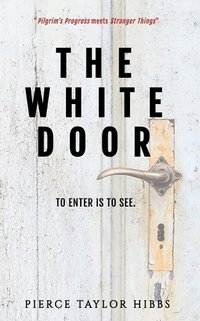
Cover for The White Door by Pierce Taylor HibbsThe White Door

by Pierce Taylor Hibbs

DETAILS:
Publisher: Truth Ablaze
Publication Date: August 15, 2024
Format: eARC
Length: 484 pg.
Read Date: July 7-20, 2024
Buy from Bookshop.org Support Indie Bookstores


Obviously, this will make more sense if you’ve read my original post about The White Door. And I should add that these are just thoughts that’ve come to mind as I’ve continued to chew on this book. I’m not making a full argument here, or anything like that. Some ruminations is all. (the conclusion is particularly weak, if you ask me, because I am just ruminating. )

One thing readers really like to do is to try to determine what they can about a novelist’s beliefs, points of view, and whatnot from the way things in their novel(s) are depicted. Frequently, some of the theories are pretty out there—and even those that are closer to reality are limited and have some noteworthy flaws.

That’s not the case with this book—Hibbs has already written a good number of non-fiction books showing his views on a number of ideas and topics. So readers of this novel have a different task before them (if they’re of a mind to wonder about these things)—how are Hibbs’ ideas depicted and brought to “life” in this novel? Are they at all? I haven’t read all of Hibbs’ previous work (yet), but I’ve read a number of his books and thought about them while reading the novel.

An obvious point here is that the protagonist, Seth, has an anxiety disorder, not unlike the one that Hibbs talked about in Struck Down but Not Destroyed: Living Faithfully with Anxiety. But there are plenty of other places you can see Hibbes’ previous writing.

In my original post, I said a couple of things that I want to return to. The first is:

…there are two doors (in places that have no business having doors, see McGuire’s Wayward Children series for examples). A white one and a black one—those who walk through them are changed. What, and how, they see is altered in ways that say a lot more about the doors than anything else.

The second thing is:

First of all, anyone who’s read much of Hibbs is going to recognize his thinking here. Narnia, Seth, and Cleft sound like they’ve studied Hibbs’ work (ignoring the anachronism there)—which is good. If only so you know that you’re supposed to think they’re on the right path. Other characters largely sound ilke they’re on their way to sounding that way, too.

Two of Hibbs’ books that came to mind were Finding God in the Ordinary and In Divine Company: Growing Closer to the God Who Speaks.

The part of In Divine Company* that came to mind in The White Door was:

We live in what I have called a worded world, a world that everywhere reveals something about the God who made it, a world that, in a sense, “speaks” about God.

* He also has a book called The Speaking Trinity and His Worded World that probably does a better job of explaining this point and expanding on it, but I haven’t read that one yet.

In Finding God in the Ordinary, Hibbs quotes John Calvin:

Whichever way we turn our eyes, there is no part of the world, however small, in which at least some spark of God’s glory does not shine. In particular, we cannot gaze upon this beautiful masterpiece of the world, in all its length and breadth, without being completely dazzled, as it were, by an endless flood of light. Accordingly, in Hebrews, the apostle aptly calls the world the mirror of things invisible, because the structure of the world serves as a mirror in which we behold God, who otherwise can not be seen (Heb 11:3).

Calvin influenced Hibbs on this point, and you can see it in the rest of that book. Let me bring up a few other short quotations from the book along those lines:

if we do not search for God in the ordinary, we do not perceive the world as it truly is. God has revealed that his entire creation manifests his character.

The whole earth, every crevice of creation, has been endowed by God himself with a revelatory component. We can choose to ignore this component if we wish, but then we will not be seeing the world as it truly is. We will be seeing a world of our own making.

if we do not search for God in the ordinary, we will miss very precious parts of life.

The tagline on the cover of The White Door is: “To enter is to see.” This is part of what I meant by “What, and how, they see is altered.” Both Roland (Cleft’s steward dog) and Cleft call those who’ve gone through the White Door “gazers”*

* I called them “seekers” in my original post. Oops. Why do I take notes, if I’m not going to look at them while writing?

These people gaze upon the world in a clearer fashion than they have before as if a film had been cleared off what they see. They see things in a new way—able to seek God in the ordinary, perceiving the world as it truly is. Not completely—and not necessarily all in the same way. Yet, their vision is better. They see things that others do not/cannot.

Now, walking through this door is in some way analogous of or is an allegory of regeneration. I have questions about it (as I talked about before), and I’m not sure if that’s because I misunderstood something or if Hibbs was unclear (I fully expect the former, but I think it’s the latter).* Regardless, that’s the case. Given “eyes to see and ears to hear,” these gazers see things that others don’t. In our world, it’s because darkened eyes don’t think of it, and renewed eyes need to be taught it (so we get books like Finding God in the Ordinary and teaching along those lines)—but when we know we can see the world, the skies, and nature in general declaring the glory of God—we, like those gazers, do see things others don’t.

* To paraphrase Mr. Simon, when I get something wrong, I’m the first to admit it, the last one to know-ow-ow-ow.

On the other hand, those who walk through the Black Door also have their sight altered. As you might imagine, it’s not as beneficial—but that’s all I’m going to say about that.

I really appreciate the way that Hibbs put “flesh” on his arguments from other books in this novel—not just for a good way to solidify it in the minds of his non-fiction readers, but to provoke his novel’s readers to consider how that piece of fiction might apply to their lives.

This post contains an affiliate link. If you purchase from it, I will get a small commission at no additional cost to you. As always, the opinions expressed are my own.

Irresponsible Reader Pilcrow Icon

Saturday Miscellany—8/3/24

If you have the means, I strongly recommend seeing Ben Folds live, as I did a couple of days ago (just one of the many reasons this week I spent almost no time online). No light show, no pyrotechnics, elaborate sets, backup dancers, or any of the typical tropes. Just one man and a piano (okay, a bunch of paper airplanes, too).

Much blog-hopping and so on to catch up on this week.
Ben Folds in Boise 2024Odds ‘n ends about books and reading that caught my eye this week. You’ve probably seen some/most/all of them, but just in case:
bullet How to read more, according to the Booker Prize 2024 judges—If anyone knows how to do this, it’s those who had to read all the (not quick and easy reads) for this Prize
bullet My Guilty Pleasure: I’m a Gen Xer Reading Comic Books Once Again
bullet Your Hero Could Beat Up My Hero—a fun little post to entice readers into The Recruiter
bullet On Lying About Reading, or: How I Learned That Stieg Larsson Is Good, Actually—”Sara Martin Considers the Motivations Behind Our Literary Untruths”
bullet When It’s Time To Change Your Reading Habits—Molly Templeton launches a personal attack against me. Or maybe it just feels that way.
bullet “You Were Always The Wrong Guy Until You Weren’t” – Thoughts on the Flawed Hero—Peat Long continues his beef with Scrubs‘ Dr. Percival Cox while offering some good thought-provoking thoughts on flawed heroes.

To help talk about backlist titles (and just for fun), What Was I Talking About 10 Years Ago Week?
bullet The Undead Pool by Kim Harrison—one of the better entries in the series, iirc
bullet W is for Wasted by Sue Grafton—the antepenultimate book in the series (how often do I get to use that word?)
bullet The Competition by Marcia Clark
bullet Never Go Back by Lee Child—Remember when I liked reading Reacher?
bullet The Sound and the Furry by Spencer Quinn

This Week’s New Releases that I’m Excited About and/or You’ll Probably See Here Soon:
bullet The Hermit Next Door by Kevin Hearne—a new SF novella looks like a lot of fun (hint: he’s a hermit because he’s an alien trying not to get caught)
bullet Slow Dance by Rainbow Rowell—I’ve always been a sucker for Rowell’s non-YA fantasy. This book about a couple’s second-chance looks like a nice time

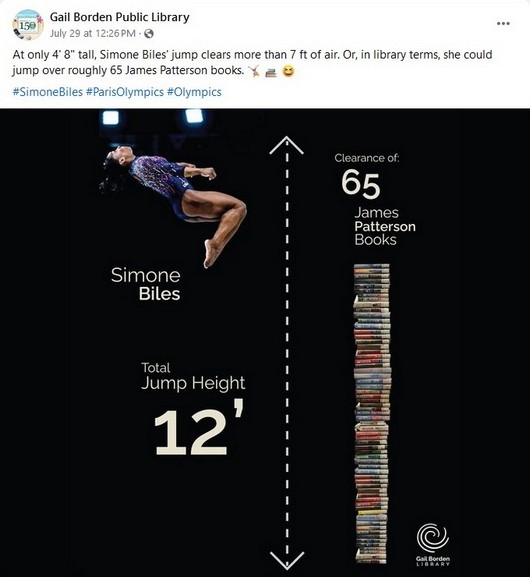
Gail Borden Public Library helps me stay topical with this:
The text 'At only 4 8 tall, Simone Biles jump clears more than 7 ft of air. Or, in library terms, she could jump over roughly 65 James Patterson books.' above an image of Simone Biles jumping 12 feet in the air next to a stack of 65 James Patterson books

REPOST: Scareground by Angela Kecojevic: A Twisty and Fun Ride for the MG Crowd

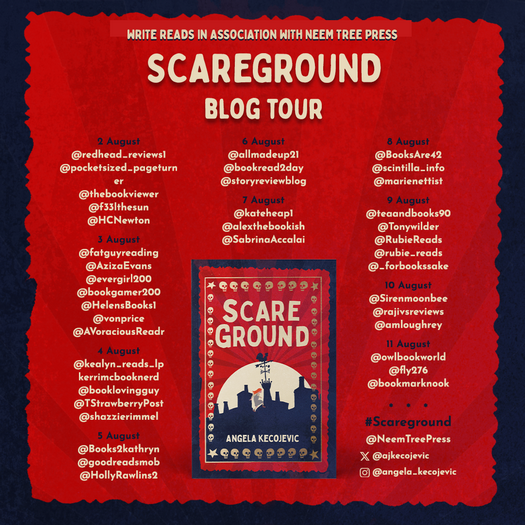
Scareground Tour Banner

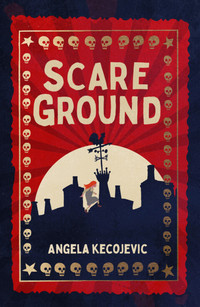
ScaregroundScareground

by Angela Kecojevic

DETAILS:
Publisher: Neem Tree Press
Publication Date: September 7, 2023 (UK), August 6, 2024 (US)
Format: eARC
Length: 304 pg.
Read Date: September 6-8, 2023

What’s Scareground About?

Nancy’s an adventuresome girl who helps in her (adoptive) parents’ bakery. There’s something about her that puts most children off—but on the whole, she enjoys her life—and gets up to a lot of mischief by running all over the rooftops of the small town she lives in. (she seems a little young, and historically early to practice Parkour, but really that’s what she does).

Through her antics, she has managed to make one friend, Arthur. Arthur’s father is overprotective due to his mother’s death and keeps a short leash on his son. But these two find ways to stretch the leash and have fun together.

Some strange things start happening in their town, pointing to the arrival of a fair. There’s no way that either of them will be permitted to attend, but they’re determined to have a look. It seems fun enough, it’s something that doesn’t happen often (not in their lifetimes, anyway), and they’ve been forbidden by their parents. For pre-teen Middle-Grade characters, you know that means they’ll sneak into it and get into adventures. Nancy has another reason to go—but she can’t bring herself to tell Arthur—she’s pretty sure that she’ll learn something about the circumstances around her parents leaving her to be found and taken in by the Crumpets.

And they do sneak in, they do get into adventures—most of which are far beyond what they could’ve imagined. The fair—the Scareground—is much more than a typical traveling fair.

Kecojevic’s Language

There’s something about the language—particularly a couple of word choices—that bothered me. A few words (like “macabre,” and “maritime”) are used perhaps too often. It feels like someone learned a new word and was trying to squeeze it in as often as possible. I obviously don’t think that’s what happened—it just feels that way.

Aside from that, the vocabulary and phrasing do strike me as someone trying to capture or create a mood—a feel to the book. One that’s reminiscent of a fairy tale or a story from another time. I don’t know that Kecojevic was entirely successful at it, however. But you can’t help but see that’s what she was going for, and it adds just the right amount of whimsy to enliven this story and the characters (Nancy in particular).

So, what did I think about Scareground?

As many good things that were in the book, several little choices that Kecojevic made added up—like the final words of the prologue which were an over-the-top threat delivered to no one at all just so the villain could monologue for a bit—and almost makes this book die a death of a thousand cuts. Please note the “almost” there. Thinking back to the prologue—you snip that monologue and you’ve got a nice, disturbing introduction to the book.

The book works well if you take it on the surface, enjoy Nancy and Arthur—and the friends they make along the way—and get caught up in the story and the strange world it takes place in. If you think about many aspects too much, it doesn’t hold up too well. It’s not a house of cards by any means, but maybe balsa wood.

Or, come to think of it—think of this as a carnival ride or fair attraction. That’s appropriate, right? It might be a spooky ride through a house of horrors, it might be an exciting-looking roller coaster, or it might be a pretty carousel—but if you look behind the curtain, or too closely at the structure, or spend too much time looking at the paint job on the horses or the lighting fixtures, and it’s less impressive.

Thankfully, you’re not going to find a lot of the target audience dwelling on aspects—they’re going to be in it for the ride. Which, getting back to my main point—works well when you take Scareground that way.

Nancy and Arthur are a whole lot of fun. The Crumpets are a delightful couple and the kind of parents (biological or not) that you want to see in fiction. And so many other characters could be talked about in this way. Nancy’s extra abilities are a wonderful, imaginative touch—but so is her heart and drive. Arthur matches that heart and drive without her abilities, and it’s their friendship that makes a lot of this work.

It’s a fast and strange ride that will entertain, for sure. I recommend it to readers of the right age.

Disclaimer: I received this eARC from Neem Tree Press via NetGalley in exchange for this post—thanks to both for this.

My thanks to The Write Reads for the invitation to participate in this tour and the materials they provided.

BOOK SPOTLIGHT: Scareground by Angela Kecojevic

This morning, I’m very pleased to welcome The Write Reads Ultimate Blog Tour for Angela Kecojevic’s Scareground, celebrating the U.S. Release next week. In addition to this Spotlight, my post about the book will be coming along soon. Today is the first day of the tour, so keep an eye on https://twitter.com/WriteReadsTours—to see what all the other bloggers involved are going to say about this twisty, fun MG book. But for now, let’s learn a little bit about the book, shall we?

Scareground Tour Banner

Book Details:

Title: Scareground by Angela Kecojevic
Genre: Middle Grade, Spooky mystery
Age Category: Middle Grade
Publisher: Neem Tree Press
Release date: August 6, 2024
Format: Paperback/Ebook
Length: 304 pages
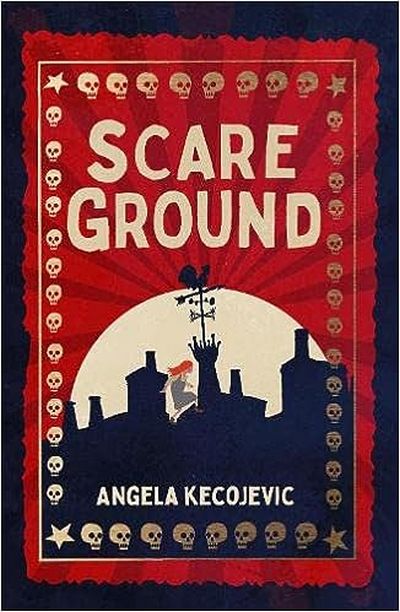
Scareground Cover

About the Book:

Roll up, roll up, the Scareground is in town!

Twelve-year-old Nancy Crumpet lives above a bakery and her life is a delightful mix of flour, salt, and love. Yet her mind is brimming with questions no one can answer: Why did her birth parents disappear? Why can she speak with the sky? And why must she keep her mysterious birthmark hidden?

Everything is about to change when the Scareground returns to Greenwich. Nancy is convinced it holds the answers to her parents’ disappearance. Nancy and her best friend Arthur Green meet the fair’s spooky owner, Skelter, and discover a world full of dark magic and mystery. Nancy must confront her greatest fears to get to the truth. But is she ready for all the secrets the Scareground will reveal?

Book Links:

Amazon UK ~ Amazon US

About the Author:

Angela Kecojevic
Angela Kecojevic is a senior librarian, author and creative writing tutor. She has written for the Oxford Reading Tree programme and the multi-award-winning adventure park Hobbledown where her characters can be seen walking around, something she still finds incredibly charming! She is a member of the Climate Writers Fiction League, a group of international authors who use climate issues in their work. Angela lives in the city of Oxford with her family.

Author Links:

Website ~ Twitter ~ Instagram ~ TikTok ~ Threads ~ Linktree

My thanks to The Write Reads for the invitation to participate in this tour and the materials they provided.

Page 83 of 603

Powered by WordPress & Theme by Anders Norén