20 Books of Summer 2024: This is Going to Be A Tough One

20 Books of Summer
Cathy at 746 Books is hosting 20 Books of Summer for the 10th year, which is impressive. This is the fourth year for me (not nearly as impressive), and it’s proved to be fun and a good way for me to actually focus on things I’ve gotten distracted from and/or impulse buys. This year I had a plan since January or February, and then when it came time to put it into action threw all of it out. I’m a little apprehensive about this list, it’s ambitious—I think both length and content are going to make several of these slower reads—and risky—I haven’t read most of the authors before, and don’t know what I’m getting into. However, I’ve wanted to read all of these (some of them for years), and I own all but one of these already. Yup! Nineteen books (at least) are leaving Mt. TBR this summer*!

I typically use the unofficial US Dates for Summer—Memorial Day to Labor Day (May 27th through September 2nd), just because it’s easier for me to think that way. And I’ve needed those first few days of September more than once, but let’s not think about that. Now, here it is almost a week later and I’ve just finalized my list—and I probably won’t get started reading any until June 6, this is almost certainly going to come back to bite me somewhere sensitive. But that’s a problem for tomorrow…or August, I guess.

There’s still time to join in the fun—if you’re into this kind of thing. (there are 10 and 15 book versions, too)

* Technically, I guess, one of these has only been on the mountain for a week, but it still counts.

This summer, my 20 are going to be:

1. This is Who We Are Now by James Bailey
2. Blood Reunion by JCM Berne
3. Ways And Truths And Lives by Matt Edwards
4. The Running Grave by Robert Galbraith
5. Grammar Sex and Other Stuff: A Collection of (mostly humorous) Essays by Robert Germaux
6. The Camelot Shadow by Sean Gibson
7. Last King of California by Jordan Harper
8. Steam Opera by James T. Lambert
9. The Glass Frog by J. Brandon Lowry
10. Rise of Akaisha Morningstar by Kataya Moon
11. Curse of the Fallen by H.C. Newell
12. Heart of Fire by Raina Nightengale
13. Detours and Do-overs by Wesley Parker
14. Bizarre Frontier Omnibus #1 by Brock Poulson
15. Howl by e rathke
16. Bard Tidings by Paul J. Regnier
17. Panacea by Alex Robins
18. Cursed Cocktails by S.L. Rowland
19. Big Trouble in Little Italy by Nicole Sharp
20. The Nameless Restaurant by Tao Wong

(subject to change, as is allowed, but I’m going to resist the impulse to tweak as much as I can).

20 Books of Summer '24 Chart

Saturday Miscellany—6/1/24

Odds ‘n ends about books and reading that caught my eye this week. You’ve probably seen some/most/all of them, but just in case:
bullet Why Are Debut Novels Failing to Launch?
bullet Banned Book of the Week—Digital Public library of America announced a new campaign this week
bullet Fletch Inhaled Twice: Reflecting on the influence of I.M. Fletcher and his creator, Gregory Mcdonald—I might quibble a bit here and there, but the only real problem with this piece is how short it is
bullet Five for Them, One for Me, with Rob Hart—a fun Q&A with Hart about Assassins Anonymous
bullet When Romance Is a Mystery: Books Where Finding Love Is Like Solving a Whoduni
bullet Adam Holcombe looks back at a year of A Necromancer Called Gam Gam
bullet Should I Feel Guilty For Checking Out A Book Instead Of Buying It?—Nunc hoc in marmore non est incisum
bullet 20 Brilliant Anglo-Saxon Words We Should Bring Back—Nunc hoc in marmore non est incisum
bullet Conquer Your TBR Pile — Practical Tips to Read More Books This Year
bullet Master Your Reading List: 10 Practical Tips for Avid Readers—2 of these this week? What is it, January?
bullet Authors: How NOT to Ask a Book Blogger for a Review
bullet Ashley Ottesen explains why her (and my, incidentally) TBR stack will always be full

To help talk about backlist titles (and just for fun), What Was I Talking About 10 Years Ago Week?
bullet John Knox by Simonetta Carr, Matt Abraxas (Illustrator)—probably the best looking biography I’ve ever read (sure, it’s for kids, but…Abraxas nailed it).
bullet The Warrior by Ty Patterson
bullet The Chase by Janet Evanovich and Lee Goldberg
bullet Wake of the Bloody Angel by Alex Bledsoe—man, I loved this book (still do).

This Week’s New Release that I’m Excited About and/or You’ll Probably See Here Soon:
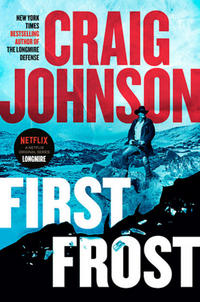
bullet First Frost by Craig Johnson—It’s the 20th Walt Longmire book and we get a look at Walt and Henry before they head off to the armed forces and Vietnam (and Walt dealing with the fallout from TheLongmire Defense).

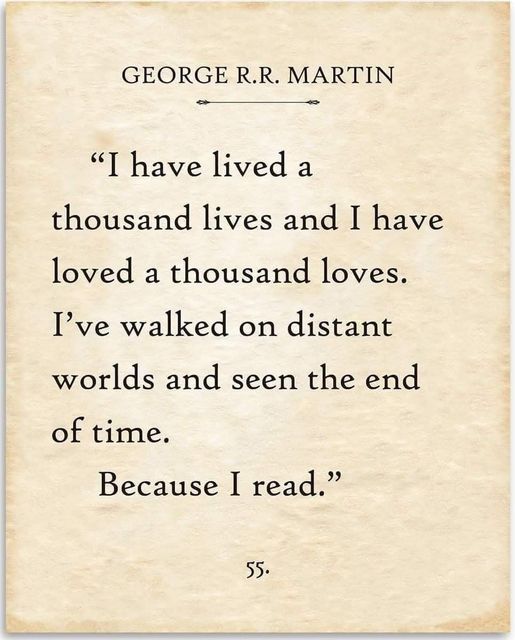
Geoge R.R. Martin 'I have lived a thousand lives and i have loved a thousand loves. I've walked on distant worlds and seen the end of time. Because I read.'

BLOGIVERSARY REPOST: P is for Peril by Sue Grafton

To commemorate the 11th Blogiversary of The Irresponsible Reader, I’m reposting the first six books I blogged about this week. I hope you’ve enjoyed this stroll down Amnesia Lane as much as I did.


P is for Peril (Kinsey Millhone #16)P is for Peril by Sue Grafton
Series: Kinsey Millhone, #16

My rating: 3 of 5 stars

Well, this is totally not surprising at all…a solid mystery novel, with plenty of satisfying twists and turns from Sue Grafton.

A name from the past (and one of my favorite Grafton books) refers Kinsey for another missing persons case — against her better judgement, she takes it and before too long finds herself in the middle of broken family politics, pouty teenagers, a potential stalker, and cases of grand theft, fraud, murder, and a handful of other brushes with human frailty and depravity.

I did rather enjoy all these voices from the 80s complaining about the labyrinth that is Medicare/Medicaid/other federal health regulations — if they only knew!

I do wish, and I don’t think I’ve complained about this before, but Kinsey blabs way too much — to friends (especially new ones), to suspects/interviewees/sources, and even to clients. Maybe it fits with the research that Grafton’s done about proper P.I.-ing, but man. Every time she starts to divulge information I want to reach into the book and slap my hand over her mouth. Seriously, lady, keep it to yourself.

The conclusion to this one is atypical — we don’t get resolution to any of they mysteries she’s involved with; well, we sort of get resolution to one of them, but it has nothing to do with any sleuthing on Kinsey’s part. The rest of the mysteries are solved by Kinsey, but we don’t see the resolution of the story line — we don’t even get the (often) heavy-handed wrap up where she reflects on the events of the novel. Nope. Not saying that’s good or bad (honestly, I’m not sure). It’s just not par for the course. Not sure why Grafton did it that way, but it worked this time (could get to be tiring if she keeps it up)

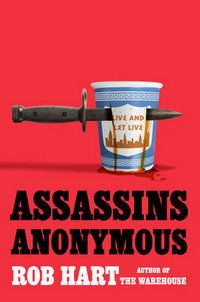
Assassins Anonymous by Rob Hart:The Confessions of a Tactical Drone with a Heartbeat and a Dairy Allergy

Assassins AnonymousAssassins Anonymous

by Rob Hart

DETAILS:
Publisher: G.P. Putnam's Sons
Publication Date: June 11, 2024
Format: eARC
Length: 320
Read Date: May 27-29, 2024
Buy from Bookshop.org Support Indie Bookstores

What’s Assassins Anonymous About?

Almost a year ago, Mark walked away from his old life and into a 12-step meeting. It’s been a struggle for him—he’s almost relapsed, he came close to suicide, and he’s struggled every day. But with the support of the other people in his group, his sponsor, and a little orange cat who came into his life at just the right time—Mark is making it, day by day.

Then one day, Mark’s cleaning up after the meeting and he’s attacked by a Russian who moves like a professional killer. Mark fights back—incapacitating the Russian and escaping with a serious—but not-too-serious—wound of his own and a burning question: who sent the Russian? The search for the answer takes Mark (and his cat) around the world—into some very dangerous situations, and almost more temptation for Mark to relapse than he could’ve imagined.

You see, Mark’s 12-step meeting isn’t for Alcoholics Anonymous, Gamblers Anonymous, Narcotics Anonymous, or anything like that. As you’ll guess from the book’s title, it’s Assassins Anonymous. Hitmen, Assassins, Serial Killers, and the like, who are tired of the life, who are tired of killing and want to try to live productive, life-affirming lives. They have to fight old impulses, old habits, old attitudes, they have to abandon adrenaline rushes (which are probably pretty addictive) and all the rest for a quiet life. Mark had been one of the best in the world (or the worst, depending on your perspective)—almost legendary—until he went cold turkey. But someone’s apparently trying to warm up the poultry.*

* That’s a metaphor I really shouldn’t have tried to stretch.

Can Mark discover why someone game for him almost a year after he quit “the life”? Can Mark make them stop without having to throw away all the work he’s done over the last (almost) 12 months?

The Movies

Like many moviegoers, I love a good hit man movie. I can even enjoy a “just okay” hitman movie (sorry, The Whole Ten Yards you don’t qualify as either). Mark, unsurprisingly, isn’t a fan of most of them. Sadly, that’s where most people get their ideas and information about assassins and hitmen from. So by character, actor, or movie title, they’re brought up frequently—usually to Mark’s dismay. He’ll also just compare his life to those movies on occasion. I enjoyed this aspect of the character a lot—particularly one running bit where people kept expecting him to look more like a particular actor.

Other kinds of movies are used throughout the novel, too—they’re a great shorthand way of revealing character. What movies he likes, what movies he refuses to mention liking, and so on are a convenient and efficient way of telling you a lot about Mark. Also, it’s just fun to see characters talk about movies and whatnot—as people like Whedon, Tarantino, and Smith have been showing us.

The 12-steps

As the book started to really focus on—and feature—things like the meetings Mark’s attending, his recovery, and his working the steps, I started to get worried. Primarily because it was early on, and while I understood that Mark was flippant, even a wiseacre—was Hart going to be flip about the 12-steps? That feels like something you shouldn’t touch—like a third rail, a skunk with a hair-trigger, or that Easter Egg you finally found in late June.

But no—the meetings, the steps, the attitude about recovery, and the way the characters interacted about their recovery were dealt with respectfully. Sure, there was a little bit of Mark’s attitude (or similar ones) expressed in the meetings and whatnot—but not about the meetings or the program, just about each other or themselves. (much like I imagine happens in an actual meeting)

If anything, this is practically an advertisement for those kind of programs and the good work they can do. Because this is the heart of the novel—yes, there’s the violence, the suspense, the twists, and whatnot—let’s call them “The Thriller Aspects.” Those aspects are what will draw readers to the book, they’re what’ll keep your attention and get you hooked on it. But Assassins Anonymous isn’t so much about the “Assassins” as it is the struggle, the stumbles, and the victories associated with Recovery. In my book, we should get more of those—particularly honest books about the victories.

So, what did I think about Assassins Anonymous?

Imagine Martin Q. Blank, Jimmy Tudeski, and Frank Moses meeting up and trying to take care of business—non-lethally (I guess that’d be something like the pacifist version of The Expendables), and you’ll have something like this book.

Let’s start with The Thriller Aspects—Hart nailed them. Even—maybe especially—the more outlandish aspects of them (which are really the trickier part to pull off). There’s a confident panache to the novel—as well as most of the characters—that lets you know right away that you’re in good hands and are set for a great ride. Some twists you’ll see coming, and won’t care because of the way he executes them. But also,

The 12-Step aspect—well, see above—another win for Hart.

What about the comedy and narrative voice? Spot on—seriously good. It’d be easy to go overboard on the comedy—or to not use enough of it (we are talking about a bunch of people who have killed many others), but I think Hart hits the balance just right. And Mark’s the kind of guy you can enjoy being stuck in the mind of for 320 pages.

The first chapter gives you everything you need to know about this novel—it’s such a well-written chapter, too. Voice, character, action, comedy. If you read it and aren’t hooked, you’re probably going to feel that way about the rest of it. If that first chapter works for you? Kick back and enjoy.

Sure, this novel is right in my wheelhouse—I’m practically its target demographic incarnate—but I think even if I wasn’t, it would’ve won me over. I strongly encourage you to pick this one up. I can’t tell you what’s keeping me from giving it the final full star, but something is (and since I’ll have to round up almost everywhere I cross-post, I’m not going to lose any sleep over it)—but, boy howdy, you’re in for a great time when you open this one up.

Disclaimer: I received a copy of this book from Putnam Books via NetGalley—thanks to both for this.


4 1/2 Stars

This post contains an affiliate link. If you purchase from it, I will get a small commission at no additional cost to you. As always, the opinions expressed are my own.
Irresponsible Reader Pilcrow Icon

BLOGIVERSARY REPOST: Blood Trade by Faith Hunter

To commemorate the 11th Blogiversary of The Irresponsible Reader, I’m reposting the first six books I blogged about this week.


Blood Trade
Blood Trade by Faith Hunter
Series: Jane Yellowrock, #6
My rating: 4 of 5 stars

Jane Yellowrock is slowly, but surely, becoming a real favorite of mine. In the beginning, she struck me as a fairly generic vampire hunter, with an obnoxious streak and a complicated ethnic/childhood background that was passed off as interesting. Nothing special, but good enough to keep reading.

But lately, I’ve found myself anticipating the next installment. Blood Trade resolved a few dangling plotlines from previous books, developed a couple more, and set the stage for at least 2-3 more books in the series. And while doing so, provided a story with good action, some nice twists, and some genuine heart.

I really, really liked the new characters introduced here — two former classmates of Jane’s back from her Christian school days and the child of one of those classmates. It was good to see Jane through the eyes of people that didn’t primarily know her as a vampire killer.

Jane’s relationship with Eli and the Kid grew in a positive way, and I really like the shape of their relationships, and hope they continue to develop in this fashion.

One thing I hope Hunter improves on — although I don’t see it happening — is the romance front. I couldn’t care less about Jane’s vacillating between various romantic (using the term as broadly as possible here) interests here. It’s tedious, Jane’s usually shown as little more than base desires, and constantly self-sabotaging. If there was some growth there, some change at least, I might feel differently. But Hunter shows no sign of moving off this point, and I bet I’m one of the few who don’t like it. So I need to continue to deal with it.

WWW Wednesday, May 29, 2024

Things got away from me today, so this is going up later than it should. But I’ve been blathering too much as it is…

This meme was formerly hosted by MizB at A Daily Rhythm and revived on Taking on a World of Words—and shown to me by Aurore-Anne-Chehoke at Diary-of-a-black-city-girl.

The Three Ws are:
What are you currently reading?
What did you recently finish reading?
What do you think you’ll read next?

Seems easy enough, right? Let’s take a peek at this week’s answers:

What are you currently reading?

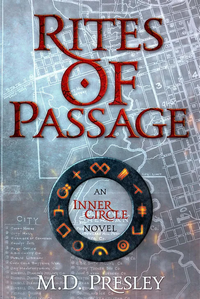
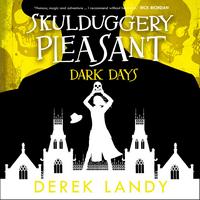
I’m reading Rites of Passage by M.D. Presley, and am just about finished listening to Dark Days by Derek Landy, read by Rupert Degas on audiobook.

Rites of PassageBlank SpaceDark Days

What did you recently finish reading?

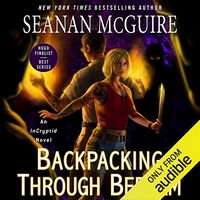
I just finished the ARC of Rob Hart’s Assassins Anonymous—and you’re going to want get your hands on this one—and Backpacking Through Bedlam by Seanan McGuire, read by Emily Bauer on audio.

Assassins AnonymousBlank SpaceBlank SpaceBackpacking Through Bedlam

What do you think you’ll read next?

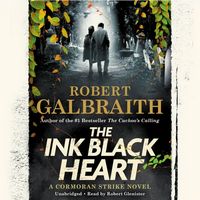
My next book should be First Frost by Craig Johnson (assuming I get to Shared Stories by the time I finish Rites of Passage) and my next audiobook should be The Ink Black Heart by Robert Galbraith, read by Robert Glenister.

First FrostBlank SpaceThe Ink Black Heart

How are you closing out the month?

They Asked, so I Answer (just about) Anything for My 11th Blogiversary

As has been noted previously, today marks 11 years since I started putting things up on teh IntraWebs as The Irresponsible Reader. Inspired by A Literary Escape (and some others that I forgot to note), I decided to do a little AMA to go along with last year’s anniversary. I had a great time doing this—and hope at least one other person enjoys reading this 1/8th as much as I enjoyed the questions.

Thank you to Allyson Johnson, Paul Nydegger, Bob Germaux, and Bookstooge for these questions.

About what percent of your blog’s subscribers are friends/family? What’s your most effective way of recruiting new subscribers?
asked by: Allyson Johnson, http://allysonjohnson.com
I’m pretty sure most of my nuclear family subscribed early on just to help out my numbers (and still occasionally reads the posts). To the best of my knowledge, there are two friends who subscribe to this (at least they were friends pre-subscription/following, I’d like to think I’ve reached at least Internet-friend status with a few others). Less than 5% (likely much less).

The most effective way of recruiting is doing those things that Carol talked about in her recent guest post, Don’t Be a Stranger: How to Make Connections in the Book Blogging Community. My Saturday Miscellany tends to attract some people (especially when I link to the post of someone who isn’t familiar with me)—but interacting on Social Media platforms (Twitter and BlueSky are the best for me, but individual results will verify) is the most effective way that I’ve come across. Like Carol says, “Yes, this takes time and is uncomfortable for introverts at first, but if you want to find your people and have people find you (a community), you need to promote yourself consistently.”

Have you ignored any other writers up close and personal as you have Craig Johnson?

asked by: Paul Nydegger
HA! No.

For those of you who aren’t Paul, this goes back to Johnson’s appearance in Boise in 2018. While Paul and I were waiting in line to pay for parking, I see a gentleman walk up wearing a large hat. I mutter something to myself about hoping I didn’t get stuck behind this guy, because between that hat and his height, there was no way I’d be able to see Johnson. Actually, given the “Western wear” the guy was sporting, he could almost pass for Johnson, I remember thinking. Except this gentleman was younger than I remembered pictures of Johnson appearing. Naturally, about ten minutes later, we’re talking to people sitting in the same row who talked about riding up in the elevator with Johnson. I said something about talking myself out of thinking he was in line behind us for parking. They replied with something about the green plaid shirt and I felt like the world’s worst fan. Clearly, I care more about a writer’s words than his appearance.
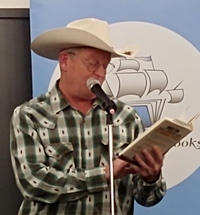
Fast-forward to last year when he was in Nampa. Paul and I are wandering around downtown killing time before we can show up to the bookstore for his appearance. We pass a couple walking the other way on the sidewalk. The male was a tall man in Western wear and a large hat, the woman was shorter than I remember Mrs. Johnson being, but still… So (as I recall it), Paul and I spent a few minutes trying to convince ourselves that we didn’t just run into Johnson before his event without saying something to him again. I also recall our efforts to convince ourselves were half-hearted at best and even less effective.

Next time he comes back to this area, I trust that we will be ready and on the lookout for him. Ensuring, naturally, that we won’t see him until he’s behind the microphone.

Was there ever a time when you weren’t hooked on books, perhaps back in your wild days, before you attached Reader to Irresponsible? A time when your attention was more focused on sports, girls, movies, etc.
asked by: Bob Germaux, https://www.amazon.com/stores/Robert-Germaux/author/B00QMW2V70
I’d say that reading has taken a disproportionate amount of my attention going to my childhood (see below). But, it’s never been my only hobby. I used to play a couple of instruments, and in the 80s I spent a lot of time playing Intellivision and ColecoVision games, and as many Commodore 64 games as I possibly could (at least two of those led to reading particular books).

Now that I’ve sent most of my readers to Wikipedia/a search engine to understand those references, let me answer your specifics:
I’ve never been all that coordinated, so participating in them was largely an exercise in futility and an opportunity for growth in humility. I’ve tried to get into sportsball things at several points in my life—mostly because I determined I needed to in order to fit in. It occurs to me that most of those efforts led to me reading books/articles about the sport I decided to follow to help me understand what was on my TV screen (there was probably a clue there). For the first decade that we were married, my wife and I spent a good deal of time watching baseball together (and will still try to watch the Little League World Series when we can—it feels purer), but that dropped off as the kids got older.

I’ve always been a big TV/movie guy, too—I make less time for films now and I miss them. I got a couple in during my recent recovery—that was nice and really makes me want to juggle my time a little so I can watch more regularly. I’m behind on the more “prestige” shows (read: the ones I have to put my laptop aside to watch) that I like, but I can make time for those a bit more easily.

As for girls? Well, as you can imagine, in the 80s a non-coordinated guy who was super-into comics, computer games, Star Trek, and books, I was quite the hit with the ladies. 🙂 So, yeah, that never took a big chunk of my time, much to my dismay. Thankfully, I eventually was blessed enough to meet someone who did appreciate that combo (or was willing to undertake an improvement project).

Following up on the previous question, how old were you (or in what grade at school) when you first realized how much you enjoyed reading? Was there a particular book or author that caught your eye?
asked by: Bob Germaux, https://www.amazon.com/stores/Robert-Germaux/author/B00QMW2V70

Donald J. Sobol was the tipping point. The first time I realized (and likely my parents realized, too) just how avid a reader I was/would be came the summer after second grade. My family was on a forever-long road trip (Eastern Idaho to Southern California) and I was bored, so I demanded my parents buy me something to read. Clearly, I wasn’t a pleasure to be stuck in a station wagon with, because at the next town, they did. I got two books, Encyclopedia Brown, Boy Detective and Sugar Creek Gang Screams in the Night. I read them both several times before we got back to Idaho (I don’t think I demanded or received another book on the trip). That was the last time I went somewhere over 40 minutes away from my home without at least one book.

I’d read a lot before then—and demanded my mother read to me a lot before then, too—but I think it was just something I just happened to do. This trip got us all to realize that this was “my thing” (I can’t believe we used this expression back in the early 80s when he had this realization, but whatever the equivalent was at the time). So my library trips—public and school—became more frequent and intense. Also, the mystery/thriller genre became a focus—many more Encyclopedia Browns, a few more Sugar Creek Gang books (the library didn’t have many, and I hadn’t yet figured out how to get my family to buy me books to the extent they do now), and then The Three Investigators came on their heels. SF and Fantasy came soon after.

One more question. Clearly, you have an advanced case of RO (Reading Obsession). It’s okay. I’m likewise afflicted. Just in case it isn’t genetic, which three books would you insist be read aloud to your grandcritters before they’re old enough to flip those pages themselves?
asked by: Bob Germaux, https://www.amazon.com/stores/Robert-Germaux/author/B00QMW2V70
This is a fantastic question—and one I don’t really have an answer to. Anything by Sandra Boynton. And I’m trying a handful of different things to figure out his taste for the present.

But I don’t know what to do when he’s able to handle longer narratives, I really don’t remember what his aunt, uncles, and father liked (or what I liked reading with them). I think that I’m going to try to spend some time in Narnia with him, and maybe a quick trip to Middle Earth, before he’s able to read himself. We’ll definitely check into Hogwarts when he’s a bit older. I think Prydain needs to be in the older section, too, to really appreciate. Fitzgerald’s The Great Brain is episodic and simple enough that I could probably interest him in those. Maybe Caddie Woodlawn? (I’m going to skip the Laura Ingalls Wilder books because when I tried them with my kids I found them mind-numbingly dull, but Caddie was a lot of fun)

(obviously, Mom and Dad might swoop in and beat me to those).

I have a couple of friends who have children a couple of years older than the grandcritter, so I’m going to be looking to them for advice—as well as hunting down more children’s lit bloggers—when he gets to that stage.

Seconds before I hit “publish” I remembered Kate DiCamillo exists. I think I discovered her too late to really get my kids into her as I read to them (but I think my daughter may have followed her on her own a bit), The Tale of Despereaux and Because of Winn-Dixie are must-reads. You might enjoy them, too, Bob.

How much time, on a weekly basis, do you spend reading?
asked by: Bookstooge, http://bookstooge.blog
Not as much as I’d like, but my eyes can only handle so much. And my body insists on this thing called “sleep.” (the former is decreasing and the latter is increasing lately). I think 2-3 hours a day, typically. Saturdays tend to be a lighter day for reading, but I still manage to cram in an hour (occasionally, I get several hours in, see below). So, 11-16 hours a week, I guess is the answer. I actually assumed that’d be higher.

I do get 18-20 hours of audiobook listening in during the work week (depending on my commute and workload), too.

So that’s 29-36 hours of involvement with books a week.

How much time, on a weekly basis, do you spend writing blog posts?
asked by: Bookstooge, http://bookstooge.blog
Not as much as I’d like, but my brain can only handle so much—more importantly, there are dogs, a grandcritter, and a wonderful wife to pay attention to (among other things).

Typically Saturdays are my big day (unless I get wrapped up in a book or non-book activities), 5-7 hours there. Then I spend 1-3 hours a day Monday-Thursday (probably closer to 90 minutes-2 hours, unless I have a mindless police procedural or something like that on, almost no time on Fridays and Sundays. Making that 10-24 hours a week (imagining some Friday time).

Wow, Bookstooge—this quick look at how I spend my time is more than a little eye-opening for me. I don’t know the last time I counted that. Thanks!  (I think)
Happy 11th Blogiversary to Me

Since I can’t imagine that I’ll be around for the 111th anniversary, I’m going to use this occasion to bastardize a certain writer of a travelogue/memoir on his eleventy-first birthday.

My dear People, My dear Bagginses and Boffins, and my dear Tooks and Brandybucks, and Grubbs, and Chubbs, and Burrowses, and Hornblowers, and Bolgers, Bracegirdles, Goodbodies, Brockhouses and Proudfoots. Also my readers, authors, and other bloggers I welcome you back again to The Irresponsible Reader. Today is the blog’s eleventh anniversary: Eleven years of blogging about reading irresponsibly!

I hope you are all enjoying yourselves as much as I am. I shall not keep you long. I have called you all together for a Purpose. Indeed, for Three Purposes!

First of all, to tell you that I am immensely fond of you all, and that eleven years is too short a time to blog among such excellent and admirable hobbits and readers.

I don’t know half of you half as well as I should like; and I like less than half of you half as well as you deserve.*

Secondly, to celebrate my anniversary. It’s been 11 years and 5,065 posts, 2 template facelifts, 2 webhosts, thousands and thousands of pages read, and hundreds and hundreds of hours of listening.

If I may be allowed to refer to ancient history, my arrival on the Internet by this name wasn’t an auspicious arrival–and not terribly readerly, either, that started the next day. As I’ve noticed with my reposts this week, I wasn’t terribly wordy then, but I’ve largely recovered from that.

I wish to make an ANNOUNCEMENT.

I regret to announce that – eleven is far too short a time to spend among you – this is the NOT END. I am going nowhere. I am NOT leaving NOW.

This is NOT GOOD-BYE!

* Not true…but you can’t mess with that line.

Okay, I can’t torture Tolkien’s wording enough to get this in, but it’s the most important part:

I’ve had a blast doing this. I’ve read so many great things—many, many things I’d never have even heard of without this blog. I’ve corresponded with more great authors than I can think of—and best of all, there’s you readers.

I want to thank all of you for your time, your comments, your support (particularly through the whole recent cancer/surgery thing) your encouragement—and occasionally, your editing (I always appreciate it, I just regret the necessity). I assure you that every view, every like, every comment, every retweet, every email is encouraging and I can’t thank you enough. Hopefully, I’m saying that often enough.

BLOGIVERSARY REPOST: The Girl with the Iron Touch by Kady Cross

To commemorate the 11th Blogiversary of The Irresponsible Reader, I’m reposting the first six books I blogged about this week.


The Girl with the Iron Touch (The Steampunk Chronicles, #3)The Girl with the Iron Touch by Kady Cross

My rating: 4 of 5 stars

Another fun installment in Cross’ Steampunk Chronicles. As silly as I feel reading a book with the Harlequin Teen logo on it, I really enjoy this series (‘tho maybe I should switch to the ebook edition to protect my rep). Once again, Cross balances a steampunk-y adventure story with strong emotional plotlines, with some fun banter between her characters, making for an addictive read.

This time out the primary focus is on Emily — the technomancer, and on both her personal and professional crisis. Just as it seems she’s making some progress on getting Sam to say how he feels about her, as well as to accept what she did to save his life, she’s kidnapped by a bunch of automatons so she can perform a brain transplant from a very injured scoundrel into a semi-organic android. No really, that makes sense in context.

Everyone else, in one way or another, is dealing with the fallout from their trip to the U.S. (and from the events in the first book), while also trying to find Emily and bring her home safely. Obviously, it’s worst for Jasper, more withdrawn from both his friends and the events in the book as a whole.

Griffin and Finley are also dealing with their relationship’s progress — with all the complications, ups adn downs that such entails. Griffin started dealing with something relating to his power in the States and it’s having a devastating impact on him back home (and in turn, that’s impacting everyone around him), causing Finlay to fret over him. My biggest beef with this book comes from the Finlay/Griffin interactions, which are far too similar to the Emily/Sam interactions, covering nearly the same grounds with both couples.

There’s a new character introduced that should provide a good deal of fodder for storylines in the future, and I eagerly await more of her. Really can’t say more without entering Spoiler City, so, I’ll just limit myself to saying that Cross’ creativity and inventiveness is on full display with her creation, and she’s already one of my favorites in the series.

One other note, one of the automatons we spend the most time with was described as a spider with a doll’s head. I certainly hope Cross was trying to get her readers to envision that creepy doll from Toy Story — because every one I know whose read this is seeing that.* Griffin and his team find her just as unnerving as Woody and Buzz did (don’t blame them), either.

Things are getting harder, and stakes are getting higher for our intrepid adventurers — whatever’s next will likely push them further yet.

This was a fun, quick read and I’m already impatiently waiting for the next installment.

*That’d be my wife and I.

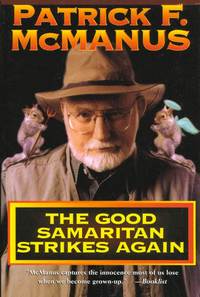
The Good Samaritan Strikes Again by Patrick F. McManus: Gentle Humor about Idaho Life

The Good Samaritan Strikes AgainThe Good Samaritan Strikes Again

by Patrick F. McManus

DETAILS:
Publisher: Holt Paperbacks
Publication Date: August 15, 1993
Format: Paperback
Length: 211 pg.
Read Date: May 8-17, 2024
Buy from Bookshop.org Support Indie Bookstores

Over half a century of poking around the woods and mountains, I have rescued several dozen wild creatures from life-threatening situations. Almost none ever expressed an iota of gratitude. Instead, they have attempted to bite me, peck me, claw me, scratch me, gore me, even as | rendered them the service. The only one to repay the favor of my rescuing it was a skunk, when I was eight years old, and it spent all of its resources to purchase my freedom from school for a whole week. In my experience, however, that skunk was unique among wild creatures for its kindness and generosity.

What’s The Good Samaritan Strikes Again About?

This is a collection of 24 of McManus’s essays, pulled from a variety of sources talking about…well, mostly the things he always talks about—his life, hunting, fishing, and things he finds interesting.

There’s not a recurring theme or anything, I’m guessing this is just a collection of pieces written in the early 1990s (the previous collection was published in ’91, the following in ’94).

McManus’s Humor

I think the best way to describe this humor is gentle. He’s not one for clever wordplay (although he will occasionally indulge), this isn’t biting satire, he’s not as outlandish and goofy as Barry. It felt like Lewis Grizzard at half-volume—I think it’s similar to Garrison Keillor (although I really can’t say) or Tom Bodett.

I can’t imagine you’ll guffaw—or laugh out loud. But you’ll be amused. You’ll smile—maybe even chuckle.

So, what did I think about The Good Samaritan Strikes Again?

I haven’t read McManus since the mid-80s—there were a couple of years where some of his early collections were in heavy rotation amongst my extended family and I sampled a few. Mostly I didn’t get his humor at the time—even then I didn’t relate too much to the hunting and fishing jokes. I understood more of them now, at least—but I don’t know that I found them more amusing now.

I feel like I need to turn in my Idaho Citizen card for saying that kind of thing—McManus and I were born in the same city, we were inculcated with many of the same values, and had the same kind of environment growing up. But our senses of humor didn’t develop along the same lines.

The pieces that had the least to do with outdoors-y topics worked best for me. He touches on aging and worry, there’s a little bit of satire relating to PR, there’s some stuff on coping with stress, recounting his first kiss…the title essay involves trying to help a motorist following an accident. Then there are a lot of things involving camping, hiking, fishing, hunting and the like…most of those had something I found amusing—a paragraph, a clever sentence—many of them were largely entertaining. But that’s for me—and humor is more subjective than most things I talk about here (although everything is pretty subjective here)—so who knows how you’ll react.

When Ford Prefect’s editors were done with his revisions to the entry for Earth in The Hitchhiker’s Guide to the Galaxy, the entry summing up our planet read “Mostly harmless.” Similarly, I think The Good Samaritan Strikes Again could be summed up as: Mildly amusing.

Your results may vary, obviously, but it’s a pleasant way to spend some time—not much more. But honestly, who wouldn’t mind a pleasant couple of hours?

This post contains an affiliate link. If you purchase from it, I will get a small commission at no additional cost to you. As always, the opinions expressed are my own.
Irresponsible Reader Pilcrow Icon

Page 96 of 603

Powered by WordPress & Theme by Anders Norén