Tag: 3 1/2 Stars Page 40 of 43

Is Fat Bob Dead Yet? by Stephen Dobyns

Is Fat Bob Dead Yet?Is Fat Bob Dead Yet?

by Stephen Dobyns

Hardcover, 351 pg.

Blue Rider Press, 2015

Read: October 8 – 12, 2015

Is Fat Bob Dead Yet? is essentially an Elmore Leonard book written by . . . someone else. It doesn’t have the zip, style and the panache of Leonard, though. It has a style and panache all of its own (almost no zip, though, but that’s okay).

Things get kicked off here with a nasty motorcycle accident that may not have been quite so accidental. The “accident” was witnessed by a homeless man named Fidget, a man too tan for Connecticut, and a man sporting a pompadour, the three of them spend the next few days finding several ways that their lives intertwine. The accident is investigated by Detectives Streeter and Vikström, who might be really good at their jobs if they spent a little less time bickering than the Battling Bickersons (one of the most reliable jokes early on is Vikström’s constant confusion over being asked if he was one of those famous Swedish detectives)

The tall, tan man is named Connor Raposo, a recently downsized teacher turned casino employee turned assistant to con-artists. Connor’s our entry point into this world, he introduces us the various and sundry scumbags, deadbeats, and other miscreants. Some of whom seem to have hearts of gold buried underneath a whole lot of cosmetic surgery or some sort of developmental delay. Others are just plain evil. In the middle is pretty much everyone else — Prom Queens whose life didn’t turn out the way they wanted them to, single moms working less-than-legitimate jobs, beagle owners, motorcycle aficionados, or guys just trying to please/impress the women in their life. There’s a real hodgepodge of humanity in all it’s strangeness on display here.

After a few chapters the narrator started dropping the royal “we” into the descriptions, which surprised me, but it worked. The further on you get into the novel, the narrator intrudes more and more into the story, editorializing as well as narrating. The stronger the narrative voice grew, the better the book got.

My one complaint is that it’s just too wordy — I’m not saying this should’ve been as minimalistic as something by Leonard, but it could’ve been a bit more streamlined. Was this amusing? Yes. Comic? Yes. Absurd? Absolutely. But I didn’t find it funny until the last few pages, and then I laughed a lot.

This novel is almost impossible to explain without giving everything away, before the setup is done, things are really underway — it’s not exactly fast-paced, but well-paced, slowly building up steam until it just barrels through the final events. A satisfying and very entertaining read. Give it a shot.

—–

3.5 Stars

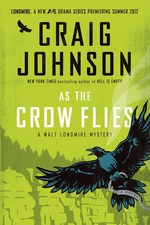
As the Crow Flies by Craig Johnson

As the Crow FliesAs the Crow Flies

by Craig Johnson
Series: Walt Longmire, #8
Hardcover, 308 pg.
Viking Adult, 2012
Read: September 26, 2012

…trying to remember when I’d last prayed for anything. My mind went back to the spring before last, and a time in Philadelphia when I’d sat in a hospital at my daughter’s side. I’d prayed then-like a theological car salesman, I’d made deals, counterdeals, and threatened the very heavens themselves if they didn’t release my daughter from the swollen solitary confinement to which a terrible accident had sentenced her.

After the high of Hell is Empty, it makes sense that this would be a little bit of a step down. And it was — at least as far as intensity, depth, and so on. It was just as entertaining, just as engaging…just not as ambitious.

Walt and Henry are out doing some last minute arranging for Cady’s pending nuptials when they witness a woman falling/jumping/being pushed to her death in a very scenic location on the Reservation. Which leads, naturally to Walt getting involved in the investigation — this time, he’s also shepherding an inexperienced Rez Police Chief (Lola Long) through dealing with police procedure, community relations and dealing with Federal bureaucracies. Lola reminds Walt (and most readers, I’d wager) of Vic — who is conveniently out of state for most of this book — and he does what he can to steer Lola away from some of her more destructive habits into something that’ll make a good police officer.

There’s a lot of ugliness involved in this investigation — there’s abuse, PTSD and other fallouts of military service, drug dealing, welfare fraud, and so on. Not to mention history — family history, personal history, familial squabbles (intra- and inter-).

One of the highlights for me is the hate-hate relationship we see between Walt and Henry’s ancient truck, Rezdawg. I seriously now want a short story – if not a series of them – featuring the adventures of Rezdawg confounding and infuriating Walt. I promise to buy every single one of them, if Mr. Johnson would only write them.

Walt as mentor to Chief Long was good, too. Demanding, yet understanding. Lola responded well to him, too — once she let herself. I hope we see her from time to time in the future. Same goes for all the non-murderers on the Rez that we ran into in these pages.

Naturally, the emotional beats around Cady and her wedding, whether she’s in the scene or if this just Walt thinking about what her marriage means for his role in her life, her future, and so on — just perfect. The book is about the murder of this woman, who did it and why — but Cady’s wedding is in the background of it all.

As the Crow Flies features a good mix of humor and mystery — a pleasant change after Hell is Empty. There’s no real danger to any of our friends from Wyoming, just good procedure, banter, and character moments — the stuff that keeps mystery series readers coming back. This one did it’s job.

—–

3.5 Stars

Changeless by Gail Carriger

ChangelessChangeless

by Gail Carriger
Series: The Parasol Protectorate, #2

Mass Market Paperback, 374 pg.
Orbit, 2010
Read: September 16 – 17, 2015
I had two options to start this post with:

Ivy waved the wet handkerchief, as much as to say, words cannot possibly articulate my profound distress. Then, because Ivy never settled for meaningful gestures when verbal embellishments could compound the effect, she said, “Words cannot possibly articulate my profound distress.”

or

“I did so want to see the Highlands,” said Miss Hisselpenny. As though there would be some sort of line, drawn on the ground, that indicated transition from one part of Scotland to the next. Miss Hisselpenny had already commented that Scotland looked a lot like England, in a tone of voice that suggested this a grave error on the landscape’s part.

As long as Carriger gives me a paragraph or two like that every dozen pages or so, I’m in. She’s just so fun to read. Even when not picking on poor Ivy Hisselpenny.

Almost every review I’ve read for this book has included/started with this warning, and I might as well follow along — DO NOT read anything, including the back cover copy, about the third volume in this series — Blameless — until you’ve read the last page of this book. Even if you’ve not read any of the first book, and are just considering the series. Don’t. Just don’t.

That public service out of the way, let’s focus on this one: Alexia and Conall have been married for a few months now, and things are going pretty well, settling into a pattern, if nothing else. Then a couple of unusual things happen — a good number of werewolf regiments are recalled from India to have a short leave before being redeployed to Africa. Around the same time, a good number of the supernatural set in London is suddenly, briefly, and inexplicably normal.

Naturally, this gets the attention of Queen Victoria and her soulless advisor — as well as Alexia’s werewolf husband and his agency, her vampire friend and his entourage — and well, pretty much everyone. How did this happen? What made it stop? Some want to be able to duplicate the effect and make it widespread and permanent. Others want to make sure it never happens again.

The investigation takes Alexia, her annoying sister, her flighty friend Miss Hisselpenny, and a new French acquaintance (with a reckless proclivity for wearing pants of all things) to Scotland. Where the run into Conall on a similar mission. Seeing Conall in his native land guarantees that we get a good chunk of his backstory, what led him to London and to a new pack. Surprisingly enough, Alexia learns more about her father than she ever expected to on this trip, too.

Honestly, the solution to the central problem of the novel was pretty easy and obvious — but the explanation of it was pretty out of left field (but makes so much sense). This is clearly not one of those books that you read for the head-scratching mystery, but for the delightful way that the narrative gets you to the solution.

The steampunk element is much stronger in this book (to my recollection, anyway) and the mix of Steampunk and Urban Fantasy elements is just great — I could read these by the handful. Speaking of the UF, authors like Patricia Briggs and Carrie Vaughn have tried to explain just how traumatic the change from human to werewolf can be, I’m not sure they’ve ever been as effective as Carriger was here (while being perfectly charming):

The change comprised a good deal of biological rearranging. This, like rearranging ones parlor furniture for a party, involve the transition from tidy to very messy to tidy once more. And, as with any redecoration, there was a moment in the middle where it seemed impossible that everything could possibly go back together harmoniously. In the case of werewolves, this moment involved hair retreating to become fur, bones fracturing and mending into new configurations, and flesh and muscles sliding about on top of or underneath the two.

The ending was a bit too soap opera-y for my tastes. The explanation for __________ is pretty self-evident, especially given the central question that these people had spent the last 350 pages or so dealing with. But I get that it fits in with some of the genres that Carriger is drawing from, and if she hadn’t done something like that, it’d have been easier for things to get duller or predictable. So I can put up with all the sands through the hour-glass and whatnot.

An okay story, told in a charmingly witty manner, with characters that are just fun to read. Sure, they obsess a bit too much over hats, fashion, and the rest, but okay. As I said, I’m not crazy about the way that it ended, but it definitely gives the series some place to go from here that’s not just a repeat of the last books. Changeless is a fun way to spend some time, which is one of the best reasons to pick up a book. Recommended.

—–

3.5 Stars

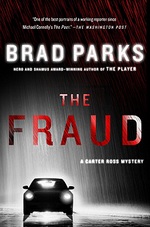
The Fraud by Brad Parks

The FraudThe Fraud

by Brad Parks

Series: Carter Ross, #6

Hardcover, 342 pg.
Minotaur Books, 2015
Read: September 9, 2015

The ethical dilemma posited aside, I hated the first chapter. If I’d never read a Brad Parks book before, it might have caused me to move on to the next thing on my reading list. The cheap “in 43 hours, X, Y, and Z are going to happen…” ploy irritates me. Just get me invested with setting, plot, or character. Present one or all of these in an interesting manner and I’ll get invested. Don’t force the investment. Don’t jam it down my throat. Also, there was a perfect point 300 or so pages later that it would’ve fit.

Thankfully, Chapter 2 was much better, as was the rest of the book. This was the typical Parks mix of darkness and light, grim stories told with a light touch. A newspaper reporter trying to live up to the tradition of the great investigative journalists of the past in the midst of an industry that’s dying and doesn’t care about that tradition.

Carter seems to be off his game a little here, making a couple of blunders that seem out of character — but given that he spends the whole novel waiting for That Call from his pregnant girlfriend, it’s understandable. It also helps move the novel along nicely, so, it’s easier to swallow (especially while reading).

There’s a string of carjackings in Newark, and a couple have proved deadly. Naturally, the one that makes people pay attention is a well-off middle-aged white man. Carter just can’t write about him though, he seeks out another carjacking that resulted in a murder, this time of a less well-off black man. It doesn’t take long before Carter’s sure it was the same carjackers, and that there’s something else going on besides Grand Theft Auto.

There’s not much (beyond the strange relationship between Carter and Tina) that really seems to be the same from novel to novel in this series. The cases don’t overlap really, which is refreshing. Carter can’t rely on the same sources of information all the time — which doesn’t preclude some returning supporting characters, but also keeps things fresh on that front. The corner bodega shop owner in The Fraud was entertaining, and I hope we see him again down the line. Other characters here — friends and family of the victims, sources of information, and so on — were well-drawn and engaging as usual.

Easily one of the more entertaining aspects of the Carter Ross books are the interns — from savvy to naive, hapless to ruthlessly efficient, these characters make you fear for the state of journalism (or give you great hope). This books’ intern, Chillax, annoyed me greatly in the first couple of pages we spent with him. He clearly rubbed Carter the wrong way, too. Which did provide a grin or three. Case in point, we first meet him like this:

“Hey, what’s up, brah?”

I am unsure what youthful genius decided that the word “bro”–which is already an effective truncation of the word “brother” – – needed to be further morphed so it was pronounced like a woman’s undergarment. But it was my hope this linguistic pioneer developed some affliction that was similarly annoying. Like a permanent hangnail.

In the end, Chillax proved to be a little bit more than comic relief, but when we see past interns in this book, we see how little.

The comedic elements, as always, separate this from the pack, they season, but don’t overwhelm the mystery. There was one big joke moment (maybe two, actually) that any reader is going to see coming 5 miles off — but Parks is such a pro that even they work. The more elaborate of them (you’ll know when you read it) is cringe-worthy, totally expected and totally chuckle inducing. The Fletch joke was nice. This summer we’ve had jokes about the movie from Parks and Kuhn, one more and we’ve got a trend.

Parks threw a couple of curve balls that I whiffed on. There’s one shadowy figure that I had pegged to be character type X. Not only was he not X, Y or Z, he was more like D. I was that far off. I also did not see the ending coming (well, the solution to the criminals’ identities I saw because I knew more than Carter), but the rest? Didn’t expect that from a Carter Ross book.

There’s one thing that doesn’t make any sense to me, one character’s motivation and actions that made sense with one interpretation of the facts, are just irrational when looked at in the light of the way Carter finally puts the pieces together. The way that Parks wrapped up the action and provided glimpses into what happened with the major players didn’t allow for him to get into details about the red herrings he chased, but this one was big enough that an explanation would’ve helped.

Good characters, entertaining plot; actually, the mystery itself might be pretty weak, the more I think about it, but it was fun watching Carter figure it out, which is the point. The Fraud, solidifies the Carter Ross series as a reliable mystery series.

—–

3.5 Stars

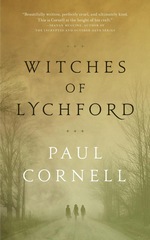
Witches of Lychford by Paul Cornell

Witches of LychfordWitches of Lychford

by Paul Cornell
Series: Witches of Lychford, #1


Kindle Edition, 144 pg.
Tor.com, 2015
Read: September 8, 2015

You ever get nervous about starting a new work by an author? Sure, in retrospect, it may seem silly to doubt, but for every Jesse Stone, there’s a Sunny Randall. As much as I like his Shadow Police series, I wasn’t sure I was up for something else by Paul Cornell. Thankfully, my apprehension was silly, because whether he’s writing about London or a small town, Cornell knows what he’s doing.

The town of Lychford is on the verge of dealing with a major assault by evil forces and for reasons you should discover for yourself, that is not something that can be allowed, because if they are allowed to invade, these supernatural forces will carry the day. So they must be stopped before they can begin in earnest.

These forces are, naturally, a large supermarket chain. What else? They’re called Sovo, and I’m sure they resemble no actual chain (or that Cornell has really good lawyers). But it seems that there’s more to them than low prices and a knack for ruining the lives of small business owners.

Now, your middle class activist types might get riled up by this, but there’s only so much that their petitions and flyers can do against the supernatural (not that they realize they’re going up against powers beyond their ken). Even when the supernatural are primarily using things like empty promises, bribes, and the allure of new jobs, there’s only so much that well-off Muggles can do (to borrow a term from some other series).

It’s going to take people able to see the otherworldly aspects of the PR Campaign that Sovo is waging to win the hearts and minds of the citizenry to thwart them. Now, typically, this is where we’d get someone like Rachel Morgan, Harry Dresden, or Peter Grant to come in and kick a little supernatural butt. Instead, we get such obvious heroes as a crackpot old lady and vicar who’s on the verge of losing her faith. Thankfully, the crackpot is actually a witch of sorts, so they’ve got a fighting chance.

For something a mere 144 pages long, this is an incredibly rich and well-developed world. The magic system seems pretty thought-out and realistic (for lack of a better word). The characters (those mentioned and a couple of others) are sharply defined and could probably carry a story by themselves.

Really, really impressive work — I’d love it if the work were longer, but honestly, I’m not sure if it’d have been as effective if it had another 1-200 more pages to develop everything. I think this ensures Cornell’s place on my “grab anything you see by” list without really caring what the subject matter is.

I was about to hit “Publish” on this when I had this thought — this reads just like one of Bledsoe’s Tufa novels would if set in England. For my money, that’s a pretty high mark.

—–

3.5 Stars

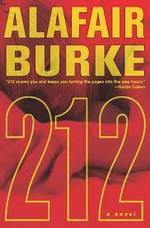
212 by Alafair Burke

212212

by Alafair Burke
Series: Ellie Hatcher, #3


Hardcover, 368 pg.
Harper, 2010
Read: February 25 – 26, 2015
It’s a law that in detective novels if you have two completely unrelated crimes being investigated, that one of the things the detectives are going to discover before all the pieces fall into place is that the crimes are completely related — one is very likely the cause of the other.* So, in 212 we start with Crime A, and then move onto Crime B — and sure, there’s a chance that A was just to reintroduce to this world, maybe show how Ellie and her partner are just frustrated in general, and maybe set them up for something. Maybe A is there simply to remind us all that she’s human and vulnerable and not perfect.

We leave Crime A for B. It doesn’t take too long before it’s clear that B is going to be the focus of the novel, and that frankly, you’d like the novel to be short, because you don’t want the perpetrator walking even fictional streets for long.

Right away, I started to wonder just how she was going to the the two crimes together, and by page 93 I was pretty sure that the theory I’d been percolating would be correct, and I was feeling a little clever. Which lasted a while, until Burke showed me that I was no where near to the right path. For my ego’s sake, I’m just assuming that an early draft matched my thinking but then she had a brain storm to make everything better.

As usual, this is nicely plotted, well-paced, filled with likeable (when they’re supposed to be) and relatable characters. Also typically, Burke nails a lot of the little moments. It’s this kind of thing that elevates this over other similar novels. For example, when the parents of the central victim are notified of her death, Burke’s description of the scene is striking. She captured the moment perfectly (at least, as I imagine it’d play out). Ellie’s speculation about the future of their marriage? Icing on a tasty cake.

There is one hefty Coincidence Ex Machina essential to the plot that stretches credulity, but somehow Burke pulls it off.

My other quibble with this is that Ellie acts too much like a super-cop for someone so young. I’m not denying that she’s got good instincts and that she should be given more credit than she frequently is. But Ellie isn’t Harry Bosch, she shouldn’t treat J. J. like Bosch does his partners. I’d really like to see her work with J. J. a bit more, take advantage of his experience more. I like Ellie, I think in a few years she would be NY’s equivalent to Bosch and then could be excused for treating her partner like an assistant (although, she’s mostly too nice to do that — another problem I have with this treatment — and no one’s ever accused Harry of being nice).

My complaints do nag at me while I read — but Burke’s plotting and voice are strong enough that I can push them aside until I’m done enjoying the book. Could this book be better? Could the series? yes and yes. But there’s little in the world that can’t.

A quick, enjoyable read — solid work that’s a little better than it needs to be.

—–

* The Law of Interconnected Monkey Business talked about in the Gideon Oliver novels, applies in a special way to all mystery novels.

—–

3.5 Stars

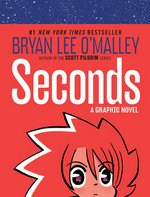
Seconds by Bryan Lee O’Malley

SecondsSeconds

by Bryan Lee O’Malley

Hardcover, 323 pg.

Ballantine Books, 2014

Read: August 14 – 15, 2015


This is a story about Katie — a pretty successful young chef, with a personal life in shambles (are there any chefs in fiction whose extra-kitchen life aren’t in shambles?), on the verge of opening her second restaurant while handing over the reins of her first. She’s been given a gift — from a source she doesn’t understand — to undo the events of one day, to rewrite history — just one, there are rules. After one not-that-terrible-but-certainly-regrettable day, she decides to use it.

Katie’s as surprised as the next guy when it works (assuming, of course, the next guy isn’t in a work of fiction). And she finds a way to break the rules. And does fixes another bad day, and another, and another and soon she’s like the guys in Richard Curtis’ (IMHO underrated) About Time, tweaking and massaging the details of the past to make her present perfect.

However, like I said, there are rules. And we all know what happens when you break the rules concerning magic. Or time travel (ask Marty McFly how things were going for him during The Enchantment Under The Sea dance). Now, actually, I thought emotionally and character-wise were richer and more interesting before the wheels come off Katie’s machinations, but it’s here where things start to count.

If I was a better judge of visual art, I’d have the vocabulary to express this next point. So apologies for that, if I’m confusing here — well, that’s what comment boxes are for. I’m not knocking in any way, the penciling here (or in other works) when I think of O’Malley’s people as cartoon-y, like children (occasionally very adult looking children) doing very non-childlike things. To me, the artwork here in O’Malley’s signature style, isn’t a fit the way it was with Scott Pilgrim. There’s a darkness to the story, a flavor to it that seems at odds with the art. Which makes the art more effective — these are twisted forces that should happen to people that look like they were drawn by Lan Medina or Peter Gross, not the fun and innocent-ish looking characters we meet in these pages. It’s more jarring, unnatural, in O’Malley’s hands.

Very entertaining, a good follow-up to his magnum opus — a different direction, feel, and populated by people with a different set of issues. Did I heart this as much as Scott Pilgrim? No. Because it’s not the kind of story I prefer. Is there anything wrong with it? No. It’s just it didn’t strike the same chord with me, mostly because O’Malley was going for a different chord. Worth your time.

—–

3.5 Stars

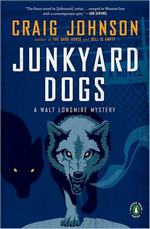
Junkyard Dogs by Craig Johnson

Junkyard DogsJunkyard Dogs

by Craig Johnson
Series: Walt Longmire, #6

Hardcover, 306 pg.

Viking Adult, 2010

Read: July 25, 2015This one opens with probably the funniest incidents in the series, I don’t want to spoil it, just trust me. Actually, there’s quite a few things in the opening chapters of this book to chuckle at or with.

But it wouldn’t be much of a mystery novel if it stayed that way. And so one chuckle-worthy happening is used by Walt to try to help one of his deputies. And then another string of comic events and characters ends with a corpse or two turning up. Which pretty much stops the laughter. It’s really a shame, I liked one of the people who died — and the family of one of the others. (Which isn’t to say that it’s not a shame when it happens to characters I don’t like)

The mystery was a little easier to solve than I really like, but these books aren’t really so much about the whodunit as they are about what happens with Walt and co. while they figure it out. On that front, this was pretty entertaining.

Seeds were planted for something involving Henry’s brother. Well, seeds have been planted already — I guess I should say that the previously planted seeds about Henry’s brother got a decent watering. However you want to look at it — something’s brewing on that front, and it’s not going to be pretty when it’s done. I hope the same isn’t the case with the impending nuptials.

As usual, with a book that takes in a part of the country like Absaroka County, WY, you have to worry about the number of murders and the risk posed to everyday residents of it. But at least they’ve got a lawman on their side who’ll make sure that those who disturb that corner of the woods pay for it. And not to sound too callous, but as long as these books keep being that entertaining, I can live with the hit to the census.

—–

3.5 Stars

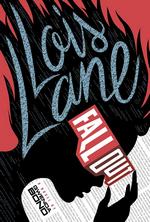
Lois Lane: Fallout by Gwenda Bond

Lois Lane FalloutLois Lane: Fallout

by Gwenda Bond
Series: Lois Lane, #1

Hardcover, 303 pg.

Switch Press, 2015

Read: June 27, 2015I’d love to be able to talk about this book as a YA adventure tale on its own. But I can’t. It’s Lois Lane, fer cryin’ out loud. Lois the intrepid, fiery, determined journalist. Not the ditz, not the comic relief, not the damsel in distress (except for the distress she finds herself in because she plunged into danger, not as a victim). Sure, she’s sixteen and a rookie when it comes to reporting things — but she’s gotta start somewhere.

Not only is this Lois Lane, but it’s teenaged Lois. So you have to think about this in terms of Smallville, well I have to, anyway. Bond’s Lois isn’t Smallville‘s — she’s closer to Chloe Sullivan (just with less tech savvy). Actually, if we’re talking WB shows, Bond’s Lois is Veronica Mars without the cool dad. But she’s not just smart and tenacious. She also gets people — she may have no social skills (or not enough of them), but she can read a person. Early on, Lois sees what’s going on with the other girl in the news staff pining after one of the guys. There were other examples, but putting that one where it was — and the way Lois saw it — makes you believe her “reads” of other people.

After spending her life bouncing around the world, from base to base, and seeing the negative effect it’s having on his daughter. General Lane gets himself a permanent assignment to Metropolis (the exact nature of which isn’t clear — but what teenager cares that much about what their parent does?). Lois is going to put down roots here, too, and not get in trouble at school — a resolution that doesn’t last through first period. But, this draws Perry White’s attention as he visits the school, and he invites her to join a new student news project. From there, Lois and her new colleagues uncover a story that involves a strange mix of cyberbullying, VR gaming, and group psychology.

Sure, the story she uncovers is about outlandish, a little hopefully) hard for us to believe. But, hey, this is a book based on comics. So yeah, outlandish works. It also allows Bond to make some subtle (maybe overly subtle) remarks about group-think, the dangers of our online society, and so on.

The use of Gen. Lane, Lucy, Perry White and the Daily Planet were inventive, but were consistent with the source material. Which was both a relief, and a key for the book working as well as it did.

Her friends aren’t that developed — but there’s enough of them to be more than cardboard cutouts of high school stereotypes. I look forward to learning more about them all — I think Maddie’s the most entertaining and interesting, but I’d gladly see more of the others as well. Which goes for East Metropolis High as a whole, really. I hope in future installments that Lois can find someone other than the school secretary to dupe to accomplish her ends.

She doesn’t do much with him, but I enjoyed Bond’s treatment of Lois’ online friend, SmallvilleGuy. Someone she met online after posting about seeing something inexplicable in the middle of Kansas. Bond doesn’t try to hide from the reader who this guy is, or play games with us — the nickname is a dead giveaway. Still, it would’ve been easy for Bond to pretend for a couple of books that this stranger was someone new to the canon. Instead, she plays it straight — sure, she has some fun because we all know a whole lot more than Lois does about this guy, and what their future will hold. But she doesn’t do it at the expense of either character.

Fallout was engaging, fun, and an inventive contemporary take on a timeless character. Recommended for comic book types who don’t mind a different look at canon and/or people who like CW dramas.

—–

3.5 Stars

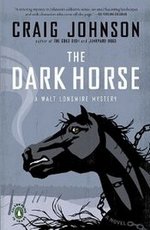
The Dark Horse by Craig Johnson

The Dark HorseThe Dark Horse

by Craig Johnson
Series: Walt Longmire, #5

Hardcover, 318 pg.
Viking Adult, 2009

Read: June 22 – 23, 2015

. . . we walked into the middle of the rutted and powdery two-track that stretched to the horizon; the only other road curled off to the right and disappeared into the distance as well.

I thought about how we tilled and cultivated the land, planted trees on it, fenced it, built houses on it, and did everything we could to hold off the eternity of distance–anything to give the landscape some sort of human scale. No matter what we did to try and form the West, however, the West inevitably formed us instead.

One thing I particularly appreciate about the Longmire books is the effort that Johnson puts into making them distinct from each other — one of the hazards of mystery series is that books can blend in with each other, but that’s not the case (so far) with these. There are two distinct features to this book — 1. Narratively: Walt tries (and kind of succeeds) to go undercover to investigate a murder in a nearby county; 2. Mechanically: the narration keeps jumping back and forth from “the present,” where Walt’s been investigating for a couple of weeks, and then to the point a few weeks earlier where Walt starts to becoming involved in the investigation.

I guess it’s also noteworthy that there’s really no Indian spirituality to speak of — practically no Henry, for that matter (although he makes his presence felt when he’s around).

Anyway, a Sheriff of a neighboring county gets Walt to hold a prisoner for trial for him — a woman who confessed to murdering her louse of a husband. Repeatedly confessed, no less. Given the confession (and some other evidence), he can’t investigate things further — as much as he thinks it might be needed. Still, he knows ol’ Walt won’t worry about the politics or difficulties involved if he sniffs something rotten in Wyoming. Walt falls into the not-so-cleverly-lain trap and starts finding the problems with the confession. Which leads to him assuming the identity of an insurance investigator and doing a little investigating.

He’s almost comically bad at it, but he’s enough of a stranger that it doesn’t matter — he can just be Walt, talking history, drinking beer and nosing around. Add in some horses, some fisticuffs, a spunky kid and a little gunplay — and you’ve got yourself a solid mystery novel.

One of the episodes of the show Longmire was loosely based on this novel, but by “loosely” I mean there are horses, a fire, Walt, and a married couple. That’s pretty much it. So, those who’ve seen the episode can feel free to read the book without any fear of knowing whodunit (and vice versa).

There’s a little movement on the character development front — people recovering from wounds, some other recurring characters moving in the background, and some development on various romantic fronts, too. The serialized component isn’t a major factor in this series, but it’s there — mostly downplayed this time, but still, present. Oh, the election that’s been lurking in the background for forever? Taken care of so quickly, your head’ll spin — what the results mean for things going forward, time will tell. I think I like that approach to it — just blink and you’ll miss it.

Yet again, Johnson delivers a great read — and Sheriff Longmire and Absaroka County prove they can be just as interesting as Det. Bosch and L.A., Spenser and Boston, or Det. Hatcher and NYC.

—–

3.5 Stars

Page 40 of 43

Powered by WordPress & Theme by Anders Norén