Tag: 3 1/2 Stars Page 42 of 43

Broadchurch: A Novel by Erin Kelly (based on the story by Chris Chibnall)

Broadchurch: A NovelBroadchurch: A Novel

by Erin Kelly

Hardcover, 448 pg.
Minotaur Books, 2014
Read: December 25 – 26, 2014It’s difficult for me to get the proper perspective on this one. I’ve watched the series this novel is based on multiple times, I watched all of the FOX adaptation, Gracepoint, I’ve thought and talked about the events surrounding the death of Danny Latimer (or Solano) more than people should. Which makes me either the ideal reader for this, or the worst. I’m not sure. Honestly, when this book came out, I was intrigued, but not that compelled to give it a shot until I read that hints for the second series would be included.

I’ve got a few ideas what those hints might be, but really, there’s not much here that wasn’t on the screen (which is as it should be). Still, it was a good use of time, I thought.

The advantage of Kelly’s novel over the series is in the details, the little things she can point out that the viewer might miss, or that the camera couldn’t show. We see the Ellie’s blowup about Hardy’s ubiquitous lists building up. There’s breathing room for small, quiet moments like those early on between Rev. Coates and Danny’s grandmother. You can tell there’s a relationship between them in the show, but we get to see some of it here, which is nice.

Kelly nails — absolutely nails — the relationships between the characters, in all the nuances, all the humanity these characters were imbued with. The loves, the friendship, the banter, the . . . distrust, the antipathy, the suspicion . .. all of it.

The biggest things the novel has going for it is that we get a get a better sense of the effect this death has on the community. We’re told that it is in the show, but here we’re told, but we also see it in ways beyond Becca’s inn being too vacant.

Kelly does make a few tweaks — notably when things happen, honestly, the timeline makes a bit more sense to me — and is definitely clearer, we get a much better sense how long things go along. One change is that Chloe (the sister) isn’t in school when she takes off and goes to hang out with her boyfriend (it seemed to early for her to be in school, but a good way to demonstrate her trying to get back to normal life). Anyway, the changes she made were small — almost unnoticeable — and entirely forgivable (when they weren’t improvements).

Kelly gives almost no physical descriptions of anything or anyone. I wouldn’t know what Rev. Paul Coates looked like if I didn’t know what Arthur Darvill looked like. You get a tidbit or two about Hardy’s height, Tom Miller and Danny Latimer’s hair (and Joe Miller and Nige Carter’s lack of it), Becca Fisher’s looks. But on the whole, there’s practically no physical description of the characters. Which is fairly annoying — especially for those who read the book while skipping the series, I’d think.

At the end of the day, this is a gripping story about the first murder in a small town’s living memory and what happens to everyone it touches. There’s hope, there’s despair (lots of it), there’s love, there’s . . . eh, I said it before, I’ll just say it again: humanity.

Watch it, read it — do both. This is a heckuva story.

—–

3.5 Stars

Reread Project: Sunset Express by Robert Crais

Sunset Express (Elvis Cole, #6)Sunset Express by Robert Crais
Series: Elvis Cole, #6

Hardcover, 288 pg.
Hyperion, 1996
Read: September 10, 2014


There are two stories being told by Crais in this book — yes, interwoven and interdependent — but two stories. The fun one involves Lucy Chenier coming out to LA for work and to see Elvis. She brings along her son to make it a little family vacation. When Elvis gets the news, he becomes a different person than we’ve seen before — or at least a more intense version of something we saw in Voodoo River, but that’s about it. He’s a lovestruck fool — very clearly — and Crais does a great job of portraying him that way. Yes, the World’s Greatest Detective can, of course, get his mind focused on work when necessary, but off the clock, he’s a grinning victim of Cupid. The two of them together are cute, charming, and can’t help but want to see them together a lot more.

The story focusing on Elvis’ professional life isn’t nearly as fun, heartwarming or cute. But Elvis gets to be snarky and ironic, and do the typical Elvis things (investigate, make jokes people don’t get, and even use his fists and gun a little). Jonathan Green — high-profile attorney in the F. Lee Bailey, Robert Shapiro, Johnnie Cochran, etc. mold — and his team of associates (and a camera crew), hire Elvis to help with the defense in the trial of Teddy Martin. Teddy Martin’s a celebrity restaurateur accused of the brutal murder of his wife — a pretty open and shut case, it seems. But Green’s people are getting tips like crazy and they need additional investigators to comb through them. One of the more promising tips involves allegations of one of the detectives in the case planting evidence in previous cases. Elvis agrees to investigate Det. Angela Rossi and track down other tips, but insists he’ll report the truth, not what will necessarily help the case — Green agrees to this, insisting that’s all he wants. Elvis gets to work and finds some quick results. But it’s not too long before he sees a stark discontinuity between what he finds ot about Rossi and other tips and how that information is being used by the defense.

Sunset Express is hindered by having one of those plots that people who read (or watch) a lot of detective novels will realize is problematic in a way the characters can’t. Everything in Elvis’ case moves along too smoothly. Now, in Lullaby Town and Voodoo River, for example, his investigation goes pretty smoothly, but you can tell that the plot complications are going to come from what happens as a result of his work. Here, you can tell there’s something wrong with the answers he’s finding. Yet, Elvis doesn’t have our perspective, he can’t tell he’s getting yanked around. It’s frustrating, just sitting around waiting for things to dawn on him so he can catch up to us.

As frustrating (please note I didn’t say it wasn’t compelling) as that storyline is, the relationship material with Elvis and Lucy (and, with Ben to a lesser degree) is great. The whole book could’ve been built around that (and arguably was) and I’d have been happy. It’s good to see that the two have kept their long-distance relationship going. She’s clearly good for him (and, I think, him for her) — even if the reader can’t tell that for certain, all you have to do is watch how Joe reacts to her.

It wouldn’t be an Elvis Cole book without some good natured humor at Joe’s expense, for example:

I called Joe Pike to tell him that we were once more employed. His answering machine picked up on the first ring and beeped. He used to have a one-word message that just said, “Speak,” but I guess he felt it was long-winded. Now, there was just the beep. When I asked him how people were supposed to know who they had gotten or what to do, he’d said, “Intelligence test.” That Pike is something, isn’t he?

For a good chunk of this novel, it looks like Joe is going to be relegated to baby-sitting Ben. Now, granted, he seems to enjoy Ben and there are few people your kid is going to be safer with, but what a waste of our friend with the Aviator Glasses-fixation.

Of course, Rossi knows Joe. They used to work together back when Joe was on the force, and as of this point in the series, she is the member of the LAPD that doesn’t hate Joe. For more reasons than that, Joe respects her (although that can’t hurt), so when things start to go off the rails for her, Joe insists that his partner step up and clear her name. Joe’s not much help on the investigation front, but in the gun packing (and more), fast driving, and personal intensity departments? He’s aces.

Other little treats in this box of Cracker Jacks? The return of Ray Depente — I’d completely forgotten he came back in this one, and it was so nice to see him. He’s a lot of fun in his couple of scenes. And, Eddie Ditko is back, unpleasant and omniscient as ever.

As Free Fall featured Elvis’ reaction to/stance/meditation on L.A.’s racial divide and police corruption, this gives us his take on the manipulation of the legal system (and a healthy amount of support for the police — particularly in light of Free Fall). Elvis has understood the difference between the legal system and justice, and has worked outside (if not at odds with) the system before in the pursuit of justice. But this time, he was seeking justice — thought he’d helped various people find it — only to find his work, his self, his name used as a tool to twist the system into preventing justice being carried out. His ultimate solution to this problem is very effective, and would likely be far more effective today than it was 18(!!) years ago. Well done, Mr. Cole.

A strong satisfying read, with two storylines well worth reading, Sunset Express is a solid entry to this series, and the first step away from the Elvis Cole of the first stage of the series and into the next (see previous entry for my discussion of this). Sunset and Indigo Slam are the bridge between these stages, but properly belong to the first. Even ignoring my little theory of the stages/eras in the series, this is a strong and well-deserved follow-up to Voodoo River, our heroes are back in L.A., as are the criminals and Elvis lady friend. It’s enough to get another verse out of Randy Newman.

—–

3.5 Stars

—–

Drawing by Kirsty Stewart, chameleonkirsty on deviantART, used with permission.

No Colder Place by S. J. Rozan

No Colder Place (Lydia Chin & Bill Smith #4)No Colder Place

by S.J. Rozan
Series: Lydia Chin & Bill Smith, #4

Hardcover, 288 pg.
St. Martin’s Press, 1997
Read: June 5, 2014

Rozan was able to tap into her day job here and use her knowledge of architecture, construction — particularly the idiosyncratic way that construction is done in NYC. Bill, and the tune/atmosphere Rozan uses for his books, is able to be pensive, reflective, and almost poetic in thinking about the act of building. Lydia wouldn’t be able to do that. This type of thing is a real advantage to switching POV characters the way Rozan does.

The series feels different when Bill is at the center, and I found myself liking it more this time than last. I feel bad for him as far as Lydia is concerned. When the novel is told from her perspective, there’s something quixotic about his pursuit of her, and you can give a sympathetic chuckle when he tries. But from his point-of-view, it’s just sad.

There is just so much unsaid about Bill. The retreat to the cabin. His piano playing. Why he won’t move on from Lydia. Rozan’s walking a fine line between having an enigmatic character and just withholding information. I do want to see and learn more about him, but I’m not feeling cheated (for now).

Anyway, I should focus on the case in this book. Again we have Bill going undercover (also again, thanks to someone from his murky past) — with Lydia providing backup and support. This time on a construction site plagued by robberies, a disappearance — and perhaps a little bookmaking or drug dealing. Naturally, it doesn’t take long for things to get ugly and far messier than he’d expected. It’s deftly told with the right amount of twists, turns, and danger. Plus interesting and compelling sporting characters, and not your everyday detective novel crimes.

Come to think about it, that’s one of the best parts of this series — the crimes they are hired to investigate are not your typical mystery novel fare. Yeah, things eventually return to the mainstays (murder, blackmail, etc), but they start in interesting places.

No Colder Place is worthy entry to this series, and I’m ready for the next one.

—–

3.5 Stars

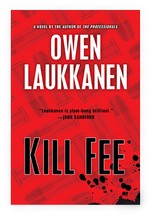
Kill Fee by Owen Laukkanen

Kill Fee (Stevens & Windermere, #3)Kill Fee

by Owen Laukkanen

Hardcover, 400 pg.
Putnam Adult, 2014
Series: Stevens & Windermere, #3
Read: June 4, 2014

Like I indicated back when I reviewed Criminal Enterprises, the biggest trick for Laukkanen is coming up with some reason to get his FBI Agent and his State Police Officer together to work on a case. Once that’s dealt with, we’re off to the races and anything goes. This time, our two heroes are hanging out with each other and witness the crime together. Simple and effective way to get them working together. Easy as pie.

This time they’re on the trail of a hit man who killed a billionaire right in front of them. But he’s not your typical hitman, there was something about his face — his eyes — that set him apart from others. His shooting (and subsequent kills) gets Stevens and Windermere hopping all over the country again on his trail.

Once again, we have a criminal in the midst of a very successful crime spree, which goes haywire about the same time as Stevens and Windermere start investigating. Not because of them — although they make it worse — but because of the heart. Sure, that’s a recurring plot point in this series — but that’s not a complaint, or a weakness, really. Because it makes sense, it seems real, there’s million different ways to use that plot point — and because Laukkanen pulls it off so well. So it comes across as a common bond amongst the people that he depicts, not a laziness.

There’s heightened emotional stakes between partners on the law side, too, as the Stevens and Windermere deal with the nature of their relationship (I really, really liked the way they dealt with this). Things are intense for Stevens on the home front, too — between his wife’s discontent with the new direction his career is taking and his daughter still dealing with the aftermath of her ordeal in Criminal Enterprises, he has more than enough to deal with even without a multi-state killing spree.

As is becoming commonplace in this series — a great plot, good pacing, a twisted criminal (truly despicable), good characterization. Everything moved well, things clicked just as it should. Laukkanen is becoming as dependable and reliable as Kirk Stevens, and as bold as Carla Windermere. I’m already getting impatient waiting for the next.

—–

3.5 Stars

The Christian’s Great Enemy: A Practical Exposition of 1 Peter 5:8-11 by John Brown

The Christian's Great Enemy: A Practical Exposition of 1 Peter 5:8-11The Christian’s Great Enemy: A Practical Exposition of 1 Peter 5:8-11

by John Brown

Paperback, 86 pg.
Banner of Truth, 2013
Read: June 1, 2014

Good, solid exposition of 1 Peter 5:8-11. No fireworks here, but plain, straightforward language — no rhetorical heights, no dazzling quotations, just straight-forward, orthodox discussion of the passage.

Brown calmly and thoroughly starts at the beginning of the passage and proceeds carefully, clause by clause through it. He doesn’t go off on any paranoid hunts for demons/Satan under every rock or anything. But he examines the ways of the world and the hearts of man and shows where the evil one will and can pounce — and how he will go about doing so. From there, he moves on to the hows, whys, and wherefores of our resistance — giving warnings, inducements, and encouragements to help along the way.

I can’t say I was dazzled by Brown’s work, but I was refreshed by it. I was reminded of my duties and pitfalls along the way. If you’re looking for sound teaching on the passage/topic but are intimidated by (or have no time for) Satan’s Temptations by Gilpin or The Christian in Complete Armour by Gurnall, this would be a great one to pick up.

—–

3.5 Stars

Shovel Ready by Adam Sternbergh

Shovel ReadyShovel Ready

by Adam Sternbergh

Hardcover, 256 pg
Crown, 2014
Read: May 1 – 3, 2014

It’s the near future, NYC has been rendered nearly uninhabitable by terrorist attacks and most of those that are still there aren’t really in NYC — they’re permanently jacked in to a virtual reality, kept alive by IV feeding bags. (think of a dystopian vision of Ready Player One‘s OASIS)

One of the few not hooked to the VR world is Mr. Spademan, a hitman. He doesn’t care who, he doesn’t care why, as long as the money’s right and he’s given a name, he’ll take the job. Once he’s taken the job, you might as well consider it done, he never fails, he never quits.

Well, until this job. Otherwise, it really wouldn’t be much of a story now, would it? Something happens that keeps Spademan from doing what he does — and the aftermath is pretty deadly. Spademan, his friends/allies, and those around them will be fighting for their lives before long as they plunge into a world of the ultra-rich, ultra-pampered and pseudo-religious.

The voice that Sternbergh employs is strong — you want to hear this guy tell his story. It’s a little heavy-handed from time to time — particularly at the beginning. But there’s a purpose for it, I think — at first I thought it was just a product of this being his first novel, but that’s condescending, and blind. Sternbergh knew exactly what he was doing — persevere through the heavy-handedness and you’ll understand why it was there.

A great mix of noir, SF, and suspense — with a little extra thrown in. It’d be easy to just chalk up this book to a fun combination of style, setting, and premise. But it’d be a mistake, there’s real heart here. Heart, genuine suspense, and a good story (yeah, and style, setting, and premise).

—–

3.5 Stars

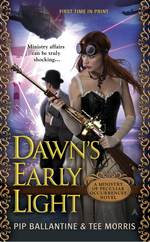
Dawn’s Early Light by Pip Ballantine and Tee Morris

Dawn's Early Light (Ministry of Peculiar Occurrences, #3)Dawn’s Early Light

by Pip Ballantine and Tee Morris
Series: Ministry of Peculiar Occurrences, #3

Mass-Market Paperback, 374 pg.
Ace, 2014

Read: April 23 – May 1

Agents Braun and Books are back in action — this time in the U.S. of A. Teamed up with a pair of agents from the Office of the Supernatural and the Metaphysical, they set out to investigate a rash of missing ships (of both the air and sea varieties) along the Eastern Seaboard. While full enough of the requisite peril and adventure, this particular investigation is wrapped up quickly — but in doing so, the four agents uncover a plot that’s far more hazardous to both nations. The Pinkertons, the House of Usher, the British Royal Family, and a couple of notable scientists/inventors from the era soon are involved in twist-filled machination to wreak havoc.

This leads the agents chasing their suspects across the continent — with stops in Detroit, Flagstaff, and San Francisco. As fun as it is to see Ballantine and Morris show us around a Steampunk Victorian England, a tour of the States is a nice change (also, nice to see a Steampunk U. S. not filled with Priest’s Rotters). Books latest invention (not to mention the toys that the team at the Ministry give them) are perfect — just the kind of things secret agents need (and could even use today), “science”-y in a suspended disbelief manner, and outlandish enough to have to be fictional.

There are two storylines that only relate to the main plot at the end of the book — one involving the House of Usher attempting to kidnap a Ministry agent, and one involving the assassin Sophia del Morte and the Prince of Wales. I could’ve easily taken another fifty pages or more with both of these. Hope to see all these characters again soon. Speaking of characters to see again soon — the scientists/inventors I mentioned earlier? Yeah, we need more of them.

Of course, the Ministry’s missions (even those not actually condoned by the Ministry) are only part of what makes these books page turners. There’s the whole Will They or Won’t They thing with Books and Braun — scratch that. There’s never been a Won’t They, just a When Will They? That’s been obvious from the get-go, honestly. It’s merely a question of what obstacles will be in the way. This time, the obstacles are the American agents — clearly set-up to be stumbling blocks on their road to romance, the fetching librarian and the gun-slinger each with enough common ground and personality to match our heroes. It was a little too heavy-handed for me, and as much as I liked the Americans as characters, I really disliked them in their role as hindrances. Sure, our authors make those storylines pay off nicely — but I didn’t enjoy the ride.

Nothing against the book, it was a fun read with a couple of characters that I enjoy spending time with, but it wasn’t as good (on the whole) as the previous two (see above paragraph) — but the last two chapters, as they revealed exactly what stakes are involved, earned it the extra half star. A fun read, but mostly one that moved pieces into place for the next book or so while tying up a couple of loose ends from the previous books. I’m really looking forward to what’s next. It’ll be great.

—–

3.5 Stars

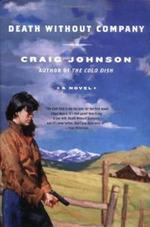
Death Without Company by Craig Johnson

Death Without Company (Walt Longmire, #2)Death Without Company

by Craig Johnson
Series: Walt Longmire, #2

Hardcover, 271 pg.
Viking Adult, 2006
Read: Feb. 11-13, 2014

Granted, I took too long to get back to this series, so it’s possible that my memory is more of the TV show than The Cold Dish, but I think I remember it well enough to say that Death Without Company has a more enjoyable, casual feel throughout than its predecessor did.

Which isn’t to say this is a laugh riot, or silly — Johnson is no Evanovich. But the atmosphere of the book, the relationships between Vic, the Ferg, Henry, Cady and Walt are effortless, they feel like coworkers and friends. So even when the bodies start to pile up, the external pressures mount, and answers are in short supply, there’s an ease to things that make the book more entertaining than it could’ve been. Even as Sheriff, Walt still comes across as deferential and secondary to his former boss Lucian Connally (though he doesn’t hesitate to put his foot down when necessary).

When Lucian tells Walt in no uncertain terms that a death in the retirement home he lives in is not from natural causes, he has to investigate. Even if he’s not entirely convinced. It’s not too much of a spoiler to say that Lucian’s right — otherwise, we wouldn’t have a novel to read. Which takes Walt on a journey through the the murky history of both one of Walt’s oldest friends and the area he calls home — this time with a different minority group as the focus (though the Rez and its inhabitants are always lurking around in the background).

There’s a new romantic interest in these pages — as well as a couple of new deputies for Absaroka County (the particular skill set of one of these is a bit too deus ex machina-y for my tastes, but he’s so likable, who cares?). Throw in the kind of snow storm you can only get in rural Wyoming (or areas like it) and some brushes with Indian spirituality, and you get a distinctive kind of mystery novel, making the adventures of Walt Longmire and his cohorts the kind of story you can get nowhere else. It won’t take me as long to come back to this series next time.

I had no idea where to fit this into the review, but I thought Walt’s observation deserved to be repeated — due to its wisdom as well as the way it’s phrased:

Everything to do with women is foolish, and, therefore, absolutely essential.

—–

3.5 Stars

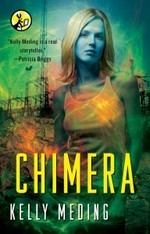
Chimera by Kelly Meding

Chimera (MetaWars, #4)Chimera

by Kelly Meding
ePub, 242 pages
Pocket Star, 2013
Read: Feb. 14-25, 2015


    • Let’s see here,

Chimera

    gives us:

  • a first-person account of super-hero life from an under-represented type of Super-Hero — Check!
  • Personal conflicts, Personal demons, general turmoil — moreso than most X-Men, even — heroes that carry emotional scars in addition to those earned in battle — Check!
  • Impending Government Persecution of Super-Heroes — Check!
  • A sex scene that goes on far too long for comfort — but is thankfully easily skippable — Check!

Yup. Chimera is a MetaWars book. It carries all the marks.

Renee Duval, aka Flex, is the focus this time around. She and a notorious ex-Bane have been dispatched to investigate a series of thefts that have to be being carried out by one or more teen Metas. With the threat of officially sanctioned internment of Metas hovering over them, the last thing the Rangers need is some punk kids bringing down the heat on them and any other law-abiding Meta. So Renee and Chimera have their work cut out for them — particularly considering that Renee’s doing her best to hang on to her anti-Bane sentiment, far after the rest of her team is softening. What they discover is unsettling for them, and doesn’t exactly fill the reader with a sense of joy, either.

One the one hand, I get Meding’s motive for varying P.O.V. characters in each book — and in many ways, I prefer this to the books that jump P.O.V. every chapter or so. But it’s also a weakness — for example — Trance was our entry into this world, we saw it all through her eyes. But we don’t get a whole lot of Trance any more — and what we do is just in brief bursts of conversation, and we don’t get the same impression of, knowledge of, experience of her. Still, Flex is a strong, yet flawed character, and it was nice to get in her head.

Plenty of action, some solid character growth, good plot advancement — Chimera is another good installment in a very satisfactory series. For a dystopian future, there’s something welcoming about this world, and I enjoy any time I get to spend in it. This book took me a freakishly long time to finish. That’s not a reflection on the character(s), the story, or the author — I was apparently busier and more tired than I realized until I saw just how long I’d spent reading the book (I’m not so unaware to not notice it was taking me awhile, just didn’t see how long I was taking). It was a good read, an engaging read.

—–

3.5 Stars

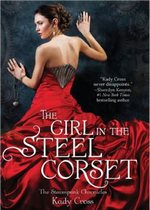
Dusted Off: The Girl in the Steel Corset

The Girl in the Steel Corset (Steampunk Chronicles, #1)The Girl in the Steel Corset

by Kady Cross
Hardcover, 473 pg.
Harlequin Teen, 2011
Read: June 26-27, 2012

When I started this, I kept thinking, “this is the steampunk version of Twilight.” A good, fun read, but nothing to get too excited about. But as I read on, I started thinking that less and less. Maybe because it was getting better, maybe because I just got into the story fully. Doesn’t matter.

Midly predictable plot, but entertainingly told. The characters are engaging and frustrating (in a way that serves to underline how much you like them). The steam-tech is fun and well thought out. The whole super-power thing? Very well executed. Super Powers and Steampunk? That’s some peanut butter you can get in my chocolate, anytime.

Fun, fun, read–with a good jump start to the sequel.

—–

3.5 Stars

Page 42 of 43

Powered by WordPress & Theme by Anders Norén