Tag: 3 Stars Page 14 of 55

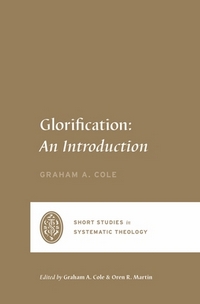
Glorification: An Introduction by Graham A. Cole: A Vital, and Ill-Understood, Topic

Glorification: An IntroductionGlorification: An Introduction

by Graham A. Cole

DETAILS:
Series: Short Studies in Systematic Theology
Publisher: Crossway
Publication Date: April 19, 2022
Format: Paperback
Length: 121 pg.
Read Date: March 20,

What’s Glorification: An Introduction About?

This book is focused on a particular aspect of individual eschatology—glorification, although Cole touches on the other aspects of eschatology, too. The first chapter focuses on the glory of God—it is His glory shared with believers, so it’s right to start there. The fifth and final chapter gets a bit speculative about who will and won’t be glorified. The three chapters in between those two are the heart and focus of the book. Cole begins by sketching God’s project following the fall in restoring the image (and glory) lost. He then shows the beginning of the work of glorification in the sanctification of believers in this life. He ends this portion of the book by looking at what we know about the glorification in the New Earth—which is where the cosmic and ecclesiastical aspects of glorification are looked at, in addition to the individual.

So, what did I think about Glorification: An Introduction?

Cole talks a little at the beginning of the book about the lack of book-length looks at this topic. I’m not convinced that this is the best way to address the lacuna. It’s good and useful, but maybe it’s too speculative. Maybe setting out to do more than it needed to for this introduction. Throughout the work, Cole takes some close looks at pivotal texts on the topic of glory, sanctification, and glorification—these are the highlight of the work and are very valuable. I’m less convinced that what he does outside of those exegetical portions are nearly as useful. Maybe if given more space to develop some of his ideas, I might have a different impression. In the end, I’m glad I read this and will return to it for the exegetical moments and gladly recommend it.


3 Stars This post contains an affiliate link. If you purchase from it, I will get a small commission at no additional cost to you. As always, opinions are my own. 2022 Support Independent Bookstores - Visit IndieBound.org

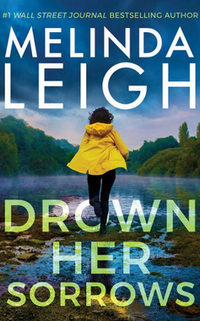
Drown Her Sorrows by Melinda Leigh: Another Satisfying Entry in this Series

Drown Her SorrowsDrown Her Sorrows

by Melinda Leigh

DETAILS:
Series: Bree Taggert, #3
Publisher: Montlake
Publication Date: March 15, 2021
Format: Hardcover
Length: 304 pg.
Read Date: March 15, 2022
Support Independent Bookstores - Visit IndieBound.org

What’s Drown Her Sorrows About?

A new deputy investigates a report about an abandoned vehicle and calls Bree for backup, the owner left her home three days earlier after a fight with her husband and hasn’t been seen since. He’s been waiting for her to cool down and hasn’t been worried about her—it’s not the first time this has happened. But given the state of her vehicle, the deputy and Bree fear the worst and begin searching the area. They soon discover the body of a woman who looks like she jumped off a bridge into the river—they presume it’s the missing woman, but can’t be sure because of the body’s condition.

Once it’s determined that the woman has been murdered—Bree and her investigator, Matt, get to work—was she killed by her husband? Was it her sister—driven by repeated disagreements on how to deal with their mother’s medical bills? Was it her temperamental boss with the shifty-looking business practices?

Throw in her continued adjustment to a domestic life and helping her niece and nephew process their grief, learning how to be the top banana in a Sheriff’s Department (including having to work with deputies that aren’t interested in doing things by the book; the beginning of a secretive romantic relationship with Matt who happens to work for the department as a consultant)—and you’ve got yourself a novel.

Chief Deputy Todd Harvey

Something that struck me in the last book, but jumped out to me here, and bugged me throughout—Leigh isn’t doing right by at least one of her supporting characters—Chief Deputy Todd Harvey. We’re told that Todd was one of the non-corrupt members of the department under the previous sheriff; he tried to do right by Matt during his troubles, and he’s been super supportive and helpful to Bree. He knows the area—and the politics—and yet he’s basically Detectives Ryan and Esposito—he’s around to deliver exposition, deliver timely information, get warrants, etc. That’s all.

There’s a pretty similar dynamic to Bree/Matt in the Walt Longmire books with Sheriff Longmire and his undersheriff, Moretti—those two are at the forefront of the cases, doing most of the work that the reader sees with other members of the department playing supporting roles. But even there, Saizarbitoria, Double Tuff, or even the new hire whose name escapes me at the moment, get to do more than deliver exposition or do behind-the-scenes work. If they appear in a book, there’s something that they bring to the story beyond delivering messages or warrants.

Ol’ Todd deserves better. Let him sit around and participate in the brainstorming. Let him handle an interrogation, or find the missing evidence, etc. Just give him any kind of storyline. Bree’s old partner, now housemate, serves a similar role on the homefront—and Leigh started to give her a story in this one, so I know it’s possible.

Series Timeline

We’re told that this book starts roughly four months after the murder of Bree’s sister. That doesn’t seem like enough time.

It may be about the right time frame for Bree’s niece, and you could argue that it’s about right for her older nephew. They’re still adjusting, still grieving, still trying to figure out how to behave in school, etc. But you mean to tell me that in four months, Bree’s closed two major cases (with one more underway), settled into her new job, started a (secret) romantic relationship, hired some new deputies, and is getting the runaround from elected officials about her budget? I just don’t buy it. That’s not enough time.

Another way to look at it is: you’re telling me the spate of murders in the last four months doesn’t have them throwing money at her to crack down on the crime stats?

Does this really affect me or my enjoyment of the book? Not really, but every time they bring it up I have to stop and think about it for a minute before shrugging and moving along. It’d be great if that part wasn’t necessary.

So, what did I think about Drown Her Sorrows?

This is another engrossing and entertaining read from Melinda Leigh. Once you get the setup for the novel, the pages just melt away. I always finish these faster than I expect to and am surprised when they end.

There’s something effortless in the prose and engaging about the characters and stories. Sure, I have quibbles and questions about some of Leigh’s choices after I put the book down. But while I’m reading (other than the Todd stuff), they don’t register with me, and I’m just wanting to find out what happens next and if I was right about the killer’s identity. The reveals are satisfying, the twists are well-delivered, and the herrings are just the right shade of red to keep you guessing.

These are fast and fun books, you should check them out. So far, these work as stand-alones or entries in a series, so you’re probably safe to jump in at any point.


3 Stars

This post contains an affiliate link. If you purchase from it, I will get a small commission at no additional cost to you. As always, opinions are my own.


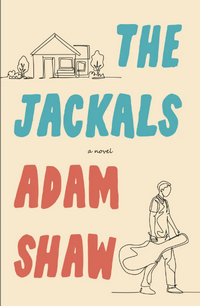
The Jackals by Adam Shaw: Maybe You Can Go Home Again, But Should You?

The JackalsThe Jackals

by Adam Shaw

DETAILS:
Publisher: Moonshine Books
Publication Date: January 11, 2022
Format: Kindle Edition
Length: 288 pg.
Read Date: January 28-31, 2022
Support Independent Bookstores - Visit IndieBound.org

What’s The Jackals About?

Years ago, Jack was in a band with his brother and two close friends from school. They were playing regularly, and had a big event coming up. A major fight occurs between Jack and Mark, his best friend since childhood and bandmate. Jack leaves town, the band falls apart, and they don’t speak for seven years.

Now Jack’s living in a new town, has a career on the verge of going somewhere, a girlfriend out of his league, and a dog that the author doesn’t spend enough time on.* Which is when he gets the news that Mark was killed.

Robbed of the chance to make amends, Jack joins his brother and another bandmate to help clean out Mark’s house and attend the funeral. Hopefully giving him the opportunity to mend fences with everyone still living.

It does not go according to plan.

* It’s been a while since I got to geek out over a dog, and I thought for a minute that this would be my chance.

Proportional Response

Around the time that Jack left town, Mark’s life took a turn. The next several years were marked by a series of poor choices and their ramifications (I’ll keep it vague on that point). Many/some of those close to Mark blamed Jack for this direction in his life. When presented with the opportunity to pay Jack back for this, they do so.

But it’s not a proportional response—what’s done to Jack is over the line, and will have long-reaching consequences for Jack’s life.

I found Jack’s response to this both hard to believe and disappointing. The more I think about this part of the novel, the less I like it. No matter what Jack’s ultimate response to everything that happens may be, no matter what personal development may be triggered by this—ultimately for the good (quite possibly)—I just don’t buy this part of the book.

So, what did I think about The Jackals?

I’m not 100% that the official description is correct, and I wonder if the novel was revised a bit after it was written. But that’s okay, the things that didn’t quite match up were better this way.

The ending wasn’t what I expected from this story—both from the way the novel was moving and from the kind of story Shaw was telling. It was a little unsatisfying in the moment, but the more I thought about it, the more I appreciated what Shaw did. He went against expectations provided the kind of ending that was most fitting for Jack.

The best takeaway from this novel was what it had to say about friendship—the real, enduring kind. Both the friendships that were forged in childhood/adolescence and how they morph into something different in adulthood—whether or not there’s frequent contact.

It had comedic moments, but could’ve been funnier. It had some good drama, but could’ve used some more depth. I thought the characters were well-thought-out, but we needed a little more from each one. I liked the story, but I wasn’t sure it was resolved right. Essentially, on just about every front I can think of the novel missed the promise it shows. Just by a hair. I wanted to love this, but in the end, I could only like it.

However underwhelmed I was with the book as a whole, and whatever issues I might have with parts of the plot—I did enjoy the book and am glad I read it. I’m curious to see what Shaw will do next, and I’ll definitely grab it. Your results may vary, of course, and I can easily see readers enjoying this more than I did (and I did like it!).

This post contains an affiliate link. If you purchase from it, I will get a small commission at no additional cost to you. As always, opinions are my own.

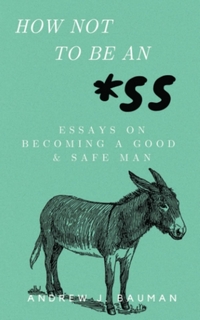
How Not to Be an *SS by Andrew J. Bauman: Essays on Important Topics, That Fall a Little Short

How Not to Be an *SSHow Not to Be an *SS:
Essays on Becoming a Good & Safe Man

by Andrew J. Bauman

DETAILS:
Publisher: Brave Books
Publication Date: December 31, 2021
Format: Kindle Edition
Length: 192 pg.
Read Date: February 20, 2022
Support Independent Bookstores - Visit IndieBound.org

What’s How Not to Be an *SS About?

This is a collection of essays* built around the idea that men who are an *ss (the asterisk is courtesy of Bauman, not me) can change and become a good and safe men.

* Plus a couple of poems. Entirely skippable poems (your results may vary).

Bauman calls men to an authentic, Biblical masculinity—one built on humility, kindness, and service. While offering concrete ways to set aside patterns of abuse and neglect.

Good and Safe Men

Bauman’s description of Good and Safe men is maybe filled with a few too many buzzwords. But when you get past that, I really appreciated what he had to say, and I wish I heard more things like that coming from Reformed and Evangelical men.

His definition of “*ss”

A lot of the time he’s talking about an *ss, he’s talking about something worse. Something like a felon (perhaps not a convicted felon, but someone who should be charged, at least). Most of what he describes as an *ss are abusers. I think we should call them what they are.

Even if you take his *ss as a range—from “The Unaware Fool” (although by definition, some of those he considers unaware, are aware) to “The Narcissistic Coward”—he spends most of his time on “The Narcissistic Coward” when it’s the Fool that would be more open to the help and guidance.

Shortcoming

There are two that seem the most prominent. First, this is an essay collection, not a sustained argument. As a result, it’s a bit scatter-shot and hard to draw any firm conclusions about some of the material. Also, it makes some of the material too surface-level.

Secondly, it’s focused too much on the abusive man, on ways to he can improve. But earlier on, it seemed to be a book for those who weren’t abusive, but are wanting to be better, safer men. Now, don’t get me wrong—I’m all for the former. But I got the impression when I bought the book (and in the early essays) that it was about the latter.

So, what did I think about How Not to Be an *SS?

I’m not sure that what I’ve said here is that helpful without digging in deep into his arguments and suggestions—and to do that is beyond what I have time for here. But hopefully, there’s something useful here.

There’s a lot of good here, a lot of important resources. The theological language is a little imprecise for my taste, but none of it is a deal-breaker for me. The gold outweighs the chaff.

It’s not the book I thought I was getting, but I’m glad that I read it. I wanted more, sure, but I liked what I got.


3 Stars

This post contains an affiliate link. If you purchase from it, I will get a small commission at no additional cost to you. As always, opinions are my own.

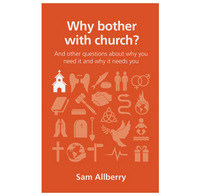
Why bother with church? by Sam Allberry: A Too-Brief (for me) but Solid Introduction to The Church

Why bother with church?Why bother with church?:
And other questions about
why you need it and why
it needs you

by Sam Allberry

DETAILS:
Series: Questions Christians Ask 
Publisher: Good Book Co.
Publication Date: February 12, 2016
Format: Paperback
Length: 95 pg.
Read Date: February 13, 2022
Support Independent Bookstores - Visit IndieBound.org

What’s Why bother with church? About?

Allberry starts with talking about one Sunday walking through a park on his way to his church’s service and how he was tempted to just stay and enjoy the park instead—he didn’t, but it raised the question, why not stay in the park? Why bother with church? Which serves pretty well as an introduction to this short book.

The Table of Contents actually does the best, brief job of telling you what to expect in this book. Sure, it uses 82 pages to answer all these questions, so obviously, none of the answers are too thorough, but they’re all complete enough to give someone a solid start on the ideas presented.

  1. What is church?
    Hasn’t the church done more harm than good?
  2. Why do I need church?
  3. What makes a good church?
    How should I pick a church?
    What are baptism and communion for?
  4. How is a church run?
    Can’t I view my small group as my church?
    Should pastors and elders only be men?
    Why are there so many denominations?
  5. How do I survive church?
  6. How can I be a good church member?
    What is the future of the church?

He concludes with an important reminder about what goes on in the church—in both worship and the life beyond the weekly service—pointing to the spiritual realities that are easy to forget.

Highlights

The second level questions appear at the end of the chapter and are a more focused look at something on the chapter’s topic. While I thought Allberry did a decent enough job answering the larger question, these “sub-questions” seem to be a more pressing contemporary question and add good value to the chapter.

The other highlight I’d focus on is Chapter 5, a title that might raise an eyebrow or two. Why would anyone think they need to “survive church”? In this chapter, Allberry tackles the ideas that church can be boring or exhausting (which feel like contradictory ideas unless you’ve actually spent time in a church), which are well and good—and an idea that too few think to tackle. But the best part of the chapter addresses people that have been hurt by the/a church. In too many ways, too many people know that part of church experience. It’s vital that Christians know how to deal with this idea—either for themselves or someone else. I am so glad that Allberry addressed this idea.

Shortcomings

Really, the only thing that stood out was the length—82 pages plus an introduction and conclusion means this is only a primer. For example, the section on “hurt by the church” that I liked so much only gets 12 small-to-medium-sized paragraphs. Which is good, but it’s just a sample of what needs to be said.

I realize that the length of the book is both a strength and a weakness—it’s not intimidating and will be more likely picked up by many than a book that would satisfy this reader. That’s by design, so I don’t hold it against the book, I just find the “sample” length dissatisfying.

So, what did I think about Why bother with church??

Last year, I read The Church: An Introduction and was disappointed with it, thinking it tried to do too much that was beyond an introduction and stumbled most of the time it did that. This was a much better introduction to the idea of The Church. Allberry’s approach was far more approachable, very basic—which doesn’t quite fit that other series. I couldn’t help but think while reading this one that if Allberry’s material was presented with the thoroughness and style of the other one, it’d be a perfect introduction.

That said, given this series’ approach to its topics—very simple, yet careful—or as the publisher describes it, “short, readable books,” this is a great introduction. It covers all the necessary areas in a way that’s clear and understandable by readers from 13 and up (possibly younger). Allberry writes in an easy, conversational tone that’s warm and inviting, you’ll race through the book (possibly requiring deliberate slowing down/rereading).

Is this a book on the topic that I’ll return to? Probably not—I’ll save that for more demanding works. Is this a book on the topic I can give/recommend to anyone looking for something on the idea? Without hesitation.


3 Stars

This post contains an affiliate link. If you purchase from it, I will get a small commission at no additional cost to you. As always, opinions are my own.

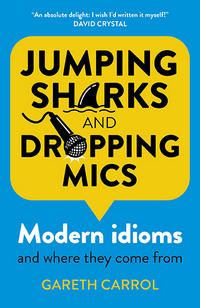
PUB DAY REPOST: Jumping Sharks and Dropping Mics by Gareth Carrol: Adding Some Flavor to Our Speech

Jumping Sharks and Dropping MicsJumping Sharks and Dropping Mics:
Modern Idioms and Where
They Come From

by Gareth Carrol

DETAILS:
Publisher: iff Books
Publication Date: February 25, 2022
Format: eARC
Length:176 pg.
Read Date: February 10-11, 2022
Support Independent Bookstores - Visit IndieBound.org

What’s Jumping Sharks and Dropping Mics About?

The subtitle pretty much tells you everything you need to know. This is a look at several idioms, expressions, and figures of speech that have entered common usage over since the latter half of the twentieth century.

The introductory chapter describes idioms and their usage, the various types of idioms, the history of a few not-modern examples, and so on. This chapter was great and I could’ve used a whole book on this topic. But that’s something for a future library trip, I guess.

Following that we get chapters devoted to: Idioms from TV (including from commercials); Movies; The Internet (memes, hashtags, and so on); Sports; Modern Literature; and then a handful that have entered common usage without a tie to any of the rest, some from the news. that sort of thing.

Carrol talks about the origin and spread of each idiom, notable uses outside the source, and clarifies the meaning—and other commentary or trivia.

Oh, It’s That Kind of English…

Early on there was something in the back of my mind, like I was missing something. Then I ran across the phrase “TV advert,” and a lightbulb went on over my head. This book comes from the other side of the Atlantic, which is going to affect a little bit what idioms are used.

I’m not complaining or anything, I just had to tweak my expectations and go in knowing that there were going to be a few things I had no previous exposure to or that I’d be going into without the necessary frame of reference.

So, what did I think about Jumping Sharks and Dropping Mics?

The Sports chapter did nothing for me—most of that is my utter disinterest in the category, but a decent chunk of that is due to the number of cricket references. They might as well have been in Greek.

On the other end of the spectrum, as one might expect, the chapter devoted to Modern Literature was my favorite. Not just because of the page or two devoted to Douglas Adams, either. The section on The Right Stuff was a lot of fun.

There weren’t a lot of idioms that were new to me, but there were a handful—I’ve tried them out a little bit in the few days since I read the book, I’m not sure they’re going to stick, but you never know. It’s fun to watch people try to suss out what I meant, at least.

The book was a lot of fun, I appreciated re-familiarizing myself with some of these phrases, and I learned a couple of things, too. It was an entertaining read and just the kind of thing that language nerds should really enjoy.

Disclaimer: I received this eARC from John Hunt Publishing Ltd, via NetGalley in exchange for this post—thanks to both for this.


3 Stars

This post contains an affiliate link. If you purchase from it, I will get a small commission at no additional cost to you. As always, opinions are my own.

Jumping Sharks and Dropping Mics by Gareth Carrol: Adding Some Flavor to Our Speech

Jumping Sharks and Dropping MicsJumping Sharks and Dropping Mics:
Modern Idioms and Where
They Come From

by Gareth Carrol

DETAILS:
Publisher: iff Books
Publication Date: February 25, 2022
Format: eARC
Length:176 pg.
Read Date: February 10-11, 2022
Support Independent Bookstores - Visit IndieBound.org

What’s Jumping Sharks and Dropping Mics About?

The subtitle pretty much tells you everything you need to know. This is a look at several idioms, expressions, and figures of speech that have entered common usage over since the latter half of the twentieth century.

The introductory chapter describes idioms and their usage, the various types of idioms, the history of a few not-modern examples, and so on. This chapter was great and I could’ve used a whole book on this topic. But that’s something for a future library trip, I guess.

Following that we get chapters devoted to: Idioms from TV (including from commercials); Movies; The Internet (memes, hashtags, and so on); Sports; Modern Literature; and then a handful that have entered common usage without a tie to any of the rest, some from the news. that sort of thing.

Carrol talks about the origin and spread of each idiom, notable uses outside the source, and clarifies the meaning—and other commentary or trivia.

Oh, It’s That Kind of English…

Early on there was something in the back of my mind, like I was missing something. Then I ran across the phrase “TV advert,” and a lightbulb went on over my head. This book comes from the other side of the Atlantic, which is going to affect a little bit what idioms are used.

I’m not complaining or anything, I just had to tweak my expectations and go in knowing that there were going to be a few things I had no previous exposure to or that I’d be going into without the necessary frame of reference.

So, what did I think about Jumping Sharks and Dropping Mics?

The Sports chapter did nothing for me—most of that is my utter disinterest in the category, but a decent chunk of that is due to the number of cricket references. They might as well have been in Greek.

On the other end of the spectrum, as one might expect, the chapter devoted to Modern Literature was my favorite. Not just because of the page or two devoted to Douglas Adams, either. The section on The Right Stuff was a lot of fun.

There weren’t a lot of idioms that were new to me, but there were a handful—I’ve tried them out a little bit in the few days since I read the book, I’m not sure they’re going to stick, but you never know. It’s fun to watch people try to suss out what I meant, at least.

The book was a lot of fun, I appreciated re-familiarizing myself with some of these phrases, and I learned a couple of things, too. It was an entertaining read and just the kind of thing that language nerds should really enjoy.

Disclaimer: I received this eARC from John Hunt Publishing Ltd, via NetGalley in exchange for this post—thanks to both for this.


3 Stars

This post contains an affiliate link. If you purchase from it, I will get a small commission at no additional cost to you. As always, opinions are my own.

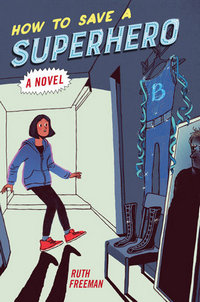
How to Save a Superhero by Ruth Freeman: A Cute MG Adventure

How to Save a SuperheroHow to Save a Superhero

by Ruth Freeman

DETAILS:
Publisher: Holiday House
Publication Date:  October 18, 2021
Format: Hardcover
Length:264
Read Date: January 26-27, 2022
Support Independent Bookstores - Visit IndieBound.org

“Adelaide. Now that’s a name you don’t hear very often. I think it’s old German by way of French. How do you do, Adelaide? My name is Minerva, after the Roman goddess of wisdom. I have a theory that interesting people have interesting names. Are you interesting?”

After taking a moment to think about it, Addie said, “I’m kind of working on it.”

“Good answer,” said Minerva Swift. “I’m working on it too.”

What’s How to Save a Superhero About?

Ten-year-old Addie and her mom have one of those relationships where you’re not sure who the parent is a lot of the time. While it’s clear that Tish is devoted to her daughter, she’s not really devoted to anything else—especially her frequently changing employers in frequently changing towns. Since her mother died, she just hasn’t been able to hang on to anything, and Addie’s been emotionally untethered since then, too.

Now they’re staying with another one of Addie’s aunts and Tish is working at the Happy Valley Village Retirement Community on a one-month trial. After school, Addie joins a couple of other children of employees and spends time with some of the residents.

One resident, in particular, is a favorite of Addie’s—and her mother seems to be the only employee that he seems to tolerate. Mr. Norris has been having trouble with falling, so he’s in the HVV until he can regain his stability.

One of Addie’s friends becomes convinced that Mr. Norris is a super-hero—and there have been some strange things happening around him—Addie can’t believe it. Another friend is convinced that he’s a retired Professional Wrestler. Addie’s not so sure about that one, either.

The three friends do what they can to get to the bottom of Mr. Norris’ identity (over his strident and cantankerous objections), and find themselves in the middle of other adventures with some of the other residents while they’re at it.

So, what did I think about How to Save a Superhero?

This was an okay book. It did everything it needed to do and was well told. I never really connected to any of the characters, or any of the rest of it. I can’t tell you what it was missing, but it seemed to be missing that spark.

It was enjoyable enough—just enough—and it’s likely that the target audience will find it more entertaining than I did. So, sure, I’d recommend it for a middle-grade reader, but I wouldn’t necessarily tell anyone older they’d enjoy it.*

* That sounds harsh to me, I’m not trying to be…


3 Stars

This post contains an affiliate link. If you purchase from it, I will get a small commission at no additional cost to you. As always, opinions are my own.

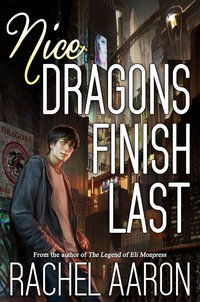
Nice Dragons Finish Last by Rachel Aaron: Meet the World’s Worst Dragon

Nice Dragons Finish LastNice Dragons Finish Last

by Rachel Aaron

DETAILS:
Series: The Heartstrikers, #1
Publication Date: July 13, 2014
Format: Kindle Edition
Length: 287 pages
Read Date: January 13 - 17, 2022

Support Independent Bookstores - Visit IndieBound.org

What’s Nice Dragons Finish Last About?

Julius is one of the youngest—and definitely smallest—members of the Heartstrikers, one of the most powerful dragon clans in the world. Like the best of dragons, the Heartstrikers are conniving, dangerous, cruel, and avaricious. Julius is everything they’re not, he has all the usual dragon abilities (true, he hasn’t developed them as he should, but he has them), but his personality and morality are the opposite. The word best used to describe him—and the one used most often in the book—is nice.

Now, his mother is giving him one last chance to become the dragon she wants him to be—she’s trapped him in human form, removing most of his abilities, and he has to make something of himself with these limitations in less than a month. Oh, she landed him in the one city in the world where dragons are banned, too.

Julius teams up with a human mage (who turns out to be on the run from organized crime) to rise to the challenge, and…well, that’s about it. That’s the setup.

Bob

Julius’ older brother, Bob (technically, Brohomir), is one of the three Great Seers in the world. Most of his family seems to regard him as a loon not worthy of paying too much attention to. But Julius seems to understand and respect his ability—especially since he saw the curse happening 4 months before it did, and made some provisions to help his little brother after it.

Why, of all the characters in the book, am I focusing on him? Bob’s a hoot. He seems to have cultivated that insane reputation he has and enjoys playing to type. He’s almost like the draconian answer to Julius Lebowski—off in his own little world, and having a hard time relating to his siblings (again, purposefully)

He has his own agenda for Julius, and it doesn’t necessarily line up with Julius’ plans and hopes. But—unlike most of his family—Bob wants his little brother to be alive. Which makes him a little easier to like.

But it’s not that hard in the first place—Bob steals every scene he’s in. He seems to be the world’s second-nicest dragon, he’s scheming and manipulative to be sure, but he’s eccentric enough that it’s easy to discount it.

Here’s the Thing I Don’t Get

So we learn that Julius was never aggressive enough for the training his siblings went through, at a certain age, he’s simply run from them (which, at least, had the advantage of helping him become fast. Eventually, he’d just hide out in his room and avoid the exercises. Instead of learning to fight like a good dragon, he played video games with humans online. This led to him having some empathy for humans—even liking them, he’s able to see them as something more than tools to be used and exploited.

What we never learn is how Julius becomes nice. Are we to believe that despite the family and culture he’s born into, he’s just hard-wired to be nice? If so, where’d that come from? He’s apparently the one dragon in existence (possibly ever) who’s nice—is it some sort of genetic mutation? Or is it that he picks it up during his interactions with humans. But…since when does online gaming bring out the considerate, respectful, friendly, and helpful side in anyone? Just how does he turn out to be a kind, considerate, respectful, nice person when that’s counter to everything he’s taught and surrounded by?

Maybe in a subsequent book, Aaron will explain this. In the meantime, I’m going to keep asking that question. Is it enough of an issue to detract from my enjoyment of the book? Nah, it’s a fun and sweet story either way. But it’s gnawing away at the back of my mind.

So, what did I think about Nice Dragons Finish Last?

This has been on my Goodreads Want to Read list since 2014 (and on my Kindle since 2015). I cannot tell you why I put it off this long, but I am more than a little annoyed with myself over not getting to it until now. I should be thinking about re-reading the series about now, not starting it.

I had plenty of fun with this—I wasn’t sure what to make of it at the start, but after a chapter or so I settled in and was able to enjoy the ride from there out.

Aaron did a good job of bringing the reader into the world, getting us invested in the characters—even some characters you wouldn’t normally get invested in. A book like this calls for double duty—you’ve got to tell a solid story and you have to set up a world and series. Aaron handles that well, because not only did I enjoy this, I was eager to see what happened next in the series (hopefully, it doesn’t take me eight years to get to it).


3 Stars

This post contains an affiliate link. If you purchase from it, I will get a small commission at no additional cost to you. As always, opinions are my own.


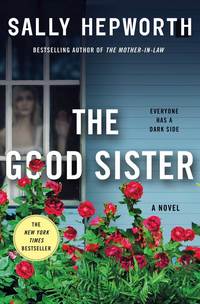
The Good Sister by Sally Hepworth: It’s a Sister Thing

The Good SisterThe Good Sister

by Sally Hepworth

DETAILS:
Publisher: St. Martin's Press
Publication Date:  April 12, 2021
Format: Hardcover
Length: 306
Read Date: January 17-18, 2022
Support Independent Bookstores - Visit IndieBound.org

“I imagine, being twins, the bond is even more unique. If you get along, that is.” She laughs.

Beverly doesn’t seem to be expecting an answer, and I am glad. If she had, I might have told her the truth. That people without sisters think it’s all sunshine and lollipops or all blood and guts. But actually it’s always both. Sunshine and guts. Lollipops and blood. Good and bad. The bad is as essential to the relationship as the good.

Maybe the bad is even more important, because that’s what ties you together.

A Tale of Two Sisters

This is about a pair of fraternal/dizygotic twins and their efforts to provide one of them with the baby she and her husband can’t have.

Sort of. Kind of. Mostly. There’s a lot more going on, but that’s the core.

We get told the story of these two from the perspectives of each twin. Let’s break it down that way.

Fern Carter

Fern is a librarian—she’s not really comfortable with people. Or with anything other than her routine. She describes others toward the end as neurotypical, which was nice, but it’s not really necessary, she’s clearly on the Spectrum somewhere. She’s overly sensitive to stimulus, not fond of touch, and bad with interpersonal relations and communications.

She’s great with people in circumstances she’s comfortable in—for example, the library. Reading to kids in the children’s library, recommending books to patrons, and dealing with the homeless people seeking shelter and showers, for example.

She also knows how much she owes her sister. So when she discovers that despite her desire to become a mother, Rose can’t, Fern takes it upon herself to get pregnant for her.

And things become even more interesting for her from there.

Rose Castle

We get Rose’s perspective from a journal she’s keeping—she tells us right away that this is a therapy assignment and not something she’s doing on her own. This is to help her process her childhood and some things she’s going through right now—like marriage problems.

From their early childhood, she’s taken on the role of protector to her sister—that has never stopped. And her journal entries show all the ways she’s been doing that.

We get a lot more of Fern’s first-person narration than we do of Rose’s journals. But it’s Rose’s perception that sets the agenda for the novel.

A word of warning—Rose is molested by one of her mother’s boyfriends. It’s clear that’s what’s going on, but Hepworth doesn’t get too detailed about it. Very little space is given to it, but it’s there.

But…

This is a psychological/domestic thriller—that’s clear, it’s marketed as one. So, despite everything I just said, you know that not all is right with these two and their life. The trick is figuring out what’s wrong and why.

So, what did I think about The Good Sister?

I spent so much of this book wondering why my friend suggested this for me—why would anyone think I’d enjoy this? Yes, it was well-written; yes, it was suspenseful; yes, I was interested in the story; yes, I really wanted things to work out for Fern and to understand Rose; yes, the pages were flying by (I read this faster than anything I’ve read for a month or so); no, I was not enjoying the experience. It’s a good read, just not my thing. I wasn’t thinking of stopping, I just didn’t see why I should bother going on.

But for the last hundred pages or so, I started to wonder if I really was enjoying it. The last 40 +/- pages? I loved it. Seriously, I had a blast with it.

Hepworth did a really good job telling the story and keeping you guessing about what was going on, why X said something, or Y did something. You can get a pretty good idea about all that, and probably make some strong guesses. But you’re going to be a little bit off (at least). Until Hepworth gets you right where she wants you, and then she just tells you what you need to know. Then, it’s about taking all it in, while holding on for a very taut and tense conclusion.

This isn’t going to go down as one of my favorite books—but it’s going to be one I recommend to people (I have a list of them in mind already), and it’s one I’d recommend to any of you who dig psychological thrillers or just want something a little different. You’ll likely end up liking it far earlier than I did and wonder what’s wrong with me.


3 Stars

This post contains an affiliate link. If you purchase from it, I will get a small commission at no additional cost to you. As always, opinions are my own.

Page 14 of 55

Powered by WordPress & Theme by Anders Norén