Tag: 3 Stars Page 40 of 55

Timothy Other: The Boy Who Climbed Marzipan Mountain by L. Sydney Abel

Timothy Other: The Boy Who Climbed Marzipan MountainTimothy Other: The Boy Who Climbed Marzipan Mountain

by L. Sydney Abel
Series: Timothy Other, #1

Kindle Edition, 325 pg.
Speaking Volumes, 2016

Read: August 11 – 13, 2016


A nameless boy is left at the Dreams and Hopes Orphanage (and don’t think I didn’t have to concentrate really hard not to flip those two every time I read/wrote the name) and is named Timothy Other — which is not the most interesting name in the book, trust me — where he spends the first twelve years of his life happy, healthy (insanely so) and cared for. Until the man who ran the orphanage dies and the bank takes ownership of the mortgaged-to-the-hilt facility. The people that take it over might as well have been Miss Hannigan and Dolores Umbridge.

Not surprisingly, Timothy wants something else in his life, runs away — and straight out of Candide ends up at Marzipan Mountain (his name for it); befriending a giant mouse, caterpillar and Sasquatch-like creature; and on the trail of his birth parents (something he learns much later); and a way to rescue the orphanage. Meanwhile, back home we learn about the nefarious schemes that are behind the takeover of the orphanage and the various motivations behind them.

Some of the subject matter and way it’s depicted seem a little more “adult,” dark or whatever than is acceptable for kids’ literature. On the whole (there might be a line or two I wouldn’t defend), this is silly and doesn’t give kids enough credit. It also ignores the history of these kind of books — from Lewis Carroll and J. M. Barrie to Rowling and Gaiman — kids can handle this stuff if presented right. Frequently better than adults can.

Eventually, Timothy and one of his new friends come back home to save the day, right wrongs, and give many the happy ending you expect given the genre and setup. There’s a bit of redemption, a bit of justice, and a lot of hope and love at work here — Dreams and Hopes, I guess you could say, as these various characters pursue the Golden Life and launch Timothy on further adventures in the sequel(s). All the makings of a good introductory novel for a series.

There’s a nice hat-tip to another British children’s fantasy series that should tickle everyone who catches it — and mean nothing at all to those who don’t.

With each major character (and most of the minor) there’s a moment or two, a couple of lines, or a scene that doesn’t seem to fit with what we’ve been told/seen about the character. It’d take too much space to illustrate this, but when you get to that scene (and you’ll recognize it just about every time), just shake it off and move on, Timothy or Edwin or Itling or whoever will get back to themselves soon.

I had a hard time nailing down the feel of this one, there’s sort of a fairy-tale feel to it. Not Grimm Brothers’ fairy-tale, but the warm-fuzzy kind (with a hint of the other), like J. K. Rowling-light. Even a dash Mrs. Piggle-Wiggle at the beginning. Later on, it morphs into a Neil Gaiman-esque children’s book feel. Now, Abel never quite hits the Rowling/MacDonald/Lewis/Gaiman tone exactly — which is good, he’s doing his own thing, but it’s in those ballparks. The one thing that would help his tone is a bit more economy of words — he takes a few too many to pull of the whimsy, the sense of play, that he seems to be going for.

Actually, that goes for pretty much the book as a whole — Abel could’ve trimmed just about everything a bit. It’s a slow read, which is not necessary a bad thing, I’ve got nothing against them. But I think it works against what he’s trying to do and I think I have a little more patience than the target audience would. I’m not saying it needs to be a hundred pages shorter — but it could read a little smoother, quicker. Really — how many people noticed the length of Goblet of Fire? You didn’t because of the way it was written (not just the exciting parts, either).

I want to be clear, I’m not saying the writing isn’t good — but the pacing and language are so close to being very good, the fact that he misses the target by a little emphasizes the fact that he missed it. This is a winsome and charming book that should enchant younger readers, if they just give it the opportunity.

Disclaimer: I received a copy of this book from the author in exchange for this post/my honest thoughts. I’d like to thank him for the book and for his patience, I took far too long with this.

—–

3 Stars

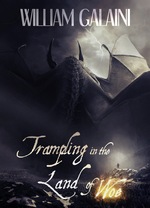
Trampling in the Land of Woe by William Galaini

Trampling in the Land of Woe Trampling in the Land of Woe

by William Galaini
Series: Patron Saints of Hell, #1

Kindle Edition, 360 pg.
Scarlet River Press, 2015

Read: August 24 – 25, 2016


This is a well-written, imaginative book with a stack of great characters — they have depth, individual voices and points of view. Coming up with the idea of this book is a stroke of something, I’m not sure what. I trust that Galaini’s parents had him tested as a child.

How do you even give a synopsis of this? Imagine Dante’s After-Life, but fuzzier on morality/religion/ethics than the Alighieri would be comfortable with. Denizens of Purgatory (and the Heavenbound) can move around from place to place (not sure if the damned can, it doesn’t appear so) — at least to “lower” levels than their own. As technology among the living advances, the dead use it, too — but instead of regular old Steam Power, they use Hellfire — which is a much better source of energy (for example). Living for thousands of years gives you plenty of time to refine your science.

Now, Alexander the Great’s right hand man, lifelong friend, and companion, Hephaestion, has decided that Alexander’s been consigned to Hell long enough and is going to liberate him. Hephaestion has been in Purgatory since his death and has spent a millennia or so preparing for his rescue mission. He’s going to sneak into Hell, track Alexander down and slip out the back door. The plan goes awry from almost the beginning and Hephaestion has to rely on newly minted friends and allies to get him where he’s going.

For some reason that’s only made clear at the end, the Jesuits aren’t fans of this, and use a variety of means (bribes, threats, assassins) to dissuade Hephaestion and his friends from their quest. Many of these assassins are ninjas. Which is just cool, I gotta say.

There’s all sorts of strange magic, odd beasts, crazy settings and some great fight scenes here — Galaini can write. Make no mistake.

But man, I just didn’t like it — I didn’t connect with any of the characters (there’s a couple I might’ve been able to, if they’d been around more), the quest seemed wrong-headed and doomed at best (as at least one person tried to tell Hephaestion), and I couldn’t muster up the interest to get invested. I persisted, in case he won me over (and Galaini came close), because I told the publisher I would, and I was mildly curious. My curiosity wasn’t rewarded, sadly. I’m not saying it’s a bad book — it’s not. It’s not a book for me.

I’m giving it 3 because it deserves at least that objectively on merit — my gut says to give it two, it just didn’t click for me — but it’s so well-written than I have to bump it up one. I do expect many would like it more than me, and if I’d read it at some other point in time, I might have liked it more (but I don’t think so).

Disclaimer: – I received a copy of this book from the publisher in exchange for my honest opinion. I thank them for the opportunity.

—–

3 Stars

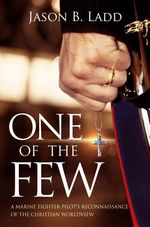
One of the Few by Jason B. Ladd

One of the Few One of the Few: A Marine Fighter Pilot’s Reconnaissance of the Christian Worldview

by Jason B. Ladd
Kindle Edition, 318 pg.
Boone Shepherd, 2015

Read: June 10-17, 2016


Jason Ladd served as a Marine pilot and is a father and husband. In his early adulthood, he became a Christian. This book talks about the process he went through to become all of the above, and what he thinks and believes about Christianity. This is an interesting approach to a book — it’s mostly a collection of autobiographical anecdotes from childhood through adulthood, with a focus on his military training and service. These anecdotes are then used to illustrate spiritual insights/teachings/beliefs of the author. The earlier portions of the book are more obviously connected — a clear storyline can be seen.

I’m only saying this because Ladd told me that his book was “especially relevant to Reformed Protestant Theology Nerds.” But the theology in this thing is a mess, there isn’t a coherent Christian Worldview put forth in this book — there are portions of Christian(ish) Worldviews, but not one. And if there’s a Reformed Protestant view mentioned here, I missed it. I’m not saying that Ladd’s not a Christian, or that he doesn’t have a coherent Worldview, but he didn’t do a great job of displaying that Worldview in these pages — instead, we get a little bit of this, a little bit of that, and a dash of something else. If this was the kind of blog that critiqued theologically oriented works, my critique of Chapter 12 (for example) would be at least three times as long as his chapter. I think we’re all relieved that this isn’t that kind of blog.

The later in the book we go, the less the organization makes sense to me — clearly Ladd had an organization in mind, I just didn’t see it. He kept saying “Now it’s time to talk about ____.” What made it time to do so is beyond me, there was rarely an obvious link between topics when he said that. It doesn’t take away from the worth of the material, but the scatter-shot approach makes it hard to follow.

I recommend this with reservations — and have actually recommended it to a couple of people who I thought would appreciate it more than I did — the writing is crisp, the autobiographical/military training anecdotes are well-written and interesting, the theology needs a lot of work, but isn’t wholly without merit. If you like the concept, you’ll probably find it worth your time.

Disclaimer: I received this book from the author in exchange for my honest thoughts about it. I thank him for his patience — this is horribly overdue.

—–

3 Stars

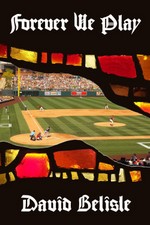
Forever We Play by David Belisle

Forever We PlayForever We Play

by David Belisle

Kindle Edition, 95 pg.
David Belisle, 2016

Read: August 6, 2016


It’s been a few years since I’ve been able to watch a game, but at one point I was a semi-serious baseball fan. So when given the opportunity to read a novella where baseball is a religion, I had to try it. Especially when I’m told it’s a satire.

Now, I’ve known a few people for whom sports are a religion (see Fever Pitch — book or movie), but nothing like this. In a nutshell, Heaven is overcrowded and so entry has to be limited. Upon death, people have to pick a team and they will remain in Purgatory until that team wins the World Series. It’s more complicated and convoluted than that, but there’s the essence.

Naturally, there are a lot of Cubs fans in Purgatory.

Also, there’s a thin-ly disguised Devil running around (actually, I didn’t realize it was a disguise for a while — that’s how thin it was). He’s plotting and planning and stirring up trouble.

There’s a lot of goofiness, jokes that land, jokes that just don’t, a convoluted plot involving the last Cubs’ series win, a strange mix of various religions, and an attempt at a love story or two. I don’t think anything was as developed as it should’ve been to really tell a winning story — the characters were sketchy, the plot details too vague, and many of the jokes didn’t have enough meat to them to really get the point across. Everything came close to working, but not much did.

In the end, I enjoyed this. But man, it was a mess. A mess with a heart and wit, don’t get me wrong.

Disclaimer: I received a copy of this from the author in exchange for this post.

—–

3 Stars

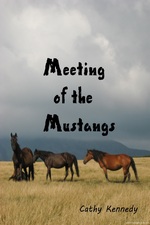
Meeting of the Mustangs by Cathy Kennedy

Meeting of the MustangsMeeting of the Mustangs

by Cathy Kennedy

Kindle Edition, 80 pg.
Cathy Kennedy, 2015

Read: August 1, 2016


It’s been forever since I’ve read an animal book, particularly one focused on a horse. I remember reading The Black Stallion and Black Beauty, some Jack London stuff, and whatnot as a kid, but nothing really since. As I recall, most horse stories are about a horse moving from owner to owner, some good, some bad. Most wild animal stories are just a series of mini-crises where the animal bounces along from event to event and occasionally (by coincidence) runs into an animal he knows. Meeting of the Mustangs is a hybrid, doing both.

We meet our central character when he’s a few months old and follow him for a couple of years — he’s on his own a lot, and then falls into the hands of some humans — bounces around a little and eventually comes into his own. Pretty straight-forward animal story, but told with a lot of heart.

Amazon’s description puts this at 10-12 year old level — I think it’s probably 7-9, but what do I know about stuff like that? Most of what I was reading when I was 12 wasn’t on anyone’s age-appropriate list. The writing was crisp and clear, things moved along a a good clip and never dragged on. Kennedy is better at writing animals than people, but it wouldn’t take much to fix that (and since the book like something like 80%+ animals, who cares?).

I am absolutely, positively not the audience for this book — but it wasn’t bad, and I enjoyed it. If I was a younger kid who was into animal stories? I’d have really had a great time with it. It’s charming, solid and I have no problem seeing it as someone’s favorite.

Disclaimer: I received a copy of this from the author in exchange for this post.

—–

3 Stars
</a

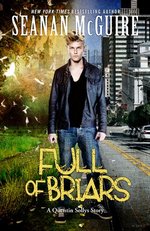
Full of Briars by Seanan McGuire

Full of BriarsFull of Briars

by Seanan McGuire
Series: Toby Daye, #9.3 (but it takes place before The Winter Long)

Kindle Edition, 44 pg.
DAW, 2016

Read: August 8, 2016


I’m pretty torn about this one, to tell you the truth. Toby’s squire, Quentin, is our narrator this time out — and it’s worth reading just to see Toby, May, and Tybalt from his perspective. His parents have come to make everything official with the new Queen of the Mists — and while they’re around, they might as well check in on him and maybe bring him home.

There’s no action, no violence, Toby doesn’t come close to dying — it was so weird. There was a lot of talking — which was fun. Toby was Toby, being irreverent and nigh-disrespectful to Quentin’s parents, as she argued for them to leave him where he is. Tybalt was more Tybalt-y than usual, making sure that Quentin’s folks knew how little he cared about their status. Quentin’s growth as a character, as a person — his maturation, thanks to age and his service to Toby — is what’s on display here.

It was fun to read, and I wouldn’t discourage anyone from it — but I’m not sure it added a lot to my understanding of Toby or anyone else (including the central character). This is the first non-full length story I’ve read in this universe, and it doesn’t really make me think about trying another one. Still, it was entertaining enough — and had one killer line (and a few that were really good) — so I might.

—–

3 Stars

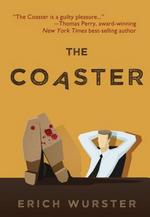
Pub Day Repost: The Coaster by Erich Wurster

The CoasterThe Coaster

by Erich Wurster
eARC, 284 pg.
Poisoned Pen Press, 2016
Read: July 23 – 25, 2016

This is one of those mystery/crime novels that’s hard to talk about without giving too much away (which seems to be especially true when it comes to darker comedies in that genre). So this is going to have to be vague: The Coaster — an amusing read, but hard to talk about without spilling the beans. But let’s see what I can do:

Rob and Sarah have been married for about 19 years, with a couple of kids, and several horses. Sarah’s dad is a self-made, very successful businessman, and Sarah is being groomed to be his successor — and likely has an even better aptitude for business. Rob, um, is well-liked and good at making it look like he’s working. When Sarah’s father dies unexpectedly, Rob is even more unexpectedly named trustee and given oversight of the finances.

Not long after this, an old college drinking buddy comes to town to work on a business deal that was put on hold after the death and he begins to use some tactics that aren’t going to get him in well with the Better Business Bureau (gross oversimplification, but roll with is). One thing leads to another, and Rob and Sarah find themselves sinking in a metaphorical quicksand of crime. It’s pretty nonviolent, and most of the violence is implied.

Rob’s really not that likeable when you stop and think about it — he says he’s a good dad and husband, but I’m not sure there’s all that much evidence for it. Yeah, I can see how he gets by with superficial relationships in social settings, and even with his friends (or reasonable facsimiles thereof), but as far as family goes? Nope. Early on, especially because we only see her through Rob’s eyes, Sarah’s even less likeable — I was at the 20% mark before I noticed any real affection between Bob and Sarah, or any indication at all why someone would like Sarah. After that, I had no problem believing it, they actually start functioning well as a couple (or at least we see it in a way we couldn’t before).

Erich Wurster’s debut novel, The Coaster, is a charming dark comedy. It was pretty easy to guess what was going on with the criminals and how Rob and Sarah could extricate themselves, and most of the twists weren’t that twisty. But, it was a fun ride regardless. Wurster was able to get me to find this pretty unlikeable guy fun and entertaining. I wanted the couple to get out of trouble (relatively) unscathed, and enjoyed seeing if it was possible. The pacing was fine, the wit was sharp and the comedy was the right mix of light and dark for this. A solid first novel that made me interested in seeing more.

Disclaimer: I received this eARC from Poisoned Pen Press
via NetGalley in exchange for this post — thanks to both for the book.
N.B.: As this was an ARC, any quotations above may be changed in the published work — I will endeavor to verify them as soon as possible.

—–

3 Stars

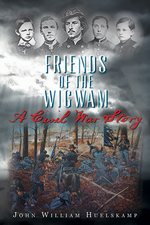
Friends of the Wigwam by John William Huelskamp

Friends of the Wigwam Friends of the Wigwam: A Civil War Story

by John William Huelskamp

Paperback, 358 pg.

Barrington Group Publications, 2016
Read: July 20 – 23, 2016


Don’t just read the first sentence, please:

This book has all the elements of a winning historical novel — a great (and large) cast of characters, solid research, rich setting — but it just doesn’t come together in the way it should. But it frequently comes close. What it really needed to be successful is pretty simple: More. More of just about everything. Longer scenes, more developed characters, more developed storylines. The book covers the years from 1857 to 1864 in 358 pages — roughly 51 pages a year (with some of those taken by pictures) — you just can’t do a whole lot in that space. Longer scenes could’ve given the chance for characters and events to develop, for nuance to be shown.

The only thing it didn’t need more of was dialogue. Well, that’s not exactly true, it could’ve used more, but primarily it needed better dialogue. There was one scene, and only one, that I didn’t cringe almost every time someone spoke. It was wooden, stiff, artificial.

The book follows a group of friends and people they know from their part of Illinois in the days leading up to and through the heart of the Civil War — just about everyone mentioned was a real person that the historian Huelskamp researched thoroughly. The book is littered with photos of the people, letters and other documents supporting his work. Some of them are political movers and shakers, some are in the military, and some are citizens worrying about loved ones.

The characters — as historically accurate as they might be — were drawn pretty thinly. If Huelskamp is going to talk about interpretation of historical figures, he needs to interpret them multi-dimensionally. I wanted to like everyone (well, except Loomis — who no one is supposed to like), but I couldn’t muster up affection for anyone, there wasn’t enough of anyone to really appreciate.

    Beyond the clearly extensive historical research (and documentation!), this book had a few strengths that I want to focus on:

  • The Battle Scenes were great — the internal dialogue of the combatants detracted a lot from that, but the description of the events, the action was just about everything you’d hope for.
  • In the early days of the war, one of the friends is killed — seeing the emotion when the group gets the news was a high point of the book, Huelskamp captures it perfectly and then ruined the moment with clumsy writing.
  • The best part of the book is in the aftermath of a battle concerning two friends comforting each other after being wounded — it was just perfect.

The book could’ve been really strong; maybe as a trilogy (or duology), it could’ve been great. But in its too-short form, it was just almost a good book. I bet Huelskamp’s historical writing is really something — his fiction? Maybe one day. The richness of the historical work here does elevate this over a lot of historical fiction I’ve read recently, so I’m going to give it the 3rd star.

Disclaimer: I received a copy of this from the author in exchange for my honest thoughts.

—–

3 Stars

The Coaster by Erich Wurster

The CoasterThe Coaster

by Erich Wurster

eARC, 284 pg.
Poisoned Pen Press, 2016

Read: July 23 – 25, 2016


This is one of those mystery/crime novels that’s hard to talk about without giving too much away (which seems to be especially true when it comes to darker comedies in that genre). So this is going to have to be vague: The Coaster — an amusing read, but hard to talk about without spilling the beans. But let’s see what I can do:

Rob and Sarah have been married for about 19 years, with a couple of kids, and several horses. Sarah’s dad is a self-made, very successful businessman, and Sarah is being groomed to be his successor — and likely has an even better aptitude for business. Rob, um, is well-liked and good at making it look like he’s working. When Sarah’s father dies unexpectedly, Rob is even more unexpectedly named trustee and given oversight of the finances.

Not long after this, an old college drinking buddy comes to town to work on a business deal that was put on hold after the death and he begins to use some tactics that aren’t going to get him in well with the Better Business Bureau (gross oversimplification, but roll with is). One thing leads to another, and Rob and Sarah find themselves sinking in a metaphorical quicksand of crime. It’s pretty nonviolent, and most of the violence is implied.

Rob’s really not that likeable when you stop and think about it — he says he’s a good dad and husband, but I’m not sure there’s all that much evidence for it. Yeah, I can see how he gets by with superficial relationships in social settings, and even with his friends (or reasonable facsimiles thereof), but as far as family goes? Nope. Early on, especially because we only see her through Rob’s eyes, Sarah’s even less likeable — I was at the 20% mark before I noticed any real affection between Bob and Sarah, or any indication at all why someone would like Sarah. After that, I had no problem believing it, they actually start functioning well as a couple (or at least we see it in a way we couldn’t before).

Erich Wurster’s debut novel, The Coaster, is a charming dark comedy. It was pretty easy to guess what was going on with the criminals and how Rob and Sarah could extricate themselves, and most of the twists weren’t that twisty. But, it was a fun ride regardless. Wurster was able to get me to find this pretty unlikeable guy fun and entertaining. I wanted the couple to get out of trouble (relatively) unscathed, and enjoyed seeing if it was possible. The pacing was fine, the wit was sharp and the comedy was the right mix of light and dark for this. A solid first novel that made me interested in seeing more.

Disclaimer: I received this eARC from Poisoned Pen Press
via NetGalley in exchange for this post — thanks to both for the book.
N.B.: As this was an ARC, any quotations above may be changed in the published work — I will endeavor to verify them as soon as possible.

—–

3 Stars

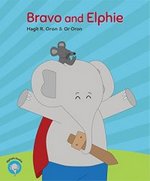
Bravo and Elphie by Hagit R. Oron, Or Oron

Bravo and ElphieBravo and Elphie

by Hagit R. Oron, Or Oron (Illustrator)
Series: Elphie’s Books, #2

Kindle Edition, 9 pg.
Oron’s, 2016

Read: July 12, 2016


Elphie, the cute elephant kid, is back — with a pet. Mom is trying to get Elphie to go down the slide at the playground, and it’s not going too well. I’m willing to bet you’ll find out that Mom’s a pretty smart cookie.

The art’s as good as last time — nice colors, the kind of characters that’ll keep the lil’ ones’ attention. I bet this would be fun to read aloud with a little someone squirming on your lap and pointing at various things.

It was a bit too short, and not as inventive as the first book — but you know what? I don’t think the target audience is going to be as critical as I am. This was a bright spot in my day, I read a lot of nonsense that day, and this was a little glimmer of optimism and sunshine. Get it for the kid in your life (get the first one, too).

Disclaimer: I was provided with a copy of this book by the author in exchange for this post.

—–

3 Stars

Page 40 of 55

Powered by WordPress & Theme by Anders Norén