Tag: 3 Stars Page 42 of 55

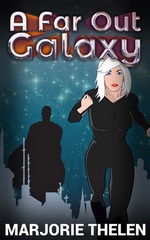
A Far Out Galaxy by Marjorie Thelen

A Far Out GalaxyA Far Out Galaxy

by Marjorie Thelen
Series: Deovolante Space Opera, #1

PDF, 278 pg.
CreateSpace, 2014

Read: March 26, 2016


If you don’t mind getting Romance into your Science Fiction/Space Opera or SF into your Romance in a literary Reese’s Peanut Butter Cup, this might be your cup of tea. This is light-hearted, almost humorous — don’t think Scalzi, Adams, Holt, Cline or Rob Reid. Think Evanovich in Space. It’s an odd mix of Space Opera, Romance and humor — mostly pulled off well. In the end, it wasn’t my thing, but it was fairly well executed.

Will and Vita are planetary royalty, who’ve been ordered to go on a mission together by a higher governing power. Vita’s a queen on a technologically-oriented planet, and like many before her, she’s a clone. It’s about time for her to clone herself to get her successor trained and ready in time. But there’s a problem, the cloning device is on the blink and no one can repair it. So, they’re going to have to take care of the succession the old-fashioned way. Enter Will — a Captain Kirk type. Handsome, charming, a gal in every space port, and a heckuva warrior. If anyone can get the might-as-well-be-asexual Vita pregnant, it’s him. There’s a Dave and Maddy vibe going throughout the early chapters, but you know she’s going to succumb to his charms (if only because she has to — at least at first). This would be the Romance bit.

Meanwhile, they’re being pursued by Will’s half-brother and other assorted nefarious types to interfere with their mission to check in on their colony, Earth, as well as to get up to other mischief. The colony is in pretty rough shape, what with the citizens acting the way we do — but they’ve got trick or two up their sleeve to get us back on track (which may or may not be entirely successful). This would be the Science Fiction/Space Opera bit.

Now, given everything that they’re able to do later in the book I’m not sure that I buy the whole “we can’t repair the cloning device” thing — I bet later on that we find out that The Powers That Be orchestrated the sabotage. But…that’s neither here nor there.

Thelen gets into some pretty impressive world-building (even if the science is . . . not that science-y), complete with multiple governing bodies and hierarchies, etc. Although, while I tracked with all the assorted layers of orders and bloodlines and whatnot that they talked about involving those on the mission (and related to it), I found it hard to understand — much less care — about the problems back home in their home galaxy. Hopefully, in future installments Thelen gets the reader to care — or to not worry about it and focus on the characters we do know.

Some of the characters here are pretty well-developed and engaging — though a few were little more than names and ranks, but that worked out okay given the story. The love story didn’t work for me — at least not in the early stages. I had no problem with it i the last half, though, and that’s when the book started working its charm on me (those two are pretty likely linked). The story was okay — but it felt like a lot of it was just to set up the rest of the series, not to tell a story in this book — but there was enough completed here to feel okay about it.

I think this is the kind of thing a lot of people would enjoy — on the whole, sadly, I’m not really one of them — but it’s fairly well written. I did end up liking it eventually — not a whole lot, but enough that I could see the merits and see why others would probably get into the series. I’m glad I pushed through my early disinterest to get to some pretty good stuff in the latter half. If Evanovich in Space sounds like your cup of tea, give this series a look.

Disclaimer: I was graciously provided a copy of this book by the author in exchange for my thoughts, even if it took me 3 months longer than I’d hoped to get to them.

—–

3 Stars

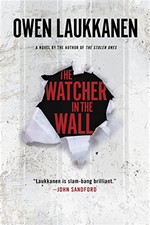
The Watcher in the Wall by Owen Laukkanen

The Watcher in the WallThe Watcher in the Wall

by Owen Laukkanen
Series: Stevens & Windermere, #5

Hardcover, 354 pg.
G.P. Putnam’s Sons, 2016

Read:April 4 – 5, 2016


Not too long after the events of The Stolen Ones, a classmate of Kirk Stevens’ daughter, Andrea, a victim of bullying and neglect, kills himself. Andrea wants justice for the classmate — she wants the bullies punished, she wants the message to go forth that this kind of thing can’t happen, and she wants her father to insure that happens. He sympathizes, he even empathizes, but he really can’t do anything. But he pokes around a little bit — and he and Carla Windermere discover that there was a suicide pact — that some girl in Philly is supposed to be killing herself now, too.

They may not be able to do anything for the dead boy, but they can try to keep this girl alive.

Only . . . there is no girl. Or at least, she isn’t who she said she was. Mental alarm bells start going off, and the two agent soon figure out that there’s one person out there online, posing as a concerned stranger, helping others to commit suicide — maybe even talking them into it, for whatever reason they might have. Once you start to learn the reason, you become convinced that this person is a certain level of despicable.

The original suicide brought up a lot of memories for Carla — things she’d tried to forget from her school days. She throws herself into this investigation, putting even more pressure on herself than usual. She talks to her partner and her boyfriend less, develops a shorter fuse, and drinks and smokes worse than she usually does. She also refuses to tell anyone what’s going on == she’ll only say she’s trying to save kids’ lives.

The two start traveling the country, learning more about certain types of online forums than anyone should know, trying to hunt down their suspect before he/she gets talks another teen into making a mortal choice. The novel has breakneck pace, and enough twists to keep you engaged — all of which is good.

Because of the focus on Windermere, and the pressing nature of the investigation (not that their other cases have been leisurely), we spent absolutely no time with the Stevens family after Andrea brought a witness to her father. That’s just strange — granted, it wasn’t until after I was finished with the novel that I realized we hadn’t spent time with them — but I knew something was missing. The Stevens gang has been such a fixture for at least a few chapters in these books, to not have them is jarring. But we did get a lot of time with Carla and Mathers — actually about the same as usual (maybe less). But in comparison, we got a lot more. Still, the lack of personal lives in this novel drove home two things — the urgency Carla felt, and the weight of the rest of the emotions/regrets/anger she was dealing with.

This is the second novel in the last half-year that I’ve read dealing with people being talked into suicide. Both very different, both compelling in their own rights — this was a tad more believable, really. Still, I hope this isn’t a trend that continues.

I couldn’t believe how quickly I sped through this — not just because Laukkanen writes with lean, confident prose, but it was the characters, the plot — you read this and you just have to know how it turns out (okay, sure, you are rightly convinced that Kirk and Carla will get their man — but how, and what the body count will be along the way, that’s the question). Yeah, the weakest of the 5, but it was satisfying, entertaining and engaging. Good enough for me, and enough to keep me coming back for more.

—–

3 Stars

God’s Glory Alone—The Majestic Heart of Christian Faith and Life by David VanDrunen

God's Glory Alone—The Majestic Heart of Christian Faith and LifeGod’s Glory Alone—The Majestic Heart of Christian Faith and Life: What the Reformers Taught…and Why It Still Matters

by David VanDrunen
Series: The 5 Solas Series

Paperback, 171 pg.
Zondervan, 2015
Read: March 6, 2016


VanDrunen begins by discussing the Reformers’ emphasis on the Glory of God and the way that impacted the movement, its concerns, goals and means. I don’t recall being struck by any particular insights here, but it was a pretty worthwhile overview.

The strongest section was Part 2, where VanDrunen considered the Biblical teachings on God’s glory. How God’s glory was manifested in the cloud during the Exodus and following, then how the Incarnation of the Son displayed His glory. Finally, he considered the glorification of God’s saints and how that leads to God being glorified. This part could have been more detailed and more extended to greater effect and use if you ask me, but it was a good start to one’s own investigation to the topic.

In Part 3, “Living for God’s Glory Today,” VanDrunen seeks to apply these thoughts to our daily lives — which sadly, was the weakest part of the book. He had a lot to say about the way that smartphones/social media/the Internet is affecting our minds/attention spans and therefore the way we act in worship/respond to the preached Word, etc. — and on the whole, his comments were probably sound, but the way he 1. presented his case, 2. dwelt on it, 3. kept beating this equine after it had expired made him seem like a cranky Luddite rather than a thoughtful teacher with pastoral concerns.

He did however, use Rebecca Konyndyk DeYoung’s material on Vainglory from her book, Glittering Vices (and her book on Vainglory in particular) in a much more interesting way than she did — so that’s a plus.

In the end, it really didn’t do much for me, but was solid enough to recommend. A pretty easy, if sometimes dry, read (hard to imagine that this subject would lend itself to a dry book). I’m still planning on getting the rest of the series, hoping the other authors give something more engaging.

—–

3 Stars

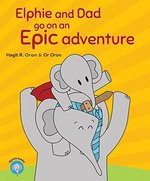
Elphie and Dad go on an Epic Adventure by Hagit R. Oron, Or Oron

Elphie and Dad go on an Epic Adventure Elphie and Dad go on an Epic Adventure

by Hagit R. Oron, Or Oron (Illustrator)
Series: Elphie’s Books, #1

Kindle Edition
, 25 pg.
Orons, 2016
Read: March 15, 2016


Picture books are not the usual fare around here, true. But Hagit Oron asked, and I figured, why not? Now, can I get this post up without using more words than the book did?

Elphie is a little elephant accompanying his dad on an errand — but his dad is one of the good ones, and instead of dragging Elphie along — he entices the child by promising an “epic adventure”. Wearing a cape and carrying a wooden sword, the two set out for a walk to the store.

Along the way, Elphie does battle with imaginary foes, and has one very close call that wasn’t imaginary enough. With some guidance from Dad, a great imagination, and a helpful store clerk — Elphie has an epic adventure indeed.

I really appreciated Dad — he’s not perfect (he gets distracted in a very real and relatable way), but he’s trying — and he recovers from a mistake well. A good guy, not a buffoon, not a super-hero. There’s not enough dads like that in books.

The art is great. The colors are vibrant, the drawings pop just right. It’s not fantastic, which I honestly get annoyed by in kids’ books. It’s friendly and eye-catching, very accessible, and engaging — enough so that you get drawn into it, but not so much that it detracts from the words. The art serves the story — and will keep the attention of those who can’t yet read.

It’s been a few years (almost ten) since I’ve read picture books on a regular basis. This is just the kind of thing I’d have liked then, and would’ve read — and then have been “compelled” to read again (and again and again). For those with kids — or grandkids — or who might have a kid nearby your Kindle, pick it up.

Disclaimer: I was provided with a copy of this book by the author in exchange for this post.

—–

3 Stars

The Story of Lucius Cane: Book One by Vanya Ferreira

The Story of Lucius CaneThe Story of Lucius Cane: Book One

by Vanya Ferreira

Kindle Edition, 27 pg.
Vanya Ferreira, 2016

Read: February 23, 2016

This first installment is a tale of a couple of atypical takes on supernatural staples.

It’s London in 1794 and we meet a different kind of vampire (for reasons that are sort of explained), but except for one little quirk of personality, he seems like your typical pre-Victorian Vampire. The quirk does seem to save lives, so it’s endearing.

Jack ‘The Hound’ Estenborough is lycanthrope-ish. A former pirate, now loanshark (and his own leg-breaker). A man as synonymous with violence as he is with body hair.

The two are manipulated into a showdown, and face-off in a knock-down, drag out fight which is the kind of thing everyone who watched a Lon Chaney flick as a kid wanted to see.

This was a quick story, so there’s not a lot to say, not much time for character development or anything like that. It wasn’t the most skillfully told story, but it got the job done and kept you reading.

There was a good chunk of info dumping with one character, where he only hinted at things for the other. Obviously, the treatment of the other primary character was better — but I didn’t mind the info dump too much, the title tells you the story’s not about The Hound, so no need for gradual reveal — also, it was a fun, quick info dump.

Ferreira made some odd vocab choices — some words (especially in idiomatic phrases) that are almost, but not quite right. But when someone living in Serbia writes in English, I figure that’s a risk you run — and it’s never too distracting.

There were a few questions left by the story, but you can tell that Ferreira has an answer ready for them, he just needs the space to relay them. That, and the cliff-hanger ending, demand a series of these stories (as does, the title, I guess) — or a novel. I don’t care which, as long as I get to read it.

Disclaimer: I was provided a copy of this story by the author in exchange for an honest review.

—–

3 Stars

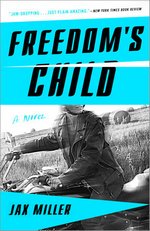
Freedom’s Child by Jax Miller

Freedom's Child Freedom’s Child

by Jax Miller

Trade Paperback, 308 pg.
Broadway Books, 2015

Read: February 19 – 20, 2016

The open road gives you ample opportunity to think; in fact, the road forces reflection on a man . . . or woman, in my case. And it’s a terrifying thing, my thoughts. With each thought, each idea, each regret that makes my blood curdle, I accelerate, I race fast enough on the motorcycle so my demons can’t catch me, but they always seem just a step ahead of the game, always there to entertain my sin.

Ugh. This book set my teeth on edge from the get-go. Yet another story with a Prologue that puts our narrator in a life-or-death situation, so you can turn the page to get “X period if time earlier” (two weeks ago, in this case) to create suspense, or a sense of anticipation, or whatever. I hate those beginnings, books, movies, TV – – hate ’em all. They’re almost never worth it. This is one of those times, Chapter 1 is a much better starting point.

Once we get past that nonsense, we meet Freedom. She’s a tough-as-nails bartender outside of Portland, OR, working in a bar that’s been adopted by a biker gang. The first thing we see Freedom do, is save a girl from being raped by a large biker in a way that will keep you nervous around McIlhenny Co.’s signature product for awhile. So you know it’s not just bluster, it’s not just attitude and language — Freedom is not someone to mess around with. It turns out that Freedom’s in the Witness Protection Program, and the same Marshals that come by to tell her to stay out of trouble, are also here to let her know that the man she put away just got out on a technicality after 18 years.

It’s almost like they know that someone had gained access to their records and that her new identity is known by all the people she doesn’t want to know. Namely, her murdered husband’s family, including his newly released brother and his non-incarcerated brothers. The destruction and violence that come to Oregon are a clear sign to Freedom that the Delaney brothers are here for her and the Feds can’t help her. So she takes matters into her own hands, because it’s not just her that they’re after. She had two children with her husband, and had been forced to give them up. If her new identity is known, their identities would be, too. So she’s off to the other side of the country to try to keep them safe, although there’s enough drama in their lives without their uncles coming for them.

That’s enough of the plot to whet your appetite. It gets better from there — more twists and turns than the Publisher’s Description suggests. I can’t imagine that Miller could’ve fit in one more twist without needing to add a couple of chapters. But before you get to all that, you have to endure a lot of Miller setting up her dominoes. It was hard to slog through it all without enough context and many perspective changes (I think we could’ve just used a smidgen more context with each perspective). But you watched her set them all up, because you could tell all along that when they started to fall, things were going to be wild.

I don’t want to talk about the characters — seeing them revealed was a lot of the fun. There’s one exception to that: Freedom’s Mother-in-Law, Lynn. I felt like I needed a shower after reading the first 2 pages of with Lynn — one of the nastiest characters you’ll come across in 2016. I hoped right away that Lynn would get what’s coming to her (and that feeling only intensified). But you could tell straight-away that this was the kind of book where just desserts weren’t on the menu for everyone (oh man, when did I become Horatio Caine?), and I had to deal with this sense of dread that she’d make it. There’s a certain amount of pleasure you get from Hannibal surviving The Silence of the Lambs (but not Hannibal — while waiting Lynn’s fate, you feel the exact opposite.

This next paragraph, I’m a little apprehensive about, but I’m going to go ahead and write it: There’s a cult involved, and I have a little trouble with it (as I write it, I’m sure with some research every one of my objections can be brushed aside by someone, and I’m hoping Jax Miller is one such person). The cult reminded me of a phenomena I ran into with Flannery O’Connor in college — her Southern Protestants may have sounded like typical Baptists/Methodists/etc., but their thinking was awfully Roman Catholic. These cultists looked, sounded, and acted like Pentecostal Christians, but they were infused with an odd amount of Roman Catholic practices. So much so that it was hard to swallow. It almost felt like someone took a bunch of noticeably religious practices and terms and mixed together, assuming the reader would just accept the blend, whether or not it was consistent. I’d absolutely believe it if someone could point to a Group Z and said that Miller just ripped them off, but absent that these guys were too much to believe.

This was a well-constructed and satisfying read with characters that leapt off the pages (except for the minor Delaney brothers and a couple of other miscellaneous people). It didn’t end anything like I expected it would, but superior. I spent the whole time thinking it was a book about X, when it was about Y all along (although, it was kind of about X). The novel makes you think it’s about revenge (or the escaping from it), but at the end of the day, that’s just not what it’s concerned with. This was an entertaining read, maybe not as good as it could’ve been, but enough to make me to keep my eyes peeled for Jax Miller’s future work.

Disclaimer: I received this book from the good people at Blogging for Books for this review.

—–

3 Stars

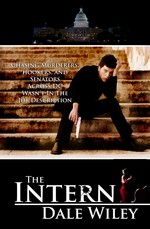
The Intern by Dale Wiley

The InternThe Intern

by Dale Wiley

PDF, 200 pg.
Vintage Burn, LLC, 2014

Read: January 30, 2016

So I went to the Watergate. I did it because it seemed the thing to do when one was just getting embroiled in some amazing Washington scandal. You don’t hide out at the Hampton Inn; you go straight to the source, the same place Howard Hunt and G. Gordon
Liddy did.

There were other reasons for choosing the Watergate as well. I didn’t want to drive far, and increase the chance of being pulled over and found out. Even if I had wanted to drive, I didn’t know the suburbs that well, and the hotels probably weren’t that much cheaper anyway. I knew of hotels I assumed to be cheaper in the city, but they were in such wonderful neighborhoods that I didn’t want to take the chance of avoiding my pursuers only to succumb to some random mugging. I also knew right where it was, and could get there without wasting a minute of time. I had been to the Watergate once before, to drink with my college friend Susan, so, along with remembering their overpriced gin and tonics, I knew it had a parking garage the size of Philadelphia, which would probably keep my car from being discovered during the night. And most importantly, I thought it would be really cool to stay at the Watergate.

Trent Norris is not crazy about living in Washington, D. C. He’s working as an intern at the National Endowment for the Arts , which isn’t horrible — but the general atmosphere, the parking, the expenses and so on — it’s just not for him. He has a plan for what to do to get out, but we’re not really told what that might be (later, there’s discussion of an unsuccessful novel — that might be part of it). He likes his job well enough, he’s started dating someone that he could see himself falling for in a big way — so life’s not all bad.

The day after one of the best dates of his life, Norris is covering the desk and phone for a higher-up’s secretary, and is in the right place at the wrong time to take the wrong phone call. Then, because he’s just that kind of guy, he plays a silly prank as a feeble act of protest for a decision the same higher-up just made that will impact people all over the country. As pranks are wont to do, this one is mis-interpreted and Norris finds himself framed for heinous crimes he didn’t commit — and plenty of media coverage demonstrating that he did. He enlists the help of an escort, Tabitha, to help him in his time of need — which she more than does.

Running from the Law — he’s out to prove he didn’t do it, clear his name, not get killed by law enforcement…and hopefully still have a shot at getting the girl.

As disinterested as I was in the crime (which was sensational, but seemed almost tertiary to everything), as much as I cared nothing for the protagonist, once I got to the part where things are falling apart for Norris, when he’s starting to see the accusations pile up, I really admired the way Wiley had set everything up. It was very well constructed and executed.

Until I was typing this post up and read the Publisher’s Description, I had no idea when this was set. A reference to Borders Bookstore threw me, and little later, I noticed the utter lack of cell and/or smartphones. A few chapters later the protagonists ordered a laptop with a Zip drive and floppy disks! Wow. I didn’t realize I was reading historical fiction. Taking me out of the action long enough to flip back and forth through the pages looking for time references . A little more text on page 1 would’ve gone a long way to help the reader (or, at least, me).

Early on, Norris rubbed me the wrong way, and while I didn’t like him, I found the situation he was in interesting enough to keep going. Some of his redeeming — humanizing — qualities were brought out late in the book, but by that point it was hard to overcome my initial misgivings. Stephanie was nice enough — not that we got to spend much time with her. Tabitha was the only character I really liked at all — even if she seemed to serve as a shortcut more often than not for Trent to get what he needs — oh, you need a hacker? Let me make a call. How do we bypass a security system? I have just the client willing to do me a favor? And so on. (and maybe the large amount of gold content in her heart was difficult to believe). Still, she was more interesting and likable than anyone else around.

This was a great depiction of the havoc that the media (especially in a 24-hour news cycle) can wreak on an individual with very little evidence — see Richard Jewell, for example. Wiley seemed to capture the impotent rage and disbelief at how quickly one’s whole life can be turned upside down in hours when the media decides you’re the villain.

Just entertaining enough, just well-written enough, with characters just intersesting enough to keep the pages turning — Wiley gives the reader just enough to entertain, and be open to reading more from him. I do want to stress, how well constructed this was — every seemingly stray detail is there for a reason, and no strings are left untied. I’ve read novels from seasoned authors that can’t pull off that level of construction, and Wiley doing so in his first time to bat is no small thing.


Disclaimer: I received a free copy of this book from the author in exchange for a fair review.

—–

3 Stars

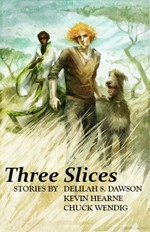
Three Slices by Kevin Hearne, Delilah S. Dawson, Chuck Wendig

Three SlicesThree Slices

by Kevin Hearne, Delilah S. Dawson, and Chuck Wendig; Galen Dara (illus.)
Series: The Iron Druid Chronicles, #7.5

Kindle, 166 pg.
2015
Read: January 25 – 26, 2016

No man who is master of his fate should ever reek of cheese.

Criminy Stain’s observation may seem a bit out-of-place given the authors and characters in this anthology. Shouldn’t it be more visceral or blood-related than cheese? Actually, no. Kevin Hearne explains:

I can’t recall precisely where I heard that tyromancy was actually a thing, but methinks it was during the summer of 2012. As soon as I knew it existed I knew I had to write about it, the way some people have to climb mountains or crack safes once they see them. And if I could find another couple of authors brave enough to do it, maybe we could produce the world’s first tyromancy-themed anthology. So my quest began and now here is the spiffy MacGuffin: THREE SLICES, or rather three stories where somebody along the way predicts the future via the coagulation of cheese.

So, he got a couple of other writers to contribute a story et voilà, they’ve got themselves a pretty unique book. Honestly, I think if I knew the theme, I’d probably have picked this up earlier, rather than waiting until the release week for Hearne’s Staked (and really only then because he insisted his story was “vital” to read before the new book).

A Prelude to War

This happens within a week of Shattered (and ends a few hours before Staked, I think). And yeah, it turns out to be pretty vital for starting the latter. Sure, you could’ve pieced things together, I think (I’m only on page 10, so that’s a guess) — but why work that hard, when you could just spend a little time with Atticus, Oberon, Granuaile and Orlaith (especially Oberon, always especially Oberon)?

I sorta want to talk about all of it, but the story is so short, I’d end up spoiling too much. So let me just stay that this is fun, it’s exciting, and the table it sets for Staked looks great.

Not My Circus, Not My Monkeys

It took me a little work to really get a handle on what was going on here in this Blud story (and I’m pretty sure I only achieved B+ level of comprehension). I’m not sure if this is prequel-y or if it fits into the continuity of the series — but it feels prequel-y.

It was creepy, dark, and moody. The tyromancy fit into a Twilight Zone-like part of the book. Then Criminy got into one of the more disgusting (appropriately so) fight scenes that I’ve read in the last few years.

On the one hand, I wouldn’t object to spending more time in this world, but I can’t see myself expending a whole lot of effort, either. Just not my thing. I think I’ll stick to the Hit books for now.

Interlude: Swallow

Good, ol’ reliable Chuck Wendig — he can write dazzling sentences, character descriptions that I will dwell on for days, and yet I can barely stand to read him. I keep waiting for the lightning bolt that will change things and he will become one of my favorite readers. But I can’t even get a static shock to make him someone I want to read — particularly Miriam Black. Interlude: Swallow ain’t gonna change that. Sorry, Mr. Windig. (I did chuckle mightily at Miriam’s quoting Ralphie Parker). Miriam’s rants about mornings, and then her comments on breakfast and then breakfast sandwiches probably made the time I spent worthwhile.

Overall, for me, this was really only worth the effort for Hearne’s story — but fans of Dawson’s Blud series or Miriam Black should have plenty of reason to pick this up, too. If you happen to be a fan of all three series, you’ll probably love this book.

—–

3 Stars

Songs of a Suffering King by J. V. Fesko

Songs of a Suffering KingSongs of a Suffering King: The Grand Christ Hymn of Psalms 1–8

by J. V. Fesko

Kindle Edition, 123 pg.
Reformation Heritage Books, 2014

Read: January 17, 2016


This is a “small survey” (his words) of the first 8 Psalms, looking at them as testifying of Christ — His experiences, His heart, His prayers, His praise. Fesko doesn’t ignore the original author or context, but his focus is reading them through the filter of John 5:27/Luke 24:27. With that filter, it’s easy to see how the first 8 Psalms (as a microcosm of the Psalter as a whole) testify to Jesus Christ.

This book was just “oooohkay.” Maybe I came in with too high of expectations. I get that Fesko was writing for a more popular audience than some of this other work — but this seemed very shallow. There wasn’t a whole lot to sink my teeth into. I’m glad he made this material very accessible — it’s the kind of thing the Church needs more of. I’m just afraid he didn’t hit the right balance of content and ease of understanding.

The content was good, I do think each chapter helped me understand the Psalm in question a little better (more than that at least twice). The conclusion is very strong — probably the best chapter in the book. I just wish he’d brought some of that strength to bear on the earlier chapters.

The book contained some great insights, but it was primarily surface-level material. I just wanted more from the book. Maybe I wanted too much, but I don’t think so. There were a couple of “wow!” moments for me that lead me to rate this at 3-stars rather than 2 1/2 (but if he’d developed those ideas for more than the one or two sentences he gave them I’d have gone with 4). It’s a nice, quick easy read with some good devotional material, but it could’ve been more without making it too technical.

—–

3 Stars

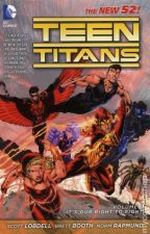
It’s Our Right to Fight by Scott Lobdell and Brett Booth

It's Our Right to FightTeen Titans, Vol. 1: It’s Our Right to Fight

by Scott Lobdell (Writer), Brett Booth (Artist)

Trade Paperback, 168 pg.
DC Comics, 2012

Read: December 17, 2015


I haven’t picked up a DC collection in ages — and longer for a single issue. The whole New 52 idea both intrigued and annoyed me, and I just didn’t want to invest the time. But I saw this on the shelf at the library the other day, and figured, why not? It was the Wolfman/Pérez run of The New Teen Titans that got me into comics as a kid, and I enjoyed the first twenty or so of the Geoff Johns version in 2002-on before I stopped reading comics for a while. So it makes sense, that if anything was going to bring me back to DC, it’d be The Titans.

So, we get a variation on the Superboy clone being deployed to take out young metahumans. Really? They reboot the entire continuity just to redo stories like this? ooookay. It was fine as far as that goes, nothing special, nothing terrible (although, I thought Superboy’s crisis of conscience could’ve taken a bit longer to resolve) — it was primarily used as a device to get Red Robin (as always, hate the name, love the Bottomless Fries) to gather the troops. We’ve got Cassie/Dont-call-me-Wonder-Girl, who is…okay. We’ve got a new-to-his-powers (or is he?) Kid Flash — he’s pretty annoying and cocky, really, but I’m willing to see him grow.

There are three new characters — Bunker, a name almost as dumb as Red Robin, sort of Ice-Man without the chill, I like him, but think he schtick could get old; Solstice — who seems to be serving the role Raven did back in the 80’s, but I could be wrong; and Skitter, a weird arachnid looking person, I’m not even going to try to guess what I think about her without more exposure.

This is almost all set-up, with just enough resolution to call it a collection and move on to the next. It’s hard to say what I think of the storyline or characters until I se some more, but I don’t mind it. I’m not sure I like it, but I don’t hate it.

Biggest beef: Red Robin freaks out at Kid Flash early on in a way that makes no sense for someone over the age of 6 to do. I really don’t get that at all.

Booth’s artwork was nice — nothing that blew me away, but it’s been awhile since I’ve read a new (to me) comic that had art that nice. It feels like I’ve seen his work before, but looking through his credits, I’m not sure where. Very dynamic, loved the creepy vibe of Skitter’s look.

—–

3 Stars

Page 42 of 55

Powered by WordPress & Theme by Anders Norén