Tag: 3 Stars Page 43 of 55

Santa 365 by Spencer Quinn

Santa 365Santa 365

by Spencer Quinn
Series: Chet and Bernie
Kindle Edition, 47 pg.
Atria Books, 2015

Read: December 15, 2015


There’s not a whole lot to say about this short story, but I’ll give it a whirl. Taking place sometime before The Dog Who Knew Too Much (the duo’s adventures involving a wilderness camp), this is the story of Bernie trying to throw a Christmas party for his friends and, more importantly, his son, Charlie. Naturally, because it’s a Chet and Bernie story, crime ensues, and Bernie’s able to set things right (and take care of another problem at the same time). Sure, given that most of Bernie’s social circle are either cops or perps that he and Chet have busted, there should be a lot more crime in Bernie’s life.

Suzie, and we, get to meet Bernie’s mother, Minerva. Something Bernie’s not too excited about (well, I don’t think he cares about us meeting her, Suzie, on the other hand . . . ). She was amusing, but I think Minerva could become too much very quickly. If she returns in a novel, I hope her appearance has about the same number of words.

I trust it’s because of the size of this story, but wow, this was a shallow and rushed thing. Still, it’s a pleasant read, fun to see Chet’s reaction to a Christmas tree and what not. There are a couple of lines from this story that belong in Quinn’s Top 20 All Time lines (a contested field, I realize), so I’m glad I read it, but I was left wanting a bit more.

—–

3 Stars

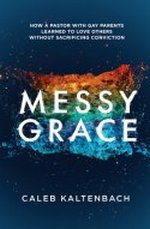
Messy Grace by Caleb Kaltenbach

Messy GraceMessy Grace: How a Pastor with Gay Parents Learned to Love Others Without Sacrificing Conviction

by Caleb Kaltenbach
Trade Paperback, 203 pg.
WaterBrook Press, 2015
Read: December 6, 2015

Straight off, I could tell Mr. Kaltenbach and I approach things very differently. There is a looseness to his language that I can’t tolerate on theological matters — I, like the noted Richard Rogers, serve a precise God*, and it gives me hives to read people who don’t — though I readily acknowledge (and lament) that he’s speaking in the Evangelical Vernacular. By page 5, I was grimacing at his phraseology. Particularly his use of “messy” and it’s connection to grace, and his insistence that there’s a “tension” between grace and truth — but I’ll return to that in a bit.

The first few chapters outline the problems between the perceived (and, sadly, sometimes real) destructive attitudes of Christians towards LGBT people and the perceived (and, sadly, sometimes real) combative stances and attitudes of LGBT people towards Christians. Kaltenbach illustrated this with episodes from his own childhood and what he’s seen in the pastorate. Sadly, he’s too impressed with generalizing from his autobiography (it’s not a totally improper strategy, but Kaltenbach doesn’t bring in anything to buttress his arguments). He also displays an over-reliance on platitudes and catch-phrases. Worst of all, he’s good at using stereotypes and generalizations when calling for those he’s stereotyping/generalizing to stop stereotyping and using generalizations about LGBT people.

I admit I was thoroughly annoyed with him by the time I got to chapter 6, when he (largely and temporarily) put aside the anecdotes and actually got around to explaining the Scriptural view on the topic at hand by brief glances at various texts, responses to critics, and so on. Could this chapter have been better? His explanations less open to criticism by theological opponents? Yes. That said, it was pretty good — and a very good introduction to the ideas he offered (his “More Reading” list at the end of the book contains much that would do a better job on this point).

I have several reservations and problems with Kaltenbach doctrinally and theologically. Actually, despite frequent use of the word “grace,” I’m not sure what he means by the term, but I’m pretty sure it’s not what the biblical writers mean by χαρις. In a fallen world, plagued by sin (a term Kaltenbach avoids), the favor of God, the goodwill of God towards undeserving sinners because of Christ’s work on their behalf (my quick and dirty definition of grace) will be messy, it will be found in messy situations with messy people — because there are no other kinds of people. Calling grace “messy” is like saying it’s “undeserved.” There is no other kind. Kaltenbach also spends a good deal of time talking about a tension between grace and truth, and I don’t see that where he locates it in the Scriptural witness, or anywhere else. In fact, throughout the Old and New Testaments, the two go hand in hand.

Both his dependence upon the Pericope Adulterae (John 7:53-8:11) for his approach to those who differ from him and his indictment of Imprecatory Psalms make me worry about his view of scripture. I can’t help but wonder, built on such an unstable foundation, how much of Kaltenbach’s arguments can stand.

That said, from Chapter 6 on, there is little I flat-out disagreed with — the differences ranged from minor quibbles to exceptions — but he said nothing that I’d say was entirely wrong or baseless, and I could appreciate what he said and where he was coming from. Both his understanding of the biblical teaching on sex, and the way that Christians should interact with, think about, and treat those with whom they disagree on sensitive issues is commendable and spot-on. As this is the point of the book, however sloppily he goes about it, I have to like that.

It’s a good 101 book (maybe a 080?), but one should grab his “More Reading” list and work through it — Champagne Butterfield’s book would be the best to start with if you like the memoir aspect of this book.

* If you’re unfamiliar with the story, see DeYoung’s quotation of Packer here.

—–

I received this book from the ever-so-nice people at Blogging for Books for this review.

—–

3 Stars

The Naturals by Jennifer Lynn Barnes

The NaturalsThe Naturals

by Jennifer Lynn Barnes
Series: The Naturals, #1

Hardcover, 308 pg.

Disney-Hyperion, 2013
Read: December 8, 2015


We’ve all heard of Quantico, VA, the small town that is home to the FBI Academy, Laboratory, NCIS, and so on. What most of us don’t know is that it’s also home to a secret training ground for teenagers who are so intuitively good at profiling and other forensically-inclined psychological skills that they’re described as “Natural.” Two FBI agents and one retired Marine run this program and house, using the teens to crack cold cases. Sharpening their skills in a safe environment, so that when the time is ripe, they’ll be Super Agents.

The Naturals opens with Cassie — being raised by her grandmother while her father’s off somewhere with the Armed Services. She’s seventeen and can read people like a Richard Scarry book, which makes her a great small diner waitress. Until she’s given the chance to join program and she jumps at it, becoming the fifth member of the team.

Cassie jumps into the training, and picks things up quickly. I really enjoyed reading those scenes — she and Dean, the other profiler, sound so much like Will Graham from NBC’s Hannibal that I really got into it. Outside Quantico, things are afoot that will keep this from being all training and cold cases — and I bet, for those who survive, the next books will also pretty fresh cases, too.

Walking into a two-guy, two-gal house — and, apparently, being more attractive than she’s aware — Cassie complicates things. Soon she’s part of at least one Romantic Polygon. It’s not too painful at the moment, but I could see it overtaking things in a book or two. It’s marketed as YA, so it was likely anyway — still, you should know it’s out there.

None of the characters — including Cassie — are much more than groupings of characteristics and tics at this point, but I’d be willing to guess that they could be within another book or two. For now, they’re good enough for what the book is. It really is a fun read

A fast, fun read with just enough suspense to keep you moving, but not as much as you’d get in a Thomas Harris or Val McDermid psychological thriller — a great way to cut your teeth on the subgenre. I’ll come back for more — and I’ll pass it off to my daughter, who will likely eat it up.

Thanks to DanySpike for the blogpost that convinced me to give this one a try. I owe ya one.

—–

3 Stars

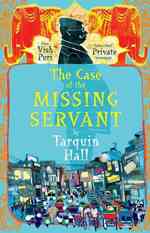
The Case of the Missing Servant by Tarquin Hall

The Case of the Missing ServantThe Case of the Missing Servant: From the Files of Vish Puri, Most Private Investigator

by Tarquin Hall
Series: Vish Puri, #1
Trade Paperback, 295 pg.
Simon & Schuster, 2010
Read: December 2, 2015

Vish Puri is 50ish, pudgy (if not worse), culturally conservative, and easily impressed with himself. And, seemingly, a pretty decent Private Investigator. Unlike most P.I.’s in fiction, he’s not a lone wolf — and he doesn’t have one hyperviolent friend to back him up. He has a team — working for him, doing footwork, the tech stuff — that sort of thing. I wish we saw more of this in these kind of novels.

Anyway, Puri (known to his friends and family as “Chubby,” his employees as “Boss”) has two clients in this particular book — neither of which seems to appreciate the fact that he’s not the agency’s sole focus. One client — a retired army general of some prominence, wants a background check on his granddaughter’s fiancé — the wedding is weeks away and the general is sure something’s wrong with him.

The second client has a trickier case — he’s a lawyer with a track record of helping the lower classes and exploited, with an eye to environmental issues. A servant girl who had been working a few months for his family took off unexpectedly (with money owed her), but they didn’t really give it any thought. Months later, he’s being investigated (and, minor spoiler, but fairly obvious), and eventually charged with, her murder.

I know next to nothing about the Indian legal system, police workings, but a little more about the culture (let me stress the “little” there) — so this was all interesting and foreign to me. The widespread expectation — and acceptance — of corruption, bribery, and so on was pretty surprising. I realize that’s par for the course in some parts of the world, but for some reason, I didn’t think India would be one of those parts. The food, the economics, the convictions and conventions related to marriage, that sort of thing — yeah, I was prepared for that, just not the widespread bribery. Makes the Favor Bank in The Bonfire of the Vanities look like daycare.

There’s nothing for the reader to do with the background check case other than watch the way that the agency works — and the allies they utilize. There’s nothing really for the reader to pick up on to “solve” with the detective. But we do get to see the stealthy, quiet, un-hurried approach they take — despite the client’s expectations. Thankfully (for the way my brain works, anyway), there was plenty to chew on with the missing servant — and it was a pretty easy solution. But the way that Puri went about solving it, and the red herrings that were thrown in the way were well done and unique to this series and setting. I really appreciated the way this was constructed.

The narration has some fun at Puri’s expense — both directly, and though the thoughts of his employees and mother. He needs to diet, he’s prone to self-aggrandizement — but he’s good at his job, and that’s allowed to show forth, too. Beyond Puri, we don’t get to know anyone as a character really — little flashes of personality and backstory here and there, but nothing like a fully fleshed out character. But I don’t think that’s the kind of story that Hall is looking to tell here.

Amusing, clever, moved along nicely and was an interesting take on a culture I know nowhere near enough about — I’ll be back for another.

—–

3 Stars

Girl Waits with Gun by Amy Stewart

Girl Waits with GunGirl Waits with Gun

by Amy Stewart
Series: The Kopp Sisters, #1

Hardcover, 404 pg.
Houghton Mifflin Harcourt, 2015
Read: November 27 – 28, 2015

He looked up and said, in a loud, plain voice, “She’s not a regular lady.”

That line is uttered in the final few pages of this novel, but it does a pretty good job of summing up Constance Kopp (and her two sisters, too). Fitting, really, for “of one of the nation’s first female deputy sheriffs.”

It’s 1914. Constance, her older sister Norma, and much younger sister, Fleurette, live on a farm in Northern New Jersey. They’re out for a drive into town in a carriage when an automobile slams into the side. Everyone escapes fairly unscathed, but rattled. Well, the ladies are rattled, the driver of the car, Henry Kaufman, and his companions are annoyed that the Kopps had the temerity to be on the road, much less be struck by a car. Constance demands payment for repairs, but Kaufman brushes her off.

But Constance is persistent and begins to annoy Kaufman, who’s notorious for busting a strike the year before (and should be notorious for worse). And when Kaufman gets annoyed bad things happen — a campaign for intimidation begins against the sisters. Soon it becomes a battle of wills — Kaufman’s arrogance and pride vs. Constance’s gumption, stubbornness, and sense of right.

Constance soon learns of more of Kaufman’s crimes and abuses, meeting other victims — who warn her just how bad things can be. While she tries to withstand Kaufman’s assaults, she begins to try to help other victims. At the same time, she befriends the local sheriff, one of the rare lawmen in the area who aren’t beholden to Kaufman and his peers.

There’s a lightness to the writing, but the subject matter is grim — and frequently uncomfortable. Whether it’s the persecution of the sisters, Constance’s investigation into Kaufman’s misdeeds, or Stewart exploring the events that brought the Kopps to their present circumstances, this is a hard world and it takes a certain kind of person to make it. But you wouldn’t know that from the narration, really — just as Constance maintains a proper disposition (or tries to) and manners, so does Stewart.

It would’ve been very easy to turn this into something it’s not. Probably very tempting, too. It could’ve been all about the gender disparity of the time, and a feminist crusade. Or about the economics and labor conditions of the area and time — the strikes and the way they were dealt with by the owners and police. Or any number of other things, really. And it was about those things, but primarily it was a story. A decently told story with well-constructed characters. You give me one of those, and you can throw whatever politics, economic theory, etc. you want into the mix and I’ll read it. I may not buy everything you’re selling, but I’ll listen, and if your story and characters are good enough, I’ll come back. Too many people — particularly with historical fiction, it seems — will do okay with the story, mess up the characters, but nail the agenda. Stewart avoided those pitfalls, and thereby served her audience and any possible point she wanted to better.

Now, while this is a novel, it appears that Stewart has done as much research as she could to make this as non-fiction as possible. I’ve wondered a bit about that approach, does that limit what parts of the story she tells? Which would account for some odd gaps. And if it does limit it — is that a good or a bad thing? Or does that depend on the writer? That’s probably it, for some writers, such a limit would be freeing, while others would find the restriction too much. Stewart, it seems, turns this into a strength — matching with her previous non-fiction publications.

A fun little ride, full of historical nuggets, and a family you’d like to spend some time with. A little action, a little danger, but not a lot of violence. A pleasant mix of historical fiction and mystery. It’ll work for the cozy reader, the historical fiction reader, and people who just like good stories.

—–

3 Stars

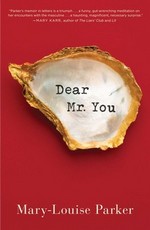
Dear Mr. You by Mary-Louise Parker

Dear Mr. YouDear Mr. You

by Mary-Louise Parker
Hardcover, 225 pg.

Scribner, 2015

Read: December 1, 2015


I’m not sure what I expected from this, but this wasn’t it. But whatever this was? It was a real treat to read.

I guess it’s basically, Alanis Morissette’s “Unsent” in book form. The book is a compilation of letters to a wide assortment of men in her life — or adjacent to it — some named, some nicknamed (“Blue”), some described (“Cab Driver”).

The style varies from letter to letter, a little bit, but on the whole the voice is consistent, it’s the content and audience that drives the mood. Seemingly very honest and candid, this carries all sorts of situation — the doctor who saved her life, the uncle of the girl she adopted, her grandfather, her daughter’s future significant other, a few former paramours, a few total strangers. The strongest material involves her immediate family — her father, her son, her daughter, especially her father.

Given Parker’s acting ability and the personal nature of this material, if she does the audiobook for this, I think it’d be more effective than the dead-tree version. But that’s just a guess.

Sure, not every letter is gold — a few bored me. But the majority kept me reading, entertaining me, making me chuckle, giving the occasional “aww” moment, and even jerking a few tears. Anyway you slice it, this lady can write.

—–

3 Stars

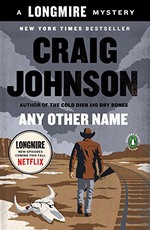
Any Other Name by Craig Johnson

Any Other NameAny Other Name

by Craig Johnson
Series: Walt Longmire, #10

Hardcover, 317 pg.

Viking, 2014

Read: November 14 – 16, 2015

“I want to warn you that if you put Walter on this you’re going to find out what it’s all about, one way or the other.” Another pause, and I could imagine the face that was peering down at her, a visage to which I was accustomed. “You’re sure you want that? Because he’s like a gun; once you point him and pull the trigger, it’s too late to change your mind.”

There’s the problem, isn’t it? Walt won’t stop for anything once he starts. A perennial conflict in the Longmire series is Walt’s devotion to his friends/Cady and his duty as a sheriff (often more felt than real), part of its recurrence is because it always works as a plot device (as tired as it may feel — which is part of the whole thing, it’s just as tired for Cady as it is for the reader). Part of that is because I expect that it’s a strong reflection of reality (unlike, say the beating that Walt takes in this one and then the near super-human feats he accomplishes shortly thereafter).

Detective Gerald Holman shot himself — and did so in a fairly unusual manner. That aside, it’s a pretty cut-and-dried suicide. But his widow doesn’t buy it. Which isn’t that unusual, but because she doesn’t buy it, their old friend Lucian Connally doesn’t buy it — he’s just not that kind of guy. So Lucian drags Walt to the next county and gets him to investigate it — the sheriff there doesn’t see the need, but isn’t going to stop him. Lucian gives the widow the warning up above, and she agrees to it, as does Walt — even with the birth of his grandchild just days away in Philadelphia.

Along the way, Vic and Henry show up — as does a very unlikely friend of Walt’s from a couple of books back. Vic’s recovered physically from A Serpent’s Tooth, but the rest of her has a bit to go. Henry’s just Henry — and I’m pretty sure that’s all he’ll ever be. Walt befriends/drafts a local police officer, who also comes through for him in a pretty big way. Actually, meeting Officer Corbin Dougherty was one of my favorite parts of the book:

… he looked vaguely familiar….

“You date my daughter?”

“I did.” He blushed up to his blond crew cut. “The first time I came to pick her up you tossed me a shotgun shell.”

“I did?”

“Yeah, you said they went a lot faster after eleven o’clock.”

I nodded. “I used to think I was a tough guy.”

I liked this exchange for a few reasons: 1. It’s amusing, 2. It reminds me of one of the best exchanges between Raylan Givens and Wynn Duffy on Justified, 3. It illustrates the difference between Walt and Raylan. I don’t know if Raylan will ever get to the point where he could say that last line and mean it, but you know Walt did (and is probably embarrassed that he ever said it in the first place — Raylan may have rued uttering that to Wynn because of the fallout, but he sure wasn’t embarrassed).

The kinds of criminal activity that Walt turns up during his investigation of the suicide and Holman’s last cases that probably led him to it makes a guy miss Absaroka County and its apocalyptic cults, generations-long feuds, drug smuggling, serial killers and whatnot. But throughout it all, you know that Walt and his posse will bring justice to those who drove Holman over the edge.

To be honest, the ending of this one felt rushed — Walt had a hard deadline to meet, and so he had to rush things a bit on his end — and it felt like Johnson did, too. There was no cheating on the final reveal of his investigation — Johnson’s too careful for that, and he’s not one for red herrings, so you know the detail that leads Walt to the conclusion was important when you saw it the second time. But, I didn’t think it was well explained, the clues fit, but I didn’t see the motive working — at least not as given. It didn’t ruin the experience for me, but it took a little shine off of it.

—–

3 Stars

Blameless by Gail Carriger

BlamelessBlameless

by Gail Carriger
Series: The Parasol Protectorate, #3

Mass Market Paperback, 355 pg.
Orbit, 2010
Read: November 12 – 14, 2015

… a pitcher of some dark liquid that smelled like heaven. Floote poured a portion for her into his cup

Alexia took a tentative sip and was quite overwhelmed by an acute sense of betrayal. It was absolutely
vole tasting, a mixture of quinine and burnt dandelion leaves.

“That, I am to assume, is the infamous coffee?”

Madame Lefoux nodded, pouring herself a splash and then adding a good deal of honey and milk. Alexia could not believe a whole hive of honey capable of rescuing the foul drink. Imagine preferring that to tea!

It’s just a couple of weeks since the surprising twist at the end of Changeless, and Alexia is just beginning to see just how bad the fallout is going to be for her. Almost friendless, encouraged (strongly) to leave her family home, jobless, husbandless — she’s reeling. Then the vampires start to try to kill her. Which is a little more than anyone should be asked to take. So Alexia, Madame Lefoux and Floote take off for Italy to see if the Templars can shed some light on Alexia’s current predicament.

Big mistake. But you can discover that on your own.

Here in book 3, there’s not much to say — I seriously just love the way that Carriger writes, it’s just delicious. I enjoy the characters, the world, the conflict — and this is really just more of the same delightful prose that Carriger’s already given us. Beyond that? A few semi-baked thoughts is all you get out of me here:

  • I enjoyed the narration, the dialogue, and so on. Ivy writing a letter just might be better than Ivy talking — her malapropisms are too much fun. It was nice to see a responsible streak in her, nevertheless.
  • Floote’s hiding more than we previously thought, I hope something makes him crack.
  • The effects of garlic on vampires, and basil on werewolves in this world gave me a good chuckle.
  • At the end of the day, Professor Lyall shines brightest here — it’s been clear all along that he’s powerful, capable, and resourceful — but he really gets to strut his stuff here, while Lord Maccon is licking his wounds and drowning his sorrows. That was fun to see.
  • In between the assassination attempts, the bullets, the supernatural goings-on, and everything else, there were a couple of really sweet moments. Making everything just a little more human.

If you enjoyed the first two volumes of this series, I bet you’ll enjoy this one. If you haven’t enjoyed those — why are you reading this? This particular Book 3 is not a jumping on point — go back to Soulless and start from there. You’ll be glad you did.

—–

3 Stars

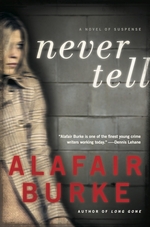
Never Tell by Alafair Burke

Never TellNever Tell

by Alafair Burke
Series: Ellie Hatcher, #4

Hardcover, 348 pg.

HarperCollins Publishers, 2012

Read: November 9 – 10, 2015

Ellie Hatcher and her partner, Rogan are called to a very nice townhouse to start investigating a homicide. At least that’s how it was called in. As far as the EMTs, the police officers that were first on the scene, and Ellie’s instincts are concerned, it was a suicide. But the distraught mother has money and is married to a music producer of some note, so when they squawk “murder”, Rogan and Hatcher at least have to spend some time considering it one.

There are a number of little signs all along that point to homicide, but suicide is obvious, easy, and quick to handle. Even as evidence starts to pile up, Ellie resists seeing suicide. The greater part of this is written as her coming to grips with her father’s all those years ago. I didn’t buy that explanation, really — I couldn’t see why Ellie hadn’t jumped in with gusto, just in case. That seems more consistent with her character than this cynical cop we see here.

There’s another story here — somewhat tied to the other, but you’re never sure just how much it’s tied together until the end. A woman who was repeatedly raped by her mother’s boyfriend a decade or so ago, is seeking healing, seeking to tell her story. So she starts an anonymous blog, “Second Acts: Confessions of a Former Victim and Current Survivor.” But she starts receiving threats, threats that demand to be taken seriously (but not enough to involve the police until she’s forced to) — which just empower her to continue. At a certain point, the threats become more personal, and maybe the anonymity isn’t as strong as the blogger thought. You’d think following 212 that Hatcher and Rogan would be more willing to believe the level of violence threatened here, but they don’t seem to take it seriously until forced to either (although, once this lands on their radar, they handle it better than the suicide/homicide).

I liked — as characters, not necessarily as people — the mourning mother and most of the social circle of the dead girl, and the lady who runs the homeless shelter. But everyone else pretty much left me cold. Jess had so little to do this time, it’s a wonder Burke used him at all. The Max storyline was okay, but seemed a little pat and tired — especially in the way that Ellie and Max reacted to each other. I’m not looking for much out of that part of the series, but I’d like something interesting. Nothing Rogan did really caught my attention, he served as an okay foil for Ellie/someone to spur her on, but it really could have been any other character doing the same. Thankfully, the stories were strong enough to keep me invested.

In the end, this is a solid mystery, with plenty of red herrings and half-told-truths to keep the reader and the detectives questioning what they see in front of them. Ellie Hatcher continues to be a character worth spending time with — even when she’s wrong.

—–

3 Stars

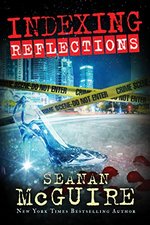
Indexing: Reflections, Episode Six: Frostbite by Seanan McGuire

Indexing: ReflectionsIndexing: Reflections, Episode Six: Frostbite

by Seanan McGuire
Series: Indexing, #2.6

Kindle
47North, 2015
Read: October 22, 2015

While Jeff and Sloane were fretting in the last chapter, this is what Henry was going through — and pretty soon you start to think that maybe Jeff and Sloane were better off (as worried as they were). But honestly, there really wasn’t a lot of plot movement here. It’s primarily a chapter that expands what the reader knows about the story. We get a better understanding of how things work in the whiteout wood that the Snow Whites like Henry in habit, we get a little backstory on Henry and Gerry, and the beginnings of an understanding what’s going on with Elsie.

Which isn’t just to say is all exposition, or dull — because it’s not. But the fight scenes, the danger, the tension takes are of secondary importance. It’s a good chapter, and does a good job of establishing a foundation for whatever is going to come next.

The ending could be cliff-hanger-y. But didn’t really feel that way, it felt more like one more hurdle for Henry to conquer. It seems like a pretty big hurdle and one not easily overcome. But I, for one, am not that worried about the outcome.

Of course, with my track record of predicting McGuire means I should probably be sweating bullets.

—–

3 Stars

Page 43 of 55

Powered by WordPress & Theme by Anders Norén