Tag: 3 Stars Page 46 of 55

The Girl Who Circumnavigated Fairyland in a Ship of Her Own Making by Catherynne M. Valente

The Girl Who Circumnavigated Fairyland in a Ship of Her Own Making The Girl Who Circumnavigated Fairyland in a Ship of Her Own Making

by Catherynne M. Valente

Hardcover, 247 pg.
Feiwel & Friends, 2011
Read: February 19 – 20, 2015

But what September chiefly noticed were their hats.
Any child knows what a witch looks like. The warts are important, yes, the hooked nose, the cruel smile. But it’s the hat that cinches it: pointy and black with a wide rim. Plenty of people have warts and hooked noses and cruel smiles but are not witches at all. Hats change everything. September knew this with all her being, deep in the place where she knew her own name . . . For one day, her father had put on a hat with golden things on it and suddenly he hadn’t been her father anymore, he had been a soldier, and he had left. Hats have power. Hats can change you into someone else.

There’s much more to be said about the true nature of seasons, sentient keys, the immorality of novelists, the thoughtfulness of smoking jackets, the desires and drives of shoes….But I’m getting ahead of myself.

So last week, I found myself on the end of a batch of pretty heavy books, and needed something light and breezy — hopefully cheery, too. So I grabbed this off my daughter’s shelf (had been meaning to get around to it since I bought it for her 3 years ago). It didn’t at all fit the bill for what I wanted, but thankfully was an enjoyable read about a girl named September and the improbable trip she takes to (and around) Fairyland.

Those were all big words, to be sure, but as it has been said, September read often, and like it best when words did not pretend to be simple, but put on their full armor and rode out with colors flying

Who couldn’t love a hero like that?

While her father is off fighting in Europe during WWII, and her mother is spending her days with Rosie the Riveter (and doing her best to take care of her daughter, it should be stressed — she hasn’t been abandoned), September is convinced to join someone calling himself The Green Wind to go for a ride on his flying leopard to visit Fairyland.

Once there, she meets all sorts of incredible people, creatures, animals . . . and other things that I can’t really describe. She befriends a Wyvern and sets off on adventures — eventually being drafted by the unpopular, practical and efficient Marquess (who replaced, the wonderful and beloved Queen) into retrieving a magic object for her. This quest sends her (literally) all around Fairyland in an effort to obtain this object and save her friends.

The sensibility here is something like taking The Phantom Tollbooth, The Last of the Really Great Whangdoodles and throwing them into a blender with Neil Gaiman’s children books. Almost. To me, and I get the sense that I’m in a distinct minority here, this comes across more as a technical exercise — “how many strange and quirky things can I work into a narrative?” Despite the setting, target audience and obvious authorial skill it feels joyless, there’s no sense of play. Unlike the other works I’ve compared it to, there’s almost no fun here.

Yes, it’s a children’s book. But it’s not just for kids — in fact, there’s a lot here that very few children will pick up on (I’m willing to bet that I missed a trick or two). Not as amusing as I hoped for/expected, still, a good read for children or adults who aren’t afraid to read a book marketed for children.

—–

3 Stars

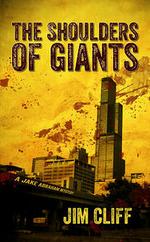
The Shoulders of Giants by Jim Cliff

The Shoulders of GiantsThe Shoulders of Giants

by Jim Cliff

Kindle, 252 pg.
Jim Cliff, 2013
Read: January 17 – 19, 2015

“I grew up watching The Rockford Files, Magnum P.I., Vega$. Bogart films like The Maltese Falcon, and The Big Sleep, led me to books by Hammett and Chandler. Most of my formative years were spent in front of the TV or with my head in a book. I was realistic about it, though. I didn’t think my life was going to be like some hard-boiled airport detective novel, but I was always good at solving problems, thinking laterally and logically, and it seemed like something I would enjoy.”

This is how Jake Abraham describes his career choice. Jake describes a lot of us there — but where I fantasized about becoming a mystery novelist, Jake wanted to live the novels.

This is where his career starts — a disgraced former police captain hires Jake to find his missing daughter (not surprisingly, Capt. Patterson doesn’t think his former pals in the Chicago Police Department are going to be overly sympathetic). Jake throws himself into this with every bit of gusto he can summon. Which is a lot — thankfully, he’s more than just enthusiasm. Jake’s smart, educated, and (pretty) disciplined — which serves him well.

The case gets pretty serious pretty quickly, and it’s not long before a missing college girl sounds a lot better than what Jake has to deal with. While investigating her disappearance, the rookie P.I. comes across a few other criminal activities — some of which he observes, some of which he helps the police with, and some of which happen to him. These keep the main story from being a simple series of rabbit trails and red herrings and also reveal a good amount about our hero. From a plot-standpoint, this isn’t a great novel, but it’s good enough to stick with.

Jake has a long friendship with a CPD detective who helps him (both purposefully and inadvertently) more than he should, which really helps Jake through some of the understandable stumbles he makes out of the gate. He also makes some really convenient new friends along the way that make it possible for Jake to make progress with some investigations, and even resolve a thing or two. Not the greatest supporting cast — but largely interesting and people I wouldn’t mind spending more time with.

Jake reminds me of Lee Goldberg’s Harvey Mapes (from The Man with the Iron-On Badge/Watch Me Die) — but Jake’s got his act more together, even if he and Harvey are drawing inspiration from the same sources. I like Jake. I actually like him better than I like the book, but as long as you like the protagonist like that, you can keep reading a mediocre book (and this isn’t mediocre, actually — it’s pretty good, just not as good as Cliff will be writing 4 books from now).

Jake has a nice dry wit, like many of the P.I.s he wants to emulate. Lines like

The third number produced nothing. I wasn’t very surprised, sixty percent of Americans have unlisted numbers. There are a lot of paranoid people out there, and it just makes it harder for the rest of us to find out who they are, and where they live.

make sure that this is an enjoyable read.

A fun character off to a promising start. I look forward to reading the next in this series.

—–

3 Stars

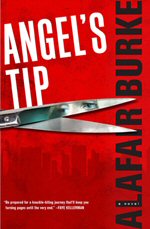
Angel’s Tip by Alafair Burke

Angel's Tip (Ellie Hatcher #2)Angel’s Tip

by Alafair Burke
Series: Ellie Hatcher, #2


Hardcover, 352 pages
Published August 19th 2008 by Harper
Read: November 28 – 29, 2014The way that Dead Connection ended, I figured this one would be Ellie going back home for a while, and was pleased to see I was wrong. I really appreciated the way that Burke fed us details on Ellie’s trip to Kansas to investigate her father’s death in bits and pieces rather than in one big dump of information somewhere along the way and/or a novel-length tale. I’m sure at some point we will get a lot more time and attention paid to that story, but for now, I’m satisfied keeping the focus on Ellie’s work with the NYPD.

Instead, we find our detective thrown into another high-profile murder case — this time, a pretty co-ed visiting the Big Apple from Indiana ends up murdered after a night out on the town. The evidence seems to point at the kind of guy you want it to be (especially if you’re a Law & Order viewer): some young Wall Street type with more money and good looks than sense. But Ellie, naturally, stumbles onto something else. Something big — that goes back years.

And well, things proceed from there as they do in this type of book. Again, Burke had me fooled, and I didn’t see the solution until she wanted me to — but once she did, everything fit just like it should. Nothing spectacular here, but very satisfactory.

There were a couple of characters who were clearly introduced as redshirts (to borrow from another genre), interestingly drawn — moreso than many authors would do. I genuinely felt bad for one of them towards the end of their life, like I would have a major character I’d spent a book or two getting to know.

I thought the characters of Ellie; her brother, Jess; and her boyfriend with the name I can’t remember, were essentially who they were last time — a little more fleshed out. The highlight for me was Ellie’s new partner, the oddly (but believably) well-to-do Detective J. J. Rogan. I enjoyed him as a character, as well as his interaction with Ellie and hope Burke doesn’t replace him too soon (not sure why after only two books I assume that the role of Ellie’s partner will be adjacent to a revolving door, but I do).

This book wasn’t a lean-forward, turn the pages as fast as you can thriller. But man, it was hard to put down, and was just so easy to go from chapter to chapter to “just one more…”. Between her ease of style and likability of characters, this is just one of those books that you don’t want to put down. Not the greatest mystery novel I read last year year, but it was one of the smoothest reads.

—–

3 Stars

Us by David Nicholls

Us
Us

by David Nicholls

Hardcover, 398 pg.
Harper, 2014
Read: November 14 – 27, 2014

There’s a saying, cited in popular song, that if you love someone you must set them free. Well, that’s just nonsense. If you love someone, you bind them to you with heavy metal chains.

While not popularly endorsed, I can’t imagine many people who haven’t thought that at one point or another.

Connie Peterson has decided that it’s time for her marriage to end. She and her husband, Douglas, have finished their work — raising their son, Albie — inexplicably nicknamed “Egg” — (you tell me: why would you call your son Egg?). She’s not angry, she’s not been betrayed, she just thinks they’ve run their course — they’ll go on the big tour of the Continent they’ve been planning to celebrate Albie finishing school, then come home and probably wrap things up.

Douglas wasn’t prepared for this, can’t imagine living life without his wife, so he latches on to the probably nature of his wife’s wishes: he’s going to pull out all the stops on this trip, be the best dad, the best husband, the best version of himself and convince her to stick with the “’til death do us part” bit.

There’s a few problems with his plan: he’s not entirely sure what it is that he’s not doing right (the readers will pretty much suss it out from flashbacks); his son is a snot who won’t help his dad out at all with repairing their relationship; Douglas is somewhat klutzy and really can’t express his emotions in any way to his family; and Connie’s just an unpleasant person, seemingly mercurial, and the reader (well, this reader, anyway) can’t see why Douglas would fall for this woman. I can see initial infatuation/attraction — but as far as I can see, the only reason to stick with her is Douglas’ own belief in the meaning of commitment.

So, starting in Paris, the Peterson’s embark on a tour of Europe, and things almost immediately fall apart (with occasional moments where you think Douglas will win Connie back). But Albie clearly doesn’t want to be with either of his parents — although he has no problem spending their money. Connie frequently seems to be toying with Douglas. And Douglas just seems hapless.

Alternating with the narrative of a European tour to make the Griswolds’ look fun and relaxing are a series of flashbacks chronicling the courtship and early marriage of Douglas and Connie. Like I said earlier, it’s sort of the male perspective of Landline without the phone.

Here’s where I’m torn: the novel is told with heart, wit and understanding. The Petersons — and others they meet — come across as real people, warts and all (“all” being mostly other warts). There’s tragedy, hope and laughs — here’s a few of my favorite lines:

I found myself sitting between two actors on drugs, a position that, a number of peer-reviewed research papers have since confirmed, is precisely the worst place a biochemist can be.

[Albie] refuses to wear a coat, an absurd affectation, as if coats where somehow ‘square’ or un-cool, as if there were something ‘hip’ about hypothermia. What is he rebelling against? Warmth? Comfort?

( I’m glad to know I’m not the only father who’s had to wonder this.)

The problem with telling people they can do anything they want to do is that it is objectively, factually inaccurate. Otherwise the whole world would just be ballet dancers and pop stars.

On the same page Nicholls can elicit a chuckle or at least a smile, he can turn on a dime and give you something like this:

In short, my son makes me feel like his step-father.
I have had some experience of unrequited love in the past and that was no picnic, I can tell you. But the unrequited love of one’s only living offspring has its own particular slow acid burn.

Really, really, really well-written. I’d give it 4-5 stars just on that. But there’s more to a book than just the writer’s skill — there’s characters and story. And Us just doesn’t pull those off successfully (and I know Nicholls is more than capable of it — see One Day)

I liked Douglas — both in flashback and the present — I was pulling for him, wishing his family would take a minute to understand him. Albie, I could understand. I thought he was an ungrateful twerp, but I could believe it as a stage in life, and see glimpses of the decent adult he’d become — but really, I didn’t want to spend a whole lot of time with him. Connie I liked (mostly) in flashback, and could barely tolerate in the present — for all his flaws, she’s throwing away a good, devoted husband for no real reason.

The story was problematic, too. Nicholls really seems to point in one direction, and even seems to resort to a couple of clichés to get to his destination. But then he veers off to the real resolution that he wants — and gets his characters there by sheer force of his will. There’s a missing link or three between where the story is going and where it ends up. In the end, at least one character acts in a manner contrary to everything we’ve seen — and we’re given no real justification for it just to get to the conclusion Nicholls wants.

I just couldn’t buy it.

So there we are — a wonderful depiction of horrid people acting in ways that ultimately don’t make sense. I can’t recommend it, as much as I want to/expected to. Your results may vary, of course. I’d love to hear from people in the comments who disagree with me — what did I fail to appreciate?

—–

3 Stars

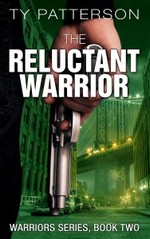
The Reluctant Warrior by Ty Patterson

The Reluctant Warrior (Warrior series, #2)The Reluctant Warrior

by Ty Patterson

Kindle Edition, 313 pg.
Amazon Digital Services, 2014
Read: November 18 – 19, 2014A few months ago, I read the first volume in this trilogy and enjoyed it, while noting some real problems. The same thing could be said about this follow-up — the problems are still there, but they’re not as bad. Patterson’s improved — he’s better at what he was good at, and his bad isn’t quite as bad.

The character I liked most from The Warrior, Broker, moves to Center Stage for this one, hired by the FBI agent who made such a mess of things last time, Isakson. He’s been trying to take down an increasingly powerful criminal organization in New York, a gang called the 5Clubs. The problem is, there seems to be a mole in the FBI or the NYPD, and he can’t find it. Enter Broker and his impossibly good sources, software and assorted mercenaries — most notably, the Warriors.

Broker tries to improve upon the FBI’s own investigation, but it doesn’t work to well. So, he picks another strategy. He’s going to ask the 5Clubs, who the mole is. Which includes the bonus feature of taking out a good deal of their operations along the way to give them a reason to actually answer.

Mayhem, destruction, and vigilante justice ensues in a quite entertaining fashion.

There are some weaknesses, which I really don’t want to focus on — but these take me out of the action, take me out of the scene when I ran into them. If they didn’t, I wouldn’t talk about them. But when it stops me, I have to mention it.

1. There were far too many “Britishisms.” Mechanics from Ohio don’t talk to their kids about going on holidays, or use a “mobile.” Once the action got going in Part 2, it stopped being as much of an issue — things were moving fast enough that they were easier to ignore.

2. Similarly, Patterson could use a synonym or two for “gang” and “hood.” The repeated use of these two got to the point where they were grating.

3. When it comes to the inter-personal dialogue, Patterson’s improved, but not enough. You can tell when he’s going for banter between the team members, but it’s just a little wooden.

The problems detract and distract, but don’t ultimately ruin the experience of The Reluctant Warrior. It’s a solid action story and a good improvement over the previous installment, and I’m curious to see where Patterson takes it next.

Note: I was graciously provided a copy of this book by the author in exchange for a review. Hope he doesn’t regret that.

—–

3 Stars

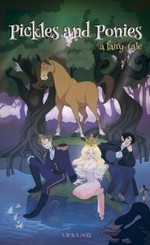
Pickles and Ponies: A Fairy-Tale by Laura May

Pickles and Ponies: A Fairy-TalePickles and Ponies: A Fairy-Tale

by Laura May

Kindle Edition, 263 pg.
Kindle Direct Publishing, 2014
Read: November 1 – 3, 2014

Everybody knows that good princesses are always pretty, just like wicked step-mothers are always ugly and covered in warts: and Melodia was no exception to this rule. By this time she was nearly nineteen, and she was tall and healthy, with rather a wistful look to her. You probably want to know her hair colour as well, because you’ve heard how that impacts upon personality. Scientists all over Raduga (with the word ‘scientist’ being used somewhat loosely) have conducted several studies into the effects of hair colour. They’ve found that while it seems to matter very little for the princes of the realm, for princesses it’s quite the opposite. Blonde hair indicates beauty and fragility, while brunettes are supposedly street-smart and intelligent. Of course, these studies were all funded by the Prince of Hairdressers, who was allegedly running a hair dye cartel…

If Douglas Adams were to write a fairy-tale style story for a YA audience, it’d sound a lot like this. Which is at once the strength and the weakness of the book. Once you start with this voice, you’re stuck with it — it’s a commitment you have to follow through with. May does a fine job of that. But, unlike Adams, she sometimes lets her voice, her storytelling style, get in the way of the story.

But, while occasionally distracting and annoying, it’s not fatal. And if you read this in smaller chunks — I read it in two sittings — you might not even notice (at least not as much as I did).

This is a cute YA take on fairy tales, a tale of magic, friendship, and a search for true love in a land where everyone is a prince or a princess (if they’re not a King or a Queen). There’s really not much else to say. She’s not giving us fractured Snow White or Cinderella, etc. May’s working from a blank canvas — what’s happening in the castle to the right of Prince Charming’s.

Again, like Adams, I’m not entirely convinced that May’s world is really that coherent — but it doesn’t matter, the world she’s put this in is just a place for her to tell jokes and have silly things happen. Like this:

By the time nine months on the island had passed, Melodia was bored out of her wits and sorely lacking in company. She tried talking to rocks, but they were stoney in their silence. She tried talking to the moss, but it just wasn’t a fun guy. The trees asked her to leaf them alone, and eventually the princess was reduced to talking to her own reflection in the lake.

I laughed, I chuckled, I groaned, I was charmed — and I was entertained. What more could you want?

—–

The author was kind enough to provide me a copy of this book, providing me relief from the murder and mayhem I’ve found myself reading this year.

—–

3 Stars

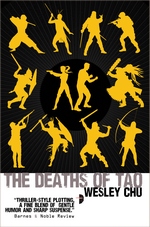
The Deaths of Tao by Wesley Chu

The Deaths of Tao (Tao, #2)The Deaths of Tao

by Wesley Chu
Series: Tao Trilogy, #2


Mass Market Paperback, 462 pg.
Angry Robot Books, 2013
Read: October 17 – 24, 2014
It’s been a few years since the events of The Lives of Tao, and things have not gone well for Roen Tam, either personally or in the war. He’s basically dropped out of everything, going rogue, running covert ops for Tao while ignoring Prophus’ command structure. Tao’s sure he understands what’s going on in the world better than anyone else, and so he pushes Roen to leave everything behind and find evidence for Tao’s theory.

Meanwhile, Jill — and Raji — have wormed their way into the corridors of power in the Capitol, moving and shaking on behalf of Prophus while also keeping her cover as a Senatorial aide intact. This is where Prophus seems to be holding its own – but barely.

We bounce around between Roen, Jill, and a new Gengix host, Enzo, who is trying to find a level of dominance very quickly for himself in the Gengix hierarchy. He’s rash, impetuous, and egotistical — not the signs of a great leader. But the Gengix he’s hosting is wise, methodical, honorable and tries to impress these characteristics on this host.

But like I said, things aren’t going well for the Prophus — they’re on the verge of losing this war once and for all, clinging to power and influence some areas, absolutely losing it in others. They’re so close to the brink that they eventually are driven to one final act of desperation that will change everything forever.

As the title suggests, The Deaths of Tao is darker (like any good 2nd volume of a trilogy), not as fun (understandable given the darkness, but would’ve been helpful), and slower paced than The Lives of Tao. But, still, I was enjoying it enough to keep going — and I wanted to see what happened to Roen and the rest. Hopefully get to see my favorite Prophus host whip that Gengix Enzo around a bit. But Chapter 29? Made everything up to that point worth it. And excitement, the pace, and the stakes picked up after that (not the stakes for the whole armies, obviously, but for Roen and Jill)

Still, it took until Chapter 29 for this really to come together for me — and that’s far too long. Which is strange, because up until that point, I’d say this was better structured than its predecessor. It built better in plot development, character and tension. But Chapter 29 made me rethink that, it’s just too much of a jump in development and voice.

I find it hard to understand — except for strength in numbers — just how the Gengix are winning this thing. The Prophus seem to come out on top — if not even with — the Gengix almost every time we see them. It’s difficult to extrapolate from this to them almost losing this war. Yet that’s exactly the situation they’re in, and you believe it, up until you think about it a day or two later.

Giving it three stars — as good as the last 150 pages or so were, as huge as the ending was — it was a slog up until that point. I just couldn’t connect with Roen or Tao (or anyone else). But believe you me, I’m anticipating The Rebirths of Tao and expect it to blow me away. Just wish this had done that.

—–

3 Stars

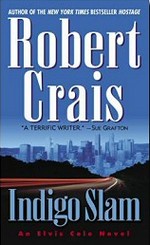
Reread Project: Indigo Slam by Robert Crais

Indigo Slam (Elvis Cole, #7)Indigo Slam

by Robert Crais
Series: Elvis Cole, #7

Mass Market Paperback, 320 pg.
Fawcett Books, 2003
Read: September 16 – 17, 2014


This, right here, is the low point for the Elvis Cole series. So why, you ask, do you give this 3 stars? Am I just that much of a mindless fanboy?

Well, probably. But that’s not it. One’s appreciation for this novel has everything to do with what you think of the clients. If you like them, see something in them that teaches us something about Elvis — you’ll probably like this book. If not, well, this’ll likely be a tougher read for you. Now, me? I liked the kids, especially Teri, the Fifteen year-old eldest sister, and substitute mom. Little sister Winona’s clearly adorable, Charles is a punk clearly in need of a strong male authority figure. Either individually, or considered as a group, I liked the kids — and therefore, when they ask the World’s Greatest Detective to find their absentee dad – I cared.

If it was almost anyone else looking for their dad, Clark, I can’t imagine caring. Once Elvis found him, I quickly reached the point where I didn’t care if Elvis was able to help him, as long as the kids would be alright.

Towards the end of the book, both Elvis and Joe make a major blunder that almost gets all of them killed. And sure, I don’t necessarily expect the two to have everything worked out before they take action — but there was evidence enough that they could’ve been on their toes security-wise and not almost got killed in the process. Not only do they miss the pretty obvious conclusion, they don’t even see that there’s a conclusion to be found. I’ve read Indigo four times now, and it distracts and detracts each time.

What makes Elvis’ (and, to be fair, Joe’s) blunder so egregious, was that it was hot on the heels of Elvis’ latest cunning plan. Some of these plans he comes up with to get his clients/clients’ families out of hot water stretch credulity, this one takes the cake. As Blackadder would say, it’s “a plan so cunning, you could put a tail on it and call it a weasel!” I can’t believe that anyone would go along with it — beyond the desperate family, that is — but not only do a group of criminals/revolutionaries, but Elvis gets multiple federal agencies to sign off. And it works. Mostly.

But somehow the book works. For two independent reasons: 1. As I stated previously, because of the clients — I bought into them. And 2., Because of the Lucy Story.

There was just something I liked about these kids and their plight — I believed it, I could see it. I enjoyed watching Elvis and Joe interact with them (really sick of Joe as baby sitter, let him do a little more, Elvis!)

There’s a little bit of a Lucy story, not as big as in the last two novels, but it’s there, and it’s an important development of what started in Sunset Express. But more than that, it’s a chance for Elvis to demonstrate the sensitive, caring male that he is. For Lucy to be an independent woman. And for the reader to see that this isn’t going to be a relationship that’s only wine and roses. Yes, Elvis is still the giddy, goofy guy in love making kissy sounds over the phone. But he’s also an adult who respects his partner.

Not a whole lot (other than Joe and Lucy) to tie this one to earlier novels — Elvis continues to use Lou Poitras and Eddie Ditko as his own personal (anachronistic) Google. And Elvis’ actions in Free Fall end up paying off for him, which was nice to see.

In the end, this was pretty blah. There were some nice character moments, a few chuckles, a nice firefight or two..but that’s really it. Not much going for it at all, which is a shame. Not the way that Phase 1 for Elvis Cole should end — but the parts that are a prequel for Phase 2 were strong enough (you’ll have to read L. A. Requiem to better understand that).

—–

3 Stars

—–

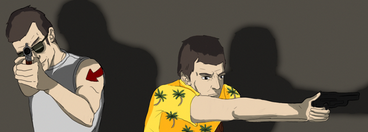
Drawing by Kirsty Stewart, chameleonkirsty on deviantART, used with permission.

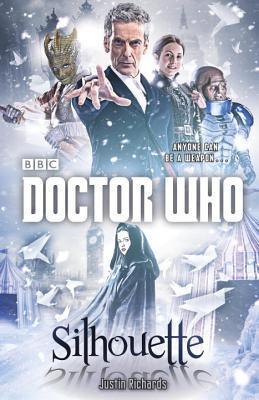
Doctor Who: Silhouette by Justin Richards

Doctor Who: Silhouette (New Series Adventures, #53)Doctor Who: Silhouette

by Justin Richards

Series: Doctor Who

Trade Paperback, 256 pg.
Broadway Books, 2014
Read: September 18, 2014

I’d just said few weeks back how I hadn’t read any tie-in novels for a bit, when the good people at Blogging for Books offered this. Seemed like a good way to get back into them.

Things got off to a rough start when the argument that the Doctor and Clara were having about their next destination (she wants to meet King Arthur, he wants to go somewhere else) reminded me too much of the argument in “Robot of Sherwood” — but there’s a great punchline that redeemed it. They don’t head off to Camelot, because the Doctor finds some sort of sign of nuclear power in Victorian London which seems far more urgent.

The Doctor doesn’t want to trouble Madam Vastra and her crew when they can take care of this themselves. Besides, The Great Detective is investigating a locked-room murder, and Strax is off looking into the death of a friend. I’m sure no one at all will be surprised to discover that the investigations are soon intertwined. And we’re off to the races — peril, aliens, impossible weapons, The Shadow Proclamation, Strax being Strax. Loads of fun.

This story is best suited for a novel rather than a TV episode — it’s just unfilmable. Too many special effects, too large a cast, plot couldn’t be boiled down into the less than 60-minutes necessity. But it feels like an bonus-length episode, right kind of pace, right kind of mix of tension and humor. In other words — exactly what this kind of book is supposed to be.

Here’s the only thing I didn’t like about this — Richard’s characterization of The Doctor. Which, yeah, is a pretty significant piece in a Doctor Who novel. But here’s the thing, this thing came out September 9 and season 8 premiered August 23. So, I’m betting while Richards had plenty of access to scripts and whatnot, he hadn’t seen a final cut of an episode starring Capaldi before he finished this (maybe one or two — definitely not a lot of them). So he couldn’t really capture the full flavor of the Twelfth Doctor. He could get some of it — the stuff that’s in the script — but all the intangibles, gravitas, the full je ne sais quoi that only happens when an actor becomes the character wasn’t available for Richards. I’d like to read something he writes after the end of season 8 just to see if he can capture it — I’m betting he can (he nailed the characterizations of Clara, Vastra, Jenny and Strax).

Still, this is just the sort of thing for the fan who can’t be satisfied with twelve episodes of TARDIS-based adventure.


Note:I received this book for free from Blogging for Books for this review. Which was generous and cool of them, but didn’t impact what I said about the book.

—–

—–

3 Stars

The Scriptlings by Sorin Suciu

The ScriptlingsThe Scriptlings

by Sorin Suciu

ebook, 372 pg.
Smashwords, 2014
Read: September 6 – 8, 2014

For reasons I can’t quite put my finger on (it may have something to do with all the Douglas Adams and Terry Pratchett references I saw when reading about the book), I came to The Scriptlings with a degree of trepidation. But it didn’t take long for the book’s charm and wit to get me past that and buy into its premise and style.

Scriptlings are apprentice magicians. Magicians are born gifted — either from a magician parent or two, or the occasional child of muggle parents. Well, until now, anyway, but that’s not for me to say. For reasons that aren’t sufficiently described (and don’t need to be), each magician picks a name for themselves, the more disgusting the better. So we focus two Scriptlings and three Masters — Buggeroff, Merkin, Master Loo, Master Dung, and Master Sewer. Yeah, some of those names you really don’t want to spend that much time dwelling on, but thankfully, they quickly lose their typical connotation and just become strange names like something you’d find in any fantasy novel.

I should also mention Gertrude. The sentient and magical goat (Loo’s familiar) who occasionally thinks that she’s snake, and acts accordingly. At first, I thought she’d be a quick throwaway joke that we’d move on from quickly, but in the end, Gertrude’s a pivotal character, and brings a lot of the emotional weight to the plot.

It’s dangerous to try to quantify things like this (aside from actual word counts), but I’d wager that 1/3 of this book is made up of character and story, the other two thirds are style, attitude and jokes. I should stress this isn’t a complaint, or at least not a big one, anyway. Generally, I’d prefer that ratio to be 50/50 at least, but it works for this book. So yes, the plot is pretty slight — but you’re too busy being amused to worry about that. I should add that I really liked his use of footnotes, he’s not quite as good at it as Josh Bazell or Lisa Lutz, but who is?

I’ve seen the blending of magic and computers before, but not quite like Suciu has formulated it. That was clever enough in and of itself — you surround that with his humor and you’ve got yourself a fun way to spend a couple of hours. Ignore the Adams and Pratchett comparisons, think more Christopher Moore in Bloodsucking Fiends or You Suck. If you liked that, you’ll likely enjoy this.

This is billed as the first of a trilogy, I’m not sure I see where Suciu is headed, but I’m interested in seeing it.

—–

Note: The author was kind enough to provide me a copy of this book in exchange for a review.

—–

3 Stars

Page 46 of 55

Powered by WordPress & Theme by Anders Norén