Tag: 3 Stars Page 47 of 55

Reread Project: Free Fall by Robert Crais

I said I’d get this posted on Monday, not when on Monday. It’s amazing what a cold, a tweaked work schedule and a National Holiday can do to one’s writing schedule. Still, the way the last few days have gone to be only 12 hours late is pretty good.

—–

Free Fall (Elvis Cole, #4)Free Fall

by Robert Crais
Series: Elvis Cole, #4

Mass Market Paperback, 288 pg.
Bantam Book, 1994
Read: August 27, 2014


I’m sure others have said this, but after writing a character suspected of being a dirty cop (at the beginning of the novel — not saying what’s decided by the end) named Mark Thurman, what was Robert Crais’ reaction to Mark Fuhrman hitting the news a couple years later? You know no one at Bantam would’ve let him use that name if the timeline was a little different.

What’s this about a dirty cop? Sure, I should get to that — Elvis’ client this time is a damsel-adjacent-to-distress. Jennifer Sheridan is convinced something is wrong with her fiancĂ©/childhood sweetheart. He’s a police officer attached to some special squad and she’s afraid that he’s being forced into doing something criminal (she’s also afraid that he’s not being forced at all, but she doesn’t admit that), and wants Elvis to get him out of the jam. She can’t afford to hire him, but she has a payment plan in mind. Elvis being Elvis (and not Joe Pike), he takes the case.

In so many hard-boiled P. I. novels, the initial meeting — the initial sighting — with the client is vital, and authors pour some of their best descriptive powers into that. Go read the first chapter or two of The Big Sleep, God Save the Child or The Judas Goat to confirm that, if you must (first three I thought of, I could be here all day if I tried to make this exhaustive). Crais puts more effort getting Chapter 1 of this book right than he does the rest of it (at least it seems that way to me, I don’t know, how do you measure creative effort anyhow?) — he makes sure the hook is set, and set thoroughly.

Jennifer Sheridan had sounded young on the phone, but in person she looked younger, with a fresh-scrubbed face and clear healthy skin and dark auburn hair. Pretty. The kind of happy, innocent pretty that starts deep inside, and doesn’t stop on the way out. That kind of pretty. She was wearing a light blue cotton skirt whit a white blouse and a matching light blue bolero jacket and low-heeled navy pumps. The clothes were neat and fit well, and the cuts were stylish but not expensive. She would have to shop and she would have to look for bargains, but she had found them. I liked that. She carried a black imitation leather purse the size of a Buick, and when she sat, she sat with her knees and her feet together, and her hands clutching the purse on her lap. Proper. I liked that, too. I made her for twenty-three but she looked eighteen and she’d still be carded in bars when she was thirty.”

In one paragraph, you know exactly how she looks, you know her personality, her financial state, have an idea of her background, and the kind of job she has. We like this girl, we want Elvis to help her already. And not in a Dan Brown-ish, reading off a rĂ©sumĂ© kind of way, either. But in a way youwant to keep reading. “The kind of happy, innocent pretty that starts deep inside, and doesn’t stop on the way out. That kind of pretty.” Some authors would be happy to call it a career if they pulled off that line. A page later we read:

She glanced into the big purse as if there were something inside it that she was hoping she wouldn’t have to show me, as if the purse were somehow a point of no return, and if she opened it and let out whatever was inside, she would never be able to close it again or return the elements of her life to a comfortable or familiar order. Pandora’s Purse. Maybe if I had a purse like that, I’d be careful of it, too.

Here, over one page we know this client, how bad her situation is, and what’s at stake for her — sure, not the details, but no need to sweat those. If the rest of the book matched this chapter, we’d be in for a real treat.

It’s not as vital — but this is the first time that Elvis has met a prospective client alone. It sets up a different dynamic from the get go. Also, we don’t get the “I’m not doing this for you, but for him/her” thing. It’s a book of firsts, folks. Well, we don’t get it in the first chapter, anyway.

Immediately, her fiancĂ©, Marc Thurman and his drunk partner Floyd Riggens come into his office to strong-arm him away from taking the case, feeding him what’s clearly a line. This doesn’t deter Elvis, but it does give him plenty to think about.

His investigation gives some quick answers, which seem to satisfy him, but not his client. After he tries to tell her she’s wrong about her suspicious, she convinces him to carry on. Neither feel very good about the way that meeting went.

I gave Jennifer Sheridan a lift the three blocks back to her office and then I headed back toward mine, but I wasn’t particularly happy about it. I felt the way you feel after you’ve given money to a panhandler because the panhandler has just dealt you a sob story that both of you knew was a lie but you went for it anyway. I frowned a lot and stared down a guy driving an ice cream truck just so I could feel tough. If a dog had run out in front of me I probably would’ve swerved to hit it. Well, maybe not. There’s just so much sulking you can do.

(I just really liked that paragraph) So Elvis carries on, and soon uncovers some criminal activity (which is why it’s not a 50 page book) — though there’s some question about how involved Thurman is. As he peels back layer after layer, things look worse and worse. It doesn’t take long until Elvis gets a look at what can go wrong in an organization like the LAPD, even as it tries to recover from the Rodney King incident and the ensuing riots.

The problem with this one for me is this Giant Criminal Act (henceforth: GCA) that Joe and Elvis perpetrate. It’s difficult to discuss without spoiling anything. And yes, I see where it looked like they had no choice, and how the rest of the novel is really only possible resulting from it. But we’re not talking about something like Elvis committing a little B&E to snoop for clues, or like when they invade a mobster’s home to rescue a kidnap victim and kill some criminals. Tropes of the genre, and to one extent or another, justifiable. This is a clear-cut felony, no ifs, ands or buts about it. I have trouble with that. Their decision to commit the GCA was too quick and too casual. Five words of dialogue. Five. That’s it. And then to actually perpetrate the GCA? Piece of cake. Elvis has had harder times getting a sandwich from the deli below his office. Speaking of easy — having committed the crime, it’s super-easy to evade the police afterwards. And it’s a big enough happening that there should’ve been plenty of media coverage to make it difficult for the two of them to do anything. Yet, the next 80 pages go by without any real difficulty at all for them (at least from the GCA). Other than a little tension between Elvis and Poitras for a minute, there’s no fall-out, either. From conception to carrying out to fall out, it’s all too easy. And it shouldn’t be. Not in the world that Crais has made — there should be consequences.

Still, if you swallow that pill, suspend enough disbelief, or just delay thinking about it — what follows is rocking good ride. Lots of action, some good characters, Elvis’ own reminder about how different L.A. can be depending on the color of your skin and what part of town that you’re in. Between the GCA and the final shoot-out, this one felt more like a pretty good action movie than a decent P. I. novel — the kind that Peter Alan Nelson would direct. That’s not necessarily a knock, but it’s sure not a compliment.

I’m also troubled at the initial confrontation between Elvis and Thurman & Riggens. If that had been pushed back just a little, until Elvis had started the investigation, even by just a couple of hours, it would’ve worked better. Instead, while her recently vacated seat is still warm, they come in hot. I had a hard time buying it — it’s too much, too fast. It felt like Crais was trying to raise the tension prematurely. Sure, it can be a sign that Thurman and Riggens are stressed-out cops on the verge of a breakdown and are therefore acting stupidly and recklessly. But in the moment, it just seems misplayed. Let Elvis make a call or two, ask a question of someone. Let him actually do something before you react.

Quick continuity check-in: Eddie Ditko, Elvis’ friend from the newspaper is back, and is good for some background on Thurman and his team. Lou Poitras gets consulted a bit early on, and along with giving Elvis a nudge in the right direction, reminds him that he owes him some money. I love that when Lou Poitras reminds Elvis that he owes him money, it’s always for a paltry sum — $5, $12. Elvis is quite the high roller. Cindy, who we almost met in the last book is briefly mentioned, Elvis is going to have to introduce us to her soon if he’s going to keep talking about her. Lastly, Ellen Lang gets name-dropped, and is good for some insight into Joe Pike.

Speaking of Joe Pike — I really haven’t talked about his contribution to this novel. As it involved LAPD officers, you know it’s going to get interesting once he gets involved. Turns out, that Joe rode for awhile with Thurman’s squad leader, and his reaction doesn’t seem to be the insta-hatred that everyone else on the force feels for Joe. But there’s a lot of interaction with the LAPD beyond the REACT team later on — and everyone is ready to express their disdain for Pike. Still, not really given any answers why. Until this trip through the series, I didn’t notice a. how often this was brought up, and b. how much Crais strings us along before giving us answers. Reading it in such a compressed time really helps.

The strenghts of this are in the — the not-as-nice corners of L. A., in the shadow of the riots — there’s bleakness, despair, and some sort of hope. Mostly, the strength of the book comes from some of the characters we meet for the first time: Rusty Swetaggen, Elvis’ former client, seems like a nice guy, a good reminder that sometimes Elvis has cases that don’t end in gunfights. Ida Leigh Washington, a mother of a murdered son that we meet early on, she’s got some strong character and backbone. Her other son, James Edward, is a nice, kid who’s trying to do something with his life post-Navy, it’s a shame he has to come back to this part of L. A. But at least, he gets to reconnect with Ray Depente, an ex-Marine, who works with little kids, people who get tangled up in gangs that shouldn’t, and pays the bills by teaching action stars how to throw a punch (no idea if he knows Nelson or not). I’d read a book or two about Depente.

Lastly, does anyone know if Depente is based on a real person? If so, it’d be really interesting to read more about him. Same goes for Rollie George from Lullaby Town. Both feel like they just might be based on someone in the real world.

In the end the GCA ruins my appreciation for this one. I get Crais’ thinking on that one. I think I do, anyway. But its minuses far outweigh the pluses. There are interesting moments in this book, some fun things. But if not for the GCA, it’d be roughly on the level of Stalking the Angel for me. Good character moments, decent enough plot, good action, intriguing twist on what’s expected from the initial conversation with the client, etc. But oh, well. Everyone deserves an “off” day/book. And — Voodoo River‘s next, starting off a run of my three favorites in the series (at least I recall that being the case, we’ll see how good my memory is).

What about you? Did you mind the GCA (spoil away in the comments section — at least spoil this book)? Am I being too hard on this entry?

—–

3 Stars

—–

Drawing by Kirsty Stewart, chameleonkirsty on deviantART, used with permission.

Dear Luke, We Need to Talk, Darth by John Moe

Dear Luke, We Need to Talk, Darth: And Other Pop Culture CorrespondencesDear Luke, We Need to Talk, Darth: And Other Pop Culture Correspondences

by John Moe

ebook, 288 pages
Published June 10th 2014 by Three Rivers Press
Read: August 14, 2014

This is an incredibly amusing collection of pop culture-based humor pieces — I’m tempted to call them columns, but that’s not exactly it.

So these are correspondence (in various forms) associated with gems from Pop Culture — the titular notes from Darth Vader to his son; the entire list of Jay Z’s 99 problems (4. Don’t really enjoy rap music; 55. Shamrock Shake only available once a year.; 84. Worry someone will discover that I’m secretly a member of Bon Iver.); internal e-mails when E.T.’s shipmates discover he was left behind; and so on. I cracked up a lot. I made my wife read bits and pieces, but I resisted reading portions/the entire book aloud. Some of the pieces I wanted to read aloud included: The editorial notes on Guns ‘n Roses “Sweet Child of Mine” (“Redundant. You either have a memory or you’re reminded of something. You’re not reminded of a memory. Your heavy-metal supporters won’t stand for such writing”); a note from the bar manager to Billy “The Piano Man” Joel; the development of the lyrics to the “Batman” show theme; Dora the Explorer’s mother’s letter to CPS (“I know that imaginary friends are a perfectly normal part of childhood, but this was different. Dora would speak to an entire group of people, almost like an audience. And she would demand things of them: “Say map! Say map!’ It was like super-bossy, group-oriented schizophrenia”); a list of changes the Hotel California instituted after being visited by Don Henley (“Acquire steelier knives and/or less resolute beast”).

It probably doesn’t need to be said, but your appreciation of a piece will be directly correlated to your appreciation of the pop culture basis. For example, I don’t like The Walking Dead (yeah, I’m the one guy in the U.S.), so Message Board posts by the Walkers didn’t do anything for me, ditto for the Engineer’s Notes from Fleetwood Mac’s “Rumours” sessions. But I’m willing to bet that fans of either would get a few chuckles.

There are several pieces (perhaps the majority?) that go on too long — maybe two that aren’t long enough. But even with those that do wear out the joke, carry on, More makes persistence worth it.

My only warning is — do not try to read this cover to cover. Read a piece or two. Put the book down. Come back in a day or so. More than that and you’ll stop chuckling, maybe even build up an intolerance. Just sip at this one, no chugging.

I enjoyed it — I laughed, I chuckled, I grinned, I wished I’d thought of that joke first — this is a great coffee table kind of book. I’d buy another volume or three of this just to have around. Give it a shot.

Note:I received this book for free from Blogging for Books for this review. Which was generous and cool of them, but didn’t impact what I said about the book.

—–

3 Stars

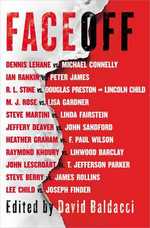
FaceOff by David Baldacci, ed.

FaceOffFaceOff

by David Baldacci

Hardcover, 384 pg.
Simon & Schuster, 2014
Read: July 15-25, 2014

When I was a kid, one of the go-to moves to increase circulation/awareness of a comic book title was to have it cross-over with another title. Or if you had two already well-selling titles, and you wanted a little spike in the selling, that’d work, too (particularly if one title was from DC and the other from Marvel). I, as I was supposed to, grabbed a lot of these. They tended to follow a pattern — Group/Individual A runs into Group/Individual B, for no explicable reason they start to fight. Eventually, they figure out they’re all heroes fighting for good and turn their collective energies to defeating the bad guys. This was fine, because it let you see who would win in a fight — Thor or Superman (answer: neither), Halo or Starfire — that kind of thing.

That’s what a lot of these stories reminded me of — classic cross-over tales, and many fit that pattern. Which was okay, but thankfully not all of them did. At the end of the day, there were 2 stories I wanted to read, a couple of others that I was somewhat interested in, and the rest — well, might as well take a look at them, as long as I had the book. I picked up a couple of new names to try — and a couple to avoid. All in all, this was a mixed bag.

    Some specific thoughts:

  • Red Eye by Michael Connelly and Dennis Lehane (Harry Bosch vs. Patrick Kenzie)
    This first story was the primary motivation for me to get my hands on this book. Two of my all-time, personal Hall of Fame characters together. The story was a bit . . . meh. The criminal was definitely in the wheelhouse for both Kenzie and Bosch, but it was a little too easy to find him — and once the two detectives decided to work together, the solution was a bit too quick and easy (yet just the kind of ending that I could see either character coming up with on their own — so together it absolutely made sense). I’m pretty sure (without taking the time to verify) that this was the shortest story in the collection, and it needed at least another 10 pages to be satisfactory. Still, I’m putting this down as a winner.
  • In the Nick of Time by Ian Rankin and Peter James (John Rebus vs. Roy Grace)
    This was so dull, so predictable, no actual detective work was done here — all of it happened “off screen” so to speak. Maybe, maybe if you liked Rebus or Grace on their own, this would appeal to you. But even then, yawn.
  • Gaslighted by R.L. Stine, Douglas Preston, and Lincoln Child (Slappy the Ventriloquist Dummy vs. Aloysius Pendergast)
    I think you’d need a lot more familiarity with these characters (particularly Pendergast) to enjoy this one — really to understand it all.
  • The Laughing Buddha by M.J. Rose and Lisa Gardner (Malachai Samuels vs. D.D. Warren)
    Okay, after two novels and now one short story, I still don’t see what D. D. Warren brings to anything. Did she do much at all here? It was an interesting enough story, and if I hadn’t spent so much time waiting for Warren to do something, I might have enjoyed it more. Then again, I’m not sure how much I can buy the whole setup for Samuels’ character.
  • Surfing the Panther by Steve Martini and Linda Fairstein (Paul Madriani vs. Alexandra Cooper)
    Neither one of these lawyer characters appeared all that terribly interesting — but the crime in question, the way it was presented, and the solution to it? That made this one worthwhile. Very clever stuff (even if, again, most of the action took place off-screen).
  • Rhymes With Prey by Jeffery Deaver and John Sandford (Lincoln Rhyme vs. Lucas Davenport)
    Early on in the story, I jotted in my notes, “What this story really needs are more unfamiliar characters whose names start with an ‘L’.” But once I got past that, it was probably the most complex and compelling story in the book and the most likely to provoke further reading — I’m interested in following up with both series. Not sure it’ll happen soon, but it’ll happen.
  • Infernal Night by Heather Graham and F. Paul Wilson (Michael Quinn vs. Repairman Jack)
    Doubt I’ll misquote the “hell hath no fury like a woman scorned” line again, because like Repairman Jack, I “just like to get things right.” After reading the introduction, I wasn’t at all interested in these characters. But the story intrigued me, and I’m pretty sure I’ll check out both series. I have one friend I really see getting into Repairman Jack. The story was creepy and cool. And slightly predictable. But still, creepy and cool.
  • Pit Stop by Raymond Khoury and Linwood Barclay (Sean Reilly vs. Glen Garber)
    Perfect start to this kind of story – – killer first sentence, and the closing sentence of the first section is almost as compelling. The ending wasn’t as good as wanted it to be, but it seemed like they needed an easy ending or another fifty pages — so easy ending, it had to be. The stuff in the middle was pretty fun. Garber’s daughter is the coolest little girl this side of space/time constraints. Garner’s daughter is the coolest little girl this side of Flavia de Luce.
  • Silent Hunt by John Lescroart and T. Jefferson Parker (Wyatt Hunt vs. Joe Trona)
    A couple of law enforcement guys on fishing vacations. Didn’t do much for me — my guess is that fans of Hunt and Trona would probably enjoy this, like I did with Bosch and Kenzie. More for the experience of seeing the two together rather than for the strength of this pretty tired tale.
  • The Devil’s Bones by Steve Berry and James Rollins (Cotton Malone vs. Gray Pierce)
    The way their target talked was the only false note in this action-packed story. And man, oh man, was it false. But the action, the interplay between Malone and Pierece, the story, everything else worked really, really well. One of the best things in this book.
  • Good and Valuable Consideration by Lee Child and Joseph Finder (Jack Reacher vs. Nick Heller)
    I’ve never read Finder before, but probably will now (of any in this book, he’ll probably be first). I loved this one, it may not be the best-written story in the collection, but it’s my favorite. Funny (very), yet true to Reacher’s almost-never funny character (and I assume also true to Heller’s). The banter and cooperation between the two was great. The way they came to a consensus without speaking about how to help the poor guy they met in the bar brought a smile to my face. It was a decent story, too, but one of those that didn’t have to be, because the character work was so fun. It was the perfect thing to close this with.

So again, your results may vary — but overall, a worthwhile read — some real highs, and some moderate lows. Good fodder for a TBR list.

—–

3 Stars

W is for Wasted by Sue Grafton

W is for Wasted (Kinsey Millhone, #23)W is for Wasted

by Sue Grafton
Series: Kinsey Millhone, #23

Hardcover, 486 pg.
A Marian Wood Book/Putnam, 2013
Read: July 25 – 26, 2014

There are two (dead) men that we focus on in this novel — the first, Pete Wolinksy, I’m pretty sure we’ve met before. He did some work for the men that Kinsey apprenticed with, and she’s run across him at least once before in the novels (but I’m not going to run off an verify that). The other deceased individual was a homeless alcoholic who died on the beach with Kinsey’s name and phone number in a pocket. With business slow, and her back account healthy — that’s enough to let her curiosity take over and find out what happened to this man, and to find out why he was carrying her name.

Along the way, Kinsey finds some relatives from her father’s side of the family — in recent years, she’d learned a good deal about her mother’s family, but hadn’t looked into her father’s. Now she has the opportunity, and while she doesn’t find as much (for now), but it’s something. This allows her to reflect a little on her current relationship with her mother’s side, too. I appreciate Kinsey’s self-awareness about how whiny she is can be (and usually is) regarding her extended family and how she really doesn’t feel that way any more except out of habit. Hopefully, in the next book or two, we see some real development and some degree of closure with her maternal grandmother, aunts and cousins. I’ve read a lot of criticism lately (particularly focused on this book) about how little character development there’s been here. This book — the 23rd — takes place 5-6 years after A is for Alibi, right? So of course, the development will be incremental — that’s how people change in such a short amount of time. It seems natural to me.

The mysteries weren’t all that compelling to me, and mostly seemed to be excuses to expose Kinsey to her family, Dietz, and to allow her to comment on the homeless problem in Santa “Theresa.” It took me a long time to get/care about the subplot told in flashbacks — once I did figure it out, I felt pretty stupid, to tell you the truth. Regardless, it wasn’t the most interesting flashback sequence Grafton’s done. It was effective enough, I guess, it just seemed to be missing something.

The new stuff aside, what about our old friends? We got a little time with Henry — Henry as meddling, advise-giving, semi-authority figure. William is his regular annoying self, and his wife, Rosie, was around just enough. There was a quick appearance from Con Dolan, and another from Cheney Phillips. Best of all, we get to hang out with Robert Dietz for a few chapters, and see a slightly different part of him. It seems very likely, and maybe even probable, that we won’t be seeing (at least) one of these characters again, based on what we saw here (and the number of books left).

The main quibble I have with this one is the dialogue — too often it’s just dreadful here. Painful to read — some of these characters read like technical manuals, or brochures for a tourism board. I’d b e willing to bet another editing pass from Grafton could’ve taken care of almost every flat, dull, or expositional line of conversation. But at this point, who’s going to make Grafton do something like that? If she catches it on her own, great — but there’s no editor in the world that’ll hold her feet to the fire.

Not her best work, there was almost no suspense at all here, and at a certain point, the whodunit became so obvious it was almost impossible to care about any more. But Grafton did enough to keep my interest and keep my fingers turning pages, and that’s enough. Kinsey’s never been the flashiest P.I. around — she’s stable, down to earth, and gets the job done. Which is pretty much what we got here.

—–

3 Stars

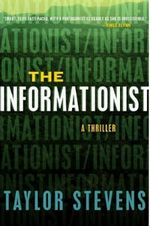
Dusted Off: The Informationist by Taylor Stevens

The Informationist (Vanessa Michael Munroe, #1)The Informationist

by Taylor Stevens

Hardcover, 307 pg.
Crown, 2011
Read: September 19 – 20, 2012

Heckuva ride. Vanessa Michael Munroe is Lisbeth Salander with a healthier mental state (not saying she’s perfectly well adjusted…she’s just better adjusted). Same intensity, same ferocity, same tenacity. A character you want to see more of.

I think the novel had a couple too many twists and turns–don’t ask me which could be cut out w/o sacrificing the whole, though. But really, if my major complaint about the novel is that the mystery is too complex, keeps you guessing too much? Is that really a knock?

—–

3 Stars

The Girl with the Windup Heart by Kady Cross

The Girl with the Windup Heart (Steampunk Chronicles, #4)The Girl with the Windup Heart

by Kady Cross

Hardcover, 400 pg.
Harlequin TEEN, 2014
Read: July 5 – 7, 2014

When my wife’s friend recommended this series to us, I didn’t even notice it was published by Harlequin Teen until I was well into the first (and best) of the series. By contrast, I don’t think there was a page in this one that didn’t scream Harlequin, Teen, or both. Still, I’d enjoyed this X-Men in Steampunk Victorian England series up til now, so I persevered. But I’d read about half of the novel before I really “got into” the story.

There were basically two storylines in this novel — the B story (oddly, the one the book is titled for) is all about the highly advanced automaton that Jack discovered in the previous novel becoming a “real life girl” — just like her favorite, Pinocchio. There were some interesting moments in this story — and if it had been given more time to breathe — maybe taking place over a few weeks, rather than a couple of days — I’d have bought it and been invested in it.

The A story was even more rushed. Further proof that you can’t keep a bad man down, The Machinist is back — again. This time, a full-fledged resident of the Aether, he kidnaps Griffin and begins to exact his revenge. Finley goes off to rescue him — with a little technical support from her friends. This is one of the bigger problems with this installment — the series is strongest when it’s dealing with all the interpersonal relationships — not just the romantic ties — seeing the characters interact with each other. There was so little of that this time, it felt like a different series. Sam didn’t get to be too Sam-ish. Both he and Emily mostly worked behind the scenes — ditto for Jasper and Wildcat (when they weren’t off helping Jack in the B story). Emily and Finley got 1 or 2 good scenes together, but that’s about it.

Anyway, Finley goes off to save Griffin and runs into a couple of blasts from the past. One of which was simply an unnecessary plot complication — and was dispatched as such. The other was probably the best part of this book. Probably its saving grace.

Initially, I was disappointed to read that this was the conclusion to the Steampunk Chronicles. But by the end, I think it’s time — and clearly Cross did, too. There’s no getting around the idea that she was wrapping things up (and rushed a few things to get to that point). Still, readers that have been with Griffin’s little crew up to this point will appreciate seeing how things end. The book may have been not terribly impressive, but the series as a whole was still a fun Steampunk-ish tale. Because of the aforementioned saving grace and the series as a whole, I’ll give this 3-stars. It should probably get 2 – 2.5.

—–

3 Stars

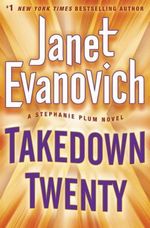
Takedown Twenty by Janet Evanovich

Takedown TwentyTakedown Twenty

by Janet Evanovich
Series: Stephanie Plum, #20


Mass Market Paperback, 313 pg.
Bantam, 2014
Read: June 24 – 25, 2014

The guy from the fire department closed his notebook, glanced at Morelli, and gave him one of those looks that said, You poor bastard, how did you ever get involved with this idiot woman?

It’s hard to disagree with the guy from the fire department isn’t it? You wonder the same about Ranger, too. What do these guys see in this gal? What do I see in her?

Stephanie Plum books frequently have just goofy, sit-com-y images/situations at their center. This book starts off with one of the goofiest and zaniest so far. Frankly, I find the zanier aspects of these annoying and off-putting, but this one worked for me. Though if Evanovich had come back to this well one or two more times, I might have felt differently.

The central mystery was okay, and could’ve been even better than that — but Evanovich didn’t handle it right. Stephanie’s helping Ranger investigate a series of murders of elderly women. She really cares about this investigation, we’re repeatedly told by Stephanie. But if she didn’t tell us that a few times, there’d be no reason to believe that, she certainly doesn’t act like she cares — at least not enough to have a sense of urgency about it. She spends maybe 30 minutes a day on the investigation, and then goes home, goes to her parents’, or pigs out with Lula. And yeah, that’s her usual M.O. — but that’s just when she’s chasing down a pretty non-dangerous character.

Why does Stephanie ever bring Lula along to help with anything. She almost always turns things into a debacle and then goes shopping/to a drive thru/both. She so rarely contributes anything positive that you could use the phrase “never contributes” and only be guilty of slight exaggeration. If I hadn’t mentally cast Retta as Lula so I hear everything in her voice, I don’t think I could stand her any more.

This is an okay enough entry in a series that’s become okay enough. I was entertained just enough to make it worth my while and come back for the next one (probably). But nothing more. I know Evanovich is capable of better, but at this point, she has little motivation to do better. She can turn in “good enough” and it’ll become a best seller, why put in the extra effort? But apparently, I’ll keep giving her chances to turn things around.

—–

3 Stars

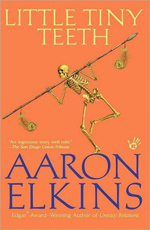
Little Tiny Teeth by Aaron Elkins

Little Tiny Teeth (Gideon Oliver, #14)Little Tiny Teeth

by Aaron Elkins

Hardcover, 304 pg.
Berkley Hardcover, 2007
Read: June 25 – 26, 2014

Any further thoughts were interrupted by an excited clamor from the crew members on their break down below at the riverfront. They were jabbering in pidgin Spanish, pointing down into the water, and calling, apparently to Gideon. He was able to understand a few words: “Oiga, esqueletero! Aqui le tengo unos huesos!” Hey, skeleton man, I have some bones for you!
He jumped up. “They’ve found some bones.”
More bones?” John said, getting up too. “What is it about you, Doc? Do you bring this on yourself?”

It’s a question that all of us who’ve read a few of these books have asked from time to time. Not that we really care — the important thing is that the bones are found, that Gideon Oliver gets to do his thing, and we get to watch him in wonder with John Lau (or whoever is handy).

Which makes Little Tiny Teeth a little strange.

I try to stay away from spoilers here, but I have to get a touch spoiler-y here, but it’s nothing major, nothing that should impact someone’s appreciation of the book.

I’ve been reading these books for a long time — can’t tell you for sure how long, but the year started with the numbers one, eight and nine — and I’m reasonably certain that it’s never taken this long for a body to show up. It was just shy of page 190 when we had our first homicide. Another thirty pages until we got our first bone for the Skeleton Detective to do anything with. I’m not complaining, it’s good to see someone like Elkins experiment with his formula. But man, it was strange reading — I kept wondering, where’s the body? Where are all the bones? But, as always — they came.

But before that, we meet a handful of very interesting characters, all of whom have a good start on a motive for killing someone. We’ve got the frustrated doctoral candidate who can’t get the last signature on his dissertation; the professor who’s watching her career disappear; the father of the girl who had to fend off advances from her professor; the ghost writer who was denied credit; the man pressured into smuggling drugs; and — well, there are others.

Take these people, put them on a boat down the Amazon River with Gideon Oliver and John Lau? You know you’re going to get at least one body. Elkins didn’t disappoint — a nice puzzle, some interesting characters, a lot of interesting facts about a part of the world that’s teeming with them. Which makes for a pleasant, if not outstanding read.

It would’ve been nice if we’d had a sentence or two tying up the storylines of the four supporting characters that were pretty much abandoned. Nothing much, just something like “It looks like things will end up working out for ____” or “____’s immediate future looks a little brighter without . . . ” Things felt a little rushed at the end, I guess is what I’m trying to say.

Still, a nice, relaxing time with Gideon and John (even if they weren’t that relaxed). Which is all I ask Elkins to provide. Good enough.

—–

3 Stars

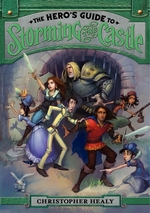
The Hero’s Guide to Storming the Castle by Christopher Healy

The Hero's Guide to Storming the Castle (The League of Princes, #2)The Hero’s Guide to Storming the Castle

by Christopher Healy

Hardcover, 477 pg.
Walden Pond Press, 2013
Read: Jun 17 – 20, 2014

This is not as good as The Hero’s Guide to Saving Your Kingdom, let me get that out of the way. But it’s hard to stay fresh with this time of humor. Still, it wasn’t stale, it was still a fun — sometimes very fun — adventure and a good story for the young — or those that can act young while reading a good book.

After their last adventure, the heroes find out that even in Fairy Tale Kingdoms, you only get 15 minutes of fame. No longer hailed as greats, their loser status has been restored and their lives are pretty much what they were before they banded together. So they all jump at the chance for further excitement, even if it comes in less-than-favorable ways. This time, the band is off to steal

We get all the characters from the first book back (at least the ones that anyone would notice), plus a few new faces — most of which I want to see again. In particuar, the character of Smimf the messenger was a great addition to the cast — he’s the proper mix of ridiculous and impossible. I could’ve used a little more of him — but not too much, I think he’s one of those characters that would grow old pretty quick.

I really enjoy Healy’s way of looking at the world and describing things, I know I posted some quotations last time, so I’ll limit myself to just one taste from this book where he explains the origin of the very nasty Warlord of Dar:

Some peole say Rundark was born out of a mad alchemist’s attempt to distill the essence of pure evil. Others claim he emerged fully grown form an erupting volcano. Although it’s also possible that he was the son of a used-cart salesman from Nebbish Village — they didn’t keep very good records in Dar.

I don’t care what age level you’re writing for, give me paragraphs like that, and I’ll read.

The last thing anyone should think about while reading this is Game of Thrones, but I couldn’t help myself. Someone needs to make a movie of this series, and they cast have to those of Maisie Williams and Rory McCann as Lila and Ruffian (quickly, before Williams grows up even more). If you watch the HBO series, I don’t know how you can read this without seeing the two of them with your mind’s eye as you read this.

I did chuckle at the tip of the cap The Princess Bride — so few in the target audience are going to get it, but for us Moms and Dads out there, it was a nice touch.

Last, but not least: Kudos to illustrator Todd Harris — his drawings are full of life and mirth. They’re the perfect accompaniment for the writing.

A lot of fun, almost as fun as the first book in the series, and well worth your time. I note there’s a third book in this series, and I really look forward to it.

—–

3 Stars

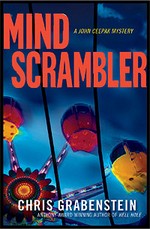
Mind Scrambler by Chris Grabenstein

sorry it’s been quiet here this week — sometimes that job thing requires more of me than usual, so reading (gasp!) and writing have to take a back seat.

Mind Scrambler (John Ceepak Mystery, #5)Mind Scrambler

by Chris Grabenstein

Hardcover, 352 pg.
Minotaur Books, 2009
Read: June 14, 2014

So, Ceepak and Danny find themselves in Atlantic City. Not for fun, of course, Ceepak wouldn’t go to a place like Atlantic City for vacation. They’re in town to help out a District Attorney in another state (spoiler territory for the previous book) by taking a deposition. Sure, they pass through a casino — where else can they stay in town? Before they can do anything, Danny runs into an old flame, Katie — who we last saw recuperating from an attempted murder — and Ceepak and Danny have stopped some slot machine players from being robbed. Katie’s dropped out of grad school and is working as a tutor/nanny for a couple of children whose parents make up a pretty popular (and family-friendly) magic act. Something’s bothering her, and she’d like to consult with Danny about something she’s found later that evening.

But, naturally, before the two of them can meet, Katie’s killed. I should say, that’s not a spoiler, Danny tells us this will happen on page 1 — and roughly 35 more times before it actually happens (well, okay, maybe only six times, I wasn’t counting). The tease at the end of the first chapter about her upcoming demise would’ve been far more effective if the chapter hadn’t started with a different one. Or having it repeated several times in the next few chapters. It’s a minor thing, but it began to lose its effect on me, and the tease at the end of chapter 1 was the most effective, and would’ve been moreso if that was the only one, I think.

Thanks to Ceepak’s connections, the two are allowed to assist in the investigation, and the two throw themselves into the investigation with a vengeance. I’m pretty sure this case is resolved far faster than is usual for the duo — Danny’s driven by guilt and by grief (he’d known Katie since childhood), Ceepak’s driven by whatever normally drives him, and wanting to help Danny (and probably to get home without incurring more charges to be billed to the DA).

Two things that kept me from enjoying this one as much as the others. The setting: on the one hand, I don’t think Grabenstein took full advantage of Atlantic City, but that’s partially due to the pace. But this is the second book in a row where Sea Haven hasn’t played too much of a factor, and it works against the series. Then again — good for the Sea Haven Tourism Board that the city has had a reprieve in murders.

Worse than that was how dense both Ceepak and Danny seemed to be this time — I spent a lot more time talking back to this book, not something I normally find myself doing with these two. The book starts with our victim wanting to talk to her old friend who’s a cop about something she found. So naturally, that’s where the investigation should’ve started — what did she want to talk about? But no, Danny really only thinks about it after they stumble onto it while pursuing another line of investigation. Our heroes also spend too much time following red herrings rather than seeing them for what they are. I expect more from these two.

At the end of the day, not my favorite in this series. But it was good enough to justify the time — Grabenstein’s style was as pleasant and engaging as always. The rapport between these characters was as good as ever, and I enjoyed seeing the person responsible for what happened to Katie get what they deserved, I liked her. Most of all though, the seed that got planted for upcoming books was tantalizing enough to keep me from spending too much time dwelling on what didn’t really work here.

—–

3 Stars

Page 47 of 55

Powered by WordPress & Theme by Anders Norén