Tag: 4 1/2 Stars Page 24 of 30

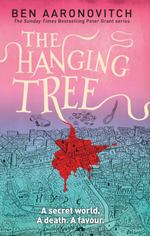
Pub Day Repost: The Hanging Tree by Ben Aaronovitch

I really hadn’t intended to make this a Rivers of London day, but I had notes and partial drafts for those other two, so I figured I might as well as a way to lead up to this. Which, sadly, is going up later than I wanted, but Dadding before blogging, right?

The Hanging TreeThe Hanging Tree

by Ben Aaronovitch
Series: The Rivers of London, #6

eARC, 336 pg.
DAW, 207

Read: November 11 – 15, 2016

I lost track of how many times a certain retailer let me know that my pre-order for this had been rescheduled, but now a little more than 2 years after The Rivers of London most recently flowed through these books, The Hanging Tree is out (in parts of the world, anyway). I’m firmly in the camp of those willing to let authors take their time to get the book right, but I’m just as firmly in the camp wanting authors of my favorite series to hurry up. Thankfully, whatever delayed this publication gave Aaronovitch the time he needed to deliver his best yet.

Peter’s pushed into investigating a drug-related death, which soon shows itself to actually need a man of his particular skills when one of the parties involved (perhaps very involved) is the daughter of Lady Tyburn herself. Mostly anonymous teens up to illegal things, an overbearing mother to a suspect/witness, and the natural teenage disinclination to telling the police anything and you’ve got yourself a mess — particularly when the overbearing mother isn’t your biggest fan, and is a deity of sorts.

Poor Peter.

Along the way, Peter and Nightingale find the trail of a lost Newton masterpiece, a couple of interesting allies, and the return of some familiar, but not recently seen, foes. Some of what happens with returning adversaries will surprise, please, and frustrate long-time readers.

For series like this, more important than the plot are the characters — and Aaronovitch did everything right on this front. A few notes on this Peter’s more confident — professionally and personally. He’s coming along pretty well with his magic — yay! At the same time, you can see the way that he’s bringing change to the Folly little mannerisms and activities with Nightingale and Molly that you know they weren’t going to be up to until Peter moved in. I liked how Bev was used — even if she wasn’t around as much as usual — and the way their relationship is developing; her sister Lady Tyburn is probably used better here than ever before. There’s a new assistant for Dr. Walid, Dr. Jennifer Vaughan — we don’t get a lot of her, but there’s promise (and I like the fact that this universe is expanding). Lastly, I need to talk about Guleed — I know she’s been around awhile, but I didn’t really click with her until this book (as much as I enjoyed her in Body Work) — I like the way she works with Peter, the flavor she brings to things — I hope we see a lot more of her.

Oh yeah, I almost forgot, there’s a brief appearance by an author of note early on in the book — I’d love for him to show up again in some context where Peter doesn’t have to be so diplomatic with him. I chuckled a lot, and would love to hear Aaronovitch talk about this character and any real-life models he drew upon.

Not only do we get the typical Aaronovich-level stories and action, we get a big expansion in the number, types, and nationalities of magic users in this book. Not only are there the official practitioners of magic that The Folly is aware of, there are those they’re not tracking (but probably should start). Just this shift alone in the universe makes this book a winner — adding it to the rest is just frosting.

I’m really glad, incidentally, that I recently listened to the first audiobook in the series — there’s some significant call-backs to it throughout this book. I’d probably have been okay relying on memory, but the connections worked better for me with everything fresh in my head. Ditto for the number of references to Body Work – I’d have been fine not understanding the references made to it, they’re not integral to anything, but it was fun knowing what Peter was talking about.

This took me too long to read — which isn’t Aaronovitch’s fault, it’s just been one of those weeks, every time I started to really get into this book, I was interrupted by something — and it drove me crazy. Do what you can — kill the phone, lock the door, grab some snacks and a beverage of your choice and settle in for Aaronovich’s best yet, you won’t want to put it down. I can’t say enough good things about this.

Disclaimer: I received this eARC from DAW via NetGalley in exchange for this post — thanks to both for this.

—–

4 1/2 Stars

Martians Abroad by Carrie Vaughn

Welcome to Part II of the Book Tour for Martians Abroad by Carrie Vaughn — if you missed the first part, go check it out and enter the giveaway for a free copy.

Martians AbroadMartians Abroad

by Carrie Vaughn

eARC, 288 pg.
Tor Books, 2017

Read: January 11 – 12, 2016


There are so many things that I want to say about this book, I don’t know if I’ll be able to get to them all — seriously, I have a checklist that’s daunting — but let’s give it a shot.

I remember while growing up back in the 20th century that SF was fun. Maybe fun isn’t the right word, but stick with me — sure, the stories were serious, there were real stakes (usually), not every ending was happy, and so on — but there was an overall sense that the future would be okay, that space travel and aliens (at least the ones not trying to kill us/take over the world) were positives, and that there as something in humanity that made it all worthwhile. But more and more that went away, and the future became (when not downright dystopian) a grim place with people struggling to survive. By and large, who wants to live in the future depicted in SF now? Sure, there are exceptions, but most of those are in the Douglas Adams’ tradition (Scalzi and Clines would be good exceptions to this) — “light” or humorous SF. I’m not saying that I want an end to those stories, or that I don’t enjoy the darker SF. But I wouldn’t mind more SF that makes me feel okay about the future, rather than wanting to return to the carefree days of the end of the Hoover administration instead of getting to 2040 and beyond.

Enter Carrie Vaughn and Martians Abroad — an update of Heinlein’s Podkayne of Mars (not unlike Scalzi’s take on Little Fuzzy in Fuzzy Nation). Now, I’ve not read Podkayne, but I assume that it could use a little update and some tweaking. Not necessarily to improve it, but to make it “fit” the readers of today. Like a good cover song, such an update can revitalize an older work, showing different aspects of it, without having to replace it (see Parton and Houston’s “I Will Always Love You”). Since I didn’t read the original, I have no real idea how much of the plot of this book came from Heinlein and how much is straight from Vaughn herself — and I really don’t care outside of some vague curiosity. What I do know, is that Vaughn took some classic ideas and did something that only she could do with them. She gives us a vision of the future that’s not perfect, but seems like an okay place to be. This doesn’t make it better (or worse) than other SF works — just a refreshing change of pace.

From Lowood Institution to Trinity High School to Welton Academy to Hogwarts (and many others), there’s something about boarding school stories that just works. You get a little bit of a fish out of water story, usually an oppressive administration, some unofficial traditions shaping actions (frequently at least brushing up on bullying), and a heckuva story ensues. Sure, as a kid (and even now) I always wondered why anyone would attend/send their kids to one, but apparently it’s a thing. Add the Galileo Academy to the list — it’s a school for the children of Earth’s elites, as well as those of a few select space stations and colonies. Charles and Polly Newton are the first students from Mars to matriculate there — by “from Mars” I mean that they’re from the human colony on Mars, not some sort of fully alien life.

But really, in so many ways, they might as well be wholly alien — ditto for the students form various space stations or the Moon, etc. Due to differences in gravity, having to breathe pumped-in air, etc., their muscle structure bone density — and even digestive systems — have adapted to their environments to the extent that it’s easy to tell an offworlder by sight. How serious are these changes? Let’s put it this way — the non-Earth born kids can’t eat bacon. I know, I said this wasn’t a grim or dystopian view of the future, but that one fact makes me rethink that whole idea.

Now, the last thing Polly wants to do is come to Earth — she has a plan for her future, and this isn’t anywhere near it. It fits right in with her mother’s plans (Polly just doesn’t know how), Charles convinces his sister to go along with his mother’s plan without much fuss — it’s not like they could stop things, anyway. The trip from Mars to Earth isn’t as bad as she expects and she begins to have a little bit of hope – only to have that crushed as soon as she starts to meet students and administrators from the Academy. Basically offworlders are seen as lower-class/working-class, not as sophisticated or healthy as those born and raised on Earth. Polly, Charles and the other offworlders find themselves grouping together, and the target of harassment of varying degrees of seriousness and intensity from the rest. It’s tough to tell how much of this is in their minds and how much this is real — at times it feels like Polly’s exaggerating how bad things are, but typically, her perceptions are substantiated.

Before long, some accidents or other dangerous situations start occurring that put Polly and her classmates in jeopardy –and it’s not long before the students begin to wonder if there’s something other than chance at work here. While Polly seeks to integrate herself better into her new community — and she makes some pretty good strides at it (and some stumbles) — she, Charles and her friends try to figure out just who is targeting their class and why.

Polly is a great character — strong-willed, fallible, smart, impulsive, brave, socially awkward — very real. Incidentally, you may have noticed that we share a last name — I’m claiming Polly Newton as my great-great-ellipses-great-granddaughter right now, and welcome her to the family. The rest of her classmates are just as well-drawn. I could’ve used a little more on the adult front — the teachers and administrators are largely absent, and are vaguely drawn. I do think that’s a function of Vaughn’s focus being on the students, not necessarily a flaw with the book — I just would’ve liked a bit more of adult presence.

There is some real honest humor here — some of it comes from the situations, some of it is from Polly’s snark. But better than her attitude is the sheer awe she feels at Earth — the colors, the life, the non-greenhouse plants, the sky, the air. Her initial impressions of Earth were great — and they only got better from there — each time she left the confines of school, she discovered something new about this planet and the way it was described was better than the last. Polly’s a human, but from her perspective she’s an alien to this planet, she’s seeing it with fresh eyes.

There are some villains (of a sort), some real opponents to be faced, but really, there’s no one evil. There’s some misguided people, some . . . unthinking/wrong-thinking characters. But there’s no Voldemort figure, no true evil. Just conflicting agendas, different priorities, unrepentant snobbery — it feels real. Again, a refreshing change of pace.

Yes, this book is about teenagers, but it’s not a YA book. It is, like the SF I talked about at the beginning, YA-friendly, though. A book that I can recommend to friends as well as my kids and their friends — and, of course, you, whoever you are. The book was exciting, entertaining, filled with real situations in an appealing future. Vaughn’s to be thanked for such a pleasant change of pace, a breath of fresh air — and I hope we get to revisit this world (but if we don’t, that’s okay, this is a complete story as is).

Disclaimer: I received this eARC from Tor Books via NetGalley in exchange for this post — thanks to both for this. Also, thanks to Tor for the opportunity to take part in the Book Tour.

—–

4 1/2 Stars

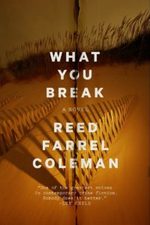
What You Break by Reed Farrel Coleman

This is one of those I spent a couple of days futzing around with — not sure I made it better (or worse) by doing so — I re-arranged a lot, that’s the best I can say. Both Murphy novels are tough to talk about in the abstract, which I think is a pretty good thing. There’s not a lot of fat on them — just good lean prose.

What You BreakWhat You Break

by Reed Farrel Coleman
Series: Gus Murphy, #2

eARC, 368 pg.
G.P. Putnam’s Sons, 2017

Read: December 1 – 5, 2016


Why? It’s three letters that permeate this novel. We’re all familiar with the need for an answer to that question. From the time that a toddler starts ever so persistently asking that question until the end, we keep wondering, “why?” Few need the answer as much as someone who has to deal with the unexpected death of a younger family member. In Where It Hurts, we saw just what the lack of an answer did to Gus Murphy and his life. So when a grandfather comes to Gus for help finding out why his granddaughter was brutally murdered, there’s no way that he can turn his back on the request. Especially given the inducements being offered.

He wasn’t recruited to solve the murder — the police have a man awaiting sentencing for the crime. But he won’t tell anyone anything about the crime or his relationship (or lack thereof) to the victim. The grandfather, Micah Spears, rubs Gus wrong from the get-go — if it weren’t for Father Bill’s endorsement, and his understanding of Spears’ deep need to know, Gus would’ve walked. It probably would’ve been better for him if he had. Almost no one — especially her family, the police (many of whom are still angry for what Gus turned up in the last book) — wants him to pursue this. The more Gus learns about Linh Trang (she preferred “LT”), the more he becomes convinced that there’s no reason for the killer to want her dead, which just makes the “Why?” even more pressing.

Before he can really start to work for Spears, Gus has a few other why’s to answer — why did his friend/co-worker, Slava, just drive off with the mysterious new guest at the hotel? Why did a Russian gangster get assassinated before Gus’ eyes shortly after Slava and the guest talk to him? Why is there a very formidable Russian running around Long Island looking for Slava? The focus of the novel is on the Spears case, but this storyline casts a shadow over everything. I didn’t really spend too much time in Where It Hurts worried about what would happen to anyone, and the Spears case is more of a puzzle than anything — but there’s peril to this Russian story, and the reader will become convinced that whatever happens in it, will have a large impact on Gus (and not just because of Slava’s involvement).

Gus has grown a bit, made some steps toward health since we last saw him, but he has a lot of work to do. Things with his ex- are about where they were previously, but with less anger (mutually), his romance is progressing with Maggie, and so on. Basically, Gus is becoming someone different from just the ex-cop with a dead son. That sill the core of his being, but there’s something more to it than that — maybe even some room for happiness. It’s hard to discuss briefly, but simply: Gus was better off by the end of Where it Hurts than he was at the beginning, and at the start of this novel, he was better off yet. As for the ending of this book? Well, read it and decide for yourself.

This book deals with some pretty potent things — as Coleman did when we met Gus — there’s love, friendship, loss, grief, confusion and resentment, to name a few of the ingredients in the emotional cauldron everything in the novel is steeping in. Not just from Gus, Slava and Spears — but everyone in the book is dealing with things that no one should have to, but most of us do. I’d like (but cannot expect) to circle back around and see how LT’s friends are doing in a couple of years, ditto for her sister and ex-step-grandmother. I’d like a lot more time with a judge that Gus interviews, as well as Gus’ lawyer. I expect the latter, at least, will be granted to me.

Spears and Gus do get some answers as to why LT was killed — but, as is so often the case, really those answers don’t satisfy much and lead to further questions. No tidy bows here for anything — which isn’t to say the concluding scenes of the novel won’t satisfy the reader, just that there’s no pat endings or rides off into the sunset. Just survivors (not saying how many of them there’ll be) moving on. The Epilogue will stay with you. That’s really all I can say.

This book put me through the wringer — not as much as Gus and Slava were, but still — Coleman has really topped himself from Where it Hurts, we know these people better now, so he can push them further. I lost sleep with this one, which isn’t that unusual, but I lost more sleep staying up to get through this than I have in a long time. There’s a darkness, an emptiness throughout that wasn’t there in our first encounter with Gus — or if it was, it’s changed in source and intensity. I’m not sure many readers will like where Gus is by the time we get to book 3 or 4 (including me) — but I’ll understand it. Coleman’s making sure his writing and characterization is honest, as real as fiction can get.

Once again, he delivers a crime novel that could be mistaken for a non-genre novel (as if such a thing exists), suitable for thoughtful crime readers or those who don’t mind crime to show up in a novel about a parent redefining himself after the death of a child.

Disclaimer: I received this eARC from G.P. Putnam’s Sons via NetGalley in exchange for this post — thanks to both for this. It didn’t change my opinions on the book, I was simply able to form them a couple of months early.

—–

4 1/2 Stars

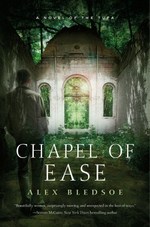
Chapel of Ease by Alex Bledsoe

Chapel of EaseChapel of Ease

by Alex Bledsoe
Series: Tufa, #4

Hardcover, 315 pg.
Tor Books, 2016

Read: November 19, 2016

“Sometimes the best mysteries are never solved, because the mystery is too important to lose. This is the story about one of those mysteries. Most of it’s true, and the parts that ain’t, well, they still sound true.”

It’s time to return to Needsville, TN, the home of the Tufa for the latest installment in one of the best ongoing Fantasy around. One of the best things about this series is how every book is completely different from its predecessors, but they all clearly belong to the same series.

After a quick tease, we enter the story in New York City where an up-and-coming musical writer/composer and a well-established director are casting for an off-Broadway musical (the opening line of which was quoted above). There’s something about the story and songs penned by Ray Parrish that draws everyone who reads and/or hears them in as surely as moths to a flame. One such person was Matt Johanssen, who becomes friends with Ray as well as one of the more dedicated cast members.

The twist in this tale comes from the source of Ray’s material — old (and not-so-old) Tufa stories and music. As anyone who knows these people realizes, people back home are not going to look kindly on this. There are a couple of people on the fringes of Ray’s world that make it clear that the Tufa want something out of Ray — ideally, a cessation of any musical or play or anything ending up in public. Ray will not be dissuaded, this is the story he wants to tell — whether people in Needsville want him to or not.

Just before the much-talked about play opens, Ray dies in his sleep and it falls upon Matt to bring his ashes home to his family. While there, he has the opportunity to look into the places and people this play is based on — and maybe get an idea what the central mystery of the play is about. Ray’d played his cards close to the chest on this topic and without him around to tell the cast, someone has to do some first-hand research. So, while mourning his friend and getting to know his family, Matt finds himself on the verge of instigating a feud while doing his research.

Now, it’s not unusual for a Tufa novel to feature an outsider’s first encounter with the Tufa. But this time, the book is just about that — there’s so little action outside of this story that it really doesn’t merit attention (at least not now). In these pages we have a first person narrator as the person encountering the culture. This gives everything an immediacy, an intimacy that we don’t normally get to these. Also, the narrow concentration keeps the reader focused on what’s going on with the Parrishes and Matt, without worrying about the Tufa politics, shifting power, and so on (it’s there, and there are changes in town, but that’s not what the novel is about).

In many ways, it’s not a novel about the Tufa — it just happens that they’re around, it’s a novel about Matt and Ray. But once you throw the Tufa in, you end up with something that’s not your typical story about a dancer/actor from NYC returning his friends’ ashes to the Appalachian town he grew up in.

I thought Matt was great — as was his dawning realization that he wasn’t in the world he knew anymore, and how he reacted to that realization. The way he stepped into parts of the culture he was exposed to was well handled, second only to the way he went about fighting against or struggling with the rest.

You do get to see your favorite recurring characters and they make references to events in the other novels, so readers of the series do get to check in on things other than the Parrishes — please don’t misunderstand. The novel’s focus isn’t on that, however.

If you even glance at the cover blurb, you know that someone has to die so that there’s an urn for Matt to bring to Cloud County, but Ray’s inevitable death was a doozy — and the memorial service held for him was one of the more moving things I’ve read this year (the impromptu memorial in New York held by friends/cast, that is — the wake the Tufa held was a different kind of experience). Making you care about a guy you know is going to die before you open the book and meet him that much takes a special kind of writer — and that’s what Alex Bledsoe is. Naturally, that doesn’t just apply to Ray; it works for Matt, the Parrishes, C. C. and several others who actually survive the book (and one that doesn’t).

I feel like I’m in danger of becoming the Chris Farley talk show host character here, “Remember that part in the book where Matt does ____? That was cool.” I really don’t know what to say about this book — or the others in the series — that I haven’t before. It’s a great setting, with a culture and people you want to see again and again, for both understanding and entertainment. Plus the overwhelming desire to actually hear the music they keep talking about. This is Bledsoe at the top of his game, you should be sure not to miss it.

And, like the play itself — it all sounds true.

—–

4 1/2 Stars

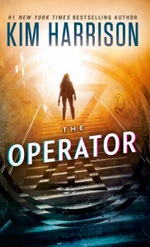
Pub Day Repost: The Operator by Kim Harrison

The OperatorThe Operator

by Kim Harrison
Series: The Peri Reed Chronicles, #2
ARC, 468 pg.
Pocket Book, 2016
Read: October 17 – 20, 2016

I loved Peri Reed’s debut in The Drafter last year — it was one of my 10 favorites of 2015, so to say I was eager to read this is somewhat of an understatement. Sure, I was a little apprehensive, too — could Harrison pull it off again? Thankfully, yes she could. You may be able to jump in to the series with this point, but I really wouldn’t recommend it at all. Go read The Drafter.

The Operator picks up with Peri in a much better place (mentally, at least) than we left her in — she’s living out of the business, she runs a coffee shop that’s marketed towards the elite of Detroit — the moneyed, those wanting the most secure networks while sipping their morning caffeine fix, and those willing to spend an exorbitant amount on coffee.

She’s working really hard to convince herself that this is the life she wants when her past catches up with her. And before she knows it, she’s got the remnants of Opti trying to bring her back in — and the government’s version of a “clean” Opti doing their best to recruit her (and honestly, they’re taking more of a “stick” approach than a “carrot” approach).

Faces from her past — those she trusts, but not enough; those she trusts, but doesn’t want to; and those she’ll never trust — compete (on both sides) with people she doesn’t know and doesn’t trust. And, as always, Peri doesn’t even know if she can trust herself — but she’s very clear on what she wants: out. Out of the life, out of the spy business, out of everything that defines her. To get there, she’s going to have to rely on everything that she’s trying to get away from, but that’s a price she’s willing to pay. It may be Quixotic, but it’s all she’s got (other than her cat).

It is difficult to talk about the plot without giving too much away, so that’s as specific as I can get.

If there was a problem with The Drafter was that it was sometimes as confusing for the reader as it was for Peri to know what was going on (I’m not saying, it was poorly written — but as things were filtered through Peri’s perception, which were pretty in flux . . .). In The Operator, we don’t have that problem — Peri’s sometimes not sure what she’s doing, or that she’s doing it for the reasons she thinks that she is — but she’s very clear about what’s going on. Actually, sometimes, I think she’s the only one who sees the whole board and understands what’s going on. Which makes everything much easier for the reader to follow.

She had a clear objective, clear obstacles to overcome, and the gumption and skills to get the jobs done. The only question is: can she accomplish all she’s set out to accomplish before she’s killed or has her mind wiped?

Characters — again, this is tough. I’d like to say X at first seemed like a good antagonist — if not enemy — but then Y happens and X does Z and reveals that they can be a trusted ally and possible friend. But if I’m going to do that, I might as well reveal half the plot. There are some great new character, I’ll say instead, and every one that Peri ends the book trusting/befriending, I’d like to spend a lot more time with. A couple of decent new enemies/antagonists — I think we get enough of them. The people who survived The Drafter and made it to these pages, we learn more about them and pretty much cement our appraisals of from last time out. As always, Harrison gets almost every character note right, I think I’d have an easier time noting where she fumbles on that front.

If for whatever (very wrong) reason you ignore the story, this book is worth reading just for on a tiny little details that Harrison has filled this with to make a slightly futuristic future in this world. You can recognize it as our world, but it’s future-enough to be a totally new world so you don’t recognize everything. I’m not sure those sentences make sense, but you probably get my gist. I could do a post just on the future tech, culture, economics, etc. I’m not going to do that — just not enough time on my hands — but I could, because the world Harrison has surrounded Peri with is just that developed and detailed. And almost none of the details like that have any bearing on the plot beyond grounding the characters. I love that.

This may not be as well executed as its predecessor, but Harrison spent so much of The Drafter setting up the world while telling the story — where this time, she just gets to play in the world and tell the story. I think I enjoyed this one more, while I didn’t admire it as much. I have a few ideas what Peri and the rest will be up to in The Agent, but I’m more than prepared for Harrison to do something better than those. All I know for sure is that it’s too long before it’s released. The Operator is a slick, sleek, SF adventure novel that’s sure to satisfy on several levels.

Disclaimer: I received an ARC of this book from Pocket Books, and I thank them very much.

—–

4 1/2 Stars

The Hanging Tree by Ben Aaronovitch

I really hadn’t intended to make this a Rivers of London day, but I had notes and partial drafts for those other two, so I figured I might as well as a way to lead up to this. Which, sadly, is going up later than I wanted, but Dadding before blogging, right?

The Hanging TreeThe Hanging Tree

by Ben Aaronovitch
Series: The Rivers of London, #6

eARC, 336 pg.
DAW, 207

Read: November 11 – 15, 2016

I lost track of how many times a certain retailer let me know that my pre-order for this had been rescheduled, but now a little more than 2 years after The Rivers of London most recently flowed through these books, The Hanging Tree is out (in parts of the world, anyway). I’m firmly in the camp of those willing to let authors take their time to get the book right, but I’m just as firmly in the camp wanting authors of my favorite series to hurry up. Thankfully, whatever delayed this publication gave Aaronovitch the time he needed to deliver his best yet.

Peter’s pushed into investigating a drug-related death, which soon shows itself to actually need a man of his particular skills when one of the parties involved (perhaps very involved) is the daughter of Lady Tyburn herself. Mostly anonymous teens up to illegal things, an overbearing mother to a suspect/witness, and the natural teenage disinclination to telling the police anything and you’ve got yourself a mess — particularly when the overbearing mother isn’t your biggest fan, and is a deity of sorts.

Poor Peter.

Along the way, Peter and Nightingale find the trail of a lost Newton masterpiece, a couple of interesting allies, and the return of some familiar, but not recently seen, foes. Some of what happens with returning adversaries will surprise, please, and frustrate long-time readers.

For series like this, more important than the plot are the characters — and Aaronovitch did everything right on this front. A few notes on this Peter’s more confident — professionally and personally. He’s coming along pretty well with his magic — yay! At the same time, you can see the way that he’s bringing change to the Folly little mannerisms and activities with Nightingale and Molly that you know they weren’t going to be up to until Peter moved in. I liked how Bev was used — even if she wasn’t around as much as usual — and the way their relationship is developing; her sister Lady Tyburn is probably used better here than ever before. There’s a new assistant for Dr. Walid, Dr. Jennifer Vaughan — we don’t get a lot of her, but there’s promise (and I like the fact that this universe is expanding). Lastly, I need to talk about Guleed — I know she’s been around awhile, but I didn’t really click with her until this book (as much as I enjoyed her in Body Work) — I like the way she works with Peter, the flavor she brings to things — I hope we see a lot more of her.

Oh yeah, I almost forgot, there’s a brief appearance by an author of note early on in the book — I’d love for him to show up again in some context where Peter doesn’t have to be so diplomatic with him. I chuckled a lot, and would love to hear Aaronovitch talk about this character and any real-life models he drew upon.

Not only do we get the typical Aaronovich-level stories and action, we get a big expansion in the number, types, and nationalities of magic users in this book. Not only are there the official practitioners of magic that The Folly is aware of, there are those they’re not tracking (but probably should start). Just this shift alone in the universe makes this book a winner — adding it to the rest is just frosting.

I’m really glad, incidentally, that I recently listened to the first audiobook in the series — there’s some significant call-backs to it throughout this book. I’d probably have been okay relying on memory, but the connections worked better for me with everything fresh in my head. Ditto for the number of references to Body Work – I’d have been fine not understanding the references made to it, they’re not integral to anything, but it was fun knowing what Peter was talking about.

This took me too long to read — which isn’t Aaronovitch’s fault, it’s just been one of those weeks, every time I started to really get into this book, I was interrupted by something — and it drove me crazy. Do what you can — kill the phone, lock the door, grab some snacks and a beverage of your choice and settle in for Aaronovich’s best yet, you won’t want to put it down. I can’t say enough good things about this.

Disclaimer: I received this eARC from DAW via NetGalley in exchange for this post — thanks to both for this.

—–

4 1/2 Stars

The Operator by Kim Harrison

The OperatorThe Operator

by Kim Harrison
Series: The Peri Reed Chronicles, #2

ARC, 468 pg.
Pocket Book, 2016

Read: October 17 – 20, 2016


I loved Peri Reed’s debut in The Drafter last year — it was one of my 10 favorites of 2015, so to say I was eager to read this is somewhat of an understatement. Sure, I was a little apprehensive, too — could Harrison pull it off again? Thankfully, yes she could. You may be able to jump in to the series with this point, but I really wouldn’t recommend it at all. Go read The Drafter.

The Operator picks up with Peri in a much better place (mentally, at least) than we left her in — she’s living out of the business, she runs a coffee shop that’s marketed towards the elite of Detroit — the moneyed, those wanting the most secure networks while sipping their morning caffeine fix, and those willing to spend an exorbitant amount on coffee.

She’s working really hard to convince herself that this is the life she wants when her past catches up with her. And before she knows it, she’s got the remnants of Opti trying to bring her back in — and the government’s version of a “clean” Opti doing their best to recruit her (and honestly, they’re taking more of a “stick” approach than a “carrot” approach).

Faces from her past — those she trusts, but not enough; those she trusts, but doesn’t want to; and those she’ll never trust — compete (on both sides) with people she doesn’t know and doesn’t trust. And, as always, Peri doesn’t even know if she can trust herself — but she’s very clear on what she wants: out. Out of the life, out of the spy business, out of everything that defines her. To get there, she’s going to have to rely on everything that she’s trying to get away from, but that’s a price she’s willing to pay. It may be Quixotic, but it’s all she’s got (other than her cat).

It is difficult to talk about the plot without giving too much away, so that’s as specific as I can get.

If there was a problem with The Drafter was that it was sometimes as confusing for the reader as it was for Peri to know what was going on (I’m not saying, it was poorly written — but as things were filtered through Peri’s perception, which were pretty in flux . . .). In The Operator, we don’t have that problem — Peri’s sometimes not sure what she’s doing, or that she’s doing it for the reasons she thinks that she is — but she’s very clear about what’s going on. Actually, sometimes, I think she’s the only one who sees the whole board and understands what’s going on. Which makes everything much easier for the reader to follow.

She had a clear objective, clear obstacles to overcome, and the gumption and skills to get the jobs done. The only question is: can she accomplish all she’s set out to accomplish before she’s killed or has her mind wiped?

Characters — again, this is tough. I’d like to say X at first seemed like a good antagonist — if not enemy — but then Y happens and X does Z and reveals that they can be a trusted ally and possible friend. But if I’m going to do that, I might as well reveal half the plot. There are some great new character, I’ll say instead, and every one that Peri ends the book trusting/befriending, I’d like to spend a lot more time with. A couple of decent new enemies/antagonists — I think we get enough of them. The people who survived The Drafter and made it to these pages, we learn more about them and pretty much cement our appraisals of from last time out. As always, Harrison gets almost every character note right, I think I’d have an easier time noting where she fumbles on that front.

If for whatever (very wrong) reason you ignore the story, this book is worth reading just for on a tiny little details that Harrison has filled this with to make a slightly futuristic future in this world. You can recognize it as our world, but it’s future-enough to be a totally new world so you don’t recognize everything. I’m not sure those sentences make sense, but you probably get my gist. I could do a post just on the future tech, culture, economics, etc. I’m not going to do that — just not enough time on my hands — but I could, because the world Harrison has surrounded Peri with is just that developed and detailed. And almost none of the details like that have any bearing on the plot beyond grounding the characters. I love that.

This may not be as well executed as its predecessor, but Harrison spent so much of The Drafter setting up the world while telling the story — where this time, she just gets to play in the world and tell the story. I think I enjoyed this one more, while I didn’t admire it as much. I have a few ideas what Peri and the rest will be up to in The Agent, but I’m more than prepared for Harrison to do something better than those. All I know for sure is that it’s too long before it’s released. The Operator is a slick, sleek, SF adventure novel that’s sure to satisfy on several levels.

Disclaimer: I received an ARC of this book from Pocket Books, and I thank them very much.

—–

4 1/2 Stars

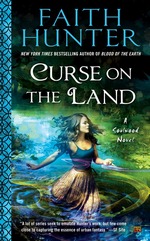
Pub Day Repost: Curse on the Land by Faith Hunter

Curse on the LandCurse on the Land

by Faith Hunter
Series: Soulwood, #2eARC, 352 pg.
Roc, 2016
Read: October 13 – 15, 2016

Weeks after the events of Blood of the Earth, newly-minted PsyLED agent Nell Ingram comes back from the training center, “Spook School,” ready to dive into her new role. It seems she comes back just in time for a case that’s right up her alley — strange and magical things are up, and seem to be tied to land. Something big, something powerful and something no one’s really seen before — which sounds a lot like Nell. So instead of doing the grunt work, the Probie work, she’s in the front of this investigation.

The presence of Brother Ephriam in the Soulwood she lives is also still around and doing something that also seems to be involving the tree on her former Church’s compound. She needs to address this, she knows, but the threats to the general public and local wildlife take priority. She also seems reticent to deal with this problem and confront the actions that led to his presence in the wood, so she’s glad for the distraction posed by her job.

For all the regulations and devices that PsyLED brings to the investigation of magical goings-on, I appreciate how often those things fail to do anything to solve the problem. They’re helpful in guiding the agents, in informing their actions, decisions and conclusions — but it’s not the be all and end all. Throughout the novel, there’s this interesting intermingling of magic and technology that’s done in a way I’ve not really seen before (although, I think it’s what Ben Aaronovitch’s Peter Grant wants, but he’s a long way from getting it).

Nell’s continued obsession with foods that cannot be found at a Farmer’s Market and her growing familiarity with pop culture (particularly movies) continue to be fun — they ground the character as well as provide much-needed comic relief.

I think Nell could be the best new character I’ve read this year. She’s not your typical kick-ass heroine, nor is she the (possibly more) typical damaged-yet-kick-ass heroine. She’s a strong woman, determined, and stubborn. Her strength doesn’t come from her magic powers, her job, or anything else. She’s always been strong, but the circumstances of her life have slowly revealed to both herself and those around her, just how strong she is (from what I gather, the stubbornness and determination have been evident all her life). Which is not to say she’s all strength — she’s a nurturer (not just of her plants), she’s caring, and she’s nowhere near invulnerable (physically or emotionally). She’s also pretty clever and as her education moves beyond the solely autodidactic, we’ll see that demonstrated more and more.

While this series (at least so far) is ultimately about Nell, the characters she’s surrounded by shouldn’t be ignored. In Blood of the Earth, Nell’s embraced by her PsyLED team as part of a family, an intact and nurturing alternative to her blood-relatives. It almost seemed like an idealized replacement, but the events of this novel make it clear that it’s nowhere near ideal. Several members of the team are effected by the events here in ways that will not be able to be glossed over — both as a result of their work on the case and from arcs that carry over from the Jane Yellowrock series. The latter, I found particularly satisfying, while the former intrigue me and I’m eager to see how they play out.

We can’t forget Nell’s literal dysfunctional family, either. However strange and foreign they may seem to us (odd that these humans seem less familiar than the nonhumans in the books), the efforts on their part to restore and repair their relationships with Nell — while she does the same — are encouraging and heartwarming. Her brother, in particular, is fast becoming a favorite. Their new openness to the culture around them and the . . . lack of overt hostility and aggression to the magic and magical beings in Nell’s life is great to see, while they retain much of their religious/cultic faith. I hope there are a few bumps along the path, just to make it more realistic, however.

I almost forgot to talk about Hunter’s writing — it’s as great as ever. I think her use of magic — particularly large-scale workings — in these two books works better than it does in the Yellowrock books. Her characters, settings, dialogue, and other writerly demonstrations make this world rich and real. She’s among the best and most consistent in the UF field these days and I’m eager to get my hands on whatever she’s got coming out next.

I left Blood of the Earth wondering how Hunter could make this into a series –and I’m still wondering how this works long-term, there are only so many things you can do to the earth/plants/trees in an area, right? Can Nell function hundreds of miles (or more) from Soulwood? Is she much use in a skirmish between rival Vampire clans or the like? Sure, she was able to do some damage to the creatures in the first book, but at what cost? While I don’t see how it’d work for a full novel (this is where Hunter proves me wrong), it’d good to see Nell acting in a more supportive role on the team — getting coffee, filing reports, etc. — while the weres take down some monsters, or something. I do see how these books function as a series when it comes to the characters, however — it’s just how to keep the stories/cases interesting that I don’t see long-term, but I’m looking forward to Hunter educating me.

Disclaimer: I received this eARC from Roc via NetGalley in exchange for this post — thanks to both for this. And would’ve received it from Let’s Talk! Promotions, too, if I hadn’t already downloaded it. So I guess I should thank them, too.

—–

4 1/2 Stars

Curse on the Land by Faith Hunter

Curse on the LandCurse on the Land

by Faith Hunter
Series: Soulwood, #2

eARC, 352 pg.
Roc, 2016

Read: October 13 – 15, 2016


Weeks after the events of Blood of the Earth, newly-minted PsyLED agent Nell Ingram comes back from the training center, “Spook School,” ready to dive into her new role. It seems she comes back just in time for a case that’s right up her alley — strange and magical things are up, and seem to be tied to land. Something big, something powerful and something no one’s really seen before — which sounds a lot like Nell. So instead of doing the grunt work, the Probie work, she’s in the front of this investigation.

The presence of Brother Ephriam in the Soulwood she lives is also still around and doing something that also seems to be involving the tree on her former Church’s compound. She needs to address this, she knows, but the threats to the general public and local wildlife take priority. She also seems reticent to deal with this problem and confront the actions that led to his presence in the wood, so she’s glad for the distraction posed by her job.

For all the regulations and devices that PsyLED brings to the investigation of magical goings-on, I appreciate how often those things fail to do anything to solve the problem. They’re helpful in guiding the agents, in informing their actions, decisions and conclusions — but it’s not the be all and end all. Throughout the novel, there’s this interesting intermingling of magic and technology that’s done in a way I’ve not really seen before (although, I think it’s what Ben Aaronovitch’s Peter Grant wants, but he’s a long way from getting it).

Nell’s continued obsession with foods that cannot be found at a Farmer’s Market and her growing familiarity with pop culture (particularly movies) continue to be fun — they ground the character as well as provide much-needed comic relief.

I think Nell could be the best new character I’ve read this year. She’s not your typical kick-ass heroine, nor is she the (possibly more) typical damaged-yet-kick-ass heroine. She’s a strong woman, determined, and stubborn. Her strength doesn’t come from her magic powers, her job, or anything else. She’s always been strong, but the circumstances of her life have slowly revealed to both herself and those around her, just how strong she is (from what I gather, the stubbornness and determination have been evident all her life). Which is not to say she’s all strength — she’s a nurturer (not just of her plants), she’s caring, and she’s nowhere near invulnerable (physically or emotionally). She’s also pretty clever and as her education moves beyond the solely autodidactic, we’ll see that demonstrated more and more.

While this series (at least so far) is ultimately about Nell, the characters she’s surrounded by shouldn’t be ignored. In Blood of the Earth, Nell’s embraced by her PsyLED team as part of a family, an intact and nurturing alternative to her blood-relatives. It almost seemed like an idealized replacement, but the events of this novel make it clear that it’s nowhere near ideal. Several members of the team are effected by the events here in ways that will not be able to be glossed over — both as a result of their work on the case and from arcs that carry over from the Jane Yellowrock series. The latter, I found particularly satisfying, while the former intrigue me and I’m eager to see how they play out.

We can’t forget Nell’s literal dysfunctional family, either. However strange and foreign they may seem to us (odd that these humans seem less familiar than the nonhumans in the books), the efforts on their part to restore and repair their relationships with Nell — while she does the same — are encouraging and heartwarming. Her brother, in particular, is fast becoming a favorite. Their new openness to the culture around them and the . . . lack of overt hostility and aggression to the magic and magical beings in Nell’s life is great to see, while they retain much of their religious/cultic faith. I hope there are a few bumps along the path, just to make it more realistic, however.

I almost forgot to talk about Hunter’s writing — it’s as great as ever. I think her use of magic — particularly large-scale workings — in these two books works better than it does in the Yellowrock books. Her characters, settings, dialogue, and other writerly demonstrations make this world rich and real. She’s among the best and most consistent in the UF field these days and I’m eager to get my hands on whatever she’s got coming out next.

I left Blood of the Earth wondering how Hunter could make this into a series –and I’m still wondering how this works long-term, there are only so many things you can do to the earth/plants/trees in an area, right? Can Nell function hundreds of miles (or more) from Soulwood? Is she much use in a skirmish between rival Vampire clans or the like? Sure, she was able to do some damage to the creatures in the first book, but at what cost? While I don’t see how it’d work for a full novel (this is where Hunter proves me wrong), it’d good to see Nell acting in a more supportive role on the team — getting coffee, filing reports, etc. — while the weres take down some monsters, or something. I do see how these books function as a series when it comes to the characters, however — it’s just how to keep the stories/cases interesting that I don’t see long-term, but I’m looking forward to Hunter educating me.

Disclaimer: I received this eARC from Roc via NetGalley in exchange for this post — thanks to both for this. And would’ve received it from Let’s Talk! Promotions, too, if I hadn’t already downloaded it. So I guess I should thank them, too.

—–

4 1/2 Stars

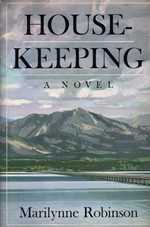
United States of Books – Housekeeping by Marilynne Robinson

HousekeepingHousekeeping

by Marilynne Robinson

Hardcover, 219 pg.
Farrar, Straus and Giroux, 1980

Read: September 20 – 21, 2016


It’s time for my home state here in this little series we’re doing: Idaho, featuring the book Housekeeping by Marilynne Robinson. Set in the fictional town of Fingerbone, in the Northern part of the state, about 50-60 miles from the Canadian border (not information from the book, that’s just me trying to orient those of you looking at a map).

Lucille, and her older sister Ruth, are raised in the same house their mother grew up in. We’re told straight away that following their mother’s death they lived with their grandmother, then her two sisters, and finally their mother’s younger sister. The circumstances surrounding these transitions are revealed gradually — none of the adults in their lives were cut out for parenting (Grandmother was at one point, and probably would’ve sufficed if she hadn’t died).

This is not a plot-driven book, and it’s hard to talk about what plot there is without telling you everything — so I’ll be vague. Ruth tells us about her grandfather’s death; them coming to live in his old house; life with grandmother, great-aunts, and aunt; and then things really start happening as she and Lucille enter adolescence and I’m not going to ruin anything by finishing this sentence properly. On page 27, I wrote “this text is so beautiful, I don’t care what happens, I’m going to love this book.” Thankfully, I was right — because once things happened, I really didn’t like it — but I loved reading the book. There are other characters in the book, but they’re of so little importance, I’m not going to say anything beyond acknowledging their existence. The focus is on the girls, their family and the really old house i which they all reside.

Thematically, this book is about loneliness, family ties, waiting for someone/something. I’m not sure there’s much difference in Ruth’s mind between loneliness and waiting (nor am I that sure that there’s much difference in my mind between them as I write this). For young girls to have this much upheaval in their parental figure(s), loneliness and loss are going to loom large in their psycho-social development — and they’re not going to respond the same way to things. You add some pretty perceptive thoughts about loneliness to Robinson’s prose and you’ve got yourself a winner of a book.

So what do we learn about Idaho here? Nothing. Fingerbone could be any small city/large town in the U.S. There is nothing distinctive Idaho about this book. Well, almost nothing. There’s a lot of mentioning of local place names (mostly cities, incidentally, that most non-Idahoans are going to mispronounce) — enough so that we all know that Fingerbone is just Sandpoint’s nom de plume, but that’s as “Idaho” as we get here. Take out the local names and this could be in any state that has lakes, forests and railroads — which pretty much covers all 50, right? I don’t know why Robinson didn’t just use the actual town’s name — but, whatever. The fact that Entertainment Weekly thinks this novel “best defines” Idaho probably says more about the dearth of books set here than anything else.

Lyrical, haunting, insightful, beautiful — this is prose that’ll stick with you. I didn’t like the ending, but it worked and was earned, so I can get over it. Don’t worry about the story, focus on the telling of it and you’ll likely agree, this is stunning stuff.

—–

4 1/2 Stars

Page 24 of 30

Powered by WordPress & Theme by Anders Norén