Tag: 4 1/2 Stars Page 25 of 30

A Star-Reckoner’s Lot by Darrell Drake

This book releases this weekend, go pre-order now (well, not now … wait until you read this).

A Star-Reckoner's LotA Star-Reckoner’s Lot

by Darrell Drake
Series: A Star-Reckoner’s Legacy, #1

Kindle Edition, 294 pg.
Darrell Drake, 2016

Read: September 22 – 26, 2016


There are few phrases sweeter to readers than “Stand Alone Fantasy.” Sure, most of us really get into series, but the chance to dive into a world and know that there’s a narrative conclusion just a couple of hundred pages away? There’s something very appealing about that. Throw in a world pretty much like nothing you’ve come across before? Sign me up.

Drake brings us into a world of pre-Islamic Iran — full of social mores that are just as foreign to Western readers as anything that the most imaginative novelist could invent, along with a magic system, a belief system, and a host of supernatural beings that are equally novel. Sure, there’s apparently a decent amount of historical research undergirding the fiction — but just coming up with the idea to base something in this world and to do the research will inspire confidence.

Ashtadukht is a star-reckoner for the King of Kings. A star-reckoner is a magic-user who can harness the power of constellations — the power of stars — to perform their magic. Primarily, their duty is to attack divs, demon-like beings at war with humanity. Ashtadukht (this name makes me so glad for copy and paste, incidentally) is a pretty capable (with some provisos) star-reckoner, but has a reputation for being a bit too lenient with some divs. She doesn’t fight the reputation, but when you see the way she deals with a few divs, you start to wonder what it’d look like if she wasn’t lenient.

At some point, her father becomes concerned for her safety and recruits her cousin, Tirdad, to act as her bodyguard. Before this, he was one of the King’s elite soldiers and can do some pretty heavy damage to a div himself. I really liked Tirdad — his growth throughout the novel, his character, his sense of humor, etc. — I really liked this guy. You’ll likely have a similar reaction. He and Ashtadukht have known each other since childhood and act like it — they know the secrets, the tells, the hearts of the other in a way that only old friends can. It’s easy to believe that he’ll do whatever it takes to keep his cousin safe and successful.

The other part of their party is Waray — she’s a problematic character for some, but man, I liked her. She has some verbal tics — running words together, defining things and people as “šo” this and “šo” that (and just uses the ‘š’ in place of an ‘s’ — see my Q&A with Drake for more). Ever since Gurgi in The Prydain Chronicles, I’ve enjoyed the annoying not-totally-human characters (especially those obsessed with food). I think she’s a hoot — and more, there’s a darkness to Waray, to her past and present — along with her loyalty and her penchant for odd pranks.

The banter, the bickering, and friendship between Tirdad and Waray is one of those things that will attract you to this book beyond the setting and plot. The three of them are a great team, a great found-family, watching their relationship is infectious and utterly believable — you can feel the affection they have for each other, and don’t need to be told about it. There are fantasy novels when you’re told that the characters are old friends and you just don’t believe it (or only believe it because it’s mentioned every couple of pages) but here, you see it develop and grow and have no doubts.

The novel follows the trio all over Iran dispatching a div here and there, hunting for the killer of Ashtadukht’s husband (a div) and struggling against her failing health. There comes a point where things evolve past the “monster of the chapter” structure and everything is really tied together — but I can’t get into it without ruining things. It’ll leave your jaw inches from its typical place and the whole book gets more intense from there.

Drake almost never info-dumps, he drops you into this world and lets you figure out what a star-reckoner does, what a div is, etc. Yes, almost every question is answered eventually — but by the time he spells it out of you, you’ve pretty much figured it out on your own. I loved that. There’s a humor, a heart — and some really disturbing violence — throughout this book. The book is sometimes challenging to read, but always rewards the effort. It’s not a perfect book — but it is so satisfying that you overlook it’s shortcomings. I can’t say I enjoyed everything that Drake did in the last few chapters — but I can’t fault him for them. It’s not the ending I wanted, but it’s the ending the novel needed.

I’m afraid I’ll overuse the word imaginative if I tried to describe what Drake has done here in the depth I want to. You haven’t read a fantasy novel like this one before — almost certainly, anyway — but you should.

Besides, anyone who works a Samuel L. Jackson reference into a book about pre-600 AD Iran deserves a read, right?

Disclaimer: I received this eARC from the author in exchange for this post.

—–

4 1/2 Stars

Debt to Pay by Reed Farrel Coleman

Debt to PayRobert B. Parker’s Debt to Pay

by Reed Farrel Coleman
Series: Jesse Stone, #15

eARC, 352 pg.
G.P. Putnam’s Sons, 2016

Read: August 20 – 22, 2016

Since the closing pages of Blind Spot, I’ve been waiting for the other shoe to fall victim to gravity. Jesse Stone has been, too. Well, after a more typical Stone novel, the wait is over — Mr. Peepers, the sadistic hitman that almost killed Suitcase Simpson and evaded Jesse, is back.

Just in time for just in time for Jesse’s ex, Jen’s wedding.

Before I forget, isn’t that a great move? Build suspense by ignoring the cliffhanger-esque ending for a whole book? In the wrong hands, that’d be annoying, but done right? Very effective.

Jesse and his lady-love, Diana (the FBI agent turned private security consultant) are off to Texas to meet Jen’s fiance, maybe get a little closure, and covertly protect Jen from the special mix of psychological and physical torture that Peepers subjects his victims to before killing them. While Jesse seems to be several steps behind, Peepers seems to be calling all the shots — he’s got all the power and is making Jesse jump through whatever hoops he wants him to.

Meanwhile, changes are afoot with the Paradise Police Department, State Homicide and Suit’s life (and a few other places) — just so we don’t all get too wrapped up in Pepper’s quest for vengeance.

As he has in the previous two novels in this series, Coleman keeps things moving at a great pace, the suspense keeps getting ratcheted up — interspersed by heartwarming, amusing, and troubling moments, so it’s not suspense overkill. There are some great character moments — especially with Diana and Jesse, Suit and a few people, Jesse and a bottle. There’s no mystery here — we all know who the villain of the piece is, the only question is how Peppers will attack and who will remain standing at the end of the book.

In his other major series, Parker introduced a paid assassin, The Gray Man, who almost killed Spenser and plagued him for a while afterwards. Mr. Peepers is far creepier, deadlier, and interesting than the Gray Man ever was. I really didn’t like being in that dude’s head as much as we were — which means that Coleman succeeded in making him a terrible person — I felt like washing my brain out with soap to get over some of the Peepers chapters.

Ace Atkins has returned Spenser to his roots (moved things forward, don’t get me wrong, it’s not just a nostalgia trip), but Coleman has taken Jesse and the rest and shaken things up — he’s stayed true to the characters, the series, the feel — but he’s pushed things ahead and has probably made more real changes to the series than Parker did since book 2 (but making things feel risky and inventive feels like the roots of this series). Actually, he’s not just changed this series — he’s done things that affect the whole of the Parker-verse. Just look at Suit — everything we need to know about what Coleman’s doing to the series is embodied there. I know Coleman’s take is not that popular with some long-time fans, but I couldn’t be happier — either with the series as it is right now, or with this book.

This was riveting, literally never a dull moment — not relentless, you can relax occasionally, even grin. But I had to force myself to put it down to do the responsible adult thing a couple of times. I expect most fans of Jesse and the PPD folks will have similar experiences with Debt to Pay.

Disclaimer: I received this eARC from G.P. Putnam’s Sons via NetGalley in exchange for this post — thanks to both for this.

—–

4 1/2 Stars

Pub Day Repost: Blood of the Earth by Faith Hunter

Blood of the EarthBlood of the Earth

by Faith Hunter
Series: Soulwood, #1

eARC, 384 pg.
Roc, 216
Read: July 5 – 8, 2016

Nell Ingram had her life turned up side down by Jane Yellowrock when she came through her land on a vampire hunt. Months later, a PsyLED team — led by good ol’ Rick LaFleur — comes to her for help and to offer her a job. Nell had been raised in a cult that seems to be involved with — on some level, anyway — with an anti-supernatural terrorist group who seem to be kidnapping local girls.

God’s Cloud of Glory Church, the cult that Nell was raised in (and that her family is still immersed in) is involved with some petty harassment of Nell — although some leaders are leaning more toward horrifying harassment. LaFleur, Paka and Pea help her get out of one tight spot. But that won’t be enough to stop them, it did however, lead to the line: “[Pea] she looked like something out of a fairy tale, one of the old stories that was fluffy on the surface but dark and bloody underneath.” Nell’s magic takes a major step further in development at that point, too.

Nell coming to grips with the fact that she has some sort of magic is the heart of the novel. Well, that and her doing a better job of leaving the cult. Technically and geographically, she’d moved on — but her mind and lifestyle are largely conditioned by the Church. Her involvement with the PsyLED team (and their crappy diet) leads to some of the most entertaining parts of the book — her introductions to Krispy Kreme donuts and pizza are fantastic.

There really aren’t that many ways that Nell and Jane are similar — they are both deliberately and stubbornly independent, they both start out not understanding really who or what they are, and both of them are really good at ignoring the one vital, pivotal and fairly obvious thing until it’s almost too late. But things kept moving well enough that I was able to ignore it (although I probably talked back at the book a lot every time this point came up).

But it’s not just about Nell — LaFluer’s got a whole team with him. While he’s prominent, he’s really a secondary character (Paka and Pea are more so). Frankly, I was relieved by that — I really expected this to be Ricky-Bo and his Amazing Friends — I would’ve read that, but I’m not sure how psyched I was for it. Instead, Nell and the others on the team are great characters to meet and spend time with — and I want to spend more time with them all. It’d take too much space to talk about the PsyLED team as individuals, so let’s leave it with the aggregate: a very promising and entertaining ensemble.

Nell’s family are a strong presence (even before we met them) and should prove to be good fodder for character growth and even future plot (I just hope it’s not a well they go back to too often). The same can be said for the rest of the world we’re introduced to here.

The plot involving the church, the terrorists, the kidnappings is pretty strong and moves well. The resolution is violent, but not as much as it would’ve been in a Yellowrock book. Nell’s magic is different (and her team uses fewer firearms and knives). I’m not sure how to talk about this pre-release, maybe in book 2, it’ll be easier. Let’s just leave it with Nell et al. deal with things in a way that’s true to the genre, but doesn’t feel like every other UF around. Nell’s what Atticus O’Sullivan might be without his sword (maybe).

There were two pretty glaring errors that I noticed: Nell at one point identifies someones actions as stemming from their being postmillennialist (I’ve never met a postmillennialist like this, I think she meant post-tribulation premillennialist) and she identifies a Biblical quotation as from Acts, when it was from Romans. There are three explanations that I can think of for this: 1. Honest mistakes that will be fixed between the ARC and official release; 2. It’s been long enough since Nell’s been involved in the cult and her memory for details like this is foggy; 3. It was a cult, and they’ve mis-educated their people. I could be convinced of #2, but it’d take some work; #1 or #3 I could completely buy.

Why do I continually underestimate Faith Hunter? It’s only been in the last few Jane Yellowrocks that I pick them up with high expectations and I came to this curious, but unsure that she could do anything distinctive from Yellowrock. That ends now — Hunter blew me away with this one, yeah, it’s in the Yellowrock ‘verse — and it fits in it — but it couldn’t be more different. I’m not sure how this is a series, it’s a great stand-alone, maybe a duology. But I don’t see how this keeps going (but Hunter’s better at this than I am, so I’m willing to believe it is one — especially with these characters). I really want to give Blood of the Earth 5 stars, but I’m going to hold off going too far in my raving over this series until I see how Hunter follows up. Which may be stupid, but it’s what makes sense to me.

Disclaimer: I received this eARC via NetGalley with major thanks to Roc, I appreciate this greatly.

N.B.: As this was an ARC, any quotations above may be changed in the published work — I will endeavor to verify them as soon as possible.

—–

4 1/2 Stars

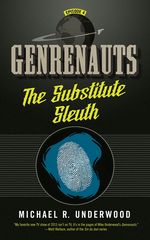
Pub Day Repost: The Substitute Sleuth by Michael R. Underwood

The Substitute SleuthThe Substitute Sleuth

by Michael R. Underwood
Series: Genrenauts, #4eARC, 88 pg.
2016
Read: July 11, 2016

Adventure, excitement, hypothermia. All of this and more await you in the Genrenauts!

Once again, Leah Tang is having a rough time on her first visit to a genre world. It’s Chicago, there’s a snow storm, her primary partner on this particular mission is getting a bit too wrapped up in the story, and she had to see her second dead body (not that such a sight is ever pleasant, but this one is well, is fit for the opening scenes of Castle, Bones, etc.). Thankfully, her sense of humor isn’t only welcome on this mission, it’s required.

It all starts when poor Leah has to wake up early, summoned for a mission to patch a small story breach on Crime World — the Police Procedural region to be precise. King’s going to let her take the lead on it as a training exercise. And then things go wrong. Because, well, that’s just how things are going for this team lately — and the one story breach they came to Crime World to patch is overshadowed by a bigger one. Crime World breaches left unpatched bleed over into our world in the form more, and worse, crimes. Every bleed from a Genre World into ours sounds bad — but this one is worse. Leah is still having qualms about the ethics involved in what her team does, but given the stakes, she’s willing to put them aside.

Probably more than in the previous adventures, Leah and King lean on and exploit the tropes of this world and region. As a fan of the Whacky Investigator/Straight-Laced Law Officer partner stories/shows, I loved watching the two of them use, critique, and play with the story beats, types and clichés. White Hat hacking, convenient recovery periods after being shot, how clues show up at just the right time, and so on. At one point, Leah sees a pair of detectives that work in the precinct with the detective at the center of the breach:

Leah took them to be the friend cops, the other team that would work another part of a case—the cases that would all too often end up being related, thanks to the laws of narrative conservation.

I love that phrase “laws of narrative conservation,” I am stealing that, period. I talk about that phenomenon all the time here, and this phrase is going to save me so much typing.

Between this and the Max novella, we’re learning a good deal about Angstrom King — I think I’m getting a really good sense of him, and I’m liking him more than I expected. Leah is pretty much Leah, just a little more confident in her place and moving onward from where she’s been so far in the series. The rest of the team faded to the background to an extent that I found surprising, and I hope it’s not a sign of things to come. I’m pretty sure it’s not, Underwood wouldn’t have spent so much time establishing the team and characters if he was going to drop them. Everyone was present, but their roles were very diminished. Mallery’s got a bit more to do than the others, but really not much.

The closing pages of this do a great job of setting-up the two-part season finale in the next two novellas. I can’t say more than that — but how any fan of this series can be patient waiting to see what comes next is a greater mystery than the ones the team encounters on Crime World. Best of the bunch.

N.B.: As this was an ARC, there’s a chance that the quotations above might not be in the published version, I’ll try to confirm them as soon as I can.
Disclaimer: I received a copy of novella from the author in exchange for this post–thanks, Mr. Underwood!

—–

4 1/2 Stars

Blood of the Earth by Faith Hunter

You know how long I’ve spent on this thing? How many posts I haven’t written because I’ve been trying to finish this one? The worst thing is that I liked this book and not just a little bit, I liked this one a lot. So why was this so hard to write? Don’t know, don’t care. It’s done…wish it was a little better.

Blood of the EarthBlood of the Earth

by Faith Hunter
Series: Soulwood, #1

eARC, 384 pg.
Roc, 216

Read: July 5 – 8, 2016


Nell Ingram had her life turned up side down by Jane Yellowrock when she came through her land on a vampire hunt. Months later, a PsyLED team — led by good ol’ Rick LaFleur — comes to her for help and to offer her a job. Nell had been raised in a cult that seems to be involved with — on some level, anyway — with an anti-supernatural terrorist group who seem to be kidnapping local girls.

God’s Cloud of Glory Church, the cult that Nell was raised in (and that her family is still immersed in) is involved with some petty harassment of Nell — although some leaders are leaning more toward horrifying harassment. LaFleur, Paka and Pea help her get out of one tight spot. But that won’t be enough to stop them, it did however, lead to the line: “[Pea] she looked like something out of a fairy tale, one of the old stories that was fluffy on the surface but dark and bloody underneath.” Nell’s magic takes a major step further in development at that point, too.

Nell coming to grips with the fact that she has some sort of magic is the heart of the novel. Well, that and her doing a better job of leaving the cult. Technically and geographically, she’d moved on — but her mind and lifestyle are largely conditioned by the Church. Her involvement with the PsyLED team (and their crappy diet) leads to some of the most entertaining parts of the book — her introductions to Krispy Kreme donuts and pizza are fantastic.

There really aren’t that many ways that Nell and Jane are similar — they are both deliberately and stubbornly independent, they both start out not understanding really who or what they are, and both of them are really good at ignoring the one vital, pivotal and fairly obvious thing until it’s almost too late. But things kept moving well enough that I was able to ignore it (although I probably talked back at the book a lot every time this point came up).

But it’s not just about Nell — LaFluer’s got a whole team with him. While he’s prominent, he’s really a secondary character (Paka and Pea are more so). Frankly, I was relieved by that — I really expected this to be Ricky-Bo and his Amazing Friends — I would’ve read that, but I’m not sure how psyched I was for it. Instead, Nell and the others on the team are great characters to meet and spend time with — and I want to spend more time with them all. It’d take too much space to talk about the PsyLED team as individuals, so let’s leave it with the aggregate: a very promising and entertaining ensemble.

Nell’s family are a strong presence (even before we met them) and should prove to be good fodder for character growth and even future plot (I just hope it’s not a well they go back to too often). The same can be said for the rest of the world we’re introduced to here.

The plot involving the church, the terrorists, the kidnappings is pretty strong and moves well. The resolution is violent, but not as much as it would’ve been in a Yellowrock book. Nell’s magic is different (and her team uses fewer firearms and knives). I’m not sure how to talk about this pre-release, maybe in book 2, it’ll be easier. Let’s just leave it with Nell et al. deal with things in a way that’s true to the genre, but doesn’t feel like every other UF around. Nell’s what Atticus O’Sullivan might be without his sword (maybe).

There were two pretty glaring errors that I noticed: Nell at one point identifies someones actions as stemming from their being postmillennialist (I’ve never met a postmillennialist like this, I think she meant post-tribulation premillennialist) and she identifies a Biblical quotation as from Acts, when it was from Romans. There are three explanations that I can think of for this: 1. Honest mistakes that will be fixed between the ARC and official release; 2. It’s been long enough since Nell’s been involved in the cult and her memory for details like this is foggy; 3. It was a cult, and they’ve mis-educated their people. I could be convinced of #2, but it’d take some work; #1 or #3 I could completely buy.

Why do I continually underestimate Faith Hunter? It’s only been in the last few Jane Yellowrocks that I pick them up with high expectations and I came to this curious, but unsure that she could do anything distinctive from Yellowrock. That ends now — Hunter blew me away with this one, yeah, it’s in the Yellowrock ‘verse — and it fits in it — but it couldn’t be more different. I’m not sure how this is a series, it’s a great stand-alone, maybe a duology. But I don’t see how this keeps going (but Hunter’s better at this than I am, so I’m willing to believe it is one — especially with these characters). I really want to give Blood of the Earth 5 stars, but I’m going to hold off going too far in my raving over this series until I see how Hunter follows up. Which may be stupid, but it’s what makes sense to me.

Disclaimer: I received this eARC via NetGalley with major thanks to Roc, I appreciate this greatly.

N.B.: As this was an ARC, any quotations above may be changed in the published work — I will endeavor to verify them as soon as possible.

—–

4 1/2 Stars

The Substitute Sleuth by Michael R. Underwood

The Substitute SleuthThe Substitute Sleuth

by Michael R. Underwood
Series: Genrenauts, #4

eARC, 88 pg.
2016

Read: July 11, 2016

Adventure, excitement, hypothermia. All of this and more await you in the Genrenauts!

Once again, Leah Tang is having a rough time on her first visit to a genre world. It’s Chicago, there’s a snow storm, her primary partner on this particular mission is getting a bit too wrapped up in the story, and she had to see her second dead body (not that such a sight is ever pleasant, but this one is well, is fit for the opening scenes of Castle, Bones, etc.). Thankfully, her sense of humor isn’t only welcome on this mission, it’s required.

It all starts when poor Leah has to wake up early, summoned for a mission to patch a small story breach on Crime World — the Police Procedural region to be precise. King’s going to let her take the lead on it as a training exercise. And then things go wrong. Because, well, that’s just how things are going for this team lately — and the one story breach they came to Crime World to patch is overshadowed by a bigger one. Crime World breaches left unpatched bleed over into our world in the form more, and worse, crimes. Every bleed from a Genre World into ours sounds bad — but this one is worse. Leah is still having qualms about the ethics involved in what her team does, but given the stakes, she’s willing to put them aside.

Probably more than in the previous adventures, Leah and King lean on and exploit the tropes of this world and region. As a fan of the Whacky Investigator/Straight-Laced Law Officer partner stories/shows, I loved watching the two of them use, critique, and play with the story beats, types and clichés. White Hat hacking, convenient recovery periods after being shot, how clues show up at just the right time, and so on. At one point, Leah sees a pair of detectives that work in the precinct with the detective at the center of the breach:

Leah took them to be the friend cops, the other team that would work another part of a case—the cases that would all too often end up being related, thanks to the laws of narrative conservation.

I love that phrase “laws of narrative conservation,” I am stealing that, period. I talk about that phenomenon all the time here, and this phrase is going to save me so much typing.

Between this and the Max novella, we’re learning a good deal about Angstrom King — I think I’m getting a really good sense of him, and I’m liking him more than I expected. Leah is pretty much Leah, just a little more confident in her place and moving onward from where she’s been so far in the series. The rest of the team faded to the background to an extent that I found surprising, and I hope it’s not a sign of things to come. I’m pretty sure it’s not, Underwood wouldn’t have spent so much time establishing the team and characters if he was going to drop them. Everyone was present, but their roles were very diminished. Mallery’s got a bit more to do than the others, but really not much.

The closing pages of this do a great job of setting-up the two-part season finale in the next two novellas. I can’t say more than that — but how any fan of this series can be patient waiting to see what comes next is a greater mystery than the ones the team encounters on Crime World. Best of the bunch.

N.B.: As this was an ARC, there’s a chance that the quotations above might not be in the published version, I’ll try to confirm them as soon as I can.
Disclaimer: I received a copy of novella from the author in exchange for this post–thanks, Mr. Underwood!

—–

4 1/2 Stars

Where’d You Go, Bernadette (Audiobook) by Maria Semple , Kathleen Wilhoite

Where'd You Go, BernadetteWhere’d You Go, Bernadette

by Maria Semple, Kathleen Wilhoite (Narrator)

Unabridged Audiobook, 9 hrs and 39 mins
Hachette Audio, 2012
Read: June 10 – 13, 2016


For whatever reason, when I talked about this book last time, it had been months after I read it, and I could’ve done better. I’m not sure that I’ll fix that now, but you never know . . .

First thing you’ve got to know about this book is that it’s funny. Flat out funny. Some of it may not come across that way when you read it, actually, I think it’d be pretty easy to think this is a serious novel about a disturbed or tragic woman. But you’d be wrong to think that (and probably wouldn’t like the book at all).

Sure, it’s clear that something went wrong with Bernadette in the past, and that she’s still dealing (or, better, not dealing) with it. But that doesn’t stop things from being hilarious as she struggles with leaving the house, fighting with the neighbor ladies/moms from school.

Her daughter, Bee, is great. She’s a tribute to brainy-daughters everywhere — her understanding of and devotion to her mom is what humanizes Bernadette. After her mother goes missing, she compiles emails, articles, and other documents from a variety of sources to explain the last few months and put everything into context. I wasn’t sure this aspect of it would translate into audiobook — or be understandable. It was perfect. More on that in a moment.

The story is compelling, heartwarming, and funny (more funny the second time around, it turns out). It’s one of my favorite books from the last few years. Either version is well worth the time.

What made me give this a higher rating this time? Well, I had a clearer idea about the whole thing and could just enjoy the ride. But mostly, it was Kathleen Wilhoite (and boy did I ever feel stupid for not recognizing her voice once I googled the name). The accents, the voices, the emotions, the mirth — the heart and soul — she put into her performance blew me away and made the whole thing more compelling than Semple did (which is saying something). Again, that she was able to take the strange format of the book and make it easy to track with the various “sources” Bee used. Really, just a great audio performance.

—–

4 1/2 Stars

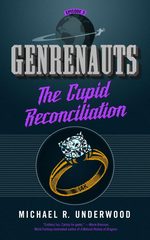
The Cupid Reconciliation by Michael R. Underwood

What? Another Genrenauts/Michael R. Underwood post? Yup. Don’t worry, I’m going to slow down a bit (well, after this and then next week’s post, “What’s in Underwood’s Sock Drawer?”) — but trying to get the word out about the Kickstarter and the series takes some repetition.

I’m pretty sure that there’s a paragraph missing from this — I just don’t know what it was supposed to be about. I may end up revising this tomorrow.

The Cupid ReconciliationThe Cupid Reconciliation

by Michael R. Underwood
Series: Genrenauts, #3

eARC
2016
Read: May 17, 2016

This is my life, Leah thought . . . My amazing, confusing, totally screwed-up life.

Just as Leah is getting to the point that she’s starting to feel comfortable, maybe even a little confident, in her new job — her new life — things get shook up a little. Mallery, the member of the team whose injury led to Leah’s recruitment, is back from her convalescence. That alone will change the team dynamic in the field, and maybe even effect Leah’s standing in the team. The fact that they’re headed to Romantic-Comedy world, Mallery’s specialty, doesn’t help Leah’s spirits (particularly because she’d like that to be her specialty, too).

Speaking of the various worlds, I don’t know if we’d ever been given insight into how life in a Genre World would start to change a person after awhile. Or if we were, it wasn’t explained the way it was here. That was just a cool touch.

While Leah continues to be our point-of-view character, our entry into this world, this is really Mallery’s book. The rest of the team are there, and contribute but the major non-Leah narrative weight is all carried by Mallery. Which I’m fine with, she seems to be a fun character (maybe a little hard to take in real life, but that could just be her nerves about getting into the field/dealing with a probie) and we need to get to know her, but she’s a force of nature.

Mallery beamed, which Leah was realizing was pretty close to the woman’s resting face. Some women had resting bitch face, but Mallery glowed. It was impressive. A little annoying, but impressive.

There was something in the “Coming Next” page in the last episode that made me worry about the relationship between these two not getting off on the right foot — thankfully, it seemed to get off on a decent (if not the right) foot — but nothing’s perfect. The two characters are going to have to fumble a bit to get a strong working relationship.

Don’t get me wrong — King, Roman, and Shirin all had their moments and made their presence felt — but they were bit players in this one. I did appreciate getting to see Roman’s softer side on display, he’s a deeper thinker than you might take him for and his efforts to help the “male lead,” were borderline sweet.

Straightaway when they get to the world, they come up with a strong candidate for the couple causing the breach — and the team is wrong, they have to work harder than the last two times to find where the problem is. I appreciated that move — and didn’t realize until then how smooth that step had gone in the previous adventures.

Maybe it’s because this particular world so closely resembles our own, but Leah got a bit of insight into how the Genrenauts’ activities might seem to one of the people from that world — and it’s not that pretty. The Genrenauts violate the Prime Directive more than Kirk ever did (to put it in genre-terms). And Leah’s not so sure that their particular brand of meddling is all that ethical. And I have to admit, she may have a point. Mallery shuts down that kind of thinking/talk — at least until they’re safely back home. I trust that Leah’s doubts and questions will be all dealt with in a way that’s honest in the near future. Regardless, Leah’s ethical qualms add a good dimension to things.

I enjoyed seeing this world through Genrenaut eyes — the availability of fantastic (and cheap) apartments with amazing views, how easy it is to get a cab, the fact that there’s a romantic scene seemingly everywhere in the background — happy couples everywhere.

. . . Leah walked up to a double-wide window facing the park. The leaves were changing, making for a sea of rich oranges and yellows beside a crystal-clear lake. The view was postcard-perfect. And as a cherry on top, there was a couple rowing a boat in the lake, one carrying a parasol. And Leah could even make out a picnic basket. The energy of the place was contagious. Western world was cheesy and scary. Science Fiction was cheesy and a bit confusing. Rom-Com world was cheesy and delightful.

There’s sort of a happy ending montage at the end (or the narrative equivalent of one, anyway) that was just perfect. Once I realized what exactly Underwood was up to there, I couldn’t help grinning. I know it’s part of the series premise for him to play with, celebrate, comment on genre tropes, clichés, conventions and so on — but sometimes what he does seems to capture the essence of the particular genre in a way that just feels like he did it better than usual. This is one of those times.

If you’ve been reading this series already, you’re going to really enjoy this. If you haven’t started — go back to Episode 1 and start fresh, you won’t be sorry. Underwood has a good thing going here, and it’s just getting better. Fun, yet thoughtful; action-packed, but pretty restrained in use of force. A great balancing act that should inspire more to do this.

Disclaimer: I received this book from the author as part of his promotion of the Season One Kickstarter.

—–

4 1/2 Stars

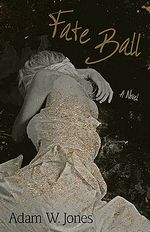
Fate Ball by Adam W. Jones


Welcome to Part One of our participation in the Fate Ball Book Tour — a brief interview will follow in a couple of minutes. Hope you enjoy both of these posts half as much as I enjoyed this book.

Fate BallFate Ball

by Adam W. Jones

PDF, 279 pg.
Wisdom House Books, 2016

Read: April 14 – 15, 2016

Parents always seem to think that saving the day is a good thing, but really it just postpones the inevitable. Sometimes, they should just let their kids crash and burn, so they learn their lesson the hard way. Parents can be the biggest enablers of them all when they’re acting out of love and kindness, but that usually just makes things worse.

That’s not the most dazzling piece of writing in Fate Ball, nothing catchy or inherently memorable, like I try to start with — but this is the heart of the book. People trying to help an addict not ready to be helped, and inadvertently making things worse.

In the prologue, Able Curran receives news that Ava Dubose has died — Chapter One takes us back 14 years to 1980 to meet her. In Chapter Two (one of the best chapters I’ve read this year), Able meets her — and falls for her almost instantly (and many readers will, too). Over the next few chapters, you see the two falling deeper and deeper in love — one of the cutest couples you’ve read.

All the while, you know that things are leading to the fateful phone call Able receives in 1994. We start to see some signs of trouble (well, those started before this) long before Able does. When he finally gets clued it, it destroys him — and they don’t see each other for some time. From there we watch these two lives intersect from time to time over the next 15 years (usually, Able trying to help her), as well as getting glimpses of their lives between the intersections.

This is really the story of two addicts — one who lets their dependency control and destroy them. The other who learns how to live with the problem, controlling and eventually overcoming. And even as you know it’s happening, you still hold out hope for Ave to shake things off, to achieve the serenity — or at least the contentment that she so desperately needs. Things get worse and worse — yet Jones is able to keep things from despairing, there’s a lightness to the prose that keeps things moving. While things fall apart for Ava, they move on for Able and their friends — success, new love, children, life.

In some hands, you’d be beaten over the head with the contrast, Jones doesn’t do that however. It all spools out naturally, easily (the kind of ease that takes work to pull off). You like everyone here enough that you’re pulling for them, no matter what stupid choices they make. Jones as come up with a perfect blend of humor, romance, drama, and tragedy.

There are plenty of little touches along the way to keep things light, to immerse you in the world — which is good because the book could become too fixated on Able and Ava.

His mother was always asking, then answering her own questions. That’s why she was always right. She could have a whole conversation with herself, even a fight depending on the subject matter, and no one had to say a word. All Able needed to do was just nod his head once in a while and she would take care of the rest.

This is not the best book I’ve read — not even the best novel on addiction. But it works well enough that it doesn’t matter. I’m not saying it’s a bad book, or there are glaring problems — but objectively, I just think it could be better. But when you’re reading it? It delivers everything you want, and some things you don’t expect. I really enjoyed this and think you will, too.

Disclaimer: I received a copy of this book from the kind folks at Wisdom House Books in exchange for an honest review.

—–

4 1/2 Stars

Reread Project: The Restaurant at the End of the Universe by Douglas Adams

I think WordPress’ spell-check might explode if I add another sentence or two to this….

The Restaurant at the End of the UniverseThe Restaurant at the End of the Universe

by Douglas Adams
Series: The Hitchhiker’s Guide to the Galaxy Trilogy, #2

Mass Market Paperback, 245 pg.
Ballantine Books, 1995

Read: February 13-15, 2016

If you’ve done six impossible things this morning, why not round it off with a breakfast at Milliways, the Restaurant at the End of the Universe?

I think in the past, I’ve enjoyed The Restaurant at the End of the Universe more than this time, but I’m not sure why. Which is not to say that I didn’t have a blast, I just usually have more fun. From the intricate — and death-defying — difficulty of making a good cup of tea; to the extreme lengths some people will go to for a dining experience; to perspective that a little cake can give; to considering what color a wheel should be or whether fire should be nasally-inserted — this book covers all the bases. While still episodic in nature, it seems less so than its predecessor — and far less so than its successor. It’s a stronger novel, not quite as funny, but still better than most “funny” or “light” SF than you’ll find.

[Gargravarr] had rather liked Zaphod Beeblebrox in a strange sort of way. He was clearly a man of many qualities, even if they were mostly bad ones.

Most of this book showcased the ex-President of the Galaxy, Zaphod Beeblebrox the First (how is great-grandfather was Zaphod the Fourth lies in one of the best lies Adams ever penned). Now Zaphod’s not my favorite character — actually, I typically dislike him as a character. As a joke-generator, a font of one-liners? He’s great. Probably most of the quotable lines in this book are his (even Arthur’s best line is immediately denigrated by him “Yeah, and don’t you wish you hadn’t?”).

We see the reason for his stealing of The Heart of Gold in the last book, we’re taken on a wild and twisty ride for him to complete his quest and then . . . it just stops. I’m sure it’s supposed to be in an absurd way or something, but it seems pointless (probably the point).

And then we’re off to Milliways. Ahhh, Milliways — this is an absolutely perfect part of the book. That this is the book’s title is absolutely fitting. There’s nothing about it I don’t like here — Max Quordlepleen’s banter (the oddly bittersweet introduction of him), Hotblack Desiato (and his tax plan), the Dish of the Day . . . I’m going to shut up before I just copy and paste the whole thing.

The rest of the book focuses on Arthur (and Ford, but, a little less), who I like, but don’t laugh at nearly as much.

“Poor Arthur, you’re not really cut out for this life are you?” [Trillian asked]
“You call this life?”

Something I’ve been thinking about this read-through is this: why Arthur? He’s one of Ford’s oldest friends on Earth — but we know he has multiple friends, he could’ve picked any of them — why Arthur? Surely, Ford would’ve had at least an inkling that Arthur would turn into the whiny Monkey-man that Zaphod can’t stand. It’s easy to see why Tricia McMillan would go off with Zapod as Phil over this wet blanket, well, towel. Trillian here has the same thought — and if we’re given a good explanation for that, I don’t remember it. Any of you have a guess (or a quotation) to justify Ford’s improbable choice?

Now, I may have sounded less that totally satisfied with this book — which is oddly true. I do think the Golgafrinchan Ark Fleet Ship B story is pretty “blah” and goes on far too long (into the next book). But it gives us gems like this:

It is a curious fact, and one to which no one knows quite how much importance to attach, that something like 85 percent of all known worlds in the Galaxy, be they primitive or highly advanced, have invented a drink called jynnan tonnyx, or gee-N-N-T’Nix, or jinond-o-nicks, or any one of a thousand or more variations on the same phonetic theme. The drinks themselves are not the same, and vary between the Sivolvian “chinanto/mnigs” which is ordinary water served at slightly above room temperature, and the Gagrakackan “tzjin-anthony-ks” which kills cows at a hundred paces; and in fact the one common factor between all of them, beyond the fact that the names sound the same, is that they were all invented and named before the worlds concerned made contact with any other worlds.

making it hard to complain too much.

There are a lot of laughs to be had here — I didn’t even mention Marvin’s contributions, which were just gold. And any time with Adams is worth it. A must-read follow-up to the classic, Hitchhiker’s Guide to the Galaxy.

—–

4 Stars

Page 25 of 30

Powered by WordPress & Theme by Anders Norén