Tag: 5 Stars Page 10 of 24

On God and Christ by Gregory of Nazianzus: Classic, Orthodox, Passionate

On God and Christ

On God and Christ,
The Five Theological
Orations and Two
Letters to Cledonius

by Gregory of Nazianzus, Translators: Frederick Williams & Lionel Wickham
Series: Popular Patristics Series, #23

Paperback, 172 pg.
St Vladimir’s Seminary Press, 2002

Read: May 2-June 6, 2021
Grab a copy from your local indie bookstore!

However, this illustration too was unacceptable to me. First, because it was quite clear what had set the sunbeam in motion, whereas nothing is prior to God to be his mover—he is cause of all and owns no prior cause. Second, because there is in this example a hint of those very things which are inconceivable in the case of God—composition, dispersion, and the lack of a fixed, natural stability. In a word, there is nothing to satisfy my mind when I try to illustrate the mental picture I have, except gratefully taking part of the image and discarding the rest. So, in the end, I resolved that it was best to say “goodbye” to images and shadows, deceptive and utterly inadequate as they are to express the reality. I resolved to keep close to the more truly religious view and rest content with some few words, taking the Spirit as my guide and, in his company and in partnership with him, safeguarding to the end the genuine illumination I had received from him, as I strike out a path through this world. To the best of my powers I will persuade all men to worship Father, Son, and Holy Spirit as the single Godhead and power, because to him belong all glory, honor, and might for ever and ever. Amen.

What’s On God and Christ About?

It’s all there in the subtitle, isn’t it? There are five theological orations/sermons and two letters in the book, focusing on the doctrine of the Trinity—with a focus on the person of the Son, and the “begotten” nature. According to the Introduction, these come in response to Anomean teaching—frequently referred to as Neo-Arian, but that’s not wholly accurate (and apparently would be offensive to Anomeans). The Church would formalize the response to the Anomeans in the modification to the Nicene Creed at the Council of Constantinople.

In other words—these sermons and letters are part of what laid the groundwork for that Creed that Christians confess throughout the world each week, and are a great way to come to a fuller understanding of some of what that Creed teaches. This is one of the recommended works from The Trinity: An Introduction by Scott R. Swain that I read earlier this year, and I can easily see why.

Readability and Tone

If there is one God, one supreme nature, where can I find an analogy to show you? Are you looking for one from your environment here in this world? It is a singularly graceless, and not just graceless but a pretty well futile, notion to get a picture of things heavenly from things of earth, of things fixed immutably from this transitory element. As Isaiah says, it is “seeking the living among the dead.”

For just about every reader (at least we non-scholars) the idea of reading Patristics is fairly daunting—even if you’ve done it before and emerged relatively unscathed (and maybe even learned something or enjoyed it). Dealing with a Church Father on something as technical as the Trinity? That’s beyond daunting, we’re talking intimidation now.

But there’s a reason that these sermons have lasted since the Fourth Century, they’re useful, educational, approachable, understandable. The translator calls them “as much high art as high theology,” in his introduction. Which isn’t a bad description, really.

There’s passion, there’s a hint of humor—not to make light of the topic, or to inject levity to entertain—but to serve as an aid to understanding (and to illustrate the foolishness of his opponents). This is a man who cares about what he’s talking about—this is important to him, important to his opponents, important to his audience, and therefore it must be dealt with carefully, with precision, and clearly. All of which translates well to us today.

Sure, because it’s technical Trinitarian language, it’s not the easiest thing in the world to read—but it’s not that bad. I think a careful high schooler could handle it.

So, what did I think about On God and Christ?

How has he been begotten?—I re-utter the question with loathing. God’s begetting ought to have the tribute of our reverent silence, The important point is for you to learn that he has been begotten. As to the way it happens, we shall not concede that even angels, much less you, know that. Shall I tell you the way? It is a way known only to the begetting Father and the begotten Son. Anything beyond this fact is hidden by a cloud and escapes your dull vision.

I am so glad I picked this up—what a treasure. It’s something I’m going to return to in years to come. Both for personal devotional reading as well as for help with tricky Trinitarian theology. I really think this is the kind of thing that everyone should read, and encourage you to give it a shot.


5 Stars

This post contains an affiliate link. If you purchase from it, I will get a small commission at no additional cost to you. As always, opinions are my own.

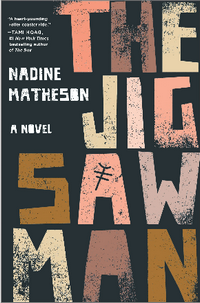
The Jigsaw Man by Nadine Matheson: A Jaw-Dropping Debut

The Jigsaw Man

The Jigsaw Man

by Nadine Matheson
Series: DI Anjelica Henley, #1

Hardcover, 388 pg.
Hanover Square Press, 2021

Read: May 17-20, 2021
Grab a copy from your local indie bookstore!

“You never know though. This could still be a nice, straightforward investigation.”

Henley didn’t reply as she picked up her bag, because every nerve in her body told her Pellacia believed that even less than she did.

What’s The Jigsaw Man About?

Someone is killing people, dismembering them, and then scattering the parts of the bodies near the river (not necessarily in that order).

It’s DI Henley’s first day back in the field in months when these pieces are discovered. I think that qualifies as a blessing and a curse—it’s a blessing because these murders resemble the crimes of a serial killer she arrested years ago. The curse comes in because Henley is still haunted by this killer and what happened during his arrest. Stil, Peter Olivier, “the Jigsaw Killer,” is in prison—which is one of the more ironclad alibis around. The killers’ methods are so similar, there has to be a connection between the two. And there’s no one better suited to uncover that connection than Henley.

Olivier isn’t impressed with someone stealing his M.O., and he’s even less satisfied with Henley’s speed at apprehending the killer. So he decides to take care of things himself. Step one, get out of prison. Step two, find the killer—and unlike Henley, Olivier has a few suspects.

DI Anjelica Henley

The CSI team hadn’t arrived by the time Henley had left [spoiler]’s home. Anthony was en route to a shooting on the Kingsland Road, but had promised to dispatch two of his team with unrealistic promises of paid overtime. Henley could feel the anger overwhelming her as she walked back to her car. Someone had dropped the ball and no one was taking responsibility. She was doing everything that she was trained to do, to the best of her ability, but it didn’t feel as though it was enough. As if she wasn’t enough.

Henley is an all-too-familiar figure in Detective Fiction—smart, determined, driven. So much so that her husband wants her to get another job so she can spend more time with her family. But that’s not going to happen, she can’t do that. A couple of things that make her different from your typical driven, brilliant, cop that doesn’t always play well with others—Henley is a black woman DI. She has to be the best, she has to be driven and determined to survive in a position like hers. Almost everyone does a double-take as she identifies herself, someone who looks like she does is a DI?

She’s struggling with the trauma that came from the arrest of Olivier, and she appears to be losing that struggle, too. And that was before she had to deal with crimes that looked like his and interview Olivier on multiple occasions in order to try to understand the connection between Olivier and the new guy.

There’s something instantly appealing about Henlely—she’s a mess, but that doesn’t stop her. She has every reason in the world to leave the job, but she won’t for a few compelling reasons. Which actually makes her more vulnerable, watching her deal with her own issues in addition to the case makes for some really compelling reading.

The Rest of the Team

Stanford turned his back on the body. Henley knew how he was feeling. They thought they had seen it all, until life presented them with a fresh kind of hell.

As with most UK-based procedurals, there’s a great cast of characters around Hnely There are too many to really discuss the way I want to (and I don’t want to give short shrift to any). From the supervisor with complicated feelings toward her, a DS who might as well be a brother, a trainee who is in over his head (but finds a way to be valuable to the investigation), the best-friend of a medical examiner, to all those I can’t come up with a pithy phrase to describe, Matheson filled this novel with people, not two-dimensional (or one-dimensional) characters. You really can’t ask for more than that.

Peter Olivier

Unlike too many serial killers in fiction, Peter Olivier isn’t charming. He’s not some sort of misunderstood genius. The reader is never tempted to root for him as he goes up against the copy-cat or as he escapes. He’s a vile man, excellent at reading people either to attack or to convince them to become an ally.

I cannot stress enough that he’s the kind of serial killer I want to read about (and I really don’t want to read about too many of them anymore). I don’t want to sympathize with someone like that, I want it to be crystal clear that this guy is a monster, and deserves to be put away from society. Matheson gives us not just one, but two killers like that.

Questions to Wrestle With…

The best literature demands something of the reader. It often requires you to dig down deep inside and ask yourself some hard questions as you read.

The Jigsaw Man is one such book. As you read it, you have to ask yourself penetrating questions like:
bullet What’s the absolute minimum amount of sleep I need to function?
bullet Do I have to go back to work after lunch, or can I just keep reading?
bullet Will my kids be upset if I miss their soccer game/little league game/dance recital if I read throughout?
bullet Will my cats murder me in my sleep if their bowls are empty?
bullet How angry will my wife be if I ignore her for a couple of hours? (especially during the last 100 or so pages) How long will it take her to get over it?

So, what did I think about The Jigsaw Man?

I absolutely loved this. This is a dark, unsettling read—there are two pages toward the end that may be the most disturbing pages I’ve ever read. And yet…there’s something very appealing about the novel—it’s gripping and compelling, it’s also entertaining.

Henley might be a tangle of problems and issues (in addition to the positive qualities she possesses), but they’re not just there as quirks or to ground the character. There’s a reason for each of them, a story behind them, making her absolutely believable. The same could be said for the rest of the characters, too. Matheson has a real eye for character and displayed that throughout.

The pacing is perfect, and you find yourself turning the pages as fast as you can for the last 40-60 pages, because you just have to know what happens. That part of the book reminded me of the first time I read Clarice Starling walk into Buffalo Bills’ house. You’re on the edge of your seat, tense, and any little noise can startle you. It’s not often I feel like that and I love it when I do.

I definitely recommend this one to you, folks—but I should warn you, when you do, you’ll be waiting with bated breath for the next book in the series.


5 Stars
2021 Library Love Challenge

This post contains an affiliate link. If you purchase from it, I will get a small commission at no additional cost to you. As always, opinions are my own.

Reposting Just ‘Cuz: Faith & Life by Benjamin Breckinridge Warfield

I ran out of gas while trying to finish a post for today, so I thought I’d take a moment to revisit a favorite from a few years ago. I’ve been thinking of picking it up again, recently, and reading this just might have sealed the deal for me. You might want to give it a look, too.


Faith & Life:
Faith & Life: by Benjamin Breckinridge Warfield
My rating: 5 of 5 stars

Back when Princeton Seminary was the crown jewel of biblical Presbyterian training in the US, notable professors like Archibald Alexander, Samuel Miller, and Charles Hodge would have informal addresses for students on Sunday afternoons. B. B. Warfield, the lion of Princeton, continued this practice. These 41 chapters come from some of these addresses to the students.

I went skimming over the Table of Contents to pick out a few highlights — and I’m having a real problem. Almost every one is a gem. “Prayer as a Means of Grace” and “Prayer as a Practice” were very helpful — the latter was slightly better. “New Testament Puritanism” was great. Despite the reputation men like Warfield have, the chapters involving the work of the Holy Spirit were all tremendous. “God’s Holiness and Ours” was fantastic. I could keep going here, but it wouldn’t be long before I copied the Table of Contents.

For being the exemplar of “old Princeton,” with all the rigor and scholarship that entails — these addresses help us remember that even stalwarts like Warfield, who are known for strong stances on doctrinal issues — were men with vibrant faith, even a sense of humor.

I spent a few months reading 1 or 2 of these each Lord’s Day morning between breakfast and heading out for church — it was a great way to get my head (and heart) in the right frame of mind for worship. It’s everything Christian scholarship should be — warm, Christ-centered, practical, and doxological. It’s also everything that Christian devotional material should be — careful, sound, and deliberately orthodox. Highly recommended.

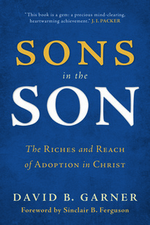
Sons in the Son by David B. Garner

I was talking about this book the other day, and wanted to refresh my mind about it, so I pulled up this post from 2016. It’s handy that I was able to do that (and as this is one of the reasons I started this blog, it’s great to see that it works, even if I rarely use it). I need to read this book again, soon. But also, it was such a good book and I thought I did an okay job with the post, so I thought I’d repost this.


Sons in the Son Sons in the Son: The Riches and Reach of Adoption in Christ

by David B. Garner

eARC, 400 pg.
P & R , 2017

Read: October 23 – December 11, 2016

At the heart of Pauline soteriology is the redemptive-historically charged concept of adoption (huiothesia). For Paul, the entirety of our redemption—from the mind of God before creation itself until its eschatological completion in our bodily resurrection—is expressed by filial reality, filial identity, and a filially framed union. As we will see in the following pages, this filial grace in Christ Jesus is expressly and implicitly, in Pauline theology, adoption.

I remember the first time I was really introduced to the doctrine of Adoption — sure, the idea had been mentioned throughout my Christian life, and using some material from an Ancient History class on Roman culture, I’d developed my understanding a bit, but it wasn’t until I’d been Reformed for a year or two that I heard someone seriously discuss the doctrine — the elder of the church I belonged to at the time walked us through the Westminster Confession’s teaching on it — the most robust development and explanation of the doctrine in Reformed Confessional history. I recall being struck by this teaching, how vital it was — and then hearing very little about it (on the whole) for the next couple of decades.

You see, despite being one of the three benefits the Westminster Shorter Catechism says that they who are effectually called partake of in this life (the other two being justification and sanctification, with several benefits that flow from or accompany these three), by and large, it’s been ignored in favor of the other two. Garner will describe it as a “deafening theological silence characterizing huiothesia [adoption] since the WCF.” It’s a slight exaggeration, but only slight.

Garner wants to push this doctrine to the forefront, to the limelight that it deserves, has pursued this in various forms throughout the years, and now brings it all into focus through this outstanding book.

He begins by describing various approaches to the topic — historically, linguistically, and so on — and sets out how he will proceed and build upon the best (primarily: Calvin and Westminster). This is a daunting section, but does well setting forth the landscape. It was interesting and thorough, I don’t know that it wowed me at any point, but it certainly whet my appetite for that which lay ahead.

Part 2 is where the major Biblical heavy lifting takes place — Garner goes for in-depth exegetical looks at each text that touches on the topic, building both a case for each text individually, as well as a Biblical-Theological whole. I will be honest, a lot of this went over my head — at least the details. But Garner writes in a way to ensure that even untrained laity can follow the his train of thought.

In part 3, Garner brings Adoption into Systematic Theology, primarily discussing its relation to Justification and Sanctification. He brushes up against some of the recent Justification controversies here, and demonstrates how a better understanding of Adoption, can (and should) play a significant role in resolving them. He does similar work with some Sanctification controversies — but not as much, partially because Justification has been a larger issue of late, and because historically Adoption has been (incorrectly) considered as forensically as Justification. This section probably takes more work to understand than the Exegetical section, but that could be just because I don’t try to get too much of a handle on the Greek, and I don’t have that hang up with English. Takes more work, sure, but doable.

Garner isn’t writing for laity explicitly, but he doesn’t write in a way that’s only accessible by theologians and scholars. Yeah, you sometimes there’s a lot of technical jargon to wade through, but it can be done (if nothing else, you feel smarter — and probably learn a couple of things). It was a bit weightier than most of what I’ve been reading lately, and I took my time with it to make sure it didn’t overwhelm me (it easily could have).

It’s absolutely worth the effort — this book is full of pastoral application, it will help you understand and appreciate the Pauline texts — and will deepen your assurance. This is quite possibly the best book I’ve read this year. Read this one. I will re-read it — I’m even going to buy a hard copy when this is released, you should, too.

Disclaimer: I received this eARC from P & R Publishing via NetGalley in exchange for this post — thanks to both for this. I meant it, I’m buying a hard copy as soon as I can.
N.B.: As this was an ARC, any quotations above may be changed in the published work — I will endeavor to verify them as soon as possible.

—–

5 Stars

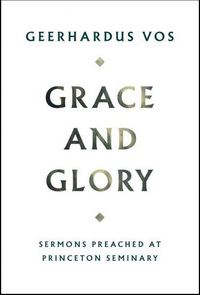
Grace and Glory by Geerhardus Vos (Banner of Truth Edition): A Fantastic Sermon Collection

Grace and Glory (BoT Edition)

Grace and Glory

by Geerhardus Vos

Hardover, 291 pg.
Banner of Truth, 2020

Read: January 3-April 18, 2021
Grab a copy from your local indie bookstore!

Oops

Back in 2019, I went shopping for a copy of these sermons by Vos and found a handful of editions. I picked one purely based on price. It looked like a decent quality version, but nothing fancy. Sure, the Hardcover published by the Banner of Truth would be nicer, but I didn’t need the fancy cloth binding.

What I learned later was that the Banner edition included ten additional sermons. So passing that over to save a couple of bucks was not the brightest move I’ve ever made.

I’ve mixed in what I posted about the shorter version with the rest of this post, in case someone’s in the mood to get all persnickety about plagiarism.

Christ’s work for us extends even farther than the restoration of what sin has destroyed. If Christ placed us back there where Adam stood in his rectitude, without sins and without death, this would be unspeakable grace indeed, more than enough to make the gospel a blessed word. But grace exceeds sin far more abundantly than all this: besides wiping out the last vestige of sin and its consequences, it opens up for us that higher world to whose threshold even the first Adam had not yet apprehended. And this is not a mere matter of degrees in blessedness, it is a difference between two modes of life; as heaven is high above the earth, by so much the condition of our future state will transcend those of the paradise of old.

What’s Grace and Glory?

For most people (who’ve heard of him), Geerhardus Vos is known as a theologian—one of the Twentieth Century’s brightest stars, the man who showed that the academic discipline known as Biblical Theology wasn’t the domain solely of Theological Liberalism, but that a robust, Bible-believing thinker could (and should) contribute to the field.

But before he was a theologian or professor, Vos was a preacher. And this small collection of sermons shows how capable he must have been.

Yes, there’s rich theology behind these sermons, but they’re primarily expositions and applications of the texts for the hearers. And, yes, the audiences of these sermons were students at Princeton Theological Seminary (before the downgrade that led to the creation of Westminster Theological Seminary), but these were not airy, academic addresses. Sure, as the initial hearers were largely future ministers, there are portions that are more applicable to preachers than to laity. But there’s not a lot of that, and even in the midst of one of those sections, there’s still a lot of gold to be mined.

The first person to whom he showed himself alive after the resurrection was a weeping woman who had no greater claim upon him than any simple penitent sinner has. No eye except that of the angels had as yet rested upon his form. The time was as solemn and majestic as that of the first creation when light burst out of chaos and darkness. Heaven and earth were concerned in this event; it was the turning-point of the ages. Nor was this merely objectively so: Jesus felt himself the central figure in this newborn universe; he tasted the exquisite joy of one who had just entered upon an endless life in the possession of new powers and faculties such as human nature had never known before. Would it have been unnatural had he sought some quiet place to spend the opening hour of this new unexplored state in communion with the Father? Can there be any room in his mind for the humble ministry of consolation required by Mary? He answers these questions himself. Among all the voices that hailed his triumph no voice appealed to him like this voice of weeping in the garden. The first appearance of the risen Lord was given to Mary for no other reason than that she needed him first and needed him most. And what more appropriate beginning could have been set for his ministry of glory than this very act? Nothing could better convince us that in his exalted state he retains for us the same tender sympathy, the same individual affection as he showed during the days of his flesh.

So, what did I think about Grace and Glory?

When I wrote about the original edition, I stated that: I don’t think it was by design, but the second, fourth, and sixth sermons were the ones that I appreciated most—my notes weren’t really that helpful, especially now. All I wrote about #2 “Hungering and Thirsting after Righteousness” was “Wow! Fantastic.” True, but that’s not really helpful—Vos opens up the idea about how Christ uses the believer’s faith (hungering and thirsting) to fill and bless them. The sermon “‘Rabboni'” (about Mary’s encounter with the risen Christ near the tomb) is less than twenty pages long, but was better than Richard Sibbes’ sermon series (184 pages in the Banner of Truth edition) on the same passage—I can’t do it justice here, so I won’t try. And the last sermon? It’s worth more than the purchase price of the whole book.

I also said that I fully expected when I re-read this book in 2021 or so, I’d say something just as strong about the odd-numbered sermons and wonder what I was talking about now. That’s wasn’t the case, in retrospect, but I would put “Rabboni” ahead of “Heavenly-Mindedness” (which was still worth the purchase price of the paperback). J. Gresham Machen called “Rabboni” “one of the finest expository sermons I have ever heard.” It’s definitely one of the finest I’ve ever read.

I was a little less taken with the additional material than I wanted to be—nothing was bad, mind you, but I think the original compilation was stronger. Naturally, there were a couple of exceptions, “The Eternal Christ” and “The Gracious Provision,” were just as strong as any of the first group.

As Scott Clark mentions in his forward to the Solid Ground Publication edition, Vos was a poet (particularly in retirement, but before then, too). And you can see that in some of these sermons—they practically sing. I can only imagine how captivating these were hearing them, they’re stirring just reading them.

Either edition qualifies as one of the best collections of sermons I’ve ever read. My only complaint is that there were only six, until I found the additional material—now my only complaint is that there’s only one volume of these. Get this one.


5 Stars

This post contains an affiliate link. If you purchase from it, I will get a small commission at no additional cost to you. As always, opinions are my own.

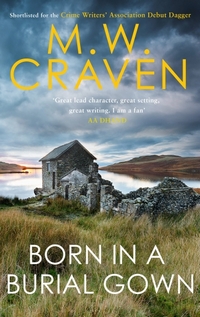
Born in a Burial Gown by M. W. Craven: Before Washington Poe, There was Avison Fluke.

Born in a Burial Gown

Born in a Burial Gown

by M. W. Craven
Series: Avison Fluke, #1

Paperback, 331 pg.
Constable, 2020 (revised and updated edition)

Read: March 12-16, 2021

Find out how the victim lived and you’ll find out how they died.

Here We Go Again

You may be asking yourself, is this just another instance of The Irresponsible Reader raving about a book by M. W. Craven? Yup. This is the fourth novel that I’ve read (of the five published to date), and I’m not sure there’s another acceptable response to his books.

What’s Born in a Burial Gown About?

I have no idea if that sentiment about how the victim lived would be shared by actual detectives, but it works pretty well for Detective Inspector Avison Fluke and his team—which is why Fluke keeps repeating it.

In this particular case, a homeless drug-addict sees someone burying a golf bag at the construction site that he’s using as a temporary shelter. He leaves a note for the construction manager and bugs out. When Fluke and the other police arrive, they find a woman in a golf bag, buried in a way that will soon be covered by the construction. If it hadn’t been for the unexpected witness, no one would even know there’d been a body left there.

What’s worse, she has no identification on her. Then during the autopsy, it’s discovered that she’s had major cosmetic surgery to the extent that it’s impossible to know what she really looked like. So, no ID, no reliable way to describe her to anyone who knows her, nothing to tie her to a residence or employer. Before the team can really figure out who killed her, they have to figure out who she was. Put in the terms of Fluke’s motto—they have to find out how she lived to find out who she was so they can find out how she died. No easy task.

Throw in mounting pressures from some of the things in Fluke’s life—and you have a ticking time clock on this beyond the need to close the case quickly. And almost everything they learn about this woman makes the rest of the investigation more difficult.

Meet Avison Fluke

Some detectives tried to keep things impersonal so they could maintain objectivity. For Fluke, it was the opposite. He worked at his best when he made a personal connection with the victim.

She’d been tossed away like garbage, he thought. He could feel the anger building in his stomach.

I assumed going in that I was going to like Fluke, but you never know, do you? Often a new character from an author you love just doesn’t work. But on page 16, Fluke gets a belligerent and grumbling construction manager to stop his ranting and help out by lying to him and saying they could be out of his hair and let construction resume in “maybe an hour.” Right then, I knew that I was going to like this guy.

Like your typical Detective Protagonist, Fluke has issues. Not that long ago, he was undergoing aggressive treatment for a rare form of cancer, which has taken its toll on his health and vigor. Still, he’s back to work (for his own sanity, if nothing else), even if he had to cut a corner or two to get there. The city is on the verge of kicking him out of his freshly-built house because he cut a corner to get it built. He and his Detective Chief Inspector don’t get along and don’t seem to respect each other much. Professional Standards are sniffing around him. Oh, and early on in this book, his girlfriend dumps him.

Okay, that last one isn’t an issue, it’s a blessing, really.

So, what’s on the plus side? He’s smart. He’s determined. He has a team of loyal detectives—whose skills are frequently underestimated. Fluke’s approach to interviewing suspects is pretty interesting, and I wonder how well it works in reality. As a fictional character, Craven has taken all of what I’ve enumerated, a few things I forgot to list, mixed it together, and uses it to fuel his deeply personal need to find the killer—to take that connection that he made and dodge all the obstacles that are thrown at him so he can find a target for that anger. He’s just fun to read, too. Something about the chemical reaction that Craven produces from the mixture of these elements just makes Fluke an entertaining character.

Also, he has heterochromia. Which is an odd thing to give a character. If this were SF or Fantasy, you could pretend that’s a sign of X ability. Or in a visual medium, I could see doing something like that to make an impression. But in print, I’m not sure I see the point, it doesn’t seem to be all that helpful in creating a character. Craven gets some interesting use out of it, so what do I know?

And We Shouldn’t Forget Fluke’s Team

Like any good procedural, the investigative team is vital to get right. Craven does that for sure. There’s DS Towler, Fluke’s right-hand man and close friend—he’s a little on the wild and violent side, but seems to be careful about that and uses it safely. There’s the computer expert who’s on an UK/China exchange program—brilliant and has a very strange hobby. Also, the Ph.D. student working on forensic entomology—who is vital to making a couple of early deductions (you don’t introduce a forensic entomologist and not make them pivotal). And several more, and you get an efficient and effective team—great for police work, and just quirky enough to be great for entertainment.

Throw in Fluke’s doctor and a few other people in his personal life and…it’s a perfectly winning cast.

So, what did I think about Born in a Burial Gown?

‘She was born in a burial gown,’ he said.

He didn’t expand and Fluke didn’t need him to. He was right. It was a term he’d heard once or twice in the Marines, referring to who seemed to have a death wish. Someone who relished doing the things other people were terrified of. They were the first through the door and the last one to take cover. They appeared fearless, even reckless. And maybe they were.

Born in a burial gown seems to apply to many of the characters in this novel, not just the victim. Fluke, certainly; the killer, too; at least one of the suspects seems to fit the bill, too—even Fluke’s task force, collectively speaking, seems to fit this. This quotation comes pretty late in the novel, but once I read it, the ways that this applies to so made the book’s title resonate, and helped me think about the characters and some of their actions.

In case there was much confusion after the first paragraph. I just loved this book. The prose just sings, the novel’s well-paced and cleverly put together. The characters (major and minor), the killer, the motive, the victim, the reveals (both in the way they were handled and what was revealed), the fairly satisfying (by design) ending, the sweet and then very satisfying denouement—and anything else I didn’t mention—it’s all just as good as you could hope for.

I’m clearly just a raving Craven fanboy at this point, so let me just leave it like this—go buy this. Go buy anything you see his name on—you won’t be disappointed. Born in a Burial Gown is my favorite read of the year*, and I bet it’ll rank pretty high for everyone who reads it.

* So far, anyway, it’s early enough in the year that I figure a few new upcoming releases—including Craven’s—will make a case for that spot.

One last note—if you happen to have a contact in the US publishing industry, get him a deal over here, so I don’t have to pay so much for shipping, will you?


5 Stars

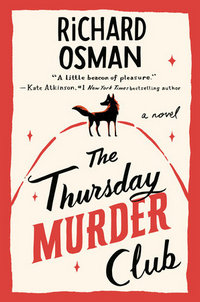
The Thursday Murder Club by Richard Osman: Well, I Know What I Want My Retirement to Look Like

The Thursday Murder Club

The Thursday Murder Club

by Richard Osman
Series: Thursday Murder Club, #1

Hardcover, 351 pg.
Pamela Dorman Books, 2020

Read: February 22-23, 2021
Grab a copy from your local indie bookstore!

“So, we were all witnesses to a murder,” says Elizabeth. “Which, needless to say, is wonderful.”

What’s The Thursday Murder Club About?

Britain’s first seventh “Luxury Retirement Village,” Coopers Chase is built on the remains of a Roman Catholic convent. On Thursdays, the Jigsaw Room is booked for “Japanese Opera: A Discussion,” during the two-hour slot between Art History and Conversational French. This isn’t actually what happens then, but it’s a great way to dissuade people from dropping in.

What actually happens is that a group of four residents get together to look over cold cases and see if they can make any progress with them. One of the group’s founders was a detective in the Kent Police, and it’s her cases they started going through. When necessary, or when the opportunity presented itself, they’d bring in various experts to consult. Shortly before the book opens, they’d had a change in membership, the former detective’s health had put her in the hospital ward, and when they’d asked a retired nurse for some input, she’d been curious enough to attend the meetings.

At that point, the roster consisted of a socialist activist of some renown, a retired therapist, and a well…we’re never told precisely what Elizabeth did, but The Official Secrets Act and a lot of foreign travel was involved.

Then one of the owners of Coopers Chase, the man who did the actual building, is murdered. Suddenly, they’re not that worried about cold cases, when they have a current case to help the police with (whether the police want/need their help isn’t a consideration).

How the Story is Told

Primarily, the book is told from a variety of third-person perspectives—focusing on most of the Club, a police constable, a Detective Chief Inspector, and others involved in Coopers Chase. It’s a great way to tell this story, you get to know all the characters, see everything going on, and get a real feel for this world. But what makes this better—what helps the reader get into this world, is the retired nurse, Joyce. As she gets into the Club as a whole, and especially as she becomes friends with Elizabeth (in less charitable moments, you might say she’s becoming Elizabeth’s sidekick—and I’m not certain Joyce would mind that), she starts keeping an electronic diary, and Osmund will insert an entry between chapters as a way of breaking up the text and helping the reader to focus on certain elements of the third-person narration.

Through this diary we see her joy in finding something to do, in making friends, in pursuing a romance, in skirting trouble with the police. It’s not really clear how involved Joyce was in the overall Coopers Chase community until this case, but this gives her a spark and opens new worlds and possibilities for her, and it’s heart-warming (at least) to read the progression of this. I will say, in bed with limited light, the typeface that is used for her diary entries (at least in the American Hardcover) wasn’t that easy for me to read—but it was absolutely worth the effort.

Initially, that’s all I wanted to talk about, but I realized the other way to interpret “how” could use some discussion. Osman writes with warmth, gentle humor, heart, and charm. Joyce’s diaries are delightful and the this-person narration is close to that, too. This is a book of dark things—murder, secrets, depravity, scandal, declining health, dementia, grief, loneliness, and death are everywhere. But there’s also community, friendship, and hope—and those latter three so characterize the book that the darkness seems surmountable and something you can be carried through because of the warmth and community. It’s hard to pull that off while being honest about the human condition—but Osman pulls it off with aplomb.

A Pond’s Worth of Red Herrings

I don’t remember the last time I read a mystery novel so full of red herrings—in terms of clues or viable suspects. I loved that—sure, some were easy to spot as being a red herring. But more than once I had to admit to myself that Osman had fooled me.

I love a smart mystery, one that makes me think, one that tricks me (without cheating too much), one that surprises me—and that’s exactly what we get here.

So Many Confessions

Part Two of the novel is called, “Everyone Here Has a Story to Tell,” and man, is that descriptive. There are, by the time all is said and done, several criminals in this book—and some people who aren’t criminals, yet carry a terrible weight of guilt (both deserved and not). And we get all of their stories—sometimes through the narration, but largely from their own dialogue. Secrets are laid bare—primarily for the Club and the reader, but some for a larger audience. Not all of them help anyone get closer to the killer (killers?)—but they all help tell the story.

Some confess because they’ve been waiting for the opportunity (as well as dreading it), some because they’ve been forced into it, some because it just doesn’t matter anymore. Ultimately, it doesn’t matter why they do it, only that they do.

So, what did I think about The Thursday Murder Club?

It is this kind of thing that keeps me reading Crime Fiction—as much as I might read police procedurals and PI (or PI adjacent) novels by the handful, you give me a clever assortment of characters doing interesting things and getting results from a combination of work and smarts and I’m in hog heaven.

A moment ago, I mentioned the title of Part Two. Part One is called, “Meet New People and Try New Things.” For Joyce and Donna (the Police Constable), that’s plainly what this book holds—Donna’s first homicide case and something that puts a spring in Joyce’s step and a twinkle in her eye. But it’s actually true for just about all the characters, and who doesn’t like the idea of a group of septuagenarians (give or take a couple of years) having new experiences to try?

On the off-chance my mother reads this in the next couple of days, I’m going to spoil her birthday and tell her that this is going to be waiting for her on her e-reader. I mention this publicly to illustrate how much I like this book—while I still had over one hundred pages to go, I was already planning on getting it for her (unless the ending was a mess).

A smart mystery, told well, with characters that are just as smart and well-told. I can’t think of a thing about this novel I didn’t like—it was touching, amusing, honest about the circumstances that these characters found themselves in, but life-affirming, too. There’s a lot of profundity mixed in with the amusement—and a clever mystery, to boot! This is not one to pass up.


5 Stars


2021 Library Love Challenge
This post contains an affiliate link. If you purchase from it, I will get a small commission at no additional cost to you. As always, opinions are my own.

The Trinity: An Introduction by Scott R. Swain: A Brief but Deep Study

The Trinity

The Trinity: An Introduction

by Scott R. Swain
Series: Short Studies in Systematic Theology

Paperback, 133 pg.
Crossway, 2020

Read: January 17-31, 2020
Grab a copy from your local indie bookstore!

What we find in later Trinitarian creeds, confessions, and doctrinal summaries are not improvements upon a latent or undeveloped biblical Trinitarianism but, rather, the church’s attempt to fathom the depth of the riches of biblical Trinitarianism for the sake of various liturgical, pedagogical, and polemical ends. Some of the church’s creeds, confessions, and doctrinal summaries represent such faithful expressions of scriptural teaching and enjoy such wide-ranging ecclesiastical consensus that we dare not transgress the lines they have drawn. Rather, taking them on our own lips, we gladly join the church’s chorus of Trinitarian praise.

What’s The Trinity: An Introduction About?

It’s kind of there in the title, right? This is an introduction to the classical Christian doctrine of The Trinity. He’s not trying to re-invent the wheel, he’s definitely not trying to innovate, but to provide a concise (it’s a Short Study, after all) jumping-off point into deeper studies by providing a solid foundation.

He spends two chapters looking at the primary Biblical texts demonstrating the Doctrine. Chapter 3 is about the Simplicity of God—something too many overlook in a discussion of The Trinity. The following three chapters each focus on a Person of the Trinity. The final chapters are about the “external works” of the Trinity, the “appropriation” of specific works to particular persons, the beneficiaries of God’s work, and assorted topics.

All of that is a lot to ask of 133 short pages. Swain pulls it off by being concise, but he never seems to be leaving out details or avoiding the complicated ideas (although he obviously has to).

Touching on Controvery

This isn’t a polemical work—Swain is here to inform and educate, not combat. Still, he does talk about some Christological errors, including the contemporary dust-ups over EFS/ERAS—Eternal Functional Subordination/Eternal Relations of Authority and Submission.

Swain briefly (again, it’s a Short Study) addresses this error. He’s calm, he’s fair, yet he’s firm. It’s one of the best short treatments of the controversy I’ve seen, and in the context of the larger discussion of the Person of the Son as well as the larger discussions of each of the Persons, it’s incredibly helpful. It also fits where he put it and doesn’t seem like Swain used the opportunity as a digression just to beat a pet theological peeve.

Helpful Supplemental Material

Maybe it’s just me, but I rarely find the post-text material all that helpful. This book was one of the pleasant exceptions—there’s a brief glossary of some of the technical terms. Also, the “Further Reading” suggestions look great and my “To Buy” list grew a bit.

So, what did I think about The Trinity: An Introduction?

Because the persons of the Trinity are internal to God’s life, not external works of God, we can know the persons of the Trinity, as well as their ultimate plan for creation (Eph. 3:9), only if they stoop down and open up the depths of their inner life to us. Only the persons of the Trinity know the persons of the Trinity. Therefore, only the persons of the Trinity can make known the persons of the Trinity. The revelation of the Trinity is a matter of divine self-revelation, divine self-presentation, divine self-naming.

While this is a theological book, drawing on the teaching of the Church, Swain is careful to never lose sight of the source of this Doctrine, the Word of God. We know this, we understand this (as much as we do) because it is revealed to us. That’s vital to an understanding of the doctrine, and vital to the teaching of it. Swain doesn’t let his readers stray from the text.

This is one of those books where my notes keep saying “Chapter X is likely the highlight of the book,” “the section on X is likely the most valuable in the book.” It appears 60-70% of the book is a highlight—and I may not have written all of those parts down. Which is to say, there’s a lot of gold here, very little (if any) dross.

Helpful, insightful, and useful—it also achieves its end for leading on to further study for me. It’s accessible, but not easy, reading. At the same time, it’s a challenging, but not difficult, text.

Also, I like the looks of this series as a whole, I’ll most likely be grabbing more/all of them if they’re all about this quality.


5 Stars

This post contains an affiliate link. If you purchase from it, I will get a small commission at no additional cost to you. As always, opinions are my own.

Blacktop Wasteland by S. A. Cosby: Entertaining. Stunning. Devastating.

Blacktop Wasteland

Blacktop Wasteland

by S. A. Cosby

Hardcover, 385 pg.
Flatiron Books, 2020

Read: January 28-February 1, 2020
Grab a copy from your local indie bookstore!

Meet Beauregard Montage

The secret ain’t about the motor. That’s part of i it, yeah, but that ain’t the main thing. The real thing, the thing most people don’t want to talk about, is how you drive. If you drive like you scared, you gonna lose. If you drive like you don’t want to have to rebuild the whole engine, you gonna lose. You gotta drive like don’t nothing else matter except getting to that line. Drive like you fucking stole it.

Beauregard heard his Daddy’s voice every time he drove the Duster.

The first thing we learn about Beauregard (nicknamed “Bug”) is that he is both a great mechanic and a great driver. We see that at the start as he wins a street race to help pay his monthly bills. The second thing we learn is that he’s capable and willing to give a man a beating—both efficient and effective—if he’s crossed (read: cheated out of winnings).

Beauregard runs an auto-repair shop in a small Virginia town. He was doing okay for himself until a few months back when a new, better-financed shop opened up in town. Now he’s losing customers by the handful, and may not be able to stay open for more than three months.

He’s deeply and madly in love with his wife and is a devoted father to two great sons (one complaint—possibly my only one is that we don’t get more time with the boys). But one of them needs braces. His wife works too hard, and he’d like to lighten her burden—and provide a nicer home. His daughter (from before he was married, and he never had any kind of custody) can’t afford college and plans on working for a while before she can afford it (the reader knows, and I think Beauregard does, too, that she’ll never make enough to get there). His mother’s in a nursing home, and there’s some sort of financial problem there, too.

He’s got all that he needs, and it’s all about to slip through his fingers.

The “Life”

Beauregard thought about the clichéd scene in every crime movie where the main character who has gotten out of the “Life” buries his weapons under a hundred pounds of concrete only to have to dig them up when his enemies come knocking at his door.

He understood the appeal of the symbolism for filmmakers. It was just unrealistic. You were never out of the Life completely. You were always looking over your shoulder. You always kept a gun within reach, not buried under cement in your basement. Having a gun nearby was the only way you could pretend to relax.

It wasn’t all that long ago that Bug* received the bulk of his income from illicit means. He was part of a crew, he was a wheelman for them—among other things. He’s a meticulous planner, has an eidetic memory, and can do mental math at a speed I can only envy. He planned whatever the crew was going to do—and woe to anyone who did not stick with his plan to the T, or gave him bad information while planning.

* Beauregard tends to think of himself as “Bug” when he’s thinking of the reckless, thrill-seeking lawbreaker side of him, and “Beauregard” when he’s living the way he should. I’m following that.

But he decided he needed to be a better father than his own (who never left the Life and left home when it became too dangerous for him to stay). He’s been living straight since then. He misses the rush, he misses the work—mostly the driving. But he has better things to focus on now, and he’s largely successful.

But is he at the end of that? There are just too many things he needs to pay for and only so much money.

The Temptation of Bug

One of his last jobs, before he went straight, was with Ronnie Sessions—he had an idea, Bug came up with the plan, did the elaborate work necessary to pull it off. And then because Ronnie had faulty intel for him, the job fell apart and Bug was out thousands in expenses—and he didn’t get the payday. He hasn’t seen Ronnie since.

But now Ronnie’s back, at just the right time (or wrong, depending on how you look at it). He’s got a juicier target. One that will erase most of Beauregard’s immediate needs, and will make things more comfortable for a while into the future, too.

After some thinking, some waffling, (this isn’t a spoiler, the book needs something like this), he agrees and takes over the operation.

Car Chases

I am not a car guy. I know almost nothing about cars, I can do basic maintenance (or I could a long time ago, I’m not sure I’m capable anymore). I’m an adequate driver. I can correctly identify maybe 40% of the cars I see on the road.

However. I am a red-blooded American male. I love car chase/driving scenes.* Like in Blues Brothers, half the TV (and a good number of movies) I grew up watching in the 80s, Bourne Identity, Baby Driver (I could watch the opening sequence on a loop for hours)—the only positive memory I have of the second Matrix movie was the elaborate car chase scene. I could keep going, but you get the point. They’re harder to pull off in a book than they are on-screen, but when they work, they really work.

* I realize people who aren’t red-blooded American males frequently love them, too, I’m not arguing against that. It just seems more definitional of RBAM.

S. A. Cosby could give everyone lessons on how to do it properly. I don’t know that I’ve read any as good as his. So yes, there’s a lot that he has to say about class, race, fatherhood, and more. This novel is beautifully written, with a lyrical nature to some passages that will make you want to reread the paragraphs a few times just to take it all in. But also? It has great car scenes in case you’re worried about it being too highbrow and artsy.

Oh, It’s That Kind of Book

Men like your Daddy, like me, like you used to be, we don’t die in hospital beds. Ant wasn’t perfect. He loved driving, drinking, and women, in that order. He lived life at 100 miles per hour. Men like that, well, they go out on their own terms, usually with a bang.

Fairly early, I decided I knew what kind of book I was reading—we’d see Beauregard and his situation, we’d get a little backstory about his criminal history and why he got out of “the Life,” we see the pressures making him think of returning to it (however briefly he intends on it), the temptation to do so, the planning and execution of the robbery, and so on. I was into the idea.

And then the (supposed) central crime is over in a few pages. Which surprised me. And then I noticed I wasn’t even halfway done with the book—which meant that the bulk of the book is about what happens as a result of the robbery. And given the tone of the book, we’re not talking hijinks and good times. My notes say, “Oh, it’s going to be that kind of book.

I’m not going to spoil anything and tell you why it was a mistake for Bug and his fellow thieves to rip off the place they rip off. But, it was a colossal mistake. And the repercussions are big.

Because Cosby had done such a good job making me care about Bug and his family, and the way he wrote the characters who objected to this robbery—I had a really hard time finishing this book. I’d literally have to read a chapter or two and then put the book down for 30+ minutes while I did something else. I just didn’t want to know how bad things got for the Montage family.

Still, there was no way I wasn’t going to finish the book. I had to know. So, I’d read another chapter or two, and then it’d get too much for me, and I’d start the cycle again. I added a day or two to my reading because of this (I did read the last 50 or so pages without a break, but I wanted one…). I don’t react this way to books, I just don’t. But, man, this got under my skin and I couldn’t do anything else.

So, what did I think about Blacktop Wasteland?

Is there any doubt?

Early on, this made me think of She Rides Shotgun by Jordan Harper. It had a similar sensibility, a book about a father throwing away a chance at…everything…so his kid(s) would have a shot at a decent life. I’d even started jotting down notes for a paragraph or two about that. And then I noticed that the last quote on the back cover is from Harper. So I was definitely not the first reader to see the link. Still, if you read Harper (or wanted to), you’ll want to get your hands on this. The converse is true as well.

But let’s focus on Blacktop Wasteland. From the first paragraph that made me sit up and say “Oh, this explains the hype,” to the devastating last line—and all points in between, Blacktop Wasteland is one of those books that a guy can’t describe without seeming hyperbolic.

Fantastic car chases. Great action. Compelling and moving family moments. Race as a deterministic factor in success. Class, too. What does it mean to be a father? Human depravity on display in a variety of ways from criminals small-time and Organized. Human frailty and striving for greatness, too. Blacktop Wasteland has it all. You’re not supposed to cry over a Crime Novel—and I didn’t. But it wouldn’t have taken much to push me over that line.

You’re not a Crime Fiction reader? I get that—and don’t worry, you can just think of this as General Fiction/Literature and you’ll be fine. I’m repeating myself. This is a great novel, go read it.


5 Stars

This post contains an affiliate link. If you purchase from it, I will get a small commission at no additional cost to you. As always, opinions are my own.

Criminal Collective by Russell Day: Great stories about People at Their Worst

Criminal Collective

Criminal Collective

by Russell Day

Paperback, 268 pg.
2020

Read: November 16-20, 2000

Murder is just another service the nation’s capital has to offer. Like any service industry, you get what you pay for. Less than a grand, in some quarters, will buy you a thug with a baseball bat and a good swing. And at no extra cost they’ll usually tell all their friends about it then spill their guts to the police, once they’re hauled into an interview room.

Creating a dead body is the easy bit. Making it vanish, without questions, now, that’s skilled work. If you pay the extra, someone like me will make the body, the evidence and any troublesome connections melt away, like snow in a heatwave.

What’s Criminal Collective About?

This is a collection of shorter stories from Russell Day, one of my favorites in Crime Fiction. There’s really not much more that I can say, but it seems to brief to move on at this point, so let me just steal from the back of the book:

Do you struggle to know the best place to bury a dead gambler?

Do health care professionals laugh at your attempts to fake a slipped disc?

Do your weapons choices leave you embarrassed at punishment beatings?

If the answer is yes, then Criminal Collective is the book for you! Nineteen stories, each one written to help navigate the tricky etiquette of being a scumbag in the 21st century.

Never again be left nonplussed by the rules of Roadkill Roulette!

Never again mistake your German Virgins for your Automatic Nuns!

Never again leave your fingerprints on a golok!

Criminal Collective! Permanent solutions in an uncertain world.

Doc Slidesmith and Yakky

All the troubles I’ve had over the years have been handed to me by the living not the dead.

There are three Doc Slidesmith stories (one might be novella-length, I’m bad at judging that). For me, these are the highlight of the collection—one of my highlights of the year (have I mentioned how much I love Slidesmith?).

There’s “The Tattooist, The Tarot, and Bang-Bang the Clown,” in which someone ducks into the wrong shop while running from the cops. That was plenty of fun. Then there’s “Not Talking Italics,” which I wrote about two years ago, and loved just as much this time around. Seriously, a short story should not be this good.

The novella (or so) piece is called “Coming Up with a Because (A Game for Three Payers). The three players are A Tattooist, A Nurse and A Solider and we focus on each of these in rotation as the novella tells what happens when a figure from Doc’s past comes looking for a favor. I spent more than a few pages convinced I was a step or two ahead of Doc. That was a mistake. I’m tempted to go on and on here, but it’d just be the ravings of a fanboy…

Doc Slidesmith—you won’t find an amateur sleuth smarter or more enjoyable to read about.

SF Stories

There are two stories that are a SF/Crime Fiction hybrid. Neither of them did much for me. Not that either were bad, I just didn’t connect with them. I’m betting if I tried them again in a couple of months, they’d click with me.

However, both made a reference to the “protein wars.” I’d love to read a story/novel/series about them, the idea intrigues me.

So, what did I think about Criminal Collective?

“I never wanted a different life, Dad,” Liam said. “I was trying to change who I was. I wanted to be someone who wanted the life I had.”

I’ve read that line a few times since I read that story. I think I’m going to have to read it a few more to fully digest it.

There was one other story besides the SF ones that didn’t wow me. All three were okay, though. Not a bad one in the bunch. And the highs more than made up for the not-very lows.

Some of these elicited chuckles, some were disturbing (I mean, put the book down and think about something else for a bit disturbing*), there were a few that had an emotional punch that seemed out of balance compared to the brevity of the story—which speaks to how quickly Day can pull the reader in, and get you invested in some pretty unsavory characters.

* That’s not an exaggeration.

I’d love to talk about some of the stories in detail, but to do so would involve spoiling them—but if you get this book as you should, you’re in for a real treat when it comes to “Click. Size Zero. Delete”, “Reduced to Clear”, and “Colon: Full Stop” in addition to the Doc Slidesmith stories.

As always, Day’s ability with voice and style is at the forefront here—it’d be easy to believe that nineteen authors contributed to this anthology rather than one author creating nineteen distinct voices.

Basically this was a treat from beginning to end, and as always when it comes to Russell Day, I strongly recommend this and encourage you to pick it up.


5 Stars

Page 10 of 24

Powered by WordPress & Theme by Anders Norén