Tag: 5 Stars Page 20 of 24

Make Me by Lee Child

Make MeMake Me

by Lee Child
Series: Jack Reacher, #20
Hardcover, 402 pg.

Delacorte Press, 2015

Read: September 22 – 23, 2015

“We should get a cup of coffee.”
Chang said, “I don’t understand how you drink so much coffee.”
“Law of gravity,” Reacher said. “If you tip it up, it comes right out. You can’t help but drink it.”
“Your heart must be thumping all the time.”
“Better than the alternative.”

I’ve got to get that embroidered on a pillow or something…

I’ve said it before, I’ll very likely say it again — it’s really hard to write about Jack Reacher books after a certain point. What can you say? Reacher comes into a town/city/locale, finds himself in the middle of a mess (or sees a mess and puts himself in the middle of it), beats some people up, probably shoots some others, makes sure the bad guys are punished (in one way or another), tries to save as many of the good guys as possible, probably has a brief affair, and then moves on. Same ol’, same ol’ — told in a tight, fast-paced, almost always exciting way. Lather, Rinse, Repeat as needed.

Every now and then you get something a little different — he’s hired to right a wrong/prevent a wrong, we get a flashback to his time in the military, or whatever. But by and large the books follow that pattern. And for the first 200+ pages, that’s exactly what Make Me gave us.

Curious about the name of the town, Mother’s Rest, and full of theories, Reacher rides in on a train to poke around for a couple of days and indulge his curiosity. It’s not like he has anything else to do. He’s briefly mistaken for a retired FBI agent turned private investigator, Keever, who has gone missing. A colleague, Michelle Chang, is also in Mother’s Rest looking for Keever (who she’s never seen in person, obviously). Now Reacher’s curious about a couple of things, and he starts working with Chang to find Keever. The locals don’t like this and threaten violence (naturally, they need to do so en masse for it to work). Par for the course, right?

But then when they start to learn what prompted Keever to be in Mother’s Rest, things get darker than usual. Don’t get me wrong — there’s a lot of real evil to be found in your typical Lee Child villain. But on the whole, they’re nothing that you can’t find in many mystery/thriller novels/tv shows/etc. Every now and then, however, you get something worse. While it takes a really long time to find out what’s worse about the villains in this novel, once the pieces start to come together — scratch that, when you start to see the pieces, you can tell there’s something twisted and vile going on here. That hunch gets more and more intense each chapter. Until all is revealed and you start to wonder if you left Lee Child behind and wandered into a Thomas Harris or Val McDermid novel.

There will be extended descriptions in a Reacher novel that are this strange mix of repugnant and fascinating — whether he’s describing the mechanism of a particular gun firing, the way a certain punch will affect both the puncher and the punchee, how a particular bone will break, or what have you. But the symposium on suicide methods and Internet culture around them just might have set a new high (or is it low?). Riveting and horrifying.

This book also contains something I’ve never seen in a Reacher novel before. I can’t get into it, but that Child would put Reacher in a situation like this impressed me almost as much as it surprised me.

I’m not 100% convinced this is a 5-star book, but if any Reacher novel is worth it, it’s this one. There are so many of the typical Reacher elements that are tweaked, played with, or broken here — all while telling a heckuva tale, remaining consistent with the character and world. Long time fans will really enjoy this. New readers will want to get their hands on as many of the rest as they can. And all of us will get really frustrated that we have to wait 12 or so months for Jack Reacher #21.

—–

5 Stars

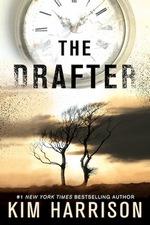
The Drafter by Kim Harrison

The DrafterThe Drafter

by Kim Harrison
Series: The Peri Reed Chronicles, #1
Hardcover, 422 pg.

Gallery Books, 2015

Read: September 17 – 21, 2015

Okay, I haven’t read the second or third Madison Avery book, and I haven’t found the time to read the last Rachel Morgan book (don’t ask, I can’t explain it either), so I might have to revise this a bit later — but I’m betting I won’t — this is the best book Kim Harrison has written to date. Hands down.

So Peri Reed is a Drafter. A covert agent for the U. S. Government in the near future (future enough that there’s all sorts of gear and tech that we have to imagine, near enough that we can relate). She (and 1 in 100,000 or so others) have this handy ability, when things go wrong, she can rewind time a bit and try it again. This is especially handy when mortally wounded. The downside? Doing that erases part of her memory — weeks’ or even months’ worth of it at a time. So each Drafter works with an Anchor. An expert in the Drafter’s personal history to help them put the pieces back together in a manner the Drafter can understand and move forward from.

Things are going well enough, when in the midst of her normal duties Peri finds some evidence that she’s been doing things she shouldn’t be, that she’s a renegade, a corrupt agent. This doesn’t sit easy with her, so she starts to investigate what’s really going on — and as long as she can remember what she’s doing and why, what she finds may shake up more than just her life.

It is almost impossible to track the plotlines of this book — you can experience it, but retell it? No — not without copious notes. One fellow blogger is demanding diagrams just to keep track of everything. And he’s not wrong. Peri keeps getting her memory re-written — memories that the reader is aware of, and others. There’s a mare’s nest of factions, agents, double agents, and possible triple agents; crosses, double crosses, triple and — I lost count of how many crosses a couple of characters were involved in. Plus time resetting itself. Mix in years of backstory that Harrison doles out in drips and drops. The result is that the reader is as disoriented as Peri — when she’s tripped up, we generally are. When she’s surprised by X doing something, we’re not sure what’s going on in X’s mind, either.

It’s hard to render an opinion on most of the characters. Because what we think we know about them may be Peri’s perception, may be reality, may be a cover, or . . . you get the idea? Peri at one point assures one woman that she remembers she likes her — doesn’t know anything about her, but remembers emotions. Which is pretty much all we have to go with as well. There’s a couple of people I know I like — a couple I know I don’t (even if some of them are supposed to be “good” guys) — but as far as how well drawn the characters are, it’s tough to say. Even Peri’s such a work in progress, it’s hard to get a good handle on her as a character.

Nevertheless, this is a book I highly recommend. It starts slow — very slow (I seem to be saying that a lot lately, I’m not sure when I became so impatient), but once all the dominoes are set (somewhere around the 100 page mark), Harrison starts the falling, and wow. It’ll suck you in, it’ll get you wrapped up in the web of deceit and efforts to unravel the deceit. More than anything, it’ll leave you wanting more.

—–

5 Stars

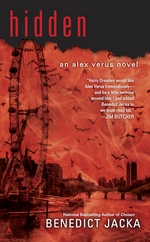
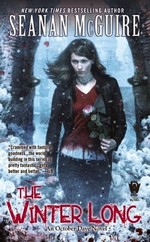
Review Catch-Up: Hidden by Benedict Jacka; The Winter Long by Seanan McGuire

These have been nagging at me for eleven months now. No, I have no explanation for why it took me so long, but I’m glad I took a lot of notes on both. I’m going to get this posted before I start the next Jacka novel (which should be happening today). While I’m at it, the next Toby Day is a couple of weeks away.

Anyway, overdue mini-looks at a couple of the best Urban Fantasies I read in 2014:

HiddenHidden

by Benedict Jacka
Series: Alex Verus, #5


Mass Market Paperback, 293 pg.
Ace, 2014
Read: September 26 – 30, 2014
. . . man, I have really missed Alex. Everyone’s favorite diviner has really come a long way, lately — shedding the near lone-wolf thing, and is now looking after a passel of magic rookies. Whether they want him to or not.

Anne Walker is definitely in the “or not” category. She’s done all she can to stay away from Alex — but she probably didn’t mean to include being kidnapped as one of those ways. Alex goes to some pretty dark places to help someone who doesn’t want it.

At the same time, Alex (via the Council) is feeling some pressure for the events of the last book. They’re also pressuring him to do some official work for them. Plus the rumors are getting more and more intense that his mentor, Richard, is back. If that’s true, no one is going to be happy. Naturally, everyone thinks that Alex knows what Richard is up to. And every time he says he doesn’t, he convinces them that he does.

So yeah, Alex has his hands full.

I think it was Chekhov who said that if a magic user grabs a focus in the opening chapters, that by the end of the book . . . Anyway, that was a nice use of it.

Not that Alex has had an easy life over the last couple books (or we wouldn’t be reading them) but the one big take away from Hidden is that it’s going to get a lot worse for our friend (I swear I hadn’t read that note when I wrote about Veiled over the weekend). There are other take aways, mostly happier, but I’ll leave that to you to find.

A wholly satisfying read. Get to know Alex Verus.

4 Stars

The Winter LongThe Winter Long

by Seanan McGuire
Series: Toby Daye, #8


Mass Market Paperback, 358 pg.
DAW, 2014
Read: September 13 – 16, 2014

I don’t like parties. Someone always tries to assassinate someone I actually like, and there are never enough of those little stuffed mushroom caps.

A book starts off with a line like that? You’re going to have fun.

Thankfully, one’s appreciation of a book doesn’t depend on how the protagonist acts. When I was on page 46, I wrote , “Granted, this is early, but Toby’s being stupid, foolishly so. She’s not paying attention to anything said during the fight she just had — actually, technically didn’t really have. Instead, she’s reacting to something that happened to a friend, and acting out of fear, prejudice and alarm. That disappoints me. Her saying, ‘that smile, brief as it had been, was all I could have asked for. A smiling Tybalt was a Tybalt who was still capable of stepping back and looking at the situation rationally. I loved him, but even I could find him frightening when he was fixated on vengeance.’ Man, choke me on the irony, McGuire.”

There’s just go much about this novel that I can’t describe without spoiling it. Let me limit myself to a couple of more notes: Toby lost a lot of blood on this one — I mean like The Bride in the Showdown at the House of Blue Leaves kind of a lot. It’s a good thing she has a healing factor to make Logan jealous. While she’s bleeding she’s having her world rocked.

McGuire takes a lot of what Toby’s “known” since we met her (all of which is what we’ve “known,” too) and turns it upside down and shakes the truth out. Every other book in the series has been affected by these revelations — in one fell swoop, she re-wrote previous 7 books — which is just so cool. It’s not that we’ve (we= readers and Toby) been wrong, our understanding is just . . . askew. There’s also some nice warm fuzzies in this book, which isn’t that typical for the series. McGuire’s outdone herself.
5 Stars

Armada by Ernest Cline

ArmadaArmada

by Ernest Cline

Hardcover, 349 pg.
Crown Publishing, 2015
Read: July 10 – 11, 2015This was fun, loads of fun. Not as good as Ready Player One — not sure it could’ve been, so let’s just take that off the table. But, it taps into the same vein of pop culture, gaming, and a desire for something that’s missing — family, father, social acceptance, etc. You take these elements, add a sense of humor and an adventure-driven plot and you get a winning read.

Now, Zack Lightman isn’t Wade Watts — he has friends, he has a great Mom (good grandparents, too, it seems), and some sort of a future. Okay, his life is a lot better than Wade’s. But, it’s not perfect. Especially when he — and he alone –sees a space ship from a video game outside the window of his High School. He figures he’s losing his marbles. And, you have to admit, the evidence is pretty convincing.

Until the next day, when another spaceship from the game lands at school — and others see it. It’s from the Earth Defense Alliance, and they’ve come for Zack. Not just Zack — all over the globe, they’re recruiting the best players of a couple of games (one flight combat-based, one ground-war based) to join a global force to defend the planet from an immanent alien invasion.

On the one hand, this is a dream come true for a die-hard gamer, SF nut, and daydreamer — a chance for glory, a chance to save the world, a chance to…meet a hot programmer-slash-gamer. On the other hand, did I mention the immanent alien invasion and near-certain death of all humanity (including Zack)?

Cline doesn’t give us anything new here – he takes every movie/novel/game about battles in space, alien invasions, First Contact, and so on that he’s seen/read/played (and actually tells you in the narrative which are the major influences); mixes them up and gives us one, big, gooey SF mishmash. I could read that all day long. Actually, I did. And I’d gladly do it again.

Ready Player One had a very limited cast — but Cline doesn’t repeat that. Zack has a couple of friends in high school, an ex-girlfriend, an old enemy, a mom, a boss. And then there’s everyone in the EDA that he meets — some higher ranking officers, his teammates and a new love interest. There are common bonds between all of them, but they’re not all just variations on Zack (like RPO‘s Wade and co.). I liked every character — even the less noble ones. These folks had heart, they had style — each one of them made me smile in a different way.

It’s easy to write-off Cline’s stuff as a litany of pop culture references with a thin veneer of plot. But that’s a mistake. His strength is the soul he puts into these characters. It’s in the interpersonal relationships, emotions, stakes — that’s where he shines. Even when you know something’s going to happen, even when you can see it coming 10 miles away, Cline still nails it. The ability to get to the emotional core — what some might call the emotional truth — of a scene, of a connection between characters? That covers up for a lot of shortcomings.

The worst thing about this book? I’ve read every Cline novel in existence. So the wait begins for whatever’s next.

I won my copy of this from the nice folks over at Read It Forward, if you’re not checking into that site on a regular basis, you’re missing something.

—–

5 Stars

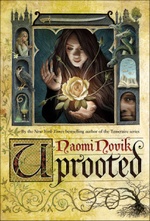
Uprooted by Naomi Novik

UprootedUprooted

by Naomi Novik

Hardcover, 435 pg.
Del Rey, 2015
Read: June 22 – 27, 2015
I hate, hate, hate when I don’t know how to talk about a book. It just drives me crazy. Uprooted is one of those books. It really needs to be experienced, rather than described. It’s completely familiar, but doesn’t do what you expect. It’s traditional, yet subversive. It deals with timeless stories, but feels contemporary. Utterly fantastic, but so often, feels real.

In short, Uprooted is magical.

I saw someone describe the protagonist and narrator, Agnieszka, as a mix of Katniss Everdeen and Jane Eyre. I like that — not only is it catchy, but it’s pretty accurate. She also reminds me a bit of Belle (especially the Disney version) and Julia from Grossman’s The Magicians.

Uprooted doesn’t grab you like a suspense novel, where you’re glued to the action, the adrenaline. It’s actually more effective and thorough — it draws you in and won’t let you go through the depth of storytelling, Agnieszka’s voice, the people and the world. You just want to live in those words.

On the one hand, I want to gush about this one. But it feels like this one needs to toot its own horn. Read the description, if it appeals to you at all, get your hands on it. It’ll be one of your favorite reads of the year.

—–

5 Stars

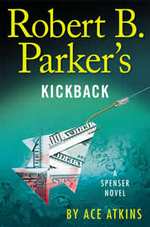
Kickback by Ace Atkins

KickbackKickback

by Ace Atkins
Series: Spenser, #43

Hardcover, 292 pg.
G.P. Putnam’s Sons , 2015
Read: May 20, 2015

As you may have noticed yesterday, I read Ace Atkin’s latest novel featuring Robert B. Parker’s Spenser. Now, with Ace Atkins/Reed Farrel Coleman taking over Robert B. Parker’s characters it’s really hard for me to be dispassionate/critical — unless they annoy me — or worse (see Michael Brandman, or — <a href="https://irresponsiblereader.com/2014/01/28/murder-in-the-ball-park-by-robert-goldsborough” target=”_blank”>Robert Goldsborough doing that for Rex Stout). I am capable of actual critical thought, I think. I’m pretty sure. But it takes time, and I just want to get this up. Soooo, I’m going to try to throw up some quick thoughts/impressions on Kickback

It started off strong — a couple pages of intro material from a third-person point of view that established a hopeless, inevitable tone. And then we turn the page and get something that might as well be vintage Parker. I smiled like a goofball throughout the note-perfect first chapter. It was like visiting an old, dear friend. Speaking of old friends, loved the callback to The Godwulf Manuscript (which, because I’m that kind of nerd, I feel compelled to point out I recognized before Atkins spelled it out). Atkins has been, and continues to be, skilled at dropping in these bits of Spenser’s background — enough to demonstrate that he knows the world and to satisfy fans like me — but not so much to clutter up things. Still, it’s time for Paul to show up.

As this is the 43rd installment of this series, it’s going to be reminiscent of a few others — there’s a little bit of Small Vices in this, and a couple of others, but this is primarily a new Ceremony, but without the moral ambiguity. In this case, we have judicial (and police) corruption tied to a private prison (in all but name) for adolescents in a small town. Some people have tried to fight this, but it only serves to make things worse — fatally so in some cases. This isn’t anything new to Spenser or crime fiction, in fact, it’s borderline clichĂ©. But Atkins treats it with respect, and uses the tried and true story to reflect on current problems with the prison industry.

Hearkening back to Crimson Joy (maybe others that I’m not remembering), we have some third-person intercalary chapters — more successful than the serial killer’s POV in the earlier work. These trace the arrest, court appearance and detention of one of the town’s youth. Not Spenser’s client — but someone he befriends. The knot in my stomach got tighter and tighter each time. Really well done.

I continue to like Susan Ă  la Atkins, she’d gotten boring during Parker’s later years, but she’s back and fun. Hawk is still Hawk, but Atkins has turned back the clock a bit on him, too. I’m going to stop here before I mention how Belson, Quirk, and so on have received similar treatment. This has reinvigorated the series, renewed my interest (and, from what I’ve seen) and the interest of others — this is just what Spenser needed. Yes, I’d rather Parker had done this — but I’m glad Atkins has in his place.

I do think the last fifty pages or so were rushed — things outside the detention center seemed rushed — another chapter or two spent gathering evidence might have helped me accept things. Still, so many other things in this one worked so well, I was able to overlook it (I might have harsher things to say later on, or with future re-reads).

I’m giving this 5 Stars. I’m not utterly convinced it earned it — if it was another author with another P.I., I might not. At the same time, from page 1 on, I was hooked and only put this down for a few seconds at a time when work required it until I was done. I laughed, I worried about a couple of clients, I had fun — I was thoroughly engaged the whole time. Which pretty much equals 5 Stars no matter who wrote it and who starred in it. I really, really liked it — but I could’ve told you that was probably going to be the case months ago when I ordered it.

—–

5 Stars

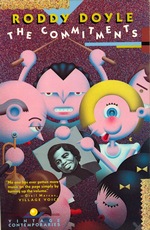
Reread Project: The Commitments by Roddy Doyle

The CommitmentsThe Commitments

by Roddy Doyle
Series: The Barrytown Trilogy, #1

Paperback, 165 pg.
Vintage Contemporaries, 1987
Read: April 15, 2015

Will yeh please put your workin’ class hands together for your heroes. The Saviours o’ Soul, The Hardest Workin’ Band in the World, —Yes, Yes, Yes, Yes —The Commitments.

This is a tough one for me to talk about — I’m a long-time fan, I’ve read it a dozen or so times, it’s all I can do to not turn total fan-boy and just gush. eh, I might not try too hard.

My college roommates and I became fans of the music video for “Try a Little Tenderness” from the soundtrack for the movie adaptation, and we waited for what seemed like a interminable amount of time before the movie came to the art-house theater in town. I loved it from the opening sequence on and tracked down the novel the next day. It blew my mind (for reasons I’ll get into in a bit), and I read it a dozen or so times over the few years until I loaned it (and the rest of the trilogy) to someone at work. Naturally, I never saw him again (I ended up with a copy of Gaines’ A Lesson Before Dying and another book in the transaction). I finally let myself buy a replacement copy a few years ago (found a used copy with the same cover), and have now read it twice. And, if anything, my appreciation grows each time.

It’s the late 80’s and three young Dubliners (from the poorest part of Dublin) have formed a band — sort of. Not everyone in it are musicians yet, but they’re working on it. Thanks to the direction of their keyboard (defined in the loosest possible way) player, they’re going to play synth-pop and go by the name “And And! And” (and, yes, I got the exclamation point in the right place). Their first order of business (while learning how to play) is to hire a manager. Jimmy Rabbitte is the guy from their school/neighborhood who’s the area’s music/music industry expert. As evidenced by the fact that he’s the first one anybody knew of that was aware of Frankie Goes to Hollywood — and, even greater — he’s the first to realize how bad they were. Jimmie gets things going immediately by dropping the name (especially that !) and the keyboard player.

Instead, they’re going to play American soul music — and then put an Irish twist on it — local slang, geographic references, and so on. Jimmie puts an ad in the paper to recruit some musicians, hits up a coworker he heard at a company party, and so on. As a result, he collects a very strange crew of musicians — including a trumpet player decades older than the rest of them, with plenty of professional experience (the trumpet in “All You Need is Love,” for example). The rest, as they say, is history.

The story of The Commitments is told through a very unconventional prose and dialogue style. It’s like Doyle took Leonard’s 10 Rules to the furthest point possible (other than #7, which he violates in every line). You can hear these characters talk, you can feel the energy in the room — heck, this book comes closer to capturing musical performances better than anything this side of Memorex or vinyl. Couldn’t tell you what anyone looks like (well, The Commitmentettes are pretty attractive — especially Imelda), what their homes are like, the weather, or anything of that other stuff that tends to fill the pages of novels. But I can tell you what happened, to whom, and how all related reacted. Which is good enough for me.

This isn’t one of those books that gives you diminishing returns upon re-reading. It’s fresh (while dated — no idea how Doyle pulls that off), funny, and full of soul. Dublin soul, of course. Just like the rag-tag musicians that come to life in its pages.

Oh, if you can get your hands on the soundtrack albums (or find them streaming somewhere) to listen to while reading, it makes it all better (even though there’s almost no overlap between songs).

—–

5 Stars

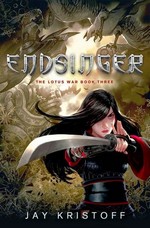
Endsinger by Jay Kristoff

Endsinger (The Lotus War, #3)Endsinger

by Jay Kristoff

Hardcover, 432 pg.
Thomas Dunne Books, 2014
Read: Dec. 16 – 23, 2014

Let me show you what one little girl can do.

Of course, if you’ve read the first two novels in The Lotus War, you’ll know the list of what this one particular little girl can’t do is probably much shorter. The only question at this point is, can one little girl survive?

Kristoff has quite the wringer to put you through before you get the answer to that. For example, within the first thirty pages — thirty — Kristoff reveals something about a character I’d grown to have a certain affection for, and pitied after what happened to them in the previous book which makes me question everything I thought about them. And then he does something to that character I’m not sure I’ll forgive him for (will still read him, don’t get me wrong, I’ll just bear a grudge).

On the other hand, Endsinger is filled with so many fist-pumping moments, and fun sentences — like

Hiro laughed like a man who’d only read about it in books.

that you can keep pressing on — and actually enjoy the book. Another example of this:

Michi’s foot connected with the Inquisitor’s groin like a redlining goods train. It was the kind of kick that made one’s testicles throw up their hands and move to a monastery in the Hogosha mountains. It was the kind of kick that made orphans of a man’s grandchildren.

I mean, that’s something that Bruce Willis should be saying as he takes on Hans Gruber’s second-cousin or whatever.

I’m not going to describe much plot-wise here. It’d be too difficult to do it justice at this point — if you haven’t read the first two books anyway, there’s not a lot you’ll understand here without a lot of effort on my part. And if you’ve read the first two, you don’t need that to be an inducement to read the this one. It’d be easy in a book like Endsinger to just point every character at the final battle, throw in an obstacle or two along the way and let that be that. Heck, just coming up with an excuse to have Yoshi and Buruu travel around for 70-100 pages as the best buddy comedy pair to come along lately would’ve been a very satisfying way of spending time before the big battle. Instead, we get character development — a lot of it. We get mysteries explained. We get new characters, we learn new things about characters that we’ve known really well since book one (or thought we did, anyway). And they’re all thrown at a couple of really big battles, with some obstacles to overcome along the way.

The themes of the first two books continue to be explored here. The two that stuck out the most for me were: what makes a hero, what do they look like and what’s worth fighting for — honor, family, love, something else. Heroes aren’t what you think they are, don’t look like you think they should like — even (especially) to themselves. But everyone knows one when they see and/or hear one. As for what’s worth fighting for? That’s different for every one.

You don’t think people should know what happened here?”
“Oh, I think they should know, no doubt. I just don’t think they’ll care.”
“How could they not?”
“Because it will be different next time. It always is.”
“Different?” Akithito frowned at the cloudwalker captain.
“Different,” the Blackbird nodded. “Whatever they fight over. It’ll have a different name or a different shape — religion or territory or black or white. People will look back on us and say ‘we could never be that blind.’ People don’t learn from history. Not people who count, anyway.”

There’s a measure of cynicism, realism and idealism in Kristoff’s exploration of these (and other) themes. It’s tough, and probably ill-advised, to try to pin one of these viewpoints on Kristoff. But it seems to me that idealism’s voice is a bit louder than the rest.

Kristoff is great at keeping you on your toes. Things are bleak, but you start to think that hope is on the horizon, that one cavalry or another is coming — and coming soon. And then the hope is dashed. Or you start to think that all hope is gone and things are going to fall to ruin, and this is going to turn into a YA historical dystopian series, but then a new source of hope, a new rabbit gets pulled from a hat. He blindsides you time after time, from every direction.

Kristoff is great at his pacing, there are many moments he lets breathe, lets the readers and the characters observe everything going on, taking in all the sensory information and the thoughts of everyone. But he’s also capable of throwing in a sudden scene to grab the reader. The quick scenes bouncing around between the various characters in the heat of battle really work well to keep the tension high (though that can be a bit confusing unless you force yourself to slow down and read carefully — which is the last thing you want to do at that moment).

After awhile — about three-quarters through the book, after all the death, destruction, and (seemingly) climactic confrontations and battles getting you to that point, you simply can’t believe Kristoff can keep it going. How can the book last so many more pages? Is he going to give us a Peter Jackson’s Return of the King-style multi-epilogue? Probably not, it really seem to be Kristoff’s style. And then Kristoff shows you how he’s going to fill the rest of the book, and you pity all his characters, even those you’ve grown to despise, because that’s just not right.

In the end, Endsinger is a very satisfying conclusion to one of my favorite series in recent years. It’d have been easy for him to go for a “Everybody lives, Rose” kind of thing, where Hiro and the Lotus Guild are destroyed, Yukiko and Buruu are universally hailed as heroes, the Kage take over, and happily ever after. But he doesn’t give us that. Instead, we get the kind of conclusion promised in the first two books: it was emotionally satisfying (and induced a wide range of emotions, and may have involved a Kleenex or two on my part), it gave characters real conclusions to their arcs (not all happy endings), it tied up what needed to be tied up and it pointed towards the future. I’m going to miss this world and most of these characters. But I’m glad Kristoff didn’t try to milk this longer — it’s great as it is.

—–

5 Stars

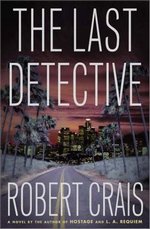
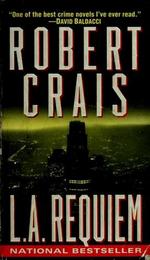
Reread Project: The Last Detective by Robert Crais

The Last Detective (Elvis Cole, #9)The Last Detective

by Robert Crais
Series: Elvis Cole, #9

Hardcover, 320 pgs.
Doubleday, 2003
Read: October 1 – 2, 2014

The Last Detective begins a few months after the L. A. Requiem and Joe Pike is trying to get himself back in fighting shape after his devastating injuries in exactly the place you’d expect — the Alaskan wilderness (isn’t that where’d you go?). Joe’s looking more mortal than he had since the shooting in The Monkey’s Raincoat, but like the tattoos indicate, he’s moving forward. While there he encounters an Alaskan brown bear? The way Crais describes it (which seems pretty realistic), if you stop and think about it — that’s horror, that’s terror. Hannibal Lecter, Martin Vanger, Alex Kork — that’s fiction, that’s fantasy. Brown bear? That’s reality. A reality I hope never to know better than I do now. But, this isn’t Joe Pike starring in Man vs. Wild, so we’re off to L. A.

Elvis and Ben Chenier are hanging out for a few days while Ben’s mom is out of town, Elvis and Lucy are still trying to recover from the hit their relationship took in Requiem. Ben goes off to play outside while Elvis is on the phone with Lucy, and then he doesn’t come back. Elvis gets scared, finds his video game laying in the brush below Elvis’ house. It’s not too long afterwards that they get a call — the boy didn’t get lost, he didn’t run away — he was abducted.

The investigation gets into full swing fairly quickly — Elvis calls in some favors from the police to help. Here we meet investigator Carol Starkey (from Crais’ Demolition Angel) who vacillates between appreciating Elvis’ investigatory skills and being annoyed with him. Lucy’s ex comes in, pushing his investigators into the investigation, trying to push Elvis out and generally making life difficult for him. Richard clearly has an Elvis-shaped chip on his shoulder and uses this circumstance to throw dirt on his ex-wife’s new love.

It seems that Ben’s kidnapping is related in some way to what Elvis did in Vietnam, and both the reader and those involved in the investigation learn a lot about something that Elvis thought he was done talking about. What some people called his secrets, he saw differently:

I wasn’t keeping secret. Some things are better left behind, that’s all, you move past and go on. That’s what I’ve tried to do, and not just about the war.

Elvis’ life before and during the war weren’t wonderful, and he’s tried to go on. But that’s no longer an option — he has to revisit a lot of that, which Lucy doesn’t react well to.

On the one hand, I’m still liking Lucy less and less for more of the same that I complained about last time. But that’s not to say I disagree with her — when she tells Joe Pike that the way he and Elvis live isn’t normal.

I don’t like the way violence follows you; you and him. I’ve known police officers all my life, and none of them live like this. I know federal and state prosecutors who’ve spent years building cases against murderers and mob bosses, and none of them have their children stolen . . . I am normal! I want to be normal! Are you so perverted that you think this is normal? It isn’t! It is insane!

. She’s right. But . . . well, see what I said last time. I sympathize, but I still don’t like her any more.

Now, this isn’t just a manhunt for the kidnappers — there’s plenty for Elvis to investigate, a few twist and turns and — of course, secrets unearthed and a decent helping of violence. The emotional toll these events take is worse than anything else, all things considered.

Although the focus is on Elvis and the search for Ben. We do learn a little more about Pike (no problems between he and the LAPD this time). We get a different explanation for Joe’s need for order and cleanliness than I’d surmised from Requiem, but it’s probably a combination. I’m only talking about it so much because for so long it’s what little we knew about him — he liked his Jeep spotless and everything immaculate. Joe displays his typical loyalty to Elvis here — it’s typical for him, it’s out-of-place in today’s world on the whole. He even takes on a debt that sets up a future book, a detail I hadn’t really paid attention to until now, but it was a huge move on his part.

John Chen returns — and is again helped to gain a bit of the spotlight he so craves, but he’s got skills of his own (and is probably learning a good deal from Joe and Elvis). He’s still a not good guy, really, but you can’t help but like him. I had a brief moment of fan-boy excitement when everyone’s favorite Vietnam Tunnel Rat turned LAPD detective puts in a cameo. It really helped lighten the oppressive mood. It was nice to see him in these pages, it was nicer still that it happened when it did.

This is the most intense, fastest-paced Elvis Cole novel yet. It’s all forward momentum (see Pike’s tattoos yet again — Crais isn’t the only one who can overuse them as a symbol). Part of this — maybe a large part of this — has to do with the fact that it’s a kidnapping case, every minute counts. It certainly doesn’t hurt that every chapter leads off with “X Hours, Y Minutes” since the kidnapping.

This is really great stuff here. Even though I remembered why the various villains were up to their villainy, seeing it revealed to Elvis still got me riled up as it was intended to, and though I knew how both the kidnapping and related stories wrapped up, I was still glued to the pages, turning as fast as I could. Which is the sign of a master of suspense writing — that even when there’s no suspense, the reader is still reacting as if there was.

—–

5 Stars

—–

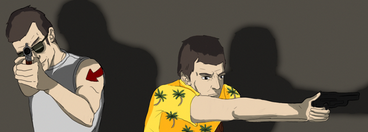
Drawing by Kirsty Stewart, chameleonkirsty on deviantART, used with permission.

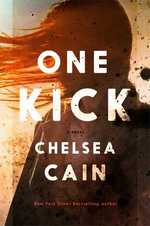
One Kick by Chelsea Cain

One Kick (Kick Lannigan, #1)One Kick

by Chelsea Cain

Hardcover, 309 pg.
Simon & Schuster, 2014
Read: September 19 – 20, 2014

When she was a kid, the shrinks told her she had anger issues. But she didn’t have anger issues, at least not the way that they meant. She was just angry.

As well she should be.

When Kit Lannigan was six years old, she was abducted by someone in the middle of the day and America (and her family) assumed the worst things possible had happened. Most of them did. But when she was 12 or 13, the FBI rescued her from her abductors. We meet Kit, now calling herself Kick, about a decade later, much changed. She’s seen a million shrinks, taken up all sorts of self-defense, forms of personal protection and weapons to make herself feel safe. She’s fairly well adjusted — and angry. She’s patched together a life that works for her. Then an arms dealer looking to do a little good in the world, John Bishop, comes to her. Bishop wants her help in tracking down — and hopefully rescuing — two local abducted children.

We are all relieved — and honestly, generally surprised — when one of those children we see on Amber Alerts gets rescued in relatively good health, particularly years after their abduction. But on the other hand, we do know (whether we say it out loud or not) that this poor kid is going to be dealing with this trauma for the rest of their lives. And on occasion, we get updates from them on morning news shows on the anniversaries of their rescues, or the occasional book. But on the whole, soon after their ordeal is over we forget them (which is probably good — anonymity is probably the best chance they have at a near normal life). Still, we’ve all wondered what life is like for them. We get one idea from the first couple of Lisa Gardner’s D. D. Warren books or Heitor Dhalia’s Gone. One Kick gives us one more. And it’s a doozy.

Is Kick as formidable a fighter as she thinks she is? Nope. She’s not a Gina Carano character or Charlie Fox. Which is a relief — I prefer seeing her not that capable — and yet, she thinks she’s much better than she is. Which is probably the only way she gets out of bed in the morning. Still, she could hold her own against more people in a fight than most of humanity.

There is a psychological realism to the depictions here that adds a degree of credibility to Cain’s characters and story. Now, I don’t know how realistic it is, honestly — but it sure seems real, and in a novel, that’s pretty much all you’re looking for. “Do I think that this trauma would/could result in this behavior?” is the only question the reader needs to ask. And Cain nails it with all her characters, not just Kick (although she does her best here, as we spend more time with Kick than the rest combined).

Do not get me started on Kick and her dog. So good.

If you’re not sure that this premise interests you? Stay away. The violence, the psychological damage, the rawness of it all will not appeal to everyone (probably shouldn’t, either). It’s not a fun, “yee-haw, let’s take out some bad guys” kind of suspense novel, either. Go into this with your eyes open.

Much more than a revenge novel, or a suspense novel about tracking down abducted children, One Kick is about some very damaged people trying to turn their experiences into something that can help someone else. If that provides a measure of relief for Kick, Bishop and the rest? So much the better. Good action, fast-paced (but not at a break-neck speed), some characters you probably don’t relate to, but can actually like. A couple characters you hate — a strong visceral kind of hate. Really worth the read. I’m looking forward to seeing where Cain takes Kick next.

—–

5 Stars

Page 20 of 24

Powered by WordPress & Theme by Anders Norén