Tag: 5 Stars Page 21 of 24

Reread Project: L.A. Requiem by Robert Crais

L.A. Requiem (Elvis Cole, #8)L.A. Requiem by Robert Crais
Series: Elvis Cole, #8

Mass Market Paperback, 539 pages
Published October 3rd 2002 by Pocket
Read: September 24 – 25, 2014


I know that I’ve read this one at least twice previously, but you wouldn’t have been able to prove it last week when I started my re-read of it. I’d spent the last few weeks while planning this series (and probably years before it), convinced that the events of The Last Detective happened in this book — and that the back story revealed here was revealed a couple of books earlier.

Not only that, I’d forgotten this was where we met John Chen! I’d even forgot that he was on the horizon! Sure, John Chen is a despicable, slimey guy. But there’s something about him I liked — even here, before any of his redeeming qualities are found (developed?), there’s something about John that’s likeable. He’s a creep, but he’s Pike’s creep.

Still, I’d clearly forgotten just about everything meaningful about this novel — at least as far as plot goes. I remember what I learned about Pike (but, as I said, thought I learned it elsewhere). Making this a lot of fun to reread. Which is, I guess, the whole point of rereading.

Anyway, to the book itself:

One of my all-time favorite movies is Midnight Run, if you haven’t watched it, shame on you. Really. There’s no excuse. Go rectify that situation. As you’ll recall, Jonathan Mardukus torments the bounty hunter bringing him back to LA with the question, “Why are you so unpopular with the Chicago police department?” Throughout this series, astute readers have likely been asking a similar question: “Why is Joe Pike so unpopular with the Los Angeles police department?” — at least I have (which is not to say you’re an astute reader if you haven’t been asking the question I have — clearly, you’re astute. And good looking. With a great sense of humor). Except for the times when the detectives have hard to travel out of town, we’ve seen animosity to outright hatred in the LAPD’s reaction to Joe (with the exception of Det. Angela Rossi). In these pages, we finally learn why (it’s an understandable, yet, mistaken reason — naturally). But we learn a lot more about him, here, too: the foundation for his obsession with keeping his jeep clean, why he’s driven in many of the ways that he is, and more — but this isn’t just a series of flashbacks — all we learn about Joe serves the main story as well as the character.

For a little change of pace here in book 8, Joe Pike brings in the client. In this case, it’s the father of a woman Joe dated back when he was a police officer, things ended badly, but not so badly that Frank Garcia has lost any respect for Joe. So when Karen goes missing one day, and the police won’t help him yet, Frank turns to Joe for help. Joe, naturally, brings Elvis along for this investigation.

The events that turned Pike into LAPD’s Most Hated are related to the outcome of this case — and not just because it makes every cop willing to believe the worst in Joe and not look too hard for an alternative explanation when Joe becomes a suspect. His partner jailed, the police hostile to any efforts to seek another suspect, the Karen Garcia case becomes Elvis’ most personal case yet (until the next book).

The various police officers and detectives involved in this book are just horrible — bordering on cartoonishly bad at the beginning. Not necessarily bad at their jobs, just bad human beings. Thankfully, Crais isn’t that kind of writer, and you learn there’s actually a reason for these men and women to act this way. Garcia’s able to use his political clout to force the detectives assigned to the case to let Elvis observe them, read their reports and whatnot. Which is resented (and not just because of Joe), particularly by the detective who’s forced to act as his liaison, Samantha Dolan. Dolan eventually softens to a degree, and her relationship with Cole acts as a precursor/template for another coming soon in Elvis’ life.

I’m going to break my anti-spoiler policy here, and rant a bit. If you want to read it, use your mouse to select the following paragraph:
Lucy, Lucy, Lucy — I am so disappointed in you. Of course Elvis is going to choose to help Joe here. Of course, he’s going to put his life on the line for his partner (who’s saved his life more than once). Of course, Elvis is going to bend the law (at best), going to pull out all the stops to find the killer and save Joe. What did you think he was going to do? Stop being Elvis? How did you two meet? What lengths did Elvis go to in order to help out these complete strangers and the woman who lied to him and fired him? And then what did he do for those kids, after you forced him to help? Not to mention the case that got you your job in L.A.? I get it, you’re in a vulnerable place, you’ve changed your whole life thanks to Elvis and you feel like he owes you a bit. But before you moved to L. A. you knew who he was. You knew the kind of man he was and what kind of dangerous work he did. I started disliking Lucy here, and that only grows in the next book (even if I sympathize with her more there), so that when she shows up in The Forgotten Man I don’t even want to see her.

Nothing is simple about this case — not the mystery, not the motive for the killings, not the various motives for the investigators, not the lives of those touched by the crimes/criminals/investigators. It’s all complicated, messy and very human.

In the end, this is Crais’ masterpiece. Which isn’t to say that he hasn’t written some very satisfying and enjoyable books after this — many of which I like more. But nothing’s as good as this one. This brings us to a new stage in the Cole books — one that continues to this day. I might contrast the two stages a bit more in the weeks to come (maybe during/after The Forgotten Man or maybe to go along with The Promise), almost making them two different series. And yes, I miss the old Elvis — but that’s not to say there’s a problem with the new one, it’s just noting a difference. It’s haunting, it’s disturbing, and will affect any reader that has an emotional connection to the partners. Really well done. Oh, and as a bonus, the last 3 or 4 pages are just gorgeous — probably the most “writerly” writing that Crais has done yet.

—–

5 Stars

—–

Drawing by Kirsty Stewart, chameleonkirsty on deviantART, used with permission.

Reread Project: Voodoo River by Robert Crais

36 hours behind schedule. For anyone tracking, I’m sorry and I’ll try to do better.

—–
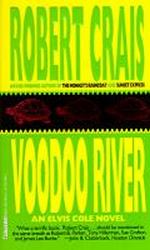
Voodoo River (Elvis Cole, #5)Voodoo River

by Robert Crais
Series: Elvis Cole, #5

Mass Market Paperback, 416 pages
Published April 1st 1996 by Hyperion
Read: September 3 – 4, 2014


Many people see L. A. Requiem as the apex of the Cole series. For my money, Voodoo River is the apex of the series that began in The Monkey’s Raincoat — he’s thoughtful, more meditative, yet still jokey. There’s a greater sense of place than in most of the earlier books. Elvis is vulnerable, yet just as competent and confident as he’s been the whole time we’ve known him. I’ll explain my thinking here and different take on Requiem in a few weeks when we get to it.

Once again, we open with a great description of his new client:

“Excuse us, but are you Jodi Taylor?”
In the space of a breath Jodi Taylor put away the things that troubled her and smiled the smile that thirty million Americans saw every week. It was worth seeing. Jodi Taylor was thirty-six years old, and beautiful in the way that only women with a measure of maturity can be beautiful. Not like in a fashion magazine. Not like a model. There was a quality of realness about her that let you feel that you might meet her in a supermarket or in church or at the PTA. She had hazel eyes and dark skin and one front tooth slightly overlapped the other. When she gave you the smile her heart smiled, too, and you felt it was genuine. Maybe it was that quality that was making her a star.
. . .
Jodi smiled wider, and if you had never before met or seen her, in that moment you would fall in love.

When we meet her, Jodi Taylor is the star of one of the biggest shows on television, but thirty-six years ago when no one cared who she was, she was an orphan — given up for adoption by her mother. She was raised by a loving couple who she considers her parents — she’s not on a search for her roots, her “real” mother or anything like that. But she’s curious about her medical history, worried about what genetic time-bombs might be ticking away inside her. So she hires Elvis — on the recommendation of Peter Alan Nelson — to go to Louisiana and work with an attorney specializing in adoption to find her birth parents and get this information.

Despite the strictness of the adoption laws in the Pelican State, it seems like a pretty straight-forward case, and after arriving in Baton Rouge, sampling some local cuisine, and consulting with the attorney, Lucy Chenier, Elvis gets to work and it doesn’t take long for him to make some solid progress.

Here’s where complications set in: someone starts trailing Elvis as he investigates, this person seems to have some sort of criminal ties, and the biggest complication of all: Lucy Chenier. Elvis is smitten with her. Almost immediately, and more and more so in every conversation afterwards. This isn’t some sort of passing fancy, as was the case with Janet Simon; or the creepy, drunken attraction for Jennifer Sheridan; or whatever he had going with his office neighbor, Cindy. Elvis falls for this woman, hard. That’s clear for the reader straightaway, the only question is what impact that’ll have on Elvis, his current investigation, and maybe his future. Elvis even has the beginning of a relationship with her son, Ben.

As for the guy following him? He’s not that good at it, and he’s even worse at picking up a tail. Elvis is able to exploit his deficient skills and learn a few things that get him closer to finding Jodi’s mother. And that’s when things get really nasty — Elvis finds himself in the middle of a decades’ old crime, a murder investigation and caught between three criminal organizations. Given that, naturally, Joe finds himself in Louisiana, too.

So the first of the criminal enterprises is a local group — run by a good ol’ boy-type. Milt Rossier isn’t going to catch the attention of anyone i New York, Miami or even New Orleans. But in his small pond, he is one huge fish. He does a little bit of everything, has some very loyal employees (including a scary George and Lenny like pair) and an old, huge and vicious turtle named Luther. Luther is described as “a snapping turtle that had to be three feet across and weigh almost two hundred pounds. It was dark and primordial with a shell like tank armor and a great horned head and a monstrous beak.” Gives me the heebie-jeebies just to read about him. Milt reminded me of Domingo Garcia Duran from The Monkey’s Raincoat, using toreo to intimidate and threaten Elvis. However, Duran only served to anger Elvis, make him more determined. Milt and Luther? They brought out something we’d not yet seen in Elvis — we’ve sen him angry, we’ve seen him morose, we’ve seen him lost, but after his session with Luther? He’s shaken, he’s frightened to his core. I don’t know if it’s Milt, the reaction of the others there, or just Elvis’ reaction to the reptilian Luther versus the human threat of Duran — but it’s something deeper we see here.

Another one of the groups that Elvis tangles with is headed by Frank Escobar. Escobar’s a criminal mastermind who looks nothing like what you’d expect (which likely means he’s more realistic than the rest), he’s this friendly middle-aged guy with a hospitable wife and kid. Just hanging out having gin and tonics next to the pool, the kind f guy you want as a neighbor. Until he gets angry. You wouldn’t like him when he’s angry. He’s the kind of crook that I’d love to read more about.

As far as the third? Well, we don’t get to know them too much — it’s basically Escobar’s group, but larger and with a head who’s not so cuddly.

You put Elvis in the middle of all that while trying to sort out one family’s problems — past and present? Well, it’ll take he and Joe at the top of their game. Hopefully Elvis can get his head cleared enough, but at least we don’t have to worry about Joe — I’m not sure that Joe has anything but the top of his game.

Elvis’ jokes are there, but they’re subdued. Elvis has found himself in the middle of some really nasty stuff — the adoption as well as the criminal activity he stumbled into — and it’s hard to joke his way through it, but he does as often as possible. Still, there is room for him to be something other than just the crime-fighter. As long as Lucy Chenier’s around, Elvis will make time.

When they first meet, Elvis asks her out — and is turned down, after all, they work together. He keeps after her, and while I’m not saying he wore her down, she eventually takes him to dinner at a local restaurant. What follows is possibly the funniest thing in the series so far as Elvis tries to 1. be charming, 2. not get drunk and 3. keep things cool with Lucy. But he does something right, probably later, because they have another dinner or two together, and well, a lot more.

Later, when things are going better, Elvis will spend time with Lucy and Ben at home enjoying a quiet evening hanging out and watching Star Trek: The Next Generation:

It was the one where you follow the android, Data, through a twenty-four-hour period in his life, most of which is spent attempting to comprehend the vagaries of the humans around him. The fun comes in watching the logical, emotionless Data try to make sense of the human condition, which is akin to trying to make sense of the senseless. He never quite gets it, but he always keeps trying, writing endless programs for his android brain, trying to make the calculus of human behavior add up. When you think about it, that is not so different from what I do.

Yeah, it’s a little heavy-handed, but I liked it.

Of course, Joe and Lucy met. And it’s fun to read.

“It was a pleasure, Joe. You’re an interesting man.”
Pike said, “Yes.”
Lucy gave me a kiss, then let herself out and went into her building. I twisted around in the seat and looked at Joe. “She says you’re interesting and you say yes?”
Pike got out of the back and into the front. “Did you want me to lie?”

We see something new happen to Pike here. But — see that one for yourself. It’s refreshing (like in Lullaby Town) to see Pike interact with the police without pushback or resentment (or something worse). There’s plenty of opportunity for Elvis’ warrior friend to do what he does best. There’s even some opportunities for Elvis and Joe to just hang out, work out together, and talk. They get to interact as friends a little, not just partners. We need to see more of this. At one point, we get what’s possibly Pike’s biggest speech since the one he gave Ellen Lang in Monkey and just as on point. He really helps Elvis keep his head when he disappoints Jodi. Lots of warm fuzzies are to be had there.

There’s some interesting things said here about honor (not in the way that Parker does, it’s under the dialogue and narration, almost never the subject of it), conscience, and duty. Really, there’s a straight line from Elvis assuring Ellen Lang that he’d help her, through tearing up her father’s check and hunting down Mimi Warren, through doing all he could to help Karen Lloyd, to Jennifer Sheridan to Jodi and her family. It’s the same impulse driving Elvis (and therefore Joe). This impulse, this drive is what unites Elvis and Joe to the hard-boiled PI legacy, but their application of it is what helps distinguish them from others. As I recall, there’s a change in the wings for how Elvis approaches things, making this the apex of Stage I of the Cole series, if not the whole.

—–

5 Stars

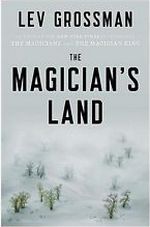
The Magician’s Land by Lev Grossman

The Magician's Land (The Magicians, #3)The Magician’s Land

by Lev Grossman

Hardcover, 401 pages
Published August 5th 2014 by Viking Adult
Read: August 16 – 20, 2014

This is one of those books that I’ve been waiting for since about 30 minutes after I finished the previous book in the series — and at the same time, one I didn’t want to arrive, because that means I have to say good bye to Quentin, Brakebills, Fillory and the rest of the gang. The nods to Lewis’ The Last Battle were pretty obvious, but naturally, there was a lot more going on than that. Unlike Lewis, the book never really felt like the end of anything but a chapter in the lives of most of these characters, and that their lives went on beyond these pages (you know, those that survived). I really like that kind of finale — one which is definitely an end to the story, but one that the characters go on from, having adventures (however mundane those may be) that we don’t get to see.

It’s obvious straight away, that Quentin didn’t respond too well from the events of The Magician King all too well — but for the record, neither did Eliot. So at least that’s fair. We get Quentin’s story told to us in two timelines — first, in the present, and the other starts shortly after King. I’m sure there was a point to that, but it didn’t strike me as necessary (although I should add, now that I’ve typed this, I can actually start to appreciate why Grossman may have chosen this. Still, I’m sticking with not necessary). But it didn’t interfere with anything, either, so I’m not going to complain.

Upon his exile, Quentin ends up at Brakebills, looking for answers, looking for hope and ends up becoming an entry-level professor there. And he’s good at it, for the first time, really since his student days there, he seems content, he seems at home. You really start to think that he’s got a happy ending in a quiet life ahead of him. And you know that you’re wrong, if only because the book has a lot more pages in it — but also because you know Quentin. Still, it’s a nice oasis for both character and reader.

In the present, however, Quentin’s part of a magically powered team of thieves — by the time you get an explanation for how he ended up in this situation, with his new companion/disciple Plum, you almost don’t care. You’ve just accepted this reality, and really want to find out (as much as Plum and Quentin do) just what they’re after and how they can pull off their heist.

Part of their research requires a trip to Fillory’s Antarctica campus. Which I’d forgotten all about, much to my chagrin. Instead of traveling there as birds, they opt to travel as blue whales. A choice I just loved.

[Quentin]’d imagined that he’d get some kind of deluxe ocean-vision as part of his package of new whale-senses, but in fact he didn’t see much better than he had as a human. With his eyes on different sises of his head his binocular depth perception was shot, and having no neck, all he could do to change the view was roll his eyes around or steer his whole humongous body. Also, unnervingly, he didn’t seem to have any eyelids anymore. He couldn’t blink. The urge decreased over time, but it never completely went away.

The whole whale episode — all 3 pages and change of it — was so brilliant, that even if the rest of the book was a wreck, I’d be tempted to give it 5 stars. Your results may vary re: the whale sequence, but I can assume there’ll be something like that for you. There are lots of little moments like this in this book vying for a spot in your personal Top Ten Moments list — like, say, Eliot engaging in single-combat, or learning about the restorative power of bacon.

Meanwhile, back in Fillory, the world is ending. And, sadly, that’s not hyperbole. Enter The Last Battle parallels. This part of the book could’ve been doubled in length and I wouldn’t have blinked a bit. Eliot and Janet take off on a quest to see if it’s possible to stop the world ending — and if so, you know, to stop it.While they’re on this quest the thing that struck me most was how little we ever got to see of Fillory (and nearby lands and peoples), and how much more I wanted to see, so I really enjoyed that aspect of the story. There were some great moments for Janet in particular here. Eventually, as the world begins to end, a massive civil war erupts magical and non-magical creatures fighting against each other, alongside the humans. From Janet’s perspective we see much of this, including what happens when unicorns and centaurs enter the fray on opposing sides:

You only had to see a unicorn lay open the side of a centaur once, the ribcage flashing white when the ripped skin flopped down, to swear a mighty oath never to fuck with or even look at another unicorn again. I’m putting down the hearts and fluffy clouds and backing away slowly. Don’t want any trouble here. You can have all the rainbows.

Yet, as usual, as interesting, explosive or world-ending as the other story might be, if it didn’t involve Quentin, I just couldn’t care as much. The further into the story I got, I did get more invested in the non-Quentin story than I initially was — and it was epic enough, important enough that I should’ve been invested, but without him it wasn’t as compelling. Quentin was our entry point to this world (these worlds, rather), and he stayed the focal point. So even an actual pending apocalypse paled in comparison to Quentin as Brakebills professor. By the end of the book, this wasn’t as true as it was in the beginning, but it spent too much time being true for me to overlook it. Thankfully, shortly after that, all the storylines merge, the band gets back together (with some needed augmentation), and they finally get a solid answer about whether they can prevent the end of Fillory.

Ultimately, Quentin’s not the hero of the series, nor is Janet, or Eliot, or anyone else. It’s Grossman — his use of the characters, his use of — and exploitation of — fantasy tropes, his messing with fantasy tropes, his facility with language, metaphor, and humor is what makes this series stand out.

As with the other two books, Grossman’s word choice is this great, seamless mix of poetic, flowery, rich vocabulary (I occasionally had to look up words to make sure I was sussing out the context clues correctly) with non-ironic uses of things like “lulz” or “I heart you.” Somehow, he’s able to pull this off without the reader blinking — or even noticing it most of the time.

Grossman starts in right away puling the reader in with:

Quentin didn’t care. It was a bookstore, and he felt at home in bookstores, and he hadn’t had that feeling much lately. He was going to enjoy it. He pushed his way back through the racks of greeting cards and cat calendars, back to where the actual books were, his glasses steaming up and his coat dripping on the thin carpet. It didn’t matter where you were, if you were in a room full of books you were at least halfway home.

There’s not a reader in the world that doesn’t know that exact feeling, hasn’t had that experience. It’s sort of a magical moment before the plot begins. Then a few chapters later, he somehow supports and underlines this moment, while undercutting it with:

The lights were too bright, and there were too many TVs, but it was a bar, and that was another place, like bookstores, where Quentin felt at home. Drinks were a lot like books, really: it didn’t matter where you were, the contents of a vodka tonic were always more or less the same and you could count on them to take you away to somewhere better or at least make your present arrangements seem more manageable.

The tragic, inevitable, brilliant, and awe-inspiring climax was the way this saga had to end. It wasn’t the ending you wanted, but in retrospect, you totally you did want this ending. If that even makes sense. Grossman has given contemporary fantasy readers a real gift here in this series and I think it’ll be one that holds up pretty well to re-reading and the passing of years. I certainly look forward to testing that hypothesis. If you’ve read this far, and haven’t read The Magicians, go get started with that one, and I dare you not to plow through the rest.

—–

5 Stars

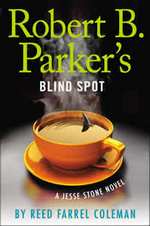
Robert B. Parker’s Blind Spot by Reed Farrel Coleman

This should’ve been done at the beginning of the month, but I wanted to do this book justice, and if I couldn’t hit this out of the park, I didn’t want to swing. Also, (this is partially justification for the delay) I wanted to think about it some before putting pen to paper, so to speak. But it’s now at the point that if I didn’t get something written, I wasn’t going to — so I just did my best, and hopefully have a base hit here. As for thinking about this? Pretty sure I haven’t had a new thought about the book since I put it down — and I’ve thought about it a good deal — I’m just less prone to hyperbole about how great it is now.

Robert B. Parker's Blind SpotRobert B. Parker’s Blind Spot

by Reed Farrel Coleman
Series: Jesse Stone, #13

Advance Review Copy, 339 pg.
Putnam Adult, 2014
Read: August 1 – 5, 2014

One of the major drags (I’d imagine) for the writer in Coleman’s position is all the comparisons — to Parker himself, and to Michael Brandman. But, I don’t really have a choice, how else to you talk about the merits of the 13th book in a series without comparing it to the previous? I guess you could act like this was the first in a series, but that just disrespects what’s gone before (however much one might want to forget some of that).

I know I’ve said a lot of this before — this will (probably) be the last time: When Night Passage was released, I was hooked immediately. Spenser’s series was in the midst of the really rocky post-Taming a Sea Horse period, and it was so refreshing to see Parker really on his game, and with something so fresh, so different. He kept that up for three additional books, and then the series started slipping in quality. I kept buying and reading them — there’d always be a few lines or a couple of chapters that had that ol’ Parker magic, and I liked the characters, but a couple of these were the worst things that Parker ever published. Then following his death, Michael Brandman tried to carry on in three books, none of which were good, and were generally worse than anything Parker had done on a bad day. So, I was pretty hopeful and enthusiastic when it was announced that Reed Farrel Coleman was going to take over the series — at this point, all I’d read by him was his essay about Jesse in Penzler’s In Pursuit of Spenser, but that was enough to get me hopeful.

Unlike what Atkins is doing (pretty well) with Spenser — trying to retain Parker’s voice; and what Brandman did (disastrously) with Jesse — trying to keep the feel of the CBS/Selleck movies; Coleman is keeping the characters and the world, but writing them in his own voice (or maybe not his natural voice, but in a voice unique to him). This, coupled with Coleman’s own strengths as a writer, gives Jesse Stone a freshness, a richness, and a quality that’s been missing since the end of 2003’s Stone Cold. Just in word count alone, Coleman shines above the sparseness of Parker’s writing — it doesn’t feel bloated, it’s well-paced, but Coleman takes a lot more time and words to tell his story — this is a strength, everyone gets fleshed out. Ideas are followed up on, shades of gray are introduced to events — this is a more complex novel than others in the series.

There are, of course, several references to events and people in earlier books — far more than is typical for a Jesse Stone novel. Some of them come across as natural, others are more like nods to the reader, some feel like Coleman trying to establish his bona fides — “Trust me, I know the series.” At this point, I welcome them all — I like to be reassured, I like being reminded of books I liked — but if he keeps it up at this pace, it could get old really quick.

One of thing that gets mentioned in every Jesse Stone novel is that he was in the Minor Leagues and probably would’ve made it to the Major League, if he hadn’t suffered a career- ending injury. He keeps a large picture of Ozzie Smith on prominent display in his sparsely furnished and decorated home. He tosses a ball into an old glove while he thinks. It is the great unknown in Jesse’s life — and probably what really got him drinking seriously. He knows that he and Jen couldn’t ever make it work (as much as he still wants it to), he knows what kind of cop, employee, and leader he is — he even knows just how much his drinking is messing up his life. What he doesn’t know? Could he have made the Big Leagues? Could he have been a great — or even just good — player. But we’ve never seen Jesse spend much time on that — a little here and there. An occasional toast in the general direction of Smith’s picture. But that’s it, until now. Now Coleman gives us a Jesse brooding over how things turned out — a few times, beyond brooding and moved right into nasty and bitter. It never occurred to me before how little Jesse thinks about this chapter in his life — maybe it’s because Parker (apparently) lived without a good deal of self-reflection that he didn’t know how to write Jesse doing just that. I don’t know, but it was a mistake — and I’m glad that Coleman has addressed it. It doesn’t need to become an obsession or anything, but something that he thinks about from time to time is good. It might even be healthy.

Jesse’s ruminations on his thwarted career are prompted by a reunion of his Minor League team, hosted by the only member of that group to make it to the Major League, Vic Prado. During the festivities, both Vic and his wife approach Jesse individually, saying they want to talk to him about something. Neither tells him what they want to talk about, but it’s serious, and has nothing to do with a reunion. Meanwhile, in Paradise, a rich college kid and his girlfriend are crashing his parents’ vacation home for some undisturbed time together. One will be killed and the other kidnapped. Add in a vicious mob boss and his Irish enforcer, a wealthy man and his criminal defense lawyer. a federal agent obsessed with a target, and one of the scariest hit-men I can remember. The result is a novel with a lot of moving pieces, shifting targets and high stakes. That said, it didn’t take long to figure out what’s going on with the various and sundry criminal interests and enterprises involved here — but it’s still very intriguing to watch the pieces be put in place until there’s a very clear picture of everything that’s going on .

Coleman took better advantage of what a third-person omniscient narrator could do than Parker ever did. Not only are we told Jesse’s story, we see a lot more of the stories of the other characters — particularly the various criminals running around here. In the end, I felt like I understood why each character did something, and who they were in general — not just Jesse’s interpretation of their motivations.

There were a lot of little moments in this book that worked so well, that moved this out of the range of Brandman — and out of the range of a lot of books in the genre. Two examples were the chapter where the “woman the folks in Scottsdale knew as Dee Harrington” evaluated her last (and lost) opportunities, and came to some big decisions — and the chapter where the parents of the murder victim arrive with Molly to identify the body. The way that Coleman is able to reveal and establish character, or to underline what we knew about other characters while showing us new sides or aspects to them, is such a pleasure to watch. Character and plot development aside, just some of what he’s able to say about the human experience is impressive.

Of course, at one point, Jesse comes across a woman being harassed by tough guy of some sort. Rather than mind his own business, arrest the guy (he has an excuse this time — he’s out of his jurisdiction), or involve some other authority; Jesse proceeds to beat the guy up. It’s borderline gratuitous, and it’s fairly typical of the series. We get a little flash of the mean, brutal side of Jesse that he normally keeps under wraps, but that really informs most of his life; this is also a bit of Jesse letting off steam from the frustrations of his murder case, there’s also a bit of chivalry. This is really Jesse Stone in a nutshell. This does nothing to the overall search of the killer and for answers for what’s behind the kidnapping. But it reminds us about the person that Jesse Stone is — he’s hard, he’s not that emotional, and he has a very strong sense of what’s legitimate and what’s just wrong when it comes to public behavior.

Seeing echoes of Harry Bosch’s creed of “Everyone matters or no one matters” in John Ceepak last year started me looking for things that revealed other detective’s guiding philosophies, or drives, and doing so has helped me understand a lot of these characters better (whether it’s a new character to me or one that I’ve been reading for years). When Jesse arrives at the initial crime scene, we’re given insight into what makes Jesse the cop he is:

Jesse understood that his demeanor at crime scenes sometimes led his cops to believe he thought hat one corpse was like the next, that one murder victim was like any other. He supposed that it was okay for them to believe that. He also supposed it was true, if not completely. Every murder victim deserved justice, needed an advocate. Just as every living citizen was entitled to equal protection under the law, so too were the murdered entitled. Yet some victims were more equal than others. Maybe that wasn’t fair or right, but it was human, and cops were owed that much leeway.

There’s a semi-redemption for one of the criminals involved in this mess that struck me. It’s not one that I think Parker would’ve given that particular guy — I’m not altogether sure that Parker would’ve paid as much attention to him as Coleman did. However, both the character and his semi-redemption are consistent with Parker’s world. Jesse, Spenser, Virgil and maybe even Hawk, would approve of this guy’s change, his reasons for doing so and how he attempted it.

There’s one other character I’d like to talk about, but I can’t quite figure out how to do so without spoiling far too much. But if you read the book, you’ll understand the one sentence I’m allowing myself, “I found myself really liking __________, and hope we see a lot more of her in future novels.”

I do have a few minor gripes and I’m going to list all of them to provide a little balance (I feel like I’m gushing more than is becoming). Some word choices repeated too often (at least often enough that one noticed). The way that the Joe Breen talked seemed off somehow — and not in a purposeful way. I either got used to it, or eventually Breen’s dialogue improved, I got too involved in everything else about him that I forgot to track that.

I’m not loving the fact that Jen comes back into the picture, while he was never really going to get over her, Jesse seemed to have moved on in Parker’s last books. But, Coleman did brought her back in just the right way, so I’m only complaining about it as a formality.

My real problems are about the way that Suit and Molly were treated. Coleman says that he loves Suit (“How can you not?” he correctly asks in some of the promotional material). But he doesn’t use him as much in this book as he should. Coleman nails every line involving Officer Simpson, which is encouraging, but there aren’t enough of them.

I have three distinct problems with the way he used and depicted Molly. There’s a set banter between Jesse and Molly — she’ll say something disparaging or critical (in jest or not) about him, he’ll echo her jab adding “Chief” to the end — and she’ll eventually do the same. It’s cute enough, and Parker over-used it, too. But not as much as Coleman did — wow, dude. You’re on the verge of parody here. Honestly, Coleman might use the catchphrase as frequently as Parker did, but since Coleman has more Molly/Jesse conversations in this book than in a typical Parker, it seems worse.

Secondly, yes, Molly had one brief dalliance with Crow back in Trouble in Paradise, and yes, Jesse has brought it up on occasion. But Coleman has the Chief doing so several times in this book — almost brow-beating her with it. I don’t have a count, but I’d be willing to believe Jesse brings it up as often here as he has in the last ten books. Hyperbole aside, it seems out of character.

Lastly, in various points in the past, we’ve read, “Molly Crane had a pretty good body, Jesse thought, for a cop with three kids.” Parker’s Jesse keeps using that qualifier “for a cop with three kids.” But in this book we get a different kind of reaction — at least from the other males that see her (I don’t remember Jesse reflecting on her body in general or on specifics of it like others do). Maybe Molly’s been spending time with Tony Horton DVDs, I don’t know, it just didn’t feel right to read the comments made about her. Part of Molly’s appeal is that she’s — for lack of a better term — “real.” She’s not the glamorous type from Los Angeles. She’s a small-town cop and a Roman Catholic mom of three. Keep her that way.

None of this is a deal killer for me, but I hope that Coleman makes some adjustments to the way he uses Molly in the future, and that he just uses Luther “Suitcase” Simpson more.

All in all — a great read. Coleman has made Jesse Stone his own, while maintaining the universe that Parker created. Lee Goldberg said that Coleman “has saved Jesse Stone.” Indeed he has, and I’m so happy to be able to say that.

One more comparison to Parker before I’m done — not in his almost 70 novels did Parker end one like Coleman did here. Bravo. It was a gutsy move and it worked just the way you want an ending like this to. Jesse Stone #14 can’t hit the shelves fast enough.

Note:I received this book as an uncorrected proof from the publisher. Which was generous and cool of them, but didn’t impact what I said about the book, I care too much about Jesse to be swayed by that (which isn’t to say I couldn’t be bought if someone wanted to try). I’ll endeavor to verify my quotations with the printed book as soon as I can.

—–

5 Stars

From the Archives: Year Zero by Rob Reid

Year ZeroYear Zero

by Rob Reid

Hardcover, 364 pg.
Del Rey, 2012
Read: October 27 – 29, 2012

Aren’t we at the point yet where just because something involves aliens, spaceships and more than a few laughs, we don’t have to invoke Douglas Adams? (not that I have anything against the man or his work) But this book owes more to Scalzi’s Agent to the Stars than to anything about Arthur, Ford or Zaphod (or even Dirk). Yet that doesn’t stop 70% or so of the reviews from mentioning Adams. Time to move on folks — or at least realize there are others out there doing funny SF.

I’d give this 4.75 stars, really. Rounded up. But whatever, the important thing is that this book is a hoot. There’s nothing about this that isn’t funny–the plot, the characters, the commentary on the music industry, congressional shenanigans, trendy restaurants, Microsoft…whatever Reid touched on, he hit squarely and hilariously. I laughed out loud a whole lot. And then some more.

I think towards the end, plot lines and plot points got a bit out of control. But honestly, he just reminded me of most of Christopher Buckley‘s work in that regard (and several other ways now that I think of it)–though I think Reid did a better job of pulling it all together at the end than Buckley usually does.

And the coda? Perfect. And more than made up for any flaws.

—–

5 Stars

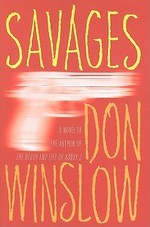
Dusted Off: Savages by Don Winslow

Savages (Savages, #1)Savages

by Don Winslow

Hardcover, 302 pg.
Simon & Schuster, 2010
Read: September 2, 2012
My rating: 5 of 5 stars

At this point, I just need to be honest with myself and just buy everything this guy has written/will write. I was nervous about starting this, as it wasn’t in The Dawn Patrol-verse. Would it be as good? Would it be better, making me like Boone, et al. less? Stupid, yeah.

Winslow’s books are the kind of cool I thought Tarantino was after Pulp Fiction (not saying QT isn’t great, I just don’t think he’s the kind of great I did then)–an insane mix of hip, crime, violence, honor, love and fun.

—–

5 Stars

The Martian by Andy Weir

The MartianThe Martian

by Andy Weir

Hardcover, 369 pg.
Crown, 2014
Read: July 7 – 8, 2014

Also, I have duct tape. Ordinary duct tape, like you buy at a hardware store. Turns out even NASA can’t improve on duct tape.

Yes, of course duct tape works in a near-vacuum. Duct tape works anywhere. Duct tape is magic and should be worshiped.

More than just a love letter to duct tape (although I could’ve come up with more than those two quotations), The Martian is a taut survival thriller, filled with laughs, science, and attitude.

And attitude is the key — Mark Watney is full of it. From what I can tell, how you react to his attitude, his sense of humor, his personality directly correlates with your enjoyment of the book. When the book was first released, I read plenty of lukewarm or negative reviews that were about Watney as a character more than they were about the book as a whole. And that’s fair. Some times you can deal with a protagonist that you don’t like because you like the story, or the world, or the author — whatever. But The Martian‘s not built that way. It rises or falls on your appreciation for and attachment to the abandoned astronaut. By the end of chapter two, if you don’t like the guy, put the book down and move on to something else, because it won’t get any better.

Me? I liked the guy almost instantly — his self-deprecation, his sarcasm, his temerity, his MacGyver-esque abilities, his hatred of disco. Coupled with the severity of his situation, and the refreshingly original premise, I was hooked but good from the get-go.

We do eventually meet other characters — NASA executives, NASA non-executives, the rest of Watney’s team, and so on. We don’t get to know them as well as we do Watney — but what we do get are well-rounded characters working as hard as Watney is to help him survive. Racing against the clock — with the eyes of the world on them (think of the media coverage of Apollo 11’s landing — but in a 24-hour news cycle in the Internet age), these people are in a situation almost as extreme as his is.

Not only do the character moments work — and work very well — but the details are spot-on. The book is chock-full of scientific detail and explanations. Would you appreciate more of Weir’s work if you actually followed the details of the Chemistry and other science? Probably, but you can get the gist of it without really understanding it all. Jesse Pinkmans of the world can enjoy this book, not just the Walter Whites. Unless his science is wrong, I guess — in that case we liberal arts types are better off — but I’m betting he knows his stuff.

The plot moves along quickly — but not too quickly. Plenty of ups and downs, successes and failures, steps forward and steps back. There were times in this that the tension was so high I wondered if I should get back on my blood pressure medication. But then, like a seasoned professional, Weir would have me chuckling. A near-perfect balance of tension and release, enough to keep you on the edge of your seat without falling over. There’s some good emotional moments, too — particularly as things start to come together on the rescue mission, and more-so as the mission gets into trouble — even some inspirational moments. Weir put together the whole package — story, characters, style, and heart.

Do yourself a favor and grab this one.

Note:I received this book for free from Blogging for Books for this review. Which was generous and cool of them, but didn’t impact what I said about the book.

—–

5 Stars

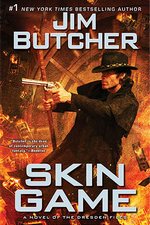
Skin Game by Jim Butcher

I should’ve had this up no later than May 29, but I wanted to get it juuuust right. And I failed. But I’m always going to fail when it comes to this series. Amongst series currently being written, this is my favorite (yeah, I’m taking the coward’s way out and not choosing between Dresden and Wolfe), which means that I’m just never going to be able to properly express how great I think the books are.

—–

Skin Game (The Dresden Files, #15)Skin Game

by Jim Butcher

Hardcover, 454 pg.
Roc Hardcover, 2014
Read: May 28, 2014

Quick review for people who haven’t read up through Cold Days:
Why are you reading this? Go and catch up. You’re missing out on one of the best series being published today. You’ve got about a year ’til Peace Talks comes out, so you have plenty of time to read up through Skin Game (which you really should read, because it was great).

Longer take for those who have read Cold Days (still, spoiler-free):

Okay, this is book 15, which means it’s time for The Denarians to return. But this time, Harry’s not opposing them (directly, anyway), but thanks to his service to Mab, he’s working alongside (for?) Nicodemus. Nicodemus has assembled a team of magical types to go rob a vault belonging to Hades. Harry, of course, is itching for a fight, but he doesn’t get the chance for one. If he doesn’t do what Mab & Nicodemus require, those closest to Harry will pay the price. Skin Game takes the basic plot structure of a heist film, and it works really well as such. A great, gripping story, doing things with the supporting characters involved (new and old) that you wouldn’t have guessed were possible with Harry’s past and attitude.

Beyond the plot — there’s something going on with Harry. Small, incremental changes are creeping in to our wizard’s character, as part of the aftermath of Changes. He’s dimly aware of them, but thinks he’s in control. Those close to him see them, too and make the same judgment call — it’s Harry, he’s got it taken care of. But there are those, like Butters, who aren’t as willing to believe that Harry can do it all. He sees trouble on the horizon and is willing to speak truth to Harry about it.

There’s other character development to take note of as well: Michael, Charity, and Murphy all continue to grow in positive ways — slowly, organically, and in ways you really only notice when you take a long look at them. Molly’s changing a lot, too — and not that slowly or organically, but after the end of Cold Days, what do you expect? Butters continues to grow and develop in ways that feel right, but are undeniable. When you think of who he was back in Death Masks and what he’s grown into by the end of Cold Days, it’s truly impressive. And he takes some major steps forward this time around, that I really want to talk about, but won’t. I have no shame in admitting that he choked me up. He could’ve easily been Butcher’s version of John Chen from the Elvis Cole/Joe Pike/etc. books — around for a little comic relief, some science help (some medical help, too), but nothing major. Instead, Butcher’s turned this polka-loving nerd into his Neville Longbottom.

In between the banter, the quips, the forzare-ing and fuego-ing, the action, you get things like this…it’s what separates guys like Butcher from the pack

There’s power in the touch of another person’s hand. We acknowledge it in little ways, all the time. There’s a reason human beings shake hands, hold hands, slap hands, bump hands.
It comes from our very earliest memories, when we all come into the world blinded by light and color, deafened by riotous sound, flailing in a suddenly cavernous space without any way of orienting ourselves, shuddering with cold, emptied with hunger, and justifiably frightened and confused. And what changes that first horror, that original state of terror?
The touch of another person’s hands.
Hands that wrapt us in warmth, that hold us close. Hands that guide us to shelter, to comfort, to food. Hands that hold and touch and reassure us through our very first crisis, and guide us into our very first shelter from pain. The first thing we ever learn is that the touch of someone else’s hand can ease pain and make things better.
That’s power. That’s power so fundamental that most people never even realize it exists.

I don’t normally read reviews of books I’ve already decided to read, but I made an exception in this case when Patrick Rothfuss posted his (pretty sure I linked it in one of my Saturday posts). One of the things he said was, “that Jim made me cry, like, four goddamn times in this book.” I went into this thinking Rothfuss was exaggerating about the crying. And then later I started to worry that he’s manlier and more in control of his emotions than I am. It’s not news to anyone who’s read Butcher — especially the more recent volumes — the guy can hit you right in heart. He’s like a long distance phone commercial from the late 80’s or the producers of the Friday Night Lights TV show — when he wants you to feel something, by gum, you will.

I do think that Butcher’s done better, but I’m still giving this 5 stars because while I was reading it, I was totally immersed in it. The rest of the world really didn’t exist — I was on the edge of my seat, leaning forward as if that’d help me get through it quicker — hanging on every word, chuckling, cackling, cheering, gasping as appropriate — totally engrossed, and that impact lasted for a couple of days following. If that doesn’t say 5 stars, I don’t know what does. And while I think other books were technically better — I can’t think of a problem with this one.

How long ’til #16, Peace Talks?

—–

5 Stars

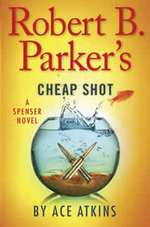
Robert B. Parker’s Cheap Shot by Ace Atkins

Robert B. Parker's Cheap ShotRobert B. Parker’s Cheap Shot

by Ace Ace Atkins
Series: Spenser, #42

Hardcover, 320 pg.
Putnam Adult, 2014
Read: May 12 – 14, 2014

For 25 years or so, I’ve been a huge Robert B. Parker fan. Read everything I could get my hands on by him — mostly multiple times, even when the quality started to drop out and you could never tell which Parker you were going to get — the one that was close to his former greatness, or the guy who showed up, got his scheduled time in on the book and moved on with life. Even at his worst, there was always something to enjoy in his work — even if it was only a snippet of dialogue or a line or two of description.

As I’ve said before, when Dr. Parker died at his keyboard and they called in this Ace Atkins guy (had never heard of him), I was happy but cautious. Would he be able to pull it off? Would he sound like Parker without doing a cheap rip off? But I liked what Atkins did. So much that I waited a year to review Lullaby, and I haven’t reviewed Wonderland yet (spoiler alert: loved it. Always wanted a Henry-centric novel) — I just didn’t want to geek out and just go fanboy all over them — I wanted to reflect on them some before discussing them (I’m choosing to ignore what I thought about Silent Night: A Spenser Holiday Novel for now). But with Cheap Shot, I’m throwing caution to the wind, and will just talk about it now. And yeah, I’m all Fanboy.

On the one hand, this is not Atkins’ best Spenser. But it’s the one that feels like Parker more than the rest (make of that what you will). The banter, the poking around and stirring things up until you get a break, the fisticuffs, the donuts, the gun fight, the needling of underworld players, and so on — he captures Parker’s voice and pacing better here than he’d managed before (yet doesn’t come across as pastiche). Spenser’s sniffing around the big money and big boys (and a few men) in sports, which serve as a good place for Spenser to reflect how men are to act. Parker did this Mortal Stakes and Playmates (and to lesser extents elsewhere — like Early Autumn), and Atkins is able to do that here (arguably he does so with a subtlety that Parker didn’t achieve).

Kinjo Heywood’s a fun character — slightly more grounded than Mortal Stakes‘ Marty Rabb, far more mature and grounded than Playmates‘ Dwayne Woodcock. One advantage Heywood has is his son, Akira (who’s plenty of fun on his own) — he has someone to provide a good example to, and he strives to. Heywood also seems to have thought ore about life and how one should live it. Marty seemed to think only about Linda (his wife) and baseball, Dwayne was all about his girlfriend (Chantel) and basketball, too — but with less self-examination, it’s just that’s all he had the chance to think about (although Chantel would see that changed, and his horizons broadened if she had anything to say about it). Heywood’s got a kid, he’s been through a divorce, and is fully aware of his place in the limelight (including social media) and his own shortcomings. This alone saves the book from being a reworking of Parker.

I should add that Sixkill has a lot of perspective here (with the assistance of Atkins’ own background in football) — he was close to Heywood’s level, and if he’d made one or two better choices, he would’ve been at this level. He has a better idea what’s going on in Heywood’s mind than Spenser and his brief stint in the boxing world would.

The book begins with Spenser doing bodyguard duty — and as always (Stardust, Looking For Rachel Wallace, A Savage Place, Rough Weather) things don’t go well. You’d think people’d stop hiring him for this kind of work. Spenser turns to investigating — and unearthing lie after lie from his client — while getting Hawk and Sixkill to pitch in on the bodyguard front.

In addition to the main characters, Hawk, Susan, Sixkill, Tony Marcus, and so on; Atkins continues to show a command and familiarity with the impressive gallery of supporting characters in the Spenser-verse (although my gut tells me we’ll never see Atkins’ Spenser crossing paths with anyone from Paradise, Mass.). And the new characters fit into the ‘verse just fine, nothing that Parker wouldn’t have created. One character who started off the novel being opposed to Spenser’s hiring and further involvement with the case came around pretty quickly — and really without warning. I’m not sure that change was warranted by the text (and even if warranted, it was really easy for this guy to come around to Spenser’s side.)

Not only did Atkins give us a good story this time, he appeared to be planting and/or watering seeds for future books at the same time — something Parker never bothered with, but I’m glad to see (if only because it indicates Atkins plans on sticking around).

This one’s getting 5 Stars from me. May not be the best book (or one of the best) that I’ll read this year — but it made me happy, made me want to read more in this series (both prior to and post- this one), made me want to read the next non-Spenser Atkins novel more. And that’s good enough for me.

Next time, Mr. Atkins? Paul. We need to see Paul again. Please?

—–

5 Stars

Heaven on Earth by Thomas Brooks

Heaven On EarthHeaven On Earth

by Thomas Brooks

ebook
originally published 1654
Read: May 11 – 25, 2014

I just might have myself a new favorite Puritan (I’m not the only one who has a list, right?). I’m kicking myself for not getting to Brooks earlier in life. What a wonderful book — I’m looking forward to getting to read more by him.

Aesthetically, this is fantastic. The language sings — the book begs to be read aloud (and I frequently did so, interrupting whatever anyone around me was doing). You can feel the passion, the fervor throughout. A few paragraphs from different chapters illustrate this:

Divine light reaches the heart as well as the head. The beams of divine light shining in upon the soul through the glorious face of Christ are very working; they warm the heart, they affect the heart, they new mold the heart. Divine knowledge masters the heart, it guides the heart, it governs the heart, it sustains the heart, it relieves the heart. Knowledge which swims in the head only, and sinks not down into the heart, does no more good than the unicorn’s horn in the unicorn’s head.

The only ground of God’s love is his grace. The ground of God’s love is only and wholly in himself. There is neither portion nor proportion in us to draw his love. There is no love nor loveliness in us that should cause a beam of his love to shine upon us. There is that enmity, that filthiness, that treacherousness, that unfaithfulness, to be found in every man’s bosom, which might justly put God upon glorifying himself in their eternal ruin, and to write their names in his black book in characters of blood and wrath. God will have all blessings and happiness to flow from free grace.

Faith is the first pin which moves the soul; it is the spring in the watch which sets all the golden wheels of love, joy, comfort, and peace a-going. Faith is a root-grace, from whence springs all the sweet flowers of joy and peace. Faith is like the bee, it will suck sweetness out of every flower; it will extract light out of darkness, comforts out of distresses, mercies out of miseries, wine out of water, honey out of the rock, and meat out of the eater, Judg 14:14.

But beyond that, the book is sound, it is orthodox, it is Biblical — throughout Brooks points the reader to The Book and The One Who inspired it. His aim is to show “that believers may in this life attain unto a well-grounded assurance of their everlasting happiness and blessedness.” He then goes on to examine the nature of that assurance, hindrances that keep believers from it, reasons to encourage believers to seek it, and how they can go about it, the difference between true and counterfeit assurance, as well as answering questions about assurance. Examining the doctrine from so many angles, you really feel (and probably do) that you come away from this book having an exhaustive look at the doctrine.

Chapter 6 — which takes more than its fair share of space, almost half of the book — is an extended detour from the point of the book, but it still serves to support the theme. He begins by saying, “In the previous chapter, you saw the seven choice things which accompany salvation. But for your further and fuller edification, satisfaction, confirmation, and consolation, it will be very necessary that I show you,” these seven choice things. Which are:

(1.) What knowledge that is, which accompanies salvation.
(2.) What faith that is, which accompanies salvation.
(3.) What repentance that is, which accompanies salvation.
(4.) What obedience that is, which accompanies salvation.
(5.) What love that is, which accompanies salvation.
(6.) What prayer that is, which accompanies salvation.
(7.) What perseverance that is, which accompanies salvation.

It is such a great chapter, and would make a remarkable little booklet unto itself that I really can’t complain too much that it’s such a departure from the rest of the book (though it did take me a little bit to get used to the notion).

Banner of Truth puts this out in paperback, monergism.com puts this out as a free e-book. Either way you go for it, this is a treasure I heartily suggest you grab.

—–

5 Stars

Page 21 of 24

Powered by WordPress & Theme by Anders Norén