Tag: 5 Stars Page 7 of 24

REPOSTING JUST CUZ: Heaven on Earth by Thomas Brooks

Heaven On EarthHeaven On Earth

by Thomas Brooks

ebook
originally published 1654
Read: May 11 – 25, 2014

I just might have myself a new favorite Puritan (I’m not the only one who has a list, right?). I’m kicking myself for not getting to Brooks earlier in life. What a wonderful book — I’m looking forward to getting to read more by him.

Aesthetically, this is fantastic. The language sings — the book begs to be read aloud (and I frequently did so, interrupting whatever anyone around me was doing). You can feel the passion, the fervor throughout. A few paragraphs from different chapters illustrate this:

Divine light reaches the heart as well as the head. The beams of divine light shining in upon the soul through the glorious face of Christ are very working; they warm the heart, they affect the heart, they new mold the heart. Divine knowledge masters the heart, it guides the heart, it governs the heart, it sustains the heart, it relieves the heart. Knowledge which swims in the head only, and sinks not down into the heart, does no more good than the unicorn’s horn in the unicorn’s head.

The only ground of God’s love is his grace. The ground of God’s love is only and wholly in himself. There is neither portion nor proportion in us to draw his love. There is no love nor loveliness in us that should cause a beam of his love to shine upon us. There is that enmity, that filthiness, that treacherousness, that unfaithfulness, to be found in every man’s bosom, which might justly put God upon glorifying himself in their eternal ruin, and to write their names in his black book in characters of blood and wrath. God will have all blessings and happiness to flow from free grace.

Faith is the first pin which moves the soul; it is the spring in the watch which sets all the golden wheels of love, joy, comfort, and peace a-going. Faith is a root-grace, from whence springs all the sweet flowers of joy and peace. Faith is like the bee, it will suck sweetness out of every flower; it will extract light out of darkness, comforts out of distresses, mercies out of miseries, wine out of water, honey out of the rock, and meat out of the eater, Judg 14:14.

But beyond that, the book is sound, it is orthodox, it is Biblical — throughout Brooks points the reader to The Book and The One Who inspired it. His aim is to show “that believers may in this life attain unto a well-grounded assurance of their everlasting happiness and blessedness.” He then goes on to examine the nature of that assurance, hindrances that keep believers from it, reasons to encourage believers to seek it, and how they can go about it, the difference between true and counterfeit assurance, as well as answering questions about assurance. Examining the doctrine from so many angles, you really feel (and probably do) that you come away from this book having an exhaustive look at the doctrine.

Chapter 6 — which takes more than its fair share of space, almost half of the book — is an extended detour from the point of the book, but it still serves to support the theme. He begins by saying, “In the previous chapter, you saw the seven choice things which accompany salvation. But for your further and fuller edification, satisfaction, confirmation, and consolation, it will be very necessary that I show you,” these seven choice things. Which are:

(1.) What knowledge that is, which accompanies salvation.
(2.) What faith that is, which accompanies salvation.
(3.) What repentance that is, which accompanies salvation.
(4.) What obedience that is, which accompanies salvation.
(5.) What love that is, which accompanies salvation.
(6.) What prayer that is, which accompanies salvation.
(7.) What perseverance that is, which accompanies salvation.

It is such a great chapter, and would make a remarkable little booklet unto itself that I really can’t complain too much that it’s such a departure from the rest of the book (though it did take me a little bit to get used to the notion).

Banner of Truth puts this out in paperback, monergism.com puts this out as a free e-book. Either way you go for it, this is a treasure I heartily suggest you grab.

—–

5 Stars

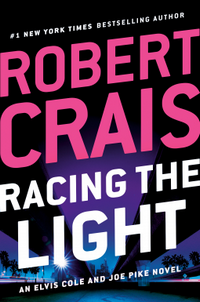
Racing the Light by Robert Crais: Spooks Spooking. Detectives Detecting. Killers Killing.

Racing the LightRacing the Light

by Robert Crais

DETAILS:
Series: Elvis Cole, #18
Publisher: G.P. Putnam's Sons
Publication Date: November 1, 2022
Format: eARC
Length: 368 pg.
Read Date: October 12-14, 2022
Support Independent Bookstores - Visit IndieBound.org

What’s Racing the Light About?

The essence of the case is that Elvis is hired by the mother of a young man who has gone missing to find him. This is pretty par for the course for Elvis Cole—a missing persons case.

Here’s what makes this distinct: the mother has money—she pays a generous retainer in cash (so generous, Elvis gives some back) and you get the impression that it wouldn’t be difficult for her to add a few more thousand. Before she walks into the office, two people come in and do a security sweep. Adele Schumacher believes her son, Joshua, has been taken by government agents for his investigation into Area 51 for his podcast. So, yeah, not a typical day in the office.

The podcast is called In Your Face with Josh Shoe, and it’s frequently about government corruption, conspiracies, and whatnot—but they’ve branched out to things like interviewing a porn actress. His childhood friend/podcasting partner, Ryan, tells Elvis that Josh is trying to move to more mainstream topics (Ryan doesn’t seem on board with this, for what it’s worth). Ryan shares Adele’s theory for Josh’s absence, Josh has been taken because he returned to Area 51 and found something.

But Elvis starts to find evidence that Josh is investigating something he didn’t tell Ryan about—Elvis can’t figure out what it is, sadly, but he starts to figure out who Josh might be interviewing for this story. And one of them has gone missing, too. Is this tied to his disappearance or did the twenty-something self-employed and single guy just flake off for a few days?

It’s not long before Elvis starts to think he’s not the only one looking for Josh and he enlists help from Joe Pike (who brings in Jon Stone). If those two get on board, you know things are about to get dangerous.

Pike and Stone

The problem with getting to know the PI’s more lethal/less-hung-up-about hurting people friend/sidekick/partner better is that it’s harder to keep them feeling dangerous and mysterious—it maybe even gets to the point where they stop being quite as prone to violence as they once were, and their charcoal-gray hats get a little closer to white. With Joe Pike getting some novels of his own, a lot of his sharp edges have been dulled for fans, so it was nice that Crais brought along Jon Stone so when Pike couldn’t be ruthless and cold-blooded, there’d be someone who could.

He gets to be that guy here—he’s helpful (very), resourceful, and mercenary. He pitches in because Pike pushes him to—not because he cares about Elvis or the fate of Josh. But what he does, he does well. (and is amusing for the reader throughout)

Pike is also not quite the active presence in this book that he has been lately—so when he does show up and act, it makes it feel a bit more super-human. Crais really upped his game with Pike in this novel and it allows him to steal almost every scene he’s in. Naturally, the phone calls between Pike and Cole are still fun to read—if you can write an entertaining conversation with one party being nearly-monosyllabic, you’ve got a gift.

Lucy and Ben

Lucy and Ben come by for an almost-unannounced visit to ensure that Elvis can’t give his full attention to the case. Which sounds snarky and may not be wholly fair of me. But it’s not wrong.

I enjoy the character of Ben and the way he interacts with Elvis—and continue to do so. I appreciated and believed what he was going through—both on his own and with his mother—at this stage of life, and Crais’s portrayal of this was one of the (many) highlights of this novel. It was also a good way to remind the reader just But Lucy has bothered me for a while now (although I was initially a fan), and I’m not certain that this book alleviates that (nor do I think Crais is altogether worried about it). I’m going to reserve judgment on this appearance for now. I did like Cole’s response to her visit and presence (when it didn’t take him off of his game, although I thought that was a nice touch).

So, what did I think about Racing the Light?

I need to spend some time thinking about this idea, but while reading this book I started to think of some notable first meetings between a PI and their client—like The Big Sleep, The Doorbell Rang, God Save the Child, and The Judas Goat*—and how those meetings can be a bellwether for the rest of the book. If the meeting seems pretty good/typical, the rest of the book will be, too; if the meeting catches your attention, the rest of the book will be of a higher quality.** The first meeting between Elvis and Adele Schumacher definitely fits—it’s not your standard meeting (the presence of her personal security helps). Right away, I could tell this was going to be a better-than-usual Elvis Cole novel. There’s not much that can beat that, in my book.

* This is a list generated in a rush, and I know I’ve left off some big ones, but as indicated, this is a theory-in-progress, I might work it out fully later.
** It’s likely that a better book is going to be better from the first chapter, and I just like the idea of creating a litmus test.

My opinion never wavered from that point on—this is some of the best writing Crais has given us in a long time—there are some passages/sentences/phrases I’ve had to read a few times just because I enjoyed them so much. I’m going to have a hard time limiting myself when quoting from the book once I get the hardcover. I’m already looking forward to a re-read of this somewhere down the road.

Along those lines, there’s one passage following a conversation between Elvis and Josh’s father that I’d believe Crais stole from one of the earliest Robert B. Parker novels. It’s not often that I get a reminder of the shared DNA between Elvis and Spenser. I appreciate what distinguishes the two more than their similarities, but it’s good to see the family resemblance is still there—it’s what attracted me to both characters (and their authors!).

We see the return of some characters that Crais hasn’t used in a while, too—which adds to the overall feeling of this novel hearkening back to earlier Elvis novels more than the last few. Another of the ways this book shines is in the supporting characters, not just that many from the old gang are back, but characters for this book. We get to know a couple of people connected to the missing persons really well, they’re well-fleshed out, and you can’t help feeling empathy for them and connected to them. For example, there’s a man who lives in Griffith Park who’s a witness to part of a cover-up—we get four chapters from his perspective. And I like him enough already that I’d read a short story/novella just about him.

I’ve probably gone on more than long enough at this point, let me wrap it up.

New readers will find plenty to enjoy here as well as well-established fans should. Obviously, newcomers won’t get all the character moments that come from the buildup of 17 previous novels, but that doesn’t mean they won’t walk away with a sense of them. Don’t let the existence of those novels dissuade you, see them as an added bonus of backstory you can explore if you get into these characters.

I don’t see how long-term fans aren’t going to relish this novel. Racing the Light doesn’t carry the emotional heft of L.A. Requiem or The Last Detective (primarily because those books explored the characters of Elvis and Pike in depths that Crais can’t repeat), but in terms of plot, pacing, and character this is their equal. I haven’t been this excited about a Robert Crais novel since The Promise.

I’m telling you, readers, don’t miss out on this one.

Disclaimer: I received this eARC from PENGUIN GROUP Putnam via NetGalley in exchange for this post—thanks to both for this.


5 Stars

This post contains an affiliate link. If you purchase from it, I will get a small commission at no additional cost to you. As always, the opinions expressed are my own.

REPOSTING JUST CUZ: The Person of Jesus by J. Gresham Machen

The Person of JesusThe Person of Jesus: Radio Addresses on the Deity of the Savior

by J. Gresham Machen

Paperback, 101 pg.
Westminster Seminary Press, 2017

Read: March 19, 2017


If it’s J. Gresham Machen, it’s gotta be good! Yeah, that might be an oversimplification, but it’s true.

This book is made up of part of a series of radio addresses Machen gave in 1935 — this selection, obviously, focusing on the Person of Christ — his Deity (and what it actually means to describe him as such), what He says about Himself, and what He demonstrated about Himself. These are warm chapters that must’ve been easy to listen to (at one point Machen apologizes for technical language in a way that brought a smile to my face), but rich in teaching. I only wish we had the recordings. I don’t know how, but even with these addresses coming from eight decades ago, they feel like the could’ve been delivered last week.

My favorite chapter, probably, was on The Sermon on the Mount — it’s a long-standing favorite of liberal theologians, and other non-Christians as a way of talking about the “ethics of the New Testament” apart from anything supernatural, miraculous or theological. Machen directly takes on this idea and shows how it’s baseless and impossible to actually do.

These addresses were given towards the end of this life, after he’s gone through “The Presbyterian Conflict” and all the associated drama and trials. Through that experience, he’s a bit more direct. In Christianity & Liberalism Machen’s no less forthright, but he talks about Liberal Theologians, or “other teachers”, etc. Here, he doesn’t waste time — he just calls them “unbelievers.” It’s the same thing, as he demonstrated in his earlier work, but he doesn’t do that here.

This is how apologetics should look — easy to understand and follow, yet rich in doctrine and the Bible. Welcoming and winsome while not giving an inch to his opponents. As always, with Machen, this is how we should all be doing it.

—–

5 Stars

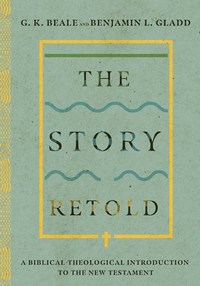
The Story Retold by G. K. Beale and Benjamin L. Gladd: Everything You Want in a NT Introduction and More

The Story RetoldThe Story Retold:
A Biblical-Theological Introduction
to the New Testament

by G. K. Beale, Benjamin L. Gladd

DETAILS:
Publisher: IVP Academic
Publication Date: February 24, 2020
Format: Hardcover
Length: 490 pg.
Read Date: January 2-August 14, 2022
Support Independent Bookstores - Visit IndieBound.org

What’s The Story Retold About?

From the Publisher’s Website:

New Testament introductions fall into two categories: those that emphasize the history behind the text through discussions of authorship, dating, and audience, and those that explore the content of the text itself. Few introductions weave the Old Testament into their discussions, and fewer still rely on the grand narrative of the Old Testament.

But the New Testament was not written within a vacuum. Rather, it stands in continuity with the Old Testament. Israel’s story is the church’s story.

In The Story Retold, G. K. Beale and Benjamin L. Gladd explore each New Testament book in light of the broad history of redemption, emphasizing the biblical-theological themes of each New Testament book. Their distinctive approach encourages readers to read the New Testament in light of the Old, not as a new story but as a story retold.

As an NT Introduction

After three chapters of introductory material: “The Story Line of the Bible,” “The Use of the Old Testament in the New,” and “Introduction to the Gospels” (all pretty self-explanatory), we get a chapter on each book of the New Testament (with some chapters combining multiple books—e.g., The Pastoral Epistles).

Like most NT Introductions (as the description above says), Beale and Gladd discuss authorship, dating, and so on, with a good outline and overview of the book. Some of the ways they phrase things, or organize the material are helpful and unique—but on the whole, they’re helpful and pretty much what you get in every NT Introduction out there.

This isn’t a good or a bad thing, it’s simply saying that on the basics this is a pretty good Introduction.

The Little Something Extra in Each Chapter

The thing that separates this from similar works is the way that the authors tie the particular Biblical book into the overall storyline of the Bible. By focusing on the Biblical Theological/Redemptive Historical themes of the books—specifically grounding them in one or more Old Testament books about the same themes, it helps the reader to deal with, wrestle with, and (frequently) review the use of the OT by the NT in order to further cement and to expand the reader’s understanding of how the Bible as a whole tells the same story about Jesus Christ and His people.

Some of these sections blew me away—all deepened my understanding of the various books. Not just the NT, but seeing how the OT is used by the apostles helps understand those books/passages.

Format

This was produced as a textbook and it’s nice to read one of these again—I haven’t since my undergrad days. It’s a heavy tome, with thick, glossy paper and a lot of pictures. Sure, it’s a bit difficult to curl up with to read—but you can’t help but feel that it’s going to last for years as you read it.

Also, it’s heavy enough to use as a self-defense device.

The format does make this a pretty spendy book (although cheaper than most textbooks I bought in my undergrad days). But it’s worth the purchase price (as I said, it feels like it’s going to last for years).

So, what did I think about The Story Retold?

This isn’t an overly technical read—I think it could be used by older high school students. But sure, it’s aimed at college/early grad-school students, so go to it with the right expectations.

I really don’t know what to say about it at this point—I spent months reading this thing, it feels as if I should have several more pages of things to say. Basically, if the description sounds good to you, it’s going to deliver exactly what it promised.

It’s not what most people think of as devotional material—but it worked for me as such. This is definitely one of the better and more useful books I read this year. It’s also going to serve well as a reference book. Whether you dip in and out or read cover-to-cover, The Story Retold is worth its weight.


5 Stars

This post contains an affiliate link. If you purchase from it, I will get a small commission at no additional cost to you. As always, the opinions expressed are my own.

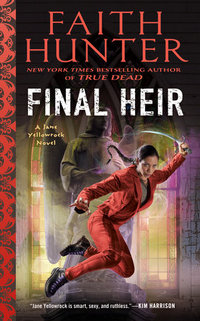
PUB DAY REPOST: Final Heir by Faith Hunter: It All Comes Down to This

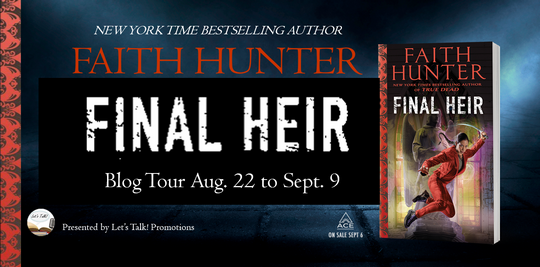
Final Heir Banner

Final HeirFinal Heir

by Faith Hunter

DETAILS:
Series: Jane Yellowrock, #15
Publisher: Ace Books
Publication Date: September 5, 2022
Format: eARC
Length: 464 pg.
Read Date:  August 15-18, 2022

Support Independent Bookstores - Visit IndieBound.org

What’s Final Heir About?

The Vampire War in Europe is over—and the old guard seems to be defeated. Edmund is on his way to NOLA to be crowned and then some stability–and whatever passes for peace with the Mithrans should settle in for some time.

But first…there’s the Heir to deal with. The last hope of the Sons of Darkness, the old ways—and possibly a turn to a darker time for humanity—still needs to be dealt with. Years ago, Leo Pellissier was given a prophecy about the defeat of the Heir and after Jane came to work for him, he decided she was at the center of the prophecy. Jane, as the Dark Queen, could defeat him. So Leo set to work organizing things in the way that only he can.

Now it’s the endgame—time for the rest of the dominos that Leo set up to fall, for Jane to end the Heir, and change everything for the Mithrans. And possibly the rest of the supernatural world. Assuming she can. There’s no certainty about that. There’s also no certainty about who will survive this endgame—even if she manages to vanquish the Heir,* she may not survive the attempt. Even worse (in her mind) family, friends, and allies may die.

* He’s a significant enough power that I don’t feel too silly using a word like vanquish.

This isn’t going to be easy. This is for all the marbles—and that’s a great way to end a series.

The Youngers

Of all the characters we met along the way, I may miss Alex and Eli the most (as soon as I say that, I start to think about Angie, and question myself—but I really don’t have time to go into that). Eli hasn’t changed much since we first met him—he’s opened up a bit more, he may be a bit more emotionally mature, but he’s essentially the guy we met at the beginning. Faith Hunter’s answer to Joe Pike. He knows his business, he enjoys the work (as grim as it is)—maybe finds a peace in a fight that he can’t find elsewhere. He’s also incredibly loyal, he takes care of his people—first and foremost, his brother.

Aside from Jane, no character in the series has changed—grown, developed, and matured–than Alex Younger. He started off as a rebellious, unhygienic, hacker—focused only on what he could do with his computer. And maybe not letting his brother down (too much) again. He’s now an adult, he’s responsible, he can handle himself in a fight, and there are things/people he cares about in his life—he’s still a wiz with the computers, thankfully. He’s essentially a version of Alex with a different weapon-set.

Their humanity (Eli is still largely human) is one of the few lasting examples we have in the series at this point, and they keep things grounded in the middle of all the vampires, weres, witches, extradimensional beings, and whatnot. They’re great because of that, they’re great outside of that, too.

I do feel bad for poor Eli—in the last couple of books, he’s really taken a beating. It’s even worse in this novel. If he survives to the end (I’m carefully not answering), he’s going to have physical and psychological scars that are going to last. I know he wouldn’t have it any other way, he gets them doing what he thinks is right. But still, you can’t help but feel for the guy.

Beast

The Beast and Jane dialogue/interchanges in this novel were fantastic. I relished each of them.

Once again, Beast has her own agenda—as is her right and fitting for her character. But given the stakes here, some of the information she decides not to pass on to Jane is hard to believe. Sure, Beast may not get all the details, but I don’t see how she doesn’t understand the urgency and the importance of what’s going on.

But you know what? I just didn’t care. I like how Beast is her own creature—she comes through for Jane when the chips are down, but on her terms.

Homecoming Week

There are so many supporting characters in this book, that it’s really hard to fathom. There are so few characters from the series (that are still living/undead) that don’t at least get a named drop or a check-in. But several show up for more. There were characters that we’d lost track of—a couple that I’d forgotten even existed played a role in this book.

Hunter pulled out all the stops for this book.

I’m probably not alone in spending time reflecting on the series as a whole as I read this book, and bringing up so many names from the past (ones we may have regretted losing track of—and a couple we were probably happy to have lost) really helped with that.

The Chapter Titles

I don’t think I’ve talked about the chapter titles in these books before—and that’s a crying shame. I’m not a big fan of chapter titles in general, but this series has featured some doozies. Several of them in Final Heir are amongst the best in the series. I really don’t have a lot to say about them—but complimenting the chapter titles is overdue. There’s a lot that Hunter does right in these books, and this is just one of the more consistent and amusing.

Final Heir as a Series Finale

I’m not entirely sure it’s fair to do, but I can’t help but think about other series finales–particularly in the UF genre.* Last year, I compared the Alex Verus finale to the Iron Druid Chronicles. Final Heir doesn’t match up well with either of them–it’s more like the ending of the Kitty Norville series (and not dissimilar to the ending of The Hollows)—Jane and her friends and allies are up against a vampire (and his forces) bent on world domination in a final face-off. Okay, now that I start thinking about it, there are a lot of parallels between the two–but this isn’t the time for that.

* Benedict Jacka’s been talking about ending his series recently, and a lot of what he’s had to say is helpful when thinking about things like this. I’m not going to use his categories to talk about Final Heir because of spoilers, but if you haven’t read these posts (even if you haven’t read the Alex Verus series)—go check it out after you read Final Heir.

Hunter has spent several books lining things up for this confrontation—not unlike Leo Pellissier’s machinations in getting Jane to this point. Looking back at all the ins and outs from this perspective really is impressive. Final Heir is filled with combat and battles—maybe more than most novels in this series, they’re definitely more savage and meaningful. I don’t have a word-count, but I’d wager the final battle is longer than any we’ve yet encountered in the series. Hunter really gave her fans what they’ve been wanting (and will be missing). This is an epic villain, with giant stakes, it has to be an epic scene.

Better yet, following the battle, the novel’s dénouement also serves as one for the series—and if the final battle gave fans what they wanted, then they’re going to be knocked for a loop by the dénouement. We get the few dangling threads tied up and a good look at what the future offers for most of the characters.

I had expected a lot from the finale aspect of this book, and Hunter surpassed it.

So, what did I think about Final Heir?

I think this is a bit more rambling than I want to be—it’s also longer than it necessarily needs to be. Part of that is because there’s so much to talk about in this novel—and I’ve barely scratched the surface so I don’t give it all away. Part of the longer-than-usual nature of the post is also that there’s part of me that knows I’m pretty much done with these characters when I hit “Schedule.” Sure, I’ll listen to the audiobook sometime next year, and I’ll likely re-read/re-listen to the series sometime after that. But all of that is revisiting. Finishing here is finishing the series, so I’m trying to drag it out.

For the first four or five books, this series served to fill the time while I was waiting for other Urban Fantasy books to come out. But around then it took on the role of being something I needed filler for while waiting for the next Yellowrock book. And lately, it’s one of those series I organize my reading schedule around. Listening to the series on audio over the last year has really helped me see all the ways Hunter’s been preparing the characters and the readers for these events, and it’s truly impressive. As it now stands, the Jane Yellowrock series ranks near the top of the UF pantheon for me (completed or on-going series), beating out stiff competition.

But let’s set that aside for a moment and just focus on this book—it’s full of all the action, the heart, the magic, and sense of family we’ve grown accustomed to. Jane Yellowrock finally finds her place in this world (sure, she found it before, but it’s more solidified now), her priorities are intact, she’s doing good in ways she hasn’t been able to before–and those that she cares about (many she’d never have considered caring for 15 books ago) are in good places. Just for the character work alone around Jane, this book is worth the time.

I think someone new to this series would come away from this one entertained and impressed—I don’t know why someone would do that, but I’m sure someone will.

From the jaw-dropping (whoa, Hunter’s taking no prisoners!) first chapter to the last lines that genuinely made me misty, Final Heir was a great ride. If I have to say au revoir to Jane, Bruiser, Eli, Alex, and the rest—especially Beast—this is was quite the way to do it. Bravo, Faith Hunter.

Disclaimer: I received this eARC from Let’s Talk! Promotions and Berkley Publishing Group via NetGalley in exchange for this post — thanks to all for this.


5 Stars

This post contains an affiliate link. If you purchase from it, I will get a small commission at no additional cost to you. As always, the opinions expressed are my own.


My thanks to Let’s Talk! Promotions for the invitation to participate in this tour and the materials (including the book via NetGalley and Berkley Publishing Group) they provided.

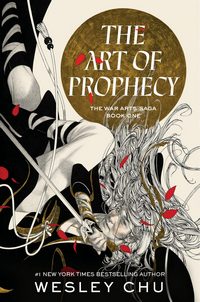
The Art of Prophecy by Wesley Chu: Will Simply Blow You Away

The Art of ProphecyThe Art of Prophecy

by Wesley Chu

DETAILS:
Series: The War Arts Saga, #1
Publisher: Del Rey
Publication Date: August 8, 2022
Format: Hardcover
Length: 528 pg.
Read Date: August 19-24, 2022
Support Independent Bookstores - Visit IndieBound.org

What’s The Art of Prophecy About?

Briefly (cuz, boy howdy, I could go on and on and on about this): There’s a prophesied Champion who will save his kingdom from the Eternal Khan, but he’s a spoiled brat who is not as skilled a warrior as he believes—and he’s even less skilled than he needs to be. But that’s okay, because the prophecy is broken—or wrong. The greatest living practitioner of magically-enhanced war arts has decided to take over his training and protection. Two incredibly dangerous women from very different backgrounds and for very different reasons have decided he needs to die.

Taishi

Taishi is almost certainly my favorite new character of 2022*. She’s elderly—exactly how old, I don’t think we’re told. In her prime, she fought the Eternal Khan to a stalemate more than once. Somewhere along the line, she lost the use of one of her arms. Her age and the loss of her arm have slowed her down and made her less effective. But not so slow that anybody but her can tell. She’s practically a force of nature. Since then, she’s pretty much retired but is strongarmed into checking in on Jian’s training. It’s hard to say what she’s less-impressed with—him or the work of his expert trainers—she’s spreading the scorn all around.

* Sure, it’s possible the next four months will bring someone better across my path, but not really likely.

She’s opinionated, set in her ways, cantankerous, and stubbornly determined. Pity those who try to get in her way. Once she determines that she needs to shepherd and educate Jian, nothing (including Jian) is going to stand in her way.

Taishi’s voice—both in dialogue or as it comes across in the narration—is strong, sardonic, and sarcastic. I loved every second of her point-of-view chapters (seeing her through other characters’ eyes was just as good, though). I was mildly annoyed every time the point-of-view changed, while still being curious about the other arcs.

Wuxia

Wuxia is my new word for the month—from at least one article online (so it must be true), I’m not a total novice when it comes to this genre—I watched the first two Kung Fu Panda movies with my kids when they first came out. But that’s it. So I don’t know how much of this story/world is Chu using or playing with or subverting the conventions of the genre. But it looks like he’s using several of them, and seems to be having fun with them (at least he’s getting the reader to have fun).

I can say that I’m pretty curious about the genre now—and intend to keep an eye out for more opportunities to expose myself to it.

Obviously, one of the defining characteristics of wuxia is the martial arts, and what’s the point of a martial-arts-based fantasy without fight scenes? The Art of Prophecy delivers those in spades. Maybe even by the bucket. I’ve always enjoyed Chu’s fight scenes, but these make the stuff in the Tao books look basic. They’re just fantastic—and littering them with the quips from the point-of-view character (either expressed or kept internal) made them all the better. I could read these all day.

So, what did I think about The Art of Prophecy?

I don’t know that I can really express how excited I am about this book. The last time I was this enthusiastic about a Fantasy novel was Kings of the Wyld, and I’ve read some really good Fantasy since then. But this is a whole different level.

I’m going to leave it at that—if I went into the kind of depth I want to, I’d either spend another week or so trying to get it all out (or would never finish because I was dissatisfied with it). I could do a couple of hundred words on the nature of prophecy and free will in this universe alone (and someone smarter than me had better do that soon)—or even the importance of honor, role, and manners (do not try to cut in line around these people). So I’m going to go shallow with this post—this is a great premise—and the execution of the premise is as great. The world-building is fascinating, and the history that’s hinted at is some of the best I can remember. I loved every one of these characters (none as much as Taishi, but that’s nothing against the others) and feel like I could’ve read a version of this book that was 50% longer just for more time with them. Probably the best action scenes I’ve read this year. It’s too long to read in a single sitting, but it’s the kind of book you want to read in one.

Stop wasting time reading about it, start reading The Art of Prophecy.


5 Stars

This post contains an affiliate link. If you purchase from it, I will get a small commission at no additional cost to you. As always, the opinions expressed are my own.

Final Heir by Faith Hunter: It All Comes Down to This

Final Heir Banner

Final HeirFinal Heir

by Faith Hunter

DETAILS:
Series: Jane Yellowrock, #15
Publisher: Ace Books
Publication Date: September 5, 2022
Format: eARC
Length: 464 pg.
Read Date:  August 15-18, 2022
Support Independent Bookstores - Visit IndieBound.org

What’s Final Heir About?

The Vampire War in Europe is over—and the old guard seems to be defeated. Edmund is on his way to NOLA to be crowned and then some stability–and whatever passes for peace with the Mithrans should settle in for some time.

But first…there’s the Heir to deal with. The last hope of the Sons of Darkness, the old ways—and possibly a turn to a darker time for humanity—still needs to be dealt with. Years ago, Leo Pellissier was given a prophecy about the defeat of the Heir and after Jane came to work for him, he decided she was at the center of the prophecy. Jane, as the Dark Queen, could defeat him. So Leo set to work organizing things in the way that only he can.

Now it’s the endgame—time for the rest of the dominos that Leo set up to fall, for Jane to end the Heir, and change everything for the Mithrans. And possibly the rest of the supernatural world. Assuming she can. There’s no certainty about that. There’s also no certainty about who will survive this endgame—even if she manages to vanquish the Heir,* she may not survive the attempt. Even worse (in her mind) family, friends, and allies may die.

* He’s a significant enough power that I don’t feel too silly using a word like vanquish.

This isn’t going to be easy. This is for all the marbles—and that’s a great way to end a series.

The Youngers

Of all the characters we met along the way, I may miss Alex and Eli the most (as soon as I say that, I start to think about Angie, and question myself—but I really don’t have time to go into that). Eli hasn’t changed much since we first met him—he’s opened up a bit more, he may be a bit more emotionally mature, but he’s essentially the guy we met at the beginning. Faith Hunter’s answer to Joe Pike. He knows his business, he enjoys the work (as grim as it is)—maybe finds a peace in a fight that he can’t find elsewhere. He’s also incredibly loyal, he takes care of his people—first and foremost, his brother.

Aside from Jane, no character in the series has changed—grown, developed, and matured–than Alex Younger. He started off as a rebellious, unhygienic, hacker—focused only on what he could do with his computer. And maybe not letting his brother down (too much) again. He’s now an adult, he’s responsible, he can handle himself in a fight, and there are things/people he cares about in his life—he’s still a wiz with the computers, thankfully. He’s essentially a version of Alex with a different weapon-set.

Their humanity (Eli is still largely human) is one of the few lasting examples we have in the series at this point, and they keep things grounded in the middle of all the vampires, weres, witches, extradimensional beings, and whatnot. They’re great because of that, they’re great outside of that, too.

I do feel bad for poor Eli—in the last couple of books, he’s really taken a beating. It’s even worse in this novel. If he survives to the end (I’m carefully not answering), he’s going to have physical and psychological scars that are going to last. I know he wouldn’t have it any other way, he gets them doing what he thinks is right. But still, you can’t help but feel for the guy.

Beast

The Beast and Jane dialogue/interchanges in this novel were fantastic. I relished each of them.

Once again, Beast has her own agenda—as is her right and fitting for her character. But given the stakes here, some of the information she decides not to pass on to Jane is hard to believe. Sure, Beast may not get all the details, but I don’t see how she doesn’t understand the urgency and the importance of what’s going on.

But you know what? I just didn’t care. I like how Beast is her own creature—she comes through for Jane when the chips are down, but on her terms.

Homecoming Week

There are so many supporting characters in this book, that it’s really hard to fathom. There are so few characters from the series (that are still living/undead) that don’t at least get a named drop or a check-in. But several show up for more. There were characters that we’d lost track of—a couple that I’d forgotten even existed played a role in this book.

Hunter pulled out all the stops for this book.

I’m probably not alone in spending time reflecting on the series as a whole as I read this book, and bringing up so many names from the past (ones we may have regretted losing track of—and a couple we were probably happy to have lost) really helped with that.

The Chapter Titles

I don’t think I’ve talked about the chapter titles in these books before—and that’s a crying shame. I’m not a big fan of chapter titles in general, but this series has featured some doozies. Several of them in Final Heir are amongst the best in the series. I really don’t have a lot to say about them—but complimenting the chapter titles is overdue. There’s a lot that Hunter does right in these books, and this is just one of the more consistent and amusing.

Final Heir as a Series Finale

I’m not entirely sure it’s fair to do, but I can’t help but think about other series finales–particularly in the UF genre.* Last year, I compared the Alex Verus finale to the Iron Druid Chronicles. Final Heir doesn’t match up well with either of them–it’s more like the ending of the Kitty Norville series (and not dissimilar to the ending of The Hollows)—Jane and her friends and allies are up against a vampire (and his forces) bent on world domination in a final face-off. Okay, now that I start thinking about it, there are a lot of parallels between the two–but this isn’t the time for that.

* Benedict Jacka’s been talking about ending his series recently, and a lot of what he’s had to say is helpful when thinking about things like this. I’m not going to use his categories to talk about Final Heir because of spoilers, but if you haven’t read these posts (even if you haven’t read the Alex Verus series)—go check it out after you read Final Heir.

Hunter has spent several books lining things up for this confrontation—not unlike Leo Pellissier’s machinations in getting Jane to this point. Looking back at all the ins and outs from this perspective really is impressive. Final Heir is filled with combat and battles—maybe more than most novels in this series, they’re definitely more savage and meaningful. I don’t have a word-count, but I’d wager the final battle is longer than any we’ve yet encountered in the series. Hunter really gave her fans what they’ve been wanting (and will be missing). This is an epic villain, with giant stakes, it has to be an epic scene.

Better yet, following the battle, the novel’s dénouement also serves as one for the series—and if the final battle gave fans what they wanted, then they’re going to be knocked for a loop by the dénouement. We get the few dangling threads tied up and a good look at what the future offers for most of the characters.

I had expected a lot from the finale aspect of this book, and Hunter surpassed it.

So, what did I think about Final Heir?

I think this is a bit more rambling than I want to be—it’s also longer than it necessarily needs to be. Part of that is because there’s so much to talk about in this novel—and I’ve barely scratched the surface so I don’t give it all away. Part of the longer-than-usual nature of the post is also that there’s part of me that knows I’m pretty much done with these characters when I hit “Schedule.” Sure, I’ll listen to the audiobook sometime next year, and I’ll likely re-read/re-listen to the series sometime after that. But all of that is revisiting. Finishing here is finishing the series, so I’m trying to drag it out.

For the first four or five books, this series served to fill the time while I was waiting for other Urban Fantasy books to come out. But around then it took on the role of being something I needed filler for while waiting for the next Yellowrock book. And lately, it’s one of those series I organize my reading schedule around. Listening to the series on audio over the last year has really helped me see all the ways Hunter’s been preparing the characters and the readers for these events, and it’s truly impressive. As it now stands, the Jane Yellowrock series ranks near the top of the UF pantheon for me (completed or on-going series), beating out stiff competition.

But let’s set that aside for a moment and just focus on this book—it’s full of all the action, the heart, the magic, and sense of family we’ve grown accustomed to. Jane Yellowrock finally finds her place in this world (sure, she found it before, but it’s more solidified now), her priorities are intact, she’s doing good in ways she hasn’t been able to before–and those that she cares about (many she’d never have considered caring for 15 books ago) are in good places. Just for the character work alone around Jane, this book is worth the time.

I think someone new to this series would come away from this one entertained and impressed—I don’t know why someone would do that, but I’m sure someone will.

From the jaw-dropping (whoa, Hunter’s taking no prisoners!) first chapter to the last lines that genuinely made me misty, Final Heir was a great ride. If I have to say au revoir to Jane, Bruiser, Eli, Alex, and the rest—especially Beast—this is was quite the way to do it. Bravo, Faith Hunter.

Disclaimer: I received this eARC from Let’s Talk! Promotions and Berkley Publishing Group via NetGalley in exchange for this post — thanks to all for this.


5 Stars

This post contains an affiliate link. If you purchase from it, I will get a small commission at no additional cost to you. As always, the opinions expressed are my own.


My thanks to Let’s Talk! Promotions for the invitation to participate in this tour and the materials (including the book via NetGalley and Berkley Publishing Group) they provided.


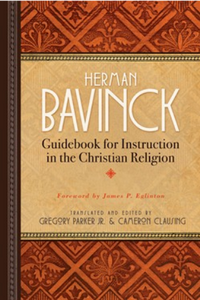
Guidebook for Instruction in the Christian Religion by Herman Bavinck; Gregory Parker Jr., Cameron Clausing (Translators): Dogmatics for Everyone

Guidebook for Instruction in the Christian ReligionGuidebook for Instruction in the Christian Religion

by Herman Bavinck, translated and edited by Gregory Parker Jr., Cameron Clausing

DETAILS:
Publisher: Hendrickson Academic
Publication Date: June 7, 2022
Format: Hardcover
Length: 194
Read Date: July 3-17, 2022
Support Independent Bookstores - Visit IndieBound.org

What’s Guidebook for Instruction in the Christian Religion About?

…in writing this guidebook, I had in mind the pupils in the highest classes of our Christian gymnasium, public schools, in the education of teachers, and in normal schools, etc., and moreover those who desire to understand the main content of our Christian, Reformed confession of faith through a not too comprehensive or expensive book.

That’s it in a nutshell—this book delivers the main content of the Reformed Christian thought directed toward those in High School or those without much education.

In twenty chapters of 10 +/- pages each, Bavinck covers things such as the Knowledge of God, General and Special Revelation, the Trinity, Creation, Providence, The Person and Work of Christ, The Holy Spirit, Salvation, The Church, and The End of the World.

There’s not much more to say than that, it’s shorter and easier to read than Systematic/Dogmatic Theology that I can think of, written by one of the most significant and influential teachers of the Twentieth Century.

[His desire is] to discuss the material in a scriptural sense: that it is not only revealed in its teaching but also in its comforting character, and that it is applied to the heart and conscience. Religious instruction must be education in the true sense of the word, and it must be education in the religion—that is, in the most tender and sacred of what a human soul may possess.

Guidebook and The Wonderful Works of God

While this was an original composition, it is fairly similar to The Wonderful Works of God, published a few years earlier. The Guidebook is streamlined, no doubt, but many passages/paragraphs in both match*, and the translators give footnotes throughout showing that—and when they diverge. There are instances that I’ve found (and will likely see others in future reading/study) that a similar section in the Guidebook helps clarify a point in TWWoG.

* Bavinck says he “intimately connected” the two.

So, what did I think about Guidebook for Instruction in the Christian Religion?

It took three afternoons of semi-casual reading for me to read this—I could’ve done it in two, had I skipped an afternoon nap (much less the three I let myself take over the period). I spent months reading both The Wonderful Works of God and Reformed Dogmatics, I practically gave myself whiplash as quick as this went.

This is incredibly accessible—anyone from fourteen on up should be able to handle it (although parts might take a little work for some—but not often). It covers all the essential matters of Systematic Theology, and occasionally goes beyond. There might be things you’d like him to be a bit more thorough about, but that’s what the other works are for. The translators put it this way:

He traverses a path in which he attempts to bridge the gap between the theology in the academy and theology in the church In doing so, he provides the pilgrim with a theology that is uniquely accessible. For those who found his Reformed Dogmatics alarmingly academic and his Magnalia Dei* intimidatingly thick, Guidebook is the theological porridge that is “just right” for most readers.

* The translators use the Latin title for The Wonderful Works of God throughout the work.

I recommend this without hesitation—as I do everything I’ve read by Bavinck—but without having to worry that someone will be intimidated by it, or decide they’re not up for the work. Although I still maintain that people shouldn’t be as intimidated as they are by him. The translators have given us a gift in making this available to English readers for the first time—as much of a gift as Bavinck gave the church of his time in writing it.

The translators close their Introduction with these words, and I think they’re a great way to sum up the book:

In his Guidebook for Instruction in the Christian Religion, Bavinck has given a gift to the church. The reader will likely find little that is groundbreaking or novel (as one regularly does in Reformed Dogmatics). However, this book supplies the theology of an academic concerned with the life of the church. It is an example of catechetical theology produced by one of the foremost academic theologians of his time.

Above all, we hope this translation helps fulfill Bavinck’s hope for true theology: that it does not remain an object of the head but penetrates the heart and thus becomes an act of confession and praise. As he writes, “Dogmatics, therefore, is… a hymn of adoration and thanksgiving, a ‘glory to God in the highest’ (Luke 2:14). In this book, Bavinck gives us a songbook: setting God before us and calling us to sing God’s praises.

5 Stars

This post contains an affiliate link. If you purchase from it, I will get a small commission at no additional cost to you. As always, the opinions expressed are my own.

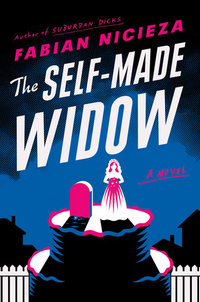
The Self-Made Widow by Fabian Nicieza: The Housewife Detective and the Disgraced Journalist Face Off with a Devious Mind

The Self-Made Widow The Self-Made Widow

by Fabian Nicieza

DETAILS:
Series: Suburban Dicks, #2
Publisher: G.P. Putnam's Sons
Publication Date: June 20, 2022
Format: Hardcover
Length:388 pg.
Read Date: July 7-11, 2022
Support Independent Bookstores - Visit IndieBound.org

[Det. Rossi] heard [Andi] sigh over the phone. He hated when she sighed. It was one of the few childish affectations she had, but he also knew that meant she was either frustrated, disappointed, or, worse, thinking something through.

Or even worse, he corrected himself, all three combined.

He suspected this was an “even worse” scenario.

What’s The Self-Made Widow About?

Andrea Stern’s social circle is shaken up when the husband of one of her friends dies suddenly. Many knew of his heart condition, so it wasn’t a total surprise, but it still wasn’t expected. Everyone rallies to support his wife and sons through this trying time.

During the funeral, however, Andi’s Spider-Sense starts tingling, and she starts to put some things that she’s noticed together—leading her to a daunting conclusion. Meanwhile, Kenny Lee, her collaborator in the exposure of the conspiracy and murder last year, gets an anonymous phone call saying that his death wasn’t due to natural causes, but that he was murdered by his wife.

Finding themselves interested in the same case again, they divvy up the avenues of investigating and get to work.

Kenny Lee

He was thirty years old and the only meaningful relationship he’d ever had in his life was with the fear of being in a meaningful relationship.

Kenny’s life since their last investigation has changed the most—he’s no longer a disreputable journalist, that case reestablished his reputation, got him some great publicity, and frequent TV exposure. He’s set to release his book about the murders/investigation in a few weeks and the Netflix documentary series will follow soon after that.

He is, for Kenny, back on top of the world—he’s bought a new car, is taking better care of himself, has a better attitude toward life, and maybe has a girlfriend. But it’s not enough—he’s restless, he realizes early in the novel that he needs to be chasing a story. Something makes him take another look at this death and he starts to ask questions.

He ends up using the team he has working with/for him on the documentary to help with the legwork, I really didn’t think that the novel’s cast needed to be bigger—but man, I had a lot of fun with this group. Most of them aren’t investigators, but (like with so many in this series) that’s part of their charm—and maybe the secret to their success.

I can’t help but wonder that the same impulses that led to his earlier professional downfall are being held back by his current wave of success. If that success slows or wanes, will that come back, leading him to a new round of scandal, possibly derailing Andie’s work? Or maybe making him a target for her?

Andrea Stern

Her insecurities kicked in. What was it about her that alienated people? She knew she was arrogant, sarcastic, and judgmental, but was that reason for people to be so wary around her?

Things haven’t been good for Andi and Jeff in the months since she uncovered the murder/had their fifth child. Long-simmering resentments and arguments have heated up. Andi hasn’t gone to work full-time or anything, but she has consulted with the police a little bit, and she’s clearly interested in doing more—if she can figure out how to do it. Jeff is not at all supportive of this, but Andi’s not deterred for a moment.

What does give her some pause is the effect that this particular investigation is having/going to have on her children and her friends. Yes, she’s (mostly) privately been judging the other moms, but they’re her social circle and have been for years. Can these relationships survive the secrets she will have to dig up and expose?

Thankfully, the friend she made last year, Sathwika* is encouraging, and supportive—and jumps into assisting Andi with both feet. Sathwika gets Andi more than anyone else seems to, and Andi may just have to rely on her alone after all this shakes out.

* This post is too long as is, so I won’t talk more about her now, but I need to spend a few paragraphs on Sathwika when I talk about the next novel.

That’s just what’s going on in the background—proving that Derek was killed is going to be hard enough. But then how is she going to prove her friend did it (assuming she is the one)? Is it all worth it? What will she gain and lose here?

Ruth Stern

…she also couldn’t accept someone getting away with murder.

Her first thought was: How does Mom do this?

But Ruth’s next thought, immediately coming after the first one, and bringing both excitement and trepidation in its wake, was: How do I do it better?

Like Anci in the Slim in Little Egypt books and Auri Vicram, one thing that almost always works for me is a daughter of a mystery protagonist taking it upon themselves to jump into mystery-solving (or being recruited to help). There’s a mixture of eagerness, naiveté, inventiveness, and immaturity that adds a freshness to a type of novel that can seem familiar before you even read it.

Ruth helped out her mom a little bit in the previous book, but she’s called upon to do more now. One of Molly’s sons is in her grade and they’re friendly with each other. Ruth uses this to get a better picture of life in the Goode household—both before and after Derek’s death.

It’s not the easiest thing for her to do—it feels like she’s betraying her friend. She knows the toll it takes on her mother’s relationships, and can understand that. But she continues to emulate her mother, driven by similar impulses. Ruth is one of the aspects of this series that works best, and I hope Nicieza continues to bring her in.

Molly Goode

Ohhh, Molly is possibly my favorite antagonist of the year. She’s the kind of woman that Bernadette Fox would feud with in the neighborhood or school. You can see her bullying mothers in a PTA meeting for not bringing the right kind of gluten and allergen-free goodies to a Bake Sale, or bringing the wrath of the HOA on someone who has let their grass get too long. She’s a meticulous planner, always gracious, with perfect children, and a (until he died) husband successful enough to enable her to live the kind of life she’s wanted.

In short, she’s the last person you’d suspect of a devious, premeditated murder. But then again…

What kind of person would you have to be to commit murder when one of the people closest to you solves murders as a hobby?

So, what did I think about The Self-Made Widow?

This was not a whodunit—both Kenny and Andi had a target in mind when they started looking into Derek’s death. It was a howdunit, a little bit of a whydunit—and, sure, a wasitdun? Then the biggest question—how could they prove any of it? I absolutely loved how they had to approach this one—I can’t think of a novel with an alibi like this one. This is a master class in how to put together a mystery novel for those readers who’ve read too many mystery novels.

My biggest (only?) complaint is that there’s a new Chief of Police in town, and we don’t spend nearly enough time with him—I hope that changes in the future, I liked him and think it’d be fun to see him lock horns with Andie more (and/or work alongside her).

For both Kenny and Andie, Suburban Dicks* was about them getting back to what they wanted/needed to be doing with their lives—Kenny needed to do some real reporting, and shake the scandal off; Andie needed to stop forcing herself into the mold of perfect suburban wife/mother, and do some profiling/investigating. This book focuses on some introspection for the two of them, what’s important to them? Are the choices they made last year—or this year—worth it to them? What made them this way? Between what we see about them in these books, we have a foundation for what’s to come (hopefully in many books).

* We get a nice dash of meta-humor about the title, incidentally.

It’d be easy to talk up the humor of the book—but it’s not a comedy. It’s comedically told—and there are some moments of slapstick—but at its heart, The Self-Made Widow is a murder mystery (with some other crimes thrown in for good measure). There’s a lot of darkness under the laughs, and readers should be prepared for that.

There’s a lot to chew on here when it comes to our protagonists as well as many of the supporting characters. Add in the murder and what they have to do to resolve things, and you’ve got yourself a great read. But you also get Nicieza’s laugh-out-loud humor, sharp observations, and strong narrative voice. If this novel had only one of these elements—character, plot, and writing—and it’d still be something I recommend. All three? Fuggedaboutit.


5 Stars

This post contains an affiliate link. If you purchase from it, I will get a small commission at no additional cost to you. As always, the opinions expressed are my own.

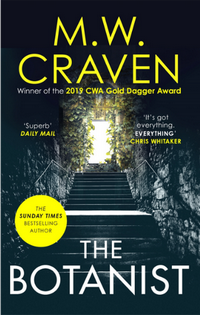
The Botanist by M. W. Craven: Nothing is Without Poison

The BotanistThe Botanist

by M.W. Craven

DETAILS:
Series: Washington Poe, #5
Publisher: Constable
Publication Date: June 2, 2022
Format: Hardcover
Length: 429
Read Date: July 5-6, 2022

Poe nodded. ‘I hate locked room mysteries,’ he said.

What’s The Botanist About?

There’s little that mystery readers/watchers enjoy more than a locked-room mystery, but you can understand why someone who actually has to solve mysteries for a living isn’t quite a fan.

And that’s not good for him because there are two cases in this book involving locked room mysteries—one Poe and Tilly are assigned to, one they take because they’re asked (and would take on even if they weren’t).

It occurs to me that I should probably define the term I keep using, just to be careful. Last year, Gigi Pandian (no slouch when it comes to locked-room mysteries) provided one on CrimeReads:

Locked-room mystery: A crime has been committed in a room or other location that’s been sealed from the inside, with no way out. An example is a dead man found inside a windowless room that’s been sealed from the inside, dead from a gunshot wound that people outside the room heard fired, yet inside the room there’s no gun and no way for the culprit to have escaped. Thus a locked room is only part of the equation; the key is that the situation appears impossible.

And Poe has two cases to work through. Should be easy, right?

Case #2 (Chronologically, Anyway)

Back in 2020, when I posted about The Curator, I said: “I know it’d be pushing things to have [Estelle Doyle] play a larger role in these books than she does, but the few scenes we have with her are just not enough to satisfy.” I’m so glad to be wrong—Doyle does play that larger role here, and it’s as good as I’d hoped it’d be.

Doyle, I should probably say, is a forensic Pathologist—one of the best around. She’s Poe’s go-to person any time he had questions about something wet and organic.” She shamelessly and aggressively flirts with him, going out of her way to make him uncomfortable—we’re told that “Poe was terrified and bewitched in equal measure.” Some things never change—in 2018’s Black Summer, Poe thinks she’s “incredibly sexy and utterly terrifying.”

And she’s been arrested for her father’s murder. Her comment to the police? “Tell Washington Poe.” That’s all she has to say to get Poe on the case, subverting the work that the DCI (and the rest of the Northumbria police) have done on the case.

There’s no evidence that anyone but Estelle or her father was in the house the day he was shot. There’s also no gun. Is it any wonder that Poe hates locked room mysteries?

Case #1

So the case that DS Washington Poe is supposed to be working on is hunting down a poisoner that the press has dubbed The Botanist.

His victims are high-profile figures, generally in the news for less than admirable activities/views (a racist political analyst, etc.). He mails them a poem and a pressed flower, and then they die a few days later. It doesn’t matter what precautions they take, how involved the police are, how secure their living space is…they die. It’s that simple.

Because these are notorious figures, The Botanist quickly develops a fan base—people are celebrating him, making him into a folk hero of sorts. There’s a lot of pressure on Poe and the other detectives working the case to put an end to his career before he inspires copycats/disciples. The dynamic of a large degree of public sympathy for the killer is a new angle for this series, and I really appreciated it.

A Quick Word About Tilly

I’ve been anticipating what Poe might need next and I have a program running. It’s called RipplePlace and I expect the results in approximately ninety seconds.’

‘And what’s that?’

‘It’s a search and merge algorithm, sorting key data into lexicographical order,’ Bradshaw explained, explaining nothing.

And with that she left the room. Doyle looked at the empty doorway in amusement. ‘I think she may be my favourite person ever,’ she said.

Poe nodded. ‘You understand any of that?’ he asked.

‘Not a word.’

Tilly Bradshaw isn’t as prominent in this novel as readers are used to—and really couldn’t be, because of all the other characters running around, and the way that the story had to be paced. But even when she wasn’t “on camera” (if you will), she was a presence—people were sharing some tidbit about her, using something she’d dug up, etc.

And when she was “on camera”? It was gold. She’d pull off some sort of wizardry with tech, get some sort of data put together in a way no one else would, or would say/do something to make you grin (at least). She really is a great character. It’s hard to disagree with Doyle, she just might be my favorite.

So, what did I think about The Botanist?

Poe had seen people die before. Too many times. Perceived wisdom was that police officers became desensitised to death, but he wasn’t sure it was true. It certainly wasn’t for him. The dead stayed with him. Haunted his dreams and occupied his waking thoughts. They were the soundtrack to his life and the day he couldn’t hear them would be the day he handed in his warrant card. Poe needed to live among the dead. It was how he protected the living.

One of my favorite days the last few summers have been the day the new Washington Poe/Tilly Bradshaw book arrives—topped only by the day I get to start it. This year has been no exception—I finished it five days ago, and am still riding the high.

Time with these characters is like walking into Cheers—you know everyone, you enjoy their company, the only thing you don’t know is what escapade they’re in the middle of. Sure, Sam and the gang were never on the hunt for a serial killer,* but you get my point. Craven takes some of the relationships in new directions here, brings in some new figures, and generally keeps them from being stale—but Poe, Tilly, Flynn, and Doyle are who we’ve come to know and love(?) over the last four novels.

* Or did they? I don’t know—they got into some strange areas there in Season 11.

The cases were just great. Estelle’s case was on the easy side for the reader to suss out (and I was close to right on the motive, as right as Poe was)—but that didn’t make it any less satisfying to read. And the reveal (and the events that led to it) were pulled off so well that I’m not going to complain a bit.

The solution to The Botanist case, on the other hand, was brilliant. I don’t want to say more than that so I don’t tip off anyone, but when the pieces started fitting together enough that you could see the solution coming? I had to stop for a minute to laugh at how perfect it was—but it’s one thing to figure out how the killer’s doing something, it’s a whole nother thing to catch him. Craven’s ending was fantastic—when I was finished, I wrote my last note: “the last 30 pages made me happier than almost anything else this year.”

For me, one of the best parts was how much of this book is dependent on characters other than our protagonists. Absolutely, the cases don’t get solved without Poe and Tilly—their investigations, research, bold moves, etc. are essential. But the secondary characters are are who provide the brilliance, the plans, and the insights that stop the Botanist and set up the dynamite conclusion. The day isn’t saved without our hero, but Poe doesn’t save the day. Fans of the series aren’t going to mind it because of the way that Craven has constructed this universe—he’s set up the other characters to be the kind of people that operate at Poe’s level (if not beyond it), so by all means, let them shine. Also, it makes the whole series more grounded, more believable if it’s not always Washington Poe who solves everything.

Clearly, I loved this. I strongly recommend it—and everything Craven’s written. Now it’s time for me to start waiting for my favorite day of the summer of 2023.


5 Stars

Page 7 of 24

Powered by WordPress & Theme by Anders Norén