Tag: 5 Stars Page 9 of 24

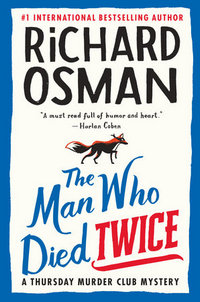
The Man Who Died Twice by Richard Osman: Laughter, Tears, and a Thrilling Plot. Who Could Ask for More?

The Man Who Died Twice

The Man Who Died Twice

by Richard Osman
Series: Thursday Murder Club, #2

Hardcover, 352 pg.
Pamela Dorman Books, 2021

Read: November 5-8, 2021
Grab a copy from your local indie bookstore!

TL;DR Version of the Post

I’m going to try not to go on for a few thousand words here, but I can’t make any promises. Just in case, let me provide this version of the post first:

Why waste time wondering about this book? Go read it now.

“It is fine to say ‘what doesn’t kill you makes you stronger’. It is admirable. But it no longer applies when you’re eighty. When you are eighty, whatever doesn’t kill you just ushers you through the next door, and the next door and the next, and all of these doors lock behind you. No bouncing back. The gravitational pull of youth disappears, and you just float up and up.”

What’s The Man Who Died Twice About?

Right on the heels of the events of The Thursday Murder Club, a figure out of Elizabeth’s past arrives at Cooper’s Chase in need of her help (which means they get the help of Ibrahim, Ron, and Joyce, too—they’re a package deal now). He’s been accused of stealing diamonds worth millions—this is bad enough in any circumstances, but when these diamonds belong to a New York mafia family, the accusation takes on a particular level of seriousness.

As the quartet starts to help him, one of their members is mugged and there’s not a lot the police can do about it, as much as they want to. You know that Elizabeth and the rest will not take that lying down for a moment, and you almost feel sorry for the mugger. It’d probably be better for him to turn himself into the police than face what Elizabeth will cook up.

At the same time, our police friends, DCI Chris Hudson and PC Donna De Freitas, are trying to take down the unlikeliest drug kingpin since Nancy Botwin. There are also some nice (and potentially strange) developments in their social lives.

I shouldn’t forget to add that Joyce takes up making friendship bracelets to sell for charity, gets an Instagram account, and decides to adopt a dog. You’ll be surprised which of those becomes important for the plot, but you’ll enjoy them all.

Crowdsourcing Vengence

The last book’s mysteries involved people near The Club, which got them involved—but it’s largely due to curiosity/boredom/proximity. In this book, the crimes are personal, members of The Thursday Murder Club are affected and involved—either directly or indirectly. They’re not acting for their amusement (well, maybe a little), they have a need to see justice done and someone punished.

In both cases, it feels like they’re practically crowdsourcing their revenge. They are able to quickly get anyone they ask to chip in. “Oh, this is for X?” or “This is because of Y?” “Sure, I’m in.” “Someone hurt So-and-so? What do you need.” It’s heartwarming to see the community come together like this, selflessly ready to help. It’s also a little disturbing how quickly willing everyone is to ignore the law (not just because two of the people who are involved are police officers).

A Shared Attitude

At (at least) one point both Ron and Elizabeth reflect on their life at the moment and say something about how lucky they are. It’s certainly possible that Joyce and Ibrahim said the same thing at one point in the book (if I had an e-copy, I’d have done a search or two so I’d know)—but even if they don’t, they come close enough. I wish I had their sense of perspective, hopefully I get as wise as they are one day.

At the same time, they all know that life is short. And what they enjoy right now can be taken from them without warning (there are examples aplenty in the two books of the series). Which probably helps them enjoy their luck as long as they have it.

Elizabeth, in particular, knows that her luck is about to run out. Her husband loses his battle with dementia a little every day, and it’ll soon be over. Each scene with the two of them together (or when Elizabeth thinks about him) is a fantastic combination of sweetness and heartbreak.

Come to think of it, that’s a pretty good description of the series.

A Joyce Sampler

I can’t find some way to shoe-horn in these quotations, but I feel compelled to share them. Joyce’s journal entries are gold. A couple of samples:

What would I do with five million pounds, I wonder?

I need new patio doors, they’re about fifteen thousand, though Ron knows someone who could do it for eight.

I could buy £14.99 wine instead of £8.99 wine, but would I notice the difference?

…So I probably don’t really need five million pounds but, nonetheless, I’m sure I shall dream about it tonight. You would too, wouldn’t you?

By the way, earlier, when I said Elizabeth is a terrible flirt, I didn’t mean she’s a terrible flirt like I’m a terrible flirt. I mean that when she flirts, she’s terrible at it. Really all over the place. I like to see things Elizabeth is bad at. There aren’t many, but at least it levels the playing field a bit for the rest of us.

So, what did I think about The Man Who Died Twice?

“Anyone interested in something very weird at Coopers Chase?” says Chris.

Yes. Everyone is.

That bit of narration speaks for everyone* who’s spent any time with The Thursday Murder Club and will likely continue to do so until Osman steps away from the series.

* I guess I should say “nearly everyone” I’m sure there are readers who weren’t taken in by Osman’s charm. I don’t understand those people, but I should acknowledge their existence.

I’m not sure what to possibly say at this point in the post—this is a fantastically entertaining read. Osman has a gift for making you laugh, appreciate the depth of grief, muse on aging, and ponder the random vicissitudes of life all within a page or two—all while telling a first-class amateur detective story.

As much as I loved The Thursday Murder Club, I think this was a more entertaining read. I was chuckling almost instantly, and audible laughter soon followed that. But by the last paragraph of Chapter 3, I was reminded that Osman is as skillful at playing your heartstrings as he is tickling your funny bone. This is a winner. Stop wasting time with this post and go read the book.


5 Stars

2021 Library Love Challenge

This post contains an affiliate link. If you purchase from it, I will get a small commission at no additional cost to you. As always, opinions are my own.

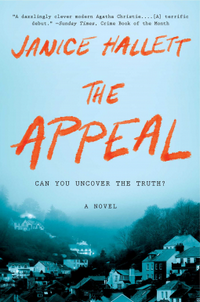
The Appeal by Janice Hallett: You Have Not Read a Mystery Like This Before.

The Appeal

The Appeal

by Janice Hallett

eARC, 448 pg.
Atria Books, 2022

Read: October 30-November 4, 2021
Grab a copy from your local indie bookstore!

What’s The Appeal About?

The setup is basically this: a pair of law students have been given a stack of documents—emails, texts, voicemail transcripts, letters, and so on. They’re to read through this stack and be prepared to work out what crime(s) happened in what’s documented and who did what (and maybe why).

The correspondence focuses on a period of March-July in the lives of people in The Fairway Players or their associates. The Fairway Players are a local amateur theater group from a small community. As the group starts to plan their next play, the director makes a horrible announcement: his granddaughter, Poppy, has just been diagnosed with a rare form of brain cancer. He’s going to have to step back for a while, and Poppy’s uncle will be stepping up to direct, etc. There’s an experimental drug from the U.S. that’s her best shot at a cure, but it’s expensive and the family’s trying to crowdfund the treatment.

The Players are galvanized into action—individually and as a whole. People do charity runs, have a fundraising gala, a raffle, direct contributions, and so on—and, of course, all the proceeds from The Fairway Players’ next play will go to the Fund.

The stack of documents chronicles the messages about this fundraising appeal, the emails of support, and a lot of the behind-the-scenes work at the appeal and the play, and assorted tangential matters. There’s a lot of gossip, backstabbing, emotional manipulation, and…well, you start to get the idea that not everything is on the up-and-up with the appeal, the treatment, and some of the people involved. The more you start to piece together the picture these emails, etc. are painting, the more you’re pretty sure you’re missing something big. Maybe a few somethings. A crime has been committed, one or two may be in progress, and there may be more on the way.

The only way to find out is to see what the next email has to say.

Isabel Beck

When it comes to sheer word count, we hear more from Isabel Beck than any of the other characters. This doesn’t necessarily mean that we know more about her than some of the others—we just get more input from her about what’s going on. Or at least what she says is going on.

Issy is clearly a lonely person. Until she recruits a couple of new colleagues, she’s the newest member of The Fairway Players and isn’t really liked by most (and, in fact, the people she brings in are quickly more welcome than she is). She’s described as “mousy,” “drippy,” who “latches on to” people—and some things not as complimentary. Between her emails and what others say about her, you really start to pity Issy.

And that feeling just grows—like just about every person in the book, she does some truly lousy things. But unlike just about every person in the book, I only felt bad for her. I really hoped for a heaping dose of comeuppance to be given to everyone else but kept hoping something good would happen for Issy.

If I liked nothing else about The Appeal, Isabel Beck would be enough for me to tell you to go read this book. I’m so glad I met this character, one of the best of 2021.

The Stroke of Genius

The law students, Femi and Charlotte, communicate with each other via WhatsApp about these documents as they read—as you read, too. They get exactly the same information as the reader does when the reader does. As they write back and forth, it’s like you’re a part of the conversation with them. Instead of texting/messaging your friend(s) as you read the same novel, in this case, you’re reading along with a couple of the characters.

In mysteries, as the reader, you’re always looking back at things, seeing what happened. Even if the narration is in the present tense, it’s going through things that have already happened. Which is the case here, too. But you’re with Femi and Charlotte in the trenches—it feels very “now”—while you and those two are looking towards the future, what documents are going to be coming? As they start to put things together, you do, too (sometimes faster than them, sometimes a beat or two behind them). It’s a fun—and brilliant—layer on top of what’s already a great book that kicks it up a notch or two of cleverness.

Lingering Questions

One of the downsides/advantages (depending on your point of view) of this type of storytelling is that you don’t have an omniscient narrator—or even a first person—to tie up all the loose ends.

I have several lingering questions about some of the events of the book, many of which can’t even make a decent guess about the answer for. If Connelly, Rankin, Holten, Goldberg, or anyone else had left this much hanging—you can believe I’d be jumping up and down shouting my objections to the heavens. But I’m oddly at peace with this. I have been and am going to be spending some time chewing on my questions, make no mistake, but I’m fine with Hallett not tieing everything up in a nice bow.

I should stress that all the important questions, the ones that keep the reader turning pages for, are answered in definitive ways.

So, what did I think about The Appeal?

I ordered this book as soon as I read Noelle Holten’s post about it in July. Then listening to Hallet on The Blood Brothers Podcast just made me anticipate it more. So when I saw this on NetGalley, I had to jump—who wants to wait until January for the US release?

I am so glad that I didn’t wait.

As I read this, I kept saying to myself things like, “oh, this is clever;” “this is great;” “oohh, impressive;” and so on. And then 30-60 minutes later, I’d say the same thing again, but mean it more. And then again 30-minutes later. Right up to the final paragraphs, this kept getting better and better—and it started off great.

Now that I’ve said such grandiose things that no book can possibly live up to them, I’m not sure there’s a whole lot left to say.

The Appeal is a funny, thought-provoking, and suspenseful novel full of great, believable characters—not a whole lot of likable characters, but believable and interesting, sure—with a multi-layered plot that will keep you guessing and thinking as it pushes you to keep going; all presented in a format that you’ve seen rarely (if ever) in a mystery novel. If the execution isn’t flawless, it’s close enough that you won’t notice.

One of the best of the year. Period.


5 Stars

Disclaimer: I received this eARC from Atria via NetGalley in exchange for this post and my honest opinion—thanks to both for this.

This post contains an affiliate link. If you purchase from it, I will get a small commission at no additional cost to you. As always, opinions are my own.
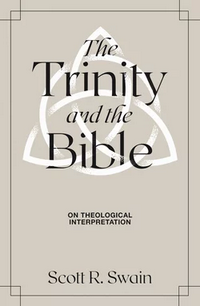
The Trinity and the Bible: On Theological Interpretation by Scott R. Swain: A Demanding and Rewarding Look at a Fundamental Doctrine

The Trinity and the Bible

The Trinity and the Bible:
On Theological Interpretation

by Scott R. Swain

Hardcover, 131 pg.
Lexham Press, 2021

Read: October 17-24, 2021
Grab a copy from your local indie bookstore!

Scriptural Trinitarianism is not unformed, inchoate Trinitarianism. As the self-revelation of the Triune God through his authorized and anointed prophets and apostles, scriptural Trinitarianism is the primary discourse of Trinitarian theology: normative, fluent, and eloquent. Ecclesiastical Trinitarianism, the Trinitarian theology of the churchs sermons, hymns, confessions, and creeds, is the secondary discourse of Trinitarian theology. Ecclesiastical Trinitarianism, at its best, is the attempt to represent the “grammar” of Scripture’s primary Trinitarian discourse in new settings and on new occasions, not to refine or develop what would otherwise be unrefined and undeveloped without it but to promote the church’s greater fluency in reading Scripture’s primary Trinitarian discourse and in responding to that discourse in its own eloquent expressions of prayer, proclamation, and praise of the Triune God.

What’s The Trinity and the Bible About?

I’m going to keep this short, because I’m sure that if I try to really get into the material, I’m only going to show how ill-equipped I am to discuss it in a meaningful fashion.

Rather than one overarching topic, this is a collection of papers that seek to show both how the Bible reveals the Trinity and how the Trinity shapes our reading of the Bible.

Swain describes the book in his introductory chapter:

Some of [the chapters] began as formal academic lectures; all of them have been published previously in various books and journals, The first and second chapters address the broader hermeneutical framework of Trinitarian biblical exegesis as well as the reception of one particular instance of such exegesis in North American Reformed and evangelical theology. The final three chapters address different aspects of Trinitarian theology by means of exegetical attention to different forms of New Testament literature, including Gospel, Epistle, and apocalyptic.

The Table of Contents, to match up with Swain’s description, is:

1. (Re)turning to the Subject: Trinity and Biblical Interpretation
2. The Bible and the Trinity in Recent Thought: Review, Analysis, and Constructive Proposal
3. B. B. Warfield and the Biblical Doctrine of the Trinity: A Historical Experiment
4. God’s Lordly Son: Mark 12:35–37 and Trinitarian Christology
5. Heirs through God: Galatians 4:4–7 and the Doctrine of the Trinity
6. To Him Who Sits on the Throne and to the Lamb: Hymning God’s Triune Name in Revelation 4–5
7. Seven Axioms: On the Trinity, the Bible, and Theological Interpretation

So, what did I think about The Trinity and the Bible?

Theological interpretation of Scripture prepares us for the vision of the Triune God by cultivating our capacities for spiritual perception and by attuning our affections to the intelligible and adorable good that the Triune God is. But theological interpretation of Scripture is more than mere preparation for this happy vision. Like the Israelite spies who tasted the grapes of Eschol before entering the Promised Land, theological interpretation of Scripture enables us to participate in this happy vision in advance by helping us perceive traces of God’s Triune glory in God’s good creation and by serving faith’s grasp of God’s Triune glory in the mediate adumbrations and attestations of that glory in the prophetic and apostolic scriptures (2 Cor 4:6).

This is not an easy read, even at 131 pages, it took several hours for me to get through it (honestly, after reading the first chapter, I wondered if I should limit myself to one chapter a week).

But it was worth the effort, every bit of it. Like a lot of the more scholarly theological books I read, I was reminded frequently while reading that I’m not an academic and this is above my weight class. But it wasn’t inaccessible, just difficult and required a little commitment.

But like the best academic theology, there were moments of the most doxological writing—or doxology-inspiring writing (or a mix). There are paragraphs and paragraphs that I wish I could commit to memory, so I could use them at the drop of my hat in conversation and in prayer.

The “Seven Axioms: On the Trinity, the Bible, and Theological Interpretation” (Chapter 7), in particular, are the kinds of things that everyone needs to learn and I think I’m going to read a few times over the next few weeks/months and really internalize.

I strongly recommend this to anyone who wants to solidify their understanding of the Trinity and wrestle with Scriptural texts, theology, and history for that.


5 Stars

This post contains an affiliate link. If you purchase from it, I will get a small commission at no additional cost to you. As always, opinions are my own.
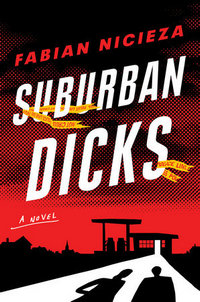
Suburban Dicks by Fabian Nicieza: Murder Where the Suburbs Meet Utopia

I spent a month on this so it ended up fairly coherent. If I’d posted this sooner, it’d liable to be inarticulate blather. I wanted this post to be better than it is, but I think the point gets through.


Suburban Dicks

Suburban Dicks

by Fabian Nicieza

Hardcover, 386 pg.
G.P. Putnam’s Sons, 2021

Read: September 8-9, 2021
Grab a copy from your local indie bookstore!

Satkunananthan Sasmal would have been the first to admit he’d had worse nights working the midnight shift at his uncle’s Valero station. For example…there was the old lady who fell asleep while driving and plowed into the first island. Satkunananthan barely hit the kill switch on pump three before diving out of the car’s path. The woman rolled down her window and asked him to fill her tank. Regular. Cash.

Then there was that time he had been robbed at gunpoint.

And the other time he had been robbed at knifepoint.

And the other time he had been robbed at spatula-point.

In his defense, it had been one of those long-handled metal barbecue spatulas.

And there was last night, when Satkunananthan Sasmal was murdered.

What’s Suburban Dicks About?

It’s about the murder of poor Satkunananthan Sasmal, to put it succinctly. The very outclassed police department of the small New Jersey city he’s from isn’t up to investigating it properly, and they take a lazy and facile answer for the crime.

This is where a couple of unlikely amateur sleuths come in. The first is Kenneth Lee, when he was a little younger, he rocketed to fame thanks to his reporting. When he was a little older, he was famously disgraced thanks to bad reporting.. Now he’s struggling to make ends meet and working for the small-timiest paper you can imagine.

The other unlikely sleuth is a mother of 4 (with one on the way) who was headed for a career as an FBI profiler hunting killers. She arrives (accidentally) on the crime scene before the police get a chance to secure the scene and notices about it than the professionals. Being there, seeing the Satkunananthan’s body, and drawing some important conclusions hooks Andrea Stern. She teams up with Lee to do the work the police are clearly not going to.

Between the two of them and some even unlikelier help that Andrea recruits, the two find themselves going down unexpected avenues of investigation, discovering secrets that few can believe, and bringing a variety of injustices to light.

Andrea Stern

In what seemed like painfully slow motion, a woman slid out through the open door as if the minivan was oozing an egg yolk. Her legs popped out first, short and stubby, then she slid her body down and out of the seat. As much bowling ball as human, she wiggled her feet until they touched the ground.

She was short, five foot threeish, with an unkempt hive of thick, curly dark hair. Her brown eyes were huge, and—Michelle had no other word for it—feral. She waddled as much as walked. She was more pregnant than any woman Michelle had ever seen in her life, and quite possibly more pregnant than any woman had ever been in the history of human civilization. If Michelle had to guess, she would have estimated the woman was about to give birth to a college sophomore.

If Andrea Stern isn’t my favorite new character this year, she’s going to be in the top 3. She made the choice to abandon her dreams of working for the FBI, of following her gifts and interests in order to be a mom. She didn’t realize how often she’d be a mother, but that’s beside the point.

Sure, she’s been wondering what might have been practically every day since then (actually, she’s pretty sure what might have been). So when she has the opportunity to investigate a murder—she grabs it and won’t let go. No matter what problems it causes her family.

She is smart, she’s funny, she’s tenacious, she gives a new meaning to resourceful, and she deserves a husband that treats her better.

She’s not perfect—it’s hard not to question a lot of her parenting choices. But I think she’d seem better were she not “more pregnant than any woman” in history and trying to recapture the years lost.

Kenneth Lee

She stared at him for several seconds, then said, “You’re not doing it ‘cause you’re a good person.”

“No, I absolutely am not,” he freely admitted. “But good will come of it. I promise you that.”

Nicieza had every opportunity to rehabilitate Lee, to make him sympathetic—even to tell a redemption story of sorts. But no, he leaves Lee pretty much where we found him—as someone who tasted the limelight and would do just about anything to get back to it.

This doesn’t mean he’s bad at his job, though. He was a solid partner in the investigation, just with less-than-honorable motives.

So, what did I think about Suburban Dicks?

I was having so much fun reading this that I was on page 200 before I noticed that I hadn’t taken a single note. So I forced myself to write down a couple of things so I could write this post. And then by page 220, I stopped taking notes again until I was finished. I was probably grinning throughout. Nicieza delivered something smack-dab in the middle of the sweet-spot for my taste.

This felt like the third or fourth book in the Andrea Stern series—starting when she was in High School (or maybe before) and then taking a break after college and picking up here. Like Veronica Mars, making this the Hulu series—just a little more successful. Andrea and her world—her family, too—felt well-established, a character that Nicieza had spent years perfecting.

That’s not all that was perfect—the book was a perfect balance of comedy, social commentary, and murder mystery. I’m not sure which aspect I appreciated most, either. Consider it a three-way tie, I guess.

It wouldn’t hurt my feelings if Lee wasn’t around in any sequel (oh, please let there by a sequel!), but I’d certainly hope to see just about everyone else—mostly characters I haven’t talked about because I want to keep this thing under 15,000 words. But the supporting characters are a great mix of cultures, economic class, and personalities—the kind you want to read about again and again.

I’m not sure what else to say—from the great opening (quoted at the beginning of this post) to a perfect last line, this is going to be one of my favorites of the year and I’m willing to bet you’ll agree if you give it a chance.


5 Stars

This post contains an affiliate link. If you purchase from it, I will get a small commission at no additional cost to you. As always, opinions are my own.
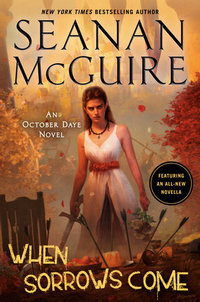
10 Reasons You Should Read When Sorrows Come (& And With Reveling) by Seanan McGuire

When Sorrows Come

When Sorrows Come

by Seanan McGuire
Series: Toby Daye, #15

Hardcover, 304 pg.
DAW, 2021

Read: September 15-16, 2021
Grab a copy from your local indie bookstore!

“Look, I know we’re a feudal system and everything, but we’re living in a modern world,” I said, exasperated. “My underwear has elastic. I have a phone. We can talk like normal people. No one’s going to take points off the final score if we stop sounding like we gargle with bad BBC dramas.”

“Yes, but where’s the fun in talking like normal people?” asked Aethlin. “Half the time I’m a King of Faerie. The other half, I’m standing in line at Tim Hortons and some asshole in a hockey uniform has just taken the last sour cream glazed. We have to wallow in the aesthetic when we get the chance.”

“I will overthrow your kingdom myself,” I threatened genially. Not genially enough: several of his guard reached for their swords. High King Aethlin sighed and raised a hand for them to stop.

“Your reputation precedes you, Sir Daye. Could you please not make jokes about sedition?”

“Yeah, sorry,” I said.

I am just not capable of doing my typical post about this book, period. Instead, I’m going to give you a list of reasons why you should read When Sorrows Come. But first…

The Dust Jacket Flap

Because it feels wrong to start talking about a book without some sort of description, here’s the information from the flap:

It’s hard to be a hero. There’s always something needing October “Toby” Daye’s attention, and her own desires tend to fall by the wayside in favor of solving the Kingdom’s problems. That includes the desire to marry her long-time suitor and current fiancé, Tybalt, San Francisco’s King of Cats. She doesn’t mean to keep delaying the wedding, it just sort of…happens. And that’s why her closest friends have taken the choice out of her hands, ambushing her with a court wedding at the High Court in Toronto. Once the High King gets involved, there’s not much even Toby can do to delay things…

…except for getting involved in stopping a plot to overthrow the High Throne itself, destabilizing the Westlands entirely, and keeping her from getting married through nothing more than the sheer volume of chaos it would cause. Can Toby save the Westlands and make it to her own wedding on time? Or is she going to have to choose one over the other?
Includes an all-new bonus novella!

The (only?) Reason to Not Read When Sorrows Come

bullet You haven’t read the first fourteen Toby Daye novels—or you didn’t like them. The former I completely understand, the number of supposedly great series that I don’t have time for is large enough that I can sympathize. The latter? I can accept that people like you exist, but I don’t know if I can ever understand it

10 Reasons to Read When Sorrows Come

(In no real order whatsoever)
bullet If you’ve read books 1-14, reading this is a no-brainer, and you probably don’t need to be reading this.
bullet You get to see an incredibly Canadian knowe. How Canadian? Think Alpha Flight, The Kids in the Hall, Bob & Doug McKenzie, poutine, Tim Horton’s coffee, and extraordinarily polite people saying “eh”. That’s how Canadian I’m talking about.
bullet Getting to see the Luidaeg terrify a whole new cast of characters.
bullet The fun in seeing who actually shows up to see the wedding. (Hint: Just about everyone)
bullet The chance to see if Toby can make it through her wedding without bleeding all over her wedding dress.
bullet You can see what you-know-who from A Killing Frost is up to.
bullet You get to see Toby channel Harry Bosch:

Everyone matters. If there’s one thing I’ve learned from how hard Evening and her ilk have tried to convince me I don’t matter it’s that everyone matters. The alternative is a world where no one matters, and since I know that isn’t true, “everyone” is the only option we have left.

bullet Quentin gets a jaw-dropping makeover.
bullet A hint about a new squire…
bullet You need some joy.

And With Reveling

I’ve never talked about one of the bonus novellas that come with a Toby Daye novel, for reasons too complicated to get into (and frankly boring to me). But I have to say something about this one.

First, this is my biggest complaint in this volume—it shouldn’t be a novella. It should be the last chapter (or chapters) of When Sorrows Come. At the very least, an extended epilogue. It should not be read separately from the novel, and the novel shouldn’t be read without out it.

Essentially, it’s about the wedding reception. Toby and Tybalt relaxing, enjoying their friends and loved ones. Receiving gifts, blessings, and well-wishes—including one gift for Toby that made me laugh out loud. And another that

I absolutely loved it. It was the thick, buttercream frosting on the perfect cake of the novel.

A Final Thought about When Sorrows Come

I mentioned joy earlier because, on the eve of its release, Seanan McGuire tweeted:

…the purpose of this book is joy. I wrote it in 2020. I needed joy. Very, very badly.

I need joy even more now. And if I can’t make it for myself, I can damn well give it to my imaginary friend.

So you can pan the book for being simple, but I have no regrets. I needed joy. I think you need joy too.

Hopefully, McGuire got enough joy to keep going from what she gave her Imaginary Friend—I know she provided this fan with some, I imagine I’m not alone.


5 Stars

This post contains an affiliate link. If you purchase from it, I will get a small commission at no additional cost to you. As always, opinions are my own.

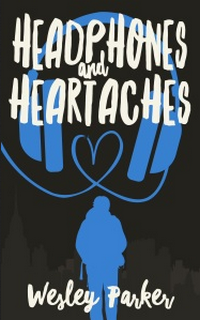
Headphones and Heartaches by Wesley Parker: Sweet, Honest, Heartbreaking, and Heartwarming

You know how sometimes just the right book comes at just the right time? A book you don’t realize you needed until it had done its job on your psyche? As you’ve probably guessed, that’s what Headphones and Heartaches was for me. So, yeah, this is going to be a rave. It’s also going to be shorter than I want it to be, but that’s only because this won’t ever get posted if I keep tweaking and rewriting it (this was supposed to go up seven days ago).


Headphones and Heartaches

Headphones and Heartaches

by Wesley Parker

Kindle Edition, 324 pg.
2021

Read: September 2-6, 2021
Grab a copy from your local indie bookstore!

“One day you’re gonna look back and realize these are the best days of your life.”

I’m living in a foster home while my mother is getting treatment for a heroin addiction. If these are the best days, maybe I should just give up now.

What’s Headphones and Heartaches About?

Percy Martin is sure that the social worker he meets next to his mother’s hospital bed means well. But Percy’s not interested in what he’s offering, Percy trusts that he can do better on his own than any foster situation that Alex can put him in. When they meet, no one’s sure that Percy’s mother will survive her latest overdose, and Alex’s hands are tied.

So he makes Percy an offer—stick with this foster parent a year, and Alex will do what he can to reunite Percy and his mom. There’s an earnestness about Alex, and (he won’t really admit this to himself) Percy just wants a break from it all—so he accepts the offer.

Alex brings him to Grace Wilson*. A kind, gracious, waitress who has decided the right thing to do is open her heart and home to a teen who needs both. Percy’s life is changed forever immediately.

* I should devote 3-4 paragraphs to her, but I don’t have the time, but she’s a great character.

He has food—and never has to worry about where the next meal is coming from. She helps him get money—and learn to manage it. He learns to sleep on a bed. He makes friends—real friends. He falls for a girl. He—and he says this several times—has a chance to be normal.

And he loves it. How could you not?

But he’s torn—because the cost of all of this change is the relationship with his mother. He feels he’s abandoned her, taken away her motivation to change, removed his support from her when she needs him the most. Is having a better life worth that?

Opium’s Victims

Percy’s mom, Wanda, is never made out to be the villain of the piece. Never. She is deeply flawed, and Percy doesn’t flinch from that. But she’s also the one constant in his life and has clearly done what she can to be a mother and provider to him. She clearly loves him.

But her addiction runs her life, she battles it, but not effectively, and that has consequences for both of them.

One of Parker’s most successful moves is showing that the statistics and reports about the opioid epidemic underreports its victims. It’s not just Wanda—it’s Percy. It’s Grace. It’s Percy’s friends. If Wanda had other family or friends, they would be in that number. And it’s likely that the turmoil, emotional upheaval, and financial impact goes beyond Grace and Percy’s friends to their friends and family…and so on. Percy thinks he can even see the toll this takes on the Judge dealing with his foster care. Yes, Wanda is the primary victim, and addicts like her ought to be the focus of the efforts to combat the epidemic—but not the sole focus.

Headphones, Comedy Albums, and Mixtapes

The 3.5mm jack connects my favorite artists right into my soul like an IV, securing my hopes and dreams that wither under the assault of everyday life. They’ve been there on the nights when the heat wasn’t, at the dinner table when the food wasn’t, reminding me that better times would come, even if they couldn’t give me an estimated arrival date.

Percy finds refuge from his circumstances in movies (VHS tapes he can buy at pawn shops and the like) and music (largely pirated from public library offerings). Music is the one he talks more about, and he has strong opinions about it—while also having very eclectic tastes.

What kind of strong opinions? Aside from Rob Sheffield or Nick Hornby’s creation, I haven’t seen anyone with such detailed specifications for putting together a mixtape—and I loved watching him obsess about things like that. He has much more to say on the subject of wired headphones than I quoted above—and who cares that much about those? I could go on, but you get the idea.

Along the same lines…what he and Grace say about comedy albums? I didn’t realize other people felt that way about them, too. I really would like to see a second edition of the book (or a companion book) containing essays Percy writes for English class about things like comedy albums and their impact on his life, and various topics related to music/music appreciation. Just based on what he says in this book, they’d be fantastic.

It’s things like this that transform Percy from a pitiable kid in hard circumstances to a rounded character that you can develop an emotional bond with. Parker truly nailed this kind of thing.

Categorizing

By and large anymore, it seems that if the book is about a teenager, it must be a Young Adult novel. But it doesn’t seem as if this is being marketed as one. Would it work for a YA audience? Sure. Well, at least I think it would. But really it works for anyone who likes a good coming-of-age tale.

Percy is a teen—and his emotions swing widely and quickly as such. But anyone who is, or who can remember, what that’s like will easily be able to appreciate that. At the same time, thanks to his hard life, he has a certain perspective that gives a layer of maturity to his thinking—so snooty “adult” readers don’t have to sully themselves with something like a book written for teens.

So, what did I think about Headphones and Heartaches?

On Wheel of Fortune there’s always one guy that keeps asking for letters even though it’s clear to everyone else what the answer is. I feel like that guy right now, because in my heart I know the answer, I’m just hoping that it’s the wrong one.

With only a couple of exceptions, the adults that Percy meets after his mother’s overdose are almost too good to be true. I’d be tempted to call them all Mary Sues/Marty Sues. But part of it is that for Percy, these are responsible, caring, adults trying to help him—it’s easy to see why Percy would largely describe them in glowing terms. And even then, the adults aren’t boring—they’re interesting, funny, and inspirational.

But the exceptions? Boy howdy, they are definitely not too good (nor are they too bad to be realistic…). But let’s not focus on them

But Percy and his classmates, playmates in flashbacks, and friends are absolutely well-rounded and developed—as they’re (largely) the focus of the book, that’s the important part. They sound like, think like, and feel like teens (with varying degrees of maturity). They’re some of the better teen characters I remember reading.

You take characters like that and put them out into the world, and you’ve got yourself a good start to a novel. Add in a compelling story—and an emotional depth that fits the characters, and you’ve got a knockout. This is what Parker has delivered.

As the end neared, I jotted a note,”I am going to end up crying.” And while I didn’t technically weep, there were several moments as I finished the book that I came awfully close to it. Those moments were all over the map, I should add—heartbreaking, tragic, heartwarming, and just sweet. Parker just doesn’t get you with human grief and anger, he gets you with the wonderful moments, too.

This is a sweet book, a touching book—an occasionally hilarious book (with some truly cringe-worthy beats)—I guess it’s best summed up as a very human book. Parker got me to feel all sorts of things for these characters, to a degree I didn’t expect or was prepared for.

This is a special one, reader. You’d do yourself a favor if you picked it up.


5 Stars

This post contains an affiliate link. If you purchase from it, I will get a small commission at no additional cost to you. As always, opinions are my own.

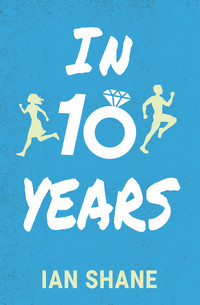
PUB DAY REPOST: In Ten Years by Ian Shane: They’re Perfect For Each Other…But Can They Make It Work? Do They Even Want to Try?

In Ten Years

In Ten Years

by Ian Shane

eARC, 261 pg.
2021

Read: July 23-26, 2021

What’s In Ten Years About?

In 2000, two Denver University students meet in such a way that practically guarantees Jack will have one of dullest (and probably worse than just dull) twenty-first birthdays. Liz unintentionally contributed to that but also did everything she could to make up for that. After this, she decides that the two of them are going to be great friends.

After spending a couple of chapters in 2000, we see them again in 2009—and it turns out that Liz’s plan to be great friends worked. They’ve become incredibly close, the Two Musketeers. They’re so close that everyone (including every romantic interest they ever have) assumes they have/are/want to be involved. The idea never really lodges with either of them—and they don’t understand why no one believes them.

We catch up to them in 2018. At some point, they’ve made that pact that you’ve seen in countless sitcoms and movies, if they’re not married by _____ time, they’ll marry each other.* In this case, it’s when Jack turns 40 (he’s a little younger than her, so at that point, they’ll both be 40), and in 2018 that’s a year away.

* The scene where the pact is made is just about perfect, I should add.

Both of them try to treat the pact as a joke—while hoping the other forgot about it. But neither did and despite the preposterous notion—they both kind of take it seriously. They can’t imagine not growing old together, why not?

And then one of them starts to realize that their interest in the pact isn’t because of a drunken promise, pragmatism, or the lack of a better option—but there just might be something right about the whole idea, a reality that’s been before them all along.

Supporting Characters

I’d intended on spending a few paragraphs talking about both Jack and Liz, and after a couple of failed attempts, I realized I couldn’t do either justice without just recapping the whole novel. So, instead, let’s talk about the other characters.

I wasn’t that far into the 2018 part when I made a note about, “Of course they end up together, everyone else they know is horrible.” Which was a little harsh, but essentially true—that’s up to and including their closest friends. Thankfully, that didn’t stay that way—sure, their friends didn’t make a great first impression, but as I got to spend some more time with them, I ended up liking them. They also proved to be good friends to Jack and Liz.

But when it comes to other romantic interests or dalliances? The reader can understand the appeal of (most) of the people they’re interested in—at least initially. But you don’t spend time thinking, “yeah, Person X would really be a good long-term partner for them.” I might have appreciated it more had I actually considered anyone to be a rival for Liz or Jack. But maybe after a few chapters, I’d already ruled out anyone who wasn’t Jack or Liz for the other.

I’m not sure it matters, ultimately. But what Shane did give each character plenty of frogs of various sides and coloring to kiss so that they’d inevitably discover their Prince/Princess.

The supporting characters, from college roommates to overbearing and overly-inquisitive mothers, to Russian hockey players to waitresses in a bar or inappropriate former students are well-written, they all stand out as pretty well-rounded (at least as much as someone who’s only around for a few paragraphs can be).

The Dialogue

I talked about this a little in the Q&A with Shane, and you should read what he said about writing it. My favorite part of this novel was the dialogue. Jack has some great lines when he’s upset or angry with someone, for example.

But what really won me over was the interaction with Jack and Liz—either when they’re being silly about something or when they’re talking about something serious. This is fitting for a contemporary When Harry Met Sally-esque story, Harry and Sally talking to each other is what made viewers fall for the pair, and Shane hits some Ephron-level interchanges with Jack and Liz.

So, what did I think about In Ten Years?

There are a few other highlights that I really don’t have the time or space to get into, I’d recommend checking out the aforementioned Q&A with Shane that I posted yesterday to catch a few other selling points for this book.

The novel is just funny—humor that arises from the situations and the characters’ inherent and reflexive wit and charm. It’s in the way they react to situations, and not because silly and madcap things happen around or to them (well, sure, there’s a little bit of that). Shane’s voice is part of it, too—but mostly it’s because these are smart, funny people who express that.

I can’t get into it without ruining anything, but there’s a chapter in the 2009 portion of the book that is my favorite chapter of 2021—it was so painful, and yet so funny. Shane was careful not to go too far in either direction, which would’ve blunted the impact. Instead, he’s able to portray the emotionally damaging circumstance and let the character’s wit and the ridiculousness of the situation keep it from being maudlin. The rest of the book is just as good, and just as balanced.

In Ten Years ticked just about every box that I can think of as a reader. I both couldn’t wait to find out what happened and didn’t want to get to the end because I was having such a blast. There’s a fresh-feeling take on a tried-and-true story (two, I’d argue), characters I genuinely liked, dialogue that I’d frequently reread a time or to before moving on, and a great mix of emotion and laughs. I wasn’t even 20% through the book when I noticed I was highlighting and making notes too often—had I stopped there, I had more things than I could squeeze into a post. I can only imagine how massive my notes collection would’ve been had I not made a conscious effort to stop. There was just so much that I wanted to remember about this book.

I know that I’m going to be talking about this book in January when I look back on the best of 2021, and I probably won’t be alone.


5 Stars

In Ten Years by Ian Shane: They’re Perfect For Each Other…But Can They Make It Work? Do They Even Want to Try?

In Ten Years

In Ten Years

by Ian Shane

eARC, 261 pg.
2021

Read: July 23-26, 2021

What’s In Ten Years About?

In 2000, two Denver University students meet in such a way that practically guarantees Jack will have one of dullest (and probably worse than just dull) twenty-first birthdays. Liz unintentionally contributed to that but also did everything she could to make up for that. After this, she decides that the two of them are going to be great friends.

After spending a couple of chapters in 2000, we see them again in 2009—and it turns out that Liz’s plan to be great friends worked. They’ve become incredibly close, the Two Musketeers. They’re so close that everyone (including every romantic interest they ever have) assumes they have/are/want to be involved. The idea never really lodges with either of them—and they don’t understand why no one believes them.

We catch up to them in 2018. At some point, they’ve made that pact that you’ve seen in countless sitcoms and movies, if they’re not married by _____ time, they’ll marry each other.* In this case, it’s when Jack turns 40 (he’s a little younger than her, so at that point, they’ll both be 40), and in 2018 that’s a year away.

* The scene where the pact is made is just about perfect, I should add.

Both of them try to treat the pact as a joke—while hoping the other forgot about it. But neither did and despite the preposterous notion—they both kind of take it seriously. They can’t imagine not growing old together, why not?

And then one of them starts to realize that their interest in the pact isn’t because of a drunken promise, pragmatism, or the lack of a better option—but there just might be something right about the whole idea, a reality that’s been before them all along.

Supporting Characters

I’d intended on spending a few paragraphs talking about both Jack and Liz, and after a couple of failed attempts, I realized I couldn’t do either justice without just recapping the whole novel. So, instead, let’s talk about the other characters.

I wasn’t that far into the 2018 part when I made a note about, “Of course they end up together, everyone else they know is horrible.” Which was a little harsh, but essentially true—that’s up to and including their closest friends. Thankfully, that didn’t stay that way—sure, their friends didn’t make a great first impression, but as I got to spend some more time with them, I ended up liking them. They also proved to be good friends to Jack and Liz.

But when it comes to other romantic interests or dalliances? The reader can understand the appeal of (most) of the people they’re interested in—at least initially. But you don’t spend time thinking, “yeah, Person X would really be a good long-term partner for them.” I might have appreciated it more had I actually considered anyone to be a rival for Liz or Jack. But maybe after a few chapters, I’d already ruled out anyone who wasn’t Jack or Liz for the other.

I’m not sure it matters, ultimately. But what Shane did give each character plenty of frogs of various sides and coloring to kiss so that they’d inevitably discover their Prince/Princess.

The supporting characters, from college roommates to overbearing and overly-inquisitive mothers, to Russian hockey players to waitresses in a bar or inappropriate former students are well-written, they all stand out as pretty well-rounded (at least as much as someone who’s only around for a few paragraphs can be).

The Dialogue

I talked about this a little in the Q&A with Shane, and you should read what he said about writing it. My favorite part of this novel was the dialogue. Jack has some great lines when he’s upset or angry with someone, for example.

But what really won me over was the interaction with Jack and Liz—either when they’re being silly about something or when they’re talking about something serious. This is fitting for a contemporary When Harry Met Sally-esque story, Harry and Sally talking to each other is what made viewers fall for the pair, and Shane hits some Ephron-level interchanges with Jack and Liz.

So, what did I think about In Ten Years?

There are a few other highlights that I really don’t have the time or space to get into, I’d recommend checking out the aforementioned Q&A with Shane that I posted yesterday to catch a few other selling points for this book.

The novel is just funny—humor that arises from the situations and the characters’ inherent and reflexive wit and charm. It’s in the way they react to situations, and not because silly and madcap things happen around or to them (well, sure, there’s a little bit of that). Shane’s voice is part of it, too—but mostly it’s because these are smart, funny people who express that.

I can’t get into it without ruining anything, but there’s a chapter in the 2009 portion of the book that is my favorite chapter of 2021—it was so painful, and yet so funny. Shane was careful not to go too far in either direction, which would’ve blunted the impact. Instead, he’s able to portray the emotionally damaging circumstance and let the character’s wit and the ridiculousness of the situation keep it from being maudlin. The rest of the book is just as good, and just as balanced.

In Ten Years ticked just about every box that I can think of as a reader. I both couldn’t wait to find out what happened and didn’t want to get to the end because I was having such a blast. There’s a fresh-feeling take on a tried-and-true story (two, I’d argue), characters I genuinely liked, dialogue that I’d frequently reread a time or to before moving on, and a great mix of emotion and laughs. I wasn’t even 20% through the book when I noticed I was highlighting and making notes too often—had I stopped there, I had more things than I could squeeze into a post. I can only imagine how massive my notes collection would’ve been had I not made a conscious effort to stop. There was just so much that I wanted to remember about this book.

I know that I’m going to be talking about this book in January when I look back on the best of 2021, and I probably won’t be alone.


5 Stars

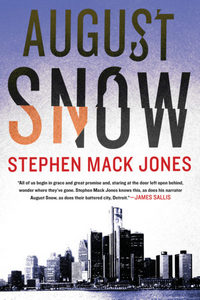
August Snow by Stephen Mack Jones: Even a Kindness from the Devil Must Be Repaid

August Snow

August Snow

by Stephen Mack Jones
Series: August Snow, #1

Hardcover, 312 pg.
Soho Press, 2017

Read: July 15-16, 2021
Grab a copy from your local indie bookstore!

What’s August Snow About?

“I’m looking into her death—”

“A suicide?” O’Donnell laughed, even though I was beginning to think she thought very little if anything was funny. “Not much to look into there, bucko. Seems the Grosse Pointe police, the State police, the Detroit police and assorted sundry others have quickly concluded she took her own life.”

“They’re not as smart as me,” I said, taking a healthy swig of my beer. Michigan might be at the forefront of making quality craft beers, but so far none even approached a good Mexican beer, “Nor are they as righteously vigilant.”

August Snow was a Detroit Police Detective until he was targeted by corrupted officials in City Hall as well as in the DPD and was fired. He didn’t take that laying down and sued for wrongful termination—and walked away with millions of dollars of city funds. He spent a year drinking his way through Europe to get over that fight—as well as other tragedies.

Now Snow has returned to the home that his African-American father bought for his Mexican-American mother so she could be close to her people, and is using his new wealth to try to help make the neighborhood safe for families again.

A prominent citizen, Eleanore Paget, wants him to do a job for her. Years before, Snow was one of many who investigated the death of her husband and was the only one who impressed her. Now, she’s convinced that one of the executives of her bank is up to something and wants him to look into it. Snow turns her down, but can’t help wondering…

The next day, she’s dead. Supposedly by her own hand, but Snow doesn’t believe that. He’s just about the only one who doesn’t, so he has to look into things on his own—without giving DPD cause for offense, after the lawsuit, he has very little support among them.

We often think of “white collar” crimes as safe, or at least non-violent. And that may have been the case once upon a time, but as Snow looks into odd moves in the bank’s finances, it’s clear that there are powerful and violent people who are heavily invested in keeping Snow and his suspicions far away from anything to do with the bank.

We Are Defined By Those We Could Have Helped and Chose Not To…

Yeah, it’s not as pithy as “Everybody counts or nobody counts,” but Snow’s driven by this idea as much as Harry Bosch is his. Snow’s father served as a member of the Detroit Police Department and raised his son to follow in his footsteps, and this was a lesson he drove into his son’s psyche. Not just for while on duty, but to shape his life.

Even now, this moves Snow to action. It’s seen in the way he’s working to revitalize his neighborhood—not so that people with a little money will want to move in and gentrify things, but so that it’s better for the people who already live there.

It drives him to help out the rookie drug dealer who just needs a viable legal option to make money.

It even drives him to look into the death of a would-be client.

Detroit

Neither time nor politics have been kind to Detroit. In Mexicantown, they’ve been downright cruel.

After one novel, I’m not about to suggest that I’m an expert on Detroit—but Jones writes with such depth and clarity, his reader would be tempted to think they are one—at least on the way to being one.

It’s trite to say that “such and such” city or geographic location is “a character” in whatever novel/movie/etc., so I’ll try not to. But August Snow is as much about Detroit—specifically, Detroit’s Mexicantown—as it is about one ex-cop’s investigation into the death of a prominent citizen.

One aspect of Detroit that’s discussed a lot is race (economics, police corruption are others). I’m not competent enough to expound about it—I’m also too white and Idahoan to really comment on it. But Jones seems to be writing very honestly, very insightfully about the state of the city. Snow’s perspective is a great mix of idealism and realism—with a sprinkling of hope. A lot of people like to dismiss P.I. fiction as escapist, but Jones reminds his readers that the best of it has always carried social commentary along for the ride.

The Food

Jones probably could’ve made a decent living as a food writer. Snow’s not really a gourmet or gourmand, but man, he eats well. Jones isn’t really in George R. R. Martin territory (“six page descriptions of every last meal”), but the way he describes food is dangerous to a reader’s diet. It reminded me of early Spenser, or any Nero Wolfe.

There’s an extended description about a small Mexican restaurant that I had to pause and read a couple of times it was just so good. I could practically smell the place. Honestly, I’m pretty sure I wouldn’t have liked the food in the restaurant—it’s not really my thing. But as I told my wife when reading it—I want to go there, like right now.

So, what did I think about August Snow?

Later, sitting on my new forest-green leather sofa, I looked through family photo albums: My mother and father picnicking on Belle Island. Vacationing in Traverse City and Alabama and south of Mexico City. Their wedding. Me as a baby with my dad’s badge pinned to my onesie. Thanksgivings and Christmases. Day of the Dead celebrations in Mexicantown. High school and college graduations. My dad saluting me at my graduation from the academy.

Family albums go better with scotch.

Or a gun.

Readers here know that one of my greatest weaknesses is a good P.I. novel—I cut my teeth on them (in both juvenile and adult fiction), and “discovering” August Snow was just a treat for me. There’s something about this book—one of those ineffable things that just sang to me—that reminded me of the first time I read a Dennis Lehane Kenzie and Gennaro book, or Joe Ide’s I.Q., or Crais’ Elvis Cole. There’s something just so right—so absolutely classic P.I. and incredibly fresh about the voice—that I felt at home.

I also spent a lot of time castigating myself for not jumping on this when it came out—because I shouldn’t have denied myself this pleasure—or the sequels—for so long.

Snow’s just a great character—he’s got a lot of baggage, a lot of issues he’s still working through—but when the chips are down, he’s defined by those he chose not to help as much as those he chooses to help.

This is the beginning of a series, but by the end of this book, you don’t know how this is going to keep going. Throughout the book, I kept thinking “oh, so this character is going to play X role” or “this is how he’s going to do Y from now on”, etc. And in practically every case, by the end of the novel in one way or another, just about every one of those things weren’t going to be possible. I have no idea what book 2 will look like—or those that come next. That’s a little frustrating because I like to think of myself as a fairly savvy guy who can see what authors are up to. But it’s largely a wonderful feeling—I love someone who I can’t predict.

From the atypical beginning with the prospective client that ends up without anyone being hired, through the morass of financial crimes and murder, to the explosive ending—with the increasing sense of dread and apprehension of an ensuring emotional gut-punch—August Snow is a fantastic series debut, a practically perfect novel. Stephen Mack Jones has found a home near the top of my must-read list.


5 Stars

2021 Library Love Challenge 20 Books of Summer '21

This post contains an affiliate link. If you purchase from it, I will get a small commission at no additional cost to you. As always, opinions are my own.

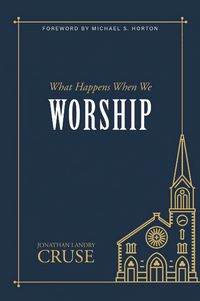
What Happens When We Worship by Jonathan Landry Cruse: An Introduction To or Gentle Reminder of The Supernatural Event of Worship

What Happens When We Worship

What Happens When We Worship

by Jonathan Landry Cruse

Paperback, 186 pg.
Reformation Heritage Books, 2020

Read: February 28, 2021
Grab a copy from your local indie bookstore!

What’s What Happens When We Worship About?

…ultimately I want to recover worship from the doldrums. Let me rephrase that: I want to recover the perception of worship as being the doldrums. Worship is never dull, but we are sometimes. Churchgoing is monotonous and mundane only because our eyes are blinded to the supernatural wonder that is taking place all around us. The reality is that worship is an exhilarating experience. So we don’t need smoke machines, more lights, dramatic presentations, louder music, mystical theology, or entertaining speakers to make worship exciting. We simply need to understand what’s going on in the first place.

This is not a manual for the “how-to” aspects of worship, nor does it wade into the “style” debates and conflicts, he doesn’t look into the “why” we do certain things in worship (although he brushes against the idea). This is about the supernatural aspect to the ordinary, weekly event. This is something too few people think about when it comes to worship—we’re pretty focused on what we do for those few hours, but Cruse’s thesis is that this approach is backward.

Central Thesis

This book is written from a simple but important premise: something is happening when we worship. Something happens to us, Something happens between us and the people we worship with, and, most importantly, something happens between us and God.

Humans are not the primary actors in worship—we are primarily acted upon. We’re involved, we’re active, but only in the secondary sense. Something happens. Something happens at every stage, in every act or element of the service. This book sets out to survey this.

He does this by sketching out “A Brief Theology of Worship.” Focusing on what worship is, that the worshipper is being shaped by the event, meets with God as He renews His Covenant, the worshipper submits to God’s acts and call in this time and we do so while communing with the saints. This is about one-third of the book and it informs the rest.

The heart of the book focuses on “The Parts of the Service,” looking at what God does, what happens in each part. This has a distinctly Reformed flavoring and will include things not in typical Evangelical Protestant services, so some of these ideas may not be what the reader is used to.

The concluding chapters focus on the ordinariness of the extraordinary service (the extraordinariness of the ordinary service is probably how I should’ve put that)—how what we think of as usual, normal. ordinary is so much more and we ought to understand this. And part of that ordinary work ought to be preparing for the service, and he gives direction for that to end the book.

Highlights

I thought this was just an outstanding book, and could easily write a few paragraphs about why each chapter was so valuable and helpful. But I’m going to limit myself to a brief paragraph about two chapters that really stood out to me (on future readings, I fully expect other chapters to stand out in the same way)

In Chapter 12, “We Get a New Name,” Cruse spends a chapter on the Benediction. I’ve read and own at least a dozen books on Worship and I don’t think I’ve ever read more than a couple of paragraphs about the Benediction—much less a whole chapter. This was gold. I’d grasped and been taught about its importance before, but this kind of focus was new to me. He begins by describing it as:

God blesses His people by confirming that His name is on them for good in Christ, and thereby strengthens them to serve Him in the week ahead.

He expands that, reminding readers what having God’s name on them, ties it into Baptism and develops the idea into God sending His people into the world.

The chapter on singing was another stand-out, saying that it’s a gift of God as

a fitting way to praise Him for His work, pray to Him with our deepest needs, and proclaim to one another the sanctifigyin truths of the gospel.

It’s a measured, careful, and encouraging look at this often contentious topic. His approach ignores the controversy, focusing on weightier matters. Like so many things in the book, I found it refreshing.

Wait, Did I Miss Something?

I was thinking about this book a few days after finishing and stopped dead in my tracks when I had this thought. I don’t think that Cruse mentions the Regulative Principle of Worship by name. I could be wrong here, but if he does, he doesn’t make a big deal of it.

Typically, Confessional Presbyterians/Reformed Christian books on the subject are full of references to the RPW, many such books are defenses of, studies on, of that principle. For an entire book to be written for our camp without that is stunning.

Don’t get me wrong—this is a book about Regulated Worship. The RPW is reflected in the pages, but I don’t think it shows up by name. I find that refreshing.

So, what did I think about What Happens When We Worship?

Admittedly, we are just going to be scratching the surface here. There could easily be ten more chapters in this book, and each chapter could easily be ten times longer. But I’m not seeking to present a fully exhaustive treatment on the subject of worship. Rather, this is meant to be an important introduction to, or perhaps a gentle reminder of, the topic. My aim is to whet your appetite when it comes to worship. For indeed it is in corporate worship that we are able to “taste and see that the LORD is good” (Ps. 34:8).

Cruse writes crisply and clearly with an approachable and engaging style—there’s nothing daunting about the writing, some of the ideas might take a little work to understand if you are reading this as an introduction—but it won’t be because of the writing.

Cruse wrote my conclusion for me in his first chapter—that’s what the book sets out to be, and he accomplished that. Edifying, educational, orthodox, and even devotional—this book will introduce you to the vital topic or will gently remind you of the things you’ve been taken for granted. Either way, it’s something you should read.


5 Stars

This post contains an affiliate link. If you purchase from it, I will get a small commission at no additional cost to you. As always, opinions are my own.

Page 9 of 24

Powered by WordPress & Theme by Anders Norén