Tag: Andrew Wilson

God of All Things by Andrew Wilson: Ordinary Stuff also tells of the glory of God

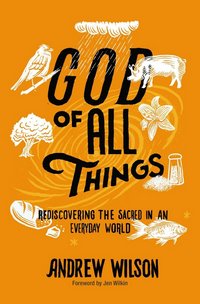
Cover of God of All Things by Andrew WilsonGod of All Things: Rediscovering the Sacred in an Everyday World

by Andrew Wilson

DETAILS:
Publisher: Zondervan
Publication Date: March 2, 2021
Format: Paperback
Length: 202 pgs.
Read Date: January 12-19, 2025

Buy from Bookshop.org Support Indie Bookstores

But instead [God] made a universe filled with things. Objects. stuff Planets, weather, colors, animals, vegetables, minerals. People, complete with noses and kidneys and bodily fluids. It is Curious: an immaterial and entirely spiritual God created a thoroughly material and physical world. Perhaps it should surprise us more than it does…

For Paul in Romans 1, creation reveals God’s invisible power and divine nature. Few of us can stand in front of the Grand Canyon or see a high-definition picture of the Horsehead Nebula without wanting to praise somebody or something for the majesty of what is before us. Some of us will suppress that urge. But those of us who don’t and allow the song of gratitude to swell within us like a storm will find ourselves concluding all sorts of things about our Maker. The God of the Sahara must be vast, boundless, and expansive. The God of quarks must have an unimaginable eye for detail. The God of wombats must have a sense of humor. Everything in creation has theological implications, and one of the joys of being human is figuring out what they are.

What all of these answers have in common is the fact that creation points beyond itself. Things ‘exist not for their own sakes but to draw us back to God. In Augustine’s image, the gifts of God in creation are like a boat which takes us back to our homeland: a means of transport which we can {and should} celebrate but never mistake for the destination itself. C. S. Lewis talks about following the sunbeams back to the sun so that we enjoy not just the object of goodness but the source of good. Creation preaches to us. The things of God reveal the God of things.

What’s God of All Things About?

That extended quotation from the Introduction is basically the foundation for this whole book (he does expand it a little from there). God made things. He uses those things to point to Him in various ways. This book takes 30 of the common, everyday things in this world and shows us (some of) the ways that they pointed to God and His redemptive work in Scripture—fifteen items per testament.

I won’t list all thirty things that get a short chapter devoted to them, but to give you an idea some are: earthuqakes, tools, honey, donkeys, flowers, pots, viruses, and flowers.

An Example

I really don’t know the best way to describe how Wilson approaches these items (although I don’t want to sound like every chapter follows the outline), so here’s a paragraph and change from Chapter 3, “Pigs: The Welcome of God”:

As gentiles, by nature unclean and separated from Israel ourselves, we can feel a certain sympathy for [pigs].

That is not where the similarity between pigs and gentiles stops. The first person who ever preached the gospel to gentiles was the apostle Peter, and he did so only because he saw a vision of a sheet full of unclean animals (Acts 10:9~16)—a vision in which, we may assume, pigs played a starring roleand heard a voice telling him to eat them, since “what God has made clean, do not call common” (v. 15). Non-Jewish people like me got baptized only because Peter saw a bunch of pigs and other unclean animals, and then saw a bunch of gentiles, and then saw the resemblance. “You yourselves know how unlawful it is for a Jew to associate with or to visit anyone of another nation,” he explained to the gentiles who had invited him over for a visit, “but God has shown me that I should not call any person common or unclean” (v. 28). That’s a nice way of putting it. Even Peter, not always the most diplomatic of the apostles, had the good manners not to mention that his hosts were the equivalent of a sheet full of pigs, scallops, and snakes.

Not only does that give you a little hint of Wilson’s voice, but it gives a flavor of his approach. That’s from the Old Testament portion, but he’s invoking Peter and events from the New Testament. He looks at the use of whatever item throughout the canon, showing how they’re used in the primary texts he’s considering, what they say about God, they say about redemption and people.

Strengths

There are several, really. Some of the chapters (like Rainbows) seem pretty obvious in the aim and content. The chapter on the Wind, on the other hand, went in directions I wasn’t expecting. But beyond that, what he did in a few pages to describe the work of the Spirit—particularly the discussion of “being filled with the Spirit”—was so rewarding.

The chapter on Salt was also helpful—if only for the discussion of how metaphors can have several interpretations and meanings at the same time. As anyone who has ever heard more than one sermon on Matthew 5:13 knows too well, it’s ripe for interpretation. Wilson wisely encourages readers to embrace the probability that Jesus meant more than one thing by the metaphor of salt.

So, what did I think about God of All Things?

We worship a God of things. The cosmos is filled with them: everyday, mundane, quotidian, humdrum, ordinary things. Sometimes they delight, sometimes they exasperate, and sometimes they escape detection altogether, but whether quietly or loudly, they insistently point beyond themselves to the God who made physical stuff. Everything in creation tells us something about our Creator.

More than once on The White Horse Inn, I heard Rod Rosenbladt say, “God likes stuff [or matter], he made it.” It’s this notion—reflected in this quotation here, or the one that kicked off this post—that is too easily forgotten by modern Christians who (like many others in the last 100+/- years) have adopted a quasi-Gnostic attitude toward matter and spirit. So any book that seeks to remind anyone of that deserves attention.

In many ways, this reminded me of Finding God in the Ordinary by Pierce Taylor Hibbs. But where Hibbs looked at things around him and used them to launch his thoughts God-ward, WIlson looks at things around people in the Bible and uses them to take in the themes from Scripture and launch thoughts God-ward from there. Similar ends, similar means—just slightly different starting points. I’m not suggesting one is superior to the other in any way. In fact, I’m trying to work both exercises into my own life.

It’s a quick read, it’s a fun read (Wilson’s gentle wit and fairly mainstream pop culture references are nice for that), it’ll likely cause you to think of a few things you haven’t before, or will be a reminder that it’s not just the big things in nature that testify to the glory of God (the heavens, stars, and so on), it’s the little things, too (salt, lilies, sparrows, falling hairs)—and things in-between. I recommend this for your attention, it’s fit for High School (maybe younger) and up. Which probably includes you, reader.


3 Stars

This post contains an affiliate link. If you purchase from it, I will get a small commission at no additional cost to you. As always, the opinions expressed are my own.

Irresponsible Reader Pilcrow Icon

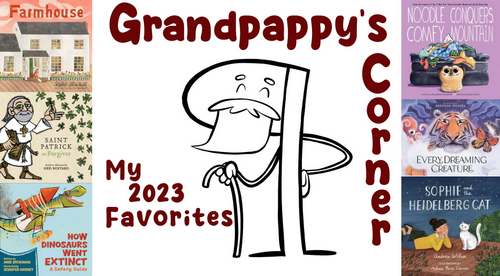
Grandpappy’s Favorites of 2023

Grandpappy's Corner 2023 Favorites
I’ve posted favorite Picture or Children’s books before, but now that I’m a Grandfather, I’m thinking about these things more. So, it’s not unusual for me to read these kinds of books, but I’m doing more of it. I fully expect this post to grow in the years to come.

I practically guarantee these will tickle you and/or warm your heart.

(in alphabetical order by author)

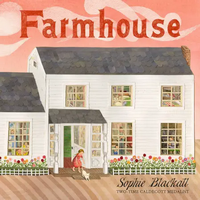
FarmhouseFarmhouse

by Sophie Blackall

My original post
It’s not the text of this book (not that there’s anything wrong with it), it’s largely the art that makes this stand out. The combination of the two…the whole experience of this book is what makes this makes this one memorable. I’m not sure what about the book will appeal to the Picture Book crowd, but the adults in their life are going to love spending time with this.

3.5 Stars

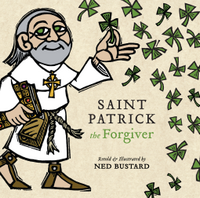
Saint Patrick the ForgiverSaint Patrick the Forgiver:
The History and Legends of Ireland’s Bishop

by Ned Bustard

My original post
I kicked off this series with this book, so there’s a little bit of sentiment going for it. I really appreciated the way that Bustard dealt with a lot of history and some pretty serious topics in an age-appropriate way. He avoided moralism, too. All while giving the reader a fun experience, with some eye-catching art. A great introduction to Patrick that will hopefully spur a child’s interest in him for a long time to come.

5 Stars

How Dinosaurs Went ExtinctHow Dinosaurs Went Extinct: A Safety Guide

by Ame Dyckman, Jennifer Harney (Illustrator)

I can’t believe I forgot to write about this book. It’s one I stumbled across on the shelves while shopping for something else, and after a quick flip through it, I added it to the stack. It’s silly, the colors are loud, the illustartions practically leap off the page. It’s really impressive just how much Harney squeezed into each drawing. Parents will have a lot of fun reading this one, and I think it’ll be catching.

4 Stars (at least, I don’t have a post to check and I don’t have time to re-read it now.)

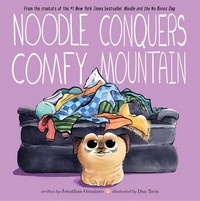
Noodle Conquers Comfy MountainNoodle Conquers Comfy Mountain

by Jonathan Graziano, Dan Tavis (Illustrator)

My original post
The illustrations are adorable (and yes, you should pronounce it that way when talking about this book). The story is super-cute. While the first one was a nice intro to Noodle and his person, this is just a story about Noodle. It’s not a cuteness overload, but you’ll get close.

4 Stars

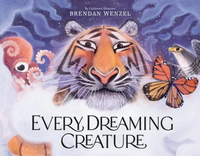
Every Dreaming CreatureEvery Dreaming Creature

by Brendan Wenzel

My original post
This book about a child’s dream looks and feels like one. It’s comfy, it’s cozy, it’ll help an adult and (hopefully!) a child calm down and think about drifting off to their own dreamland. I cannot say enough about this art.

4 Stars

Sophie and the Heidelberg CatSophie and the Heidelberg Cat

by Andrew Wilson, Helena Perez Garcia (Illustrator)

My original post
Very possibly the best and clearest (definitely most succicinct) presentation of the Gospel and the assurance that is promised to those who have been bought by Christ I read this year. It’s an explanation of the first question and answer of the Heidelberg Catechism, which helps a lot. A nice bit of imagination, a dash of whimsy, good art, and a fantastic message. My wife and I have given away so many copies of this so far, it’s kind of mind-boggling.

5 Stars

Grandpappy Icon

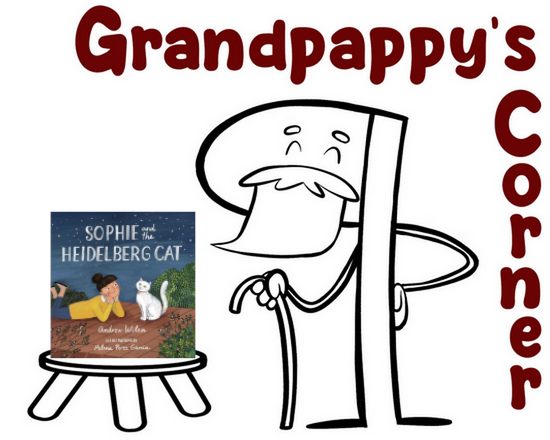
Grandpappy’s Corner: Sophie and the Heidelberg Cat by Andrew Wilson, Helena Perez Garcia (Illustrator): Sophie Gets Clarity on an Important Truth

Grandpappy's Corner Sophie and the Heidelberg Cat

Sophie and the Heidelberg Cat

by Andrew Wilson, Helena Perez Garcia (Illustrator)

DETAILS:
Publisher: Crossway
Publication Date: September 3, 2019
Format: Hardcover
Length: 32 pg.
Read Date: June 3, 2023


What’s Sophie and the Heidelberg Cat About?

Sophie has been, well, let’s be kind and say misbehaving toward her sister, and is in her bedroom crying. Outside the window, she sees the cat belonging to her neighbors, the Heidelbergs. The cat asks her what’s wrong (yes, the cat talks) and the two go for a walk to things about things.

Sophie talks about how she’s not living up to what the Bible teaches:

“Be bold like King David, be brave like Queen Esther,
and do what God tells you, no matter how scary.
Don’t fight him, like Pharaoh, or trick him, like Judas.
Be patient, like Paul, and respectful, like Mary.

The cat responds by showing her that no one she knows lives up to this standard she thinks the Bible teachers. Not just the people in town, but the people in the Bible, too.

But more than that, she doesn’t have to work for God’s acceptance—the hope she has doesn’t come from her or her efforts. The hope for Sophie is a gift from God. Because she belongs to him, he will protect and comfort her.

A Bit of Playfulness

There are a few moments where the text takes a minute to recognize how strange it is for Sophie to do what she’s doing. Which is nice enough for a book for this age—but what makes it better is Sophie’s reason to go along for it. If a talking cat tells you to do something, asks you a question, etc.—you roll with it.

In the middle of these important ideas for a child (or an adult), Wilson still finds a moment for play. I loved it.

Let’s Talk about the Art for a Minute

I really liked the art. It reminded me of something—not in a derivative way or anything—but it struck a chord in me and made me think of something from my childhood. So I was won over—but I think it’d work for people without my nebulous tie to it, too.

It’s a crisp style, there’s a little whimsy in it, and it’s attractive enough to hold the eye of a young reader/child being read to. But—and this is important—it’s not so eye-catching that it takes away the focus from what Sophie and the cat are talking about.

How is it to Read Aloud?

This isn’t a “we’re going to have fun” reading this book full of tongue-twisters or crazy lines. But it’s not dull by any means—particularly the parenthetical thoughts about talking cats. It’s a text that I reflexively read in a quiet voice. I don’t know if other adults will have the same reaction, but I sure did.

So, what did I think about Sophie and the Heidelberg Cat?

It’s easy for Christian books/media for children to slip into moralism—whether its singing produce, works about notable historical/Biblical figures, or books about getting along with siblings and people who are different from us—the type of moralism and works righteousness that plague Sophie in this story are just around the corner.

That’s nowhere to be found here—in fact, the cat shoots down that notion. I’d have recommended the book for that alone. But the Heidelberg cat* doesn’t stop there—it goes on to talk about belonging to Jesus and resting in that.

* That name’s not subtle, but why should it be?

The answer to the first question of the Heidelberg Catechism is well known in many circles—as it should be. And while the words are easy enough for a young child to get by rote, the meaning might be more difficult to grasp for a few years. Wilson’s book helps tremendously with that—and as a bonus, it’s a great reminder for any adult reading it just how simple the truth is.

I don’t remember reading a Christian children’s book that comes close to this in terms of content, and I plan on heartily recommending this to as many people as I can. Starting with you, reader.

I cannot wait to read this to the Grandcritter—almost as much for my sake as his.


5 Stars

This post contains an affiliate link. If you purchase from it, I will get a small commission at no additional cost to you. As always, the opinions expressed are my own.
Grandpappy Icon

Powered by WordPress & Theme by Anders Norén