Tag: Apologetics

PUB DAY REPOST: Confronting Jesus by Rebecca McLaughlin: Introducing Jesus Without Any Baggage

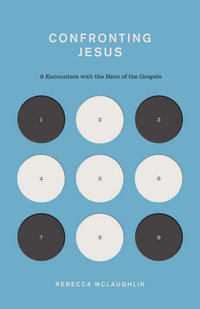
Confronting JesusConfronting Jesus:
9 Encounters with
the Hero of the Gospels

by Rebecca McLaughlin

DETAILS:
Publisher: Crossway
Publication Date: September 20, 2022
Format: eARC
Length: 208 pg.
Read Date: August 21-28, 2022

Support Independent Bookstores - Visit IndieBound.org

What’s Confronting Jesus About?

Most people have a lot of preconceptions about Jesus, a lot of people have read and/or heard things about Him and the Scriptures that tell about him. But not as many have actually read those Scriptures, particularly the Gospels.

Rebecca McLaughlin tries to clear away some of the cultural debris that has piled up between non-Christians and the Gospels and the subject of the Gospels. For example, as she points out, given Christianity’s impact in shaping Western Civilization, it’s difficult to think of Jesus as non-Western.

The goal of the book is to help the reader (particularly those with little-to-know-exposure to Christianity) begin to see the Gospels for what they really are, not the readers’ preconceptions of them. And the Jesus revealed in the Gospels as the Gospels want to portray him, not what the reader may already think.

It’s a high and lofty goal—possibly too lofty for 200 pages. But this isn’t intended as a definitive work, more like an invitation for the reader to do their own work.

A Menagerie of References

A lot of writers (and preachers, truth be told) will introduce a subject or thought by grounding their introduction in some sort of shared knowledge. Sometimes it’ll be an experience (first day of school), a person everyone knows (George Washington), a current event, or some sort of cultural reference (literature, music, film/TV, etc.). McLaughlin almost always goes for the latter. And, for the overwhelming majority of the time, it’s a very contemporary reference.

She starts off by invoking the musical Hamilton, and does so in-depth—it wasn’t long at all before I made a note, “can we be done with Hamilton now?” The answer was no—she came back to Miranda’s hit time and time again. Thankfully my worries about this being a book about Jesus, the gospels, and a hip-hop musical about a Founding Father quickly evaporated and she moved on to other cultural touchpoints—Harry Potter, Doctor Who, The Princess Bride, Gladiator, The Picture of Dorian Gray, The Lord of the Rings, Jane Austen, A Tale of Two Cities, and more. It’s an interesting mix of pop-culture and more high-brow references.

I’m spending more time on this than I initially intended, but I kept bumping on this tendency of hers, and I ended up spending as much time thinking about it as I did her arguments. Now, I don’t think most readers will do that—but most readers aren’t considering the delivery of the content as they are the content. So I don’t think most readers will be distracted by this as I am.

Still, the volume of pop culture references strikes me as a dangerous strategy (as comfortable and relatable as it might be). It can trivialize the subject matter. It can possibly cause offense (how many people really want to relate to J.K. Rowling right now? A different crowd than those who didn’t want anything to do with her in the 90s, to be sure).

Lastly, it reduces the shelf-life of the book tremendously. Wilde, Dickens, and Austen are references that will stand (and have stood) the test of time—but will The Hunger Games and Ted Lasso? Maybe. But Maybe not. McLaughlin’s arguments and insights may be worth reading in ten years, but will the book as a whole? Or will what makes it most approachable today make it stale and off-putting within a presidential election cycle or two.

(that took a lot more time to express and explain my concerns than I thought it would—this is not a significant detriment to the effectiveness of the book, but it is one)

The Tone

McLaughlin has an approachable, almost breezy style. I started this book while taking a break from a more scholarly book, and the early chapters had some overlap with the other book I was reading. And I suffered a little mental whiplash. I got over it the more of the book that I read (especially as it diverted into different territory from the other), but it almost seemed too shallow. A lot of readers might think that, too. If you persevere, however you’ll see that’s not that case.

McLaughlin comes across as open, honest, and earnest—the kind of person you’d enjoy chatting with—and her grounding things in events with her life or a movie you’ve both seen (or that she’s told you enough about that you want to see it), makes the material something you connect with.

So, what did I think about Confronting Jesus?

I enjoyed the book. I was charmed by McLaughlin’s style and found her arguments compelling—not convincing. But, as I said, I’m not sure she was trying to convince her readers—I think she was set on moving them to do more research, more reading, and to deal with more convincing ideas and arguments. This was an introduction to Jesus, hopefully lowering perceived barriers to him—and a challenge to deal honestly with Him and His claims rather than preconceptions and reputations about Him (and His followers).

That said, I’m predisposed to agree with her. We’re on the same team, and don’t have the same barriers that the non-Christian will have. So I can’t ultimately say how well the book works. Do I think that several of my friends would benefit from it? Sure. But that’s just a guess/hope. The ultimate sign of the quality and effectiveness of this book is going to come from the non-Christian reader.

Also, this book does make me curious about McLaughlin’s other work—and I anticipate grabbing at least one of her earlier books soon.

Disclaimer: I received this eARC from Crossway via NetGalley in exchange for this post—thanks to both for this opportunity.


3 Stars

This post contains an affiliate link. If you purchase from it, I will get a small commission at no additional cost to you. As always, the opinions expressed are my own.

Confronting Jesus by Rebecca McLaughlin: Introducing Jesus Without Any Baggage

Confronting JesusConfronting Jesus:
9 Encounters with
the Hero of the Gospels

by Rebecca McLaughlin

DETAILS:
Publisher: Crossway
Publication Date: September 20, 2022
Format: eARC
Length: 208 pg.
Read Date: August 21-28, 2022
Support Independent Bookstores - Visit IndieBound.org

What’s Confronting Jesus About?

Most people have a lot of preconceptions about Jesus, a lot of people have read and/or heard things about Him and the Scriptures that tell about him. But not as many have actually read those Scriptures, particularly the Gospels.

Rebecca McLaughlin tries to clear away some of the cultural debris that has piled up between non-Christians and the Gospels and the subject of the Gospels. For example, as she points out, given Christianity’s impact in shaping Western Civilization, it’s difficult to think of Jesus as non-Western.

The goal of the book is to help the reader (particularly those with little-to-know-exposure to Christianity) begin to see the Gospels for what they really are, not the readers’ preconceptions of them. And the Jesus revealed in the Gospels as the Gospels want to portray him, not what the reader may already think.

It’s a high and lofty goal—possibly too lofty for 200 pages. But this isn’t intended as a definitive work, more like an invitation for the reader to do their own work.

A Menagerie of References

A lot of writers (and preachers, truth be told) will introduce a subject or thought by grounding their introduction in some sort of shared knowledge. Sometimes it’ll be an experience (first day of school), a person everyone knows (George Washington), a current event, or some sort of cultural reference (literature, music, film/TV, etc.). McLaughlin almost always goes for the latter. And, for the overwhelming majority of the time, it’s a very contemporary reference.

She starts off by invoking the musical Hamilton, and does so in-depth—it wasn’t long at all before I made a note, “can we be done with Hamilton now?” The answer was no—she came back to Miranda’s hit time and time again. Thankfully my worries about this being a book about Jesus, the gospels, and a hip-hop musical about a Founding Father quickly evaporated and she moved on to other cultural touchpoints—Harry Potter, Doctor Who, The Princess Bride, Gladiator, The Picture of Dorian Gray, The Lord of the Rings, Jane Austen, A Tale of Two Cities, and more. It’s an interesting mix of pop-culture and more high-brow references.

I’m spending more time on this than I initially intended, but I kept bumping on this tendency of hers, and I ended up spending as much time thinking about it as I did her arguments. Now, I don’t think most readers will do that—but most readers aren’t considering the delivery of the content as they are the content. So I don’t think most readers will be distracted by this as I am.

Still, the volume of pop culture references strikes me as a dangerous strategy (as comfortable and relatable as it might be). It can trivialize the subject matter. It can possibly cause offense (how many people really want to relate to J.K. Rowling right now? A different crowd than those who didn’t want anything to do with her in the 90s, to be sure).

Lastly, it reduces the shelf-life of the book tremendously. Wilde, Dickens, and Austen are references that will stand (and have stood) the test of time—but will The Hunger Games and Ted Lasso? Maybe. But Maybe not. McLaughlin’s arguments and insights may be worth reading in ten years, but will the book as a whole? Or will what makes it most approachable today make it stale and off-putting within a presidential election cycle or two.

(that took a lot more time to express and explain my concerns than I thought it would—this is not a significant detriment to the effectiveness of the book, but it is one)

The Tone

McLaughlin has an approachable, almost breezy style. I started this book while taking a break from a more scholarly book, and the early chapters had some overlap with the other book I was reading. And I suffered a little mental whiplash. I got over it the more of the book that I read (especially as it diverted into different territory from the other), but it almost seemed too shallow. A lot of readers might think that, too. If you persevere, however you’ll see that’s not that case.

McLaughlin comes across as open, honest, and earnest—the kind of person you’d enjoy chatting with—and her grounding things in events with her life or a movie you’ve both seen (or that she’s told you enough about that you want to see it), makes the material something you connect with.

So, what did I think about Confronting Jesus?

I enjoyed the book. I was charmed by McLaughlin’s style and found her arguments compelling—not convincing. But, as I said, I’m not sure she was trying to convince her readers—I think she was set on moving them to do more research, more reading, and to deal with more convincing ideas and arguments. This was an introduction to Jesus, hopefully lowering perceived barriers to him—and a challenge to deal honestly with Him and His claims rather than preconceptions and reputations about Him (and His followers).

That said, I’m predisposed to agree with her. We’re on the same team, and don’t have the same barriers that the non-Christian will have. So I can’t ultimately say how well the book works. Do I think that several of my friends would benefit from it? Sure. But that’s just a guess/hope. The ultimate sign of the quality and effectiveness of this book is going to come from the non-Christian reader.

Also, this book does make me curious about McLaughlin’s other work—and I anticipate grabbing at least one of her earlier books soon.

Disclaimer: I received this eARC from Crossway via NetGalley in exchange for this post—thanks to both for this opportunity.


3 Stars

This post contains an affiliate link. If you purchase from it, I will get a small commission at no additional cost to you. As always, the opinions expressed are my own.

Why I Still Believe by Mary Jo Sharp: Mark 9:24 Lived Out

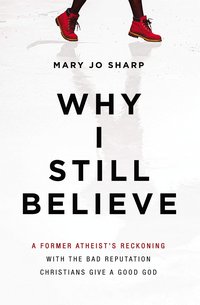
Why I Still Believe

Why I Still Believe:
A Former Atheist’s Reckoning
with the Bad Reputation
Christians Give a
Good God

by Mary Jo Sharp

Kindle Edition, 240 pg.
Zondervan, 2019

Read: August 1, 2021

What’s Why I Still Believe About?

For the sake of time, let me lift this from Sharp’s website:

With fresh and thoughtful insights, Why I Still Believe offers a spiritual narrative that presents relevant answers to haunting questions like:

  • Isn’t there too much pain and suffering to believe?
  • Is it okay to have doubt?
  • What if Jesus’ story is a copy of another story?
  • Is there any evidence for Jesus’ resurrection?
  • Does atheism explain the human experience better than Christianity can?
  • How can the truth of Christianity matter when the behaviors of Christians are reprehensible?

At once logical and loving, Sharp reframes the gospel as it truly is: the good news of redemption. With firmly grounded truths, Why I Still Believe is an affirming reminder that the hypocrisy of Christians can never negate the transforming grace and truth of Christ.

Sharp presents herself—warts and all—and her struggle with doubts, and some of what she’s found to address them. I want to stress what the description says about “a spiritual narrative”—that’s what this book is, and along the way, that narrative will touch on those bullet points. I’m not sure what the claim about “reframing the gospel” is about—how does it need “reframing” to be “the good news of redemption”? And as important as a reminder along those lines would be, this is more of an assertion about the hypocrisy of believers being unable to negate anything than it is a reminder (or defense of the faith for it).

Ultimately, I think this is a story about a woman being let down by the shepherds of Christ’s Church—she needed help, she needed guidance, she needed pastoral care and aid in finding the answers that she needed. In the absence of that shepherding, she had to help herself.

So, what did I think about Why I Still Believe?

The chapters that follow are snapshots of my experience in the church and how those experiences shaped me and my beliefs. If you feel the ever-present tension of the beauty of salvation alongside the ugliness of human hypocrisy and evil, you’re not alone. If you are uncomfortable in the church but feel the risk of commitment calling, this book is for you. It is for those who’ve wondered if they’ve been left a cosmic orphan, and wondered again if there’s more to this unshakeable longing to belong. I can’t promise any tidy endings, but there’s still an irresistible Hope.

I’m not going to talk about all the problems I have with what Sharp presented, but there were many. The above quotation is the concluding sentences of the Introduction. Set against those goals, I think she succeeds—she shows that the reader who matches those qualifications isn’t alone, she doesn’t deliver any tidy endings (and the tidy things she does present aren’t really that tidy), and she does assert that there’s an irresistible Hope. What she doesn’t do is give much of a reason for faith against the tension between the beauty of salvation and the ugliness; she doesn’t assure anyone that there’s every reason to commit to Christ’s Bride despite the weaknesses and personal discomfort—nor does she tell the reader much about the Hope she asserts to point to.

What we do get is an honest account of one woman’s stumbling through life, looking for the certainty of faith, looking for answers the Church should provide “to anyone who asks you for a reason for the hope that is in you” (1 Peter 3:15), and who doesn’t find much. Yet there’s still faith to be found, which is commendable, it is relatable—it is good to know that as we stumble along the path that we’re not alone.

There’s value in this, but that’s not what the book promised, so I can’t get that excited about what it delivered. There’s not a lot of apologetics, there’s not a lot of Bible, there’s not a lot of biblical justification for assurance—there’s almost no Gospel. There are some arguments for the existence of a Deity, but not for the Triune God of the Christian Scriptures. There’s some arguing about some facts about the Resurrection of Christ—but not about what that means.

A lot of what’s labeled (by others or itself) “Evangelicalism” today is really some sort of “Moralistic Therapeutic Deism”—and that’s about as close as we get to Christianity in these pages. Although, I’m not convinced Sharp actually delivered that much of anything “Moralistic”—Therapeutic Deism is about it. I’m not saying Sharp isn’t an orthodox believer—I’m just saying that I don’t see much along those lines in this book.

Here I said I wasn’t going to get too deep into my problems—and I really haven’t, but I’ve gotten further along the path than I meant to. So I’m going to stop.

When it came to assigning the nearly-obligatory Stars, I was torn—just what do I rate this? I ended up looking at my own definition of my ratings, and read: “Don’t bother. It’s not bad per se, it’s just not good.” That about sums it up for me.

Can someone read this and benefit? I can’t say that there’s no chance of it, I’m just not sure what grounds there would be for claiming it’s useful. The dross to gold ratio doesn’t give me a reason to recommend this.


2 Stars

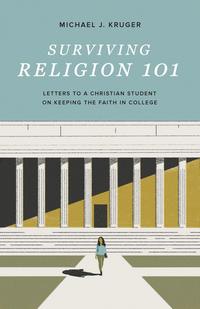
Surviving Religion 101 by Michael J. Kruger: Letters to a Christian College Sudent

Surviving Religion 101

Surviving Religion 101: Letters to a Christian Student on Keeping the Faith in College

by Michael J. Kruger

Paperback, 241 pg.
Crossway, 2021

Read: April 18-25, 2021
Grab a copy from your local indie bookstore!

What’s Surviving Religion 101 About?

The book is structured as sixteen letters to Kruger’s daughter, a college freshman at UNC (his own alma mater). Kruger remembers the challenges he had to deal with at the school in terms of faith and knows that things haven’t gotten easier for college students in the years since then.

These letters are written as encouragements for her regarding some specific challenges he expects that she will have to deal with because of things professors or peers will say—directly or indirectly—that will challenge her thinking and faith. As well as he may have tried to prepare her before she left for college, it’s different when it’s no longer a matter of preparation, but of daily experience.

Kruger’s aim is to help Emma—and other readers—know that there are intellectually satisfying defenses to the challenges thrown her way. Believing isn’t about shutting down the mind to thinking, rather, it’s about loving God with our mind.

…I am not under the impression that merely reading this book will answer every possible question a college student may have. Nor do I think any single book (or even many books) could prepare students to go toe-to-toe with their college professor. No, the intent here is much more modest. Like any complex task, eventually, you have to take the first step, even if it’s a little one. This volume is designed to be that first step, an initial orientation for Christian students about the challenges they face and (hopefully) a reason for them to be confident that there are answers to their questions, even if they don’t yet have them.

Or as the title suggests, this book is about surviving—with faith intact—one’s university experience. Now, that may seem like a strange goal, perhaps one that is far too modest. Don’t we, as Christians, want to do more than survive? Don’t we want to make an impact and change the world while in college? Sure, but that’s not where one starts. Instead, you start by not stopping. By not giving up. By surviving. You can’t “change the world” for Christ if you no longer believe in Christ or walk with Christ.

He deals with things like belief in miracles (in particular, the Resurrection), the so-called problem of evil, the exclusivity of Christianity, Christian sexual ethics, pitting science versus religion, the reliability of the New Testament (in light of Bart Ehrman’s position at UNC, this is of particular importance). Kruger sets out to show that yes, Christians have been answering these/similar challenges for centuries, these are not things that need to shipwreck a believer’s faith but can be faced head-on.

Highlights and Concerns

I thought every chapter in the book was solid and helpful—there’s not a disappointing one in the bunch. Kruger is good to show both the thinking behind the challenge to the faith represented by the various topics and the answers (or at least the beginning or answers) needed to push back. But he shows why the challenge is important, why it matters what the Christian response is (first to the believer dealing with the objection/challenge, and then to the one outside the faith), and offers encouragement to persevere in light of the issue.

I did think that Kruger perhaps focused too much on the reliability of the Scriptures and similar topics—given that three chapters when everything else gets one. Still, given Kruger’s specialty in textual and canon studies, it makes sense—particularly when you add in the importance of the topic, and the lack of exposure most Christians (of all ages) have to these ideas.

At the end of the day, however, for this reader, it all comes down to the Postscript, “What Do I Do If It Feels Like Christianity Just Isn’t Working for Me?” Setting aside the focus on the mind, he turns to the affections, concentrating on the affections the believer has for the person of Christ first and foremost, with the details of all the other issues covered in the book before this point (and more) coming in second.

Here is where many believers miss the point of the Christian life. Some are part of the church because they are excited about being involved in a “good cause” or because they love helping people or because they resonate with the idea of Christianity. But in the end, that’s not the heart of the faith. We are not Christians so that we can be part of a cause; we are Christians so that we can know a person: Jesus Christ. Don’t forget, he’s a real person, not just a concept And it is only our affection, our love, our adoration for him as a person that will keep us faithful to the end. If we are concerned only about a cause, that will fade as soon as difficulty and suffering come. Causes come and go. Jesus is forever.

So, what did I think about Surviving Religion 101?

When I left high school for college in the last century, I remember getting a couple of books along these lines and saw them all the time, too. How to secure your child’s faith during college, how to help them avoid the moral failings the surround them, etc. Memorize these facts (in a very Josh McDowell-esque fashion), stay away from booze and sex, and you might end up ushering in a revival at your college. Kruger’s approach is more of a, “it’s okay, let’s talk and help you deal with these.” Not to emerge victorious, but to emerge intact and ready to try again the next day.

There’s no fear in these pages, instead, there’s a quiet confidence, a trusting in the acre of the Father—encouragement to keep on keeping on and a reminder that the Son has redeemed his people, and they should live with humble boldness ready for with answer for the hope that liest within.

I recommend this book, and encourage readers of the right age (or beyond) give this a shot.


3.5 Stars

This post contains an affiliate link. If you purchase from it, I will get a small commission at no additional cost to you. As always, opinions are my own.

Page 2 of 2

Powered by WordPress & Theme by Anders Norén