

Tag: Don’t Tell Me How to Die

My Favorite Crime/Mystery/Detective/Thriller Fiction of 2025

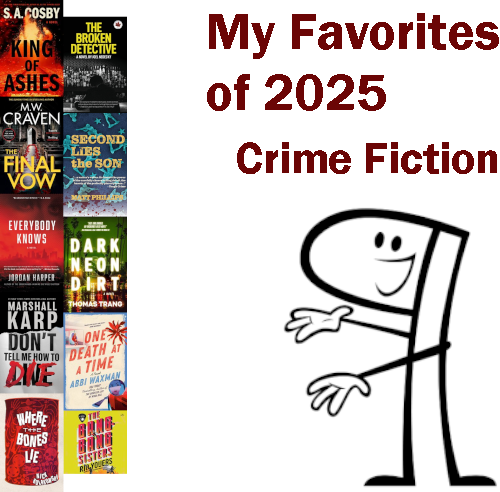
Covers of King of Ashes, The Final Vow, Everybody Knows, Don't Tell Me How to Die, Where the Bones Lie, The Broken Detective, Second Lies the Son, Dark Neon & Dirt, One Death at a Time, and The Bang-Bang Sisters, next to an image of an anthropomorphized Pilcrow and the words 'My Favorites of 2025 Crime Fiction'
Finally, we’re at the end of my 2025 wrap-up. Thanks for sticking with me for so long! (assuming you have). I’ve taken to considering this genre apart from everything else when I put together my Favorites Lists, or just about everything else would get ignored. Even if I went with a Top 20 instead of a Favorite 10, maybe 5 books from the previous lists would’ve made it along with all of these. Maybe.

Once again, I’ll note that I limit my lists to things I read for the first time. Yes, there are some author names on here that have been on a couple of these lately. Under half the list. It wouldn’t surprise me if any of these showed up in the years to come. I might have to retire some authors from consideration. Maybe this list should be renamed “S.A. Cosby, M.W. Craven, and some others.”

As always, re-reads don’t count for these lists.

(in alphabetical order by author)
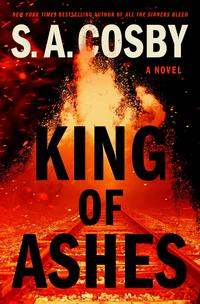
Cover of King of Ashes by S.A. CosbyKing of Ashes

by S.A. Cosby

This was a twisted, gripping, read about a group of siblings trapped (and shaped) by a shared trauma from their childhood. Now adults, they find themselves trapped in a deal with a local gang of drug dealers, and the only way out may be to become worse than them. Told with Cosby’s signature style and humanity, this will leave you in a daze.
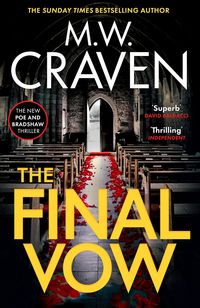

Cover of The Final Vow by M.W. CravenThe Final Vow

by M.W. Craven

This is a lighter book than the last couple of Poe and Tilly novels–but that doesn’t make it less compelling to read. Just a little more fun, and probably won’t leave you haunted and unable to get a good night’s sleep right away. It definitely sets a new direction for the series. But none of that matters. This is M.W. Craven at the top of his game–he sets a puzzle worthy of Poe and Tilly, puts some big obstacles in their way, and let’s the reader sit back and revel in it. Who could ask for more?
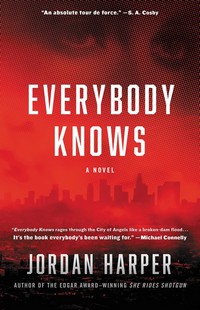

Cover of Everybody Knows by Jordan HarperEverybody Knows

by Jordan Harper

My original post
This is one of the best and starkest depictions of human depravity and the dangers those who dare to stand against it will face. The only thing that makes this experience entertaining is Harper’s prose and fantastic pacing. It left me speechless.
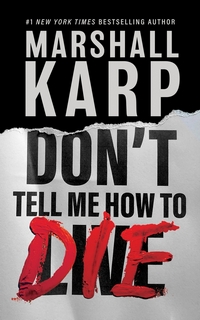

Cover of Don't Tell Me How to Die by Marshall KarpDon’t Tell Me How to Die

by Marshall Karp

My original post
This is a devilishly clever story that’s also emotionally effective. I mean, part of the book’s premise is that the protagonist’s mother died young. Early in the novel, we flashback to that, and I got choked up. I knew the woman was dead before I started the book, and it still got me. Just imagine what the book did to me by the end. As far as the rest of the story goes–the less I say, the better it is for a potential reader. But it’s a doozy–a new kind of story for Marshall Karp and just as good (if not better) as his previous best.
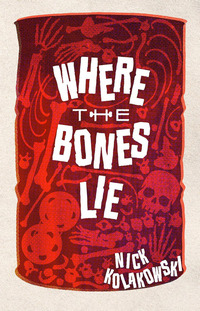

Cover of Where the Bones Lie by Nick KolakowskiWhere the Bones Lie

by Nick Kolakowski

My original post
Kolakowski brings us a little L.A.-noir here with this book–a former Hollywood fixer gets a shot at a new life when someone hires him to find out why her father died many years ago. The interplay between the protagonists is great to read, the mystery is compelling, and the contemporary California-ness of the setting is so real (geographically, environmentally, and in the entertainment industry). It’s a really strong work from Kolakowski.
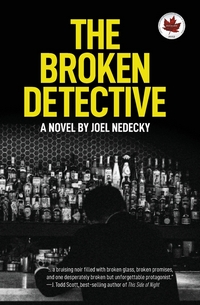

Cover of The Broken Detective by Joel NedeckyThe Broken Detective

by Joel Nedecky

My original post
We move from L.A.-noir to Winnipeg-noir, which is a thing (apparently). This tale of broken detectives hunting for one particular broken woman in the midst of crime, corruption, and the worst of humanity grabs you in the first couple of pages and won’t let go until a couple of days after you finish. It’s one of the most satisfying endings I read last year, too.


Cover of Second Lies the Son by PhillipsSecond Lies the Son

by Matt Phillips

My original post
Here’s another haunting read–Matt Phillips is one of those writers that I just want to read the prose of. The plot and characters don’t matter as much to me as the experience of reading Phillips. But, he always comes through with characters and plot that matter as much as you want, too. This is a fast, lean novel that will leave you moved (disturbed might be a better word) and chewing on it for days.
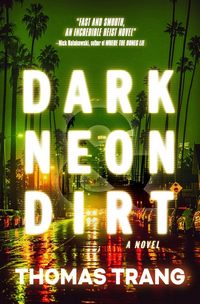

Cover of Dark Neon & Dirt by Thomas TrangDark Neon & Dirt

by Thomas Trang

My original post
And now we’re back to L.A.-noir…Trang’s debut is the kind of assured, nervy book that is a delight to find. You’ve got dirty (or at least compromised) cops, professional thieves, and a collection of coincidences that entwine them in more ways than they find comfortable. The diallogue is fantasitc. The whole things feels like a slick Winslow novel as cool as Miami Vice was at its height.
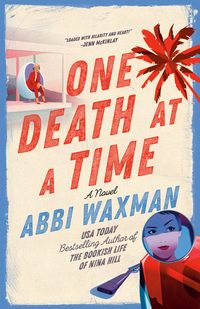

Cover of One Death at a Time by Abbi WaxmanOne Death at a Time

by Abbi Waxman

My original post
Abbi Waxman’s first mystery novel proves (to me, anyway) that she can write anything. The mystery portion of the novel is really well done; the characters are well-designed and well-executed, the relationships between them are strong and obvious—you like the people you’re supposed to like enough that you wish you sat around the room with them, watching them go back and forth Also, it’s funny. That’s a one-two-three combination that I’ll always enjoy and recommend.
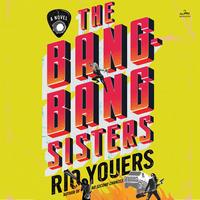

Cover of The Bang-Bang Sisters by Rio YouersThe Bang-Bang Sisters

by Rio Youers, Kristen Sieh (Narrator)

My original post
This rollicking adventure captures the spirit of music and live performance (and inter-band dynamics) as…well, any rock novel I can think of. There’s a serial killer equal to Francis Dolarhyde; a violent, kill-or-be-killed, “game” as nasty as Chain-Gang All-Stars; and three great women characters with all the style, skill, and general badassery as The Deadly Viper squad–all in a book with the violence level equal to—if not greater than—Kill Bill, Vol. 1. It’s got the pacing of a classic rock song—with occasional bursts of speed metal–it’s fast, it’s furious, it’s bloody, it’s raw emotion, it’s dangerous. It is so much fun. It is Rock and Roll.


A few books that almost made this list, and I want to be sure to mention:

Mississippi Blue 42 by Eli Cranor; Medusa Protocol by Rob Hart, Righteous Trash by Nick Kolakowski; and The World Entire by Jo Perry.


PUB DAY REPOST: Don’t Tell Me How to Die by Marshall Karp: The Last Days of Maggie Dunn

Cover of Don't Tell Me How to Die by Marshall KarpDon’t Tell Me How to Die

by Marshall Karp

DETAILS:
Publisher: Blackstone Publishing
Publication Date: March 4, 2025
Format: eARC
Length: 336
Read Date: January 29-31, 2025
Buy from Bookshop.org Support Indie Bookstores

A Note of Introduction

I typically stay away from spoilers, but this is one of those books where almost everything I want to say feels like it’s in that general neighborhood. So I use illustrations from other books that are pretty well-known by this point. I can’t think of another way to do it that’s fair to Karp and this text.

What’s Don’t Tell Me How to Die About?

This is one of those novels where it’d be easy to say too much, so let me rely on whoever wrote the jacket copy at Blackstone:

I have one thing to do before I die. And time is running out.

I had it all: a fantastic husband, two great kids, an exciting career. And then, at the age of forty-three, I found out I would be dead before my next birthday.

My mother also died young. I was seventeen, and she warned me that women would flock to my suddenly single father like stray cats to an overturned milk truck. They did. And one absolutely evil woman practically destroyed his life, mine, and my sister’s.

I am not letting that happen to my family.

I have three months, and I plan to spend every waking minute searching for the perfect woman to take my place as Alex’s wife, and mother to Kevin and Katie.

You’re probably thinking, She’ll never do it. Did I mention that in high school I was voted “Most Likely to Kill Someone to Get What She Wants”?

The book takes place in three parts: 1. When Maggie and her twin sister were seventeen and was dealing with their mother’s impending death and the events after it. 2. After Maggie’s diagnosis and her trying to implement the above plan. 3. Where the weaknesses in her plan threaten to overtake everything else.

Tone/Humor

For much of this book, it felt like Women’s Commercial Fiction more than anything. But two things kept me from concluding that—1. Marshall Karp is going to write something with a mystery/crime element, period. and 2. that cover image with the blood (or whatever) writing the word “Die.”

Even before I figured out what Karp was up to with this book, it became clear that this fit in more with some of the recent books by Lisa Lutz (particularly The Accomplice)—I’m also thinking of Sascha Rothchild’s Blood Sugar or a restrained Darynda Jones—than it did with a Jennifer Weiner or Abbi Waxman.

So as I was preparing to read this novel, I said that it “looks like a return to his roots” because of some of the blurbs talking about Karp’s humor and so on. When I think of Karp and humor, I think of his Lomax and Biggs series. So that’s what I expected.

I was very wrong. It took less than a couple of pages to realize that this was a different Marshall Karp than I’d ran into before. That’s not an evaluation, that’s a description. Here’s an evaluation: he pulls it off well. Again, see Rothchild or Lutz. The more I think about the Lutz comparison, the more I like it—if you think of the change between her Spellman Files and things like The Accomplice, Karp’s new tone is somewhat similar.

Either way, you’re getting a guy who knows how to write comedy, no matter the flavor. He also knows when to pull back and let the drama take center stage.

Twists/Structure

I know that when it comes to psychological or domestic thrillers the twists are what generate headlines. While I appreciate a good twist as much as the next reader, what’s more important to me is the reveal of the twist. Plots go in strange directions sometimes—it’s how the author prepares the reader for the twist and how the author lets us in on the strange direction.

As an illustration: Benjamin Stevenson’s Everyone in My Family Has Killed Someone has a moment when he says that so-and-so enjoyed her final cigarette, or maybe she lit it, or something like that. The phrase “final cigarette” is the important part. Now, the reader has two guesses as to why that phrase is used here—1. She quits smoking after this or 2. She dies. As this is in the middle of a stressful weekend with her ex-husband’s family, with her on the verge of financial problem, her ex is definitely not coming back and is with his new partner, they’re all snowed in, there’s a killer on the loose, and the book isn’t close to ending…you pretty much know how that’s going to go for her. Does that matter? Not really, it’s how Stevenson sets us up for this and then how he shows us how she dies that’s important.

Now I’m not going to spill any of the twists or reveals in this book, but Karp does a few things like Stevenson did—they’re even more blatant, you could say. But he will distract you, make you wait a lot longer for the reveal, and will throw a bunch of red herrings at you (I won’t tell you how often I made a note like, “Oh, is this how he pays off X?” because I’d also have to tell you that I was wrong equally often). I didn’t guess anything right.

He also pulls a few things from seemingly nowhere—but explains them in such a way that you retrospectively say, “of course” or “y’know, that makes sense.”

Maggie

This is one of those books that you’re only going to keep reading (initially, anyway) if you get invested in Maggie, our protagonist/narrator quickly. Other elements might keep you going eventually, but Maggie’s diagnosis, Maggie’s plight (and kooky plan), and character/voice are what’s going to get you to commit.

If you ask me, you’re going to want to commit. You can tell from the beginning that she’s smart. She’s driven. She’s brave (at least in the face of some things…like dying). She loves her family. She’s gone through a lot. She’s pretty funny. (probably pretty, too, but that’s not that important, especially when you see the world through her eyes). You later learn what a good friend she can be and why she was elected.

Now, like a parfait, or an onion, or an ogre—Maggie has layers. I’m not going to talk about those layers because you need to discover them for yourself. But she has them—and you keep learning about those layers as the book continues. Each layer—for me, anyway, and I predict for most readers—got me to like her more as a person (pretty frequently) and as a character (always). Is there a difference? Sure—one extreme example (that doesn’t apply here, but gets my point across) would be Dr. Lecter. Fantastic character, but not someone you’d want to hang out with.

So, what did I think about Don’t Tell Me How to Die?

Is this as good as the first two or three Lomax and Biggs books? Probably not—although it’s been a long time since I last re-read them, also this is a different sub-genre, so I could be wrong. Also, that’s really high bar. Is this better than anything else that Karp has done since then? Yes.

The way that Karp unspooled this was so well done. I sat back and enjoyed the ride more often than I “ought” to have, and didn’t take as many notes and whatnot as usual—I was just into the ride that much that continuing was more important than jotting things down. At least in the moment…I’d be sure to write that idea down, right after this part. Well, maybe the next bit.

I should note that I dipped back in a couple of times while writing this post to fact-check myself and even now I ended up reading a few pages or a chapter when I only needed a clause or a name. Karp just doesn’t want to let me go.

Anyone picking this book up—unless you do it blindly (and even then it’s told to you within a chapter)—knows that Maggie’s mom died almost two decades before these events. And yet—in her final moments, her last personal triumph—I was moved. I shouldn’t care this much about the impending death of a character I knew was long dead. But I did. And again, even though it’s right there in the description, “And one absolutely evil woman practically destroyed [“my suddenly single father”‘s] life, mine, and my sister’s,” watching it feels like a traffic accident—you know it’s coming, but you can’t stop watching.

Maggie’s plot, when introduced, feels like a silly rom-com plot that’s going to blow up in her face. And for most of the book, her sister treats it that way. You kind of do while you’re reading, too. It feels like one, you react like one. Then…well, you start to take her seriously. As does her sister, Lizzie (eventually).

Speaking of Lizzie. I really would’ve enjoyed more time with her, she seemed like a hoot and a half. Her kids Katie and Kevin were also the kind of characters you want more of. And if we were looking at any other part of Maggie’s life, we would’ve had more time with all three and we would’ve been perfectly content watching them go through their life. But this book just introduces them, lets us spend some time enjoying them (in pretty un-enjoyable circumstances) and then we just have to imagine the rest of their lives. Which is enjoyable enough.

I feel like I’ve talked around the book a lot, hopefully, I’ve talked about it enough. But I’m not sure what else to say. On March 4, go pick yourself up a copy (or go put it on reserve at your library now, and read it ASAP). Then we can email or chat or something about it and I can say all the things I can’t put here.

Don’t Tell Me How to Die isn’t the Marshall Karp I know, enjoy, and respect. It’s a new flavor of him that I’m getting to know, that I did enjoy and respect. And I can’t wait to see what other sides he has up his sleeve (to torture the metaphor). I’m trying too hard. I’m babbling. Go read this and I’ll shut up. Deal?

Disclaimer: I received this eARC from Blackstone Publishing via NetGalley in exchange for this post which contains my honest opinion—thanks to both for this.


4 1/2 Stars

This post contains an affiliate link. If you purchase from it, I will get a small commission at no additional cost to you. As always, the opinions expressed are my own.
Irresponsible Reader Pilcrow Icon

Don’t Tell Me How to Die by Marshall Karp: The Last Days of Maggie Dunn

Cover of Don't Tell Me How to Die by Marshall KarpDon’t Tell Me How to Die

by Marshall Karp

DETAILS:
Publisher: Blackstone Publishing
Publication Date: March 4, 2025
Format: eARC
Length: 336
Read Date: January 29-31, 2025
Buy from Bookshop.org Support Indie Bookstores

A Note of Introduction

I typically stay away from spoilers, but this is one of those books where almost everything I want to say feels like it’s in that general neighborhood. So I use illustrations from other books that are pretty well-known by this point. I can’t think of another way to do it that’s fair to Karp and this text.

What’s Don’t Tell Me How to Die About?

This is one of those novels where it’d be easy to say too much, so let me rely on whoever wrote the jacket copy at Blackstone:

I have one thing to do before I die. And time is running out.

I had it all: a fantastic husband, two great kids, an exciting career. And then, at the age of forty-three, I found out I would be dead before my next birthday.

My mother also died young. I was seventeen, and she warned me that women would flock to my sudWherdenly single father like stray cats to an overturned milk truck. They did. And one absolutely evil woman practically destroyed his life, mine, and my sister’s.

I am not letting that happen to my family.

I have three months, and I plan to spend every waking minute searching for the perfect woman to take my place as Alex’s wife, and mother to Kevin and Katie.

You’re probably thinking, She’ll never do it. Did I mention that in high school I was voted “Most Likely to Kill Someone to Get What She Wants”?

The book takes place in three parts: 1. When Maggie and her twin sister were seventeen and was dealing with their mother’s impending death and the events after it. 2. After Maggie’s diagnosis and her trying to implement the above plan. 3. Where the weaknesses in her plan threaten to overtake everything else.

Tone/Humor

For much of this book, it felt like Women’s Commercial Fiction more than anything. But two things kept me from concluding that—1. Marshall Karp is going to write something with a mystery/crime element, period. and 2. that cover image with the blood (or whatever) writing the word “Die.”

Even before I figured out what Karp was up to with this book, it became clear that this fit in more with some of the recent books by Lisa Lutz (particularly The Accomplice)—I’m also thinking of Sascha Rothchild’s Blood Sugar or a restrained Darynda Jones—than it did with a Jennifer Weiner or Abbi Waxman.

So as I was preparing to read this novel, I said that it “looks like a return to his roots” because of some of the blurbs talking about Karp’s humor and so on. When I think of Karp and humor, I think of his Lomax and Biggs series. So that’s what I expected.

I was very wrong. It took less than a couple of pages to realize that this was a different Marshall Karp than I’d ran into before. That’s not an evaluation, that’s a description. Here’s an evaluation: he pulls it off well. Again, see Rothchild or Lutz. The more I think about the Lutz comparison, the more I like it—if you think of the change between her Spellman Files and things like The Accomplice, Karp’s new tone is somewhat similar.

Either way, you’re getting a guy who knows how to write comedy, no matter the flavor. He also knows when to pull back and let the drama take center stage.

Twists/Structure

I know that when it comes to psychological or domestic thrillers the twists are what generate headlines. While I appreciate a good twist as much as the next reader, what’s more important to me is the reveal of the twist. Plots go in strange directions sometimes—it’s how the author prepares the reader for the twist and how the author lets us in on the strange direction.

As an illustration: Benjamin Stevenson’s Everyone in My Family Has Killed Someone has a moment when he says that so-and-so enjoyed her final cigarette, or maybe she lit it, or something like that. The phrase “final cigarette” is the important part. Now, the reader has two guesses as to why that phrase is used here—1. She quits smoking after this or 2. She dies. As this is in the middle of a stressful weekend with her ex-husband’s family, with her on the verge of financial problem, her ex is definitely not coming back and is with his new partner, they’re all snowed in, there’s a killer on the loose, and the book isn’t close to ending…you pretty much know how that’s going to go for her. Does that matter? Not really, it’s how Stevenson sets us up for this and then how he shows us how she dies that’s important.

Now I’m not going to spill any of the twists or reveals in this book, but Karp does a few things like Stevenson did—they’re even more blatant, you could say. But he will distract you, make you wait a lot longer for the reveal, and will throw a bunch of red herrings at you (I won’t tell you how often I made a note like, “Oh, is this how he pays off X?” because I’d also have to tell you that I was wrong equally often). I didn’t guess anything right.

He also pulls a few things from seemingly nowhere—but explains them in such a way that you retrospectively say, “of course” or “y’know, that makes sense.”

Maggie

This is one of those books that you’re only going to keep reading (initially, anyway) if you get invested in Maggie, our protagonist/narrator quickly. Other elements might keep you going eventually, but Maggie’s diagnosis, Maggie’s plight (and kooky plan), and character/voice are what’s going to get you to commit.

If you ask me, you’re going to want to commit. You can tell from the beginning that she’s smart. She’s driven. She’s brave (at least in the face of some things…like dying). She loves her family. She’s gone through a lot. She’s pretty funny. (probably pretty, too, but that’s not that important, especially when you see the world through her eyes). You later learn what a good friend she can be and why she was elected.

Now, like a parfait, or an onion, or an ogre—Maggie has layers. I’m not going to talk about those layers because you need to discover them for yourself. But she has them—and you keep learning about those layers as the book continues. Each layer—for me, anyway, and I predict for most readers—got me to like her more as a person (pretty frequently) and as a character (always). Is there a difference? Sure—one extreme example (that doesn’t apply here, but gets my point across) would be Dr. Lecter. Fantastic character, but not someone you’d want to hang out with.

So, what did I think about Don’t Tell Me How to Die?

Is this as good as the first two or three Lomax and Biggs books? Probably not—although it’s been a long time since I last re-read them, also this is a different sub-genre, so I could be wrong. Also, that’s really high bar. Is this better than anything else that Karp has done since then? Yes.

The way that Karp unspooled this was so well done. I sat back and enjoyed the ride more often than I “ought” to have, and didn’t take as many notes and whatnot as usual—I was just into the ride that much that continuing was more important than jotting things down. At least in the moment…I’d be sure to write that idea down, right after this part. Well, maybe the next bit.

I should note that I dipped back in a couple of times while writing this post to fact-check myself and even now I ended up reading a few pages or a chapter when I only needed a clause or a name. Karp just doesn’t want to let me go.

Anyone picking this book up—unless you do it blindly (and even then it’s told to you within a chapter)—knows that Maggie’s mom died almost two decades before these events. And yet—in her final moments, her last personal triumph—I was moved. I shouldn’t care this much about the impending death of a character I knew was long dead. But I did. And again, even though it’s right there in the description, “And one absolutely evil woman practically destroyed [“my suddenly single father”‘s] life, mine, and my sister’s,” watching it feels like a traffic accident—you know it’s coming, but you can’t stop watching.

Maggie’s plot, when introduced, feels like a silly rom-com plot that’s going to blow up in her face. And for most of the book, her sister treats it that way. You kind of do while you’re reading, too. It feels like one, you react like one. Then…well, you start to take her seriously. As does her sister, Lizzie (eventually).

Speaking of Lizzie. I really would’ve enjoyed more time with her, she seemed like a hoot and a half. Her kids Katie and Kevin were also the kind of characters you want more of. And if we were looking at any other part of Maggie’s life, we would’ve had more time with all three and we would’ve been perfectly content watching them go through their life. But this book just introduces them, lets us spend some time enjoying them (in pretty un-enjoyable circumstances) and then we just have to imagine the rest of their lives. Which is enjoyable enough.

I feel like I’ve talked around the book a lot, hopefully, I’ve talked about it enough. But I’m not sure what else to say. On March 4, go pick yourself up a copy (or go put it on reserve at your library now, and read it ASAP). Then we can email or chat or something about it and I can say all the things I can’t put here.

Don’t Tell Me How to Die isn’t the Marshall Karp I know, enjoy, and respect. It’s a new flavor of him that I’m getting to know, that I did enjoy and respect. And I can’t wait to see what other sides he has up his sleeve (to torture the metaphor). I’m trying too hard. I’m babbling. Go read this and I’ll shut up. Deal?

Disclaimer: I received this eARC from Blackstone Publishing via NetGalley in exchange for this post which contains my honest opinion—thanks to both for this.


4 1/2 Stars

This post contains an affiliate link. If you purchase from it, I will get a small commission at no additional cost to you. As always, the opinions expressed are my own.
Irresponsible Reader Pilcrow Icon

Powered by WordPress & Theme by Anders Norén
