Tag: General Fiction Page 39 of 45

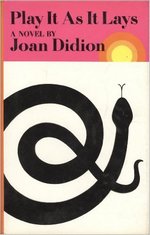
United States of Books – Play It as It Lays by Joan Didion

Play It as It LaysPlay It as It Lays

by Joan Didion

Author: Elisha at Rainy Day Reviews

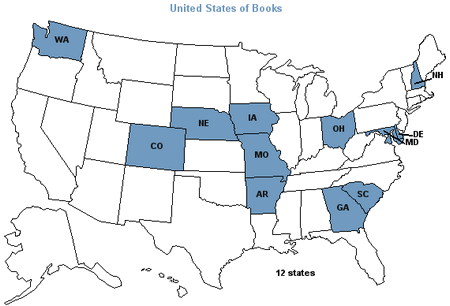
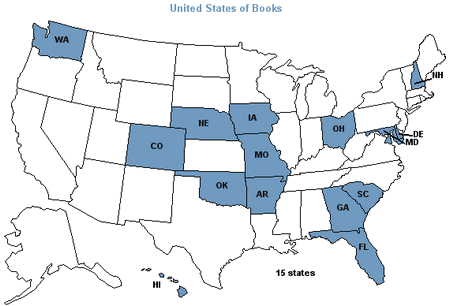
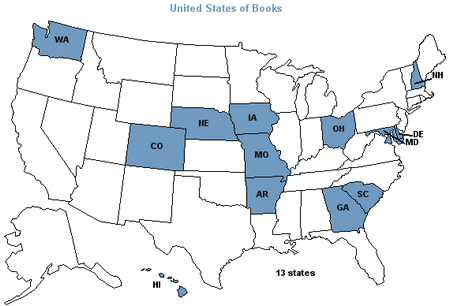
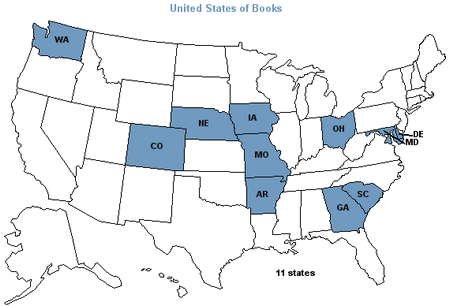
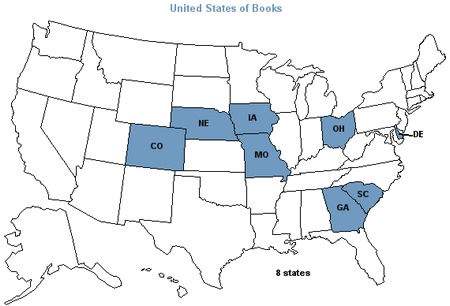
Welcome to another installment of the United States of Books! See full details here. Today we will visit California with Play It as It Lays by Joan Didion. <b?Entertainment Weekly says “Didion’s 1970 classic, about a woman and a marriage breaking down, is both an ode to the freedom of the freeways and a eulogy for dreams shriveled by the sun.”

SYNOPSIS

(From Goodreads.com)
A ruthless dissection of American life in the late 1960s, Play It as It Lays captures the mood of an entire generation, the ennui of contemporary society reflected in spare prose that blisters and haunts the reader. Set in a place beyond good and evil – literally in Hollywood, Las Vegas, and the barren wastes of the Mojave Desert, but figuratively in the landscape of an arid soul – it remains more than three decades after its original publication a profoundly disturbing novel, riveting in its exploration of a woman and a society in crisis and stunning in the still-startling intensity of its prose.

REVIEW

I don’t think this book is your typical read, like a James Patterson or Jodi Picoult…not saying they are typical because they are amazing and talented authors. But Joan Didion is not a Jodi Picoult type author. Joan grabs you with this story from the very beginning, waiting for the other shoe to drop. With school, my child, and life in general, it took me a couple weeks to read this “can’t put this book down” book because I wanted to see if this ‘sad female with nothing but time and money’ would do something with herself and stop feeling sorry for herself. I did have empathy for her as the story continued because as the reader can tell she is truly sad and can’t pull herself out of it. You want to go into the book and shake her but hug her at the same time. There was twists and turns in this story I was not expecting but was pleasantly surprised by. I tend to be a cynical person (in the Miranda from Sex in the City kind of way) so when I started reading Maria’s character, I thought oh good Lord…but then, something happens (no spoilers!) This was a memorable read, for sure. It is also one that I would recommend to others.

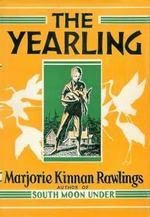
United States of Books – The Yearling by Marjorie Kinnan Rawlings

The YearlingThe Yearling

by Marjorie Kinnan Rawlings

Author: Laura at 125Pages.com

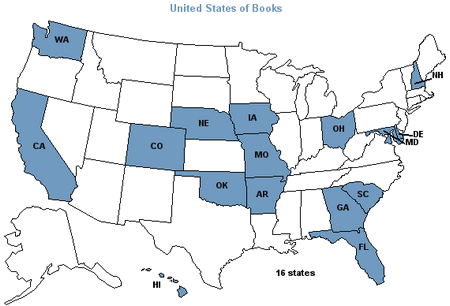
Welcome to another installment of the United States of Books! See full details here. Today we will visit Florida with The Yearling by Marjorie Kinnan Rawlings. Entertainment Weekly says “Working with Hemingway and F. Scott Fitzgerald’s editor, Rawlings was pushed to look into her own history for literary fodder, which led to her 1938 Pulitzer winner about a Florida boy and his pet deer.”

bambigif The Yearling is a book I have heard about over the years, but was never super interested in reading. I could guess the outcome of a book centered around a young boy and his pet deer living on a hardscrabble farm in the 1870’s. I had read Old Yeller and seen Bambi, I knew what was coming. So I wasn’t thrilled when the random picking for the United States of Books challenge offered me up The Yearling. I don’t think I can really spoil a book that is over 75 years old, but just in case, I will only say I was right about the ending. However, I was mistaken about how I would feel about the book as a whole.

The tale of the Jody, Ora and Ezra “Penny” Baxter is not one of an easy life. Farming a small plot of land in central Florida, they hunt and trade for what they need. Jody is the only child of seven born, who lived past the age of three. Trailing his pa and learning to do what is necessary to survive, Jody wants nothing more than a pet to call his own. Then on a hunt, he finds a small deer and is determined to make it his own. Flag soon becomes part of the family and even goes on hunts with Jody and his father. Weaving around the story of the fawn and his boy was the epic hunt of a troublesome bear, a snakebite, and a very unique cast of characters.

Now that I have read it, I am glad I had the chance to, as some of the writing was just lyrical. Especially the parts describing the land surrounding the farm.

Around a bend in the road, the dry growth of pines and scrub oak disappeared. There was a new lushness. Sweet gums and bay were here, and, like sign-posts indicating the river, cypress. Wild azaleas were blooming late in the low places, and the passion flower opened its lavender corollas along the road

I could see why this was EW‘s Florida pick as the location was almost a secondary character in the story.

The fall fruits were not yet ripe, papaw and gallberry and persimmon. The mast of the pines, the acorns of the oaks, the berries of the palmetto, would not be ready until the first frost. The deer were feeding on the tender growth, bud of sweet bay and of myrtle, sprigs of wire-grass, tips of arrowroot in the ponds and prairies, and succulent lily stems and pads. The type of food kept them in the low, wet places, the swamps, the prairies and the bay-heads.

Unfortunately, the jarring difference between the lyrical descriptions and the regional dialect of the characters when they spoke, made this a difficult read for me. The way they thought in their heads did not match the words they said and this made the transitions very hard. I would almost prefer a read like The Adventures of Huckleberry Finn where, while there were numerous regional dialects, all the characters thought and spoke in them. When you read a description as beautiful as the one above then the very next life is something along the lines of “Don’t go gittin faintified on me.”, it pulls you out of the story and throws a wrench in your pacing.

The Yearling had some amazing moments with the descriptions by Marjorie Kinnan Rawlings. It is not a book that I would personally read again as the storyline is not what I enjoy and the transitions between characters thinking and speaking was too harsh. For the time it was written though, I can see why it received such high praise. It contained heartbreak, action and basic human survival tempered by a strong family bond.

Favorite lines – A mark was on him from the day’s delight, so that all his life, when April was a thin green and the flavor of rain was on his tongue, an old wound would throb and a nostalgia would fill him for something he could not quite remember.

Have you read The Yearling, or added it to your TBR?

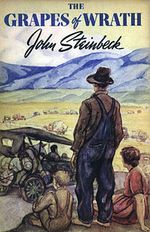
United States of Books – The Grapes of Wrath by John Steinbeck

The Grapes of Wrath The Grapes of Wrath

by John Steinbeck

Author: C.H. Armstrong at C.H. Armstrong Books & Blog

SYNOPSIS

(From Goodreads.com)

First published in 1939, Steinbeck’s Pulitzer Prize winning epic of the Great Depression chronicles the Dust Bowl migration of the 1930s and tells the story of one Oklahoma farm family, the Joads, driven from their homestead and forced to travel west to the promised land of California. Out of their trials and their repeated collisions against the hard realities of an America divided into haves and have-nots evolves a drama that is intensely human yet majestic in its scale and moral vision, elemental yet plainspoken, tragic but ultimately stirring in its human dignity.

A portrait of the conflict between the powerful and the powerless, of one man’s fierce reaction to injustice, and of one woman’s stoical strength, the novel captures the horrors of the Great Depression and probes the very nature of equality and justice in America.

Sensitive to fascist and communist criticism, Steinbeck insisted that “The Battle Hymn of the Republic” be printed in its entirety in the first edition of the book—which takes its title from the first verse: He is trampling out the vintage where the grapes of wrath are stored.” As Don DeLillo has claimed, Steinbeck shaped a geography of conscience” with this novel where there is something at stake in every sentence.” Beyond that—for emotional urgency, evocative power, sustained impact, prophetic reach, and continued controversy—The Grapes of Wrath is perhaps the most American of American classics.

REVIEW

5 Stars

When The Grapes of Wrath was released in 1939, it was not only an instant bestseller, but it was met with no small amount of criticism and anger. Steinbeck brought to the world the devastation of the Dust Bowl but, more importantly, the horrors and blatant racism that greeted migrant workers searching for better lives. For as many who read Steinbeck’s epic novel and heralded it as the true “Great American Novel,” an equal number were aghast at the raw truths he portrayed and sought to have it banned or even burned. Nearly seventy years later, it’s still at the center of much controversy and is listed as Number Two among the Top 10 Most Banned Books (Shortlist.com).

The Grapes of Wrath is an epic novel depicting the mass westward migration of Oklahomans (and neighboring states) during The Great Depression of the 1930s and the simultaneous Dust Bowl. It was a time when the overuse of the land had turned the once fertile farming soil into dust, making it unfit for the growing of crops. With no money coming in from the crops, banks swooped in and called in loans on the land, and forced tenant farmers and their families out of the homes they’d known for generations. The result was mass homelessness that led to a great migration to California and nearby states in search of jobs.

At the center of Steinbeck’s novel is the Joad family. Their eldest son has just been released from prison and returns home to find his family packing up their meager belongings, ready to depart for California and hopes for a better life. So begins the story of the Joad family and their journey west. But they soon realize that their travels will neither be easy, nor as idyllic as they had imagined. Instead of green fields of orange trees ripe with fruit just for the picking, they’re met with numerous hardships and discrimination. California – the land of plenty and the focus of their dreams – doesn’t want them. They’re not only barred from entrance but, once gaining access, are met with conditions more deplorable than those they’ve left behind.

When The Grapes of Wrath was first released, it was met with criticism from groups crying foul at Steinbeck’s depictions for how migrant workers were treated. In truth, Steinbeck revealed that his novel was a watered-down version of the true horrors of the workers – the truth was worse than the fiction of his novel. As a native Oklahoman and one who finds pride in the name “Okie,” I can only tell you that I truly loved this novel. I loved Steinbeck’s descriptive prose; but more than that, I loved the truth behind his words, which echoed through my mind long after I turned the last page.

Many will say that The Grapes of Wrath is a depressing novel. On the contrary, I found it to be a book of hope and a testament to the strength of the human spirit. Yes, it was difficult to read about the hundreds of thousands of starving migrant people; and it was even more difficult to come to terms with the fact that “this really happened!” But what I really got from the story was a lesson in discrimination and racism, and hope for the future of mankind. You see, even when all had been taken from them and there seemed to be no real hope in the foreseeable future, the Okies refused to just lay down and die. They refused to let the “big guy” get the best of them. They trudged on through death, hopelessness, starvation and despair. They did their best to keep their families together, and they never failed to lend a helping hand to one whose need was even greater than their own. Nearly 100 years later, the majority of Oklahomans still possess those admirable qualities.

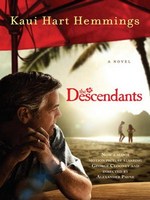
United States of Books – The Descendants by Kaui Hart Hemmings

The DescendantsThe Descendants

by Kaui Hart Hemmings

Author: Teri at Sportochick’s Musings

Synopsis

Narrated in a bold, fearless, unforgettable voice and set against the lush, panoramic backdrop of Hawaii, The Descendants is a stunning debut novel about an unconventional family forced to come together and re-create its own legacy.

Matthew King was once considered one of the most fortunate men in Hawaii. His missionary ancestors were financially and culturally progressive–one even married a Hawaiian princess, making Matt a royal descendant and one of the state’s largest landowners.

Now his luck has changed. His two daughters are out of control: Ten-year-old Scottie is a smart-ass with a desperate need for attention, and seventeen-year-old Alex, a former model, is a recovering drug addict. Matt’s charismatic, thrill-seeking, high-maintenance wife, Joanie, lies in a coma after a boat-racing accident and will soon be taken off life support. The Kings can hardly picture life without her, but as they come to terms with this tragedy, their sadness is mixed with a sense of freedom that shames them–and spurs them into surprising actions.

Before honoring Joanie’s living will, Matt must gather her friends and family to say their final goodbyes, a difficult situation made worse by the sudden discovery that there is one person who hasn’t been told: the man with whom Joanie had been having an affair, quite possibly the one man she ever truly loved. Forced to examine what he owes not only to the living but to the dead, Matt takes to the road with his daughters to find his wife’s lover, a memorable journey that leads to both painful revelations and unforeseen humor and growth.

Review

Though traditionally this book would not of caught my eye I was interested in reading it because of my love for Hawaii. From the start the author did an admirable job of creating irritating spoiled children in the characters of Scottie and Alex. The addition of Alex’s friend, Sid who has his own set of problems and annoyingness rounded off for me a difficult read. It is not that the book isn’t well written but I wanted to take all of them over my knee and spank them or hug them to death.

As a mother I was stressed during this whole book and angry with Matt that he had not been more present in his daughter’s upbringing and he allowed his wife free rein without question. As the story went on though he started to show superb judgement in how he handled so many of the new situations that showed up. The author did a fine job in the steadiness of Matt still making mistakes and where his aha moments happened, causing a change in his thoughts and actions.

Joanie is written in a very believable manner and one wonders if she ever thought of the damage she was doing to her children or if she was that clueless that she thought she was helping them. Her character is not likable for all the thoughtless damage she did to everyone around.

For me the interaction between Matt and Sid was the most impactful part of the story. Both of these two saved each other is ways that only they understood. What these two did for each other was amazing and heartfelt making me cry.

For this review I listened to it via audible and referenced the ebook version as well. I wonder if I had only read the book if I would have had a different outcome in my review. Though I haven’t seen the movie I wonder how this book would come across on the screen so out of curiosity I will see it though.

I give this 3-1/2 STARS.

(fwiw, I had a few things to say about this a couple of years ago)

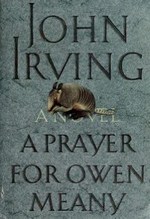
United States of Books – A Prayer for Owen Meany by John Irving

A Prayer for Owen MeanyA Prayer for Owen Meany

by John Irving

Hardcover, 543 pg.
William Morrow & Co., 1989
Read: March 4 – 10, 2016
[Marilyn Monroe] was just like our whole country — not quite young anymore, but not old either; a little breathless, very beautiful, maybe a little stupid, maybe a lot smarter than she seemed, and she was looking for something . . . She was never quite happy, she was always a little overweight. She was just like our whole country.

I’m not sure why I picked that quotation from this book, but there’s something that appealed to me about it (even if I don’t necessarily agree). You’ll note that there are both upper and lower case letters there — Owen Meany’s dialogue is always given to us in all caps. Which is annoying (it’s supposed to be), and difficult to read in extended speeches (Owen’s voice is hard to listen to), and makes you wish he’d shut up (duplicating the experience of most people who heard him).

A medical explanation for this is given, eventually. But the only explanation that Owen needs is that God gave him his voice. The same for his diminutive stature (about 5′ 0″ as an adult) — God made him that way, for His own reason.

But I’m getting ahead of myself — John Irving’s probably best known for The World According to Garp, which was one of the bigger disappointments of my college reading, so I wasn’t really looking forward to spending more time with him. You add in the fact that this is a 500+ page book with only nine chapters, and it’s downright intimidating. I’m not going to say that you shouldn’t be intimidated and that it’s a pretty easy read — it’s a challenge, it’s frequently a slog — but in the end, it’s rewarding.

When the book starts, Johnny Wheelwright (the narrator) doesn’t seem particularly fond of Owen Meany — in fact, you get the impression that he’s just one of those kids he happens to know, and he’s not that happy about it. But before long, it’s clear that he and Owen are really close — even though (because?) Owen’s responsible for the greatest tragedy of Johnny’s childhood.

John finds himself as an observer to Owen’s life, as his defender, his advocate, his way to the greater world. While Owen is constantly trying to help his friend — help him to achieve, help him to think, help him to believe. It’s a great friendship — and without the other, each was diminished. Owen less so, but in important ways.

The narrative is rambling — John starts to tell us about something, the plot moves forward a bit, but then he goes back in history to give context. Sometimes weeks, sometimes years and far more detail than you think is necessary. Eventually, you see that this is sort of the approach that the overall narrative is taking — John has something he needs to tell the reader, but he doesn’t want to. So he tells you many other things, anecdotes, vignettes, details you don’t need — anything to delay what he wants to say. He does get to it. And by that time, you’re not sure you want him to.

The story is told from the perspective of forty-something John, now a teacher at a Private School in Toronto — he spends his days reading the news about the United States, and ranting (or trying not to) to anyone near him about what President Reagan is doing. I’m not sure why we spend so much time dwelling on him in the present, we don’t need it — it adds almost nothing to the narrative. If anything, I think it might lessen the impact of the rest. The adult John telling the story about his childhood, about Owen, about their growing up together, and so on is essential — we need his perspective, his distance. What we don’t need is to hear John’s rants about Reagan, the poor reading/study habits of teenage girls.

I’m not sure that I get a whole lot of understanding of New Hampshire from this book — Owen’s family working in the granite industry doesn’t tell us much, New Hampshire is The Granite State — everyone who survived 4th grade knows that. If anything, Irving was wanting to talk about America — as an ideal, and as something that falls short of that ideal. Monroe was one example, John Kennedy’s moral failings another, Vietnam a recurring theme, and, of course, the Iran-Contra Scandal. Each of these, as either a representative individual, or representative act, demonstrates how far (in John’s/Owen’s view, at least) the United States has fallen short of the ideals it should strive for — if not achieve.

Ultimately, when I enjoyed this book, it felt like it was in spite of what I was reading. But I laughed, I cared, I kept reading — and then when I was finished, I appreciated the work as a whole, and felt a lot more affection for it than I expected. It’s hard to explain, but I liked this one and heartily recommend it.

—–

4 Stars

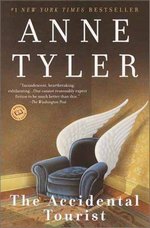
United States of Books – The Accidental Tourist (Audiobook) by Anne Tyler, George Guidall

The Accidental TouristThe Accidental Tourist

by Anne Tyler, George Guidall (Narrator)

Author: Serena Agusto-Cox at Savvy Verse & Wit

The Accidental Tourist by Anne Tyler, narrated by George Guidall, was a finalist for the Pulitzer Prize and won the National Book Critics Circle Award for Fiction in 1985 before being made into a movie with William Hurt, Kathleen Turner, and Geena Davis. Maryland resident, Macon Leary, is a very particular man, he likes things to be orderly and things to be pronounced just so. Even though he is a travel writer, he hates traveling and much of his column and his books are how-to guides on how to bring home with you when you vacation. His marriage to Sarah falls apart following the tragic death of their son, and she moves out. Following a freak accident at home with his dog, Edward, Macon moves in with his brothers and sister — all odd ducks in similar, yet different ways. How anyone could handle of the weirdness is something the wives have talked about before and some have even given up their marriages to escape.

Macon is tough to take throughout the novel until his world is thrown into a spin when he meets dog trainer and jack-of-all-trades Muriel. In addition to Macon, Tyler has a cast of vivid characters, including Macon’s boss Julian. However, the pacing here is slow and Macon is slow to evolve, which is frustrating. His routines in life are so far ingrained into his character that it is very difficult for him to adjust to even the smallest changes. When he’s thrown into a different way of living, he’s still clinging to the old life he had and even as he opens up and moves forward with his life, he is completely unaware. Tragically, he takes no action of his own accord and things just happen to him and he adjusts as best he can.

In terms of place, as this is the book picked to represent Maryland, there is very little of my current home state in its pages. While Macon is referred to as a resident of Baltimore on a few occasions, there is very little of the city I’ve come to know in these pages. The descriptions given could be of many towns across the United States, and where he and his family live doesn’t even seem like Baltimore, a city with its downtrodden, littered streets and high crime as well as its cultural connection to Edgar Alan Poe and Frederick Douglass, one of the most gifted activists during the Civil War era.

Douglass learned how to read in Baltimore, and while Macon and his family are quirky and troubled, they do not speak to the civil rights struggles in a state between the sides, nor do they speak to the other leaders of social movements, including Gertrude Stein. There is a great sense in Maryland’s literary heritage that lives change here, their perspective evolve and they move on to greater things. There is not sense of that here, just as there is no sense of suburban life in Maryland, which is as varied as the cultures and incomes found within its borders.

The Accidental Tourist by Anne Tyler, narrated by George Guidall, is a slow moving novel, much like its main character, Macon, as it is slow to evolve and move beyond the humdrum routines of a rigid travel writer who hates to travel. The narrator does well in his portrayal of Macon, and his voice and timber set the tone that Tyler has given in her prose. While there are some amusing moments with the quirkier characters, Macon is hard to like and his slow evolution is tough to take.

Rating: Couplet

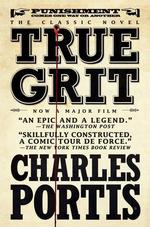
United States of Books – True Grit by Charles Portis

True GritTrue Grit

by Charles Portis

Author: Wattle at Whimsical Nature

3 Stars
Synopsis: There is no knowing what lies in a man’s heart. On a trip to buy ponies, Frank Ross is killed by one of his own workers. Tom Chaney shoots him down in the street for a horse, $150 cash, and two Californian gold pieces. Ross’s unusually mature and single-minded fourteen-year-old daughter Mattie travels to claim his body, and finds that the authorities are doing nothing to find Chaney. Then she hears of Rooster – a man, she’s told, who has grit – and convinces him to join her in a quest into dark, dangerous Indian territory to hunt Chaney down and avenge her father’s murder.

Review: I must admit, I saw this on my list of books to read and sighed. I hate westerns, and had the misfortune (in my opinion) of seeing half of the most recent movie based on True Grit. So it was with dread that I opted to read it first, deciding to read in order of least want to read to most interesting.

How wrong was I?! The writing sucked me in from the start, it wasn’t stuffy and formal as I assumed it would be. However, at times the dialogue felt a bit stilted; and the deeper into the story I got, the more I realised that it had no real complexity. It is simply about wanting revenge to (in Mattie’s eyes) right a wrong.

Mattie is feisty and strong willed. She felt older than her 14 years, no doubt because of the setting she was in; the late 1800s, her father has been killed and she’s the oldest child, so needs to take care of his affairs. Which in her mind, means finding her father’s killer and watching him die. To do this she needs help, and sets out to recruit the best and worst Marshal she can find – which leads her to the drunken and often too quick to shoot Rooster Cogburn.

I liked Rooster (what you see is what you get, and he’s a bit of a brute – though showed great patience with Mattie) and did not like LaBoeuf (an arrogant Texas Ranger who happens to be after the same man).

It was a fine story, but the ending to their adventure felt contrived – and I can’t say I was a fan of the ending proper either. I felt a little cheated that all we really got of Mattie was her experience as a 14 year old, and then many years in the future, and nothing in between. I suppose there was some character growth for her throughout the story, given she had just lost her father and wanted justice; but it was somewhat lost in the details of the story.

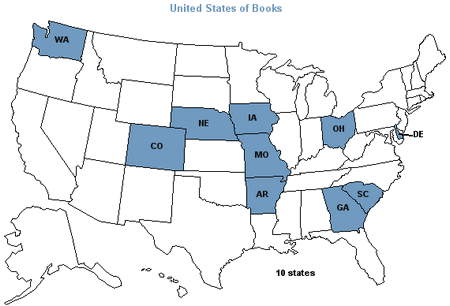
Not being from Arkansas (or even America) I have absolutely no idea what the place is like, but I got the feeling that back in the 1800s it was a bit dusty and a bit rundown, with lands that criminals could easily disappear into? There was apparently quite a few of them in the same place (which I suppose is fortunate for the Marshals tracking people).

All in all, this was a quick and easy read but didn’t have the complexity I was expecting and fell a little short for me, but it was still a good read and got me out of my comfort zone!

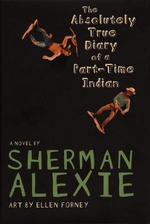
United States of Books – The Absolutely True Diary of a Part-Time Indian by Sherman Alexie

The Absolutely True Diary of a Part-Time IndianThe Absolutely True Diary of a Part-Time Indian

by Sherman Alexie, Ellen Forney (Illustrator)

Author: Elisha at Rainy Day Reviews

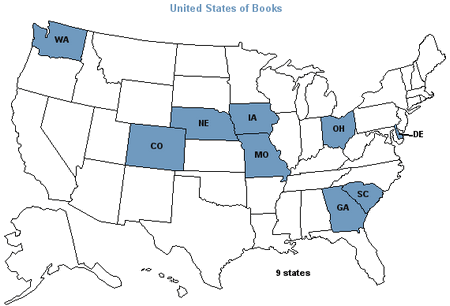
Entertainment Weekly says about their Washington state pick– “Alexie grapples with serious issues through the not-always-serious voice of a 14-year-old caught between his life on the reservation and his entry into an all-white high school.”

Synopsis:

Bestselling author Sherman Alexie tells the story of Junior, a budding cartoonist growing up on the Spokane Indian Reservation. Determined to take his future into his own hands, Junior leaves his troubled school on the rez to attend an all-white farm town high school where the only other Indian is the school mascot.

Heartbreaking, funny, and beautifully written, The Absolutely True Diary of a Part-Time Indian, which is based on the author’s own experiences, coupled with poignant drawings by Ellen Forney that reflect the character’s art, chronicles the contemporary adolescence of one Native American boy as he attempts to break away from the life he was destined to live.

Review:

I was intrigued with this book once I learned that this story was based on the author’s own experience. I was not aware of the coarse language in the book until I began reading it; which in my opinion makes this read inappropriate for younger readers. However, that said, I did appreciate that even though this teenager saw a lot of heartache and injustice, including racism and death, there is a lot of laughs throughout the story.

I like the narration of the book, hence the title. That was different than the typical read. Gave it a different feel from a story being told. Even with the racial divide in the story that the boy dealt with, I think this story is very relatable to other young adults out there (tragedy in life, being bullied, and the instability that life can bring with its ever-changing twists that life tends to do to all of us. All in all, a good book and a quick read that I would definitely recommend to everyone to read.

* Disclaimer: language may be coarse for some readers*

United States of Books – My Antonia by Willa Cather

My AntoniaMy Antonia

by Willa Cather

Author: Teri at Sportochick’s Musings

Blurb

Through Jim Burden’s endearing, smitten voice, we revisit the remarkable vicissitudes of immigrant life in the Nebraska heartland, with all its insistent bonds. Guiding the way are some of literature’s most beguiling characters: the Russian brothers plagued by memories of a fateful sleigh ride, Antonia’s desperately homesick father and self-indulgent mother, and the coy Lena Lingard. Holding the pastoral society’s heart, of course, is the bewitching, free-spirited Antonia.

Review 2 1/2 Stars

This story is narrated in first person by Jim Burden in what I think is a very plain unemotional manner. I honestly had a hard time reading this book and at points kept putting it down. It was puzzling to me that for all of the unusual dramatic events in this book it was for me unemotional. I am not sure if listening to it on Audible and switching off and on with the book impacted my feelings. Though these dramatic events in the book were described in fine detail my mind felt a distance from the writing.

Two characters did stand out. Antonia who was very expressive and Jim’s grandfather for the ways that he dealt with crisis’s, personality issues and his deep integrity. Antonia throughout the book was very emotional and it was obvious to see why quiet Jim liked to be around her and had grown to love her.

I finally connected with the book in the last chapter and a half where it became to me a book worth reading. This part of the book make me feel great sadness for Jim and Antonia and where they were 20 years later. The ending was poignant and still brings tears to my eyes.

This book leaves the readers pondering the what if. What if Jim didn’t go away to college? What if Antonia made a different decision when her first love deceived her? What if Jim had told her he loved her? But the largest question that I had was how did Jim love Antonia? A sister, friend, lover? This book left me feeling sad because if Jim had more gumption his life would of been so different than it was. It also left me pondering on how many people lost out on the best thing of their lives because they were afraid.

DNF – The Relic Master by Christopher Buckley

The Relic MasterThe Relic Master

by Christopher Buckley

Hardcover, 372 pg.
Simon & Schuster, 2015
Read: February 10 – 15

I would love to know what made Christopher Buckley think, “You know what the world needs? A satire about a Christian relic dealer in 1517…” I also wonder what would drive me to grab it (other than that’s what I do every time I see his name — since the 80’s). But I did, and I gave it the old college try.

The history is pretty good. But I wonder if I’m too critical, I’ve spent so much time recently listening to lectures, reading about, the religious atmosphere of the time — that might have hurt my appreciation for his take on the period (then again, most of his satire is contemporary and I lived through that without problems). In that light, I should say that I really appreciated his characterization of Johann Tetzel. But I just couldn’t care about the characters, the story — any of it. There was none of Buckley’s wit, or his voice — nothing that made me a fan of his other work. Honestly, I’m not sure how he could’ve kept those things with a historical fiction, but the book sure needed that. Yes, it’s entirely possible, that if I’d stuck with it a bit longer, I’d have sung a different song, but life’s too short and my TBR pile is too high.

So, for the first time since January 2011, I’m abandoning a book. I might come back to it at some point, I’d like to actually read it. But not now.

(not really a review, but I felt like I should say something)

Page 39 of 45

Powered by WordPress & Theme by Anders Norén