


Tag: Guest Post

Guest Post: Literally? Really? By Robert Germaux

Hard Court by Robert Germaux Virtual Book Tour Banner
A few weeks ago, a friend of mine was telling me about a horror movie he’d just seen, and he ended his narrative by saying, “I was literally scared to death!”  My first thought was, not unless I’m getting this information in your Memoir from Beyond the Grave.  The word literally means actually or really, as in There are literally thousands of people following her on Twitter.  That’s a completely believable and verifiable fact.  However, if someone says he literally exploded with anger, well, probably not.  What’s happened here is that so many people have misused the word literally for so long, it’s become acceptable to use it incorrectly.  This has happened with other words, too, the best example possibly being the word bye as it’s both used and misused in professional football.  The NFL gives the two teams with the best regular-season records in each conference a bye in the first round of the playoffs, meaning they’ve earned the right to skip that first week.  That’s a correct usage of the word bye.  However, during the regular season, every team in the league gets one week off, and that’s what it should be called, an off week.  But somewhere along the way, someone began referring to that off week as the bye week, and thanks to the Internet, that term went viral and was repeated thousands and thousands of times, until it eventually became part of our national lexicon.

A final example of this linguistic phenomenon involves the word factoid.  A little history lesson first.  Factoid was coined by Norman Mailer in 1973.  Mailer stuck the suffix –oid (which means resembling or having the appearance of) on the word fact to create factoid, which he said referred to “facts which have no existence before appearing in a magazine or newspaper.”  Jump ahead several decades, have a few people, including some in major media outlets, start using the word factoid to mean an interesting bit of trivia about a person or event, throw in the Internet (of course) and voila!  You have a new definition for factoid.

Okay, let’s take a step back here for a minute.  Does all this stuff matter?  I mean, what harm is being done by someone saying he was literally scared stiff while watching the latest episode of The Walking Dead?  Or by hearing a local sports anchor talk about your favorite team’s bye week in the middle of the season.  In the greater, or even lesser, scheme of things, this is all pretty irrelevant.  I’m well aware that there are far greater issues to be discussed and debated, and I completely get it that our language is constantly evolving.  That’s why, for instance, we ask a new acquaintance where he or she is from instead of saying Whence comest thou?  It’s just that I like to see and hear words being used properly.  So I hope you’ll forgive me if the next time I hear a reporter on a national newscast say And here’s an interesting factoid, this longtime lover of language smiles a bit as he slowly, quietly and, yes, literally gives his head a small shake.

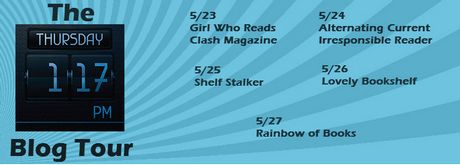
My Book Tour Website Banner

Tour Hosted by Susan Barton, My Book Tour

Guest Post: 5 Books about Time by Michael Landweber


I’m a little obsessed about the concept of time in my writing. My first book, We, was about a man who travels back in time only to get stuck as a parasite inside the head of his seven-year-old self. In my latest novel, time stops completely, except for one 17-year-old kid. I suppose the recurring theme is that we have no control over time, even when it gets a little bit wonky. In honor of my obsession, I have created a list of five time-related books (or more precisely that have the word “time” in the title) that I’ve enjoyed over the years.

1) The Time Machine by H.G. Wells
The one that started it all. The original time travel story. Without it, there never would have been Timecop. Seriously though, it is a little hard to imagine that we’d have more than a century of time travel related books, movies, TV shows, etc. if Wells hadn’t had the idea that a time machine was the way to travel to different eras. Of course, unlike most modern time travel fiction, which focuses on the ways that traveling through time can change the present, purposefully or not, Wells had his protagonist travel into the far future where he encountered a parable about class and society. Still, the guy coined the phrase “time machine.” That’s pretty cool.

2) A Wrinkle in Time by Madeleine L’Engle
We don’t need no stinking time machine. In L’Engle’s classic children’s book series, the characters travel through space by “wrinkling time” by means of the tesseract. Most writers now call it a wormhole. No vehicle required. That freed a lot of writers to just zap characters from place to place without tricking out a Delorean. The book also is about how children can save the world without the help of the adults around them, particularly parents. Hello, Harry Potter!

3) A Tale for the Time Being by Ruth Ozeki
OK, this one has the least to do with manipulating time though it is a story about how past family narratives can help soothe present pain. A young woman in Tokyo considers suicide, but researching the stories of her feminist Buddhist nun great-grandmother and her disgraced WWII pilot great-uncle lead her to some surprising revelations about herself.

4) Time’s Arrow by Martin Amis
Amis uses a unique device to write about the horrors of the Holocaust. The narrator is a consciousness inside the head of a former Nazi who is now living a new life in America. But the story is told in reverse chronological order. Time in the book literally runs backward, so we start with the war criminal as an old man and travel unavoidably to his horrific past. It is an unusual and difficult book that allows the reader a new window into understanding the inconceivable cruelty that people are capable of.

5) Time Bandits
OK, I’m totally cheating here. Time Bandits is a movie. But it also happens to be my favorite movie. And it is about traveling through time. So there. One of Terry Gilliam’s earliest films, this one follows a young boy who falls in with a group of dwarfs who previously worked for the Supreme Being until they stole the Big Guy’s map of time holes and decided to use it to steal from the rich throughout history. That only begins to describe how gloriously messed up this movie is.

Guest Post – Why You Should Make That Rejection Letter the Focal Point of Your Home

As part of Reader’s Legacy’s Rowling celebration, they’ve provided me with a few Guest Posts to draw attention to their Sale (through 4/30!) and a Grant Program created in order to give away 1 million physical books in support of literacy programs — be sure to check those out!

“I pinned my 1st rejection letter to my kitchen wall because it gave me something in common with all my fave writers!” – J.K. Rowling via Twitter (March 25, 2016).

What do literary geniuses, J.K. Rowling, Dr. Seuss, F. Scott Fitzgerald, George Orwell, and Agatha Christie all have in common? Surprisingly enough, each of them have written books that were rejected by multiple publishers. As hard to believe as that may be, it’s entirely true!

Contrary to popular belief, rejection more than anything is a learning opportunity. Of course, no one welcomes rejection. In fact, they avoid it at all costs. But everyone gets rejected at one point in their life, or another, and instead of dwelling on the pain of being told “no”, they can use that rejection as a motivator – the greatest motivator in their life!

On March 25, 2016, J.K. Rowling took to twitter to share two rejection letters she received on her crime novel, “The Cuckoo’s Calling”, written under the alias of Robert Galbraith. While Rowling’s “Harry Potter” series has sold more than 400 million copies to date, Rowling admits to having self-doubt. “I wasn’t going to give up until every single publisher turned me down, but I often feared that would happen” she explains. Despite these fears, “The Cuckoo’s Calling” was eventually published by Sphere Books, an imprint of Little, Brown & Company, and the rest is history.

Rowling didn’t allow the fear of going unpublished stop her from trying time and time again, which is an example many dreamers can learn from. Yes, rejection bruises a person’s ego and, more often than not, forces them to go back to the drawing board, but sometimes that’s the best thing a person can do. Going back to the drawing board means making improvements both personally, and in one’s work, and making those improvements brings the motivation to pursue that passion even further.

Remember, rejection isn’t a death sentence, but merely a stepping stone which brings you closer to finally hearing that “yes” you’ve been waiting for. Though it might sound crazy to hang a negative note about your life’s work up on a wall, it can serve as a reminder to persevere…and when you achieve your success, it will be a reminder of all that you’ve overcome.

As an added perk of Reader’s Legacy’s Rowling celebration, we will be holding a special 20% off sale for each of her novels from April 25th to April 30th – ReadersLegacy.com/JKRowling.

The sale not only celebrates J.K. Rowling, but was also brings attention for a special grant program we have created in order to give away 1 million physical books in support of literacy programs! Spreading a love of books, and ending illiteracy around the world is 100% possible, and with the help of reader’s on the site, we believe will be one step closer to achieving that goal! Get in on this sale HERE.

Page 8 of 8

Powered by WordPress & Theme by Anders Norén