Tag: Heather Fawcett

PUB DAY REPOST: Agnes Aubert’s Mystical Cat Shelter by Heather Fawcett: A Tale Strays (of various species) Finding New Homes

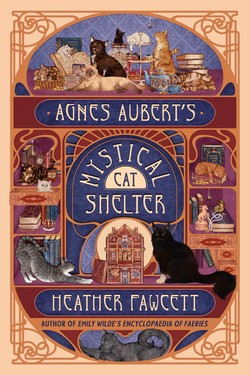
Cover of Agnes Aubert's Mystical Cat Shelter by Heather FawcettAgnes Aubert’s Mystical Cat Shelter

by Heather Fawcett

DETAILS:
Publisher: Del Rey
Publication Date: February 17, 2026
Format: Del Rey
Length: 368 pg.
Read Date: January 30-31, 2026
Buy from Bookshop.org Support Indie Bookstores

What’s Agnes Aubert’s Mystical Cat Shelter About?

A widow in her thirties struggles to keep the charity that she and her husband started afloat in 1920’s Montreal. They find stray cats on the street, get them cleaned up, spayed/neutered, whatever other basic veterinary care they need, and then match them with loving homes.

Oh, and her new landlord turns out to be the most feared and reviled magic user in the world.

I know, I know…that tired plot again.*

That’s all well and good—it’s just a business relationship, right? But at a certain point his business starts interfering with and threatening her charity (and the cats!). So Agnes decides she has to start meddling to keep anything truly harmful from happening. Even if that means spending time with said magician. Who is not at all attractive and charming, thank you very much.

* I truly hope the sarcasm there is obvious. But I’ve been missing a lot of swings like that lately.

Why did I pick this up? Why did I keep reading?

I thought the plot seemed amusing enough, but I was probably convinced to pick this up by my curiosity about what Fawcett could do outside of Emily Wilde‘s adventures.

I stuck with it because of Agnes. Sure, the story and other characters were fun and kept me reading. But for me, it’s all about Agnes. Her attitude, her fortitude, the way she acts as if she can bend reality to her will (she sure seems capable of turning the wills of most around her to hers)—she’s just a dynamo and you can believe that this non-magical person (anti-magic actually) can hold her own with people throwing spells around.

What does this book tell us about humanity?

There’s a good deal we can learn from Agnes about tenacity, about the power of people coming together in a common cause, about grief.

But the thing that stood out the most to me—and given the title, it’s probably to be expected—is the very human magic of pairing someone—man, woman, or child—with a pet fit for them. There’s the initial joy, and then long-term benefits as well. It’s that king of magic that keeps Agnes going. It’s what gets her sister to help, her volunteers to keep showing up, and it’s the way that people she’s matched with their cat that come to her aid—that fills the book with its heart.

So, what did I think about Agnes Aubert’s Mystical Cat Shelter?

It’s not often that I read a book featuring pets that don’t happen to be dogs, so it may come as some kind of surprise when I talk about one—I don’t know that I’d go so far as to say it surprised me, too—but it did seem a little strange.

This book was a pleasure from start to finish—I really didn’t know what to expect. But Fawcett sold the setting, the characters, and the story—it was all perfectly charming and engaging. The magic system seems really fitting for this world, and better than others. You get someone like Raistlin Majere or Harry Dresden running around, and I just don’t think it’d work as well.

There were some plot turns that I didn’t see coming—and maybe should’ve, but I enjoyed being taken unawares—and the bigger reveals at the end were so satisfying.

If you like Emily Wilde, you’ll like Agnes Aubert—they’re not the same character, but the core of each is pretty similar (as differently as they express that core). The rest of the characters are almost as good—the tertiary characters and the people she runs into in the neighborhood are just as well-drawn as the primary/secondary characters. Same for the cats and their personalities. There’s a treasure trove of personalities to get to know here.

This is a fantasy that’s full of charm and heart—you’ll be glad you picked this up.

Disclaimer: I received this eARC from Del Rey via NetGalley in exchange for this post which contains my honest opinion—thanks to both for this.

This post contains an affiliate link. If you purchase from it, I will get a small commission at no additional cost to you. As always, the opinions expressed are my own.
Irresponsible Reader Pilcrow Icon

Agnes Aubert’s Mystical Cat Shelter by Heather Fawcett: A Tale Strays (of various species) Finding New Homes

Cover of Agnes Aubert's Mystical Cat Shelter by Heather FawcettAgnes Aubert’s Mystical Cat Shelter

by Heather Fawcett

DETAILS:
Publisher: Del Rey
Publication Date: February 17, 2026
Format: Del Rey
Length: 368 pg.
Read Date: January 30-31, 2026
Buy from Bookshop.org Support Indie Bookstores

What’s Agnes Aubert’s Mystical Cat Shelter About?

A widow in her thirties struggles to keep the charity that she and her husband started afloat in 1920’s Montreal. They find stray cats on the street, get them cleaned up, spayed/neutered, whatever other basic veterinary care they need, and then match them with loving homes.

Oh, and her new landlord turns out to be the most feared and reviled magic user in the world.

I know, I know…that tired plot again.*

That’s all well and good—it’s just a business relationship, right? But at a certain point his business starts interfering with and threatening her charity (and the cats!). So Agnes decides she has to start meddling to keep anything truly harmful from happening. Even if that means spending time with said magician. Who is not at all attractive and charming, thank you very much.

* I truly hope the sarcasm there is obvious. But I’ve been missing a lot of swings like that lately.

Why did I pick this up? Why did I keep reading?

I thought the plot seemed amusing enough, but I was probably convinced to pick this up by my curiosity about what Fawcett could do outside of Emily Wilde‘s adventures.

I stuck with it because of Agnes. Sure, the story and other characters were fun and kept me reading. But for me, it’s all about Agnes. Her attitude, her fortitude, the way she acts as if she can bend reality to her will (she sure seems capable of turning the wills of most around her to hers)—she’s just a dynamo and you can believe that this non-magical person (anti-magic actually) can hold her own with people throwing spells around.

What does this book tell us about humanity?

There’s a good deal we can learn from Agnes about tenacity, about the power of people coming together in a common cause, about grief.

But the thing that stood out the most to me—and given the title, it’s probably to be expected—is the very human magic of pairing someone—man, woman, or child—with a pet fit for them. There’s the initial joy, and then long-term benefits as well. It’s that king of magic that keeps Agnes going. It’s what gets her sister to help, her volunteers to keep showing up, and it’s the way that people she’s matched with their cat that come to her aid—that fills the book with its heart.

So, what did I think about Agnes Aubert’s Mystical Cat Shelter?

It’s not often that I read a book featuring pets that don’t happen to be dogs, so it may come as some kind of surprise when I talk about one—I don’t know that I’d go so far as to say it surprised me, too—but it did seem a little strange.

This book was a pleasure from start to finish—I really didn’t know what to expect. But Fawcett sold the setting, the characters, and the story—it was all perfectly charming and engaging. The magic system seems really fitting for this world, and better than others. You get someone like Raistlin Majere or Harry Dresden running around, and I just don’t think it’d work as well.

There were some plot turns that I didn’t see coming—and maybe should’ve, but I enjoyed being taken unawares—and the bigger reveals at the end were so satisfying.

If you like Emily Wilde, you’ll like Agnes Aubert—they’re not the same character, but the core of each is pretty similar (as differently as they express that core). The rest of the characters are almost as good—the tertiary characters and the people she runs into in the neighborhood are just as well-drawn as the primary/secondary characters. Same for the cats and their personalities. There’s a treasure trove of personalities to get to know here.

This is a fantasy that’s full of charm and heart—you’ll be glad you picked this up.

Disclaimer: I received this eARC from Del Rey via NetGalley in exchange for this post which contains my honest opinion—thanks to both for this.

This post contains an affiliate link. If you purchase from it, I will get a small commission at no additional cost to you. As always, the opinions expressed are my own.
Irresponsible Reader Pilcrow Icon

PUB DAY REPOST: Emily Wilde’s Encyclopaedia of Faeries by Heather Fawcett: Journaling Her Investigation into the Hidden Ones of the North

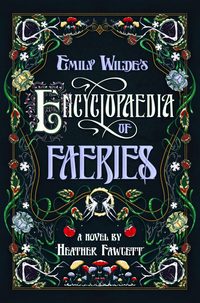
Emily Wilde's Encyclopaedia of FaeriesEmily Wilde’s Encyclopaedia of Faeries

by Heather Fawcett

DETAILS:
Series: The Emily Wilde Series, Book One
Publisher: Del Rey
Publication Date: January 10, 2023
Format: eARC
Length: 336 pg.
Read Date: December 19-21, 2022

Support Independent Bookstores - Visit IndieBound.org

What’s Emily Wilde’s Encyclopaedia of Faeries About?

Emily Wilde is a dryadologist. Imagine, if you will, what post-Darwin scientists and naturalists were doing for the study of plants and animals in the late nineteenth/early twentieth centuries; or what Carter and the rest were doing in Egypt; but dryadologists are studying fairies (oh, in this world, they are as real as the tomb of Tutankhamun—she’s not a literary theorist). Humans have been dealing with fairies for centuries, but what we know about them is really limited. Mostly left to legends, tales told around the fire or in an inn—where a third or fourth-hand account is rare and as close to an eyewitness as most people will ever get. Emily and her counterparts throughout the world are seeking to bring that to an end. She has a position at Cambridge but is hoping her current project is the kind of thing that will secure her tenure and allow her to further her research.

Her project is the first comprehensive Encyclopedia of Fairies (hence the title). She could publish what she has now and probably receive scholarly acclaim—and tenure. But she’s driven. She’s a completist. And, to be honest, she has a little bit of an ego and she wants more than probable acclaim. So she rents a small shack in a Norwegian village for a few months to try to find, interact with, and document the least-understood fairies in the world. The northern Hidden Ones (both the common and regal varieties) are powerful and secretive. They don’t interact much with humans—and when they do, it’s generally bad for the humans. If Emily can be the first to get any scholarly research done, it will definitely put her on the map.

Sadly, as good as she is at dealing with and understanding Fairy, Emily is bad with humans. She has no people skills, is aware of it, and doesn’t care. But in this inhospitable climate, she really needs help to survive—much less to learn a lot about the Hidden Ones.

Thankfully (?), soon after her arrival, a colleague/competitor—and her only friend—gatecrashes her trip and takes up residence in her shack with her. Wendell Bambleby is the very picture of a Victorian gentleman-scholar. He’s a charmer, and soon has the villagers eating out of his hand. He’s also pampered and demanding (would probably have been considered a bit of a dandy at the time)—and has a really hard time not wrapping his head around things like cooking for himself, working to keep the fire burning, etc. He’s decided that he’s going to collaborate with Emily (not really caring if she agrees) and that their work in Norway will be the thing to help him reclaim some academic respectability following a scandal.

He may be under a cloud, but Wendell has connections and can open doors for Emily to get her the audience she really needs. So she accepts his proposal to collaborate, assuming she’s going to do almost all of the work.

Things ensue. I really can’t say more than that.

Poe

The first fairy that Emily meets is a young brownie—she ends up referring to him as Poe. It’s great to see her in action with him. it shows that she does know what she’s doing—we don’t just have to take her word for it (not that we have any reason to think she’s lying, but it’s good to know).

Poe really ends up showing us so much about Emily—and other characters, too. He’s ultimately so integral and important to the novel—and in a very real sense, not important to the plot in any way. But through his interactions (both that the reader sees on the page and those that happen “off-screen”) with various characters, so much of the plot becomes possible and the reader gains a whole lot of insight. Really, he was well, and cleverly, used by Fawcett. I can’t say it better without spending a few hundred spoiler-filled words, but the more I think about him, the more impressed I am by Fawcett.

Knowing More than Emily

Around the time—probably a little before—I figured out that the story of the novel isn’t really what you think it is, I figured out a couple of things that Emily is utterly blind to for a very long time.

Knowing more than a protagonist can be frustrating—I spend a lot of time yelling at detectives in mystery novels in particular. But sometimes, it can be fun watching them catch up to the reader. Fawcett’s able to draw humor from us knowing things that Emily doesn’t. It also helps us empathize with both Emily and other characters as we see her work through various situations and conversations.

And then, when Emily catches up with the reader—and reality—it’s all the more satisfying. Most/all of what we know that she doesn’t really wouldn’t be that believable if we learned it when she does. We get to spend many pages urging, “Come on, come on, come on…open your eyes/pay attention/etc.” And then, finally, cheer when she does. It’s the closest many readers will get to the position of a sportsball fan yelling at their TV to communicate to someone in a stadium miles/states away.

Slamming on the Brakes

I did have one significant problem with this book. As part of her research—part of her life, really—Emily specializes in stories about faeries. She shares some of them as part of her journal. It makes sense, they serve both the character and the overall novel. They’re truly fitting.

However.

It was like slamming the brakes on. Everything that had been building, all the tension, the momentum, the development, and so on all came to a rapid stop. And then picked up again after the stories. It reminded me of a time in Kevin Hearne’s Hammered when everything stopped for some of the characters to tell stories. As fun as those stories were, it really made that novel hard to get through (that series went on for 6 more books, two spin-off series, and a number of novellas and short stories—so the jarring stop was obviously not too catastrophic).

If the transition to them had been smoother—or maybe they had been more spread out. Just something, I probably wouldn’t have mentioned them—or I’d have talked about what a great way it was for us to get an understanding of the Northern Fairies without an infodump. Instead, it came across as a stumble—one that the novel recovered from nicely. But in the moment, it really bugged me.

So, what did I think about Emily Wilde’s Encyclopaedia of Faeries?

Stick with me for a minute—I could tell from the opening pages that this was a well-composed and well-structured novel full of fantastic world-building. But it took longer for me to move beyond appreciation and admiration for what was being done to really care about it. I did, though, the book started out slowly and picked up momentum as it went—and as it did, I got more and more invested (and my appreciation and admiration increased, too). Somewhere around the mid-point, maybe a little later, I was as invested as is possible and only my notes tell me it took time for that.

I think I just used too many words to say—it’s a slow burn of a novel in almost every conceivable way. Not unlike Emily’s rented shack—it takes a while for a fire to really start heating the place, but once it has time, it’s nice and toasty warm.

There’s a lot I’d like to talk about, but I’m not sure how. I can see later installments being easier, but so much of the novel is about beginnings. To really talk about it would be to discuss the last 20% of the novel. And no one wants me to do that.

Just because of my own prejudices, I could spend a few paragraphs on her dog, Shadow, too. As much as he deserves them, I’m going to leave it with “he’s a very good boy.” I hope to see more of him in the books to come, too.

This book is rich in character, story, world-building (and world-revealing), magic, and subtlety. I’m not sure if you can be rich in subtlety, but Fawcett pulls that off. This is absolutely something I recommend and imagine the next few months are going to be filled with people gushing over this. Readers of this post might as well get in line now to be one of those gushing.

Disclaimer: I received this eARC from Random House Publishing Group – Ballantine, Del Rey via NetGalley in exchange for this post—thanks to both for this opportunity.


4 Stars

This post contains an affiliate link. If you purchase from it, I will get a small commission at no additional cost to you. As always, the opinions expressed are my own.

Emily Wilde’s Encyclopaedia of Faeries by Heather Fawcett: Journaling Her Investigation into the Hidden Ones of the North

Emily Wilde's Encyclopaedia of FaeriesEmily Wilde’s Encyclopaedia of Faeries

by Heather Fawcett

DETAILS:
Series: The Emily Wilde Series, Book One
Publisher: Del Rey
Publication Date: January 10, 2023
Format: eARC
Length: 336 pg.
Read Date: December 19-21, 2022
Support Independent Bookstores - Visit IndieBound.org

What’s Emily Wilde’s Encyclopaedia of Faeries About?

Emily Wilde is a dryadologist. Imagine, if you will, what post-Darwin scientists and naturalists were doing for the study of plants and animals in the late nineteenth/early twentieth centuries; or what Carter and the rest were doing in Egypt; but dryadologists are studying fairies (oh, in this world, they are as real as the tomb of Tutankhamun—she’s not a literary theorist). Humans have been dealing with fairies for centuries, but what we know about them is really limited. Mostly left to legends, tales told around the fire or in an inn—where a third or fourth-hand account is rare and as close to an eyewitness as most people will ever get. Emily and her counterparts throughout the world are seeking to bring that to an end. She has a position at Cambridge but is hoping her current project is the kind of thing that will secure her tenure and allow her to further her research.

Her project is the first comprehensive Encyclopedia of Fairies (hence the title). She could publish what she has now and probably receive scholarly acclaim—and tenure. But she’s driven. She’s a completist. And, to be honest, she has a little bit of an ego and she wants more than probable acclaim. So she rents a small shack in a Norwegian village for a few months to try to find, interact with, and document the least-understood fairies in the world. The northern Hidden Ones (both the common and regal varieties) are powerful and secretive. They don’t interact much with humans—and when they do, it’s generally bad for the humans. If Emily can be the first to get any scholarly research done, it will definitely put her on the map.

Sadly, as good as she is at dealing with and understanding Fairy, Emily is bad with humans. She has no people skills, is aware of it, and doesn’t care. But in this inhospitable climate, she really needs help to survive—much less to learn a lot about the Hidden Ones.

Thankfully (?), soon after her arrival, a colleague/competitor—and her only friend—gatecrashes her trip and takes up residence in her shack with her. Wendell Bambleby is the very picture of a Victorian gentleman-scholar. He’s a charmer, and soon has the villagers eating out of his hand. He’s also pampered and demanding (would probably have been considered a bit of a dandy at the time)—and has a really hard time not wrapping his head around things like cooking for himself, working to keep the fire burning, etc. He’s decided that he’s going to collaborate with Emily (not really caring if she agrees) and that their work in Norway will be the thing to help him reclaim some academic respectability following a scandal.

He may be under a cloud, but Wendell has connections and can open doors for Emily to get her the audience she really needs. So she accepts his proposal to collaborate, assuming she’s going to do almost all of the work.

Things ensue. I really can’t say more than that.

Poe

The first fairy that Emily meets is a young brownie—she ends up referring to him as Poe. It’s great to see her in action with him. it shows that she does know what she’s doing—we don’t just have to take her word for it (not that we have any reason to think she’s lying, but it’s good to know).

Poe really ends up showing us so much about Emily—and other characters, too. He’s ultimately so integral and important to the novel—and in a very real sense, not important to the plot in any way. But through his interactions (both that the reader sees on the page and those that happen “off-screen”) with various characters, so much of the plot becomes possible and the reader gains a whole lot of insight. Really, he was well, and cleverly, used by Fawcett. I can’t say it better without spending a few hundred spoiler-filled words, but the more I think about him, the more impressed I am by Fawcett.

Knowing More than Emily

Around the time—probably a little before—I figured out that the story of the novel isn’t really what you think it is, I figured out a couple of things that Emily is utterly blind to for a very long time.

Knowing more than a protagonist can be frustrating—I spend a lot of time yelling at detectives in mystery novels in particular. But sometimes, it can be fun watching them catch up to the reader. Fawcett’s able to draw humor from us knowing things that Emily doesn’t. It also helps us empathize with both Emily and other characters as we see her work through various situations and conversations.

And then, when Emily catches up with the reader—and reality—it’s all the more satisfying. Most/all of what we know that she doesn’t really wouldn’t be that believable if we learned it when she does. We get to spend many pages urging, “Come on, come on, come on…open your eyes/pay attention/etc.” And then, finally, cheer when she does. It’s the closest many readers will get to the position of a sportsball fan yelling at their TV to communicate to someone in a stadium miles/states away.

Slamming on the Brakes

I did have one significant problem with this book. As part of her research—part of her life, really—Emily specializes in stories about faeries. She shares some of them as part of her journal. It makes sense, they serve both the character and the overall novel. They’re truly fitting.

However.

It was like slamming the brakes on. Everything that had been building, all the tension, the momentum, the development, and so on all came to a rapid stop. And then picked up again after the stories. It reminded me of a time in Kevin Hearne’s Hammered when everything stopped for some of the characters to tell stories. As fun as those stories were, it really made that novel hard to get through (that series went on for 6 more books, two spin-off series, and a number of novellas and short stories—so the jarring stop was obviously not too catastrophic).

If the transition to them had been smoother—or maybe they had been more spread out. Just something, I probably wouldn’t have mentioned them—or I’d have talked about what a great way it was for us to get an understanding of the Northern Fairies without an infodump. Instead, it came across as a stumble—one that the novel recovered from nicely. But in the moment, it really bugged me.

So, what did I think about Emily Wilde’s Encyclopaedia of Faeries?

Stick with me for a minute—I could tell from the opening pages that this was a well-composed and well-structured novel full of fantastic world-building. But it took longer for me to move beyond appreciation and admiration for what was being done to really care about it. I did, though, the book started out slowly and picked up momentum as it went—and as it did, I got more and more invested (and my appreciation and admiration increased, too). Somewhere around the mid-point, maybe a little later, I was as invested as is possible and only my notes tell me it took time for that.

I think I just used too many words to say—it’s a slow burn of a novel in almost every conceivable way. Not unlike Emily’s rented shack—it takes a while for a fire to really start heating the place, but once it has time, it’s nice and toasty warm.

There’s a lot I’d like to talk about, but I’m not sure how. I can see later installments being easier, but so much of the novel is about beginnings. To really talk about it would be to discuss the last 20% of the novel. And no one wants me to do that.

Just because of my own prejudices, I could spend a few paragraphs on her dog, Shadow, too. As much as he deserves them, I’m going to leave it with “he’s a very good boy.” I hope to see more of him in the books to come, too.

This book is rich in character, story, world-building (and world-revealing), magic, and subtlety. I’m not sure if you can be rich in subtlety, but Fawcett pulls that off. This is absolutely something I recommend and imagine the next few months are going to be filled with people gushing over this. Readers of this post might as well get in line now to be one of those gushing.

Disclaimer: I received this eARC from Random House Publishing Group – Ballantine, Del Rey via NetGalley in exchange for this post—thanks to both for this opportunity.


4 Stars

This post contains an affiliate link. If you purchase from it, I will get a small commission at no additional cost to you. As always, the opinions expressed are my own.


Powered by WordPress & Theme by Anders Norén