Tag: Matt Witten

51% by Matt Witten: The SF-ish Mystery I Wish I Could Get Everyone to Read

Cover of 51% by Matt Witten51%

by Matt Witten

DETAILS:
Publisher: Level Best Books
Publication Date: April 28, 2026
Format: eARC
Length: 370 pg.
Read Date: May 4-5, 2026
Buy from Bookshop.org Support Indie Bookstores

What’s 51% About?

NYPD, Inc. detective Juke O’Keefe is assigned the case of a woman who was the victim of a murder and left in the street. He wants to find the killer. His partner, a crime marketing consultant, Haylee Navarro, isn’t so sure it’s the right case to take. If for no other reason, she doesn’t think they’ll be able to get much money for the investigation, and given the state of the victim, there are probably not many people who will care that much about finding the killer. Particularly when they find a chip embedded in her, signifying that she’s 51% owned by the syndicates.

If almost every word in that paragraph seems wrong, that just means you’re paying attention. Also, welcome to the dystopia depicted in this book.

Juke’s investigation (because Haylee’s just not that convincing compared to the uncompromising standards he holds himself to) brings the pair into contact with the upper echelons of NYC’s economy, to the poorest corners, working against an AI, and even across the path of a resistance movement on the verge of a significant move.

The Worldbuilding

It’s just exquisite. You could easily just read this for the worldbuilding alone, paying no attention to the plot or characters (outside of how both reveal the world). I remember early cyberpunk being defined as being fifteen minutes in the future—assuming I remember that correctly, Witten has set this novel 7 minutes into the future.

Gen Delta’s sensibilities rule (informally) societal mores, almost(?) everything that is government-provided for us has been privatized, and corporate syndicates “own” percentages of people indebted to them. If you need medical care, go to college, etc. you need to take out a loan which represents a certain percentage of you. If you’re a police officer wanting to investigate a crime, you essentially need to crowd-fund the money necessary for forensics and the investigation. So each detective is partnered not with another detective, but a PR agent who will shoot and promote videos about your case to capture the attention and emotions of viewers to raise that money.

Witten does a great job of explaining this process better than I just did in a non-infodump way.

From the slang to the tech to the finances and beyond—this world feels real, lived in, like a nigh-inevitiable future we’re heading toward.

Why did I pick this up? Why did I keep reading?

When Witten sent me the description, I was hooked. Particularly in his hands—I just didn’t see how it couldn’t be good.

I kept reading because the execution lived up to the premise—the worldbuilding was great, and the story was just as good. You read just a little bit of this, and you’re going to need to keep going.

What does this book tell us about humanity?

I’m not sure that I have a good answer to this. There’s a lot of ugliness in the book—both corporately and individually. But the one thing that came up time and time again is people realizing how they’ve messed up (in big and small ways), and resolving to try to make a difference to make things better for others. Some do this in little ways—just feeding neighborhood cats. Others put their future at risk to protect an innocent person from wrongful arrest. Things like that. There’s just enough of that to keep you from utter despair as you walk through this world.

Or maybe the message is that Canada is the place to go in North America—as it has been for decades.

So, what did I think about 51%?

At its core, 51% is a murder mystery—yes, there’s a lot of futurism noise, political and social commentary, and the rest. But Juke’s hunt for a killer, the red herrings, the leads that don’t work out, and the race against other factors to make sure the right person is arrested—that’s the focus. And, as Jacked and Killer Story have capably demonstrated that Witten knows his way around a crime thriller.

I think the characters—even those on the side of the syndicates that own people—are well-written and complex (although there are some that are little more than stereotypes, but they’re well executed representatives of the type, so it’s hard to complain about them). There are no wholly straightforward motives; everyone has some shading about them.

The reveal of the murderer was well done, and the way the storylines are resolved is very satisfying.

I had a real blast with this one. I really relished the experience of being in the world and watching Juke’s crusade and Haylee getting pulled along in his wake (but also really not doing that). 51% is the kind of book that makes me wish I had a bigger audience so I could tell more people about it. Go read this thing, you’ll be glad you did.

Disclaimer: I received this eARC from the author in exchange for this post, which contains my honest opinion—which worked out well for both of us, I think.

This post contains an affiliate link. If you purchase from it, I will get a small commission at no additional cost to you. As always, the opinions expressed are my own.
Irresponsible Reader Pilcrow Icon

PUB DAY REPOST: Killer Story by Matt Witten: A Desperate Reporter Works to Solve a Sensational Murder

Be sure to check out this Q&A with Matt Witten—it’s a great one!


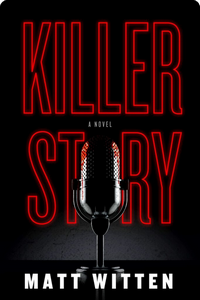
Killer StoryKiller Story

by Matt Witten

DETAILS:
Publisher: Oceanview Publishing
Publication Date: January 17, 2023
Format: eARC
Length: 320 pg.
Read Date: December 26-27, 2022
Support Independent Bookstores - Visit IndieBound.org

What’s Killer Story About?

While studying journalism in school, Petra acted as a counselor for a high school journalism camp. In that role, she met and befriended a young girl named Livvy Anderson. Over the years since then, the two forged a strong friendship—almost like sisters. At some point though, the relationship faltered—in college, Livvy started posting videos online spouting (in Petra’s view) extreme right-wing politics, hateful speech, and the like. For example, she defended a star football player accused of raping a woman on campus by trashing her reputation and exposing personal details. Rather than pushing back or even arguing with her friend, Petra chilled communication, assuming it was a phase, and focused on her own work.

And it might have been a phase if Livvy hadn’t been killed. The murder was fairly sensational—it happened while Livvy was recording a video (but she paused the recording so no one saw it or the murderer). The accused killer was acquitted—and most of the country (including Petra) assumed it was a travesty of justice and that he got away with it. The Court of Public Opinion definitely found him guilty.

Years later, Petra has found herself (like most young print journalists) bouncing around from newspaper to newspaper, trying to stay employed. She’s now at a major Boston newspaper and thinks that life is stable—the subjects of her stories might not be that glamorous, but she’s working, and the big story is around the corner.

Until she’s laid off. She panics at this point—her boyfriend (who moved cross-country with her for this job, changing the course of his career) isn’t going to put up with the lack of stability much longer, and it’s going to only get harder getting a job at the rate she’s going. So she throws out a mad pitch to her editor—what if she could definitively prove who killed Olivia Anderson? She tells him this story isn’t just the kind of thing for the paper—it’d make a great podcast.

Visions of the kind of revenue that Serial and similar podcasts could bring to the paper, not to mention the publicity of this kind of story, he gives her two weeks to firm up the story, start producing the podcast, and they’ll see what happens.

Petra heads off to find the evidence she pretended to have during that meeting—and hopefully much more.

The Journalism of this Novel

I’ve talked before about how I’m a sucker for a novel about a driven journalist—typically a print journalist, too. I’m always ready, willing, and able to embrace and fall into the romance of the crusading reporter. Or just one who does the job well, without a crusade.

But those kinds of stories are getting harder to tell and to believe in our current media landscape. Not just because print journalism is dying (for worse or for worser). It’s definitely not the track that Witten takes here. Petra is desperate and acts desperately—she lies to her editor at every turn, overstating her case and the evidence she has at each step of the way. Almost every fictional reporter* cuts a corner here and there and bends a rule and the truth in pursuit of the story and/or the truth. Even thosPetra amputates corners and forces the truth about her actions into positions only the most experienced yogi can handle—at least when it comes to what she tells her editor, coworkers, the police, her boyfriend, and so on.

* Lawyers, please note that I’m not saying anything about the methods of actual reporters or the companies they work for. Please don’t sue me.

When it comes to her actual reporting, however—in print, podcast, and elsewhere—Petra is much more honest. Bowing to editorial pressure she may say something earlier than she should* and while she never lies, she sure edges close to it. Her scripts feature incredibly well-chosen words—true, but open to interpretation.

* There are a few hundred words I could write about other journalistic ethical moves here, but I’d be getting sidetracked.

The journalism—both in print and in the podcast—we see here is very likely what fills our screens and earbuds. It’s sensationalistic, click-driven, and not necessarily all that honest. It’s depressing to think about, and it’s not great to read about if you think about it in those terms—but it makes for a thrilling (and realistic) read. Still, I think I need to go watch Deadline – U.S.A. or something to restore my faith in humanity.

The Alt-Right Depiction

Thanks to Livvy’s online persona, even now, she has a good number of fans. Many of those fans are not happy about Petra’s podcast—and make that displeasure well known online. At least one goes further than that. Between them and Livvy’s videos (and other online activities), Witten has to walk a careful line—he needs to depict them in an honest and believable way without turning them into a convenient punching bag for a reader or character to spend a lot of time venting about their politics (perhaps even himself). Or, to go in the other direction, too.

I really appreciated the restraint he showed in this regard, it’d be easy to slip here, but on the whole, he simply reports on the views espoused—sure, it’s clear that Petra and her colleagues (and many of the witnesses that talk about it) disagree with Livvy and her fans/defenders, but with only one exception, we don’t get details their differences with the alt-right views.

That exception comes from Petra having to do a deep dive into their activities and to try to interact—so it comes about organically. Even then, Witten doesn’t let Petra go too far.

I mention this to say that readers shouldn’t let the politics involved in the book dissuade them—it’s there, but it’s just part of the atmosphere. And it’s fairly evenly handled, and I can’t imagine many readers having a problem with it.

So, what did I think about Killer Story?

Early on in the novel, I made assumptions (as you do) about the kind of story that Witten was telling and what kind of things the reader should expect from the plot and characters. I was wrong on just about every point. It was a very different kind of story, the characters ended up going in directions I wouldn’t have guessed (Petra’s editor, boyfriend, and best friend were probably the exceptions to this), and every theory I had about the killing was wrong.* And the result is a richer, deeper, and more satisfying novel than what I thought I was going to get (and I anticipated this being a good one!).

* Well, almost. I did have the motive and killer right for a chapter or two, but Witten and Petra got me off of that path.

Witten’s story in last year’s Jacked was one of the higher points in a collection full of high points, and this novel solidified my appreciation for his writing. Before I got to the point where I realized that the novel wasn’t telling the story that I thought it was and shifted my expectations, I spent a good deal of time not liking the book—but I couldn’t stop reading it or thinking and talking about it when I wasn’t reading it. It was just too well done. It got under my skin. Actually, it’s still there—I can’t stop thinking about Petra and her choices. I even emailed Witten to ask a couple of questions I had about some points—points that I think the reader could have divergent opinions on, but I wanted his authorial take on it. I’ve never done this before. But I had to know—and even having his take on them, I’m chewing on it.

I’m going to be haunted by Killer Story for a bit—in the best way. If you’re looking for a mystery you can sink your teeth into and chew on, look no further.


4 Stars

Disclaimer: I received a copy of the eARC of this novel from the author in exchange for this post and my honest opinion. This did not impact my view and the above is my honest opinion.

This post contains an affiliate link. If you purchase from it, I will get a small commission at no additional cost to you. As always, the opinions expressed are my own.

A Few Quick Questions with…Matt Witten

Earlier this afternoon, I posted my thoughts (or at least many of them) about Killer Story, and now I’m pleased to present this Q&A with the author, Matt Witten. I loved his responses to the questions—and have plenty of homework to do based off of this. I didn’t realize that I was familiar with his work before due to watching way too much TV.

Also, no offense to anyone I’ve done a Q&A with before, but I’m pretty sure the opening to his fifth answer is probably the best response I’ve ever received. Enjoy—and be sure to pick up Killer Story!


Why don’t we start off with you telling us a little about yourself, what got you into writing/your path to publication, and so on.
I started writing poetry in first grade. Mostly my poems were about how great the Baltimore Orioles baseball team was, and how terrible the New York Yankees were.

I had a crush on my tenth grade drama teacher, Karen Kramer. She suggested I write a play, so I did. It was an abstract, surrealistic one-act called Mort-Free, about how humanity doesn’t need to be unhappy. I have gotten much less profound since then. Mort-Free was performed at the women’s club of a local church, and I was hooked.

When I was seventeen I got an undiagnosed illness and vowed that if I ever got healthy again, I would remember that writing is central to who I am and I should never give it up. Fortunately I did get healthy again, and even though I had some almost penniless years as a writer, I held tight to my dream. Except for that one time when I applied to law school.

In my early to mid-twenties I wrote plays that weren’t very good, but then at twenty-eight I wrote a good one called The Deal, about the FBI investigating political corruption in a small town. I wrote several plays after that. Probably my favorite is Sacred Journey, about a homeless Native American man I met on the streets of Brooklyn. I passed by him every day for six months, and then I started talking to him, and he was so intriguing I wrote a play about him that was performed all over the world. One of the most moving moments in my life was when he came to see the first performance in New York. He loved the play so much he ended up coming every night!

Somewhere in there I decided to start writing mystery novels, because I loved reading them. I wrote the Jacob Burns mystery series, with a main character who was a writer, married to an English professor at Adirondack Community College, with two boys aged five and three. At the time I was married to an English professor at ACC with two boys aged five and three. As they say, write what you know!

I never really intended to become a TV writer, but somehow or other I got hired to write a freelance episode of Homicide, and then a freelance episode of Law & Order, and before I knew it I was uprooting my family to live in LA, where I’ve been writing for TV for twenty years, on shows like House, Pretty Little Liars, Law & Order, CSI: Miami, JAG, Judging Amy, Women’s Murder Club, The Glades, Medium and Supernatural. I also wrote the movie Drones, produced by Whitewater Films. It’s been quite a journey, working with wonderful talented people, growing as a writer, and sitting on my living room sofa with family and friends watching a show I’ve written and realizing that millions of other people are also watching my words being performed.

Meanwhile my favorite thing to do in life – well, one of them, for sure – is to sit with my feet up and a cup of tea and read a thriller. My favorite genre is psychological thrillers; I consume them like candy. So a couple of years ago I decided I’d try my hand at writing them. It’s been incredibly fun. Collaborating on a TV show is fun too, but sometimes it feels good to just sit in your office – or the coffee shop – and write something that’s all yours, that comes totally from the heart, like The Necklace and Killer Story.

I’m thrilled that The Necklace found such a great publisher in Oceanview Publishing, and that it’s been optioned for the movies by Appian Way and Cartel Pictures, with Leonardo DiCaprio attached as producer. Killer Story comes out from Oceanview on January 17. My dream is to write a novel a year until I’m 80, and then take it from here.

All authors have more ideas running around in their head than they can possibly develop—what was it about this idea that made you commit to it? What came first—the victim, the protagonist, the murder, the way it’s solved, the story about Petra—and then how did you build it from there?
The main character came first: an idealist journalist who kept getting laid off.

I know several men and women in their twenties who are fiercely dedicated to going into journalism despite the huge obstacles they face. Journalism is such a rapidly changing field, with newspapers dying, internet news sites unable to find workable economic models, and decent paying jobs increasingly hard to get. These aspiring young journalists have a passion and sense of mission that I admire.

I found additional inspiration in my own life. All TV writers get fired at least once in their careers, or to use the industry parlance, they “don’t get their contracts renewed”; and that has happened to me as well. There are many reasons TV writers don’t get renewed – often it’s as simple as, there’s a new head writer who wants to hire people they’ve worked with before. But whatever the reason, losing your job is painful.

And it happens all the time in the newspaper industry. Will Doolittle, a reporter for the Glens Falls Post-Star, told me that when he started out twenty years ago, they had fifty reporters; now they’re down to eight. All over the country, newspapers are laying people off or going under.

So I created a main character in Killer Story, Petra Kovach, who is about to get laid off from yet another journalism job. She obsesses about all the things that just about everyone I know who’s ever lost their job, including myself, stresses about: Did I choose the right path in life? Is what happened somehow my fault? Will I ever get a job in the industry again?

But Petra gets back up off the mat and keeps on fighting. She’s a young woman who’s determined to make it in a very difficult business. When I wrote the character, I kept thinking about a brilliant young woman I know who, like Petra, is a first-generation immigrant with big dreams from an economically disadvantaged family. She’s working her way through law school now.

As to the murder itself, the last thing I figured out was who the murder victim would be. I landed on Olivia Anderson, a Harvard freshman who’s also an alt-right media YouTuber. I’m intrigued by how young people, especially ones from privileged backgrounds, can get sucked into that morass; and solving that mystery became a big part of solving the murder mystery.

Actually, when I think about it, that wasn’t the last thing I figured out. I remember being an artist colony in Iceland in June, and lying on my bed during the midnight sun thinking that I had the wrong murderer. It wasn’t satisfying. Now I’ve written a lot of murder mysteries in my life, dozens if you count TV episodes, and I’ve always known from the start who the killer was. But with Killer Story, for the first time ever, I changed my mind on that while I was in the middle of writing the novel. I’m really glad I did; I love who the killer is. I won’t say more so as not to give a spoiler.

You walk right up to the edge of politics—it’s clear what Petra thinks of Livvy’s ideas, it’s only pretty late in the book that you really get into details. How hard was that to hold back? And did you spend much time thinking about the reactions of readers with conservative tendencies (probably not going as far as Livvy, but with inclinations in that direction?
I like that expression: “walking right up to the edge of politics.” I don’t recall it being hard to hold back the details; that flow seemed to come naturally. But I definitely thought about the reactions of readers with conservative tendencies. I suspect that alt-righters will not enjoy the book, that’s just built into the story; but it was important to me to write the novel in such a way that it would be accessible to everyone else of all political stripes.

I’m a sucker for investigative journalist stories—I don’t think I’ve seen one like this before, though. You talk about this some in your author’s note, but why was it so important to you to talk about the influence of social media on journalism in general and investigative journalism in particular?
Thanks, I’m glad to hear Killer Story is original!

I’m a huge fan of crime podcasts like Serial and Accused and crime documentaries like Making a Murderer and Jinx. At the same time, I’m a skeptic of these shows. I’m intrigued by how reporters sometimes omit key details or distort the truth in order to tell a better story.

Today, for the first time in history, every reporter, editor, and publisher has instant access to: how many people are reading this story? In a way, that’s great: it pushes journalism into reporting the stories consumers want to read. But in a way, it’s terrible and scary: the very clear economic motivation is to get clicks and followers, and that can be more important than getting the truth.

Imagine if you were a young investigative journalist in this ultra-competitive field. The temptations to futz the truth a little, in exchange for clicks, would be huge! My intention with Killer Story was to explore all the financial and moral obstacles and dilemmas that journalists face today.

Who are some of your major influences? (whether or not you think those influences can be seen in your work—you know they’re there)
Throughout my life, two writers have inspired me the most: Dr. Seuss and Elmore Leonard. Dr. Seuss wrote with such freedom and wealth of imagination, and I believe has had a tremendous, underappreciated impact on so many writers who came after him. Elmore Leonard wrote with such economy of language, and such wonderful realistic dialogue, that I still marvel when I reread his work today. Swag is one of the greatest novels ever!

In the past five or ten years, when I’ve been gobbling down psychological thrillers like candy, there are so many writers who have inspired me. Here’s a partial list: Gillian Flynn; Harlan Coben; Greer Hendricks & Sarah Pekkanen; Laura Lippman; Jessica Knoll; A.J. Finn; Paula Hawkins; Shari Lapena; Karin Slaughter; Mary Kubica; Lisa Lutz; Ruth Ware; Linwood Barclay; Fiona Barton; Lisa Jewell; JP Delany; and Hollie Overton.

Let’s play “Online Bookstore Algorithm” (a game I made up for these Q&As). What are 3-5 books whose readers may like Killer Story?
The Necklace, by the one and only Matt Witten. A very different story – for one thing the main character is an unambiguous hero; but the writing style is similar.
The Murder Rule, by Dervla McTiernan. A twisty thriller starring a young woman sleuth with a strong mission, whose behavior is sometimes questionable.
Gone Girl, by Gillian Flynn. A twisty thriller with jouflawed main characters.
The Night Swim, by Megan Goldin. A thriller about a true-crime podcast.
Her Perfect Life, by Hank Phillippi Ryan. A thriller set in the world of journalism.

What’s next for Matt Witten, author?
I’m finishing up a novel called Brainstorm, a thriller about a brilliant young neuroscientist who gets kidnapped along with her blind date and thrust into a high-stakes cat and mouse game about a weapon of mass destruction that she herself accidentally created. Ariel needs to escape from her abductors, decide whether she trusts her date, and save the world from catastrophe.

I’m also doing two TV projects: cowriting a pilot for NBC called 51%, and writing a Hallmark Mystery Movie based on A Dark and Stormy Murder, by Julia Buckley.

Thanks for your time—and thanks for Killer Story. Petra is going to live on in the back of my mind for a long time. I hope you have plenty of success with her story.
Thank you!



Killer Story by Matt Witten: A Desperate Reporter Works to Solve a Sensational Murder

Be sure to check back in an hour or so for a Q&A with Matt Witten—it’s a great one!


Killer StoryKiller Story

by Matt Witten

DETAILS:
Publisher: Oceanview Publishing
Publication Date: January 17, 2023
Format: eARC
Length: 320 pg.
Read Date: December 26-27, 2022
Support Independent Bookstores - Visit IndieBound.org

What’s Killer Story About?

While studying journalism in school, Petra acted as a counselor for a high school journalism camp. In that role, she met and befriended a young girl named Livvy Anderson. Over the years since then, the two forged a strong friendship—almost like sisters. At some point though, the relationship faltered—in college, Livvy started posting videos online spouting (in Petra’s view) extreme right-wing politics, hateful speech, and the like. For example, she defended a star football player accused of raping a woman on campus by trashing her reputation and exposing personal details. Rather than pushing back or even arguing with her friend, Petra chilled communication, assuming it was a phase, and focused on her own work.

And it might have been a phase if Livvy hadn’t been killed. The murder was fairly sensational—it happened while Livvy was recording a video (but she paused the recording so no one saw it or the murderer). The accused killer was acquitted—and most of the country (including Petra) assumed it was a travesty of justice and that he got away with it. The Court of Public Opinion definitely found him guilty.

Years later, Petra has found herself (like most young print journalists) bouncing around from newspaper to newspaper, trying to stay employed. She’s now at a major Boston newspaper and thinks that life is stable—the subjects of her stories might not be that glamorous, but she’s working, and the big story is around the corner.

Until she’s laid off. She panics at this point—her boyfriend (who moved cross-country with her for this job, changing the course of his career) isn’t going to put up with the lack of stability much longer, and it’s going to only get harder getting a job at the rate she’s going. So she throws out a mad pitch to her editor—what if she could definitively prove who killed Olivia Anderson? She tells him this story isn’t just the kind of thing for the paper—it’d make a great podcast.

Visions of the kind of revenue that Serial and similar podcasts could bring to the paper, not to mention the publicity of this kind of story, he gives her two weeks to firm up the story, start producing the podcast, and they’ll see what happens.

Petra heads off to find the evidence she pretended to have during that meeting—and hopefully much more.

The Journalism of this Novel

I’ve talked before about how I’m a sucker for a novel about a driven journalist—typically a print journalist, too. I’m always ready, willing, and able to embrace and fall into the romance of the crusading reporter. Or just one who does the job well, without a crusade.

But those kinds of stories are getting harder to tell and to believe in our current media landscape. Not just because print journalism is dying (for worse or for worser). It’s definitely not the track that Witten takes here. Petra is desperate and acts desperately—she lies to her editor at every turn, overstating her case and the evidence she has at each step of the way. Almost every fictional reporter* cuts a corner here and there and bends a rule and the truth in pursuit of the story and/or the truth. Petra amputates corners and forces the truth about her actions into positions only the most experienced yogi can handle—at least when it comes to what she tells her editor, coworkers, the police, her boyfriend, and so on.

* Lawyers, please note that I’m not saying anything about the methods of actual reporters or the companies they work for. Please don’t sue me.

When it comes to her actual reporting, however—in print, podcast, and elsewhere—Petra is much more honest. Bowing to editorial pressure she may say something earlier than she should* and while she never lies, she sure edges close to it. Her scripts feature incredibly well-chosen words—true, but open to interpretation.

* There are a few hundred words I could write about other journalistic ethical moves here, but I’d be getting sidetracked.

The journalism—both in print and in the podcast—we see here is very likely what fills our screens and earbuds. It’s sensationalistic, click-driven, and not necessarily all that honest. It’s depressing to think about, and it’s not great to read about if you think about it in those terms—but it makes for a thrilling (and realistic) read. Still, I think I need to go watch Deadline – U.S.A. or something to restore my faith in humanity.

The Alt-Right Depiction

Thanks to Livvy’s online persona, even now, she has a good number of fans. Many of those fans are not happy about Petra’s podcast—and make that displeasure well known online. At least one goes further than that. Between them and Livvy’s videos (and other online activities), Witten has to walk a careful line—he needs to depict them in an honest and believable way without turning them into a convenient punching bag for a reader or character to spend a lot of time venting about their politics (perhaps even himself). Or, to go in the other direction, too.

I really appreciated the restraint he showed in this regard, it’d be easy to slip here, but on the whole, he simply reports on the views espoused—sure, it’s clear that Petra and her colleagues (and many of the witnesses that talk about it) disagree with Livvy and her fans/defenders, but with only one exception, we don’t get details their differences with the alt-right views.

That exception comes from Petra having to do a deep dive into their activities and to try to interact—so it comes about organically. Even then, Witten doesn’t let Petra go too far.

I mention this to say that readers shouldn’t let the politics involved in the book dissuade them—it’s there, but it’s just part of the atmosphere. And it’s fairly evenly handled, and I can’t imagine many readers having a problem with it.

So, what did I think about Killer Story?

Early on in the novel, I made assumptions (as you do) about the kind of story that Witten was telling and what kind of things the reader should expect from the plot and characters. I was wrong on just about every point. It was a very different kind of story, the characters ended up going in directions I wouldn’t have guessed (Petra’s editor, boyfriend, and best friend were probably the exceptions to this), and every theory I had about the killing was wrong.* And the result is a richer, deeper, and more satisfying novel than what I thought I was going to get (and I anticipated this being a good one!).

* Well, almost. I did have the motive and killer right for a chapter or two, but Witten and Petra got me off of that path.

Witten’s story in last year’s Jacked was one of the higher points in a collection full of high points, and this novel solidified my appreciation for his writing. Before I got to the point where I realized that the novel wasn’t telling the story that I thought it was and shifted my expectations, I spent a good deal of time not liking the book—but I couldn’t stop reading it or thinking and talking about it when I wasn’t reading it. It was just too well done. It got under my skin. Actually, it’s still there—I can’t stop thinking about Petra and her choices. I even emailed Witten to ask a couple of questions I had about some points—points that I think the reader could have divergent opinions on, but I wanted his authorial take on it. I’ve never done this before. But I had to know—and even having his take on them, I’m chewing on it.

I’m going to be haunted by Killer Story for a bit—in the best way. If you’re looking for a mystery you can sink your teeth into and chew on, look no further.


4 Stars

Disclaimer: I received a copy of the eARC of this novel from the author in exchange for this post and my honest opinion. This did not impact my view and the above is my honest opinion.

This post contains an affiliate link. If you purchase from it, I will get a small commission at no additional cost to you. As always, the opinions expressed are my own.

Powered by WordPress & Theme by Anders Norén