Music Monday's originated at The Tattooed Book Geek's fantastic blog and has shown up hither, thither, and yon since then.
Having the Grandcritter live with us for a while has really done a number to my music listening…
![]()

Music Monday's originated at The Tattooed Book Geek's fantastic blog and has shown up hither, thither, and yon since then.
Having the Grandcritter live with us for a while has really done a number to my music listening…
![]()
We all know we’re not supposed to judge a book by its cover (yet, publishing companies spend big bucks on cover design/art and we all do judge them that way). But, the opening sentence(s)/paragraph(s) are fair game. So, when I stumble on a good opening (or remember one and pull it off the shelves), I like to throw it up here. In these few paragraphs, you see exactly how he argues for the rest of the book.
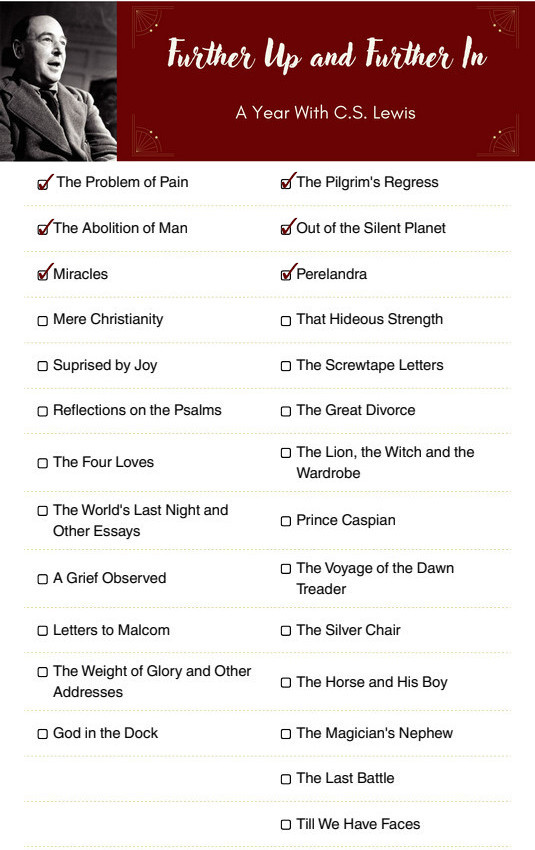
from Miracles by C.S. Lewis:
In all my life I have met only one person who claims to have seen a ghost. And the interesting diing about the story is that that person disbelieved in the immortal soul before she saw the ghost and still disbelieves after seeing it. She says that what she saw must have been an illusion or a trick of the nerves. And obviously she may be right. Seeing is not believing.
For this reason, the question whether miracles occur can never be answered simply by experience. Every event which might claim to be a miracle is, in the last resort, something presented to our senses, something seen, heard, touched, smelled, or tasted. And our senses are not infallible. If anything extraordinary seems to have happened, we can always say that we have been the victims of an illusion. If we hold a philosophy which excludes the supernatural, this is what we always shall say. What we learn from experience depends on the kind of philosophy we bring to experience. It is therefore useless to appeal to experience before we have settled, as well as we can, the philosophical question..
If immediate experience cannot prove or disprove the miraculous, still less can history do so. Many people think one can decide whether a miracle occurred in the past by examining the evidence “according to the ordinary rules of historical enquiry.” But the ordinary rules cannot be worked until we have decided whether miracles are possible, and if so, how probable they are. For if they are impossible, then no amounnt of historical evidence will convince us. If they are possible but immensely improbable, then only mathematically demonstrative evidence will convince us: and since history never provides that degree of evidence for any event, history can never convince us that a miracle occurred. If, on the other hand, miracles are not intrinsically improbable, then the existing evidence will be sufficient to convince us that quite a number of miracles have occurred. The result of our historical enquiries thus depends on the philosophical views which we have been holding before we even began to look at the evidence. The philosophical question must therefore come first.
Here is an example of the sort of thing that happens if we omit the preliminary philosophical task, and rush on to the historical. In a popular commentary on the Bible you will find a discussion of the date at which the Fourth Gospel was written. The author says it must have been written after the execution of St. Peter, because, in the Fourth Gospel, Christ is represented as predicting the execution of St. Peter. “A book,” thinks the author, “cannot be written before events which it refers to.” Of course it cannot–unless real predictions ever occur. If they do, then this argument for the date is in ruins. And the author has not discussed at all whether real predictions are possible. He takes it for granted (perhaps unconsciously) that they are not. Perhaps he is right: but if he is, he has not discovered this principle by historical inquiry. He has brought his disbelief in predictions to his historical work, so to speak, ready made. Unless he had done so his historical conclusion about the date of the Fourth Gospel could not have been reached at all. His work is therefore quite useless to a person who wants to know whether predictions occur. The author gets to work only after he has already answered that question in the negative, and on grounds which he never communicates to us.

Odds ‘n ends about books and reading that caught my eye this week. You’ve probably seen some/most/all of them, but just in case:
The Best Villains in Literature Bracket: Ides of March Madness—LitHub is about to crown the ultimate Villain in Lit. Vote now (if you can choose…some of these are brutal choices)
Inside a Collection of ‘Imaginary’ Books
The Digital Packrat Manifesto—the case for building your own digital library (and choosing your digital storefronts with care)
From the Gut: A Literary History of Indigestion—Oddly fascinating piece (and you must read the footnotes)
Harper To Publish New Collection of Stories and Essays by Harper Lee—Huh. Well, might as well, I guess. Probably will be better than that last published book with her name on it
Turns Out, There’s a Sequel to The Westing Game—this is, no doubt, the item from this list that I’m most invested in. It’s possibly the single piece of writing I’m most invested in this month.
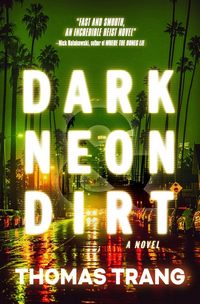
Thomas Trang’s “Dark Neon & Dirt”: A Gritty, Twisty Riff on L.A. Noir—Nick Kolakowski talks to Thomas Trang about Tran’s upcoming book (which looks great, incidentally)
Speaking of Nick Kolakowski, The Writer’s Dossier 3/3/2025 – The Nick Kolakowski interview—Kolakowski talks about things like his latest novel (which you really should read), evolving as a writer, and his experience with Craig Ferguson
Tolkien Against the Grain: The Lord of the Rings is a book obsessed with ruins, bloodlines, and the divine right of aristocrats. Why are so many on the left able to love it?—pretty sure I’d have never thought about considering this
A New Harper Lee Book is Being Published: Why Is There No Controversy This Time?—Brianna asks a good question
Three Years of Roars and Echoes—Congrats to Lashaan! The man responsible for at least 70% of the comics/graphic novels I’ve read in the last decade, and almost all of the Tolkien from that period, too.
Carol’s Captivating Character of February Link-Up—a good pick (and a good reminder for me to finalize my choice)
bedsidebibliophile succinctly nails the thinking behind a 5 star rating
If you don’t “awwww” at this bookstore’s story, there’s something broken in you

To help talk about backlist titles (and just for fun), What Was I Talking About 10 Years Ago Week?
Stone Quarry by S. J. Rozan
Pin Action: Small-Time Gangsters, High-Stakes Gambling, and the Teenage Hustler Who Became a Bowling Champion by Gianmarc Manzione (I’d forgotten about this one, not sure I’m glad to be reminded)
The Girl Who Circumnavigated Fairyland in a Ship of Her Own Making by Catherynne M. Valente
I talked about the release of: A Key, an Egg, an Unfortunate Remark by Harry Connolly; Dead Heat by Patricia Briggs; Pocket Apocalypse by Seanan McGuire; Heir to the Jedi by Kevin Hearne; and Live Right and Find Happiness (Although Beer is Much Faster): Life Lessons and Other Ravings from Dave Barry by Dave Barry

This Week’s New Releases that I’m Excited About and/or You’ll Probably See Here Soon:
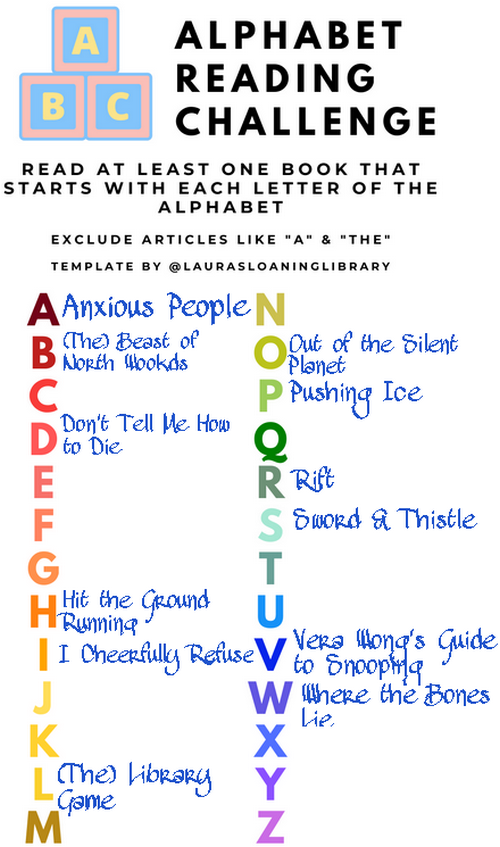
Don’t Tell Me How to Die by Marshall Karp—Domestic thriller, a look at grieving and preparation for death, and a rollicking good time. I raved about it recently (and will do so again at the drop of a hat)
Cold Iron Task by James J. Butcher—I have no idea what this third Unorthox Chronicle is about, because I can’t let myself be tempted, I just have too much to do. I’ve even loaned it to a friend just to get it out of the house so I can focus on some other things.
Guard in the Garden by Z. S. Diamanti—A cozy fantasy about an injured Dwarven soldier finding his second act. If this is half as charming as it looks, you’ll be in for a good time
Thaumaturgic Tapas by Tao Wong—you have to give this a second look for the title alone, right? The Nameless Restaurant struggles with success
Finlay Donovan Digs Her Own Grave by Elle Cosimano—My patience for Finlay’s antics is waning, but these are still guaranteed good times. Bringing in her nosy neighbor? Yeah, this should be fun.
Kills Well With Others by Deanna Rayburn—These senior assassins are called back into action.
I’m a Dumbo Octopus! by Anne Lambelet—this kid-level introduction to cephalopods looks adorable
See Friendship by Jeremy Gordon—A “young man who learns the devastating truth behind his friend’s death, propelling him on an odyssey of discovery into the nature of grief in the digital age, the limits of memory, and the meaning of friendship.”
What a difference a week makes–after talking about a few lackluster (or worse) books at the end of February, I ended the month very strong and the first books of March have continued that streak. It’s a nice place to be.
This meme was formerly hosted by MizB at A Daily Rhythm and revived on Taking on a World of Words—and shown to me by Aurore-Anne-Chehoke at Diary-of-a-black-city-girl.
The Three Ws are:
What are you currently reading?
What did you recently finish reading?
What do you think you’ll read next?
Seems easy enough, right? Let’s take a peek at this week’s answers:
![]() |
![]() |
| The Library Game by Gigi Pandian |
Every Tom, Dick & Harry by Elinor Lipman, read by Piper Goodeve |
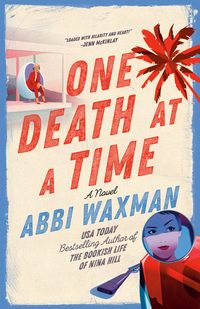
I just started The Library Game today. I thought Pandian had wrapped up this series with the last book, I’m glad to see that I was wrong and I’m eager to see where the series goes from here.
Lipman’s Ms. Demeanor was entertaining enough (although it had its drawbacks), and I’m curious to try something else by her.
![]() |
![]() |
| Perelandra by C.S. Lewis |
Red Team Blues by Cory Doctorow, read by Wil Wheaton |
Perelandra blew me away this week, just as much as it did 20+ years ago when I read it the first time.
A couple of weeks ago in a Saturday Miscellany post, I said something about getting around to trying Doctorow sometime, the manager of Shared Stories told me that I really should start with Red Team Blues. He was right.
![]() |
![]() |
| Breaking Bread with the Dead: A Reader’s Guide to a More Tranquil Mind by Alan Jacobs |
Ashes Never Lie by Lee Goldberg, read by Eric Conger,Nicol Zanzarella |
It’s time for me to wrap-up my review of Jacobs’ trilogy.
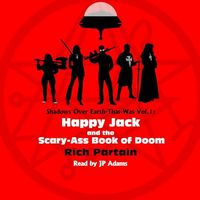
And I’ll be tackling Ashes Never Lie on audio. Sharpe & Walker + Eve Ronin = fun.
![]()

The topic for this week’s Top Ten Tuesdays is the Top Ten Things Characters Have Said
If I took that too loosely, I’d spend weeks trying to narrow this down. So I decided to limit it to one character–Nero Wolfe. He’s easily the most quotable character I can think of (with the possible exception of Archie Goodwin, who narrates the Wolfe books). But I didn’t have time to do a thorough job of that, either. But I was able to cobble together a decent collection of quotations. Give me a year, and I’ll come up with something more definitive (or I’ll have a selection of 90+ items and will freeze up in trying to whittle it down).
But first,
Nero Wolfe, fictional American private detective, the eccentric protagonist of 46 mystery stories by Rex Stout. Wolfe was introduced in Fer-de-Lance (1934).
A man of expansive appetites and sophisticated tastes, Wolfe is corpulent and moody. Detesting mechanized vehicles and disdaining most humans, he is averse to leaving his home for business reasons; he assigns the physical investigations of murders to his associate and friend Archie Goodwin and manages to solve his mysteries without leaving his own confines. Another of Wolfe’s associates is his private chef, Fritz Brenner, who also works as Wolfe’s butler and handyman. Wolfe’s interest in food is equaled only by his passion for orchids: with the aid of Theodore Horstman, he nurtures some 10,000 orchid plants in his rooftop garden.
by: The Editors of Encyclopaedia Britannica. "Nero Wolfe". Encyclopedia Britannica, 15 Oct. 2012, https://www.britannica.com/topic/Nero-Wolfe. Accessed 3 March 2025.
* That I Can Think of Without Re-Reading the Corpus
![]() |
To me the relationship of host and guest is sacred. The guest is a jewel resting on the cushion of hospitality. |
![]() |
…with the quarry within reach, the purpose fixed, and the weapon in hand, it will often require up to eight or ten minutes to kill a fly, whereas the average murder, I would guess, consumes ten or fifteen seconds at the outside. |
|
Man’s brain, enlarged fortuitously, invented words in an ambitious attempt to learn how to think, only to have them usurped by his emotions. But we still try. |
![]() |
Since I entered this room you have made nothing but mistakes. You were without courtesy, which was offensive. You made a statement contrary to fact, which was stupid. You confused conjecture with knowledge, which was disingenuous. |
![]() |
I carry this fat to insulate my feelings. They got too strong for me once or twice and I had that idea. If I had stayed lean and kept moving around I would have been dead long ago…I used to be idiotically romantic. I still am, but I’ve got it in hand. |
![]() |
Maintaining integrity as a private detective is difficult; to preserve it for the hundred thousand words of a book would be impossible for me, as it has been for so many others. Nothing corrupts a man so deeply as writing a book; the myriad temptations are overwhelming. |
![]() |
I love to make a mistake, it is my only assurance that I cannot reasonably be expected to assume the burden of omniscience. |
![]() |
Sir, I would not enter a taxicab for a chance to solve the Sphinx’s deepest riddles with all the Nile’s cargo for my reward! Good God. A taxicab…You observe my bulk. I am not immovable, but my flesh has a constitutional reluctance to sudden, violent, or sustained displacement. |
![]() |
[Dina Laszio] leaned back. “Marko told me once, long ago, that you don’t like women.” Wolfe shook his head. “I can only say, nonsense again. I couldn’t rise to that impudence. Not like women? They are astounding and successful animals. For reasons of convenience, I merely preserve an appearance of immunity which I developed some years ago under the pressure of necessity. I confess to a specific animus toward you. Marko Vukcic is my friend; you were his wife; and you deserted him. I don’t like you.” |
![]() |
I understand the technique of eccentricity; it would be futile for a man to labor at establishing a reputation for oddity if he were ready at the slightest provocation to revert to normal action. |
![]()
Book Blogger Hop
This prompt was submitted by Billy @ Coffee Addicted Writer:
Sure, I know technically that Billy is asking something else, but I can’t help but read that as, “How bad is my time management?”
First, I’m not counting reading time. That’s a related, but separate, hobby. At least for the purposes of this post–also, it’ll help the hours stay low.
Secondly–I’m not sure if I should count time sharing, re-posting, and other social media-type interactions to promote this blog and others. That’s kind-of blogging time. But also, not really. I’ve also been bad about that lately. Ideally, I’d say I spend 30-45 minutes each weekday on that. I’d be happy if I spent a half hour a week on it over the last couple of months.
So, now, to the blog. Thirty minutes a day minimum (even when I don’t actually hit “Publish” or “Schedule.”). Three hours a day maximum. That’s 180 minutes-1080 minutes a week. That’s almost part-time job territory on the fuller weeks.
I’m really wishing I hadn’t done this math now, he types, shaking a metaphorical and resentful fist in the direction of Coffee Addicted Writer.
![]()

Music Monday's originated at The Tattooed Book Geek's fantastic blog and has shown up hither, thither, and yon since then.
Sometimes a silly but catchy song is enough…
![]()
I’ve barely been online this week, so I’m very glad that A Literary Escape and Pages Unbound posted some highlights from the month for me to glean from—I’d have enjoyed their posts regardless, but they helped bulk up this post.
Odds ‘n ends about books and reading that caught my eye this week. You’ve probably seen some/most/all of them, but just in case:
The Ascendance of the Book Ladder: The history of a totally necessary invention—We all want one, why not learn a little about them?
Little Free Library Study Reveals Benefits for Book-Impoverished Communities —No one will be (should be) walking away from this study saying, “Who’d have imagined this?” But it’s good to see someone finding evidence.
Face Value: Translating Divergence—”Clare Richards underscores the significance of D/deaf, disabled, and/or neurodivergent writers and translators presenting their community on their own terms.” (as interesting as they are, I need to stop reading pieces from this site, it’s doing unhealthy things for my TBR)
When Books Invade (But Make It Friendly)—This is one many of us can relate to, I expect. Particularly the first paragraph under “Why Read?.” Just from reading her historical book last year, I had the idea that Nadya Williams and I belonged to the same tribe. This is one more bit of proof.
Taking the “Shoulds” Out of Reading—I really don’t auto-post everything Molly Templeton writes, it just feels like it. Worth the read for the last ‘graph alone (but the prior ones are good, too)
Psychological Thrillers Are Finally Giving Middle-Aged Women Their Due—”[N]o one is pushed to the brink like a menopausal woman. And no one can fight for her life like her either.”
Embrace Graphic Novels
The Health Benefits of Reading Every Day
About Community and the Future of the Narratess Indie Sale
How to break up with Amazon as a Book Lover—It ain’t easy, so here’s some help
If you’re not ready to do that yet, What Are Kindle Points & How Do You Use Them?
The Classics: Shakespeare’s The Two Gentlemen in Verona, Love’s Labour’s Lost and Romeo and Juliet

To help talk about backlist titles (and just for fun), What Was I Talking About 10 Years Ago Week?
I didn’t post about any books, but I talked about the releases of: Dorothy Parker Drank Here by Ellen Meister and Canary by Duane Swierczynski

This Week’s New Releases that I’m Excited About and/or You’ll Probably See Here Soon:
His Truth Her Truth by Noelle Holten—Unreliable narrators in a domestic psycholigical thriller from one of this reader’s favorites. My March is pretty much planned already, but I’m going to squeeze this one in somehow.
title by soandso—”a podcast producer agrees to host a new series about modern dating—but will the show jeopardize her chance at finding real love?” I don’t know that this would’ve popped up on my radar if Alan Sepinwall hadn’t been talking about it, but If he vouches for it, that’s good enough for me.
The Fourth Consort by Edward Ashton—”Part first contact story, part dark comedy, and part bizarre love triangle, The Fourth Consort asks an important question: how far would you go to survive? And more importantly, how many drinks would you need to go there?” Go read the link for the whole blurb

Thanks to it being named The Write Reads’ Blog of the Day, I read February Reading Challenge: Dive into the World of Thrillers with “This or That” a few weeks ago, and instantly spent too long thinking about it. I know the post called for social media posts or comments to reply, but I decided to go for this instead. I thought I’d work in some recommendations along with my answers, but I have 143 pages of posts about this genre and that’s just too much to sift through.
Still, the prompts got into my head and I had to get something out.
A good psychological thriller will keep me on the edge of my seat and jumping at shadows like everyone else. But I typically prefer the action-packed thriller—as long as there’s some depth to it, some decent psychology to the action and/or characters. Mindless action and destruction can be fun for a little bit, but they’re ultimately dissatisfying. By the same token, a bit of action goes a long way to improving a psychological thriller.
I won’t turn up my nose at a well-written unreliable narrator (or do I?). But Detective Protagonists are what got me into reading, sustained me when I really didn’t have time or resources to really read fiction, and—as anyone who’s spent 5 minutes looking at this site knows—I still read an unhealthy amount of Detective Novels. No contest.
I honestly can’t decide—I’ve argued with myself for a few days over this. I really can’t choose. I probabaly read more Fast-Paced reads with good twists, but a Slow-Burn can be so satisfying that I don’t want to discount them. (as long as the slow-burn is actually burning, and not just meandering). This one’s a coin-toss.
I can enjoy and really get into a solid Domestic Thriller, one of my favorites so far this year is one. But Crime Thrillers are really my thing, part of that is their similarity to a good Detective novel. But it’s more than that—whether it’s a jaded criminal, a newbie criminal (who very likely won’t be around long enough to get jaded, a normal person having the worst day of their lives (whether or not they made a bad choice to put themselves there), or something beyond the typical Crime Thrillers—I can read those all day.
![]()
I’ve hit a run of not-great books lately. Nothing horrible, just books that I wanted more from. I’m sure that streak is about to end, but for now, getting through them (in the hope I’m about to be proven wrong) is such a slog. It actually saps some mental energy
This meme was formerly hosted by MizB at A Daily Rhythm and revived on Taking on a World of Words—and shown to me by Aurore-Anne-Chehoke at Diary-of-a-black-city-girl.
The Three Ws are:
What are you currently reading?
What did you recently finish reading?
What do you think you’ll read next?
Seems easy enough, right? Let’s take a peek at this week’s answers:
![]() |
![]() |
| Beast of the North Woods by Annelise Ryan |
Good Material by Dolly Alderton, read by Arthur Darvill & Vanessa Kirby |
Ryan’s latest adventure is both more-of-the-same (but it’s still fresh enough to keep working) and I-can’t-believe-she’s-doing-this. In short, I’m enjoying this–it’s possible I’ll have just finished this about the time this posts–I imagine I’ll be pretty satisfied about now.
I don’t know why I’m still listening to Good Material, I have to say. Andy is very likely the least likable protagonist I’ve come across in months. And I’ve read/listened to books with murderers and assassins as the main characters. Andy is just a whiny man-child whose stand-up had better be a lot funnier than his narration. I’ve yet to see any reason for this story to be told–or what the story is, really. Maybe it’s the narration by Arthur Darville, and my subconscious recognized him and kicked in the loyalty he’s earned from screen roles (the rest of my brain caught up as I was putting this post together). Also, I’m at 56% and have yet to run into Kirby (and was surprised to learn I’m supposed to).
![]() |
![]() |
![]() |
| Snow Crash by Neal Stephenson |
Passageways by Rebecca Carey Lyles, Editor |
Johnny Careless by Kevin Wade, read by John Pirhalla |
I’m so glad that I finally finished Snow Crash (although you could argue that Stephenson didn’t actually finish it, he just stopped writing). A lot of it fell flat, but when it worked? It was so money, baby…
Similarly, there were some really good starts to short stories in Passageways, but few of them delivered on the end (or middle, too often).
I’m not sure that I’m going to muster up the energy required to say much about Johnny Careless, it’s a thing I listened to. I wouldn’t rail against it, but I’m sure not going to encourage anyone to give it a shot.
<
![]() |
![]() |
| Where the Bones Lie by Nick Kolakowski |
Dead Money by Jakob Kerr, read by Rachel Music |
For years, all I’ve needed on a cover is “Nick Kolakowski” to want to read it. But I know that most of you need more than that to get convinced–okay, this is a modern PI noir set in the seedy side of Hollywood–where so much of the best PI noir from the last 100 years comes from. I expect this to be fast, furious, and a little unnerving.
Yeah, Dead Money was in this spot last week, too. But I decided I wanted a genre break, so I put it off. This debut thriller still looks pretty good to me.
![]()
Powered by WordPress & Theme by Anders Norén