Tag: Poetry Page 1 of 2

The Lantern and the Night Moths, Edited and Translated by Yilin Wang: A Remarkable Reading Experience

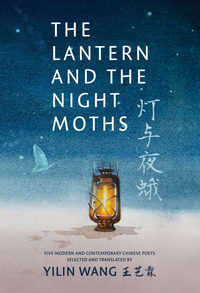
Cover of The Lantern and the Night Moths by Yilin WangThe Lantern and the Night Moths

edited and translated by Yilin Wang

DETAILS:
Publisher: Invisible Publishing
Publication Date: April 2, 2024
Format: Paperback
Length: 101 pg.
Read Date: November 21, 2025

Buy from Bookshop.org Support Indie Bookstores

What’s the Publisher’s Description of The Lantern and the Night Moths?

“the lantern light seems to have written a poem;
they feel lonesome since i won’t read them.”

—“lantern” by Fei Ming

The work of Tang Dynasty Classical Chinese poets such as Li Bai, Du Fu, and Wang Wei has long been celebrated in both China and internationally, and various English translations and mistranslations of their work played a pivotal yet often unacknowledged role in shaping the emergence and evolution of modern Anglophone poetry.

In The Lantern and the Night Moths, Chinese diaspora poet-translator Yilin Wang has selected and translated poems by five of China’s most innovative modern and contemporary poets: Qiu Jin, Fei Ming, Dai Wangshu, Zhang Qiaohui, and Xiao Xi. Expanding on and subverting the long lineage of Classical Chinese poetry that precedes them, their work can be read collectively as a series of ars poeticas for modern Sinophone poetry.

Wang’s translations are featured alongside the original Chinese texts, and accompanied by Wang’s personal essays reflecting on the art, craft, and labour of poetry translation. Together, these poems and essays chart the development of a myriad of modernist poetry traditions in China that parallel, diverge from, and sometimes intersect with their Anglophone and Western counterparts.

The Poetry

There’s 28 poems (I think, I counted quickly) in this collection. Five of them I resonated with and really enjoyed—well, maybe four of them. But I “got” five. The rest of them? Not so much.

That’s not to say they were bad—most of them I thought were great for 50-66% of the stanzas, and then the rest just felt like a different poem. Many of the other half/third were pretty good, too. I just didn’t get what they have to do with the other stanza(s). I have to say that I found that incredibly frustrating.

Chinese poetry shouldn’t work like Western poetry—I wouldn’t want it to. I want it to seem strange—and these succeeded in that. But (beyond the bits I didn’t get), the collection and individual poems felt more “other” than I anticipated, which struck me as a positive and a negative.

The Essays

The first couple of these were a lot more personal than I assumed they’d be, given the description of the book. I found that a little off-putting, to be honest. The first essay, in fact, made me wonder how much Wang was translating and how much she was trying to do something else—maybe even paraphrasing.

But the latter essays clicked with me, and I really appreciated Wang describing some of her choices, some alternative ways she could’ve translated something, and why she opted for the direction she did. I learned a lot and appreciated the practically-impossible task she took on by translating these poems.

So, what did I think about The Lantern and the Night Moths?

This is not going to go down as one of my favorite poetry collections, period. I do think I would return to four of these poems (and yes, I have a list for future use).

That said, this was simply fascinating as an experience—to read a poem (and to look at the Chinese original and boggle at how those characters become the English versions) and then to read about the impact they made on this poet/translator and some of the choices made to get it into a format that English readers can appreciate. It’s something I know I’m not going to see often (if ever).

People more in tune with translation, poetry, or Chinese culture will appreciate and enjoy this more than I did. But I’m so glad that I read this—and that Shannon Knight recommended it to me. The reading of this book is an experience that I relished.

This post contains an affiliate link. If you purchase from it, I will get a small commission at no additional cost to you. As always, the opinions expressed are my own.

Irresponsible Reader Pilcrow Icon

BOOK SPOTLIGHT: Take Me Back by Amanda Rodriguez

I’m very pleased today to welcome The Write Reads Blog Tour for Amanda Rodriguez’ poetry collection Take Me Back! I’m hearing good things about this book, and if you take a look at the feed for https://twitter.com/WriteReadsTours, you’ll see bloggers writing interesting things about it. In the meantime, here’s a little about it.

Take Me Back by Amanda Rodriguez Tour Banner

Book Details:

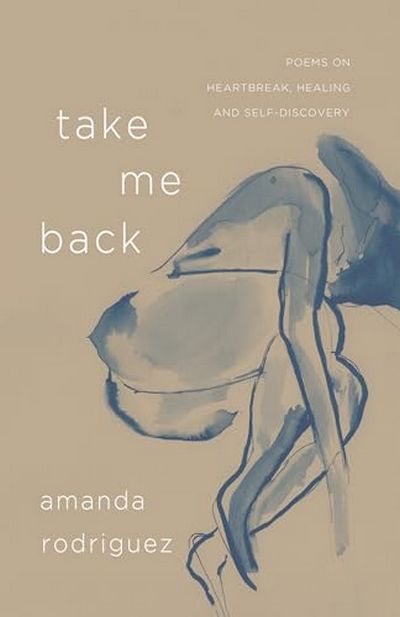
Title: Take Me Back: Poems on Heartbreak, Healing, and Self-Discovery
Genre: Poetry
Format: Kindle
Length: 185 pages
Publication Date: November 18, 2025
Cover of Take Me Back by Amanda Rodriguez

About the Book:

Take Me Back is a powerful poetry collection by Amanda Rodriguez that explores the raw, emotional journey of heartbreak, healing, and self-discovery. Through deeply personal poems, Rodriguez opens up about the pain of toxic love and the profound strength that comes from self-awareness. This poignant collection is divided into parts that reflect the stages of love and loss, offering a relatable experience for anyone who has ever faced the complexities of emotional recovery.

Take Me Back is a must-read for anyone on a journey of self-healing and transformation. Whether you’re navigating a breakup, overcoming past trauma, or simply looking to understand the process of emotional growth, this book offers a comforting reminder that healing is possible – and that you are not alone.

Book Links:

Amazon Canada ~ Amazon US ~ Amazon UK ~ Goodreads

About the Author:

Amanda RodriguezAmanda Rodriguez is a poet and writer from Miami, Florida. From a very young age she has embraced the therapeutic power of writing and never let it go. With a deep passion for soulful music and introspective lyrics, Amanda draws emotional inspiration from themes of personal identity, love, loss, empowerment, and spirituality. Her poetry reflects a raw and honest exploration of the human experience, and she finds great fulfillment in offering comfort and empathy to others through her words. Her work isn’t just about self-expression; it’s also about creating connections.

Instagram ~ TikTok


My thanks to The Write Reads for the invitation to participate in this tour and the materials they provided.

The Great Gatsby: Alphabetised Centennial Edition by F. Scott Fitzgerald, edited by Chris McVeigh: A Classic Reorganized

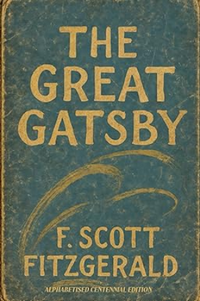
Cover of The Great Gatsby: Alphabetised Centennial Edition by F. Scott Fitzgerald, edited by Chris McVeighThe Great Gatsby: Alphabetised Centennial Edition

by F. Scott Fitzgerald; edited, with an introduction by Chris McVeigh

DETAILS:
Publisher: Fahrenheit Press
Publication Date: May 14, 2025 
Format: Paperback
Length: 197 pg.

What’s the Deal with The Great Gatsby: Alphabetised Centennial Edition?

I could (should?) save myself a bunch of time and just point you to The Publisher’s Explanation of the book and its background. Seriously, skip most of what I write here and just read it.

But because I feel compelled to say something about this unique offering, I’m going to plow on.

Inspired by Concrete Poetry (which is something I don’t think I’d heard of until I read the above from Fahrenheit Press) and the centennial of The Great Gatsby, Chris McVeigh has taken the classic, and as you should assume from the subtitle, alphabetized it.

As McVeigh writes in the introduction:

…this alphabetised edition of The Great Gatsby is not a puzzle to be solved, or a parody to provoke. It is rather, a re-seeing of language in the raw – a confrontation with the building blocks of a story we think we know.

Removed from their narrative scaffolding, Gatsby’s words fall into new patterns, unexpected rhythms, and visual clusters. “Daisy” “dream” and “death” no longer emerge from plot, but jostle for position in a flattened, democratic field. The result is a text not about the American Dream, but made of it—its’ language laid bare, its’ seductions and emptiness exposed with surgical neutrality.

What would T.G. Eckleberg have to say?

Who knows, but those giant eyes of his would probably enjoy taking this in.

You really don’t even have to read the words, you can just open any page and take in the visual impact, the shapes that emerge from just bare words—limited punctuation (mostly apostrophes), no paragraphs, just a word-space-word-space-word sequence for 197 pages.

It’s striking, mesmerizing, and can even evoke an emotional response somehow.

So, what did I think about The Great Gatsby: Alphabetised Centennial Edition?

I honestly don’t know. But I can say I’ve thought about it a lot since getting it.

McVeigh asks:

Is story found only in sequence? Can meaning survive fragmentation? Might new meanings emerge—accidental, ambient, and poetic—from the ruins of arrangement?

At this moment, my answers are: Yes. Possibly? (pronounced with a heavy question mark) Yes, just don’t ask me what any of them are.

I’ve picked this up and read through a few pages several times in the week or so since I got this, and each time I start to think I’m getting something. Like Dirk Gentley said, I felt like I could “grapple with the ineffable itself, and see if we may not eff it after all.” But I’ve fallen short each time, but I’m going to keep trying.

But this is not a book for everyone, I should stress. For example, I showed this to my wife, who I thought might appreciate the idea. She looked through it and gave me one of those looks and asked, “You spent money on this?”

Yes, I did. Happily so—and am still glad I did. Not just for the novelty (which probably drove the purchase, to be frank), but because it’s giving me the opportunity to ask those questions I started this section with. This might not be much of a review, but I think it’s the heartiest endorsement I could give of the project.

I spent money on this, you should consider doing the same.

Irresponsible Reader Pilcrow Icon

Enough Rope by Dorothy Parker: Songs in a Minor Key

Cover of Enough Rope by Dorothy ParkerEnough Rope

by Dorothy Parker

DETAILS:
Publisher: Boni & Liveright
Publication Date: December 1926
Format: eBook
Length: 86
Read Date: December 2-3, 2024
Buy from Bookshop.org Support Indie Bookstores

What’s Enough Rope?

It’s Dorothy Parker’s debut collection of poems, I think ninety of them–but I ran out of fingers and toes and had to make a guess.

Some are flat out funny, some are sweet (okay, not really that many), some are acidic, some are witty, some are ascerbic, some are lightly self-mocking–some are self-hating. It’s quite the range. Some are just somber and sober, without any species of humor (I think)–but those are few and far between. All show a degree of wit that too many poems I read don’t show (which is why I don’t read many.)

I should just go onto the next section because I guess I’ve slipped into answering:

So, what did I think about Enough Rope?

I enjoyed it. Some of these were just delightful. Some made me think a little. I know that Parker can tend toward dark thinking, but there were one or two that could give Plath a run for her money.

Some of the poems by her that I knew already, like “Résumé” or “One Perfect Rose” were part of this collection and were just as good as it was when I discovered it in High School. “Verse for a Certain Dog” is going to be a favorite of mine for quite a while.

One that I don’t think I’ve read before is called “Finis.” It struck me as something akin to Auden’s “Funeral Blues,” in lamenting a lost love–until the final couplet which turns the whole thing into a jab at the man.

Overall, you get the sense of someone who is a jaded romantic. She understands love–she’s wary of it, knowing the pain it can bring–but she also knows the highs that come with it, and longs for it. And through the highs, lows, bliss, and agony–has kept her sense of humor and a perspective that all things will pass. After all, you might as well live.

It occurs to me (seconds before I hit “publish”), that this is possibly best exemplified in the last poem in the collection:

The Burned Child
Love has had his way with me.
    This my heart is torn and maimed
Since he took his play with me.
    Cruel well the bow-boy aimed,

Shot, and saw the feathered shaft
    Dripping bright and bitter red.
He that shrugged his wings and laughed—
    Better had he left me dead.

Sweet, why do you plead me, then,
    Who have bled so sore of that?
Could I bear it once again? …
    Drop a hat, dear, drop a hat!


3.5 Stars

This post contains an affiliate link. If you purchase from it, I will get a small commission at no additional cost to you. As always, the opinions expressed are my own.
Irresponsible Reader Pilcrow Icon

Poetry Comics by Grant Snider: Simply Bursting with Adequatulence

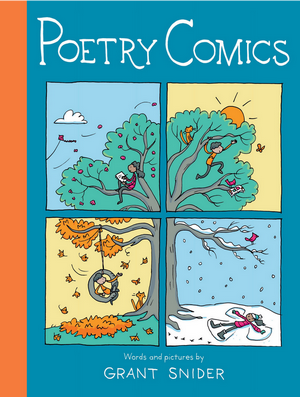
Cover for Poetry Comics by Grant SniderPoetry Comics

by Grant Snider

DETAILS:
Publisher: Chronicle Books
Publication Date: March 26, 2024
Format: Hardcover
Length: 96 pgs.
Read Date: June 1, 2024
Buy from Bookshop.org Support Indie Bookstores

What’s Poetry Comics About?

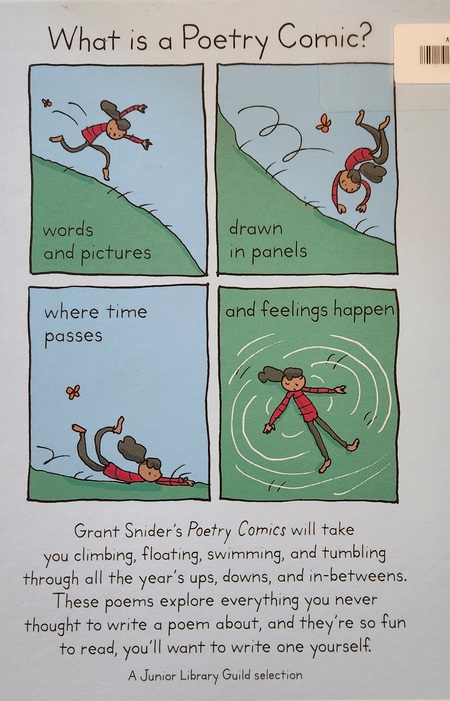
Rather than try to really describe this book (and I wouldn’t do a great job of it), here’s a shody photo of the back cover (forgive the partial library barcode)
Photo of the Back Cover to Poetry Comics by Grand Snider

A Word About the Art

If you’re a fan of Snider’s characteristic simple drawings, you’ll enjoy the art here. I am one of those, so I did.

The panels pair up really nicely with the poems—sometimes augmenting the shape and construction of the poem, sometimes simply illustrating them. Either way, it’s just what you want in this kind of book. They never detract from the poems (they probably make some of the simpler ones better—they definitely disguise their brevity*).

* I don’t mean to suggest that simple/brief poems are bad, they’re simply short.

So, what did I think about Poetry Comics?

This book is a shining example of adequasivity. It was perfectly fine, but on the whole, it really didn’t do much for me.

There were a few poems about writing a poem—they were nice (not particularly practical). Most seemed to be trying really hard to be uplifting—and many of those fell flat to me, primarily because they were clearly trying really hard, but I did enjoy a couple of those. I’m going to guess that I really enjoyed about 10% of them—but there were none that I’d consider “bad,” on the whole, the book was adequate.

So adequate that I knew halfway through that I’d have to look up that Newsradio video linked above.

Do I think readers in the target age range would appreciate this more than I did? Sure, if they like poetry (and possibly those who are ambivalent to it).


3 Stars

This post contains an affiliate link. If you purchase from it, I will get a small commission at no additional cost to you. As always, the opinions expressed are my own.
Irresponsible Reader Pilcrow Icon

Silly Rhymes for Belligerent Children by Trace Beaulieu, Len Peralta (Illustrator): Wonderfully Weird Poems for Children of Most Ages

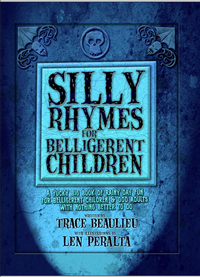
Silly Rhymes for Belligerent ChildrenSilly Rhymes for Belligerent Children:
A Yucky Big Book of Rainy Day Fun for Belligerent
Children & Odd Adults
with Nothing Better To Do

by Trace Beaulieu, Len Peralta (Illustrator)

DETAILS:
Publisher: Amorphous Productions
Publication Date: January 1, 2010 
Format: Paperback
Length: 45 pg.
Read Date: July 13, 2023

What’s Silly Rhymes for Belligerent Children?

The back of the book says:

You certainly don’t need to be a belligerent child to appreciate these silly rhymes by Mystery Science Theater 3000’s and Cinematic Titanic’s Trace Beaulieu – but you may learn a thing or two about handling infected pets or living dangerously through sledding. While the subject matter may make you a bit queasy, you’ll delight in the perfect storytelling encapsulated in each poem. Each selection is a dark and distasteful delight – a fascinating collection of raw honesty, cool understatement and looming tragedy, all brought to life by the whimsical illustrations by Len Peralta. Silly Rhymes for Belligerent Children isn’t the book you’ll keep on the bookcase for decades. It’s the book you’ll keep under your bed within easy reach so you can page through it long after you’ve committed all the poems to memory.

That’s pretty much what the book is—in the forward/Author’s Note, Beaulieu says these poems were inspired by daydreaming, and what better source could there be?

Well, these rhymes are meant for the kind of child I was, and frankly still am.

So don’t come here looking for nice little poems with fuzzy-wuzzy pictures of fluffy cute animals or impossibly happy youngsters fetching pails of water.

This book is intended for kids who hate that kind of stuff: older kids, of course, and adults with… well nothing better to do.

Some are short…some are longer (at least when it comes to page count), they’re all a great mixture of fun rhymes, great images, and eccentric (to say the least) ideas. Some are morbid (in a kid-friendly way), some are just strange, some are gross (in a kid-friendly way).

My One Complaint

There aren’t enough poems.

Or illustrations.

Or anything else.

I want more of everything in this book.

A Quick Word about the Art

WOW. The art is fantastic. Can you go through this book, ignore all the words in black type, and still enjoy it? Probably—some of the pictures won’t make sense without the black text, but yeah, I can see the book working if you think of it as a collection of odd illustrations (I’ve tried this twice, but keep slipping and ended up reading the poems, so I can’t promise).

They are the perfect augment/supplement/accompaniment to Beaulieu’s quirky rhymes and sensibilities.

So, what did I think about Silly Rhymes for Belligerent Children?

This is just silly fun. I, apparently, am an odd adult with nothing better to do, because I’ve read this a handful of times from cover to cover in the last few months and am pleased I did so each time.

You know how there are certain movies/shows that when you’re just mindlessly flipping through the channels (assuming you still do that) you have to stop and watch for at least a few minutes? This book is kind of like that. I cannot tell you how many times since I first read it that I’ve stopped to read a poem or two when I see this book. I’ve yet to pick it up without reading at least three poems. Generally more. And not always the same ones, either.

From the poems to the illustrations and all points in-between, I had a blast with this. I wish I knew about this back when it was first published, my kids would’ve loved it then. I probably can’t get them to slow down enough for it now. Hopefully in a few years.

Track down a copy and lose yourself in these pages. Your inner child (and inner odd-adult) will thank you.


3 Stars

Irresponsible Reader Pilcrow Icon

You Took the Last Bus Home by Brian Bilston: Do I Dare Eat Some Kale?

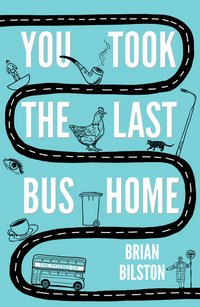
You Took the Last Bus HomeYou Took the Last Bus Home:
The Poems of Brian Bilston

by Brian Bilston

DETAILS:
Publisher: Unbound
Publication Date: April 13, 2021
Format: Paperback
Length: 226 pgs.
Read Date: March 1-29, 2023

Do I need my usual disclaimer about not being a poetry reader here?

Probably not, but I’ll throw it up anyway. This is the fourth time in about 10 years of blogging on this site that I’ve posed about a book of poetry. There’s a reason for that. I typically don’t like them.

There’s also a reason that I had to buy, read, and post about this one—after Facebook’s algorithm inexplicably started showing me his poems for a stretch back in January, I had to read more of them. So I bought this book, and now I have to talk about it. Because I try to do that about every book I read, but primarily because I want more people to have the opportunity to have fun with him.

What’s You Took the Last Bus Home About?

This a lengthy collection of poems (well, maybe not—it’s the lengthiest I own outside of textbooks, anyway) about love, loss, politics, and “everyday places and situations” (as he describes them in the Introduction—which I somehow skipped over until just now). Everyday situations like—someone wanting to borrow a phone charger (and being denied), beards, search engines, playing with a dog, and so on.

Bilston closes the Introduction by saying

I suppose these are not traditionally regarded as being teh stuff of poetry. But there is poetry to be found in anything if you look hard enough.

And Bilston looks that hard.

Playing with Form

One of the best things about poetry is the ability to use form to communicate. To play with the placement of the words on a page, and how they’re presented to get the meaning across—sometimes more effectively than the words used.

Bilston is a master of this.

From decreasing the type size in “Unforseen Consequences” to rotating the text in “Ode to a USB Stick” or something as simple as embracing the traditional shape of a Christmas tree in “Needles” (and then tweaking it), the visual impression of each page got you in the right frame of mind before you started reading.

See also his use of Flow Charts, Org Charts, Excel worksheets, etc.

So, what did I think about You Took the Last Bus Home?

I remember in college classes about poetry there’d be a certain tone of voice used with the phrase, “light verse.” It was eerily similar to the audible sneer used for the term “genre fiction.” And I get that—it’s the same reason that comedies are almost never nominated for an Oscar. It’s not right, but I get it.

But to brush this collection off because Bilston frequently brings the funny is a mistake. This is some really clever work–when he’s funny and when he’s not. The fact that he’s so frequently amusing (to one degree or another) means that when he drops that and goes for serious, earnest, or thoughtful—those are even more powerful (for example, “Refugees”). It shouldn’t be overlooked that he frequently is thoughtful and humorous in the same poem.

I like the creativity, I adore the wordplay, and—as always—I’m a sucker for anyone who makes me laugh/chortle/giggle/smile on the majority of the pages. I audibly laughed at the ninth poem—and several after that. My favorite haiku ever is to be found in these pages (and probably most of the top ten of that list, too*)

* A list that I didn’t realize I’d need/want/have until I started this book.

Did I love every poem? No. Did I skim a few? Yup. But in a collection this size, that’s to be expected, right? Particularly when it comes to someone who isn’t particularly a fan of poetry in the first place. The overwhelming majority of them absolutely worked.

This is a book to spend time with—open it up randomly, or read from cover to cover—whatever. Don’t do it all in one sitting, obviously—although I think it’d be easy to do, I typically read at least two more poems than I intended to per session (usually more than two). But it’s hard to appreciate them if you gorge yourself.

You’re not just going to want to read these yourself—you’re going to want to share these. I also couldn’t help but read a poem to whoever happened to be in the room with me—or make someone else read one that I really appreciated (especially if you needed to see it for full impact). My daughter received several messages from me that consisted of a quick photo of a page or two almost every time I sat down to read this volume.

I can’t say enough good things about this. I’ll be buying more of his work soon.


4 1/2 Stars

This post contains an affiliate link. If you purchase from it, I will get a small commission at no additional cost to you. As always, the opinions expressed are my own.

Some Things I Still Can’t Tell You by Misha Collins: A Thoroughly Pleasant Batch of Poems

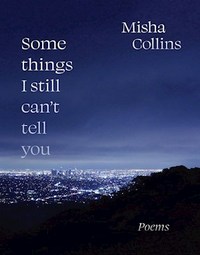
Some Things I Still Can’t Tell You

Some Things I Still Can’t Tell You

by Misha Collins

Paperback, 129 pg.
Andrews McNeel Publishing, 2021

Grab a copy from your local indie bookstore!

A Quick Disclaimer

I really need to come up with a boiler-plate paragraph, or at least a sentence or two for the rare occasions when I read a book of poems: Poetry isn’t my thing. I try it every now and then (mostly then), and usually, when I do so, I’m reminded that it’s not something I can easily appreciate.

Still, this is my second collection this year. Maybe I’m turning a corner.*

* Probably** not.

**Almost certainly not.

So, Why Did I Buy & Read Some Things I Still Can’t Tell You

That’s easy—my daughter is one of Collins’ biggest fans and I knew she’d be raving about it. I thought it’d be nice to have something to talk about.

What’s Some Things I Still Can’t Tell You About?

This is a collection of brief (all under two small pages—most less than one) poems by the actor Misha Collins—some are about his wife and their relationship, some about his parents, friends, children, and so on.

A Common Structure

You know how with Sudden Fiction there’s a line or two at the end that acts like a punchline? Not necessarily like with a joke, but something that adds a little twist, or a surprise at the end of the story. These poems almost always feature something like that—you’re going along reading about a rainy day or something, and then in a line or two it turns into something about missing his wife. Or being a jerk about something. Or thinking about a dead friend. Something to give a little “punch.”

It was common, but even after a couple dozen of them, it didn’t stop being effective. And the ones that didn’t have it weren’t quite as good.

So, what did I think about Some Things I Still Can’t Tell You?

I don’t know if they’re great art—my instinct is to say no, but what do I know? I do know that they’re effective. They capture the feeling, the moment, the whatever Collins is talking about—they’re not the kind of poems you have to sit and ponder to dig out the meaning (you probably can dig deeper than I did), you get the payoff immediately.

For me, that’s what I want in a poem—a thought (fleeting or otherwise), an impression, a feeling—captured and passed on.

Going by that definition, this collection is a success.


3.5 Stars

This post contains an affiliate link. If you purchase from it, I will get a small commission at no additional cost to you. As always, opinions are my own.

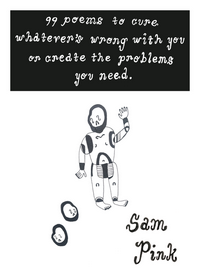
99 Poems to Cure Whatever’s Wrong with You or Create The Problems You Need by Sam Pink: The Cartoon Continues

99 Poems to Cure Whatever's Wrong with You or Create The Problems You Need

99 Poems to Cure
Whatever’s Wrong with You
or Create The Problems
You Need

by Sam Pink

Paperback, 103 pg.
CLASH Books, 2019

Grab a copy from your local indie bookstore!


A little housekeeping to start: That title is just too long to keep using, you know? I thought about using 99PtCWWwYoCTPYN, but that’s almost as bad—actually, it’s probably worse aesthetically speaking. So, I’m going to go with 99 Poems.

Why Did I Want to Read 99 Poems…?

I’ve mentioned around here before that I’m not much of a poetry reader. In fact, I think I’ve only posted about one other poetry collection. I think this the fourth poetry collection I’ve read since I graduated from college in the mid-90s.

So what possessed me to pick this up? Well, despite what it may look like around here (and certainly how it feels sometimes), I do want to keep trying new/less familiar things. What got this to my attention was that someone on my Twitter feed posted a picture of one of the poems from this book a couple of months ago—I believe it was “The Woodchuck”—it made me smile, and it seemed like a good idea to try some more.

Which is how I got here. Trying to figure out how to talk about poems.

Comic Poems

Like the poem that got my attention, many of these poems fall under the heading of “comic.” They all won’t make you laugh—but you’ll probably grin a bit. The construction is similar to a joke, but I think it’s a disservice, even for the comic poems to treat them as simply that.

The Non-Comic Poems

Then there are the poems on the other end of the spectrum, moving, poignant—even uplifting.

I think most readers will find themselves in some/many of these. Which is both comforting and unnerving.

Approachable

None of these are difficult to read (some may be challenging to chew on)—a few are two or three lines, a few are about 2 pages long. Most are 6-ish lines long.

Really, I’ve read tweets that contain as many characters as some of these poems. I guess I’m saying, there’s no reason for non-poetry readers like me to feel intimidated by these.

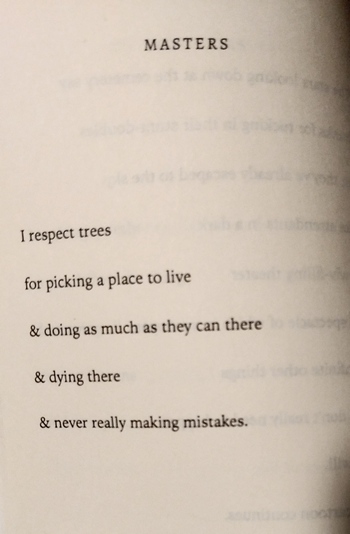
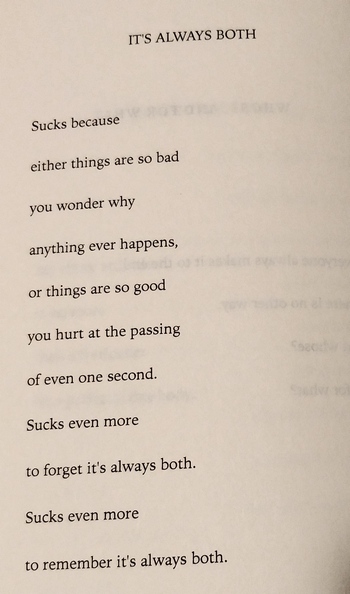
Samples

I’m no photographer, but typing out these poems to give you a taste seems strange, they should look the way they were printed. Here’s a couple of the poems that stayed with me.
Masters
It's Always Both

So, what did I think about 99 Poems…?

How do you not like something with that title? That’s practically an instant 3-Stars right there.

But more than that, I liked this collection. Reading a couple of these is a good break from everything else going on in the world around you. A simple way to look at things in a different way. I’m likely to keep an eye out for more by Pink, and I think you should, too.


3.5 Stars

This post contains an affiliate link. If you purchase from it, I will get a small commission at no additional cost to you. As always, opinions are my own.

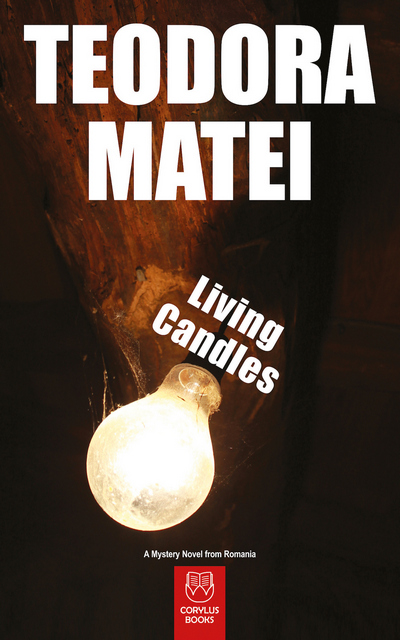
(belated) COVER REVEAL: Living Candles by Teodora Matei

Welcome to The Irresponsible Reader’s part in the Cover Reveal for Teodora Matei’s Living Candles! I don’t know why my [expletive deleted] scheduled post didn’t go up yesterday like it was supposed to. I apologize to Lonescue, Corylus Books, and Love Books for not noticing that until this morning–this makes the 3rd tour I’ve ever missed (and the second in a row for Corylus Books, when I mess up, I go big), and it’s not the way I try to run around here. “Irresponsible” is supposed to refer to my reading ethos, not my approach to commitments.

Technically, this isn’t so much a Cover Reveal as much as it is, “here’s a nifty cover for a book that looks promising from a publisher that has a great idea”. Hope you enjoy!

Book Blurb

The discovery of a woman close to death in a city basement sends Bucharest police officers Anton Iordan and Sorin Matache on a complex chase through the city as they seek to identify the victim. As they try to track down the would-be murderer, they find a macabre trail of missing women and they realise that this isn’t the first time the killer has struck. Iordan and Matache hit one dead end after another, until they decide they’ll have to take a chance that could prove deadly.

Buy Link

https://amzn.to/2HT6MnD


Corylus Books

Corylus Books is a new venture aiming to publish fiction translated into English. The people behind the company have very different backgrounds, but what brings us together is a deep appreciation of crime fiction and a strong interest in books from countries that so have been under-represented in English.

It took a while before it turned out that everyone’s thoughts had been on similar lines – that we wanted to take a chance on presenting some of the great European crime fiction that wouldn’t normally make its way into English. With a mixture of language, translation and other skills between the four of us, it seemed the logical next step to take.

The first Corylus books are a pair of Romanian crime novellas, Living Candles by Teodora Matei and Zodiac by Anamaria Ionescu.

There’s more to come in 2020 – starting with Romanian novelist’s Bogdan Teodorescu’s Sword, a powerful political thriller that has already been a bestseller in Romania and in its French translation. Sword will be available in May and will be followed later in the year by the first of two books by Icelandic crime writer Sólveig Pálsdóttir. The Fox will be available in the second half of this year, followed by Shackles in 2021.

And there’s more to come, with a novel by Bogdan Hrib set partly in Romania and partly in the north-east of England, a second novel from Teodora Matei, and we’re talking to more exciting writers from across Europe about what we can do together…


Without further ado…

The Cover


That cover just promises a creepy read. I can already feel the hair on the back of my neck standing up without reading a word. Looking at that cover makes me want to dust off my hands and look out for spiders.

You can get your hands on this cover (and the unnerving novel it goes with!) at https://amzn.to/2HT6MnD and keep an eye on Corylus Books, I think it’ll be well-worth your time.


My thanks to Love Books Group for the invitation to participate in this reveal and the materials they provided.

Love Books Group

Page 1 of 2

Powered by WordPress & Theme by Anders Norén