Tag: Theology Page 10 of 22

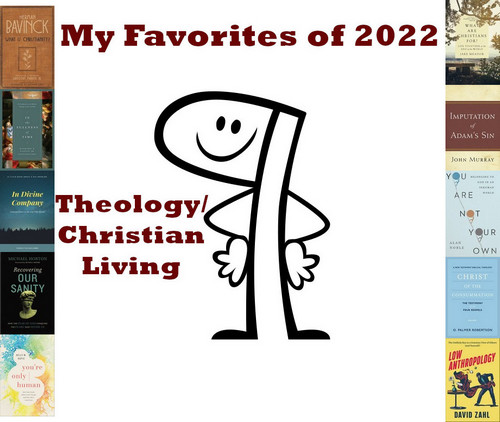
My Favorite Theology/Christian Living Books of 2022

My Favorite Theology/Christian Living Books of 2022
Finally, we’re at the end of my 2022 wrap-up. Thanks for sticking with me for so long! (assuming you have). At a certain point this year, it felt like I was reading a set all around similar/related ideas. The Kapic-Noble-Horton-Zahl books weren’t written in that way, but they hit me that way. I can’t think of one anymore without the others—that’s not the entire reason they all made my favorites list, but I can’t deny there’s a link. The rest are varied enough to show that I didn’t have tunnel vision all year.

As always, re-reads don’t count for these lists.

(in alphabetical order by author)
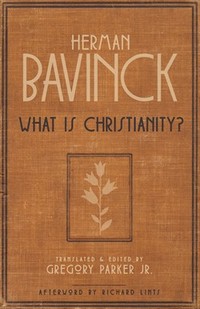
What is Christianity?What is Christianity?

by Herman Bavinck, Gregory Parker, Jr. (Translator)

My original post
These are two short works by the noted Dutch Theologian newly translated into English. Bavink is clear and convincing without being combative in this pair of brief apologetic pieces. Typically for him, he displays a catholicity in his approach—he’s clearly Reformed Protestant, but he doesn’t disparage other views. I don’t know he accomplishes all he does in so few pages—there’s a lot of subtle theological and apologetic work, here. But there’s also a lot that’s just easy to digest, clear and helpful. Bavinck gives his readers a Christ-centered, Christ-focused definition and description of Christianity (you’d think that’d be a given, but…). As Warfield put it, “We cannot imagine how the work could be done better.”

4 1/2 Stars

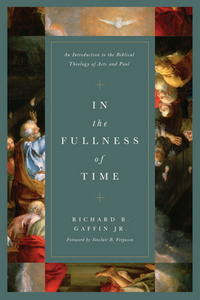
In the Fullness of TimeIn the Fullness of Time: An Introduction to the Biblical Theology of Acts and Paul

by Richard B. Gaffin, Jr.

I haven’t written about this yet, and I’m pretty intimidated to try. I loved every second of it—I felt like I was a beginning student and at the same time, like I was understanding texts with a depth I’m not accustomed to. There’s a lot of depth to Gaffin’s thinking—as one expects every time you read the man—but I thought this work was a bit easier to work through than some of his shorter works. There’s a strong focus on Pentecost and what it means for the rest of New Testament theology (as there should be). Gaffin also sketches out a way to approach Paul’s theology that’s so helpful you wish that it was at least twice as long so he could develop it more and give more examples (although everything in the book is sufficient, I’m just greedy). I’m likely returning to this book this year.

5 Stars

In Divine CompanyIn Divine Company: Growing Closer to the God Who Speaks

by Pierce Taylor Hibbs

My original post
A great work on prayer. Grounding our need for it not in our limitations or sense of need. Nor in the command to do so. Instead, Hibbs focuses on the nature of God as a communicative God and us as His image bearers. Hibbs being Hibbs, this is one of the better-written books on this list.

4 Stars

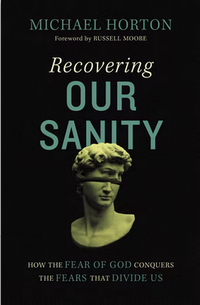
Recovering Our SanityRecovering Our Sanity: How the Fear of God Conquers the Fears that Divide Us

by Michael Horton

My original post
Horton seeks to address several issues facing contemporary American Christians through the filter of the fear of God—the basic thesis is that if we are maintaining that fear as we ought, it’s easier to maintain a proper perspective on our problems and concerns (as real and as valid as they are). There’s a lot of wisdom in these pages, a lot to chew on (and a handful of things to disagree with).
4 Stars

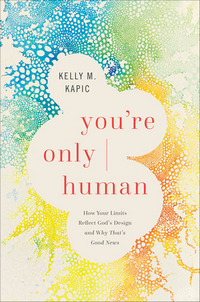
You're Only HumanYou’re Only Human: How Your Limits Reflect God’s Design and Why That’s Good News

by Kelly M. Kapic

My original post
Kapic seeks to apply the doctrine of Creation to remembering that we are created with limits—and, as such, we need to be dependent on one greater than us to help us when we are pushed beyond those limits. There’s a freedom in this realization—we can’t do it all and need to cut ourselves (and others) some slack. Although Kapic states it better than that. The book is a great combination of careful theology and careful application. It’s challenging and reassuring.
4 Stars

What Are Christians For?What Are Christians For?: Life Together at the End of the World

by Jake Meador

My original post
Meador wants to address American (specifically) and Western (generally) politics from a confessional and Natural Law perspective. He challenges positions and foundations of the Right and the Left calling us all to something deeper and better. And more Biblical. This is a careful book, one that I’m not convinced I completely understood on a first read, but I really appreciated what I did glean from it.
4 1/2 Stars

The Imputation of Adam's SinThe Imputation of Adam’s Sin

by John Murray

My original post
This is a very brief work—but as is typical for John Murray, he doesn’t need a lot of words to make his point. He focuses his arguments for the Imputation of Sin on a careful look at Romans 5:12-19. This book is typical Murray—crisp, clear, concise, and convincing. Sure, there’s the drawback that his prose is dry and empty of all personality. The book doesn’t need them (and I’d think it strange to read Murray with it). It’s easy to see why it’s still so heavily used this many years after publication.
4 Stars

You Are Not Your OwnYou Are Not Your Own: Belonging to God in an Inhuman World

by Alan Noble

My original post
American Christians are too prone to think of themselves as their own, Noble seeks to remind us that (in the words of the Heidelberg Catechism), “I am not my own, but belong with body and soul, both in life and in death, to my faithful Saviour Jesus Christ.” Noble points the believer to recalibrate their understanding of human nature—particularly redeemed human nature—to begin to understand what being the possession of Christ means to our life, our future, our identity. Noble’s writing flows—he’s engaging, compassionate, and relatable. It’s easy to understand even the more complex points he’s making, and his illustrations give the reader plenty to hang on to. Noble’s diagnosis and advice were sound—they seemed to match up with the world around us and the problems we see. More importantly, he points to the One whose grace, mercy, and care offer any true hope and help in this broken and dying world.
4 1/2 Stars

Christ of the Consummation:Christ of the Consummation: A New Testament Biblical Theology Volume 1: The Testimony of the Four Gospels

by O. Palmer Robertson

My original post
This is the first of a three-part exercise in applying the method of Biblical Theolgy for the New Testament as outlined by Vos. This volume focuses on the Gospels (obviously) and is a treasure from beginning to end. It’s not “here’s a whole new way to read/think about the Gospels”—and Robertson would be the last to want something like that. Instead, this is a “here’s a way to profitably consider the way these things were revealed” and “here’s how the Gospels build upon one another and build up each other.” It’s one of those books that mid-way through, you’re already trying to figure out when you can schedule a re-read.
5 Stars

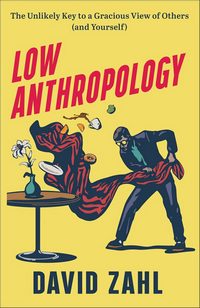
Low AnthropologyLow Anthropology: The Unlikely Key to a Gracious View of Others (and Yourself)

by David Zahl

My original post
Zahl’s concern is the way we think about human nature—our anthropology—not in some academic sense (or just that), but how, individually, what we believe about human nature impacts the way we live and think. A Low Anthropology remembers that we are dust, we are broken, we suffer, in short—we aren’t perfect. This is an engaging, frequently humorous, and grace-filled look at human frailty and how remembering we are that way (and that others are, too).

4 Stars

Reread Project: Faith & Life by B.B. Warfield: 41 Brief Bursts of Profundity

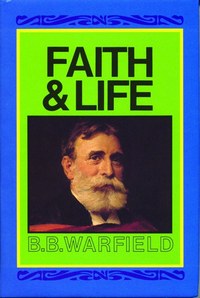
Faith & LifeFaith & Life

by B. B. Warfield

DETAILS:
Publisher: Banner of Truth
Publication Date: Dec 1, 1974
Format: Clothbound
Length: 458 pg.
Read Date: January 2-December 25, 2022
Support Independent Bookstores - Visit IndieBound.org


N.B.: I’ve revamped and slightly updated this from the last time I reread this.

What’s Faith & Life About?

Back when Princeton Seminary was the crown jewel of biblical Presbyterian training in the US, notable professors like Archibald Alexander, Samuel Miller, and Charles Hodge would have informal addresses for students on Sunday afternoons. B. B. Warfield, the lion of Princeton, continued this practice. These 41 chapters come from some of these addresses to the students.

They are roughly 10 (+/-2) pages long (the pages are on the small side, it should be noted), short, and to the point. They’re expositions of small pericopes of Scripture (primarily one or two verses, but he’ll often address the immediate context). Three chapters are from the Old Testament, with the rest from the New—the chapters are organized by canonical order, not by any particular themes or lines of thought.

So, what did I think about Faith & Life?

I went skimming over the Table of Contents to pick out a few highlights—and I’m having a real problem. Almost every one is a gem. “Prayer as a Means of Grace” and “Prayer as a Practice” were very helpful—the latter was slightly better. “New Testament Puritanism” was great. Despite the reputation men like Warfield have, the chapters involving the work of the Holy Spirit were all tremendous. “God’s Holiness and Ours” was fantastic. I could keep going here, but it wouldn’t be long before I copied the Table of Contents.

For being the exemplar of “old Princeton,” with all the rigor and scholarship that entails—these addresses help us remember that even stalwarts like Warfield, who are known for strong stances on doctrinal issues—were men with vibrant faith, even a sense of humor.

With a couple of breaks for illnesses, travel, etc. I read a chapter each Lord’s Day. It was like sitting down with a trusted friend to talk about the Bible for a couple of minutes. I’m going to miss doing that going into the next year. I last did this back in 2013, and won’t let myself wait as long for the next time through.

Faith & Life is everything Christian scholarship should be—warm, Christ-centered, practical, and doxological. It’s also everything that Christian devotional material should be—careful, sound, and deliberately orthodox. Highly recommended.


5 Stars

This post contains an affiliate link. If you purchase from it, I will get a small commission at no additional cost to you. As always, the opinions expressed are my own.

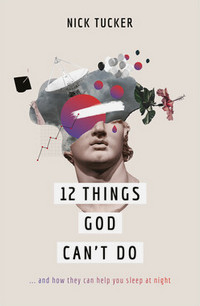
12 Things God Can’t Do by Nick Tucker: 12 Reassuring Truths

12 Things God Can't Do12 Things God Can’t Do:
…and How They Can Help
You Sleep at Night

by Nick Tucker

DETAILS:
Publisher: The Good Book Company
Publication Date: May 31, 2022
Format: Paperback
Length: 184 pg.
Read Date: December 4-18, 2022
Support Independent Bookstores - Visit IndieBound.org

What’s 12 Things God Can’t Do About?

A lot of Theology Proper is negative*—God can’t do this, He can’t do that, He won’t do another thing. This has been the case since the beginning and is still true today.

* A lot of the rest is the omni- attributes. Theology Proper is really an all-or-nothing kind of thing.

Nick Tucker wants the believer to consider 12 of the things God cannot do. No, we’re not talking about foolishness like “Can he make a rock so heavy that he can’t lift it?” These are the big things—the stuff a faith (collective and individual) can be built on.

But…God…

Along with these 12 things, Tucker pauses for five interludes. These interludes look at things the God-man, the Incarnate Word, could and did do. He could learn, He could be tempted, and He did sleep. As He took on humanity, The Son was now capable of these things—and that’s proof of His humanity. He became truly human—and as such, He could (and did) redeem us.

So, what did I think about 12 Things God Can’t Do?

I’ve read a handful of books on the attributes of God over the last few years (and have one more scheduled), but this one approaches the idea from a very different perspective. Well, most of the other books touch upon Tucker’s purpose, but they have other things going on—Tucker’s more single-minded.

Most books on the topic are about advancing or defending orthodoxy, buttressing right thinking about God (and it is right to do so). Tucker’s focused on what the believer is to do with orthodoxy. What’s the whole point of understanding who God is? It’s for the reassurance, confidence, hope, and comfort of the believer—look at the way the Psalmists, prophets, and apostles used these doctrines. Reflecting their priorities, Tucker points the reader to these can’ts.

We can sleep well at night, knowing that God will not slumber. We can trust His promises because He can’t change or lie. And so on. Which makes this book one of the more rewarding reads I’ve come across lately.

Tucker writes in a simple, clear, and straightforward style. There’s a little gentle humor in his illustrations and style—but the book isn’t a showcase for Tucker’s writing. He writes to point the reader to God. This book is encouraging, devotional, and should lead to doxology. It’s wholly sound, and easy to read and, in turn, to lead to trust. It’s well worth the short time it takes to read and re-read.


4 Stars

This post contains an affiliate link. If you purchase from it, I will get a small commission at no additional cost to you. As always, the opinions expressed are my own.

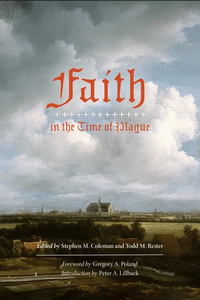
SICK LEAVE REPOST: Faith in the Time of Plague Edited by Stephen M. Coleman and Todd M. Rester: Reformation and Post-Reformation Voices Speak to Our Moment

Wasn’t feeling well enough to finish a post for today, and given my recent test results, I thought of this book–something I’m pretty sure Westminster Seminary Press wouldn’t have put out without a certain pandemic.

Faith in the Time of Plague

Faith in the Time of Plague

Edited by Stephen M. Coleman and Todd M.Rester

Hardcover, 309 pg.
Westminster Seminary Press, 2021

Read: November 7-December 12, 2021

The main point? Two rocks must be steered clear of: stupid boldness and exceedingly vicious fear. On the first, one does those things that while we fear nothing—would often lose ourselves and others. On the second it happens that as we would look to our own life, we would desert the work of Christ. Therefore, let us fear what can happen if we fail to avoid those evils. But let us be confident in the Lord and let us remain as steadfast as possible—even to the point of death—in our calling and in the work of Christ.

What’s Faith in the Time of Plague About?

The Editors describe the book like this:

The body of extant plague writings is vast and much of it remains unavailable in English. The selections in this book were determined to a great extent by the treasures that came to light in translating the 1655 pamphlet Variorum tractatus theologici de peste, which makes up Part I of the book. This collection of tracts is an unparalleled Post-Reformation treatment of the plague, from pastoral and scholarly points of view. Part II consists of those Reformation and Post-Reformation works that Beza, Rivet, Voetius, and Hoornbeeck [the authors in Part I] engaged with frequently (Zanchi, Abbot, and Ursinus). Alongside those pieces are additional contemporary works that we felt would be especially useful for pastors, scholars, and interested readers to have available in book form (Zwingli, Luther, Lavater, and Rawlet), and which give the reader a more complete picture of the Reformed tradition’s branch of plague writings. Each of these eleven authors addresses the unique questions posited by the plague in distinct ways, yet each does so by definitively Reformed methods—grounded in Scripture, historically informed, and always with the issue of faith in Christ at the forefront.

There are also two appendices, On Mortality by Cyprian of Carthage—a work that multiple authors in the main texts refer to (and likely shape even those who don’t) and the section Prayer and Thanksgiving from the Book of Common Prayer—an application of all the theology of the main texts.

Part 1: Variorum tractatus theologici de peste

The various works in part one are careful, methodical, Scriptural, and thorough—they cover all the bases. The treatise by Beza seems to both reflect the thinking of the rest of the Reformation as much as it shapes everything that comes after (or at least everything in the book).

Some parts of this took some work to get through, but it was worth it.

Part II: Reformation and Post-Reformation Plague Writings

Others sin on the right hand. They are much too rash and reckless, tempting God and disregarding everything which might counteract death and the plague. They disdain the use of medicines; they do not avoid places and persons infected by the plague, but lightheartedly make sport of it and wish to prove how independent they are. They say that it is God’s punishment; if he wants to protect them he can do so without medicines or our carefulness. This is not trusting God but tempting him. God has created medicines and provided us with intelligence to guard and take good care of the body so that we can live in good health.

For me, this part of the book (roughly a third) was the most rewarding. Luther’s Whether One May Flee from a Deadly Plague covered most/all of the points in Part I, but in a pithier and more digestible fashion. Which is what you expect from Luther, right?

Zwingli’s Plauge Hymn is great. I really don’t know what else to say.

The most moving, the most personal entry in the volume is John Rawlet’s A Letter to my Mother is clearly part of that preparation for death mentioned in the post last week. In this printing, it’s an eleven-page letter* written by an Anglican minister in London sure he was soon to contract the plague and die. He was wrong about contracting the plague and never sent the letter—but he was ready for it.

* Hard to fathom in the age of texts, tweets, and email.

An Unimportant Observation

I’m pretty sure I’ve never run into the word “licit” as often as I have in this work. Like most people (especially those who read a lot of Crime Fiction), I run across “illicit” all the time. But “licit”? Almost never.

Maybe it’s a quirk of the translators, but I doubt it. It’s just refreshing to see the word—and it’s one I’m going to try to use more often.

So, what did I think about Faith in the Time of Plague?

One thing that struck me was how often these Reformation authors appealed to earlier theologians (like Cyprian). But largely not about plagues or other diseases. Instead, it was how they approached the response to persecution—could believers flee from it, or do they have to run toward it or simply wait for it? Both persecution and disease come from the Lord—as both trial and result of sin.

I have to say, I’m not sure I’d have approached it that way before.

Those looking for easy answers to “how would the early Church or Reformers” deal with COVID-19 (or the like)”, will be disappointed. There are no quick and easy answers here. But this can remind readers that the Church has been through similar—and worse—times before. She likely will again. There have been careful, pastoral responses to it in the past, and that can be true again. We don’t have to have a snappy, one-size-fits-all approach at the first sign of trouble, but we are called to gracious, Christ-honoring, people-serving responses.

These are some excellent examples of how to do it. This isn’t the easiest, breeziest thing I’ve read this year—it might even be the furthest from it. But it’s an invaluable resource and I’m glad Westminster Seminary Press brought it to us.

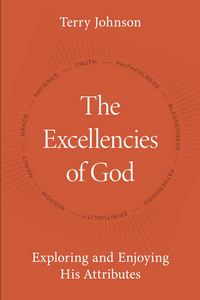
The Excellencies of God: Exploring and Enjoying His Attributes by Terry Johnson: Not Quite as Good as Its Predecessor but Worth Your Time

The Excellencies of GodThe Excellencies of God:
Exploring and Enjoying
His Attributes

by Terry Johnson

DETAILS:
Publisher: Reformation Heritage Books
Publication Date: October 23, 2022
Format: Hardcover
Length: 347 pg.
Read Date: October 23-November 20, 2022
Support Independent Bookstores - Visit IndieBound.org

The Excellencies of God‘s Jacket Copy

God’s attributes is the most practical of subjects, inspiring and shaping the entire Christian life. Contemplating who God is and what He has promised to do can bring great comfort to the most despairing soul. Moreover, it brings immense delight to all those who recognize their chief end as the glory and enjoyment of God. In The Excellencies of God, Terry L. Johnson explores several aspects of the divine character and shows how they play a crucial role in our Christian experience. May God’s mercy and grace, His patience and wisdom, His truth and faithfulness, His spirituality and blessedness prove to be a blessing to all who peruse these pages.

The Table of Contents

That’s kind of vague, so let’s look at the TOC.

Preface
Introduction: The Christian and the Attributes
The Mercy, Grace, and Patience of God
1. The Mercy of God
2. The Grace of God
3. The Patience of God
The Truth and Faithfulness of God
4. The God of Truth
5. Liberating Truth
6. Pursue and Proclaim the Truth
The Blessedness of God
7. The Blessed God
8. Our Blessedness in God
The Fatherhood of God
9. God Our Father
10. Pleasing Our Father
11. Our Father’s Children
12. Our Father’s Care
The Spirituality of God
13. The God Who Is Spirit
14. Serving an Invisible God
15. Spiritual Mindedness
16. Spiritual Worship
17. True Worship
The Wisdom of God
18. God Only Wise
19. Wisdom and Folly
20. Seeking and Submitting to God’s Wisdom

So, what did I think about The Excellencies of God?

I struggled to write a post about Johnson’s The Identity and Attributes of God two years ago, and I find myself in a similar position now with this follow-up. I went with the bare minimum above because it fits the book—Johnson lays things out very matter-of-factly, and you get exactly what the TOC lists. He takes each thought and explains it using citations from Scripture, the Fathers, Reformers, and some contemporary writers—with some illustrations of hymns.

I have the impression that Johnson gives 50-60% of the text, and the rest are quotations (mostly a sentence or less). I did not (would not) try to verify that—and I’m pretty sure I’m wrong, but that’s my impression as a whole. I wanted more of Johnson and less of everyone else. I think this is about the same as the previous volume, and I had a similar thought about it—but overall it was so good, I didn’t care. This book was a little less impressive so it stuck out to me more.

I don’t think I get the selection of the major topics and how they flowed one from the other—the chapters within each topic, on the other hand, flowed nicely.

Is this a decent read? Yeah, but it tends to the dull-side with the repeated quotations. But beyond that, it’s a pretty straightforward and thorough look at the topics. It’s helpful, it should push you to look more into some of the ideas that you find more provocative (and the footnotes will help with that). It’s sound and measured, majoring on the majors and not really spending time on minor issues.

It’s a good book that I can recommend without hesitation, I just wanted more from it.


4 Stars

This post contains an affiliate link. If you purchase from it, I will get a small commission at no additional cost to you. As always, the opinions expressed are my own.

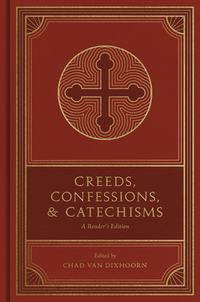
Creeds, Confessions, and Catechisms: A Reader’s Edition edited by Chad Van Dixhoorn

Creeds, Confessions, and CatechismsCreeds, Confessions, and Catechisms: A Reader’s Edition

edited by Chad Van Dixhoorn

DETAILS:
Publisher: Crossway
Publication Date: June 21, 2022
Format: Clothbound
Length: 434 pg.
Support Independent Bookstores - Visit IndieBound.org

What’s Creeds, Confessions, and Catechisms: A Reader’s Edition?

This is a collection of Ecumenical Creeds and some of the most-used Protestant Confessions and Catechisms. These are:
bullet The Apostles’ Creed
bullet The Nicene Creed
bullet The Athanasian Creed
bullet The Chalcedonian Definition
bullet The Augsburg Confession
bullet The Belgic Confession
bullet The Thirty-Nine Articles of Religion
bullet The Canons of Dort
bullet The Westminster Confession of Faith
bullet The London Baptist Confession
bullet The Heidelberg Catechism
bullet The Westminster Larger Catechism
bullet The Westminster Shorter Catechism

Each document is given a 1-2 page introduction by the editor describing “its origins and significance” to the church (as the Publisher puts it).

As I’m not foolhardy enough to give pluses and minuses (or whatever) when it comes to the matieral, so this isn’t going to be my typical kind of post.

Questions I Had

While reading through this collection, I had a few questions about why Van Dixhoorn selected certain Confessions (no offense, Lutherans and Baptists) or why he picked particular translations of some of them. And I’d intended to spend a little time discussing them and speculating about the answers. But then I read on Crossway’s site that this book was “Adapted from ESV BIble with Creeds and Confessions,” so I guess that edition of the ESV probably did the selecting in the first place and Van Dixhoorn stuck with that.

Why Should You Buy Creeds, Confessions, and Catechisms: A Reader’s Edition?

bullet It’s very attractive—the cover design is top-notch. The interior layout is pleasing to the eye and easy to read. The paper is nice and thick. It looks good on your shelf or in your hands. On the one hand, this is a minor point—but it’s a big selling point for a reference work.
bullet Along those lines, the binding and everything makes me think this is going to last a long time—and through repeated readings.
bullet The way it’s typeset and laid out would make it easier as a copy to read through some or all of the contents. I’ve got multiple copies of most of these documents, and a lot of them aren’t easy to read—they’re more things you consult briefly. This is one I could sit down with regularly and just read.
bullet That’s what it’s designed for—to read. It’s right there in the title. This isn’t an edition for people who are doing scholarship or research. You’ve got Schaff for that—or James Dennison’s set.
bullet Especially if you’re looking for an introduction to the Protestant standards, this is a handy edition and guide to the essentials.
bullet Van Dixhoorn’s introductions are user-friendly and helpful to orient the reader to the origin, concerns, and highlightings of each document.

This post contains an affiliate link. If you purchase from it, I will get a small commission at no additional cost to you. As always, the opinions expressed are my own.

Christ of the Consummation, Vol. 1 by O. Palmer Robertson: The Beginning of A Wonderful Trilogy

Christ of the Consummation:Christ of the Consummation:
A New Testament Biblical Theology
Volume 1: The Testimony of
the Four Gospels

by O. Palmer Robertson

DETAILS:
Publisher: P & R Publishing
Publication Date: June 1, 2022
Format: Paperback
Length: 321 pg.
Read Date: August 7-28, 2022
Support Independent Bookstores - Visit IndieBound.org

In these new phases of redemptive history, the heart of the revelation does not change, but it broadens and deepens in the realities of the truth. Jesus Christ is the same, but his church, his precious bride, is being built by the addition of nations being born in a day as a consequence of Christ’s pouring out the gifts of his Spirit on all flesh. The kingdom of God has come and continues to come. The kingdom of God is yet to come. It will arrive in all its fullness on that day, the great judgment day, the day of resurrection and restoration of all things. To God be the glory for the things he has done, is doing, and yet will do.

What’s Christ of the Consummation, Volume 1 About?

At some point when reading Vos’ Biblical Theology most readers like me* start to wonder, “How is he doing to have time to cover the New Testament? While Vos doesn’t give his readers the same kind of insight into the history of revelation of the NT as he does the OT, he does set out some principles. Robert’s work is the first book-length attempt to apply Vos’ directions to apply his method to the NT (actually, the first of three book-length attempts).

That’d be people who didn’t know what was coming from pre-knowledge about the book or reading the Table of Contents.

He begins by stating the difference between the two works—there are centuries upon centuries of history of OT revelation, and a maximum of one from the announcement of Jesus’ birth to Mary to the end of John’s writing on Patmos. But that doesn’t mean that there’s no development, but how best to approach that? Robertson focuses on three distinctives in his approach:

  1. Retracing the Historical Progression across the Various Phases of New Covenant Revelation as the Organizing Principle
  2. The Foundational Role of the Old Covenant Scriptures
  3. Contemporary [to their writing] Application of New Testament Biblical Theology

With these distinctives in mind, Robertson looks at material concerning Jesus’ self-testimony; various phases of His life and work; the progressive revelation of the Kingdom during His life; His death, burial, resurrection, and ascension; and then he moves into closer looks at the various Gospels individually and corporately.

An Unexpected Bonus

A number of times throughout the text Robertson will hit pause on his exegetical work, the historical reflections, or the interpretative/theological conclusions from those, to offer application to the lives and hearts of the reader. Sometimes a broader or more general call and sometimes it’s a narrow focus. I really didn’t expect these at all, and I almost never saw them coming when he did pause for one. But I appreciated them all and found them to be a real enhancement to the work.

So, what did I think about Christ of the Consummation, Volume 1?

I’m clearly not qualified to evaluate Robertson’s application of Vos, but people like D.A. Carson and Richard Gaffin are, so I’ll take their word for it. Sure, they wrote the forward and a “further word” for this book, so it’s not like we’re talking about impartial evaluations.

Nor am I capable of—or willing to—give this a good and thorough review/evaluation. Although I do wish I could. So let me offer a few thoughts from my perspective as a lay reader. And I do think this is a book written with the layman in mind—it’s not a casual read by any means, but it is not a book solely for scholars.

I’m not sure I’ve read a Christian book this year that has made me think more, read slower/closer, and pushed my thinking more. It’s also been the most rewarding and I think it will prove the most fecund for my future reading, study, and devotion.

At the same time, the number of times that I read something I don’t think I’d ever been exposed to, or that was wholly novel to me is so small as to be negligible. This is not to say that it was all review or that he didn’t make me stop and think for a minute or ten to consider a point before moving on. But on the whole, it’s a reframing and refocusing of many things I’ve read in lay-friendly works or heard in sermons/lectures. It’s not “here’s a whole new way to read/think about the Gospels”—and Robertson would be the last to want something like that. Instead, this is a “here’s a way to profitably consider the way these things were revealed” and “here’s how the Gospels build upon one another and build up each other.”

I’m already trying to figure out when I can get in a re-read without ruining plans for next year—possibly in combination with a re-read of Vos’ Biblical Theology so I can more directly see for myself the connections between the two works and Vos’ influence.

This is the first in a trilogy—if the rest of the trilogy is as good as this one, the series will likely end up on shelves everywhere next to Vos. I know I’m already ready to dive into the next volume.


5 Stars

This post contains an affiliate link. If you purchase from it, I will get a small commission at no additional cost to you. As always, the opinions expressed are my own.

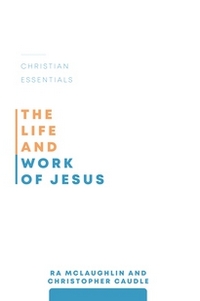
The Life and Work of Jesus by Ra McLaughlin and Christopher Caudle: A Broad and Capable Introduction to Christology

The Life and Work of JesusThe Life and Work of Jesus

by Ra McLaughlin and Christopher Caudle

DETAILS:
Series: Christian Essentials 
Publisher: P & R Publishing
Publication Date: April 26, 2022
Format: Paperback
Length: 286 pg.
Read Date: October 8-23, 2022
Support Independent Bookstores - Visit IndieBound.org

What’s The Life and Work of Jesus About?

One of the advantages of this series is that I can largely recycle what I said about the first volume (I tried to come up with something new, but it felt like I was wasting time reinventing it).

This is a basic and broad introduction to Christology—starting with the idea of a savior and dealing with the overall plan of salvation before moving into seeing the outworking of that idea in history through the Incarnation and Jesus’ life, death, and resurrection. Then it moves into a discussion of the offices Christ executes (prophet, priest, and king)–looking at them in the OT shadows, Christ’s fulfillment of them on Earth and now. It’s adapted from curriculum using language that’s easy to translate—particularly into languages that don’t have a well-developed theological vocabulary—so the English is kept basic, too. There’s almost no academic or technical theological language used, and those that are used are well-defined (including in a handy glossary).

The chapters are short (most around fifteen pages) and well-organized. Each contains a handful of side-bars consisting of a paragraph or two with the contents of interviews with pastors and theologians on the topic under discussion. These interviews were with people from a variety of theological perspectives helping broaden the text so that it’s not exclusively from a reformed perspective.

So, what did I think about The Life and Work of Jesus?

I wasn’t blown away by this, but I liked it. It was a good, basic but thorough introduction to both the life and work of Jesus. After the first book in the series, I thought I knew what to expect from this book–and got it, with a little bit more. I’d say these authors covered their topics a bit more thoroughly than the previous book did (but just a bit). I’m not as convinced that the sidebars were as helpful this time out, however, so maybe things evened out.

I didn’t stumble onto anything problematic in this work like I did in the previous one, which was very encouraging.

All in all, this is a solid work that would be great for a new believer or a young student looking to get a better grounding. It’s broad enough to appeal to any evangelical but solid enough to work for those who tend to prefer a bit more precision.


3 Stars

This post contains an affiliate link. If you purchase from it, I will get a small commission at no additional cost to you. As always, the opinions expressed are my own.

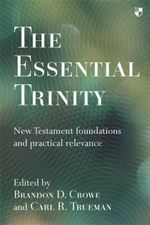
REPOSTING JUST CUZ: The Essential Trinity by Brandon D. Crowe and Carl R. Trueman, eds.

(the title’s not entirely true…there’s another re-run because I couldn’t stay awake Saturday to finish a new post. But there’s no event correlating with selecting this book. I’ve got three books to post about in the Sunday evening slot, hopefully you’ll see one of them here next week.)


The Essential Trinity The Essential Trinity: New Testament Foundations and Practical Relevance

by Brandon D. Crowe and Carl R. Trueman, eds.

Paperback, 273 pg.
Inter-Varsity Press, 2016

Read: July 31 – August 14, 2016

As far as consistency of quality amongst edited volumes goes, Crowe and Trueman have assembled one of the stronger line-ups I’ve read in a while — men from a spectrum of persuasions of Evangelical-ish thought have given the Church fourteen articles (approximately 20 pages each) to deepen our thinking about the Trinity. The aim was for a volume that “eschews overly technical discussion and focuses attention on the importance of the doctrine for every Christian.”

In Part 1, the articles look at the “trinitarian contours of every corpus of the New Testament, along with a chapter reflecting on the Old Testament roots of trinitarian doctrine.” If there are weak chapters in the volume, they’re in this part — but they aren’t that weak, either. Crowe’s chapter on Matthew is excellent, but the chapters on the Mark, Luke-Acts and John aren’t far off that Mark. Brian S. Rosner’s chapter on “Paul and the Trinity” is worth the price of the book. The chapters on the rest of the epistles are very helpful (particularity Hebrews). Mark S. Gignilliat’s article, “The Trinity and the Old Testament: real presence or imposition?” is very helpful and insightful — and as an added bonus, it’s the most stylistically entertaining and engaging piece in the book.

Benjamin Gladd’s chapter exploring Daniel’s influence on Revelation’s view of the Trinity is the biggest mental workout you’ll get in the book. I appreciated the material covered and the argument Gladd makes, but I’m going to have to read it a few more times before I think I have a good handle on it.

Part 2 addresses the importance of the Trinity for everyday living — many would say the doctrine is impractical and only belongs in Statements of Faith and academia. The authors here show the fallacy of that. It begins with a brief, but excellent, description of the doctrine by Scott R. Swain. Carl Trueman has the next chapter, “The Trinity and prayer,” which is probably as valuable as Rosner’s — it’s actually about more than prayer, but the material specifically on prayer is great — hugely indebted to John Owen (but not uncritically so). Robert Letham’s chapter on “The Trinity and worship” also draws deeply from Owen; if he doesn’t move you to worship as you understand the work of the Trinity in it, you aren’t paying attention (I probably have more problems with some of what he says than anything else in the book). Michael Reeves, typically, made me chuckle in his chapter on preaching — but he did more than that, too.

Timely, convicting, thoughtful and inspiring, this examination of the Trinity in Scripture and Life should be a great benefit to any believer ho reads it. It may not be the easiest thing read all year (but really, it’s not that difficult), but it’ll be one of the most rewarding.

—–

4 Stars

REPOSTING JUST CUZ: Heaven on Earth by Thomas Brooks

Heaven On EarthHeaven On Earth

by Thomas Brooks

ebook
originally published 1654
Read: May 11 – 25, 2014

I just might have myself a new favorite Puritan (I’m not the only one who has a list, right?). I’m kicking myself for not getting to Brooks earlier in life. What a wonderful book — I’m looking forward to getting to read more by him.

Aesthetically, this is fantastic. The language sings — the book begs to be read aloud (and I frequently did so, interrupting whatever anyone around me was doing). You can feel the passion, the fervor throughout. A few paragraphs from different chapters illustrate this:

Divine light reaches the heart as well as the head. The beams of divine light shining in upon the soul through the glorious face of Christ are very working; they warm the heart, they affect the heart, they new mold the heart. Divine knowledge masters the heart, it guides the heart, it governs the heart, it sustains the heart, it relieves the heart. Knowledge which swims in the head only, and sinks not down into the heart, does no more good than the unicorn’s horn in the unicorn’s head.

The only ground of God’s love is his grace. The ground of God’s love is only and wholly in himself. There is neither portion nor proportion in us to draw his love. There is no love nor loveliness in us that should cause a beam of his love to shine upon us. There is that enmity, that filthiness, that treacherousness, that unfaithfulness, to be found in every man’s bosom, which might justly put God upon glorifying himself in their eternal ruin, and to write their names in his black book in characters of blood and wrath. God will have all blessings and happiness to flow from free grace.

Faith is the first pin which moves the soul; it is the spring in the watch which sets all the golden wheels of love, joy, comfort, and peace a-going. Faith is a root-grace, from whence springs all the sweet flowers of joy and peace. Faith is like the bee, it will suck sweetness out of every flower; it will extract light out of darkness, comforts out of distresses, mercies out of miseries, wine out of water, honey out of the rock, and meat out of the eater, Judg 14:14.

But beyond that, the book is sound, it is orthodox, it is Biblical — throughout Brooks points the reader to The Book and The One Who inspired it. His aim is to show “that believers may in this life attain unto a well-grounded assurance of their everlasting happiness and blessedness.” He then goes on to examine the nature of that assurance, hindrances that keep believers from it, reasons to encourage believers to seek it, and how they can go about it, the difference between true and counterfeit assurance, as well as answering questions about assurance. Examining the doctrine from so many angles, you really feel (and probably do) that you come away from this book having an exhaustive look at the doctrine.

Chapter 6 — which takes more than its fair share of space, almost half of the book — is an extended detour from the point of the book, but it still serves to support the theme. He begins by saying, “In the previous chapter, you saw the seven choice things which accompany salvation. But for your further and fuller edification, satisfaction, confirmation, and consolation, it will be very necessary that I show you,” these seven choice things. Which are:

(1.) What knowledge that is, which accompanies salvation.
(2.) What faith that is, which accompanies salvation.
(3.) What repentance that is, which accompanies salvation.
(4.) What obedience that is, which accompanies salvation.
(5.) What love that is, which accompanies salvation.
(6.) What prayer that is, which accompanies salvation.
(7.) What perseverance that is, which accompanies salvation.

It is such a great chapter, and would make a remarkable little booklet unto itself that I really can’t complain too much that it’s such a departure from the rest of the book (though it did take me a little bit to get used to the notion).

Banner of Truth puts this out in paperback, monergism.com puts this out as a free e-book. Either way you go for it, this is a treasure I heartily suggest you grab.

—–

5 Stars

Page 10 of 22

Powered by WordPress & Theme by Anders Norén