Tag: Theology Page 14 of 22

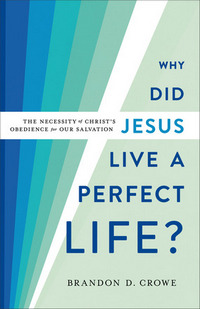
Why Did Jesus Have to Live a Perfect Life? by Brandon D. Crowe: Obedience that Actually Saves

Why Did Jesus Have to Live a Perfect Life?Why Did Jesus Live a Perfect Life?:
The Necessity of Christ’s Obedience for Our Salvation

by Brandon D. Crowe

DETAILS:
Publisher: Baker Academic
Publication Date: October 26, 2021
Format: Paperback
Length: 189 pg.
Read Date: December 19-26, 2021
Support Independent Bookstores - Visit IndieBound.org

What’s Why Did Jesus Have to Live a Perfect Life? About?

Crowe seeks to focus on this question:

Is perfect obediencce necessary for enternal life?

The question could be rephrased a number of ways; Is perfect obedience necessary for justification? Is perfect obedience necessary for salvation? Did Jesus have to be perfectly obedient in order to save us? And if so, why?

Obviously, he says it is necessary—noting that we’ll underplay and miss all of what Christ did on our behalf and that we’d end up putting too much importance on our own works.

After Crowe establishes the question and ensures that the reader understands the definitions he’s using for the key terms, he turns to the Biblical text for some exegetical looks at key texts. This is, as it should be, the bulk of the book. In the third part of the book, he moves on to practical application—given what’s been said about the necessity of Christ’s perfect obedience, what’s the place of/need of the obedience and good works of the believer?

So, what did I think about Why Did Jesus Have to Live a Perfect Life??

I appreciated Crowe’s approach to the topic of Christ’s obedience—and, as usual, found his study of the texts to be helpful and challenging. The place of works in the Christian life too often is pitted against the obedience of Christ, or tied to it in an unbiblical fashion–Crowe’s discussion was more than helpful and I wish I saw more works like it.

A couple of highlights from the book for me were that third part about obedience and the last chapter in the exegetical part. In that chapter, Crowe examines the connection between Jesus’s obedience and the resurrection. That discussion tied in nicely to his 2020 book, The Hope of Israel: The Resurrection of Christ in the Acts of the Apostles (one of those books I still think about).

This is a careful overview of the topic, and will reward a similarly careful read. By design, he doesn’t posit anything revolutionary or new—it’s a restatement and reminder of what Reformation churches have been teaching for centuries. Even so, it’s something we need to be reminded of.


4 Stars

This post contains an affiliate link. If you purchase from it, I will get a small commission at no additional cost to you. As always, opinions are my own.

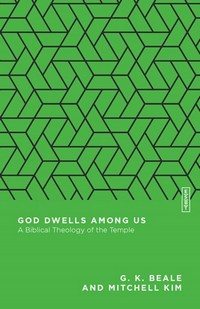
God Dwells Among Us by G. K. Beale and Mitchell Kim: Eden, the Once and Future Temple

God Dwells Among UsGod Dwells Among Us:
A Biblical Theology of the Temple

by G. K. Beale, Mitchell Kim

DETAILS:
Series: Essential Studies in Biblical Theology
Publisher: IVP Academic
Publication Year: 2014, 2021 (in this format)
Format: Paperback
Length: 153
Read Date: January 2-10, 2022
Support Independent Bookstores - Visit IndieBound.org

What’s God Dwells Among Us About?

The book opens describing Eden as the first temple on Earth—the dwelling place of God on Earth, that Israel’s Tabernacle and Temple would mirror. After Adam and Eve failed their probation, their duties to the temple, by letting the serpent and sin pollute it. After establishing that, Beale and Kim show how Adam and Eve were to spread Eden—spread the worship and image of God—throughout the world.

This call is, while changed due to the Fall, reiterated to the Patriarchs, seen in the Tabernacle and Temple. The Prophets declare Eden’s restoration to come, and the new Temple is established in Christ and begins expanding through the Church. This new Temple is served by a kingdom of priests who serve those around them as they worship God. Eden, then, will be completely restored in the New Earth.

That’s 134 pages reduced to 136 words,* so obviously I’m leaving a lot out. But that’s the gist.

* How cool would that have been if I’d accidentally got that to 134 words?

The Last Two Chapters

I’m pretty sure that the last time I read this, I focused on chapters 1-9, the more theoretical and exegetical portions. This time—I appreciated and learned from those chapters, but these last two grabbed me.

Chapter 10, “‘Why Haven’t I Seen This Before?’: Seeing the Purpose of God’s Dwelling Place in Eden,” addresses an important question. How can believers who’ve spent years reading the Scriptures not have seen this? They sketch out some factors, like a difference in cosmology a defective understanding of the unity of the Biblical message, a weak view of typology, and a different understanding of what a “literal” fulfillment of prophecy entails. I thought this chapter and the hermeneutical ideas it put forward were very insightful.

The final chapter, “Concluding Practical Reflections: Foundational Convictions for Sacrificial Mission in the Temple” is notable not only for the practical, applicatory perspective; but also for the emphasis on missions. It’s important to see that this isn’t just theology, this is a call to a way of life. Too often books like this can seem to forget that (sometimes they actually do), there’s no way to think that about this book.

So, what did I think about God Dwells Among Us?

I said something earlier about reading this book before—it was originally published in 2014, and then re-released as part of the Essential Studies in Biblical Theology series. Somewhere I got the impression that it had been revised somewhat as part of being brought into the series—I think that was an error on my part. Oh well, it was good to re-read it anyway.

As the text pre-dates the series, it has a different feel than the others—I liked that about it.

This was accessible, approachable, and beneficial to life and mind. Beal and Kim are great at both shining a light on the text and bringing it to bear on the reader. This is one of the more useful and valuable entries in this really good series and I’m glad to recommend it to you.


4 Stars

This post contains an affiliate link. If you purchase from it, I will get a small commission at no additional cost to you. As always, opinions are my own.

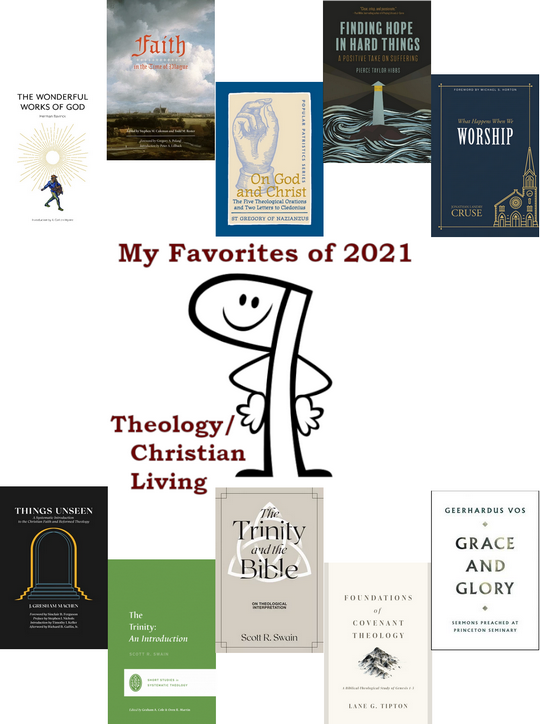
My Favorite Theology/Christian Living Books of 2021


Unlike 2020, when I posted about almost nothing I read in this category, I was much stricter with myself and posted about everything. I don’t know if anyone else appreciated or benefited from it, but I sure did. It also made this post a lot easier 🙂

As always, re-reads don’t count for these lists. It’s a self-imposed rule, so I don’t feel too bad about playing fast and loose with the rule for a couple of these entries.

(in alphabetical order by author)

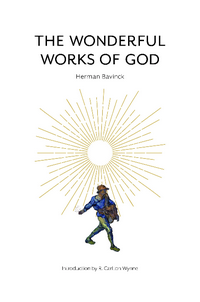
The Wonderful Works of GodThe Wonderful Works of God

by Herman Bavinck

My original post
Bavinck boiled down the material covered in his four-volume Reformed Dogmatics into this “simple explanation of the Christian faith in a book of modest scope.” It’s a pastoral work, a compassionate work, and one that will repeatedly point to the Gospel as well as the Majesty of the Triune God.

5 Stars

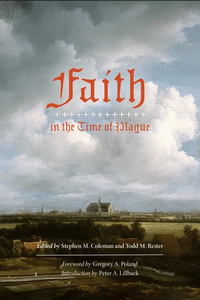
Faith in the Time of PlagueFaith in the Time of Plague

Edited by Stephen M. Coleman and Todd M.Rester

My original post
This is an anthology of “plague writings” from (primarily) Reformation and post-Reformation era pastors and theologians, to show how leaders in the past dealt with times of widespread communicable disease. Those looking for easy answers to “how would the early Church or Reformers” deal with COVID-19 (or the like)”, will be disappointed. There are no quick and easy answers here. But this can remind readers that the Church has been through similar—and worse—times before. She likely will again. There have been careful, pastoral responses to it in the past, and that can be true again. We don’t have to have a snappy, one-size-fits-all approach at the first sign of trouble, but we are called to gracious, Christ-honoring, people-serving responses.

4 Stars

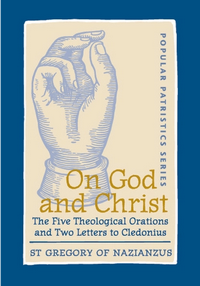
On God and ChristOn God and Christ, The Five Theological Orations and Two Letters to Cledonius

by Gregory of Nazianzus, Translators: Frederick Williams & Lionel Wickham

My original post
These sermons were pivotal in the development of the position behind the modification to the Nicene Creed at the Council of Constantinople. It’s full of technical Trinitarian language, so it’s not the easiest thing to read. But with a lot of care, it’s rewarding. These sermons have lasted since the Fourth Century because they’re useful, educational, approachable, and understandable. The translator calls them “as much high art as high theology” in his introduction. This is a man who cares about what he’s talking about—this is important to him, important to his opponents, important to his audience, and therefore it must be dealt with carefully, with precision, and clearly. All of which translates well to us today.

5 Stars

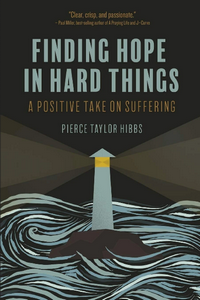
Finding Hope in Hard ThingsFinding Hope in Hard Things: A Positive Take on Suffering

by Pierce Taylor Hibbs

My original post
The central thesis of the book is: hard things are going to shape us in ways easy things can’t. He develops this thesis through a collection of essays about the death of his father, his anxiety disorder, and his struggles with self-doubt. These case studies are just that, things that his readers can relate to, sympathize with, and find similarities in their lives. After that, Hibbs points to finding Christ and His purposes in the hard things, and that’s where we find hope. This isn’t a book that comes to say “here’s a bunch of things you need to know to deal with suffering,” instead it’s “here’s what I’ve learned while through these trials, maybe you can learn from what I’ve been through, too.”

3.5 Stars

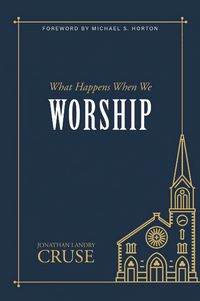
What Happens When We WorshipWhat Happens When We Worship

by Jonathan Landry Cruse

My original post
This is not a manual for the “how-to” aspects of worship, nor does it wade into the “style” debates and conflicts, he doesn’t look into the “why” we do certain things in worship (although he brushes against the idea). This is about the supernatural aspect to the ordinary, weekly event. It’s about what God does to and for His people in worship, what’s happening as we worship. Edifying, educational, orthodox, and even devotional—this book will introduce you to the vital topic or will gently remind you of the things you’ve been taken for granted.

5 Stars

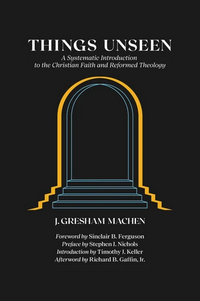
Things UnseenThings Unseen: A Systematic Introduction to the Christian Faith and Reformed Theology

by J. Gresham Machen

My original post
These are transcripts of weekly radio addresses Machen made presenting a systematic approach to Christian teaching. Flying in the face of the mode of the day, Machen gives a strong presentation of Reformed distinctives, as well as a whole-hearted belief in a supernatural Christianity. He’s succinct, pastoral, accessible, and even witty. These are not talks for scholars, or dumbed-down–they’re straightforward presentations of the topics for everyone. This is one of the most rewarding books I’ve read in a few years. Even when Machen is merely restating what generations before him taught, there’s a freshness to his presentations that really are appealing.

(I’m thumbing my nose at my “only new to me” rule here–I’ve read these talks in other collections several years ago–but not organized like this in one volume)

5 Stars

The TrinityThe Trinity: An Introduction

by Scott R. Swain

My original post
This is an introduction to the classical Christian doctrine of The Trinity. He’s not trying to re-invent the wheel, he’s definitely not trying to innovate, but to provide a concise jumping-off point into deeper studies by providing a solid foundation. While Swain never seems to be leaving out details or avoiding the complicated ideas (although he obviously has to), he keeps things short and sweet.

This is one of those books where my notes keep saying “Chapter X is likely the highlight of the book,” “the section on X is likely the most valuable in the book.” It appears 60-70% of the book is a highlight—and I may not have written all of those parts down. Which is to say, there’s a lot of gold here. Helpful, insightful, and useful—it also achieves its end for leading on to further study for me. It’s accessible, but not easy, reading. At the same time, it’s a challenging, but not difficult, text.

5 Stars

The Trinity and the BibleThe Trinity and the Bible: On Theological Interpretation

by Scott R. Swain

My original post
Rather than one overarching topic, this is a collection of previously published papers that seek to show both how the Bible reveals the Trinity and how the Trinity shapes our reading of the Bible. This is not an easy read, but it was worth the effort, every bit of it. Like a lot of the more scholarly theological books I read, I was reminded frequently while reading that I’m not an academic and this is above my weight class. But it wasn’t inaccessible, just difficult and required a little commitment. Like all good academic theology, there were moments of the most doxological writing—or doxology-inspiring writing (or a mix). There are paragraphs and paragraphs that I wish I could commit to memory, so I could use them at the drop of my hat in conversation and in prayer.

5 Stars

Foundations of Covenant TheologyFoundations of Covenant Theology: A Biblical-Theological Study of Genesis 1–3

by Lane G. Tipton

My original post
I’ve read several introductions to Covenant Theology in the last couple of decades. This is a different way of covering these concepts and it’s a very effective one. It’s also a different way of looking at Genesis 1-3. Almost every time I’ve seen these chapters explained and exegeted, it had to do with the doctrine of Creation, the Fall and the Promise of the Seed in Genesis 3, and so on. But Tipton’s approach—while addressing all that—focuses on the Big Picture, looking at the purposes behind Creation, the protoevangelium, the Covenants of Work and Grace, and how those are worked out in history (particularly in the last two chapters about Christ as the Promised Seed and the Second Adam).

It’s a self-described “brief and non-technical” book, building on the work of Geerhardus Vos and Meredith G. Kline. Maybe a bit too brief, a little more expansion would be beneficial, but a fascinating and helpful read.

4 Stars

Grace and Glory (BoT Edition)Grace and Glory

by Geerhardus Vos

My original post
Another version of this book made this list a couple of years ago, but this version has more sermons. It’s easily the best collection of sermons I’ve ever read. Yes, there’s rich theology behind these sermons, but they’re primarily expositions and applications of the texts for the hearers. And, yes, the audiences of these sermons were students at Princeton Theological Seminary (before the downgrade that led to the creation of Westminster Theological Seminary), but these were not airy, academic addresses. Sure, as the initial hearers were largely future ministers, there are portions that are more applicable to preachers than to laity. But there’s not a lot of that, and even in the midst of one of those sections, there’s still a lot of gold to be mined.


5 Stars

Things Unseen: A Systematic Introduction to the Christian Faith and Reformed Theology by J. Gresham Machen: Concise Looks at Fundamental Doctrines

Things Unseen

Things Unseen:
A Systematic Introduction
to the Christian Faith
and Reformed Theology

by J. Gresham Machen

Hardcover, 426 pg.
Westminster Seminary Press, 2020

Read: January 3-December 26, 2021/td>

What’s Things Unseen About?

Starting in 1934 and continuing until his death in 1937 (although he had plans to keep it going for at least another two years), J. Gresham Machen delivered a series of radio addresses on WIP in Philadelphia. The addresses focused on the Christian doctrine of the Bible and what the Bible tells us about God, the Christian view of Man, and then doctrines of salvation (this was cut off before he completed it).

While not technically a Systematic Theology, the outline matches how many/most Systematics cover the topics.

These addresses had been collected and published in collections in previous decades, but now, they’re published in one attractive (and seemingly durable) volume.

So, what did I think about Things Unseen?

With a couple of weekends off for travel or sickness, I read a chapter a week this last year, and it was a great practice. The addresses took thirty minutes or so a week when delivered, so they take only a few minutes to read. But minutes that serve as a wonderful reminder of the basics of Christian Doctrine.

In the 1930s, the vogue was to downplay Reformed distinctives, as well as a whole-hearted belief in a supernatural Christianity. Machen flies in the face of that and was bold in his teaching on both fronts. He’s succinct, pastoral, accessible, and even witty. These are not talks for scholars, or dumbed-down–they’re straightforward presentations of the topics for everyone.

Were this a smaller collection, I might be able to get deeper about some of the topics–but there’s just too much to try to talk about. But it’s all great–this has been one of the most rewarding books I’ve read in a few years. Even when Machen is merely restating what generations before him taught, there’s a freshness to his presentations that really are appealing.

I can’t recommend this enough.


5 Stars

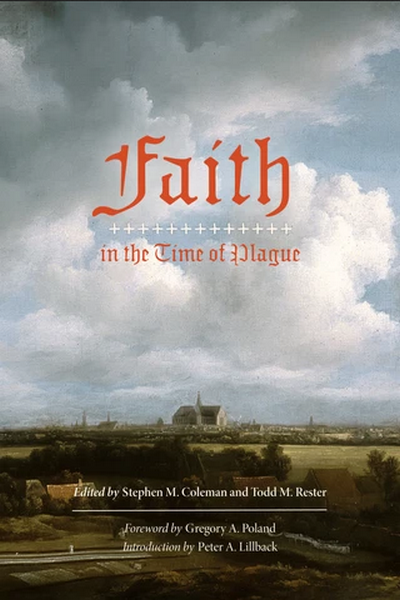
Faith in the Time of Plague Edited by Stephen M. Coleman and Todd M. Rester: Reformation and Post-Reformation Voices Speak to Our Moment

Faith in the Time of Plague

Faith in the Time of Plague

Edited by Stephen M. Coleman and Todd M.Rester

Hardcover, 309 pg.
Westminster Seminary Press, 2021

Read: November 7-December 12, 2021

The main point? Two rocks must be steered clear of: stupid boldness and exceedingly vicious fear. On the first, one does those things that while we fear nothing—would often lose ourselves and others. On the second it happens that as we would look to our own life, we would desert the work of Christ. Therefore, let us fear what can happen if we fail to avoid those evils. But let us be confident in the Lord and let us remain as steadfast as possible—even to the point of death—in our calling and in the work of Christ.

What’s Faith in the Time of Plague About?

The Editors describe the book like this:

The body of extant plague writings is vast and much of it remains unavailable in English. The selections in this book were determined to a great extent by the treasures that came to light in translating the 1655 pamphlet Variorum tractatus theologici de peste, which makes up Part I of the book. This collection of tracts is an unparalleled Post-Reformation treatment of the plague, from pastoral and scholarly points of view. Part II consists of those Reformation and Post-Reformation works that Beza, Rivet, Voetius, and Hoornbeeck [the authors in Part I] engaged with frequently (Zanchi, Abbot, and Ursinus). Alongside those pieces are additional contemporary works that we felt would be especially useful for pastors, scholars, and interested readers to have available in book form (Zwingli, Luther, Lavater, and Rawlet), and which give the reader a more complete picture of the Reformed tradition’s branch of plague writings. Each of these eleven authors addresses the unique questions posited by the plague in distinct ways, yet each does so by definitively Reformed methods—grounded in Scripture, historically informed, and always with the issue of faith in Christ at the forefront.

There are also two appendices, On Mortality by Cyprian of Carthage—a work that multiple authors in the main texts refer to (and likely shape even those who don’t) and the section Prayer and Thanksgiving from the Book of Common Prayer—an application of all the theology of the main texts.

Part 1: Variorum tractatus theologici de peste

The various works in part one are careful, methodical, Scriptural, and thorough—they cover all the bases. The treatise by Beza seems to both reflect the thinking of the rest of the Reformation as much as it shapes everything that comes after (or at least everything in the book).

Some parts of this took some work to get through, but it was worth it.

Part II: Reformation and Post-Reformation Plague Writings

Others sin on the right hand. They are much too rash and reckless, tempting God and disregarding everything which might counteract death and the plague. They disdain the use of medicines; they do not avoid places and persons infected by the plague, but lightheartedly make sport of it and wish to prove how independent they are. They say that it is God’s punishment; if he wants to protect them he can do so without medicines or our carefulness. This is not trusting God but tempting him. God has created medicines and provided us with intelligence to guard and take good care of the body so that we can live in good health.

For me, this part of the book (roughly a third) was the most rewarding. Luther’s Whether One May Flee from a Deadly Plague covered most/all of the points in Part I, but in a pithier and more digestible fashion. Which is what you expect from Luther, right?

Zwingli’s Plauge Hymn is great. I really don’t know what else to say.

The most moving, the most personal entry in the volume is John Rawlet’s A Letter to my Mother is clearly part of that preparation for death mentioned in the post last week. In this printing, it’s an eleven-page letter* written by an Anglican minister in London sure he was soon to contract the plague and die. He was wrong about contracting the plague and never sent the letter—but he was ready for it.

* Hard to fathom in the age of texts, tweets, and email.

An Unimportant Observation

I’m pretty sure I’ve never run into the word “licit” as often as I have in this work. Like most people (especially those who read a lot of Crime Fiction), I run across “illicit” all the time. But “licit”? Almost never.

Maybe it’s a quirk of the translators, but I doubt it. It’s just refreshing to see the word—and it’s one I’m going to try to use more often.

So, what did I think about Faith in the Time of Plague?

One thing that struck me was how often these Reformation authors appealed to earlier theologians (like Cyprian). But largely not about plagues or other diseases. Instead, it was how they approached the response to persecution—could believers flee from it, or do they have to run toward it or simply wait for it? Both persecution and disease come from the Lord—as both trial and result of sin.

I have to say, I’m not sure I’d have approached it that way before.

Those looking for easy answers to “how would the early Church or Reformers” deal with COVID-19 (or the like)”, will be disappointed. There are no quick and easy answers here. But this can remind readers that the Church has been through similar—and worse—times before. She likely will again. There have been careful, pastoral responses to it in the past, and that can be true again. We don’t have to have a snappy, one-size-fits-all approach at the first sign of trouble, but we are called to gracious, Christ-honoring, people-serving responses.

These are some excellent examples of how to do it. This isn’t the easiest, breeziest thing I’ve read this year—it might even be the furthest from it. But it’s an invaluable resource and I’m glad Westminster Seminary Press brought it to us.

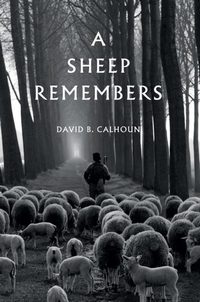
A Sheep Remembers by David B. Calhoun: Remembering Psalm 23

A Sheep Remembers

A Sheep Remembers

by David B. Calhoun

Paperback, 137 pg.
Banner of Truth Trust, 2021

Read: December 12, 2021
Grab a copy from your local indie bookstore!

All the circumstances of the pilgrimage—want, weariness, journeyings, wanderings, perplexities, the shadowed mysteries of the valleys, the thronging enemies, and the infinite beyond—are present; and the singer knows them. They are, however, only mentioned to sing of their negation by the graciousness of the Shepherd. Want is cancelled. For weariness he has green pastures of rest. On journeys he leads by pleasant ways. From wanderings he restores. Through perplexities he guides, and that by right ways. In the valleys of death’s shadow his presence cancels fear. In the presence of enemies he makes a feast, and he is a host royal in bounty.

What’s A Sheep Remembers About?

RIght out of the gate, Calhoun cites Spurgeon: “I cannot say anything new on this text…But I can remind you of old and precious truths,” and that’s pretty much Calhoun’s mission statement, reminding readers about Psalm 23. He’s not trying to shake things up with a new understanding, he’s not going for bold scholarship, or something along those lines. It’s simply an exercise in taking a slow look at what we already know, to remember the old and precious truths.

Each chapter takes a verse (or less) and reflects on it—the chapter starts with a version of the Psalm or a hymn based on it, then there’s a commentary on the phrase(s) examined, something written by a shepherd to help the reader understand (literal) sheep and their ways, illustrations from others to help understand the theme of the chapter and then a part of his own life story. The commentary sections are largely strings of quotations from other writers of various theological persuasions and varying degrees of orthodoxy, with a little addition from Calhoun–mostly to tie them together.

Preparing to Die

Calhoun talks about this in the book a bit—the Puritans had a practice to prepare for death, when terminally ill (or at least when they would suppose they were), they’d meditate on death, and the state of their soul as they neared it. In many ways, that’s what this book was for him.

Calhoun had been battling cancer for years, and he knew his death was imminent—he actually died shortly after delivering the final version of the manuscript to the publishers. You can tell from the latter chapters that he was very aware of the shortness of his time. Which adds some poignancy to this work—particularly the chapters concerning “Yea, though I walk through the valley of the shadow of death” and “And I will dwell in the house of the Lord forever.”

Supplementary Material

I don’t typically talk about this kind of thing—because, why would I? But these merit a mention.

Calhoun includes an Addendum of Additional Versions of Psalm 23—the versions included in the text were good, but I guess that there just weren’t enough chapters for everything he wanted to use. I haven’t seen most of these before and I’m glad I was exposed to them.

The Bibliography is your standard bibliography, but Calhoun includes some personal notes describing the works—that’s a nice touch, and I wish more people would do that.

So, what did I think about A Sheep Remembers?

How could I be joyful when my body was slowly, perhaps not so slowly, dying? I have lost sight in one eye and the other eye is failing, as is my hearing. I have been hospitalized seven or eight times in the last three years with pneumonia. I can no longer swallow food or talk very well. And, most disturbing, my mind is letting me down. How could I be joyful when all this was happening to me? In the valley I learned that joy comes, not from my feelings, nor from my daily experiences, but from the inner conviction that my life is going according to God’s plan. Joy is a gift of God. David wrote, ‘You have put more joy in my heart than they have when their grain and wine abound’ (Psa. 4:7).

This book isn’t just about Psalm 23 in the abstract, it’s about Calhoun’s Shepherd guiding him through his cancer. The latter is what made this book worth reading.

Like the other book I’ve read by Calhoun, In Their Own Words, the bulk of the text seems to be tiny quotations—that quotation I open this post with isn’t Calhoun, it’s G. Campbell Morgan—and it’s one of the longest quotations Calhoun uses, many are a single sentence long. It takes a certain genius to have these various sources on hand and be able to cite them together in such a way to present an argument. But really, Calhoun seems to use these to frame his argument, rather than to support it.

I appreciated the work, I profited from it—but I think it could’ve been stronger. If there was more of Calhoun, and less a medley of other writers—I think it would’ve been.

Still, it’s hard to walk away from time in this Psalm and not be refreshed. And the quotations, sayings, metrical versions, and paraphrases assembled here all help that endeavor. It’s hard to say anything bad about that.


3 Stars

This post contains an affiliate link. If you purchase from it, I will get a small commission at no additional cost to you. As always, opinions are my own.

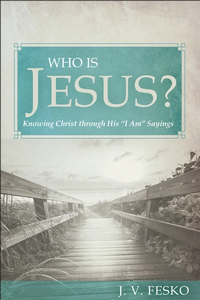
Who Is Jesus? Knowing Christ through His “I Am” Sayings by J. V. Fesko

Who Is Jesus?

Who Is Jesus?:
Knowing Christ through
His “I Am” Sayings

by J. V. Fesko

Paperback, 93 pg.
Reformation Heritage Books, 2016

Read: December 5, 2021
Grab a copy from your local indie bookstore!

What’s Who is Jesus? About?

This book does three things—at the same time—first and foremost, it looks at all fourteen times that Jesus uses the phrase “I am,” in the Gospel of John, and discusses the context and meaning of it. Fesko doesn’t just look at Christ’s meaning of “the door,” “the bread of life,” and so on, but the significance of the use of “I am” (ἐγώ εἰμι, ego eimi).

Secondly, it looks at the “seven signs of divinity” presented in John—and how they’re intertwined in the “I am” sayings. But Fesko doesn’t let the focus linger on these signs.

Lastly, and this is the unique part of this study, is to look at the Old Testament allusions and roots of the fourteen “I am”s. Seeing how Christ was self-consciously pointing to the Scriptures to show how he fulfills them is a real treasure.

Fesko concludes each chapter with a few paragraphs of application to the reader and some questions for further study.

So, what did I think about Who is Jesus??

This might not be the best comparison, but it’s the one that I kept thinking of as I read this, so…if you don’t like this, I’ll give you a full refund for the cost of your subscription.

In The West Wing, there were repeated worries about the President’s approach to things—the way he interacts with people, there’s “The President at his Best”/”The Professor” or “Uncle Fluffy.” Fesko’s books feel like they’re written the same way. For example, Death in Adam, Life in Christ: The Doctrine of Imputation or Word, Water, and Spirit: A Reformed Perspective on Baptism are products of “The Professor.” Who is Jesus? is pure Uncle Fluffy.

This is not a complaint. This is an observation. Well, okay, maybe a little of a complaint. I’m glad this was the Uncle Fluffy Fesko—I appreciated that this was an accessible, short read—but I think it could’ve used a little more of The Professor. Just a little more depth would’ve been great. But it’s good as it is, just could’ve been a bit better.

At the same time—you give me a version of this book by The Professor? I’m there in a heartbeat.

Who is Jesus? is a quick read (it’s very easy to be too quick about it, I had to tap my breaks a few times), but it’s a good read. There’s a richness to the study of the “I Am” sayings and a real reward to looking at their Old Testament roots. This is well-worth your time, it’d be good for Bible Studies, Sunday Schools—even Family Worship aids.


3 Stars

This post contains an affiliate link. If you purchase from it, I will get a small commission at no additional cost to you. As always, opinions are my own.

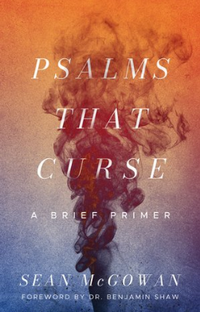
Psalms that Curse by Sean McGowan: A Primer on Controversial Prayers

Psalms that Curse

Psalms that Curse

by Sean McGowan

Kindle Edition, 90 pg.
Reformation Zion Publishing, 2021

Read: November 28, 2021

What’s Psalms that Curse About?

Simply put:

…in our modern day some psalms have seemed to not “make the cut.” To say it another way, some would argue that not all the psalms should be sung or prayed today, particularly the ones that speak out harshly against enemies. Some popular approaches would say that these psalms were for a different time, or only to be used by the old covenant people of God. But the burden of proof rests on them to demonstrate why some of these psalms cannot be sung or prayed today, while the others can. Should the psalms that present “harsh language” and make us uncomfortable at times still be considered relevant for the church today? Should we still be able to sing, and specifically pray, these kinds of prayers today?

McGowan first sketches out the role of the Psalms and then ends with the question above, then he spends a chapter focusing on the imprecatory psalms and various views about them floating around the Church. He then focuses his attention on Psalm 137 and uses the exegesis of the psalm to establish his view on the purpose of imprecatory psalms. Then he spends a chapter on the use of them in the New Testament—or are they even compatible with a New Testament ethic? (short answer: yes)

This is short work, and the depth of each chapter reflects that—but McGowan covers the essentials in each.

Comparing This to Others

I don’t typically do books on similar topics back-to-back like this, but I saw this talked about on a couple of podcasts I listen to after I read The Morality of God in the Old Testament, and was curious about another take on it.

McGowan’s take is different from similar works I’ve read here in the past—like The Morality of God in the Old Testament and War Psalms of the Prince of Peace—he quotes the latter, labeling it “inadequate” (along with other views, he didn’t single it out). McGowan’s thesis is more straightforward and less nuanced than Beale’s (not superior or inferior, just more direct).

This is a primer—as McGowan reminds the reader—so he doesn’t spend time analyzing or critiquing differing views, he mentions them briefly to distinguish his—but the focus of this short book is on his take.

Would I have preferred analysis and critique? Seeing how his views match up against others? Yes. But I’m not going to fault a guy for writing the book he wanted to rather than the one I wanted (at least until I’m wealthy enough to act as a patron).

Besides, this gives me a chance to chew on the ideas myself.

So, what did I think about Psalms that Curse?

We are not saying that the only way to respond to intense persecution is to call down God’s vengeance. In fact, the normative response should be to pray for God to convert them…what we are arguing for is a recovery of the prayer of imprecation. We are arguing for the category. We are arguing that the prayer of imprecation should have a seat at the table, not for it to be the only thing at the table.

Hard to argue against that.

I don’t know that McGowan convinced me with his position about the—but he impressed me with the argument. It’s a short work, but he does the work. First, he established his thesis from a noteworthy example of an imprecatory psalm, and then after showing his thesis at work he tactfully and pastorally lays out how the believer ought to apply it. Hard to ask for more.

I really appreciated the chapter exegeting Psalm 137 and the concluding chapter, focusing on the way the Christian ought to pray imprecatory prayers. It was an important chapter and one that I hope many encounter. I think there’s some good overlap there with some of what Adams suggested in his work, too.

Not a perfect book, but a good one, a helpful one, and a thought-provoking one. A work that should lead the reader back to the psalter for study and reflection.


3.5 Stars

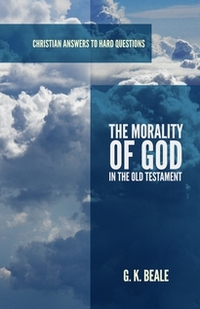
The Morality of God in the Old Testament by G.K. Beale

This is a lot shorter of a work than I usually talk about, but I needed a short read to break up longer, heavier reads. So now I guess I get to talk briefly about it before I talked about longer, heavier reads. (not that this is lightweight by any means)


The Morality of God in the Old Testament

The Morality of God
in the Old Testament

by G.K. Beale
Series: Christian Answers to Hard Questions

Booklet, 43 pg.
P&R Publishing and Westminster Seminary Press, 2013

Read: November 21, 2021
Grab a copy from your local indie bookstore!

What’s The Morality of God in the Old Testament About?

Believers and unbelievers alike stumble over some of what seems immoral in the Old Testament. Particularly what seems to be evil on the part of God. For example: God’s commands to exterminate the Canaanites and the imprecatory (cursing) Psalms.

How ought the believer to respond to their own questions about this, much less the questions from those outside the faith?

Beale looks briefly at a couple of popular responses to this and finds them wanting. In their place, he suggests a “plausible fivefold approach.”

There seems to be a better way to look at this problem. We will explore it from five different angles, which will help us to understand it more thoroughly. First, how does the killing of the Canaanites demonstrate God’s justice and righteousness? Second, how could Israel’s unique commission as a “kingdom of priests” (Ex. 19:6) shed light on the extermination of the Canaanites? Third, how does God’s sovereignty over all things help us to better understand that he can be considered blameless in all that he does, despite the problems just mentioned above? Fourth, how does the idea of God’s judgment of unbelieving humanity at the end of time shed light on this problem? Finally, how does the law of loving one’s neighbor now and at the end of time help us to better apprehend the issue about the Canaanites and the psalmist’s cursing of his enemies (though this last point has some overlap with the fourth point)?

Each question gets a couple of pages of explanation before moving on, so that the reader is given the complete fivefold approach along with some idea of how the ideas are worked out.

So, what did I think about The Morality of God in the Old Testament?

Not surprisingly, my main concern is length. I want to see each of these points better developed–I don’t think this has the makings of a 200+ page book or anything, but I think it could easily be twice as long to really flesh out some of the points.

The brevity works against itself primarily in that I don’t get to see the ideas examined thoroughly, or tested. The reader is given enough to understand the fivefold approach, enough to chew on it. But I’d like to see it worked out. I’d like to see Beale work through one of the difficult passages, or one of the Psalms in question and show “here’s where we see this and over there is where you see that aspect in action,” etc.

But the point of this series, the point of this being a booklet is for a short introduction to the idea. It’s supposed to be enough to show the reader that there are answers to the hard questions, just not enough to convince them. So I have to take it on its own terms–as such, it’s fine. Even more than fine. And I think there’s something to that fivefold approach, I just want to be convinced. I’m just going to need to look elsewhere for that.


3.5 Stars

This post contains an affiliate link. If you purchase from it, I will get a small commission at no additional cost to you. As always, opinions are my own.

BOOK SPOTLIGHT: Faith in the Time of Plague Edited by Stephen M. Coleman, Todd M. Rester

Life events and questionable time management have left me without anything new to post today. So, I’m just going to put up a Spotlight post about one of the works I’m working my way through. I’m also not sure how I’m going to have anything to say about this when I’m done, so this may end up being my only post about it. It’s the kind of book that as you read it, you hope that other people are aware of it so they can benefit from it, too. It’s fascinating and (sadly) timely.

This is pretty much just material I’ve copied and pasted from the publisher’s site. I hope they don’t mind.

Book Details:

Book Title: Faith in the Time of Plague Edited by Stephen M. Coleman, Todd M. Rester
Publisher: Westminster Seminary Press
Release date: September, 2021
Format: Hardcover/Ebook
Length: 400 pages

Book Blurb:

We often hear the Covid-19 pandemic described as “unprecedented”, yet for Christians of earlier times, plague was nothing new. For generations, Church leaders regularly faced the sorts of ethical questions that still prove divisive today.

Selecting from the great “plague writings” of the historic church, Todd M. Rester and Stephen M. Coleman have translated and assembled a one-of-a-kind anthology. The wisdom of the past collected in this book offers much needed and trustworthy illumination for pastors, leaders, and laypeople in times of crisis and uncertainty.

Many of the works appearing in Faith in the Time of Plague have never been available in English until now. Included in this volume are the writings of Martin Luther, Theodore Beza, Ulrich Zwingli, Cyprian of Carthage, Zacharias Ursinus, Gijsbert Voetius, and many more.

Introduced by Peter A. Lillback, Faith in the Time of Plague also includes a Foreword from Mayo Clinic Virologist, Dr. Gregory A. Poland.

Book Trailer:

Purchase Link:

Westminster Bookstore

About the Editors:

Stephen M. Coleman (PhD, The Catholic University of America) is assistant professor of Old Testament and biblical languages at Westminster Theological Seminary, co-editor of the Westminster Theological Journal, and senior research fellow at the J. Alan Groves Center for Advanced Biblical Research. A graduate of Grove City College (BA, 2002), Westminster Seminary California (MDiv, 2005), and The Catholic University of America (MA, 2010/PhD, 2016), he previously served as associate pastor at Wallace Presbyterian Church in College Park, Maryland (2008–2017) and Assistant Pastor of Valley Presbyterian Church in North Hills, California (2005–2008).

Todd M. Rester
(PhD, Calvin Theological Seminary) is associate professor of church history at Westminster Theological Seminary. Dr. Rester is a post-doctoral research fellow at Queen’s University Belfast (September 2016–present). During his time as a research fellow at Queen’s University Belfast, Dr. Rester has served the institution as a guest lecturer in the Master of Arts, History of Religion department as well as various undergraduate history courses. In addition to his time at Queen’s University Belfast, Dr. Rester has taught as an adjunct professor at Puritan Reformed Theological Seminary (2010–2016), Kuyper College (2013–2015), and Calvin Theological Seminary (2011–2015). He also works as a translator for the Dutch Reformed Translation Society (2009–present). Dr. Rester’s academic interests include but are not limited to: the history of the doctrine of Scripture and its reception; early modern and Enlightenment conflicts between theology and philosophy on general and special revelation; and early modern and post-Enlightenment models of missiology.

Page 14 of 22

Powered by WordPress & Theme by Anders Norén