Tag: Theology

Heaven on Earth by Thomas Brooks

Heaven On EarthHeaven On Earth

by Thomas Brooks

ebook
originally published 1654
Read: May 11 – 25, 2014

I just might have myself a new favorite Puritan (I’m not the only one who has a list, right?). I’m kicking myself for not getting to Brooks earlier in life. What a wonderful book — I’m looking forward to getting to read more by him.

Aesthetically, this is fantastic. The language sings — the book begs to be read aloud (and I frequently did so, interrupting whatever anyone around me was doing). You can feel the passion, the fervor throughout. A few paragraphs from different chapters illustrate this:

Divine light reaches the heart as well as the head. The beams of divine light shining in upon the soul through the glorious face of Christ are very working; they warm the heart, they affect the heart, they new mold the heart. Divine knowledge masters the heart, it guides the heart, it governs the heart, it sustains the heart, it relieves the heart. Knowledge which swims in the head only, and sinks not down into the heart, does no more good than the unicorn’s horn in the unicorn’s head.

The only ground of God’s love is his grace. The ground of God’s love is only and wholly in himself. There is neither portion nor proportion in us to draw his love. There is no love nor loveliness in us that should cause a beam of his love to shine upon us. There is that enmity, that filthiness, that treacherousness, that unfaithfulness, to be found in every man’s bosom, which might justly put God upon glorifying himself in their eternal ruin, and to write their names in his black book in characters of blood and wrath. God will have all blessings and happiness to flow from free grace.

Faith is the first pin which moves the soul; it is the spring in the watch which sets all the golden wheels of love, joy, comfort, and peace a-going. Faith is a root-grace, from whence springs all the sweet flowers of joy and peace. Faith is like the bee, it will suck sweetness out of every flower; it will extract light out of darkness, comforts out of distresses, mercies out of miseries, wine out of water, honey out of the rock, and meat out of the eater, Judg 14:14.

But beyond that, the book is sound, it is orthodox, it is Biblical — throughout Brooks points the reader to The Book and The One Who inspired it. His aim is to show “that believers may in this life attain unto a well-grounded assurance of their everlasting happiness and blessedness.” He then goes on to examine the nature of that assurance, hindrances that keep believers from it, reasons to encourage believers to seek it, and how they can go about it, the difference between true and counterfeit assurance, as well as answering questions about assurance. Examining the doctrine from so many angles, you really feel (and probably do) that you come away from this book having an exhaustive look at the doctrine.

Chapter 6 — which takes more than its fair share of space, almost half of the book — is an extended detour from the point of the book, but it still serves to support the theme. He begins by saying, “In the previous chapter, you saw the seven choice things which accompany salvation. But for your further and fuller edification, satisfaction, confirmation, and consolation, it will be very necessary that I show you,” these seven choice things. Which are:

(1.) What knowledge that is, which accompanies salvation.
(2.) What faith that is, which accompanies salvation.
(3.) What repentance that is, which accompanies salvation.
(4.) What obedience that is, which accompanies salvation.
(5.) What love that is, which accompanies salvation.
(6.) What prayer that is, which accompanies salvation.
(7.) What perseverance that is, which accompanies salvation.

It is such a great chapter, and would make a remarkable little booklet unto itself that I really can’t complain too much that it’s such a departure from the rest of the book (though it did take me a little bit to get used to the notion).

Banner of Truth puts this out in paperback, monergism.com puts this out as a free e-book. Either way you go for it, this is a treasure I heartily suggest you grab.

—–

5 Stars

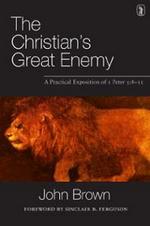
The Christian’s Great Enemy: A Practical Exposition of 1 Peter 5:8-11 by John Brown

The Christian's Great Enemy: A Practical Exposition of 1 Peter 5:8-11The Christian’s Great Enemy: A Practical Exposition of 1 Peter 5:8-11

by John Brown

Paperback, 86 pg.
Banner of Truth, 2013
Read: June 1, 2014

Good, solid exposition of 1 Peter 5:8-11. No fireworks here, but plain, straightforward language — no rhetorical heights, no dazzling quotations, just straight-forward, orthodox discussion of the passage.

Brown calmly and thoroughly starts at the beginning of the passage and proceeds carefully, clause by clause through it. He doesn’t go off on any paranoid hunts for demons/Satan under every rock or anything. But he examines the ways of the world and the hearts of man and shows where the evil one will and can pounce — and how he will go about doing so. From there, he moves on to the hows, whys, and wherefores of our resistance — giving warnings, inducements, and encouragements to help along the way.

I can’t say I was dazzled by Brown’s work, but I was refreshed by it. I was reminded of my duties and pitfalls along the way. If you’re looking for sound teaching on the passage/topic but are intimidated by (or have no time for) Satan’s Temptations by Gilpin or The Christian in Complete Armour by Gurnall, this would be a great one to pick up.

—–

3.5 Stars

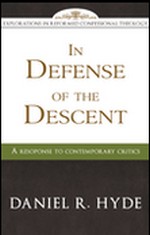
In Defense of the Descent by Daniel R. Hyde

This is the first book of a series edited by Daniel Hyde and Mark Jones called, “Explorations in Reformed Confessional Theology.” Although I haven’t read it, I’ve heard an interview with the author of the second book in the series. Based on that interview and this book, the only thing I can say is, “Where’s the rest of the series?”

—–

In Defense Of The Descent (Explorations In Reformed Confessional Theology)In Defense Of The Descent

by Daniel R Hyde

Paperback, 88 pg.
Reformation Heritage Books, 2010
Read: April 27, 2014

Wow. Hyde crammed a lot of history and theology (and history of theology) into these 74 pages! This book could’ve easily been another 50 pages longer if he’d taken the time to fully flesh out some of these points. But the book isn’t lacking because he didn’t do that — not at all. It’s just concentrated, a double shot of espresso instead of the grande drip it could have been.

We may like to think our generation (or so) is the first to be enlightened enough to have qualms with the clause in The Apostle’s Creed, “He descended into Hell,” but that’s just not the case. It’s a centuries-old controversy, and each time the orthodox response has been, “keep the descent,” and Hyde sees no reason to change that.

Hyde examines 6* possible interpretations of the phrase — from the ridiculous (and heretical) to the orthodox. While his critiques of the more lacking views are helpful, he’s at his strongest when he’s giving a positive presentation. When Hyde explains the Reformed and Presbyterian view of the descent clause — first as expressed by the Westminster Larger Catechism (Q. 50), and then as expressed by the Heidelberg (Q. 44). At this point Hyde interacts with a variety of Reformed theologians and catechisms to fully explain the perspective — all very helpful.

Other highlights are his careful examinations of Ephesians 4:7-10 and 1 Peter 3:18-19 (used to support some explanations of the clause) and the four benefits to retaining the clause — a very pastoral section.

It’s short, sweet, to the point. For the believer who feels strange every time they confess “He descended into hell,” Hyde helps you understand just what you’re saying, so next time that clause comes up you can boldly and confidently confess that it is just what you believe.

—–

* 5, really. Two of them are just flip-sides of the same explanation.

—–

4 Stars

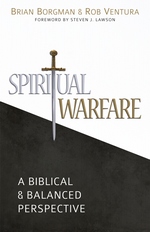
Spiritual Warfare: A Biblical and Balanced Perspective by Brian Borgman & Rob Ventura

Spiritual Warfare: A Biblical and Balanced PerspectiveSpiritual Warfare: A Biblical and Balanced Perspective

by Brian Borgman & Rob Ventura
Kindle Edition, 128 pg.
Reformation Books, 2013

Borgman and Ventura realize they’re heading into dangerous territory here — far too many books on this topic are sensationalistic, fantastic (and I don’t mean that as a synonym for great), and unbalanced. On the other hand, there’s the danger of downplaying the need for this kind of material. They seek (and succeed, I should add) at striking a Biblical balance in their approach.

Essentially, this is a careful study of Ephesians 6:10-20, not a systematic or biblical-theological approach to the topic. Which is well and good, but I’d have preferred one of the latter. Still, there are enough cross-references here to ensure they’re interpreting Scripture by Scripture, as well as illustrating principles from the Ephesians passage elsewhere.

The authors also cite other writers like crazy — for the sake of clarification, illustration, and (I think) to demonstrate to those wary of the topic that they’re not the only ones to consider the idea of spiritual warfare outside the Neil Anderson, Nicky Cruz, Frank Peretti crowds. The authors they cite from are a varied and impressive collection of Reformation-era, Puritan (and slightly later)-era, and contemporary Reformed and quasi-Reformed writers, preachers and commentators. They clearly owe a debt to William Gurnall here, but I think they could’ve used him a bit more throughout.

A solid book, nothing earth shattering. A good starting point, though. Readers would be well off to use this to get an overall look at the topic and then to use the cited authors (particularly those that are pre-20th century) for further study.

—–

3 Stars

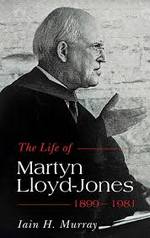
The Life of Martyn Lloyd-Jones – 1899-1981 by Iain H. Murray

The Life of Martyn Lloyd-Jones - 1899-1981The Life of Martyn Lloyd-Jones – 1899-1981

by Iain H. Murray
Trade Paperback, 496 pg.
Banner Of Truth, 2013
Read: Jan. 12 – Feb. 9, 2014

This is a frequently flawed book, and at times it was only a sense of duty/politeness to the person who eagerly pressed it into my hands that I persevered. But in the end, I couldn’t help but walk away awed at both the man and the book that tried to summarize his life (yet, I don’t think you’ll see me picking up the two-volume version this was condensed from anytime soon).

The first fifty or so pages, recounting his youth, medical school/early practice, and conversion — and even the beginnings of his ministry — were pretty tedious, and more often than not, far too detailed.

Once Murray was able to focus on his first years of ministry in Wales, and his eventual move to Westminster Chapel, the book took off. It’s clear that the hand of the Lord was upon his ministry, and gave him much evident fruit. It’s impossible to disagree with Murray’s explanations for Lloyd-Jones’ success, and I can only imagine ministers would benefit from reading this with an eye for how to reform their own work. Throughout the chapters detailing his pastoral work — particularly the chapter “Sundays in the 1950s” — Murray’s affection for, and devotion to, Lloyd-Jones threatens to overwhelm the narrative, and at times it seems that “the Doctor” could do nothing wrong. I remarked during that chapter that I wasn’t sure if I was reading biography or hagiography, which may seem a bit harsh. But really, Murray became a rabid fanboy here.

The chapters devoted to the controversies over Evangelical unity, conflict with Graham, Packer and Stott (and names that didn’t register with me) were again, far too detailed for my taste — but it’s understandable, I think. Murray was trying to set the record straight on certain issues/incidents, to make sure the historical record gets Lloyd-Jones’ perspective on them (particularly when others, claiming to speak on his behalf, got it wrong). Not having a dog in those fights, my eyes glazed over more than I liked, but I sure didn’t go back and re-read to make certain I didn’t miss anything. Murray is able here to critique Lloyd-Jones a bit in these chapters, which was good to see.

The final chapter, depicting the final three years of his life, as his cancer was gaining the upper hand, was moving, inspirational and convicting. Lloyd-Jones continued to preach when able, to correspond with and advise younger ministers, write and start Murray on his biography — spurred on by the knowledge that his death was near. Lloyd-Jones spoke of paying attention to death, dying the right way — with an eye to the glory he was going to, and anticipating it. No way that I try to summarize will do it justice, just read it for yourself. You might want to keep a Kleenex™™ handy. This chapter made all the stuff I’d grumbled and trudged through worth it.

Not Murray’s best — but obviously a work of love for the subject. Can’t imagine a little of that won’t rub off on the reader.

—–

4 Stars

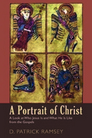
A Portrait of Christ: A Look at Who Jesus Is and What He Is Like from the Gospels by D. Patrick Ramsey

A Portrait of Christ
A Portrait of Christ: A Look at Who Jesus Is and What He Is Like from the Gospels by D. Patrick Ramsey
My rating: 4 of 5 stars

Taking a page from B. B. Warfield, Ramsey considers our Lord from a different angle than is usually taken — rather than look at the Person of Jesus Christ, or His Work — Who He is and What He has done/is doing/will do — this book focuses (not to the exclusion of the Person or Work) on considering, what is Jesus Christ like?

Ramsey begins on looking at The Promised Christ — why we need a Savior, how God providentially protected the line of the promised Savior throughout history from His foes (human and otherwise), and once He was born his struggles against Satan. He looks at the humanity as well as the Divinity of Jesus — briefly explaining the concepts — as well as why Jesus had to be both human and divine.

That established, he then moves on to consider the question “What is Jesus like”? He started by talking about Jesus’ compassion towards those physically and spiritually oppressed, and then to the special kind of compassion He showed His people — in His prayers and desires, in the midst of His suffering, in how He loved His people. Then at how Jesus befriended children and scandalous sinners. In a chapter that more than one person I know would stumble on, Ramsey looks at another side of Our Lord — His anger.

He concludes with a look at the

one characteristic or attribute that I think nicely sums up the kind of life Jesus lived here on earth. Interestingly enough, it is the one character trait that Jesus himself mentioned he had. He brought attention to it, at least in part, because of its attractiveness and appeal. . . . humility, or lowliness of heart, which is closely associated with meekness and gentleness.

A fitting conclusion, one that shows us the character of God as it draws us to Him.

More than once, Ramsey says something like, “In Jesus, we see how a human being is to act and live before God and before other human beings.” Therefore, he’s careful to apply his observations to his readers, which keeps this book from being only a series of meditations, but prompts for action and change in our lives.

There’s a straight-forwardness, language that’s easy to understand, illustrations that aid understanding that speaks well of Ramsey’s preaching (I should mention that this book is based on a series of sermons). More than once while reading, I paused and read bits out loud to whatever family member was handy. I was moved, encouraged, convicted — this would make for good devotional reading for a Lord’s Day afternoon.

Faith & Life by Benjamin Breckinridge Warfield

Faith & Life:
Faith & Life: by Benjamin Breckinridge Warfield
My rating: 5 of 5 stars

Back when Princeton Seminary was the crown jewel of biblical Presbyterian training in the US, notable professors like Archibald Alexander, Samuel Miller, and Charles Hodge would have informal addresses for students on Sunday afternoons. B. B. Warfield, the lion of Princeton, continued this practice. These 41 chapters come from some of these addresses to the students.

I went skimming over the Table of Contents to pick out a few highlights — and I’m having a real problem. Almost every one is a gem. “Prayer as a Means of Grace” and “Prayer as a Practice” were very helpful — the latter was slightly better. “New Testament Puritanism” was great. Despite the reputation men like Warfield have, the chapters involving the work of the Holy Spirit were all tremendous. “God’s Holiness and Ours” was fantastic. I could keep going here, but it wouldn’t be long before I copied the Table of Contents.

For being the exemplar of “old Princeton,” with all the rigor and scholarship that entails — these addresses help us remember that even stalwarts like Warfield, who are known for strong stances on doctrinal issues — were men with vibrant faith, even a sense of humor.

I spent a few months reading 1 or 2 of these each Lord’s Day morning between breakfast and heading out for church — it was a great way to get my head (and heart) in the right frame of mind for worship. It’s everything Christian scholarship should be — warm, Christ-centered, practical, and doxological. It’s also everything that Christian devotional material should be — careful, sound, and deliberately orthodox. Highly recommended.

Page 22 of 22

Powered by WordPress & Theme by Anders Norén