Month: April 2017 Page 3 of 4

The Weed That Strings the Hangman’s Bag (Audiobook) by Alan Bradley, Jayne Entwistle

The Weed That Strings the Hangman's BagThe Weed That Strings the Hangman’s Bag

by Alan Bradley, Jayne Entwistle (Narrator)
Series: Flavia de Luce, #2

Unabridged Audiobook, 9 hrs., 49 min.
Random House Audio, 2010

Read: March 21 – 27, 2017

I think I’d have phrased things a bit differently, but in the interest of time, I’m just going to copy and paste from my thoughts when I read the book a couple of years ago and add in a bit for the audiobook:
The plucky young chemist with a nascent obsession with death is back in action. The case is a little less personal for Flavia de Luce this time, but that doesn’t stop her from jumping in whole hog to get to the bottom of it.

Flavia runs into a couple of traveling performers with some car trouble and before you know it, she’s got them some help–and a gig. While she hangs around the TV star and his assistant, she finds herself surrounded by some of her town’s darker history and then face to face with a murder. And Flavia being Flavia, she can’t resist sticking her nose in and making sure all the knots are untangled–particularly the ones adults are ignoring, despite them being painfully obvious to her.

We get less of Flavia’s sisters (and the rest of the household, come to think of it) in this installment–but when they’re around, their impact is greater. Clearly, as this series continues, there’s going to be some serious drama on the homefront with some major implications for the de Luce family, I hope Bradley tackles that quickly, the foreshadowing’s getting old quickly.

Unlike with so many other amateur sleuths (particularly juveniles), it’s nice to see that her reputation and track record are acknowledged by some in the community — which is both a help and a hindrance, I hope to see more of that in the future.

Entwistle really impressed me again with her narration. Not just the way she nails Flavia — both the good and the bad aspects of her personality. But her work on the rest of the characters — the TV star’s assistant in particular — really won me over, showing a little more range than we got to see, er, hear last time.

My only major quibble with this installment is that it takes far too long to set the main action of the novel up–in a 348 page mystery novel, you’d better get to the central crime before page 150 or so. Unless you’ve got a heroine like Flavia to focus on, I can’t imagine being patient enough to wait that long to get the ball rolling. Entwistle’s performance helps, but, man, it drags on awhile before Bradley’s done setting things up and gets things moving.

Another fun (occasionally hilarious) read, with a mystery satisfyingly twisty, with just enough red herrings to get you through it.

—–

3.5 Stars

Not a Drill (Audiobook) by Lee Child, Dick Hill

Not a DrillNot a Drill

by Lee Child, Dick Hill (Narrator)
Series: Jack Reacher, #18.5
Unabridged Audiobook, 1 hr., 27 min.
Random House Audio, 2014

Read: March 14, 2017


Reacher sets out for the Canadian border, to make it as far north on this Interstate as possible, just because. Not too far south from there, he stops in a tourist-y town, a haven for backpackers, hikers, wilderness types in general. Before he leaves, a whole lot of military types show up and block access to the forest from the town (well, they try to — the forest is pretty big, it’s impossible to block access to the whole thing).

This gets Reacher’s curiosity piqued and he starts poking around to see if he can understand why.

I don’t want to sound bloodthirsty here, but not a single fight. No threat of violence breaking out. Mostly, it’s Reacher walking around and observing things before making a heck of a guess/deduction that proved to be right.

Dark, cynical ending — one of Child’s more political statements.

Hill was okay, not terribly interesting, but I think that’s Child’s fault this time.

It’s not bad. It’s just disappointing, short and . . . bleh. Proof that they can’t all be winners, I guess.

—–

2 1/2 Stars

The Castle of Llyr (Audiobook) by Lloyd Alexander, James Langton

The Castle of LlyrThe Castle of Llyr

by Lloyd Alexander, James Langton (Narrator)
Series: Chronicles of Prydain, #3
Unabridged Audiobook, 4 hrs, 36 min.
Listening Library, 2004

Read: March 20, 2017


Taran is tasked with escorting Princess Eilonwy to the Isle of Mona, where she’ll be taken in by distant relatives — the king and queen, who will help her learn how to be a proper young lady (an idea she finds ridiculous). They sail there on a ship “captained” by the island’s Prince Rhun.

Once they reach the island, Taran runs into Fflewddur Fflam, who’s enjoying barding again — even if the castle’s steward, Magg, has an intense dislike of his music. Shortly after that, Taran discovers there’s a threat to Eilonwy in the castle and tries to save her from it without letting her know she’s in danger. That goes poorly and he joins the rescue effort instead (also led by Rhun — or at least Rhun thinks so).

The companions also meet the world’s littlest giant (why does that sound like it belongs more in The Phantom Tollbooth than here?) and a mountain cat that we’ll get to spend a lot of time with. There’s a lot of links to the first book as well as the last book in the series here.

The introduction by Alexander was great — I wish I could hear more of his own takes on the books. Langton was solid. Again, I think he could talk a little faster — but that’s minor. His Prince Rhun’s “Hullo”s are just what I’ve heard in my head all these decades.

This is probably the most entertaining of the lot — there’s some really good comedy here. Taran grows up a lot more here than he does in other books, I think, which adds something more than just entertainment to this book. It’s possible that this is the one in the series I read the most as a kid. The story isn’t as rich as I remember, but factoring in the growth in characters and the entertainment factor, the experience as a whole was pretty satisfying — and I’ll take that.

—–
3.5 Stars

Saturday Miscellany – 4/8/17

Odds ‘n ends over the week about books and reading that caught my eye. You’ve probably seen some/most/all of them, but just in case:

    This Week’s New Release that I’m Excited About and/or You’ll Probably See Here Soon:

  • Bound by Benedict Jacka — yahoo! The 8th Alex Verus novel is here — the worst thing I can say about the last two books I’ve read is that they’ve blocked me from this one (library due dates and whatnot). There are few (2, maybe 3) Urban Fantasy series out there as compelling as this one — if you haven’t tried them, you really should.


The Magician’s Workshop, Volume One by Christopher Hansen, J.R. Fehr

The Magician’s Workshop, Volume OneThe Magician’s Workshop, Volume One

by Christopher Hansen, J.R. Fehr
Series: The Magician’s Workshop, #1

Kindle Edition, 290 pg.
Wondertale Press, 2014

Read: Mach 22 – 24, 2017


I’m sick and tired of these books that introduce you to a character and their problems/goals and then abandon them for another storyline or two with no relation to the first for over 50% of the book. I get that this is a thing that people do all over the place (I read a couple of books last year that never returned to the people in the introductory chapter or really explained why we spent time with them), but it drives me crazy. Fine, multiple point-of-view characters, multiple storylines, but don’t dump one for 150 pages or so after introducing them.

That’s probably not the best way to start this post, but hey, if they can start the book awkwardly, I can start my post about it awkwardly, too.

There was some great worldbuilding at work here — Hansen and Fehr did yeoman’s work there. But they failed at translating it into a setting for stories. They wisely didn’t dump everything on the reader in the first chapter — but they way they went about doling out the explanation of what’s going on, why the world/magic/society works the way it does was way too slow. I can’t imagine that all too many readers in their target audience (12 and up) are going to have the patience to wade through it all.

Part of the magic system is another one of my pet peeves — everyone has magical powers. This can work, but usually it doesn’t — as even Dash Parr can tell you, everyone being special (or having magic) “is another way of saying no one is.” I’m not sure why that’s considered magic in this world. For underage people, they can only use their magic for training in controlled circumstances. When they get older, they’re tested and part of the test (that makes no sense to me) will reveal whether the user is qualified to be a magician — one of the elite professional magicians, as opposed to those who are limited in their use of magic — by some standard I can’t explain.

The novel focuses on a handful of youth — some who know each other, some that don’t — as they finish preparation of the day of testing. Some have lofty goals, some have small, but important goals, some have dark backstories, others are trying to be the first in their family to join the elite ranks.

Here’s my biggest beef with this book: there’s no story here. It’s all set-up. It’s The Fellowship of the Ring that stops when they get to Rivendell and the Council starts, or any Spider-Man story that stops after the death of Uncle Ben these characters get to (and in some cases, start) the testing and the book ends. Yeah, sure, the notes at the front of the book say this is to be read with Vol. 2 — but, sorry, that doesn’t cut it. There’s not a story here, there are no complete arcs — it’s part of a book.

There’s some not unclever commentary on media culture, critique, fans and whatnot throughout this book — especially later on. Also, there’s a strong “hey, the real world is just as fantastic as the ones we create” message that I really appreciated. Some good stuff for younger readers to read.

This is a swing and a miss — there’s a lot to be commended here, but the flaws are too much to overlook. I want to give this a 3, but I just don’t think I can justify it.

Disclaimer: I received this book from the publisher in exchange for this post and my honest opinion. Sorry.

—–
2 Stars

Ignite by Danielle Rogland

IgniteIgnite

by Danielle Rogland

Kindle Edition, ? pg.
Inkitt, 2017

Read: March 2 – 4, 2017

Something pretty bad happened to the world (at least Europe) — we’re not really told what precisely, but it was fairly significant. From the rubble of society a man named Donovan raises and restores some order and stability — it doesn’t take long for him to become some sort of horrible despot, and becomes Emperor Donovan.

We come into New London some decades after this and meet a young pickpocket named Jacks. She’s been living on the streets for years now, after Donovan’s agents have killed her parents. She’s confident, scrappy and strong — but she knows her limits. One day, she’s trying to help some people from her neighborhood and encounters the legendary group The Flames. The Flames are known throughout New London (and further, actually) for standing against the Emperor and his agents. Where they strike, the leave burning candles behind — a symbol of hope — a literal light in the darkness.

Jacks can’t believe that she’s run into them and actually aids them. Slowly, she’s brought into their confidence and becomes one — just in time for The Flames to uncover a large new initiative about to be launched to eliminate Donovan’s enemies. The only question is: Are they too late?

In the midst of this, the Flames have to grow and evolve both as they bring Jacks into the fold, but as that results in secrets and weaknesses come to light. It’s not just Donovan’s troops that are a threat to the group, but problems from within could actually destroy The Flames. When Rogland is dealing with the relationships, the backstories and what those mean for the characters futures that she really shines.

We don’t get a clear picture just what makes Emperor Donovan worthy of being overthrown — other than bringing some sort of stability to the post-disaster world, we learn nothing about how he runs things as a whole. We do know that he’s horrible (at best) to the people that live and work in his household, and that he has his goons publicly execute dissenters. The Flames uncover an even worse solution that Donovan has for dissenters/protestors/rebels, too. But that’s all we’re given — I’m not saying that’s not horrible, but it’s not exactly a hugely oppressive general environment (that we know about).

The other thing we don’t know is how The Flames actually accomplish much — yeah, they have heart, they have a strategic whiz of a leader (I guess), and a heckuva computer guru — but beyond that, without getting into details, it’s hard to believe that the group you read about can be as effective as we are told they are. And really, we don’t know what The Flames (or any of their allies) are really for — we just know they’re anti-Donovan. But there’s nothing they’re rallying around, no principles, or guiding philosophy or anything.

Still, in the moment you don’t notice any of that much (if at all) — what you do notice is Jacks finding a place in the world — a place where she’s not alone, trying to scrape by. Rather, she has a family of sorts, people who care, people looking out for her, and who need her in return, people she can help. Moreover, she has a purpose, she’s part of something bigger than herself. I could say the same for most of the people in The Flames, actually. The flaws of the book fade into the background in the midst of the characters and their lives.

Could this book be better? Yeah — the plot, the internal logic, etc. could use some real work. But I’m not sure that Rogland could give us that while maintaining the experience of this book. Would I have preferred something more developed? Sure — but I really can’t complain about what we have here. It’s a very satisfying read, with a strong emotional hook, and that’s good enough for me. The ending begs for another volume or two, hopefully they’re forthcoming. But, unlike others of the type, it doesn’t demand a sequel, it could work as a stand-alone. I just hope it isn’t one. 

Disclaimer: I received this novel from Inkitt in exchange for this post — thanks!

—–
3 Stars

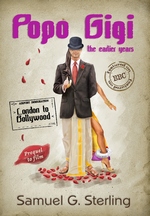
Popo Gigi: the Earlier Years: London to Bollywood by Samuel G. Sterling

Popo Gigi: the Earlier Years: London to BollywoodPopo Gigi: the Earlier Years: London to Bollywood

by Samuel G. Sterling

Kindle Edition, 596 pg.
Jolliwood Books, 2016

Read: March 31 – April 3, 2016


In circumstances difficult to explain, hard to believe, and probably meant to be comical — Popo Gigi and his twin brother, Ramyou, are born while their unwed mother emigrates from India to England. They spend years in poverty, gaining some sort of financial stability when their mother eventually marries. Ramyou is a troubled child with wild appetites (in just about every sense of the word — at least eventually), while Popo distinguishes himself academically. He eventually is admitted to, excels in and graduates from Oxbridge. Following graduation, he sets his mind to seeking some sort of understanding/closure regarding his father and his utter disregard for his twin sons. So Popo travels to India and begins a series of haphazard adventures as he attempts to meet and then bond with his father — hilarity ensues (theoretically), as does romance, a dash of danger, and more.

There is a charm to the writing that I can’t deny — even when the book seemed pointless — and even when the writing was muddled enough that I wasn’t sure what was going on (which happened a lot). Nevertheless, the it felt like sitting down and listening to a charming young man tell a long, rambling story. And, boy, do I mean rambling. Still, you can’t help but like the prose.

It’s the content of the prose that is problematic. It’s hard to believe a lot of the plot — and it’s not that easy to see the links between events that should follow each other, plot lines that are just abandoned (for chapters on end, when not totally). The “humor” is largely dependent on the kind of things I really haven’t found funny since I was in grade school — untimely erections, urine, excrement. I don’t care how many times they’re repeated, bathroom jokes just aren’t funny.

I wanted to like this, but I couldn’t. This was going to be a 2-star read for me, that I kinda felt guilty about, because of the spirit of the novel — I couldn’t help feeling affection for the style and writing, even if I didn’t like it. But the last few chapters killed that for me, it’s like they belonged to a different novel. There’s just no point to reading this book.

Disclaimer: I received this novel from Jolliwood Books in exchange for this post — I appreciate it, even if the book didn’t click for me.

—–
1 Star

March 2017 Report

All in all, March was a pretty good month — 29 books finished, nearly not enough written (I’m very tired lately, too tired to write, anyway). A good mix of good books and iffy — with a couple of really good ones thrown in. Which is a pretty decent way to spend a hobby/obsession, no?

So, anyway, here’s what happened here in March.

Books/Novels/Novellas Read/Listened to:

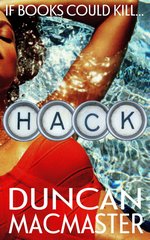
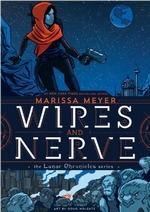
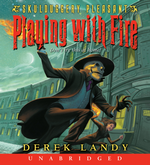
Hack Wires and Nerve, Volume 1 Playing with Fire
4 Stars 3 Stars 3 Stars
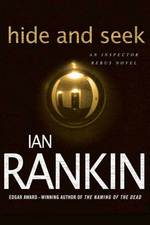
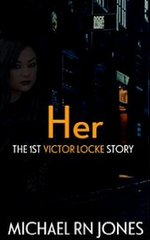
Ignite Hide and Seek HER: The 1st Victor Locke Story
3 Stars 3 Stars 3 Stars
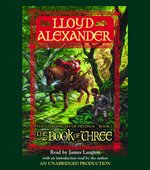
Snotgirl, Vol 1 Cold Reign The Book of Three
4 Stars 4 1/2 Stars 4 Stars
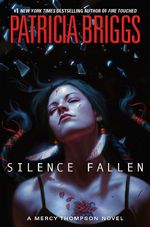
Silence Fallen The Faceless Ones Not a Drill
4 Stars 4 Stars 3 Stars
Pipeliner The Black Cauldron Little White Lies
2 1/2 Stars 3 Stars 4 1/2 Stars
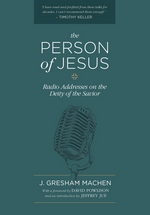
High Heat The Last Adam The Person of Jesus
3.5 Stars 4 1/2 Stars 5 Stars
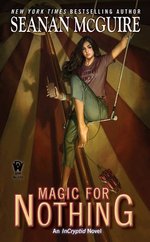
The Castle of Llyr Magic For Nothing The Magician’s Workshop, Volume One
3.5 Stars 4 Stars 2 1/2 Stars
No Uncertain Sound The Weed That Strings the Hangman's Bag The Forgotten Girls
4 Stars 3 Stars 3 Stars
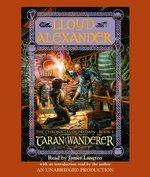
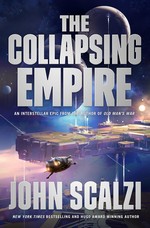
Taran Wanderer The Collapsing Empire Nearly Nero
3.5 Stars 4 Stars 3.5 Stars
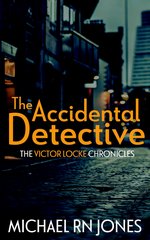
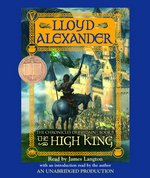
The Accidental Detective The High King      
3.5 Stars 4 Stars      

Still Reading:

A Biblical-Theological Introduction to the Old Testament Popo Gigi: the Earlier Years: London to Bollywood

Reviews Posted:

How was your month?

Nearly Nero by Loren D. Estleman

Nearly NeroNearly Nero: The Adventures of Claudius Lyon, the Man Who Would Be Wolfe

by Loren D. Estleman

eARC, 192 pg.
Tyrus Books, 2017

Read: March 24 – 30, 2017
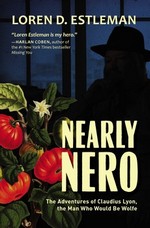

I’ve heard about the stories in this volume for years, but have never tracked one down before — and then a whole collection of them show up on NetGalley! How could I not request it? I’m so glad this book exists so that those of us who don’t get the magazines, etc. that publish short mystery fiction can have them (and even those who do have access to those magazines, etc. can have them in one handy volume).

Anyway, here’s the setup: Claudius Lyon is a huge fan of Nero Wolfe — he reads every one of the reports that Archie Goodwin’s literary agent Rex Stout publishes. He’s such a fan that he wants to be Wolfe (like the guys dressing up in Batsuits in The Dark Knight Rises) — he’s fat, fairly clever, and wealthy enough not to need to work and still indulge himself. He renovates his townhouse to include a greenhouse, an elevator, and a first floor floorplan that pretty much matches Wolfe’s. He hires a private chef — a kosher chef of dubious quality (not that Lyon needs to eat kosher, it’s just what Gus can cook), changes his name to something that approximates his hero’s and hires a “man of action,” Arnie Woodbine. Arnie’s an ex-con, small-time crook who doesn’t mind (too much) putting up with his looney boss for a steady paycheck and meals.

The number of ways that Lyon isn’t Wolfe is pretty large and I won’t spoil your fun in discovering them. Now, Lyon’s unlicensed as a PI, so he can’t take on paying clients — but he occasionally gets people who will take him up on his free services. He’s decent at solving puzzles and low-priority mysteries (not that he doesn’t find his way into something bigger on occasion). Once he gets a client (non-paying, Arnie’d have me stress), he goes through whatever steps he needs to figure it out (including his own version of Wolfe’s lip movement and sending Arnie on fact-finding missions), and goes to some lengths to assemble some sort of audience for his reveal. I can’t help smiling as I think about it, really.

The whole thing is a tongue-in-cheek tribute to the Nero Wolfe/Rex Stout — recognizing the brilliance of the Stout’s work (how can you not?), while poking fun at it. Lyon’s really a goofy character and Woodbine is great at pointing that out — while begrudgingly admitting that he gets things right every now and then. There’s a lot of fun to be had in the story telling — the mysteries aren’t all that much to get excited about, it’s in watching Lyon stumble through his cases that the entertainment is found. Well, that and Woodbine’s commentary.

Not unlike many of the Wolfe stories (particularly the short stories).

I wouldn’t recommend reading more than two of these stories in a sitting, I think they work best as solo shots. It’s a difficult call, because I typically wanted to go on for one more. Also, I’m not sure how enjoyable these’d be for non-Wolfe readers — but then again, I think a lot of the humor would hold up and it might entice a reader to learn more about Lyon’s idol. And anything that gets people to read Rex Stout’s Nero Wolfe novels is a good thing.

But for readers of Stout’s Wolfe novels? This is a must read. He’s not trying and failing to recapture Stout’s magic (see Goldsborough post-The Bloodied Ivy), he’s intentionally missing and yet somehow getting a little of it. I really enjoyed this book and can easily see me re-reading it a handful of times.

Disclaimer: I received this eARC from Adams Media via NetGalley in exchange for this post — thanks to both for this.

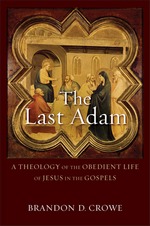
The Last Adam by Brandon D. Crowe

The Last AdamThe Last Adam: A Theology of the Obedient Life of Jesus in the Gospels

by Brandon D. Crowe

Paperback, 215 pg.
Baker Academic, 2017

Read: February 19 – March 19, 2017


I just don’t know how to sum up this book succinctly honestly. After a few attempts that are best never seen by anyone, I decided that no one does it better than Crowe does in the first three paragraphs:

What is the purpose and significance of the life and ministry of Jesus in the Gospels? At one level, this may seem like an obvious question. The Gospels are all about Jesus. Moreover, given the structure of each of the four Gospels, it is difficult to miss the central role played by the Passion Narratives. And yet there is much more in the Gospels beyond the Passion Narratives. Jesus is amazingly active. He preaches, heals, exorcises, prays, rebukes, forgives, calls, authorizes, confounds, challenges, rejoices, weeps, blesses, curses, prophesies, and more. In addition, he consistently draws attention to himself as he does these things.

And then there are the Christmas stories (that is, the infancy narratives). These are among the more familiar parts of the Gospels in today’s culture. But what is the relationship between the infancy narratives and salvation? Jesus appears to be quite passive lying in the manger as he is adored by shepherds, and we do not find him to be very active when the magi come and prostrate themselves before him in Matthew 2. But can we look even to the infancy of Jesus and say that Jesus was somehow already beginning to accomplish something of significance? To ask this question is to lead us back to the driving question of this volume, since Jesus did not bypass infancy, childhood, adolescence, or adulthood on his way to the cross. Why? What was it about the life of Jesus that was necessary for salvation—from the manger to the cross and everything in between? Do the Evangelists themselves give us any indications that this is a question they have in view as they write their Gospels? I will argue that they do.

In this volume I will argue that we find a shared perspective among the diversity of the four Gospels that the obedient life of Jesus—in its entirety—is vicarious and salvific in character. More specifically, I will argue that Jesus is portrayed in the Gospels as the last Adam whose obedience is necessary for God’s people to experience the blessings of salvation. In pursuit of this thesis, I will consider what the Gospels themselves say about the lifelong obedience of Jesus, which concomitantly involves considering how Jesus’s life and ministry are related to his passion. By concentrating on the Gospels I do not intend to imply that these are the only documents in the New Testament that speak to this issue. I do believe, however, that a focus on the Gospels qua Gospels is important because of the way they narrate the life of Jesus, and because their testimony to the significance of Jesus’s life for salvation has often not been given sufficient attention. Thus a sub-aim of this book is to help us read and interpret the Gospels theologically.

So, there’s his aim, rather, there are his aims. How does he go about it? Here’s the Table of Contents to give you a look at how he’s approaching his arguments (yeah, I’m quoting a lot here, but you try to tackle this book in a blog post rather than a dozen or so page review and see how easy it is):

1. A Tale of Two Adams in the History of Interpretation
2. The Last Adam and the Son of Man in the Gospels
3. The Last Adam as the Obedient Son of God
4. The Last Adam and the Fulfillment of Scripture
5. The Glory of the Last Adam in the Gospel of John
6. The Last Adam and the Kingdom of Righteousness
7. The Death and Resurrection of the Last Adam
8. The Last Adam and Salvation: Theological Synthesis and Conclusions

This is primarily an exegetical work — dealing with the text of the Gospels directly. But Crowe leans upon historical and systematic theology as well (especially in Chapter 8). Outside of Chapter 5, he’s primarily dealing with the Synoptics — but not exclusively. It is not impossible to read for the dedicated layman — I’ve read more difficult works in the last few months, but it’s not something you can skim with profit. There are issues that I’m not sure I understand the purpose of addressing, as I’m not aware of all of the academic controversies he’s addressing, but even when you don’t understand everything about those portions of the book, you can still gain from working through them.

I learned a lot. I thought about passages in a way I haven’t before — seeing things in a new light, or at least a different light. I really don’t have a lot to say about this particular book — primarily I just wanted to post about it to maybe get a reader or two to look at it that might not have otherwise. I loved it, even when I had to work a little harder than usual to get what he was saying, it was worth it. This is the kind of thing the Church needs more of.

This is written from a Confessionally Reformed perspective, but not necessarily for the Confessionally Reformed any more than other Evangelical/Evangelical-ish readers. Although, the Reformed will be more used to thinking in some of the categories he uses than others (as Crowe indicates late in this interview).

This is not an easy read, this is not a quick read, but it is a good read (why do I feel like Lewis’ Mr. Beaver now?). This is theology that will lead to doxology — as well as more theological and doxological reflection and study. I wasn’t sure what I expected to get out of this book, but Crowe delivered it and more. I’m not doing a good job summing things up here, just get this book and read it (as well as all the books Crowe writes that you can afford, I’m pretty sure I never got around to posting about his book on the General Epistles which was almost as good as this one (and easier to read)).

—–

4 1/2 Stars

Page 3 of 4

Powered by WordPress & Theme by Anders Norén