Month: October 2018 Page 1 of 4

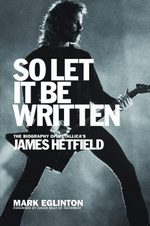
So Let It Be Written by Mark Eglinton: A Disappointingly Delivered Account of a Rock Star’s Career

So Let It Be WrittenSo Let It Be Written: The Biography of Metallica’s James Hetfield

by Mark Eglinton

Paperback, 219 pg.
Lesser Gods, 2017
Read: October 29 – 30, 2018
Here’s the Publisher’s synopsis:

           The first and only biography of one of the best front men of the modern era.

With James Hetfield at the helm, Metallica went from being thrash pioneers to heavy metal gods. He overcame adolescent upheaval and personal demons—including his parents’ divorce, his mother’s untimely death and severe alcoholism—to become metal’s biggest star.

So Let It Be Written does justice to the many hats Hetfield has worn, with his strong leadership, signature vocal style, powerful guitar-playing and masterful songwriting. Author Mark Eglinton uses exclusive, firsthand interviews—with prominent rock stars and key figures in Hetfield’s life—to construct the definitive account of Hetfield.

There are many problems with this book. If it is a definitive account of Hetfield, it’s because there’s not a lot of competition. The firsthand interviews seem to be with people who knew Hetfield in school or shortly thereafter — or friends of former bandmates. For insights from people closer to him, Eglinton seems to rely on interviews published in magazines or done on TV or in a documentary. I could be wrong about that — there might be more original research performed by him, but given the utter lack of citation, it’s hard to say for sure.

This book is primarily about Hetfield’s professional life, following the account of Hetfield’s mother’s death, we maybe get two full paragraphs (scattered over chapters) about Hetfield’s family (but repeated statements that family is the most important thing to Hetfield), and his friendships outside the band aren’t given much more space.

Rather than a biography of James Hetfield, this comes across as the story of Metallica with a focus on the input, influence, and antics of Hetfield. With a special emphasis on glorying in the music and lyrics of the albums leading up to Metallica/The Black Album, and in denigrating everything from Load through the build-up for the release of Hardwired… to Self-Destruct, which wasn’t released in time for him to come up with a strong opinion about (with some okay words directed to the documentaries and films produced in that time).

It’s clear that Eglinton was a fan of early Metallica, and has a wide appreciation for and knowledge of the metal scene. He has the knowledge base and the passion to produce a strong book about the band — but he seems to lack the ability to focus on the life of one man. Somehow, the author wrote a similar looking book, James Hetfield: The Wolf at Metallica’s Door, seven years earlier than this — and it was longer. I’m not sure how he pulled that off — my guess is more analysis of the contents of albums and/or his estimation of their worth. I’m curious about the differences between the two, but not enough to put up with reading it to compare.

James Hetfield is a deeply flawed, incredibly talented, and interesting figure. A biography of him should be intrinsically and automatically fascinating, and it takes a certain kind of author to take that potential and turn it into a disappointment. Sadly, Eglinton is just that kind of author.

Don’t bother.

—–

2 Stars
2018 Library Love Challenge

✔ Read a memoir or biography of a musician you like.

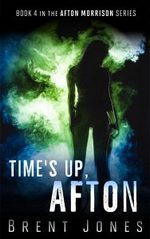
Time’s Up, Afton by Brent Jones: Jones Wraps Things Up with a Suspenseful and Successful Conclusion

Time's Up, AftonTime’s Up, Afton

by Brent Jones
Series: Afton Morrison, Book 4

Kindle Edition, 142 pg.
2018

Read: October 29, 2018

She tugged at the edges of her apron, giving me a facetious and halfhearted curtsy. “We all wear masks, Afton. Sometimes it’s worth finding out what’s hiding underneath.”

Tia’s words to her unexpected friend encapsulate the core of this book — we find out what’s underneath several masks. But first we’ve got to tie up some plotlines, see the fall-out and repercussions of the third installment (well, all of them, but the third particularly), and deal with a a few more grisly deaths.

This picks up right after Nice Try, Afton where we see Afton try to come up with an explanation that anyone will believe for the bloodbath surrounding her. From there, she has to design and implement her endgame to — once and for all — stop her tormentor before she leaves town.

This volume is really Afton pulling back the mask little by little to those around her — library patrons, her brother, friends, and even herself. While that occurs, she learns a lot about her brother, friends, and her enemies. A lot makes sense that didn’t before — even if you didn’t realize it needed the explanation until you got it.

I was less than satisfied with what was hidden under one mask — but not enough that it ruined things for me. And, hey it leaves a door open (at least a crack) for Jones to use if he wants to return to Afton’s world. So I’m really not going to complain.

I’m going to keep this short because I’m afraid I’ll spill something if I keep going. This ends up nowhere near where I thought it was going when I finished Go Home, Afton some four months ago — it’s far better. I really encourage you all to pick these novellas up. Some interesting characters, some very compelling action scenes, and a story that will take you places you don’t expect.

—–

4 Stars

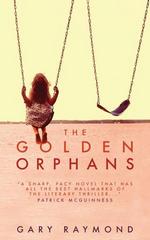
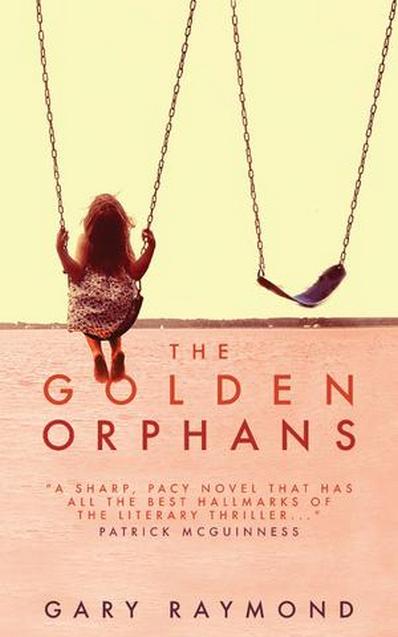
The Golden Orphans by Gary Raymond: An Artist, A Mysterious Russian and an Enigmatic Island

The Golden OrphansThe Golden Orphans

by Gary Raymond

Kindle Edition, 280 pg.
Parthian Books, 2018
Read: October 23 – 28, 2018

I thought for a moment. “I think I am about to do something stupid.”

“In Cyprus you only need ask yourself one question,” Tara said, deadly serious. “Is it out of desperation?”

I keep running into artists in the novels I read — like in Tom Rachman’s The Italian Teacher, Russo’s Bridge of Sighs, or even Hawley’s Before the Fall — there are other examples, I’m sure — but they’re not coming to me right now. I’ve never understood the appeal, really, but I hold out hope that one day I’ll get it. And I shouldn’t be running out of opportunity anytime soon — it’s a vocation that draws authors like flies to honey.

Gary Raymond’s artist protagonist is a little different than the typical depiction. He’s a successful artist — to some extent, anyway — but not a genius (misunderstood or not), he’s not a superstar. In fact, his best days are probably behind him, and he knows it. But he’s still plugging away at it, while pursuing an otherwise self-destructive lifestyle. He’s invited to a funeral in Cyprus at just the right time — his finances are in shambles and his relationship is in a similar state, the largest question being which will fall apart first.

Not only is he invited, but his trip is paid for — so he can go. Francis Benthem is the deceased, and at one point in time he was a teacher, a mentor for the narrator (I should say that Raymond didn’t name him, I’m not being negligent) — he was like a father to him, really. So he goes to the funeral, and for most of it, is the only one present besides the priest. Eventually, Mr. Prostakov (Benthem’s employer, who paid for everything) and a few other people show up and leave quickly. Their appearance both confuses and intrigues the narrator.

Actually, that describes just about everything about Cyprus — it confuses and intrigues him. So he spends time getting to know the island, the people on it and, when given the opportunity, Mr. Prostakov. Illie Prostakov is an enigma wrapped in a riddle, wrapped in a hint of a stereotypical wealthy Russian with a murky past and revenue stream. He presents the narrator with a business proposition — take up residence in his home and replace Benthem. He’s a little vague as to the artistic duties required, so I will be, too. But the money’s good enough to take care of problems back home, so the narrator takes the job — not realizing the trouble and mystery that he’s put himself in the way of.

Unlike Bentham, the narrator won’t just take things at face value — he asks questions, and when he doesn’t get answers, he tries to find them (he might not be great at it, but he tries). Who is Prostakov? What’s he doing? Who are the people he surrounds himself with? Asking these questions isn’t the safest thing he could do — getting answers is probably worse.

The island of Cyprus isn’t just the setting of the novel, it’s practically a character. While the narrator is trying to understand his employer and his employer’s aims, most people are more concerned with getting him to understand Cyprus. Everyone’s description (I don’t have a hard count, but I’d guess at least a dozen are given) is different, but combined you begin to get an idea what life on the island is like. In the end, I think we get a fuller understanding of Cyprus than we do anything that the narrator is looking into.

Which is not to say that he doesn’t get any answers. He does, as does the reader. Raymond doesn’t leave you frustrated like that.

There’s a feel to this book that makes you think it’ll be one thing, but it’s not. The characters seem to be certain types, and most are — but they don’t act the way you think they will. The conclusion seems surely to be headed in one direction, but it ends up giving you a different ending. Everywhere you look, Raymond doesn’t do what you expect — which is both refreshing and annoying (you’d like to be right occasionally).

I’m not that convinced this is really a thriller — but it’s being marketed as one. As a thriller, I think it’s missing a sense of urgency, of real danger. But I think things moved too quickly, and without the depth called for in a literary book. A little more time after the narrator took the job and trying to accomplish it before the plot moves forward, more time spent on the painting (and talking about the process) would’ve helped. A greater sense of hazard, of peril from Viktor or Illie would’ve helped a lot on the thriller front. In the end, the book wasn’t quite sure it knew what it wanted to be — and a mix of the two genres would’ve worked, but it needed to be a bit more of one of them (or both) to really be effective. It was just always lukewarm.

That said — it never, not for a minute, failed to hold my interest. I may not have been very invested in the outcome or characters, but I was glued to it. Frankly, I think the narrator was the same way — he wasn’t invested in his relationship back in London, his career (really), or anything that was happening around him on Cyprus — but he couldn’t stop himself from sticking a toe in here and there, from involving himself just a little bit in everything. As he was confused — so was I. As he was intrigued — so was I. Raymond did a very effective job in getting the reader (or at least this reader) to see things from his protagonist’s eyes.

Raymond’s given us something unique here. I’ve talked before about books that I can respect and admire more than enjoy. This is one of those — the writing and approach of this novel exceeds any affection or excitement I might have for it. It’s not the kind of thriller you can finish and move on from easily — I’m going to be thinking about this for a while. The characters will linger in my imagination, but the reality he depicts will stay around longer. This isn’t a novel that lends itself to a rating any more than it lends itself to a genre-classification, so take it with a grain of salt.

—–

3.5 Stars

My thanks to damppebbles blog tours for the invitation to participate in this tour and the materials they provided, including a copy of this book — which didn’t influence the above post, beyond giving me something to post about.

BOOK SPOTLIGHT: The Golden Orphans by Gary Raymond

Today I welcome the Book Tour for the literary thriller The Golden Orphans by Gary Raymond. Along with this spotlight post, I’ll be giving my take on the novel here in a bit.

Book Details:

Book Title: The Golden Orphans by Gary Raymond
Publisher: Parthian Books
Release date: July 19, 2018
Format: Paperback/ebook
Length: 280 pages

Book Blurb:

Within the dark heart of an abandoned city, on an island once torn by betrayal and war, lies a terrible secret…

Francis Benthem is a successful artist; he’s created a new life on an island in the sun. He works all night, painting the dreams of his mysterious Russian benefactor, Illy Prostakov. He writes letters to old friends and students back in cold, far away London. But now Francis Benthem is found dead. The funeral is planned and his old friend from art school arrives to finish what Benthem had started. The painting of dreams on a faraway island. But you can also paint nightmares and Illy has secrets of his own that are not ready for the light. Of promises made and broken, betrayal and murder…

The Golden Orphans offers a new twist on the literary thriller.

About Gary Raymond:

Gary RaymondGary Raymond is a novelist, critic, editor and broadcaster. He is the presenter of BBC Radio Wales’, The Review Show, and is one of the founding editors of Wales Arts Review. He is the author of two novels, The Golden Orphans (Parthian, 2018) and For Those Who Come After (Parthian, 2015). He is a widely published critic and cultural commentator.

Gary Raymond’s Social Media:

Twitter ~ Facebook ~ Amazon Author Page

Purchase Links for The Golden Orphans:

Amazon UK ~ Amazon US ~ Waterstones ~ Book Depository ~ NOOK ~ Kobo


My thanks to damppebbles blog tours for the invitation to participate in this tour and the materials they provided.

Saturday Miscellany – 10/27/18

Not much this week — which is typical for the end of the month, but there were a few dds ‘n ends about books and reading that caught my eye. You’ve probably seen some/most/all of them, but just in case:

Lastly, I’d like to say hi and extend a warm welcome to SindrElf for following the blog this week.

Wrecked by Joe Ide: Isaiah and Dodson Face Their Most Dangerous Foes Yet

WreckedWrecked

by Joe Ide
Series: IQ, #3

Hardcover, 340 pg.
Mulholland Books, 2018
Read: October 19 – 22, 2018

At the end of Righteous, Isaiah meets a girl — I don’t remember much about it, but there’s something about her that clearly makes an impression on IQ — and his dog. It was enough to give us a little hope for our intrepid hero after everything he’d just gone through as we wrapped up the book. This book starts with the three of them bumping into each other again — this time IQ definitely is attracted to her and his dog and the woman clearly enjoy each other’s company. Which is great for them, but you feel a little bad for Isaiah.

Before long, Grace comes to Isaiah with a case. Her mother disappeared a decade ago — under a cloud, it should be added — and Grace saw her on the street near her home. Can Isaiah find her? She’s a painter trying to get a start and really can’t afford much — but gives him a painting as payment.

The catch is, Isaiah and Dodson have recently become partners and Dodson is determined to make Isaiah’s business legitimate. They’ve got a web presence, a Facebook page, and a strict policy on minimum fees. These fees have to be money. No lawn care services, cooking, et cetera. Dodson has a wife and child to provide for and he is inflexible on this point. Isaiah makes an exception and ignores Dodson’s complaints, once Dodson figures out Isaiah’s motivation to take the case, he acquiesces — like a good friend would.

What makes this case complicated is that Sarah, Grace’s mom, is trying to blackmail some very dangerous people. It takes a long time for us to get all the details behind the blackmailing (it’s absolutely worth the wait, and Ide does a great job revealing things to us in drips), but what’s important isn’t the why — it’s the reaction to the blackmail. Isaiah, Dodson and their clients have been in dangerous and tough spots before — but I promise you, those pale in comparison to this. These people bring a level of danger, a level of callousness, a level of professionalism, that will demand more from Isaiah than he’s used to — and he’ll have to find new ways to approach things to survive.

Meanwhile, there’s another blackmail story afoot. One of the darkest episodes of the partners’ (and Deronda’s) past comes back to bite them — a criminal act that they’ve gotten away with, primarily because no one knew they got away with anything. Somehow, word has gotten out, and someone wants money from them to stop him from going public with what he knows. If the victims of this crime — a couple of notorious drug dealers — find out, it will likely prove fatal. Dodson attempts to take care of this on his own, with a little help from Deronda.

Clearly, the partnership isn’t off to the strongest start.

There is a drink described here — not that anyone you’re supposed to like drinks it — that is possibly the most disgusting thing I’ve read this year, it’s a mix of vodka, Coke, and things that shouldn’t be consumed with each other. There are scenes of physical violence and torture in this book, horrible things really, but it’s Parks Punch that left scars.

Actually, there is something more painful, now that I think of it. Junior, one of the drug dealers that IQ, Dodson, and Deronda stole from before years ago appears frequently. He’s got the right idea — a better vocabulary can be tied to greater success in business and life in general. Sadly, Junior is better at acquiring words than he is using them. Resulting in sentences like:

My domicile has been exfoliated! Excavate the premises!

(when he discovers that his home has been broken into) or

Did you discover anything irrelevant?

(to Isaiah after searching for clues). Say what you will about waterboarding or Parks Punch — for me, those lines hurt (and I gave tame examples).

Well, they make me crack up — but they’re also painful.

The action is taut, the twists don’t stop and you have to hold on tight so the pacing doesn’t throw you from the vehicle in the last few chapters. But not only is this the best suspense that Ide’s given us, we have the some of the best emotional moments and character growth so far in the series. Some real trauma is visited on Isaiah, and it’ll be interesting to see how this impacts him going forward (there’s some indication that ide has something in mind along these lines). Similarly, I don’t think I’ve liked Dodson more than I did in this book and his character keeps growing and maturing — I am eager to see how Ide helps him grow in the future.

Unlike IQ or Righteous, we only have one timeline in Wrecked. This is such an improvement — that worked in IQ seemed a drawback in Righteous — but one timeline allows the reader, the pace and the action to focus on Grace and her case.

I’ve been a fan of Ide’s writing and this series since the moment I finished chapter 2 of IQ, but this book worked for me more than his previous work. I don’t know if it’s because I appreciate the characters and style more — or if it’s that Ide has grown with his experience and is delivering something better, I’m not sure. (my money is on the latter, but you never know) This is a fantastic entry very strong series that everyone should hop on board with (start at the beginning, it’s only 3 books — you have plenty of time to catch up).

—–

5 Stars

2018 Library Love Challenge

BOOK BLITZ: F*ck You, Your Honor by Craig Chambers

 photo Fuck You Your Honor_zpsvjfkfqai.jpg

Literary Fiction, Satire
Date Published: June 2017
 photo add-to-goodreads-button_zpsc7b3c634.png
Publisher: Black Letter Editions
F*ck You, Your Honor is a satirical literary novel about a low-end attorney and real estate broker who is ordered by a judge to write a book to save his law license.
Attorney Darwyn “Wyn” VanWye is down on his luck. He squats in a foreclosed government-owned HUD home and conducts his law practice over his smart phone from a sports bar.
While attempting to reconcile with Amalia, his Argentine ex-wife, so his excessive alimony payments can be terminated, Judge Solomon arbitrarily sanctions him for misconduct. Instead of a fine or jail time, the judge sentences him to write a sixty-five thousand word book about the “dignity and integrity” of the legal system. Wyn believes the judge is out to get him.
After resisting the order, F*ck You, Your Honor is the book Wyn writes to hopefully save his law license. Will he succeed in placating the judge and winning back his ex-wife?
The book is loosely inspired by an article in the Wall Street Journal about a pharmaceutical executive who was sentenced by a Federal judge to write a book to show penance for lying to the Federal Trade Commission. The executive wrote the book, but instead of writing the reflective work the judge ordered, he denounced the unfairness of the legal system.
What if a lawyer was ordered to write a book like this? His first instinct would be to try to argue his way out of it.
 photo Fuck You Your Honor print stacked back and front with tablet_zpsknc30wgf.jpg
Excerpt
 29
Another day, I met a new prospective client at The Overtime who wanted to retain me to file for a divorce. I was talking to Cora who was busy with the lunch crowd when the prospect arrived thirty minutes early. I hate clients who are too punctual; it shows they are controlling. It’s rude. Here am I busy working on another case, and a prospective client comes in, and I feel the pressure of her waiting for me across The Overtime. But I immediately forgave her as soon as I saw her.
I must say, if ever I was tempted to start a sexual relationship with a client, this would be the one. After the case was over, of course. I could easily see myself ridding my new client of her soon-to-be ex-husband, and, maybe months later, after enough time had passed… my thoughts wandered off for a second and then wandered back to the case. Although she was probably in her late thirties, she had aged well; beautiful lips, a sensual curved neck. She had a rich, Southern drawl.
As I introduced myself, she let out this warm vibe. I made her fill out the questionnaire while she waited. Questions about the date and history of the marriage, names and addresses, the number of children, any instances of domestic violence. All based on statutes and precedent that I would need to file her case.
I noticed by her questionnaire she lived in a prestigious area of overpriced bungalows and Tudors that surrounded a big park near downtown. The park had a lake and a boathouse. Amalia and I used to go down there some afternoons in the summers for picnics and free concerts. I think part of my attraction to her, however, subconsciously, she reminded me of Amalia.
I never really thought that I had a type. I guess I do. I never liked the competitive career women, and just as important, they never liked me.
This woman was warm and kind. She was of Spanish or Mexican origin, but unlike Amalia, she had been totally Americanized. She spoke perfect English, ate bland food at The Overtime, though she dressed flamboyantly. She worked as a branch manager in a bank. She complained about the inflated prices of real estate and the ridiculous number of Starbucks. On street corners. In grocery stores. In strip malls. Being a banker, I guess she did the math, and $6 a cup is a lot for a cup of coffee.
She confided her husband had not touched her in a year. Unbelievable! I wanted to leap out of my chair and kiss her. I hadn’t touched Amalia in over a year, either.
The first thing I did, I asked her if she and her husband could reconcile. There’s a ninety-one day waiting period for a divorce, to give the couple time to cool off, maybe go to counseling.
If the parties went through a divorce, I could make thousands of dollars. If the couple can’t get along in the divorce, and both get lawyers, a couple can blow through their life savings. If the parties reconcile, the divorce is either dismissed or never filed, and I earn, well, nothing. Amalia called this “chewing my paw.”
I thought again about my divorce. Some of the arguments with Amalia were just silly.
One time, we fought over a banana. I had left a banana on the kitchen counter the night before court to pack with my exhibit books. I usually brought a snack to help me through a whole day trial. Some judges allowed you to bring food into the courtroom to eat on the breaks; others didn’t. Without even telling me, she ate the last banana.
I have to admit, at the time, I was furious.
Another time, she packed me a lunch, put it in my briefcase, and took out my notebook with all my notes for a hearing. I appeared in court, totally unprepared. Sabotaged by Amalia. Lucky for me the case was continued. We went round and round as to who was at fault on this one.
My arguments with Amalia were passionate; never violent. They almost always ended in laughter. For a few years, we had a dog, Knuckles, though the dog eventually died. One day we took him to the vet. She wrote the dog’s name down on a form at the vet’s office: ‘Nuckles’. I informed her the word began with a silent K. The word didn’t register with her, and she had a hard time believing me. I can still hear her making the K sound, trying to pronounce it, trying to make sense of the word.
The English language mystified her. The next time she wrote out a grocery list, along with the milk and some more bananas, she asked me to pick up a package of ‘knoodles’.
I may not be the best one to give a guy marital advice, but still, here goes: Sleep with your wife from time to time. Be nice to her. Otherwise, keep your penis in your pants. These, along with financial difficulties, are the main causes of a divorce.
I explained the essence of a dissolution of marriage, showing off my knowledge with citations of statutes and case law. The first step after a divorce is filed—the parties exchange financial statements and supply the supporting documentation. I call this making the pie. Once you make the pie, you divide the pie, calculating how to fairly distribute the personal property, the assets and debts between the parties. Every asset is taken into account. From the smallest savings bond to the parties’ coin collection, each coin valued and divided coin by coin. The court will even divide the porn.
A divorce works like this: most lawyers review the financial documents, and based on the factors in the statute, calculate what their client is reasonably entitled to. Then they double it. So they will stay employed.
The most accurate definition of a divorce I copied from a well-respected, influential, and prestigious legal journal.
“A divorce is a domestic legal proceeding which takes a highly dysfunctional family, and legally divides it into two highly dysfunctional families.” That was the best definition I ever heard.
I gave her advice about the fundamentals of a divorce. There were statutes about temporary orders, how child support was calculated, parenting time was determined, alimony figured, property, pensions, and debts divided. Hopefully, there’s not much to fight about. If there are no children, thank God. That’s where people fight the most. They also fight about money, until they see how much money they will have to spend to fight about the money. First, a couple doesn’t need to agree to get a divorce. That hardly makes sense. If a couple cannot agree on who will pay the sewer bill, they cannot agree on the divorce. Second, if one party says the marriage is broken, it’s broken. End of story. Agreements of the parties or other court orders are enforced through contempt proceedings, which is an allegation of a deliberate violation of a court order under Rule 107. There are two types of contempt: punitive and remedial.
Remedial contempt is when the judge is mad enough at a party for violating a court order, he or she can put you in jail until you comply. Punitive contempt is when a judge is real mad, he or she can simply put you in jail. (Amazing, though, how a deadbeat dad who owes back child support, has no money, no job, no savings, and no prospects—through some miracle of math or accounting is able to purge a remedial contempt by coughing up ten thousand dollars after spending only one night in jail.)
The smartest thing any divorcing couple can do is sit down and work out a compromise. Settle some of the divorce or all of it ahead of getting the lawyers involved. Write it on a napkin and sign it. It doesn’t matter what form it is in.
A guy usually knows he has to share the assets of the marriage with his wife, especially if the wife is a housewife. A woman thinks differently. She doesn’t like to share. All of the assets are hers; all of the debts are his. That was the story of my divorce.
I gave my prospective client some good advice: “Empty all the bank accounts,” I suggested. “If you don’t, your husband certainly will. Once he finds out you are thinking about filing the divorce.”
This was sound legal reasoning. Before a divorce is filed, there are no court orders in place to protect the assets so the court can divide them fairly. One parent can run off with the children. Or abscond with all the assets and gamble them away in Las Vegas. Once the divorce is filed or if the money disappears in contemplation of the divorce, you will have to fully account for yourself and your finances.
About the Author

 photo Fuck You Your Honor Author Craig Chambers_zpsskinmrdd.jpg

In his junior year in college, Craig Chambers attended the University of Leeds in England. He did not attend a single class, traveled around Europe instead. He came back and took the final exams, only to be disappointed that he got a 1 in English. He later learned that “First Honors” was the highest grade.
In the ‘80s he became a real estate broker while he worked on developing his writing style. Chambers attended law school in the ‘90’s because he observed a real estate closing where the lawyer messed up the deal, but still charged a fee of $1,000. He figured he could mess up a real estate deal for a lot less than that. His literary satire on the legal system, F*ck You, Your Honor, was released in June, 2017. He resides in Littleton, CO.

Contact Links
Purchase Links
RABT Book Tours & PR

Pub Day Repost: Lessons From Lucy by Dave Barry: America’s Funniest Human Tries to Learn a Few New Tricks from an Old Dog

Lessons From LucyLessons From Lucy: The Simple Joys of an Old, Happy Dog

by Dave BarryeARC, 208 pg.
Simon & Schuster, 2018
Read: July 19, 2018

Before I say anything else, Barry has set up an Instagram page (well, probably not him, actually — he states in the book he doesn’t understand Instagram) for his dog, Lucy. You should absolutely check it out and then come back to read what I have to say about the book. Dog Pictures > my blog. Pretty near always.

With that out of the way . . . Dave Barry has been a dog person for most of his life, one of the many reasons I like him. I distinctly, and fondly, remember columns and/or references to Earnest and Zippy (the emergency backup dog) years ago. Those two make a brief appearance in this book, but they aren’t the focus. The focus (if you can’t tell from the title) is his dog, Lucy. At the time of writing, Barry and Lucy are the same age — 70 (or 7 times 10 in her case), which means that both of them have many fewer days ahead of them than behind — which sounds awfully morbid for Dave Barry to talk about, but he does so frequently and purposefully.

As they’re at similar stages in life, Barry notices a huge difference between the two — Lucy is far happier and seemingly better adjusted than he is. So he sets out to try to learn a few lessons about life from her, which he passes on to his readers. Things like Pay Attention to the People You Love; Don’t Let Your Happiness Depend on Things; and Don’t Stop Having Fun. None of these, Barry knows, are original or ground-breaking — they’re pretty much common sense. Yet, they’re the kind of common sense things that he (like many/most humans) doesn’t actually do a great job at.

The result is a mixture of a Self-Help book and a Humor book — humor about himself, his life, as well as dogs. Sometimes the swing between the two genres can be jarring, but that’s pretty rare. For the most part, he moves easily between the two, taking the readers along with him on this ride. I can’t tell you how many times I went from grinning, chuckling or laughing out loud to getting misty-eyed within a couple of pages. It seems that Barry has learned a little bit about writing over the decades.

I’ve loved Barry’s humor longer than either of us would probably care to admit. One of his strengths is finding a way to take an old joke, or at least a joke everyone’s made before — like, say, I dunno, dogs sniffing each other’s hind-quarters — and make it feel fresh and new. More importantly, funny. He’s also able to make jumps from premise to punchline that no one expects. There is, for example, a Hugh Hefner joke where one doesn’t even come close to belonging — and it works perfectly. Even knowing that, you won’t see it coming until you’re snickering at it.

As for the heart-felt material? It works pretty well, too. I don’t think anyone will walk away from this book thinking “Wow! That was insightful. I never would have thought of it on my own!” Nor do I think Barry was trying for it. But, readers will appreciate the reminders to live like Lucy (or their own dog), and the way Barry phrases things might add some freshness to the concept. Which is all anyone can really ask.

I really don’t know if this is Barry’s best — but it’s up there. The ratio of Attempted Joke to Funny Joke is pretty high, I’m not sure if I can think of a higher one in his ouvre. Lessons From Lucy is, without a doubt, his most mature, thoughtful and touching work (that’s a pretty low bar, I realize — a bar he’s worked hard to keep low, too). Couple that with me being a sucker for a Dog Book — even if it is a semi-Self Help book — and I can’t help but give it 5 Stars. This is a winner, no matter what.

—–

5 Stars

Disclaimer: I received this eARC from Simon & Schuster via NetGalley in exchange for this post — which is my honest opinion and pleasure to give — thanks to both for this.

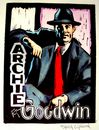
Happy Birthday, Archie!

My annual tribute to one of my favorite fictional characters (if not my all-time favorite).

On Oct 23 in Chillicothe, Ohio, Archie Goodwin entered this world–no doubt with a smile for the pretty nurses–and American detective literature was never the same.

I’m toasting him in one of the ways I think he’d appreciate most–by raising a glass of milk in his honor.

Who was Archie? Archie summed up his life thusly:

Born in Ohio. Public high school, pretty good at geometry and football, graduated with honor but no honors. Went to college two weeks, decided it was childish, came to New York and got a job guarding a pier, shot and killed two men and was fired, was recommended to Nero Wolfe for a chore he wanted done, did it, was offered a full-time job by Mr. Wolfe, took it, still have it.” (Fourth of July Picnic)

Long may he keep it. Just what was he employed by Wolfe to do? In The Black Mountain he answers the statement, “I thought you was a private eye” with:

I don’t like the way you say it, but I am. Also I am an accountant, an amanuensis, and a cocklebur. Eight to five you never heard the word amanuensis and you never saw a cocklebur.

In The Red Box, he says

I know pretty well what my field is. Aside from my primary function as the thorn in the seat of Wolfe’s chair to keep him from going to sleep and waking up only for meals, I’m chiefly cut out for two things: to jump and grab something before the other guy can get his paws on it, and to collect pieces of the puzzle for Wolfe to work on.

In Black Orchids, he reacts to an insult:

…her cheap crack about me being a ten-cent Clark Gable, which was ridiculous. He simpers, to begin with, and to end with no one can say I resemble a movie actor, and if they did it would be more apt to be Gary Cooper than Clark Gable.

I’m not the only Archie fan out there:

  • A few months back, someone pointed me at this post, The Wit and Wisdom of Archie Goodwin. There’s some really good stuff here that I was tempted to steal, instead, I’ll just point you at it.
  • Robert Crais himself when writing an introduction to a Before Midnight reprint, devoted it to paying tribute to Archie. — one of the few pieces of anything written that I can say I agree with jot and tittle.

In case you’re wondering if this post was simply an excuse to go through some collections of Archie Goodwin quotations, you wouldn’t be totally wrong…he’s one of the fictional characters I like spending time with most in this world–he’s the literary equivalent of comfort food. So just a couple more great lines I’ve quoted here before:

I would appreciate it if they would call a halt on all their devoted efforts to find a way to abolish war or eliminate disease or run trains with atoms or extend the span of human life to a couple of centuries, and everybody concentrate for a while on how to wake me up in the morning without my resenting it. It may be that a bevy of beautiful maidens in pure silk yellow very sheer gowns, barefooted, singing “Oh, What a Beautiful Morning” and scattering rose petals over me would do the trick, but I’d have to try it.

I looked at the wall clock. It said two minutes to four. I looked at my wrist watch. It said one minute to four. In spite of the discrepancy it seemed safe to conclude that it would soon be four o’clock.

Description:I shook my head. “You’re flattering me, Inspector. I don’t arouse passions like that. It’s my intellect women like. I inspire them to read good books, but I doubt if I could inspire even Lizzie Borden to murder.”

She turned back to me, graceful as a big cat, and stood there straight and proud, not quite smiling, her warm dark eyes as curious as if she had never seen a man before. I knew damn well I ought to say something, but what? The only thing to say was ‘Will you marry me?’ but that wouldn’t do because the idea of her washing dishes or darning socks was preposterous.

“Indeed,” I said. That was Nero Wolfe’s word, and I never used it except in moments of stress, and it severely annoyed me when I caught myself using it, because when I look in a mirror I prefer to see me as is, with no skin grafted from anybody else’s hide, even Nero Wolfe’s.

If you like Anglo-Saxon, I belched. If you fancy Latin, I eructed. No matter which, I had known that Wolfe and Inspector Cramer would have to put up with it that evening, because that is always a part of my reaction to sauerkraut. I don’t glory in it or go for a record, but neither do I fight it back. I want to be liked just for myself.

When a hippopotamus is peevish it’s a lot of peeve.

It helps a lot, with two people as much together as he and I were, if they understand each other. He understood that I was too strong-minded to add another word unless he told me to, and I understood that he was too pigheaded to tell me to.

I always belong wherever I am.

BOOK BLITZ: Where Triples Go to Die by Phil Hutcheon

 photo Where Triples Go to Die_zpsnbgh4hjf.jpg

Sports Fiction 
Date Published: October 2017
 photo add-to-goodreads-button_zpsc7b3c634.png
Publisher: Inkwater Press
In irreverent, laugh-out-loud style, Where Triples Go to Die illuminates the messy intersection of sports, race, and romance in contemporary college life. Black superstar Juke Jackson and white counselor Malcolm Wade, each facing relationship crises at home, forge a bond at school as Wade guides Jackson’s quest to join the legion of African Americans who transformed our national pastime. An array of intervening campus issues—date rape, unplanned pregnancy, revenge porn, academic integrity violations, and the aftershocks of war among them—will keep even readers unfamiliar with The Infield Fly Rule turning the pages to find out what happens next.
Praise for “Where Triples Go to Die”
“Phil Hutcheon illuminates the messy intersection of sports, race, and romance in contemporary college life. Black superstar Juke Jackson and white counselor Malcom Wade, each facing a relationship crisis at home, forge a bond at school as Wade guides Jackson’s quest to join the legion of African Americans who transformed our national pastime. An array of intervening campus issues, including sexual assault, unplanned pregnancy, revenge porn, academic integrity violations, and the aftershocks of war, will keep even readers unfamiliar with The Infield Fly Rule turning the pages to find out what happens next. A deftly written and inherently compelling novel by an author with a genuine flair for crafting memorably irreverent characters embedded in a narrative driven story of humor and pathos from first page to last, Where Triples Go To Die will linger in the mind and memory of the reader long after the book itself has been finished and setback up on the shelf.”Midwest Book Review
“Where Triples Go To Die by Phil Hutcheon masterfully intertwines the lives of two men from different racial and socioeconomic backgrounds who are in different phases of life but are connected through their love of baseball. The humorous novel is filled with sex and scandal alongside the much more serious topics of suicide, alcoholism, and race. Julius “Juke” Jackson is on the verge of suicide after a terrible play in his final baseball game and his live-in girlfriend’s decision to move in with someone else. Malcolm Wade, the college counselor,happens to pass by at the right moment to find Jackson on the verge of a suicide attempt and talks him down. Wade, who has his own relationship issues,works tirelessly to help Jackson through his personal issues. The journey for the two men begins here. The quick-paced novel never loses momentum, as new characters and elements are added into the mix. Hutcheon’s writing style is down to earth, and he has a way of making the reader feel a connection with each of the characters and wonder what could possibly happen next. In addition to the everyday realities, Hutcheon also uses the book as a way to explore African Americans’ role in baseball, both past and present. Readers will also be impressed with the historical references and quotes throughout the novel. Hutcheon does not cease to engage the reader in this intelligent and well-written sports novel.”Manhattan Book Review
 photo Where Triples Go to Die print front and back_zpsmuzsbjzc.jpg
Excerpt
Allenby mentioned a news report that Alex Rodriguez might be retiring from the Yankees at the end of the season and giving up his quest to break the home run record.
“Don’t get me started on that,” Wade said. “When he passed Mays on the list, I was hoping Brad Pitt would be there to greet him at home plate with the blade from Inglourious Basterds, carve an asterisk into his forehead.”
Wade was still convinced that the home run breaking Babe Ruth’s historic mark had been hit by the wrong man. He said now, as more than once before, “Put Aaron in a damn wind tunnel for most of his home games instead of those popgun parks in Milwaukee and Atlanta, then subtract sixty or so homers for two years of military service Willie did and Hank didn’t, they probably come out about even. Can you imagine how many homers Mays would have hit if he played his home games where Aaron did?”
“America didn’t love Hank the way we loved Willie,” Allenby conceded. “But if you really want to play the what if game, just imagine if Mays had signed with the Dodgers instead of the Giants.”
Wade stopped his hotdog halfway to his mouth. “Please, I’m trying to eat something here.”
“Unthinkable, I know, but . . . think about it: if Willie signs with the Dodgers, joins that team with Robinson and Campanella and Newcombe, and then later Koufax, Drysdale, Wills, Gilliam, he goes to at least ten World Series: the three he took the Giants to—two of them were tied pennant races that went to playoffs with the Dodgers anyway—plus six the Dodgers went to during his career, not counting the Army years, and one more year when they tied with the Braves—plus however many more his being on that team might have led to.”
Willie Mays Baseball Card
As much as it hurt to think about it, it was a good point; Wade had to admit it. “And gets to hang out with Sinatra in Hollywood instead of having rocks tossed at his house in San Francisco.”
Allenby continued: “Giants fans always remember that Marichal got hurt in the World Series in ’62, pitched in only one game, and that cost them the championship. But they forget who else got hurt that year.”
“Koufax.” Wade had not forgotten. “You had to remind me, didn’t you?”
Allenby shrugged. “You think that regular season ends in a tie if Sandy is himself in August and September?”
Wade nodded bitterly. “That was the only World Series Willie got to in San Francisco, and they didn’t win.”
Allenby shrugged again. “You worry too much about what Mays didn’t do. You ought to be satisfied with what he did: I know I don’t have to tell you.”
Wade ran down the list: a pennant at twenty, a championship at twenty-three, 660 home runs, a batting title, league-leader in stolen bases four years in a row, two MVPs more than a decade apart, a dozen straight Gold Gloves dating from the honor’s origin, fifteen wins in his last eighteen appearances in the All-Star Game back when it still meant something, when the AL barely acknowledged the existence of black players. Kept his team in the race pretty much year-in and year-out for twenty years. Made what is still the most iconic catch in the annals of a game going on a hundred and fifty years. And taught multiple generations, of every color, how to play the game with joy. Not a bad resumé.
“He’s got nothing to apologize for,” Allenby said, “and you can stop apologizing for him or wondering what could have been. Forget the what ifs. Celebrate what the man did, who he is, not what he might have done or been.”
And thank God he didn’t sign with the Dodgers. “Of course you’re right,” Wade said. “I just wish he had taken a crack at managing. He could have been the one to break that barrier, too. All that knowledge of the game, all that love for it, he could have passed so much more of himself on.”
“I suspect he found his own ways to pass it on,” Allenby said, “and not just to guys on the Giants. Remember Andruw Jones giving Willie credit for a big jump in his home runs after he spent some time with him?”
Some men spend their lives waiting for the Messiah; Wade had spent most of his waiting for the next Willie Mays. He remembered Andruw Jones, but he couldn’t forget Bobby Bonds, George Foster, Garry Maddox, Gary Matthews, Chili Davis—the whole legion of fast, powerful outfielders the Giants had signed, drafted, and developed in Willie’s image—and then lost in free agency or traded away, usually for next to nothing in return, just as they had traded him. Some hurts would never heal.
About the Author

 photo Where Triples Go to Die Author Phil Hutcheon_zps7kwhqbxa.jpg

Phil Hutcheon grew up in Redwood City, California, where his youth baseball teammates included Dick Sharon, later of the Detroit Tigers and San Diego Padres. With his father he attended games at Seals Stadium and Candlestick Park in San Francisco during the heyday of Willie Mays. He earned a bachelor’s degree from University of the Pacific and a PhD from Rice University. He teaches composition and film at Delta College. He has also taught at Pacific and at Menlo College. Where Triples Go to Die is his third novel.
Contact Links
Purchase Links
RABT Book Tours & PR

Page 1 of 4

Powered by WordPress & Theme by Anders Norén