Month: October 2019 Page 3 of 6

The Mail I Get. . .An Unexpected Blast from the Past

Imagine my surprise last week when I received this submission from my “You Want Me to Read Your Book?” form (slightly redacted to protect the sender):

I’m not sure this is the wisest thing I’ve ever done. In fact, it seems somewhat irrational, considering you found my last book a bit like chewing on glass [HCN: That’s an exaggeration. Possibly not much of one, but it’s an exaggeration. It was maybe like chewing on kale. Or stale Grape Nuts (which is more glass-like)] Maybe worse, because nothing is as bad as a bad book. But here I am again. Back for more.

Now, I’m not a sadist. I’m actually fairly thinned-skin. I realize, however, that of all my reviews, yours was the one that taught me the most. Getting five, four, or even three-star reviews feels great—but it does little in making me a better writer. Difficult as it was to swallow, your two-star review helped me immensely as a writer. You put your finger on why my book didn’t work and revealed many of the flaws in my writing. It eventually prompted me to go back and release a second edition of the book, one that is hopefully less overwrought and far more accessible than the version you read.

And so, I’m back for more. Because I’m hoping in having you review another book I might continue my growth towards being a better writer. Who knows, maybe, maybe not.

Anyway, I have a second book out… It is much more accessible… I would love to have you read it. Anyway, I hope you’re well. Happy reading,

Now, I have a habit of ignoring emails from authors I don’t give positive reviews to. It’s a habit I forced on myself after one horrible experience with someone I gave a positive review to, but he objected to one point; and an insult-filled rant from another author who didn’t appreciate me calling his pile of trash a pile of trash. If this author’s name had done more than ring a faint bell, I probably would’ve skipped it, too. But I’m very glad I didn’t. This is great to read — not because of what he said about me, but because he found a way to take something he didn’t like said about his work and turn it into a positive. Would that we all could do that.

Of course, I’m going to say yes to this. How can I do otherwise?

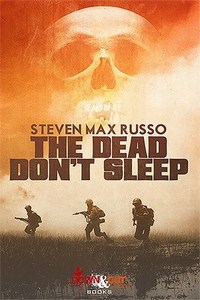
The Dead Don’t Sleep by Steven Max Russo: No need to teach these old dogs any new tricks

The Dead Dont Sleep

The Dead Dont Sleep

by Steven Max Russo

eARC, 292 pg.
Down & Out Books, 2019

Read: October 11-14, 2019


This is one of those thrillers that within a chapter or three, you know pretty much how things are going to go for the rest of the book. That’s me being descriptive, not evaluating anything. There’s nothing wrong with this type of thriller—the fun is in seeing the author execute what you know (and think you know) is coming, and just what kind of surprise is in store for the ending. It’s like playing Mousetrap—everyone knows what’s going to happen when you start the machine going, it’s still fun to watch (see also almost every functional Rube Goldberg machine).

That said, there was one death/serious injury that I predicted at least three different times in my notes (one “he” was ambiguous, I really need to be more specific) that didn’t happen and another that I fully expected that didn’t materialize. So I’m not saying that Russo didn’t have any tricks up his sleeve—there were more than those, too. It’s just that on the whole, you know what this book is going to give you pretty soon (see also: just about every Jack Reacher novel).

So what is this set up?

Frank Thompson’s wife died pretty recently, and he’s not dealing well with the loss. After holing up by himself for a while, he visits a nephew (Bill) in New Jersey—really, his first social contact after her death. Frank’s getting up in years himself, but he’s doing pretty well, all things considered.

Frank and Bill go to the shooting range one day. While there, someone confronts Frank, claiming they know each other—Frank pleads ignorance (a white lie), but the stranger soon figures out who he is. They knew each other back in Vietnam while part of a special combat unit. The stranger (Jasper) and his friends are convinced that Frank did a bad thing to one of their own back in ‘Nam. Frank wouldn’t argue with them, but they all were involved in doing very bad things (as they were ordered to), he’d add. Besides, that was a lifetime ago, and he, Jasper and the rest of the unit have all moved on to civilian life and put those atrocities behind them.

If that were true, this would be a much shorter book. Thankfully for us readers, Jasper and his friends carry a grudge. Two of them—Birdie and Pogo (no, really)—are nearby and available. So after Frank goes home to his house on the outskirts of a small Maine town, the three of them head up to pay him a visit. And it ain’t a social call.

Frank knows that Jasper and others (no idea how many others) are coming, and takes steps to prepare. And then the fecal matter hits the rotary impeller.

That’s a little more long-winded than I’d intended, but I haven’t given too much away. So basically, you’ve got 4 septuagenarians carrying small arsenals in the Maine woods drawing on the training they all received decades ago (one or two of them may have been keeping those skills sharp, but that’s beside the point). None of these guys are in their prime anymore, and more than once I wondered if natural causes would beat an act of violence to the punch (I won’t say if I was right).

Don’t go thinking that this is any kind of comic novel—it’s not Grumpy Old Men III: Locked and Loaded, these are hard men doing violent things. After the trio arrives in Maine, the questions that need to be answered are: how many of these four are going to walk away from this showdown, and what kind of collateral damage will there be?

Not all the characters are as well-rounded as they could be, but they’re all close enough that no one’s going to complain—especially when the action kicks in. You can’t say there are really good guys or bad guys here. Well, that’s not true—there are bad guys and some less-bad guys. No one wears a white hat in this book (at least not those at the center of the action), the hats are all black or dark gray.

This next paragraph contains a spoiler—or something spoiler-adjacent. Feel free to skip it and move on.
There’s a [insert your own Latin-y word here] ex machina element to the last action scene of this novel. I don’t think it was necessary (they almost never are), and a resolution was still possible that would’ve satisfied novels without it. The more that I think about it, what that element means for Frank’s world is pretty disturbing—more than anything else that happened in the book, really. As I write this, it occurs to me that if there’s a sequel, this element is likely going to play a central role, and I’ll retract the last 97 words. Still, I’d have liked to have seen things play out without the             ex machina. But that could just be me.
Back to the no-spoiler zone:

This is the kind of thing that should appeal to fans of Gregg Hurwitz, Brad Meltzer, Joseph Finder or others in that vein. The pacing is tight, the action scenes are well-handled, and the tension is real. This is a great way to spend a couple of hours with some good escapist reading. It’s possible (probable?) for Russo to return to the survivors for a sequel—if he does, I’ll be at the front of the line for it.

Disclaimer: I received this eARC from Down & Out Books via NetGalley in exchange for this post—thanks to both for this ride.


3.5 Stars

Theological Retrieval for Evangelicals by Gavin Ortlund: An Accessible Call for 21st Century Christians to Learn from the Past

I ended up having more time in the day to write this post than I normally do, and as a result ended up a bit more rambling and less-focused than intended. Hopefully it’s worth the read, despite my laxness.
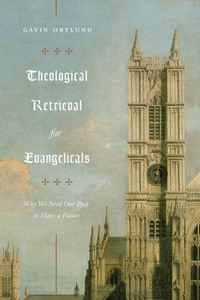
Theological Retrieval for Evangelicals

Theological Retrieval for Evangelicals: Why We Need Our Past to Have a Future

by Gavin Ortlund

eARC, 224 pg.
Crossway, 2019

Read: October 5-12, 2019


This is another one of those theological works that I feel really unqualified to discuss. There’s part of me that thinks I should stop requesting them from NetGalley, or buying them and deciding that I want to post about them, but I probably won’t. So, know that this is from the perspective of an opinionated and semi-(formally)educated reader and occasional armchair theologian. Not the reflections of an ordained minister or professional theologian.

I’m glad Ortlund talks about this right out of the gate—but the case he lays out for Theological Retrieval here, strikes me as very similar to Michael Allen and Scott R. Swain’s Reformed Catholicity: The Promise of Retrieval for Theology and Biblical Interpretation and Kevin J. Vanhoozer’s Biblical Authority after Babel: Retrieving the Solas in the Spirit of Mere Protestant Christianity. Ortlund says they’re aiming for the same target, but those works are more oriented toward the Reformed, where he’s focused on Evangelicalism. I’d say that they’re all wanting the same thing, but his work is more accessible (by design) and less-inclined to advertise his scholarly awareness (particularly with the former).

One problem that you encounter right away is a nebulousness about the term “Evangelical.” If Ortlund defined his usage, I missed it. He seems to use it to apply to Bible-believing Protestants who aren’t Reformed or Lutheran. Which is fair enough, I guess, it’s just not an easily defined term anymore. Frankly, I’m with Carl Trueman and others, and consider the label “evangelicalism” meaningless as it can be applied to “everyone from Joel Osteen to Brian McLaren to John MacArthur.”

Ortlund doesn’t give a strict definition of Theological Retrieval—in fact, he avoids it, preferring to see it as a mindset or attitude toward the pre-Reformation Church and Theology, drawing from its strengths, seeing its weaknesses in our own, and putting the contemporary (and Reformation) Church in context of a developing understanding from the end of Acts to Second Coming. Given that, we should be more aware of, and interact more with, the Patristic and Medieval Church. He uses Turretin, in particular, to great benefit in showing that this was the mindset of the Protestant Reformation, and calls us back to it. Along the way, he uses Warfield (and the rest of Old Princeton) as emblematic of Evangelicalism’s departure from this thinking. I’m not sure that’s the best reading of Warfield, but it’s not worth arguing, because his overall point is so right.

The first Part of the book—roughly 60 pages in three chapters—sets the agenda, it’s “A Manifesto for Theological Retrieval.” He begins by asking if Evangelicals can Retrieve Patristic and Medieval Theology, before moving to asking why they need it, and then sketching out both the benefits and perils of it. All of which is profitable and well-worth reading.

But what makes this book different than so many, is that Ortlund doesn’t focus on the project, the theory behind it, or the method. He gives the rest of the book—120 pages or so—to examples of what he’s calling for people to do. Case-studies in theological retrieval—which is some of the best theological reading I’ve done this year, maybe the last couple of years.

The first is a chapter called “Explorations in a Theological Metaphor: Boethius, Calvin, and Torrance on the Creator/ Creation Distinction.” A nice mouthful, to be sure. To illustrate the Creator/Creature Distinction, he compares Tolkein’s relationship to The Lord of the Rings to God’s relationship to his creation, in terms of Boethius’ understanding, and how Calvin’s view would differ, before wrapping up with Torrance. Now, I have little use for what he tries to do with Tolkein—I think this sort of thing is almost as bad as trying to teach the Trinity by analogy (which always quickly lands the teacher in heresy). I know enough people do this sort of thing in teaching and writing, and I should try to pay more attention, but my eyes just glazed over. Most readers will get more out of this than I did. I did appreciate what he said about Boethius and Torrance in distinction from Calvin and feel like I understand the three a little better (not that I’m all that familiar with Boethius and Torrance), and think I got something from the chapter overall, but I know my own prejudices kept me from a full appreciation.

Things improve with “God Is Not a Thing: Divine Simplicity in Patristic and Medieval Perspective.” Rather than going head-on for contemporary critics of the doctrine, he takes a look at historic formulations (not limited to Aquinas’) of the doctrine and seeing how that should actually deepen Evangelical’s commitment to Simplicity as well as broaden our understanding of it. He interacts a good deal with James Dolezal’s wonderful All That Is in God and God without Parts here and reminds me that I need to re-read the former and read the latter. A better blogger (one also focused on theology, not the book) would camp out here for a few paragraphs, but I won’t. It’s just a great chapter and the kind of thing we need to see more of.

My favorite case study is the third, “Substitution as Both Satisfaction and Recapitulation: Atonement Themes in Convergence in Irenaeus, Anselm, and Athanasius.” I would read a book-length version of this tomorrow. Well, not tomorrow. I would start a book-length version of this tomorrow, and have a lot of fun over the following days. Ortlund shows the overlapping concerns of Irenaeus and Anselm (who are so often pitted against each other), how the Christus Victor and Substitutionary Atonement models are interdependent, not rivals (while not giving an inch to contemporary critics of Substitutionary Atonement, it should be pointed out). From there, he moves onto some of Athanasius’ work on the Incarnation, demonstrating that these works have a good deal to say about the Atonement, as well. If I got nothing else out of this book, I’d consider the time I spent reading it well-spent just for this chapter. I could’ve lived without the use of Aslan and the Stone Table portion of the study, but (contra the Tolkein), it proved to be a useful illustration.

“Cultivating Skill in the “Art of Arts”: Pastoral Balance in Gregory the Great’s The Book of Pastoral Rule” is the last case study. I remember reading healthy portions of this work by Gregory in a Church History class for much the same reason that Ortlund uses it. There’s a lot of wisdom for pastors of every age in this very old work—he also shows how manuals like Baxter’s or Spurgeon’s will say similar things. Timeless truths and advice put in ways that others wouldn’t. I really don’t have much to say about this, but it’s almost as good as the previous two.

This is one of the most-easily outlined books I’ve read this year (possibly the most), that’s a fantastic aid for referring back to it in the future or for going back and taking thorough notes. I’d go crazy if I read too many books like this, I prefer the more organic feeling approach. But when this is done right, it’s a handy bonus. Beyond that, as I said before, it’s very accessible. Sure, there are parts that are demanding, but nothing’s out of reach for the committed and attentive reader—and most of the time you don’t have to be that committed.

Like their counterparts from the previous century, Twenty-First Century Christians don’t know enough historical doctrine, and certainly don’t know how to treat what little they do know. Too often, Protestants will cede everything prior to 1517 to Rome (maybe Rome and the East), focusing only on the last 500 years—if they’ll even pay attention to anything prior to Fanny J. Crosby. Ortlund’s work is a great call for the everyday Christian to familiarize themselves with the past and learn from them as we ought the rest of the Church Militant. I strongly recommend this.

Disclaimer: I received this eARC from Crossway via NetGalley in exchange for this post—thanks to both for this stimulating read.



4 Stars

Saturday Miscellany—10/19/19

Odds ‘n ends over the week about books and reading that caught my eye. You’ve probably seen some/most/all of them, but just in case:

    This Week’s New Release I’m Excited About and/or You’ll Probably See Here Soon (I probably missed a few, but…):

  • Ghosts of You by Cathy Ulrich—this flash fiction collection is compelling, haunting, and thought-provoking (and includes some really good reading, too). My post about it describes the book better.

Lastly, I’d like to say hi and extend a warm welcome to kbbookreviewer, _forbookssake, thelostwoman, amanja and Steven Colborne /a> for following the blog this week. Don’t be a stranger, and use that comment box, would you?

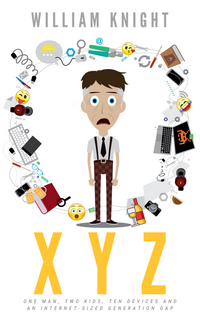
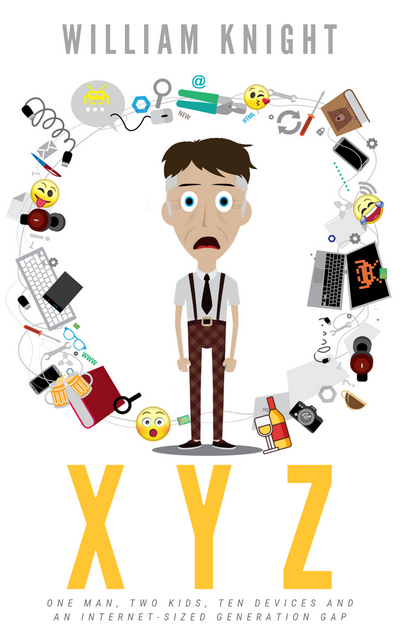
XYZ by William Knight: A Grouchy Computer Programmer Struggles to Find his Place

XYZ

XYZ: One Man, Two Kids, Ten Devices and an Internet-Sized Generation Gap

by William Knight

Kindle Edition, 216pg.
2019

Read: October 11, 2019

I’m one of the original computer geeks…

I was in the first intake for Computer Science O Level at my local college, and I signed up for a computer programming degree when the rest of the world was still using slide rules and copying documents in purple ink…

I was part of a small wave of silicon-brained cool kids that was destined to become a tsunami. My generation was going to make the world a better place and in record time. We had ideas of perfect information, total transparency, evidence-based-government and university for all. We were the builders of Utopia and the founders of global prosperity…

I hadn’t then realised the destiny for which I was headed. It was nothing more than fun. Fun to spend 10p on a video game and bash the console into submission. Fun to program pretty patterns on a screen and load games from a floppy disk, and fun to be part of the BBC’s Micro Live phenomenon, when the broadcaster sponsored its own computer as part of its remit to educate the masses.

And it remained fun until it became a trap, when computers ceased to be the promise of progress and instead became the terrorists of truth. Somewhere along the way, I turned from God of Silicon to an anorak-wearing dweeb, and from dweeb to a lonely fifty-five-year-old bastard. One at the end of his career, hopelessly out of touch, and unable to operate his own phone.

WTF happened?

What becomes of someone who saw himself as one of those who’d bring in a technological utopia and finds themselves trying to survive in the era of smart phone-ubiquity and social media dumpster fire? Well, judging by our protagonist, Jack Cooper—you get (at best) a curmudgeon who feels alienated in the industry he helped establish, estranged from your family, and hoping to remain relevant and productive (and employed!) long enough to retire.

We meet Jack on his first day at a new employer—a personal finance app corporation. He’s had a number of first days at various corporations lately, and his daughter is concerned that if he’s not careful this could be the last one. Despite his wide-ranging experience lately, he’s still in for a giant dose of culture shock and unclear expectations when he gets to work. Even after a period of acclimation, he’s still feeling like a fish out of water amidst these young people more focused on the internal chat program, employee fulfillment/empowerment, and lack of accountability than they are on actually producing something useful and on-time.

In other words, things aren’t going well for him. But at least he can go home and drink to excess at the pub across the street, right?

Meanwhile, he and his wife are separated (he’s still paying the mortgage on their home, in addition to the rent on his flat), he’s not speaking to his son (Jack can’t accept his life as a furry), and his relationship with his daughter is on the precipice of disaster. Which makes that drinking to excess a lot more tantalizing.

Then, while in a meeting with his superior about his job performance, he finds himself telling her how attracted to her he is. Jack’s last chance is looking pretty slim indeed.

This is a novel clearly in the vein of Professor Chandra Follows His Bliss/A Man Called Ove, where a grumpy older man clashes with a world that’s changing faster than he’s ready for it. Yes, that’s right, Gen Xers are now old enough to get our own books like this, which is depressing enough to suck the fun out of this book. Typically, these books are written from a Third-Person POV, but XYZ is a First-Person Narrator. This puts the reader firmly in his cantankerous, drunken, obstinate, and angry head. Honestly, it’s a little easier to have any sympathy for these types of characters when you’re not drowning in their anger (or at least steeping in it), but seeing it from the outside.

Still, there is plenty of fun to be had in this book. A lot of it is fun at Jack’s expense—laughter is the best way to react to his cringe-worthy behavior, otherwise, you’d end up being pretty censorious. Although you won’t be able to avoid judging Jack a little bit. There are times (the Prologue is a great example) when Jack’s loathing of the cultural moment (particularly in tech corporations) comes through stronger than the humor and it’s hard to take (and I agree with Jack in almost every bit of his counter-cultural thinking).

But, as with Ove/Chandra and the rest of the type, Jack manages to find a measure of acceptance for those around him, and is even able to do some work on repairing familial relationships (I don’t think it’s a spoiler to say either of those things, that’s sort of how this kind of book works). As this happens, the book is at it’s strongest and easiest to enjoy/relate to. I do wonder if that portion of the novel is a bit rushed—we get plenty of time to watch Jack make a train-wreck of his professional and personal lives (which weren’t in great shape before he makes it worse), it’d be nice if we could see him get his feet back under him a bit more clearly.

On the whole, it’s a fun book—a great combination of humor, heart, and growth. Sure, some of the edges could be a bit smoother, but on the whole, this is an entertaining read. It can be easily read by a wide-range of readers—those of us who played Space Invaders when it was near the cutting-edge of technology, as well as those who can’t get over its primitive design and game-play. It’s charming, it’ll make you smile, it’ll give you a feel or two (to use a phrase Jack would hate). Recommended.


3 Stars


My thanks to Love Books Group for the invitation to participate in this tour and the materials (including the book) they provided.

Love Books Group

BOOK SPOTLIGHT: XYZ by William Knight

Today I welcome the Book Tour for William Knight’s XYZ. We’ll kick it off with this spotlight post and then I’ll be giving my take on the novel here in a bit. But like I said, let’s start by learning a little about this here book, okay?


Book Details:

Book Title: XYZ: One Man, Two Kids, Ten Devices and an Internet-Sized Generation Gap by William Knight
Release date: July 13, 2019
Format: Ebook/Paperback
Length: 216 pages

Book Blurb:

From a former Guardian and BBC writer, and author of The Donated, comes a hilarious story of mid-life crisis, family, technology, and coping with the modern workplace.

Jack Cooper is a depressed, analogue throwback; a cynical, alcoholic Gen-Xer whose glory days are behind him. He’s unemployed, his marriage has broken down, he’s addicted to internet hook-ups, and is deeply ashamed of his son Geronimo, who lives life dressed as a bear.

When Jack’s daughter engineers a job for him at totally-lit tech firm Sweet, he’s confronted by a Millennial and Zoomer culture he can’t relate to. He loathes every detail – every IM, gif and emoji – apart from Freya, twenty years his junior and addicted to broadcasting her life on social media.

Can Jack evolve to fit in at Sweet, or will he remain a dinosaur stuck in the 1980s? And will he halt his slide into loneliness and repair his family relationships?

About William Knight:

William KnightWilliam Knight has written for the Guardian, the Financial Times and the BBC, among many other publishers. He is a journalist and technologist currently living and working in Wellington, New Zealand.

A graduate engineer, he’s chased a varying career starting in acting, progressing to music, enjoyed a brief flirtation with handbag design, and was eventually wired into technology in 1989.

By 2003 his non-fiction was being regularly published in Computing newspaper in the UK, and he has since written about the many successes and failings of high-technology

The Donated (formerly, Generation), his first novel, was conceived from a New Scientist article in 2001 and was ten years in development. Subsequent novels, XYZ, Foretold, The Fractured, will be available, he says, “Sometime in the future. Hopefully not as long as ten years.”

William Knight’s Social Media:

Twitter ~ Facebook ~ Website


My thanks to Love Books Group for the invitation to participate in this tour and the materials (including the book) they provided.

Love Books Group

A Few Quick Questions With…F J Curlew

I appreciate Curlew taking the time to do this Q&A, I hope you enjoy it and she says something to tempt you to give her work a try. I didn’t ask her everything I wanted to, because it would’ve spoiled things for the rest of you (and, frankly, I need the mystery).

Tell us about your road to publication — was your plan/dream always to become a novelist and your education/other jobs were just to get you to this point, or was this a later-in-life desire?
                     I would love to be able to say that I had always dreamed of being a writer, but no. I was a primary school teacher who had barely enough energy to read at the end of the day, let alone write! I got sick, could no longer work, but was determined not to allow that to take over my life. I decided to study creative writing at the Open University, predominantly to keep my brain active. I found out that I was quite good at it and completed the standard and advanced courses with distinctions. I haven’t stopped since. Not only has writing given me a purpose, I also absolutely love it. Whatever else is going on in my life my stories can take me away to places of my imagination. How fantastic is that? I can’t not write!
I don’t want to ask “where do you get your ideas?” But out of all the ideas floating around in your head, why’d you latch onto this one — what was it about these characters, this idea that drove you to commit months/years to it?
                     I lived in Ukraine for four years and was left with so many stories, feelings, experiences. To say the country touched me would be an understatement. I used what I had seen and heard to write some short stories for my OU coursework.They were well received and I knew there was more to come. A novel was scratching away at me. In Kyiv I had met, and spent time with, quite a few street-kids. Two of them have haunted me ever since – the two who would become Sasha and Alyona in the story. Their lives were…awful, and yet they had this innocence and grace to them. I placed them in a feasable scenario around which I could write a thriller and sprinkled them with a little bit of magic because I felt they deserved it. I hope my story has done them justice.
The Holodomor provides a lot of background to one of the stories here. As I told you before, this is the second book I’ve read this year influenced by that. You have a character say why we don’t know much about it in the West – could you tell us a little more about our lack of awareness about it, and why it captured your attention?
                     The Holodomor was something that Stalin wouldn’t show to the West, or own up to. It didn’t happen. It was all lies. And that carried on through the subsequent Soviet years. Anti-soviet propoganda would result in a stint in the gulags or death. Best to keep quiet. Despite having lived there I hadn’t heard of it myself. It wasn’t until I was researching more about the lives of Ukrainian street-kids on You-tube that I came across the Holodomor. I was horrified. My social conscience is strong and I am politically motivated. Of course I had to use it! It wasn’t until 2006 that the Ukrainian parliament recognised the Holodomor as a deliberate act of genocide. There is now a Holodomor monument in Kyiv.
What kinds of research went into the construction of this concept and the world? What was the thing you came across in your research that you loved, but just couldn’t figure out how to use? (assuming there was one)
                     A good deal of the events are actually based on things that I had first hand experience of, or stories I had been told. Of course there was also a hefty amount of research done. I read accounts of the Holodomor, Misha Glenny’s non-fiction book “McMafia” helped greatly with facts about the Mafia, and I spent hours trolling through videos and news clips about all things Ukrainian. I read Shevchenko and listened to Yarmak (Ukrainian rap) to get me in Ukrainian mode. There actually wasn’t anything I came across and loved that I couldn’t use, except perhaps a horse-riding, sword-yielding Cossack!
(yeah, that’d have been hard to fit in)

Who are some of your major influences? (whether or not you think those influences can be seen in your work — you know they’re there)

                     Andrei Makine, Leif Davidsen, Sofi Oksanen. Of course there are many others, but for Eastern European stories, definitely them!
One of the things I appreciated most about the cast of characters was Maggie. Most books like this would have Nadia befriend a fun-loving local woman, instead, you provide her an Austrialian friend. Can you tell us anything about that choice (or anything else you want ot say about Maggie)?
                     Ah, Maggie! I hadn’t factored her into the story at all to begin with. Planning isn’t something I do very much of as I prefer my stories to unfold as I write; my characters to lead the way. Maggie popped up and said, “Hey! Over here! Write me!” She was a lot of fun to work with. A wise woman who lives life to the fullest and offers her own unique perspective on everything from men to politics. I think it was important for Nadia to be able to have that in this story. A friend, a confidante, an opposite. Someone to guide her strength to the surface. The expat in her becomes a core element of the story. A local wouldn’t have had the same impact.
What’s next for F. J. Curlew?
                     I seem to be working my way through the countries I have lived in! I am currently writing a novel involving Estonia’s journey from Independence to Soviet occupation and back to independence again. It’s quite a challenge because Estonia is important to me. I lived there for seven years and I love the wee place. I want, no need, to do it justice. Suffice to say hefty amounts of research are being done. My central characters are an old lady and a young drug addict. That’s all I can say for now!
Thanks for your time—and thanks for Don’t Get Involved, I enjoyed it, and hope you have plenty of success with it.


My thanks to F J Curlew for the invitation to participate in this tour and the materials (including the book) provided for it.

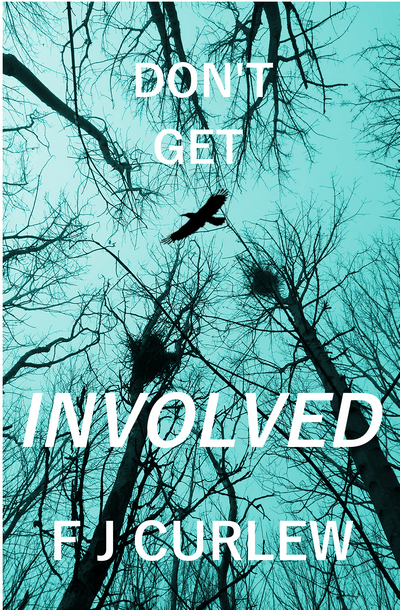
Don’t Get Involved by F J Curlew: Hardship and Joy in Kyiv


Don't Get Involved

Don’t Get Involved

by F J Curlew

Kindle Edition, 255 pg.
2019

Read: October 7-9, 2019

…Are you okay?’

‘I will be. The first layer of gauze has been wrapped around the pain.’

‘Gauze?’

‘Grandpa said that grief was like a wound. Time was like a dressing. A piece of gauze. At first the blood, the pain, flows through. Then, as the dressing gets thicker and stronger the flow stems, until it can no longer be seen. Sometimes a scab breaks. The blood seeps through again with a memory, but the dressing holds. With time.’

This book Kyiv, Ukraine in 2001, a time of unrest and change. The author lived there for awhile in 2001, and found her inspiration from that experience for this book. That gives it a level of authority, confidence, and authenticity than would probably have been present otherwise.

There are two stories that run throughout this book—there’s a little bit of overlap here and there, but primarily, they’re independent. The first of these focuses on three street kids (beggars) who come into possession of a very large amount of a controlled substance. This is easily one of the biggest things to happen in their young lives and will have a significant voice about whether they escape this life they’re in or find themselves in something worse.

The other storyline focuses on a Scottish teacher, Nadia, who has just arrived to help meet the large educational meet they have. The tone and overall feel of this storyline is so different than the other that you may find yourself wondering why they’re in the same novel—but given a little patience, you’ll see why. Nadia is befriended by an Australian teacher in Kyiv for the same reason and she meets and is pursued a young Ukrainian man with plenty of charm.

It’s not easy to see where this gives you a Crime Novel, but there is one here—just not the kind anyone’s used to. I’m not sure I’d have given it that label, probably opting for “General Fiction” instead, but that’s the way it’s being marketed, and I can see it. There’s also a flash of magical realism or fantasy (I could make the case for either label) but there’s a foundation laid for it so that when the flash comes, it’s easy to accept. This is typically the kind of thing that annoys me in Crime Fiction, but Curlew prepares for it well—and it’s such a nice way for things to go, that I enjoyed it.

Back in February, I blogged about Seraphina’s Lament by Sarah Chorn. It’s a fantasy novel and nothing like this book at all. But much of it was inspired by the Holodomor—a genocide that took place in Ukraine in the 1930’s. Part of Don’t Get Involved‘s narrative is shaped by and reacts to the Holodomor. I never would have predicted that I’d read one book exposing me to this horrific time this year, much less, two widely divergent works. I’d be glad for this book for this reason alone.

None of these characters have easy lives—even those that chose to be in Kyiv. But there are moments of lightness and joy for all of them, as well as darker realities. It’s a good reminder that there is joy to be found in all kinds of circumstances if you will look for them. One of the kids, in particular, is gifted at this.

There is one sex scene that is longer and far more detailed than is necessary, but otherwise, Curlew will let that happen behind closed doors. There are suggestions and hints about child prostitution, but nothing explicit—this is not done for exploitation, but to show the harsh conditions and the extreme actions these kids have to take to survive.

I will admit that I spent a lot of time early on wondering why I was reading this novel, while I liked the characters and was curious about their lives, I just didn’t get the book. But it grew on me slowly and without me really noticing. Ultimately, I found it to be pretty effective and affecting and I was wholly invested in it. I’m not entirely certain I liked the way the storylines resolved, but that’s just taste—and I’m pretty sure I would’ve complained if she’d gone that way.

I ended up enjoying this novel a lot more—and in more ways—than I expected to early on. The setting, characters and story are just different enough from what I usually get that I think it’ll stick with me longer than some novels, too. I do recommend this to readers of all types for a change of pace and an exposure to things you won’t easily find elsewhere.


3.5 Stars


My thanks to F J Curlew for the invitation to participate in this tour and the materials (including the book) provided for it.

BOOK SPOTLIGHT: Don’t Get Involved by F J Curlew

Today I welcome the Book Tour for the XXX Don’t Get Involved by F J Curlew. Along with this spotlight post, I’ll be giving my take on the novel here in a bit, and then I’ll be posting a Q&A with the author. But before I get to talking about Don’t Get Involved, let’s start by learning a little about this here book, okay? Be sure you scroll down to the bottom of this post for details on the Giveaway!


Book Details:

Book Title: Don’t Get Involved by F J Curlew
Release date: October 6, 2019
Format: Ebook/Paperback
Length: 255 pages

Book Blurb:

A missing shipment of cocaine
Three street-kids fighting for their lives
A Mafia hitman intent on killing them
A naïve expat who gets in their way
Who would you bet on?

Ukraine, 2001. A time of lawlessness and corruption. Three street-kids stumble upon a holdall full of cocaine, belonging to the Mafia. Mafia hitman, Leonid, is given the job of retrieving the cocaine and disposing of the street-kids. To do so he is forced to step back into his old life and he doesn’t like it. The children run on their wits. Leonid hunts them down. Nadia, a young woman with her own dark past, arrives in Ukraine looking for a fresh start. She wasn’t expecting this!

“She had no idea of what, or who, she was supposed to be running from. Right now everything was a threat. Definitely militsiya, but who else? Everyone. Right now it felt like everyone.”

About F J Curlew:

F J CurlewFiona spent fifteen years working as an international school teacher, predominantly in Eastern Europe. Much of her inspiration comes from her travels. Her writing has been described as, “Human experience impacted upon by political situation, interwoven with a love of nature.”

She now lives on the East Coast of Scotland with Brockie the Springer, and Fingal the rescued Portuguese street-cat. Her days are divided between dog-walking in beautiful places and working on her stories. Not a bad life!

Don’t Get Involved is her third book.

Links:

Facebook ~ Twitter ~ Website

F J Curlew’s Books:

Don’t Get Involved ~ Dan Knew (a fictionalised account of her travels told through the eyes of Dani, her Ukrainian rescue dog) ~ To Retribution (a love story set in times of turmoil)


My thanks to F J Curlew for the invitation to participate in this tour and the materials (including the book) provided for it.

WWW Wednesday, 16-October-2019

Welcome to WWW Wednesday! Lotta time hanging out in a hospital room resulted in a little more reading time than I expected (everyone’s okay, don’t worry). So…

This meme was formerly hosted by MizB at A Daily Rhythm and revived on Taking on a World of Words — and shown to me by Aurore-Anne-Chehoke at Diary-of-a-black-city-girl.

The Three Ws are:

What are you currently reading?
What did you recently finish reading?
What do you think you’ll read next?

Easy enough, right?

What are you currently reading?

Currently, I’m listening to the audiobook of Back of Beyond by C. J. Box, Holter Graham (narrator) and I’m reading Erica Wright’s Famous in Cedarville.

What did you recently finish reading?

Today I finished Don’t Get Involved by Richard Roper, Simon Vance (Narrator) on audio and yesterday I finished both Flying Alone: A Memoir by Beth Ruggiero York and Anbatar: Legacy of the Blood Guard by Anne Dolleri.

What do you think you’ll read next?

My next book will probably be Because Internet: Understanding the New Rules of Language by Gretchen McCulloch, it’s due back at the library soon, so I’ve got to juggle the TBR.

Hit me with your Three W’s in the comments! (no, really, do it!)

Page 3 of 6

Powered by WordPress & Theme by Anders Norén