Month: February 2021 Page 1 of 5

Rebels and Exiles by Matthew S. Harmon: Sin, Its Consequences, and Restoration Through Redemptive History

Here’s where I start to regret my resolution to write a post about every book in this category that I read this year to make up for the absence of them last year. I really don’t have that much to say about it and am afraid I’m making it look dull. Hope I’m not…


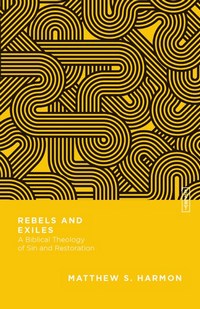
Rebels and Exiles

Rebels and Exiles: A Biblical Theology of Sin and Restoration

by Matthew S. Harmon
Series: Essential Studies in Biblical Theology

Paperback, 145 pg.
IVP Academic, 2020

Read: February 7-21, 2021
Grab a copy from your local indie bookstore!

What’s Rebels and Exiles About?

As with everything in this series, Harmon starts with Genesis and the Fall, and finding the pattern there for human disobedience and restoration that the rest of the Biblical narrative uses time after time (after time after time, sadly). Harmon traces the themes and examples of rebellion, exile, and restoration through The Old Testament and the New alike—with Christ inaugurating the final end of exile in his death and resurrection, which will be culminated in his return and the remaking of the world.

OT and NT Exiles

Personally, I found the chapter on Israel and Judah’s exile from Canaan after the rebellion and the chapter showing how the New Testament Epistles see the Christian life as one of exile—giving both hope and direction for that life—to be the most helpful. Particularly as Western culture becomes increasingly inhospitable to The Church and we’re reminded that we’ve become too comfortable in this world where we are pilgrims and exiles, we need these instructions and examples.

But the chapters describing the Restoration of Israel to the Land—as well as the greater restoration promised to them—and the chapter describing Christ’s Life and Ministry as ending exile were probably the most edifying.

So, what did I think about Rebels and Exiles?

I think I may have read the three books in this series a bit too closely together—it felt a little redundant, the themes and approaches in the various books in this series are so similar. That’s on me, not on Harmon, though.

This isn’t to say that I didn’t like the book or find it helpful. “Now these things happened to them as an example, but they were written down for our instruction,” it’s good to focus on these themes and patterns and Harmon’s little book is a good guide through them.


3.5 Stars


This post contains an affiliate link. If you purchase from it, I will get a small commission at no additional cost to you. As always, opinions are my own.

Saturday Miscellany—2/27/21

Been a good week here—read a lot, wrote almost enough to satisfy me, and got enough new books that I’ve ruined whatever TBR progress I’d made this month (1 ebook, 2 audiobooks, 2 hardcovers, and 2 paperbacks…I have a problem).

I’d intended on 2 more posts this week than I got—which is pretty good. I don’t know if it’s the weather, work, or just one of those things, but each night this week I felt like I was fighting sleep for the last couple of hours (and never had the good sense to do the responsible thing and go to bed). I fell asleep within minutes of posting my Fridays with the Foundling last night—so quickly that my first thought this morning was “were those last paragraphs even in English?” (thankfully, yes)

I think I had a point when I started that, but I don’t remember what it is. It’s one of those days, I guess. Let’s get on with things…

Odds n ends about books and reading that caught my eye this week. You’ve probably seen some/most/all of them, but just in case:
bullet Get a free audiobook!—When you spend at least $15 at your local bookstore on April 24th, you can get a free select audiobook from Libro.fm. Independent Bookstore Day is a couple of months off, but might as well start planning for it, right?
bullet Is It Time to Kill the Book Blurb?—”The pre-publication endorsements—’dazzling!’ ‘a masterwork!’—that litter book covers have long been a staple of publishing. Are they of any value or mere relics that deserve to go?” I somehow didn’t even have to work around a paywall for this WSJ piece.
bullet ‘Books saved my mental health,’ says online reviewer—BBC.com profiles a book blogger
bullet Announcing the Newest Release From Rick Riordan — Daughter of the Deep—After I tapped out during The Trials of Apollo I figured I was done with Riordan, unless he got back to his Texas noir stuff. But…this looks promising (and a good excuse to revisit Hugo)
bullet Rooms of Their Own: Where Some of the Best Women Writers Created Art—worth the click if only to see the desk (a generous word) that Austen used.
bullet Favorite Things About Book Formats
bullet Friday at the Folly – Rivers of London—Fi’s Bibliofiles starts a re-read through the Rivers of London UF series. This is one of my favorite series and I’m looking forward to revisiting it through these blog posts.
bullet And Men There Were None: Where Are The Male Readers?—On the one hand, I feel like I should drop some links in the comments to show him where we are. Snark aside—overall, he’s right.
bullet What is a Good Ending?—a fitting way to wrap up this week’s list (actually, it was totally inadevertent…but I’m running with it).

This Week's New Releases That I’m Excited About and/or You’ll Probably See Here Soon:
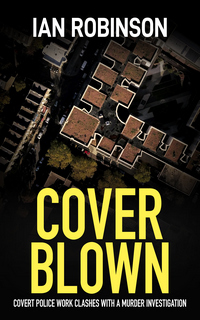
bullet Cover Blown by Ian Robinson—The second book in this new procedural series is a heckuva read. This time, the homicide investigation overlaps with a small undercover job that DI Nash has on the side. I hope to get posts up about both books early next week—in the meantime, just go buy them!
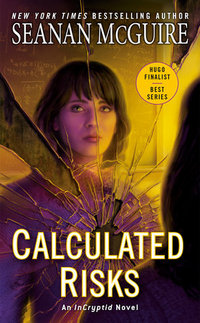
bullet Calculated Risks by Seanan McGuire—the latest InCryptid book kicks off shortly after that cliffhanger from last year. I started this yesterday, and it’s strange, even by InCryptid standards.
bullet Smoke by Joe Ide—The new IQ novel is a good one—even if I think it could’ve used more IQ, as I said recently.
bullet Junkyard Bargain by Faith Hunter, Khristine Hvam (Narrator)—the second novella-length SF from Faith Hunter. I’m excited to dip back into this strange world of aliens, cyborgs and psychic (?) cats.

Lastly I’d like to say hi and extend a warm welcome to mybookishbliss and Masha who followed the blog this week. Don’t be a stranger, and use that comment box, would you?

The History of Tom Jones, a Foundling by Henry Fielding: BOOK XVI., vii. – x.

Fridays with the Foundling
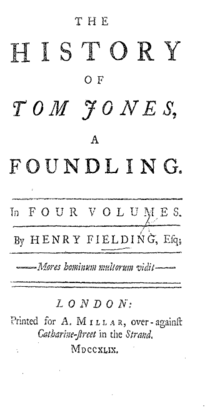
Tom Jones Original CoverSo Squire Western drags Blifil with him to go visit Sophia, who does not want to see him and excuses herself immediately. Mrs. Western chalks this up to them showing up unexpectedly and chases them off—schedule a visit (maybe even this afternoon) and she’ll see him, her aunt will see to that. It takes some work, but she gets them to leave—Western only because he insists this afternoon will work, but Blifil thinks something else is afoot.

And he’s right, Lady Bellaston (for whatever twisted reason she has) has come to visit Western and has convinced her that Lord Fellamar is a better match than Blifil, who really only has money to recommend him. Fellmar has a title, money, and class. Sure, he almost raped Sophia, but…I’m not sure Mrs. Western knows that (or would believe Sophia). That stupid proposal that Tom used to scare off Bellaston comes back to haunt him—she gives it to Mrs. Western to show Sophia.

Meanwhile, Fellmar has recruited a naval friend of his to find Tom, trump up some charges (he’s not a gentleman or anyone with a source of income, he’s a vagrant, so that’ll work) to put him on a sailing vessel.

Meanwhile, Tom has kept that appointment with Mrs. Fitzgerald. She’s still upset with Mrs. Western and wants to get back at her by helping Tom win Sophia. The next day, he returns for more discussion of the topic. As he leaves, he bumps into Mr. Fitzgerald—who after a minute, recognizes Tom and challenges him. Tom knows almost nothing about fencing, but knows enough, apparently, to stick him with the pointy end.

Naturally, about that time the group who was coming to grab Tom for Fellmar sees this and takes him off to the magistrate. Murder’ll do better than vagrancy, after all. While Tom’s locked up, the next day, Partridge comes with the news—Fitzgerald died from his wounds. He also brings a note from Sophia, she’s seen the proposal, and he should never contact her again.

Of the present situation of Mr Jones’s mind, and of the pangs with which he was now tormented, we cannot give the reader a better idea than by saying, his misery was such that even Thwackum would almost have pitied him. But, bad as it is, we shall at present leave him in it, as his good genius (if he really had any) seems to have done. And here we put an end to the sixteenth book of our history.

That’s a pretty eventful four chapters right there. There’ve been entire Books of this novel that haven’t had as many events as the last four chapters of this one. Fellmar and Bellaston prove that they’re the worst. Blifil has probably been spurred to new levels of knavery, and I’m kind of looking forward to Fellmar and facing off with him (and man, I hope that happens)

It was a little confusing because Feilding spent a lot of time going back in time when he switched the characters he focused on—but it wasn’t that bad. I feel like I should have more to say, but I really don’t—I just want to see what happens next!

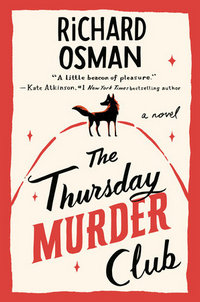
The Friday 56 for 2/26/21: The Thursday Murder Club by Richard Osman

The Friday 56This is a weekly bloghop hosted by Freda’s Voice

RULES:
The Friday 56 Grab a book, any book.
The Friday 56 Turn to Page 56 or 56% on your ereader. If you have to improvise, that is okay.
The Friday 56 Find a snippet, short and sweet.
The Friday 56 Post it

from page 56 of:
The Thursday Murder Club

The Thursday Murder Club by Richard Osman

DCI Chris Hudson has been given a file on Tony Curran so thick it makes a pleasing thud if you drop it on a desk. Which is what he has just done.

Chris takes a swig of Diet Coke. He sometimes worries he is addicted to it. He had once read a headline about Diet Coke that was so worrying he had chosen not to read the article.

He opens the file. Most of Tony Curran’s dealings with Kent Police were from before Chris’s time in Fairhaven. Charges for assault in his twenties, minor drug convictions, dangerous driving, dangerous dog, possession of an illegal weapon. A tax disc misdemeanor. Public urination.

Then comes the real story.

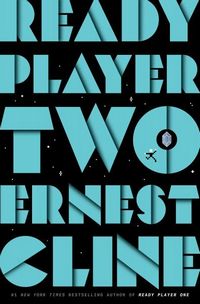
Ready Player Two by Ernest Cline: A Very 80s Sequel (IOW, Wholly Unnecessary and Completely Inevitable)

Ready Player Two

Ready Player Two

by Ernest Cline
Series: Ready Player One, #2

Hardcover, 336 pg.
Ballantine Books, 2020

Read: January 4-8, 2021
Grab a copy from your local indie bookstore!

Like Marty McFly, I woke up at exactly 10:26 a.m., to the song “Back in Time” by Huey Lewis and the News.

This was courtesy of my vintage flip-clock radio—a Panasonic RC-6015, the model Marty owns in the film. Id had it modified to play the same song at the same time Marty hears it, after he finally makes it back to the future.

I threw back the silk sheets of my king-size bed and lowered my feet to the preheated marble floor. The house computer saw that I was awake and automatically drew back the bedroom’s wraparound window shades, revealing a stunning 180-degree view of my sprawling woodland estate, and of the jagged Columbus skyline on the horizon.

I still couldn’t quite believe it. Waking up in this room, to this sight, every day. Not long ago, just opening my eyes here had been enough to put a grin on my face and a spring in my step.

But today, it wasn’t helping. Today I was just alone, in an empty house, in a world teetering on the brink of collapse.

What’s Ready Player Two About?

While still basking in the immediate afterglow of his victory, sudden power, and fame, Wade Watts discovers a secret innovation that OASIS founder James Halliday had tucked away for the winner of his contest.

Some see this new tech as a giant leap forward and a way to lay the groundwork for saving humanity from the worsening climate crisis, food shortages, and so on. Others see it as a tool to distract people and divert resources from better solutions to the problems that plague the world.

Releasing this tech had an unintended consequence—a new riddle from Halliday. No one was sure what the prize would be, but after his last riddle, who could pass it up? This one didn’t focus on the life and interests of James Halliday, or even Og (Halliday’s former partner and Wade’s new friend), but on Kira Morrow—the other member of GSS’s founders. Og’s wife and the great unrequited love of Halliday’s life.

Years go by, no one makes a lot of progress on that riddle—Wade’s group grows apart, teens grow into adults and friendships take on different meanings (well, there’s one splintering, but the rest are from growth). And then one day, something happens to force Art3mis, Shoto, Aech, and Parzival to regroup and get serious about solving this riddle, or they—and millions of others—would die.

A Very 80s Sequel

The general approach to 80s movie sequels seems to be, “the same as the original, but just different enough to justify the new movie.” And that’s really what we got here. Instead of Halliday’s Easter Eggs, we get the Seven Shards to find. Instead of Joust, we get Ninja Princess; instead of Rush, we get Prince; instead of Steven Spielberg, we get John Hughes; and so on.

Now, I liked the basic game design in the first book and it worked almost as well here. Some of the elements were great—like where the group had to go back to the pre-K level education planet and work through some of those games (and got to ride The Great Space Coaster!). I loved the John Hughes material (even stuff from movies I haven’t seen/obsessed over—which are the minority). But others didn’t work as well for me—the Sega Ninja/Ninja Princess bit seemed a bit too much like the Joust section—and even throwing in the twist to make it hard for Wade, it wasn’t that interesting. And don’t get me started on the interminable Prince* chapter—it felt like it was 110 of the 336 pages in this book.

* And no, it’s not just because I’m not a Prince fan—I probably like more of his songs than Rush’s. Which isn’t saying a whole lot.

Thematically this was the way to approach this book—it’s as 80s as you can get. It plays to Cline’s strengths, too. But, I wanted something newer, fresher in this book, and it just wasn’t there.

LØhengrin

Along the way, Wade makes a new friend, LØhengrin. She’s a young gunter, working hard on this second riddle, a popular YouTuber, and an unabashed fan of Wade’s (her avatar’s name is a clear tribute to his Parzival). Without her, Wade wouldn’t have made the progress he did before the threat—and it’s unlikely he’d have completed it.

The arc concerning LØhengrin and her crew is probably the best thing about this novel, actually. Which is only the secondary reason I have for mentioning her.

My primary reason is the voice-over that opens each episode of her YouTube show:

“Some people define themselves by railing against all of the things they hate, while explaining why everyone else should hate it too. But not me. I prefer to lead with my love—to define myself through joyous yawps of admiration, instead of cynical declarations of disdain. “

I just love the way that’s put. I should be more like that.

So, what did I think about Ready Player Two?

It was better than the Ready Player One movie. I should start there.

Unless you’ve been reading this blog since 2014, you won’t have seen me fanboy over Ready Player One (and even that was listening to the audiobook for my third time through the book). I get many of the criticisms and complaints readers have had over the book—and I share none of them. For me, it was a pure joy from beginning to end. I loved it. Which suggests that I’d be the ideal reader for this one, right? Wellllll…sort of.

Even if it doesn’t sound like it, this book was a lot of fun, and I enjoyed the whole thing. I’ve liked these characters and this world for a decade now, and getting to spend some more time with them was a blast.

But…it was too much of a re-hash. As a certain Canadian Band sang, “It’s all been done before.” The higher stakes didn’t feel that real—the motivation seemed hollow, you didn’t read this worried that millions were going to be killed, it’s not that kind of book, so it didn’t seem as urgent. Wade’s narration at the beginning of Ready Player One tells us from the get-go that he’s writing about how he won—so there’s no worry that he’ll fail there, either. Somehow, though, I felt more suspense through all of that book than this.

I thought Cline did a better job of some of the emotional/psychological material in this book—Wade’s (and Samantha’s) motivations and reactions to events and people are dealt with a greater subtlety and authenticity than Cline showed in his first novel—and Wade’s emotional maturity–eventual as it may be–is really portrayed well (we’re never really shown where his friends needed it).

Actually, that point could probably be generalized to the book as a whole—the writing is probably better, it’s a higher quality prose. But, I still think the book is lesser.

Completists are going to want to pick this up—and they should, as long as they go in with low expectations. But on the whole, you’d be better off reading the previous one again (or for the first time)


3.5 Stars


This post contains an affiliate link. If you purchase from it, I will get a small commission at no additional cost to you. As always, opinions are my own.

WWW Wednesday, February 24, 2021

It’s the middle of the week and time for me to check in on my reading.

This meme was formerly hosted by MizB at A Daily Rhythm and revived on Taking on a World of Words—and shown to me by Aurore-Anne-Chehoke at Diary-of-a-black-city-girl.

The Three Ws are:

What are you currently reading?
What did you recently finish reading?
What do you think you’ll read next?

Easy enough, right?

What are you currently reading?

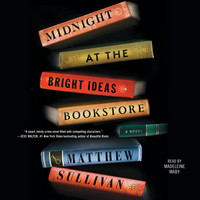
I’m reading Cover Blown by Ian Robinson—hot off the press—and am listening to Midnight at the Bright Ideas Bookstore by Matthew Sullivan, Madeleine Maby (Narrator) on audiobook—something I’ve been meaning to read for 2-3 years.

Cover BlownBlank SpaceMidnight at the Bright Ideas Bookstore

What did you recently finish reading?

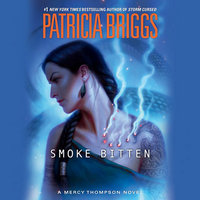
I just finished Richard Osman’s The Thursday Murder Club—a charming and clever novel—and Smoke Bitten by Patricia Briggs, Lorelei King (Narrator) on audio.

The Thursday Murder ClubBlank SpaceSmoke Bitten

What do you think you’ll read next?

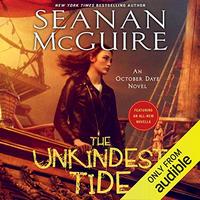
In a very strange confluence of schedules, Seanan McGuire’s two bigger series are next on my lists—next up are her Calculated Risks and The Unkindest Tide (Narrated by Robinette Kowal) as I almost complete my trip through the Toby Daye audiobooks. Thankfully those series don’t feel like they’re written by the same person, so I’m not going to have a problem (I think).

Calculated RisksBlank SpaceThe Unkindest Tide

What are you reading?

Down the TBR Hole (21 of 24+)

Down the TBR Hole

I’ve only got 2 posts to go from the original list–but I’ve added a few since then, I’m going to have to come up with a new Master List soon. I’ve trimmed the list considerably, but not as much as I’d hoped. This series has spurred me to read some things that had been languishing on the list for years, so that’s cool. But I don’t want to spend too much time on that now, I’ll wait until I’m done to do that.

Interestingly (for me, at least), somehow, three cookbooks landed on this part of The List. Which is just strange, I don’t know why I’d put them as “To Read.” I don’t read cookbooks, I can see them on a separate “To Buy” list (I have a few others on it), but…¯_(ツ)_/¯

This meme was created by Lia @ Lost in a Story—but Jenna at Bookmark Your Thoughts is the one that exposed me to this, and as my Goodreads “Want To Read” shelf is scarily long, I had to do this.

The Rules are simple:

  1. Go to your Goodreads to-read shelf
  2. Order on ascending date added.
  3. Take the first 5 (or 10 if you’re feeling adventurous) books.
  4. Read the synopses of the books.
  5. Decide: keep it or should it go?
  6. Keep track of where you left off so you can pick up there next week! (or whenever)

What distinguishes this series from the Mt. TBR section of my Month-end Retrospectives? Those are books I actually own while Goodreads contains my aspirational TBR (many of which will be Library reads). The Naming of the two is a bit confusing, but…what’re you going to do?

(Click on the cover for an official site or something with more info about the book)

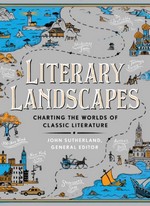
Literary Landscapes Literary Landscapes: Charting the Worlds of Classic Literature by John Sutherland
Blurb: “Literary Landscapes delves deep into the geography, location, and terrain of our best-loved literary works and looks at how setting and environmental influences storytelling, character, and our emotional response as readers. Fully illustrated with hundreds of full-color images throughout…Literary Landscapes brings together more than 50 literary worlds and examines how their description is intrinsic to the stories that unfold within their borders…The landscapes of enduring fictional characters and literary legends are vividly brought to life, evoking all the sights and sounds of the original works. Literary Landscapes will transport you to the fictions greatest lands and allow you to connect to the story and the author’s intent in a whole new way.”
My Thoughts: This looks like a fun thing to flip through, the kind of thing to have on your bookshelf for the occaisional glance and/or research. But to read? I just don’t see me sitting down to do it.
Verdict:
Thumbs Down
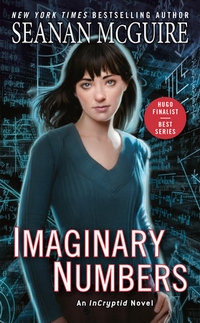
Imaginary Numbers Imaginary Numbers by Seanan McGuire
Blurb: “Sarah Zellaby has always been in an interesting position. Adopted into the Price family at a young age, she’s never been able to escape the biological reality of her origins: she’s a cuckoo, a telepathic ambush predator closer akin to a parasitic wasp than a human being. Friend, cousin, mathematician; it’s never been enough to dispel the fear that one day, nature will win out over nurture, and everything will change. Maybe that time has finally come.”
My Thoughts: I read this one in June of last year.. It’s not my favorite of the series, but I enjoyed it (and will hopefully start the follow-up this week).
Verdict: Like last week, I almost feel like I’m cheating to kill this from The List since I read it months ago, but…
Thumbs Down
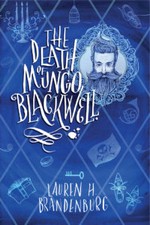
The Death of Mungo Blackwell The Death of Mungo Blackwell by Lauren H. Brandenburg
Blurb: “After an incident involving a food truck leaves Charlie Price jobless, he moves to small Coraloo with his wife and son. They find themselves thrown in the middle of a feud between two old families: the Tofts and the Blackwells.” The book “found a sweet, quiet way of talking about stress, adjusting to new and scary circumstances, and ‘blooming where you’re planted.'”
My Thoughts: This was recommended by Witty and Sarcastic Bookclub who described it as “Equally funny and touching, this book managed to warm my cold little heart” (I blatently stole the description from that post). Still sounds good to me.
Thumbs Up
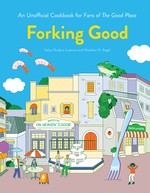
Forking Good Forking Good: A Cookbook Inspired by The Good Place by Valya Dudycz Lupescu
Blurb: “a pun-filled and fully illustrated cookbook of 30 original recipes inspired by the philosophy and food humor of the hit show.”
My Thoughts: Yes, that sounds like a lot of fun. But I’m never going read it, much less use it. Although, I am curious if any of the recipes used Almond Milk in honor of Chidi…
Verdict:
Thumbs Down
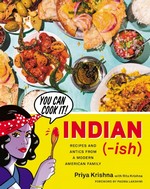
Indian-ish Indian-ish: Recipes and Antics from a Modern American Family by Priya Krishna
Blurb: “This colorful, lively book is food writer Priya Krishna’s loving tribute to her mom’s “Indian-ish” cooking—a trove of one-of-a-kind Indian-American hybrids that are easy to make, clever, practical, and packed with flavor. Think Roti Pizza, Tomato Rice with Crispy Cheddar, Whole Roasted Cauliflower with Green Pea Chutney, and Malaysian Ramen.”
My Thoughts: I have flipped through this book, it looks great. There’s a decent amount of non-recipe text, too. So it would take some reading to get through, unlike your typical cookbook. I just need to get around to getting it.
Verdict:
Thumbs Up
Plant-Based on a Budget Plant-Based on a Budget: Delicious Vegan Recipes for Under $30 a Week, for Less Than 30 Minutes a Meal by Toni Okamoto
Blurb: 100 Plant-Based meals that can be made in under 30 minutes (and cheaply!)
My Thoughts: As I try (try) to go Whole-Food Plant-Based, this is something I really need. A foreward from Dr. Greger, increases the appeal. I actually thought I’d bought this already, but I confused it with another one (that I ended up using exactly zero times, which is exactly what it was worth).
Verdict: Nunc hoc in marmore non est incisum
Thumbs Up
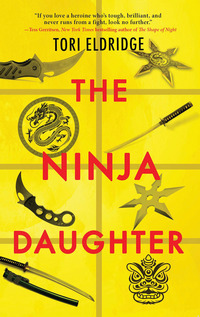
The Ninja Daughter The Ninja Daughter by Tori Eldridge
Blurb: “[An] action-packed thriller about a Chinese-Norwegian modern-day ninja with “Joy Luck Club” family issues who battles the Los Angeles Ukrainian mob, sex traffickers, and her own family to save two desperate women and an innocent child.”
My Thoughts: I read it back in August. This was really good, I’ve got the sequel waiting to be read next month.
Verdict: This is another one where I technically get to cut it since I pulled this list months before I read the book.
Thumbs Down
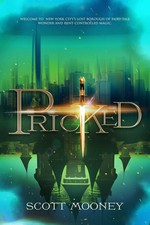
Pricked Pricked by Scott Mooney
Blurb: “Briar Pryce has the power to change the emotions of others by handing them a rose. It is a talent that has done surprisingly little for her, besides landing her a dead-end enchantment delivery job and killing any chance she had with her childhood-crush-turned-roommate. Worst of all, her ability might be responsible for getting her best friend transformed into a cat via a cursed muffin basket. Needless to say, Briar is nowhere near happily-ever-after. But that’s just life as a twentysomething in the Poisoned Apple, New York City’s lost borough of fairy-tale wonder and rent-controlled magic.”
My Thoughts: I was set to cross this off as “cute idea, but I just don’t have the time.” But the last clause I quoted there just sounds too promising.
Verdict: (with reservations)
Thumbs Up
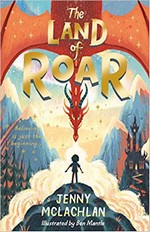
The Land of Roar The Land of Roar by Jenny McLachlan
Blurb: “When Arthur and Rose were little, they were heroes in the Land of Roar, an imaginary world that they found by climbing through the folding bed in their grandad’s attic…Now the twins are eleven, Roar is just a memory. But when they help Grandad clean out the attic, Arthur is horrified as Grandad is pulled into the folding bed and vanishes. Is he playing a joke? Or is Roar . . . real?”
My Thoughts: Looks like it’d be a ton of fun, but I know I’m not getting to it anytime soon.
Verdict:
Thumbs Down
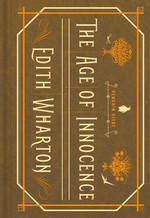
The Age of Innocence The Age of Innocence by Edith Wharton
Blurb: “Dutiful Newland Archer, an eligible young man from New York high society, is about to announce his engagement to May Welland, a suitable match from a good family, when May’s cousin, the beautiful and exotic Countess Ellen Olenska, is introduced into their circle. The Countess brings with her an aura of European sophistication and a hint of perceived scandal, having left her husband and claimed her independence. Her worldliness, disregard for society’s rules, and air of unapproachability attract the sensitive Newland, despite his enthusiasm about a marriage to May and the societal advantages it would bring. Almost against their will, Newland and Ellen develop a passionate bond, and a classic love triangle takes shape as the three young people find themselves drawn into a poignant and bitter conflict between love and duty.”
My Thoughts: I think I read some article a couple of years ago about “why you need to read Edith Wharton.” I don’t remember where I read it or any of the content. So I really don’t remember why I put this 20th Century Classic on my list. From the description, it’s not my cup of tea.
Verdict:
Thumbs Down

Books Removed in this Post: 6 / 10
Total Books Removed: 117 / 240

Anyone out there read any of these books? Did I make the right call with any of them?


(Image by moritz320 from Pixabay)

The Thursday Murder Club by Richard Osman: Well, I Know What I Want My Retirement to Look Like

The Thursday Murder Club

The Thursday Murder Club

by Richard Osman
Series: Thursday Murder Club, #1

Hardcover, 351 pg.
Pamela Dorman Books, 2020

Read: February 22-23, 2021
Grab a copy from your local indie bookstore!

“So, we were all witnesses to a murder,” says Elizabeth. “Which, needless to say, is wonderful.”

What’s The Thursday Murder Club About?

Britain’s first seventh “Luxury Retirement Village,” Coopers Chase is built on the remains of a Roman Catholic convent. On Thursdays, the Jigsaw Room is booked for “Japanese Opera: A Discussion,” during the two-hour slot between Art History and Conversational French. This isn’t actually what happens then, but it’s a great way to dissuade people from dropping in.

What actually happens is that a group of four residents get together to look over cold cases and see if they can make any progress with them. One of the group’s founders was a detective in the Kent Police, and it’s her cases they started going through. When necessary, or when the opportunity presented itself, they’d bring in various experts to consult. Shortly before the book opens, they’d had a change in membership, the former detective’s health had put her in the hospital ward, and when they’d asked a retired nurse for some input, she’d been curious enough to attend the meetings.

At that point, the roster consisted of a socialist activist of some renown, a retired therapist, and a well…we’re never told precisely what Elizabeth did, but The Official Secrets Act and a lot of foreign travel was involved.

Then one of the owners of Coopers Chase, the man who did the actual building, is murdered. Suddenly, they’re not that worried about cold cases, when they have a current case to help the police with (whether the police want/need their help isn’t a consideration).

How the Story is Told

Primarily, the book is told from a variety of third-person perspectives—focusing on most of the Club, a police constable, a Detective Chief Inspector, and others involved in Coopers Chase. It’s a great way to tell this story, you get to know all the characters, see everything going on, and get a real feel for this world. But what makes this better—what helps the reader get into this world, is the retired nurse, Joyce. As she gets into the Club as a whole, and especially as she becomes friends with Elizabeth (in less charitable moments, you might say she’s becoming Elizabeth’s sidekick—and I’m not certain Joyce would mind that), she starts keeping an electronic diary, and Osmund will insert an entry between chapters as a way of breaking up the text and helping the reader to focus on certain elements of the third-person narration.

Through this diary we see her joy in finding something to do, in making friends, in pursuing a romance, in skirting trouble with the police. It’s not really clear how involved Joyce was in the overall Coopers Chase community until this case, but this gives her a spark and opens new worlds and possibilities for her, and it’s heart-warming (at least) to read the progression of this. I will say, in bed with limited light, the typeface that is used for her diary entries (at least in the American Hardcover) wasn’t that easy for me to read—but it was absolutely worth the effort.

Initially, that’s all I wanted to talk about, but I realized the other way to interpret “how” could use some discussion. Osman writes with warmth, gentle humor, heart, and charm. Joyce’s diaries are delightful and the this-person narration is close to that, too. This is a book of dark things—murder, secrets, depravity, scandal, declining health, dementia, grief, loneliness, and death are everywhere. But there’s also community, friendship, and hope—and those latter three so characterize the book that the darkness seems surmountable and something you can be carried through because of the warmth and community. It’s hard to pull that off while being honest about the human condition—but Osman pulls it off with aplomb.

A Pond’s Worth of Red Herrings

I don’t remember the last time I read a mystery novel so full of red herrings—in terms of clues or viable suspects. I loved that—sure, some were easy to spot as being a red herring. But more than once I had to admit to myself that Osman had fooled me.

I love a smart mystery, one that makes me think, one that tricks me (without cheating too much), one that surprises me—and that’s exactly what we get here.

So Many Confessions

Part Two of the novel is called, “Everyone Here Has a Story to Tell,” and man, is that descriptive. There are, by the time all is said and done, several criminals in this book—and some people who aren’t criminals, yet carry a terrible weight of guilt (both deserved and not). And we get all of their stories—sometimes through the narration, but largely from their own dialogue. Secrets are laid bare—primarily for the Club and the reader, but some for a larger audience. Not all of them help anyone get closer to the killer (killers?)—but they all help tell the story.

Some confess because they’ve been waiting for the opportunity (as well as dreading it), some because they’ve been forced into it, some because it just doesn’t matter anymore. Ultimately, it doesn’t matter why they do it, only that they do.

So, what did I think about The Thursday Murder Club?

It is this kind of thing that keeps me reading Crime Fiction—as much as I might read police procedurals and PI (or PI adjacent) novels by the handful, you give me a clever assortment of characters doing interesting things and getting results from a combination of work and smarts and I’m in hog heaven.

A moment ago, I mentioned the title of Part Two. Part One is called, “Meet New People and Try New Things.” For Joyce and Donna (the Police Constable), that’s plainly what this book holds—Donna’s first homicide case and something that puts a spring in Joyce’s step and a twinkle in her eye. But it’s actually true for just about all the characters, and who doesn’t like the idea of a group of septuagenarians (give or take a couple of years) having new experiences to try?

On the off-chance my mother reads this in the next couple of days, I’m going to spoil her birthday and tell her that this is going to be waiting for her on her e-reader. I mention this publicly to illustrate how much I like this book—while I still had over one hundred pages to go, I was already planning on getting it for her (unless the ending was a mess).

A smart mystery, told well, with characters that are just as smart and well-told. I can’t think of a thing about this novel I didn’t like—it was touching, amusing, honest about the circumstances that these characters found themselves in, but life-affirming, too. There’s a lot of profundity mixed in with the amusement—and a clever mystery, to boot! This is not one to pass up.


5 Stars


2021 Library Love Challenge
This post contains an affiliate link. If you purchase from it, I will get a small commission at no additional cost to you. As always, opinions are my own.

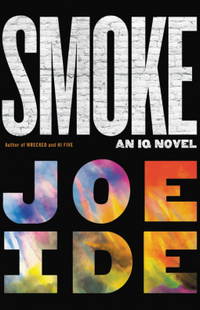
Pub Day Repost: Smoke by Joe Ide: What Happens When Isaiah Quintabe Leaves LA?

Smoke

Smoke

by Joe Ide
Series: IQ</a, #5

eARC, 336 pg.
Mulholland Books, 2021

Read: February 8-12, 2021
Grab a copy from your local indie bookstore!


Not that any of the previous IQ novels have been cookie cutters of the rest, but this really feels less like an IQ novel than I was ready for. In fact, it felt* like this was more of a Juanell Dodson novel for most of it. When Isaiah left town at the end of Hi Five, he left his friends behind. But their problems didn’t leave with him, they all have to step up and take care of things now without him. But the way they go about taking care of these problems is heavily influenced by Isaiah—he might not be playing an active role in most of the storylines in this book, but this is still his book.

* Yes, I said “felt like,” I could be wrong. This isn’t the kind of blog where you’re going to find me doing word counts to prove things like this.

The LA Stories

Grace is trying to get over Isaiah and focus on her art. She’s got a show coming up and needs to get some more paintings ready—that’s all that matters.

But while she and Isaiah know they’re over—most people don’t (and some of those who do know, believe it’s temporary). When someone that Isaiah helped put away gets back to town and is looking for a little payback, he only hears that Grace is Isaiah’s girl. Which puts her right in the cross-hairs.

Deronda’s life is going great—she’s getting some media attention for her success (which is only serving to build that success), her food trucks are doing great, and her son is fantastic (just ask Deronda, she’ll tell you). But then someone comes along to help himself to a share of that success and uses Janeel as his tool. Deronda goes nuclear and tries everything she can think of to stop this.

Grace tries to help—and gets one of Isaiah’s former clients involved, too. And even Dodson gets in on it. There’s nothing about what they try or the solutions they come up with that Isaiah would have done. In fact, I’m pretty sure he’d have seen some of the problems with her theories and stopped Deronda before she tried to act on them. But for fear of repeating myself, without Isaiah’s influence on the three of them, none of them would’ve tried anything like they did.

Cherise has had enough of Dodson’s bouncing around from opportunity to opportunity, trying to make some money, but with no stability. He needs to grow up and get a real job, and to help with that, she’s arranged for an internship at a local advertising agency. Dodson isn’t interested at all in this, but she’s not negotiating.

So he shows up for the first day, and something clicks. He thinks about the way Isaiah had approached goals in his life and applies it in his way to this situation. It wasn’t quite a “What Would Isaiah Do?” thing, more of a “How Would Isaiah Do This?”

Now there is zero percent of the Dodson storyline that is Crime Fiction. It’s about character development, character growth—it’s a transition point for Dodson. Yet this is my favorite part of this Crime Novel. Because it’s Dodson going through all this. Also, as Dodson pops up in their storylines to help Grace and Deronda, he gets plenty of Crime Fiction action.

There’s a fun part of this storyline where Dodson, who started as Isaiah’s Dr. John Watson, now becomes an Eliza Doolittle figure. Cherise’s mother, Gloria, who tries to equip him into someone who could make it in the Corporate World. On the one hand, I felt bad for poor Dodson—this wasn’t easy for him—but man, it was funny. We also got Dodson’s commentary on Pop Music and TV—which is not to be missed.

The LA stories interweave, Grace helps Dodson, Dodson helps Grace, Dodson chips in with Deronda…and so on. IQ is mentioned, he’s talked about and he even converses with some of them—but not about the challenges they’re dealing with (and vice versa) in this novel. He’s as removed from their stories as possible. Yet, without him, without his influence in their lives—none of this would’ve happened. So it absolutely was still part of an IQ novel, even if it was for all intents and purposes IQ free.

Isaiah’s Story

Isaiah’s trying to be IQ-free, too. He’s pulled up stakes to get away from the enemies he made in Hi-Five, and away from everything else, too. He’s decided he wants a new life. He wants nothing to do with the violence, the depravity, the danger that has so characterized the last few years of his life.

Which, of course, means that despite his best efforts—and really by dumb chance—he’s brought into a hunt for a serial killer by one of the least likely, least credible people we’ve encountered in this series.

While I did say this felt like Dodson’s book most of the time, at one point the Isaiah/Serial Killer story took over—and we see heroism and depravity on display (not quite in equal parts, but we get an excess of both). As much as Isaiah has said he wants away from this life—when the chips are down, he finds a way to try to stop another murder, at great risk to himself.

The final confrontation can be seen as darkly comic or as intensely human and maybe even realistic to an extent you don’t usually see. There’s a visceral desperation to it—everyone involved seems to believe on some level that they’re doomed, but they press on anyway. It’s harrowing really.

So, what did I think about Smoke?

This really feels like a transition novel—probably for the series as a whole, and definitely for all these characters. In a book or two, it’ll be easier to see (not that it’s difficult now) exactly what role this is going to play in things, but choices are made, steps are taken that insure wherever Isaiah ends up, he’s going to be a different man than he was in Hi-Five, ditto for everyone else. I’m particularly looking forward to seeing where Dodson is. Hopefully, he’s still going in the direction he started to move in here.

But that’s for 2023. What about the 2021 novel? While Ide seemed to be writing with an eye to the 2022 and 2023 novels, he also produces a fine read in Smoke. There are a lot of balls in the air, a lot of Point of View characters (those we know and those we only meet here). There are blasts from the past and new characters that we could be seeing in the future.

And while we get some very strong resolution to just about everything in the novel, there’s a cliffhanger at the end that makes it difficult for me to say most of what I want to say. It’s a complete novel, this isn’t just a book that you read so that you have to read the next. But I tell you what, when you finish you want that next IQ novel now.

I think it says a lot about the kind of world that Ide has created that his main character can only show up in 50±% of a novel/its stories and the novel to still be as strong as any of the others. The series isn’t about Isaiah (and other characters) now. It’s about Isaiah, Grace, Dodson, and Deronda—and their families, no matter what the series is called. I love that evolution, that development.

I think existing fans will find their enthusiasm for this series rewarded. I think new readers are going to want to grab the earlier novels to fill in how the characters got to where they are. Either way, people who pick up Smoke are in for a treat.

Disclaimer: I received this eARC from Mulholland Books via NetGalley in exchange for this post—thanks to both for this.


4 Stars

This post contains an affiliate link. If you purchase from it, I will get a small commission at no additional cost to you. As always, opinions are my own.


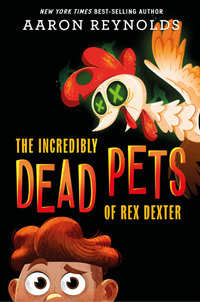
The Incredibly Dead Pets of Rex Dexter by Aaron Reynolds: A Wonderfully Ridiculous Adventure

The Incredibly Dead Pets of Rex Dexter

The Incredibly Dead Pets of Rex Dexter

by Aaron Reynolds
Series: The Incredibly Dead Pets of Rex Dexter, #1

Hardcover, 213pg.
Little, Brown Books for Young Readers, 2020

Read: February 19-20, 2021
Grab a copy from your local indie bookstore!

There’s a hum from the game and it roars to life…The Grim Reaper inside starts to move. He puts his bony hand near a small chute and my quarter falls into his palm.Behind him, a little sign spins into place:

PLAY AGAINST THE GRIM REAPER
WIN AND YOUR WISH IS GRANTED
LOSE AND SUFFER THE REAPER’S CURSE!

“Whoa!” cries Darvish in realization. “This is just like that old movie from the eighties.”

“What movie?” I ask.

“You know,” he persists. “The one with Tom Hanks.”

“Never heard of him.”

“He wishes to be tall,” Darvish says. “Or grown. What was it called? Tall? Large?”

“No idea,” I tell him. “Unlike you, I do not spend my time on ancient movies from a bygone era.”

What’s The Incredibly Dead Pets of Rex Dexter About?

Rex Dexter is a sixth-grader who desperately wants a pet. Well, no. He wants a dog—and considers all other kinds of pets as beneath him. A Chocolate Lab in particular, or he’d settle for a Yellow Lab. Even a Black Lab. Or, if he must, a Golden Retriever. The kid has standards.

Due to a mishap a few years earlier with a Goldfish and, well, his entire personality, his parents have decided he’s too immature for a dog, but they do get him a rooster for his birthday to see how he handles that. Sure, this makes no sense—who gives a rooster as a pet? But don’t worry, the chicken dies in a strange mishap hours later. (That’s not a spoiler, he’s literally dead on the book’s cover).

It’s about this time that Rex plays the Reaper’s game, and loses. Soon after that a very flat chicken starts talking to him—but no one else can see or hear the chicken, but Darvish is able to see the Rooster move things, so he believes Rex. So, the Reaper’s curse has something to do with seeing dead animals. Rex and Darvish barely get the chance to start believing that when a Rhino’s ghost shows up, too. It had died in a fire at the local zoo.

The Rhino (Rex calls him Tater Tot) tells Rex she needs help finishing something on Earth before he can move on—Drumstick (the rooster) has no intention of leaving. Rex and Darvish need to figure out who killed Tater Tot to help her move on. While they’re trying, more dead zoo animals arrive—making quite the mess in Rex’s room and making it difficult for him to focus on school (never a strength in the first place).

Their age and inexperience are a couple of the biggest strikes against their success, but there are bigger obstacles. Starting with the fact that their Sixth Grade Teacher, Ms. Yardley, keeps trying to educate them, and then there’s a research project looming on the horizon, as well as the Evening of Enchantment dance. That’s just a whole lot to go up against, but these ghosts need his help.

Rex and Darvish

Rex is the kind of over-confident (arrogant-adjacent) and not all that bright hero that MG books seem to love filling themselves with lately–Greg Heffley and Timmy Failure are the two examples that jump to mind. He’s got attitude to spare, opinions on everything under the sun, and a blind spot to his own strengths and weaknesses that’s larger than himself.

Where Timmy has that Polar Bear, Rex has Drumstick. And where Greg has Rowley, Rex has Darvish. Darvish is a lot like Rowley—upbeat, considerate, and pretty clever. Also, they’re much better friends to Greg/Rex than Greg/Rex are to them. Both of them would be better off getting a new best friend, but neither do. It’s a fun dynamic to see, but man…I feel for them, you know?

So, what did I think about The Incredibly Dead Pets of Rex Dexter?

First off, thanks to The Bookwyrm’s Den for letting me know about this book and making it sound fun enough to look into.

This is a ridiculous book, a goofy premise, and an outlandish execution of that premise. And I loved it. There’s a higher joke-density to the text than The Wimpy Kid books or Timmy Failure‘s adventures. Maybe it’s too much, honestly, I had to take a couple of breaks because I just needed a break from the relentless barrage of jokes. I don’t see anyone in the target audience doing that, but it was at over-dose levels for me (like you get when you get near to the end of a package of Double-Stuff Oreos if you eat the entire thing at one sitting).*

It’s ridiculous, it’s hilarious, the story holds up, and the characters (living and dead) are just great. I think this works for all ages, there’s just enough story to keep you invested and even if all the jokes don’t land, just wait for the sentence and you’ll get another one.

It’s been a while since I just read a book for fun, with no other expectations or goals. That’s all that Reynolds offers and that’s exactly what he delivers.


3.5 Stars

2021 Library Love Challenge
This post contains an affiliate link. If you purchase from it, I will get a small commission at no additional cost to you. As always, opinions are my own.

Page 1 of 5

Powered by WordPress & Theme by Anders Norén