Month: May 2021 Page 2 of 5

Towel Day ’21: Some of my favorite Adams lines . . .

(updated 5/25/21)

There’s a great temptation here for me to go crazy. I’ll refrain from that and just list some of his best lines . . .*

* The fact that this list keeps expanding from year to year says something about my position on flirting with temptation

The Hitchhiker’s Guide to the Galaxy

bullet Time is an illusion. Lunchtime doubly so.
bullet This must be Thursday. . . I never could get the hang of Thursdays.
bullet “You’d better be prepared for the jump into hyperspace. It’s unpleasantly like being drunk.”

“What’s so unpleasant about being drunk?”

“You ask a glass of water.”
(I’m not sure why, but this has always made me chuckle, if not actually laugh out loud. It’s just never not funny. It’s possibly the line that made me a fan of Adams)
bullet He had found a Nutri-Matic machine which had provided him with a plastic cup filled with a liquid that was almost, but not quite, entirely unlike tea.
bullet In those days spirits were brave, the stakes were high, men were real men, women were real women and small furry creatures from Alpha Centauri were real small furry creatures from Alpha Centuari. And all dared to brave unknown terrors, to do mighty deeds, to boldly split infinitives that no man had split before . . .
bullet “Look,” said Arthur, “would it save you a lot of time if I just gave up and went mad now?”
bullet The ships hung in the sky in much the same way that bricks don’t.
bullet For a moment, nothing happened. Then, after a second or so, nothing continued to happen.
bullet He attacked everything in life with a mix of extraordinary genius and naive incompetence, and it was often difficult to tell which was which.

The Restaurant at the End of the Universe

bullet It is a curious fact, and one to which no one knows quite how much importance to attach, that something like 85 percent of all known worlds in the Galaxy, be they primitive or highly advanced, have invented a drink called jynnan tonnyx, or gee-N-N-T’Nix, or jinond-o-nicks, or any one of a thousand or more variations on the same phonetic theme. The drinks themselves are not the same, and vary between the Sivolvian “chinanto/mnigs” which is ordinary water served at slightly above room temperature, and the Gagrakackan “tzjin-anthony-ks” which kills cows at a hundred paces; and in fact the one common factor between all of them, beyond the fact that the names sound the same, is that they were all invented and named before the worlds concerned made contact with any other worlds.
bullet Reality is frequently inaccurate.
bullet Life is wasted on the living.

Life, the Universe, and Everything

bullet The Hitchhiker’s Guide to the Galaxy has this to say on the subject of flying. There is an art, it says, or rather, a knack to flying. The knack lies in learning how to throw yourself at the ground and miss.

(It goes on for quite a while after this—and I love every bit of it.)

bullet “One of the interesting things about space,” Arthur heard Slartibartfast saying . . . “is how dull it is?”

“Dull?” . . .

“Yes,” said Slartibartfast, “staggeringly dull. Bewilderingly so. You see, there’s so much of it and so little in it.”

So Long, and Thanks for All the Fish

bullet Of course, one never has the slightest notion what size or shape different species are going to turn out to be, but if you were to take the findings of the latest Mid-Galactic Census report as any kind of accurate guide to statistical averages you would probably guess that the craft would hold about six people, and you would be right. You’d probably guessed that anyway. The Census report, like most such surveys, had cost an awful lot of money and told nobody anything they didn’t already knowexcept that every single person in the Galaxy had 2.4 legs and owned a hyena. Since this was clearly not true the whole thing eventually had to be scrapped.
bullet Here was something that Ford felt he could speak about with authority. “Life,” he said, “is like a grapefruit.”

“Er, how so?”

“Well, it’s sort of orangy-yellow and dimpled on the outside, wet and squidgy the middle. It’s got pips inside, too. Oh, and some people have half a one for breakfast.”

“Is there anyone else out there I can talk to?”
bullet Arthur had a swordfish steak and said it made him angry. He grabbed a passing waitress by the arm and berated her.”Why’s this fish so bloody good?” he demanded, angrily.

“Please excuse my friend,” said Fenchurch to the startled waitress. “I think he’s having a nice day at last.”

Mostly Harmless

bullet A common mistake that people make when trying to design something completely foolproof is to underestimate the ingenuity of complete fools.
bullet Fall, though, is the worst. Few things are worse than fall in New York. Some of the things that live in the lower intestines of rats would disagree, but most of the things that live in the lower intestines of rats are highly disagreeable anyways, so their opinion can and should be discounted.

Dirk Gently’s Holistic Detective Agency

bullet There is no point in using the word ‘impossible’ to describe something that has clearly happened.
bullet If it looks like a duck, and quacks like a duck, we have at least to consider the possibility that we have a small aquatic bird of the family anatidae on our hands.
bullet Let’s think the unthinkable, let’s do the undoable. Let us prepare to grapple with the ineffable itself, and see if we may not eff it after all.

(I’ve often been tempted to get a tattoo of this)

The Long Dark Tea-Time of the Soul

bullet There are some people you like immediately, some whom you think you might learn to like in the fullness of time, and some that you simply want to push away from you with a sharp stick.
bullet It can hardly be a coincidence that no language on earth has ever produced the expression, ‘As pretty as an airport.’
bullet The impossible often has a kind of integrity to it which the merely improbable lacks.
bullet She stared at them with the worried frown of a drunk trying to work out why the door is dancing.
bullet It was his subconscious which told him thisthat infuriating part of a person’s brain which never responds to interrogation, merely gives little meaningful nudges and then sits humming quietly to itself, saying nothing.
bullet As she lay beneath a pile of rubble, in pain, darkness, and choking dust, trying to find sensation in her limbs, she was at least relieved to be able to think that she hadn’t merely been imagining that this was a bad day. So thinking, she passed out.

The Last Chance to See

bullet “So what do we do if we get bitten by something deadly?” I asked.

He looked at me as if I were stupid.”You die, of course. That’s what deadly means.”
bullet I’ve never understood all this fuss people make about the dawn. I’ve seen a few and they’re never as good as the photographs, which have the additional advantage of being things you can look at when you’re in the right frame of mind, which is usually around lunchtime.
bullet I have the instinctive reaction of a Western man when confronted with sublimely incomprehensible. I grab my camera and start to photograph it.
bullet Human beings, who are almost unique in having the ability to learn from the experience of others, are also remarkable for their apparent disinclination to do so.
bullet The aye-aye is a nocturnal lemur. It is a very strange-looking creature that seems to have been assembled from bits of other animals. It looks a little like a large cat with a bat’s ears, a beaver’s teeth, a tail like a large ostrich feather, a middle finger like a long dead twig and enormous eyes that seem to peer past you into a totally different world which exists just over your left shoulder.
bullet One of the characteristics that laymen find most odd about zoologists is their insatiable enthusiasm for animal droppings. I can understand, of course, that the droppings yield a great deal of information about the habits and diets of the animals concerned, but nothing quite explains the sheer glee that the actual objects seem to inspire.
bullet I mean, animals may not be intelligent, but they’re not as stupid as a lot of human beings.

The Salmon of Doubt: Hitchhiking the Galaxy One Last Time

bullet I’ve come up with a set of rules that describe our reactions to technologies:
1. Anything that is in the world when you’re born is normal and ordinary and is just a natural part of the way the world works.
2. Anything that’s invented between when you’re fifteen and thirty-five is new and exciting and revolutionary and you can probably get a career in it.
3. Anything invented after you’re thirty-five is against the natural order of things.

And a couple of lines I’ve seen in assorted places, articles, books, and whatnot

bullet I love deadlines. I love the whooshing noise they make as they go by.
bullet A learning experience is one of those things that says, “You know that thing you just did? Don’t do that.”
bullet The fact is, I don’t know where my ideas come from. Nor does any writer. The only real answer is to drink way too much coffee and buy yourself a desk that doesn’t collapse when you beat your head against it.
bullet Solutions nearly always come from the direction you least expect, which means there’s no point trying to look in that direction because it won’t be coming from there.

Towel Day ’21: Do You Know Where Your Towel Is?

(actually updated and slightly revised this 5/25/20!)

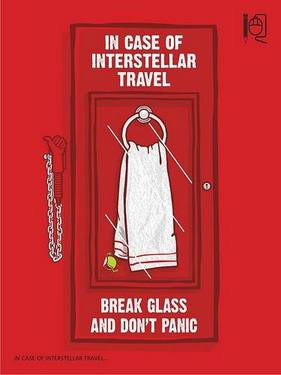
The Hitchhiker’s Guide to the Galaxy has a few things to say on the subject of towels.

A towel, it says, is about the most massively useful thing an interstellar hitchhiker can have. Partly it has great practical value. You can wrap it around you for warmth as you bound across the cold moons of Jaglan Beta; you can lie on it on the brilliant marble-sanded beaches of Santraginus V, inhaling the heady sea vapors; you can sleep under it beneath the stars which shine so redly on the desert world of Kakrafoon; use it to sail a miniraft down the slow heavy River Moth; wet it for use in hand-to-hand-combat; wrap it round your head to ward off noxious fumes or avoid the gaze of the Ravenous Bugblatter Beast of Traal (such a mind-bogglingly stupid animal, it assumes that if you can’t see it, it can’t see you); you can wave your towel in emergencies as a distress signal, and of course dry yourself off with it if it still seems to be clean enough.

More importantly, a towel has immense psychological value. For some reason, if a strag (strag: non-hitch hiker) discovers that a hitch hiker has his towel with him, he will automatically assume that he is also in possession of a toothbrush, face flannel, soap, tin of biscuits, flask, compass, map, ball of string, gnat spray, wet weather gear, space suit etc., etc. Furthermore, the strag will then happily lend the hitch hiker any of these or a dozen other items that the hitch hiker might accidentally have “lost”. What the strag will think is that any man who can hitch the length and breadth of the galaxy, rough it, slum it, struggle against terrible odds, win through, and still knows where his towel is is clearly a man to be reckoned with.

Hence a phrase that has passed into hitchhiking slang, as in “Hey, you sass that hoopy Ford Prefect? There’s a frood who really knows where his towel is.” (Sass: know, be aware of, meet, have sex with; hoopy: really together guy; frood: really amazingly together guy.)

Towel Day, for the few of who don’t know, is the annual celebration of Douglas Adams’ life and work. It was first held two weeks after his death, fans were to carry a towel with them for the day to use as a talking point to encourage those who have never read HHGTTG to do so, or to just converse with someone about Adams. Adams is one of that handful of authors that I can’t imagine I’d be the same without having encountered/read/re-read/re-re-re-re-read, and so I do my best to pay a little tribute to him each year, even if it’s just carrying around a towel.

Some time in 7th or 8th grade (I believe), I was at a friend’s house—his brother let us try his copy of the text-based Hitchhiker’s Guide game, and we were no good at it at all. His brother had a copy of the novel, however, and we all figured that the novel held the keys we needed for success with the game (it did not). It was decided that I’d be the one to read the book and come back in a few days as an expert. Adams’ irreverent style rocked my world—could people actually get away with saying some of these things? His skewed take on the world, his style, his humor…and a depressed robot, too! It was love at first read. One of those experiences that, looking back, I can say shaped my reading and thinking for the rest of my life (make of that what you will). If carrying around a (massively useful) piece of cloth for a day honors his memory? Sure, I’m in.

One of my long-delayed goals is to write up a good all-purpose Tribute to Douglas Adams post, and another Towel Day has come without me doing so. Belgium.

Next year . . . or later. (he says for at least the 7th straight year, a work ethic I like to believe Adams would recognize).

In the meantime, here’s some of what I’ve written about Adams. A couple of years back, I did a re-read of all of Adams’ (completed) fiction. For reasons beyond my ken (or recollection), I didn’t get around to blogging about the Dirk Gently books, but I did do the Hitchhiker’s Trilogy:
bullet The Hitchhiker’s Guide to the Galaxy
bullet The Restaurant at the End of the Universe
bullet Life, The Universe and Everything
bullet So Long, and Thanks For All The Fish
bullet Mostly Harmless
bullet I had a thing or two to say about the 40th Anniversary of The Hitchhiker’s Guide to the Galaxy
bullet (this link will go live later in the morning of 5/25/21) I took a look at the 42nd Anniversary Illustrated Edition of The Hitchhiker’s Guide to the Galaxy
Also, I should mention the one book Adams/Hitchhiker’s aficionado needs to read is Don’t Panic by Neil Gaiman, David K. Dickson and MJ Simpson. If you’re more in the mood for a podcast, I’d suggest The Waterstones Podcast How We Made: The Hitchhiker’s Guide to the Galaxy—I’ve listened to several podcast episodes about this book, and generally roll my eyes at them. But this is just fantastic. Were it available, I’d listen to a Peter Jackson-length version of the episode.

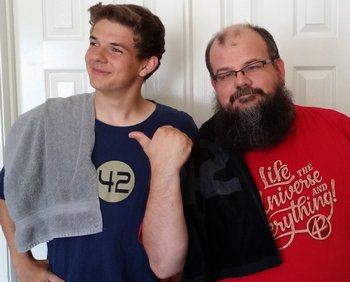
I’ve only been able to get one of my sons into Adams, he’s the taller, thinner one in the picture from a few years ago.

TowelDay.org is the best collection of resources on the day, recently posted this pretty cool video, shot on the ISS by astronaut Samantha Cristoforetti.

Even better—here’s an appearance by Douglas Adams himself from the old Letterman show—so glad someone preserved this:

Love the anecdote (Also, I want this tie.)

The Jigsaw Man by Nadine Matheson: A Jaw-Dropping Debut

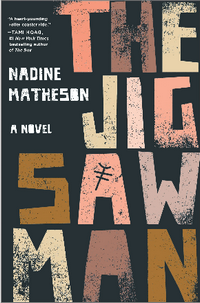
The Jigsaw Man

The Jigsaw Man

by Nadine Matheson
Series: DI Anjelica Henley, #1

Hardcover, 388 pg.
Hanover Square Press, 2021

Read: May 17-20, 2021
Grab a copy from your local indie bookstore!

“You never know though. This could still be a nice, straightforward investigation.”

Henley didn’t reply as she picked up her bag, because every nerve in her body told her Pellacia believed that even less than she did.

What’s The Jigsaw Man About?

Someone is killing people, dismembering them, and then scattering the parts of the bodies near the river (not necessarily in that order).

It’s DI Henley’s first day back in the field in months when these pieces are discovered. I think that qualifies as a blessing and a curse—it’s a blessing because these murders resemble the crimes of a serial killer she arrested years ago. The curse comes in because Henley is still haunted by this killer and what happened during his arrest. Stil, Peter Olivier, “the Jigsaw Killer,” is in prison—which is one of the more ironclad alibis around. The killers’ methods are so similar, there has to be a connection between the two. And there’s no one better suited to uncover that connection than Henley.

Olivier isn’t impressed with someone stealing his M.O., and he’s even less satisfied with Henley’s speed at apprehending the killer. So he decides to take care of things himself. Step one, get out of prison. Step two, find the killer—and unlike Henley, Olivier has a few suspects.

DI Anjelica Henley

The CSI team hadn’t arrived by the time Henley had left [spoiler]’s home. Anthony was en route to a shooting on the Kingsland Road, but had promised to dispatch two of his team with unrealistic promises of paid overtime. Henley could feel the anger overwhelming her as she walked back to her car. Someone had dropped the ball and no one was taking responsibility. She was doing everything that she was trained to do, to the best of her ability, but it didn’t feel as though it was enough. As if she wasn’t enough.

Henley is an all-too-familiar figure in Detective Fiction—smart, determined, driven. So much so that her husband wants her to get another job so she can spend more time with her family. But that’s not going to happen, she can’t do that. A couple of things that make her different from your typical driven, brilliant, cop that doesn’t always play well with others—Henley is a black woman DI. She has to be the best, she has to be driven and determined to survive in a position like hers. Almost everyone does a double-take as she identifies herself, someone who looks like she does is a DI?

She’s struggling with the trauma that came from the arrest of Olivier, and she appears to be losing that struggle, too. And that was before she had to deal with crimes that looked like his and interview Olivier on multiple occasions in order to try to understand the connection between Olivier and the new guy.

There’s something instantly appealing about Henlely—she’s a mess, but that doesn’t stop her. She has every reason in the world to leave the job, but she won’t for a few compelling reasons. Which actually makes her more vulnerable, watching her deal with her own issues in addition to the case makes for some really compelling reading.

The Rest of the Team

Stanford turned his back on the body. Henley knew how he was feeling. They thought they had seen it all, until life presented them with a fresh kind of hell.

As with most UK-based procedurals, there’s a great cast of characters around Hnely There are too many to really discuss the way I want to (and I don’t want to give short shrift to any). From the supervisor with complicated feelings toward her, a DS who might as well be a brother, a trainee who is in over his head (but finds a way to be valuable to the investigation), the best-friend of a medical examiner, to all those I can’t come up with a pithy phrase to describe, Matheson filled this novel with people, not two-dimensional (or one-dimensional) characters. You really can’t ask for more than that.

Peter Olivier

Unlike too many serial killers in fiction, Peter Olivier isn’t charming. He’s not some sort of misunderstood genius. The reader is never tempted to root for him as he goes up against the copy-cat or as he escapes. He’s a vile man, excellent at reading people either to attack or to convince them to become an ally.

I cannot stress enough that he’s the kind of serial killer I want to read about (and I really don’t want to read about too many of them anymore). I don’t want to sympathize with someone like that, I want it to be crystal clear that this guy is a monster, and deserves to be put away from society. Matheson gives us not just one, but two killers like that.

Questions to Wrestle With…

The best literature demands something of the reader. It often requires you to dig down deep inside and ask yourself some hard questions as you read.

The Jigsaw Man is one such book. As you read it, you have to ask yourself penetrating questions like:
bullet What’s the absolute minimum amount of sleep I need to function?
bullet Do I have to go back to work after lunch, or can I just keep reading?
bullet Will my kids be upset if I miss their soccer game/little league game/dance recital if I read throughout?
bullet Will my cats murder me in my sleep if their bowls are empty?
bullet How angry will my wife be if I ignore her for a couple of hours? (especially during the last 100 or so pages) How long will it take her to get over it?

So, what did I think about The Jigsaw Man?

I absolutely loved this. This is a dark, unsettling read—there are two pages toward the end that may be the most disturbing pages I’ve ever read. And yet…there’s something very appealing about the novel—it’s gripping and compelling, it’s also entertaining.

Henley might be a tangle of problems and issues (in addition to the positive qualities she possesses), but they’re not just there as quirks or to ground the character. There’s a reason for each of them, a story behind them, making her absolutely believable. The same could be said for the rest of the characters, too. Matheson has a real eye for character and displayed that throughout.

The pacing is perfect, and you find yourself turning the pages as fast as you can for the last 40-60 pages, because you just have to know what happens. That part of the book reminded me of the first time I read Clarice Starling walk into Buffalo Bills’ house. You’re on the edge of your seat, tense, and any little noise can startle you. It’s not often I feel like that and I love it when I do.

I definitely recommend this one to you, folks—but I should warn you, when you do, you’ll be waiting with bated breath for the next book in the series.


5 Stars
2021 Library Love Challenge

This post contains an affiliate link. If you purchase from it, I will get a small commission at no additional cost to you. As always, opinions are my own.

Reposting Just ‘Cuz: Faith & Life by Benjamin Breckinridge Warfield

I ran out of gas while trying to finish a post for today, so I thought I’d take a moment to revisit a favorite from a few years ago. I’ve been thinking of picking it up again, recently, and reading this just might have sealed the deal for me. You might want to give it a look, too.


Faith & Life:
Faith & Life: by Benjamin Breckinridge Warfield
My rating: 5 of 5 stars

Back when Princeton Seminary was the crown jewel of biblical Presbyterian training in the US, notable professors like Archibald Alexander, Samuel Miller, and Charles Hodge would have informal addresses for students on Sunday afternoons. B. B. Warfield, the lion of Princeton, continued this practice. These 41 chapters come from some of these addresses to the students.

I went skimming over the Table of Contents to pick out a few highlights — and I’m having a real problem. Almost every one is a gem. “Prayer as a Means of Grace” and “Prayer as a Practice” were very helpful — the latter was slightly better. “New Testament Puritanism” was great. Despite the reputation men like Warfield have, the chapters involving the work of the Holy Spirit were all tremendous. “God’s Holiness and Ours” was fantastic. I could keep going here, but it wouldn’t be long before I copied the Table of Contents.

For being the exemplar of “old Princeton,” with all the rigor and scholarship that entails — these addresses help us remember that even stalwarts like Warfield, who are known for strong stances on doctrinal issues — were men with vibrant faith, even a sense of humor.

I spent a few months reading 1 or 2 of these each Lord’s Day morning between breakfast and heading out for church — it was a great way to get my head (and heart) in the right frame of mind for worship. It’s everything Christian scholarship should be — warm, Christ-centered, practical, and doxological. It’s also everything that Christian devotional material should be — careful, sound, and deliberately orthodox. Highly recommended.

Saturday Miscellany—5/22/21

If you’re reading this, I apparently stumbled through this week mostly intact. I have so much I wanted to write about this week and even in this post, but while the spirit is interested and willing, this flesh is bone tired. It’ll hold, I think.

While I try to wrap up this week with a bonus shift at work, why don’t you take a glance at some of these. Hope something tickles your fancy. See you soon.

Odds n ends about books and reading that caught my eye this week. You’ve probably seen some/most/all of them, but just in case:
bullet 77 Strange, Funny, and Magnificent Book Titles You’ve Probably Never Heard Of—From Literary Hub—some of these titles really make you want to read the text.
bullet How Much Money Do Authors Actually Earn?: It’s probably both less and more than you think
bullet Should we separate the artist from the art?—a quick yet wise read. (Hat-Tip to: Jo Perry)
bullet 7 Great Occurrences in Hitchhiker’s Guide to the Galaxy—Towel Day is right around the corner, might as well start thinking about The Hitchhiker’s Trilogy.
bullet Confessions of a Book Addict!—I see myself in almost every bit of this post from The Orangutan Librarian
bullet Is Summer Reading Season a Thing?—I never really thought so, but I know I’m the exception
bullet And yet: 20 Books of Summer ’21 – Share your sign up posts!—I guess it is that time of year already. Time to start making plans, I guess.
bullet Why I Love To Read… Fantasy—fun little post with some great recommendations

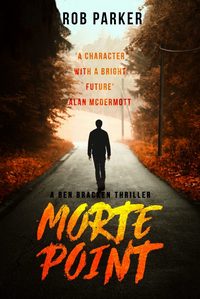
The Friday 56 for 5/21/21: Morte Point by Rob Parker

The Friday 56This is a weekly bloghop hosted by Freda’s Voice

RULES:
The Friday 56 Grab a book, any book.
The Friday 56 Turn to Page 56 or 56% on your ereader. If you have to improvise, that is okay.
The Friday 56 Find a snippet, short and sweet.
The Friday 56 Post it

from Page 56 of:
Morte Point

Morte Point by Rob Parker

I take my shoes from the pack, and put them on, ready for a light jog. I want to hit civilisation before the world wakes up, and get a march on a quicker route out.

A farmer’s wooden access gate appears on my right, which seems the perfect way for a more direct route to Mortehoe, so I hop the wooden fence into a field of cows. The song birds are in voice, welcoming me with a staccato trill. In the distance, perhaps half a kilometre away, I can see the rooftops. I run as the crow flies precisely in that direction, keeping an eye on the floor for cow muck, nimbly hopping it as I see it. It reminds me of precise foot placement in areas strewn with land-mines, this time only with smelly shoes at stake.

I rely on the timing of my activity to be the best camouflage, but fat lot of use that was back at the beach mansion. Maybe the village is a hub of activity in the early hours, especially when wound up by the search for an intruder out on the Point.

My answer is immediate and as obvious as I could ask for.

A helicopter throbs over a distant hill, the surge of its rotors suddenly louder as it enters the valley, and I see it appear over the village. I sprint for the hedgerow which frames the field, before any airborne eyes can see me.

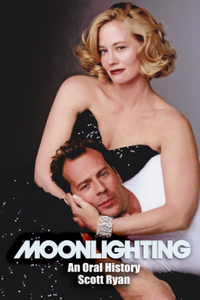
I have a hard time shutting up about Moonlighting: An Oral History by Scott Ryan

Moonlighting: An Oral History

Moonlighting: An Oral History

by Scott Ryan

eARC, 288 pg.
Fayetteville Mafia Press, 2021

Read: May 9-15, 2021
Grab a copy from your local indie bookstore!

Why Did I Want to Read Moonlighting: An Oral History?

Over on Twitter last month, Grab This Book said something about requesting a book about Moonlighting on NetGalley, and the next thing I knew, I was on the site doing the same thing. It was a reflex, since I was twelve I wanted to know everything I could about David Addison, Agnes DiPesto, Maddie Hayes, Herbert Viola—everyone at the Blue Moon Detective Agency, their clients and adversaries. I watched first-run episodes, reruns, syndicated episodes (when it was possible to find them)—the only reason that I haven’t watched the whole series on DVD multiple times is that they’re hard to find—and prohibitively expensive when you do*. In short, I was a huge fan of the series, and the idea of a book devoted to it was something I had to get my hands on.

* But after I get this posted, I’m going to re-watch the first 3 seasons, I assure you.

Who is the Target Audience for Moonlighting: An Oral History?

People who have watched some/all of the ABC series that aired from 1985 to 1989. Well, not just watched but enjoyed the show. This isn’t going to work for you unless you have at least some familiarity with the show.

And the number of people familiar with the show isn’t that large and isn’t growing. Unlike so many things from that era, you can’t watch it on syndicated re-runs or a streaming service—and then there are the aforementioned issues with the DVDs.

But if you’re part of that group? This book is definitely for you.

What does the Oral History Cover?

There are discussions of each season, with chapters that focus on particular episodes as well—big ones, like the pilot, the black and white episode*, the Shakespeare episode**, the Christmas episode***, and so on****. There are discussions about some of the guest stars and specific behind-the-scenes personnel.

* “The Dream Sequence Always Rings Twice”
** “Atomic Shakespeare”
* “Twas the Episode Before Christmas”
* like “The Son Also Rises”, “Big Man on Mulberry Street”, “I Am Curious… Maddie”

Aside from episodes/seasons, the focus is on the writers, creator, and primary stars—Cybil Shepherd, Allyce Beasley, Curtis Armstrong, and Bruce Willis. The first three appear in the book, but despite trying, Willis and the author couldn’t work out the timing.

It’s not all glowing and positive, there are real criticisms of the writing, plots, and characterizations—as well as how some scenes came out in the end. Some of the criticism is due to this being a show that’s very much a product of its time, doing things that wouldn’t make it to air today. There are frank and honest discussions about the behind-the-scenes drama and conflicts. But it’s all given from a place of love/admiration for the show, there are no cheap shots in these pages.

That said, on the whole, this is a very positive book—it’s written by a long-time fan (which is obvious), with interviews from the people most involved in the show’s production, most of whom have very positive memories and associations with the show. These people poured proverbial blood, sweat, and tears into Moonlighting and it shows in the way they talk about it.

So, what did I think about Moonlighting: An Oral History?

This post was difficult to write, as you can see from that first paragraph, I can fanboy over this series with little provocation. I have 9 pages of single-spaced notes from this book. And restraining myself from using every note in this post was difficult. If I was reading this post-publication and could quote from it? I’d probably be unable to finish this post for a month because I’d be struggling to find the best 3-4 parts to quote.

When I read a book about a television show, I want a few things—I want something to

    • make me want to rewatch the show
    • make me not really need to, because the book has helped me remember it in such a way that it’s not that necessary
    • give me a lot of behind-the-scenes information about the show
    • help me understand it better (not just information, but reflections on it—its legacy, cultural context, impact on television, et.)
    • Ideally, teach me something about the art and/or business of television (preferably both)
    • and if it can be fun (TV should be entertaining), that’s all the better.

Yeah, that seems like a lot to ask for from a book, but if I’m going to take the time to read a book instead of watching a behind-the-scenes show or listening to a panel discussion, I want bang for my buck—I don’t always get it (and know that going in), but I want it. Moonlighting: An Oral History delivered on all of these fronts. In spades.

Also, I find that a lot of oral histories run out of steam after a while—to get one to stay interesting for almost 300 pages is a feat—and it takes a combination of great interview-ees and skill from the author in asking the right questions and then assembling the pieces used in the final product.

Could this have been improved if Ryan had been able to work out the scheduling to get Willis involved? Yes. Almost definitely—although, I think he maybe ended up coming off better this way. There’s no defensiveness on his part or protecting his name or anything like that (not that he necessarily would be that way, I don’t know)—it’s the cast, crew, and Ryan that get to sing his praises.

How much did I enjoy this book? I even liked the “Special Thanks” chapter—which is far more involved than your typical Acknowledgements section. Ryan talks about how the book came to be, how he interacted with some of the interview-ees, and so on. When even the Acknowledgements part of a book is worth commenting on/taking note of, you know you’ve got a winner of a read.

I had a blast reading this—I can’t imagine any half-hearted fan of the show not enjoying themselves. The only thing better might be sitting down to talk to Ryan about the show and what he learned from interviews (but that would be hard to refer back to, so maybe that wouldn’t be better).


5 Stars

P. S.

If anyone out there has a copy of seasons 4 and/or 5 on DVD that they’d like to donate/sell for less than market price, please get in touch with me. Please.

Disclaimer: I received this eARC from Black Château via NetGalley in exchange for this post—thanks to both for this.

This post contains an affiliate link. If you purchase from it, I will get a small commission at no additional cost to you. As always, opinions are my own.

WWW Wednesday, May 19, 2021

It may seem like I’m not making a lot of progress lately on various books–and that’s only because I’m not. Work’s been crazy and I’m having a hard time finding the time to read–and when I do, there’s not a lot of energy to do it, I’m having a hard time focusing enough to keep going with audiobooks, too. Also, I’ve been beta reading an upcoming novel–I’ll talk more about that soon, but that’s been taking time away from the regular reading (which is not a complaint–great read, I can’t wait to tell you to go buy the book in a couple of months).

Anyway, that’s just to explain why there hasn’t been a lot of turnover in the last few of these posts, but maybe this WWW Wednesday will be the beginning of a return to normal.

This meme was formerly hosted by MizB at A Daily Rhythm and revived on Taking on a World of Words—and shown to me by Aurore-Anne-Chehoke at Diary-of-a-black-city-girl.

The Three Ws are:

What are you currently reading?
What did you recently finish reading?
What do you think you’ll read next?

Easy enough, right?

What are you currently reading?

I’m reading The Jigsaw Man by Nadine Matheson and am revisiting (for the first time since the late 80s) All Creatures Great and Small by James Herriot, Christopher Timothy (Narrator) on audiobook.

The Jigsaw ManBlank SpaceAll Creatures Great and Small

What did you recently finish reading?

I just finished Scott Ryan’s fantastic Moonlighting: An Oral History and the twisted fun that is A Man With One of Those Faces by Caimh McDonnell, Morgan C. Jones (Narrator) on audio.

MoonlightingBlank SpaceA Man With One of Those Faces

What do you think you’ll read next?

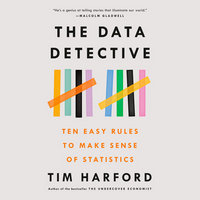
My next book should be the second Ben Bracken novel, Morte Point by Rob Parker and my next audiobook should be The Data Detective: Ten Easy Rules to Make Sense of Statistics by Tim Harford (who also narrates it). I’m sure that past-me had a good reason for it when he placed the reserve, I just wish I remembered it*.

Morte PointBlank SpaceThe Data Detective

* I’m sure it’s a fine book, but really past me–statistics???

Hit me with your Three W’s in the comments! I’m curious!

A Few Quick Questions with…Jonathan Nevair

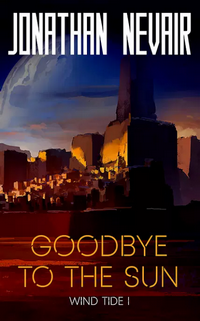
Earlier this morning, I posted my take on the novel Goodbye to the Sun–out today, I should add. Now, I get to present this Q&A the author was gracious enough to participate in with me. There are some great answers here (at least I think there are), hope you enjoy.


Describe your path to publication with this.
Goodbye to the Sun was the second novel I wrote. The first will never see the light of day and I now understand that it was more a personal exercise in getting my “literary legs” than a book to be shared with readers. I’d written academic essays, etc. for years but fiction was an entirely new language. One important piece of feedback I got from an agent on the first book was that while they enjoyed it, especially the world-building and prose, they wanted more investment in the main character – more emotional connection.

I took that to heart and Goodbye to the Sun was the result. I did a good deal of research on how to write characters that are emotionally charged and how to increase empathy and investment in a reader’s relationship to a protagonist. When it came time to construct the plot for Goodbye to the Sun, I decided to model the story off of one of the most heavy-hitting examples I could find – the tragedy. It had everything I needed to ground the story in a rollercoaster of emotional transformations, struggle, and hardship.

After an early structural edit and feedback from a sensitivity reader, Goodbye to the Sun was sent out into the literary agent ether, and then, someone I follow on twitter posted a call for submissions to a small indie press specializing in SFF and horror, Shadow Spark Publishing. They were closing to submissions the next day – talk about luck… I whisked off a query letter (an improvised one, not the official one I’d been using for agents) and got a response back and a request for a partial manuscript. From there a full request followed, and after some back and forth, I signed a three-book deal.

I knew I was in the right place for the series when I read the mission statement that Jessica Moon and Mandy Russell had on the publishing house website. It made clear that they were seeking authors whose works tested boundaries and experimented with approaches – they wanted fiction that pushed in new directions. The POV structure of Goodbye to the Sun is a bit unorthodox and I was thrilled when they read the manuscript and responded positively to the story and my writing. From there, it’s been the usual publication process – editing rounds, proofs, cover designs, etc.

All authors have more ideas running around in their head than they can possibly develop—what was it about this idea that made you commit to it?
This is a great question because I don’t usually stop and reflect on the process of literary invention. As an art historian and educator, much of my recent focus has been on ethics. At the time I was writing Goodbye to the Sun, I was teaching and writing academically about ethics in art and that spirit translated into the Wind Tide universe. One thing I am starting to understand is that while I may not consciously know it, I have something to say in my fiction writing – whether it’s human themes, issues relating to ecology, or just wanting to share an appreciation of the wonders of the imagination (often visual) with others through the written and spoken word (that’s one of the reasons I love my job as an educator – putting visual experience into words and sharing my perspective with others, and engaging in a back-and-forth with others about their impressions, is one of the best parts of being an art historian).

What really made me stick with this story is the characters. Razor and Keen became intimate and close companions and something about them forced me to commit to their journeys and see them through to a narrative resolution. I didn’t grasp it until I’d written Goodbye to the Sun, but I’m a character-driven writer. I adore world-building, both settings and cultures, but when it comes down to it, I build them to put characters into the settings – to live with them in those worlds and experience what they experience, struggle alongside them, and revel in their growth and evolutions.

Clearly, you put a lot of time and effort into the world/culture-building for the novel—were there historical analogues for some/all of these groups? What kind of research did you do for this?
This is one of the reasons why I am enjoying writing science fiction – it presents a whole new, expanded set of research experiences necessary to build convincing and interesting secondary worlds. I spent time reading about tidal cycles, wind, and tropical weather to construct the two main planetary settings for Goodbye to the Sun. Some other random world-building research tangents arose like the nature of cave systems, bioluminescence, and a very intimate reading on trees (Wohlleben’s The Hidden Life of Trees) to help develop not only the famed cantinool trees on Heroon but also a broader ecological philosophy emphasizing a hidden biological communication network tied to a cause-and-effect system of human interaction with terraforming, etc.

It was also the time when the most recent cycle of Star Wars movies hit theaters and as a big fan from my childhood, the films drove me to fantasize about living in a similar secondary fictional world. Rogue One was especially inspirational to me. The rebellion, as well as the very complicated set of players mixed up between opposing sides (and the emphasis on family vs. state that related to other important sources like Antigone), played an important role as a precedent. The Motes are indebted to that source as well as giving a nod to the Fremen in Frank Herbert’s Dune.

As a middle-aged person, I’m drawn to stories of people who’ve been pushed back into circumstances of their youthful years, and I’d read Legend by David Gemmell not too long before writing Goodbye to the Sun – Keen Draden probably has some Druss “qualities” sprinkled on him. I’ve also had a lifelong interest in martial philosophy and many texts written over the centuries provided source material for Keen’s warrior philosophy and the fighting scenes. Razor’s voice and tone were strongly influenced by some other writing research I did on character voicing. Although not written in the same POV, I was strongly affected as a writer by Essun in N.K. Jemisin’s The Fifth Season.

What was the biggest surprise about the writing of Goodbye to the Sun itself? Either, “I can’t believe X is so easy!” or “If I had known Y was going to be so hard, I’d have skipped this and watched more TV”
Oh, this one is easy! And I’ll take the, “I’d have skipped this and watched more TV for 200$, please.” Even though I set up plot points and had an outline, as well as a close sense of how this narrative would adapt a tragedy model, I got bogged down at ACT III – halted in my writing tracks. It took a month of talking to myself (out loud on walks with my dog, in my head, and many scribbles that were scrunched up and tossed in the trash) to find my way out. I learned two things from this: first, I needed to be open to change and surprises in writing, but have a general plan and an “arc” for the entire plot, and second, sometimes you need to just sit down and write to get out of a rut. These are, of course, personal reflections and not advice to anyone else writing fiction. I heeded my own words for the second book in the Wind Tide series, Jati’s Wager, and that one went much better with no torturous plot crises.

Let’s play “Online Bookstore Algorithm” (a game I’ve recently invented). What are 3-5 books whose readers may like Goodbye to the Sun?
Gareth Powell, Embers of War
Essa Hansen, Nophek Gloss
James S.A. Corey, The Expanse
Becky Chambers, A Long Way to a Small Angry Planet
Frank Herbert, Dune

Thanks for your time—and thanks for Goodbye to the Sun, and I hope you have plenty of success with it.


PUB DAY POST: Goodbye to the Sun by Jonathan Nevair: Broken People and Broken Worlds Hope for a Better Future

Goodbye to the Sun

Goodbye to the Sun

by Jonathan Nevair
Series: The Wind Tides, #1

eARC, 307 pg.
Shadow Spark Publishing, 2021

Read: April 27-May 3, 2021

What’s Goodbye to the Sun About?

Several years ago, Keen Draden served as a Legion soldier on Heroon. He left the planet a changed man, a damaged man who found the numbing he needed to get by in a bottle. Now a diplomat, he finds himself on a different planet—one with some parallels to Heroon, however. While in transit on the planet, his transport is attacked and he’s taken hostage by the losing side in a civil war in a truly desperate move.

When this scheme doesn’t work the way they expected, Razor (his captor) comes up with a new plan to get some value from Draden. He sees this as an opportunity to do some good, and achieve some personal goals (the latter are far more important to him than the good). The two leave the planet and begin traveling with Jati, another former Legion soldier—one who isn’t quite as far gone as Draden.

Jati has business that takes him to Heroon, Draden’s personal affairs take him there—and he needs to confront some ghosts from his past, as well; and Razor hopes—almost against hope—that Heroon holds the key for her people’s survival.

Sure, but What’s it Really About?

So that’s the plot—at least the beginning of it—but the novel is ultimately the story of someone (or multiple someones) rebuilding themselves. Not by casting aside the mistakes and tragedies of the past, but by absorbing the lessons learned from calamity, embracing what they meant, and doing when they could to turn the hardships into something for the greater good.

When the novels leans into that, it’s at its best and is the kind of thing I relish and enjoy pressing others to read. I’m not sure it stays that kind of novel long enough to justify enthusiasm, however—but I’ll get into that later.

In addition to that, this book is about family—natural as well as found family. Religion. Power. The obligation of the power to act on behalf of the powerless.

Worldbuilding

This is one of those SFF novels that makes it obvious and plain that there was a lot of detailed worldbuilding done before the book really even started being written (or so it seems). THere’s a complex history behind Draden’s time on Heroon, there are elaborate cultural practices, expansive technology, and layers of political realities and bodies.

You don’t have to read much of the novel to get an idea about the detailed nature of the worldbuilding—and it’s one of those aspects that’s in your face at every step, and you’re still learning about the world as the novel ends—with more that needs understanding. THere’s something very attractive about that.

There’s something maddening about it, too—there are so many, many things I just don’t understand about this fictional world. While I don’t need to have an exhaustive knowledge of everything mentioned in the novel, I also shouldn’t have to shrug my shoulders and move on when I have no idea exactly what’s being talked about and am pretty sure I’ll never get an explanation for it.

For example, I have a very clear and detailed understanding of the dominant culture’s protocols to communicating gender identification when meeting someone by different means (there were frequent mentions of it), but I’m not sure if Draden was actually drinking mercury, or if Quicksilver was a brand name, a category of potent potables, or what. It’s a somewhat unimportant example, but it’s illustrative. (I could’ve used military, political or religious examples there, but this is the most concise and easily explained one).

Antigone

The novel is described as “a space opera inspired by the Greek tragedy, Antigone.” I read the Sophocles play back in High School and in College—I remember it being one of my favorites, and so I was excited to see how Nevair tackled it.

Sadly, it turns out I remember practically nothing about the play, much to my chagrin (I really thought I did), so I can’t comment on how the novel reflects the play. But I thought I’d mention it for those who read this blog and might be interested by the notion.

Plotting and Prose

When an author is painstakingly careful with every word, every phrase in his prose it takes two forms (broadly speaking, at least): the first is that it comes across as fantastically smooth, and feels effortless (think Eames or David). The other form almost seems to boast in the care used, the text beats you over the head with the amount of care exercised in selecting each word (think Jemisen or Rothfuss).

His book seems to fall into the latter category. I, obviously, can’t describe the amount of labor Nevair poured into the text, but it feels like each word in the final version was the result of rewrite after rewrite after rewrite to get it precisely the way that Nevair wanted it. This amount of care draws attention to itself in much the same way as the worldbuilding in this novel does.

Despite the clear labor over the words, it really seems (stress on “seems”) that the same level of planning wasn’t used for the story—it feels like there were multiple novels started in this book, and after a few false starts, the book finally had an arc that it stuck with through to the end. I didn’t get the sense that we’re going to take these two (and eventually three) characters on a journey from A to B via C, D, and E. It felt more like a journey from A to B via C—well, no, maybe D? On second thought, E.

I know that’s not how Nevair actually approached this. It just felt that way to me. I’d also say that story and character took a back seat to the themes Nevair wanted to explore and the worldbuilding. I’m all for expansive worldbuilding and overarching themes, but not at the expense of characters or plot.

So, what did I think about Goodbye to the Sun?

I don’t know. I respect and admire the obvious craft and care seen in these pages, I think most of what he tried to accomplish is well-worth exploring. I just think it could’ve been more effective. I think the care undercut itself.

But I don’t really want to say anything negative about the book because there were so many technical aspects, so much technique displayed, and all of that is commendable and well done. But I can’t bring myself to be entirely positive, either.

In the end, I think I’d encourage people to try it for the experience, but to go into it with the right perspective. And then I’d ask people to come back and talk about it. Maybe you can convince me one way or another.

Disclaimer: I received a copy of this from the author in exchange for my honest opinion.

Page 2 of 5

Powered by WordPress & Theme by Anders Norén